雪茄的品味與評價:專業評估的技巧與標準

在雪茄評鑑中,專業的評價不僅僅依賴個人喜好,而是要建立客觀的評估基準。評鑑應拆分為「客觀紀錄」和「感官紀錄」,重點在於燃燒、結構和風味的穩定性。外觀評分應著重於一致性而非美觀,確保雪茄能穩定燃燒。開端前的香氣和抽吸阻力提供初步線索,但最終品質需在燃燒過程中確認。三段式風味分析能揭示層次變化,而煙霧質地與餘韻則是區分高低評價的關鍵。建立量化評分表能幫助記錄和比較不同雪茄的品質,提升評鑑的準確性。
- 評鑑雪茄時,需將個人喜好與品質分開,專注於工藝與狀態的客觀評估。
- 外觀評分的重點在於一致性,判斷雪茄是否能穩定燃燒與完整風味。
- 煙霧質地與餘韻是評價雪茄的重要指標,影響舒適度與記憶點。
The Taste and Evaluation of Cigars: Techniques and Standards for Professional Assessment
I often say that for seasoned cigar reviewers, the hardest part is not mentioning terms like "woody, leather, cocoa," but rather being able to translate the performance of a cigar under different times, humidity levels, and batches into stable and repeatable judgments.
As the editor of "Cigar Bible," I've seen many high-scoring brands also have moments of inconsistency; similarly, a regular cigar that is not hyped can often exhibit surprising depth if the source, storage, and smoking rhythm are all in place. This article is not about beginner impressions but advanced evaluation methods.
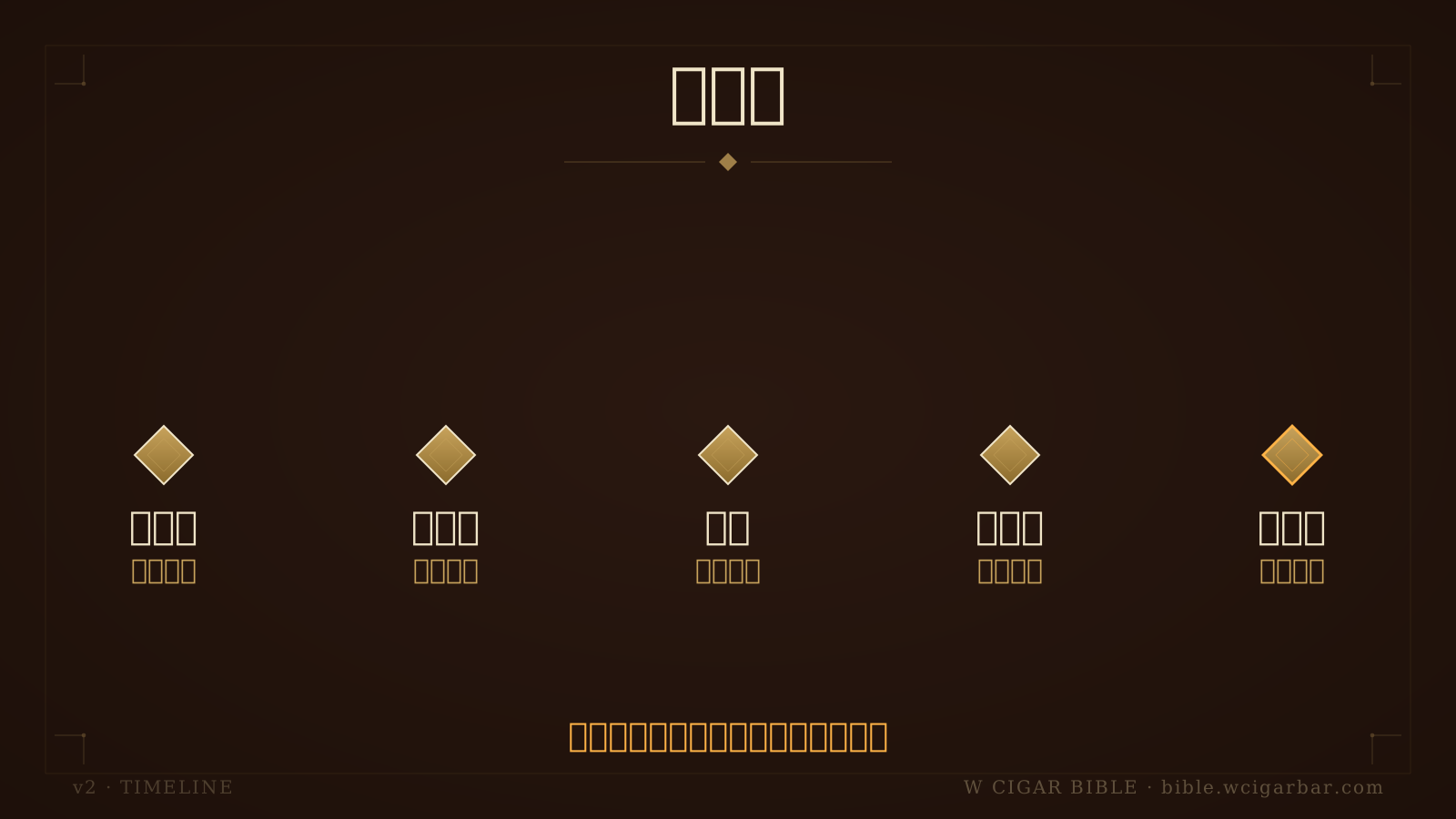
時間軸依序呈現外觀、阻力、燃燒、三段與總分流程
Establishing Evaluation Standards: Separating "Preference" from "Quality"
The most common trap for seasoned reviewers is equating personal preference directly with cigar quality. Some may prefer the pepper and heavy woodiness of Partagás Serie D No.4, while others may stand by the creamy, nutty, and delicate sweetness of H. Upmann Magnum 46; but in professional assessments, liking is just one layer, while burn, structure, balance, transitions, and aftertaste are the common languages that can be compared.
I divide the evaluation into two tables: one is the "Objective Record," which includes size, box code year, humidity, draw resistance, burn line, and ash length; the other is the "Sensory Record," which includes aroma intensity, flavor complexity, smoke texture, and dryness in the final segment. Comparing a 2020 box code Montecristo No.2 with a 2018 box code of the same model, the former may be more vivid, while the latter may be more harmonious, but the two should not be judged solely by "which one I like more."
The first step in professional evaluation is to set aside subjective preferences and first confirm whether the cigar meets the standards in craftsmanship and condition. I usually use a 100-point system but do not allow brand aura to directly add points; if a Cohiba Behike 52 shows blockage, uneven burn, and a bitter finish, it cannot be excused due to its reputation. Conversely, if a Quai d’Orsay No.50 burns steadily, has a clean aroma, and a complete rhythm, it deserves a good score.
Appearance and Structure: Focus on Consistency, Not Beauty
Before handling a cigar, I first look at the oiliness of the wrapper, color uniformity, vein thickness, rolling density, and cap finish. In terms of the common Cuban color grades like Colorado and Colorado Maduro, a darker color does not necessarily mean richer, nor does a lighter color necessarily mean milder; the real focus is whether the color is mottled, if there are obvious watermarks, cracks, or localized dryness. Many brands have improved in appearance consistency since 2019, but individual differences still exist.
When touching, I lightly press from the foot to the head, not squeezing hard, but checking for voids or hard spots. Hard spots often cause excessive draw resistance, while voids may cause the burn rate to fluctuate. The Churchill size, due to its length of about 178mm, is more likely to expose uneven rolling; the Robusto, at about 124mm, has less room for error, but if the filler configuration is poor, the second segment may still suddenly heat up.
The core of appearance scoring is not finding the most beautiful wrapper but judging whether the cigar can support stable burning and complete flavor. I once compared 25 Ramon Allones Specially Selected from the same box, and the two with the glossiest appearance were not necessarily the highest scoring; instead, those with balanced density and slightly elastic filler at the foot had more stable smoke volume and sweetness. Experienced reviewers look at appearance as a predictor of the next 60 to 90 minutes.
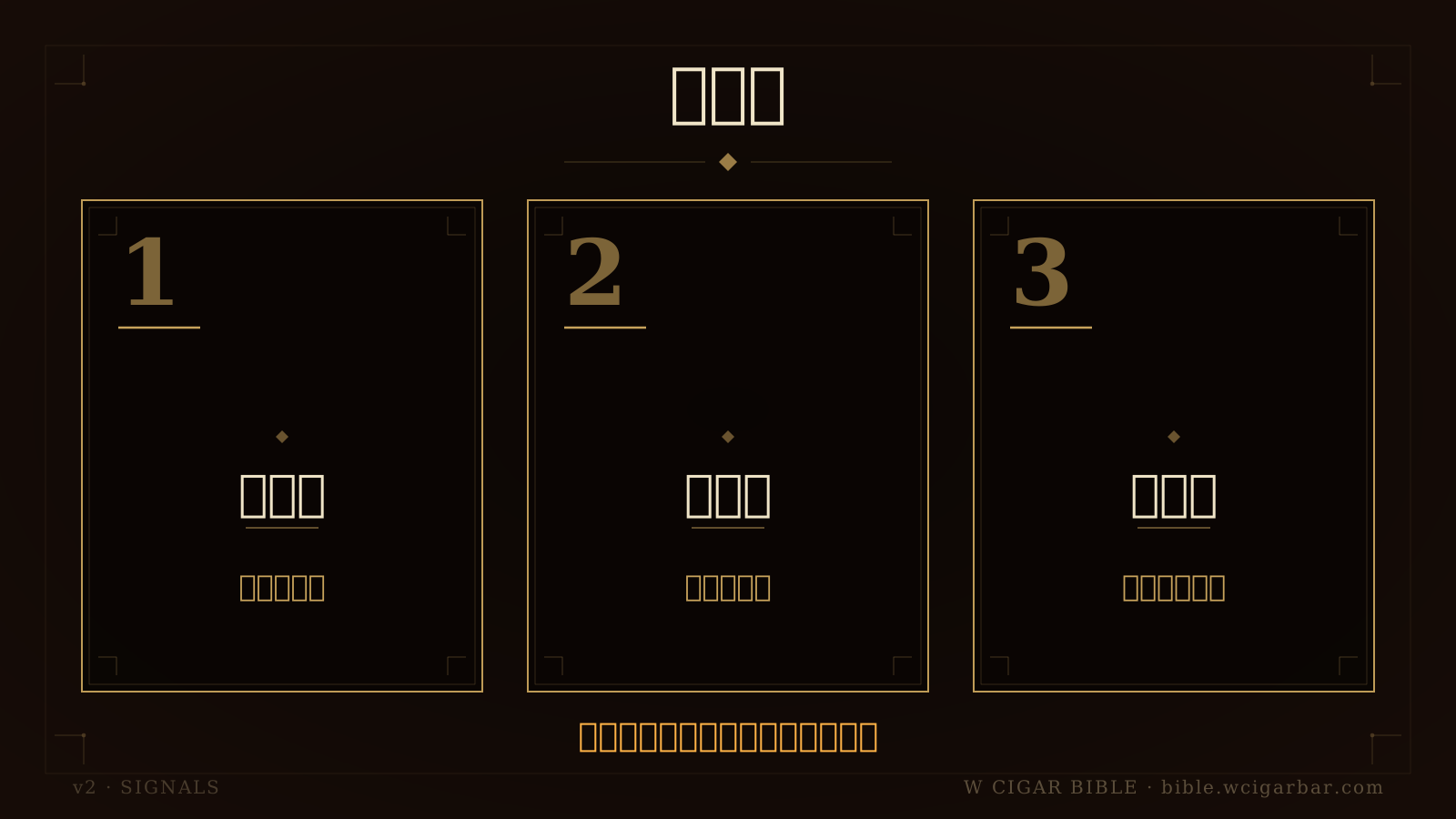
三張卡片列出客觀紀錄、分段觀察與狀態紀錄重點
Pre-light Aroma and Draw Resistance: Flavor Previews Should Not Be Overinterpreted
The cold aroma and pre-light draw can provide clues but should not be taken as the final answer. I first smell the foot, then the wrapper, with common signals including grains, cedar, hay, cocoa, fermented beans, leather, and slight ammonia. If the ammonia smell is obvious, it usually means the condition is not fully integrated; if the foot aroma is flat, it may indicate high humidity or insufficient air exchange during storage.
During the cold draw, I focus on two things: resistance and cleanliness. Ideal resistance is like drinking a thick milkshake through a straw, with feedback but not effortful; if it feels like drawing air, the burn may heat up easily, and the flavor will thin out. For example, the Padrón 1964 Anniversary Maduro, a non-Cuban cigar, often has a more open draw, but excellent batches still have stable damping, not hollow; conversely, some Cuban Pirámides sizes may have their rhythm disrupted if the head is cut too much.
The cold aroma is a preview, not an official score; the true quality still needs to be confirmed in the three-stage changes after lighting. I note in my records "high sweetness in cold draw, obvious woodiness, medium-tight resistance," but do not rush to conclusions. Many Trinidad Vigía appear mild in the cold draw, only to reveal honey, toasted bread, and herbal layers after lighting; there are also cigars with enchanting cold aromas that, when lit, only leave a monotonous bitterness.
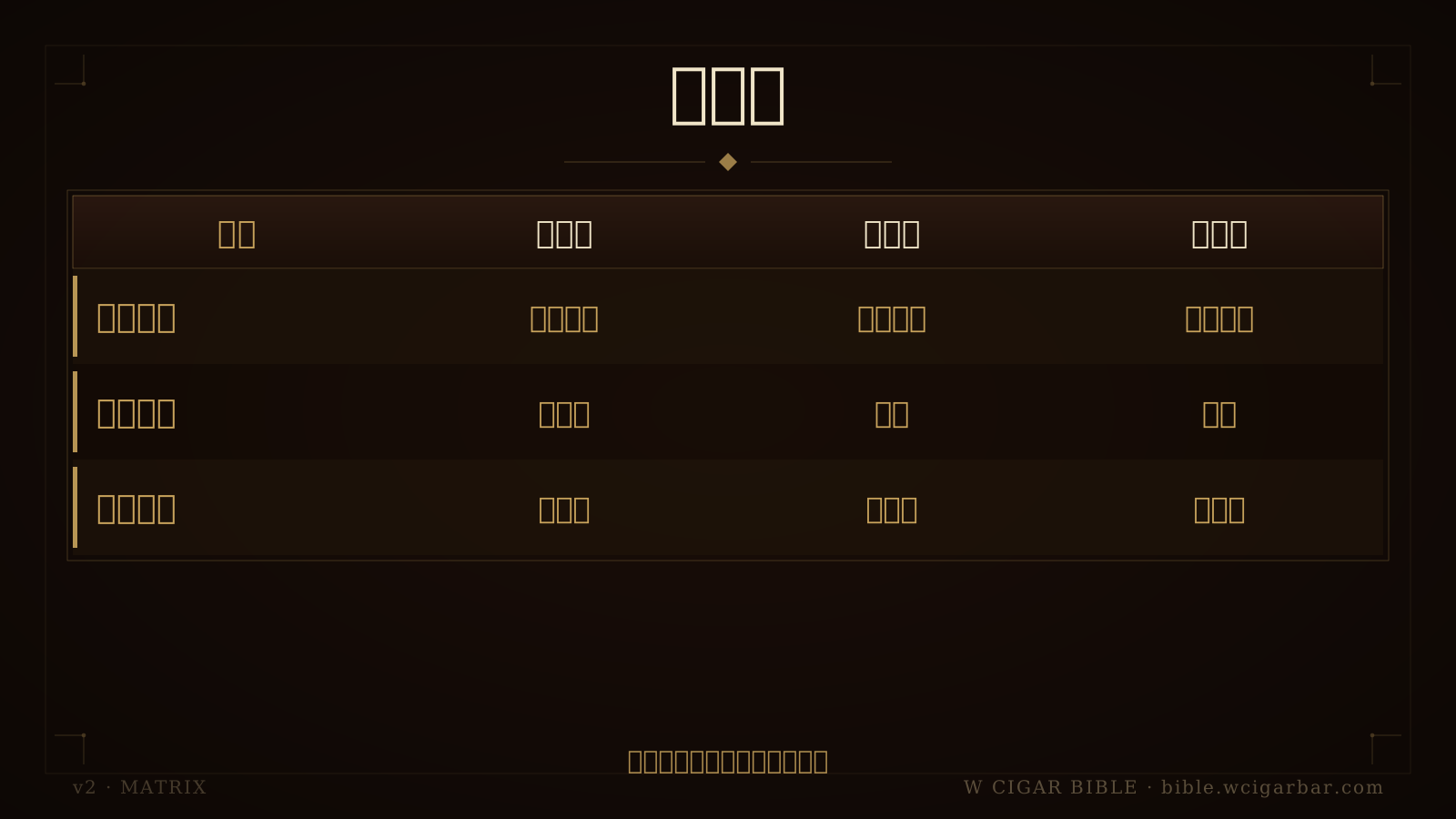
矩陣比較客觀表、感官表與總評表的使用重點
Three-Stage Flavor: Use a Timeline, Not a Heap of Adjectives
Cigar evaluation must be divided into the front, middle, and back segments, usually cut into thirds by burn length rather than time. The front segment observes entry clarity and the main theme, the middle looks at transitions and balance, and the back looks at whether the strength increase still maintains a clean aftertaste. For example, in a well-conditioned Cohiba Siglo VI, the front often shows grass, cream, and light honey, the middle enters cedar and nuts, and the back has deeper coffee and spice.
Adjectives must have levels; do not write a dozen aromas at once. My approach is to divide into "main flavor, auxiliary flavor, background flavor." The main flavor occupies the largest proportion of perception, the auxiliary flavor supports details, and the background flavor is just faintly present. For instance, a 2017 box code Bolívar Belicosos Finos might be recorded as: main flavor of leather and black pepper, auxiliary flavor of concentrated coffee, background flavor of earth and cocoa; this is more valuable for comparison than simply writing "very rich, very fragrant."
High-level flavor evaluation looks at whether the layer transitions are natural, not whether the aroma names are numerous. If a cigar has sweetness in the first 20 minutes, suddenly turns salty and bitter in the middle, and only leaves spice and heat in the back, it indicates structural imbalance. Conversely, a Davidoff Millennium Blend Robusto, even if not explosively concentrated, can score high if each segment retains creamy texture, roasted aroma, and a clean finish.
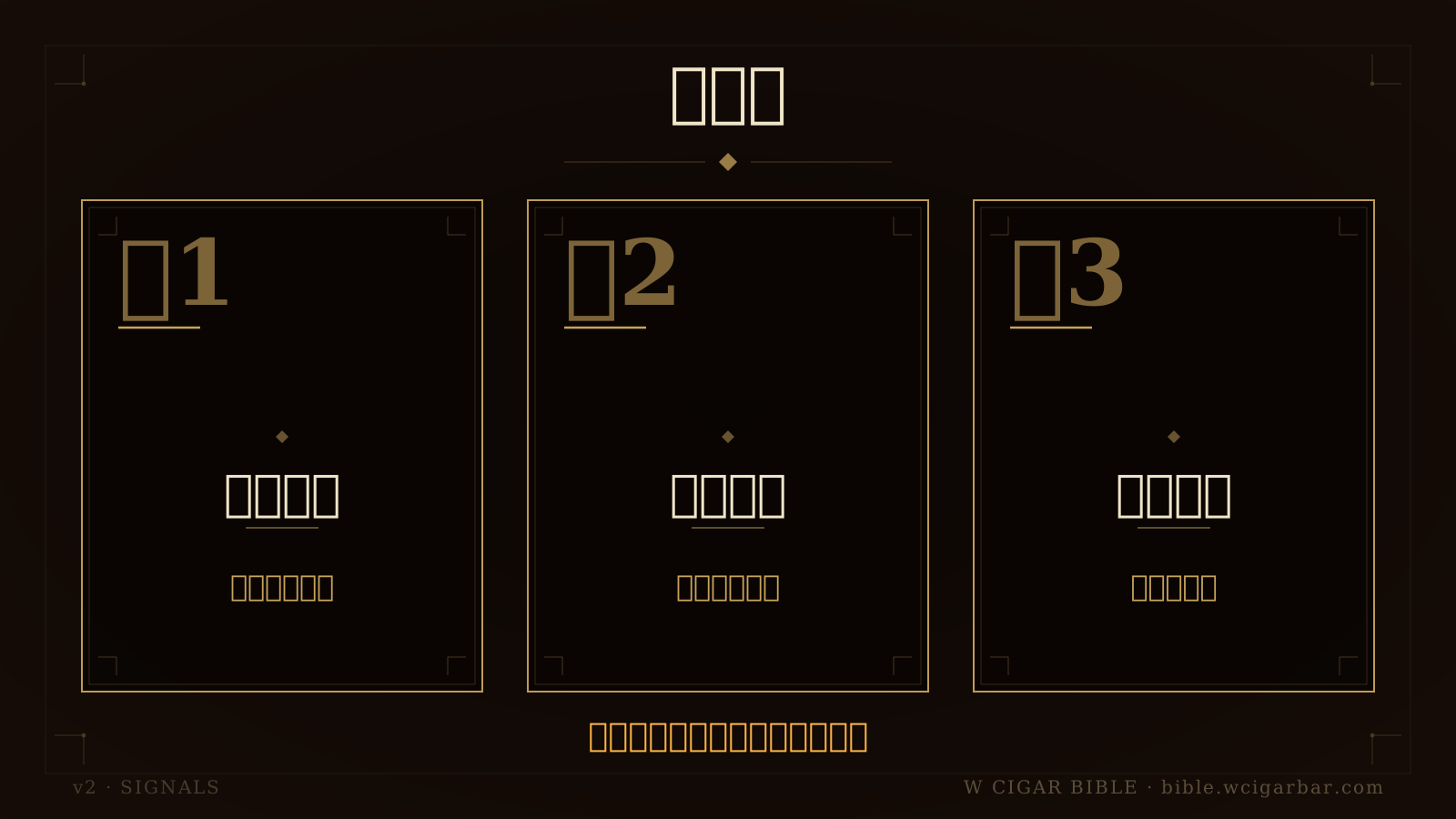
三張卡片整理分數落差、產區迷思與尾段過熱誤區
Smoke Texture and Aftertaste: Scores Often Differentiate Here
Many seasoned reviewers talk about flavor but overlook smoke texture. Smoke is not just "more" or "less"; it also has fineness, weight, moisture, enveloping feel, and retention time. The smoke of an excellent cigar should have thickness without being rough; when exhaled through the nose, it should bring out spice and woodiness, not irritate to the point of making the eyes water. When Fuente Fuente OpusX is in good condition, the smoke density is high but still retains the three-dimensionality of sweet and spicy aromas.
The aftertaste is an important indicator of tobacco quality and blend maturity. I calculate the oral residue 10 seconds, 30 seconds, and 60 seconds after exhaling: is it sweet, dry, bitter, spicy, or does it have cedar, cocoa, and nutty aftertaste? For example, the Hoyo de Monterrey Epicure No.2 is often considered mild, but in good condition, the aftertaste will have light cream, almond, and hay sweetness, not long-lasting but clean, and this cleanliness itself is valuable.
Smoke texture determines comfort, aftertaste determines memory points; both distinguish expert from ordinary evaluations more than simple concentration. High concentration does not equal high quality, and strong spiciness does not equal complexity. If a cigar can provide dense smoke, stable aftertaste, and low irritation at medium concentration, even if the brand is not well-known, it is worth noting as "worth long-term observation" in the records.
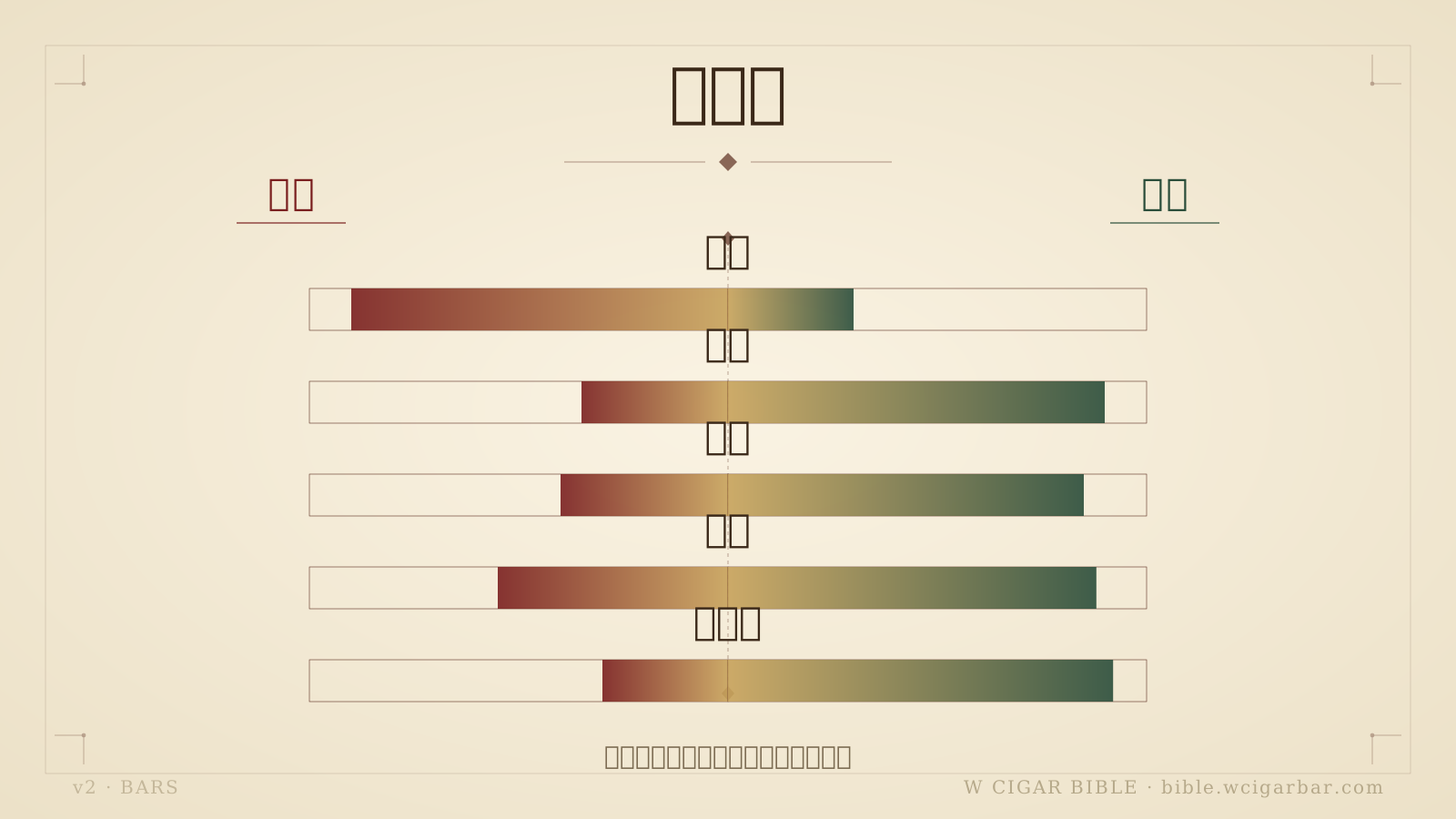
橫條圖比較個人喜好與專業品質在五個軸向的差異
Designing a Scoring Sheet: Allowing Each Record to Be Compared
I recommend seasoned reviewers create their own quantitative scoring sheet rather than relying entirely on magazine scores. The reason is simple: everyone has different humidity environments, smoking speeds, and beverage pairings; without fixed fields, looking back at notes three months later will only reveal a bunch of beautiful adjectives. My commonly used sheet has a total score of 100, with an additional "personal preference" not included in the total score to avoid emotional interference with quality judgment.
| Item | Suggested Allocation | Observation Focus |
|---|---|---|
| Appearance and Structure | 15 | Wrapper, density, cap, defects |
| Draw and Burn | 20 | Resistance, burn line, relight frequency |
| Flavor Complexity | 25 | Main flavor, transitions, balance |
| Smoke Texture | 15 | Density, fineness, irritation |
| Aftertaste and Finish | 15 | Aftertaste, cleanliness, final segment performance |
| Condition Stability | 10 | Humidity adaptation, temperature sensitivity |
A good scoring sheet is not to turn cigars into exams but to provide a fair comparison basis for different years, brands, and batches. For example, when I evaluate the 2021 Romeo y Julieta Wide Churchills, I might give 21/25 for flavor complexity, but deduct to 15/20 for burn due to uneven burn; while a 2016 Saint Luis Rey Regios, if deeper in flavor but tight in draw, should also be clearly recorded. Accumulating 50 or 100 cigars later, you will see your evaluation system gradually forming.
Humidity, Temperature, and Aging: Condition Management Can Change Evaluations
The same cigar under different humidity levels may seem like two different works. I personally often use 65% to 69% relative humidity as the observation range for Cuban cigars, while non-Cuban rich cigars are slightly adjusted based on wrapper thickness. Common issues with high humidity include blocked draw, slow burn, and early bitterness; with low humidity, fast burn, increased smoke temperature, and weakened sweetness. The temperature is best controlled between 18 to 21 degrees Celsius.
Aging is not a myth but a time management for integrating moisture, volatiles, and aromas. A well-preserved 2008 H. Upmann Sir Winston may present honey, wood, floral, and creamy textures; but if the source is unknown or stored long-term at high temperatures, even a beautiful year may only leave a cardboard taste. The year can only provide expectations, not replace condition checks. Collection appreciation does not guarantee appreciation; it still depends on source preservation and market.
If cigar evaluations do not record storage conditions, it is impossible to determine whether issues come from the brand, batch, or one's environment. I recommend at least recording the humidor entry date, storage humidity, smoking day's temperature and humidity, and resting time. For medium ring gauge cigars like Punch Punch, if taken out from a high humidity environment, waiting 24 to 48 hours before evaluating often yields more accurate results than lighting immediately.
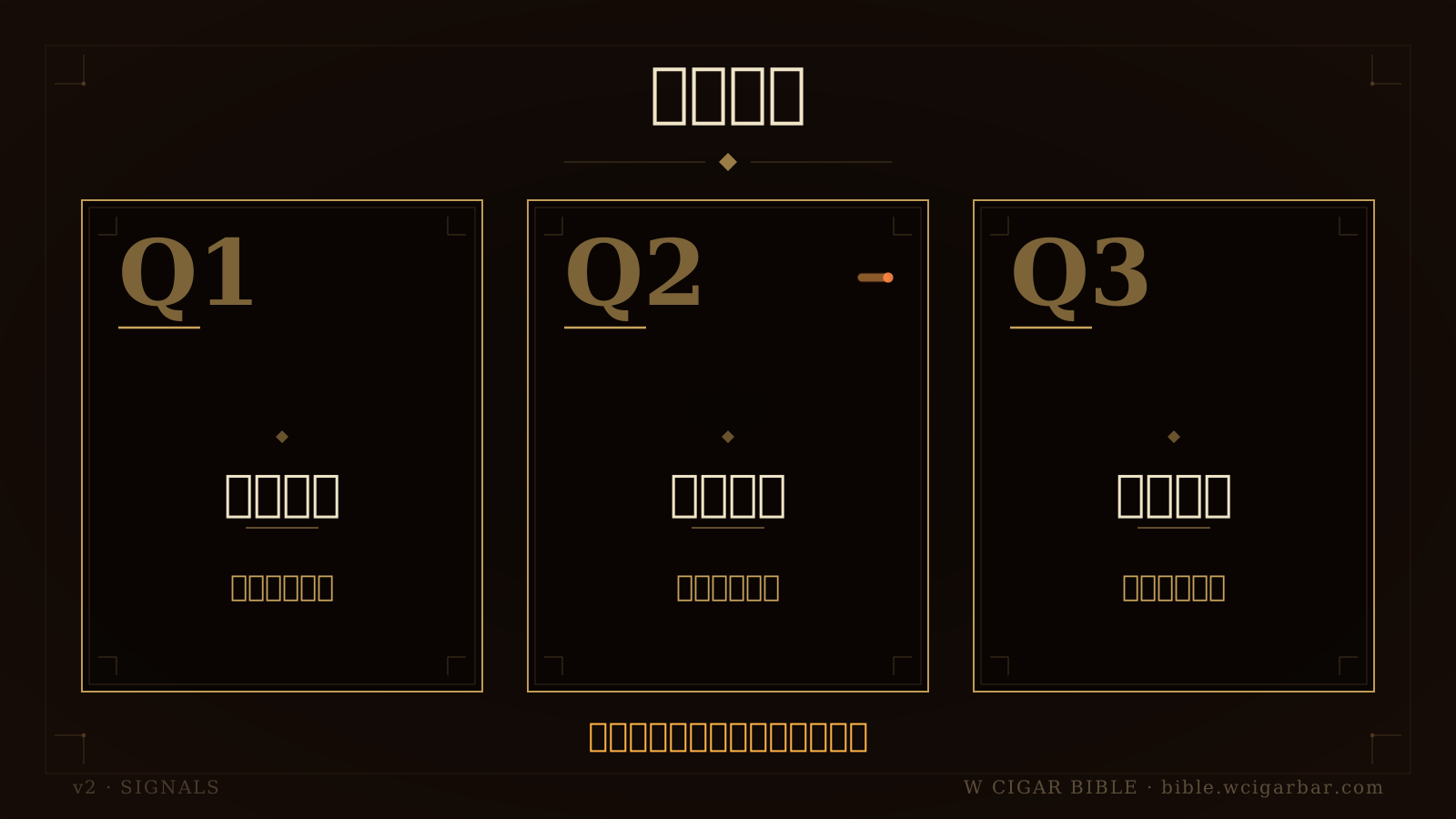
快問快答卡片回答分數落差、古巴比較與搭配飲品問題
Smoking Rhythm and Correction Techniques: Experts Do Not Let Themselves Ruin Samples
Many cigars are underestimated not because they are bad but because they are smoked too quickly. For a typical Robusto, I aim for one puff every 45 to 60 seconds, while a Double Corona can be slowed to 60 to 90 seconds. If smoked continuously and quickly, the smoke temperature rises, sugars caramelize, and the original cocoa, wood, and floral notes are overshadowed by spiciness. During evaluation, treat yourself as a variable controller, not just blame the cigar.
When encountering uneven burn, I do not immediately make large corrections, but first observe whether it self-corrects. If the deviation exceeds 1 cm and continues to expand, I use a small flame to trim the edge; if the draw is tight, I lightly pinch hard spots, rotate the cigar, and if necessary, use a draw tool, but record "manual correction." Relight frequency should also be considered in scoring, as stable burning is part of craftsmanship.
- Maintain a fixed interval between puffs to avoid uncontrolled smoke temperature
- Do not rush to judgment in the front segment; observe at least 2 cm before making an initial assessment
- Record relights, draw tool use, and re-cuts in notes
- Use room temperature water as the most neutral beverage; spirits can amplify sweetness or spice
A truly mature evaluator will first control their rhythm before judging the cigar's performance. I often remind myself: the same Partagás Lusitanias, smoked for 90 minutes versus 140 minutes, can yield completely different answers.
Common Questions
Why is my score very different from international scores?
International scores usually have a fixed environment and multiple reviewers averaging; your sample may be from different box codes, storage conditions, and smoking rhythm. Do not panic over score differences; first confirm if the same year, size, and condition, then compare flavor descriptions for similarity.
Are Cuban cigars necessarily more suitable for high scores than non-Cuban cigars?
No. Cuban cigars often have unique fermentation aromas, mineral notes, and elegant transitions, but non-Cuban cigars like Padrón, Arturo Fuente, Davidoff, and Oliva also have high stability and clear formulas. Scores should be based on individual performance, not regional myths.
How far should a cigar be smoked for a complete evaluation?
At least to the first half of the final segment, about one-third remaining, there is enough information. If the final segment is too hot or bitter, you can stop and record the reason. Forcing to smoke until it burns your hand will not make the evaluation more professional; it will be interfered with by smoke temperature.
Is the box code year important?
Important, but not the only answer. 2014, 2018, or 2022 box codes can only indicate the time background, not guarantee preservation quality. If multiple cigars from the same box perform consistently, the box code is more valuable; a single sample should allow for error.
Is pairing with alcohol necessary for accurate evaluation?
No. For strict evaluations, I prefer room temperature water or light tea to avoid whiskey or rum amplifying sweetness and woodiness. If recording pairing effects, it is best to open a separate field and not miscalculate the beverage addition as part of the cigar's score.
Reaching the seasoned stage, we pursue not just how many famous cigars we've smoked, but whether we can honestly and consistently articulate why a cigar is good, where it is good, and where it falls short. Brands change, batches change, and market volume changes; but your sensory records, scoring discipline, and rhythm control are the most reliable compass. May every lighting not be a show-off but a more precise understanding.
—Cigar Prince Wilson Tsai
Smoking is harmful to health. Under 20 years old is prohibited from smoking. Quitline: 0800-636363. This article is for reference by adults over 20 years old for cigar culture, storage, and regulation knowledge, not a tobacco advertisement, promotion, or purchase suggestion.
Like this article?Share with friends
Share this W Cigar Bible piece with friends who want to learn cigar culture, storage, and tasting.
想把這篇 化為實踐
雪茄聖經是知識;雪茄文化要在空間裡發生
W Cigar Bar 大安總店資訊
台北大安區 · 雪茄聖經總編輯 Wilson Tsai 主理的雪茄文化空間
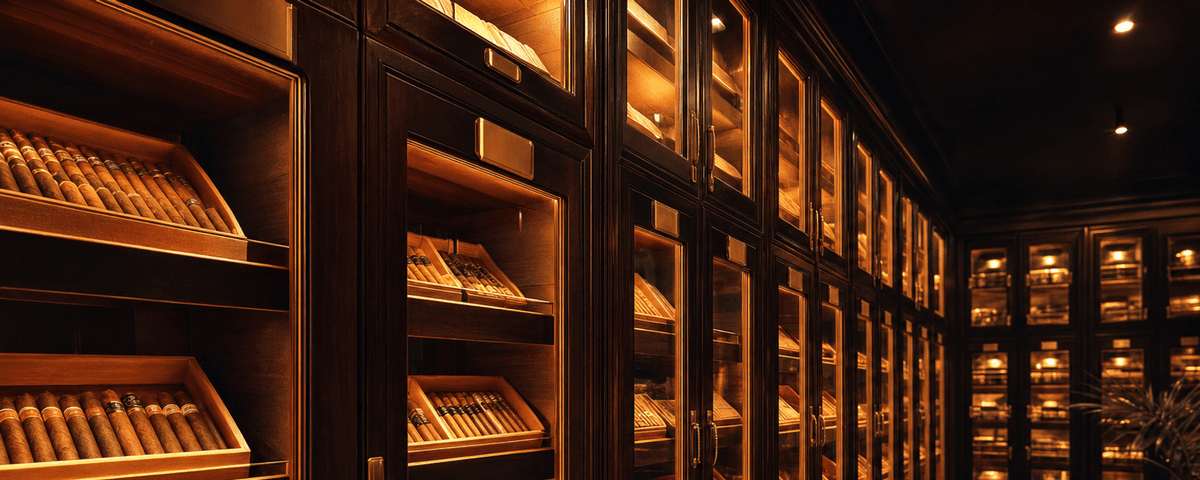
33 座 24 小時恆溫恆濕醇化室
W Cigar Bar 提供的會員醇化空間 · 場地資訊請洽編輯部
雪茄剪 / 打火機 / 雪茄盒 / Boveda
W Cigar 配件官網 · 專營雪茄配件正品
加 LINE 好友 · 文化諮詢
文化空間資訊 · 紳士沙龍 · 私人包場
本網站內容僅供雪茄文化、歷史、收藏與品吸知識研究參考。菸品有害健康、未滿法定年齡者請勿吸菸。實際規範請依所在地法律為準。
吸菸有害健康・戒菸專線 0800-636363・本站僅供 20 歲以上成年人閱覽。
讀到這裡,你不只是路過的人
留下 Email,加入 W 雪茄聖經內圈——總編輯 Wilson Tsai 親選的學院深文與國際新訊,先你一步送到信箱。
· 教育用途非銷售 · 隨時一鍵退訂 · Email 絕不對外公開 · 由勝茄股份有限公司營運
同分類延伸閱讀

資料來源:W Cigar Bible 編輯部整理 · 雪茄王子 Wilson Tsai 親自審稿
本文僅供雪茄文化、歷史、收藏與品鑑知識研究,不作為菸品促銷、銷售或購買建議。吸菸有害健康,未滿二十歲不得吸菸。