雪茄的風味輪廓解析:如何欣賞與辨識多樣的品味特徵
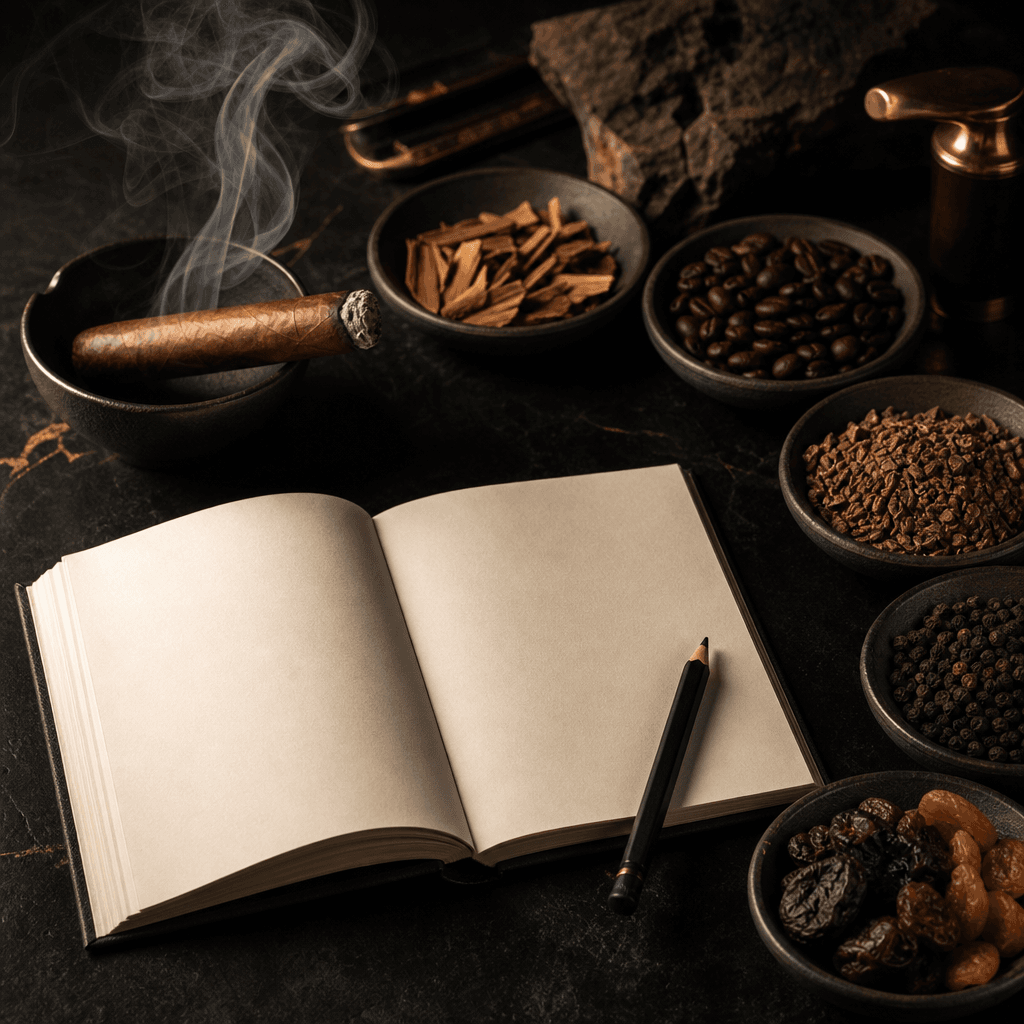
雪茄的鑑賞不僅是品味,更是一種感官的訓練。理解雪茄風味的關鍵在於強度、厚度與香氣層次。新手應學會將風味分解為具體的描述,如木質、泥土、奶油等,並透過三段式觀察法記錄前段、中段與尾段的變化。此外,建立個人的風味資料庫,記錄每支雪茄的基本資料與風味特徵,有助於提升鑑賞能力。掌握這些技巧後,雪茄的魅力將愈加深厚,讓每一次的品味都成為獨特的體驗。
- 雪茄風味的三個座標是強度、厚度與香氣層次,幫助建立個人風味記錄。
- 木質風味可細分為乾雪松、橡木桶等,了解其多樣性有助於鑑賞。
- 三段式紀錄法可分析雪茄的前段、中段與尾段變化,提升品味深度。
Smoking is harmful to health. Persons under twenty years of age may not smoke. Quit-smoking hotline: 0800-636363. This article is provided only for adults aged twenty and above as a reference on cigar culture, storage, and regulatory knowledge. It is not tobacco advertising, promotion, or purchase advice.
The flavor profile of a cigar is not mysticism, but a sensory language that can be trained. Many beginners already understand how to puff and exhale slowly, control their rhythm, and distinguish strength from lightness. The next step is to break down impressions such as "it seems a little sweet", "there is a woody note", or "the final third becomes spicy" into more precise descriptions. As an editor of the Cigar Bible, ghostwriter for "Cigar Prince Wilson Tsai", founder of W Cigar Bar Gentlemen's Cigar House, and a PCC authorized distributor, I often remind newcomers: appreciating cigars is not about memorizing terminology, but about establishing your own flavor coordinates, so that every cigar leaves a record that can be compared and reviewed.
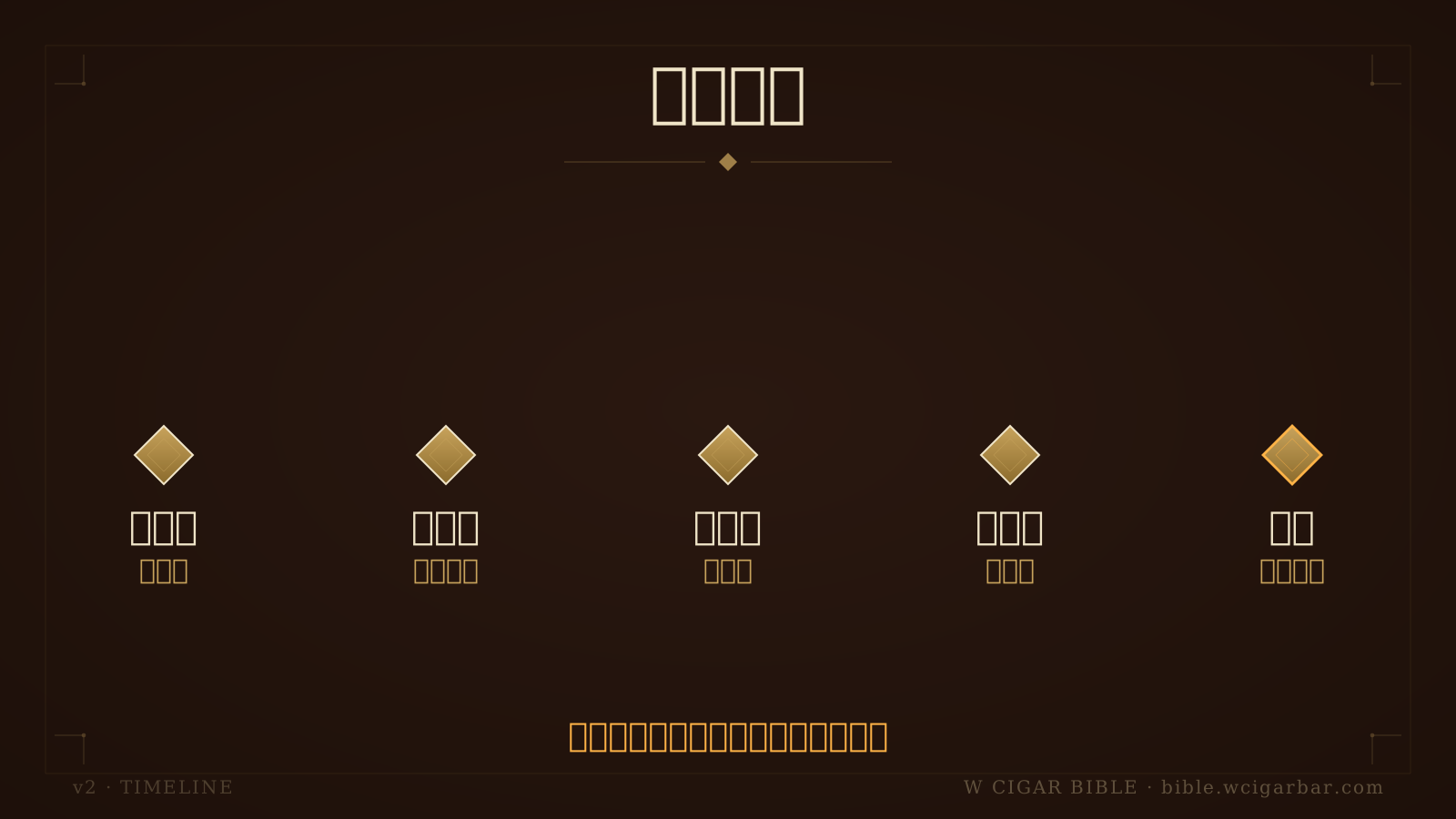
時間線呈現從分類節奏分段評分到回顧的流程
The Three Coordinates of a Flavor Profile: Strength, Body, and Aromatic Layers
To understand cigar flavor, the first step is not to rush into saying "cedar, cream, pepper", but to place the experience into three coordinates: strength, body, and aromatic layers. Strength refers to the physical response brought by nicotine and stimulation. For example, Cuban Partagás Serie D No.4 is often classified by many enthusiasts as medium-high strength, with the spiciness and substantial feel becoming more apparent in the final third. Body refers to the weight of the smoke in the mouth. Davidoff Signature No.2 usually gives a more refined, light, and clean profile, while Padrón 1964 Anniversary Maduro often presents a rich mouthfeel reminiscent of cocoa, coffee, and brown sugar. Aromatic layers refer to how many directions you can identify: wood, earth, nuts, leather, cream, floral notes, minerals, pepper, dried fruit, and so on. Beginners are advised to record these three items on a 1 to 5 point scale, such as strength 3, body 4, aromatic layers 4. After recording 20 cigars in succession, this will have much more analytical value than simply writing "good to smoke". Around 2003, changes in the sizes of many Cuban brands and shifts in market preferences also made enthusiasts pay more attention to the relationship among ring gauge, combustion temperature, and flavor expression. These should all be included in observation.
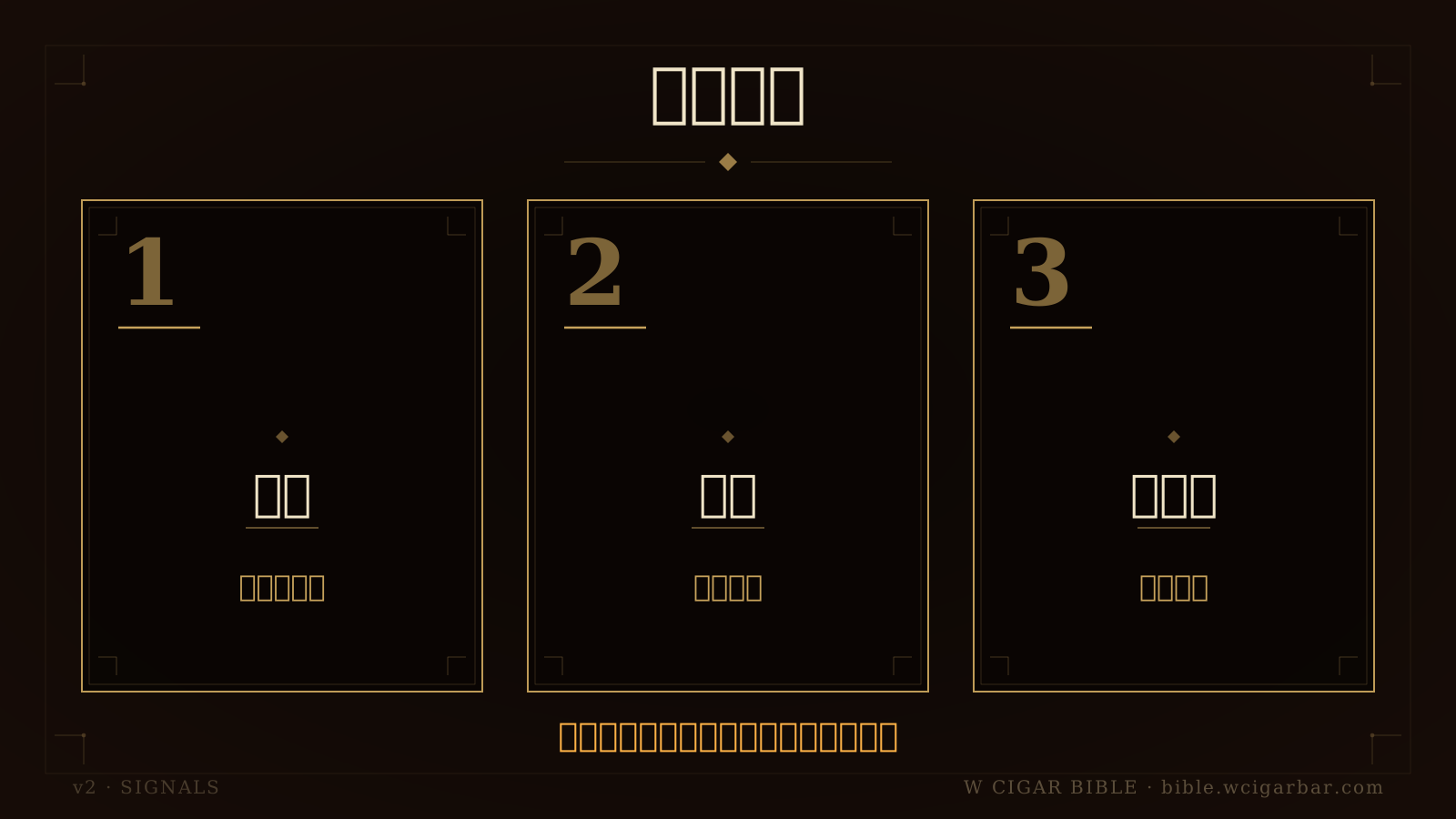
三張卡片列出強度厚度與香氣層的判讀重點
Wood, Earth, and Leather: How to Identify the Classic Cigar Structure
Woody notes are among the most common and most easily misunderstood cigar flavors. They are not a single "wood taste", but can be subdivided into dry cedar, oak barrel, pencil lead, wood shavings, old furniture, and bark. Taking H. Upmann Magnum 46 as an example, when in good condition it often shows soft cedar, light nuts, and a tea-like impression. Montecristo No.2 is often described as having a composite structure of wood, cocoa, coffee, and soil. Earthiness is not a dirty taste either, but more like soil after rain, dry clay, or the forest floor. If the storage humidity is too high, earthiness may turn into damp stuffiness and mildew, which is not an ideal flavor. A leather note is more often found in the middle and final thirds. For example, after good storage and appropriate aging, Romeo y Julieta Churchill is often perceived by some as an overlap of old leather chairs, hay, light floral notes, and wood. When identifying these three categories of flavor, you can associate them with everyday objects: a freshly sharpened pencil is clean wood; an old study is wood plus leather; a garden after rain leans toward earth plus vegetation. A common beginner's mistake is to write all dark flavors as "strong". In fact, wood, earth, and leather each have their own lines. The more clearly you can separate them, the deeper your appreciation becomes.

矩陣比較強度厚度香氣層在定義詞彙與記錄上的差異
Cream, Honey, Nuts, and Coffee: The Sources of Sweet and Round Flavors
The so-called creaminess does not mean that a cigar actually contains dairy products. It is a round, smooth, low-irritation mouthfeel, often accompanied by light sweetness, grains, almonds, or hazelnuts. Dominican-oriented works such as Davidoff Grand Cru No.2 and Avo Classic No.2 often remind enthusiasts of fresh cream, white pepper, hay, and toasted bread. Honey and caramel notes are closer to sweet aromas. They do not necessarily mean that the tongue senses obvious sweetness, but that the retronasal aroma contains impressions of candied fruit, toffee, or the edge of caramelized sugar. Nuts can be further divided into almond, walnut, cashew, and peanut skin. For example, Arturo Fuente Hemingway Short Story often shows a compact expression of wood, sweet aroma, and nuts in a small size. Coffee notes also have layers: light roast resembles nuts and acidity, medium roast resembles caramel and cocoa, and dark roast leans toward black coffee, roasting, and slight bitterness. If a short-sized cigar is completed in 30 to 45 minutes, the first third often shows cream and grains, the middle third shifts to nuts and coffee, and the final third may show an interweaving of bitterness and sweetness. When recording, do not write only "sweet". You can write "honeyed sweet aroma, toasted almond, latte foam", and your accuracy will improve greatly.
Pepper, Spice, and Minerals: Spiciness Does Not Equal Roughness
Many beginners think a cigar is too strong as soon as they encounter spiciness. In fact, pepper and spices are important structural pillars of flavor. Pepper can be divided into white pepper, black pepper, red pepper, and green bell pepper seed impressions. White pepper is cleaner and lighter; black pepper is deeper; red pepper leans warm; green bell pepper seed carries vegetal pungency. Nicaraguan-oriented My Father Le Bijou 1922 and Oliva Serie V Melanio often show rich spice, cocoa, coffee, and roasted sweetness. If the rhythm is too fast, the spice will be amplified into sharp heat. Minerality is like wet stone, salinity, chalk, or sea breeze. It is a fascinating detail in many Cuban cigars. For example, when Cohiba Siglo VI is mature, some enthusiasts describe grass, cream, cedar, light honey, and a mineral finish. When identifying spice, it is recommended to do a gentle retronasal pass every 2 to 3 minutes, but not too frequently, otherwise nasal fatigue will make every flavor become spicy. If the first puff is very irritating, first check whether the cut is too small, whether the humidity is on the high side, and whether the burn is uneven, before judging whether it is the style of the tobacco leaves themselves. Good spice should have dimensionality, while rough irritation usually lacks detail.
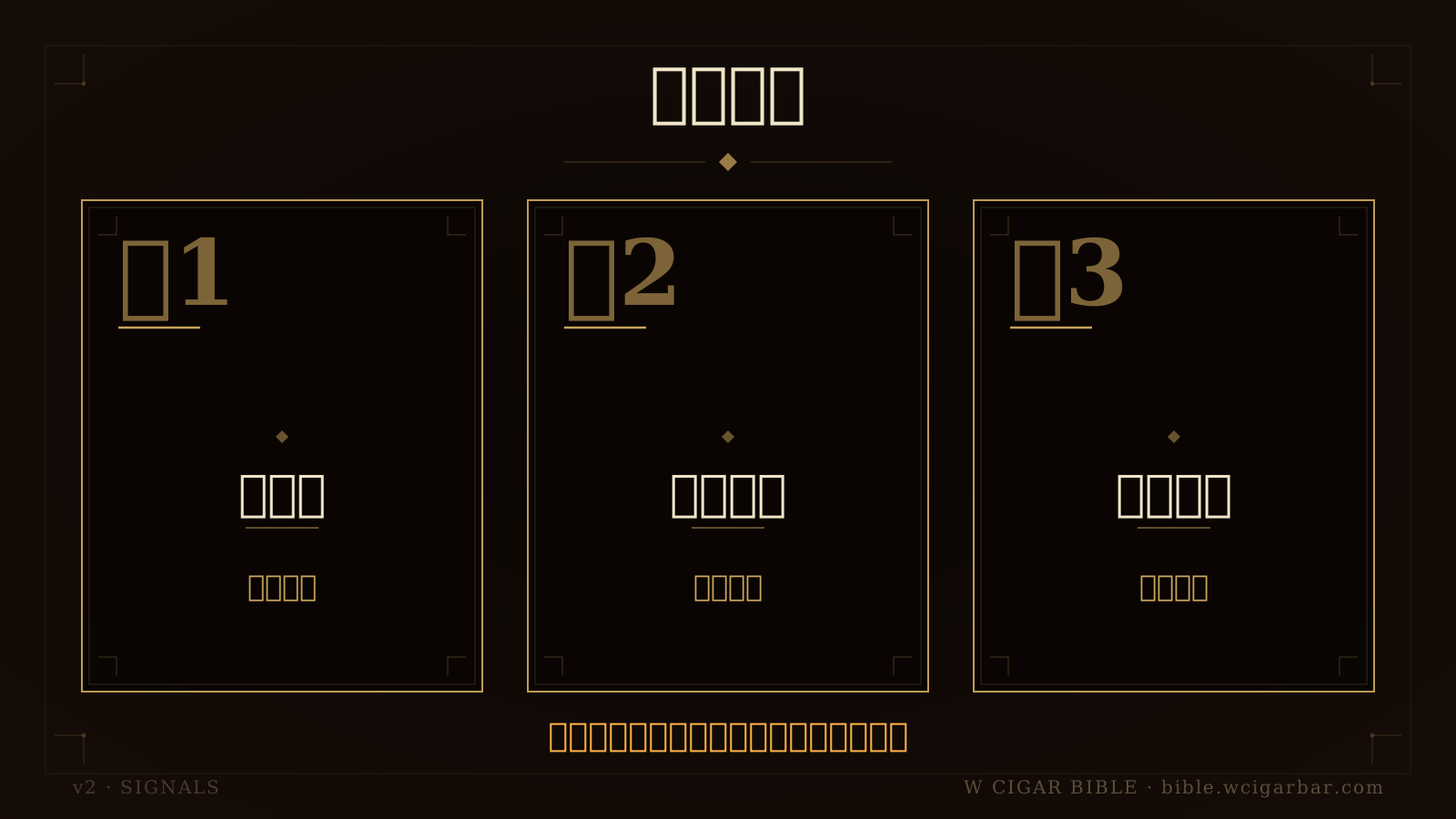
三張卡片說明只寫濃鼻香必做與尾段苦的常見誤解
Three-Stage Observation: The Logic of Changes in the First, Middle, and Final Thirds
The most fascinating aspect of a cigar is that it is not a fixed flavor, but unfolds as combustion progresses. The common three-stage recording method divides the entire cigar into the first 1/3, middle 1/3, and final 1/3. The first third usually has a lower temperature and is the easiest stage in which to capture floral notes, herbs, cream, cedar, and light sweetness. In the middle third, combustion stabilizes and the flavor structure becomes clear, with wood, nuts, coffee, leather, and spice gradually emerging. In the final third, the temperature rises and tar accumulates, so strength, spice, and bitterness tend to increase. Taking Montecristo Edmundo as an example, many enthusiasts feel cocoa and wood in the first third, coffee, earth, and nuts in the middle third, and a heavier profile in the final third. If you inhale frequently every 30 seconds on a 50 ring gauge Robusto size, the final third can easily overheat and the flavor may become burnt and bitter. If you maintain a rhythm of about once every 60 to 90 seconds, allowing the ember to rest naturally, the layers are usually clearer. Three-stage recording can help you understand whether a cigar is "linear and stable" or "rich in transitions". Some large-ring-gauge styles that became popular after the 2010s often show a softer middle third because of lower combustion temperature. This is also an example of how size affects flavor.
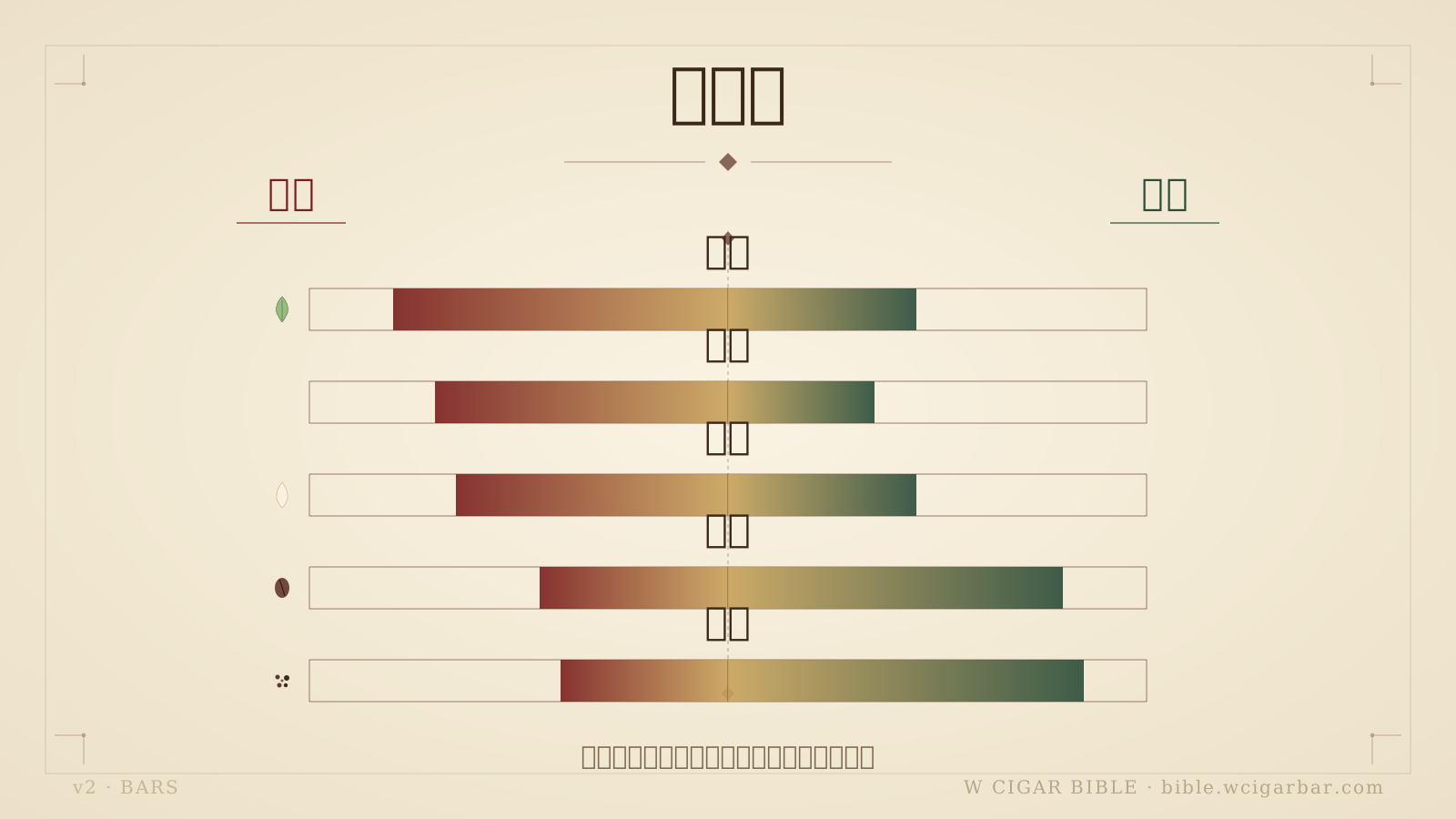
長條圖比較古巴與尼國風味軸差異
Practical Appreciation Process: Build Your Own Flavor Database with a Table
The most effective way to improve recognition is to use a fixed process, rather than relying on mood each time. It is recommended to prepare a glass of room-temperature water, unsweetened sparkling water, or black coffee, and to avoid interference from strongly flavored meals. At the same time, record the date, humidity, size, burn time, and paired beverage. In terms of storage, many enthusiasts keep cigars at about 65% to 69% relative humidity and around 18 to 21°C, but there are still differences among different leaf blends and sizes. The table below can serve as a recording template for beginners:
| Observation Item | Suggested Recording Method | Example |
|---|---|---|
| Basic Information | Brand, size, year, or batch clues | Cohiba Siglo VI, 52 ring gauge, about 150mm |
| First Third Flavor | Main aromas in the first 10 to 20 minutes | Cedar, grass, light cream |
| Middle Third Flavor | Structure after combustion stabilizes | Nuts, honey, coffee |
| Final Third Flavor | Changes in strength, spice, bitterness and sweetness | Black pepper, leather, roasted bitterness and sweetness |
| Technical Condition | Burn line, draw, ash column | Medium draw, burn requires minor correction |
After continuously recording 30 cigars, you may discover that your preference is not as simple as "Cuban or non-Cuban", but may lean toward cedar plus cream, coffee plus cocoa, or earth plus leather. A database can also help you judge whether storage is stable. For example, the same brand may have wood notes that become stuffy when humidity is too high, or spice that becomes sharp when humidity is lower. These are all clues that can be tracked.
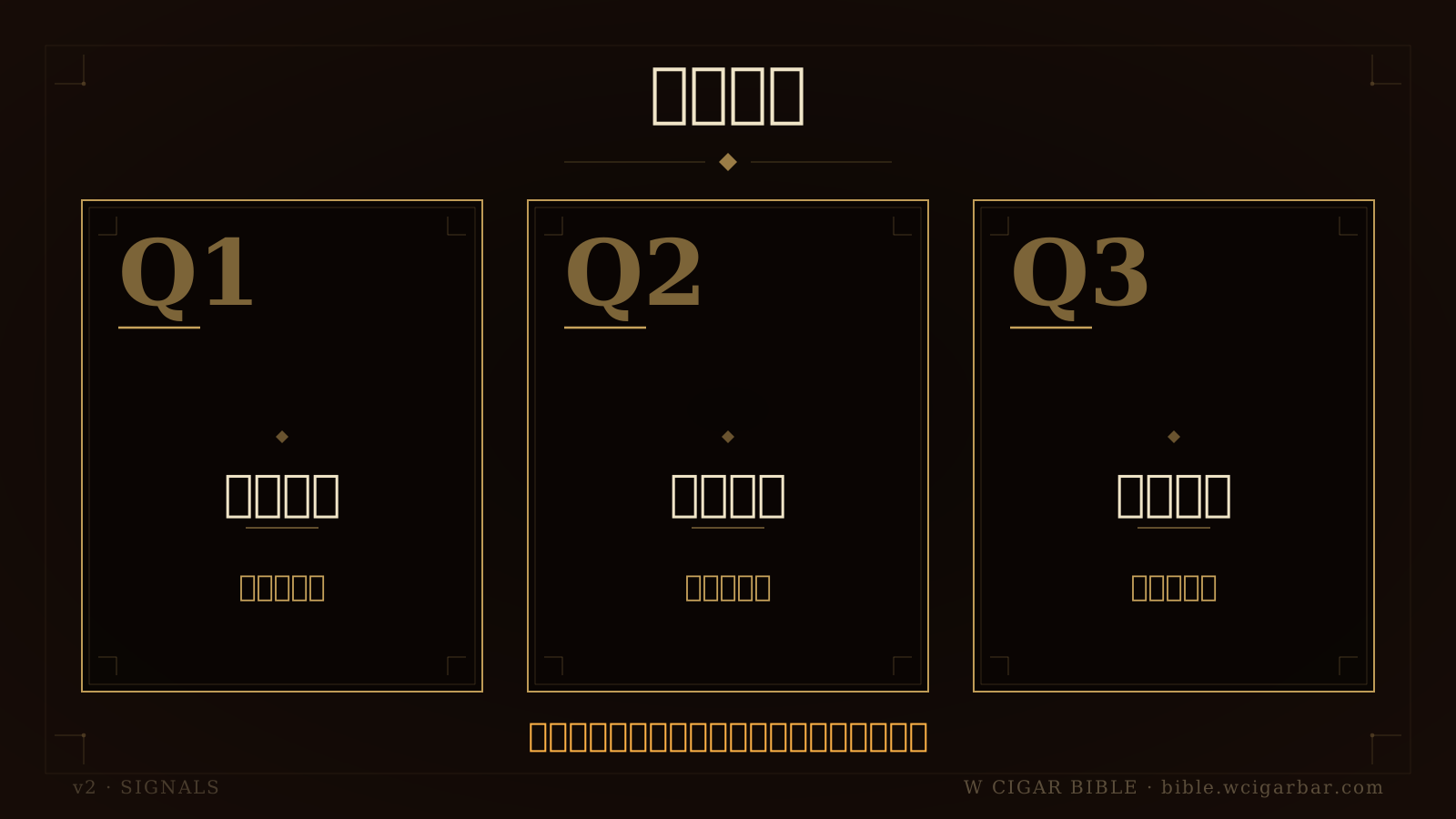
三張問答卡整理濃淡回香與尾苦
Etiquette and Advanced Techniques: Keep the Senses Clean and Focused
Cigar appreciation is not only about taste, but also about rhythm and etiquette. Before lighting, first observe the wrapper oiliness, color, veins, and elasticity, but do not squeeze hard. When cutting, keep the cut even and avoid damaging the cap. For lighting, it is recommended to first toast the foot evenly, then ignite it slowly, avoiding prolonged direct burning of the same point by the flame, otherwise the first third can easily carry a burnt taste. During appreciation, there is no need to rush to tap off the ash. A stable ash column helps maintain combustion temperature, but if the ash has loosened, it should be placed gently in the ashtray to avoid falling. In terms of pairing, a 12-year sherry cask whisky may amplify dried fruit and wood, black coffee can set off cocoa and nuts, and unsweetened oolong can cleanse the mouth and highlight minerals and tea-like impressions. If discussing collectible value, be sure to remember: it does not equal guaranteed appreciation in value, and still depends on provenance, storage, and the market. Advanced enthusiasts can arrange comparisons of different sizes from the same brand, such as Partagás Serie D No.4 and Lusitanias, observing the concentrated burst of a shorter size and the layered development of a longer size. Truly mature etiquette means respecting the venue, respecting others, and also respecting your own honest perception of flavor.
Frequently Asked Questions
Q1: Why can I only distinguish strength from lightness, but cannot describe wood or cream?
This is very normal. It is recommended to begin with three major categories: dry, sweet and round, spicy. Each time, only ask yourself to write one more specific term, such as "dry wood" or "toasted nuts". Do not try to pursue ten flavors at once.
Q2: Is retronasal aroma necessary?
Not necessarily, but it can help identify floral notes, minerals, pepper, and sweet aromas. Beginners can do it 1 to 2 times in each stage, gently. If it feels irritating, return to the ordinary mouth experience.
Q3: If the final third of a cigar becomes bitter, does that mean the quality is poor?
Not necessarily. As the temperature rises in the final third and tar accumulates, bitterness is naturally more likely to appear. If the rhythm is too fast, humidity is on the high side, or the burn is crooked, bitterness may also be amplified earlier.
Q4: What is the flavor difference between Cuban cigars and Nicaraguan cigars?
In general, Cuban cigars often show cedar, minerals, grass, cream, and refined transitions. Nicaraguan cigars often show cocoa, coffee, pepper, spices, and a substantial mouthfeel. However, brand, year, storage, and size can all change the result.
Q5: Is drinking alcohol necessary to distinguish flavors more easily?
No. Room-temperature water, sparkling water, unsweetened tea, or black coffee are more suitable for training the basic senses. Alcohol can amplify aromas, but it may also obscure details. It is recommended to first establish independent appreciation ability.
Q6: How long should aging take before the flavor becomes better?
There is no fixed answer. Some cigars can become more rounded after 6 to 12 months, while some large-sized or high-strength works may require several years. The key is stable storage and regular comparison, not simply the length of time.
- Cigar Prince Wilson Tsai I have always believed that the beauty of a cigar is not in showing off a list of names, but in whether you can quietly read the rhythm of a work. Wood, cream, and pepper are only the entrance. The true pleasure is turning the senses into memory, and memory into judgment. May every gentleman build his own flavor map with humility, patience, and records.
Smoking is harmful to health. Persons under twenty years of age may not smoke. Quit-smoking hotline: 0800-636363. This article is provided only for adults aged twenty and above as a reference on cigar culture, storage, and regulatory knowledge. It is not tobacco advertising, promotion, or purchase advice.
Like this article?Share with friends
Share this W Cigar Bible piece with friends who want to learn cigar culture, storage, and tasting.
想把這篇 化為實踐
雪茄聖經是知識;雪茄文化要在空間裡發生

W Cigar Bar 大安總店資訊
台北大安區 · 雪茄聖經總編輯 Wilson Tsai 主理的雪茄文化空間
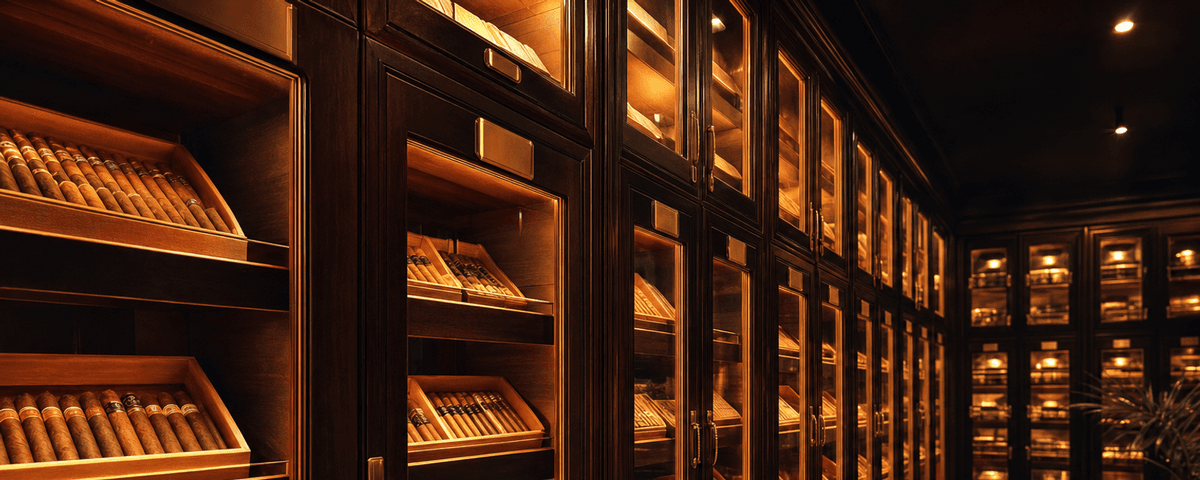
33 座 24 小時恆溫恆濕醇化室
W Cigar Bar 提供的會員醇化空間 · 場地資訊請洽編輯部
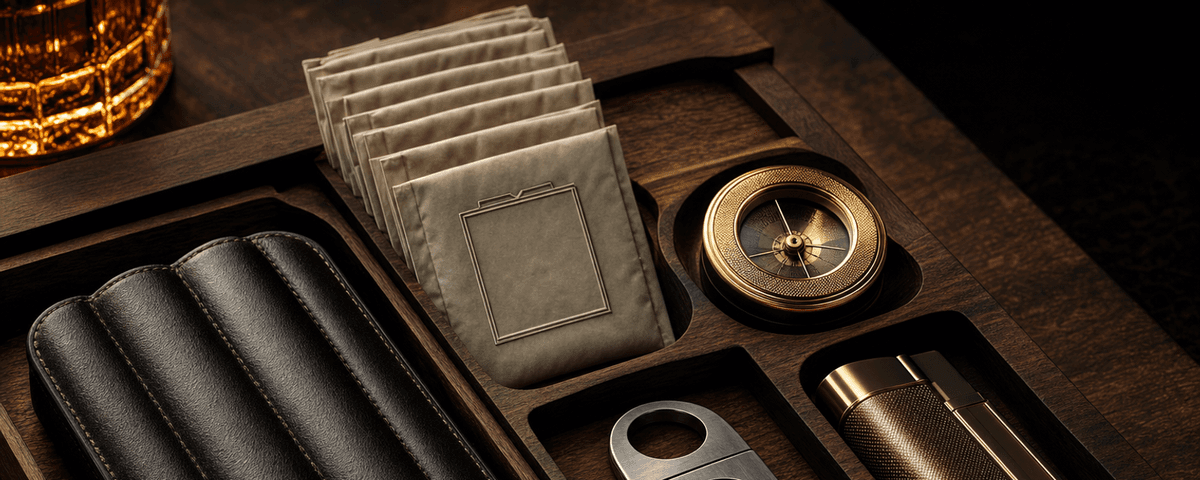
雪茄剪 / 打火機 / 雪茄盒 / Boveda
W Cigar 配件官網 · 專營雪茄配件正品

加 LINE 好友 · 文化諮詢
文化空間資訊 · 紳士沙龍 · 私人包場
本網站內容僅供雪茄文化、歷史、收藏與品吸知識研究參考。菸品有害健康、未滿法定年齡者請勿吸菸。實際規範請依所在地法律為準。
吸菸有害健康・戒菸專線 0800-636363・本站僅供 20 歲以上成年人閱覽。
讀到這裡,你不只是路過的人
留下 Email,加入 W 雪茄聖經內圈——總編輯 Wilson Tsai 親選的學院深文與國際新訊,先你一步送到信箱。
· 教育用途非銷售 · 隨時一鍵退訂 · Email 絕不對外公開 · 由勝茄股份有限公司營運
同分類延伸閱讀


資料來源:W Cigar Bible 編輯部整理 · 雪茄王子 Wilson Tsai 親自審稿
本文僅供雪茄文化、歷史、收藏與品鑑知識研究,不作為菸品促銷、銷售或購買建議。吸菸有害健康,未滿二十歲不得吸菸。