雪茄的品味進階:探索風味的多樣性與品鑒技巧
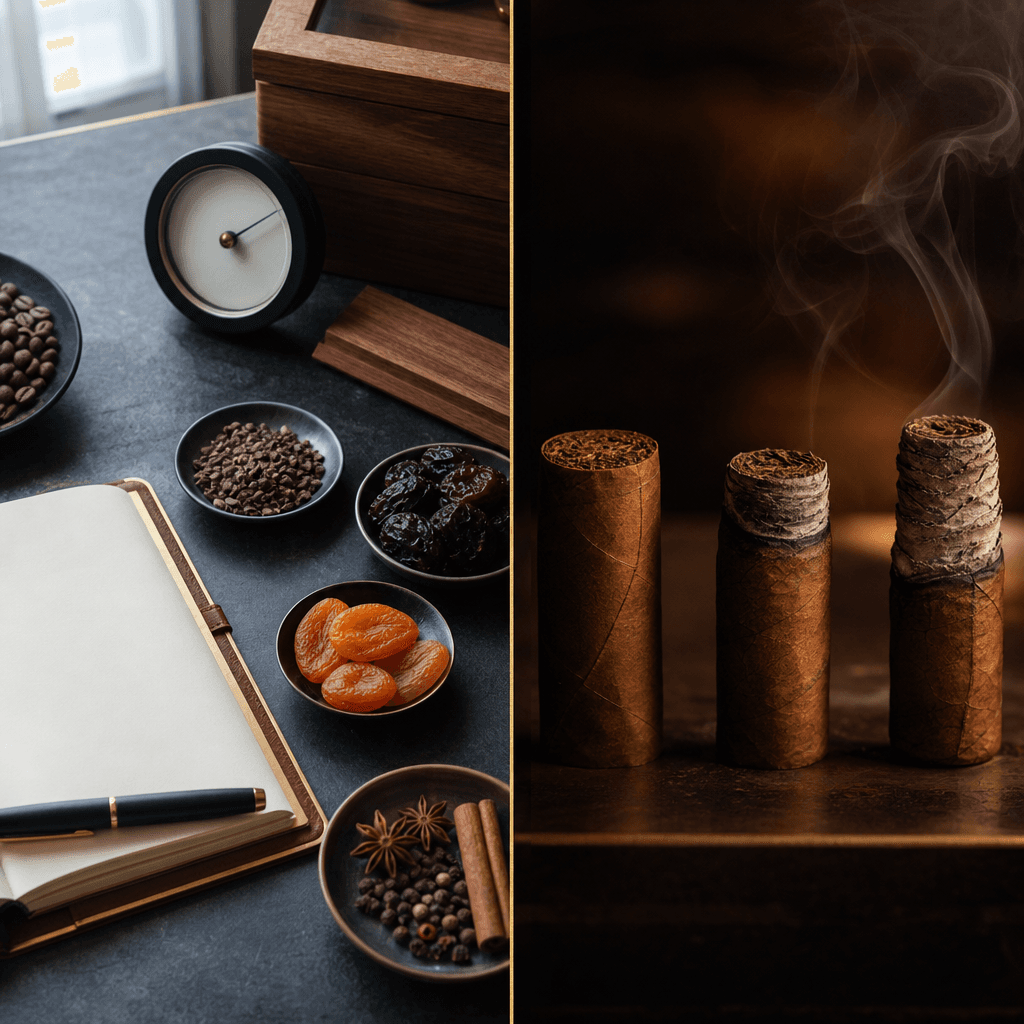
吸菸有害健康,未滿二十歲不得吸菸。本文針對二十歲以上成年人,探討雪茄文化及相關知識。入門者可從風味地圖開始,學習辨識甜、木、土、辛、脂感與餘韻等基本風味。不同尺寸的雪茄會影響燃燒和風味表現,建議比較同品牌不同型號。進階技巧如冷聞、冷吸及分段記錄,能提升品味體驗。了解產區與品牌風格,並建立辨識表格,能幫助入門者掌握雪茄的多樣性與個性。搭配適當飲品可強化風味,讓品味更為清晰。
- 雪茄風味可用甜感、木質、土壤、辛香、脂感、餘韻六個座標記錄,幫助辨識風味。
- 同品牌不同尺寸的雪茄因環徑與長度不同,會影響燃燒溫度與風味表現。
- 提升品味的技巧包括冷聞、冷吸、分段記錄與鼻腔回聞,能更清楚感受香氣變化。
Smoking is harmful to health. Persons under 20 may not smoke. Smoking cessation hotline: 0800-636363. This article is for adults aged 20 and above only as a reference on cigar culture, storage, and regulatory knowledge. It is not tobacco advertising, promotion, or purchasing advice.
Once beginners have mastered the basic principles of cutting, lighting, a slow rhythm, and not inhaling into the lungs, the truly interesting advanced topics begin: among cigars, why do some resemble roasted coffee and cocoa, some cedar, floral notes, and honey, while others carry pepper, leather, and earth? Flavor is not mysticism. It is the result of terroir, seed, fermentation, rolling, size, storage, and combustion rhythm working together. From the editorial perspective of W Cigar Bible, this article organizes the flavor map, sensory techniques, and brand-identification methods that beginners most need to build, helping you progress from "whether it feels smooth" to being able to describe "how the first, middle, and final thirds change, whether the structure is balanced, and where the brand personality lies."
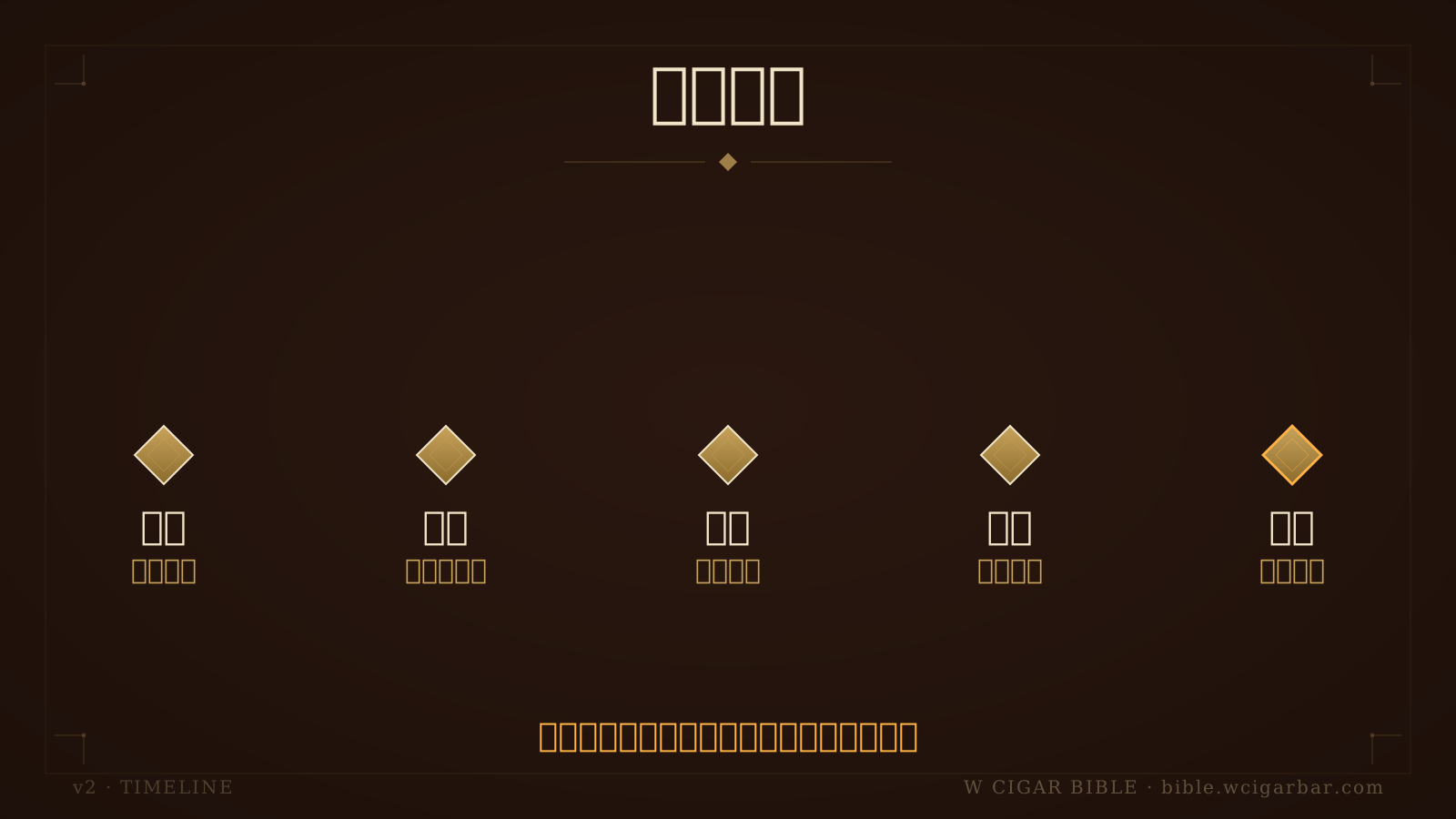
時間線依序呈現冷聞、冷吸、分段、回聞與餘韻追蹤
I. First Build a Flavor Map: Sweetness, Wood, Earth, Spice, Texture, and Finish
Cigar flavor can first be recorded using 6 coordinates: sweetness, woodiness, earthiness, spice, texture, and finish. Sweetness does not mean added sugar; it refers to sensations such as caramel, honey, raisins, cocoa, or cream that appear after tobacco fermentation. Woodiness is often found as cedar, oak, or sandalwood. Cuban Hoyo de Monterrey, founded as a brand in 1865, is known for its gentle woody aroma, and Epicure No.2 is often used by beginners to practice identifying "creamy woodiness." Earthiness is more apparent in brands with deeper profiles such as Bolivar and Partagás. Partagás was founded in 1845, and the pepper, strong coffee, and damp-earth notes of Serie D No.4 are a classic case for recognizing the fuller-bodied side of Havana. Spice is not only heat; it also includes layers such as white pepper, cinnamon, clove, and cardamom. Nicaragua's Padrón 1964 Anniversary often presents a combination of cocoa, black pepper, and roasted nuts. Texture refers to the thickness of the smoke in the mouth, like cream coating the tongue. Finish is the flavor that remains 10 seconds, 30 seconds, and 60 seconds after exhaling. When practicing, you can mark each item from 1 to 5. Do not rush to pursue ornate adjectives; first judge "strength, clarity, length, and change."
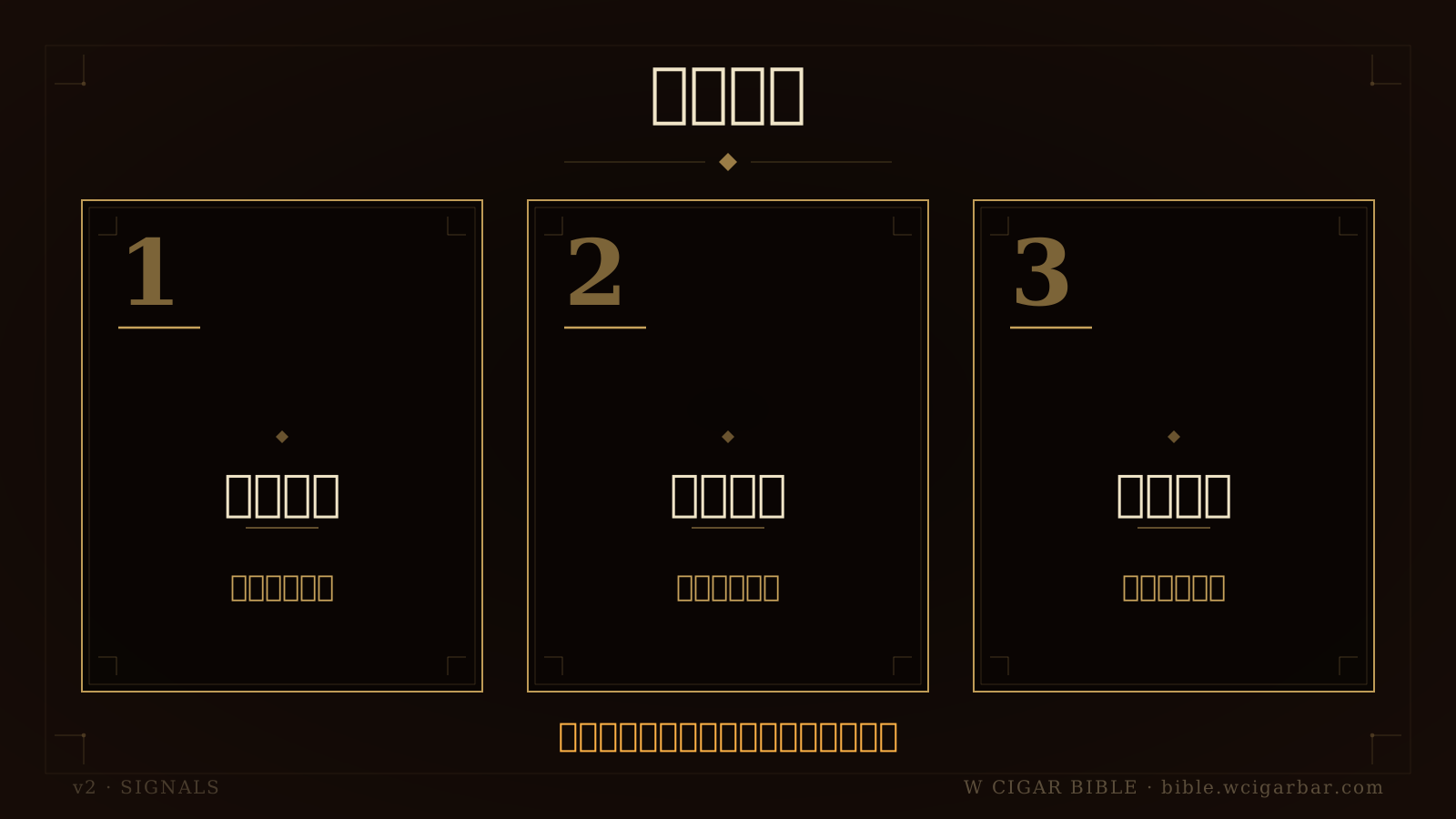
三張卡片列出風味六軸、分段記錄與慢速控溫重點
II. Size and Combustion Rhythm: Why Different Formats of the Same Brand Vary So Much
Different sizes within the same brand can taste like different works. The reason is that ring gauge, length, and filler proportions change combustion temperature and the expression of the tobacco blend. Take Montecristo as an example. Within this brand, born in 1935, Montecristo No.2 is a representative torpedo, approximately 156mm, 52 ring gauge. Its tapered head concentrates the first third, often showing toast, coffee, nuts, and faint cocoa. Montecristo No.4 is approximately 129mm, 42 ring gauge. Its burn is more direct, with wood and spice appearing more quickly, making it suitable for practicing changes over a shorter time. A Robusto is usually around 124mm, 50 ring gauge, with ample smoke volume and an accessible first third. A Churchill is around 178mm, 47 ring gauge; with the longer duration, the middle and final thirds show more layers. Beginners often mistakenly think a larger ring gauge must be stronger. In fact, because larger ring gauges contain more different tobaccos, they may be rounder; smaller ring gauges, because the wrapper proportion is higher, can amplify wrapper aroma instead. It is recommended to choose 2 to 3 sizes from the same brand for comparison, such as Cohiba Siglo II, Siglo VI, and Robusto. Do not judge by price level, but record combustion temperature, draw resistance, smoke volume, and changes in the first, middle, and final thirds. The interval between puffs should be about 45 to 75 seconds. If you smoke too quickly, the temperature will rise, and bitterness and burnt notes will cover the details.
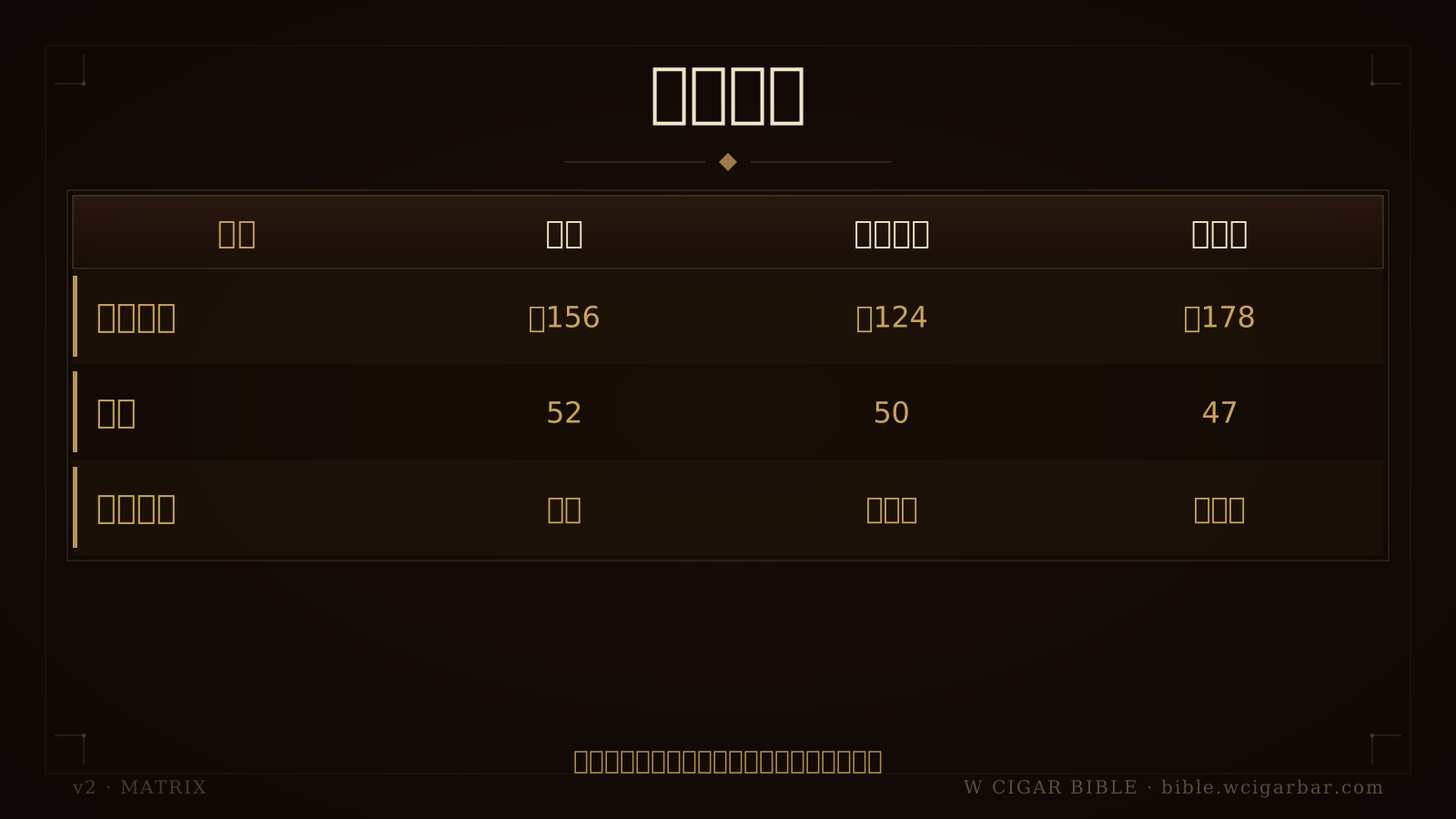
矩陣比較魚雷、羅布斯托、丘吉爾的長度環徑與品味重點
III. Advanced Sensory Techniques: Cold Aroma, Cold Draw, Sectional Notes, and Retrohaling
To improve cigar appreciation, technique is more important than adjectives. The first step is cold aroma: before lighting, smell the foot and wrapper, distinguishing hay, grain, wooden box, cocoa, leather, or floral aromas. The second step is cold draw: after cutting but before lighting, draw gently in the mouth to feel the draw resistance and the sweetness, salinity, woodiness, or spice before combustion; if the draw is too tight, it may affect subsequent combustion and temperature control. The third step is sectional recording. A cigar can be divided into the first 1/3, middle 1/3, and final 1/3. The first third is usually the opening of aromas, the middle third shows whether the structure unfolds, and the final third tests balance and control of off-flavors. The fourth step is retrohaling: this is not inhaling into the lungs, but allowing a small amount of smoke to remain in the mouth before sensing aromatic molecules in the direction of the nasal cavity. This can make floral notes, pepper, citrus peel, and woodiness clearer. Beginners need only use a very small amount each time, otherwise it can easily be irritating. The fifth step is finish tracking. After exhaling, close your mouth for 10 seconds and feel what remains along the sides of the tongue, palate, and nasal cavity. You can use a note format such as: "2024/10/12, 25°C, humidity 68%, brand and format, creamy cedar in the first third, coffee and cocoa in the middle, rising pepper in the final third, burn corrected 2 times." After 20 cigars, you will find that your own flavor dictionary has begun to take shape.
IV. Quick Reference to Regions and Brand Styles: Build the First Layer of Identification with a Table
Region does not equal absolute flavor, but it can provide a first-level judgment. Cuba is known for earthiness, woodiness, herbal notes, minerality, and subtle change. Dominican Republic often shows cream, nuts, floral notes, and a smooth structure. Nicaragua generally has cocoa, pepper, strong coffee, and dense smoke. Honduras often carries leather, roasted woodiness, and spice. The table below can serve as a reference framework for beginners moving forward, though actual performance still depends on vintage, storage, and the condition of the individual cigar.
| Region / Brand Example | Representative Year or Series | Common Flavor Clues | Suitable Practice Focus |
|---|---|---|---|
| Cohiba (Cuba) | 1966 brand publicized; Behike launched in 2010 | Cream, grass, honey, cedar, refined spice | Identifying delicate layers and middle-third transitions |
| Partagás (Cuba) | Founded in 1845; Serie D No.4 | Black pepper, strong coffee, earth, leather | Practicing a rich yet not muddy structure |
| Davidoff (Dominican Republic) | 1911 origins in a Geneva family story | Cream, almond, floral notes, white pepper | Identifying smoothness and a clean finish |
| Padrón (Nicaragua) | 1964 Anniversary series | Cocoa, coffee, black pepper, nuts | Comparing the balance between sweetness and strength |
| Arturo Fuente (Dominican Republic) | OpusX rose to fame in 1995 | Cedar, spice, cream, dried fruit | Observing the aromatic burst brought by the wrapper |
When practicing with the table, do not only ask "is it good?" Instead, ask "does it resemble the language of this brand?" If a Cohiba has only rough spiciness and lacks refined sweet wood, it may be due to storage, combustion, or individual-cigar variation. If Padrón 1964 does not show cocoa and roasted sweetness, then humidity, lighting, and smoking rhythm should be checked.
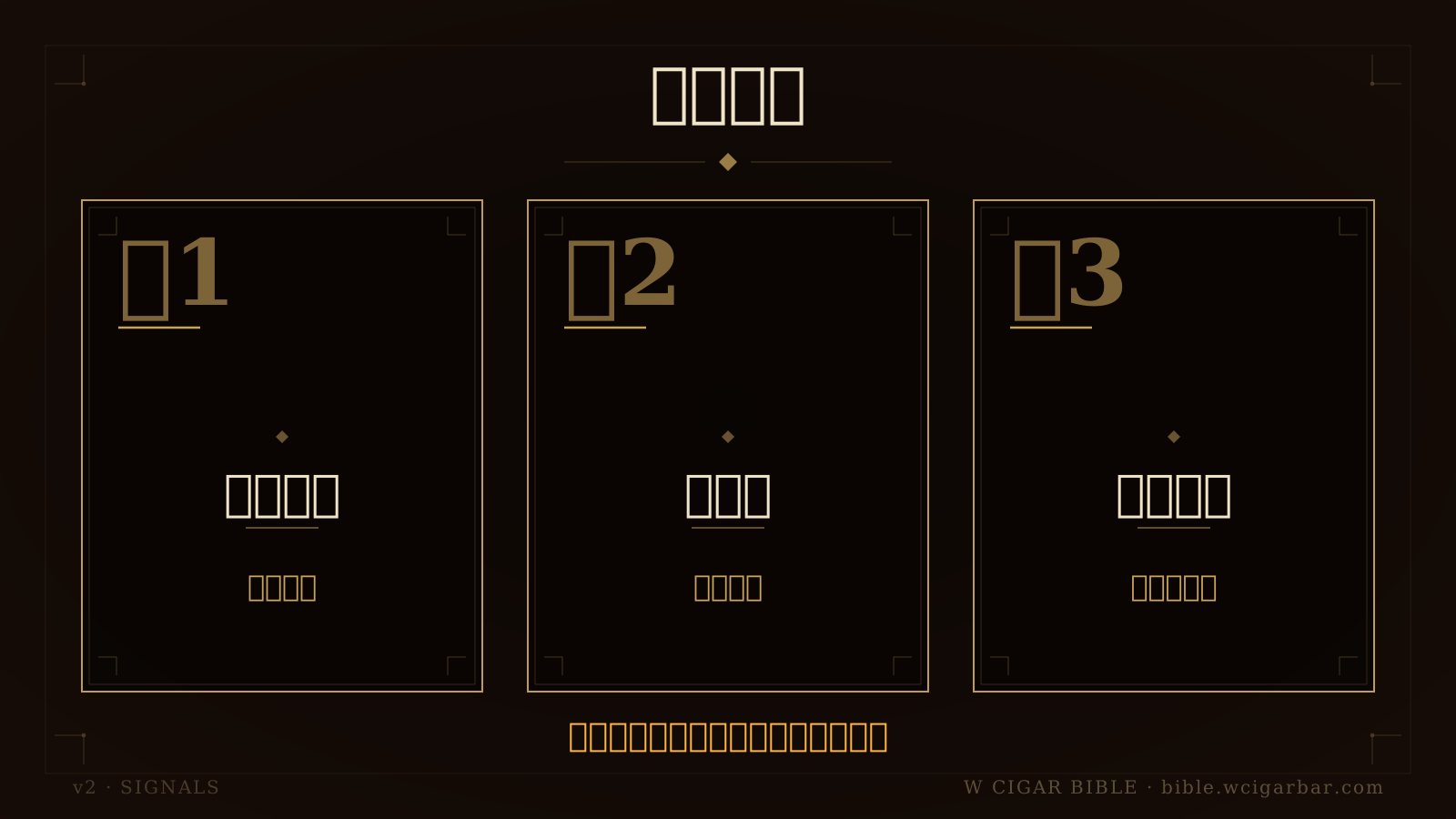
三張錯誤提醒卡指出大徑必濃、苦即差與年份迷思
V. Identifying Brand Personality: From Cohiba and Montecristo to Fuente and Oliva
Brand personality comes from long-term blend development and accumulated image. Cohiba became a symbol of Cuban high-end cigars in 1966, and is often described as "refined, creamy, herbal, honeyed cedar." The Siglo series is brighter than Línea Clásica. Behike was officially launched in 2010, and because it uses medio tiempo leaves, its thickness and spice are often discussed. Montecristo is like the neutral benchmark of Cuban cigars. No.2, No.4, and Edmundo all allow people to practice the balance of coffee, bread, wood, and cocoa. Romeo y Julieta was founded in 1875 and often carries floral notes, red fruit, and gentle woodiness; Churchills is an example through which many people understand an elegant long format. On the non-Cuban side, after Oliva Serie V was launched in 2007, it used Nicaraguan Jalapa highland leaves to show rich cocoa, coffee, and pepper. My Father rose rapidly in reputation in the U.S. market after 2008. The Pepín Garcia style often has bright pepper, roasted sweetness, and clean combustion. Arturo Fuente OpusX appeared in 1995, showing that Dominican wrapper can also provide high intensity and layered spice. When identifying brands, it is recommended to record 3 formats from the same brand consecutively before switching brands for comparison, avoiding excessive conclusions based on the condition of a single cigar.
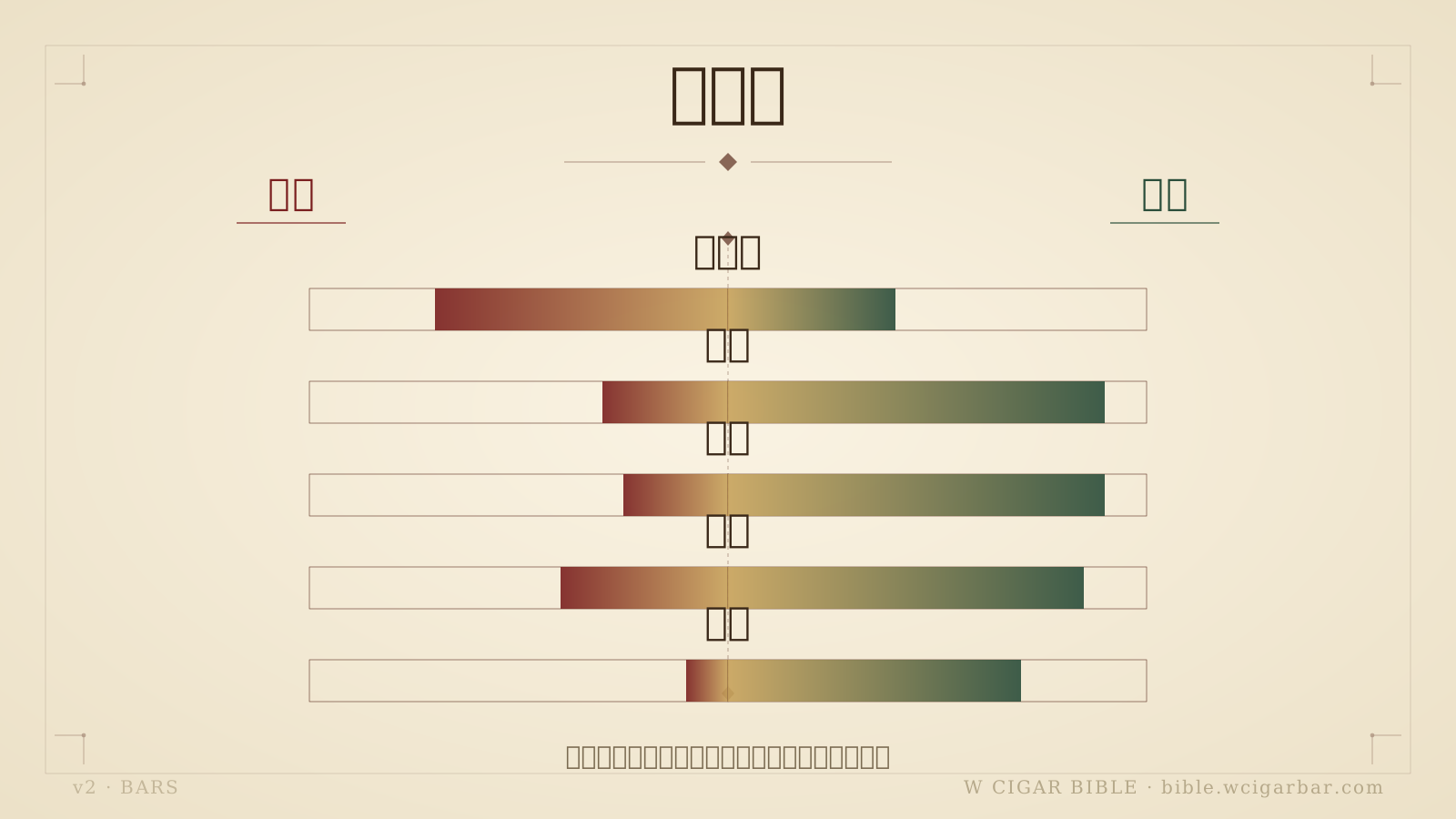
長條圖比較入門與進階在形容詞、六軸、分段、節奏與回聞差異
VI. Beverage Pairing and Occasion Etiquette: Make the Flavor Clear Without Letting the Supporting Role Steal the Scene
The purpose of pairing is not to make a cigar sweeter, but to make its flavor easier to read. Water is always the best baseline. If you want to go further, you can use unsweetened black coffee, aged rum, Cognac, single malt whisky, or tea. Pairing Partagás Serie D No.4 with black coffee can strengthen roasted and earthy notes. Pairing Hoyo de Monterrey Epicure No.2 with oolong tea can highlight creamy woodiness and floral aromas. Pairing Padrón 1964 with 12-year sherry-cask whisky may make cocoa, raisins, and nuts more apparent, but if the alcohol is too high, it will overwhelm the cigar's details. In terms of etiquette, beginners should pay attention to three things: first, do not rush combustion. A cigar is not a cigarette; the rhythm is around one puff per minute. Second, do not tap off the ash frequently. Stable ash can help maintain temperature; letting it fall naturally at about 2 to 3 centimeters is enough. Third, do not blow smoke directly toward others, and do not ignore the feelings of those around you in an enclosed space. Whether in a cigar lounge or private space, conversation volume, the direction of the lighter flame, and where shared cutters are placed after use all reflect taste. True gentlemanliness is not about which cigar is in your hand, but whether you make both yourself and those around you comfortable.
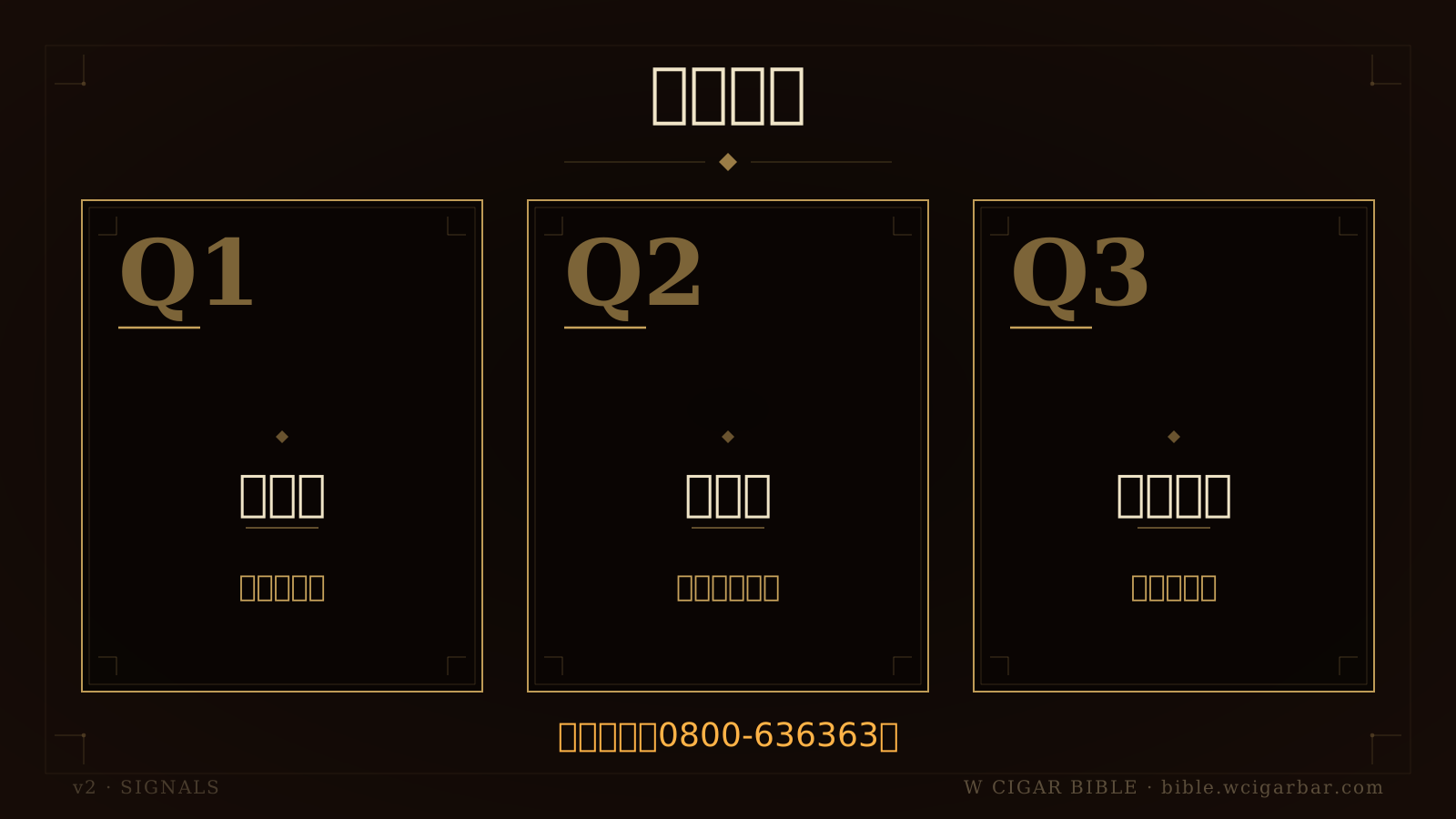
快問快答卡片回答下一步、同盒差異與發苦處理方式
VII. Storage, Aging, and Source: Flavor Stability Matters More Than Chasing Myths
A cigar's condition determines its upper flavor limit. A generally recommended storage environment is about 18 to 21°C and 65% to 70% relative humidity. In Taiwan's hot and humid summers, temperature control is more important than looking at humidity alone. When humidity is too high, combustion becomes dull, the smoke carries heavy moisture, and woodiness turns muffled. When humidity is too low, the wrapper cracks easily, and spiciness and bitterness rise. Newly acquired cigars can first be rested for 2 to 4 weeks to allow humidity to stabilize after transport shock. For full-box collections, 6 months to 2 years of aging can often round out sharp spice; beyond 5 years, the result depends even more on the brand, leaf strength, and storage discipline. Taking some Cuban boxes from 2014 to 2016 as examples, those in good condition often show gentler woodiness and honey notes. However, if they have experienced moisture damage or high temperature, even older age may bring only moldy notes, ammonia, or blandness. Regarding source, as a PCC authorized distributor, I place more importance on clear traceability, stable storage, and box-condition records than on merely listening to stories. If discussing collection appreciation in value, one must remember: it does not guarantee appreciation in value, and still depends on source, storage, and the market. For most enthusiasts, managing storage well is more practical than chasing rumors.
Frequently Asked Questions
1. I already know basic appreciation and puffing. What should I practice next?
First practice "sectional recording" and "rhythm control." Divide each cigar into first, middle, and final thirds, and note sweetness, woodiness, spice, body, finish, and burn condition. After 10 cigars in a row, you will know whether you prefer creamy woodiness, cocoa and coffee, or pepper and leather.
2. Why does each cigar in the same box still taste different?
Handmade cigars are affected by natural differences in tobacco leaves, rolling density, and storage position. Within the same box, cigars closer to the humidification source and those on the outside may be in different condition, so one cigar does not represent the whole box. It is recommended to compare at least 2 to 3 cigars before judging.
3. Are full-bodied cigars suitable for beginners?
They can be, but there is no need to force it. If starting with more powerful styles such as Bolivar, Partagás, or Oliva Serie V, lengthen the intervals, prepare water, and choose formats with more controllable duration, such as Robusto or Corona Gorda.
4. Does bitterness in a cigar always mean poor quality?
Not necessarily. Smoking too quickly, using too fierce a flame, excessive humidity, and rising temperature in the final third can all increase bitterness. If the first third is clean, the middle third balanced, and bitterness only appears in the final third, it is mostly a rhythm and temperature issue. If it is harsh and muddy from the start, then the condition should be checked.
5. How can I train myself to identify brands?
Use two methods: "three formats from the same brand" and "same size across brands." The former looks at a brand's core, such as Montecristo's coffee and woodiness. The latter looks at regional differences; for example, comparing Cohiba, Davidoff, and Padrón in Robusto size will build identification ability more quickly.
6. Is an older vintage always better?
No. Aging requires stable temperature and humidity, good source, and a suitable leaf structure. A gentle brand kept too long may lose its vivid aromas; a full-bodied brand stored poorly can also become hollow. Vintage is a clue, not a guarantee.
-W Cigar Prince Wilson Tsai
I have always believed that cigar appreciation is not about memorizing elegant terms, but about quietly reading a cigar to the end: knowing where it comes from, what its condition is at this moment, and how its first, middle, and final thirds speak. As editor of W Cigar Bible and founder of W Cigar Bar Gentleman's Cigar Lounge, what I care about more is that enthusiasts can build their own judgment rather than blindly follow price and rumor. True advancement means that the more you understand, the more humble you become.
Smoking is harmful to health. Persons under 20 may not smoke. Smoking cessation hotline: 0800-636363. This article is for adults aged 20 and above only as a reference on cigar culture, storage, and regulatory knowledge. It is not tobacco advertising, promotion, or purchasing advice.
Like this article?Share with friends
Share this W Cigar Bible piece with friends who want to learn cigar culture, storage, and tasting.
想把這篇 化為實踐
雪茄聖經是知識;雪茄文化要在空間裡發生

W Cigar Bar 大安總店資訊
台北大安區 · 雪茄聖經總編輯 Wilson Tsai 主理的雪茄文化空間
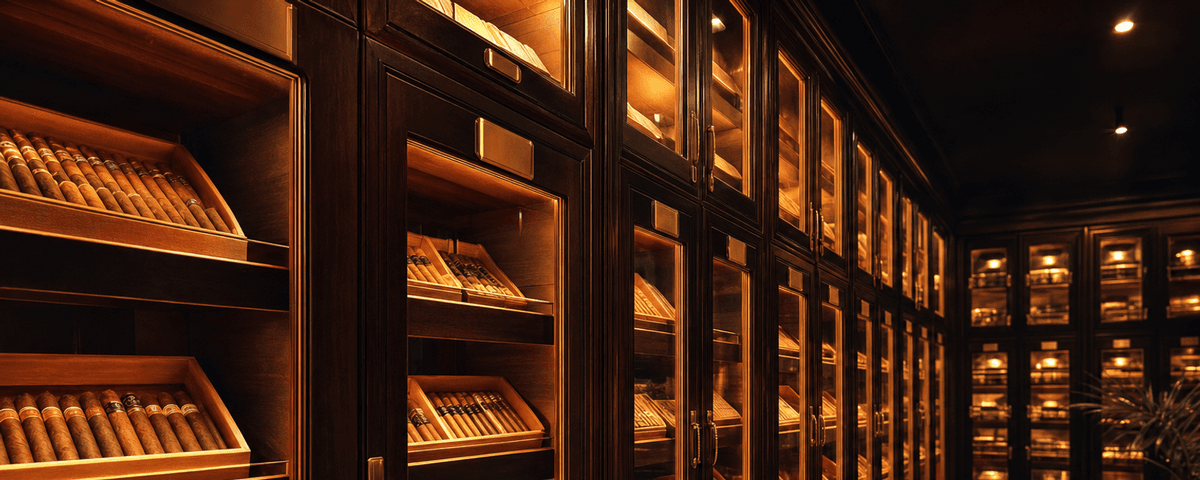
33 座 24 小時恆溫恆濕醇化室
W Cigar Bar 提供的會員醇化空間 · 場地資訊請洽編輯部
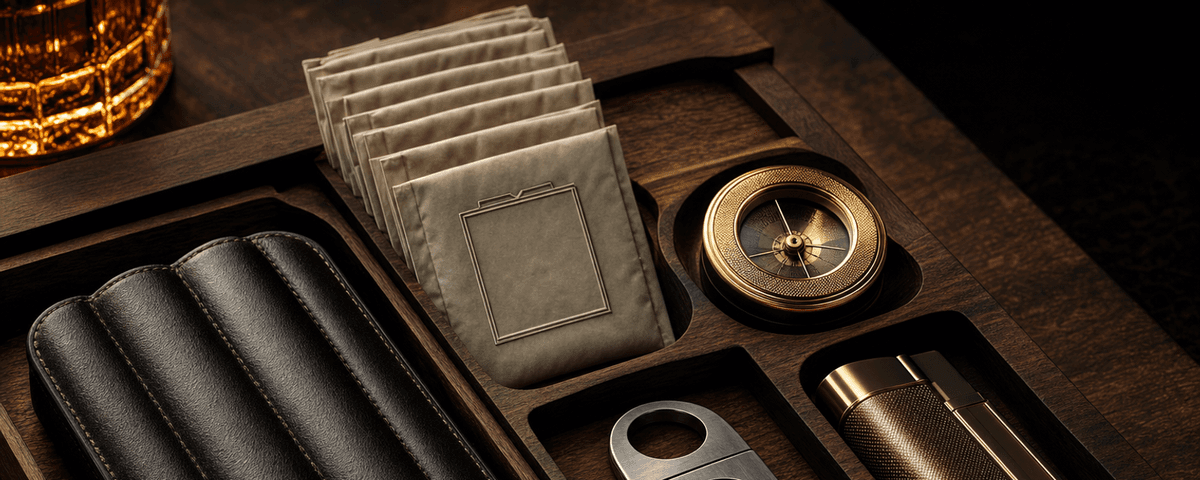
雪茄剪 / 打火機 / 雪茄盒 / Boveda
W Cigar 配件官網 · 專營雪茄配件正品

加 LINE 好友 · 文化諮詢
文化空間資訊 · 紳士沙龍 · 私人包場
本網站內容僅供雪茄文化、歷史、收藏與品吸知識研究參考。菸品有害健康、未滿法定年齡者請勿吸菸。實際規範請依所在地法律為準。
吸菸有害健康・戒菸專線 0800-636363・本站僅供 20 歲以上成年人閱覽。
讀到這裡,你不只是路過的人
留下 Email,加入 W 雪茄聖經內圈——總編輯 Wilson Tsai 親選的學院深文與國際新訊,先你一步送到信箱。
· 教育用途非銷售 · 隨時一鍵退訂 · Email 絕不對外公開 · 由勝茄股份有限公司營運
同分類延伸閱讀

資料來源:W Cigar Bible 編輯部整理 · 雪茄王子 Wilson Tsai 親自審稿
本文僅供雪茄文化、歷史、收藏與品鑑知識研究,不作為菸品促銷、銷售或購買建議。吸菸有害健康,未滿二十歲不得吸菸。