雪茄的點火與熄滅技巧:提升品味的關鍵要素
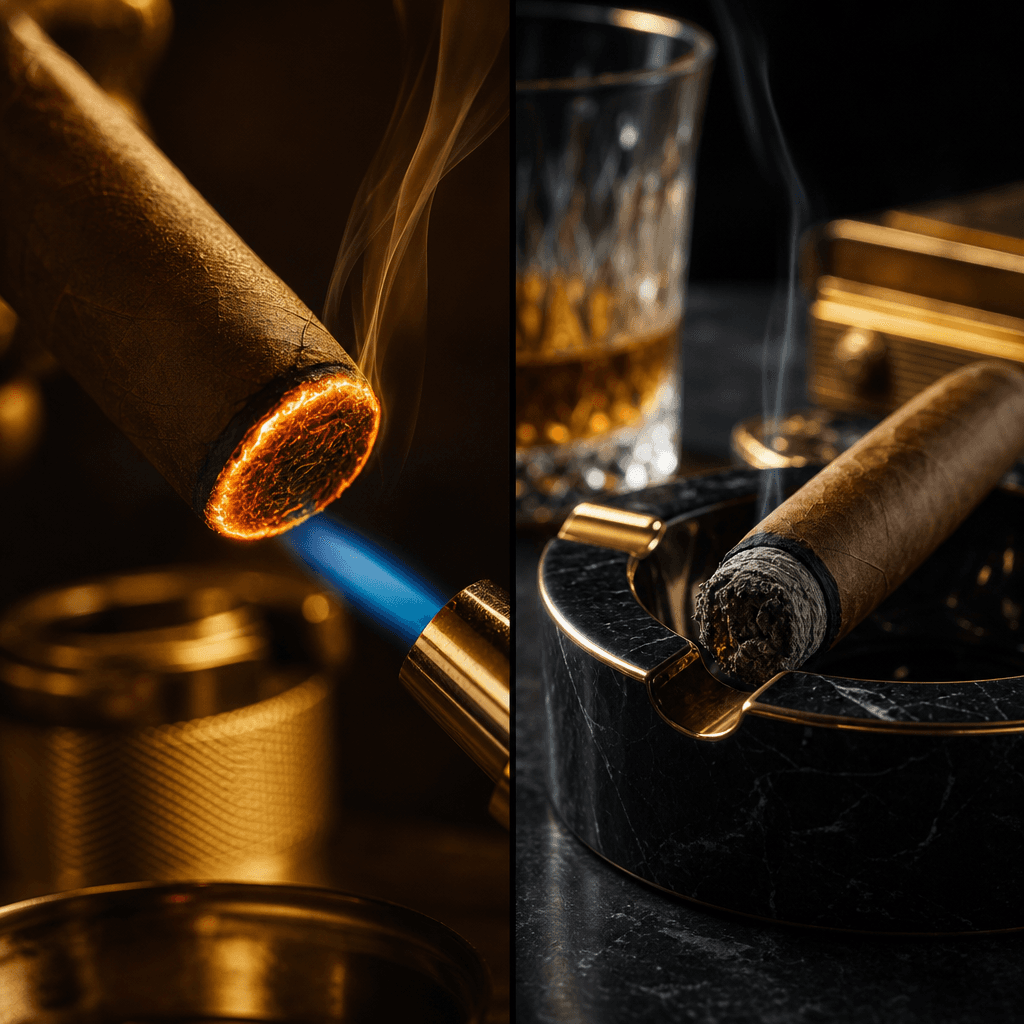
雪茄的點火與熄滅過程對於其風味展現至關重要。許多入門者常忽略火焰距離、預熱時間及環境因素,導致雪茄表現不佳。正確的點火方式應分為預熱與正式點燃,並注意剪口的乾淨度及吸阻的合理性。選擇合適的火源也影響燃燒效果,建議使用單焰或雙焰噴槍,並控制距離。點火後,應慢慢吸取,觀察煙量與火線,並在遇到歪燒或隧道燃燒時,採取適當的修正措施,確保雪茄的完整風味。
- 點火時應先預熱茄腳,讓其均勻受熱,避免焦苦味。
- 剪口前需檢查吸阻與環境風,確保點火順利。
- 熄滅時應自然缺氧,不要用力壓熄,以免影響氣味。
Techniques for Lighting and Extinguishing Cigars: Key Elements to Enhance Taste
Lighting and extinguishing may seem like just two actions before and after smoking a cigar, but they actually determine whether a cigar can fully unfold its layers, sweetness, woody notes, spicy aroma, and finish. Beginners often focus on brand and size, neglecting flame distance, preheating time, ash management, and the method of finishing.
As an editor of the "Cigar Bible," I've seen too many good cigars ruined in the first 3 minutes, and I've also seen an ordinary cigar become clear and intriguing due to correct lighting and rhythm. In this article, I will guide you from a practical perspective to make your lighting and extinguishing more stable and elegant.
時間線呈現剪口冷吸預熱點火與靜置收尾步驟
Understanding Before Lighting: Cigars Are Not Cigarettes, Don't Use the "Burn Faster" Logic
The core of cigar burning lies in "evenness" rather than "intensity." A common Robusto size, such as Cohiba Robusto, is about 124mm with a ring gauge of 50, and its burning area is much larger than that of a cigarette. If the flame is directly applied to the foot of the cigar, the outer wrapper can easily become bitter and charred, while the long filler inside may not be fully heated, leading to a first puff that could be spicy, ammonia-like, or charred wood-like. The purpose of lighting is not to burn the cigar, but to form an even, stable burning surface at the foot of the cigar.
I usually divide lighting into two stages: preheating and formal ignition. Preheating is like warming up a pan, allowing the surface of the cigar foot to slowly darken, dry, and start to glow slightly red; formal ignition is to complete the circle of the fire line. For a torpedo-shaped cigar like Montecristo No.2, with a ring gauge of 52 and a tapered head, if the foot is not evenly lit, the front section can easily burn faster on one side than the other.
Another often overlooked factor is humidity. Cigars stored at 65% to 69% RH usually light more cleanly; if stored above 72% RH for a long time, they tend to emit black smoke, have a sluggish fire line, or even tunnel burn. In 2019, I dealt with a box of Partagás Serie D No.4 that was stored too moist. It looked oily on the outside, but within 10 minutes of lighting, it burned unevenly. After reducing the humidity and letting it sit for 3 weeks, its performance stabilized. No matter how good your lighting technique is, it can't compensate for burning issues caused by poor storage conditions.
三張卡列出預熱成圈與自然熄滅的操作重點
Preparation Before Lighting: Check the Cut, Humidity, and Environment Together
Many people think they can light the cigar immediately after cutting, but there are three things to check first: whether the cut is clean, whether the draw resistance is reasonable, and whether the wind in the environment is too strong. Take H. Upmann Magnum 46, for example, 143mm with a ring gauge of 46, proportionally long and slender. If the cut is too shallow, the draw resistance is tight, and you may unconsciously increase the suction force when lighting, leading to excessive flame temperature; if the cut is too deep, the cap may crack, causing looseness and debris in the latter part, disrupting the rhythm of the entire cigar.
After cutting, I perform a "cold draw" assessment. It's not for mystique but to check airflow. The ideal state is like drinking a thick beverage through a straw, with resistance but not laborious. If it feels like an empty tube, the structure is loose, and you should slow down the frequency after lighting; if it feels like sucking a thick milkshake, you may need to adjust the cut or let the cigar warm up briefly. The 30-second check before lighting is often more important than the 10-minute correction after lighting.
The environment also changes the outcome. In outdoor breezes of 2 to 3 levels, a torch flame is more stable than a soft flame; but if the wind is strong enough to tilt the flame, it's best to pause, as the fire line will be pushed to one side by the wind. In 2021, a friend lit a Davidoff Aniversario No.3 by the sea. The flame seemed strong, but only the windward side was heated, forming a sloped burn after 5 minutes, requiring multiple corrections. My approach is simple: find a sheltered spot, rotate the cigar, and look at the foot of the cigar with your eyes, not just the flame.
- Cut: Smooth, without tearing the cap
- Cold draw: Resistant but smooth
- Humidity: Recommended around 65% to 69% RH
- Environment: Avoid strong winds and direct air conditioning
- Mindset: Slow, don't rush the first puff
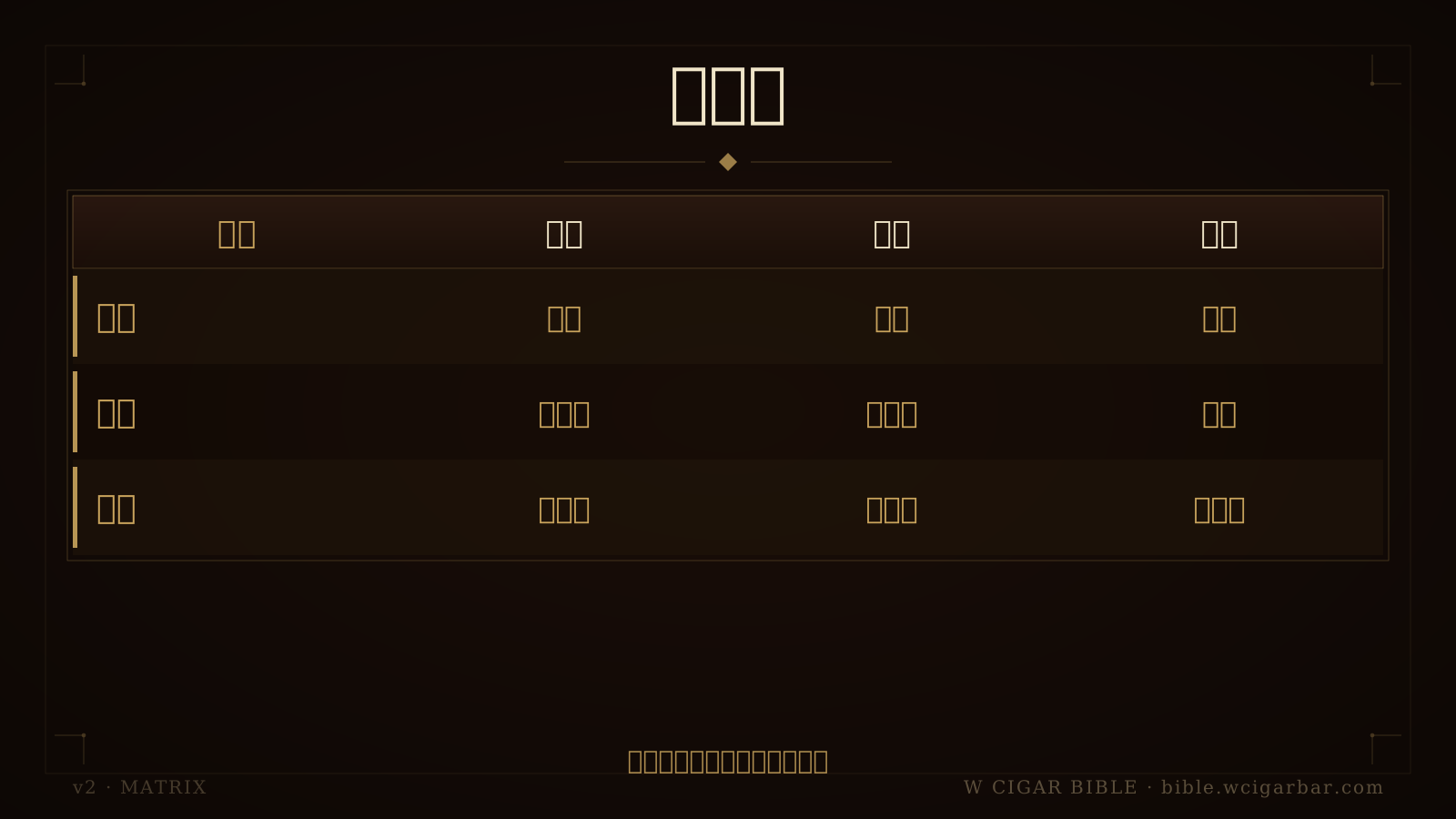
矩陣比較軟火噴槍與雪松在控溫抗風及適用情境
Choosing a Fire Source: Soft Flame, Torch, Matches, and Cedar Spills Each Have Their Character
Different fire sources have no absolute superiority; the key is to know their temperature, stability, and flavor impact. Soft flame lighters have a milder temperature, suitable for indoor and small ring gauge cigars, such as Romeo y Julieta Petit Churchill; torch flames are concentrated, suitable for outdoor or large ring gauge cigars, such as Padron 1964 Anniversary Exclusivo. For ring gauges over 50, using a soft flame often requires more time. A good fire source is not about having a bigger flame, but about controlling the speed and position of heat entering the cigar foot.
Matches have a traditional feel, but you must wait for the sulfur smell to dissipate before approaching the cigar. A typical wooden match burns for about 8 to 12 seconds, and lighting large cigars often requires 2 to 3 matches; cedar spills have an elegant aroma but unstable flames, requiring skilled hand movements. In 2016, I watched an old customer in London light a Punch Punch with a cedar spill, preheating for nearly 40 seconds without the cigar touching the flame, resulting in a first puff as clean as roasted nuts. This is the value of rhythm.
| Fire Source | Advantages | Disadvantages | Suitable Scenarios |
|---|---|---|---|
| Soft Flame Lighter | Mild, less likely to scorch the wrapper | Wind-sensitive, longer time | Indoors, small to medium ring gauge |
| Single Torch | Precise, easy to correct uneven burns | Too close can cause localized bitterness | Most daily sizes |
| Triple Torch | Fast, large flame surface | Easily overheats | Large ring gauge, outdoors |
| Wooden Matches | Great ritual feel | Short time, initial odor | Small sizes or auxiliary |
| Cedar Spills | Delicate aroma | Requires skill | Slow-paced occasions |
My suggestion for beginners is to start with a single or double torch, keeping the distance at 2 to 4 cm, and not letting the flame tip directly pierce the cigar foot. If using a triple torch, shorten the time and increase the rotation frequency. The fire source is just a tool; the real skill lies in distance, angle, and patience.
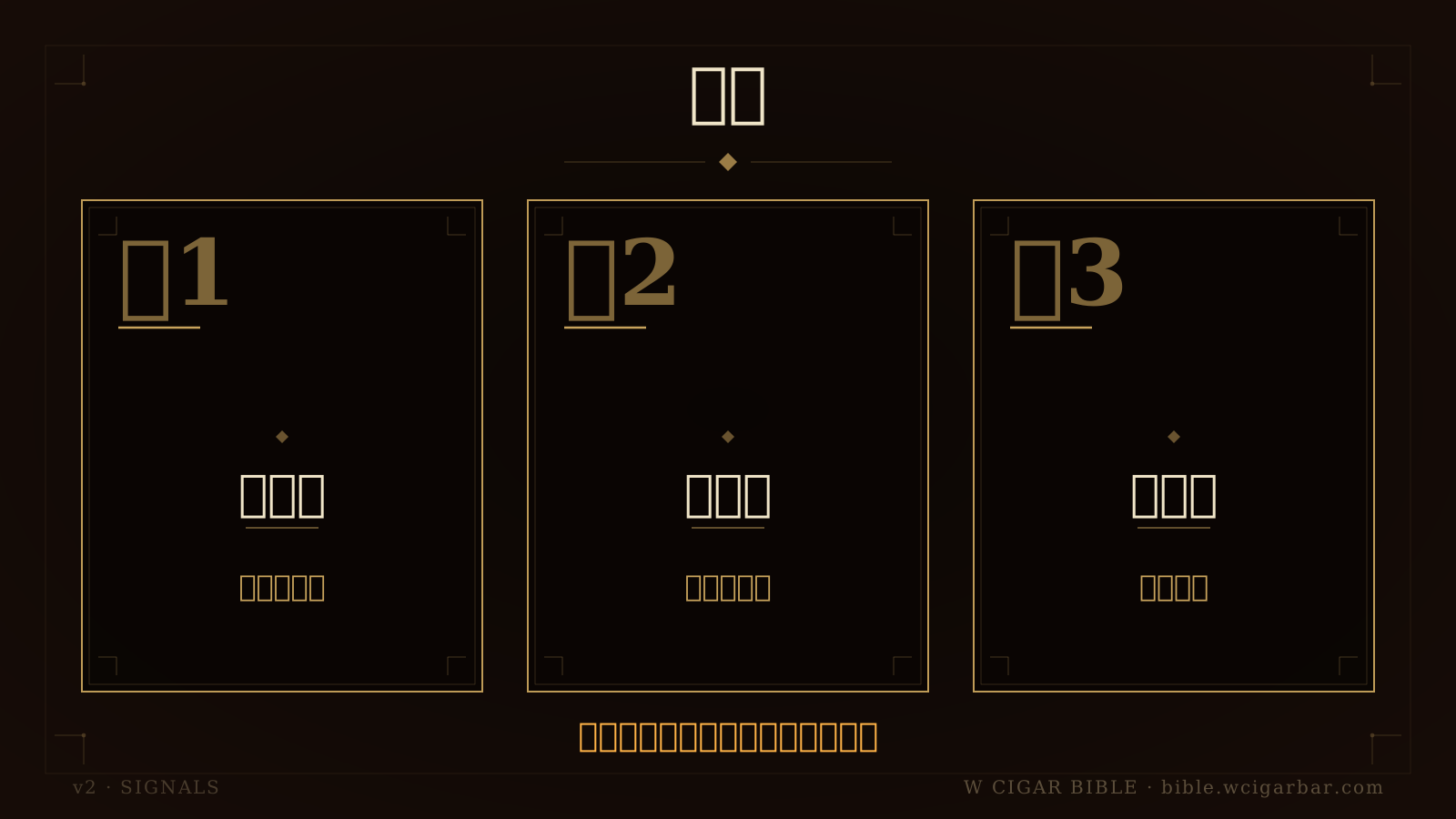
三張卡提醒火焰貼近濕度偏高與補火猛吸的問題
Standard Lighting Process: From Preheating to the First Puff, Seize the 90-Second Golden Period
A well-conditioned cigar usually takes 60 to 90 seconds for complete lighting. The first step is to bring the cigar foot close to the outer edge of the flame at about a 45-degree angle, without letting the blue core of the flame touch the tobacco leaves directly. Slowly rotate the cigar, allowing the outer ring to heat first; you'll see the color of the cigar foot change from brown to dark, with even red spots appearing at the edges. Don't rush to puff at this point, as the suction will draw high temperatures into the filler, causing the front section to be spicy.
The second step is to gently blow or lightly inspect the cigar foot. My habit is to move the cigar away from the fire source and gently blow on the foot to check if the entire surface is glowing red. If only half the circle is bright, continue to supplement the other side. For special shapes like Oliva Serie V Melanio Figurado, where the foot-to-body ratio changes significantly, preheating needs to be more detailed; if only the center is burned, the outer ring will lag, easily forming a crater later. Before the first puff, let the cigar foot prove it is burning evenly.
The third step is to take a short, gentle first puff. Don't suck continuously and forcefully like drinking hot soup; instead, draw for 1 to 2 seconds, then stop to observe the smoke volume and fire line. For the first 5 minutes, it's recommended to puff every 45 to 60 seconds to stabilize the burning temperature. In 2018, I compared two cigars from the same box of Bolivar Royal Corona: one was puffed hastily, resulting in a bitter leather flavor in the front section; the other was puffed slowly, revealing cocoa, wet wood, and slightly sweet spicy notes, with a very noticeable difference.
- Cigar foot distance from flame: 2 to 4 cm
- Preheat the outer ring first, then supplement the center
- After lighting, gently blow to check red spots
- First puff should be short and light, not continuous and forceful
- Slow down the pace in the first 5 minutes, observe the fire line
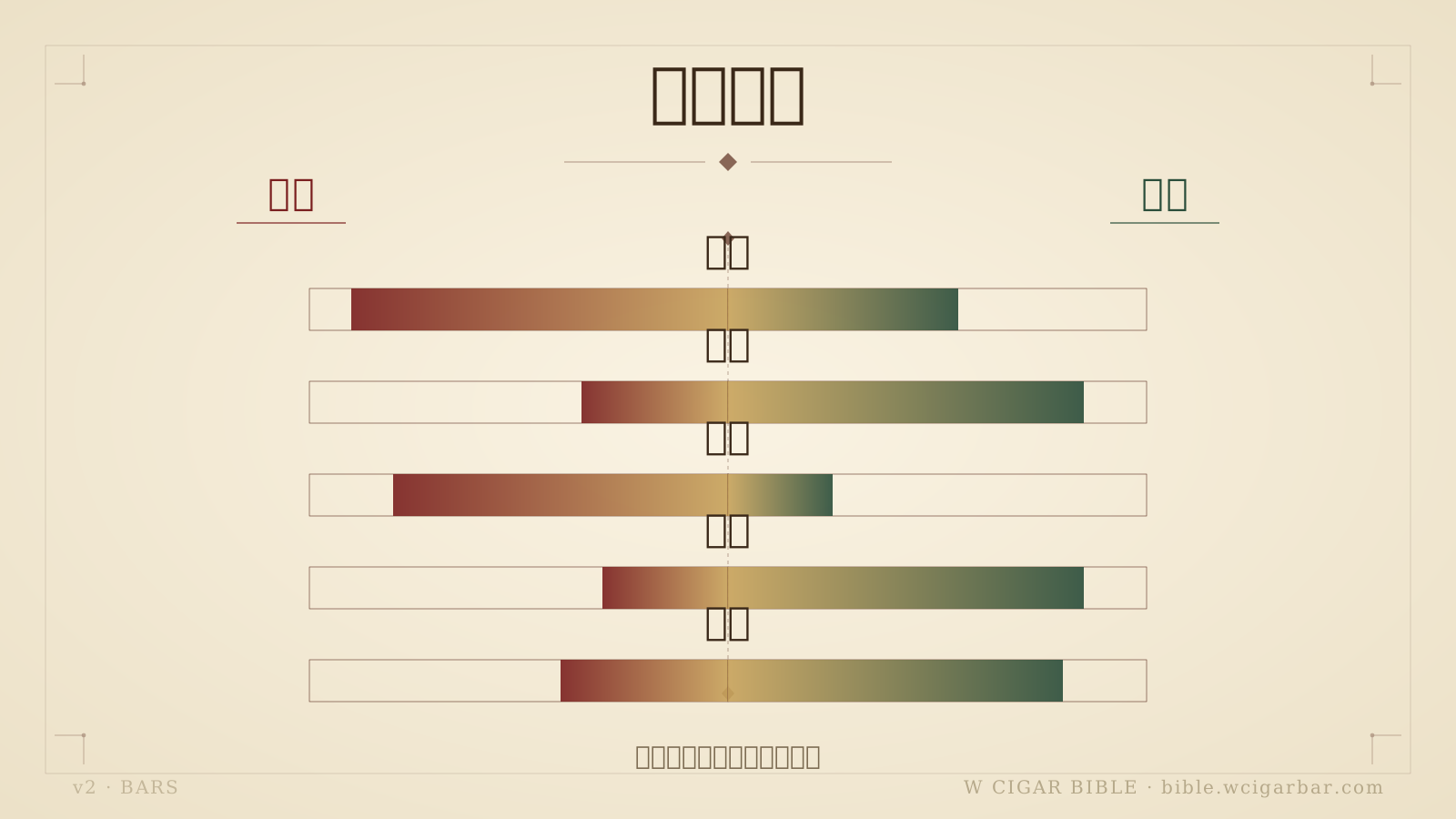
橫向長條比較急火與慢火在熱量均勻焦苦控制尾韻差異
Uneven Burns, Tunneling, and Extinguishing: Correction Is More Elegant Than Forcing
It's normal for cigars to burn imperfectly, especially with handmade long fillers, where each tobacco leaf varies in oil content, thickness, and position. If the uneven burn is less than 5mm, I usually don't rush to correct it but instead position the slower-burning side downward, using the natural rise of hot air and oxygen flow to correct it. If it exceeds 1 cm or forms a noticeable slope, use a single torch to lightly supplement the slower side. The most taboo thing when dealing with uneven burns is to re-burn the entire circle, as that will scorch the originally normal side.
Tunneling is much more troublesome. Its characteristic is that the center burns quickly, while the outer wrapper and binder lag, making the cigar foot look like a hollow in the middle. Common causes include high humidity, only burning the center during lighting, or puffing too quickly. When encountering tunneling, I pause for 1 to 2 minutes to let the temperature drop, then use the flame to supplement the outer ring; if the outer layer still doesn't burn, it indicates an undesirable moisture state, and there's no need to force it.
Extinguishing doesn't mean failure. Especially for thin and long sizes like Lancero or Panetela, or older Cuban cigars with reduced oil content, they can weaken after being set aside for 2 to 3 minutes. Before relighting, gently tap off the ash, blow lightly on the cigar foot to expel residual cold smoke, and then replenish the outer ring with low heat. In 2014, a Ramon Allones Specially Selected went out in the middle section. I didn't immediately burn it intensely but first cleared the ash, blew air, and slowly supplemented the outer ring, preserving the brown sugar and woody notes in the latter part.
To determine whether correction is needed, look at three indicators: whether the fire line continues to skew, whether the flavor starts to become bitter and charred, and whether the smoke volume suddenly decreases. As long as the flavor remains clean, many small uneven burns can be left to time. Knowing how to wait is the quietest and most practical skill in cigar etiquette.
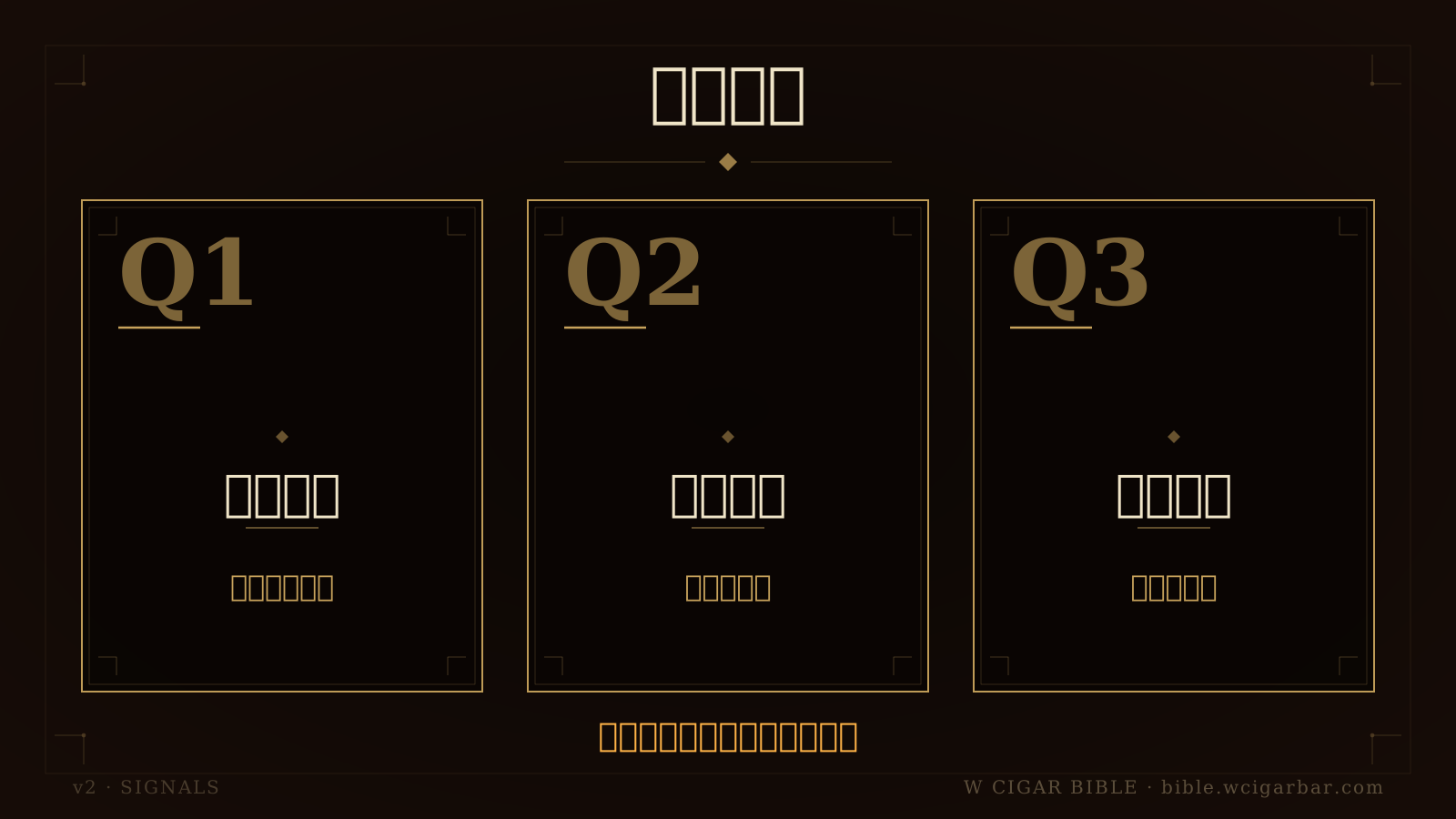
三張問答卡整理火焰距離熄火原因與重新點燃處理
Extinguishing and Midway Pauses: Don't Snuff It Out, Let It End with Dignity
The way to extinguish a cigar is different from a cigarette. The worst method is to crush the cigar into the ashtray. A cigar is made of a bundle of fermented tobacco leaves, and crushing it releases strong tar and ammonia odors, lingering for a long time and affecting the experience of those at the same table. The correct way is to place the cigar on the edge of the ashtray, letting it naturally extinguish due to lack of oxygen; usually, the fire line will disappear within 2 to 5 minutes. A cigar doesn't need to be snuffed out; quietly setting it down is the most graceful ending.
If you're only pausing midway, distinguish the time. Leaving for 3 to 5 minutes usually only requires relighting; after more than 15 minutes, the flavor may noticeably turn cold and sour. If you plan to continue later, it's recommended to gently blow 1 to 2 times to expel hot smoke, then lay it flat in the ashtray to avoid the cigar foot contacting moist ash. Before relighting, be sure to clear away loose ash, not directly burning through thick ash.
Lighting a cigar the next day is generally not recommended. Someone once saved half an Arturo Fuente Hemingway Short Story for the next day, and upon relighting, the first 3 puffs were all cold tar flavors, with the original sweet woody notes almost gone. If you must save it, at least let it completely extinguish, cut off the burned end by about 3 to 5mm, and store it in a separate container to avoid contaminating the humidor; but this is a compromise, not an ideal practice.
Ending a cigar is also a judgment. When the flavor shifts from sweet to overly spicy, the temperature becomes hot to the touch, and the final section becomes bitter, overshadowing the layers, it's time to stop. There's no need to force it to the last centimeter. A person of taste doesn't smoke every cigar to the shortest length but knows when to let it end in a beautiful position.
Common Questions
Can I directly apply the flame to the cigar foot when lighting?
Not recommended. The blue core of a torch flame is very hot, and directly applying it to the cigar foot can quickly carbonize the wrapper, often resulting in a bitter taste in the first section. A better approach is to maintain a distance of 2 to 4 cm, using the outer edge of the flame to slowly preheat, rotating and observing the color change. The flame can approach the cigar, but it shouldn't rudely pierce into it.
Why does my cigar go out quickly even though I light it brightly?
There are three common reasons: high humidity, low puffing frequency, or only lighting the surface without penetrating. If the cigar is stored above 72% RH, burning will be sluggish; if you puff only once every 2 minutes, thin ring gauges are especially prone to extinguishing. After lighting, maintain a puff every 45 to 60 seconds for the first 5 minutes to stabilize the fire line.
Will relighting a cigar after it goes out make it taste bad?
There will be an impact, but proper handling can minimize the loss. Before relighting, clear the ash, lightly blow on the cigar foot to expel cold smoke and charred flavors, then supplement the outer ring without directly drawing intensely. If the extinguishing time exceeds 20 minutes, sourness and cold tar flavors usually increase, and you must accept that it may not return to its original state.
Is lighting with a cedar spill really better?
The advantage of cedar spills is their gentle flame and elegant aroma, particularly suitable for slowly preheating large or aged cigars; the downside is they are wind-sensitive and require more skilled hand movements. For beginners, a single torch is more stable. Once you can control the flame distance and rotation speed, trying cedar spills will be more meaningful.
How short should a cigar be smoked to be considered polite?
There is no strict standard. Generally, I stop when about 3 to 4 cm remains, or when the flavor noticeably becomes hot and bitter. If it's a well-structured Padron or Davidoff, sometimes the final section remains clean; if it's a stronger Bolivar, the end may be spicier. The focus is not on length but whether you still enjoy it.
Can I cut and relight a cigar if I fail to light it?
Yes, but be cautious. If the cigar foot is already charred and bitter, you can cut off about 2 to 3mm and re-preheat; but cutting too much changes the length and burning ratio, potentially loosening the structure. I usually try clearing ash, blowing air, and supplementing the outer ring first, considering cutting only if correction is impossible. The order of correction should be light before heavy, observation before action.
Lighting and extinguishing are the most underestimated basic skills in the cigar world. Brand, age, origin, and aging state are all important, but ultimately they must be presented through the fire and rhythm in your hands. My view is simple: slow down, look carefully, use less force, and let the cigar speak for itself. When you can light the first puff cleanly and let the last moment pass gracefully, taste is not just a matter of flavor but a complete gentleman's cultivation.
—Cigar Prince Wilson Tsai
Smoking is harmful to health. Smoking is prohibited for those under twenty. Quitline: 0800-636363. This article is intended for adults over the age of twenty as a reference for cigar culture, storage, and regulations, not as an advertisement, promotion, or purchase suggestion.
Like this article?Share with friends
Share this W Cigar Bible piece with friends who want to learn cigar culture, storage, and tasting.
想把這篇 化為實踐
雪茄聖經是知識;雪茄文化要在空間裡發生
W Cigar Bar 大安總店資訊
台北大安區 · 雪茄聖經總編輯 Wilson Tsai 主理的雪茄文化空間
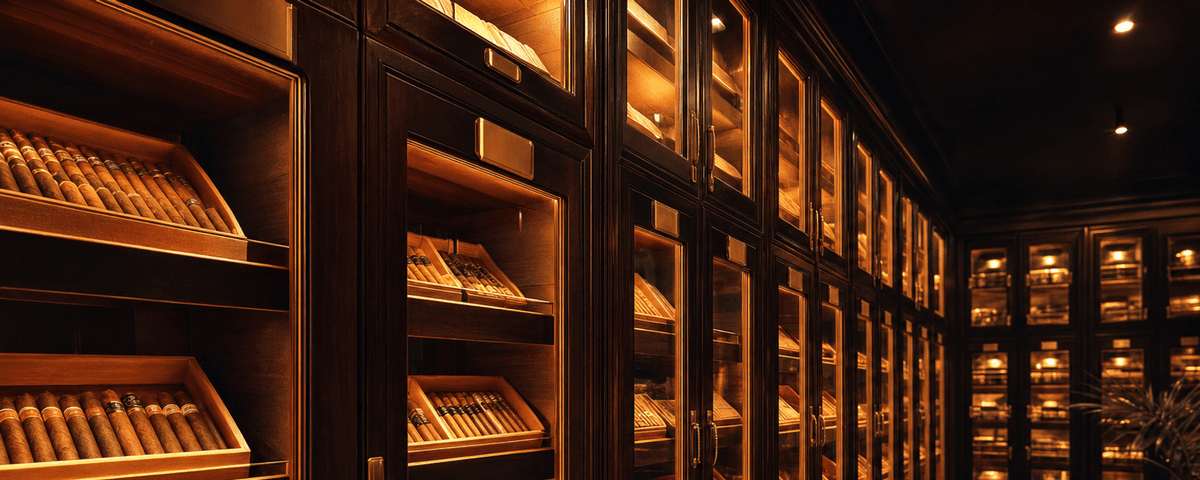
33 座 24 小時恆溫恆濕醇化室
W Cigar Bar 提供的會員醇化空間 · 場地資訊請洽編輯部
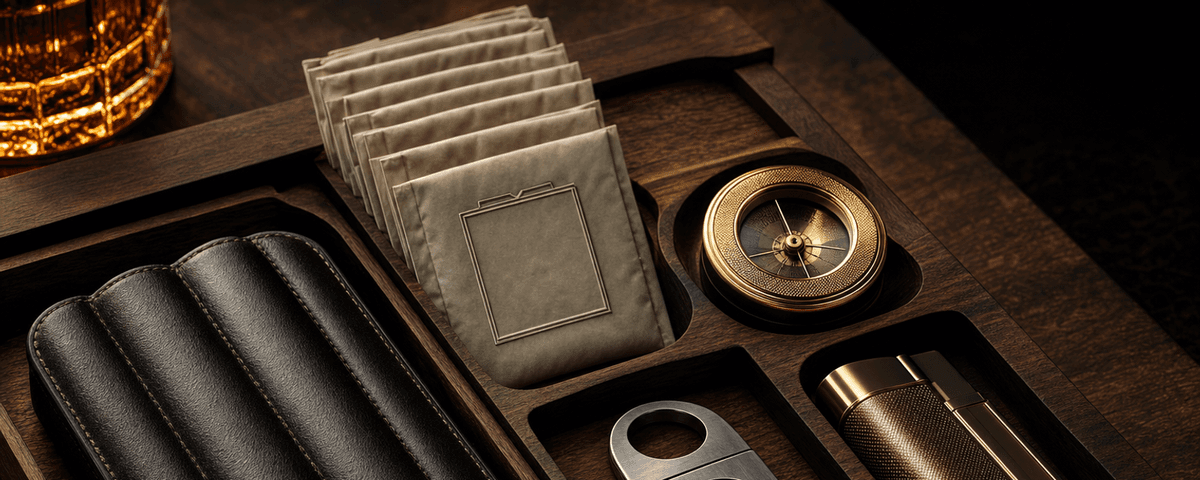
雪茄剪 / 打火機 / 雪茄盒 / Boveda
W Cigar 配件官網 · 專營雪茄配件正品
加 LINE 好友 · 文化諮詢
文化空間資訊 · 紳士沙龍 · 私人包場
本網站內容僅供雪茄文化、歷史、收藏與品吸知識研究參考。菸品有害健康、未滿法定年齡者請勿吸菸。實際規範請依所在地法律為準。
吸菸有害健康・戒菸專線 0800-636363・本站僅供 20 歲以上成年人閱覽。
讀到這裡,你不只是路過的人
留下 Email,加入 W 雪茄聖經內圈——總編輯 Wilson Tsai 親選的學院深文與國際新訊,先你一步送到信箱。
· 教育用途非銷售 · 隨時一鍵退訂 · Email 絕不對外公開 · 由勝茄股份有限公司營運
同分類延伸閱讀
資料來源:W Cigar Bible 編輯部整理 · 雪茄王子 Wilson Tsai 親自審稿
本文僅供雪茄文化、歷史、收藏與品鑑知識研究,不作為菸品促銷、銷售或購買建議。吸菸有害健康,未滿二十歲不得吸菸。