雪茄的稀有度與收藏價值分析

雪茄的稀有度並非僅因產量少,而是多重因素交織而成的結構性稀缺。包括年份、尺寸、品牌地位及保存狀態等,均影響其市場價值。老手在收藏時應建立判斷框架,分析供需端的差異,並重視品牌光環對價格的影響。年份與批次的選擇也極為重要,因為同一款雪茄在不同狀態下的價值差異可觀。收藏策略應根據自身理解與驗證能力,選擇能長期保存的類別,並注意保存條件以維持價值。
Analysis of the Rarity and Collectible Value of Cigars
Rarity is a term often misunderstood by seasoned collectors when discussing cigar collections. It is not simply about being "few" but is a structural scarcity formed by the intersection of production volume, vintage, size, brand status, preservation condition, circulation records, and market consensus.
As an editor of the "Cigar Bible," I have seen many boxes go from being overlooked to being sought after, and I have also seen popular topics cool down within three years. In this article, I want to take a more composed approach to dissect how cigar rarity translates into market value and how seasoned collectors should establish their judgment framework.
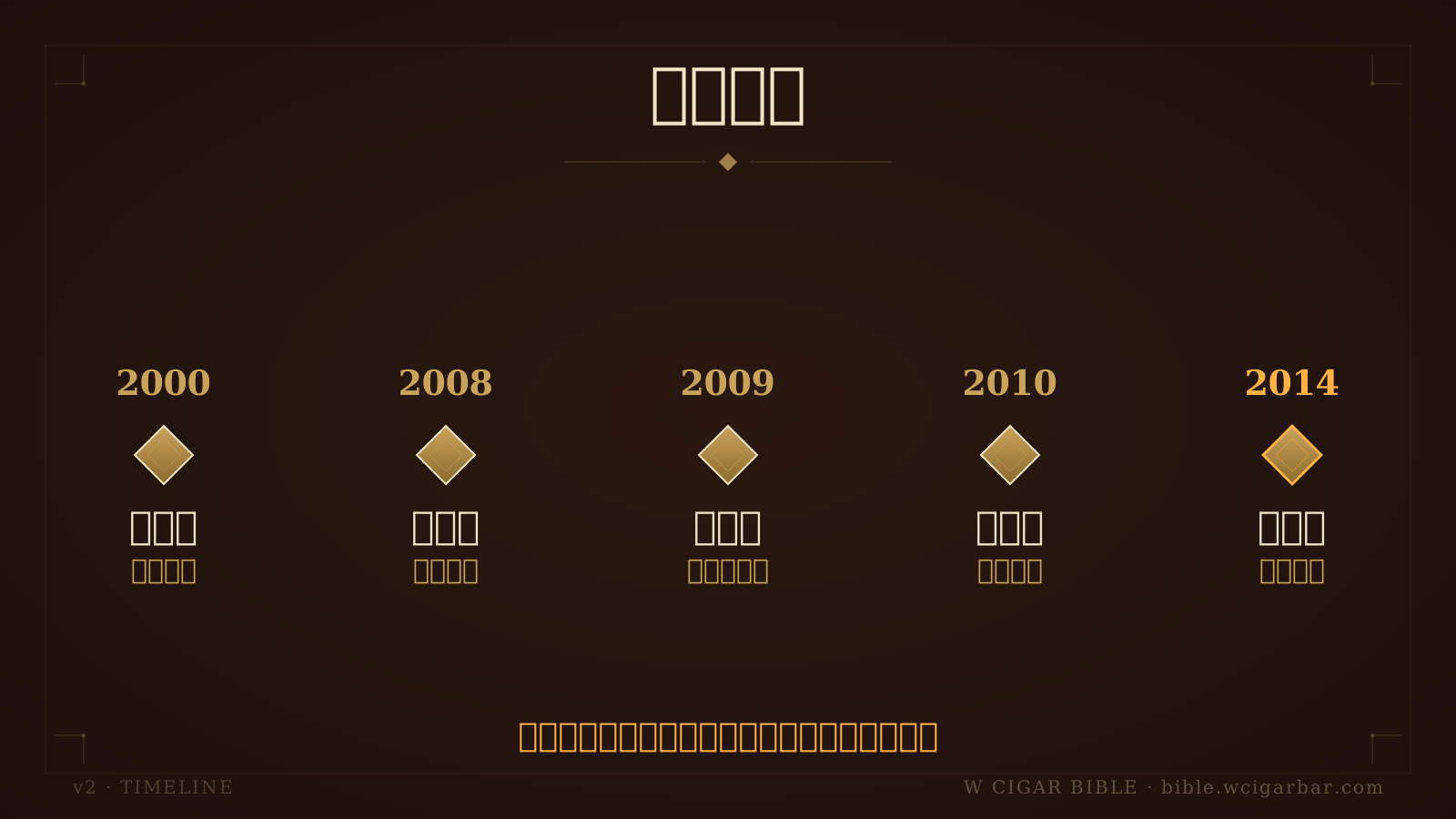
時間軸呈現限量制度、口碑年份與停產案例的脈絡順序
The Essence of Rarity: It's Not About Being Few, But "Difficult to Reproduce"
The rarity of cigars has three layers: the first is physical quantity, the second is the irreversibility of time, and the third is market psychology. For example, Cohiba Behike BHK 52, 54, 56, after being officially launched in 2010, quickly became one of the benchmarks for high-end Cuban cigars. The reason is not only limited production but also the use of Medio Tiempo leaves, whose supply is affected by field area, vintage, and grading, making it impossible to mass-produce just by increasing labor hours.
Another typical case is discontinued sizes. Cohiba Robustos Supremos Edición Limitada 2014, with a ring gauge of 58 and a length of 127mm, was already a peak representative of the large ring gauge trend that year; but once the limited edition year passed, it was no longer the same batch formula, the same label, or the same market context. What seasoned collectors truly pursue is "that year, that batch, that condition," not just chasing a name.
The true value of rarity lies in its difficult-to-reproduce vintage, specifications, or historical background. If it is just a temporary shortage without brand narrative, accumulated evaluations, and preservation evidence, the price is easily pushed up by emotions and then corrected by time. Collecting appreciation does not guarantee appreciation; it still depends on source preservation and the market.
Supply-Side Analysis: Differences in Limited Editions, Discontinued Models, and Special Channels
The three most common sources of scarcity on the supply side are limited editions, discontinued models, and special releases. Limited editions like Habanos Edición Limitada have been a focus for collectors since 2000, such as Montecristo Sublimes EL 2008 and Partagás Serie D No.5 EL 2008, which have formed ongoing discussions due to their size, vintage, and subsequent reputation. The key is not the words "limited edition," but whether the market is willing to recognize its status years later.
Discontinued models are more complex. Trinidad Robustos T was launched in 2010 and then discontinued, giving it a special place in the Trinidad series; Cohiba Siglo VI Gran Reserva Cosecha 2003 was launched in 2009, with an official global quantity of about 5,000 boxes, each containing 15 cigars, forming a typical high-end collectible target due to the harvest year, Gran Reserva grade, and the Cohiba brand.
Special releases depend on region, institution, and release system. Some Regional Editions may not be hot initially, but if the size is attractive and the brand's original line is scarce, they may be reevaluated ten years later. The scarcity on the supply side must be verifiable to have the opportunity to convert into long-term value. Box labels, tax stamps, shipping records, release years, and preservation continuity are often more important than word of mouth.
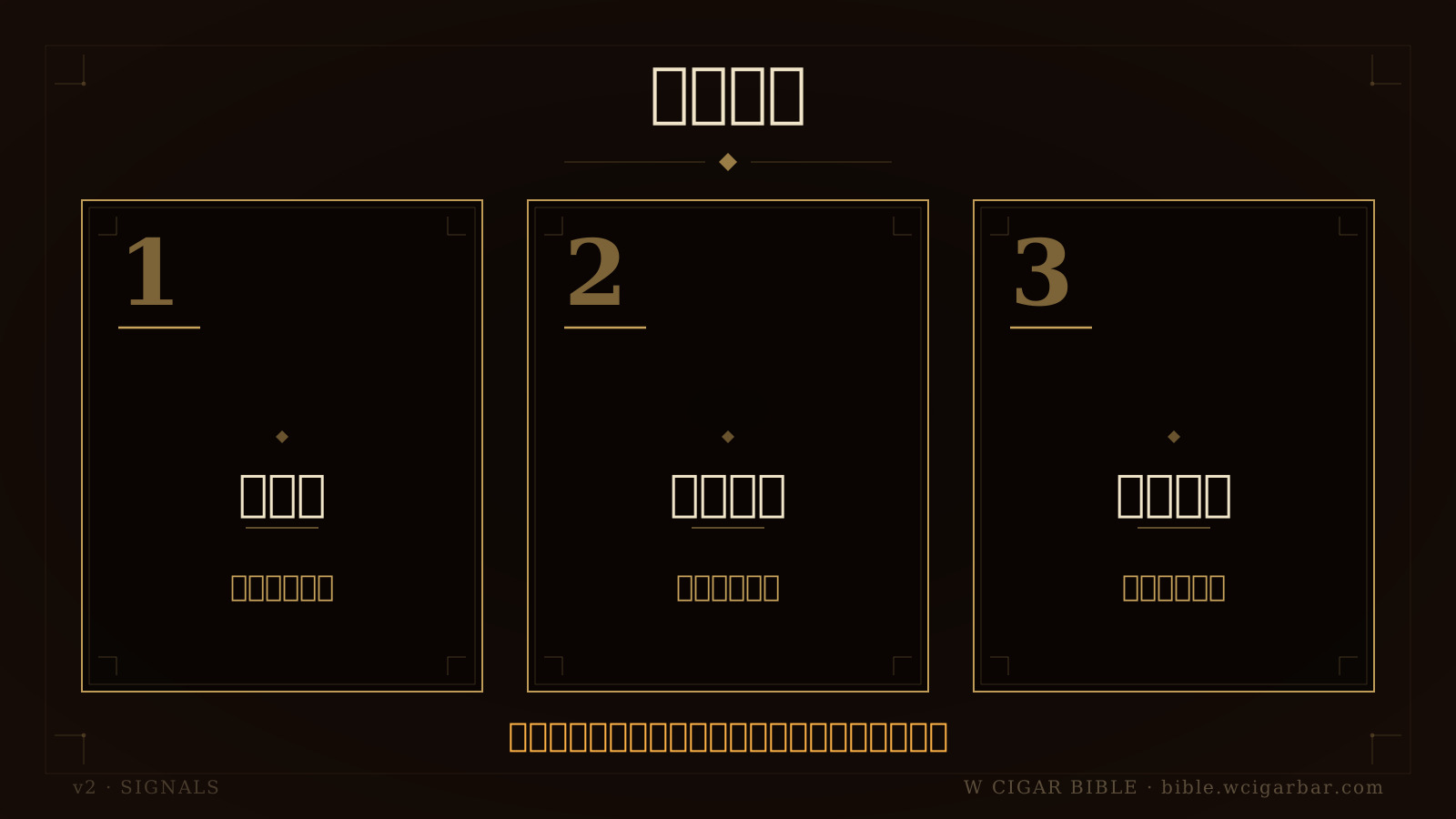
三張卡列出難再現、來源連續與共識沉澱三項判讀重點
Demand-Side Analysis: How Brand Halo Amplifies Price Elasticity
Even with the same small quantity, the market reactions for Cohiba, Trinidad, Davidoff, Arturo Fuente, and Padrón will not be the same. Cohiba represents a symbol of high-end Cuba, especially the Behike, Gran Reserva, and Reserva series, often used as benchmarks by global collectors; Trinidad, due to its brand history from diplomatic gifts to the open market, established a classic image of slender sizes after Fundadores officially hit the market in 1998.
Non-Cuban cigars also have clear cases. Arturo Fuente Fuente OpusX, launched around 1995, proved that the Dominican Republic could also produce cigars with high intensity, complexity, and collectible topics; Padrón 1964 Anniversary Series has accumulated long-term trust in the U.S. market with its stability, aged tobacco, and box-pressed style. These brands are not just products but have recognizable collectible languages.
The demand side will amplify price elasticity, especially when community discussions, auction records, and high-end collector preferences are concentrated. Brand halo is not superstition but a common language that reduces market judgment costs. However, seasoned collectors should not only look at fame but also see if the brand truly represents a certain year, size, or series; otherwise, they may buy ordinary subjects at high prices.
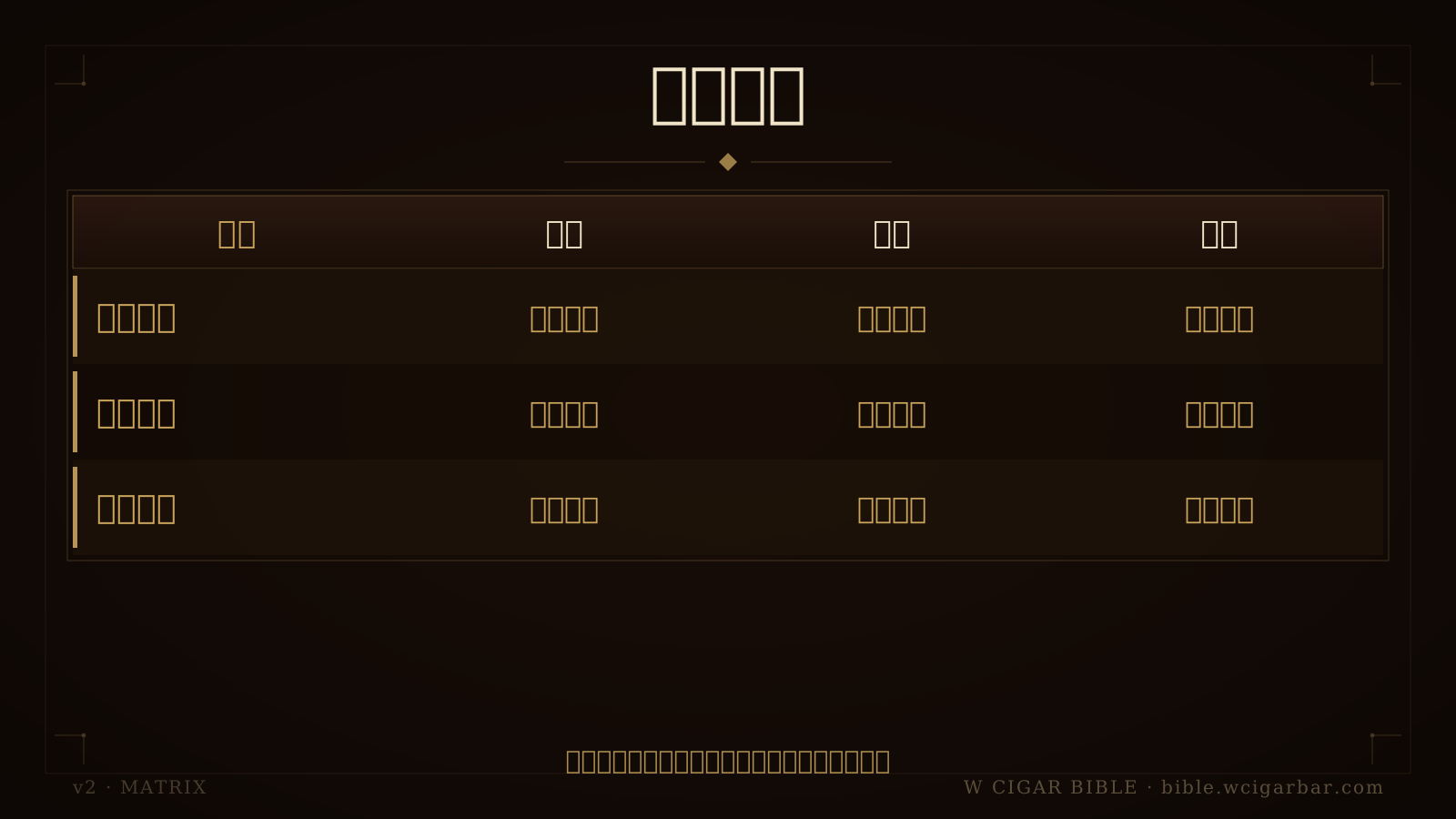
矩陣比較限量、停產與特發三類來源的形成原因與判讀重點
Vintage and Batch: Why the Price Difference Can Be Significant for the Same Cigar
Advanced judgment in cigar collection often falls on vintage and batch. For Cuban box bottom codes, years like 2003, 2006, 2008, 2011, 2014, and 2017 are often discussed repeatedly due to the performance of certain brands, but it cannot be crudely said that a certain year is all good or all bad. Agricultural products have regional and climate differences, and factory conditions, rolling quality, and subsequent storage will lead to different fates for cigars with the same name.
For example, H. Upmann Sir Winston, when well-preserved, often exhibits honey, woody, and creamy notes after more than ten years of aging, a familiar case for long-term collectors; but if humidity is consistently above 75%, even if the vintage is beautiful, it may lose value due to mold spots, draw resistance, and unstable burning. Romeo y Julieta Churchill is the same; old boxes have charm, but condition is more decisive than vintage itself.
For seasoned collectors, vintage should be checked with three levels: whether the box bottom code is clear, whether the outer box and inner lining are consistent, and whether the cigar surface oil and elasticity are reasonable. Vintage can provide a story, but condition determines whether the price can stand. A 2008 limited edition box with imbalanced preservation may not be better than a 2017 flagship regular edition with excellent preservation and clear provenance.
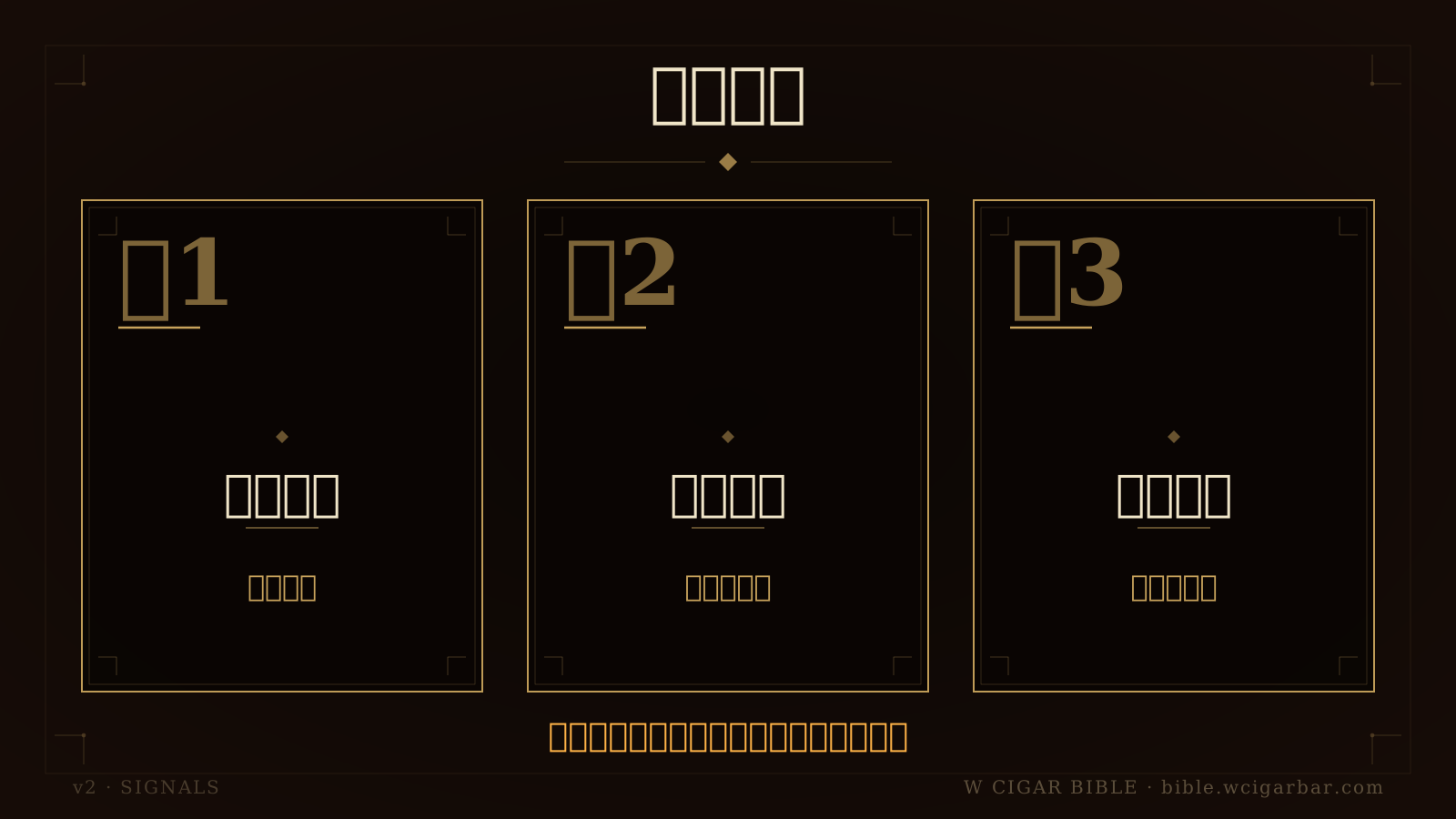
三張誤解卡提醒不要只看稀少、年份或短期熱度
Five Types of Collectible Targets: Use a Table to See Risks and Potential
When collecting cigars, I categorize targets into five types instead of generalizing them as "rare." Doing so avoids mixing short-term popularity with long-term value. If seasoned collectors already have brand preferences, they should establish classification logic to know whether funds should be placed in classic regulars, annual limited editions, discontinued sizes, or special commemorative boxes.
| Type | Representative Case | Advantage | Main Risk |
|---|---|---|---|
| Classic Regulars | Cohiba Siglo VI, H. Upmann Sir Winston | Many circulation records, stable evaluation benchmarks | Lower rarity, price difference depends on vintage |
| Annual Limited Editions | Montecristo Sublimes EL 2008 | Clear theme, easy market understanding | Initial premium may be too high |
| Discontinued Sizes | Trinidad Robustos T | Irreproducible supply | Condition varies |
| High-End Collectibles | Cohiba Gran Reserva 2003 | Clear quantity, strong brand | High entry threshold, high counterfeit risk |
| Non-Cuban Premiums | OpusX, Padrón 1964 | Stable quality, wide audience | Large regional price differences |
Collection strategy is not about collecting all rare items but choosing categories you can understand, verify, and preserve long-term. Each category in the table may have good targets, and mistakes can also be made. If you are only familiar with Cuban cigars and suddenly enter the OpusX limited edition, you need to supplement knowledge of vintage, packaging, release market, and preservation conditions.
In practice, I recommend establishing your "three-layer position": the core position holds classic regulars and long-verified brands; the opportunity position holds limited and discontinued sizes; the research position is reserved for special topics. This is not financial advice but collection discipline. When you can clearly explain why each box exists in the cabinet, the collection will not become an emotional accumulation.
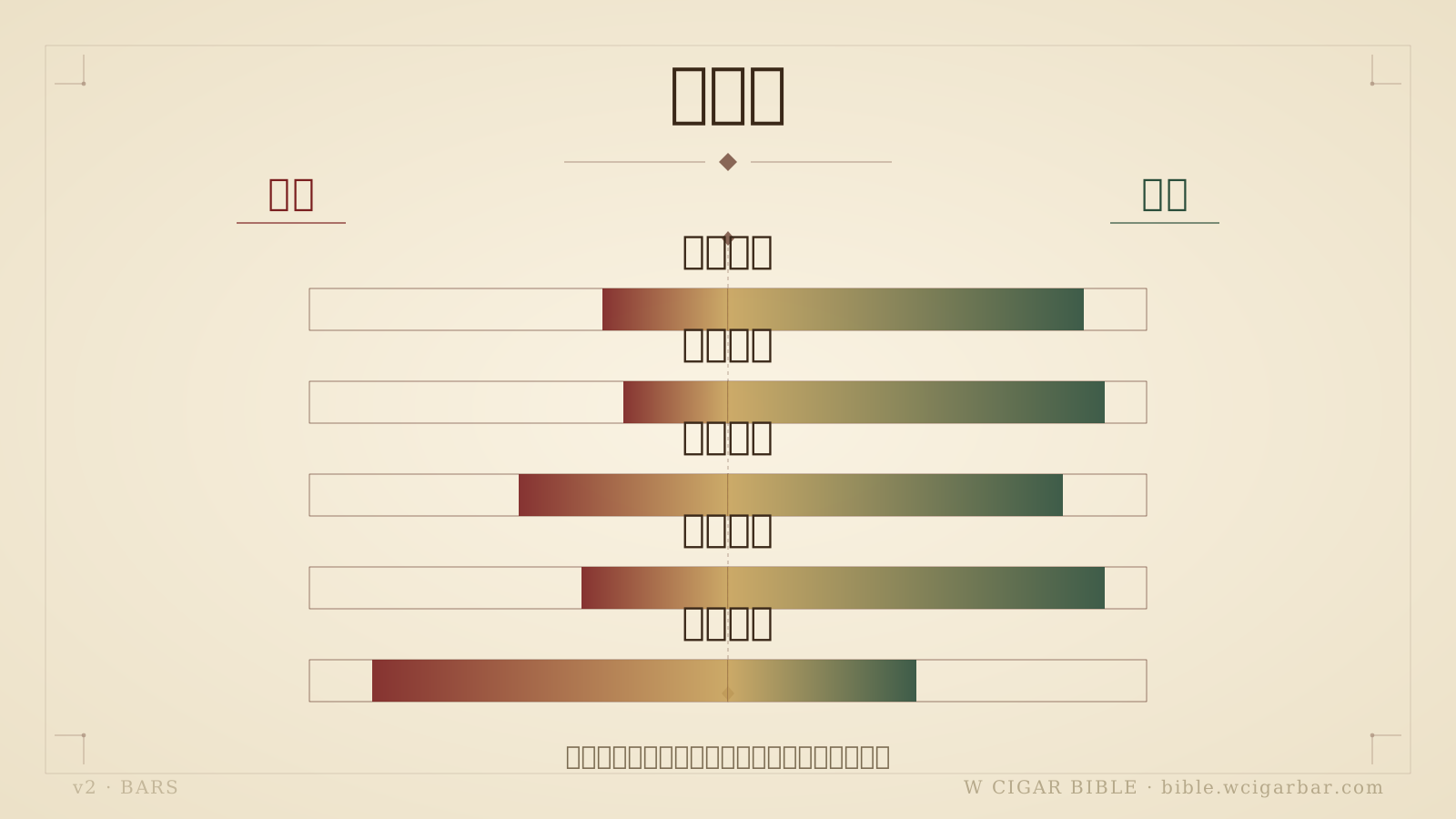
長條圖比較短熱與沉澱在年份、來源、保存與聲量上的強弱
Preservation Conditions: Can Value Be Retained? Humidity Is More Realistic Than Stories
The most brutal aspect of cigar collection is that value can be swallowed by preservation conditions. Long-term preservation can generally refer to a stable environment of 65% to 69% relative humidity and about 18 to 21°C; if it exceeds 72% long-term, the risk of mold and burning issues increases; if it is below 60% long-term, the wrapper may lose elasticity, and the aroma may become dry and hard. Fluctuations in temperature and humidity are more frightening than single numbers.
I have seen a box of 2011 Cohiba 1966 Edición Limitada with an intact outer box and beautiful labels, but after opening, many cigars had fine cracks at the foot, dull wrappers, and weak aroma; conversely, a box of 2014 Partagás Serie D No.4, although not a special limited edition, had a clean state and even oil due to ten years of stable preservation, and the market acceptance was better. This is the difference between collection and preservation.
Cigar value is not determined on the day of purchase but accumulated through daily preservation discipline. I recommend seasoned collectors at least do four things:
- Record temperature and humidity ranges monthly, not just look at the current numbers.
- Avoid frequent and large humidity adjustments within the same cabinet.
- Retain seals, outer boxes, inner paper, and provenance records for high-value boxes.
- Check the status every 6 to 12 months without excessive flipping.
Source Verification and Circulation Records: The Safety Boundary of High-End Collections
The higher the price of cigars, the more important the source. For Cohiba Behike, Gran Reserva, Reserva, early Davidoff Cuban, or Dunhill Cuban, there are risks of counterfeiting, re-labeling, mixing boxes, and unclear preservation on the market. Cuban Davidoff from the 1970s to 1980s, due to its special brand history and many years of discontinuation, is difficult to establish sufficient trust based solely on appearance without credible documents and continuous collection records.
Source verification requires looking at multiple clues, not just whether the box is new. Box bottom codes, seal versions, tax stamp years, inner lining paper, cigar band printing, size consistency, wrapper color difference, and origin description must all match each other. If a box claims to be a discontinued model from the 1990s but uses packaging details that only appeared later, seasoned collectors should be vigilant. The provenance context under the PCC authorized dealer system is also often used by collectors to reduce uncertainty.
When collecting high-end cigars, you are not buying a box of products but a piece of history that can be accounted for. If you need to resell in the future, the other party will not ask how much you liked it back then but where this box came from, how it was preserved, whether it is complete, and whether there are reasonable records. The clearer the source, the lower the market discount; if the source is vague, even if the brand is strong, a larger risk discount will be required.

快問快答列出年份、產地與開盒保存三項實用提醒
Investment Potential and Strategy: How Should Seasoned Collectors Allocate Their Collection Portfolio
When discussing investment potential, one cannot only look at past increases. After 2010, the prices of high-end Cuban cigars were affected by supply, global demand, tourism circulation, and brand positioning, with certain Cohiba, Trinidad, and limited editions being significantly re-evaluated; but market re-evaluation will not be evenly distributed. Ordinary batches of popular brands and high-priced boxes with ordinary preservation may face decreased liquidity after the boom.
My allocation thinking starts with three questions: First, does this item have a reason to be discussed for more than ten years? Second, does this box have complete provenance and preservation records? Third, if the market cools within three years, am I still willing to hold it? For example, Cohiba Siglo VI, Behike, H. Upmann Sir Winston, Partagás Lusitanias, and Trinidad Fundadores are long-term observation targets of different styles, but entry prices and conditions still need to be strictly compared.
A truly mature collection strategy is to use discipline to counteract the impulse brought by rarity. I would advise seasoned collectors to control the proportion of a single brand and not let Cohiba fill the entire cabinet; at the same time, reserve some budget for stable classics instead of betting everything on topical limited editions. Cigars have enjoyment attributes and collection attributes, both of which must be respected to prevent interest from becoming pressure.
Common Questions
Are rare cigars more valuable the older they are?
Not necessarily. The older the vintage, the higher the preservation risk; if humidity is imbalanced, the source is unclear, or the box condition is incomplete, the value may be significantly reduced. Old vintages only form true collectible value when condition, source, and brand status are simultaneously established.
Are Cuban cigars necessarily more collectible than non-Cuban cigars?
No. While Cuba has obvious advantages in history and brand symbolism, OpusX, Padrón 1964, and Davidoff limited series also have mature collector groups. The key is whether the market long-term recognizes their quality, scarcity, and story.
Does opening a box affect collectible value?
Yes, but it doesn't mean you can't open it. A complete unopened box usually has an advantage in resale; if opened, retaining the seal, box configuration, and condition records can still maintain a certain level of trust. High-value boxes especially should minimize unnecessary flipping.
Should I collect individual sticks or whole boxes?
Whole boxes are easier to preserve provenance context and observe the condition of the same batch; individual sticks are suitable for researching size and style, but collectible premiums are usually limited. For high-end limited editions or discontinued models, the completeness of the whole box is more important.
How to avoid being influenced by short-term market emotions?
First, set rules for brand, vintage, size, and budget, then look at market prices. If a cigar is suddenly being heavily discussed but lacks historical position and preservation evidence, slow down your judgment. The advantage of seasoned collectors is not acting quickly but knowing when not to act.
—Cigar Prince Wilson Tsai
I have always believed that the most fascinating aspect of cigar collection is not the price curve but how a box of cigars carries the judgment of vintage, land, craftsmanship, and people. Rarity can create topics, preservation can retain value, but what truly gives depth to a collection is knowing why you chose it. If you can manage passion with knowledge and face the market with discipline, every box in the cigar cabinet will be more meaningful than simply chasing scarcity.
Smoking is harmful to health. Under 20 years old is not allowed to smoke. Quit smoking hotline: 0800-636363. This article is for reference by adults over 20 years old on cigar culture, preservation, and regulatory knowledge, not a tobacco advertisement, promotion, or purchase suggestion.
Like this article?Share with friends
Share this W Cigar Bible piece with friends who want to learn cigar culture, storage, and tasting.
想把這篇 化為實踐
雪茄聖經是知識;雪茄文化要在空間裡發生

W Cigar Bar 大安總店資訊
台北大安區 · 雪茄聖經總編輯 Wilson Tsai 主理的雪茄文化空間

33 座 24 小時恆溫恆濕醇化室
W Cigar Bar 提供的會員醇化空間 · 場地資訊請洽編輯部
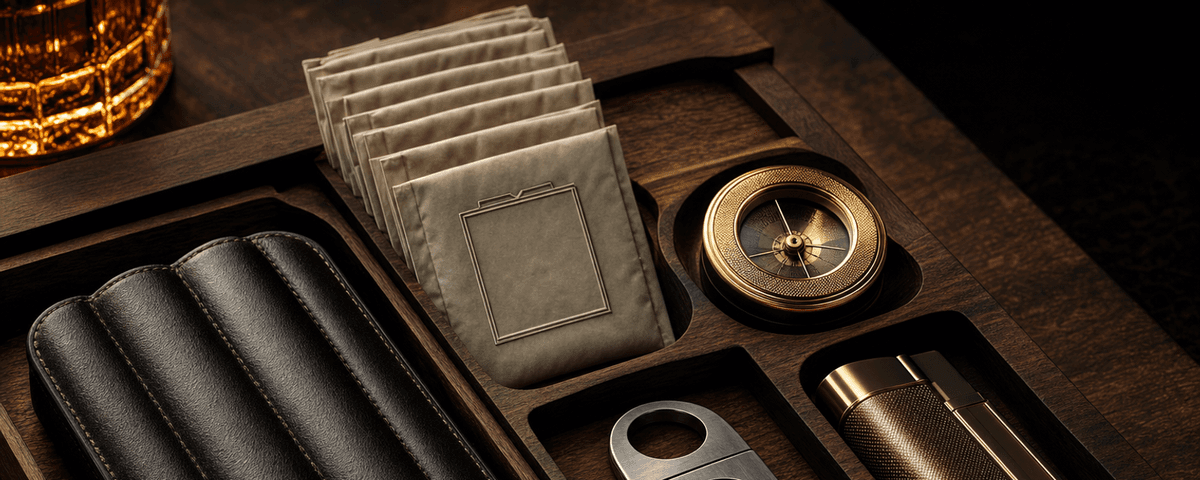
雪茄剪 / 打火機 / 雪茄盒 / Boveda
W Cigar 配件官網 · 專營雪茄配件正品

加 LINE 好友 · 文化諮詢
文化空間資訊 · 紳士沙龍 · 私人包場
本網站內容僅供雪茄文化、歷史、收藏與品吸知識研究參考。菸品有害健康、未滿法定年齡者請勿吸菸。實際規範請依所在地法律為準。
吸菸有害健康・戒菸專線 0800-636363・本站僅供 20 歲以上成年人閱覽。
讀到這裡,你不只是路過的人
留下 Email,加入 W 雪茄聖經內圈——總編輯 Wilson Tsai 親選的學院深文與國際新訊,先你一步送到信箱。
· 教育用途非銷售 · 隨時一鍵退訂 · Email 絕不對外公開 · 由勝茄股份有限公司營運
同分類延伸閱讀



資料來源:W Cigar Bible 編輯部整理 · 雪茄王子 Wilson Tsai 親自審稿
本文僅供雪茄文化、歷史、收藏與品鑑知識研究,不作為菸品促銷、銷售或購買建議。吸菸有害健康,未滿二十歲不得吸菸。