進階雪茄抽吸技巧:如何運用口腔與舌頭的感知提升品味

進階雪茄抽吸技巧不僅僅是快速或濃烈地抽吸,而是通過口腔、舌頭和呼吸的協調,提升風味判讀能力。了解口腔的不同區域對味道的感知至關重要,舌頭的運用也能影響煙氣的流動與味道的體驗。透過調整咬口與含持角度,並掌握抽吸的節奏,使用者能更精確地辨識雪茄的細膩風味。此外,建立紀錄系統來追蹤不同變因的影響,將有助於提升整體的品味經驗。這些技巧將使每一口雪茄都更具結構與深度。
- 口腔結構影響風味判讀,舌尖、舌側、舌根各有不同的味覺敏感區域。
- 雪茄入口的剪口與含持角度會影響煙氣流量,進而影響味道的表現。
- 透過紀錄不同變因的影響,能更精確地分析雪茄的風味變化。
Advanced Cigar Smoking Techniques: How to Use Oral and Tongue Perception to Enhance Taste
Smoking is harmful to health.
Under 20 years old is prohibited from smoking.
Quit smoking hotline: 0800-636363.
This article is intended for adults over 20 years old as a reference for cigar culture, preservation, and legal knowledge, not as an advertisement, promotion, or purchase suggestion.
Advanced cigar smoking techniques are not about smoking a cigar faster or stronger, nor about wrapping oneself in exaggerated adjectives; true advancement is turning the mouth, tongue, nasal cavity, and breathing rhythm into a stable perception tool. Many beginners already know not to inhale smoke into the lungs, to exhale slowly, and to check the wrapper and humidity before lighting, but they often remain at the level of describing flavors as "sweet, bitter, spicy, woody." In fact, the same 52-ring gauge, approximately 156 mm Robusto Extra can present completely different notes of nuts, cocoa, leather, cedar, mineral, and aftertaste under different bite, holding angles, tongue positions, and exhalation speeds. This article aims to educate adult cigar users on advanced techniques, from oral structure, tongue use, rhythm control to etiquette practice, helping those with basic experience establish a more delicate, repeatable, and recordable flavor interpretation ability.
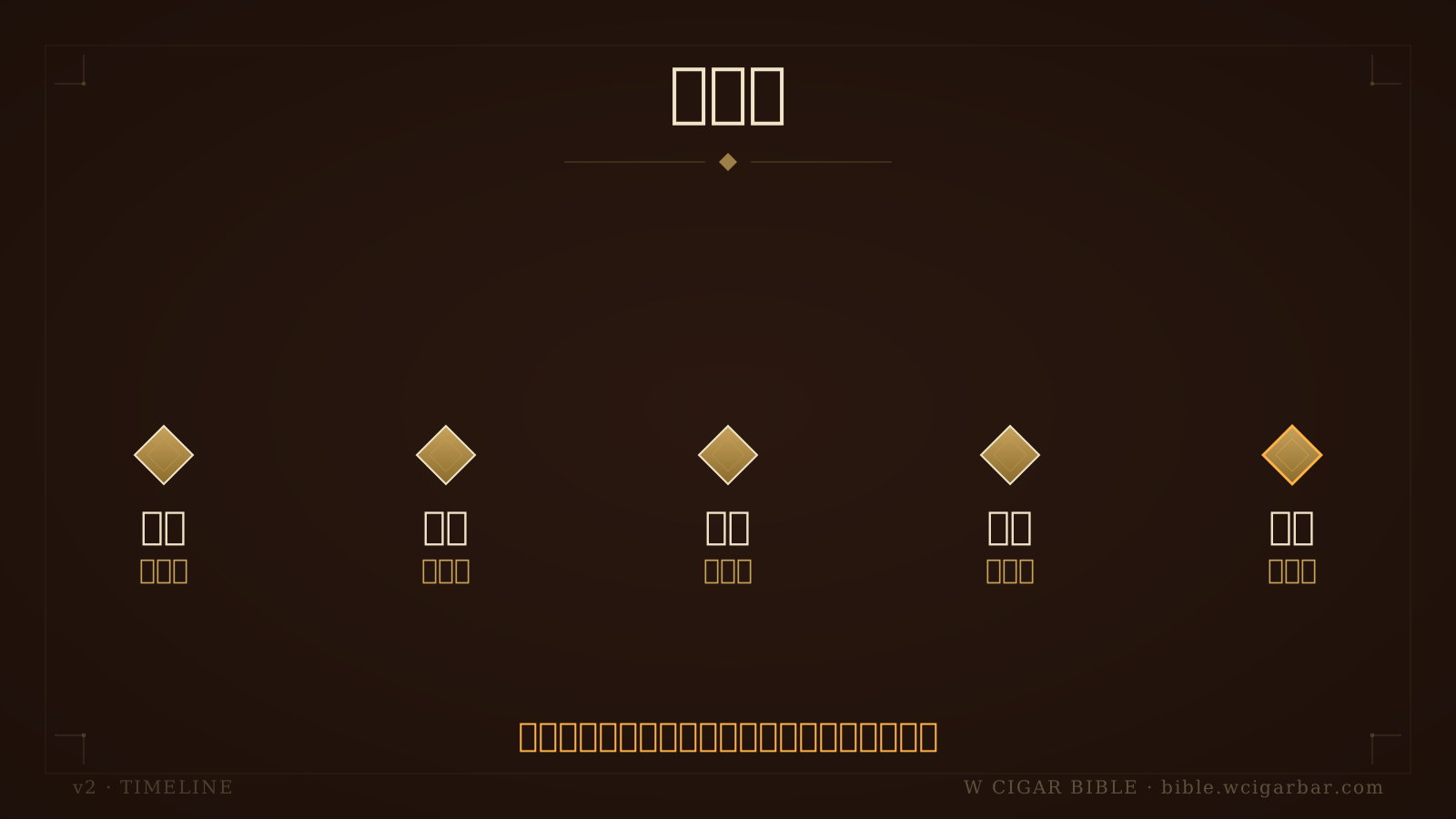
時間軸呈現入口停留分流吐出與餘韻觀察
Understanding the Oral Map: Flavor is Not Just Judged by the Tip of the Tongue
Many people simplify "taste" to what the tip of the tongue perceives when they first encounter cigars, but advanced interpretation requires viewing the mouth as a three-dimensional map. The tip of the tongue is more sensitive to sweetness and irritation, the sides of the tongue easily capture sourness and saltiness, while the root of the tongue and soft palate often receive bitterness, thickness, and astringency; the upper palate, buccal mucosa, and gums can feel the texture, oiliness, and temperature of the smoke. Taking the Partagás Serie D No.4 commonly seen around 2020, with a size of approximately 124 mm and 50 ring gauge as an example, if only the tip of the tongue contacts the smoke in the front section, it is easy to first feel pepper and roasted wood; if the smoke stays on the upper palate for about 2 seconds before being slowly pushed out, more toasted bread crust, coffee grounds, and a slight saltiness can often be captured. This is not a mysterious technique but a result of changing perception positions.
During practice, you can divide a puff of smoke into three segments for observation: from 0 to 1 second upon entry, pay attention to temperature, humidity, and the first emerging flavor; from 1 to 3 seconds, let the smoke lightly touch the tongue and upper palate, observing sweetness, woodiness, and oiliness; after exhaling, record the length and change of the aftertaste from 5 to 15 seconds. Taking the classic Pirámides size Montecristo No.2, approximately 156 mm and 52 ring gauge as an example, if humidity is controlled at 65% to 69% RH, the middle section often shows cocoa, creaminess, and light spices more easily than the front section when burning steadily; but if the entry is too aggressive and the smoke temperature is too high, the root of the tongue will be covered by bitterness first, flattening the details. Advancement is not about pursuing more adjectives but knowing where each flavor appears, how long it stays, and how it disappears, which is the core value of the oral map.
Bite and Holding Angle: The Same Cigar Changes with the Entry Method
The first key to cigar entry is the cut and holding method. Beginners often think it's enough to cut, but the size of the cut, lip tightness, and the angle of the cigar in the mouth all affect the concentration of the smoke. For common sizes with 46 to 52 ring gauge, if a straight cut is too deep, the smoke flow will increase, making the initial section hot and thin; if the cut is too small, the draw resistance is too high, causing the user to subconsciously increase the draw force, raising the burning end temperature, resulting in scorched bitterness. For example, Hoyo de Monterrey Epicure No.2, approximately 124 mm and 50 ring gauge, usually exhibits soft woodiness, creaminess, and light floral fragrance with medium draw resistance; if the holding angle is too downward, saliva easily contacts the cap, making the entry end wet, and the latter half may show sourness and cardboard sensation.
It is recommended to practice "holding with lips, not biting with teeth." The lips only need to form a stable seal, with the teeth lightly supporting, not crushing the cap. The entry angle can be maintained slightly downward 10 to 20 degrees, allowing the cigar to balance naturally, avoiding saliva backflow. Before each draw, feel the resistance with your lips, not rushing to pull the smoke hard; if the draw resistance is normal, it should be as gentle as sipping a room-temperature drink through a straw, not as laborious as drinking a thick milkshake. Taking the Cohiba Siglo VI familiar to many enthusiasts after 2018, approximately 150 mm and 52 ring gauge as an example, if the entry is stable and the smoke temperature is well controlled, the front and middle sections may exhibit grass, honey, cedar, and creaminess; but if the bite deforms and the smoke flow shifts to one side of the tongue, interpretation will be unbalanced. True advancement involves adjusting the entry structure before discussing complex flavors, as the first second of oral reception already determines the performance of the last third of the cigar.
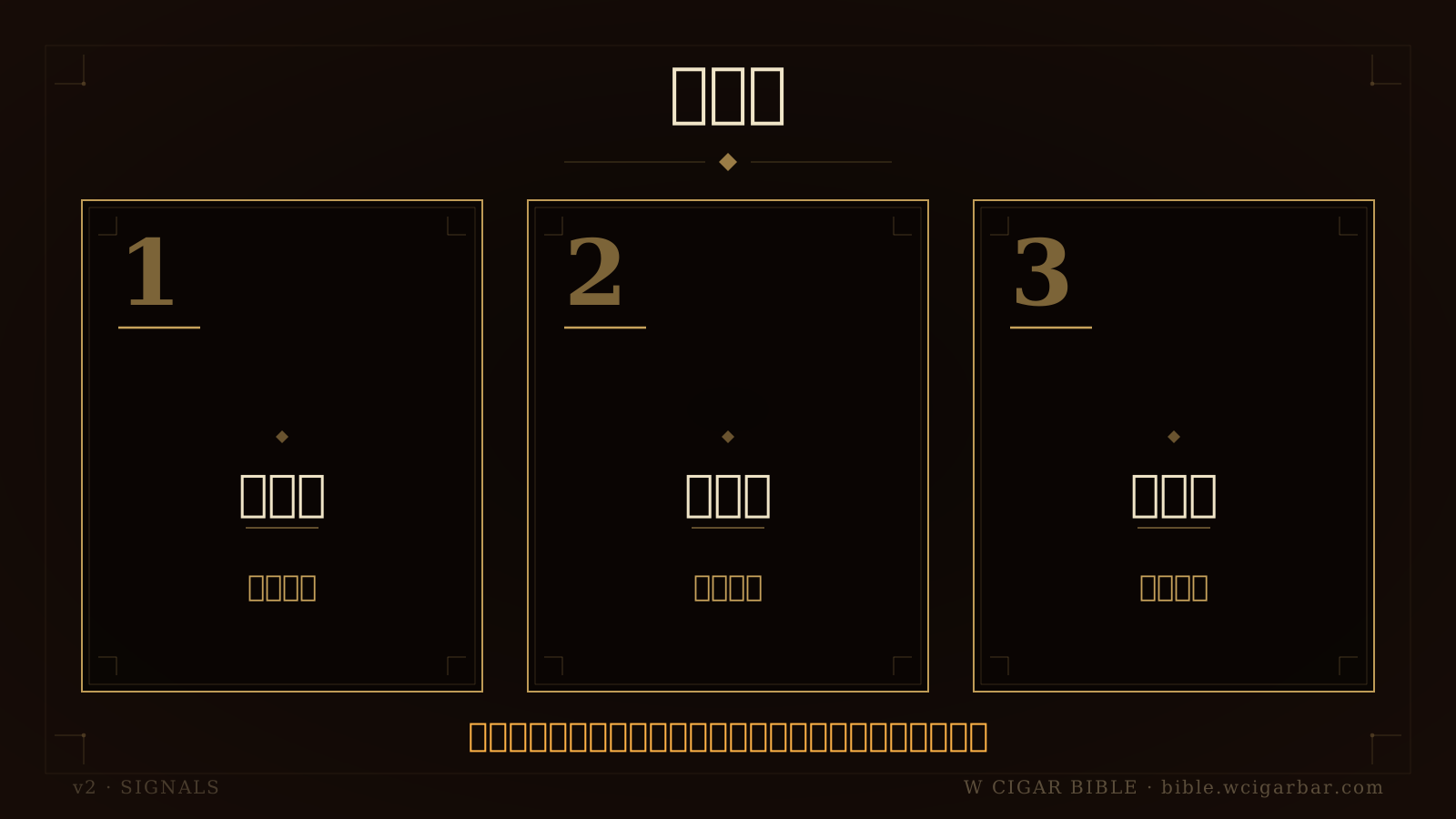
三張卡整理口腔地圖入口穩定與節奏記錄
Three Tongue Actions: Receiving, Diverting, Pushing Back
The tongue is not a passive taste-receiving organ but a tool that can actively adjust the smoke path. The first action is "receiving": after the smoke enters, flatten the tongue, allowing the smoke to fall like a thin mist between the tongue and upper palate, staying for about 1 to 2 seconds. This method is suitable for judging sweetness, oiliness, and smoothness, for example, the Davidoff Grand Cru series' common cream, grain, hay, and white pepper, which can easily be replaced by irritation if the tongue is too tense. The second is "diverting": lightly press the tongue tip against the back of the lower front teeth, slightly relaxing the sides of the tongue, allowing the smoke to spread to the left and right buccal sides. This helps identify sourness, saltiness, and mineral notes, particularly useful for some Nicaraguan or Honduran cigars' black pepper, earth, and roasted nuts.
The third is "pushing back", which involves using the tongue surface and oral pressure to move a small amount of smoke to the back of the mouth without inhaling into the lungs, then slowly releasing it near the mouth or nasal cavity. This requires careful practice, especially with higher concentration types, such as the Oliva Serie V Melanio frequently discussed in 2021, where too large a smoke volume at once can cause tongue root numbness, throat irritation, and taste fatigue. During practice, take only one-third of the usual smoke volume, let it stay in the mouth for 1 second, then gently press with the tongue surface like pushing water, finally exhaling slowly from the corner of the mouth. You'll find the aftertaste clearer after pushing back, with notes like roasted almonds, black coffee, leather, or licorice often emerging after exhaling. Advanced tongue use is not a show-off but breaking the smoke into different layers for processing: first receiving the texture, then diverting to identify details, and finally pushing back to observe the aftertaste, these three steps can make each puff more structured.
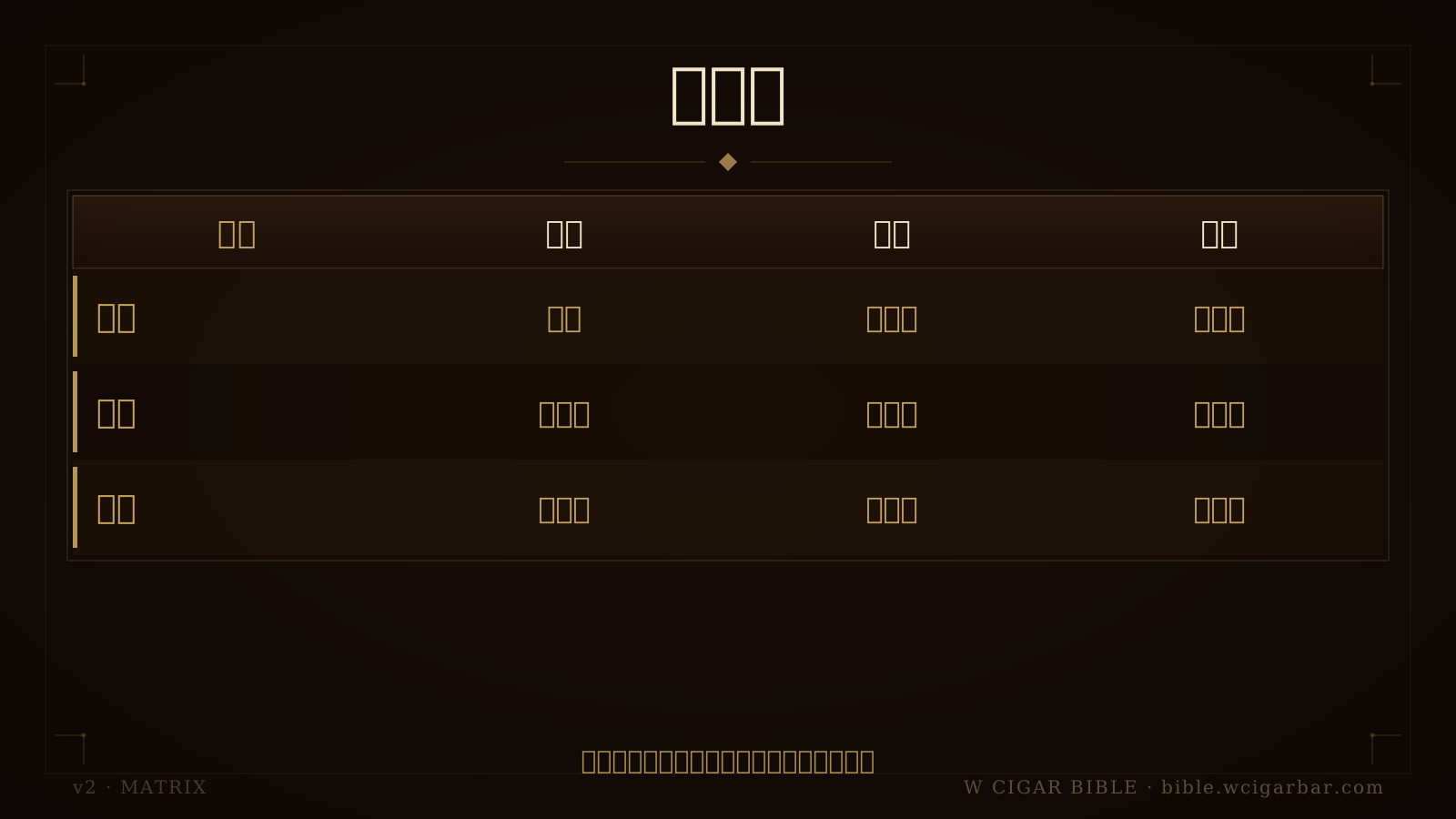
矩陣比較承接分流回推三種舌頭動作差異
Rhythm and Temperature: Slow is Not a Slogan, but a Number Management
"Smoke slowly" is a common suggestion, but advanced users should convert slow into operable numbers. Generally, for Robusto size, take a puff every 45 to 75 seconds, for Churchill or Double Corona, extend to 60 to 90 seconds per puff; if the ring gauge is smaller, like 38 to 42 ring gauge Corona or Lancero, as the smoke path is narrower and the temperature rises faster, continuous draws should be avoided. Taking the Cohiba Lancero with approximately 192 mm and 38 ring gauge as an example, the technical requirement is much higher than a 50 ring gauge Robusto because once the draw is too frequent, the smoke temperature rises, and grass, cream, and floral notes quickly turn into spiciness and bitterness. Rhythm is not for ritual but to keep the burning end stable, allowing the mouth to receive clean signals.
Three indicators can be used to determine if it's too hot: first, the tongue tip experiences continuous tingling, and sweetness is covered; second, after exhaling, the mouth has a rough feeling like burnt paper or hot tea; third, the cigar body near the burning end 2 to 3 cm becomes noticeably hot to the touch. If these conditions occur, pause for 90 to 120 seconds to let the burning end cool down, then resume with a smaller smoke volume. In 2022, I recorded two beginners using the same batch of Romeo y Julieta Wide Churchills, approximately 130 mm and 55 ring gauge; one finished in 45 minutes with a puff every 30 seconds, describing only spiciness and bitterness; the other finished in about 85 minutes with a puff every 70 seconds, noting black tea, wood, cocoa, and slightly sweet spices. The difference is not in the cigar itself but in the smoke temperature the mouth endured. Rhythm management directly determines whether the tongue still has the ability to interpret, which is the most easily overlooked and immediately effective part of advanced techniques.
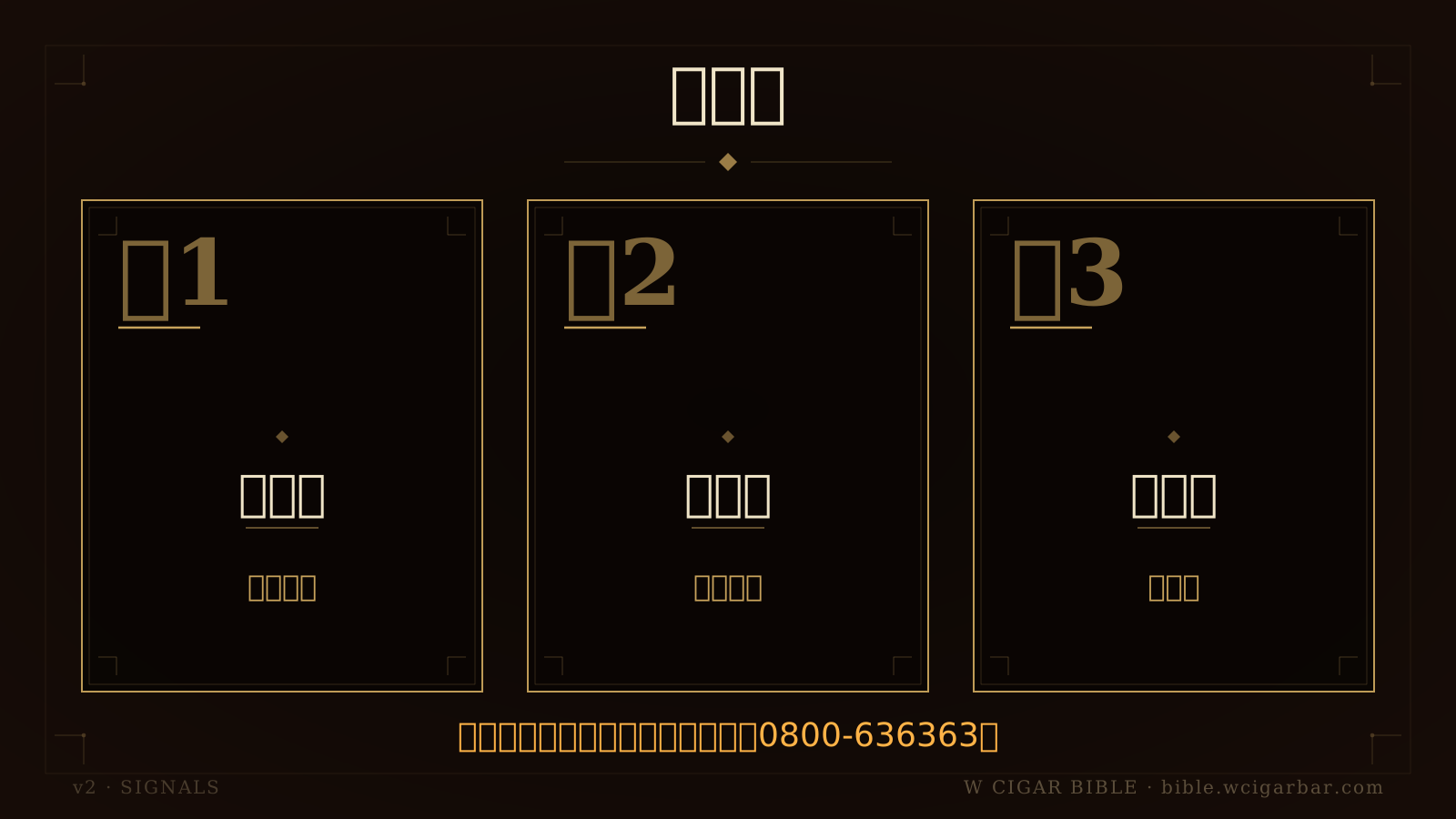
三張卡提醒煙量過大鼻嗅過頻與死守秒數
Establish a Practice Process with Tables: Turn Abstract Feelings into Trackable Data
If relying solely on memory, flavor interpretation is easily influenced by emotions, meals, environment, and expectations. Advanced practice should establish simple records, especially when comparing different brands, years, sizes, or humidity settings. For example, the same Montecristo No.4, approximately 129 mm and 42 ring gauge, stored in 62% RH and 69% RH environments, may have different entry humidity, burning speed, bitterness, and sweetness; without records, it is often mistakenly thought to be batch differences or brand instability. It is recommended to change only one variable at a time, such as only changing humidity, only changing the cut, or only changing the draw interval, to know which factor caused the oral sensation.
| Practice Item | Operation Method | Suggested Number | Observation Focus |
|---|---|---|---|
| First Smoke Volume | Take only 50% of the usual puff | Stay 1–2 seconds | Temperature, first impression, irritation |
| Tongue Receiving | Flatten the tongue, smoke touching the upper palate | Continuous 5 puffs | Sweetness, oiliness, smoothness |
| Left and Right Diverting | Tongue tip against lower teeth, smoke to buccal sides | 2 seconds per side | Sour, salty, mineral, woody |
| Rhythm Control | Fixed draw interval | 60 seconds per puff | Burning stability and bitterness change |
| Aftertaste Record | Do not drink water immediately after exhaling | 15 seconds | Aftertaste, leather, coffee, spices |
This table does not require complex equipment, just a mobile phone timer and notes. Taking Arturo Fuente Hemingway Short Story, approximately 102 mm and 49 ring gauge as an example, due to its short size and concentrated changes, it is very suitable for practicing front, middle, and back section records: observe sweet woodiness and roasted nuts in the front section, pay attention to cream and spices in the middle section, and judge whether the bitterness is overly prominent due to temperature rise in the back section. After continuously recording 5 cigars, you will start to see your habits, such as always smoking too fast in the back section, always keeping the tongue too high, or decreased sourness judgment after drinking. True progress is not writing flowery vocabulary but allowing each practice to be verified in retrospect, gradually forming your own oral database.
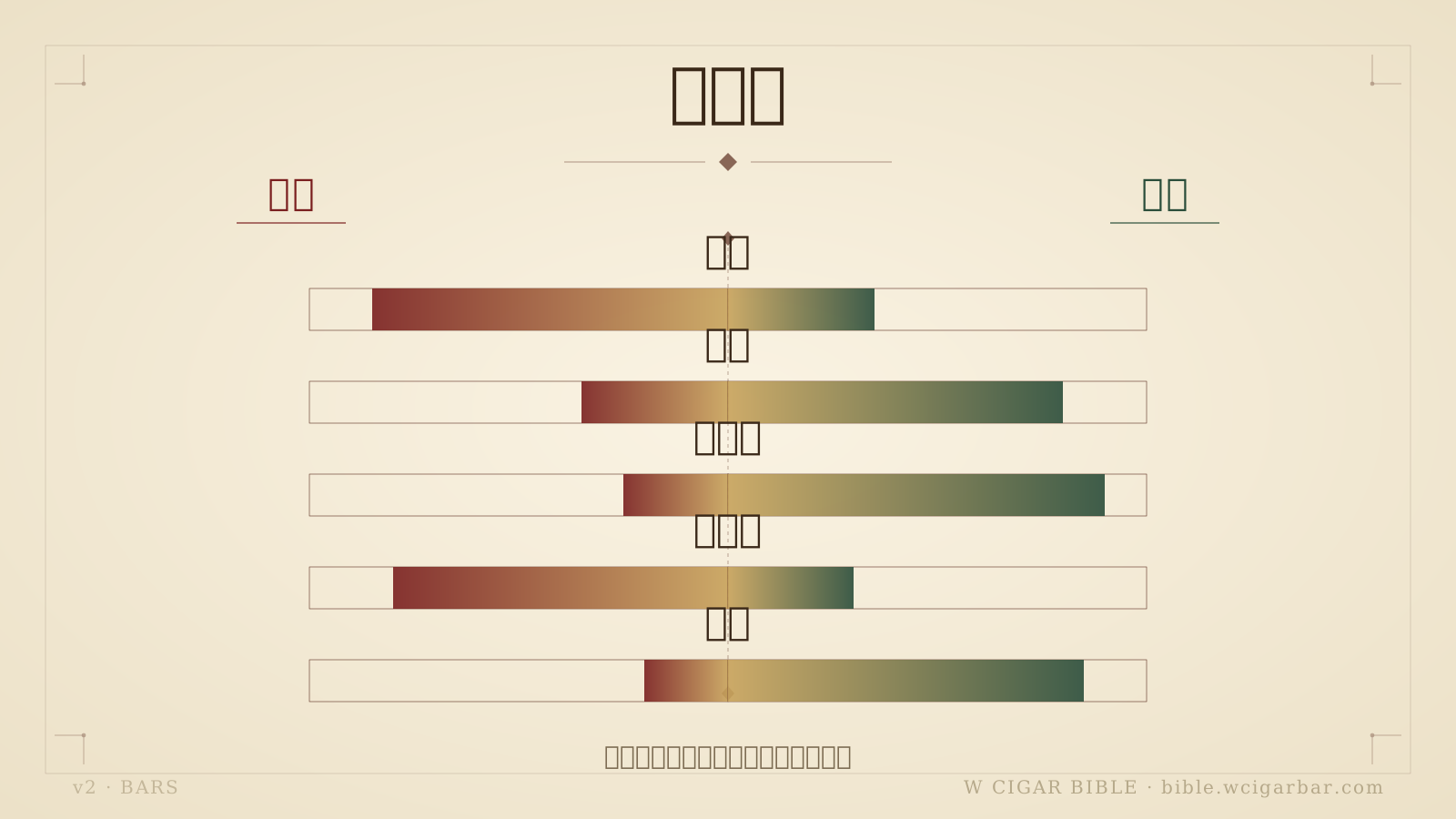
長條圖比較粗略取向與精細取向在五個軸向的差異
Beverages, Meals, and Oral Condition: A Clean Tongue Leads to Clean Interpretation
The oral condition greatly affects cigar perception. Salty meals, spicy hot pots, sweet desserts, mint toothpaste, and high alcohol can make the tongue deviate from normal interpretation for 30 to 90 minutes. If the goal is to practice techniques, it is recommended to start at least 20 to 30 minutes after a meal, first cleaning the mouth with room temperature water, avoiding strong mint mouthwash. Coffee, rum, and whiskey are often paired with cigars, but during training, choose low-interference beverages first, such as room temperature water, lightly roasted oolong, or unsweetened sparkling water. In a private record from 2019, the same user encountered H. Upmann Magnum 46 after eating spicy hot pot, recording only spiciness, bitterness, and wood; the following week, after a light dinner with room temperature water, the same cigar recorded tea, roasted wheat, honey, and slight nuts. The difference is not only due to the cigar's condition but also because the tongue was reset by the previous meal.
If pairing with alcohol, it is recommended to reduce the alcohol volume and concentration to maintain perception. Islay peat whiskey, barrel-aged sweet rum, and cask-strength bourbon are very characterful but may overpower delicate cedar, floral, and creamy notes. For beginners advancing, start with 40% ABV whiskey, sipping small amounts, drinking a small sip every 3 to 4 cigar puffs, and using water in between. If using Davidoff Signature No.2, a more slender Panetela size, a strong alcohol body will leave only alcohol stimulation on the tongue side; conversely, if it is Padron 1964 Anniversary Maduro, the thicker cocoa, coffee, and molasses tones can better withstand rich beverages. The mouth is not a laboratory vacuum environment, so advanced users must learn to manage interference factors, keeping the tongue clean before discussing flavor layers.
Reverse Blowing, Retro-olfaction, and Etiquette Boundaries: Techniques Must Have Limits
Many have heard of the technique of releasing a small amount of smoke from the nasal cavity, the focus is actually on retro-olfaction, where aroma molecules in the mouth are perceived through the posterior nasal cavity. This can make floral, spice, leather, cocoa, and woody notes in cigars more three-dimensional, but it is not suitable for every puff, nor should it be forced when concentration is high, physical condition is poor, or throat and nose are sensitive. During practice, take only one-quarter of the usual smoke volume, gently push the smoke to the back of the mouth with the tongue, exhale 80% from the mouth, allowing only a minimal amount to be slowly brought out through the nasal cavity. If you feel stinging, tearing, or nasal burning, it means the smoke volume is too large or the cigar strength is unsuitable, and you should immediately stop the technique and return to oral exhalation.
Etiquette should also be noted, techniques should not cause discomfort to others. Do not exhale smoke broadly between seats, do not exhale smoke towards others, and do not perform large operations continuously to show off techniques. In several adult cigar gatherings I observed in 2023, truly mature players were quieter in their actions: they would pause for 1 second after removing the cigar from their mouth, confirm the smoke direction, then slowly exhale to an unoccupied area; they do not hold cigars while speaking to avoid ash falling or saliva wetting the cap; when needing to adjust the burn line, they do not rush to frequently relight but first adjust the draw rhythm. The beauty of advanced techniques lies in restraint, not exaggeration. If a technique causes loss of control over smoke temperature, oral comfort, and distance from others, it is not an enhancement but a discourtesy. Understanding limits is one of the most important oral techniques in gentleman cigar culture.
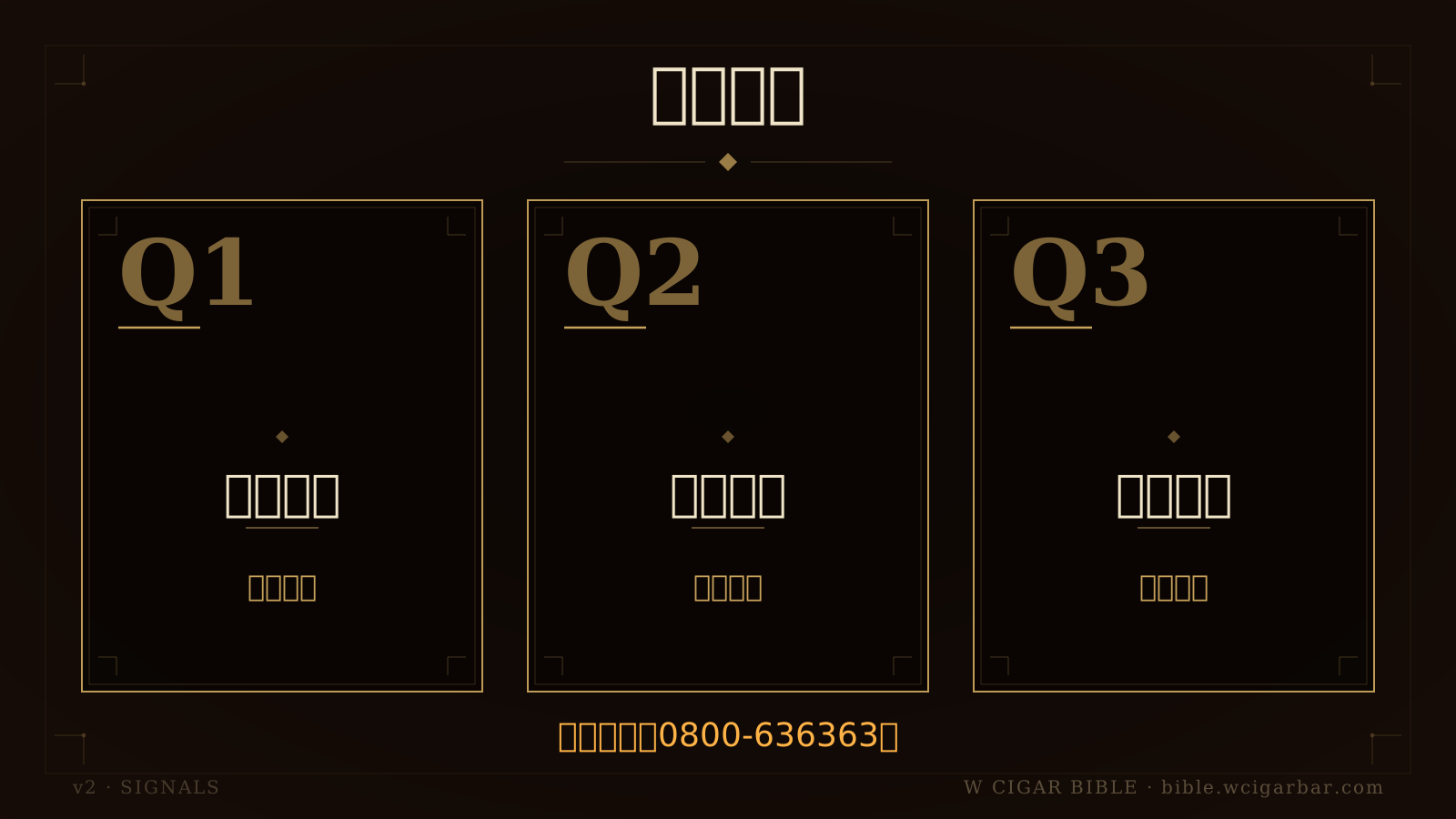
快問快答卡整理更苦鼻後嗅與間隔秒數三個問題
From Three Segments to Five Segments: Establishing a Complete Narrative for a Cigar
Beginners often divide cigars into front, middle, and back sections, which is enough to establish a basic concept; advanced users can divide a cigar into five segments: the first 5 minutes after lighting, the first third, the second third, the first half of the last third, and the last 10 minutes before finishing. This allows for more detailed observation of flavor transitions. Taking Bolivar Royal Coronas, approximately 124 mm and 50 ring gauge as an example, the initial section may be earth, leather, and black pepper; if the rhythm is stable in the first third, cocoa and thick woodiness will appear; the middle section is often where strength and sweetness are most balanced; if the smoke temperature rises in the back section, bitterness and spiciness will increase; the finish tests whether you know how to end before oral fatigue, rather than enduring until it becomes too hot. Knowing when to stop is also a technique.
When recording, you can use a 1 to 5 point scoring method: sweetness 3, bitterness 2, spiciness 4, oiliness 3, aftertaste 4, plus short vocabulary. After continuously recording 10 cigars, you will find that your preference is not a single brand but a certain structure, such as liking increased sweetness in the middle section, not too spicy in the back section, and aftertaste lasting 15 seconds or more. When comparing different regions like Cuba, the Dominican Republic, Nicaragua, and Honduras, remember that origin, preservation, and aging conditions will affect performance; when discussing collection and market, be more rational, as collection appreciation does not guarantee appreciation, still depending on origin preservation and market. For advanced learning, five-segment narrative allows you to no longer just say "is this good or not," but to say "where is it good, why is it good, how did I use oral techniques to read that part." This is the true dividing line from consumer experience to taste ability.
Common Questions
1. Why do I feel more bitterness after practicing tongue receiving?
It is mostly due to too much smoke volume, staying too long, or too short a draw interval. Tongue receiving is not about holding a large amount of smoke in the mouth but letting a thin layer of smoke contact the tongue and upper palate. It is recommended to halve each smoke volume, start with a 1-second stay, and extend the draw interval to 60 seconds or more. If it still feels bitter, check if the cigar is too dry, if the burning end is too hot, or if you have just consumed high-alcohol beverages. Bitterness itself is not wrong, the problem is whether bitterness covers sweetness, woodiness, and aftertaste.
2. Is the retro-olfaction technique suitable for every cigar?
Not necessarily. Cigars with high concentration, obvious spiciness, and drier smoke are more stimulating to the nasal cavity; softer, balanced, and stable burning types are more suitable for small practice. Beginners advancing should practice once every 5 to 8 puffs, and only allow very little smoke to be brought out through the nasal cavity. If discomfort occurs, this technique can be completely omitted, as oral interpretation alone can already establish sufficient detail.
3. How many seconds should the draw interval be fixed at?
There is no single standard, but you can start with 60 seconds per puff. Larger ring gauge and stable burning can be extended to 75 seconds; smaller ring gauge or faster burning can be extended to 90 seconds. The key is to observe smoke temperature and taste changes, not to rigidly adhere to seconds. If sweetness disappears, spiciness rises, and the tongue tip burns, it indicates a need to slow down; if the burn line is about to extinguish and the smoke volume is too weak, slightly shorten the interval.
4. Why does the same brand feel different in different years?
Cigars are agricultural products, and year, batch, preservation, transportation, humidity, and aging time all affect performance. Even the same brand and size, the leaf condition, rolling differences, and preservation path in 2020 and 2023 may differ. Advanced users should avoid concluding a brand based on a single experience, but record source, humidity, date, draw rhythm, and oral condition, then compare at least 3 samples.
5. Do I need to pursue many flavor terms to be considered advanced?
No need. The core of advancement is stability, accuracy, repeatability, not the number of adjectives. You can first master 10 basic terms: woodiness, nuts, cocoa, coffee, leather, earth, spices, cream, honey, bitterness, then slowly subdivide. If you can say where the taste appears, how long it stays, and from which oral position it is perceived, it is more valuable than listing 30 terms at once.
6. When should a cigar be finished?
When the smoke temperature rises significantly, oral fatigue occurs, bitterness and spiciness overshadow other layers, or the cigar body becomes too short to hold comfortably, it can be finished. Advanced users will not smoke a cigar to the last centimeter for formality. Generally, leaving about 3 to 4 cm is not impolite, especially when the back section no longer provides pleasant and clear flavor signals, stopping in time is a mature judgment.
—Cigar Prince Wilson Tsai
I have always believed that the advancement of cigars is not in volume but in quiet discernment. The mouth and tongue are the closest perception tools to cigars and the most easily overlooked training core. When you can control the smoke volume, temperature, stay time, and exhalation direction of each puff, you will find that flavor does not appear passively but is methodically read by you. Slow, steady, restrained, recorded, these four things are more important than any flowery rhetoric. True gentlemanly taste is about respecting cigars, respecting the body, and respecting everyone in the same space.
Smoking is harmful to health.
Under 20 years old is prohibited from smoking.
Quit smoking hotline: 0800-636363.
This article is intended for adults over 20 years old as a reference for cigar culture, preservation, and legal knowledge, not as an advertisement, promotion, or purchase suggestion.
Like this article?Share with friends
Share this W Cigar Bible piece with friends who want to learn cigar culture, storage, and tasting.
想把這篇 化為實踐
雪茄聖經是知識;雪茄文化要在空間裡發生

W Cigar Bar 大安總店資訊
台北大安區 · 雪茄聖經總編輯 Wilson Tsai 主理的雪茄文化空間

33 座 24 小時恆溫恆濕醇化室
W Cigar Bar 提供的會員醇化空間 · 場地資訊請洽編輯部

雪茄剪 / 打火機 / 雪茄盒 / Boveda
W Cigar 配件官網 · 專營雪茄配件正品

加 LINE 好友 · 文化諮詢
文化空間資訊 · 紳士沙龍 · 私人包場
本網站內容僅供雪茄文化、歷史、收藏與品吸知識研究參考。菸品有害健康、未滿法定年齡者請勿吸菸。實際規範請依所在地法律為準。
吸菸有害健康・戒菸專線 0800-636363・本站僅供 20 歲以上成年人閱覽。
讀到這裡,你不只是路過的人
留下 Email,加入 W 雪茄聖經內圈——總編輯 Wilson Tsai 親選的學院深文與國際新訊,先你一步送到信箱。
· 教育用途非銷售 · 隨時一鍵退訂 · Email 絕不對外公開 · 由勝茄股份有限公司營運
同分類延伸閱讀



資料來源:W Cigar Bible 編輯部整理 · 雪茄王子 Wilson Tsai 親自審稿
本文僅供雪茄文化、歷史、收藏與品鑑知識研究,不作為菸品促銷、銷售或購買建議。吸菸有害健康,未滿二十歲不得吸菸。