雪茄的製造工藝:從葉片選擇到捲製技術的全過程

雪茄的製作過程是一門精緻的工藝,從田間選葉到捲製,每一步都影響最終風味。選葉時,葉片的高度和位置決定了其性格,乾燥與初期發酵則是香氣純淨度的關鍵。隨後的分級和去梗過程,讓葉片轉化為配方語言,影響捲製的順利程度。配方設計猶如作曲,確保不同批次間的風味一致性。捲製技術則涉及多種方法,影響吸阻和燃燒表現。每一步的細節都在塑造雪茄的獨特風格,讓老手能夠從中辨識出其品質。
- 選葉決定雪茄性格,葉片位置與用途影響燃燒與香氣平衡。
- 發酵階段控制溫度與翻堆,影響葉片的香氣與細膩感。
- 捲製技術影響吸阻與燃燒,理想狀態是每口有阻力與回彈。
The Craft of Cigar Making: From Leaf Selection to Rolling Techniques
I often say that a seasoned cigar enthusiast doesn't just look at the band and year of a cigar but also at the logic behind its production process. Why do cigars from the same region, size, and brand line sometimes taste clean while others have a loose structure? The answer often lies in the details of leaf grading, fermentation, blending, and rolling.
As the editor of the "Cigar Bible," what fascinates me most is not the moment the finished product is lit, but how it is shaped into a recognizable style through the fields, fermentation piles, aging rooms, and rolling tables. Here, I will dissect the entire process of cigar manufacturing from a seasoned perspective.
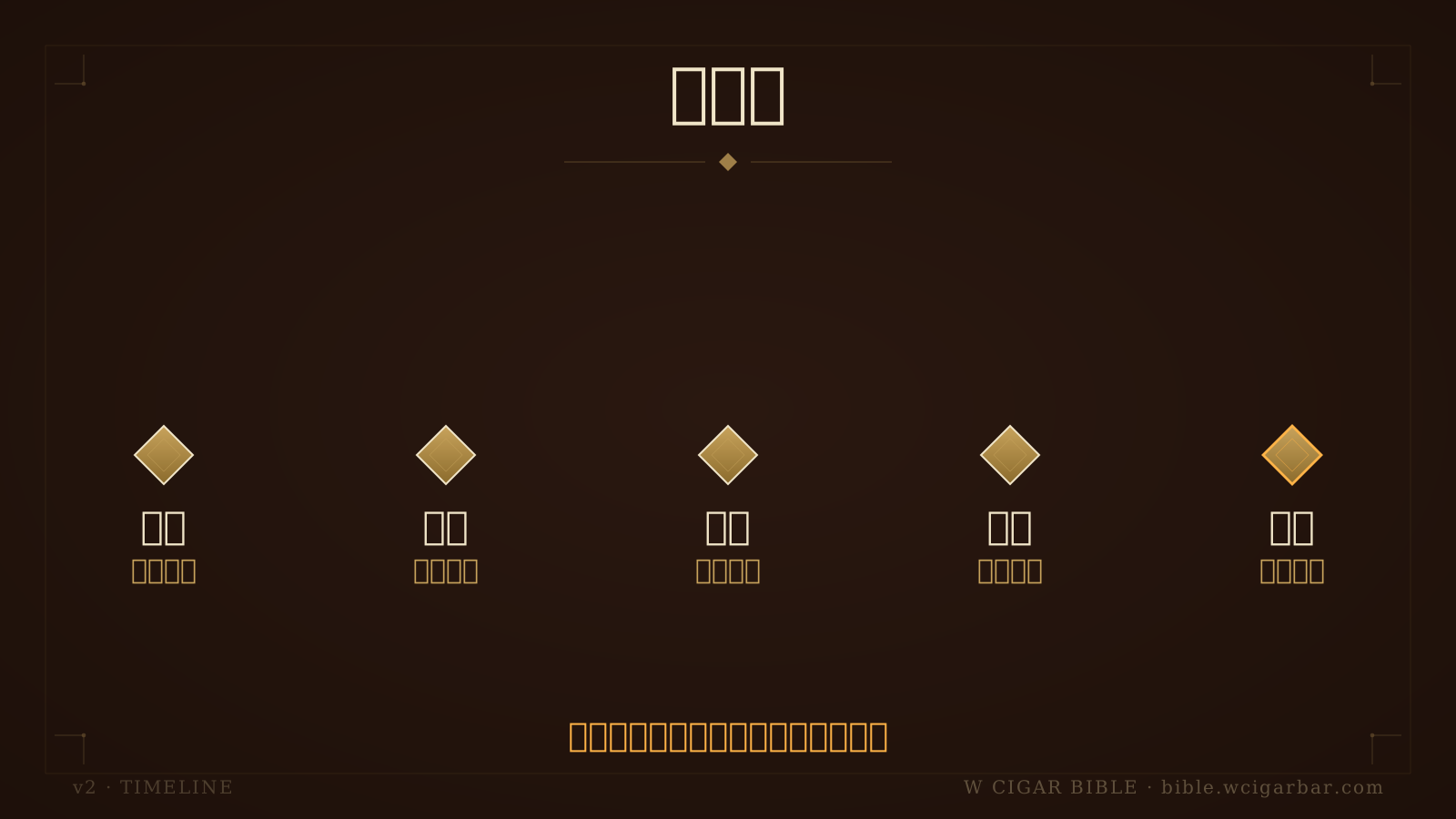
五段流程呈現選葉乾燥發酵分級與捲製
Leaf Selection in the Field: The Character of a Cigar Begins with Plant Height
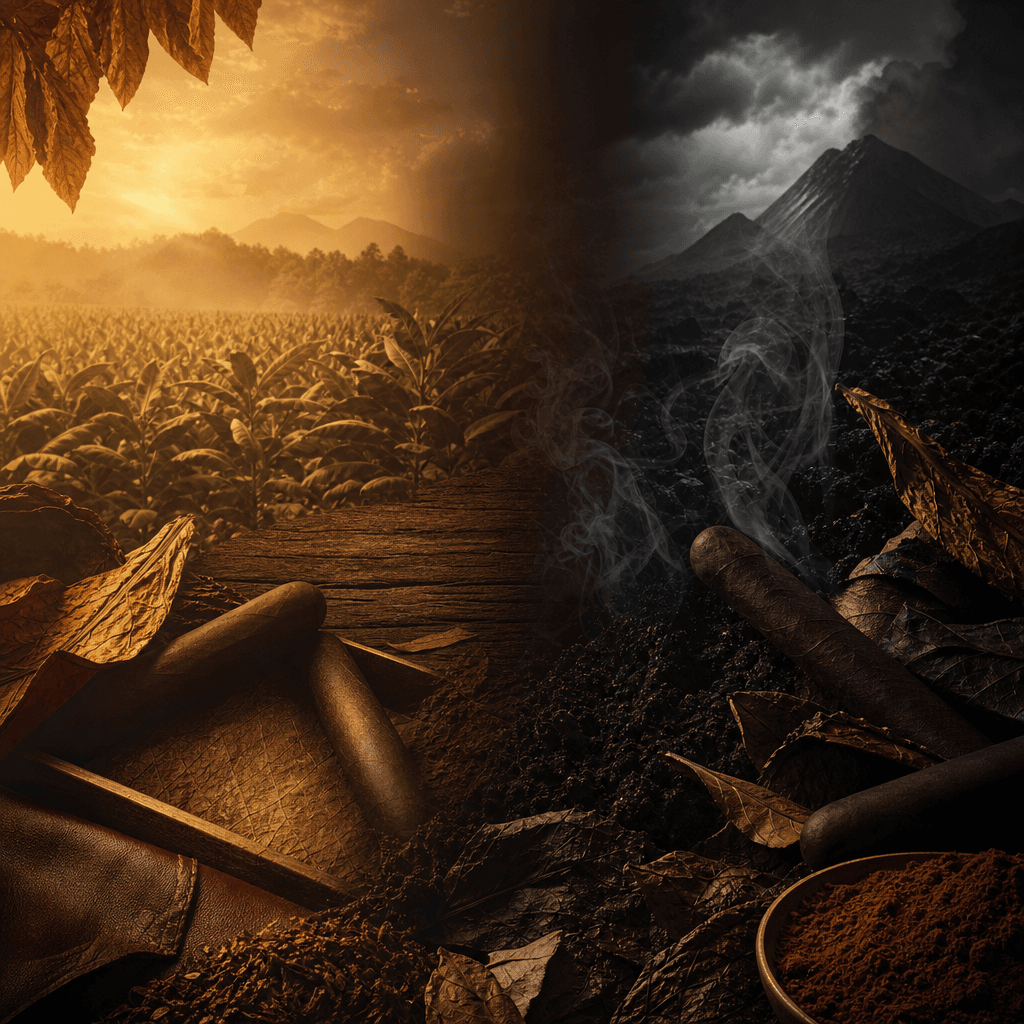
True leaf selection doesn't start in the factory; it is 70% decided in the field. Taking examples like Cuba's Vuelta Abajo, Nicaragua's Estelí, Honduras' Jamastrán, and the Dominican Republic's Cibao Valley, the same variety in different soils, temperature variations, and rainfall conditions will have noticeable differences in nicotine, sugar, oil, and mineral content. Since 2000, Nicaraguan highland tobacco has been widely used in rich blends because Estelí leaves often carry heavier spice and earthy notes.
The same tobacco plant is not just a "single leaf" concept but is used in layers according to height. Common classifications include Volado, Seco, Viso, and Ligero. The higher the leaf, the stronger the sunlight, and the thicker the leaf, usually with more oil and strength. Brands with distinctive styles like Cohiba, Partagás, and Padrón often select not just the region but precisely which layer of leaf enters the filler, which batch is suitable for the binder or wrapper.
The first step for seasoned enthusiasts to judge manufacturing quality is not to ask "where is it from," but whether the position and use of the leaf on the plant are reasonable. If there is too much Ligero without enough aging, the burn will be slow, and the stimulation sharp; if the Seco ratio is too high, the aroma may open quickly but lack power in the middle. A good blend doesn't pile on strength but finds a balance between burn, aroma, and structure.
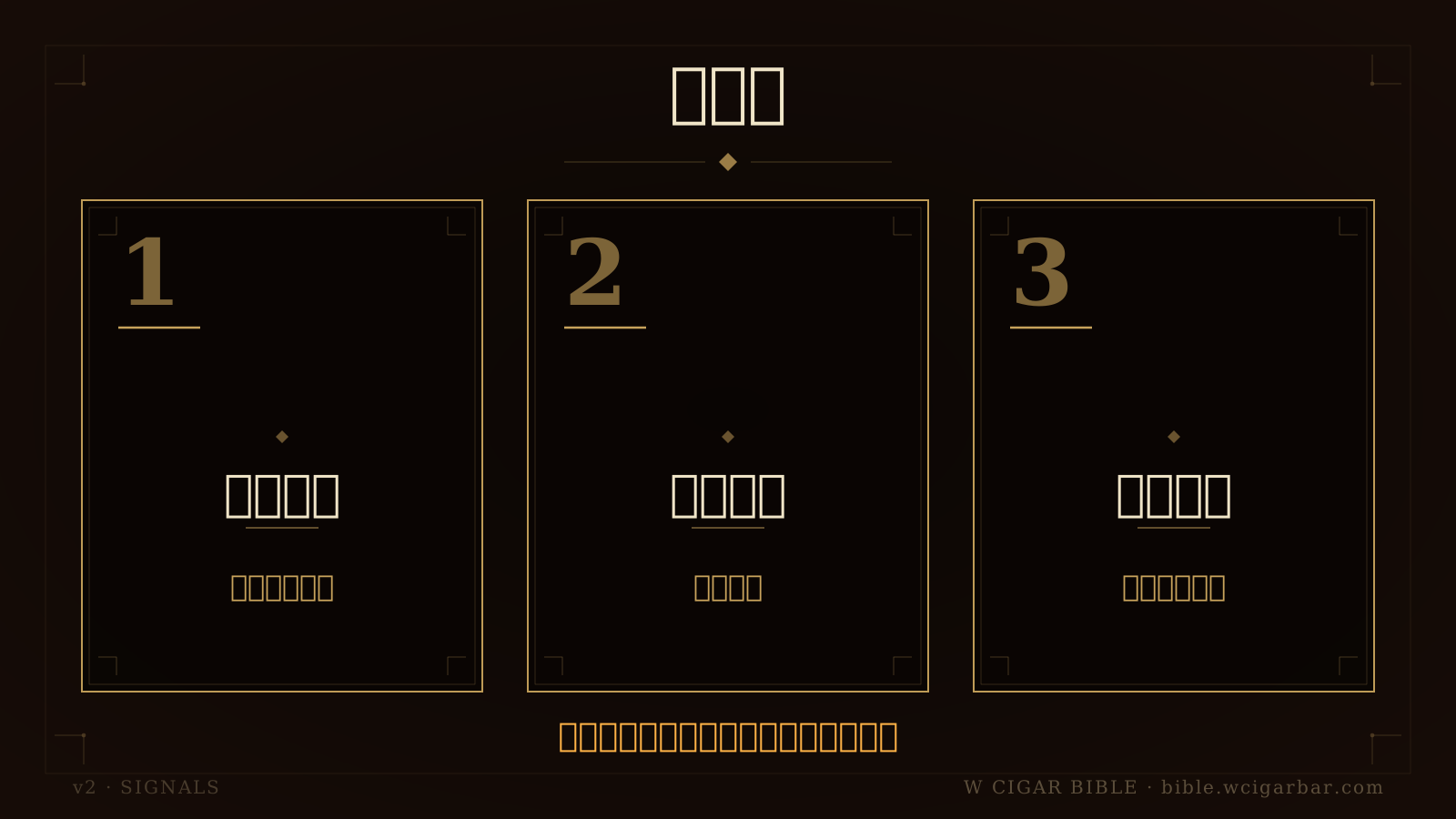
三張重點卡說明選葉發酵與捲製判斷
Drying and Initial Fermentation: The First Threshold for Aroma Purity
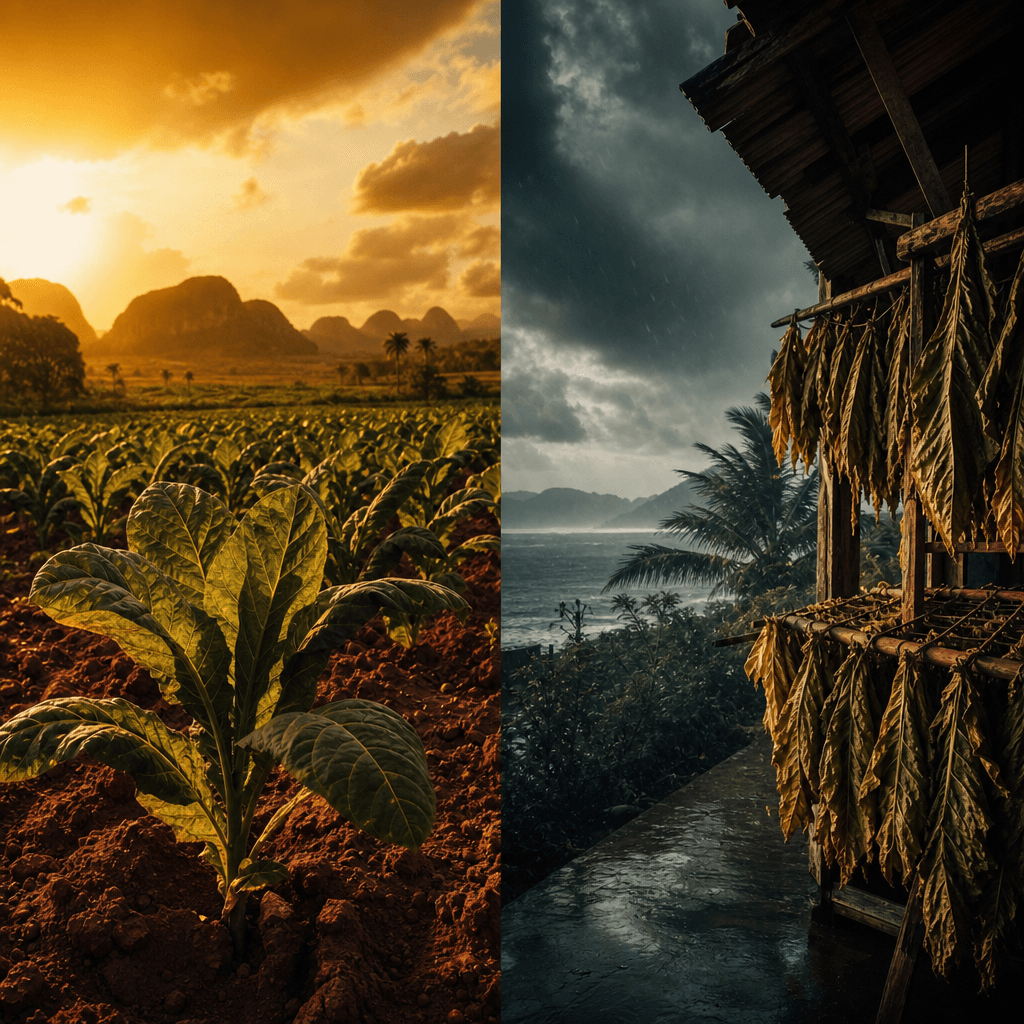
After harvesting, the leaves are sent to the curing barn for hanging and drying, usually for about 40 to 60 days, adjusted according to humidity, temperature, and leaf thickness. This stage is not simply "drying out the water," but allowing chlorophyll to gradually break down, changing color from green to yellow, brown, and tan, and reducing the raw grassy taste. If dried too quickly, the leaves can become brittle; too slowly, they may develop a musty odor that is hard to correct later, no matter how much fermentation is done.
Once initial fermentation begins, the leaves are stacked into pilóns according to grade, with internal temperatures rising to about 38 to 50°C, and some thick leaves require even more precise monitoring. Workers regularly turn the piles to ensure even heating of the inner and outer leaves and to release ammonia and excess moisture. Dominican factories like Davidoff and Fuente are particularly cautious about fermentation temperature control because cleanliness and finesse largely come from here.
The purpose of fermentation is not to make the leaves as heavy as possible but to reduce roughness, ammonia, and unstable burning factors to a controllable range. If a seasoned enthusiast smells pungent ammonia, experiences tongue numbness, or sees mottled gray ash in the early stages, it is often not a storage issue but traces left by insufficient raw material handling or fermentation.
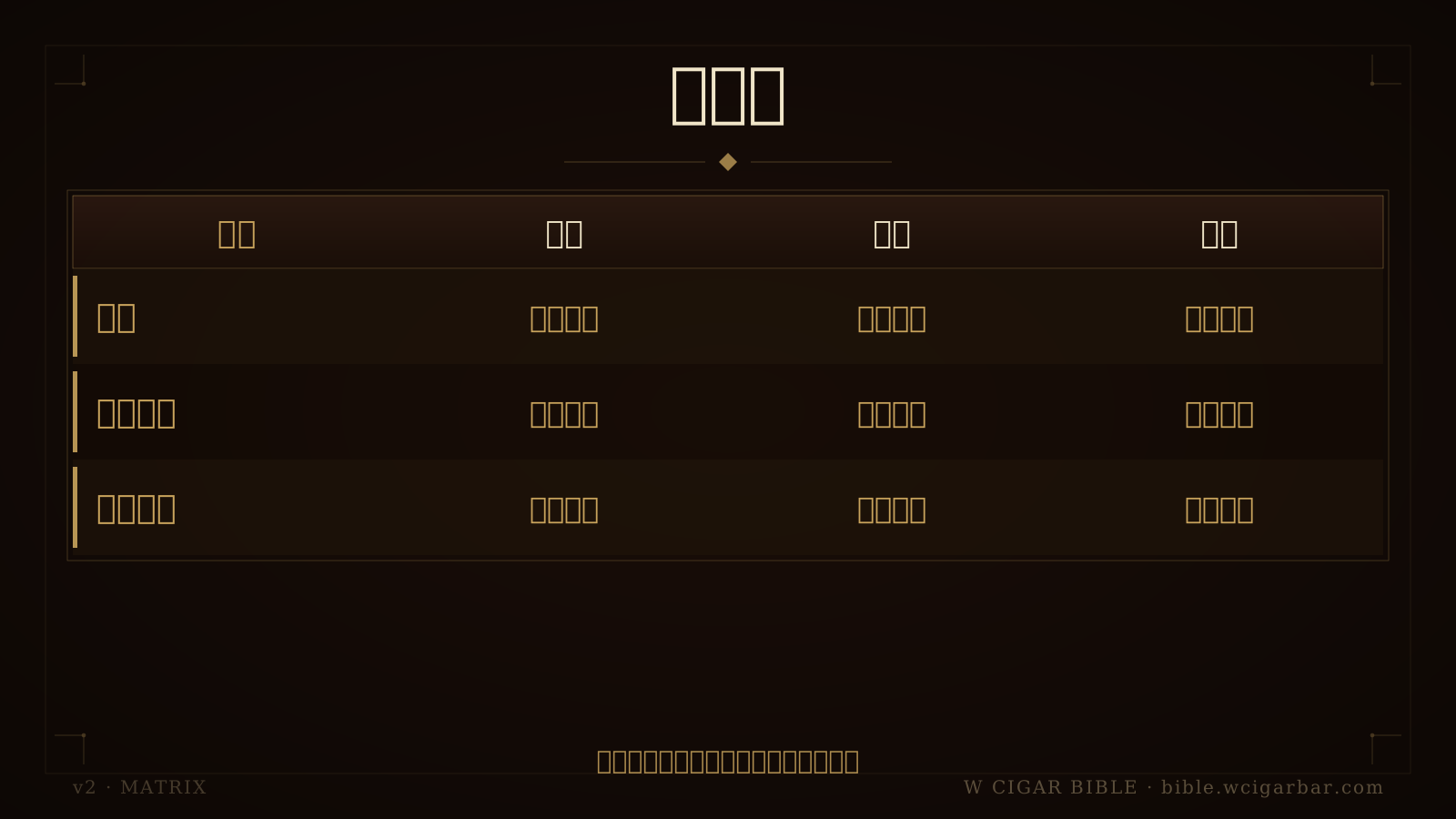
矩陣比較茄芯茄套茄衣的功能與風險
Grading, De-stemming, and Re-aging: Where the Blender Truly Begins to Speak
After fermentation, the leaves are re-graded based on color, size, elasticity, oil content, damage level, and vein thickness. Wrapper leaves have the highest requirements, like Connecticut Shade, Ecuador Habano, and Cameroon wrapper, which must be complete in appearance and have extensibility and thin toughness; binder leaves focus on structural support; filler leaves are evaluated for burn rate, aroma layers, and strength. The precision of this step directly determines whether the subsequent rolling is smooth.
De-stemming is also crucial. A stem that is too thick will affect the burn line and draw, especially in slender sizes like Lancero, Corona Gorda, and Lonsdale. Some factories manually de-stem to maintain leaf integrity, while others use mechanical assistance to improve consistency. After de-stemming, the leaves usually return to the aging room, with time ranging from months to years; for example, the thick and rounded feel often discussed in the Padrón 1926 series is closely related to long-term raw material processing.
Grading is not an administrative process but a key step in converting leaves into the language of blending. A leaf placed in the filler may be sweet, in the binder may become supportive, and in the wrapper may affect the first impression. Seasoned enthusiasts often say, "This cigar opens beautifully in the middle," which is often due to the leaves from different parts being arranged just right in terms of burn rate.
Blend Design: Brand Style is Not Accidental but a Reproducible Structure
The blender's work is like composing music. The filler provides the melody, the binder is responsible for structure and burn, and the wrapper determines the opening aroma and visual impression. For a classic Pirámide like Montecristo No.2, the size itself makes the front more concentrated, and the temperature gradually rises in the back; if the blend is not stable, the middle and back can easily become bitter. Conversely, a Robusto size with about a 50 ring gauge and 124 mm length burns faster, and the blend must establish recognizability within the first 20 minutes.
After 2000, the American market favored richer styles, like Oliva Serie V, My Father Le Bijou 1922, and Liga Privada No.9, all showcasing higher proportions of strength, oil, and spice. But richness does not mean roughness; an excellent blend will arrange sweetness, woodiness, cocoa, or nutty notes to envelop the strength, allowing nicotine and aroma to advance together rather than simply overwhelming the palate.
The standard of a mature blend is that the same style can maintain recognizability across different batches, not just be good by chance in a particular year. This is also why seasoned enthusiasts track box numbers, years, and factory codes; it's not superstition but understanding that raw material batches and craftsmanship status affect the finished product. If the same brand and size show different tensions in 2014, 2019, and 2023, clues can usually be found in raw material maturity and rolling consistency.
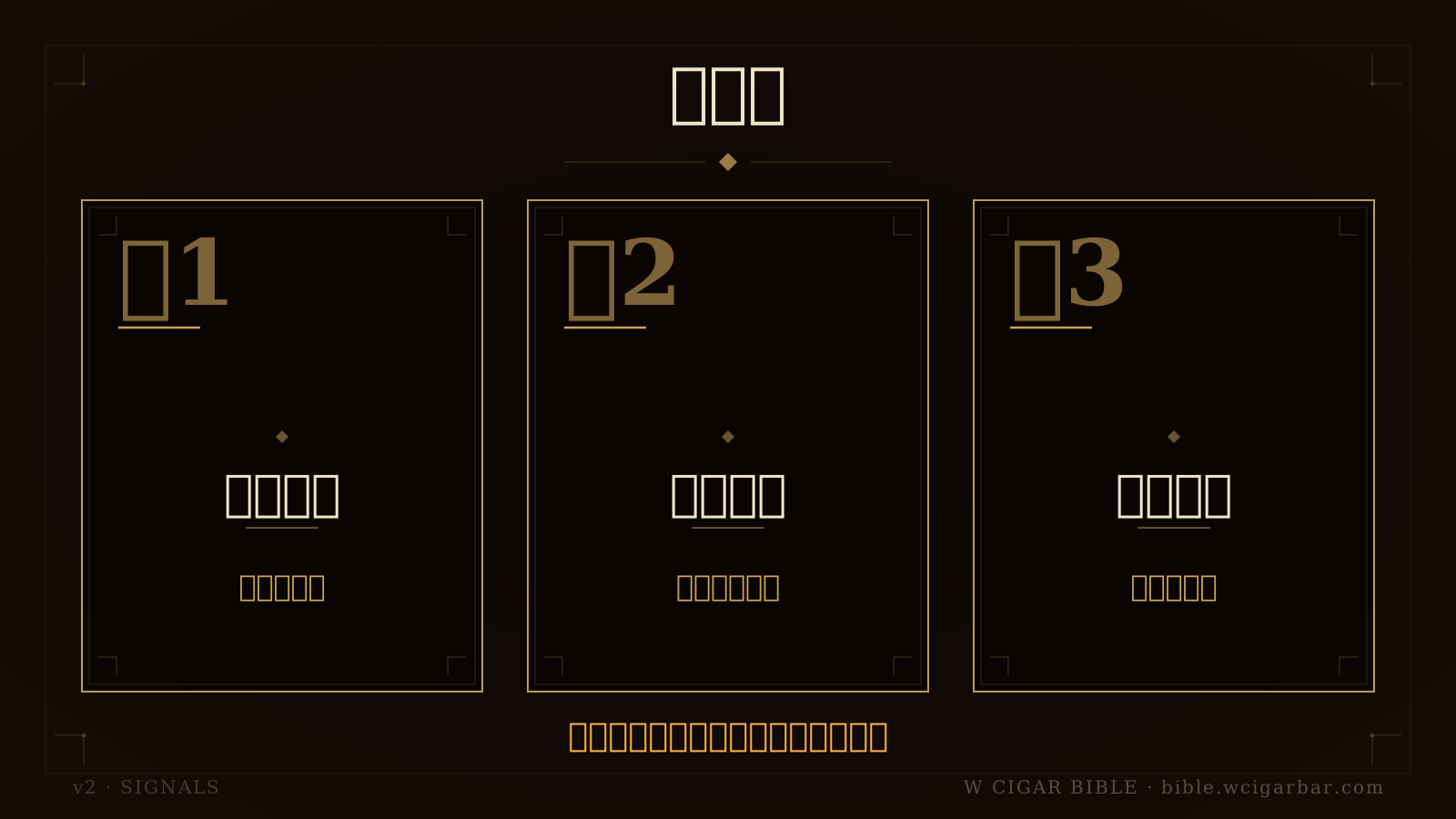
三張誤解卡提醒深色吸阻與醇化判斷
Rolling Techniques: Draw, Burn, and Layers are Completed Between the Fingers
The core technique of handmade cigars lies in the torcedor, or roller. Common methods include entubado, accordion, and booking. Entubado rolls each filler leaf into a tube before combining, making the airflow channel clearer; booking folds the leaves like book pages, which is efficient but can lead to tight or loose draw if not controlled well. High-end factories specify techniques based on size and brand line, not using one method for all sizes.
Here is a comparison of common rolling methods, allowing seasoned enthusiasts to infer craftsmanship from draw and burn performance:
| Rolling Method | Common Features | Advantages | Possible Risks |
|---|---|---|---|
| Entubado | Each filler forms a tube | Clear airflow, stable burn | Time-consuming, high technical requirements |
| Accordion | Leaves folded into waves | Even structure, good efficiency | Uneven folding can cause uneven burn |
| Booking | Leaves stacked like book pages | Fast speed, easy shape | Air channels can easily be compressed |
| Figurado Specific Shaping | Tapered at both ends | Noticeable flavor changes | Extremely high requirements for filling density |
The ideal draw is not too loose or too tight; each puff should have resistance, rebound, and synchronized burn. If a cigar is loose in the front, tight in the middle, and hot in the back, it may be due to uneven filler distribution. Especially in irregular sizes like Salomones, Perfecto, and Diadema, the density transition at the head and tail tests the roller's experience, and any imbalance can affect the entire rhythm.
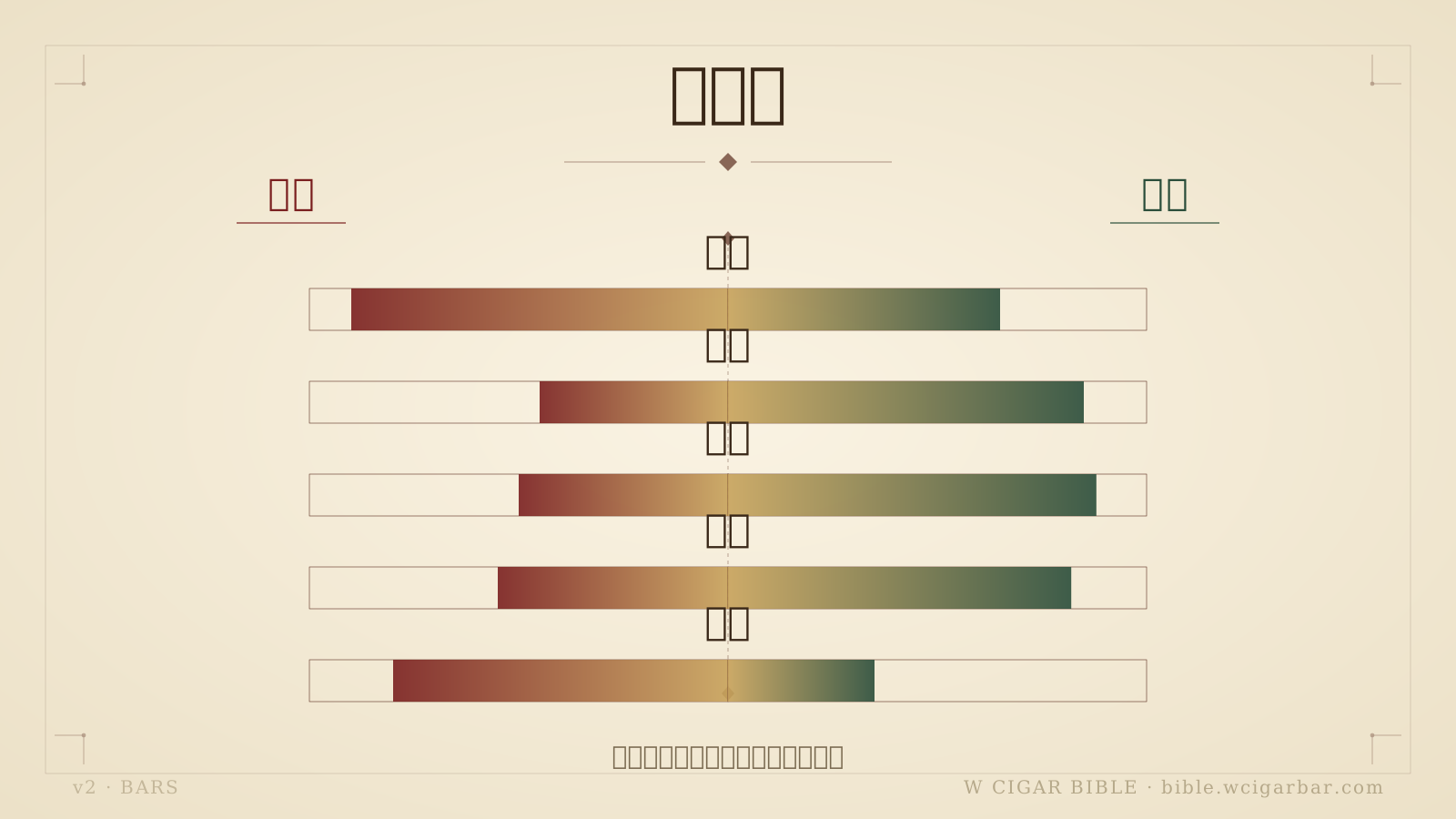
長條圖比較粗強取向與平衡取向差異
Molding, Pressing, and Wrapper Application: Precision Engineering Beneath the Appearance
After the bunch is rolled, the cigar enters a wooden mold for pressing and shaping, usually for about 30 minutes to several hours, possibly flipped midway to ensure even roundness and density. Box-pressed cigars like Padrón 1964 Anniversary, San Cristobal, or some Rocky Patel works are pressed into a square shape to create a different grip and burn rhythm. Box pressing is not just a shape; it also changes the way smoke flows and the burn surface contacts.
Wrapper application is the most sensitive step for visual and tactile aspects. A good wrapper should have moist elasticity, neither too dry nor too wet. The roller cuts according to the vein direction, wrapping the leaf in a spiral to avoid concentrating thick veins on one side. The neatness of the cap is often used by seasoned enthusiasts to judge factory details; the traditional Cuban triple cap is very recognizable on many classic sizes, but a beautiful cap does not necessarily mean overall perfection; it still needs to be verified by burn and draw.
The wrapper is not just a simple outer skin but a co-bearer of entry aroma, burn line, and first impression. A beautiful Maduro that is poorly fermented may have thick sweetness but also bitter char; a well-processed Claro can have elegant notes of cream, hay, and almonds. Seasoned enthusiasts should look at the wrapper's oiliness, elasticity, veins, and wrapping tension, not just chase dark colors.
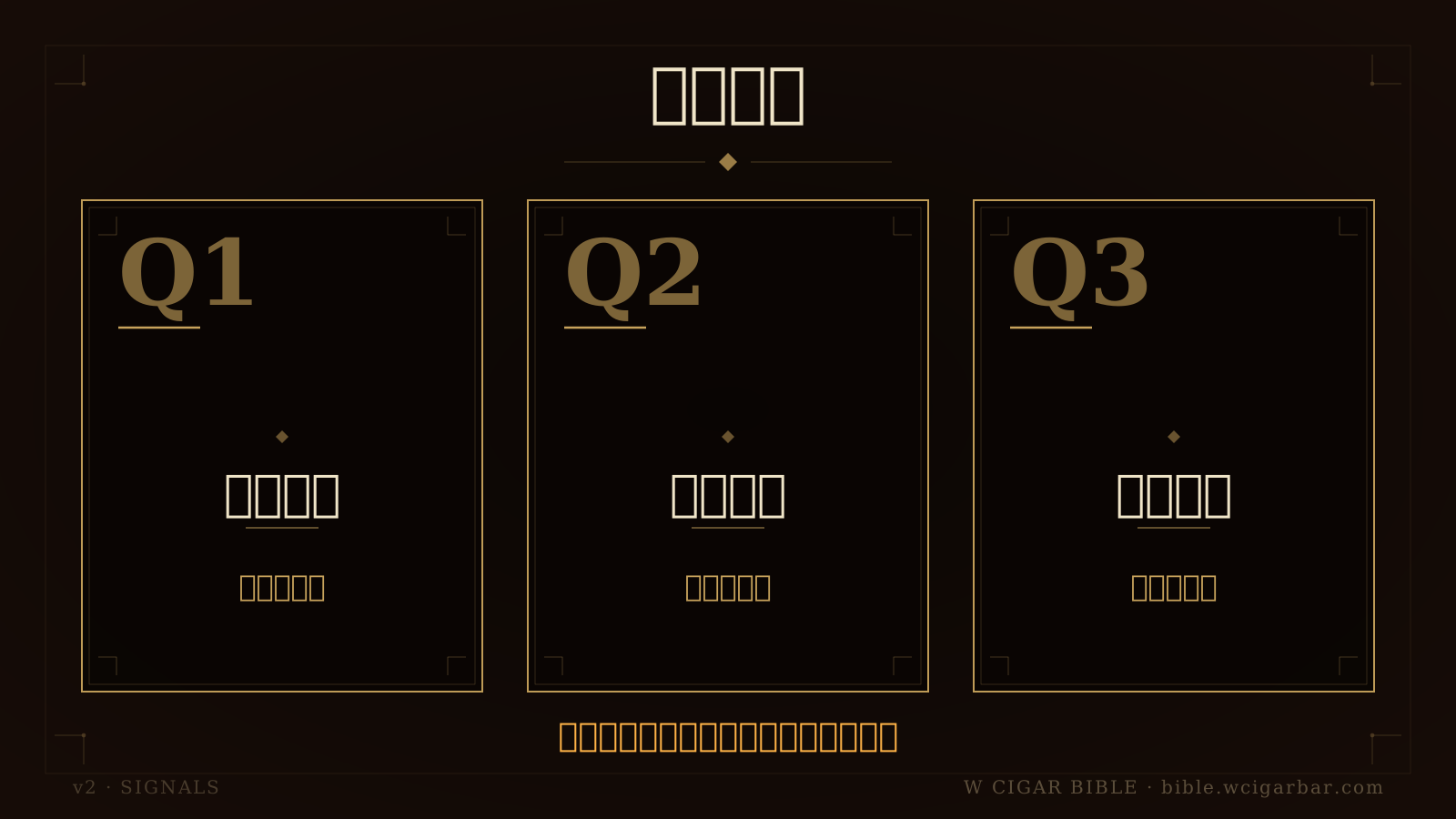
快問快答卡整理年份顏色與吸阻重點
Aging, Quality Control, and Shipping: The Final Gate to Stabilize Craftsmanship
Shaped cigars do not immediately leave the factory; they usually enter the aging room for pre-box aging, ranging from weeks to months, with higher-end products possibly longer. This stage allows the moisture added during rolling to rebalance and the aromas between the filler, binder, and wrapper to merge. If boxed too early, issues like heavy moisture in the front, unstable burn, and separated aromas may occur.
Quality control includes weight, length, ring gauge, draw test, and appearance check. Modern factories often use draw test machines to keep the draw within set ranges; for example, Robusto and Churchill have different ideal airflow data due to their length and ring gauge differences. Cuban factories also have sampling systems, but handmade production always has batch variations, which is one reason seasoned enthusiasts track years and box conditions.
- Too light: May indicate insufficient filling, fast burn, high temperature
- Too heavy: May indicate tight draw, easy to extinguish or bitter
- Loose foot: Front burn line may be unstable
- Slanted cap: May crack after cutting
- Uneven humidity in the box: Amplified performance differences between sticks in the same box
Pre-shipping quality control is about minimizing the uncertainty of agricultural products, not turning every cigar into a mechanical replica. When discussing collection and market performance, I also remind: it doesn't guarantee appreciation, still depends on source preservation and market. For seasoned enthusiasts, the truly reliable judgment is a combination of craftsmanship, preservation, and actual condition.
Common Questions
Why do the same brand and size have noticeable differences in different years?
Because cigars are agricultural products, annual rainfall, soil conditions, fermentation rhythm, and factory personnel all affect the result. Taking Cuban years like 1998, 2001, 2008, and 2014 as examples, seasoned enthusiasts often discuss the burn stability and aroma maturity of different periods. Even if the blending goal is the same, raw material batches will still bring subtle changes.
Does a darker wrapper mean a stronger flavor?
Not necessarily. Maduro and Oscuro often give impressions of sweetness, cocoa, coffee, and richness, but the concentration also depends on the filler and binder. Ecuador Connecticut can also have strength if the filler uses Estelí Ligero; a dark wrapper poorly fermented may instead have charred bitterness and mustiness.
Is tight draw always a rolling mistake?
In most cases, it relates to filling density, leaf moisture, and size structure, but it's not always the roller's fault. If storage humidity is consistently above 72% RH, leaf expansion can also tighten the draw. When judging, look at the cut, burn line, weight, and feel simultaneously.
Why are some cigars particularly impressive in the middle?
The middle is where the filler burns most stably, with balanced temperature and smoke volume. If the blend design is mature, the aroma of Seco, the thickness of Viso, and the strength of Ligero will converge in the middle. Many Corona Gorda and Robusto Extra's charm lies in the second to early third segment.
How should seasoned enthusiasts preliminarily judge craftsmanship from appearance?
Look at five points: wrapper elasticity, vein thickness, cap neatness, foot filling uniformity, and overall density consistency. Appearance can't completely determine quality but can eliminate many obvious risks. If combined with brand year, box condition, and storage records, the judgment will be closer to the truth.
Is longer aging always better?
No. Cigars with high strength and thick structure are usually more age-resistant, while light and delicate types may become flat if aged too long. Generally, 3 to 5 years can observe fusion, and over 10 years depends on stable preservation. The goal of aging is balance, not to flatten all personality.
—Cigar Prince Wilson Tsai
I always believe that the most charming aspect of seasoned enthusiasts is not how many brands they can recite but their ability to read the traces of land, factory, and craftsmanship from a cigar. Leaf selection determines the framework, fermentation and aging polish the edges, and rolling techniques bring everything into the rhythm of each puff. After understanding the craft, when you look back at familiar brands, you'll find those subtle differences are no longer just feelings but judgments with a traceable context.
Smoking is harmful to health. Under 20 years old is prohibited from smoking. Quit smoking hotline: 0800-636363. This article is for reference only for adults over 20 years old regarding cigar culture, preservation, and regulations, not a tobacco advertisement, promotion, or purchase suggestion.
Like this article?Share with friends
Share this W Cigar Bible piece with friends who want to learn cigar culture, storage, and tasting.
想把這篇 化為實踐
雪茄聖經是知識;雪茄文化要在空間裡發生

W Cigar Bar 大安總店資訊
台北大安區 · 雪茄聖經總編輯 Wilson Tsai 主理的雪茄文化空間
33 座 24 小時恆溫恆濕醇化室
W Cigar Bar 提供的會員醇化空間 · 場地資訊請洽編輯部
雪茄剪 / 打火機 / 雪茄盒 / Boveda
W Cigar 配件官網 · 專營雪茄配件正品

加 LINE 好友 · 文化諮詢
文化空間資訊 · 紳士沙龍 · 私人包場
本網站內容僅供雪茄文化、歷史、收藏與品吸知識研究參考。菸品有害健康、未滿法定年齡者請勿吸菸。實際規範請依所在地法律為準。
吸菸有害健康・戒菸專線 0800-636363・本站僅供 20 歲以上成年人閱覽。
讀到這裡,你不只是路過的人
留下 Email,加入 W 雪茄聖經內圈——總編輯 Wilson Tsai 親選的學院深文與國際新訊,先你一步送到信箱。
· 教育用途非銷售 · 隨時一鍵退訂 · Email 絕不對外公開 · 由勝茄股份有限公司營運
同分類延伸閱讀

資料來源:W Cigar Bible 編輯部整理 · 雪茄王子 Wilson Tsai 親自審稿
本文僅供雪茄文化、歷史、收藏與品鑑知識研究,不作為菸品促銷、銷售或購買建議。吸菸有害健康,未滿二十歲不得吸菸。