雪茄的工藝與風味:探索從葉片到產品的轉變
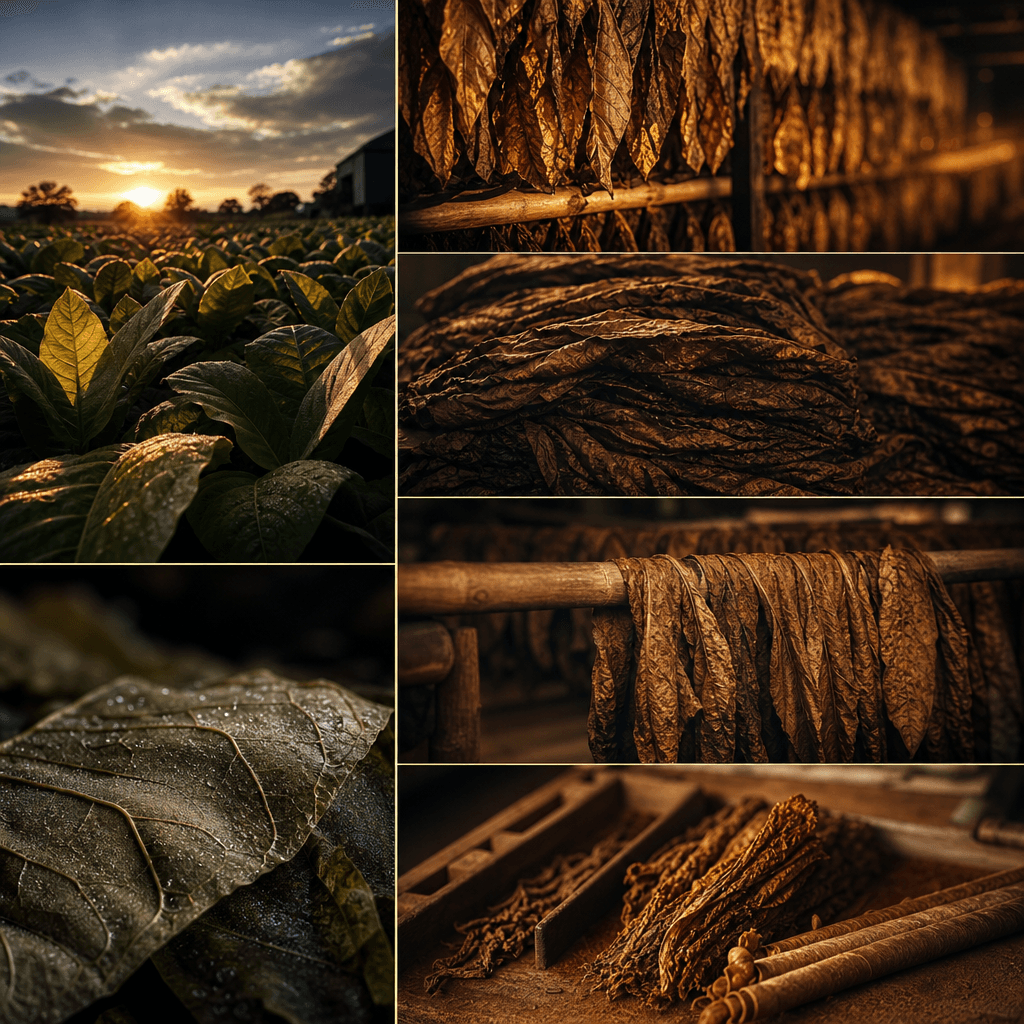
雪茄的魅力在於其製作過程的複雜性,從田間選葉到最終成品,每一步都影響風味。古巴的 Vuelta Abajo 產區以其獨特的土壤和氣候著稱,決定了葉片的風味特徵。採收時,葉片需分層採摘以確保成熟度,接著進入晾乾和發酵過程,這些都是關鍵工序,影響最終的香氣和口感。分級與調配則是將不同年份和產區的葉片組合,創造出穩定的風格。手工捲製的技巧也至關重要,影響吸阻與燃燒效果。了解這些過程能幫助雪茄愛好者提升品
- 雪茄的工藝過程包括田間選葉、晾乾、發酵等,每一步都影響最終風味。
- 不同部位的煙草葉片風味差異,Ligero、Seco、Volado各有獨特特性。
- 手工捲製的結構影響吸阻與燃燒,正確的捲製技術是品質的關鍵。
The Craft and Flavor of Cigars: Exploring the Transformation from Leaf to Product
The allure of cigars lies not only in the aroma upon lighting but in the long journey from a single leaf to the finished product. As the editor of the "Cigar Bible," I often remind beginners: if you only remember brands and sizes, you'll soon hit a bottleneck; true progress in taste comes from understanding how craftsmanship shapes flavor.
A handmade long cigar may take 2 to 5 years to fully present itself. Field selection, drying, fermentation, grading, blending, rolling, and aging are not merely decorative processes but are crucial in determining sweetness, spiciness, woodiness, creaminess, burn, and draw.
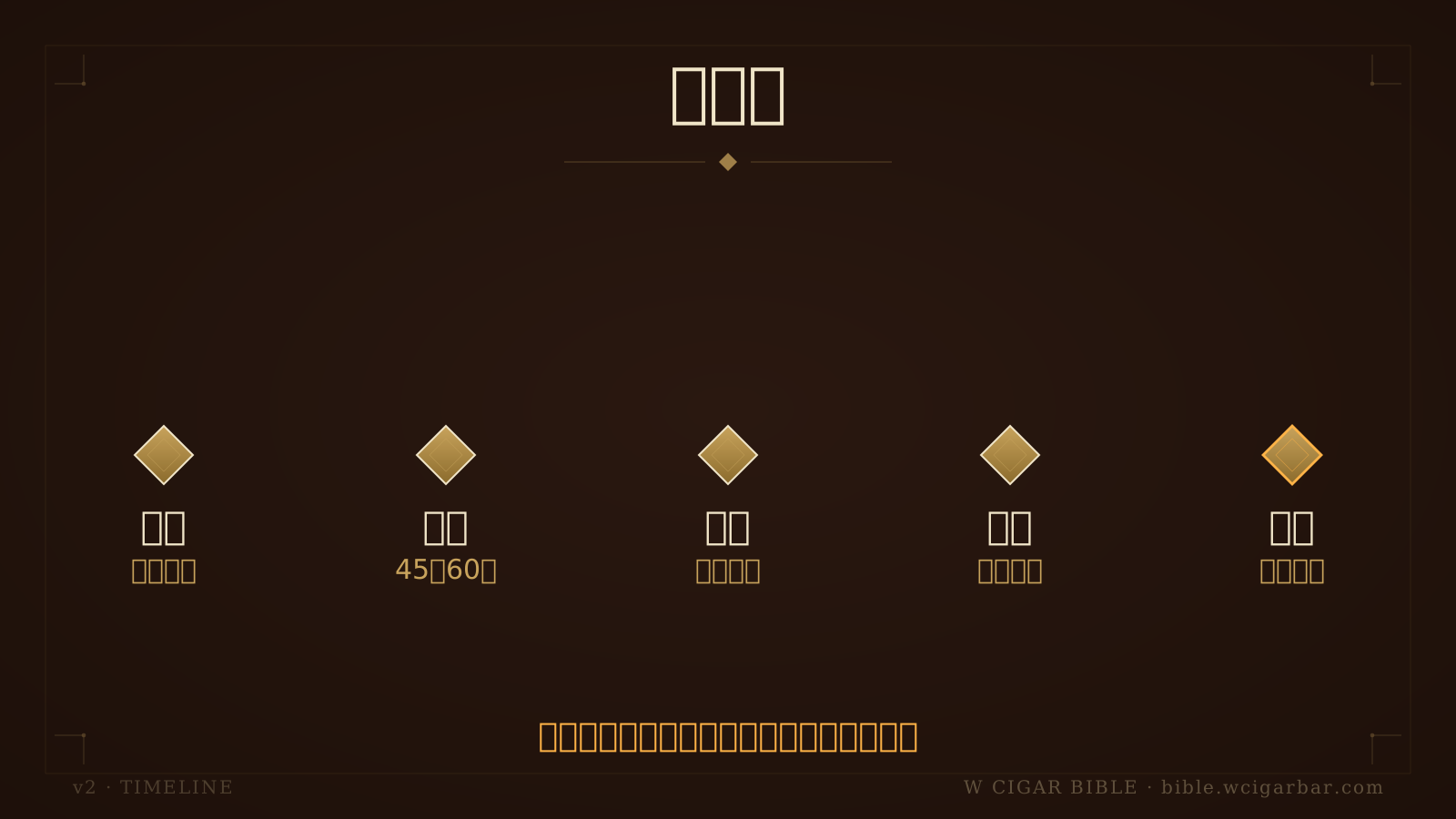
時間線呈現選葉、晾乾、發酵、分級到捲製醇化流程
Field Selection: Flavor Begins with Soil and Sunlight
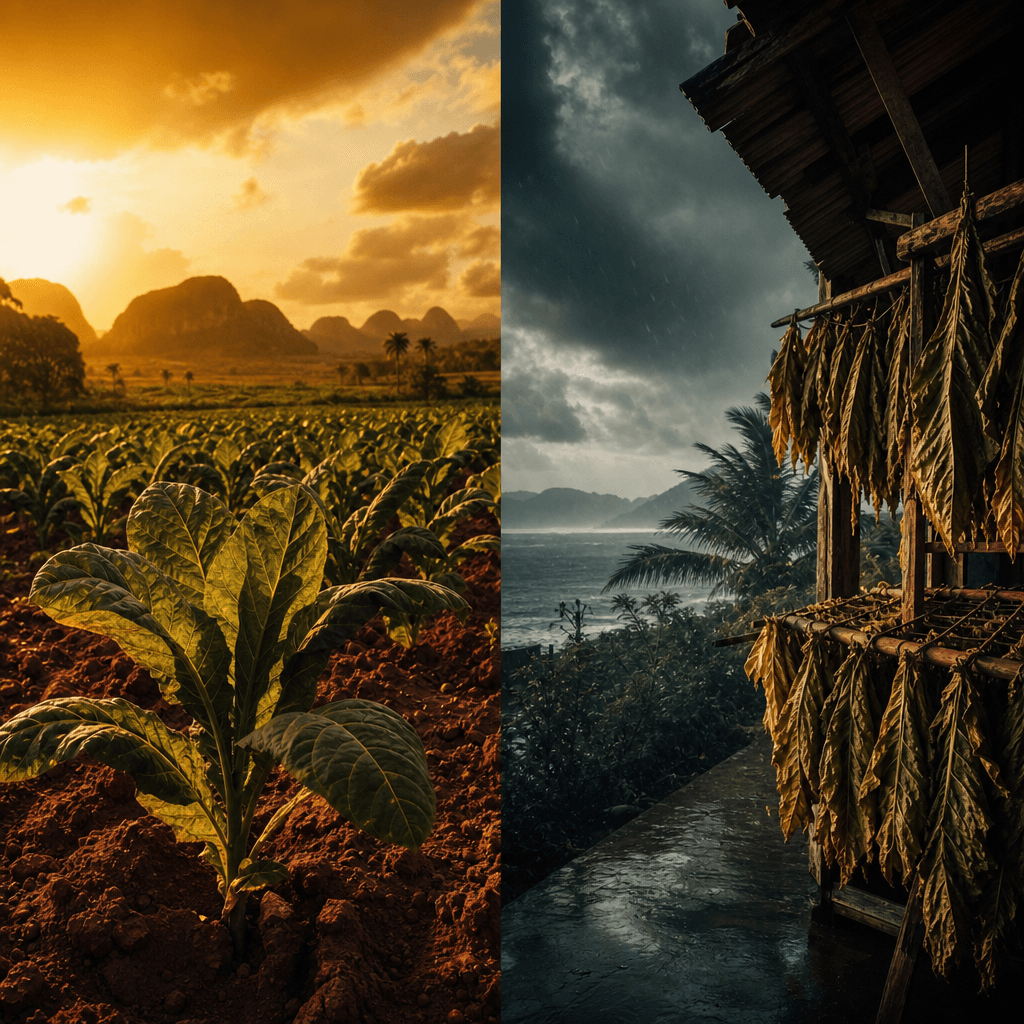
The first answer to cigar flavor lies in the field. Take Cuba's Vuelta Abajo as an example; this region in Pinar del Río has long been regarded as the core area for premium cigar leaves, not just because of its reputation, but because the red clay, drainage, sunlight, and humidity create stable conditions. The Dominican Cibao Valley, Nicaragua's Estelí, and Honduras' Jamastrán each have different mineral and spicy profiles.
The flavor of the leaves on the same tobacco plant varies from top to bottom. The upper Ligero receives more sunlight, has higher oil and nicotine content, and often carries pepper, leather, and strong coffee notes; the middle Seco is more aromatic and balanced; the lower Volado has good combustibility and a lighter taste. Cigars are not simply about beautiful leaves but about the role each leaf plays in the structure.
Take the Cohiba Behike series as an example. First appearing in limited form in 2006, one of the key discussions later was the use of the special upper small leaf, Medio Tiempo. It's scarce, thick, and strong, not found on every plant. Beginners who taste certain cigars that start mild but suddenly present cocoa, concentrated coffee, and spiciness in the middle and back can think back: maybe it's not "magic," but the position and proportion of the leaves starting to speak.
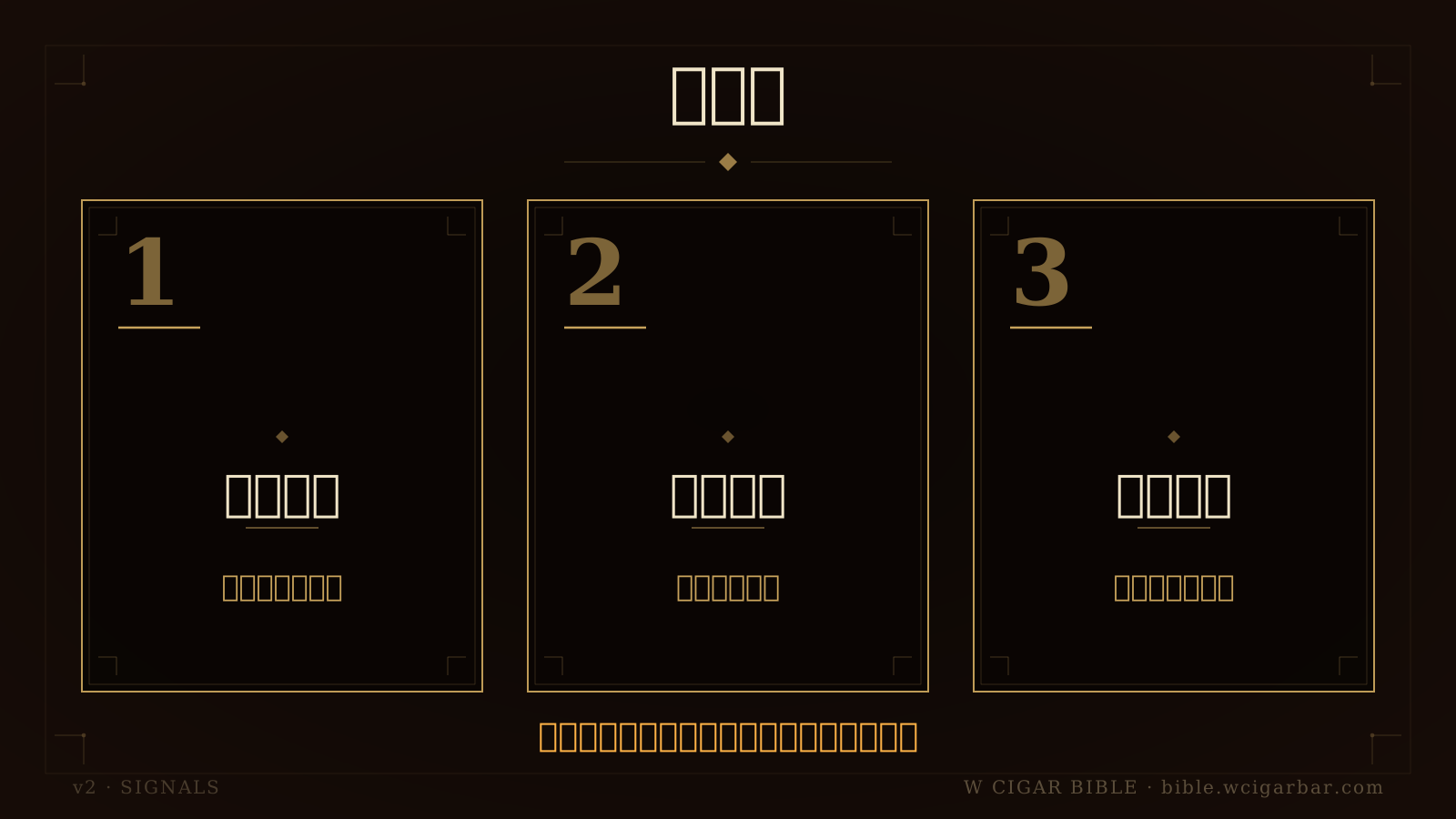
三張重點卡說明葉位、發酵與結構如何影響風味
Harvesting and Drying: From Green to Combustible Aroma
Harvesting doesn't end with cutting down the whole plant at once. Traditional premium cigar leaves are often picked in layers, usually starting from the bottom, moving upwards every few days to allow leaves at different heights to reach proper maturity. If harvested too early, they tend to have grassy, raw, and weak combustion; if overripe, the leaves may become brittle, increasing fermentation risks. Maturity sets the ceiling for subsequent processes; without good raw leaves, even the finest later stages can only remedy part of it.
After harvesting, the leaves enter the drying house, often called Casa de Tabaco in Spanish. Leaves hang on wooden poles, slowly turning from green to yellow to brown over 45 to 60 days, with moisture decreasing and chlorophyll breaking down. This stage is not simply "drying" but controlling air circulation, humidity, and temperature; too fast locks in harsh green flavors, too slow risks mold or unclean aromas.
I've compared different year batches of the same brand's Romeo y Julieta Churchills, all Julieta No.2 in size, with a ring gauge of 47 and a length of 178mm. Some batches have floral and honey notes in the front, while others are distinctly woody and slightly spicy. Besides aging time, drying and raw leaf maturity might also be sources of difference. Beginners practicing can record "whether the herbal feel is clean," "whether the sweetness resembles honey or licorice," "whether the burn tends to skew," as these are clues to drying quality.
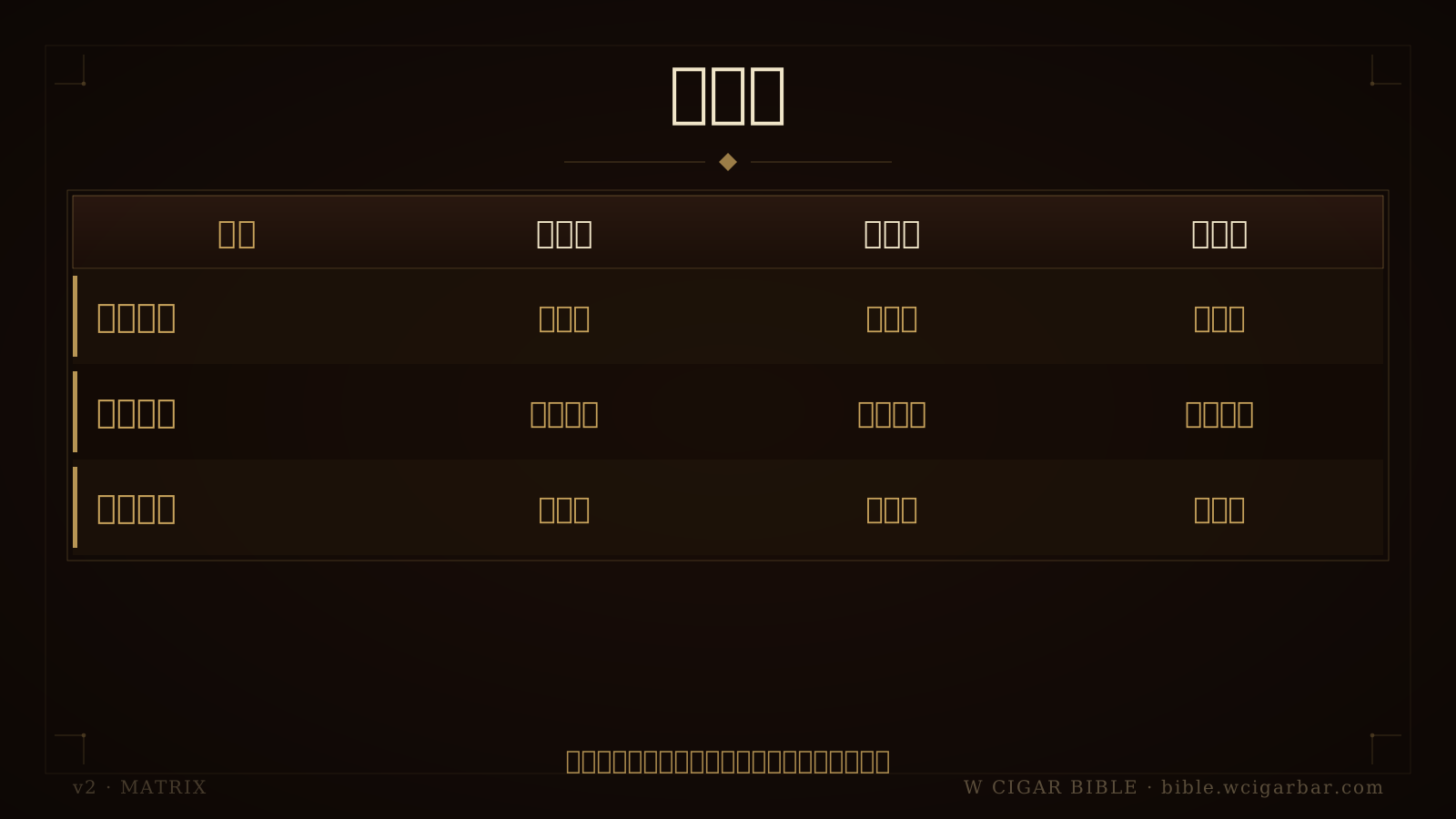
矩陣比較上層葉、中層葉與下層葉的風味及功能
Fermentation: Management of Temperature, Humidity, and Time
Dried leaves still can't directly become premium cigars. Fermentation involves stacking leaves into a pilón, using natural heat and humidity to gradually reduce ammonia, off-flavors, and coarseness. The time varies greatly between regions and leaf types; some filler leaves need months, while some dark wrappers like Maduro may require longer management. Workers turn the piles during the process to prevent the center temperature from getting too high and damaging the leaves.
The key to fermentation is not the hotter, the better. If temperature control is improper, leaves may develop burnt bitterness, rancidity, or muddled flavors; if insufficient, they tend to be acrid, throat-irritating, and ammonia-like when lit. Many Cuban classics, such as Partagás Serie D No.4 and Montecristo No.2, often mentioned by enthusiasts for their "clean soil, cocoa, coffee, and woody" notes, rely on stable fermentation as a foundation. Fermentation is the core process of turning raw power into appreciable flavors.
Beginners can check fermentation quality with their noses. Smell the foot and body of the cigar before lighting; a clean cigar may have grain, hay, wooden box, cocoa, and leather notes; if there's a strong ammonia smell, it's not ready for deep tasting. This doesn't mean the cigar is bad; sometimes, it just needs further aging at suitable humidity. In my experience, 65% to 69% relative humidity often balances burn and aroma more easily, but it still depends on size, wrapper thickness, and personal environment.
Grading and Blending: A Cigar is Not a Single Leaf
After fermentation, leaves are graded by size, thickness, elasticity, color, oil content, and damage. Wrappers need to be beautiful but not just beautiful; filler leaves need flavor but not just strength. The true skill of a blender is to combine leaves of different years, regions, and parts into a stable style, allowing the same brand to remain recognizable across different batches.
| Composition Position | Common Role | Flavor Impact | Beginner Observation Focus |
|---|---|---|---|
| Wrapper | Appearance, First Layer Aroma | Sweetness, Oil, Spice, Wood | Surface gloss, elasticity, cracks |
| Binder | Structure Fixation, Burn Coordination | Affects burn rate and mid-balance | Ash stability, burn skew |
| Filler | Main Flavor and Strength | Sweet, Spicy, Earthy, Coffee, Leather | Clear changes in front, middle, back |
Take Davidoff Grand Cru, Arturo Fuente Hemingway, and Padrón 1964 Anniversary as examples. They differ not just in "strong or mild." Davidoff often emphasizes elegance, cream, nuts, and clean wood; Fuente Hemingway's Perfecto shape allows rhythmic burn development; Padrón 1964 is often considered to have cocoa, coffee, and black pepper tension. Blending is not about piling good leaves together but letting strength, aroma, burn, and rhythm serve each other.
For beginners, the best way to understand blending is to compare different sizes of the same brand. For example, Cohiba Siglo II and Siglo VI, both part of Línea 1492, differ in length, ring gauge, and burn time, with different flavor unfolding speeds. Smaller sizes often enter core flavors faster, while larger sizes may have more relaxed layers. When recording, don't just write "good smoke"; break it down into sweetness, spiciness, woodiness, creaminess, and finish length, and progress will be quick.
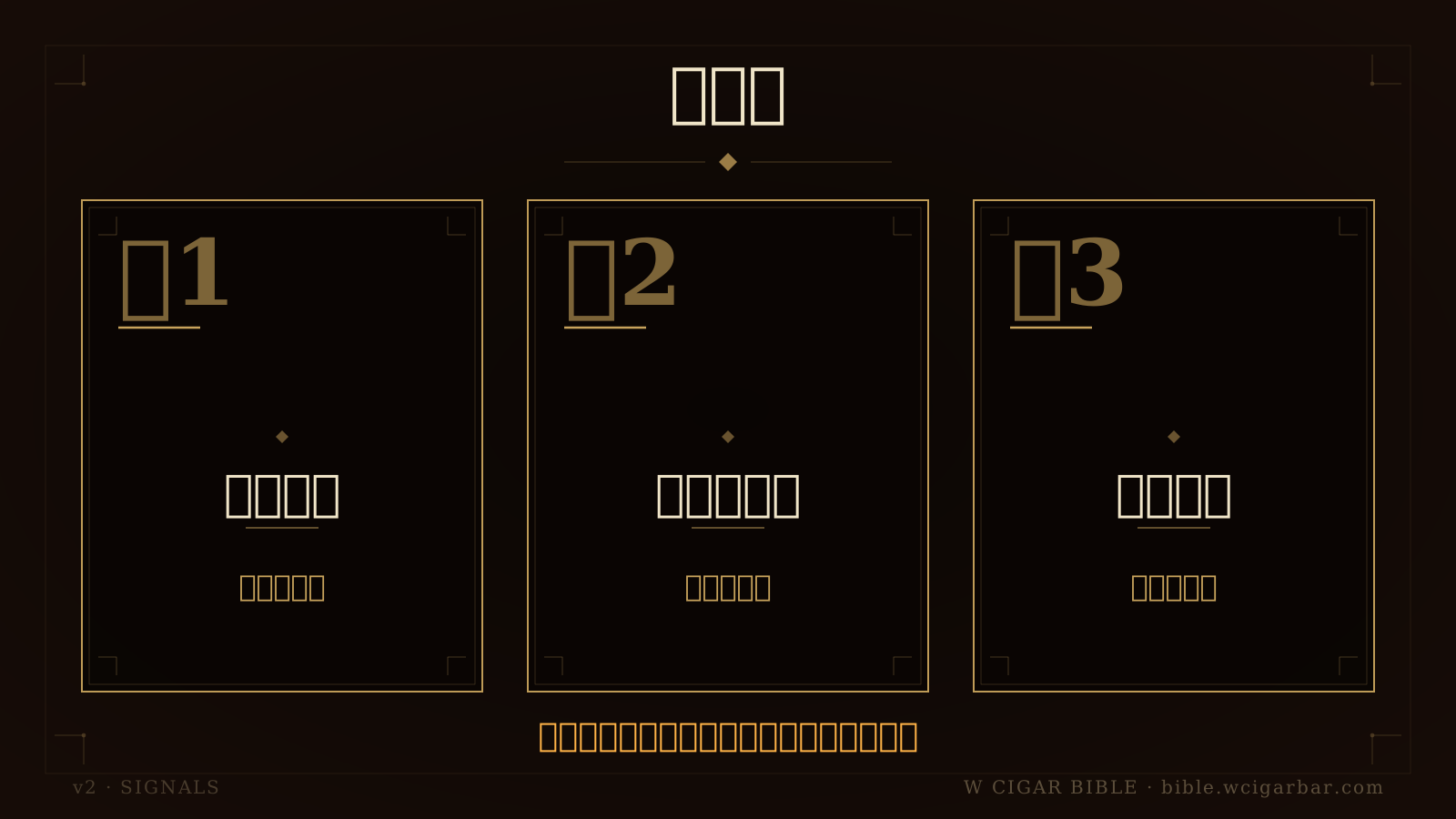
三張錯誤提醒卡指出白點、剪口與醇化時間的常見誤解
Hand-Rolling: Structure Determines Draw and Burn
Hand-rolling seems romantic but is actually very engineered. The Torcedor first organizes the filler leaves, aligning different leaves by direction and position, then wraps them in the binder to form a bunch, presses it into shape with a mold, and finally completes the appearance with the wrapper. The draw of each cigar relates to the folding method, tightness, vein position, and humidity of the filler leaves. No matter how good the blend, if the rolling structure is off, it may be overshadowed by draw and burn issues.
Common problems include being too tight, too loose, hollow, and skewed burn. Too tight results in insufficient smoke, increased temperature, and early bitterness; too loose burns too fast, with thin and hot flavors. Skewed burn may be due to environmental wind, uneven humidity, or wrapper thickness and filler distribution issues. For classics like Montecristo No.4, a high-production, classic-sized Mareva, beginners can learn the subtle differences of "handmade" from different sticks.
Basic observation can follow three steps:
- Gently squeeze the body before cutting; it should be elastic, not hard as a stick or hollow and collapsed in parts.
- Do a cold draw after cutting; the draw should feel like sipping a slightly thick milkshake through a straw, not completely blocked or without resistance.
- After lighting, don't rush to take big puffs in the first 1 cm; first, see if the burn line is stable.
Cigars are not a speed race. If you puff continuously, the burn temperature rises, and the original honey, nuts, and cedar may turn into bitterness and tongue burn. Beginners often think bitterness means a strong cigar, but often it's just too fast a pace. Every 45 to 75 seconds per puff is a safer starting point, then adjust slightly based on size.
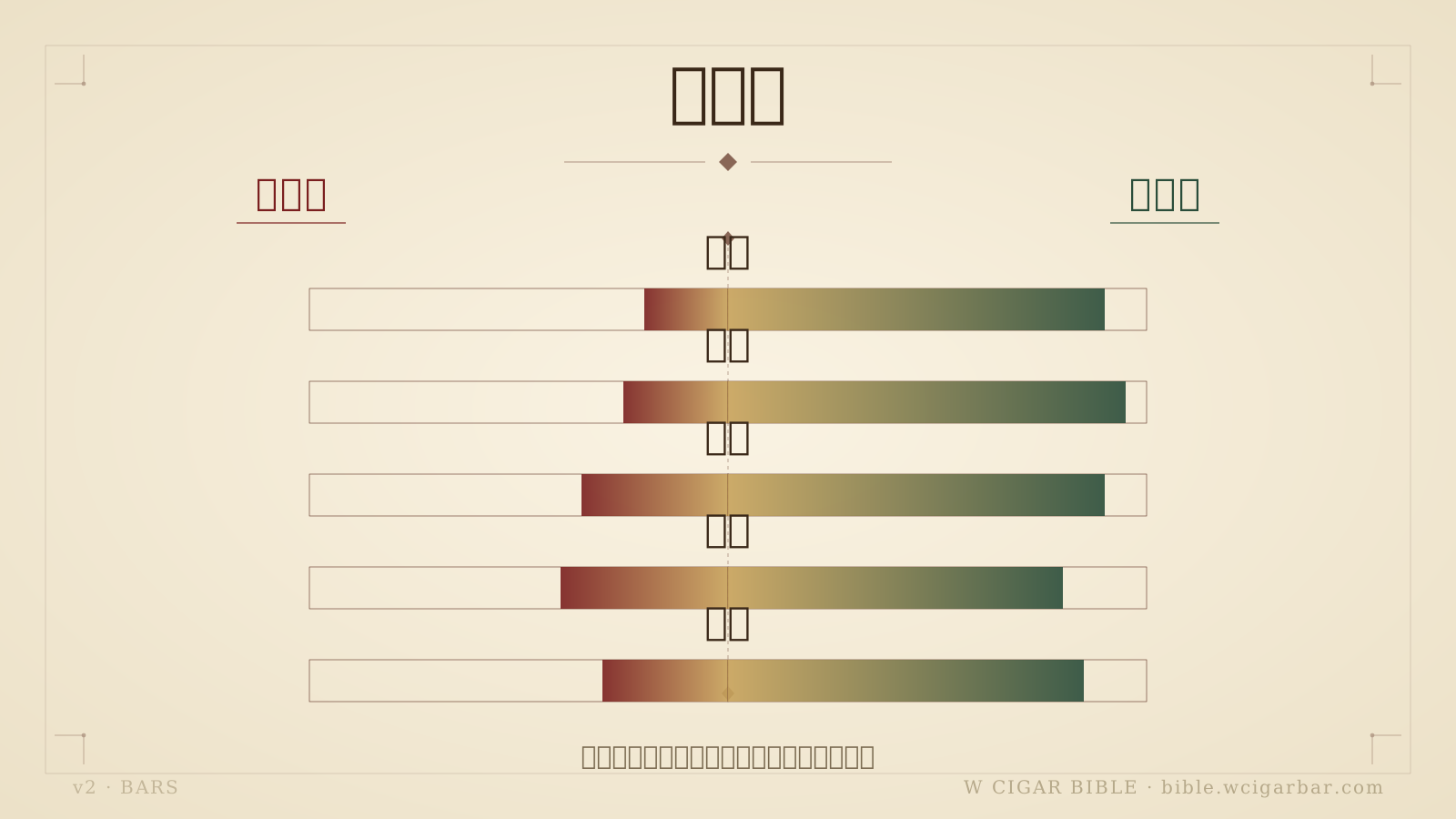
橫條圖比較品牌派與工藝派在葉位發酵保存等面向差異
Aging, Packaging, and Storage: Flavor Continues to Change After Production
Cigars continue to change after production, but I prefer to use the term "aging" rather than mystifying it. The core of aging is to allow moisture, volatile substances, and internal leaf flavors to slowly integrate. In the early 2000s, many Cuban cigar enthusiasts would observe the factory code and month on the box bottom and compare differences after 1, 3, and 5 years; some strong cigars like Bolívar Royal Corona may become more rounded, with soil and cocoa more integrated after several years.
Storage conditions are more important than time. Generally, a temperature of about 18 to 21°C and relative humidity of 65% to 70% is recommended; if the environment is long-term high temperature and humidity, mold or pests may occur; too dry and the wrapper cracks, burns too fast, and aroma thins. Using electronic temperature-controlled cabinets, cedar boxes, or humidification packs, all require regular calibration of hygrometers. Aging is not ignoring cigars but exchanging a stable environment for flavor integration.
Packaging also has an impact. Aluminum tubes provide travel protection, but long-term storage still requires attention to internal humidity; cellophane can reduce collision and short-term humidity fluctuations; wooden boxes are conducive to overall batch stability. When discussing collection value, I always remind: it doesn't guarantee appreciation, still depends on source storage and market. For beginners, rather than chasing price stories, it's more practical to establish storage records: entry date, humidity, box opening time, tasting date, and condition.
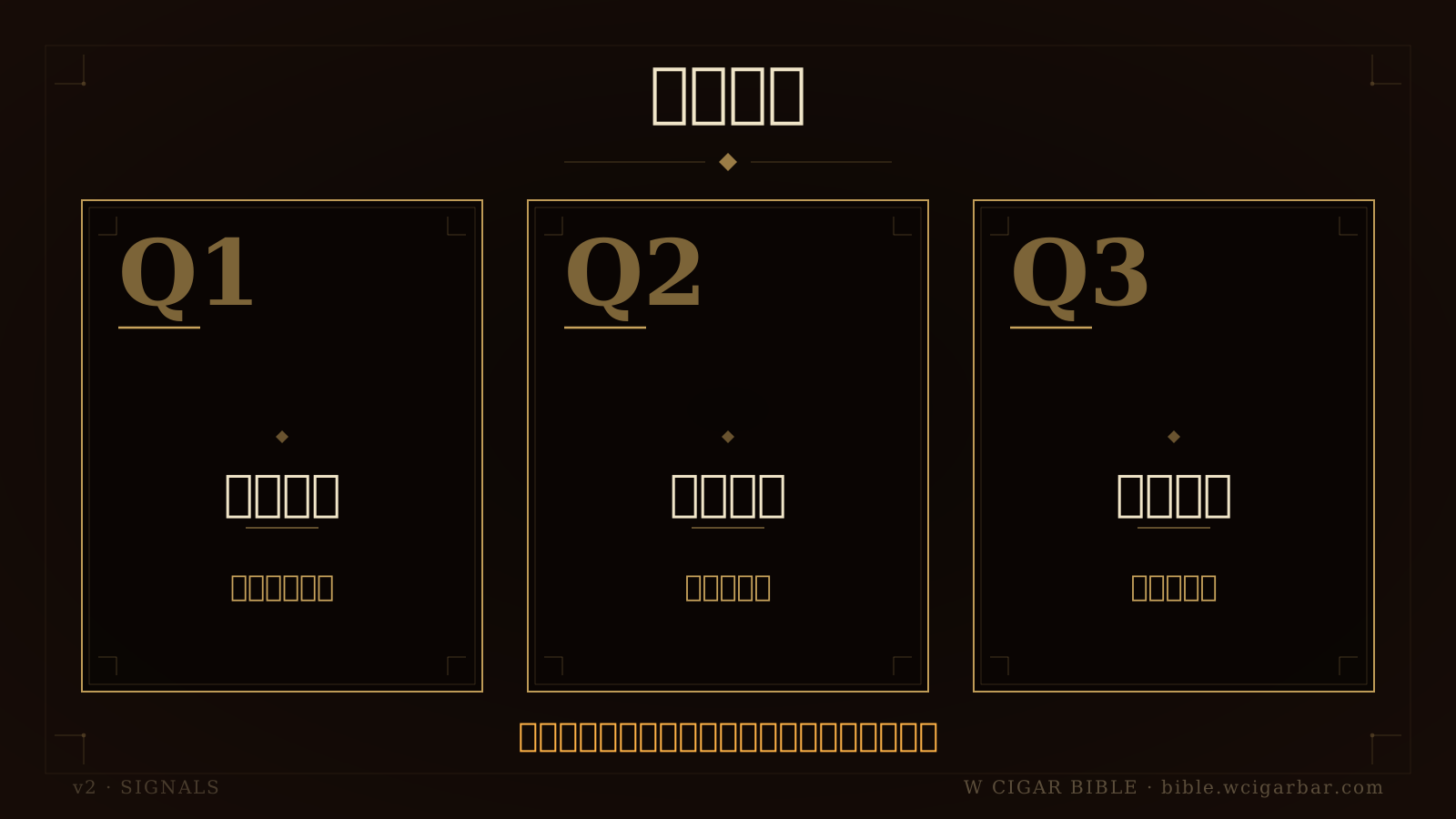
三張問答卡整理同盒差異、白點判斷與剪口大小原則
Flavor Reading and Etiquette for Beginners
Learning craftsmanship ultimately returns to the experience in the cup and hand. Beginners who already understand basic tasting can break a cigar into front, middle, and back sections, recording 3 to 5 key words for each. The front often shows the wrapper and lighting state most clearly; the middle begins to fully unfold the blend; the back looks at strength, sweet-bitter balance, and whether the finish is clean. True taste is not memorizing flavor words but connecting feelings back to craftsmanship reasons.
Pairing drinks can start with unsweetened sparkling water, black coffee, oolong tea, cognac, or rum, but don't let alcohol overshadow the cigar. If tasting a milder cigar like Hoyo de Monterrey Epicure No.2, often with creamy and woody tones, heavy peaty whiskey may steal the show; if it's Partagás Serie P No.2, stronger coffee or aged rum can echo leather and spiciness.
In terms of etiquette, don't flick ash everywhere, don't blow smoke at people, don't cut too deep, and don't directly burn the wrapper with a flame. When exchanging with friends, avoid using "you don't understand" to pressure others, as everyone's taste database is different. Good cigar conversations should be like comparing two wines of different vintages: describe, inquire, confirm, not show off. The boundary from beginner to advanced often doesn't lie in how many brands smoked, but in whether one can respect craftsmanship, occasion, and others.
Common Questions
The most important concept for beginners is to view flavor, structure, storage, and rhythm together, rather than judging a cigar solely by brand hierarchy.
Why do cigars from the same box still taste different?
Because handmade cigars use natural leaves, leaf thickness, oil content, and filler tightness may have slight differences. The same box usually has consistent style but won't be completely replicated like industrial products.
If I find white spots on my cigar, is it mold?
Not necessarily. You can lightly brush and observe; if it's powdery, without fuzz, and smells clean, it might be oil crystallization; if there's fuzz, an off smell, and rapid spread, it needs isolation and treatment.
Does a larger cut mean better smoke output?
Not necessarily. Cutting too deep may damage the cap, causing the wrapper to loosen, and also make the smoke too hot. Generally, exposing a smooth channel while maintaining structural integrity is the principle.
Should beginners start with large ring gauges?
Large ring gauges have cooler smoke and more blending space, but it doesn't mean they're necessarily easier to understand. Robusto, Corona Gorda, and Mareva are all suitable for practicing rhythm and flavor recording.
Do cigars need to be aged for a long time to be good?
Don't be superstitious about time. When the condition is clean, humidity stable, and burn normal, there's much to learn; some strong types can be aged for several months to years, but the premise is good storage management.
I like to see cigars as a slow craft: farmers decide the starting point, fermenters remove coarseness, blenders give character, rollers complete the structure, and tasters patiently read it. If beginners are willing to observe from leaves, burn, and rhythm, each one will become a textbook. The more you understand, the less you need to rush to judge; true enjoyment is seeing the order left by time in the details. — Cigar Prince Wilson Tsai
Smoking is harmful to health. Under 20 years of age, smoking is prohibited. Quitline: 0800-636363. This article is for reference only for adults over 20 years old regarding cigar culture, storage, and regulations, not a tobacco advertisement, promotion, or purchase suggestion.
Like this article?Share with friends
Share this W Cigar Bible piece with friends who want to learn cigar culture, storage, and tasting.
想把這篇 化為實踐
雪茄聖經是知識;雪茄文化要在空間裡發生

W Cigar Bar 大安總店資訊
台北大安區 · 雪茄聖經總編輯 Wilson Tsai 主理的雪茄文化空間
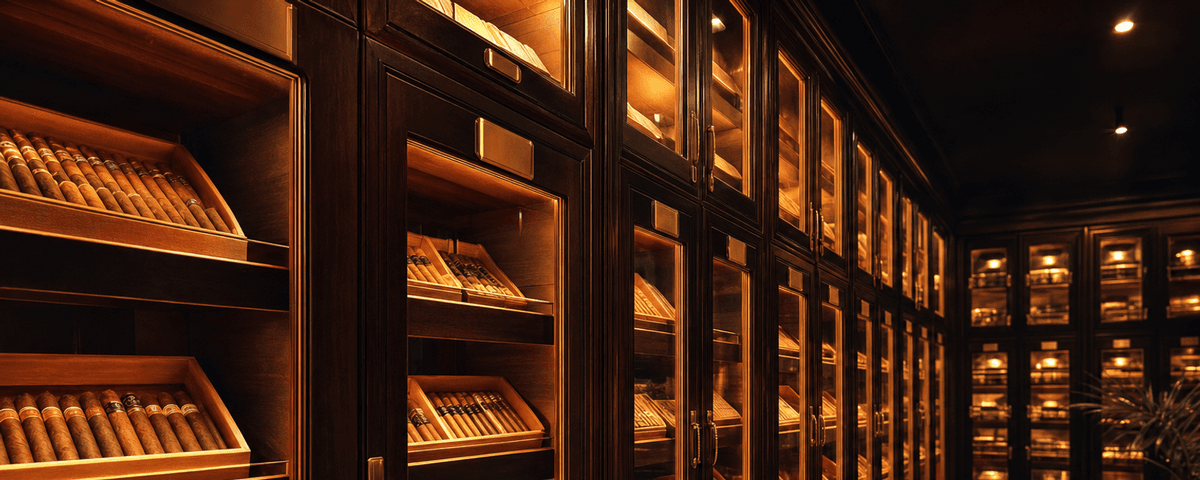
33 座 24 小時恆溫恆濕醇化室
W Cigar Bar 提供的會員醇化空間 · 場地資訊請洽編輯部
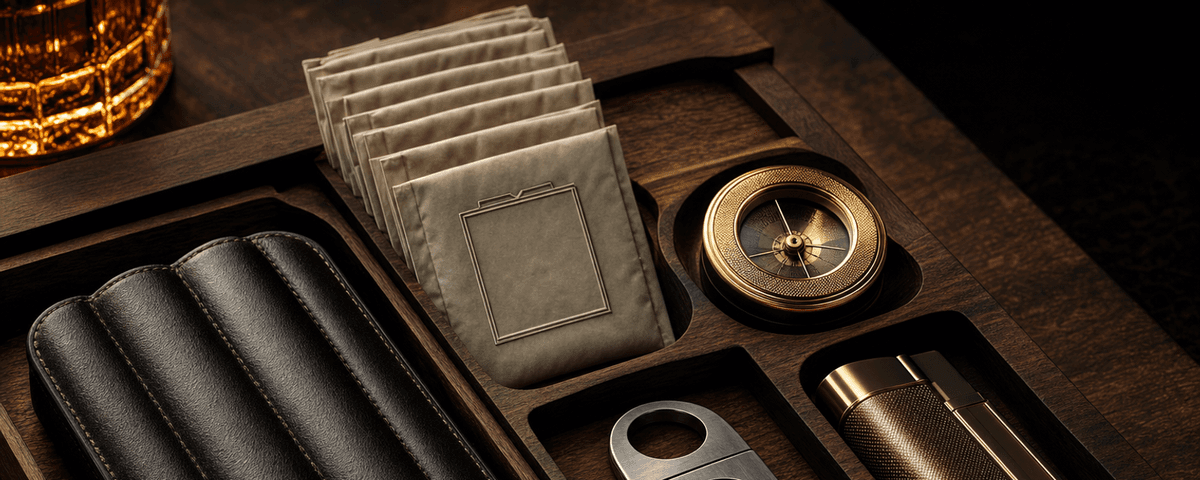
雪茄剪 / 打火機 / 雪茄盒 / Boveda
W Cigar 配件官網 · 專營雪茄配件正品
加 LINE 好友 · 文化諮詢
文化空間資訊 · 紳士沙龍 · 私人包場
本網站內容僅供雪茄文化、歷史、收藏與品吸知識研究參考。菸品有害健康、未滿法定年齡者請勿吸菸。實際規範請依所在地法律為準。
吸菸有害健康・戒菸專線 0800-636363・本站僅供 20 歲以上成年人閱覽。
讀到這裡,你不只是路過的人
留下 Email,加入 W 雪茄聖經內圈——總編輯 Wilson Tsai 親選的學院深文與國際新訊,先你一步送到信箱。
· 教育用途非銷售 · 隨時一鍵退訂 · Email 絕不對外公開 · 由勝茄股份有限公司營運
同分類延伸閱讀

資料來源:W Cigar Bible 編輯部整理 · 雪茄王子 Wilson Tsai 親自審稿
本文僅供雪茄文化、歷史、收藏與品鑑知識研究,不作為菸品促銷、銷售或購買建議。吸菸有害健康,未滿二十歲不得吸菸。