雪茄中的發酵技術:深度剖析與實踐
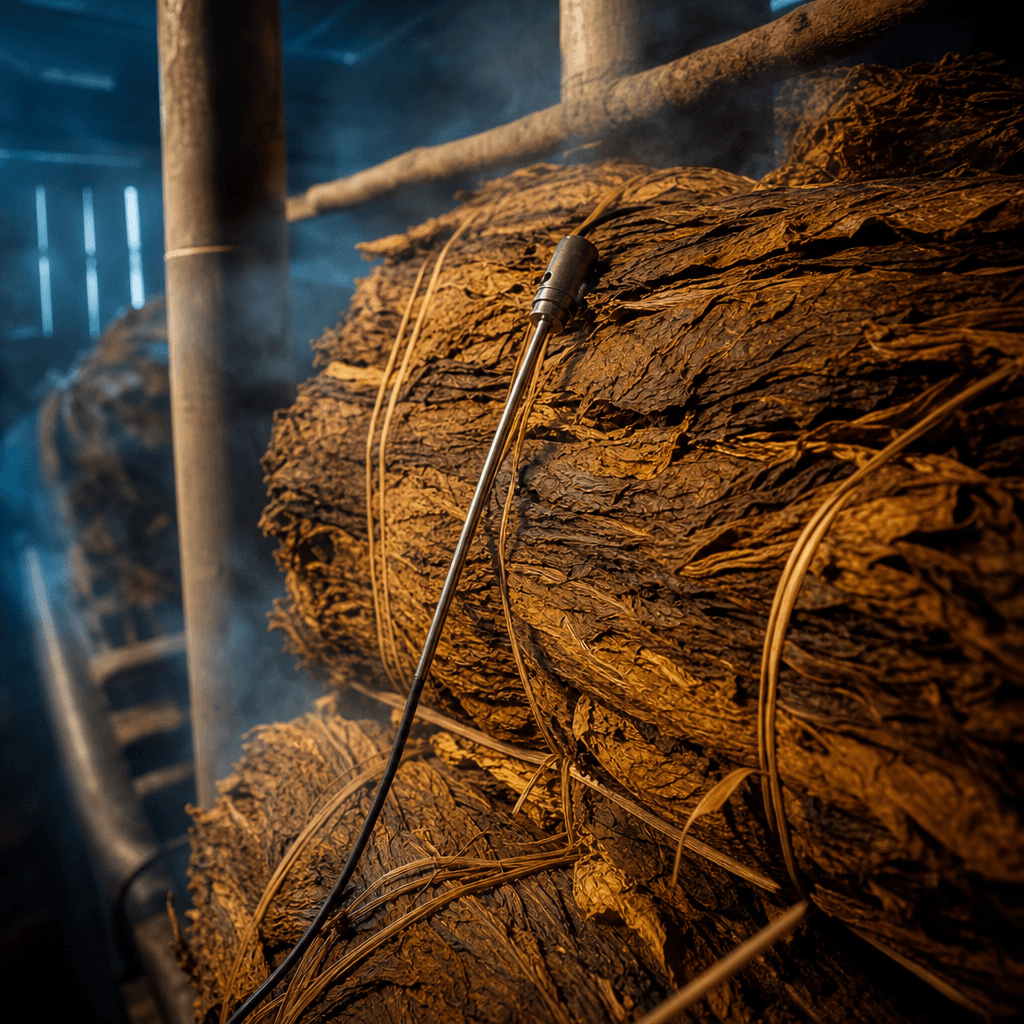
發酵在雪茄製作中扮演關鍵角色,並非僅是簡單的等待過程,而是透過控制溫度、濕度和時間來促進葉片的化學轉換。這一過程影響雪茄的風味與結構,例如,發酵不足可能導致刺鼻的氨味,而過度發酵則會使香氣塌陷。不同產區的發酵技術各具特色,古巴強調礦物感和草本風味,而尼加拉瓜則以濃郁的可可和黑胡椒著稱。了解發酵的細節,能更深入認識雪茄的風味層次與品質差異。
- 發酵是控制葉片化學轉換的過程,非單純等待,需精確管理溫度與濕度。
- 雪茄葉的不同部位影響發酵工法,分級越細,風味保留越佳。
- 發酵過程中,氨味減輕、甜感提升,這些變化來自葉片自身潛能的釋放。
Fermentation Techniques in Cigars: In-depth Analysis and Practice
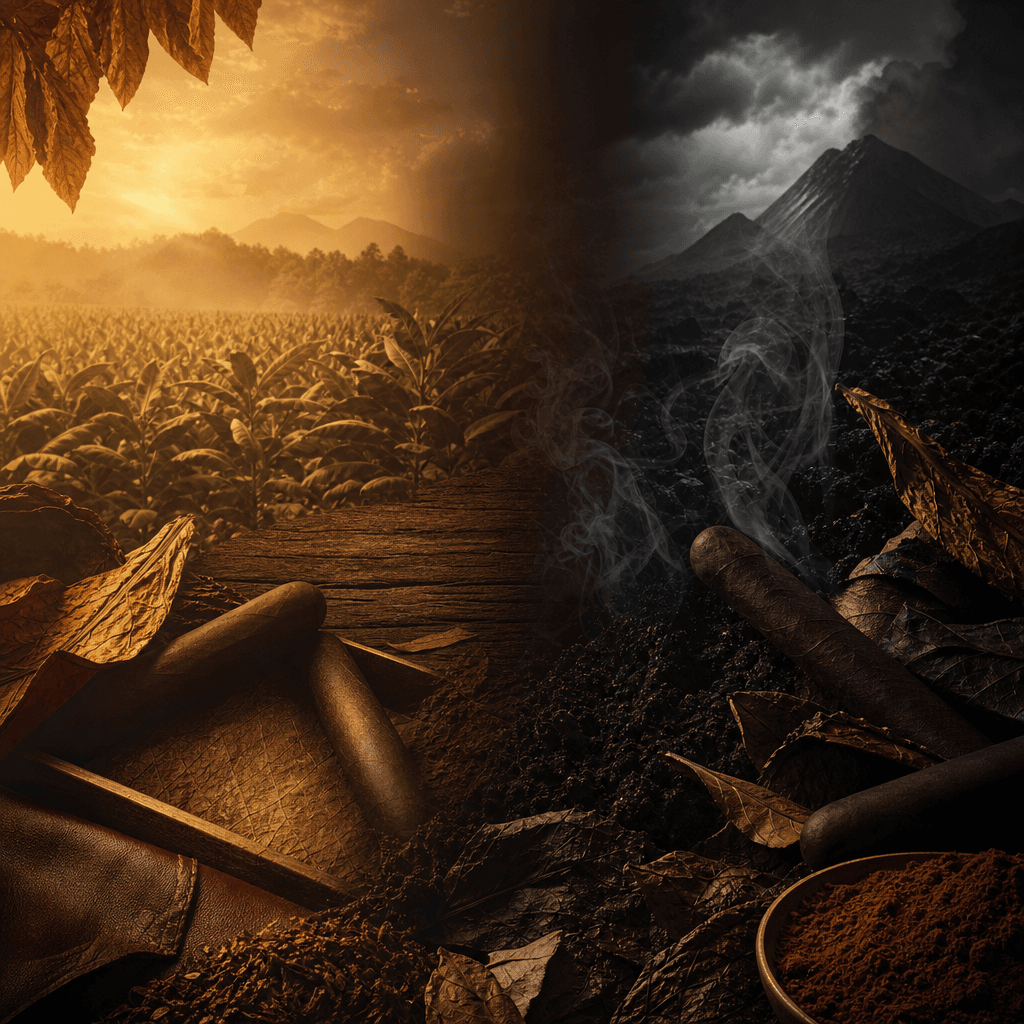
Discussing fermentation, seasoned enthusiasts often fall into two extremes: one side views it as mystical, while the other sees it merely as a process to remove grassy flavors. As the editor of "Cigar Bible," I prefer to see fermentation as a "measurable, adjustable technique that leaves a terroir fingerprint."
The leather, cocoa, black pepper, sweet wood, and creamy notes of a mature cigar are often not solely grown in the field but are shaped over days to years after harvest through temperature, humidity, stacking weight, turning rhythm, and subsequent aging.
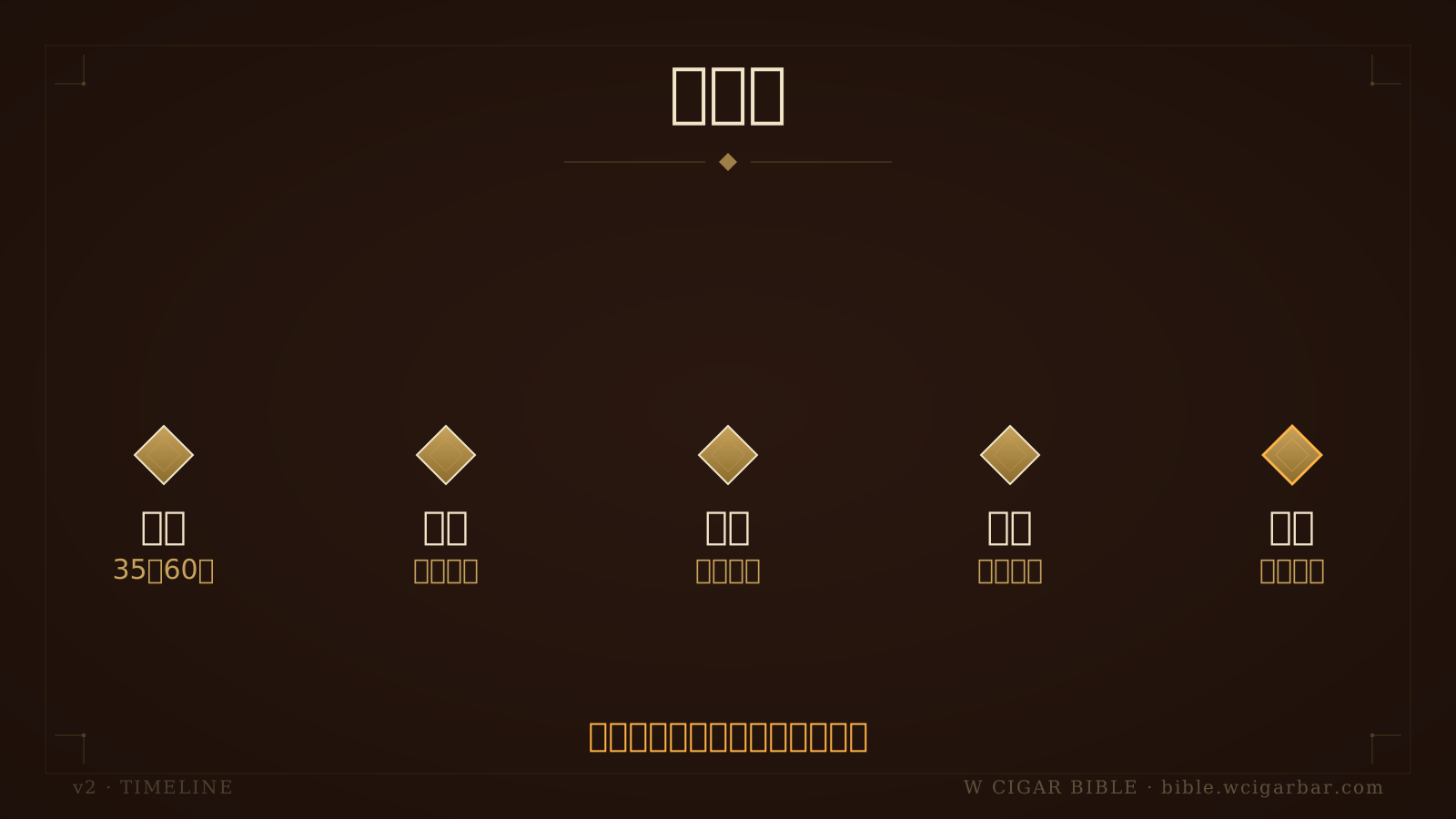
時間軸呈現晾乾回潮堆疊翻堆到醇化
The Essence of Fermentation: Not Just Letting Leaves Sit, But Controlling Decomposition
After harvesting cigar leaves, the first step is usually air-drying, often called curing in Spanish. This stage takes about 35 to 60 days, depending on leaf thickness, weather, and ventilation. True fermentation begins when leaf moisture rises and is stacked into a pilón. In Cuba, Nicaragua, and the Dominican Republic, quality factories control the core temperature at about 38°C to 48°C, allowing enzymes and microbial metabolism to gradually break down sugars, proteins, chlorophyll, and ammonia. Fermentation is not simply waiting, but allowing leaves to undergo chemical transformation in controlled heat.
Experienced whiskey drinkers can distinguish barrel aging, alcohol, and sulfur notes; cigars are similar. Under-fermented leaves often have a pungent ammonia smell, green pepper taste, tongue sting, and dryness; over-fermented leaves may have collapsed aromas, turning into wet cardboard, charred wood chips, and dull sweetness. Take Partagás Serie D No.4 as an example: if the filler is mature, it often presents continuity of earth, coffee, and pepper; if the batch is raw, the front may show obvious alkaline and nasal irritation.
From the late 1990s to the early 2000s, many regions began to pay more attention to leaf grading and independent fermentation, no longer mixing different parts together. Ligero is thick, oily, and high in nicotine, usually requiring more time; seco is thinner, with delicate aromas, and excessive heat can lose floral and herbal layers. Understanding fermentation is equivalent to understanding why a cigar has structure, sweetness, and cleanliness.
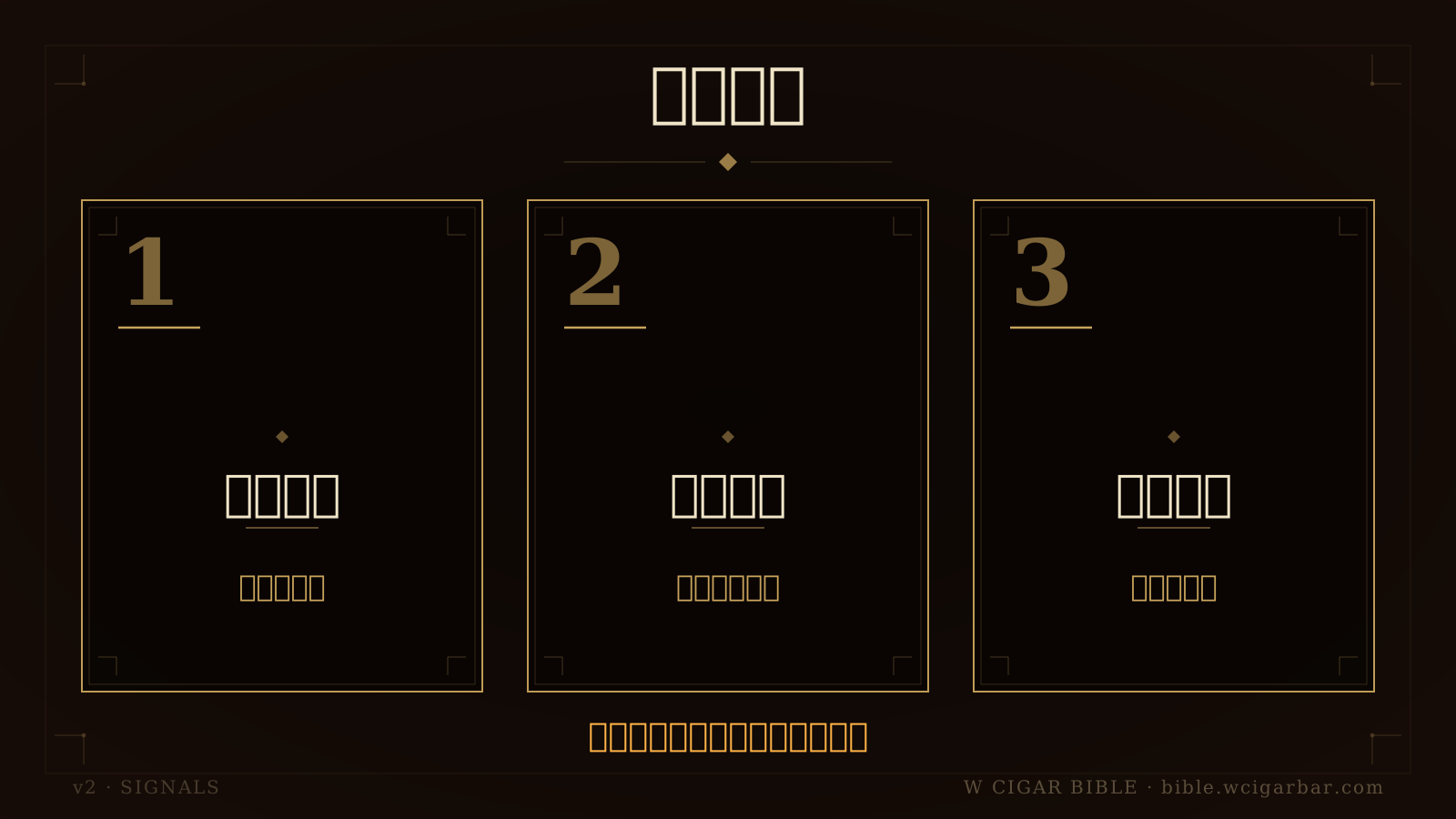
三張卡說明發酵需控分解分葉與乾淨度
From Field to Stacking: Every Leaf's "Position" Determines the Craft
Cigar tobacco plants can be roughly divided from bottom to top into volado, seco, viso, and ligero. Different countries have slightly different names, but the principles are similar. Lower leaves have good combustibility and light flavor; middle leaves have more aroma; upper leaves are exposed to strong sunlight, with high oil content and strength. In the traditional Cuban Vuelta Abajo method, harvesting is often done in multiple stages, picking one layer every 5 to 7 days to avoid immature upper leaves or overripe lower leaves. Good fermentation actually begins with the maturity of the harvest.
After entering the drying room, leaf moisture decreases, and the color changes from green to yellow to brown. If dried too quickly, internal vein changes are incomplete, making subsequent fermentation likely to be raw; if dried too slowly, mold risk increases. Around 2010, I saw factories in the Dominican Republic using very fine leaf sorting: not only by region, year, and part but also by leaf size and thickness. This is not ceremonial but because mixing thin and thick leaves in the same pile can cause uncontrolled temperature curves.
When truly entering the pilón, workers stack the re-moistened leaves in bundles, generating heat through their weight and moisture content. Large piles can weigh hundreds of kilograms, even over 1,000 kilograms; small batches of premium leaves may only be 50 to 150 kilograms for precise temperature control. When the core temperature approaches the upper limit, the pile needs to be dismantled, cooled, turned, and restacked. This action is often called virar in Cuba, with turning times ranging from 3 to over 8 times.
For seasoned enthusiasts, this explains why even the same brand and size can have batch differences. Different rainfall and storage conditions in 2006, 2014, and 2019 make the foundational conditions for leaf fermentation different; brand formulas can maintain direction, but natural materials will never be as consistent as metal parts. The finer the grading, the more fermentation can retain advantages; coarse grading can easily lose focus, even with expensive formulas.
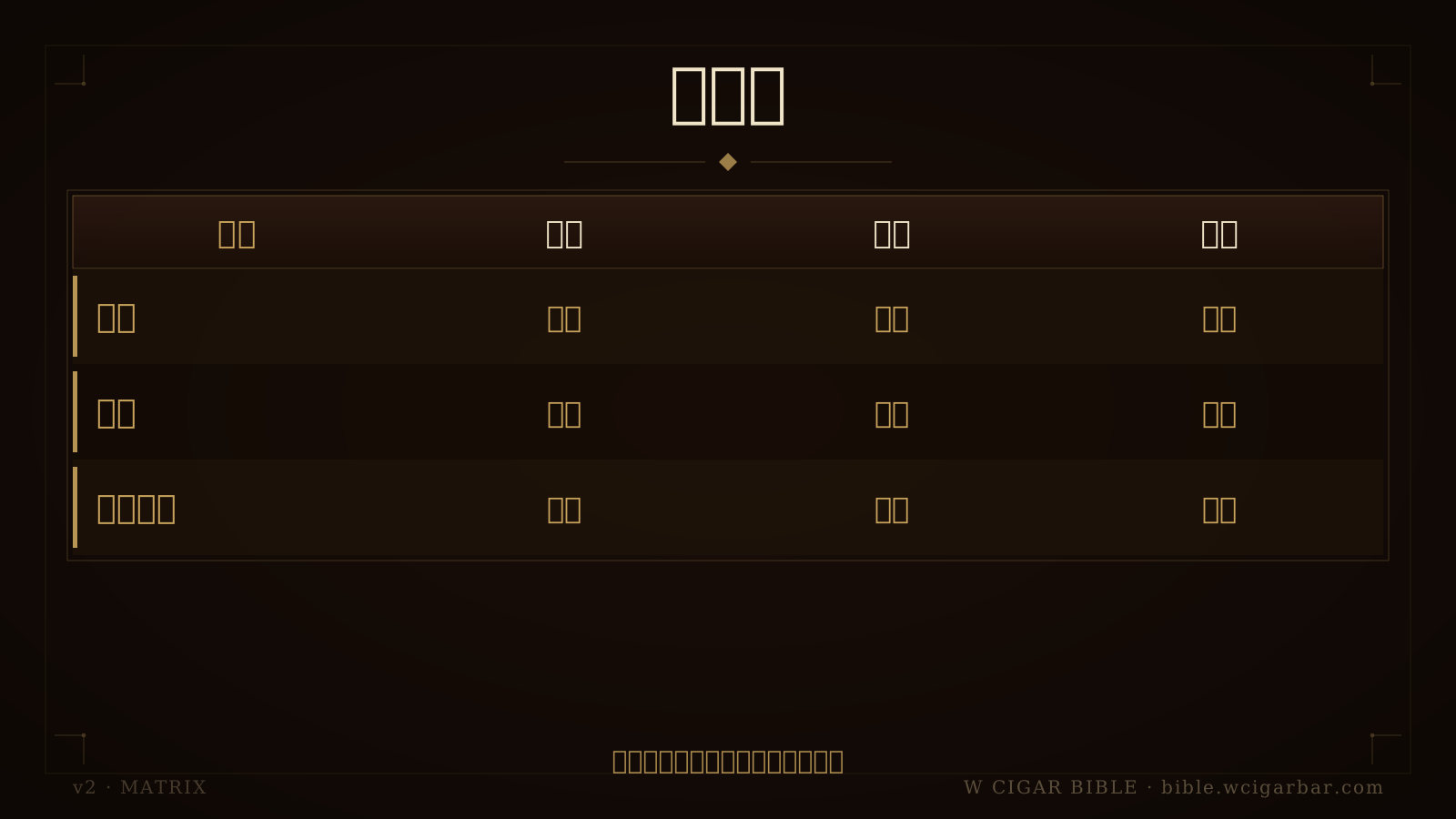
矩陣比較下中上葉的厚度香氣與發酵需求
Temperature, Humidity, and Turning: The Triangular Relationship of Flavor Cleanliness
Temperature is the most discussed aspect of fermentation, but the true key is the interplay of temperature, humidity, and time. If leaf moisture is too low, the pile core heats slowly, leading to insufficient transformation; if too high, heat rises quickly, inviting mold, decay, and sourness. Many factories rehydrate leaves to about 22% to 30% moisture, then fine-tune by part and year. Ligero, due to its thickness and oiliness, often requires more patience, while seco should avoid losing aroma to high heat. A clean cigar is not without strength but without excess ammonia and off-flavors.
I've seen some strong Nicaraguan Estelí leaf materials reach 46°C to 49°C during the first fermentation, but factories remain vigilant, immediately turning the pile when the core temperature approaches danger. Conversely, the more delicate Dominican olor and piloto cubano sometimes follow a gentler curve to retain sweetness and creaminess. This is why Arturo Fuente OpusX, since its debut in 1995, has sparked discussions about the Dominican Republic's ability to produce deep, powerful wrappers and fillers.
Turning is not just flipping leaves. Core leaves, edge leaves, top leaves, and bottom leaves receive heat differently and must be repositioned to ensure uniform change. If a batch's core overheats and the outer circle is too cold, the final roll may have some cigars smooth and others spicy in the same box. This is why quality-focused factories keep fermentation records, including dates, pile weight, maximum temperature, turning times, and sensory judgments.
Experienced maestro de tabaco often use their noses to judge: has the ammonia smell dissipated, has the sweet wood aroma emerged, and has the wet grass smell turned to dry hay and malt? Instruments can tell you the temperature but cannot define maturity alone. The art of fermentation lies in using numbers to prevent loss of control and senses to decide when to stop.
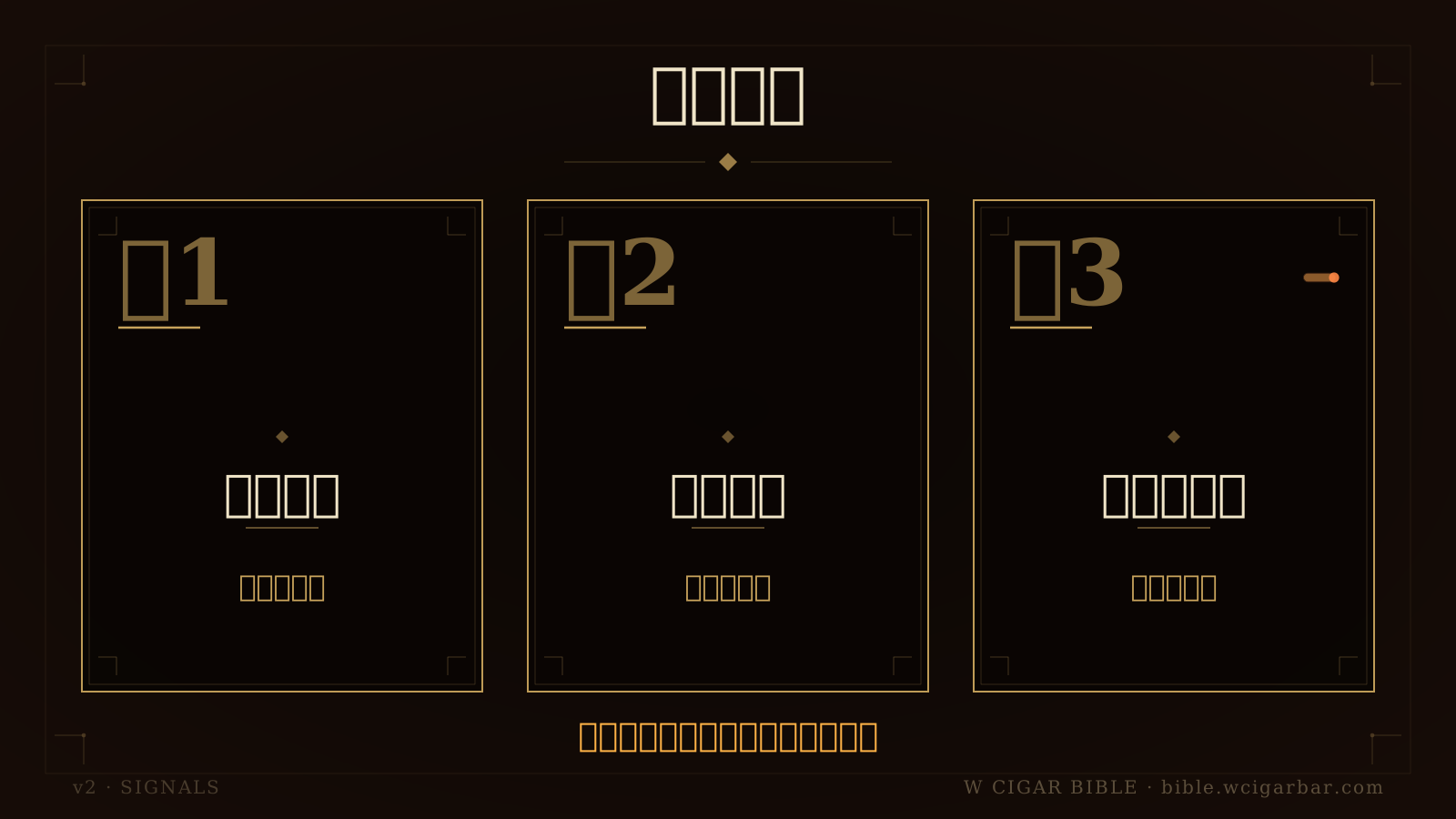
三張誤解卡提醒不要只看天數顏色或設備
Regional Technical Differences: The Same Fermentation, Completely Different Flavor Language
Different regional fermentation techniques are not about superiority but vary due to soil, variety, humidity, and factory philosophy. Cuban Vuelta Abajo often emphasizes the interplay of mineral, herbal, and salty aromas; Nicaraguan Estelí, Jalapa, and Condega are known for volcanic soil, strength, and sweet-spicy aromas; the Dominican Santiago area excels in clean, rounded, elegant mid-tones; Honduran Jamastrán and Copán often feature woody, coffee, and wild herbal notes. Regional differences are not labels but responses of fermentation strategies to raw material character.
| Region | Common Fermentation Tendencies | Flavor Results | Representative Brands or Cases |
|---|---|---|---|
| Cuban Vuelta Abajo | Medium to long duration, multiple turns | Leather, earth, herbs, salty aroma | Cohiba Siglo VI, added to Línea 1492 in 2003 |
| Dominican Republic | Gentle curve, emphasis on cleanliness | Cream, wood, nuts, floral | Arturo Fuente OpusX, officially launched in 1995 |
| Nicaraguan Estelí | Strong heat management, long fermentation for thick leaves | Black pepper, cocoa, rich sweetness | Padrón 1964 Anniversary, launched in 1994 |
| Nicaraguan Jalapa | Heavier sweetness retention | Honey, red pepper, soft wood aroma | My Father Le Bijou 1922 formula often discussed |
| Honduras | Medium to high intensity, distinct woodiness | Coffee, cedar, herbal spice | Camacho Corojo series often cited |
Take Padrón 1964 Anniversary as an example: its charm lies not only in its richness but in its orderliness; cocoa, coffee, brown sugar, and pepper can layer without muddiness, thanks to long-term leaf processing and stable classification. When Davidoff Nicaragua was launched in 2013, it allowed many to understand that Nicaraguan leaves could also present a clean, delicate, sweet-spicy profile through precise fermentation, not just heavy flavors.
Cuban cigars' changes are more dependent on vintage and storage. Cohiba Behike became a topic in 2010; medio tiempo leaves, being rare and thick, require more cautious fermentation management; if inadequately handled, the strength can be coarse, but if well-managed, deep sweetness and high-tension aromas emerge. True regional comparison should compare "how technology serves the leaves," not just brand prestige.
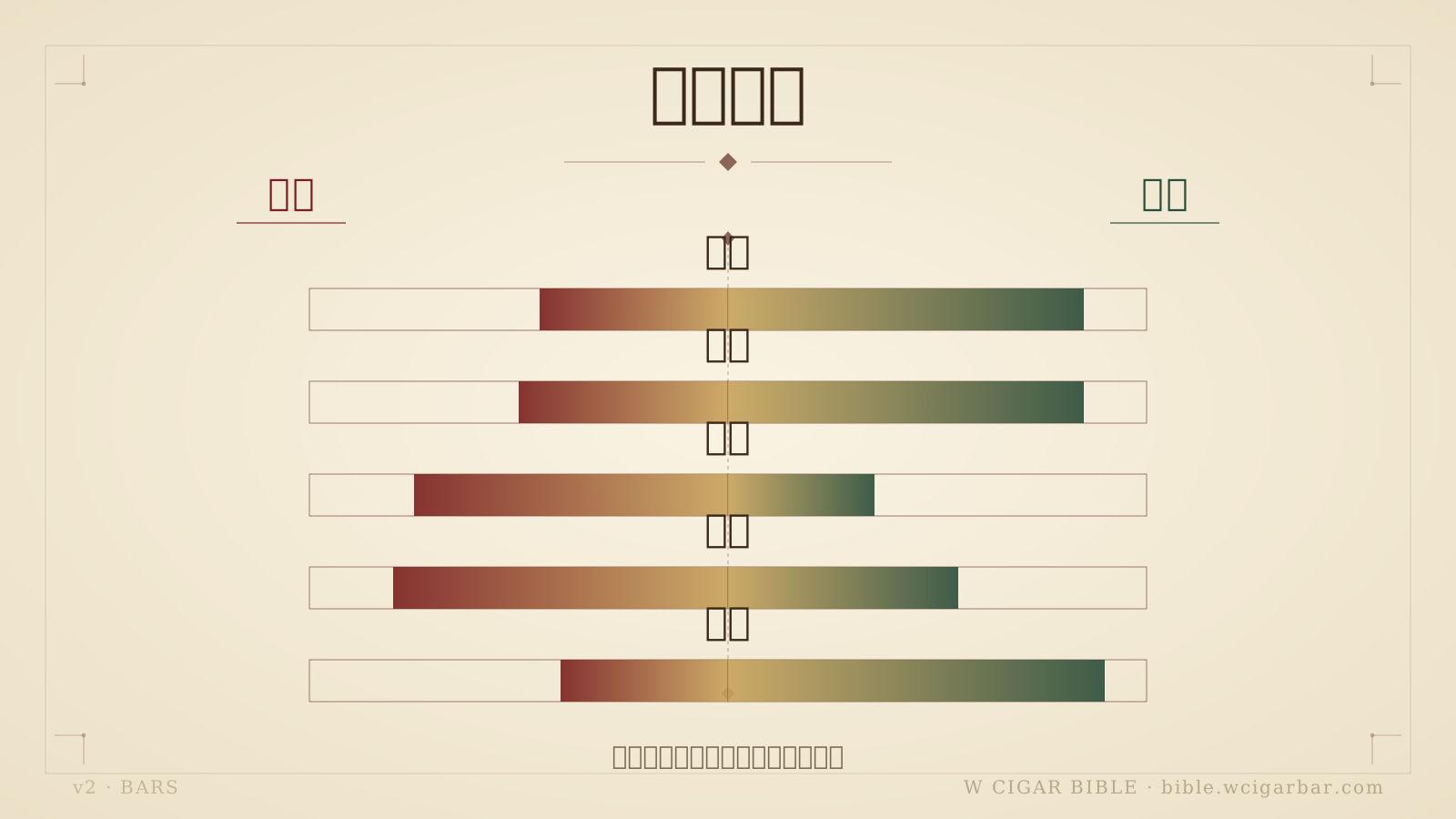
長條對比粗分與細分在控溫保香批差效率精準的差異
How Fermentation Changes Flavor: From Green to Sweetness, From Stimulation to Structure
Fermentation's most direct impact on flavor is reducing greenness and stimulation while creating sweetness and thickness. As chlorophyll breaks down, green leaf flavor decreases; proteins and nitrogenous substances transform, reducing ammonia; changes in sugars and polyphenols bring caramel, cocoa, dried fruit, coffee, and leather notes. These flavors are not added but are the release of the leaf's potential. The sweetness of a good cigar is often not sugary but the roundness after fermentation.
Take Liga Privada No.9 as an example: when it entered market discussions around 2007, many seasoned enthusiasts noticed its Broadleaf wrapper had a thick sweetness, black earth, and rich cocoa feel. American Connecticut Broadleaf is thick and oily; if under-fermented, it can be coarse and bitter; if well-handled, it offers a chocolate shell-like coating. The focus of such wrappers is not just pursuing dark color but ensuring clean burning and aroma layers beneath the darkness.
Another case is the Ecuador Habano wrapper. Ecuador's mist and gentle sunlight make leaves relatively delicate, but if fermentation is too light, it can have sharp spiciness; if properly handled, it can present red pepper, roasted nuts, and light floral notes. In different formulas from brands like My Father, Oliva, and AJ Fernandez, you can see how Ecuadorian leaves play the role of "aroma concentrator" on Nicaraguan fillers.
Seasoned enthusiasts judge fermentation quality by noting three things: first, whether the first 2 centimeters are pungent; second, whether the mid-section aroma opens up rather than turns bitter; third, whether the tail section's strength increase is still supported by sweet wood. If there's only strength without sweetness, it's often due to inadequate handling or balance; if the front, middle, and back are all flat, it may be due to over-fermentation or lack of tension in the raw material. The goal of fermentation is not to smooth out personality but to turn roughness into structure.
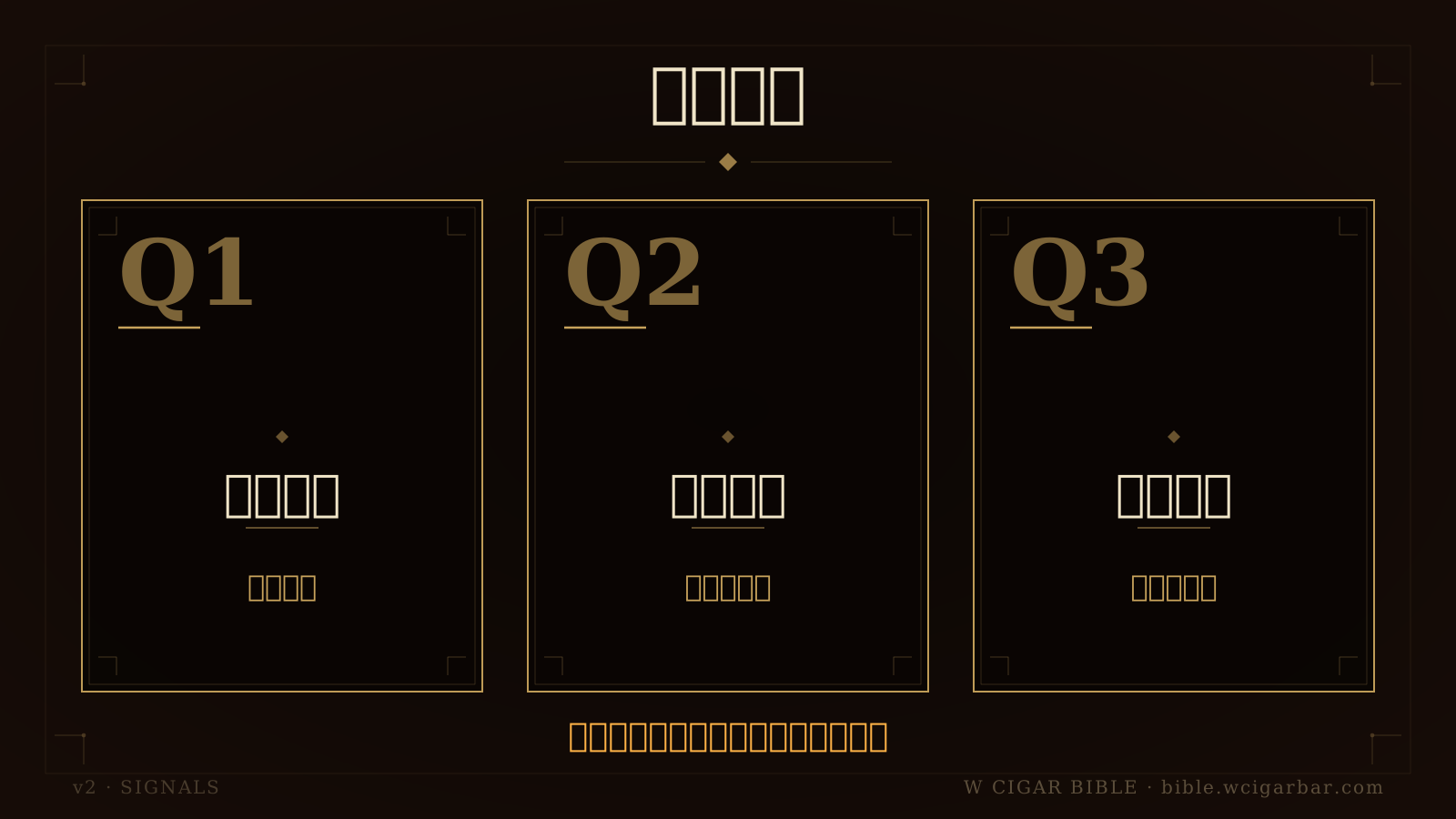
三張問答卡整理發酵天數氨味與深色外衣判斷
Home Micro-Fermentation: Experiments Possible, But Acknowledge Limits
Many seasoned enthusiasts ask if they can ferment raw leaves at home. The answer is: small-scale learning is possible, but don't expect to replicate factory results with home equipment. Factories have stable leaf sources, grading, pile weight, ventilation, and years of records; home environments usually can only handle small amounts of legally obtained raw leaves, focusing on understanding changes rather than achieving commercial-grade results. The most important aspect of home fermentation is not heating but avoiding loss of control, mold, and flavor contamination.
I suggest starting with 200 to 500 grams of leaves from the same part, without mixing different regions and thicknesses. Lightly rehydrate with distilled water to make the leaves soft but not sticky; place in a food-grade sealed box or cedar wood box, adding a hygrometer and probe. Set the temperature in a conservative range of 32°C to 38°C, with relative humidity around 68% to 75%, checking daily for smell and surface condition. If white fuzzy mold, sour decay, or ammonia spikes occur, stop and isolate.
You can refer to the following process:
- Days 1 to 3: Low-temperature rehydration, softening leaves without pursuing heating.
- Days 4 to 14: Maintain 32°C to 36°C, turning every 2 to 3 days.
- Days 15 to 30: If the smell is clean, increase to 36°C to 38°C, but do not exceed 40°C.
- After completion: Ventilate for several hours, then stabilize in a 65% to 69% environment for 4 to 8 weeks.
One point must be clarified: finished cigars are not suitable for "re-fermentation." The internal and external leaves of rolled cigars have inconsistent moisture, density, and airflow, and forced heating only increases the risk of wrapper cracking, mold, and flavor collapse. Finished cigars are suitable for stable aging, such as 16°C to 20°C, relative humidity 65% to 69%, allowing aroma integration rather than restarting high-temperature pile fermentation. Home experiments can train the senses, but true top-level fermentation still relies on region, leaf source, and factory discipline.
Common Questions
Does longer fermentation always make cigars better?
Not necessarily. Ligero may require longer, but seco or delicate wrappers can lose floral and sweet notes if over time. In 2018, I compared two batches of the same region wrapper; one had a longer high-temperature duration, darker color, but lacked bright nutty aroma. Fermentation is about completion, not a race of days.
Does ammonia smell mean the cigar is bad?
Not immediately. Newly released or unstable post-transport cigars may have temporary ammonia smell; if it remains pungent after 2 to 6 months at 65% to 69% humidity and about 18°C, it may be under-fermented or poorly stored. Seasoned enthusiasts can smell the foot and cold wrapper; if it's sharp like a cleaner, handle conservatively.
Does a dark wrapper mean better fermentation?
Not necessarily. Maduro usually undergoes longer or more intense processing, but it may just be a pretty color with hollow insides. Truly excellent maduro should have sweetness, oiliness, clean burning, not just charred bitterness and black appearance. Good examples from Padrón, Liga Privada, and Fuente excel in balance.
Can a home incubator create Cuban flavors?
Very difficult. Cuban flavor comes from variety, soil, drying rooms, pile fermentation, worker experience, and subsequent aging, not a single temperature curve. Home incubators can learn how leaves transition from green to woody and sweet, but cannot replicate Vuelta Abajo's complete conditions. Equipment can mimic environment, but cannot replicate terroir.
Will under-fermented cigars improve over time?
They may become milder, but not completely remedied. Aging can integrate aromas and reduce stimulation, but cannot replace the deep transformation that should occur in raw leaf pile fermentation. If a cigar inherently has significant ammonia, greenness, and bitterness, 3 years may improve it but not necessarily make it elegant.
Does collecting vintage cigars equal more value?
Vintage cigars have research and emotional value, such as early 2000s Cuban aluminum tubes and 2010 Behike topic batches often discussed by seasoned enthusiasts; but collecting for appreciation does not guarantee appreciation, still depends on source preservation and market. For me, assessing preservation and flavor state is more important than chasing vintage labels.
Fermentation fascinates me because it is both rational and emotional: thermometers, hygrometers, and turning records are the framework, while the nose, tongue, and time are the soul. If seasoned enthusiasts can connect each cigar back to leaf processing, they won't just stop at brand worship but will truly understand a cigar's origin, character, and completeness. —Cigar Prince Wilson Tsai
Smoking is harmful to health. Smoking is prohibited for those under twenty. Quitline: 0800-636363. This article is for adults over twenty as a reference for cigar culture, preservation, and regulations, not a tobacco advertisement, promotion, or purchase suggestion.
Like this article?Share with friends
Share this W Cigar Bible piece with friends who want to learn cigar culture, storage, and tasting.
想把這篇 化為實踐
雪茄聖經是知識;雪茄文化要在空間裡發生
W Cigar Bar 大安總店資訊
台北大安區 · 雪茄聖經總編輯 Wilson Tsai 主理的雪茄文化空間
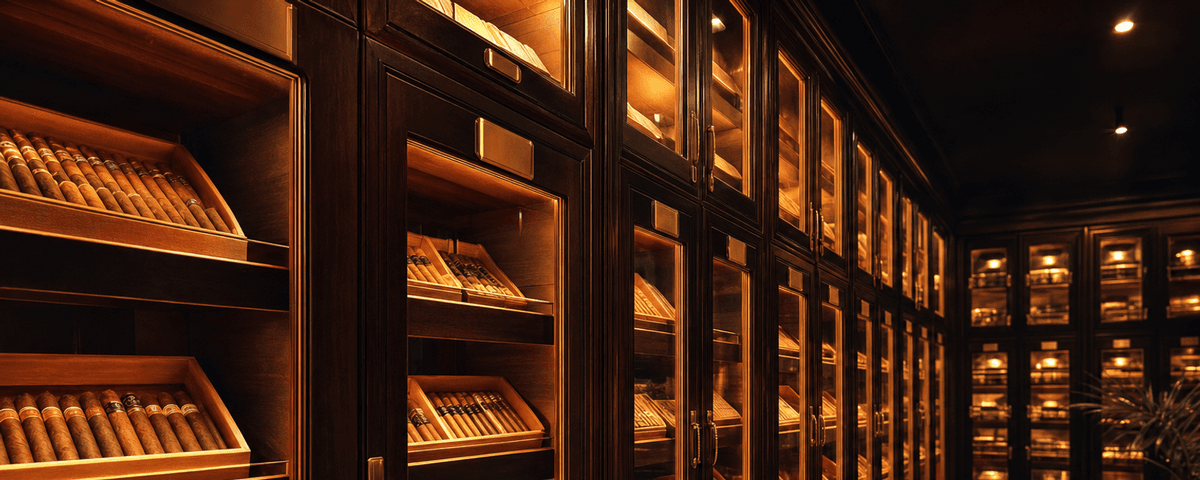
33 座 24 小時恆溫恆濕醇化室
W Cigar Bar 提供的會員醇化空間 · 場地資訊請洽編輯部
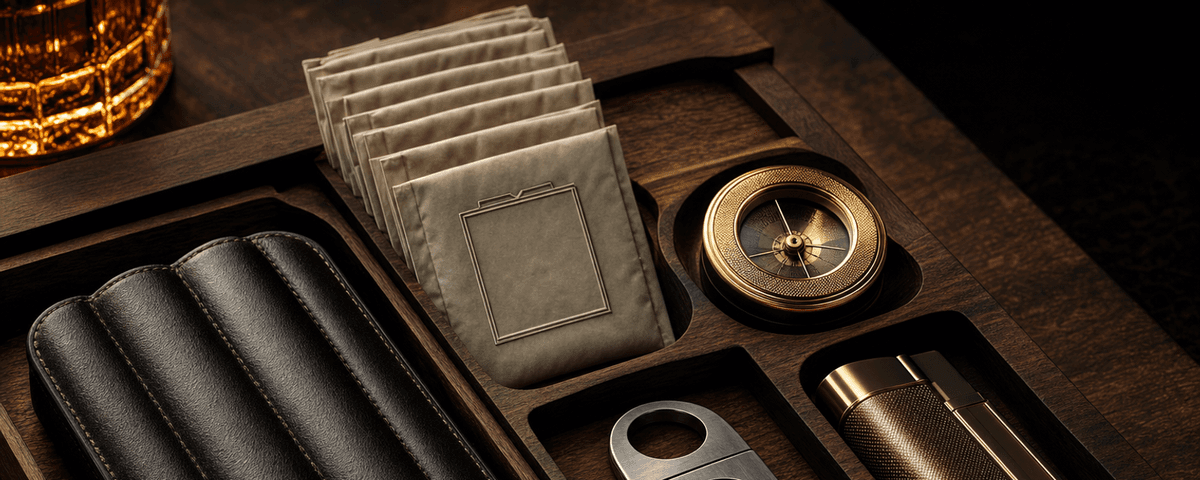
雪茄剪 / 打火機 / 雪茄盒 / Boveda
W Cigar 配件官網 · 專營雪茄配件正品
加 LINE 好友 · 文化諮詢
文化空間資訊 · 紳士沙龍 · 私人包場
本網站內容僅供雪茄文化、歷史、收藏與品吸知識研究參考。菸品有害健康、未滿法定年齡者請勿吸菸。實際規範請依所在地法律為準。
吸菸有害健康・戒菸專線 0800-636363・本站僅供 20 歲以上成年人閱覽。
讀到這裡,你不只是路過的人
留下 Email,加入 W 雪茄聖經內圈——總編輯 Wilson Tsai 親選的學院深文與國際新訊,先你一步送到信箱。
· 教育用途非銷售 · 隨時一鍵退訂 · Email 絕不對外公開 · 由勝茄股份有限公司營運
同分類延伸閱讀
資料來源:W Cigar Bible 編輯部整理 · 雪茄王子 Wilson Tsai 親自審稿
本文僅供雪茄文化、歷史、收藏與品鑑知識研究,不作為菸品促銷、銷售或購買建議。吸菸有害健康,未滿二十歲不得吸菸。