雪茄的法律與市場:全球貿易及規範概覽

雪茄的風味受多重因素影響,包括法律、稅制及國際物流等。作為《雪茄聖經》的編輯,我認為了解雪茄的來源及其所經法律體系,對於收藏與採購至關重要。各國的菸草稅制及進口規範,使得同一款雪茄在不同地區的價格差異顯著。美國的禁運政策更改變了全球雪茄市場的格局,促使非古巴品牌崛起。此外,真偽辨識也需考量法律封條與流通歷史。對於進階玩家而言,合規性與保存狀態是收藏的核心。
The Laws and Market of Cigars: An Overview of Global Trade and Regulations
The flavor of cigars is not only found in the tobacco leaves, fermentation rooms, and rolling tables; it is also shaped by laws, tariffs, embargoes, labeling regulations, traveler carrying limits, and international logistics. As the editor of the "Cigar Bible," I always prioritize understanding "how a cigar reaches your hands" over its flavor when observing the market.
For seasoned enthusiasts, brand preference is just the starting point. What truly influences collection, purchasing decisions, and long-term aging strategies are how various national regulations alter supply, pricing, and authenticity recognition. Below, I dissect the underlying logic of cigar laws and markets from a global trade perspective.
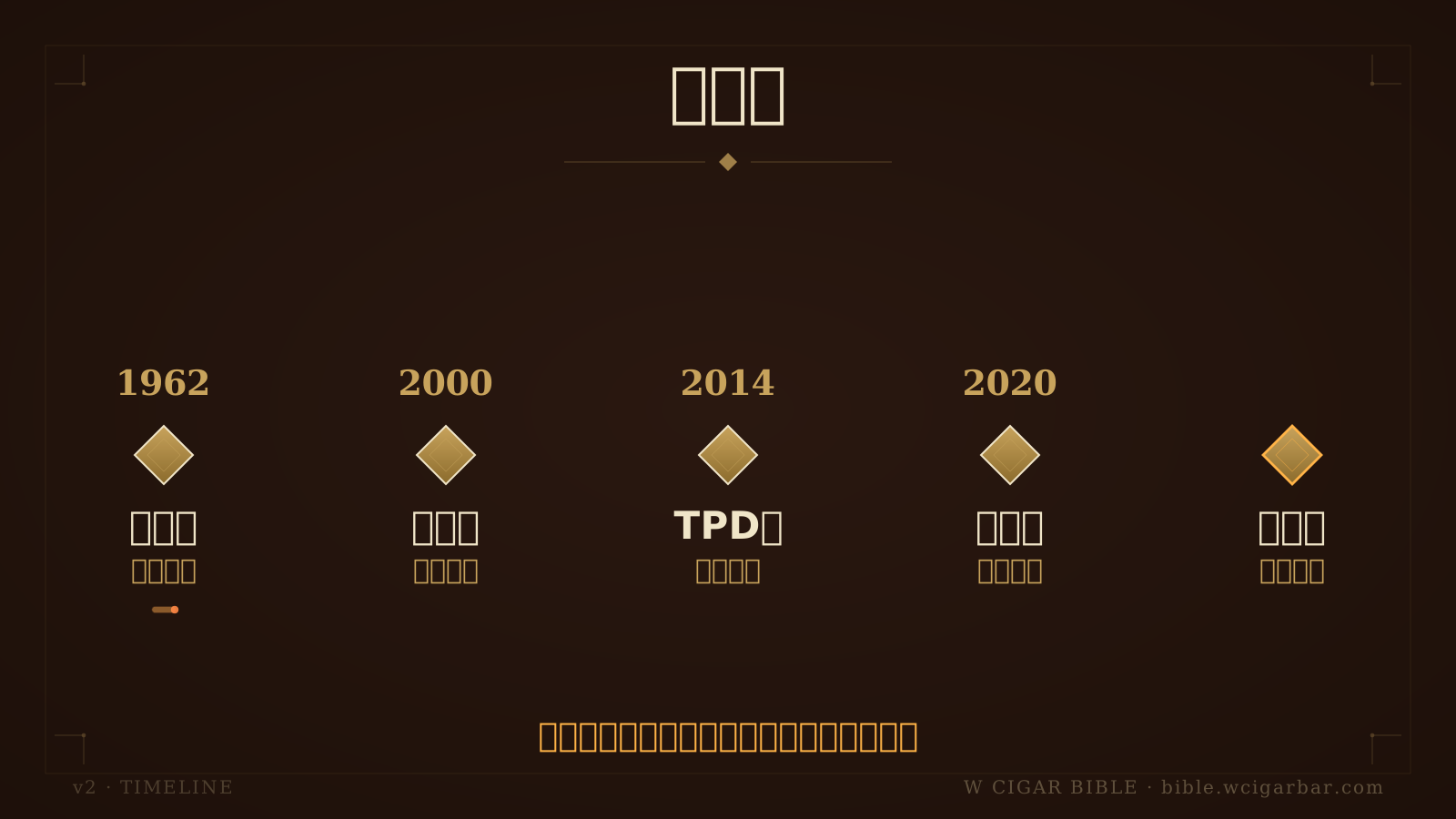
時間軸列出禁運、歐盟規範與美方措施變化
Laws Are Not Background Noise but the Main Melody of the Cigar Market
Cigars are highly regulated commodities because they involve tobacco, taxation, health warnings, customs, and cross-border trade. Take the European Union as an example: the Tobacco Products Directive (TPD) revised in 2014 requires tobacco product packaging labeling, ingredient disclosure, and health warnings. Although premium handmade cigars and cigarettes differ in consumption scenarios, they are still placed under the same regulatory framework in most jurisdictions.
Seasoned enthusiasts view cigars not only by brand and vintage but also by the legal systems they pass through. The same box of Cohiba Siglo VI in Havana, Madrid, London, Tokyo, and Hong Kong will have different prices, warnings, seals, taxes, and circulation capabilities. These differences are not end details but core factors that directly determine market scarcity and secondary market premiums.
Taking the global distribution of Cuba's Habanos S.A. as an example, since 2000, the supply of series like Cohiba Behike, Trinidad, and Partagás Limited Edition has often been influenced by production, export quotas, destination demand, and local regulations. The shortages you see may not just be due to "popularity"; sometimes, it's the result of import clearance, tax adjustments, labeling revisions, and exchange rate fluctuations.
U.S. Embargo: A Single Law That Redrew Half the World's Cigar Map
The U.S. embargo on Cuba in 1962 remains one of the most market-influencing legal events in cigar history. American consumers have long been unable to legally obtain Cuban cigars through commercial channels, which instead promoted the rise of brands from the Dominican Republic, Nicaragua, and Honduras. Brands like Arturo Fuente, Padrón, Davidoff, Oliva, and Rocky Patel have established aesthetics and pricing logic in the U.S. market that differ from the Cuban system.
In 2014, the Obama administration's brief thawing of relations with Cuba temporarily relaxed traveler carrying restrictions; however, after 2020, the U.S. tightened related measures again, compressing the space for Cuban alcohol and tobacco to enter the U.S. This has created a very unique dual structure in the American cigar market: non-Cuban cigars are highly mature in legal retail, while Cuban cigars mostly exist in travel, collection narratives, and gray topics.
The U.S. embargo did not weaken cigar culture; rather, it fostered the global competitiveness of non-Cuban premium cigars. Works like Padrón 1964 Anniversary, Fuente Fuente OpusX, Davidoff Nicaragua, and Oliva Serie V Melanio have gained their status in this historical gap. For seasoned enthusiasts, understanding the embargo is not political gossip but the key to understanding "why Americans are so familiar with Nicaragua's rich style."

三張卡整理法規、禁運與文件管理重點
How Tax Systems Change the Final Price of a Cigar
The differences in cigar prices across countries are often more determined by tax systems than by rent or shipping costs. Tobacco taxes may be levied by weight, retail price, number of sticks, or a mixed method; coupled with import duties, consumption taxes, value-added taxes, or sales taxes, these ultimately reflect on shelf prices. The system differences in the UK, Australia, Singapore, Canada, Japan, and EU countries can cause significant price differences for the same Montecristo No.2.
Do not simply interpret overseas price differences as "who sells more expensively"; often, it's the tax system that pushes prices to that position. For example, Australia has long adopted high tobacco taxes and standardized packaging, raising the cost of premium cigars in the legal market; the UK has tobacco taxes and VAT, naturally making London specialty store prices higher than low-tax areas. Conversely, some free ports or duty-free zones may seem friendly in price but require extra confirmation of source, preservation, and traceability documents.
| Region/Country | Common Regulatory Focus | Impact on Cigar Market |
|---|---|---|
| UK | Tobacco tax, VAT, health warnings | Legal retail prices are high, and old specialty stores emphasize storage reputation |
| Australia | High tobacco tax, standardized packaging | Packaging recognition decreases, and prices rise significantly |
| Singapore | Import permits, tobacco tax, strict labeling | Small market size but high compliance requirements |
| Japan | Import declaration, taxation, retail regulations | Stable prices, consumers emphasize preservation status |
| Hong Kong | Tobacco tax and import declaration | Active trading, source and storage differences are crucial |
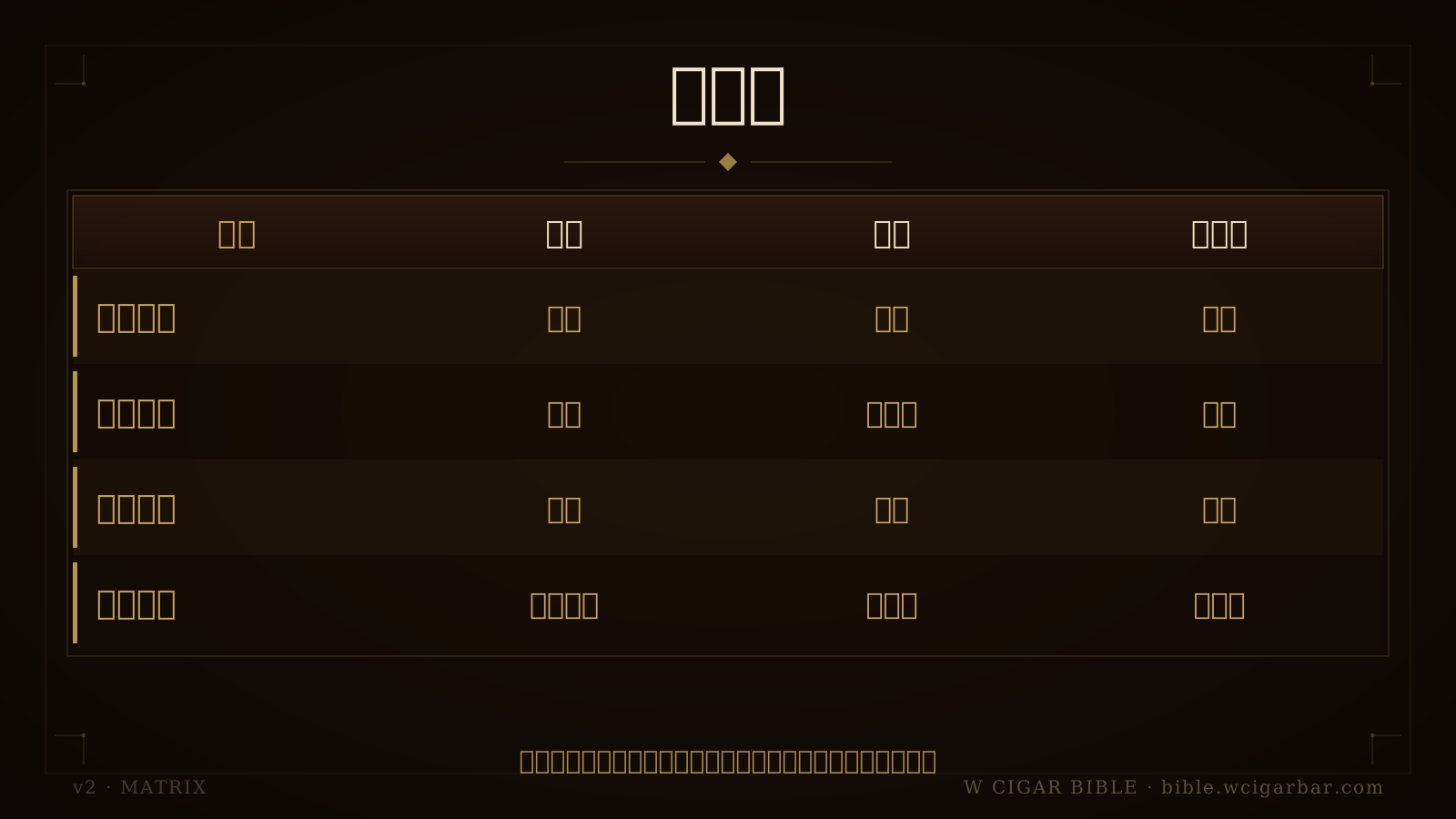
矩陣比較英澳、日港與新加坡的稅務標示通關差異
Place of Origin, Seals, and Authenticity: Laws Are Also Anti-Counterfeiting Tools
In the cigar world, "place of origin" is not a romantic term but a matter of legal and commercial rights. Place names like Cuba's Habanos, Dominican Republic, Nicaragua, and Honduras involve trademarks, geographical indications, export management, and brand authorization. Habanos S.A.'s international protection of brands like Cohiba, Montecristo, Partagás, and Romeo y Julieta is the foundation for preventing counterfeiting and confusion.
Taking Cuban cigars as an example, box seals, warranty stickers, barcodes, factory codes, and box bottom dates are important tools for seasoned enthusiasts to determine origin. After 2009, Cuban box bottom codes and barcode systems have been cross-checked more frequently by collectors; starting in the 2010s, many high-priced models like Cohiba Behike BHK 52, BHK 54, and BHK 56 have become major targets for counterfeiting due to supply scarcity.
Authenticity recognition is not just about the beauty of the band but about reading legal seals, circulation paths, and preservation traces together. I have seen "high-end goods" with beautiful appearances but illogical box bottom codes, as well as old boxes with slight age marks but complete documents and origins. For advanced players, legal circulation evidence and storage history are more valuable than a glamorous photo.

三張卡提醒攜帶額度、標示稅務與供應鏈誤解
Import Restrictions and Traveler Carrying: The Most Easily Overlooked Risks
Many people think cigars are just souvenirs, but carrying tobacco across borders is actually a customs issue. Different countries have different regulations on the quantity of tobacco travelers can carry, duty-free allowances, declaration methods, and age restrictions. The standards for movement within and outside EU member states differ, and the U.S. has special restrictions on Cuban-related products; many Asian countries have clear penalties for tobacco quantity, warning labels, and undeclared entry.
When carrying cigars across borders, the real focus is not how many boxes your suitcase can hold but how much the destination's laws allow you to bring and how to declare it. For example, returning to Asia from Europe, the duty-free allowance may be calculated by the number of sticks, weight, or value; if the limit is exceeded, even for personal collection, you may be required to pay additional taxes, have items confiscated, or face penalties. Different flight routes and transfers may also involve regulations from intermediate countries.
I recommend that seasoned enthusiasts establish a fixed checklist: confirm destination customs regulations before departure, keep purchase receipts, photograph box bottom codes and seals, distinguish between personal use and commercial quantities, and avoid carrying high-value items of unknown origin. These steps are not romantic but can protect your collection. Cigars are for enjoyment, but compliance is always the baseline.
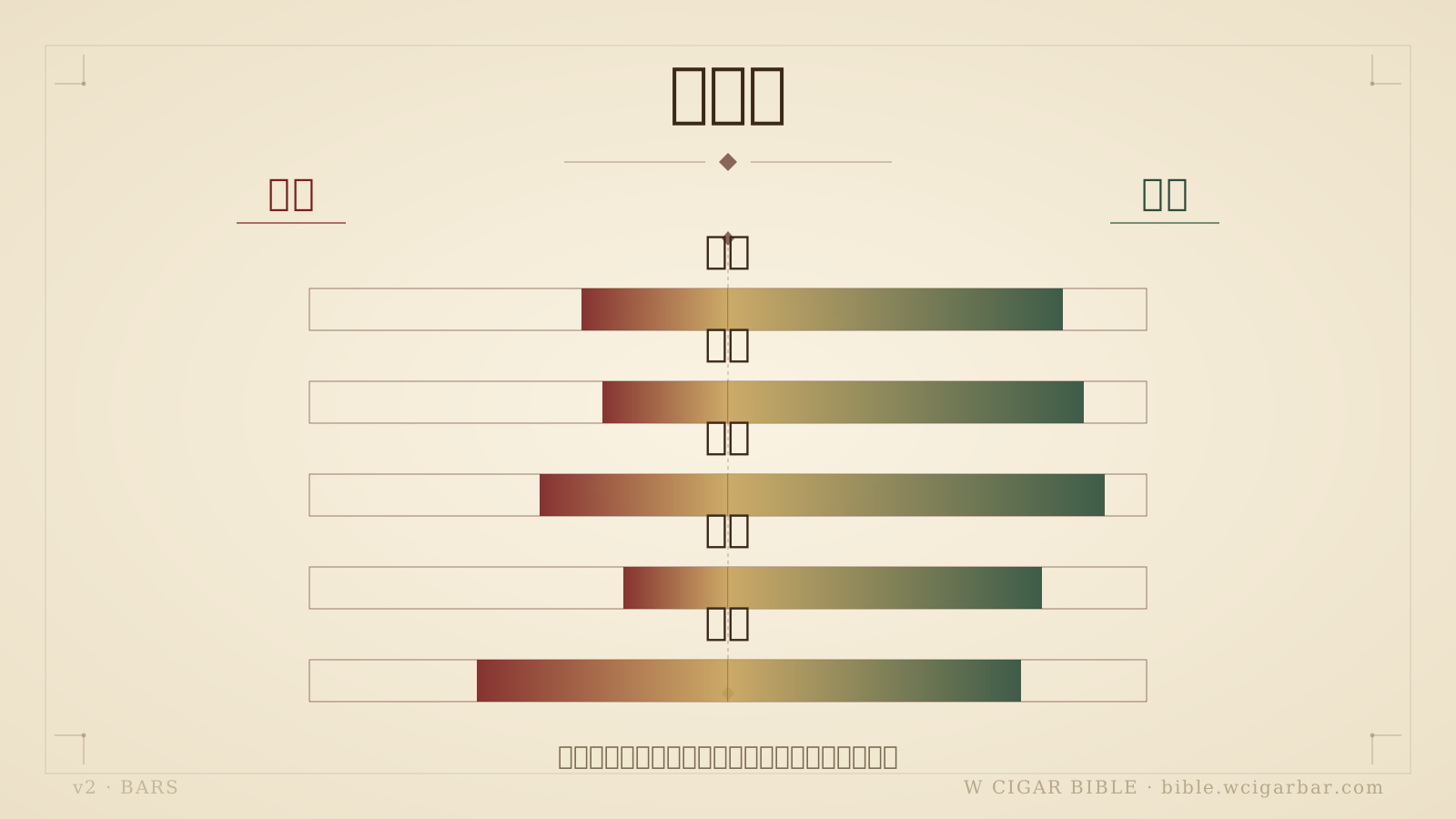
長條比較新手與老手在額度文件倉儲跨境上的差異
Supply, Quotas, and Price Fluctuations: Where Does Scarcity Come From?
Cigar supply is not like industrial products that can quickly expand production. Tobacco planting, harvesting, fermentation, grading, rolling, aging, and packaging can span several years. If Cuba's Pinar del Río region encounters hurricanes or abnormal rainfall, it may affect the supply of premium leaves for several years; the harvest status of Nicaragua's Estelí, Condega, and Jalapa also influences brand blending strategies.
After 2019, global logistics costs, supply chain delays during the pandemic, and a rebound in high-end consumption in Europe and the U.S. have driven up prices for many premium cigars. Around 2022, Habanos S.A. adjusted international pricing for some high-end brands, with price changes for Cohiba and Trinidad being particularly noticeable, further widening the market gap between them and regular lines like H. Upmann, Bolivar, and Ramón Allones.
Scarcity is not just about low production but the result of simultaneous pressure from production, logistics, policies, tax systems, and demand. The narrative of collection appreciation is common in the market, but it does not guarantee appreciation; it still depends on source preservation and market conditions. Truly mature players will diversify their investments across different origins, brands, and sizes, rather than just chasing short-term topics.
Market Positioning of Various Regions: Cuba Is No Longer the Only Language
In the past, discussing premium cigars almost equated to Cuba as the standard answer; but after 2000, non-Cuban cigars have made significant progress in blending, stability, and brand narratives. The Dominican Republic excels in elegance and balance, with Davidoff, Arturo Fuente, and La Flor Dominicana each establishing their styles; Nicaragua is known for its richness, spiciness, and strength, with representative works from Padrón, Oliva, and My Father.
Honduras and Ecuador are also worth noting. Honduras' Rocky Patel and Camacho have made a strong presence in the U.S. market; while Ecuador may not primarily focus on finished brands, its Connecticut Shade, Habano, and Sumatra wrappers are very important in global blends. In other words, a cigar labeled as made in the Dominican Republic may be wrapped with Ecuadorian wrapper, filled with Nicaraguan filler, and have a Dominican binder.
The competition in the modern cigar market has shifted from single-origin worship to brand blending capabilities and supply chain management. This is why seasoned enthusiasts cannot just memorize brand lists but must understand agriculture, inventory, rolling talent, and export systems. When a certain region is affected by climate or policy, mature brands can maintain consistency through blending and inventory strategies, which is where long-term value lies.

快問快答整理地區差異、入境重點與包裝影響
Future Trends: Stricter Regulations, More Transparent Sources, and Higher-End Differentiation
In the next decade, the cigar market is likely to see two forces simultaneously: stricter government regulations and more high-end consumerization. Standardized packaging, expanded health warnings, online sales restrictions, age verification, and cross-border tobacco advertising controls may all increase. Experiences in Australia, the UK, and some EU countries show that the brand exposure space for tobacco packaging will be compressed, posing a significant challenge to cigar culture, which heavily relies on box label aesthetics.
On the other hand, high-end consumers will place more emphasis on traceable sources, preservation history, and the authenticity of limited series. In the future, you may see more digital verification, blockchain-style inventory records, temperature and humidity logistics data, dealer certifications, and batch tracking. The roles of PCC authorized dealers, regional agents, and brand-authorized channels will also become more important due to increased authenticity risks.
The future market is not simply about getting bigger or smaller but about more professional compliance and higher risks for those with unclear sources. For seasoned enthusiasts, the next stage of ability is not just distinguishing leather, coffee, pepper, and wood notes but understanding which box is worth long-term preservation, which batch needs careful observation, and which price actually reflects regulatory costs.
Frequently Asked Questions
Why is there such a large price difference for the same cigar in different countries?
The main reasons are tax systems, import costs, exchange rates, logistics, and local regulations. The UK has VAT and tobacco taxes, while Australia's tax burden is heavier; Hong Kong, Japan, and Singapore each have their own import and labeling requirements. Prices are not simply determined by brands but are formed by legal costs and market demand together.
Are Cuban cigars always more collectible than non-Cuban cigars?
Not necessarily. Limited editions of Cohiba, Trinidad, and Partagás indeed attract strong market attention, but Fuente OpusX, Padrón 1964, and Davidoff Limited Edition are also representative. Collection appreciation does not guarantee appreciation; it still depends on source preservation and market conditions.
What should travelers pay attention to when bringing cigars into a country?
First, check the destination's customs regulations, then look at duty-free allowances and declaration methods. Don't just ask "can I bring it," but "how much can I bring, do I need to declare, and how is the excess taxed." Keeping purchase receipts and box bottom information is a basic step to reduce disputes.
Will standardized packaging affect cigar culture?
Yes. Cigar box labels, bands, and brand visuals are part of the culture, and if packaging exposure is limited, brand communication will become more difficult. However, for seasoned enthusiasts, this will also increase the importance of source documents, preservation status, and professional knowledge.
Will the price of premium cigars continue to rise in the future?
It might, but it cannot be linearly inferred. Climate, production, policies, shipping costs, tax systems, and global high-end consumption all affect prices. A truly stable strategy is understanding supply chains and compliance costs, not just chasing price increase rumors.
What are the legal risks for beginners and seasoned enthusiasts?
Beginners often overlook carrying limits and authenticity; seasoned enthusiasts may encounter issues with commercial quantities, resale, storage, and cross-border taxation due to increased collection volumes. When the collection volume increases, legal and document management is no longer an accessory but part of the collection capability.
Finally, I want to say that the charm of cigars lies in how they condense land, time, craftsmanship, and systems into one. Knowing brands is just the entry point; understanding laws and markets reveals the true global cigar map. For me, compliance is not a constraint but the foundation for good cigars to be preserved for a long time, correctly understood, and safely passed on.
—Cigar Prince Wilson Tsai
Smoking is harmful to health. Under 20 years old is not allowed to smoke. Quit smoking hotline: 0800-636363. This article is for reference by adults over 20 years old for cigar culture, preservation, and regulatory knowledge, not a tobacco advertisement, promotion, or purchase suggestion.
Like this article?Share with friends
Share this W Cigar Bible piece with friends who want to learn cigar culture, storage, and tasting.
想把這篇 化為實踐
雪茄聖經是知識;雪茄文化要在空間裡發生

W Cigar Bar 大安總店資訊
台北大安區 · 雪茄聖經總編輯 Wilson Tsai 主理的雪茄文化空間

33 座 24 小時恆溫恆濕醇化室
W Cigar Bar 提供的會員醇化空間 · 場地資訊請洽編輯部

雪茄剪 / 打火機 / 雪茄盒 / Boveda
W Cigar 配件官網 · 專營雪茄配件正品

加 LINE 好友 · 文化諮詢
文化空間資訊 · 紳士沙龍 · 私人包場
本網站內容僅供雪茄文化、歷史、收藏與品吸知識研究參考。菸品有害健康、未滿法定年齡者請勿吸菸。實際規範請依所在地法律為準。
吸菸有害健康・戒菸專線 0800-636363・本站僅供 20 歲以上成年人閱覽。
讀到這裡,你不只是路過的人
留下 Email,加入 W 雪茄聖經內圈——總編輯 Wilson Tsai 親選的學院深文與國際新訊,先你一步送到信箱。
· 教育用途非銷售 · 隨時一鍵退訂 · Email 絕不對外公開 · 由勝茄股份有限公司營運
同分類延伸閱讀



資料來源:W Cigar Bible 編輯部整理 · 雪茄王子 Wilson Tsai 親自審稿
本文僅供雪茄文化、歷史、收藏與品鑑知識研究,不作為菸品促銷、銷售或購買建議。吸菸有害健康,未滿二十歲不得吸菸。