雪茄的風味結構與品味演繹:從基礎到高級技術的全面指南
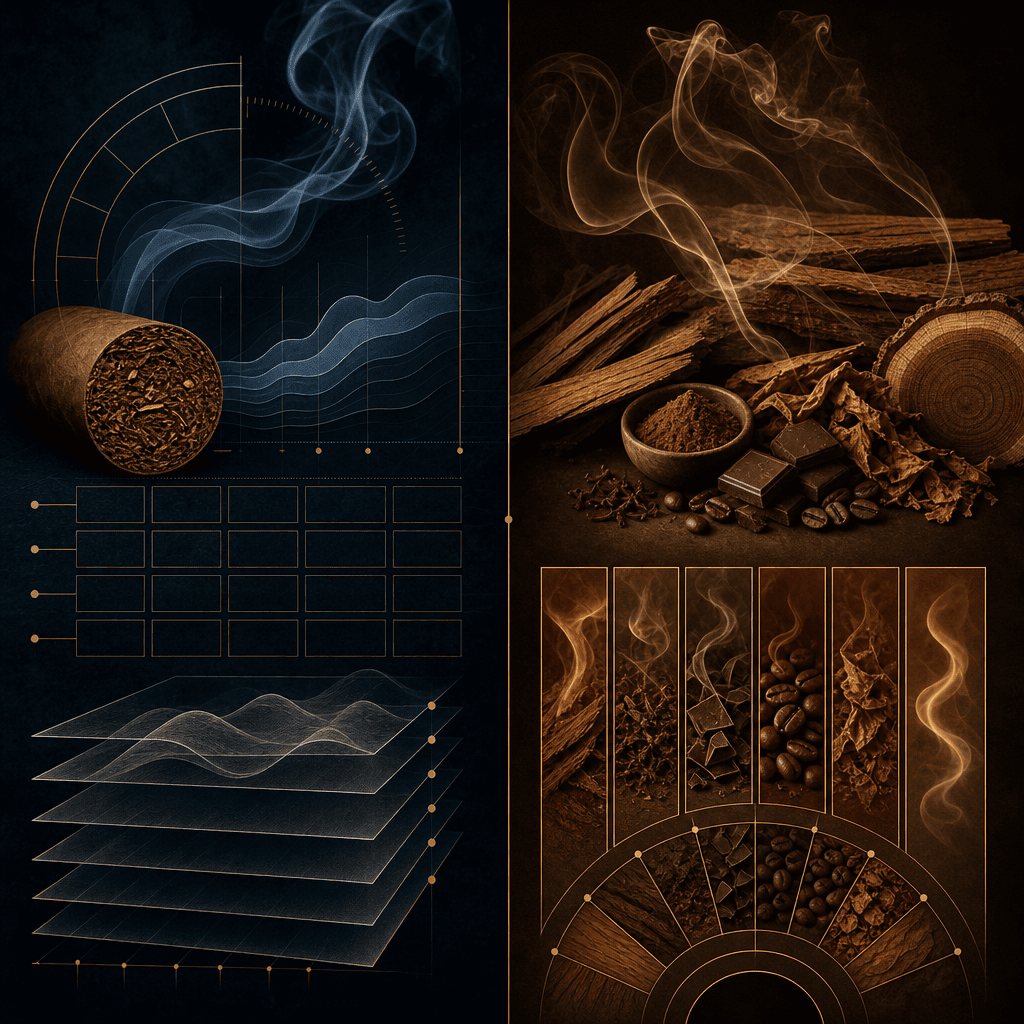
老手在品味雪茄時,常面臨風味理解的瓶頸。真正的風味結構不僅是味道清單,而是時間中逐漸展現的建築。透過分析風味的順序、強度與持續時間,老手能將「好抽」轉化為可比較的資料。進階的品味語言應該拆解成類別、強度及時間點,並利用風味輪進行校準。細分雪茄的前段、中段與後段,能更精確地捕捉微妙變化。此外,掌握燃燒速度與入口節奏,並學會鼻腔回韻與口腔定位,將有助於提升雪茄品味的深度與準確性。
- 風味結構應分為四層:主軸、輔助味、質地與尾韻,這樣能更清楚比較不同雪茄的差異。
- 進階記錄需將形容詞拆解為類別、強度與時間點,這樣能更精確地分析雪茄風味。
- 高階觀察可將雪茄分為五個區間,細分時間能幫助辨識風味變化,避免過早評價。
The Flavor Structure and Tasting Interpretation of Cigars: A Comprehensive Guide from Basics to Advanced Techniques
Experienced cigar enthusiasts often face bottlenecks in understanding flavors. The true flavor structure is not just a list of tastes but an architecture that unfolds over time. By analyzing the sequence, intensity, and duration of flavors, enthusiasts can transform "good smoke" into comparable data. Advanced tasting language should be broken down into categories, intensity, and timing, and calibrated using a flavor wheel. Segmenting the cigar into the front, middle, and back sections can more accurately capture subtle changes. Additionally, mastering the burning speed and entry rhythm, and learning retrohaling and oral positioning, will help enhance the depth and accuracy of cigar tasting.
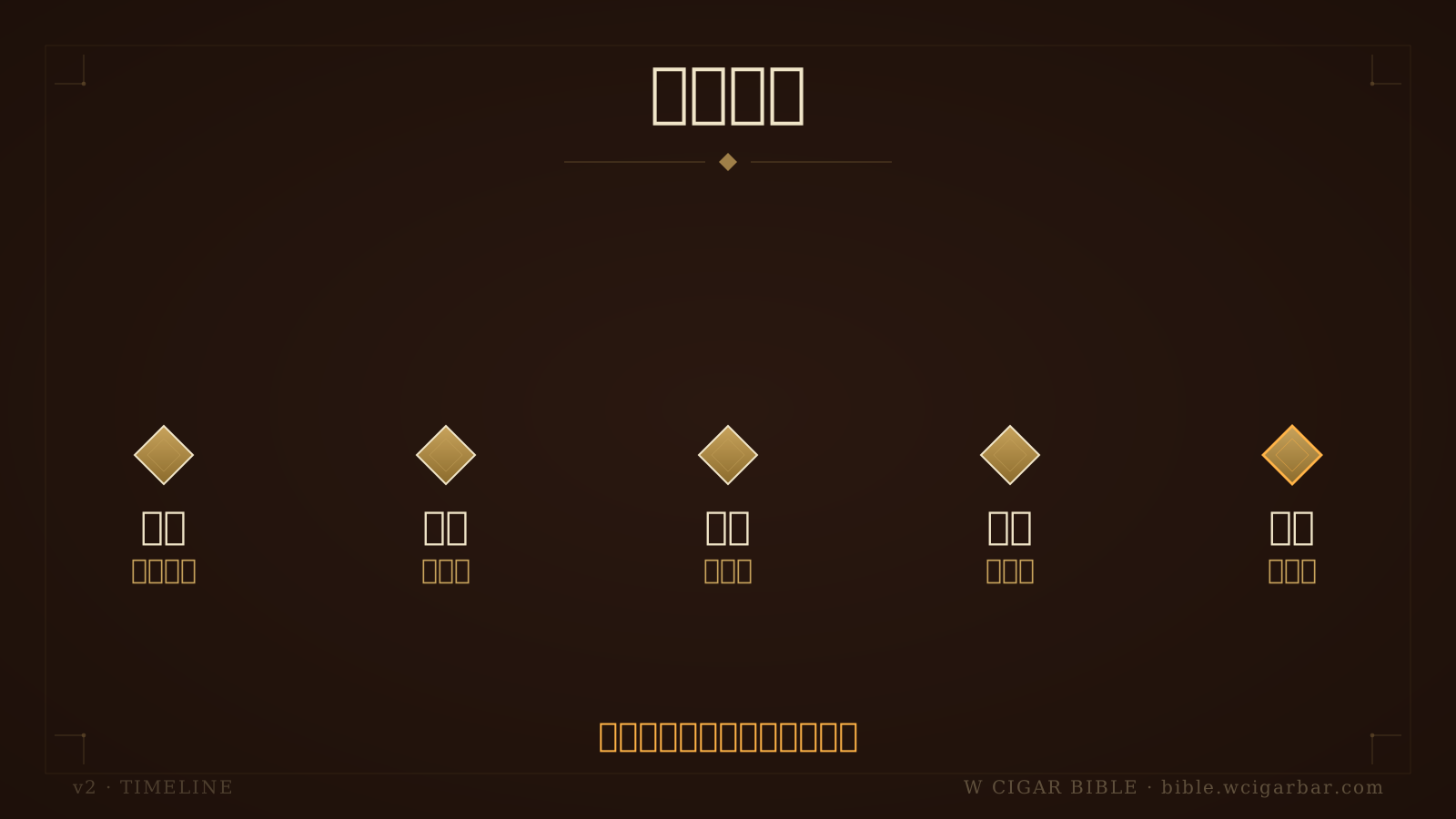
時間軸依序列出起燃到收束的觀察重點
Flavor Structure is Not a List of Tastes, But an Architecture in Time
Many seasoned enthusiasts can recognize cedar, coffee, leather, nuts, and black pepper, but if flavors are only listed, it remains a flat description. The flavor structure of a cigar is more like architecture: the front section is the entrance hall, the middle section is the main hall and beams, and the back section is the closure of aftertaste, spice, and intensity. Take Montecristo No.2 as an example, the classic pyramid size is about 52 ring gauge, 156 mm, with common expressions of creamy and woody in the front section, cocoa and coffee increasing in the middle, and mineral and pepper rising in the back.
True flavor understanding is not about how many flavors you can name, but about judging their order, weight, and duration. Partagás Serie D No.4, about 50 ring gauge, 124 mm, is often used by enthusiasts to observe "density in short sizes." It doesn't win by long elaboration but quickly establishes a framework with earthy, leathery, and roasted sweetness, with a noticeable push in strength after burning to the middle section.
I habitually divide the flavor structure into four layers: the first is the main axis, such as wood or coffee; the second is auxiliary flavors, like nuts, cream, and spices; the third is texture, including oiliness, dryness, and granularity; the fourth is the aftertaste, observing whether it lingers for 10 seconds, 30 seconds, or longer. When you start recording with these four layers, the differences between the same brand in different years and sizes become very clear.
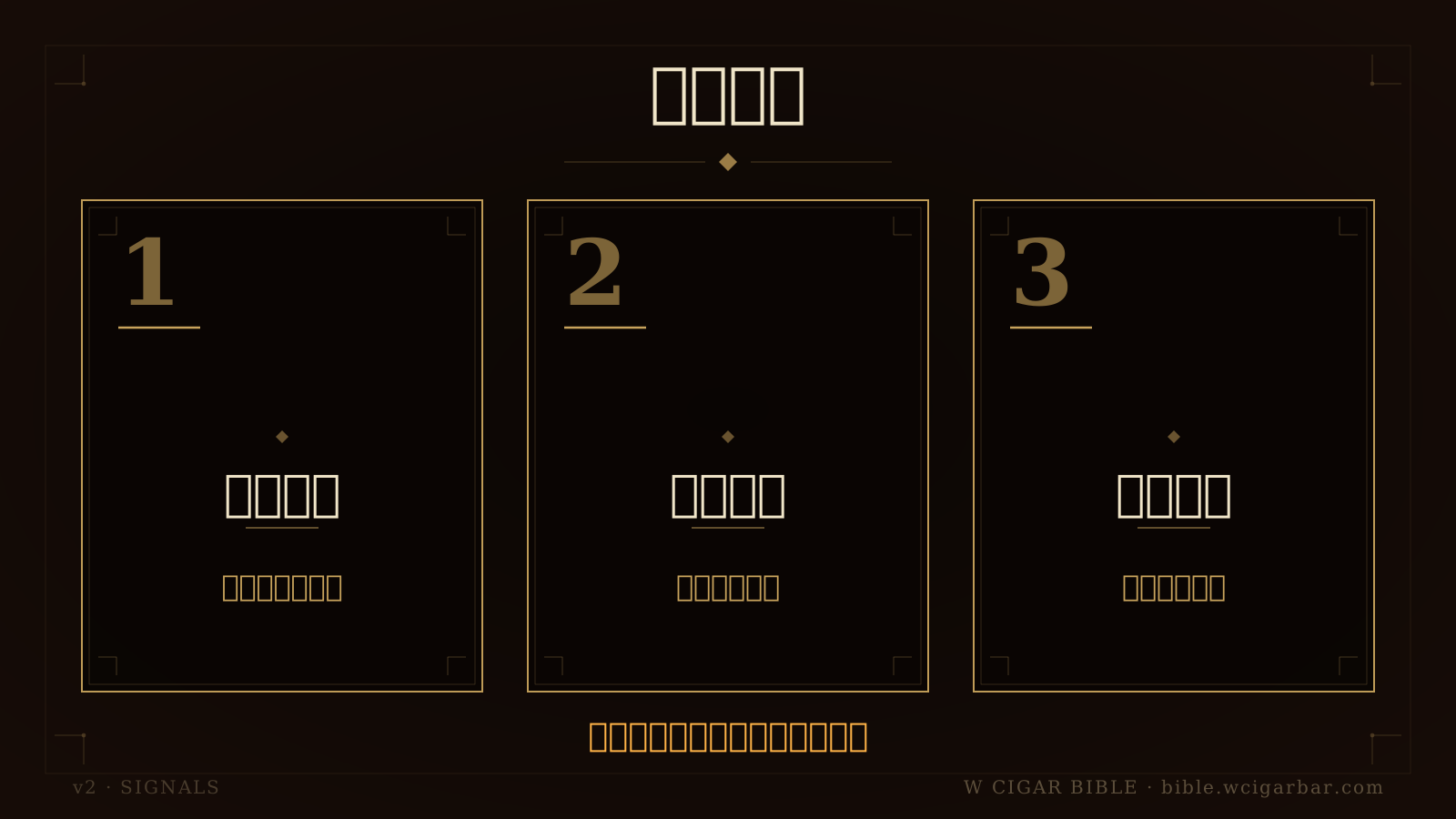
三張卡片說明風味順序記錄與固定變因
Advanced Use of the Flavor Wheel: Turning Vague Feelings into Comparable Data
The flavor wheel is not a toy for beginners but a tool for seasoned enthusiasts to calibrate language. Take Cohiba Siglo VI as an example, launched in 2002, it became a reference point for many studying large ring gauge Cuban cigars. Its typical style can fall between grass, cream, honey, cedar, and roasted grains; but if you only write "grassy sweet smooth," you'll lack a reference point for comparing different box conditions from 2014, 2018, and 2021.
The core of advanced recording is to break adjectives into categories, intensity, and timing. For example, "sweet" should be divided into honey sweet, caramel sweet, grain sweet, or ripe fruit sweet; "spicy" should be divided into black pepper, white pepper, cinnamon, clove, or spicy wood; "woody" could also be cedar, oak, dry wood shavings, or wet wood box. These differences will directly affect your judgment of whether a cigar is delicate, heavy, clean, or slightly loose.
| Flavor Category | Common Descriptions | Representative Observation Cases | Advanced Judgment Focus |
|---|---|---|---|
| Woody | Cedar, oak, dry wood | Hoyo de Monterrey Epicure No.2 | Whether it's clean, whether it has a bitter edge |
| Sweetness | Honey, caramel, grains | Cohiba Siglo VI | Whether sweetness appears in the front or middle section |
| Spicy | Black pepper, cinnamon, clove | Partagás Serie D No.4 | Whether spice enhances or overwhelms the main axis |
| Roasted | Coffee, cocoa, nuts | Montecristo No.2 | Whether the roasted feeling has layers |
| Animalistic | Leather, musk, hay | Bolívar Belicosos Finos | Whether it balances with strength |
When recording, I suggest marking the main flavor and intensity every 15 minutes, using a scale of 1 to 5. Do not pursue literary expression, but pursue stability. When you accumulate records of 20 cigars of the same brand, brand preferences will no longer be just a feeling but will become a verifiable personal database.
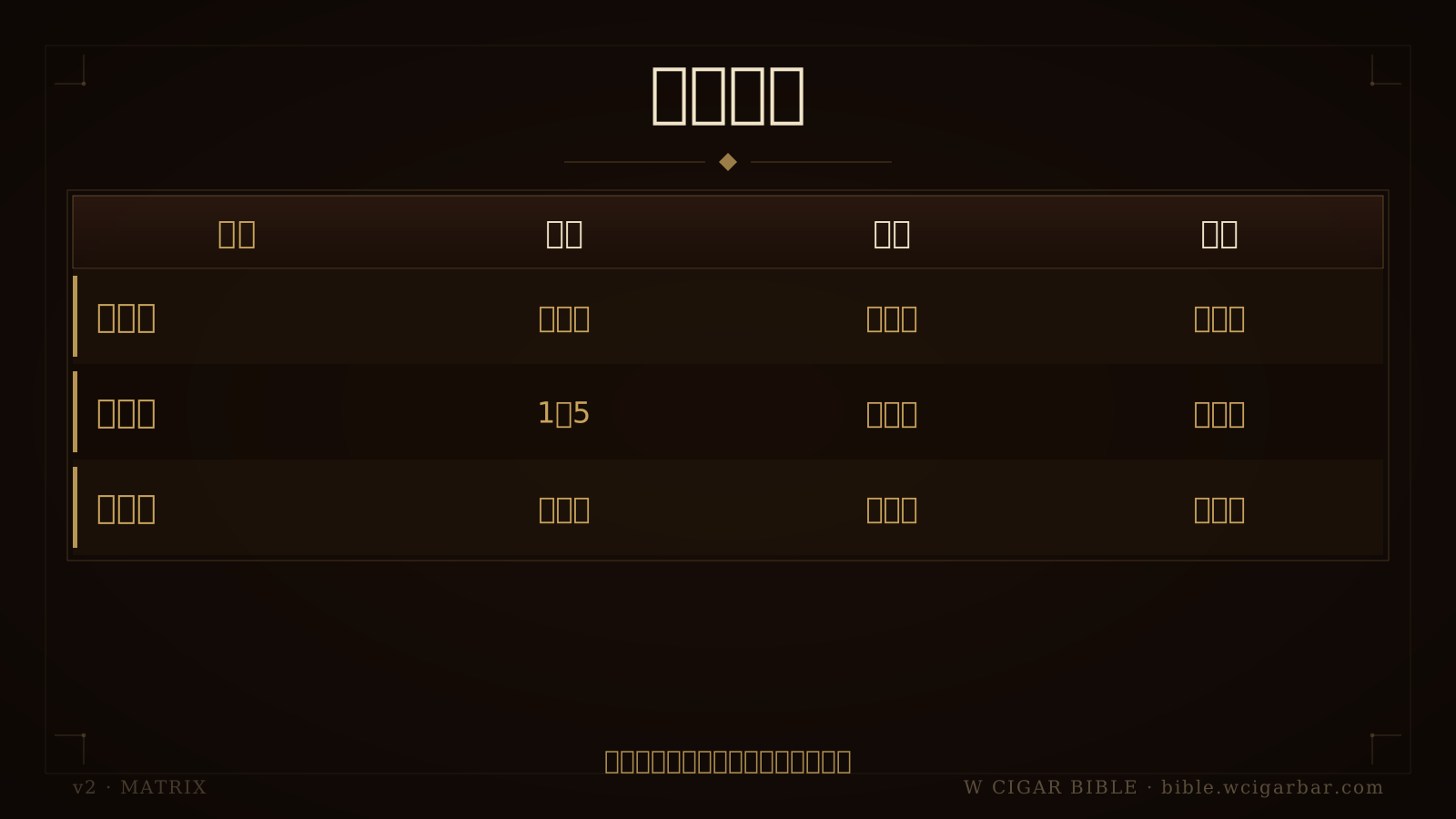
比較矩陣呈現主軸質地與尾韻的判斷方式
Beyond the Three-Stage: Detailed Reading of Front, Middle, and Back Sections
Traditional sayings often divide cigars into three sections: front, middle, and back. This is practical, but still too rough for seasoned enthusiasts. Take a Romeo y Julieta Churchill, which burns for about 90 minutes, as an example. If divided into three sections, each section is 30 minutes, and you might miss subtle transitions within 10 to 15 minutes. This classic size, about 47 ring gauge, 178 mm, often shows floral, cedar, and gentle sweetness in the first 20 minutes, with roasted bread and light spices slowly emerging in the middle section.
Advanced observation should further divide the three-stage into five intervals: ignition, stabilization, expansion, compression, and closure. The first 5 minutes of ignition are usually not suitable for conclusions, as the flame, cut, moisture, and temperature are still calibrating. The stabilization period, around the 10 to 25-minute mark, is best for judging the main axis; the expansion period observes whether auxiliary flavors increase; the compression period observes whether the concentration stacks; the closure period judges whether bitterness, spice, and heat are unbalanced.
Take Bolívar Royal Corona as an example, about 50 ring gauge, 124 mm, often showing more direct strength than Hoyo Epicure No.2. If leather, earth, and strong coffee appear after the 35-minute mark and the aftertaste still retains sweetness, this is a solid structure; if only spiciness and heat remain, it may be due to too fast a pace, low humidity, or high burning temperature.
What seasoned enthusiasts truly need to practice is "not rushing to evaluate." A cigar that is not good at the 8-minute mark does not mean there won't be surprises at the 35-minute mark; a bland front section may be paving the way for the middle and back sections. By slicing time finely, you will more easily recognize the design of the formula, rather than just judging whether you like it.
Burning, Ring Gauge, and Rhythm: The Invisible Control Panel of Flavor Performance
The flavor ratio of the same cigar can be completely different under different ring gauges. Generally, a larger ring gauge can accommodate more filler combinations, with relatively stable burning temperature, making the taste appear more rounded; a smaller ring gauge has a higher influence from the wrapper ratio, with more concentrated lines. Compare Trinidad Reyes, about 40 ring gauge, 110 mm, with Trinidad Vigía, about 54 ring gauge, 110 mm. The lengths are similar, but the latter often has more pronounced creaminess and thickness.
Flavor is not only determined by tobacco leaves; burning speed and entry rhythm will also rewrite the result. Many seasoned enthusiasts encounter bitterness and spiciness in the back section and immediately blame the cigar, but it could also be due to their own dense rhythm. If you enter every 20 seconds, the burning core temperature rises, and the bitter taste will quickly stack; if you maintain about 45 to 70 seconds per entry and let the ash naturally form 2 to 3 cm, the flavor is usually more stable.
I suggest calibrating your rhythm using the following methods:
- Wait 30 to 60 seconds after ignition before entering a stable rhythm.
- In the front section, the interval between entries is about 60 seconds; in the middle section, adjust according to the burning state.
- If sharp bitterness appears, stop for 2 minutes and don't rush to correct it.
- Don't frequently knock off the ash; let it help stabilize the burning temperature.
- Observe for 1 to 2 minutes before deciding whether to relight in case of uneven burning.
The cut also affects flavor. A straight cut has a large opening, providing ample smoke but making the rhythm easy to become too fast; a V cut concentrates the smoke flow, often making sweetness and spice more concentrated; a punch cut has a more restrained entry, but if the cigar's humidity is high, it may cause resistance. Understanding cut choices is more important than blindly pursuing expensive tools.
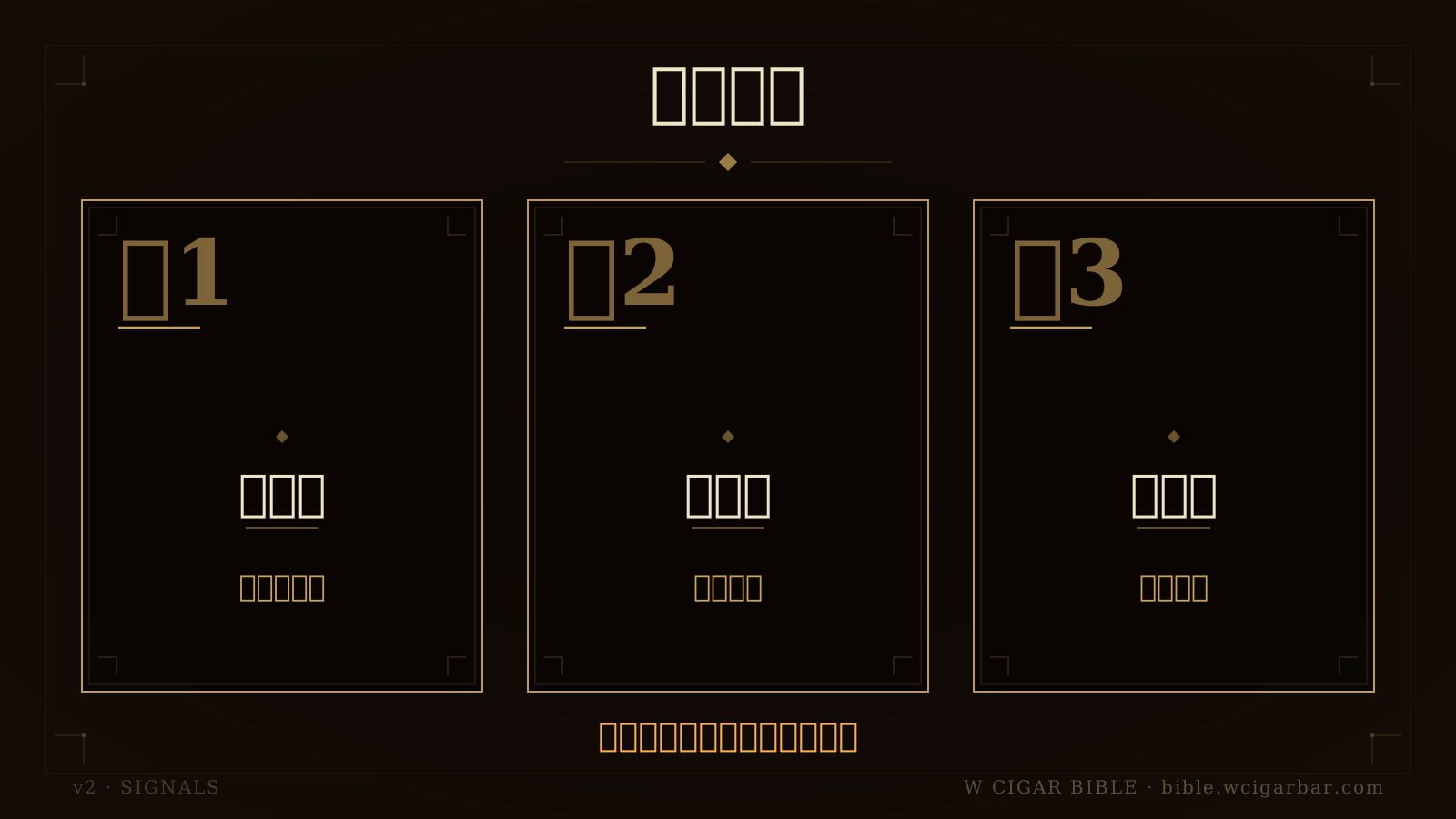
三張錯誤卡列出只列味太快抽與亂變因
Retrohaling and Oral Positioning: Keys to Advanced Sensory Techniques
To break through the flavor ceiling, seasoned enthusiasts must learn to separate oral sensations from retrohaling observations. The mouth primarily senses sweetness, bitterness, sourness, saltiness, umami, and texture; the nose can capture floral, woody, spicy, herbal, and fermented sensations. For example, H. Upmann Magnum 46, about 46 ring gauge, 143 mm, if relying only on the mouth, may feel like a medium-strength woody and nutty cigar; with retrohaling, you can often read finer hay, tea, and light honey.
Retrohaling is not a show-off but a necessary ability to identify details and defects. During operation, you don't need a large amount of smoke, just a small amount left in the mouth, slowly letting a part out through the nose. If the stimulation is too strong, it means the amount is too much or the cigar's strength is not suitable for the current state. For brands like Bolívar and Partagás, which are more powerful, I usually use it sparingly in the front and middle sections to avoid interference from stimulation in the back section.
Oral positioning is also important. The tip of the tongue often captures sweetness, the sides are more sensitive to acidity and spice, and the root easily feels bitterness and heaviness. When Montecristo No.4 shows cocoa and coffee in the middle section, if the bitterness only stays at the root and quickly dissipates, it may be part of the structure; if the bitterness covers the entire mouth and lasts for more than 1 minute, check the burning temperature, humidity, or storage conditions.
I recommend setting one goal per practice: today, only practice retrohaling; next time, only observe the position of sweetness; the next time, record the length of the aftertaste. Advanced techniques are not all open at once but gradually calibrate the senses so that each experience can return to a comparable baseline.
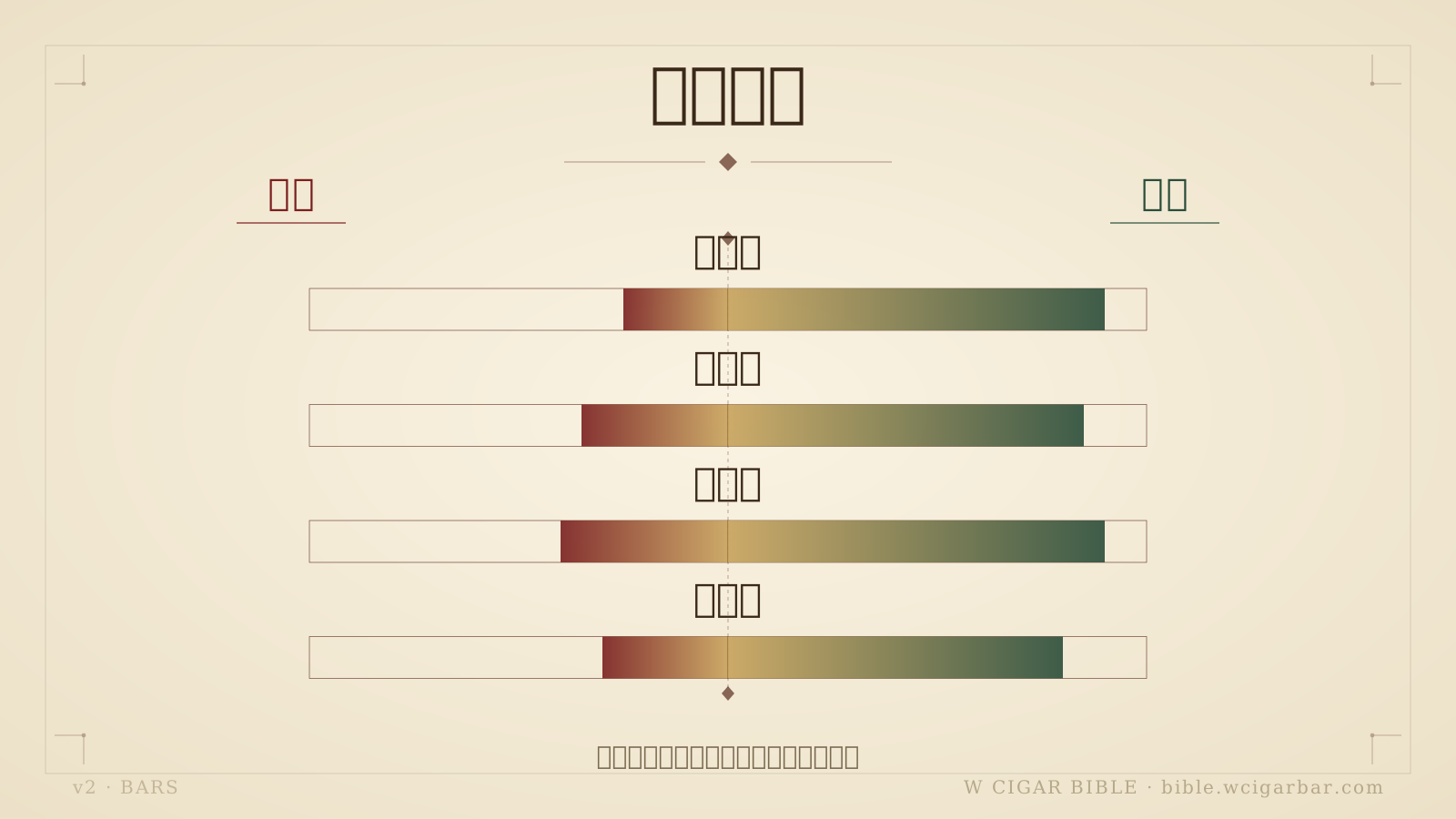
橫條圖比較味道清單與結構讀法的差異
Aging, Humidity, and Vintage: Why the Same Cigar Can Become Another
Cigars, when properly stored, will age over time, which is the most fascinating yet easily misjudged area for seasoned enthusiasts. Generally, a relative humidity of 65% to 69% and about 18 to 21°C is a stable range commonly used by many collectors; however, different regions, cabinets, box conditions, and personal preferences will cause differences. The Cohiba Behike series, launched in 2010, is often compared for sensory differences in different vintage box conditions due to its positioning and formula.
Aging is not magic; it only amplifies the existing balance and may also expose original defects. A cigar that was loose in structure, unstable in burning, and had obvious off-flavors when young will not necessarily become great after 5 years; conversely, a cigar with a clear main axis, clean filler, and sufficient strength may have its spice softened, sweetness more integrated, and woodiness more rounded after 3 to 8 years.
For many Cuban Robusto sizes from 2008 to 2012, if well-preserved, common changes after 10 years include a decrease in grassy notes, an increase in nutty and honey notes, and a reduction in stimulation. However, if the humidity is consistently above 72%, it may become stuffy, sour, and dull in burning; if consistently below 62%, it may crack, become spicy, and have a shorter aftertaste.
When discussing vintage and collection, one must remain calm. Rare box numbers, discontinued sizes, and special vintages may indeed form market discussions, but collection appreciation does not guarantee appreciation; it still depends on source preservation and the market. For me, the most important value of vintage is not the price imagination but seeing how time reshapes the flavor structure.
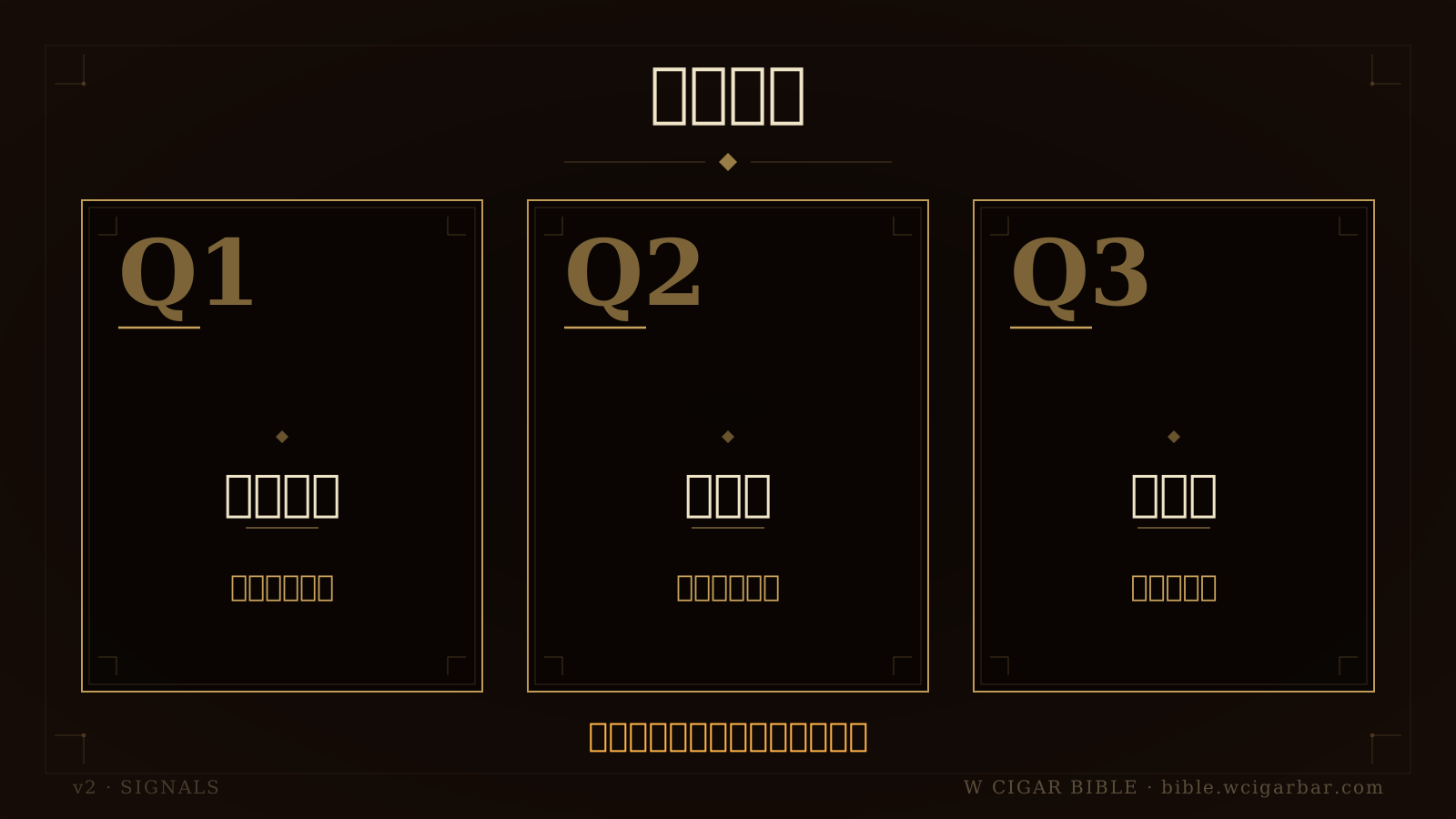
問答卡整理同盒差異分制與後段苦味處理
Pairing is Not a Supporting Role: How Beverages Change the Flavor Stage
Many seasoned enthusiasts focus on the cigar itself but underestimate the impact of beverages. Pairing is not about putting two expensive items together but controlling sweetness, acidity, alcohol, tannins, and mouth temperature. Pairing Hoyo de Monterrey Epicure No.2 with unsweetened oolong tea, the roasted feeling of the tea can bring out cedar and nuts; if paired with high-alcohol cask-strength whiskey, it may overwhelm its original delicate creaminess.
A good pairing should make the cigar clearer, not let the beverage steal the spotlight. Partagás Serie P No.2, a cigar with more strength, can withstand sherry cask whiskey, aged rum, or espresso; but for Quai d’Orsay No.50, a more delicate style with floral and creamy textures, I would choose sparkling water, light roast coffee, or low-sweetness brandy.
Three strategies can be used when pairing. The first is similar pairing: cocoa flavors with black coffee, woody with bourbon cask whiskey. The second is contrasting pairing: thick leather with refreshing sparkling water to reduce the oral burden. The third is bridging pairing: a cigar with honey sweetness paired with light sweet rum to extend the sweetness without being overly sticky.
I often remind friends that ice, glass type, and drinking order will change the result. Drinking a sip of spirits before entry and letting the cigar establish the main axis before drinking feel completely different. If you want to make a rigorous comparison, only change one item in the beverage at a time and note the vintage, alcohol content, sweetness, and pairing timing; otherwise, it's hard to determine where the change comes from.
Frequently Asked Questions
Why do cigars from the same box still have flavor differences?
Cigars are agricultural products and handmade items. Even if they are from the same box, brand, and size, filler moisture, rolling density, wrapper oiliness, and storage position may differ. Differences of 5% to 15% are not uncommon. High consistency within the same box is a quality advantage, but it does not mean every cigar will be exactly the same.
What scoring system should I use to record flavors?
I recommend seasoned enthusiasts use a 100-point system for overall evaluation and a 5-point system for detailed items. The overall score looks at balance, complexity, aftertaste, and burning; detailed items record sweetness, spice, woodiness, thickness, and stimulation. This way, there is both an overall judgment and a review of technical details.
What is the difference between concentration, strength, and fullness?
Concentration refers to flavor density, strength often refers to body sensation and stimulation, and fullness is the texture and coverage in the mouth. Cohiba may have high concentration but not necessarily be rough in strength; Bolívar often has more noticeable strength, but if well-preserved, it can still be very balanced.
Why does bitterness often appear in the back section?
Common reasons include a too-fast pace, improper humidity, and high burning temperature. When bitterness appears, stop for 1 to 2 minutes to let the burning cool down, then observe if the sweetness returns. If bitterness is accompanied by ammonia or pungency, the aging time or storage condition may need reevaluation.
Which is more worth studying, new cigars or old vintage cigars?
Both are worth it. New cigars can show the brand's contemporary style, batch status, and formula direction; old vintages can observe the integration and aftertaste changes after aging. If you only chase vintage, you may overlook current quality; if you only look at fresh performance, you may miss the depth brought by time.
How can I improve sensory accuracy without a professional environment?
First, fix variables: the same time, the same beverage, similar humidity, and the same recording format. Compare only one item each time, such as brand, size, or vintage. Doing it consecutively 10 times will yield more than comparing 10 cigars at once. Sensory ability is not a talent display but a discipline accumulation.
The most fascinating thing about cigars is that they are never just a puff of smoke. They have land, vintage, rolling, storage, and your rhythm and mood of the day. I wrote this article not to turn pleasure into an exam but to hope that seasoned enthusiasts can see deeper structures beyond familiar brands. Understanding decomposition allows you to truly enjoy freely.
—Cigar Prince Wilson Tsai
Smoking is harmful to health. Under twenty years old is not allowed to smoke. Quitline: 0800-636363. This article is for adults over twenty years old as a reference for cigar culture, preservation, and regulations, not a tobacco advertisement, promotion, or purchase suggestion.
Like this article?Share with friends
Share this W Cigar Bible piece with friends who want to learn cigar culture, storage, and tasting.
想把這篇 化為實踐
雪茄聖經是知識;雪茄文化要在空間裡發生

W Cigar Bar 大安總店資訊
台北大安區 · 雪茄聖經總編輯 Wilson Tsai 主理的雪茄文化空間
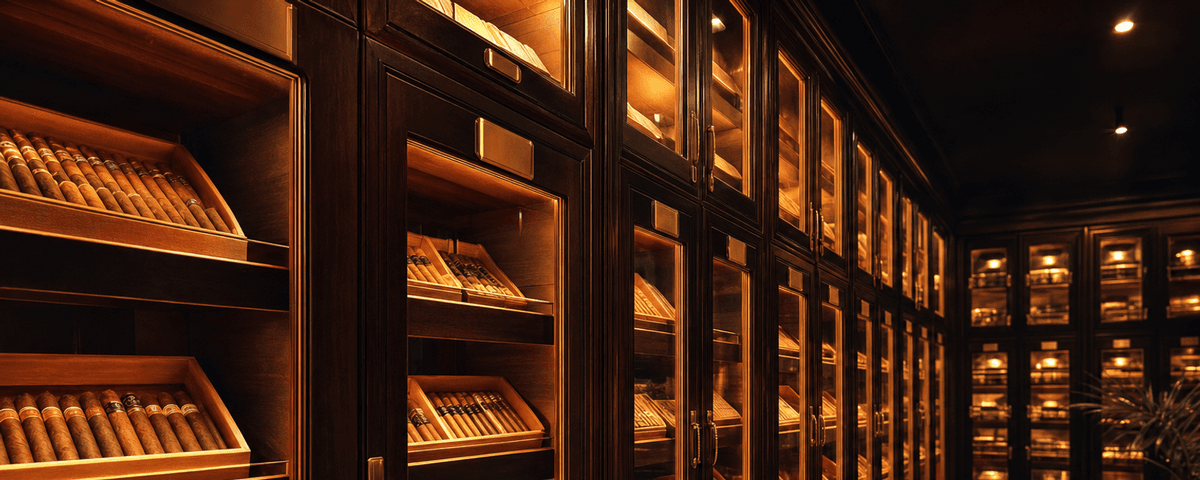
33 座 24 小時恆溫恆濕醇化室
W Cigar Bar 提供的會員醇化空間 · 場地資訊請洽編輯部
雪茄剪 / 打火機 / 雪茄盒 / Boveda
W Cigar 配件官網 · 專營雪茄配件正品
加 LINE 好友 · 文化諮詢
文化空間資訊 · 紳士沙龍 · 私人包場
本網站內容僅供雪茄文化、歷史、收藏與品吸知識研究參考。菸品有害健康、未滿法定年齡者請勿吸菸。實際規範請依所在地法律為準。
吸菸有害健康・戒菸專線 0800-636363・本站僅供 20 歲以上成年人閱覽。
讀到這裡,你不只是路過的人
留下 Email,加入 W 雪茄聖經內圈——總編輯 Wilson Tsai 親選的學院深文與國際新訊,先你一步送到信箱。
· 教育用途非銷售 · 隨時一鍵退訂 · Email 絕不對外公開 · 由勝茄股份有限公司營運
同分類延伸閱讀

資料來源:W Cigar Bible 編輯部整理 · 雪茄王子 Wilson Tsai 親自審稿
本文僅供雪茄文化、歷史、收藏與品鑑知識研究,不作為菸品促銷、銷售或購買建議。吸菸有害健康,未滿二十歲不得吸菸。