Chianti Classico 托斯卡尼餐酒:Sangiovese 酸櫻桃與皮革,搭配 Romeo y Julieta Short Churchill

Chianti Classico 以 Sangiovese 的高酸、酸櫻桃、番茄葉、皮革與香料構成典型托斯卡尼紅酒輪廓;與 Romeo y Julieta Short Churchill 相遇時,紅果調互疊、木質與皮革對齊,高酸則把淡可可甜感洗亮,形成一組適合系統學習的義大利餐酒與古巴雪茄搭配。
- Chianti Classico 的核心是 Sangiovese 高酸、紅果與托斯卡尼丘陵結構。
- Short Churchill 的紅果、木質與淡可可,能與酒中皮革酸櫻桃相扣。
- 搭配重點不在濃度堆疊,而在酸度、單寧與煙氣節奏的校準。
Chianti Classico Tuscany Table Wine: Sangiovese Sour Cherry and Leather, Paired with Romeo y Julieta Short Churchill
Chianti Classico paired with Romeo y Julieta Short Churchill may seem like a Tuscany red wine meeting a Cuban Robusto, but in reality, it's a structural dialogue of acidity, red fruit, leather, and woody smoke. I often say that pairing wine with cigars isn't just about asking "is it strong," but more importantly, how the acidity progresses, how the tannins conclude, and whether the aroma molecules can resonate in the nasal cavity. This pairing is worth dissecting because the sour cherry and tomato leaf of Sangiovese can precisely delineate the red fruit, wood, light cocoa, and floral notes of Romeo y Julieta Short Churchill.
As the editor of "Cigar Bible," I consider this article a foundational case for beginners entering systematic pairings. Chianti Classico is not merely an "Italian table wine" label; it is a terroir language with regional boundaries, historical symbols, grape proportions, and classification logic. Romeo y Julieta Short Churchill (Cuba, Robusto, 50 × 124mm): red fruit, wood, light cocoa, floral, medium cigar body; it doesn't dominate with heaviness but uses a clear Cuban woody feel to give Sangiovese's high acidity enough room to play.
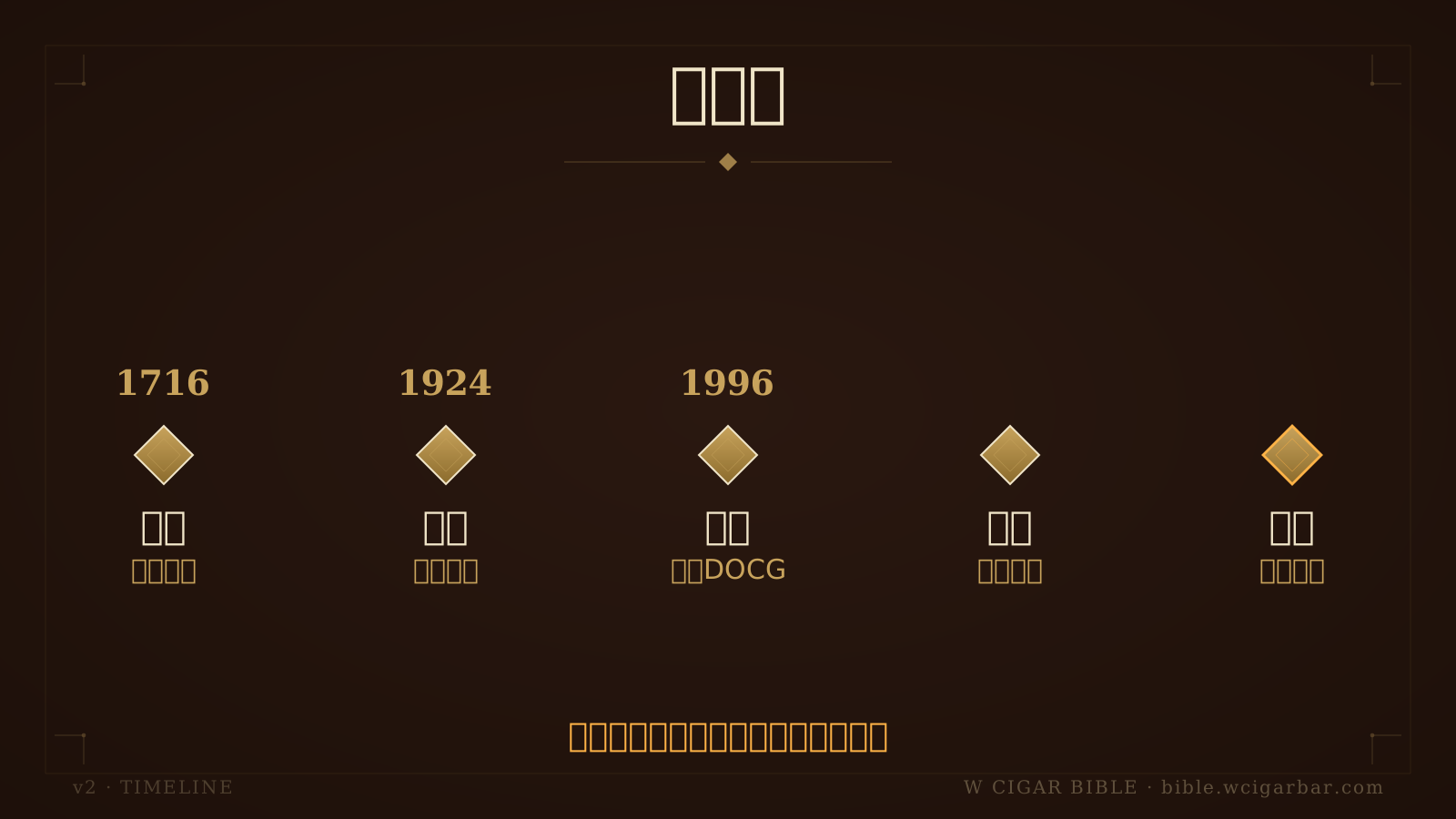
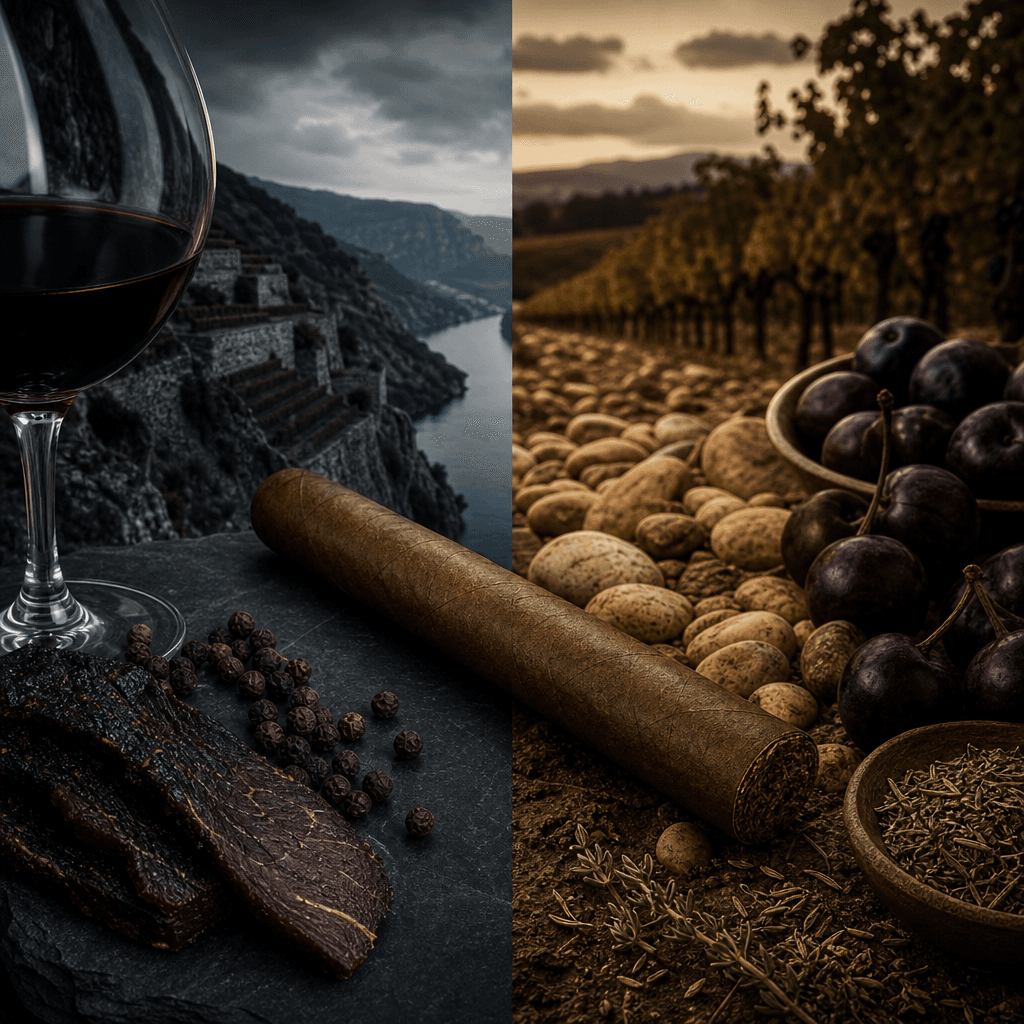
時間線呈現基安蒂核心區到入杯搭配的脈絡
Chianti Classico, Tuscany Hills, and the Black Rooster's Regional Framework
Chianti Classico is located in the core area of Tuscany hills between Florence and Siena, not to be confused with the general term Chianti. The vineyards here are mostly distributed on rolling hills, with altitude, diurnal temperature variation, limestone, sandstone, and Galestro schist collectively shaping Sangiovese's tight acidity. For red wine novices, understanding "Classico" as the historical core area is more useful than memorizing labels.
The origin of the Black Rooster, Gallo Nero, comes from the legend of the boundary dispute between Florence and Siena. In the story, knights from both cities used the crowing of a rooster as the signal to start, with Florence choosing a black rooster, ultimately advancing the boundary significantly, making the black rooster a symbol of this area. Today, the black rooster emblem on the bottle is not just a cute image but a visual entry point into the community and regulatory system of the region.
Chianti Classico was delineated as a wine region by the Grand Duke of Tuscany, Cosimo III, in 1716, earlier than many modern regional systems. In the 20th century, the Consorzio Vino Chianti Classico gradually established the black rooster logo, concentrating regional recognition. Understanding the black rooster is understanding that Chianti Classico is not a stylistic nickname but the historical core and regulatory identity of Tuscany red wine.
When such wine enters cigar pairings, the regional background directly influences the structure in the glass. The acidity and slender tannins brought by the hills do not obscure the smoke like high-alcohol, heavy red wines. It's more like a fine brush, outlining the red fruit and wood texture of the Short Churchill.
Sangiovese's Sour Cherry, Tomato Leaf, Leather, and Spice Structure
Sangiovese is the dominant grape in Chianti Classico, required by regulations to be its backbone, with many wines using a very high proportion or even a single variety. Its typical profile is not blackberry jam but sour cherry, red plum, pomegranate skin, tomato leaf, dried herbs, and a hint of violet. These aromas are food-friendly due to bright acidity, moderate body, and linear tannins.
The sour cherry sensation is often perceived along with the wine's organic acid structure, especially the astringency and salivation reaction brought by tartaric and malic acids. The tomato leaf and herbal notes can be understood as the green aromatic profile of Sangiovese under the balance of cool slopes and ripeness. Leather, dry earth, tobacco leaf, and spices may result from aging, trace volatile phenols, oak contact, and bottle development.
For beginners, the most common misjudgment is mistaking high acidity for sharpness. Good Chianti Classico acidity is not piercing but straightens the fruit flavor, revealing tomato skin, red tea, dried rose, and leather shadows at the wine's finish. The charm of Sangiovese lies not in sweet thickness but in the layers of herbs, leather, and spices wrapped around the sour cherry core.
This structure is particularly important for cigars. If the wine is too sweet and thick, the light cocoa of the Short Churchill will be reduced to a monotonous sweetness; if the wine is too bitter, the Cuban woodiness will become dry. Chianti Classico's high acidity and moderate body allow the smoke to leave a clear outline on the tongue rather than just a roasted sensation.
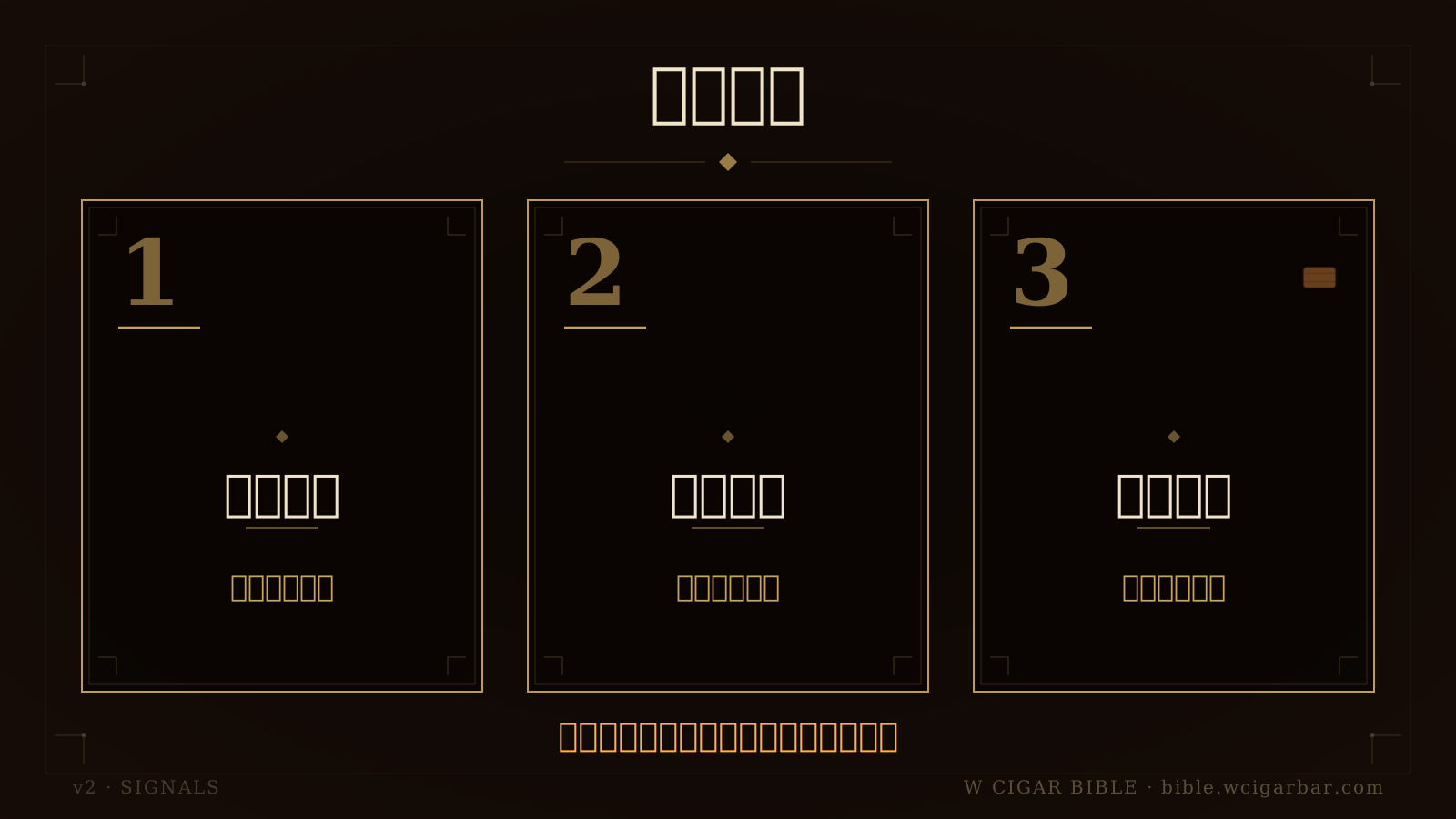
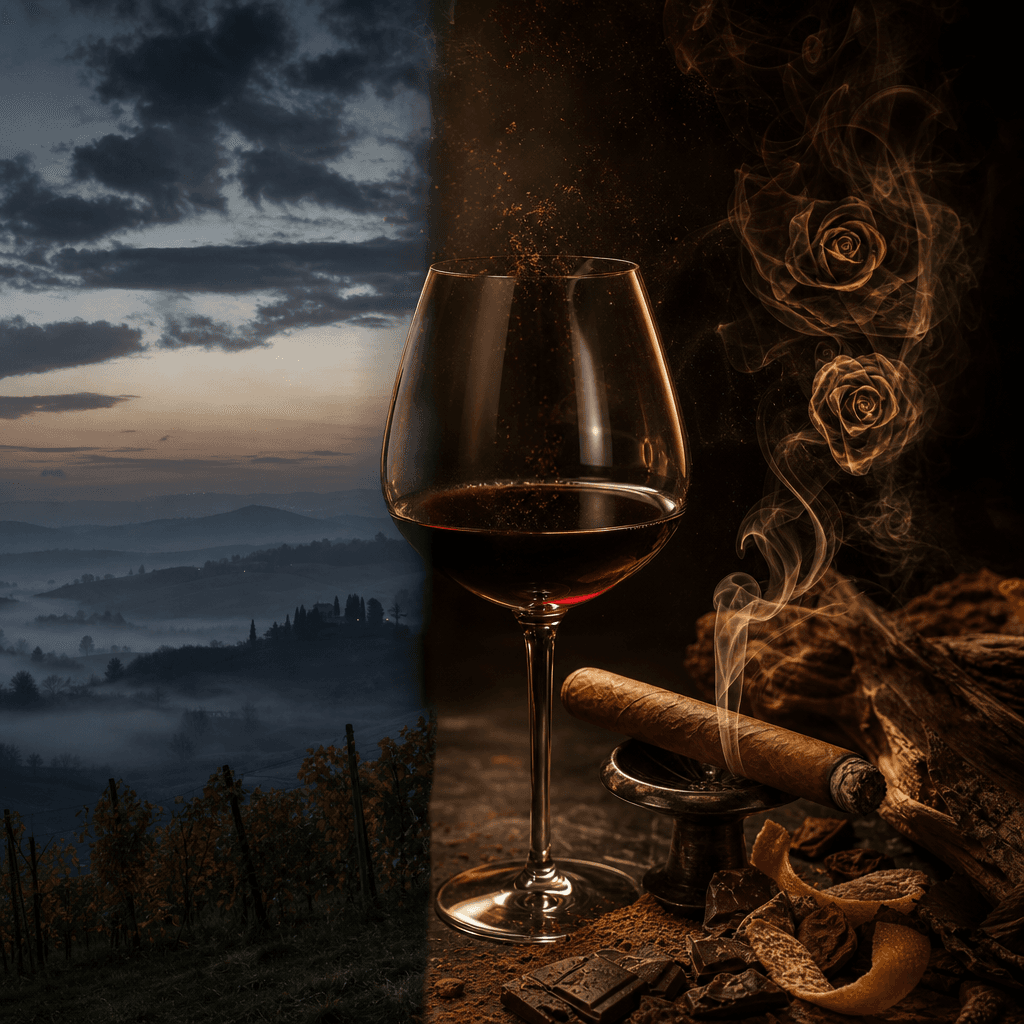
三張卡列出酸度酒體與皮革收尾的搭配重點
Riserva and Gran Selezione: Chianti Classico's Classification and Aging Syntax
The basic level of Chianti Classico usually presents the most direct Sangiovese fruit acidity, red fruit, and herbal lines. It is suitable for observing the region's essence and often retains a more distinct sour cherry and tomato leaf expression. When paired with Short Churchill, this style will make the red fruit overlap most clearly.
Riserva requires longer aging, offering more leather, tobacco, dried spices, and a more stable tannin profile than the basic level. It doesn't necessarily mean thicker, but the wine's edges are rounded by time, with oak, bottle aging, and fruit transformation more integrated. When paired with Romeo y Julieta Short Churchill, the leather finish of Riserva more easily connects with the cigar's woody framework.
Gran Selezione is a higher-level regional expression in Chianti Classico's modern classification, officially launched in 2014, requiring estate-grown grapes, longer aging, and stricter evaluation. Recent regulations also strengthen the Sangiovese focus, making this level more concentrated on region and variety rather than relying on international varieties for modification. The difference between Riserva and Gran Selezione is not just in time but in the density of fruit acidity, tannins, oak, and terroir expression.
When pairing with cigars, I don't determine superiority solely by grade but look at whether the wine's acidity is still alive. If Gran Selezione's oak, alcohol, and extraction are too strong, it may overshadow the floral notes of Short Churchill. Conversely, a Riserva with clear acidity and well-integrated oak often beautifully connects leather, red fruit, and light cocoa.

矩陣比較基本級珍藏級與特選級的酸度紅果木質
Romeo y Julieta Short Churchill's Red Fruit, Wood, and Medium Cigar Body
Romeo y Julieta Short Churchill is one of the classic expressions in Cuban Robusto size, with a 50 × 124mm specification that concentrates smoke density and time rhythm. Its tone is not explosive black pepper or heavy earthy all the way through but red fruit, wood, light cocoa, floral, and medium cigar body. This kind of full middle section and clear front and back changes make it very suitable for red wine pairing analysis.
After lighting, the front section often first reveals impressions of cedar, dry grass, light floral, and red fruit skin. Entering the middle section, the wood becomes more defined, light cocoa and nut shell sensations gradually emerge, and the smoke thickness increases but does not become coarse. If the rhythm is well controlled in the back section, more roasted wood, leather edges, and cocoa powder dryness will appear.
When this cigar meets Chianti Classico, the key is that its red fruit tone is not sweet ripe berries but red hues with a bit of dried fruit skin and floral notes. This allows it to layer with Sangiovese's sour cherry rather than pull against each other. The reason Short Churchill is most suitable for Chianti Classico is that it has enough wood to carry the wine's leather while retaining red fruit and floral notes to echo the high acidity.
It's important to note that a medium cigar body doesn't mean it can be paired with all red wines. If the wine body is too thick or the tannins too hard, the cigar will seem thin; if the wine is too light or the acidity too sharp, the smoke may become bitter. Chianti Classico's role is to find a conversational center between red fruit, acidity, and dried spices.

三張錯誤卡提醒濃度酒溫與抽吸節奏問題
Flavor Chemistry Alignment: Sangiovese × Short Churchill's Token to Token
I often break down pairings into "token to token," meaning one specific flavor unit matches another specific flavor unit. Sangiovese's sour cherry is not an abstract fruit but a combination of acidity, red fruit skin, light almond kernel, and salivation reaction. Short Churchill's red fruit is not candy sweet but appears simultaneously with red fruit skin, floral, and woody dryness in the smoke.
Sour cherry × cigar red fruit tone is a same-color overlap. The wine's acidity will open the tongue, preventing the cigar's red fruit from being pressed into a charred bitterness by smoke phenols; the cigar's red fruit and floral notes make the wine's sour cherry appear more three-dimensional. This is not "same taste so pair," but a continuous color band of red fruit acidity and red smoke aroma in the retronasal perception.
Leather finish × woody framework is the second key. Chianti Classico's leather, dry earth, and spice finish will connect to Short Churchill's cedar, dry wood, and cocoa powder; both involve phenolic associations from lignin thermal decomposition, oak aging spice hints, and dry aromas from tobacco combustion. The most precise chemical logic of this pairing is red fruit overlapping with acidity, leather and wood resonating from the same source, and high acidity brightening the light cocoa sweetness.
| Chianti Classico Flavor Token | Short Churchill Flavor Token | Sensory Change |
|---|---|---|
| Sour cherry, red plum | Red fruit skin, floral | Red fruit tone extended, acidity clarifies smoke |
| Tomato leaf, dried herbs | Cedar, dry grass | Green herbs turn into dry wood, bitterness straightened |
| Leather, dry earth | Wood, leather edges | Finish connection, deeper brown tones in the nasal cavity |
| High acidity, fine tannins | Light cocoa, nut shell | Cocoa sweetness brightened, dryness not easily accumulated |
| Spices, red tea | Roasted wood, cocoa powder | More layered in the back section, avoiding only smoky sensation |

橫條圖比較清酸取向與厚熟取向的風味強弱
Temperature, Glass Type, and Rhythm: How Tuscany Red Wine Doesn't Overwhelm the Cigar
Chianti Classico doesn't need to be overly chilled, nor should the wine temperature rise to highlight alcohol. Handling it with a slightly cool room temperature approach, allowing clear acidity, open aromas, and unobtrusive alcohol is a more stable method. The glass type can be a standard Bordeaux glass or a medium red wine glass, without using an overly large bowl to prevent aromas from becoming loose after oxidation.
Decanting should not become a ritualized action but should consider the wine's vintage, grade, and current state. A young Chianti Classico with tight tannins and prominent herbs may benefit from short air contact to unfold the fruit; a Riserva with bottle aging should avoid letting leather and red fruit dissipate too quickly. When pairing with Short Churchill, the first glass of wine doesn't need to be poured too much; the focus is on observing the intersection of each sip and each segment of smoke.
The rhythm on the cigar side is equally important. If Short Churchill is smoked too quickly, the burning temperature rises, wood becomes charred, light cocoa turns bitter, and the wine's high acidity may be misread as sharp. The technical core of successful pairing is maintaining the wine's acidity clear and the cigar smoke low-temperature and layered.
My approach is usually to first smell the wine, then let the cigar enter the front section, waiting for the smoke to have stable woodiness before starting the formal alternation. After each sip of wine, pause for a few seconds, let the acidity sweep over the tongue, then take a puff of the cigar, which is easier to see changes than continuous alternation. This is not about speed but allowing acidity, tannins, smoke, and retronasal perception to have their own space for expression.
Dining Scenario: How Italian Table Wine's High Acidity Holds Oil and Smoke
Chianti Classico is called Italian table wine not just as a cultural impression but because high acidity, fine tannins, and red fruit herbs are truly suitable for the dining table. Tomato-based dishes, grilled meats, herbs, olive oil, and hard cheeses can all give Sangiovese's acidity more room to play. If followed by Short Churchill, the residual oil in the mouth will be first organized by the wine, making it easier for the cigar smoke to reveal wood and cocoa.
Tomato meat sauce, roasted rosemary chicken legs, and thinly sliced aged cheese are food types that can demonstrate this pairing logic. The sweet and sour of tomatoes will echo Sangiovese's tomato leaf and sour cherry; the char of meat will bring out Short Churchill's wood and roasted sensation. The fat in cheese wraps the tannins, preventing the subsequent cigar's dryness from accumulating too early.
What to avoid are overly sweet sauces, thick sweet and sour, and dishes with too strong spicy stimulation. Sweetness will make Chianti Classico appear acidic, and spiciness will amplify the alcohol and smoke heat, causing Short Churchill's floral notes to disappear. The dining table pairing of Italian table wine and cigars is not about making the flavor heavy but managing oil with acidity and connecting roasting aroma with wood.
If you just want to observe the wine and cigar simply, you can skip complex food arrangements. Prepare clean water and neutral-flavored bread to return the tongue to a relatively clean state at each stage. Beginners will find that as background flavors decrease, the alignment of sour cherry, leather, wood, and light cocoa becomes clearer.

三張問答卡整理珍藏高酸與黑公雞標章重點
Tasting Path: Flavor Map from the First Sip to the Last Third
The first step is to taste Chianti Classico alone. The color usually ranges from medium ruby to pomegranate red; smell for sour cherry, red plum, tomato leaf, violet, dried herbs, then taste to feel the acidity position and tannin granules. If leather, red tea, dry earth, or clove appear at the wine's finish, remember them, as these will find counterparts in the cigar's middle section.
The second step is to let Short Churchill complete the front section alone. The focus of the front section is red fruit, floral, cedar, dry grass, and light creamy woodiness, without rushing to judge strength. Once the smoke is stable, connect with a small sip of wine, observing whether the sour cherry brightens the cigar's red fruit or if the tannins make the wood dry.
The third step enters the middle section, which is the most exciting position for pairing. The leather and spices in the wine begin to grasp the cigar's woodiness, cocoa powder and red tea sensations gradually increase, and high acidity will form a sweeping effect on the tongue, preventing light cocoa from appearing sticky. The golden section of this pairing is usually in the cigar's middle section because red fruit, wood, leather, and high acidity reach balance simultaneously.
Slow down in the last third. The smoke in the cigar's back section becomes more concentrated; if the wine's tannins are also hard, the two may overlap into dryness and bitterness; at this time, extend the interval between drinking and puffing, retaining only necessary intersections. If the wine still has sour cherry and leather finish, Short Churchill will present deeper wood cocoa; if the wine shows alcohol heat, let water and time lower the rhythm.
Frequently Asked Questions
When judging this pairing, first see if the acidity clarifies the smoke, not just who is stronger between the wine and the cigar.
Does Chianti Classico have to be Riserva to suit Short Churchill?
Not necessarily. If the basic level has beautiful acidity and clear red fruit, it can highlight Short Churchill's floral and red fruit. Riserva's advantage is in leather, spice, and wood connection, but if the oak or extraction feels too heavy, it may overshadow the cigar's details.
Will Sangiovese's high acidity make the cigar bitter?
High acidity itself doesn't necessarily cause bitterness; the real issue is often the cigar's burning temperature being too high or the wine's tannins being too hard. If the puffing rhythm is slow and the wine temperature is well-controlled, high acidity will brighten light cocoa and red fruit. Beginners can first observe if the tongue becomes dry, then adjust the alternating speed.
Does the Black Rooster emblem represent a specific flavor?
The Black Rooster mainly represents the common emblem of the Chianti Classico region, not a single flavor guarantee. It indicates that this bottle comes from the historical core area and corresponding regulatory framework. The actual flavor still depends on the winery, village, altitude, vintage, and aging method.
Is Gran Selezione always better than the basic level for pairing?
Not necessarily. Gran Selezione usually has higher density and longer aging requirements, but pairing with cigars depends on whether acidity, oak, and alcohol are balanced. If the style is too thick, Short Churchill's floral and red fruit will be overshadowed; if the structure is clear, leather and wood will be deeper.
Can other Tuscany red wines be substituted?
They can be compared, but the flavor logic will change. If using Tuscany red wines more inclined towards Merlot or Cabernet, black fruit, sweet spices, and thick tannins may rise, and Sangiovese's sour cherry and tomato leaf will decrease. In this case, Short Churchill's light cocoa may be more prominent, but red fruit overlap will be weaker.
Where is this pairing most likely to fail?
The most common issues are wine temperature being too high, cigar puffing too quickly, and choosing wines with coarse tannins lacking acidity support. Alcohol heat combined with high-temperature smoke will char leather and turn cocoa bitter. Slow down the rhythm, first confirm that sour cherry and wood can converse, then enter deeper leather finish.
The value of Chianti Classico and Romeo y Julieta Short Churchill lies in teaching us to think about pairing structurally: sour cherry is not decoration, leather is not an adjective, and high acidity is not the background. When Sangiovese's red fruit and Cuban wood extend on the same line, cigars and wine no longer compete but translate each other.
Further Reading|Complete Guide to Wine Regions: Old World and New World Flavor Maps, and Pairing Overview with Cigars|Barolo, the King of Italian Wines: Nebbiolo's Rose and Tar, Paired with Montecristo No.2 Torpedo's Cocoa Finish|Rioja's Spanish Red Wine Barrel Aging Philosophy: Tempranillo and American Oak's Vanilla Coconut, Paired with Bolívar Royal Corona
—Cigar Prince Wilson Tsai
Smoking is harmful to health. Smoking is prohibited for those under twenty. Quitline: 0800-636363. This article is for reference by adults over twenty for cigar culture, preservation, and regulatory knowledge, not a tobacco advertisement, promotion, or purchase suggestion.
No drunk driving. Excessive drinking is harmful to health. Drinking is prohibited for those under eighteen. This article is also not an alcohol advertisement, promotion, or purchase suggestion, please drink responsibly.
Like this article?Share with friends
Share this W Cigar Bible piece with friends who want to learn cigar culture, storage, and tasting.
想把這篇 化為實踐
雪茄聖經是知識;雪茄文化要在空間裡發生

W Cigar Bar 大安總店資訊
台北大安區 · 雪茄聖經總編輯 Wilson Tsai 主理的雪茄文化空間

33 座 24 小時恆溫恆濕醇化室
W Cigar Bar 提供的會員醇化空間 · 場地資訊請洽編輯部
雪茄剪 / 打火機 / 雪茄盒 / Boveda
W Cigar 配件官網 · 專營雪茄配件正品
加 LINE 好友 · 文化諮詢
文化空間資訊 · 紳士沙龍 · 私人包場
本網站內容僅供雪茄文化、歷史、收藏與品吸知識研究參考。菸品有害健康、未滿法定年齡者請勿吸菸。實際規範請依所在地法律為準。
吸菸有害健康・戒菸專線 0800-636363・本站僅供 20 歲以上成年人閱覽。
讀到這裡,你不只是路過的人
留下 Email,加入 W 雪茄聖經內圈——總編輯 Wilson Tsai 親選的學院深文與國際新訊,先你一步送到信箱。
· 教育用途非銷售 · 隨時一鍵退訂 · Email 絕不對外公開 · 由勝茄股份有限公司營運
同分類延伸閱讀
資料來源:W Cigar Bible 編輯部整理 · 雪茄王子 Wilson Tsai 親自審稿
本文僅供雪茄文化、歷史、收藏與品鑑知識研究,不作為菸品促銷、銷售或購買建議。吸菸有害健康,未滿二十歲不得吸菸。