非古巴雪茄產區與品牌認識:多明尼加、尼加拉瓜、宏都拉斯

非古巴雪茄涵蓋多明尼加、尼加拉瓜與宏都拉斯三大產區,各具獨特風味與特性。多明尼加雪茄以平衡與細緻著稱,尼加拉瓜則展現火山土壤的厚度與辛香,而宏都拉斯雪茄則以其乾爽的骨架感和土壤風味為特色。這些產區各自承襲古巴的種子與技術,但在調配與風味上形成獨特的系統。了解這些產區的特點,有助於入門者更全面地欣賞非古巴雪茄的多樣性與豐富性。
- 多明尼加雪茄以Cibao河谷為核心,強調平衡與調配細節,常見風味有雪松、堅果與柔和香料。
- 尼加拉瓜雪茄的風味受Estelí、Jalapa、Condega三地影響,火山土壤帶來黑胡椒、可可與泥土感。
- 宏都拉斯雪茄以Jamastrán河谷為主,風格較厚實,常見皮革、土壤與木質感,展現乾爽骨架。
Smoking is harmful to health. Persons under 20 years of age must not smoke. Smoking cessation hotline: 0800-636363. This article is provided solely for adults aged 20 and above as a reference on cigar culture, storage, and regulatory knowledge. It is not tobacco advertising, promotion, or purchasing advice.
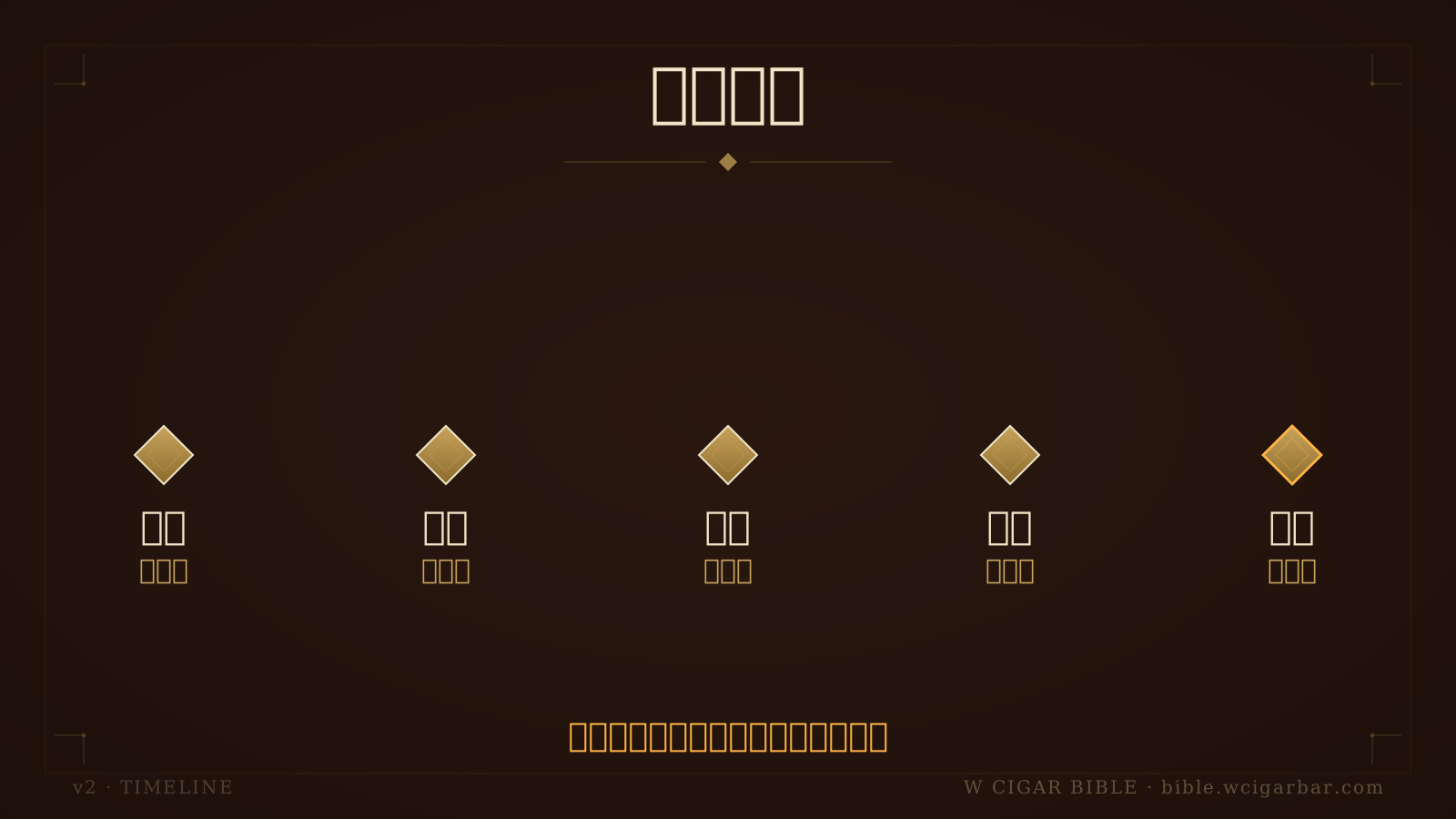
流程圖呈現從土壤種子到調配比例的判讀步驟
Quick Answer
To gain a complete understanding of non-Cuban cigars, start with three production-area axes: Dominican cigars are often shaped by the Cibao Valley, Piloto Cubano, and Olor tobacco, showing refined, woody, nutty, and gentle spice notes; Nicaraguan cigars are best understood through the differences among Estelí, Jalapa, and Condega, where volcanic soil often brings thicker spice, earth, cocoa, and sweetness; Honduran cigars center on the Jamastrán Valley, commonly showing earthiness, leather, wood, and a more direct structure. When beginners learn about cigar regions, they do not need to treat non-Cuban cigars as substitutes for Cuban cigars, but should see them as complete systems of different terroirs, seeds, fermentation, and blending philosophies.
Basic Definition/Background
"Non-Cuban cigars" are not a single style, but a general term for cigars formed by cigar-producing countries outside Cuba. Among them, the Dominican Republic, Nicaragua, and Honduras are the three major sectors most often discussed in modern handmade long-filler cigars. All three inherited Cuban seeds, immigrant techniques, and tropical agricultural conditions in the Americas, but their development paths differ: Dominican cigars emphasize balance, clean layering, and blending detail; Nicaraguan cigars are often recognized through regional strength and soil expression; Honduran cigars have accumulated a thicker, more rugged, and more structured style in areas such as Jamastrán, Talanga, and Copán.
Geographically, the core of Dominican cigars lies in the Cibao Valley, especially around Santiago. Rainfall, drainage, day-night temperature variation, and agricultural foundations are stable there, making it suitable for tobaccos such as Piloto Cubano and Olor Dominicano. Nicaragua is represented most strongly by the three areas of Estelí, Jalapa, and Condega, where volcanic soils and different elevations bring clear distinctions. The Jamastrán Valley in Honduras, near Danlí, is one of the main tobacco-leaf sources used by many brands. For beginners, understanding production areas is not about memorizing brand names, but about connecting "soil, seed, fermentation, rolling specifications, and blending ratios" into a flavor map.
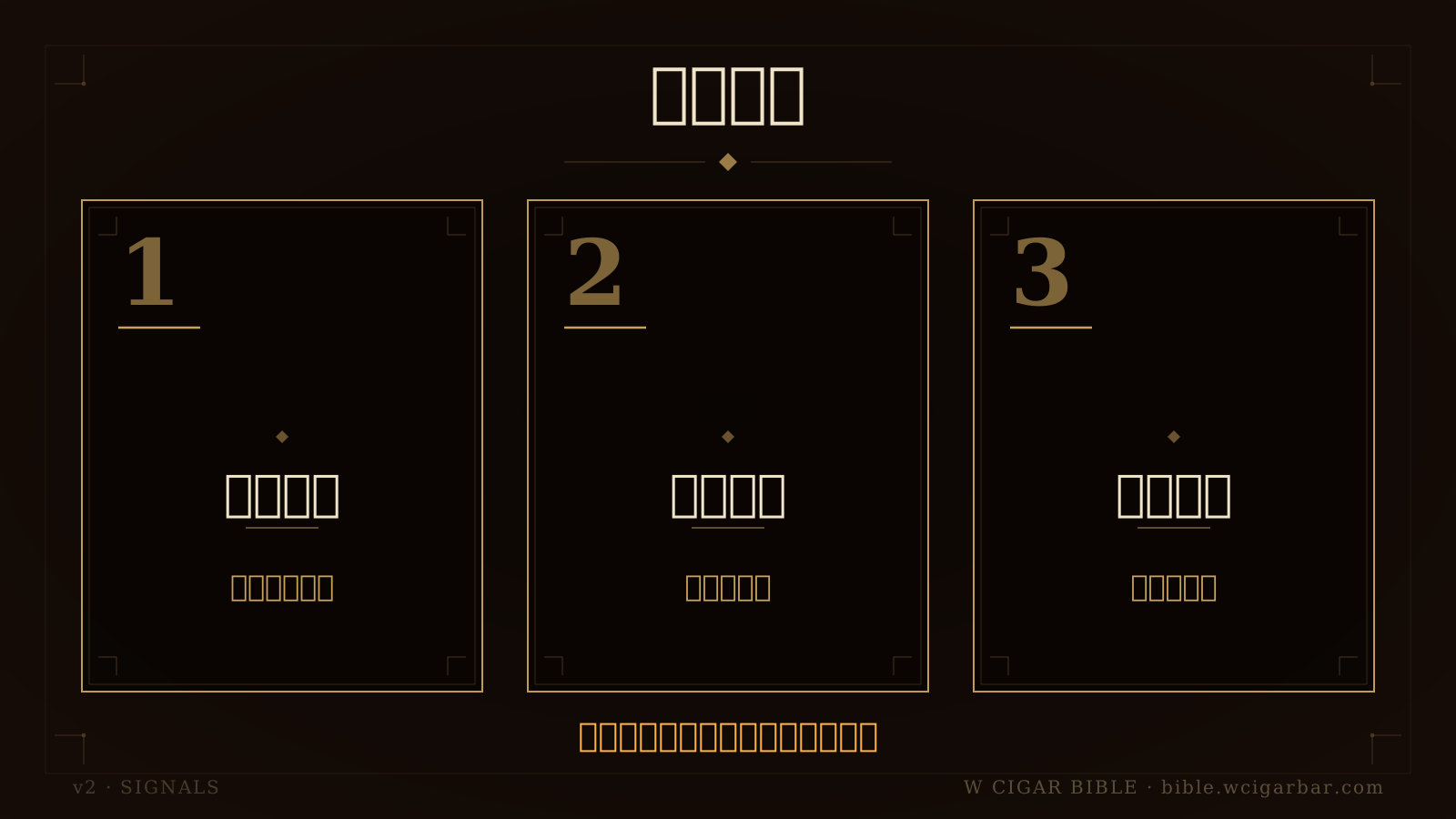
三張卡列出多明尼加尼加拉瓜宏都拉斯的風味軸線
Key Points
| Region | Representative geography and tobacco | Common flavor spectrum | Representative brand positioning |
|---|---|---|---|
| Dominican Republic | Cibao Valley, Piloto Cubano, Olor Dominicano | Cedar, nuts, creaminess, gentle spice, hay | Davidoff leans toward precise blending; Arturo Fuente leans toward family craftsmanship and multilayered character |
| Nicaragua | Estelí, Jalapa, Condega, volcanic soil | Black pepper, cocoa, earth, coffee, sweet aroma, dense woodiness | Padrón emphasizes structure; Oliva emphasizes lines; My Father emphasizes spice and Cuban-style rolling tradition |
| Honduras | Jamastrán Valley, around Danlí | Leather, earth, toasted wood, herbs, minerality | Camacho, Flor de Copán, and others are often used to understand the Honduran framework |
This table can serve as a first-level index for beginners: Dominican cigars are often viewed as representatives of refinement and balance; Nicaraguan cigars more readily show strength, spice, and regional differences; Honduran cigars are often remembered for their solid framework and earthiness. In practice, however, a cigar is not determined only by its country name. For example, a cigar labeled Dominican-made may use an Ecuadorian wrapper, a Nicaraguan binder, and Dominican long filler inside. Therefore, when reading cigar regions, look at the wrapper, binder, and filler, as well as size and maturation condition. Robusto is commonly about 5 x 50, Toro is commonly about 6 x 52, and Churchill is commonly about 7 x 47; with the same blend in different ring gauges, burn speed and smoke concentration may both change.
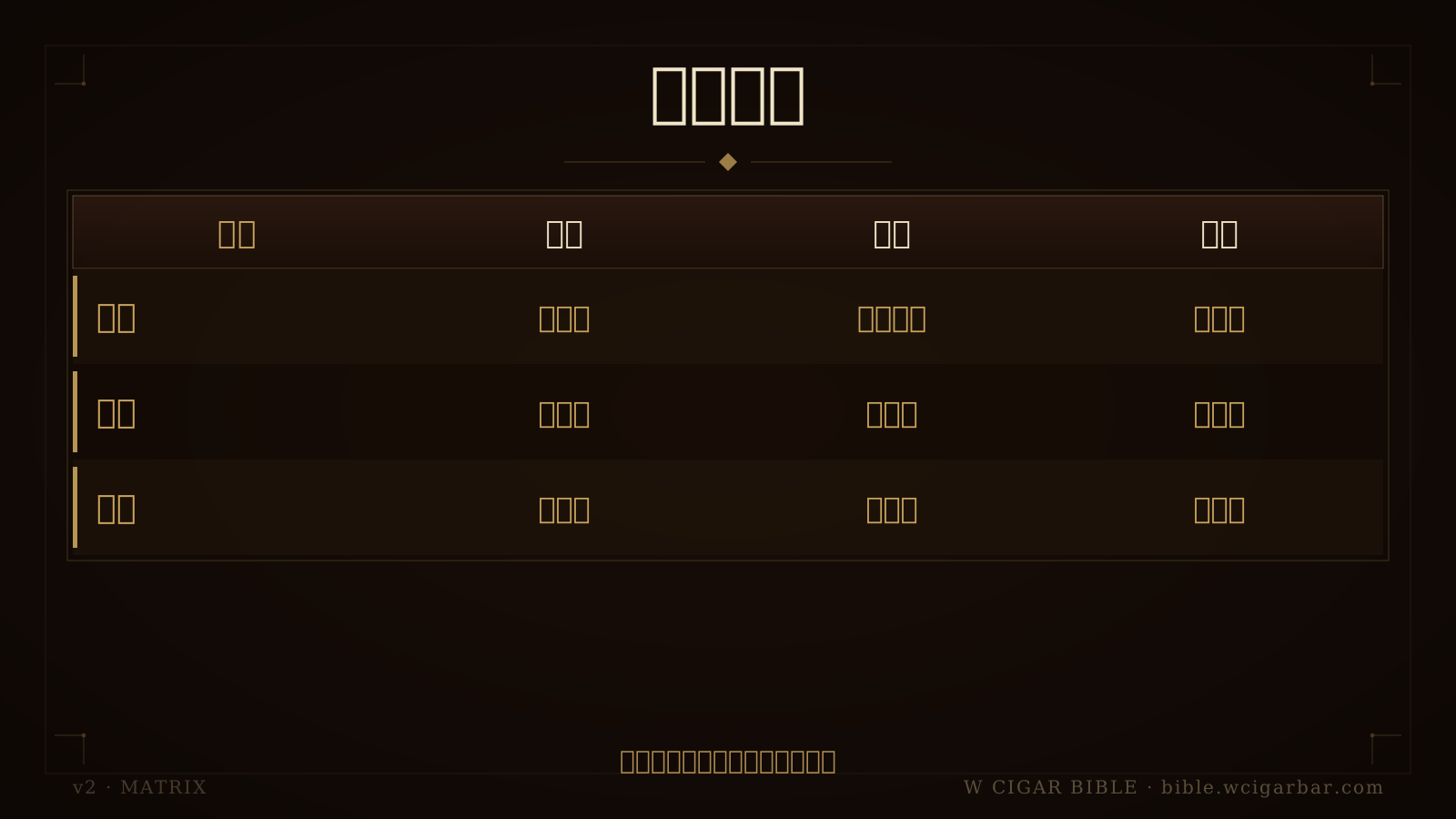
對照表比較三個非古巴產區的地理風味與調性
Dominican Cigars: Cibao Valley, Piloto Cubano, and Precise Blending
The modern status of Dominican cigars is inseparable from the Cibao Valley. Cibao is located in northern Dominican Republic, and Santiago de los Caballeros is an important cigar city. The surrounding farmland has long cultivated tobacco, coffee, and cocoa. The commonly seen local Piloto Cubano is a variety derived from Cuban seed, and after the 1960s it gradually established its own agricultural expression in the Dominican Republic; it is usually spicier and fuller than Olor Dominicano. Olor Dominicano is often considered to burn well and have a gentle aroma, making it suitable for use in binders or for providing balance in blends. These two, together with different fermentation periods, wrapper sources, and size specifications, form the refined and stable core impression of Dominican cigars.
Among brand examples, Davidoff is an important name for understanding Dominican blending philosophy. The history of the Zino Davidoff brand can be traced back to the 20th century. After 1991, the brand's focus shifted to Dominican production, and systems such as Tabadom established requirements for consistency. Common Davidoff formats such as Corona, Robusto, and Toro focus not on single-point intensity, but on the clear separation of burn line, smoke texture, wood, nuts, white pepper, and hay layers. Arturo Fuente was founded by Arturo Fuente in Tampa in 1912, and the family later developed deep foundations in the Dominican Republic. The Fuente Fuente OpusX, released in 1995, is often discussed because of its use of Dominican wrapper; at that time, it made many people see again that the Dominican Republic was not only suitable for producing refined filler, but could also produce expressive wrappers. For beginners, Dominican cigars are a good model for learning "balance" and "blending ratios."
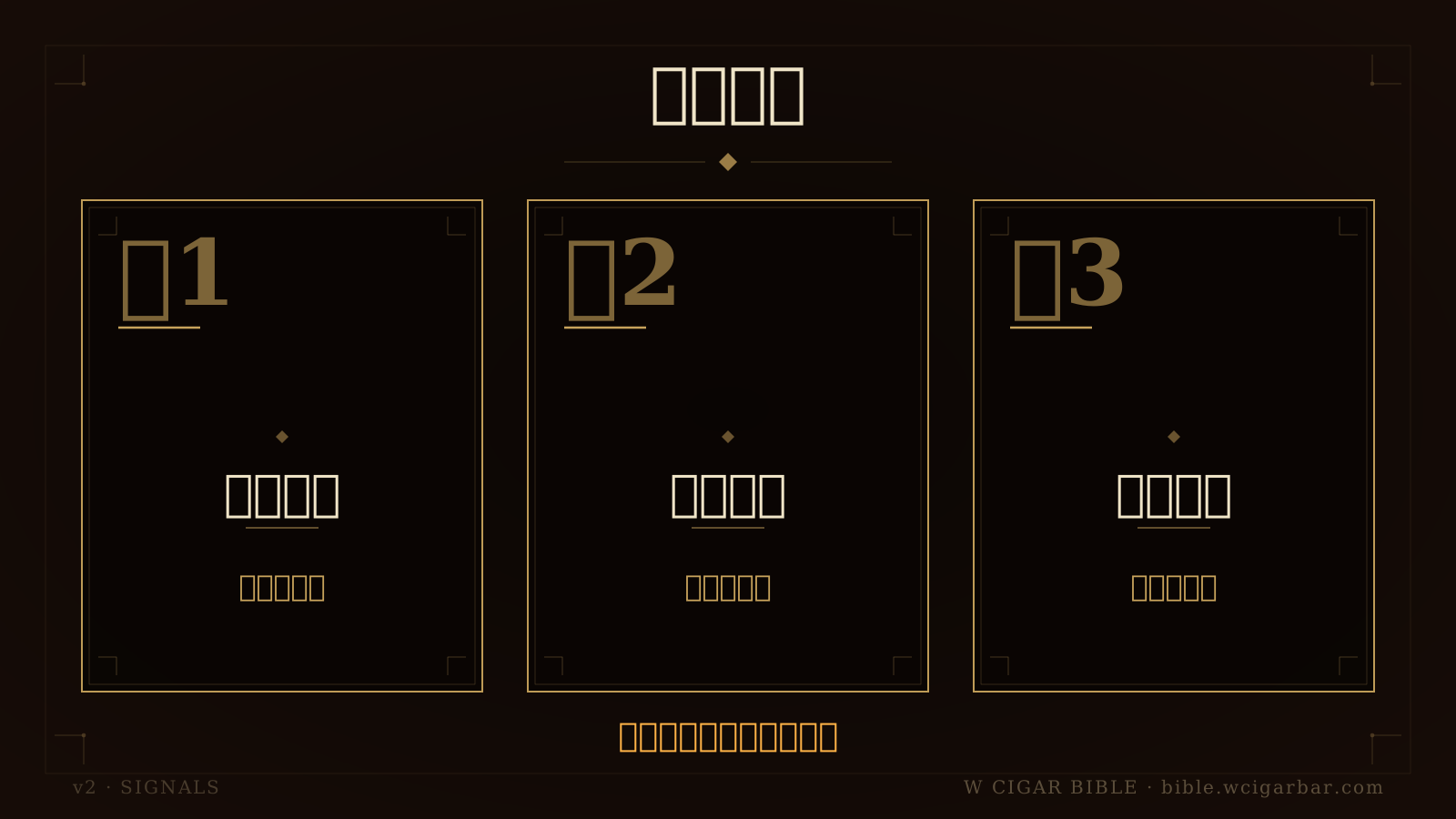
三張卡提醒不要把產區品牌與尼國風格簡化
Nicaraguan Cigars: Estelí, Jalapa, Condega, and the Triangle of Volcanic Soil
The recognition of Nicaraguan cigars is best not reduced simply to "strong," but should be divided into the three production areas of Estelí, Jalapa, and Condega. Estelí is located in the northern inland area and is a major center of Nicaragua's cigar industry, with many factories and fermentation warehouses concentrated there. The local soil is fertile and the sunlight is pronounced. Tobacco leaves often show thickness, black pepper, earth, dark-roast coffee, and cocoa notes, and are often used to add structure. Jalapa is near the Honduran border. Its valley soil is relatively sandy and well-drained, and its tobacco often carries sweet aroma, red-earth character, gentle spice, and a rounder mouthfeel. Condega lies between the two and is often used to provide herbs, nuts, floral notes, and mid-palate balance, so that a blend is not supported only by strength.
Among brand examples, Padrón can serve as a representative of Nicaraguan cigar structure. The Padrón family founded the brand in 1964, and the Padrón 1964 Anniversary Series and 1926 Series are often used to discuss the thickness, cocoa, coffee, and pepper framework of Nicaraguan tobacco. Oliva's history can be traced back to a 19th-century Cuban tobacco-farming background. The modern and common Serie V, such as the Lancero at about 7 x 38 and the Double Robusto at about 5 x 54, allows beginners to compare the influence of ring gauge on burn and concentration. My Father Cigars is associated with the José “Pepin” Garcia family, and built its reputation in the United States and Nicaragua in the 2000s. Its style often presents spice, wood, cocoa, and a Cuban-style rolling feel. Nicaragua is important because it combines volcanic soil, regional layering, and brand blending with great clarity; if the same brand uses Estelí ligero, Jalapa seco, and Condega viso, the flavor may form a clear staircase among strength, sweetness, and aroma.
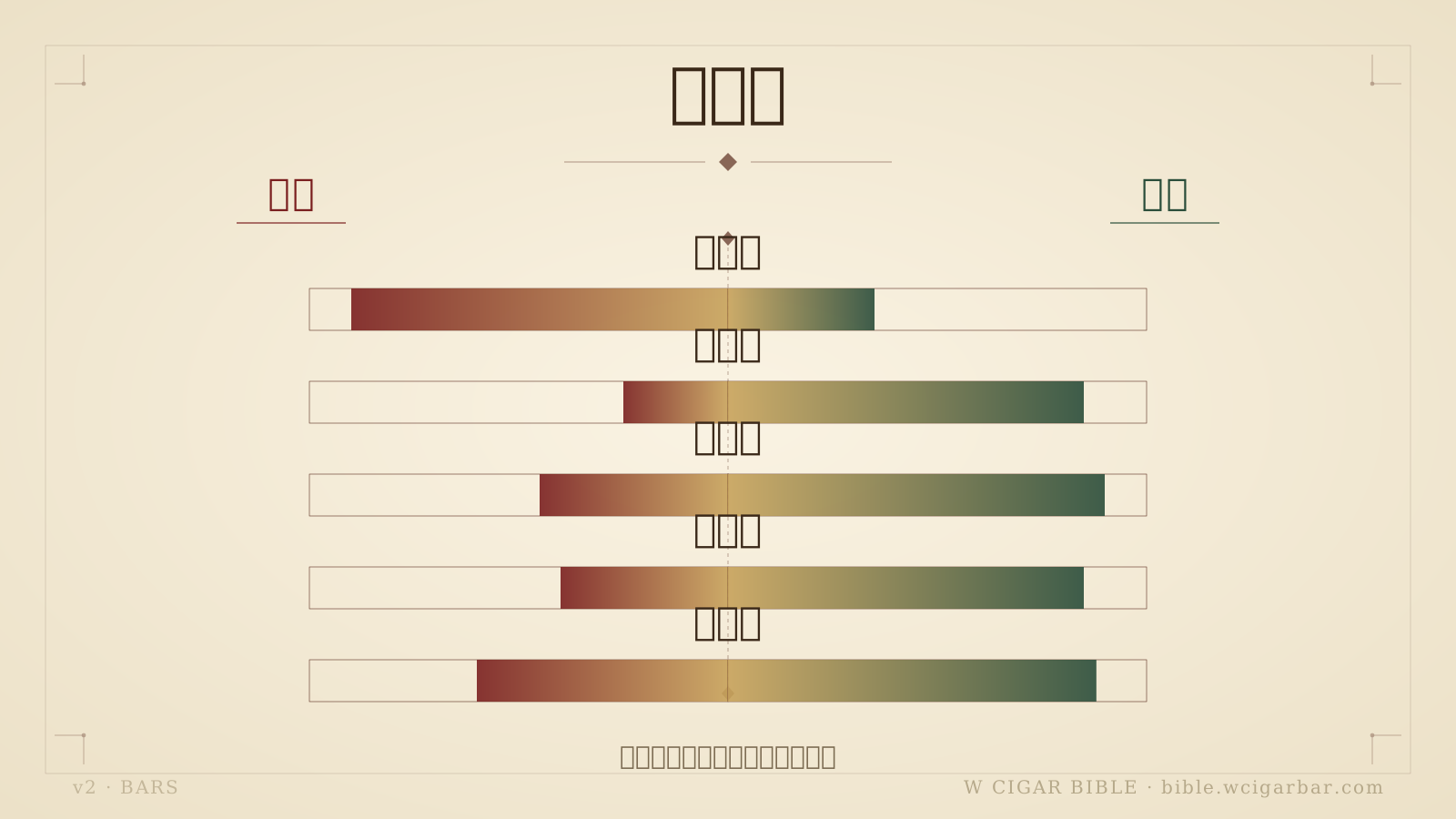
長條圖對比古巴與非古在本島性多國葉風格寬度的取向
Honduran Cigars: Jamastrán Valley and the Central American Sense of Framework
Honduran cigars are often underestimated by beginners because they are not as frequently described as delicate as Dominican cigars, nor are they as clearly labeled by volcanic soil and strength as Nicaraguan cigars. But to fully understand non-Cuban cigars, Honduras's Jamastrán Valley must be placed on the map. Jamastrán is located in El Paraíso Province, near Danlí, and is an important Honduran tobacco region. The soil and climate here often give tobacco a more direct earthiness, leather, dry wood, herbal, and mineral tone. Compared with Dominican cigars, Honduran cigars are usually less centered on gentle creaminess; compared with Nicaraguan cigars, their spice may not necessarily be the sharpest, but the framework is often drier and more woody in outline.
The modern development of Honduran cigars is related to Cuban immigrants, seed transfer, and the establishment of factories. In the second half of the 20th century, many cigar families established farms and rolling bases in Central America, making Honduras an indispensable part of the non-Cuban cigar map. Camacho is often used to understand the Honduran style. The brand's origins can be traced back to the 1960s, and it was later developed by the Eiroa family. Its common blends often show more defined strength, leather, and earthiness. Flor de Copán shows that Honduras can also follow a rounder path with balanced woodiness and spice. If beginners are already familiar with the clear layers of a Dominican Robusto and the thickness of a Nicaraguan Toro, they can then look for information on Honduran regions for comparison: the key to Jamastrán is not the pursuit of maximum heaviness, but understanding how "dry structure, earthy outline, leather, and wood" become the main line of a cigar. Viewed this way, Honduran cigars are not supporting characters, but important coordinates responsible for structure and earthiness within the non-Cuban cigar spectrum.
Practical Notes
When beginners compare non-Cuban cigars, Cuban cigars, and different cigar regions, it is recommended to keep records using "the same size, similar maturation condition, and similar strength." If one Dominican cigar is a Robusto about 5 x 50 and another Nicaraguan cigar is a Churchill about 7 x 47, the burn time, smoke temperature, and tobacco-leaf ratios are already different, so differences cannot be judged only by country name. Five items can be recorded when comparing: wrapper color, first-third aroma, mid-palate transition, final-third spice, and burn stability. When cutting a cigar, only open the cap and avoid damaging the shoulder line; if using a straight cutter, keep the depth conservative to avoid an overly loose draw that causes the cigar to burn too quickly.
In terms of storage, non-Cuban cigars, like Cuban cigars, are sensitive to drastic changes. A common reference environment is 18 to 21 degrees Celsius and 65% to 70% relative humidity, but there is room for adjustment according to different wrappers and personal appreciation and draw habits. If the humidity is too high for dark Nicaraguan wrappers, the burn may become slow and the smoke heavy; if refined Dominican blends are too dry, the aroma may become thin; if the condition of fuller Honduran blends is unstable, leather and earthiness may become rough and hard. Maturation does not mean leaving cigars alone, but maintaining a stable environment and reducing day-night fluctuations so that ammonia, sharp spice, and humidity gradually integrate. When understanding regions, the best approach is to accumulate notes: for example, with the same Toro about 6 x 52, record Estelí's black pepper, Jalapa's sweetness, Cibao's woody nuttiness, and Jamastrán's leather and earth. This is more reliable than simply memorizing brands.
三張問答卡精簡說明古巴差別多明起點與尼國三區
Common Mistakes
-
Treating all non-Cuban cigars as the same style Non-Cuban cigars cover many sources, including the Dominican Republic, Nicaragua, Honduras, Ecuador, Brazil, and Mexico, and cannot be summarized only as "not Cuban."
-
Looking only at the brand, not the wrapper, binder, and filler A cigar made in the Dominican Republic may use an Ecuadorian wrapper and Nicaraguan filler; a country label does not mean all tobacco leaves come from the same place.
-
Equating Nicaragua directly with high strength Estelí, Jalapa, and Condega differ greatly. Jalapa often brings sweetness and roundness, and Condega is also often used for balanced blending.
-
Ignoring the influence of size on flavor Robusto, Toro, and Lancero in the same series have different tobacco-leaf ratios and burn speeds; a Lancero about 7 x 38 may highlight the wrapper and blending details more.
-
Judging an entire region by one-time condition Humidity, resting after transport, maturation time, and cut size all affect performance. One unstable experience does not mean that the entire cigar region is like that.
-
Using Cuban standards to judge all non-Cuban cigars Cuban cigars have their own soil, seeds, and craft context; non-Cuban cigars are not stand-ins, but another terroir system.
Frequently Asked Questions (FAQ)
What is the biggest difference between non-Cuban cigars and Cuban cigars?
The biggest difference lies in the terroir system and blending philosophy. Cuban cigars usually form a continuous tradition based on specific regions, seeds, and craftsmanship on the island of Cuba; non-Cuban cigars often use multi-country tobacco blends, such as Dominican filler, Nicaraguan binder, and Ecuadorian wrapper. Dominican cigars often emphasize balance and refinement, Nicaraguan cigars often show volcanic soil and spicy thickness, and Honduran cigars often carry leather, wood, and an earthy framework.
Which flavors are suitable for starting to understand Dominican cigars?
You can begin with the keywords Cibao Valley, Piloto Cubano, and Olor Dominicano. If your notes often include cedar, nuts, hay, gentle white pepper, and creaminess, you can gradually establish the profile of Dominican cigars. Davidoff can be used to observe precise blending and clean layering, while Arturo Fuente can be used to observe family blends and the expressive range of Dominican tobacco.
How should the three major Nicaraguan regions Estelí, Jalapa, and Condega be distinguished?
Estelí is often associated with thickness, black pepper, earth, coffee, and cocoa; Jalapa often carries sweetness, red earth, gentle spice, and a rounder mouthfeel; Condega is usually between the two, providing herbs, nuts, floral notes, and balance. Actual blends combine leaves from the three areas in proportion, so the same Nicaraguan cigar may have strength, sweetness, and aroma at the same time.
Are Honduran cigars only suitable for people who like heavy flavors?
Not necessarily. Honduran cigars commonly show leather, earth, toasted wood, and dry herbs, but brands and blends vary greatly. Tobacco from the Jamastrán Valley can provide structure and can also play a supporting role in rounder blends. Beginners can first regard Honduras as a region for understanding "structure," rather than simply understanding it as strength.
Is region more important than brand?
Both are important, but they play different roles. Regions provide the character of the tobacco leaves; for example, Cibao, Estelí, Jalapa, Condega, and Jamastrán each have their own soil and climate characteristics. Brands determine leaf selection, fermentation, maturation, rolling, and blending logic. When learning, you can first use regions to build a flavor map, then use brands to understand how that map is concretely presented.
Why do different sizes from the same region perform differently?
Size changes the ratio of wrapper, binder, and filler, and also changes burn speed and smoke temperature. Robusto about 5 x 50 is usually more concentrated, Toro about 6 x 52 may stretch out the middle section more, and Lancero about 7 x 38 often highlights the wrapper and blending precision. When comparing regions, if the size differences are too large, it is easy to mistake size effects for regional differences.
Do non-Cuban cigars need special maturation?
They need a stable environment, but time should not be mythologized. 18 to 21 degrees Celsius and 65% to 70% relative humidity are common reference ranges; the key is to avoid repeated dryness and dampness. Dark Nicaraguan wrappers, refined Dominican blends, and fuller Honduran frameworks can all change in burn and aroma performance because of storage condition. Maturation is the management of stability, not a guarantee that flavor will necessarily become better.
Smoking is harmful to health. Persons under 20 years of age must not smoke. Smoking cessation hotline: 0800-636363. This article is provided solely for adults aged 20 and above as a reference on cigar culture, storage, and regulatory knowledge. It is not tobacco advertising, promotion, or purchasing advice. -Cigar Prince Wilson Tsai
Like this article?Share with friends
Share this W Cigar Bible piece with friends who want to learn cigar culture, storage, and tasting.
想把這篇 化為實踐
雪茄聖經是知識;雪茄文化要在空間裡發生
W Cigar Bar 大安總店資訊
台北大安區 · 雪茄聖經總編輯 Wilson Tsai 主理的雪茄文化空間
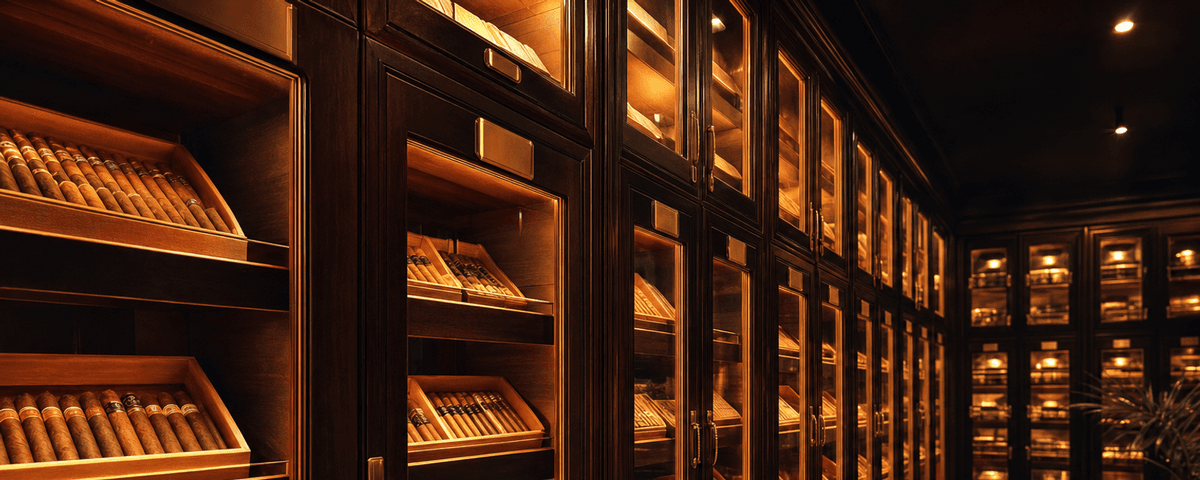
33 座 24 小時恆溫恆濕醇化室
W Cigar Bar 提供的會員醇化空間 · 場地資訊請洽編輯部
雪茄剪 / 打火機 / 雪茄盒 / Boveda
W Cigar 配件官網 · 專營雪茄配件正品
加 LINE 好友 · 文化諮詢
文化空間資訊 · 紳士沙龍 · 私人包場
本網站內容僅供雪茄文化、歷史、收藏與品吸知識研究參考。菸品有害健康、未滿法定年齡者請勿吸菸。實際規範請依所在地法律為準。
吸菸有害健康・戒菸專線 0800-636363・本站僅供 20 歲以上成年人閱覽。
讀到這裡,你不只是路過的人
留下 Email,加入 W 雪茄聖經內圈——總編輯 Wilson Tsai 親選的學院深文與國際新訊,先你一步送到信箱。
· 教育用途非銷售 · 隨時一鍵退訂 · Email 絕不對外公開 · 由勝茄股份有限公司營運
同分類延伸閱讀


資料來源:W Cigar Bible 編輯部整理 · 雪茄王子 Wilson Tsai 親自審稿
本文僅供雪茄文化、歷史、收藏與品鑑知識研究,不作為菸品促銷、銷售或購買建議。吸菸有害健康,未滿二十歲不得吸菸。