雪茄品味中的風味記憶:如何提升個人品鑒體驗

雪茄品味的提升不僅在於熟悉各種風味詞彙,更在於將味道與個人生活經歷連結。建立個人風味檔案,從12個基礎詞開始,記錄每支雪茄的味道、強度和情緒狀態,能幫助你更清晰地理解雪茄的變化。透過時間切片分析前中後段的風味,並搭配合適的飲品,能進一步提升品味體驗。盲測也是一個有效的方法,讓你去除品牌偏見,專注於當下的風味感受。
- 風味記憶是個人化的,透過生活經驗連結味道,能提升品鑒的深度與意義。
- 建立個人風味檔案時,從12個基礎詞開始,能幫助辨識雪茄的主要風味輪廓。
- 時間切片分析雪茄的前中後段變化,能更準確地理解雪茄的個性與品味。
Flavor Memory in Cigar Tasting: How to Enhance Personal Tasting Experience
Many people think that improving cigar tasting is about memorizing words like leather, cedar, cocoa, and nuts. As an editor of the "Cigar Bible," I believe that true progress comes from connecting flavors to your life experiences: an afternoon during a certain year's trip, the wooden cabinet in your father's study, the bittersweetness of your first black coffee.
Flavor memory is not mysticism; it can be trained, recorded, and refined. Once you understand basic tasting, the next step is to establish your own "flavor database," making each cigar not just a burning of time but a readable, comparable, and deepening experience.
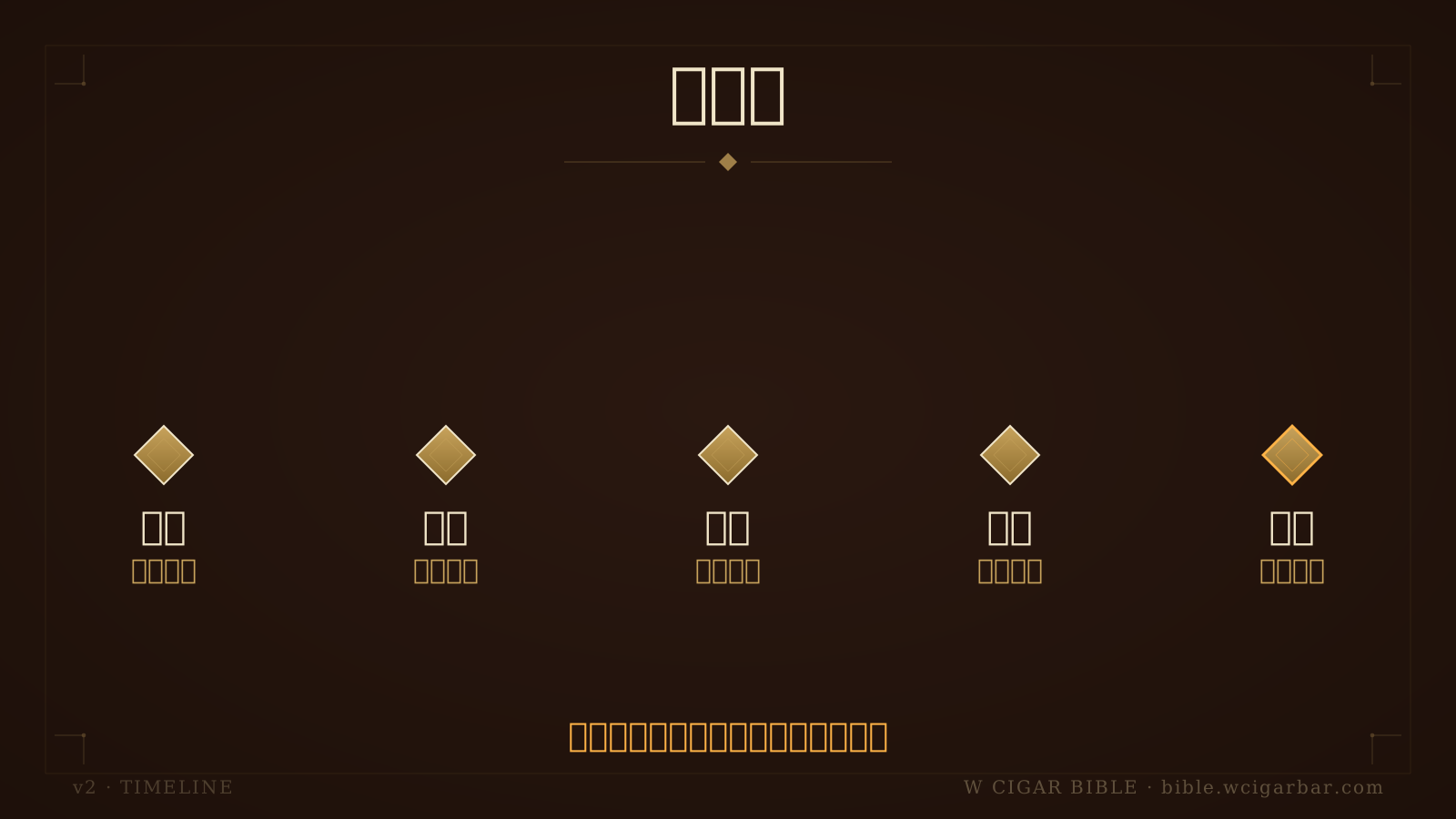
時間軸呈現從聞香到回看比較的訓練流程
The Essence of Flavor Memory: Not Memorizing Answers, but Building Connections
Many beginners, upon hearing descriptions like "creamy, roasted almonds, wet earth, cedar wood," are eager to ask, "Should I taste the same flavors?" Actually, you don't have to. Take Montecristo No.2 as an example; the same 52 ring gauge, 156mm torpedo size, might remind someone of coffee and cocoa, while another might think of old bookshelves and toasted bread. Differences don't mean someone is wrong; it's just that everyone's memory paths are different.
Flavor memory is not a standard answer but a way to connect flavors with experiences. For instance, in 2017, after a dinner in Hong Kong, I lit a Partagás Serie D No.4 paired with dark roasted espresso; years later, encountering similar pepper and caramel notes, what came to mind wasn't the brand but the grease, wood, and voices in the post-dinner air.
When training flavor memory, don't just ask "what is this flavor," also ask "what scene in my life does it resemble." Roasted peanuts might come from a night market paper bag, honey from breakfast toast, leather from a grandfather's old suitcase. The more personalized the memory, the more likely it becomes a stable taste coordinate.
Establishing a Personal Flavor Profile: Start with 12 Basic Words
A common mistake for beginners is to pursue fancy adjectives from the start. My suggestion is to first establish 12 basic words: wood, nuts, coffee, cocoa, spice, cream, earth, leather, herbal, sweetness, saltiness, bitterness. These words cover most of the main profiles of Cuban and non-Cuban cigars and facilitate future comparisons.
For instance, with Hoyo de Monterrey Epicure No.2, many people first catch cream, cedar, and light honey; while Padrón 1964 Anniversary often features cocoa, coffee, black pepper, and roasted nuts. You don't need to write 20 descriptions at once; instead, choose 2 to 3 most obvious words in the first third, middle, and last third.
Having simple and stable vocabulary first allows you to recognize subtle changes. I suggest recording intensity from 0 to 5, such as wood 4, sweetness 2, pepper 3. After continuously recording 20 cigars, you'll find yourself not "writing more," but becoming clearer about which flavors frequently appear and which are just momentary associations.
- Step 1: Only record main flavors, don't rush to be precise about origin or spice names
- Step 2: Add intensity scores to avoid writing "very fragrant, very smooth" every time
- Step 3: Compare differences in the same brand, size, or year of purchase
- Step 4: Write down food, drinks, and scenes to establish a traceable context
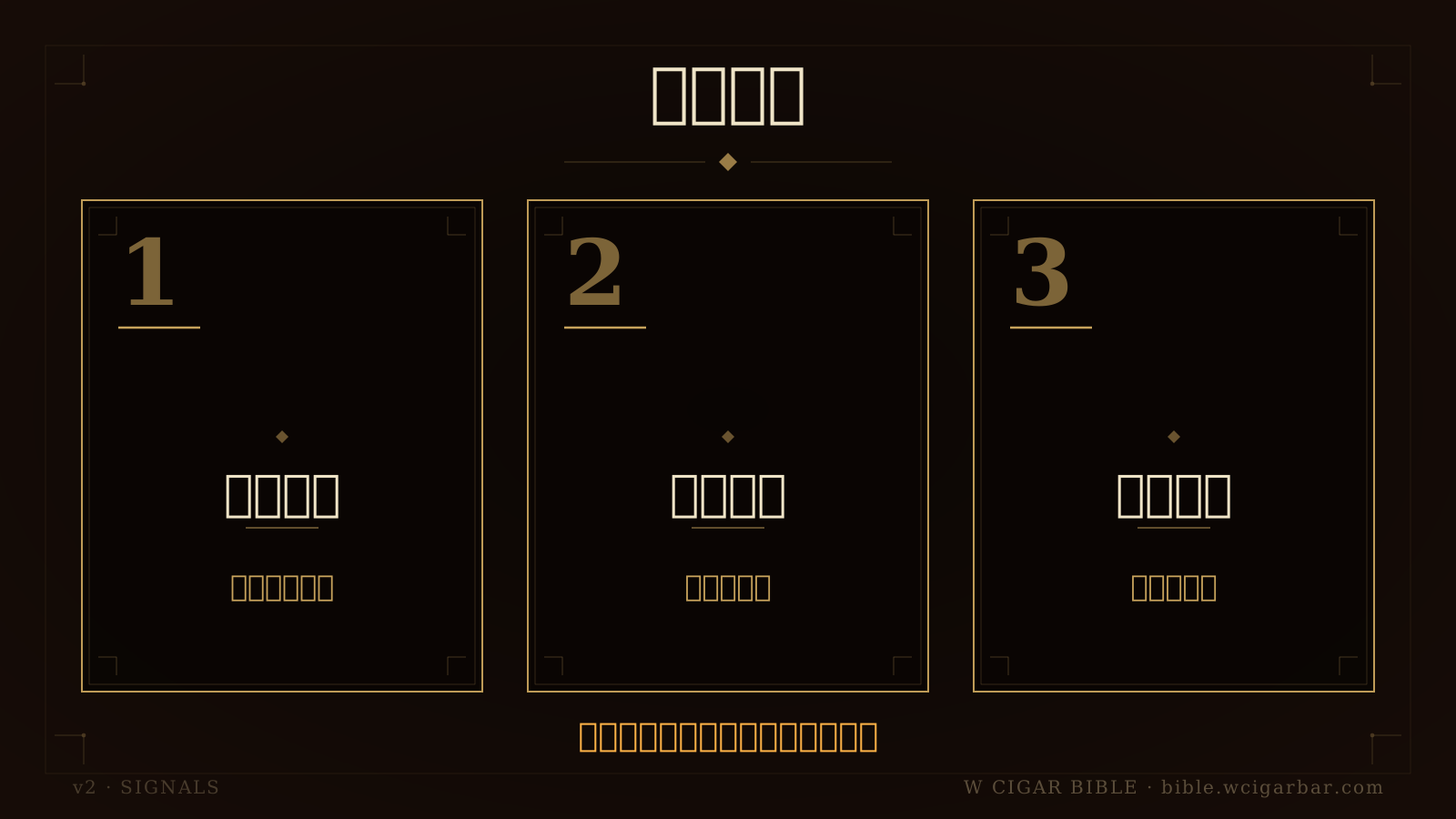
三張卡片整理風味記憶的核心練習方向
Understanding Cigars with Time Slices: Memory Layers of the First, Middle, and Last Thirds
A cigar is not a single flavor but a change over about 45 to 120 minutes. Take Romeo y Julieta Wide Churchills as an example; the first third might be gentle wood and floral, the middle third gradually shows cream, biscuit, and light spice, while the last third might turn to thicker wood and bittersweetness. Judging only 5 minutes after lighting is like reading only the first page of a book.
I habitually divide a cigar into three time slices: the first third for the opening, the middle third for structure, and the last third for closure. In 2022, I continuously recorded 6 Trinidad Vigía cigars and found the sweet herbal in the first third very charming, but the true state judgment often depends on whether the middle third is balanced and whether the last third is overheated or rough.
Time slices help you distinguish "the personality of this cigar" from "changes caused by your current operation". For example, sudden bitterness in the last third might not be a brand issue but due to too fast a pace, high humidity, or uneven burn. Separating the flavor, burn, and mouthfeel of each segment avoids mistaking temporary flaws for the overall impression.
| Time Slice | Suggested Observation Focus | Common Description Examples |
|---|---|---|
| First 1/3 | Opening 5 to 20 minutes after lighting, aroma direction | Cedar, grass, cream, light pepper |
| Middle 1/3 | Whether the structure is stable, balance of sweet and bitter | Cocoa, coffee, nuts, caramel |
| Last 1/3 | Concentration increase, temperature control, tail quality | Leather, earth, black pepper, bittersweet |
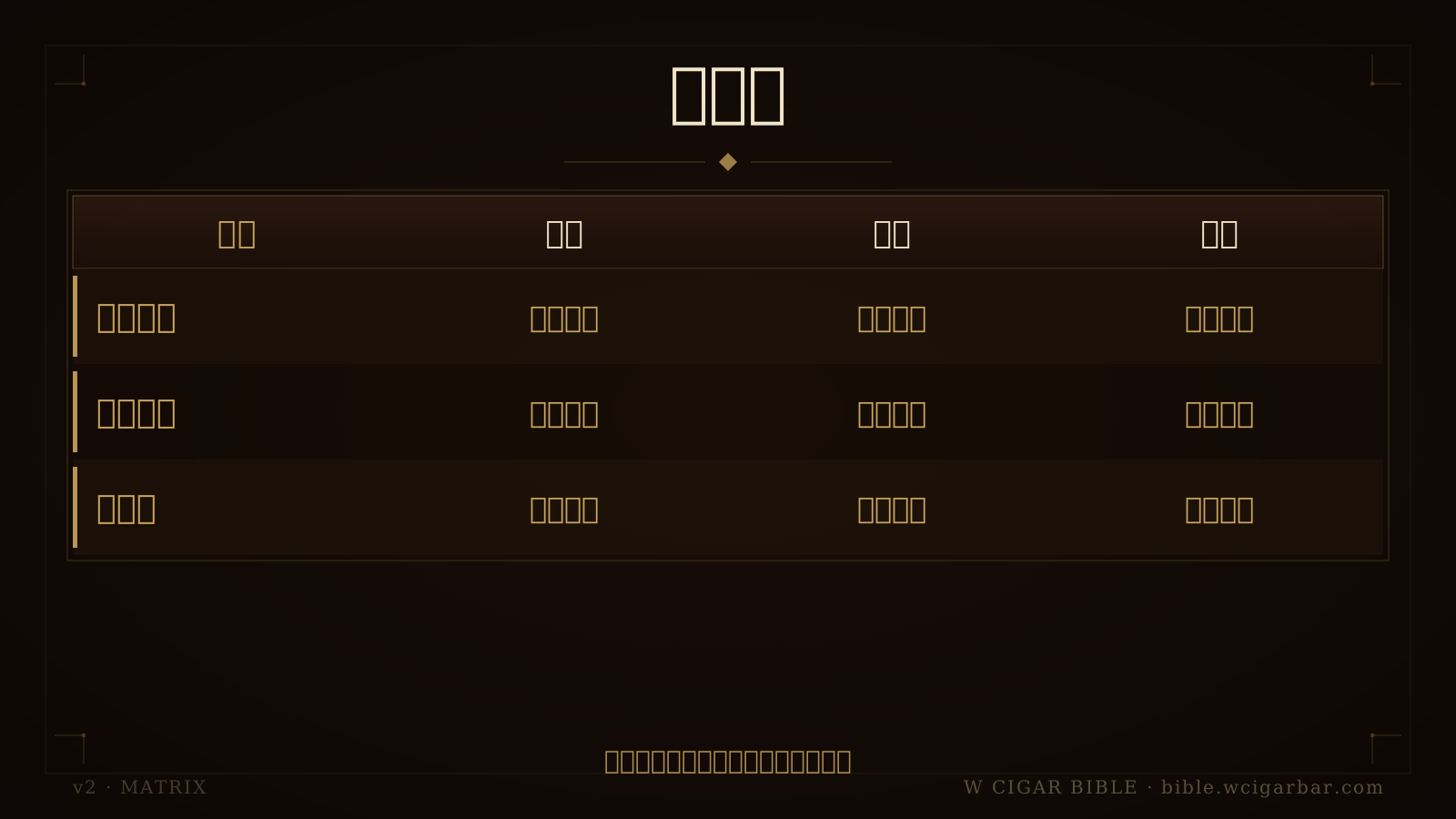
表格比較雪茄前中後段的觀察重點與常見風味
Emotions and Scenes Change Taste: But It's Not an Illusion
The same cigar can present different facets under different moods. This is not overthinking; the senses are inherently influenced by emotions and environment. In 2019, I lit a Cohiba Siglo VI on a night of high work pressure, and despite its decent state, I only felt the wood was dry and the sweetness unclear; two weeks later, on a more relaxed weekend, the honey, grass, and cream were much clearer.
For flavor memory to be valuable, "people" must also be written into the record. Were you fasting that day? Did you just drink heavily roasted coffee? Were you in a windy outdoor place? Did you only sleep 5 hours? These all affect your judgment of bitterness, spiciness, sweetness, and tail length.
Good taste training is not about eliminating emotions but understanding how emotions affect judgment. At the top of my notes, I write three states: mood, time, pairing. If particularly tired that day, I avoid making heavy conclusions about a high-priced or rare cigar, as it might just be my sensory resolution decreasing, not the cigar itself losing color.
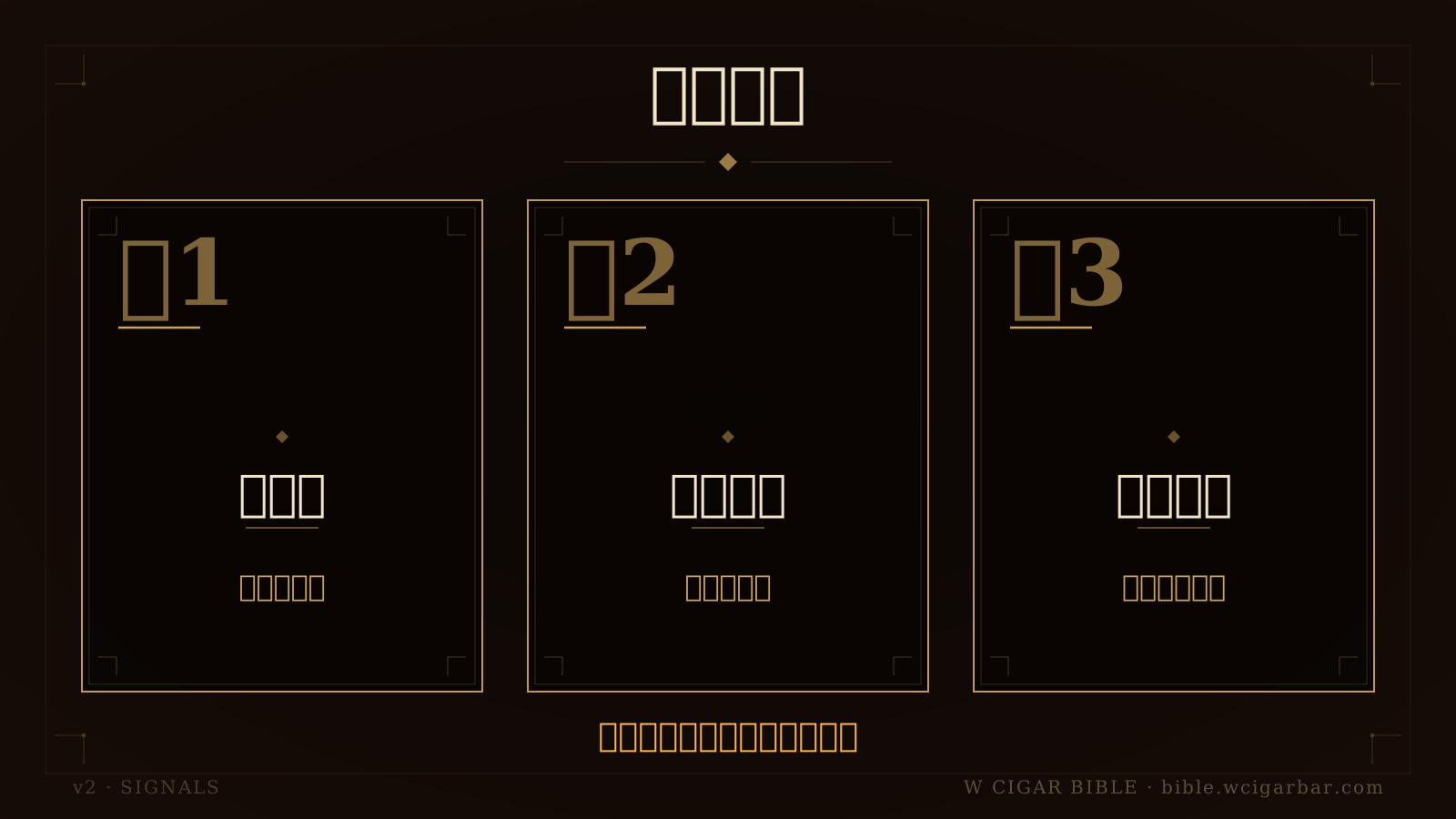
三張卡片列出風味記憶練習常見誤解
The Purpose of Pairing Drinks: Not to Overwhelm, but to Illuminate
When pairing drinks with cigars, the most important thing is not "luxury" but balance. Beginners often think whiskey is a must, but water, black coffee, oolong tea, and unsweetened sparkling water all have training value. Water can clear the palate, black coffee can amplify cocoa and roasted notes, and oolong tea often refines wood and floral aromas.
Take Arturo Fuente OpusX as an example; this type of higher concentration, spice-scented Dominican cigar, if paired with high-alcohol spirits, beginners might only remember the stimulation, overlooking the sweet aroma and wood layers. Conversely, if paired with room temperature water or light roasted tea, the floral, cream, and pepper in the first 30 minutes are easier to dissect.
The core of drink pairing is to make the cigar clearer, not to let the drink become the main character. I suggest beginners do a 3-time comparison: the same cigar, first with water, second with black coffee, third with tea. Recording differences in the first, middle, and last thirds usually enhances judgment more than trying expensive wines once.
- To train pure flavor: room temperature water or sparkling water
- To amplify roasting and cocoa: unsweetened black coffee
- To observe wood and floral: light oolong or black tea
- To reduce stimulation: avoid high sugar and high alcohol simultaneously
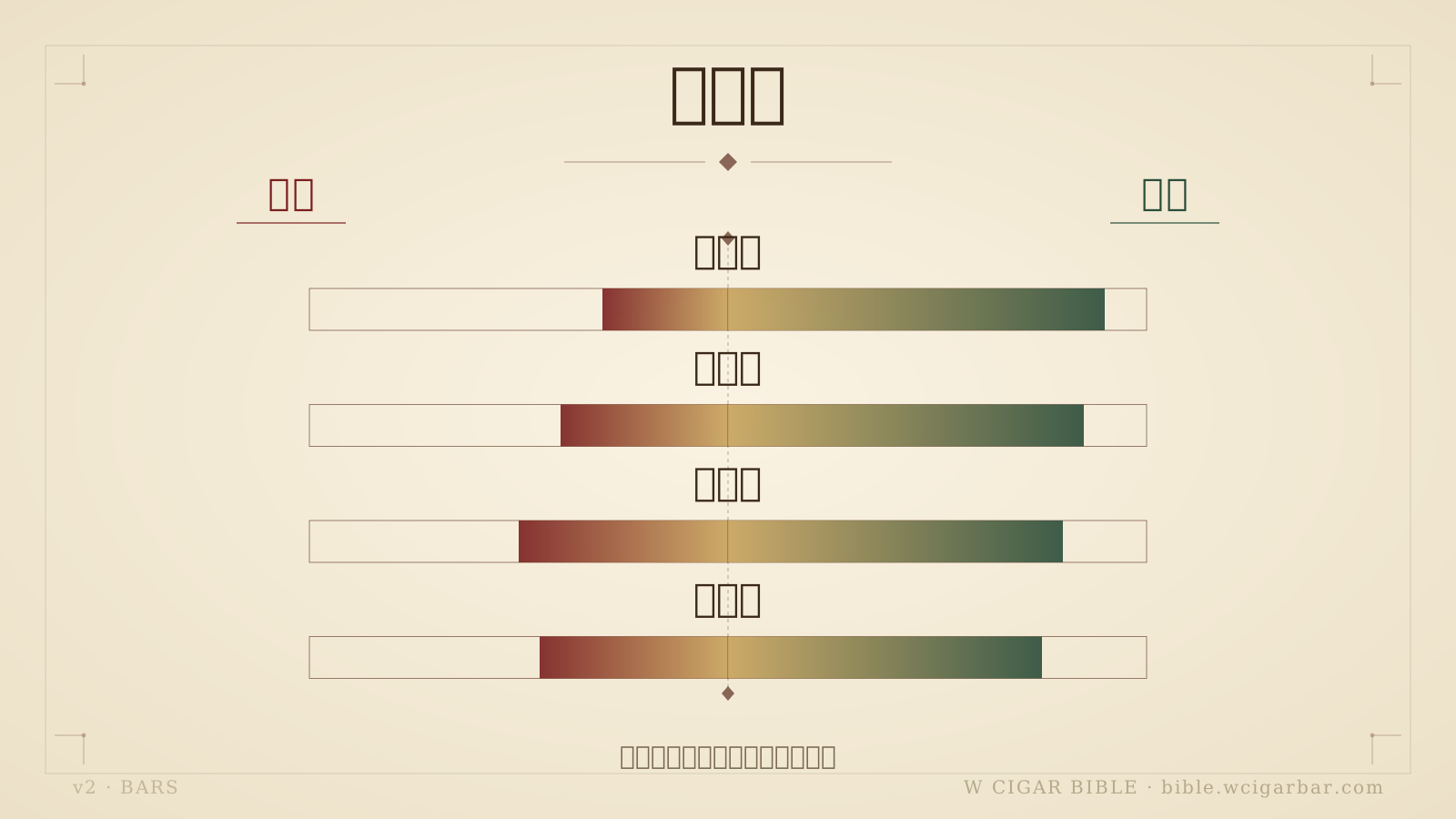
長條圖比較背風味詞與建立記憶連結的差異
Using Blind Tasting to Correct Bias: Brand Halo Doesn't Equal Current Performance
Brand stories are fascinating but can also interfere with judgment. Knowing you have a Cohiba, Montecristo, or Davidoff in hand might already give it extra points in your mind. That's why I occasionally do simple blind tastings: ask a friend to remove the band, leaving only length, ring gauge, date, and storage conditions, allowing myself to write flavors first, then see the answer.
In 2021, I conducted a comparison of 8 cigars, including Cuban and Nicaraguan cigars, ranging from mid to high price. The results were interesting: a Nicaraguan cigar I originally thought would be strong was actually written as "high sweetness, fine wood, restrained pepper" during blind tasting; while a famous Cuban cigar, due to poor storage, showed obvious dullness in the middle.
Blind tasting is not to deny the brand but to let your tongue speak before the label. Beginners can start with 3 cigars, not too complicated: one Cuban, one Dominican, one Nicaraguan, with sizes as close as possible, such as Robusto about 50 ring gauge, 124mm. You'll find that what truly leaves a memory is often the balance, not just the name.
Storage and Aging: Flavor Memory Also Needs Stable Conditions
If storage conditions are unstable, flavor memory is hard to be accurate. Generally, I recommend relative humidity between 65% and 69%, and temperature as stable as possible between 18°C and 21°C. Too high humidity might cause cigars to burn unevenly, feel dull, and suppress sweetness; too low humidity might make them sharp, spicy, and lack oily feel.
Take the 2016 boxed Bolivar Belicosos Finos as an example; if stored stably, it can develop more rounded earth, leather, and cocoa tones over the years; but if long-term high humidity, it might look nice but burn slowly and have muddled flavors when lit. Aging is not magic; it requires reliable sources, stable humidity and temperature, and enough time.
Without stable storage, there is no stable comparison; without stable comparison, flavor memory is easily distorted. If you start building a personal database, at least note the year of purchase, box code or batch information, storage humidity, and box opening date. As for collection value, the market indeed discusses year and rarity, but it doesn't guarantee appreciation; it still depends on source storage and market.
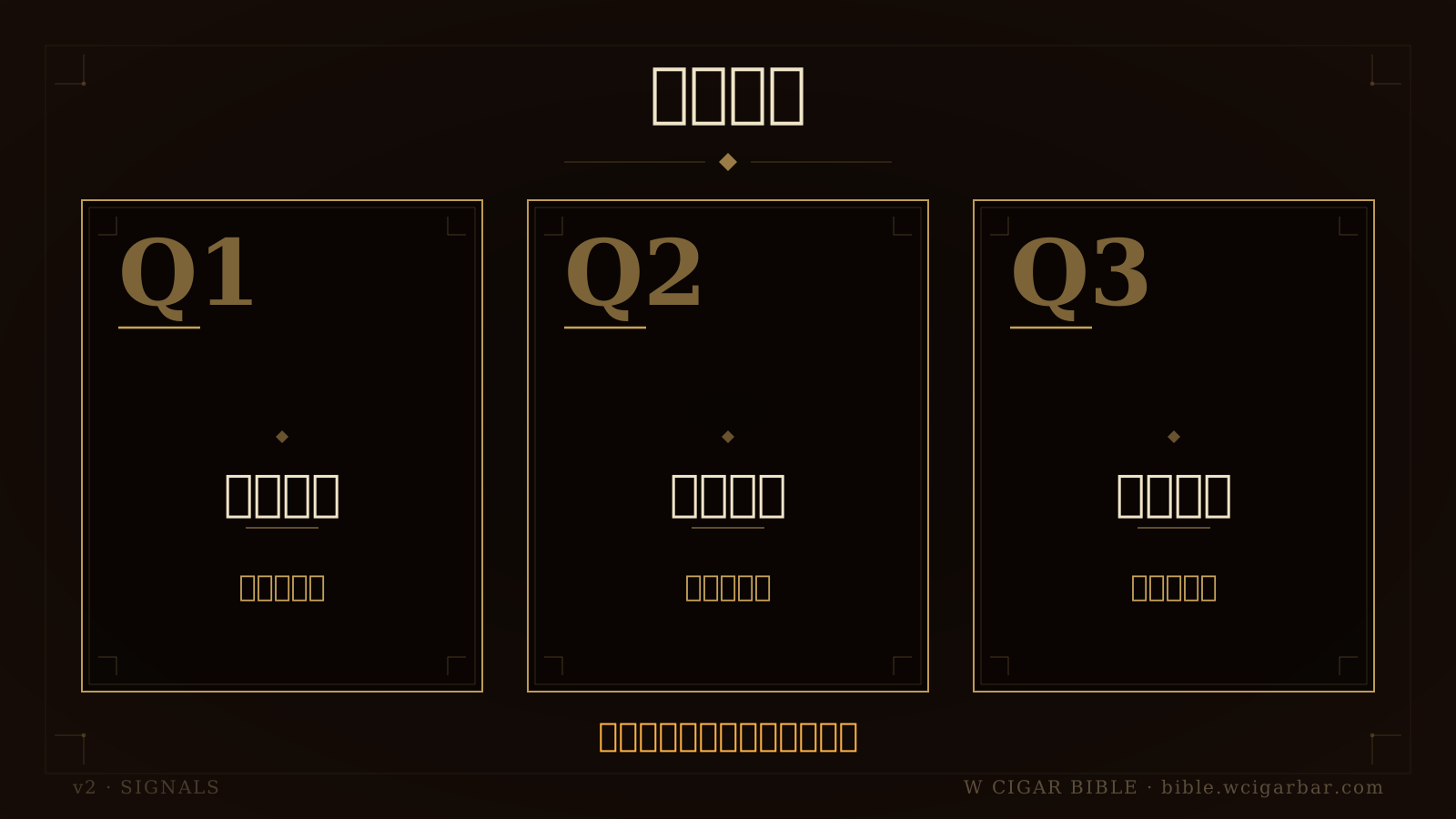
三張問答卡片回答風味筆記與口感變化問題
Etiquette Makes Flavor Clearer: Rhythm, Ash Column, and Quietness
Taste doesn't just happen on the tongue; it also happens in posture. Smoking too fast raises the temperature, and the sweetness in the first third will be replaced by spiciness; constantly shaking off ash makes the burning core unstable, and flavors are easily broken. Generally, I recommend once every 45 to 60 seconds, keeping the cigar warm but not overheated, with the ash column about 2 to 3 cm before gently placing it down.
In public spaces or when seated with friends, etiquette directly affects the experience. Don't compare the length or height of others' cigars, don't make judgments about others' choices, and don't blow strong smoke towards others. A truly mature cigar culture is about exchanging feelings while respecting personal memories.
Good rhythm protects flavor, and good etiquette protects the atmosphere. I've seen many beginners puff frequently out of nervousness, resulting in only spiciness in the last third; I've also seen someone quietly control the rhythm, a 90-minute Churchill moving from cedar and cream to leather and cocoa, with layers as clear as a slow movement symphony. Technique and manners ultimately return to the flavor itself.
Frequently Asked Questions
I always only taste smoke, does that mean I have a poor sense of taste?
No. Most people will be overwhelmed by "smoke" in their first 10 to 20 cigars, which is normal. Lower your expectations and only record 3 things: intensity, sweetness, bitterness. Being able to consistently distinguish strength and sweet-bitter is the starting point of flavor memory. Once the mouth gets used to it, wood, nuts, and coffee will gradually emerge.
Why does the same cigar feel different each time?
The reasons may include storage humidity, lighting method, diet of the day, mood, batch differences, and aging time. For example, the same Robusto at 65% and 72% humidity might burn and taste significantly different. Don't rush to determine right or wrong; first, record the conditions.
Do I need to buy many expensive cigars to train my taste?
No. The focus of training is comparability, not price. Choose 3 to 5 stable and common cigars, continuously record the first, middle, and last thirds, which is more effective than sporadic exposure to high-priced ones. Padrón, Fuente, Montecristo, Hoyo, and other different styles can all serve as practice materials.
How detailed should flavor notes be to be useful?
About 80 to 150 words per cigar is enough, with the focus on a fixed format. It is recommended to include date, brand size, storage humidity, pairing drink, flavors of the first, middle, and last thirds, and overall score. Notes are not a literary competition but a way for your future self to understand today's judgment.
The cigar's tail is very bitter, does it mean poor quality?
Not necessarily. Bitterness in the last third might come from too fast a pace, too high a temperature, high humidity, or it might be the cigar's own strong structure. First, slow down to about once every 60 seconds and observe if the burn line is even. If the bitterness is still rough and sharp, then it's more reasonable to note it as a flavor flaw.
Can I use perfume, coffee beans, or spice jars to train my sense of smell?
Yes, but in moderation. Smelling coffee beans, cinnamon, cocoa powder, and cedar wood chips helps establish olfactory references; but don't smell strong perfumes or essential oils in large quantities before lighting a cigar, as too strong scents will interfere with judgment. Everyday food is actually the best flavor textbook.
What fascinates me about cigars is not how elegantly they can be described, but how they can bring people back to a real moment. The deeper the flavor memory, the less you need to chase others' answers; you'll know which wood makes you feel at ease, which sweetness reminds you of an old afternoon. May every lighting not just be a passing of time, but a deeper understanding of yourself.
—Cigar Prince Wilson Tsai
Smoking is harmful to health. Underage smoking is prohibited. Quitline: 0800-636363. This article is for reference by adults over the age of 20 for cigar culture, storage, and regulation knowledge, not a tobacco advertisement, promotion, or purchase suggestion.
Like this article?Share with friends
Share this W Cigar Bible piece with friends who want to learn cigar culture, storage, and tasting.
想把這篇 化為實踐
雪茄聖經是知識;雪茄文化要在空間裡發生

W Cigar Bar 大安總店資訊
台北大安區 · 雪茄聖經總編輯 Wilson Tsai 主理的雪茄文化空間
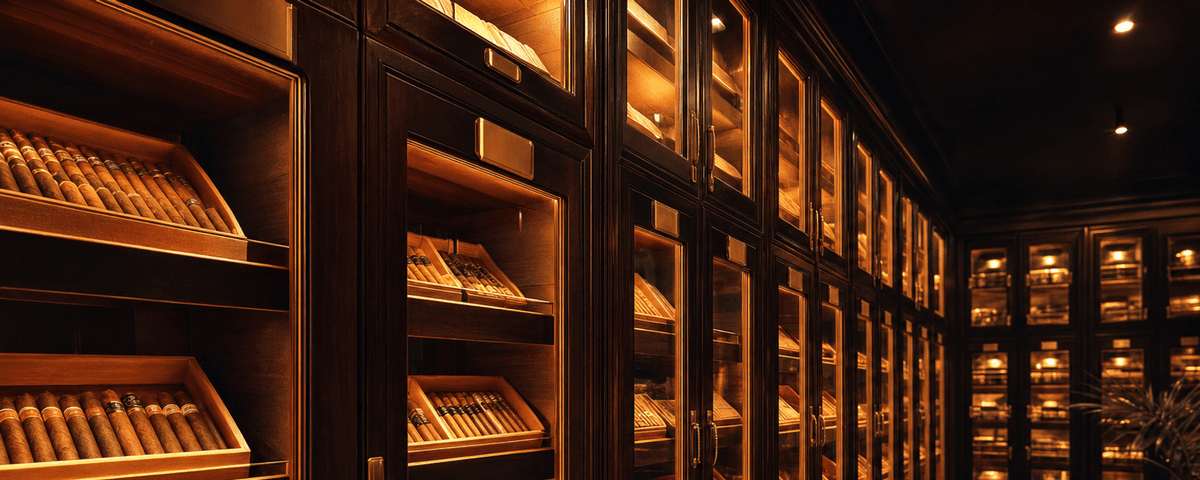
33 座 24 小時恆溫恆濕醇化室
W Cigar Bar 提供的會員醇化空間 · 場地資訊請洽編輯部
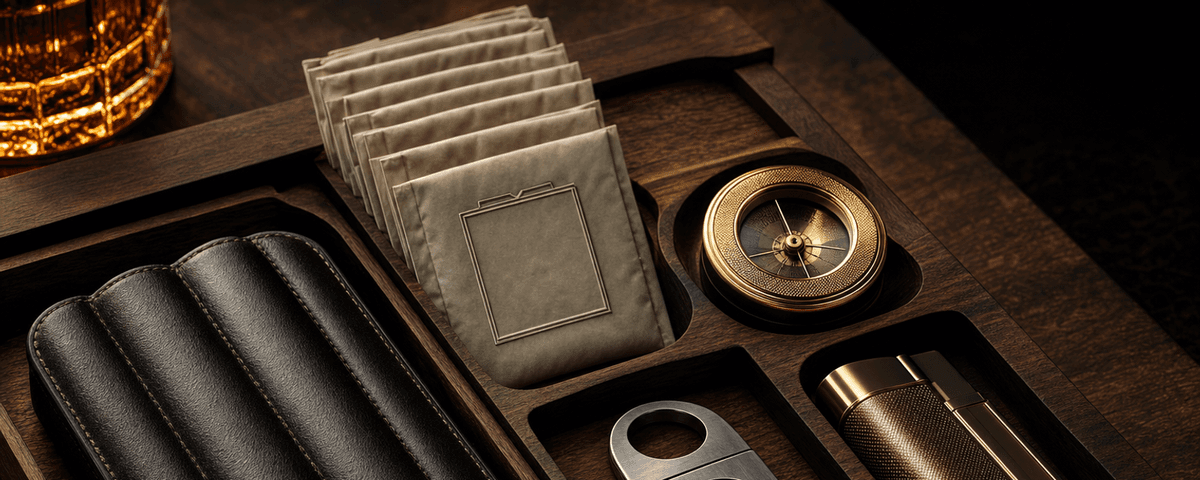
雪茄剪 / 打火機 / 雪茄盒 / Boveda
W Cigar 配件官網 · 專營雪茄配件正品
加 LINE 好友 · 文化諮詢
文化空間資訊 · 紳士沙龍 · 私人包場
本網站內容僅供雪茄文化、歷史、收藏與品吸知識研究參考。菸品有害健康、未滿法定年齡者請勿吸菸。實際規範請依所在地法律為準。
吸菸有害健康・戒菸專線 0800-636363・本站僅供 20 歲以上成年人閱覽。
讀到這裡,你不只是路過的人
留下 Email,加入 W 雪茄聖經內圈——總編輯 Wilson Tsai 親選的學院深文與國際新訊,先你一步送到信箱。
· 教育用途非銷售 · 隨時一鍵退訂 · Email 絕不對外公開 · 由勝茄股份有限公司營運
同分類延伸閱讀

資料來源:W Cigar Bible 編輯部整理 · 雪茄王子 Wilson Tsai 親自審稿
本文僅供雪茄文化、歷史、收藏與品鑑知識研究,不作為菸品促銷、銷售或購買建議。吸菸有害健康,未滿二十歲不得吸菸。