雪茄的工藝之旅:從種植到包裝的延續
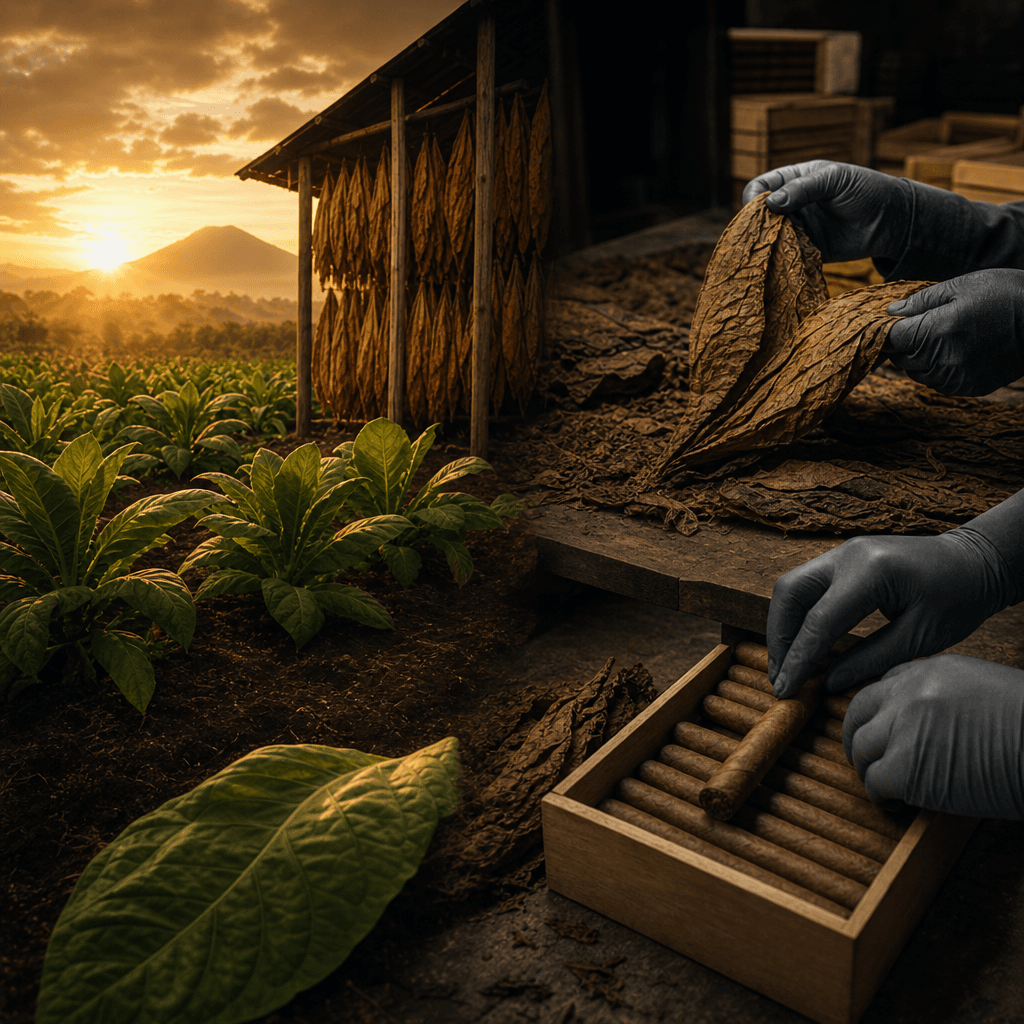
雪茄文化是一門結合農業、工藝與風味的藝術。從種植到包裝,每一個環節都影響著最終的風味表現。雪茄的風味始於選擇適合的土壤與氣候,古巴的 Vuelta Abajo、多明尼加的 Cibao Valley 等產區各具特色,影響煙葉的香氣與口感。種植管理與收穫過程中,精細的農業技術決定了葉片的品質。隨後的晾乾與發酵階段,則是讓煙葉轉化為雪茄原料的關鍵,影響香氣的圓潤度。最後,分級與配方設計確保品牌風格的穩定
- 雪茄的風味從種植開始,土壤與氣候影響煙葉的特性與口感。
- 發酵過程中,葉片內部的水分與糖分轉化,影響香氣與口感的圓潤度。
- 分級與配方設計決定雪茄的品牌風格,需考量葉片的厚薄、油脂與香氣。
Smoking is harmful to health. Persons under twenty years of age may not smoke. Smoking cessation hotline: 0800-636363. This article is provided solely as a reference on cigar culture, storage, and regulatory knowledge for adults aged twenty and above. It is not tobacco advertising, promotion, or purchasing advice.
A cigar is neither a single agricultural product nor merely a handicraft. It is a continuous craft formed by soil, seed, climate, time, and human judgment. Veterans often talk about brands, years, sizes, and styles, but what truly determines the depth of a cigar is often hidden further upstream: which field, which batch of leaves, when it was harvested, how high the fermentation pile temperature reached, how draw resistance was controlled during rolling, and whether it was sufficiently rested before boxing. Taking Cuba's Vuelta Abajo, the Dominican Republic's Cibao Valley, Nicaragua's Estelí, and Honduras's Jamastrán as examples, even with the same wrapper, binder, and filler, differences in soil minerals, sunlight, humidity, and factory systems ultimately produce completely different lines. This article breaks down every stage from cultivation to packaging, in order to understand how flavor is gradually "made."
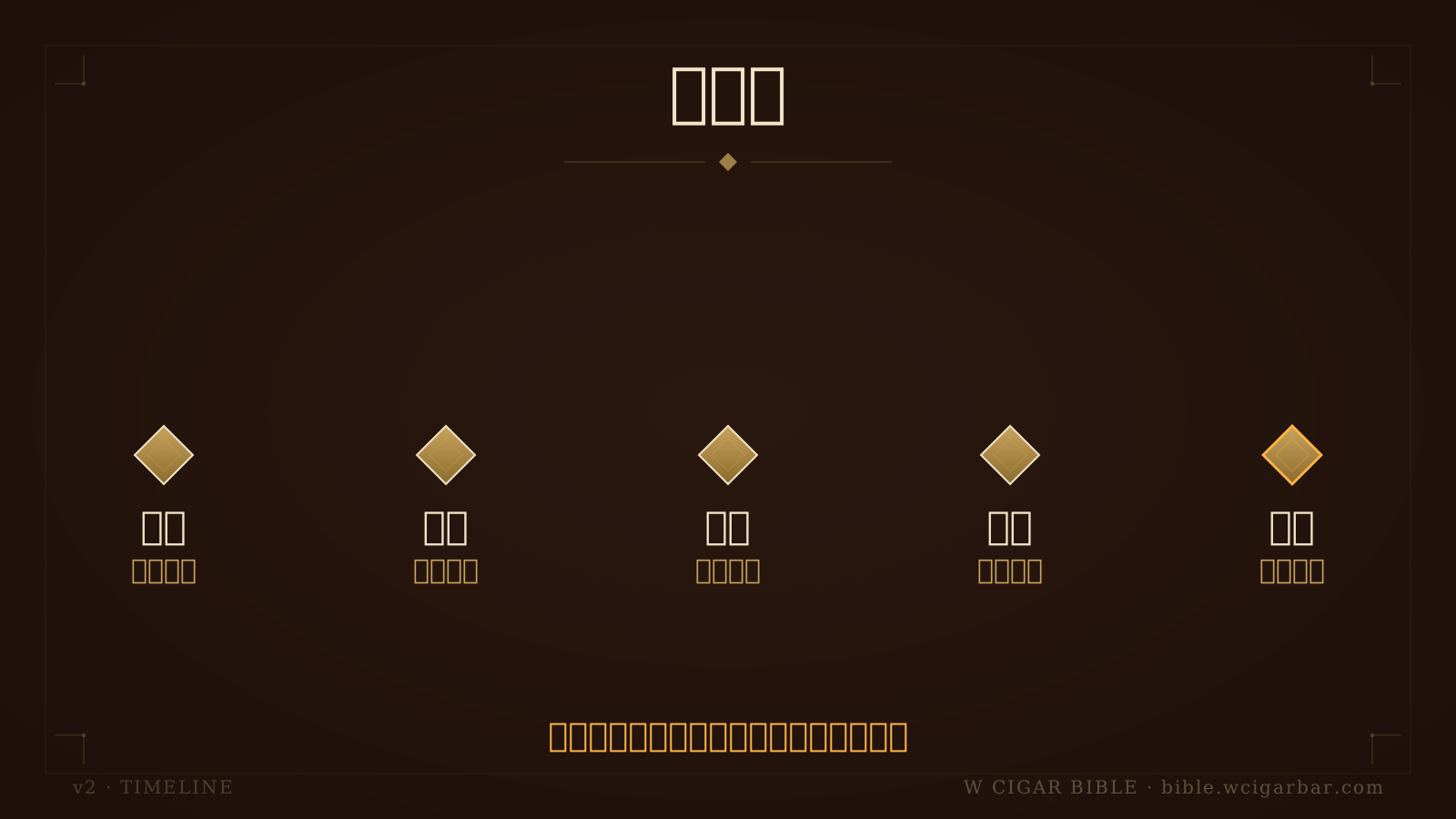
時間軸展示種植、採收、晾乾、發酵到包裝的工藝流程
I. Seed and Terroir: The Flavor of a Cigar Begins in the Field
If veterans look only at the brand and not at the producing region, they can easily underestimate the influence of "terroir" on a cigar's framework. Cuba's most discussed core growing area is Vuelta Abajo in Pinar del Río. Its red soil, drainage, and morning fog conditions give tobacco leaves a distinct minerality, refined spice, and dried-grass sweetness. The Dominican Republic's Cibao Valley, with softer soil, often brings creamy, woody, and nutty tones. Nicaragua's Estelí, because of its volcanic soil and stronger sunlight, often produces tobacco with black pepper, cocoa, leather, and a sense of strength. Condega and Jalapa lean respectively toward aroma and sweetness. Taking the Padrón 1964 Anniversary series as an example, it was launched in 1994 to commemorate the brand's 30th anniversary, and the concentration and stability of Nicaraguan tobacco became the foundation of its identity. Arturo Fuente's Fuente Fuente OpusX drew major market attention in 1995, and one key factor was the successful cultivation of high-quality wrapper leaf at the Dominican Chateau de la Fuente estate. Seeds are equally important. Since the mid-20th century, Cuba has continuously improved the Corojo and Criollo systems, aiming to strike a balance among aroma, disease resistance, and yield. Growers do not simply pursue larger leaves; rather, they must ensure that leaves from different positions perform different roles: upper leaves provide strength and oil, middle leaves support aroma, and lower leaves provide combustion and smoothness. Flavor is never adjusted only at the end; its first line is already written when the field is chosen.
II. Cultivation Management: Sunlight, Shade, and Leaf Position Determine the Fate of Wrapper and Filler
The cultivation of cigar tobacco is not simply planting tobacco and waiting for harvest; it is highly precise agricultural management. In traditional Cuban practice, leaves used for wrapper are often grown under tapado shade cultivation. Cloth canopies are erected in the field to soften sunlight, and because the leaves compete for light, they grow thinner, larger, and more delicate, with smoother veins, making them suitable as wrappers where both appearance and combustion are held to strict standards. By contrast, sol en palo sun-grown cultivation for filler and binder is directly exposed to sunlight, producing leaves with greater thickness, oil content, and nicotine content, providing strength and structure. Leaf-position classification is a language veterans must understand: volado is mostly found on the lower part of the plant, burns well, and has low strength; seco is in the middle, with clear aroma; viso is thicker, with sweetness and oils; ligero is in the upper part, matures the slowest, and has the highest strength. If a cigar has a stable burn line but lacks power in the middle, the proportion of volado may be high and ligero insufficient. If it enters strongly but often goes out, the proportion of high-oil leaves may be too high or fermentation insufficient. Looking at the traditional positioning of Cohiba, one of its core characteristics lies in the careful selection of certain high-grade leaves and the use of a more complex processing flow, so it often presents an overlapping style of bean aroma, grassy sweetness, and creamy texture. Non-Cuban regions have similar divisions of labor. For example, after 1989 Davidoff shifted its main production focus to the Dominican Republic, building stable smoothness, cleanliness, and layered character through contract farms and strict leaf-grade classification. Every topping, water control decision, shading choice, and leaf-position judgment during cultivation eventually becomes weight on the tongue, aroma in the nasal cavity, and rhythm during combustion.
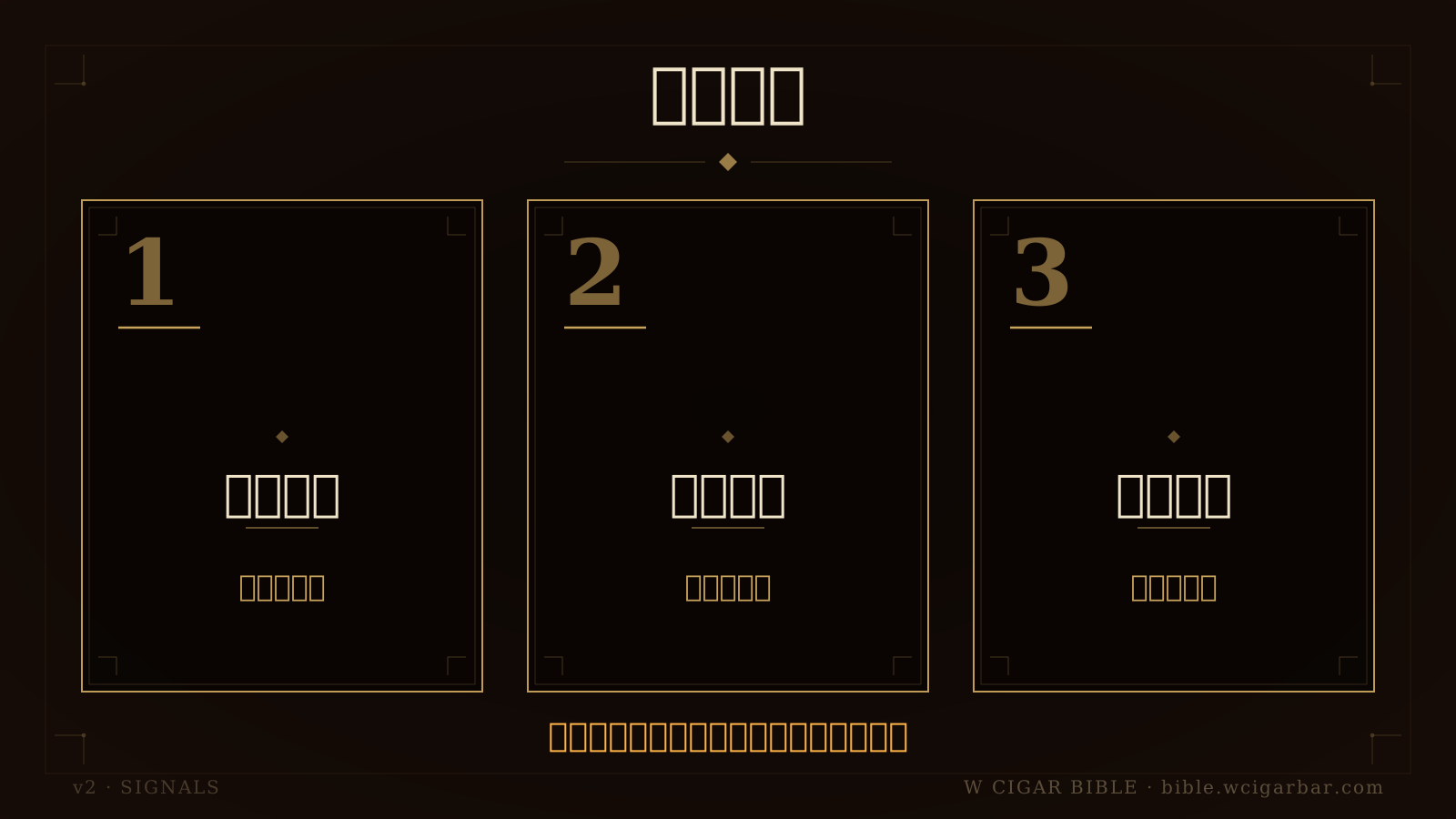
圖中列出風土、葉位與工序三個雪茄工藝核心重點
III. Harvesting and Curing: From Green Leaf to Brown Leaf, the First Gate of Flavor Transformation
Harvesting is not completed by cutting down the entire plant at once. High-quality cigar tobacco leaves are usually picked in batches because the lower and upper leaves of the same tobacco plant mature at different times. Generally, picking begins with the lower leaves, with one level harvested every few days. The whole plant may go through 5 to 7 harvests, and the process can extend over two to three weeks. The harvested green leaves are sent to a curing barn, where they are naturally air-cured by being strung or hung on wooden poles or racks. This stage often requires about 40 to 60 days, adjusted according to the humidity of the producing region and the thickness of the leaves. The purpose is not to "dry by heat," but to allow chlorophyll to gradually break down, turning the color from fresh green to yellow, brown, and dark brown, while reducing raw vegetal notes. If temperature and humidity are poorly controlled, the leaves may crack, mold, or retain a pungent grassy smell. Traditional curing barns in Cuba's Vuelta Abajo emphasize ventilation and manual opening and closing of window panels. Masters adjust airflow according to morning humidity, afternoon temperature, and night dew. Some large factories in Nicaragua more often combine modern monitoring equipment to record temperature curves and relative humidity. This process has a major impact on final flavor: if curing is too fast, tobacco fibers become brittle, and later combustion may become sharp; if curing is too slow, the risk of mold and off-flavors increases. Veterans sometimes perceive a "green note" or ammonia in a cigar, and the cause may not necessarily lie in rolling; it may also come from incomplete curing and later fermentation. The direct, woody, earthy, and spicy expression of Partagás Serie D No.4 needs mature leaves and a sound drying procedure behind it. If the earlier processing is inaccurate, even the same blend will struggle to show its classic outline. The curing stage may seem quiet, but in reality it is the first deep transformation of tobacco from plant into cigar material.
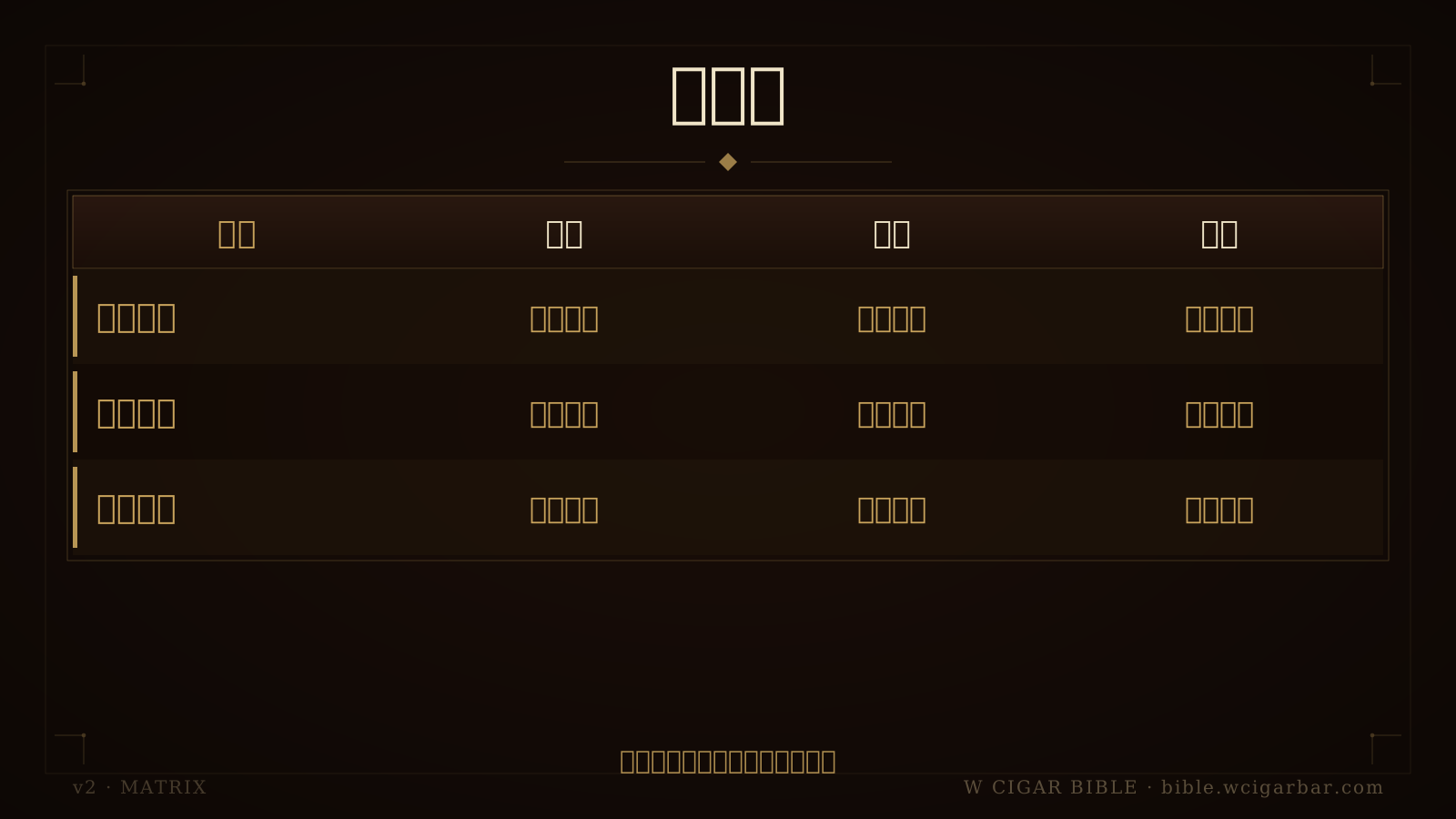
矩陣比較古巴、多明尼加與尼加拉瓜的土壤氣候與風格差異
IV. Fermentation: Pile Temperature, Turning, and Ammonia Are the Keys to Making Concentration Rounder
Fermentation is the most romanticized and also the most easily misunderstood stage in cigar craftsmanship. It is not simply leaving tobacco leaves to grow old, but using the action of internal moisture, sugars, proteins, and microorganisms in the leaves to reduce irritants, making aromas clearer and the mouthfeel rounder. Many factories stack tobacco leaves into a pilón, which may be about 1 to 1.5 meters high, with the internal temperature rising above 40°C. For thicker ligero leaves, even longer time and multiple pile turnings may be required. If the temperature is too high, the leaves are "cooked" and the aroma becomes dull. If the temperature is insufficient, ammonia and harsh spiciness remain, producing a stinging entry. Turning the pile is experience-based work. Masters use thermometers, but also their noses and hands to judge whether the leaves still have elasticity and whether the aroma has shifted from raw grass toward wood, cocoa, or dried fruit. In terms of certain high-end Cuban leaf-processing concepts, Cohiba has long been discussed for the characteristic that some of its leaves undergo an additional barrel-fermentation process, making its bean aroma, milky aroma, and herbal sweetness more noticeably gentle. Although conditions vary by year, this shows that fermentation is not only about removing impurities; it also shapes brand personality. If robust Nicaraguan leaves are insufficiently fermented, they can easily have only strength without layers. If Dominican leaves are overprocessed, they may lose their elegant floral aroma and creamy texture. The Cohiba Behike series, launched in 2010, has been discussed by many veterans. In addition to its sizes and positioning, the use of rare upper small leaves such as medio tiempo also makes fermentation and balance more challenging. The more powerful the leaf material, the more patience it requires. The more delicate the leaf material, the more it fears rough handling. The essence of fermentation is to transform the wildness of tobacco leaves into a flavor language that can be read, felt, and extended.
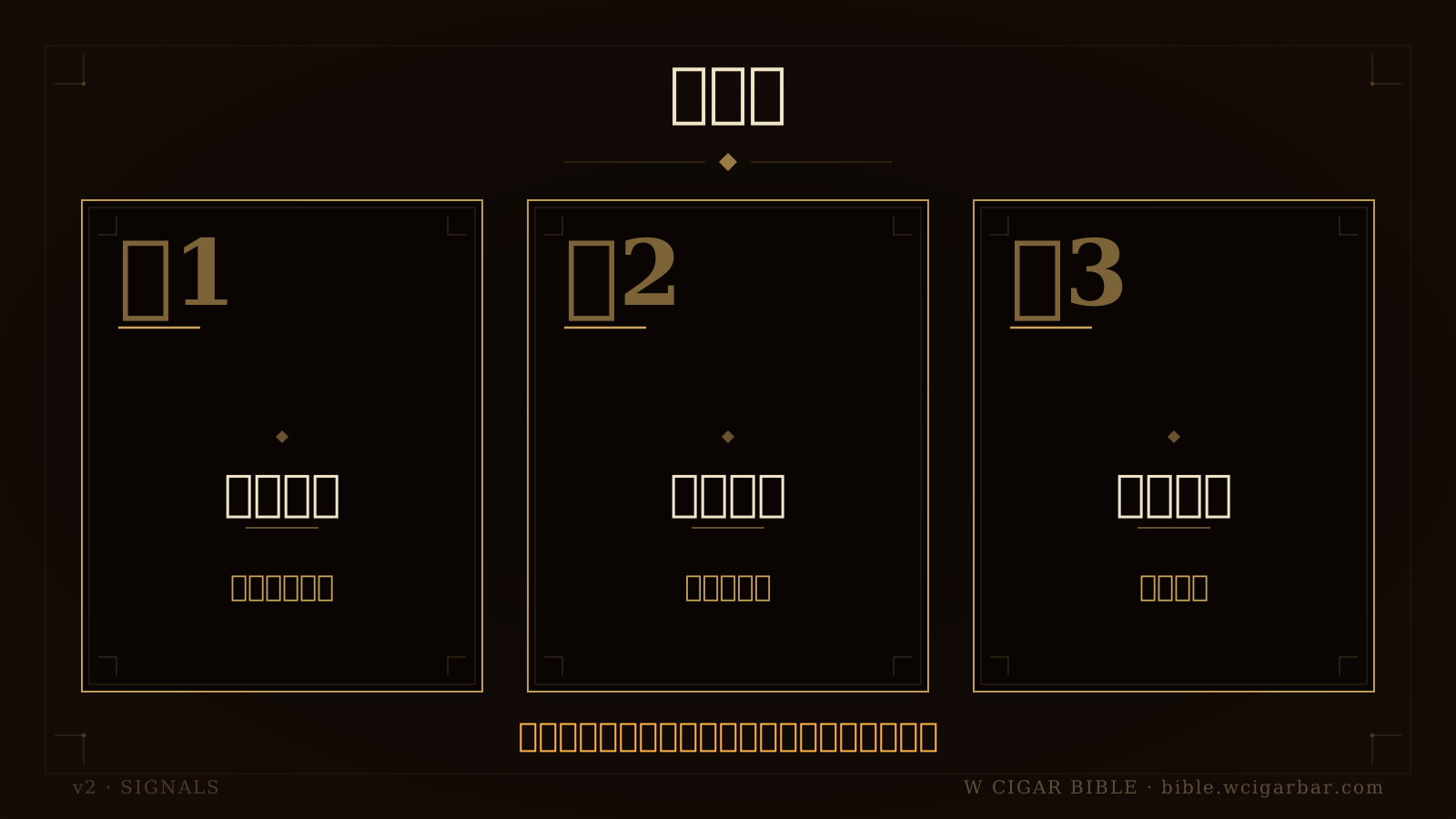
圖中整理同款差異、深色強度與發酵判斷三項常見誤解
V. Grading and Blending: Brand Style Is Not Accidental, but a Long-Term Repetition of Technique
After tobacco leaves have completed curing and fermentation, the truly difficult work has only just begun: grading, destemming, reclassification, and blend design. Grading is not only about color, but also leaf thickness, elasticity, oil content, damage rate, veins, aroma, and combustibility. Wrapper leaves face the strictest requirements because they determine the first visual impression and also affect burn speed and entry aroma. The binder is responsible for structure and wrapping. The filler is like the multiple voices in an orchestra, where volado, seco, viso, and ligero must be arranged in proportion. A truly mature brand will not make the flavor exactly the same every year, because agricultural products are inherently affected by climate. However, it will keep the style within a recognizable range. Taking Montecristo No.2 as an example, this pyramid size has long been regarded as one of Cuba's classics, often showing leather, coffee, wood, and faintly sweet spice, with its core lying in the balance of medium to medium-high concentration. If the seco aroma of a certain batch is more prominent, it will appear more elegant. If the ligero performs strongly, the final section will carry more pressure. Davidoff's Grand Cru series follows a delicate, clean, creamy, and herbal line, completely different from the cocoa, coffee, black pepper, and dense sweetness of Padrón 1926 Serie. This is not a difference between good and bad, but a difference in blending philosophy. The factory's blender must be familiar with the condition of every batch of leaves and anticipate the changes after 6 months, 1 year, or even longer in the box. When veterans compare the same cigar from different years and notice differences in combustion, aroma concentration, and finish, it is often not something that can be explained simply by saying "the blend changed." It is the combined result of leaf source, fermentation depth, warehouse maturation time, and factory humidity.
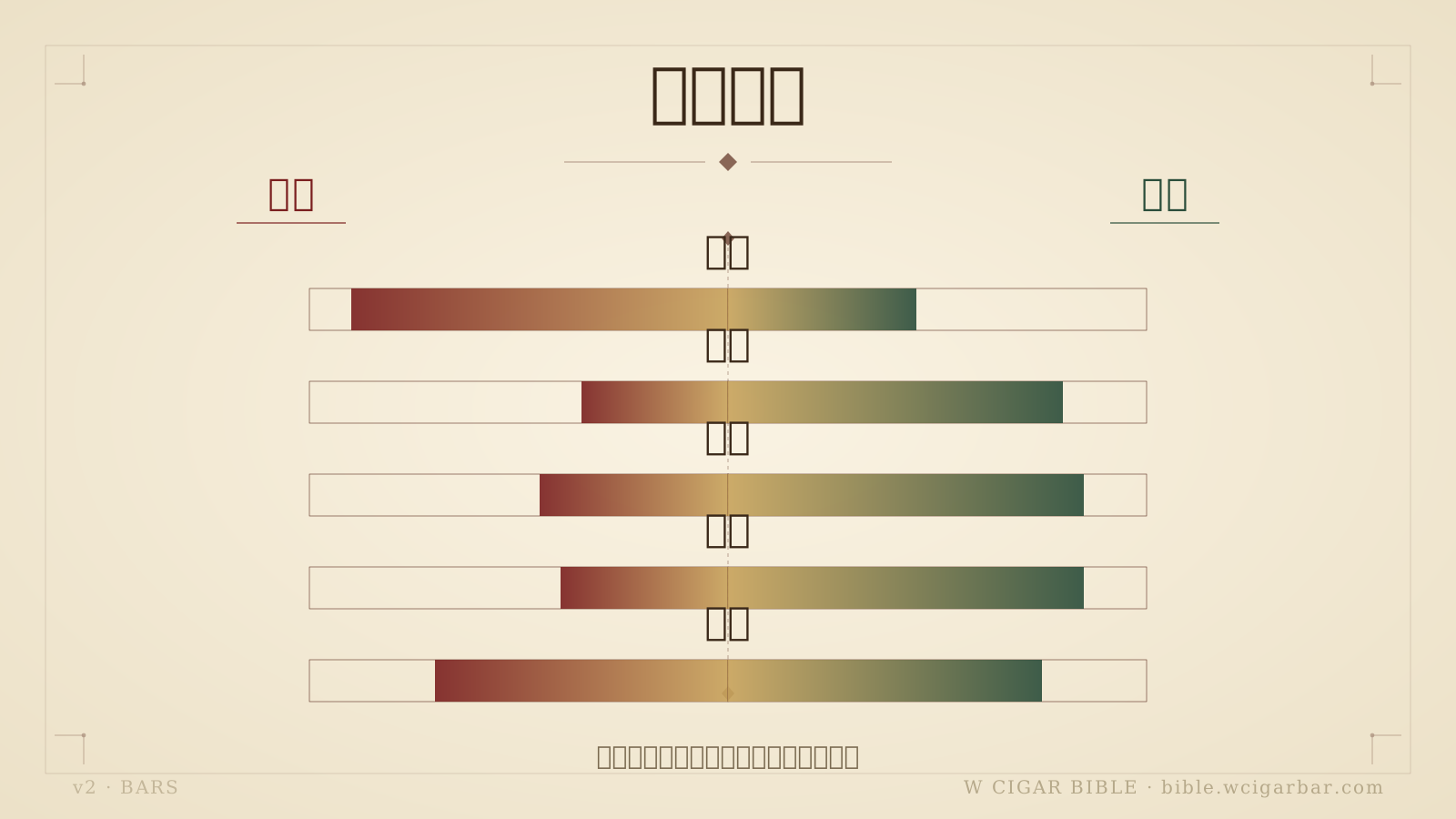
長條圖比較遮蔭栽培與日曬栽培在五個面向的差異
VI. Rolling Craftsmanship: Draw Resistance, Filling, and Burn Line Are Invisible Skills
Cigar rolling is often viewed from the outside as romantic handwork, but for veterans, what truly matters is structural precision. In handmade long-filler cigars, the bonchero is usually responsible for rolling the filler and binder into the bunch, after which the torcedor applies the wrapper and finishes the cap. The filling method affects combustion and draw resistance. If traditional long-filler tobacco is folded properly, it can form stable air channels. If the middle is too tight, draw resistance becomes excessive and smoke output is insufficient. If it is too loose, combustion is too fast, temperature rises, and flavor becomes coarse. Many high-level factories use a draw test machine to test draw resistance before the wrapper is applied or after completion. Values vary according to factory standards, but the core objective is always to avoid being too tight or too loose. Taking a long size such as Romeo y Julieta Churchill as an example, with a length of about 178mm and ring gauge 47, uneven rolling density will amplify the difference between the first and later sections. A Robusto size such as Cohiba Robustos, at about 124mm and ring gauge 50, has a shorter burn time, so structural problems appear more directly. The cap is also a technical focus. The traditional Cuban triple cap is common; if it remains intact and does not easily unravel after cutting, it indicates solid finishing work. Controlling wrapper tension is equally difficult. Pulling too tightly compresses the internal air channels, while pulling too loosely makes the burn line prone to wandering. Veterans often attribute a cigar's performance to humidity, but rolling itself can also cause uneven burn, voids, tunneling, or heat buildup in the middle section. A truly outstanding factory does not rely only on star rollers, but establishes systems for training, testing, sampling, rework, and resting. When you feel that a cigar maintains stable smoke output, clear layers, and a rhythm that does not overheat the mouth from ignition to the final third, that is often the combined result of leaf material, blending, and rolling precision.
VII. Resting, Packaging, and Box Markings: The Final Processes Still Change the Expression of Flavor
After cigars are rolled, they do not immediately reach their final state. Many factories place finished cigars in an aging room or escaparate to rest, stabilizing the moisture redistributed during the rolling process and allowing the aromas of wrapper, binder, and filler to integrate. This period may range from several weeks to several months, depending on brand, size, and factory inventory arrangements. Cigars that have not rested enough often show damp heaviness, ammonia, or a break between the front and back sections. With proper resting, the entry becomes rounder and the burn more stable. Packaging is not merely about appearance; it involves protection, grading, and source management. Cuban box labels, seals, factory codes, and date codes have always been important information for understanding a cigar's origin and batch. Non-Cuban brands build traceability through laser labels, batch management, and distribution systems. Taking the box-bottom codes of Habanos as an example, veterans often record the performance of particular factories and months. For instance, the same cigar from different years such as 2019, 2020, 2021 may show clear differences in maturation potential and immediate readability. As a PCC appointed dealer, what I value more is a clear source chain and complete storage conditions, not merely a beautiful outer box or market discussion. If collectible value is discussed, it must also be understood that this does not equal guaranteed appreciation, and still depends on source, storage, and the market. Packaging ultimately presents brand order, but truly experienced people will also look at the arrangement inside the box, wrapper color variation, humidity condition, cleanliness of aroma, and box-bottom information. From field to box, every step of a cigar can leave traces. Knowing how to read a box is also a way of reading craftsmanship.
| Process stage | Common time or indicator | Influence on flavor | Veteran observation focus |
|---|---|---|---|
| Curing | About 40-60 days | Reduces green notes and forms initial wood and dried-grass tones | Whether leaves are brittle or cracked, whether there is a moldy smell |
| Fermentation | Several months or longer, depending on leaf position | Reduces irritation and enhances sweetness, cocoa, leather, and roundness | Whether ammonia remains, whether spiciness is raw and harsh |
| Post-roll resting | Several weeks to several months | Allows moisture and aromas to integrate, improving burn rhythm | Whether it is damp and stuffy, whether draw resistance is stable |
| Boxed storage | Varies by channel and warehousing | Affects subsequent maturation and consistency of condition | Source, box code, seal, humidity records |
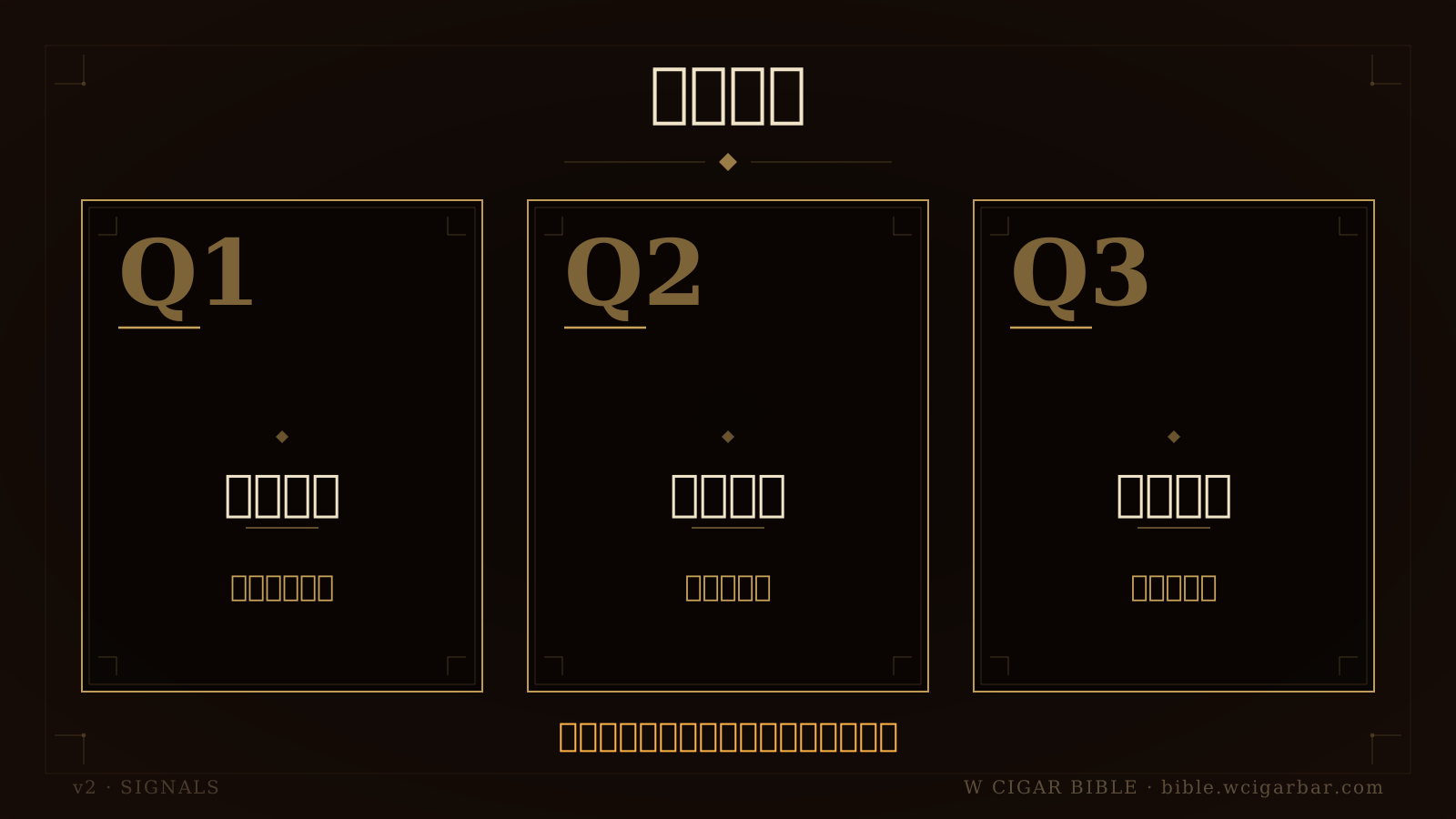
三張問答卡整理年份差異、深色茄衣與氨味來源
VIII. Maturation and Storage: From Factory Completion to Your Hands, It Remains an Ongoing Process
Many veterans focus on what happens before a cigar leaves the factory, but storage after leaving the factory also changes a cigar's condition. A common storage recommendation is a relative humidity of about 65% to 70% and a temperature of about 18°C to 21°C, but this is not an absolute formula. Producing region, size, wrapper oil content, and personal preference must also be considered. When humidity is too high, a cigar may burn sluggishly, produce dull smoke, or even face mold risk. When humidity is too low, the wrapper can crack easily, burn too fast, and amplify spiciness. Many veterans observe Cuban cigars in the 65% to 68% RH range to preserve clear combustion and aromatic lines. Some rich Nicaraguan or Dominican cigars may present clearer cocoa, coffee, and woody definition at slightly lower humidity. Maturation does not mean that all cigars become better simply by being stored for a long time. It means allowing suitable leaf material to slowly integrate in a stable environment. A large, delicate Cuban long cigar such as Hoyo de Monterrey Double Coronas, if well sourced and stored, may after several years show softened honey, dried grass, and wood. For high-concentration cigars such as Padrón 1926 or Oliva Serie V, time can round off the edges, but if storage is too humid, they may lose their original focus. It is important for veterans to build their own storage records, including acquisition date, box code, humidity, initial sensory notes, and changes after six months. Do not believe blindly in vintage myths, and do not only chase rarity. A high-profile cigar stored improperly may be less satisfying than a regular-production cigar with a clear source and stable humidity. The continuation of cigar craftsmanship does not end when the factory seals the box; it continues with every warehouse transfer, shipment, storage period, and box opening.
Frequently Asked Questions
1. Why can the same brand and same size show obvious differences across different years?
Because a cigar is a combination of agricultural product and handicraft, and cannot be perfectly replicated like an industrial beverage. In a year with higher rainfall, tobacco leaves may be thinner and softer. In a year with strong sunlight, ligero may have more power. Even if the brand's blending objective is the same, the leaves actually available are still affected by yield, fermentation condition, and inventory allocation. Taking long-circulating cigars such as Montecristo No.2 or Partagás Serie D No.4 as examples, veterans often record box-bottom years and factory codes because the same cigar may show differences in coffee notes, woodiness, or spice intensity across different batches. This is not simply good or bad, but the expression of a year.
2. Does a darker wrapper mean the cigar is stronger?
Not entirely. Dark wrappers such as maduro often carry impressions of sweetness, cocoa, coffee, and molasses because of longer fermentation or special processing, but strength still mainly depends on the filler blend, especially the proportion of ligero and the characteristics of the producing region. A cigar with a dark wrapper may have a sweet, rounded mouthfeel and medium strength. A cigar with a lighter claro wrapper may also have obvious power in the finish because the filler uses a high proportion of strong leaves. Veterans should not judge strength only by appearance, but also by brand style, producing region, size, and actual burn performance.
3. What are the characteristics of an insufficiently fermented cigar?
Common characteristics include obvious ammonia, pungent grassy smell, sharp entry, throat irritation, unstable burn, and bitterness in the final section. It should be noted that overly humid storage can also cause stuffiness and combustion difficulty, so not all problems should be attributed to fermentation. If a cigar repeatedly shows irritation, hardness, and aromas that do not open up under appropriate humidity, it is more likely related to leaf processing or rolling structure. Veterans can compare multiple cigars from the same box to determine whether it is an individual cigar problem, the condition of the whole box, or the style of that batch.
4. Why are some cigars good in the first section, but suddenly become bitter after the middle?
There may be three types of reasons. The first is uneven rolling density. When combustion reaches a certain section, airflow changes, temperature rises, and bitterness appears. The second is drawing too quickly, causing the burning end to overheat, concentrating tar, and making the finish coarse. The third is that the blend itself has a higher proportion of ligero or oil content in the final section. If fermentation and maturation have not yet integrated, the later section will feel oppressive. Veterans usually slow down the rhythm, keep the burning end at a lower temperature, and observe whether the bitterness eases with rest.
5. Do cigars get better the longer they are stored?
No. Maturation requires suitable leaf material, stable humidity, a clean environment, and time. If the cigar itself has a loose structure or thin leaf material, long storage may only cause it to lose aroma. Rich cigars with complete structure are more likely to become rounder after several years. Delicate cigars should be protected from being stored until their aromas decline. Storage records are more important than blind waiting. It is recommended that veterans track changes in the same box every six months or one year to build their own judgment, rather than relying entirely on market rumors.
6. Why are box codes, seals, and source important?
Because they are related to traceability and storage credibility. From factory to warehouse, transportation, and retail end, any loss of temperature or humidity control along the way may affect condition. Box codes help veterans record year and batch, while seals and box-condition information help understand packaging integrity. A clear source does not guarantee every cigar is perfect, but it can reduce uncertainty. For advanced collectors, box condition, storage records, and a stable supply chain are often more useful as reference than temporary market discussion.
7. How should veterans build their own ability to read craftsmanship?
It is recommended not to write only "good to smoke" or "not good to smoke," but to break notes into five fields: combustion, draw resistance, aroma, mouthfeel weight, and finish. Then record brand, size, year, box code, humidity, and box-opening time. By continuously comparing different brands from the same producing region, such as Davidoff, Arturo Fuente, Padrón, Oliva, Partagás, and H. Upmann, you will gradually see the differences in soil, fermentation, blending, and rolling. True advanced ability is being able to trace sensory results back to craft causes, rather than stopping at scores.
- Cigar Prince Wilson Tsai
I have always believed that the fascination of cigars lies not in mystery, but in the fact that every detail can be questioned. From the maturity of a single leaf, to the pressure between a roller's fingers, and then to the quiet changes over several years inside a wooden box, all of these are continuations of craftsmanship. If veterans are willing to push their brand preferences one step further back and understand fields, fermentation, blending, and storage, they will discover that every cigar is not an isolated work, but a record jointly left by time and human hands.
Smoking is harmful to health. Persons under twenty years of age may not smoke. Smoking cessation hotline: 0800-636363. This article is provided solely as a reference on cigar culture, storage, and regulatory knowledge for adults aged twenty and above. It is not tobacco advertising, promotion, or purchasing advice.
Like this article?Share with friends
Share this W Cigar Bible piece with friends who want to learn cigar culture, storage, and tasting.
想把這篇 化為實踐
雪茄聖經是知識;雪茄文化要在空間裡發生
W Cigar Bar 大安總店資訊
台北大安區 · 雪茄聖經總編輯 Wilson Tsai 主理的雪茄文化空間
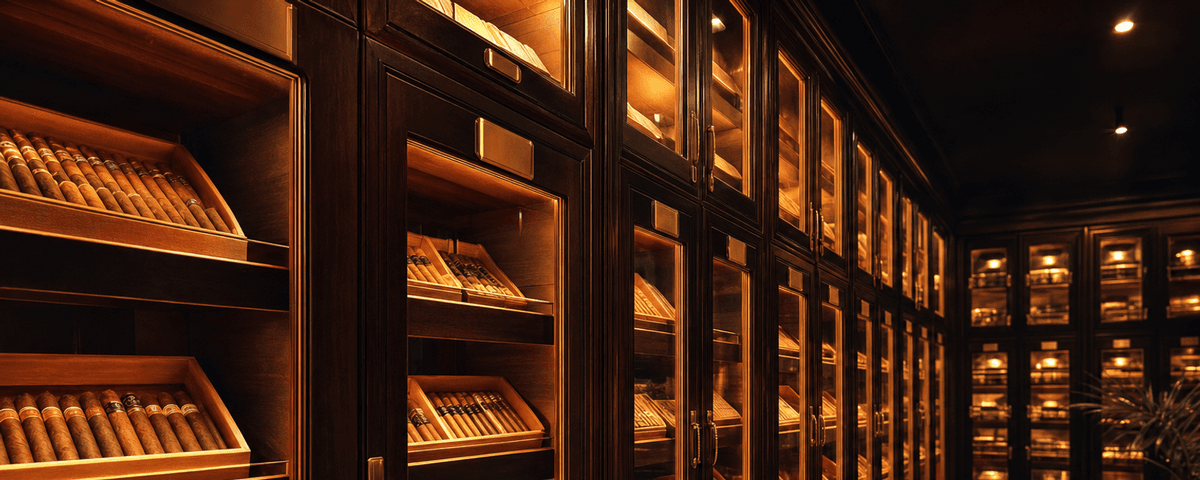
33 座 24 小時恆溫恆濕醇化室
W Cigar Bar 提供的會員醇化空間 · 場地資訊請洽編輯部
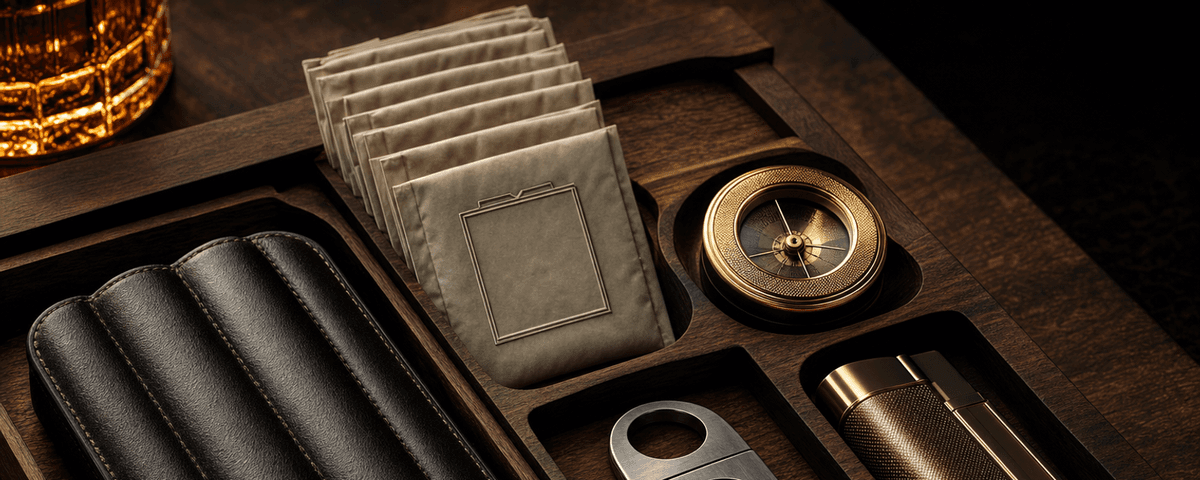
雪茄剪 / 打火機 / 雪茄盒 / Boveda
W Cigar 配件官網 · 專營雪茄配件正品

加 LINE 好友 · 文化諮詢
文化空間資訊 · 紳士沙龍 · 私人包場
本網站內容僅供雪茄文化、歷史、收藏與品吸知識研究參考。菸品有害健康、未滿法定年齡者請勿吸菸。實際規範請依所在地法律為準。
吸菸有害健康・戒菸專線 0800-636363・本站僅供 20 歲以上成年人閱覽。
讀到這裡,你不只是路過的人
留下 Email,加入 W 雪茄聖經內圈——總編輯 Wilson Tsai 親選的學院深文與國際新訊,先你一步送到信箱。
· 教育用途非銷售 · 隨時一鍵退訂 · Email 絕不對外公開 · 由勝茄股份有限公司營運
同分類延伸閱讀
資料來源:W Cigar Bible 編輯部整理 · 雪茄王子 Wilson Tsai 親自審稿
本文僅供雪茄文化、歷史、收藏與品鑑知識研究,不作為菸品促銷、銷售或購買建議。吸菸有害健康,未滿二十歲不得吸菸。