瓜地馬拉安提瓜咖啡:三座火山環抱的煙燻可可,搭配 Partagás Serie E No.2 的濃郁骨架
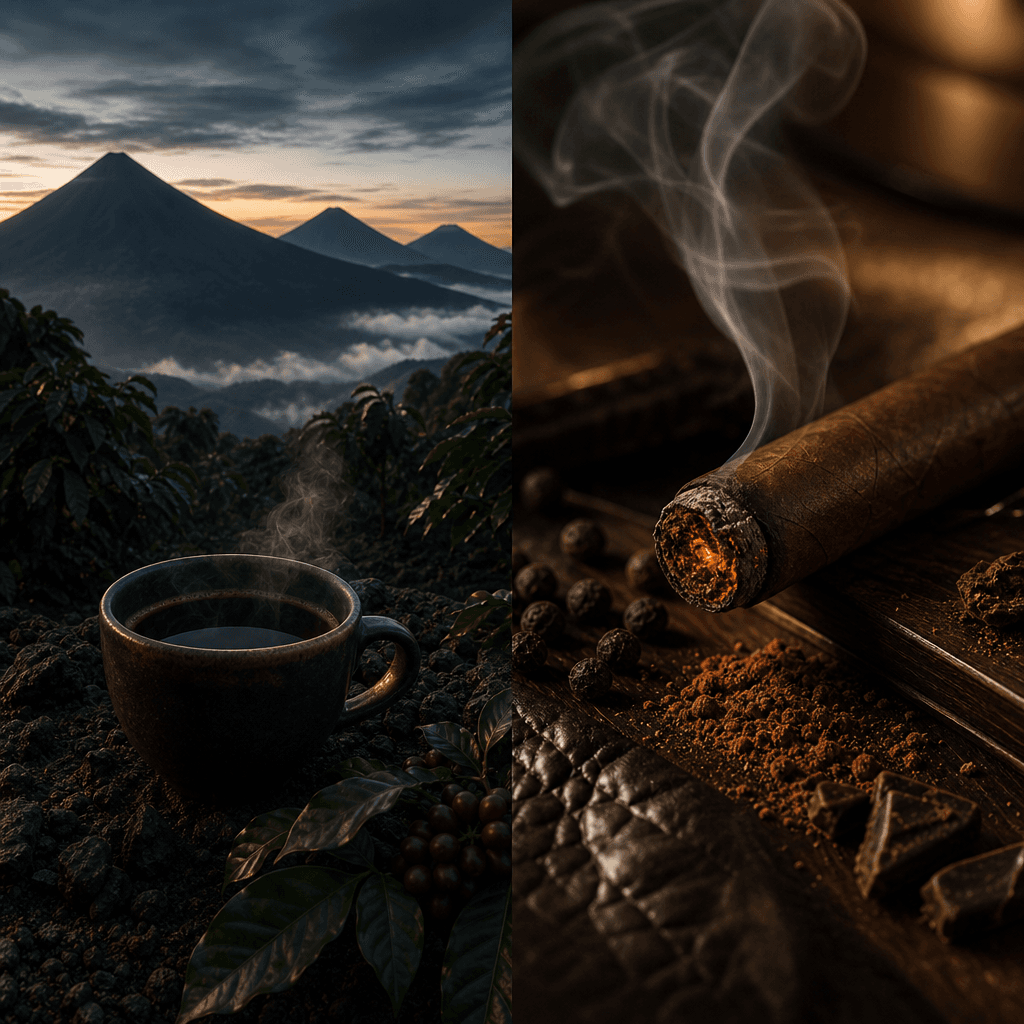
瓜地馬拉安提瓜咖啡來自 Agua、Fuego、Acatenango 三座火山環抱的谷地,以火山浮石土、蔭下栽種與 Anacafé 產區制度塑造煙燻、黑巧克力、香料與蘋果酸。當它遇上 Partagás Serie E No.2,火山煙燻與菸草煙燻同頻,可可、黑胡椒與皮革層層疊合,呈現一組老手才會細讀的濃郁搭配。
- 安提瓜咖啡的煙燻感來自火山土壤、酸質、烘焙與蔭下栽種共同作用。
- Partagás Serie E No.2 的黑胡椒、可可與皮革,能承接 Antigua 的深色結構。
- 搭配關鍵不在濃對濃,而在酸度、甜感、煙燻酚類與辛香節奏的校準。
Guatemalan Antigua Coffee: Smoky Cocoa Surrounded by Three Volcanoes, Paired with the Rich Framework of Partagás Serie E No.2
Guatemalan Antigua coffee and Partagás Serie E No.2 is a pairing I would leave for connoisseurs to slowly unravel. The former has a dark framework surrounded by three volcanoes, while the latter has clear notes of black pepper, cedar, cocoa, and leather from the Cuban Partagás lineage. They don't overwhelm each other with "intensity," but rather exchange positions with smokiness, bittersweetness, spiciness, and acidity. As the editor of the "Cigar Bible," I often say that a truly memorable pairing must be able to articulate the reasons for each flavor intersection.
In this article, I will first clarify the geography, history, and craftsmanship of Antigua as the core coffee region of Guatemala, and then analyze it within the burning curve of Partagás Serie E No.2. You will see how volcanic pumice soil allows the coffee to retain clean acidity, and how Anacafé's regional system pulls "Antigua coffee" back from a generic term to a traceable terroir. In the end, we're not talking about an abstract "good match," but about the specific changes of volcanic smokiness × tobacco smokiness, dark chocolate × cocoa, and spice complexity × black pepper.
流程圖呈現火山谷浮石土蔭下熟到中深焙
Antigua Surrounded by Three Volcanoes: The Dark Terrain of Guatemalan Coffee
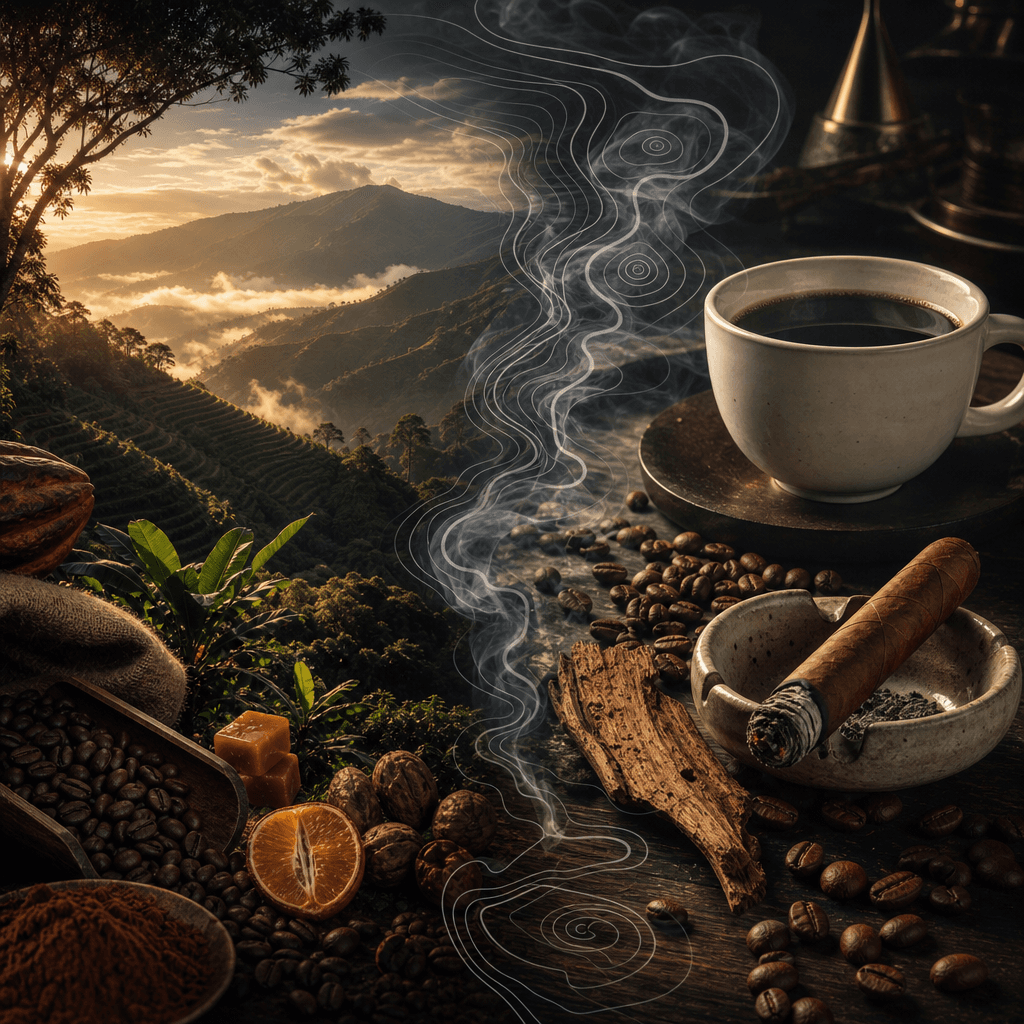
Antigua is located in the south-central highlands of Guatemala, with a valley surrounded by the Agua, Fuego, and Acatenango volcanoes, creating an almost theatrical terrain. Agua acts like a stable backdrop, Fuego remains active to this day, and Acatenango provides high-altitude cool airflow. This terrain allows for diurnal temperature variation, clouds, drainage, and water retention to coexist, slowing down the coffee's maturation process. Slow maturation results in more complete sugar accumulation, and the acidity is less likely to become sharp.
The volcanic soil of Antigua is often described as rich in pumice, which is crucial for coffee. Pumice has many pores, allowing it to absorb water during the rainy season and gradually release it during the dry season, effectively establishing a buffer system for the coffee trees. This water retention means the root system doesn't suffer from drastic pressure between wet and dry conditions, leading to more stable fruit development. The commonly seen flavors of dark chocolate, smokiness, sweet spices, and malic acid in the cup are not isolated flavors but the result of stable maturation combined with mineral landscapes.
The colonial city of Antigua was an important administrative and religious center in Central America during the Spanish colonial period, with cobblestone streets, monastery ruins, and volcanic skylines forming its cultural memory. Coffee here is not an exotic fashion symbol but a product of the long-term overlap of highland agriculture, estate systems, and urban life. When we drink a cup of Antigua coffee, we are not just tasting a regional name but a compressed flavor archive of volcanoes, colonial cities, agricultural techniques, and export systems. The smokiness of Antigua is not a single roasting vocabulary but a dark contour supported by volcanic terrain, soil water retention, and acidic structure.
Shade-Grown Cultivation, Regional System, and Anacafé's Antigua Framework
The tradition of Guatemalan Antigua coffee is inseparable from shade-grown cultivation. Coffee trees grow under shade trees, receiving softer light, which extends the fruit maturation cycle and reduces leaf transpiration pressure. This allows the coffee's sweetness, acidity, and spice notes to form over time, rather than just the thin sugar aroma from rapid maturation. Connoisseurs drinking Antigua often notice the deep sweetness that doesn't rush out, rather than just looking for bright floral notes.
Shade-grown cultivation also alters the microclimate. The canopy retains humidity, fallen leaves increase organic matter, and microbial activity around the roots becomes more stable. These factors are reflected in the cup: the acidity is not a straight lemon line but closer to green apple, red apple peel, or malic acid with a hint of tartaric feel. If roasted properly, this acid line can lift the dark chocolate and smokiness, preventing the coffee from becoming dull.
Anacafé, as an important institution in the Guatemalan coffee industry, established a regional classification system, making Antigua not just a romantic word on the map. The so-called Genuine Antigua Coffee aims to distinguish batches truly from the Antigua region, meeting geographical and quality conditions. This is important for tasters because if "Antigua" is used ambiguously, the interpretation of terroir will be inaccurate. The significance of Anacafé's system lies in pulling Antigua coffee back from flavor impressions to regional boundaries, cultivation conditions, and cupping consistency.
三張卡列出火山骨架可可煙燻與酸度對接
The Texture Structure of Volcanic Soil Coffee: Smokiness, Dark Chocolate, Spices, and Malic Acid
When I talk about volcanic soil coffee, I usually remind readers: volcanic soil doesn't directly pour "volcanic flavor" into the cup. Its influence is more like structural engineering, transforming into acidity, sweetness, and mouthfeel density through drainage, mineral composition, root pressure, and maturation speed. The volcanic pumice soil of Antigua is especially typical, avoiding waterlogging that causes root pressure and maintaining moisture during the dry season. This results in a cup feel with a tight core rather than a loose sweetness.
The smokiness of smoky coffee often comes from two levels. The first is the dark mineral feel, dry spices, and roasted nuts in the regional impression; the second is the phenols, pyrazines, and furan compounds produced during the Maillard reaction and pyrolysis in roasting. If Antigua is presented in a medium-dark roast, dark chocolate, cocoa powder, roasted almonds, cinnamon, and a faint woody smoke will be amplified. If the roast is too deep, the malic acid will be flattened, leaving only bitterness and monotonous carbon flavor.
Malic acid is the hidden line of this pairing. It's not as sharp as citric acid, nor as smooth as lactic acid, but carries a crispness and astringency akin to fruit peel. When it meets the rich cigar body of Partagás Serie E No.2, it will separate the cocoa and leather in the middle of the tongue, preventing the smokiness and black pepper from clumping together. The most charming aspect of Antigua is that it can support dark chocolate and smokiness with malic acid, allowing dark flavors to still have structure and breathability.
矩陣比較手沖濾壓與義式的酸線厚度風險
Roasting and Brewing: Calibrating the Richness of Antigua Coffee Next to a Cigar
If Antigua coffee is to be paired with Partagás Serie E No.2, I wouldn't push the roast to an overly deep level. A medium-dark roast is more suitable, aiming to retain malic acid while allowing caramelization, Maillard reaction, and cocoa tones to fully unfold. On the roasting curve, too short a development period will result in herbal astringency, while too long will easily turn smokiness into char. Connoisseurs should look for elasticity between dark chocolate and smokiness in the cup, not just sheer heaviness.
The brewing method can be adjusted according to the cigar segment. Pour-over with a higher coffee-to-water ratio and slightly lower water temperature can make acidity and cocoa more distinct, suitable for the early part of the cigar. A French press or metal filter will retain oils, making the coffee feel thicker, suitable for the leather and black pepper after the cigar enters the middle segment. Espresso should be handled carefully; too short extraction will be sour and astringent, too long will be bitter and charred, easily becoming tense when meeting a rich cigar body.
I often use a simple judgment: when the coffee cools to warm, if the dark chocolate is still present and the malic acid hasn't disappeared, this cup of Antigua is qualified to stand next to Serie E No.2. When the coffee is too hot, smokiness and bitterness will be amplified, easily misjudging its depth. Letting the temperature drop slightly will make spices, fruit acids, and cocoa powder clearer, and the cigar smoke easier to analyze. The core of brewing this pairing is to maintain the balance of acidity and oils in the coffee, not to stack the concentration all the way up.
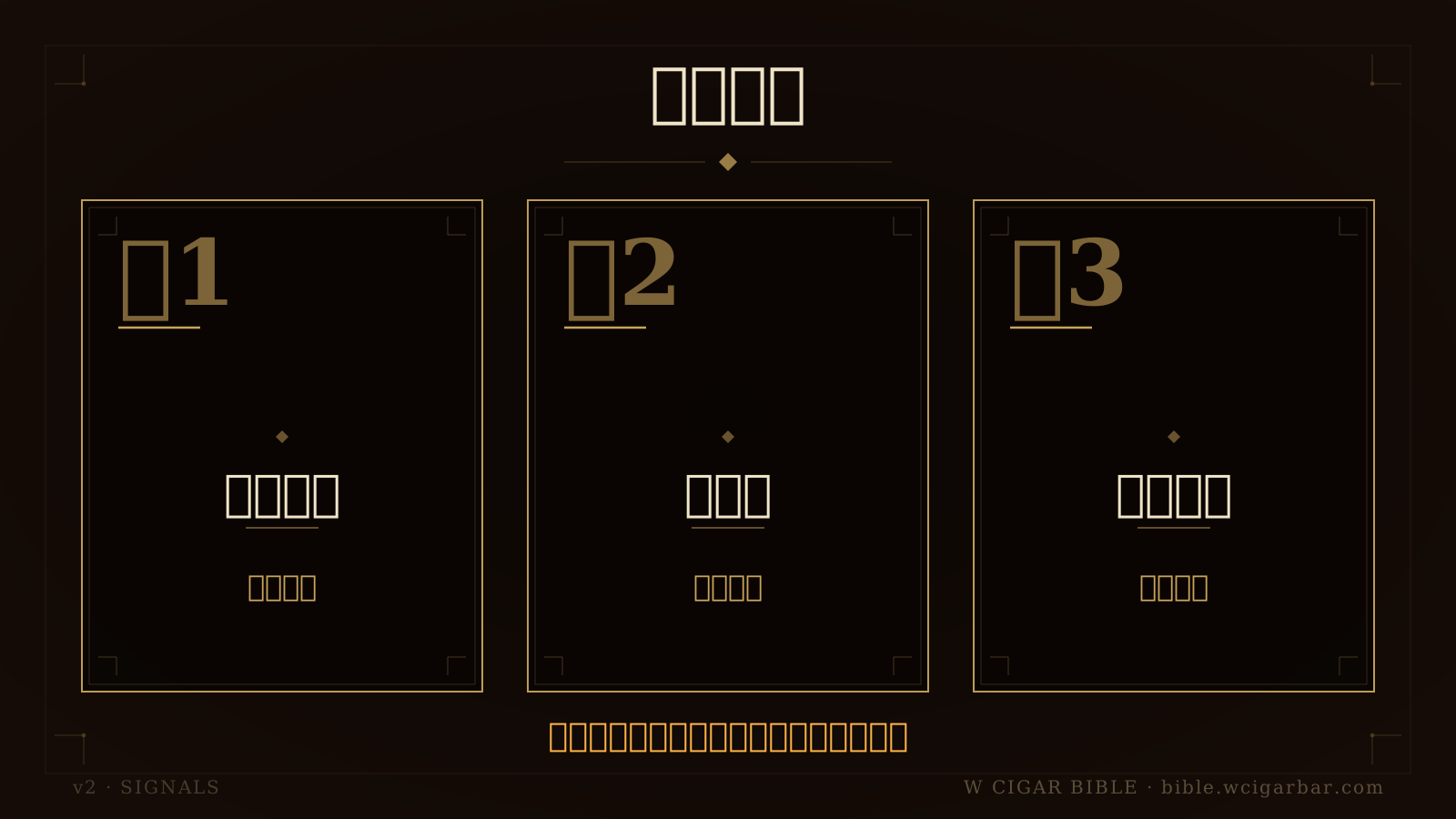
三張卡提醒深焙亮酸與高溫飲用的誤解
Partagás Serie E No.2: The Havana Firepower of a Rich Cigar Body
Partagás Serie E No.2 (Cuba, Duke, 54 × 140mm) is a cigar with a clear presence. Its typical flavors include black pepper, cedar, cocoa, and leather, with a rich cigar body as the main axis. The Duke size allows for a wider burning area, making the smoke volume and mouth coverage more pronounced, so the paired drink cannot be too light. If the coffee only has light floral notes, it will often be overwhelmed by the spiciness and leather of Partagás after the middle segment.
The name Partagás is inherently associated with the dark expression of Havana cigars. It doesn't win with light cream or soft grains but often unfolds between earth, pepper, wood, and cocoa. Since its debut in 2011, Serie E No.2 has become an important node for many connoisseurs to observe the modern rich style of Partagás. Its strength is not a straight sprint but gradually pushes from the black pepper and cedar in the early segment to cocoa, leather, and a thicker smokiness in the middle segment.
The most important thing to pay attention to with this cigar is the burning rhythm. If the smoking frequency is too fast, the black pepper will become sharp, the cedar will turn bitter, and the leather in the later segment may become dry and hard. If the rhythm is stable, it will open up layers of cocoa powder, dry wood, and spiciness, leaving enough connection points for the coffee. The pairing value of Partagás Serie E No.2 lies in its sufficiently rich framework to accommodate the smoky cocoa of Antigua while retaining black pepper as the conversational firepower.
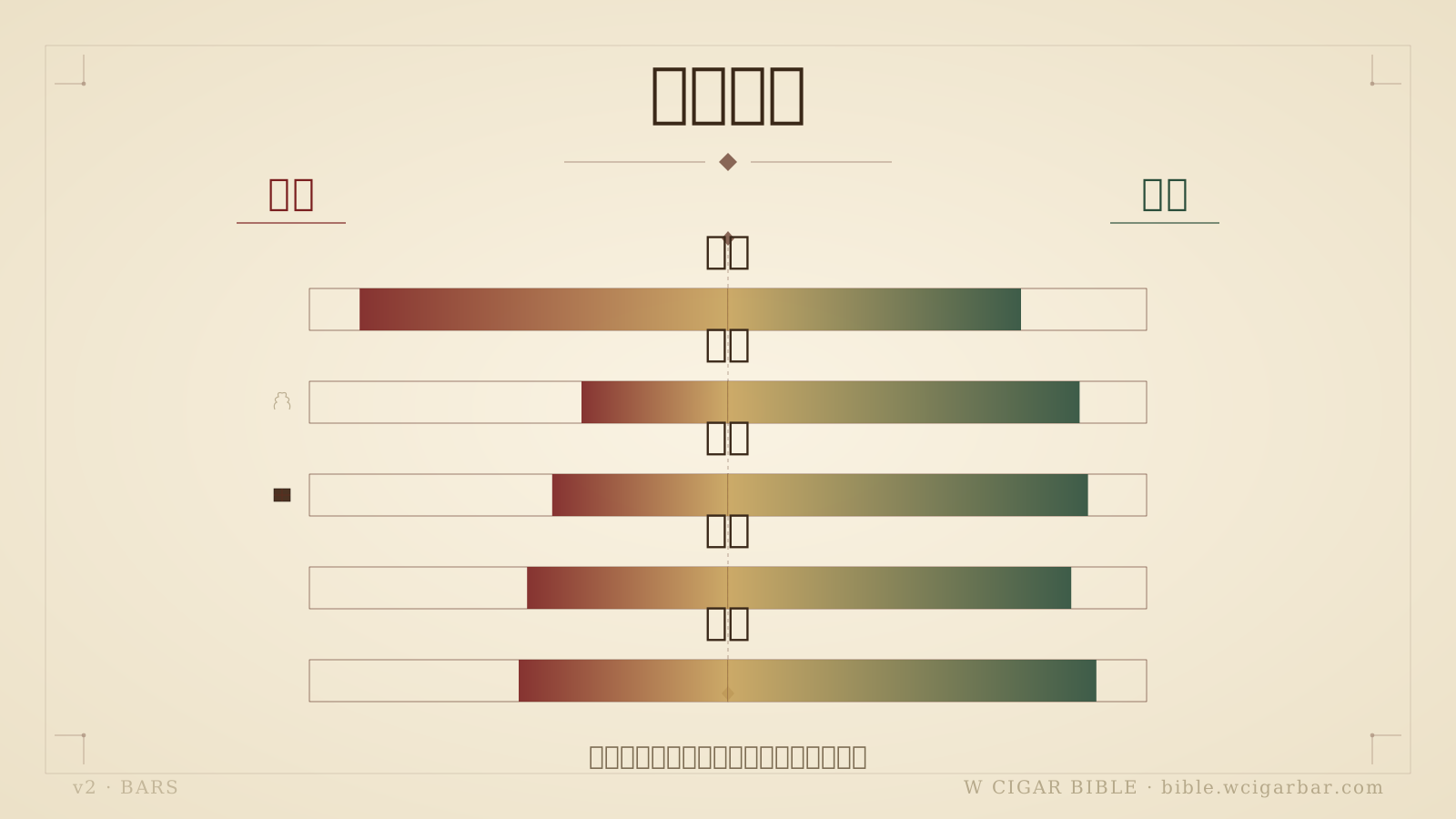
長條圖比較明亮取向與深構取向的五項強度
Flavor Chemistry: Double Smoke Resonance of Volcanic Smokiness × Tobacco Smokiness
Volcanic smokiness × tobacco smokiness is the first token worth reading in this pairing. The smokiness on the coffee side partly comes from the guaiacol, 4-methylguaiacol, pyrazines, and furan compounds formed during the roasting of lignin and sugars. The smokiness on the cigar side comes from the phenols, caramelized compounds, and woody smoke formed during the fermentation, aging, and burning of tobacco leaves. When the two meet, the nasal cavity will feel "homogeneous": not two smokes fighting each other, but the dry smokiness of volcanic soil coffee catching the deep smoke of Havana tobacco.
The second token is dark chocolate × cocoa. Antigua's dark chocolate often carries bittersweetness, cocoa butter, and a slight fruit acid, while Serie E No.2's cocoa is drier, more powdery, and closer to the bittersweet aftertaste of tobacco combustion. When the two overlap, the tongue will experience a gradient from sweet-bitter to dry-bitter, like moving from 70% dark chocolate to unsweetened cocoa powder. This change is crucial because it makes the richness not just thick but layered.
The third token is spice complexity × black pepper. The spices in Antigua are often warm aromas on the edges of cinnamon, cloves, sweet pepper, and roasted nuts; Partagás places black pepper at the entrance of the smoke and the position of retronasal olfaction. The sweet spices in coffee can round off the sharp angles of cigar black pepper without dulling it, making the spiciness more three-dimensional. The real chemical core of this pairing is the homogeneous resonance of phenolic smokiness, the overlap of cocoa bittersweetness, and the buffering of spice molecules against the stimulation of black pepper.
From Early to Late Segment: The Pairing Rhythm of Antigua and Serie E No.2
The early segment of Partagás Serie E No.2 usually opens with black pepper, cedar, and a drier tobacco sweetness. At this time, Antigua coffee should not be too strong; pour-over or clean immersion methods can bring out the malic acid first. Malic acid will act like a thin line, pulling open the entrance stimulation of black pepper and preventing cedar from becoming just dry wood shavings. If the dark chocolate in the coffee becomes thick too early in the early segment, it will instead obscure the opening details of the cigar.
The middle segment is the most exciting part of this pairing. The cocoa, leather, and rich cigar body of the cigar begin to increase, while the smokiness, cocoa powder, and sweet spices of the coffee also enter the same language system. At this time, the coffee can be allowed to cool to warm, and the flavors will shift from bright acidity to dark chocolate, roasted nuts, and gentle smokiness. On the tongue, there will be a counterpoint between volcanic terroir and Havana firepower: the coffee provides a geological feel, and the cigar provides a burning feel.
The late segment requires special control of rhythm. The leather, black pepper, and charred sweetness of Serie E No.2 will become more concentrated; if the coffee extraction is too heavy, the bitterness on both sides will push each other higher. At this time, take small sips and extend the interval, allowing the malic acid and slight sweetness of the coffee to return to the sides of the tongue, preventing the aftertaste from becoming closed. From early to late segment, Antigua should act as a tuner, not compete with Partagás for strength.
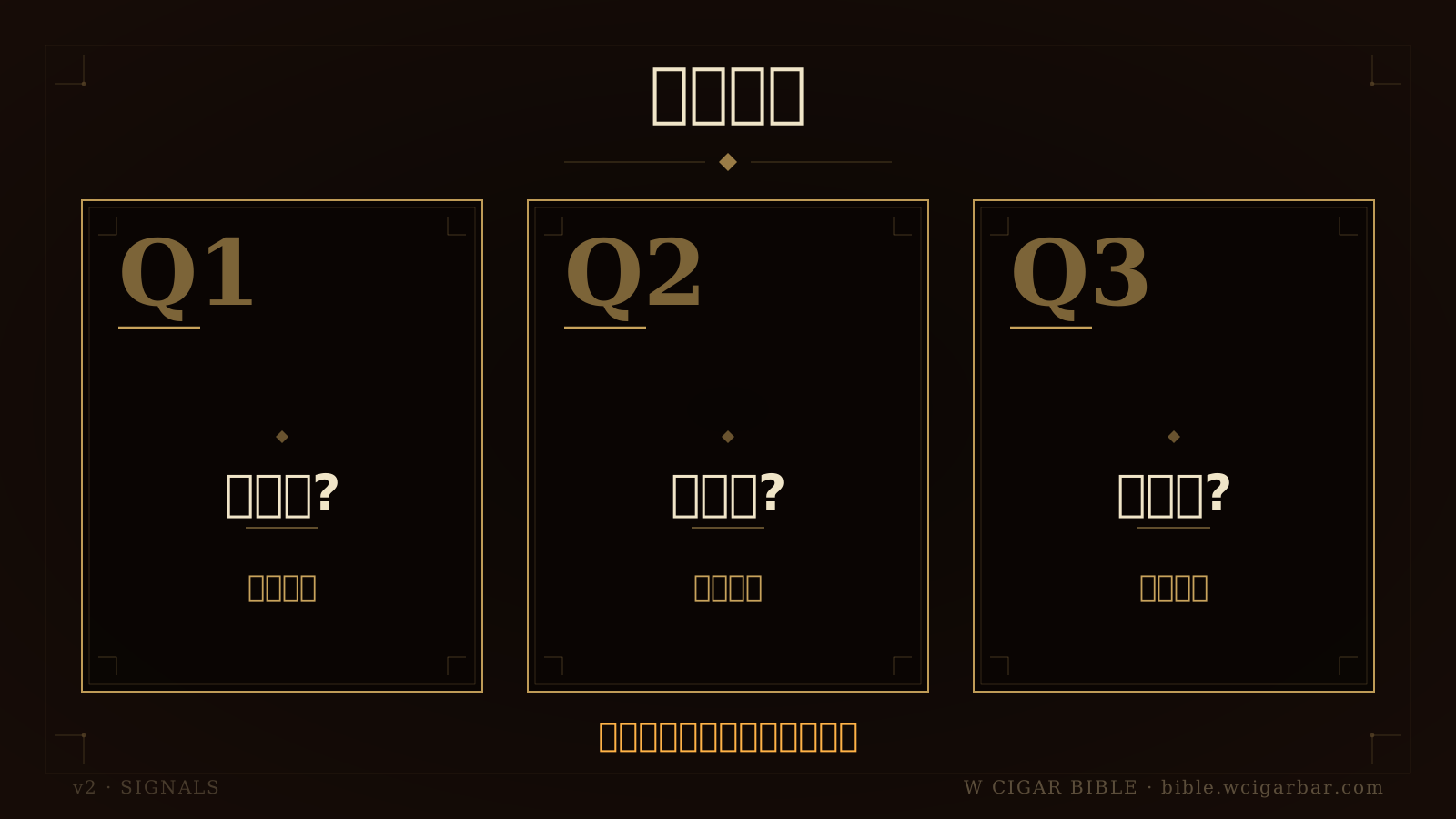
三張問答卡整理烘焙節奏與萃取方式重點
Flavor Correspondence Table: How Connoisseurs Judge Whether a Pairing is Established
I am accustomed to breaking down the pairing of drinks and cigars into flavor tokens, rather than just writing "intense with intense." The table below is what I use to evaluate the pairing of Guatemalan Antigua coffee and Partagás Serie E No.2. It can help you determine whether the pairing is resonating or starting to obscure each other. Especially for connoisseurs, the focus should be on whether the intersection points are clear, not just pursuing strong impressions.
| Coffee Token | Cigar Token | Change After Meeting | Key Judgment |
|---|---|---|---|
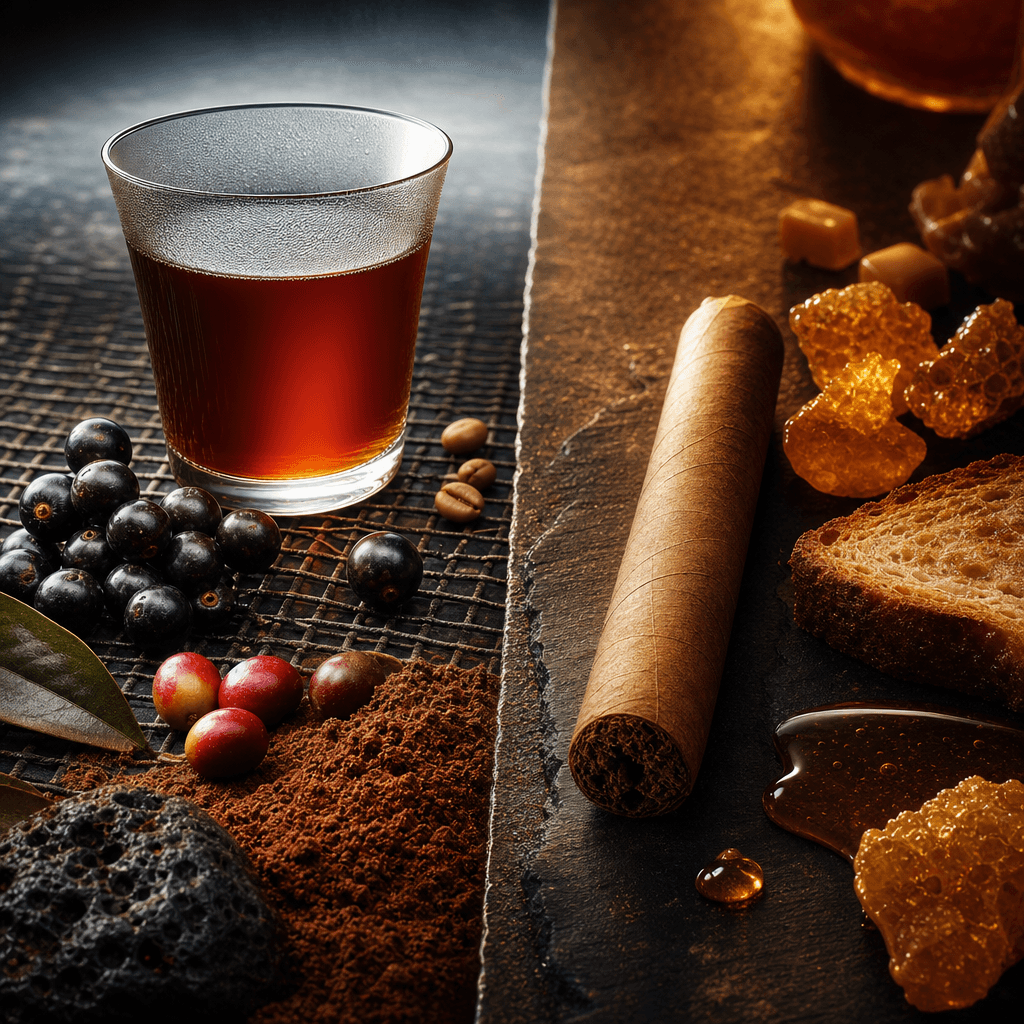
| Volcanic Smokiness | Tobacco Smokiness | Homogeneous phenolic smokiness, deepening nasal aftertaste | Should be clean smokiness, not carbon flavor |
| Dark Chocolate | Cocoa | Bittersweet overlap, transitioning from chocolate to cocoa powder | Must retain slight sweetness, avoid closed bitterness |
| Malic Acid | Leather | Acid line opens up heaviness, preventing leather from being dry and hard | Acidity should be clear but not sharp |
| Sweet Spices | Black Pepper | Cinnamon, clove feeling buffers pepper stimulation | Spiciness should be three-dimensional, not tongue-piercing |
| Tight Mouthfeel from Volcanic Pumice Soil | Rich Cigar Body | Both frameworks connect, forming a thick but not scattered middle segment | Mouth coverage should have layers |
The most important aspect of this table is "avoiding obscuration." If the coffee roast is too deep, volcanic smokiness will turn into bitterness, dark chocolate will become monotonous carbon flavor, and the cedar and leather of the cigar will lose distinctness. If the coffee is too light, the malic acid will be sharp, and the spices insufficient, making the rich cigar body of Serie E No.2 appear heavier. The state of a successful pairing should be that the coffee organizes the spiciness and cocoa of the cigar into layers, while the cigar pushes the smokiness and dark chocolate of the coffee deeper.
I view this pairing as an intertextuality of "terroir and firepower." Antigua provides the water-retentive soil, shade-grown cultivation, malic acid, and smoky cocoa from the valley of three volcanoes; Partagás Serie E No.2 provides the black pepper, cedar, cocoa, leather, and rich cigar body of Cuban tobacco. Neither is whispering softly, but neither is a crude heavy blow. To judge whether this pairing is successful, look at whether the smokiness is clean, whether the cocoa has a bittersweet gradient, and whether the spiciness is amplified rather than out of control.
Frequently Asked Questions
Does Antigua coffee have to be medium-dark roasted to suit cigars?
Not necessarily, but medium-dark roast usually captures the balance of smokiness, dark chocolate, and spices most easily. Light roast can retain more fruit acid but may appear insufficient in structure next to Partagás Serie E No.2. Over-roasting will let bitterness overshadow regional characteristics.
Why not use brighter Guatemalan coffee for pairing?
Brighter Guatemalan coffee can pair with milder cigars, but the black pepper and leather of Serie E No.2 require a deeper interface. Antigua's cocoa, smokiness, and malic acid can just balance thickness and clarity. What is needed here is a structure that can converse with a rich cigar body, not just a pretty acidity and aroma.
Does volcanic soil coffee really taste smoky?
Volcanic soil itself doesn't mean smoke flavor directly appears in the cup. It influences maturation through water retention, drainage, and mineral environment, then roasting brings out dark chocolate, nuts, spices, and smokiness. Antigua's smokiness is more like the shadow of dry wood and cocoa edges.
What to do if the early segment of Partagás Serie E No.2 is too spicy?
You can let the coffee cool slightly before drinking; in a warm state, malic acid and sweetness will be clearer than at high temperatures. Also, slow down the drinking rhythm, allowing the coffee to leave cocoa and acid lines on the tongue before catching the cigar smoke. This way, the black pepper will be more three-dimensional, not just stimulating.
Which is most suitable: pour-over, French press, or espresso?
Pour-over is suitable for observing the early segment, presenting malic acid, dark chocolate, and clean smokiness. French press retains oils, suitable for connecting with leather and cocoa after the middle segment. Espresso can work, but extraction must be precise; otherwise, bitterness can easily stack with the later segment of the cigar.
Is this pairing suitable for beginners?
It's more suitable for those who can already discern the changes in the early, middle, and late segments of a cigar. Beginners may first feel the richness, spiciness, and smokiness but find it difficult to distinguish the intersections of malic acid, cocoa powder, and leather. For practice, one can first become familiar with Antigua alone before entering this pairing.
If Antigua is the dark coffee language condensed from three volcanoes, Partagás Serie E No.2 is the echo with firepower in the rich lineage of Havana. When the two meet, smokiness is not the background, cocoa is not a dessert, and black pepper is not just a simple stimulus; they together form a deep reading about terroir, combustion, and structure.
Further Reading|Complete Guide to Coffee Regions and Roasting: From African Floral and Fruity to Asian Thick Soil Flavor Spectrum, with Cigar Pairing Overview|Brazilian Coffee's Low Acid and Richness of Nuts and Cocoa: The Sun-Dried Tradition of the World's Production King, Paired with Bolívar Petit Coronas|The Floral Legend of Panama Geisha Coffee: Jasmine and Bergamot from the Boquete Highlands, Paired with the Legendary Slimness of Cohiba Lanceros
—Cigar Prince Wilson Tsai
Smoking is harmful to health. Smoking is prohibited for those under the age of twenty. Quitline: 0800-636363. This article is intended for adults over the age of twenty as a reference for cigar culture, preservation, and regulations, not as an advertisement, promotion, or purchase suggestion for tobacco products.
Like this article?Share with friends
Share this W Cigar Bible piece with friends who want to learn cigar culture, storage, and tasting.
想把這篇 化為實踐
雪茄聖經是知識;雪茄文化要在空間裡發生
W Cigar Bar 大安總店資訊
台北大安區 · 雪茄聖經總編輯 Wilson Tsai 主理的雪茄文化空間
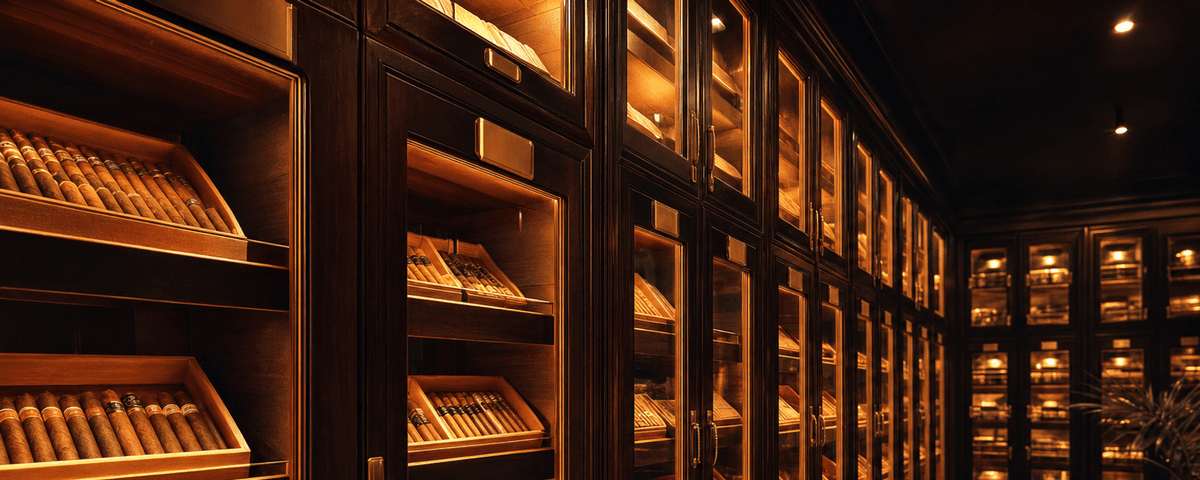
33 座 24 小時恆溫恆濕醇化室
W Cigar Bar 提供的會員醇化空間 · 場地資訊請洽編輯部
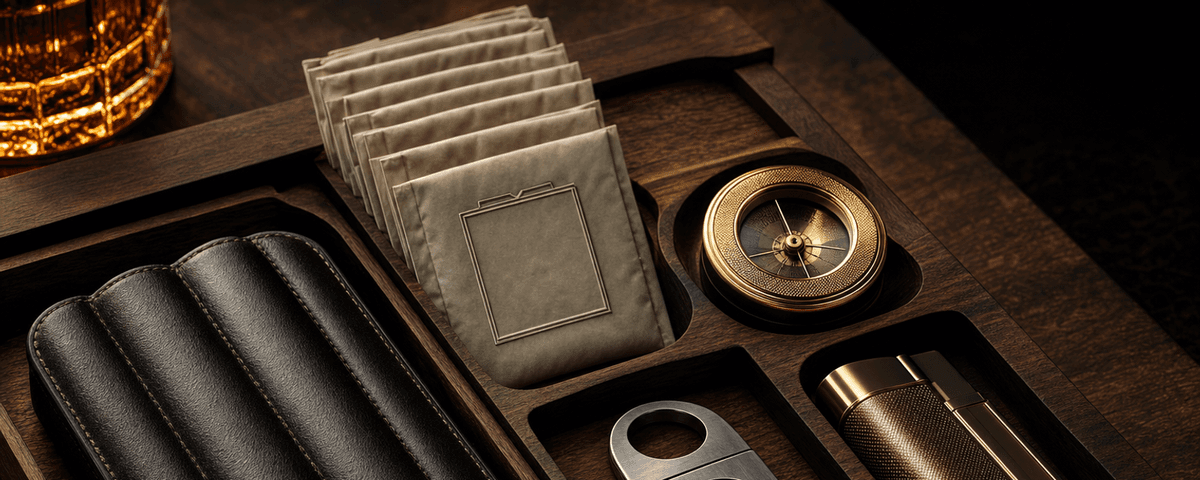
雪茄剪 / 打火機 / 雪茄盒 / Boveda
W Cigar 配件官網 · 專營雪茄配件正品
加 LINE 好友 · 文化諮詢
文化空間資訊 · 紳士沙龍 · 私人包場
本網站內容僅供雪茄文化、歷史、收藏與品吸知識研究參考。菸品有害健康、未滿法定年齡者請勿吸菸。實際規範請依所在地法律為準。
吸菸有害健康・戒菸專線 0800-636363・本站僅供 20 歲以上成年人閱覽。
讀到這裡,你不只是路過的人
留下 Email,加入 W 雪茄聖經內圈——總編輯 Wilson Tsai 親選的學院深文與國際新訊,先你一步送到信箱。
· 教育用途非銷售 · 隨時一鍵退訂 · Email 絕不對外公開 · 由勝茄股份有限公司營運
同分類延伸閱讀
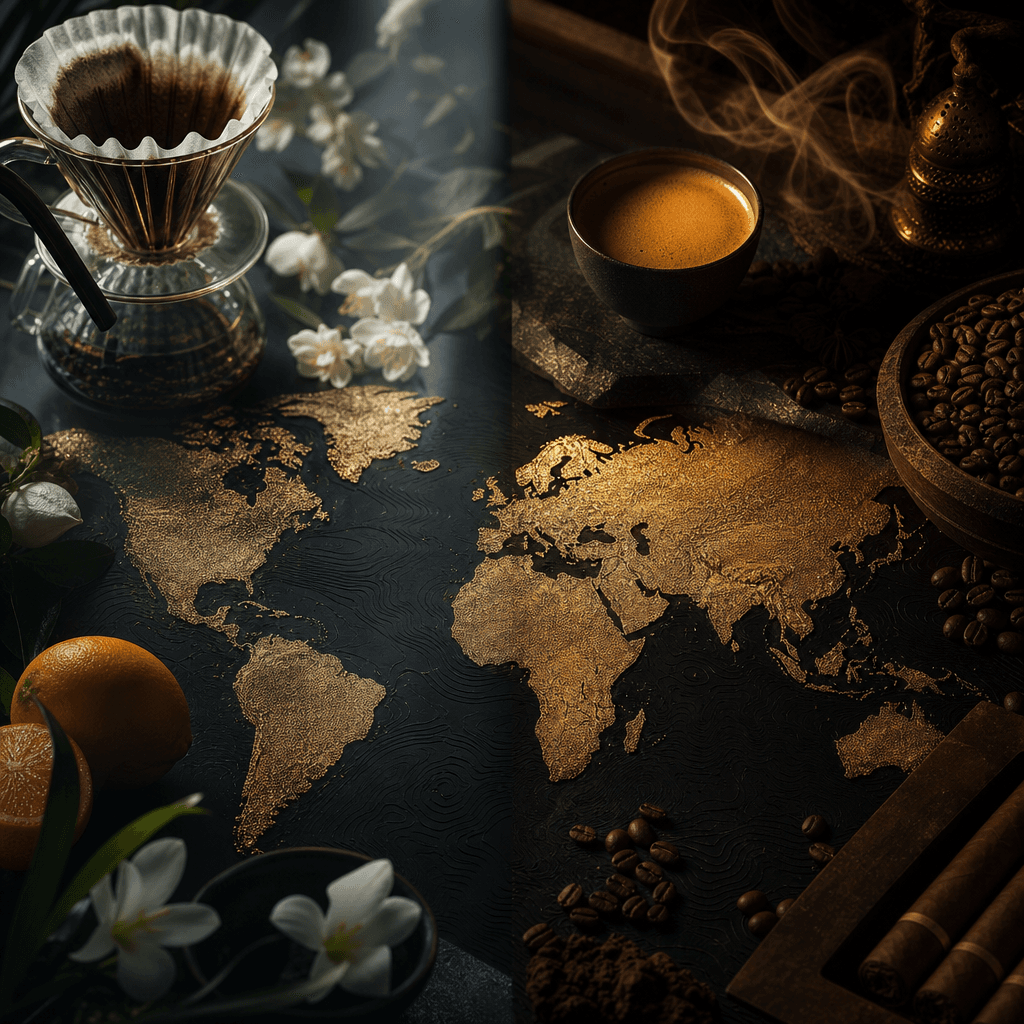
資料來源:W Cigar Bible 編輯部整理 · 雪茄王子 Wilson Tsai 親自審稿
本文僅供雪茄文化、歷史、收藏與品鑑知識研究,不作為菸品促銷、銷售或購買建議。吸菸有害健康,未滿二十歲不得吸菸。