雪茄的工藝與創新:未來的發展趨勢
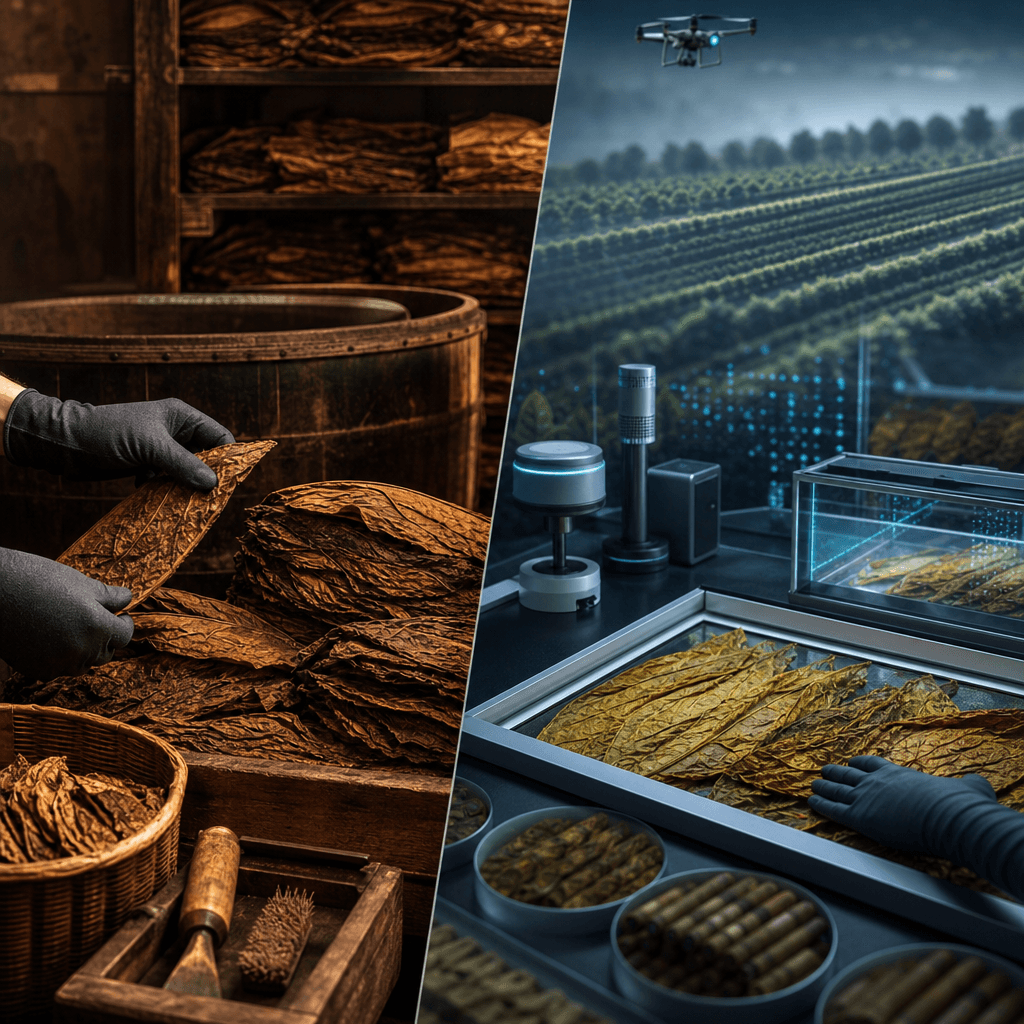
隨著雪茄產業的進步,創新已不再僅限於傳統技藝,而是融入了先進科技與數據分析。從種植到發酵,農民們開始利用土壤數據與氣候監測來提升品質,確保每一片葉子的風味穩定。發酵過程中,工廠運用溫濕度記錄器,將傳統技藝與現代科技結合,實現可複製的品質控制。此外,包裝材料的選擇也影響風味的保存,環保製程則成為業界新趨勢,提升了產品的可持續性。未來的雪茄市場將更加重視品質的穩定性與環境影響。
- 未來雪茄品質差異將細分至同一產區的特定田地與採收週期。
- 發酵創新將師傅的經驗轉化為可複製的數據曲線,提升品質穩定性。
- 環保製程不僅是道德議題,還能改善燃燒穩定性與風味乾淨度。
The Craft and Innovation of Cigars: Future Development Trends
As the editor of "Cigar Bible," the question I've been asked most frequently by veterans in recent years isn't whether a certain limited edition box is worth pursuing, but rather: How can handmade cigars continue to innovate? From the fields to the curing rooms, from the rolling tables to packaging and anti-counterfeiting, the answer is actually more technical than one might imagine.
Cigars remain a fusion of agriculture and craftsmanship, but in the next decade, the outcome will be more evidently determined by "controllable variables." Whether it's Havana seeds, Connecticut Shade, or Nicaraguan Estelí soil, whoever can consistently reproduce flavors will have more influence.

流程圖依序呈現種子田間發酵卷製與保存追蹤
Starting with Field Data: Redefining Seeds, Soil, and Microclimates
In the past, traditional tobacco farmers relied on stepping on the soil, feeling the leaves, and watching the clouds to determine harvest time. Today, advanced tobacco fields are using soil EC values, leaf nitrogen content, and drone NDVI vegetation indices to make decisions. Since 2017, more estates in Nicaragua's Estelí, Jalapa, and Condega regions have adopted zonal irrigation, allowing different parts of the same field to be treated with varying water levels. The future quality differences in cigars will further refine from "which region" to "which row in the same region, and which week of harvest."
Take Cuba's Vuelta Abajo as an example. After Hurricane Ian severely impacted Pinar del Río in 2022, the reconstruction of greenhouses, drying sheds, and shading materials prompted the industry to reassess climate resilience. Traditional tapado shade-grown leaves used to rely on nets and experience, but now there's more focus on light transmission, wind direction, and pest pressure. The Connecticut River Valley's Shade wrapper is also facing rising labor costs, prompting farms to more precisely control shading density to manage leaf thickness and oil content.
Seed innovation is equally crucial. Names like Habano 2000, Criollo 98, and Corojo 99 are familiar to veterans, but in recent years, the focus in the Dominican Republic, Honduras, and Nicaragua has been on rebalancing "disease resistance, yield, and combustibility." A strain resistant to blue mold is meaningless for premium cigars if it sacrifices aroma; a strong aroma but coarse, hard veins increase rolling difficulty. True high-level innovation doesn't make the leaves stronger but makes strength, sweetness, combustion, and flexibility simultaneously usable.

三張卡片整理可控變因醇化曲線與卷製精準重點
Scientific Approach to Fermentation and Aging: Temperature Isn't the Only Answer
Traditionally, cigar fermentation relies on pilón leaf piles, with core temperatures typically ranging from 38°C to 48°C, adjusting the turning rhythm based on leaf type, thickness, and moisture content. Veteran masters use smell, touch, and leaf color to judge, which remains effective. However, since 2020, more factories have been incorporating temperature and humidity recorders, CO₂ monitoring, and batch tracking. Innovation in fermentation doesn't replace the master but turns the "master's unspoken knowledge" into replicable curves.
Some high-end factories in the Dominican Republic separate fermentation by priming, for example, ligero requires more time due to its high oil content and thick leaves compared to seco or volado. Nicaraguan strong leaves, if under-fermented, often have a pungent ammonia and harshness; over-fermentation can weaken black pepper, cocoa, and mineral notes. Davidoff has long emphasized leaf stock and aging time, not just for smoothness, but to achieve stable complementarity among different leaf sources in the blend.
I believe the next step will be a "layered aging database." A 52-ring gauge robusto might have aging records of 18 months, 3 years, and over 5 years for the wrapper, binder, and filler respectively. If you add the difference between 65% or 70% warehouse humidity, the flavor results are completely different. The leather, roasted nuts, molasses, and woody sweetness that veterans seek are often not brought by a single leaf type but are shaped by fermentation heat, time, and moisture.

矩陣比較田間發酵卷製三階段的數據目標與風險
Precision in Rolling: Handcraft Still Exists, but Errors Are Quantified
True handmade cigars cannot be identical like machine-made products, but high-end factories have already tightened error control. Since the 2000s, many export-oriented factories commonly use draw test machines to check resistance, with acceptable ranges typically around 40 to 65 mm water column pressure. Brand standards vary, but the goal is to avoid being too tight, too loose, or burning unevenly. The value of handcraft is not in preserving mistakes but in preserving the feel while reducing unacceptable variations.
Rolling techniques themselves are also evolving. Entubado rolls filler leaves into individual tubes to enhance airflow; acordeón folds like an accordion for speed and even filling; book bunching maintains consistency in mass production. Different techniques have no absolute superiority, but if used on large sizes over 60-ring gauge, airflow management becomes more challenging than with corona or lancero. This is why veterans often say that smaller ring gauges better showcase the roller's skill.
In recent years, some brands have used X-ray or density scanning internally to check filler distribution, especially for high-priced limited editions. This doesn't mean cigars have become industrial products but rather identifies invisible voids, hard spots, and localized compression. The consistency of Padron, the structural feel of Fuente Fuente OpusX, and the craftsmanship discussion of Cohiba Behike are not myths but results accumulated through long-term training, grading systems, and strict elimination rates.

三張錯誤提醒卡說明故事年份與小批次的判斷盲點
New Materials and Packaging Technology: Protecting Flavor and Authenticity
Veterans often underestimate the impact of packaging materials on flavor. Cedar sheets, aluminum tubes, glass tubes, cellophane, and lacquered wooden boxes all differ in moisture exchange, aroma retention, and transport shock resistance. Since 2010, two-way humidity packs have become popular in private collections and retail, with different RH options like 65%, 69%, and 72% making short to medium-term storage more controllable. The future of packaging is not about luxury but ensuring cigars maintain predictable conditions during international transport, storage, and after opening.
| Technology or Material | Common Year Context | Impact on Quality | Veteran Observation Focus |
|---|---|---|---|
| Two-way Humidity Pack | Popularized in the 2010s | Stabilizes short-term humidity, reduces cracking | Pay attention to box space and replacement cycle |
| Aluminum Tubes | Long-term use, recent redesign | Pressure resistance, reduces moisture fluctuations | Still requires proper storage after opening |
| QR/Serial Anti-counterfeiting | Accelerated post-2010 | Assists in source tracking | Look at the code, printing, and seals |
| FSC Paper and Water-based Ink | Increased post-2020 | Reduces environmental burden | Observe if it affects box aroma |
| Recyclable Protective Film | Emerging attempt | Reduces plastic usage | Needs to confirm breathability and moisture resistance |
Anti-counterfeiting is another focus. Cuban box labels have strengthened barcodes, lasers, and seal details since the 2010s, while non-Cuban brands use NFC, blockchain batch numbers, or distribution systems for source tracking. As a PCC special distributor, I particularly value "source, preservation, batch." When discussing collection value, I always add: Collection appreciation does not guarantee appreciation; it still depends on source preservation and market. Without a credible source, even the most beautiful box condition is just a risk package.
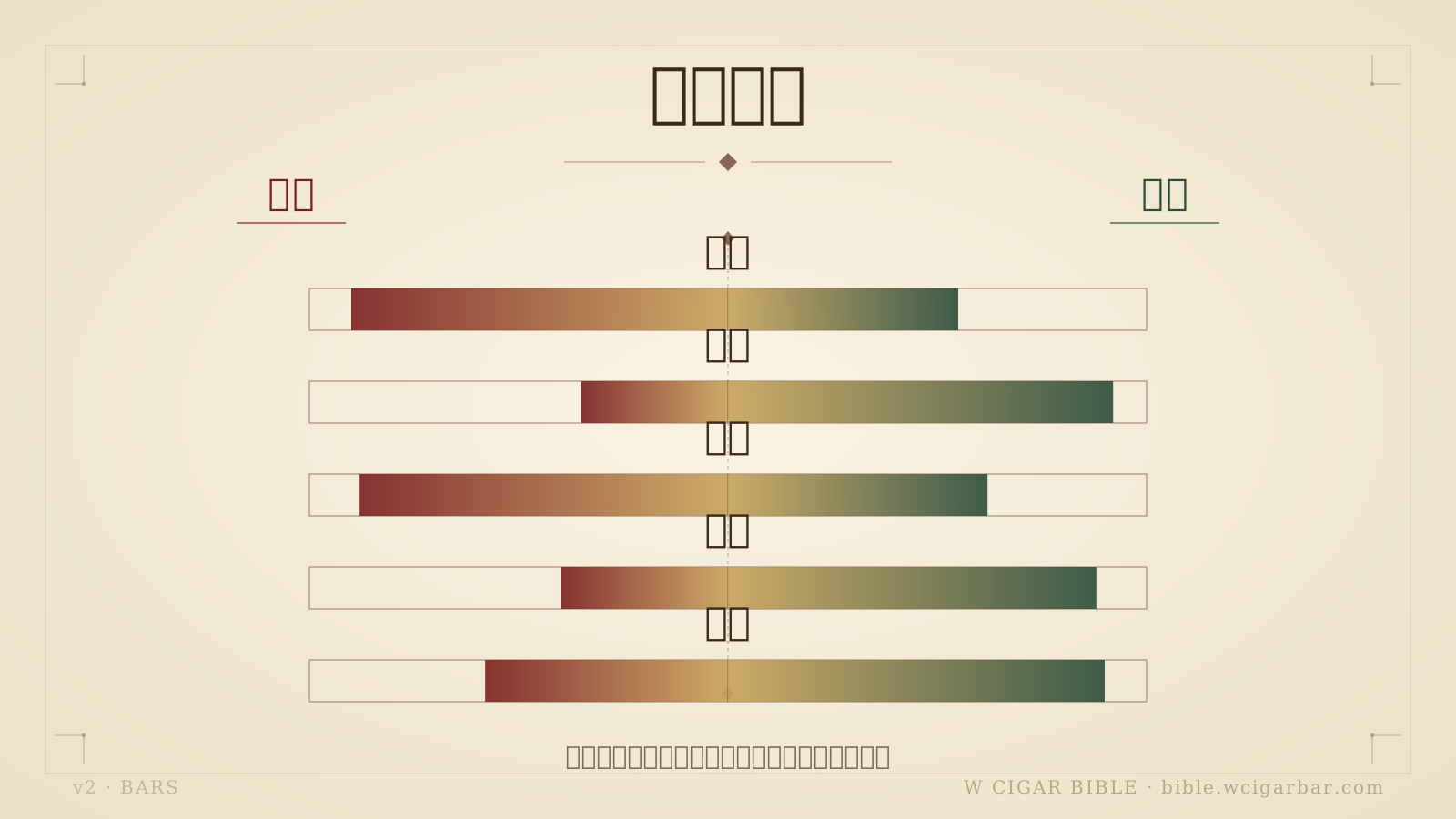
長條比較傳統經驗與科技管理在五個軸向的強弱
Eco-friendly Processes: Not Just a Moral Issue, It Can Change Flavor
Eco-friendliness is not a slogan for cigars, as tobacco heavily relies on soil life, dry wood, water resources, and labor systems. Some estates in Nicaragua, Honduras, and the Dominican Republic have begun introducing composting, cover crops, drip irrigation, and rainwater harvesting, not just for image but to stabilize soil organic matter. If sustainable processes are done well, they will ultimately reflect in combustion stability, leaf elasticity, and flavor cleanliness.
Take Plasencia as an example. The family has long managed farmland in multiple Central American countries, and in recent years, discussions have focused on organic management and large leaf stock; Joya de Nicaragua emphasizes origin and factory culture in its brand narrative. Arturo Fuente's Chateau de la Fuente in the Dominican Republic is not only famous for OpusX but also shows the industry how estate scale, worker training, and community investment shape the durability of high-end brands. Environmental and labor stability directly reduce the likelihood of significant annual quality fluctuations.
Fuel is also key. Traditional drying sheds and fermentation rooms require ventilation, heat management, and wood resources. If solar-assisted, low-energy dehumidification, and traceable wood sources are used, initial costs are higher, but long-term batch losses can be reduced. Veterans often notice "clean" and "less off-flavors" differences in comparative cigar tastings; this not only comes from the blend but may also result from pesticide residue management, fermentation hygiene, and warehouse air quality.

三張問答卡整理技術環保材料與濕度選擇建議
The Next Step in Flavor Design: Cross-regional, Barrel, and Small Batch Experiments
For the next decade of flavor innovation, I see three paths: more refined cross-regional blending, more restrained special treatments, and more transparent small batch releases. Drew Estate introduced Kentucky Fire Cured in 2013, bringing fire-cured tobacco into mainstream cigar discussions; brands like Camacho, CAO, and Rocky Patel have also used barrel aging, special wrappers, or high-intensity leaves for market recognition. Mature innovation doesn't make flavors strange but logically serves the overall balance with new elements.
Barrel aging is particularly worth veteran attention. Rum barrels, bourbon barrels, and sherry barrels can bring vanilla, caramel, dried fruit, or woody sweetness, but if overdone, they can easily overshadow the nutty, leathery, and earthy notes of the tobacco itself. Another direction is wrapper experimentation, such as the cocoa and earthy tones of Mexican San Andrés, the spice and oiliness of Ecuador Habano, and the sweet earthiness of Brazil Mata Fina, which have been widely used in medium to high-intensity blends in recent years.
The return of small ring gauges might also become a veteran trend. In the past, 6×60 large sizes were strong in the U.S. market, but lancero, corona gorda, and petit robusto better showcase wrapper proportions and combustion details. Since 2021, many brands have reintroduced refined sizes of 46 to 52 ring gauges, responding to mature customers' demand for layers rather than just concentration. Future limited editions, if able to disclose more leaf age, aging time, and regional proportions, will be more convincing than just changing the band.
Frequently Asked Questions
When judging innovation, veterans should first ask what problem it solves, rather than just looking at packaging or stories. If new technology only adds to the topic without improving stability, combustion, or flavor clarity, it's not true progress.
Will new technology make handmade cigars lose their soul?
No. Draw resistance testing, temperature and humidity recording, and batch tracking only reduce errors; true formulas, leaf selection, and rolling feel still rely on people.
Will eco-friendly materials affect box aroma?
Yes, so caution is needed. If the smell control of water-based inks and recycled paper is poor, it may interfere with cedar and tobacco aromas; mature brands usually conduct long-term compatibility tests first.
Should veterans focus on year or source for collections?
Both should be considered, but source is prioritized. The year only indicates time, not correct preservation; temperature, humidity, box condition, seals, and distribution paths are equally important.
How to choose between 65%, 69%, and 72% humidity?
Consider origin, wrapper, and personal taste. Cuban and small ring gauges often prefer 65% to 69%; heavy non-Cuban cigars can fall between 69% and 72%, but combustion performance should still be considered.
Is barrel aging the future mainstream?
It will be an important branch but won't replace tradition. Barrels can add aroma memory points but can also easily overshadow; high-end works still need to let the tobacco's original flavor take center stage.
Are small batches always better than regular lines?
Not necessarily. Small batches may have rare leaves and higher selection standards, but they may also just be limited in quantity. Veterans should return to judging structure, balance, combustion, and the performance of the latter part.
Looking at the future of cigars, the most precious thing is not wrapping tradition as antiques, nor using technology as a gimmick; it's making a cigar from seed, soil, fermentation, rolling to preservation more honest and traceable. What veterans truly pursue are the details left by time, not myths built by volume.
—Cigar Prince Wilson Tsai
Smoking is harmful to health. No smoking under the age of twenty. Quitline: 0800-636363. This article is intended for adults over the age of twenty as a reference for cigar culture, preservation, and regulatory knowledge, not as a tobacco advertisement, promotion, or purchase suggestion.
Like this article?Share with friends
Share this W Cigar Bible piece with friends who want to learn cigar culture, storage, and tasting.
想把這篇 化為實踐
雪茄聖經是知識;雪茄文化要在空間裡發生

W Cigar Bar 大安總店資訊
台北大安區 · 雪茄聖經總編輯 Wilson Tsai 主理的雪茄文化空間
33 座 24 小時恆溫恆濕醇化室
W Cigar Bar 提供的會員醇化空間 · 場地資訊請洽編輯部
雪茄剪 / 打火機 / 雪茄盒 / Boveda
W Cigar 配件官網 · 專營雪茄配件正品

加 LINE 好友 · 文化諮詢
文化空間資訊 · 紳士沙龍 · 私人包場
本網站內容僅供雪茄文化、歷史、收藏與品吸知識研究參考。菸品有害健康、未滿法定年齡者請勿吸菸。實際規範請依所在地法律為準。
吸菸有害健康・戒菸專線 0800-636363・本站僅供 20 歲以上成年人閱覽。
讀到這裡,你不只是路過的人
留下 Email,加入 W 雪茄聖經內圈——總編輯 Wilson Tsai 親選的學院深文與國際新訊,先你一步送到信箱。
· 教育用途非銷售 · 隨時一鍵退訂 · Email 絕不對外公開 · 由勝茄股份有限公司營運
同分類延伸閱讀

資料來源:W Cigar Bible 編輯部整理 · 雪茄王子 Wilson Tsai 親自審稿
本文僅供雪茄文化、歷史、收藏與品鑑知識研究,不作為菸品促銷、銷售或購買建議。吸菸有害健康,未滿二十歲不得吸菸。