雪茄的工藝分解:從手工藝到自動化的影響
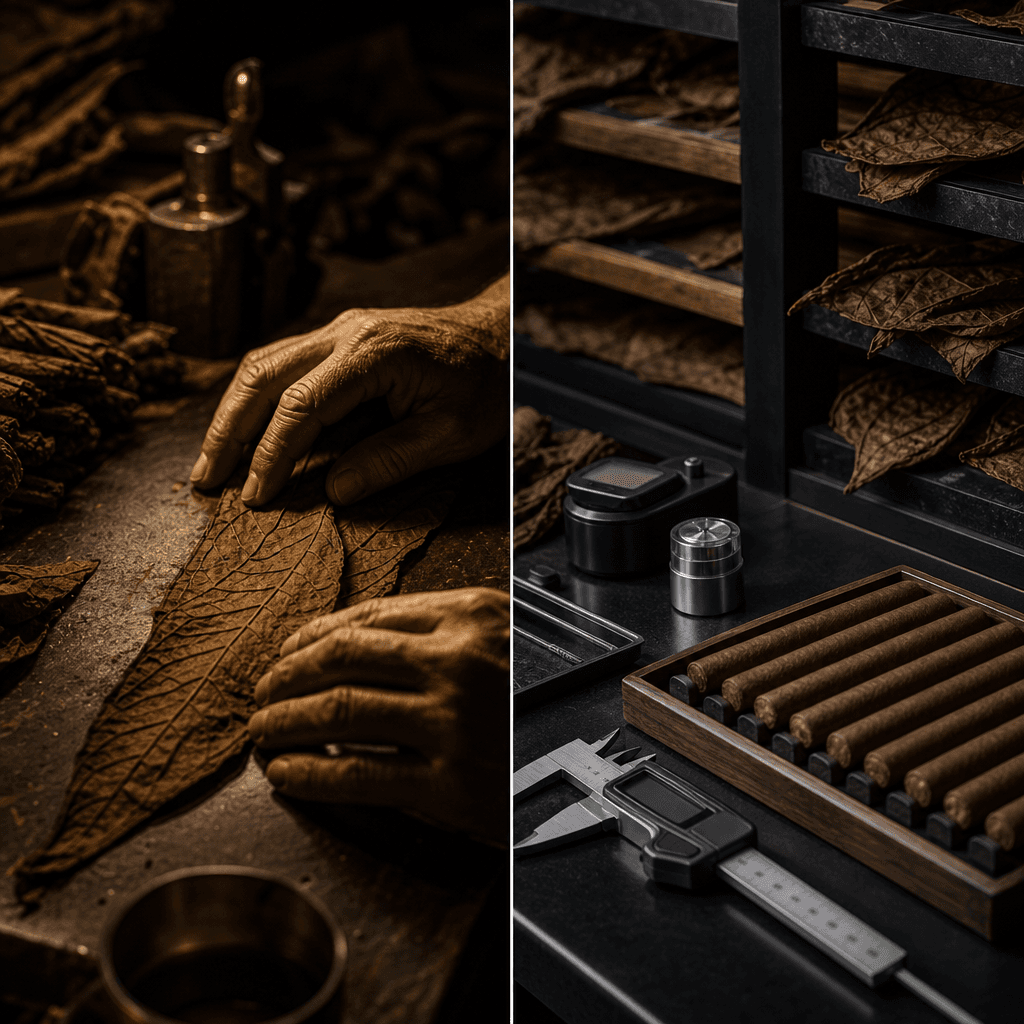
在雪茄的世界裡,工藝的深度與細緻度是評價一支雪茄品質的關鍵。手工雪茄的價值不僅在於工匠的技藝,更在於他們如何即時判斷菸葉的狀態,調整每一步的製作過程,以確保結構、香氣及燃燒品質的穩定。自動化技術的引入並非敵對手工藝,而是透過數據化管理提升前段流程的效率,確保每批菸葉的品質可追蹤。不同產區如古巴、尼加拉瓜與多明尼加,各自展現出獨特的工藝哲學,讓雪茄愛好者在品味中體驗多樣化的風味與層次。
- 手工雪茄的價值在於工人即時修正葉片狀態,這種判斷難以被機器完全取代。
- 自動化在雪茄生產中最有效的地方是前段管理,能將經驗轉化為可追蹤的批次紀錄。
- 不同產區的工藝差異不僅在葉種,更在於工廠如何管理力量、甜度與一致性。
Dissecting the Craft of Cigars: The Impact from Handcraft to Automation
I often say that seasoned cigar enthusiasts look beyond the ring gauge, origin, and vintage; they delve into the craftsmanship rhythm behind each cigar. From leaf grading, fermentation, rolling to quality control, every step encapsulates human judgment, tool precision, and factory protocols, culminating in that final puff.
As the editor of "Cigar Bible," what concerns me most is not the romanticism of the term "handmade," but whether it can consistently translate into structure, aroma, and burn quality. Automation is not the enemy; the real question is: at which stage does the machine intervene? After intervention, what does the cigar lose, and what does it gain?
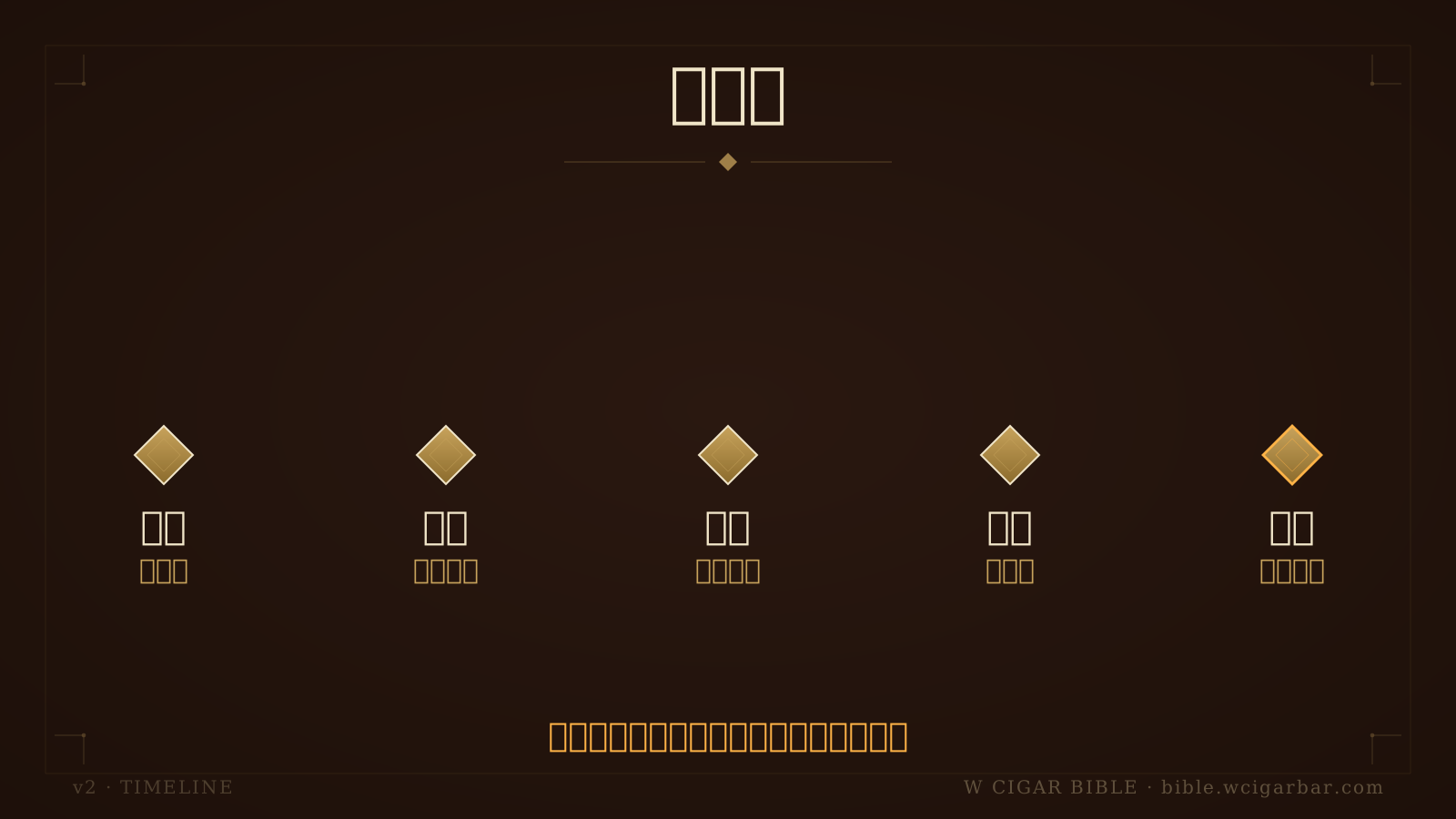
時間軸依序顯示分級發酵配方捲製到品控流程
The Core of Handmade Cigars: More Than Just Hand Rolling, It's Hand Judgment
Many people simplify handmade cigars as "non-machine," which is an oversimplification. Taking traditional factories like Cuba's Partagás, H. Upmann, and Cohiba as examples, the work of a torcedor is not just assembling the filler, binder, and wrapper but also judging the humidity, elasticity, and vein thickness with each fold, stretch, and tightening. Around 2010, I observed several batches of Robusto from different factories; despite the same 50 ring gauge and a weight difference of only 1 to 2 grams, the draw resistance was noticeably different, often due to the touch.
The value of handmade lies in "real-time correction." If a filler contains a piece of ligero that is too thick, the craftsman can adjust its position to avoid bitterness from overheating in the latter part; if the wrapper is high in oil and extends well, it can be wrapped with less tension to reduce the risk of cracking. The truly expensive aspect of handmade cigars is the skilled worker's ability to convert the unquantifiable state of the leaves into a combustible, repeatable structure. This judgment is still difficult to completely replace with sensors.
However, handcrafting comes at a cost: stability heavily relies on humans. Even within the same box of 25, from the same batch and factory, the same vitola can have a 5% to 10% variance in resistance. Seasoned enthusiasts often mention "in-box variation," which is not superstition but the natural result of the overlap between agricultural products and human craftsmanship. Without strict sampling, weight grouping, and reworking systems, handcrafting can become a source of instability.
From Tobacco Fields to Fermentation: Automation First Changes Front-End Management
Discussing automation should not start with rolling machines. Earlier changes occurred in tobacco fields, warehouses, and fermentation rooms. The progress in places like Estelí in Nicaragua, Danlí in Honduras, and the Cibao Valley in the Dominican Republic over the past 20 years largely comes from temperature and humidity records, batch labeling, soil analysis, and storage monitoring. After 2000, many non-Cuban brands rose steadily, relying not only on master blending but also on the scientific management of the front end.
Tobacco fermentation still involves both tactile and data-driven processes. Traditional pilóns can reach internal temperatures of 40 to 50°C, and workers turn the piles according to leaf type, thickness, and heating speed. If the temperature is too high, ammonia and harshness may remain; if too low, sweetness and smoothness may be insufficient. The most valuable aspect of automation in the front end is turning "experience" into traceable batch records, rather than completely removing humans. This is also why major factories still retain experienced fermentation masters.
Taking Davidoff's system in the Dominican Republic as an example, since the brand strengthened its non-Cuban lines in the 1990s, it has placed great emphasis on vertical management of planting, drying, and fermentation; Padrón in Nicaragua is known for long-term aging and stable raw materials. These cases tell us that when evaluating a cigar, one should not only ask "handmade or machine," but also how the leaves were managed before reaching the rolling table.
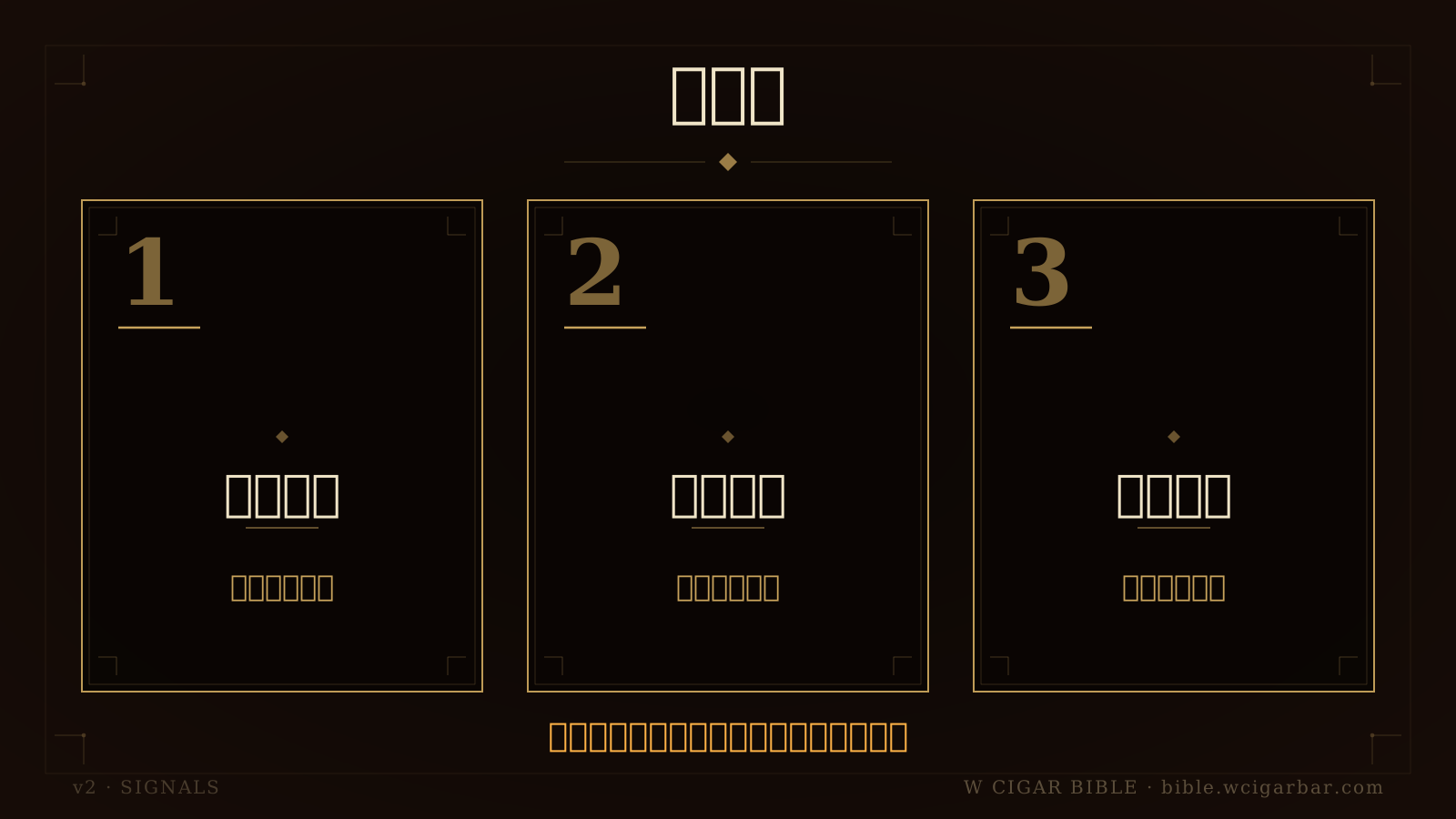
三張重點卡整理手工判斷前段紀錄與機器定位
Dissecting Rolling Techniques: Differences Between Entubado, Booking, and Machine Molding
There are two common filler arrangement concepts for handmade long-filler cigars: entubado and booking. Entubado involves rolling each filler leaf into a small tube before bundling them together, theoretically providing clearer air channels; booking stacks the leaves like book pages, which is more efficient and often seen in mass production. Both can produce good cigars, but the difference lies in whether the craftsman understands leaf thickness, burn rate, and aroma layers, rather than the technique name itself.
Machine molding usually emphasizes consistent specifications. Some short-filler or mixed-filler products use molds and forming machines to control diameter, length, and density, ensuring that mass-produced products have similar appearance and weight. Hand rolling pursues flexible adjustments of leaf structure; machine molding pursues consistency in shape, speed, and cost. If high-quality short fillers are used, machine products can also be clean and stable, but often with fewer aroma transitions.
Seasoned enthusiasts can judge the impact of techniques from three details:
- After cutting, check if the filler shows continuous long fibers or if there is a high proportion of fragments.
- Before lighting, gently squeeze the middle of the ring gauge to feel if the density is uniform and if there are any hard spots or voids.
- Observe the ash column after burning halfway; if the structure is loose but the burn line is stable, it usually means the formula and rolling have achieved balance.
For example, since the introduction of Arturo Fuente OpusX in 1995, discussions often revolve around the breakthrough of Dominican wrappers; but in terms of craftsmanship, it also demonstrates how high-oil wrappers and strong fillers achieve balance through hand control. Such cigars would be difficult to standardize with machines alone while retaining that tension.

矩陣比較手工機器與前段管理在來源優勢風險的差別
Quality Control: Weight, Resistance, and Testing Are More Important Than Romance
Truly mature factories do not just rely on "the hands of master craftsmen." Weight grouping, draw testing, appearance inspection, and burn testing are indispensable processes for modern high-end cigars. For common Corona Gorda or Robusto sizes, if the weight difference of a single cigar exceeds a reasonable range, it often affects burn speed and concentration performance. If the draw is too tight, the aroma cannot open up; if too loose, the temperature rises too quickly, making the latter part prone to dryness and bitterness.
Automation is meaningful in quality control. Draw testers can measure resistance before or after the wrapper is applied, reducing the chance of blocked products entering the market; color sorting and grading light tables help workers control the wrapper color within a close range in the same box. Quality control is not about making cigars devoid of personality but about eliminating defects that should not appear. Seasoned enthusiasts pursue variation but do not mistake blockage, breakage, mold, or excessive moisture for terroir.
Here are the observation angles I often use when evaluating craftsmanship, especially suitable for comparing different vintage batches of the same brand:
| Observation Item | Handmade Advantage | Automation Advantage | Impact on Final Quality |
|---|---|---|---|
| Filler Arrangement | Can adjust according to leaf elasticity | Stable specifications | Affects draw and burn channel |
| Weight Control | Relies on craftsman's experience | Can quickly group | Affects concentration and burn speed |
| Appearance Color Sorting | Delicate human eye judgment | Light table assists consistency | Affects uniformity within the same box |
| Defect Elimination | Can be reworked immediately | Data can be tracked | Reduces risk of blockage and cracking |
From 2016 to 2022, many high-end non-Cuban brands have significantly improved in consistency, precisely because quality control has become increasingly institutionalized. Conversely, if a cigar touted as fully handmade lacks rigorous QC, it may have charming peaks but also disappointing lows.
Cuba, Nicaragua, Dominican Republic: Different Craft Philosophies
Cuban cigars have long established their status through variety, terroir, and traditional factory culture. The Cohiba Siglo series, launched in 1992, represents a more refined, modern Cuban style; after the official launch of Behike in 2010, the rarity and richness of medio tiempo leaves became a focal point. The charm of Cuban craftsmanship lies in its high aroma recognition, with hay, honey, wood, floral, and mineral notes often interwoven, but batch variations are also a common topic among seasoned enthusiasts.
Nicaraguan brands like Padrón, Oliva, My Father, and Drew Estate emphasize strength, sweetness, and stable mass production. Since the launch of the Padrón 1964 Anniversary series in 1994, it has been known for its box-pressed shape, dark wrappers, and concentrated cocoa tones; Oliva Serie V constructs a clear sweet-spicy profile with Jalapa ligero. The craft differences between different regions are not just due to different leaf varieties but also how factories manage strength, sweetness, and consistency.
The Dominican Republic is often underestimated for its "precision." Davidoff, Arturo Fuente, and La Flor Dominicana each showcase different directions: Davidoff emphasizes clean lines and balance; Fuente excels at handling high-oil wrappers and layers; La Flor Dominicana pushes concentration and expressiveness further. If Cuba is like an old-fashioned concert hall, Nicaragua is like a jazz live performance, and the Dominican Republic is like a recording studio, with every detail repeatedly calibrated.
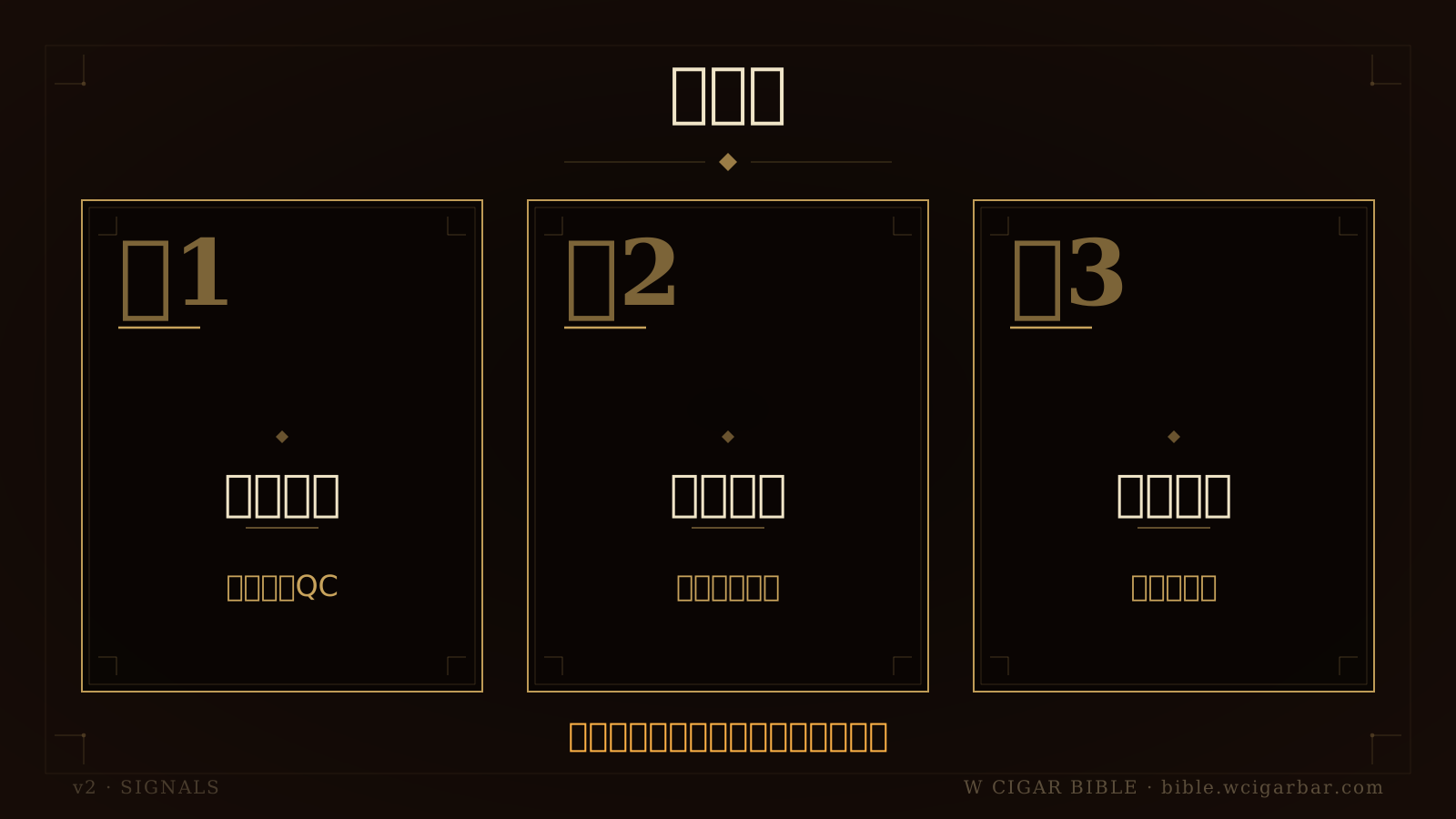
三張錯誤觀念卡提示手工顏色與盒內差異的誤判
Automation Is Not a Synonym for Low-End; The Issue Lies in the Depth of Involvement
In the cigar world, handcraft is often equated with high-end, and machines with low-end, but this view is not accurate. European Villiger, machine-made cigars under the Dutch and Danish systems, and Italy's Toscano all have long-term markets and fixed audiences. Toscano's history dates back to 1815, using Kentucky tobacco with unique fermentation and drying methods, forming a complete craft language different from traditional long-filler handmade cigars.
The issue is not "whether there is a machine," but which part the machine participates in. If it's only used for cutting, weight classification, draw measurement, and humidity monitoring, it often improves quality stability; if machines completely replace long-filler arrangement and hand wrapping, the way aromas unfold, burn flexibility, and flavor layers usually differ. Automation is best suited for repetition, measurement, and recording; handcraft is best for judgment, correction, and detail balance.
For short-filler products, mechanization can make costs more controllable and maintain a fixed flavor for entry-level sizes; but for Double Corona, Churchill, Salomones, and other longer or special shapes, the importance of handcraft increases sharply. Longer sizes require more precise distribution of leaves in the front, middle, and back, otherwise, issues like blandness in the front, over-aggression in the middle, and blockage in the back may occur. This is why seasoned enthusiasts pay special attention to factory skills in larger sizes.
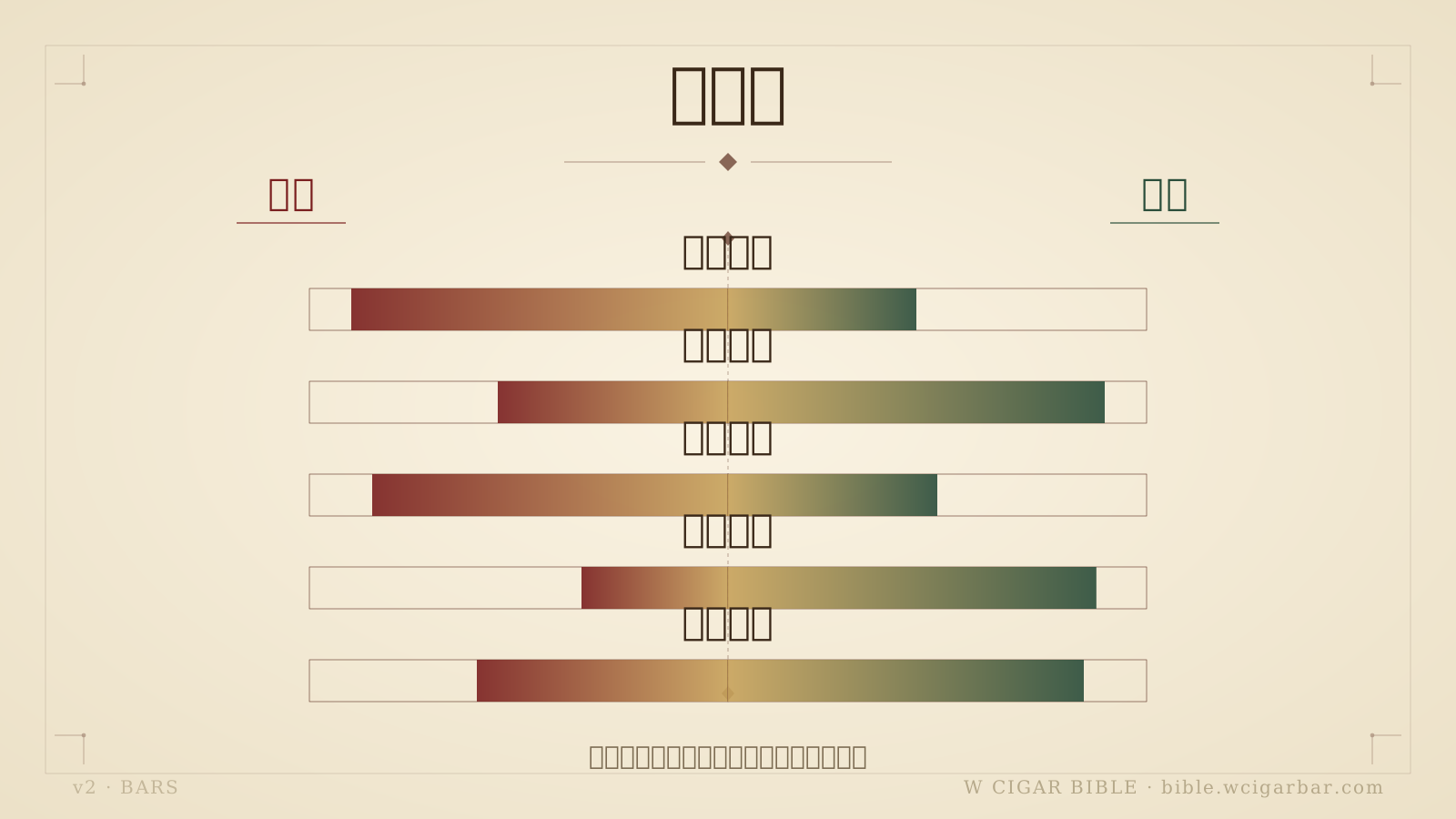
橫向長條圖比較手工與自動在五個工藝軸線的強弱
How Seasoned Enthusiasts Reverse-Engineer Craftsmanship Standards from Appearance and Burn
Without dismantling factory data, much can be inferred from the finished product. First, look at the wrapper tension: if the surface is naturally shiny, veins are smooth, and the cap is neatly closed, it often indicates good control of wrapper moisture and wrapping force. If there are fine cracks at the shoulder, loose foot, or crooked cap, it doesn't necessarily mean it's unsmokable, but it suggests potential burn or structural issues in the latter part.
Next is draw and burn line. If the cold draw before lighting is too tight, common causes include overly dense filler, high humidity, or local hard spots; if the cold draw feels like an empty tube, it may indicate insufficient filler. During burning, uneven burning is not necessarily the cigar's fault; wind direction, lighting angle, and humidity all affect it. However, if multiple cigars from the same box repeatedly burn unevenly in the same spot, it raises suspicion about rolling density or leaf arrangement. A cigar's burn is the combined result of craftsmanship, storage, and user operation.
I recommend seasoned enthusiasts keep simple records: brand, size, box code or vintage, storage humidity, lighting time, correction times, and temperature sensation in the latter part. After reviewing three months later, you'll find that some brands perform better at 65% RH, some rich Nicaraguan leaves are cleaner at 62% to 64%, and some large Cuban sizes require longer aging. These records are more reliable than single impressions.
Brand Case Studies: How Craftsmanship Features Become Flavor Characteristics
Cohiba's high-end image comes not only from its name but also from selection, fermentation, and formulation. Traditionally, some Cohiba leaves undergo additional barrel fermentation, making the taste rounder and reducing sharpness; this is why, among Cuban cigars, Cohiba often presents more refined cream, grass, floral, and woody lines. Of course, there are still differences between vintage batches, especially from 2019 to 2022, where market discussions on supply and consistency were prevalent.
Padrón is another craftsmanship archetype. It relies not on flashy packaging but on long-term aged tobacco, box-pressed shapes, and stable tones to build trust. The 1964 Anniversary and 1926 Serie lines are known for cocoa, coffee, black pepper, and nutty sweetness, with high burn stability. Brand character is not a marketing term but the result of long-term accumulation of raw material management, rolling systems, and quality control.
Davidoff's feature is "cleanliness." Whether it's Signature, Grand Cru, or later Nicaragua and Yamasa, the brand pays great attention to clear lines and impurity control. Arturo Fuente is like a sculptor in handcraft, showcasing the ability to handle special shapes and wrapper treatment from Hemingway's figurado to OpusX's rich structure. When comparing brands, seasoned enthusiasts should ask less "which is more high-end" and more "which craft philosophy better suits my desired rhythm."

三張問答卡快速回答手工差異與自動化取代問題
Storage and Aging: After Craftsmanship Is Complete, Responsibility Shifts to the Collector
No matter how good the craftsmanship, if storage is inaccurate, it can be ruined. Cigars are not static objects after leaving the factory; they continue to change slowly in temperature, humidity, oxygen, and time. Generally, 18 to 21°C and relative humidity of 62% to 69% is a common stable range; many seasoned Cuban enthusiasts prefer 64% to 66%, while rich Nicaraguan cigars are often kept at 62% to 65% to reduce dampness and bitterness.
Aging is closely related to craftsmanship. Tighter rolled larger sizes usually require more time for moisture and aromas to reintegrate; cigars with a high ligero ratio may become rounder after 1 to 3 years. Aging is not magic; it can only amplify good structure and soften edges but cannot fix mold, blockage, or raw material defects. If a cigar is unevenly filled from the start, no amount of aging will turn it into a structurally perfect piece.
Collectors often talk about vintage and rarity, but I value source and storage records more. If discussing collection appreciation, remember: it does not guarantee appreciation; it still depends on source storage and market conditions. Especially for high-end Cubans, limited non-Cubans, and special commemorative editions, circulation conditions vary greatly in different regions; without good humidity records and reliable sources, even the most beautiful box is just a risk package. The last mile of craftsmanship is often completed in your humidor.
Frequently Asked Questions
Are handmade cigars always better than machine-made cigars?
Not necessarily. Handmade long fillers usually have advantages in layers, structural flexibility, and special sizes, but they also rely more on workers and QC. Machine-made cigars have strengths in consistency, cost, and specification control. The real comparison should be the grade of raw materials, the depth of craft involvement, and quality control, not just the words handmade or machine.
Why do cigars from the same box vary?
Cigars are an agricultural product combined with craftsmanship. Even within the same batch of tobacco, leaf thickness, oil content, and fermentation state will differ; even if rolled by the same craftsman, adjustments may be made due to humidity and leaf elasticity. If a few out of 25 have different resistance, it's a common phenomenon; if most are blocked or cracked, it may be a craft or storage issue.
Does box-pressing change the flavor?
Box-pressing mainly changes the touch, burn surface, and density performance, and does not create new aromas out of thin air. However, if the brand has consistent weight, humidity, and aging management before and after pressing, it may indeed result in slower burning and more concentrated flavor. The Padrón 1964 Anniversary is a typical example often mentioned.
Can wrapper color determine quality?
Only partially. Dark maduro often carries cocoa, coffee, and molasses impressions, but if improperly fermented, it can also be harsh; light claro may be delicate and refreshing, but also thin. Wrapper color should be viewed alongside oil content, elasticity, veins, burn, and aroma; looking at color alone can lead to misjudgment.
What craft interpretation skills should seasoned enthusiasts train the most?
I believe it's draw and burn records. Appearance can be misleading, and brand names can influence expectations, but draw, burn line, ash column, temperature, and correction times are honest. By continuously recording over 20 cigars, you'll start to see a brand's craft stability and adjust your storage humidity accordingly.
Will automation replace high-end handmade cigars in the future?
Not in the short term. Sensors, grading equipment, and testing tools will become increasingly important, but high-end long-filler cigars still require human judgment of leaf elasticity, aroma configuration, and structural balance. The strongest future factories will not be those that reject machines the most, but those that best understand where to place machines.
To me, the most fascinating aspect of cigar craftsmanship is that it always stands between nature and system. Tobacco leaves have vintage temperaments, workers have tactile differences, machines have precision advantages, and preservers also have responsibilities. If seasoned enthusiasts can move from "do I like it" to "why does it perform this way," every cigar will become a craft lesson. Truly respectable brands are not those that tell the loudest stories, but those that let you see the discipline accumulated over the years in burn lines, draw, and aroma layers.
—Cigar Prince Wilson Tsai
Smoking is harmful to health. Under 20 years old is not allowed to smoke. Quitline: 0800-636363. This article is for reference by adults over 20 years old for cigar culture, preservation, and regulation knowledge only, and is not a tobacco advertisement, promotion, or purchase suggestion.
Like this article?Share with friends
Share this W Cigar Bible piece with friends who want to learn cigar culture, storage, and tasting.
想把這篇 化為實踐
雪茄聖經是知識;雪茄文化要在空間裡發生

W Cigar Bar 大安總店資訊
台北大安區 · 雪茄聖經總編輯 Wilson Tsai 主理的雪茄文化空間

33 座 24 小時恆溫恆濕醇化室
W Cigar Bar 提供的會員醇化空間 · 場地資訊請洽編輯部
雪茄剪 / 打火機 / 雪茄盒 / Boveda
W Cigar 配件官網 · 專營雪茄配件正品

加 LINE 好友 · 文化諮詢
文化空間資訊 · 紳士沙龍 · 私人包場
本網站內容僅供雪茄文化、歷史、收藏與品吸知識研究參考。菸品有害健康、未滿法定年齡者請勿吸菸。實際規範請依所在地法律為準。
吸菸有害健康・戒菸專線 0800-636363・本站僅供 20 歲以上成年人閱覽。
讀到這裡,你不只是路過的人
留下 Email,加入 W 雪茄聖經內圈——總編輯 Wilson Tsai 親選的學院深文與國際新訊,先你一步送到信箱。
· 教育用途非銷售 · 隨時一鍵退訂 · Email 絕不對外公開 · 由勝茄股份有限公司營運
同分類延伸閱讀

資料來源:W Cigar Bible 編輯部整理 · 雪茄王子 Wilson Tsai 親自審稿
本文僅供雪茄文化、歷史、收藏與品鑑知識研究,不作為菸品促銷、銷售或購買建議。吸菸有害健康,未滿二十歲不得吸菸。