雪茄的品味進階:從新手到老練者的轉變
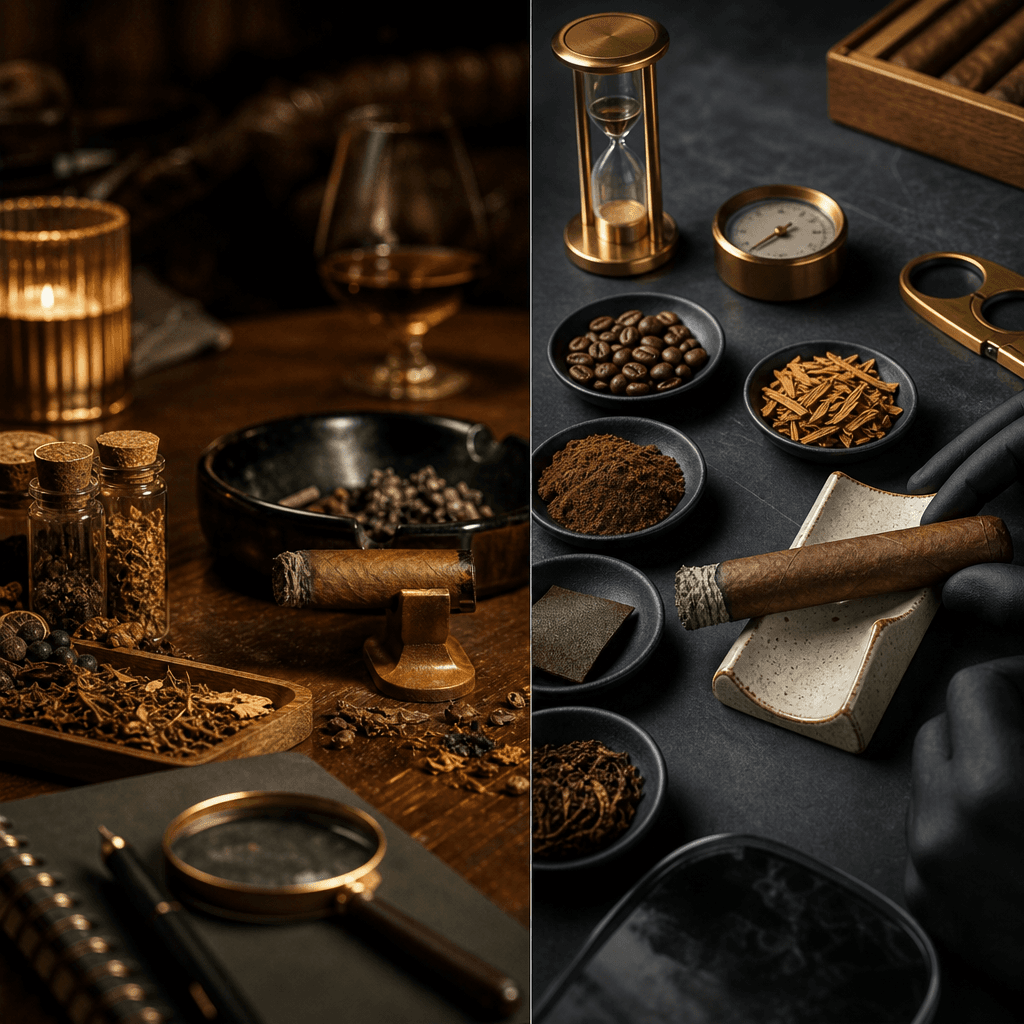
許多雪茄新手在品味上遇到瓶頸,無法清楚表達所感受到的風味。進階的品味不僅在於抽過多少支雪茄,更在於是否能建立可重複的觀察方法。本文將雪茄品味拆解為可練習的能力,幫助讀者從「有感覺」轉向「說得清楚」。透過建立個人的風味字典、訓練嗅覺與味覺,並掌握剪口、點火及吸吐節奏等技術,讀者將能更深入理解雪茄的層次與變化,提升品味的精準度與樂趣。
- 進階品味的第一步是將單一形容詞拆解為來源、位置與變化,提升品味的精確度。
- 建立風味字典有助於辨認雪茄中的各種香氣,增強嗅覺記憶。
- 雪茄的強度、煙體與濃郁度是三個不同概念,需分開評估以提高判斷準確性。
The Advancement of Cigar Tasting: Transitioning from Novice to Connoisseur
Many friends at the entry level already know how to cut the cap, light up, and exhale slowly, yet they quickly hit a bottleneck: why can others describe flavors like cream, leather, cedar, cocoa, while I only feel "smooth" or "spicy"? The difference in advancement often lies not in how many cigars one has smoked, but in whether one has established a repeatable observation method.
As an editor of the "Cigar Bible," I've seen too many beginners eager to chase famous brands and vintages, neglecting palate training, burn rhythm, and record-keeping. This article is not about showing off skills, but about breaking down cigar tasting into practicable abilities, allowing you to move from "having a feeling" to "expressing it clearly."
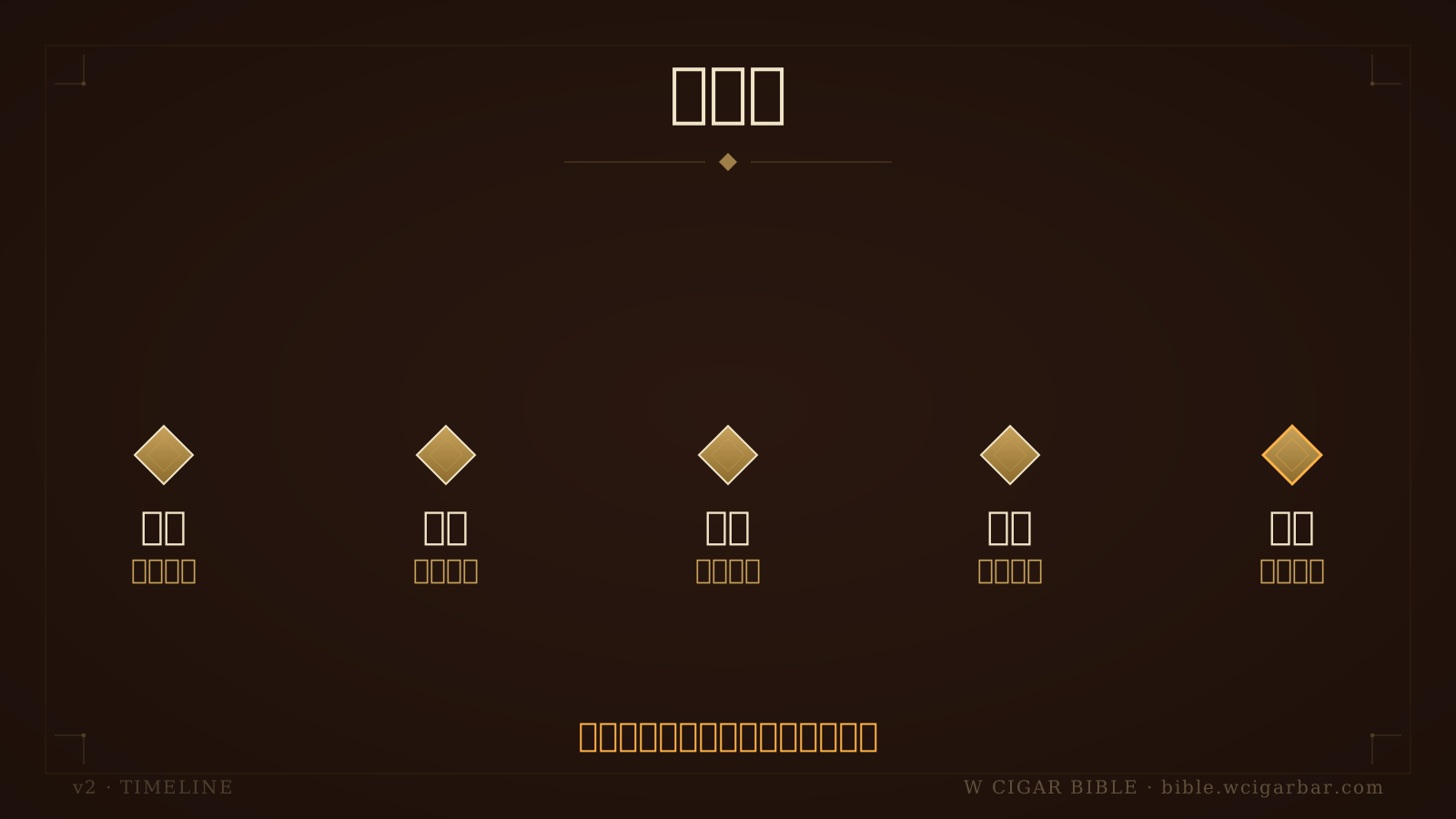
時間線依序呈現聞材校準剪點慢抽與紀錄
From "Is it good to smoke?" to "Why is it good to smoke?"
Beginners often use terms like smooth, strong, fragrant, spicy. These feelings are real but too general. Experienced smokers will further inquire: is smoothness due to low irritation or an oily coating? Is strength from nicotine or thick smoke? For example, with similar ring gauges around 52, Partagás Serie D No.4 often gives a spicy and woody pressure, while Hoyo de Monterrey Epicure No.2 leans towards creamy, nutty, and mild herbal notes. Both can be said to be "fragrant," but the direction of the fragrance is completely different.
The first step in advanced tasting is to break down a single adjective into source, location, and change. The source refers to what the aroma resembles, the location indicates whether it appears at the front of the mouth, on the tongue, in the nasal cavity, or at the back of the throat, and change observes whether it shifts in the first, middle, or final third. Take Montecristo No.2 as an example; when fresh, it often shows roasted coffee, cocoa powder, and slight bitterness; if stored well for 3 to 5 years, the taste may become rounder, with wood and cocoa merging more closely.
I suggest focusing on only 3 observation points each time, rather than chasing a dozen aromas at once. Record "entry" on the first cigar, "middle" on the second, and "aftertaste" on the third, which is more effective than writing half a page at once. Since 2008, differences in Cuban cigar box codes and batches still exist; brand impressions can only serve as a map, not replace current observations. A person with taste is not someone who always speaks eloquently but can consistently articulate differences.
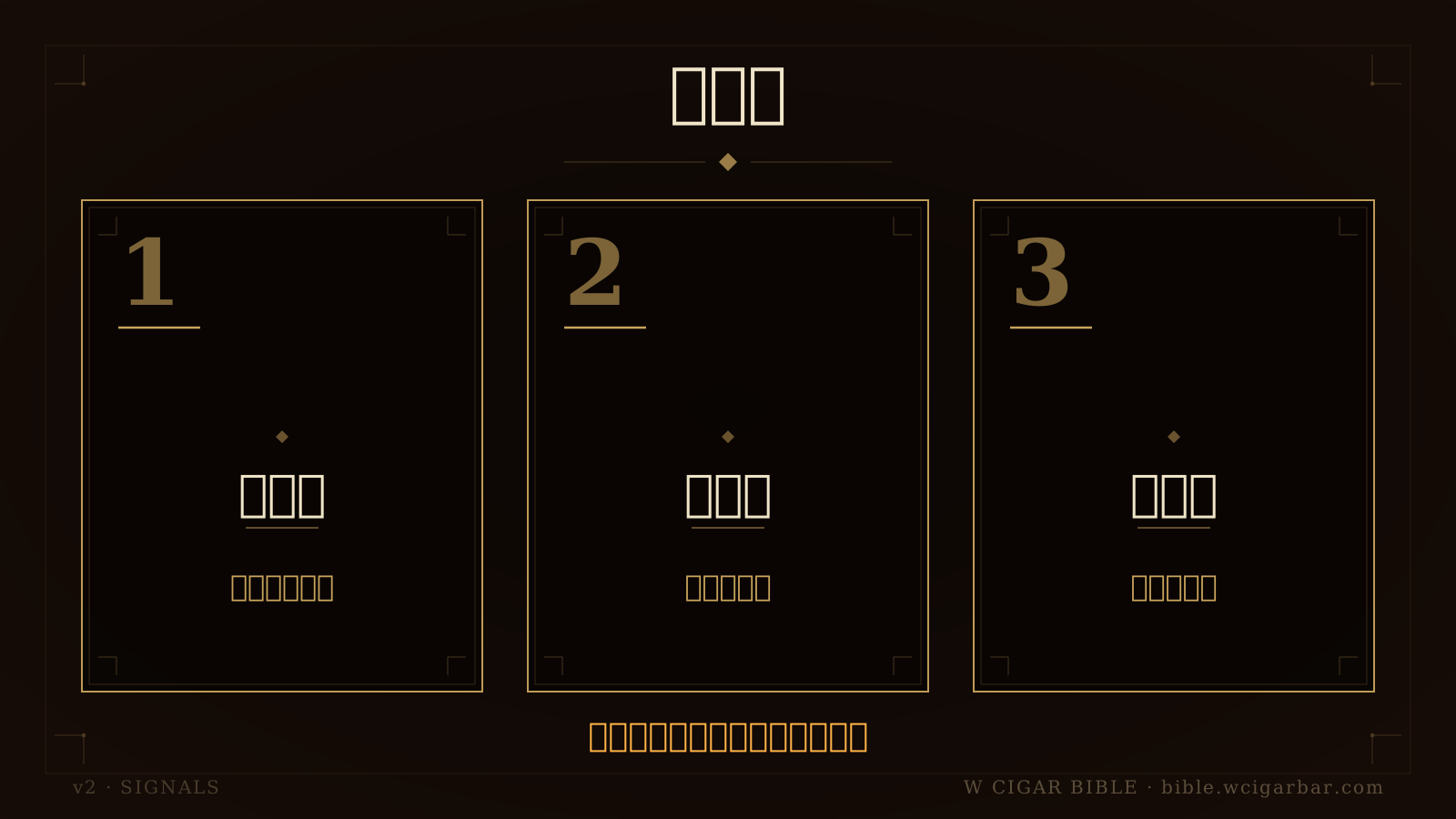
三張卡列出拆詞建字典與控節奏重點
Palate Training: First Establish Your Own Flavor Dictionary
Taste buds are not fixed by nature but are built through comparison to establish memory. If you've never carefully smelled raw almonds, roasted hazelnuts, cedar chips, or black peppercorns, it's hard to recognize them in cigar smoke. I often ask entry-level friends to prepare 10 everyday materials: black coffee, cocoa powder, cinnamon, cloves, honey, sea salt, lemon peel, toasted bread, leather products, and hay. Smell 3 types each time, close your eyes and describe the differences; after two weeks, your vocabulary will significantly increase.
A flavor dictionary is not about memorizing answers but turning olfactory memories into callable files. For example, Cohiba Siglo VI is often described as honey, grass, cream, and bean aroma, but if your "honey" only stays at sweetness, you'll miss its floral and waxy parts. The Davidoff Aniversario series often features white pepper, cream, and grain sensations, suitable for training subtlety; the Nicaragua-toned Padrón 1964 Anniversary can be used to identify cocoa, coffee, and earthy sweetness.
| Training Item | Weekly Frequency | Material Examples | Goal |
|---|---|---|---|
| Olfactory Comparison | 3 times | Coffee beans, cedar, leather | Establish aroma memory |
| Taste Calibration | 2 times | Saltwater, sugar water, lemon water | Distinguish sweet, sour, bitter, salty |
| Aftertaste Record | Once per cigar | Stopwatch or phone | Record changes at 10, 30, 60 seconds |
| Blind Test Recall | 1 time | Record without looking at labels | Reduce brand bias |
Advanced training is best conducted at the same time, such as 60 to 90 minutes after dinner, when the oral state is more stable. Avoid evaluating immediately after drinking strong alcohol, eating spicy food, or using mint-flavored toothpaste, as these will amplify stimulation and suppress sweetness. After recording for 30 consecutive days, you'll find that your taste buds haven't "become stronger," but your attention has become more precise.
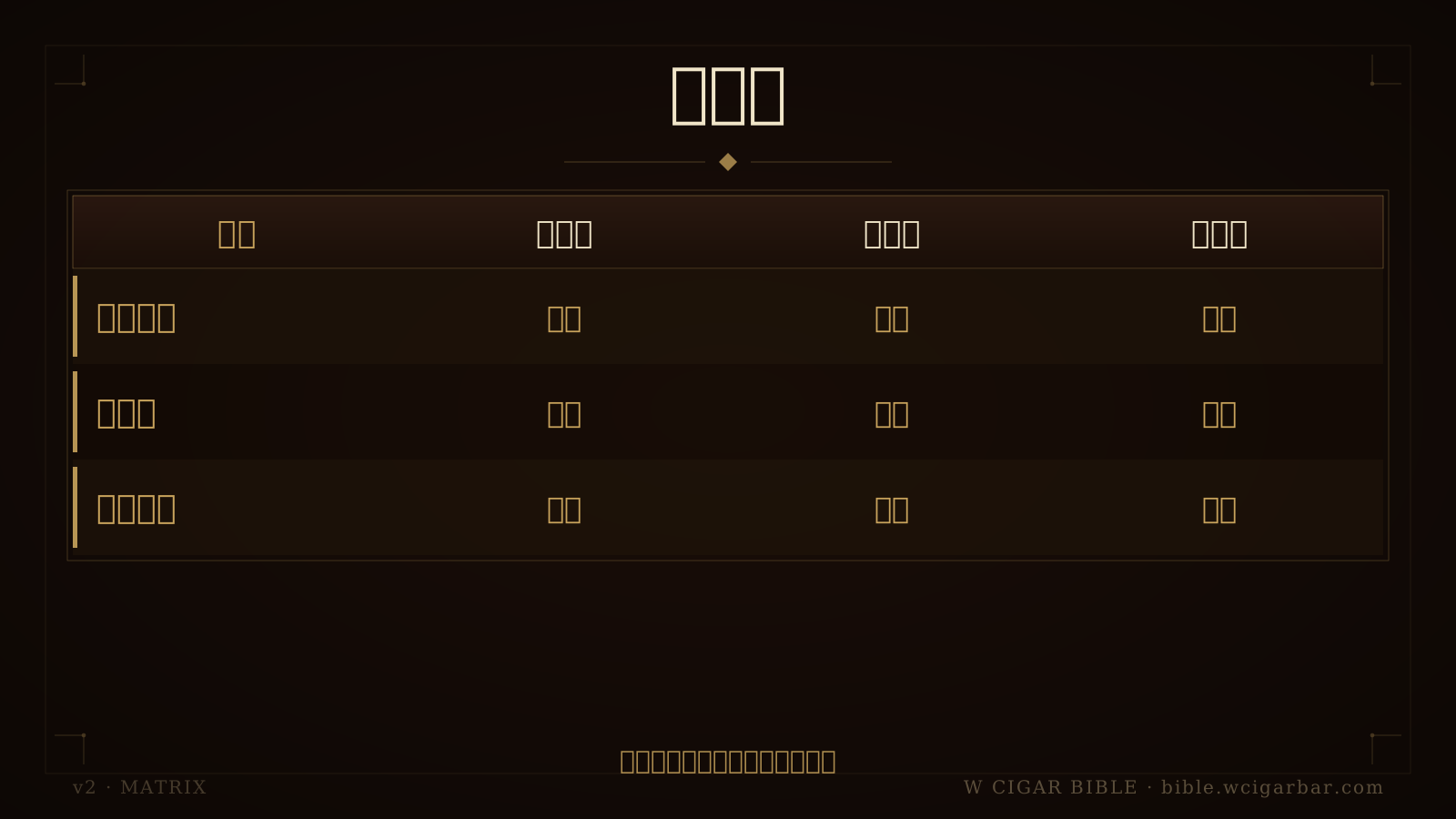
矩陣比較羅布托冠高達丘吉爾的節奏差異
Cutting, Lighting, Rhythm: Technique Can Change Flavor
Many people think flavor is determined only by tobacco leaves, but in fact, the size of the cut, the distance of the flame, and the frequency of inhaling and exhaling can all change the result. For a Robusto size, with a 50 ring gauge and about 124 mm in length, cutting too deep can increase smoke volume, making the front section hot and spicy; cutting too shallow can create too much draw resistance, causing one to pull hard, raising the burning temperature similarly. The ideal cut usually just crosses the cap line a bit, preserving the structure and allowing smoke to pass steadily.
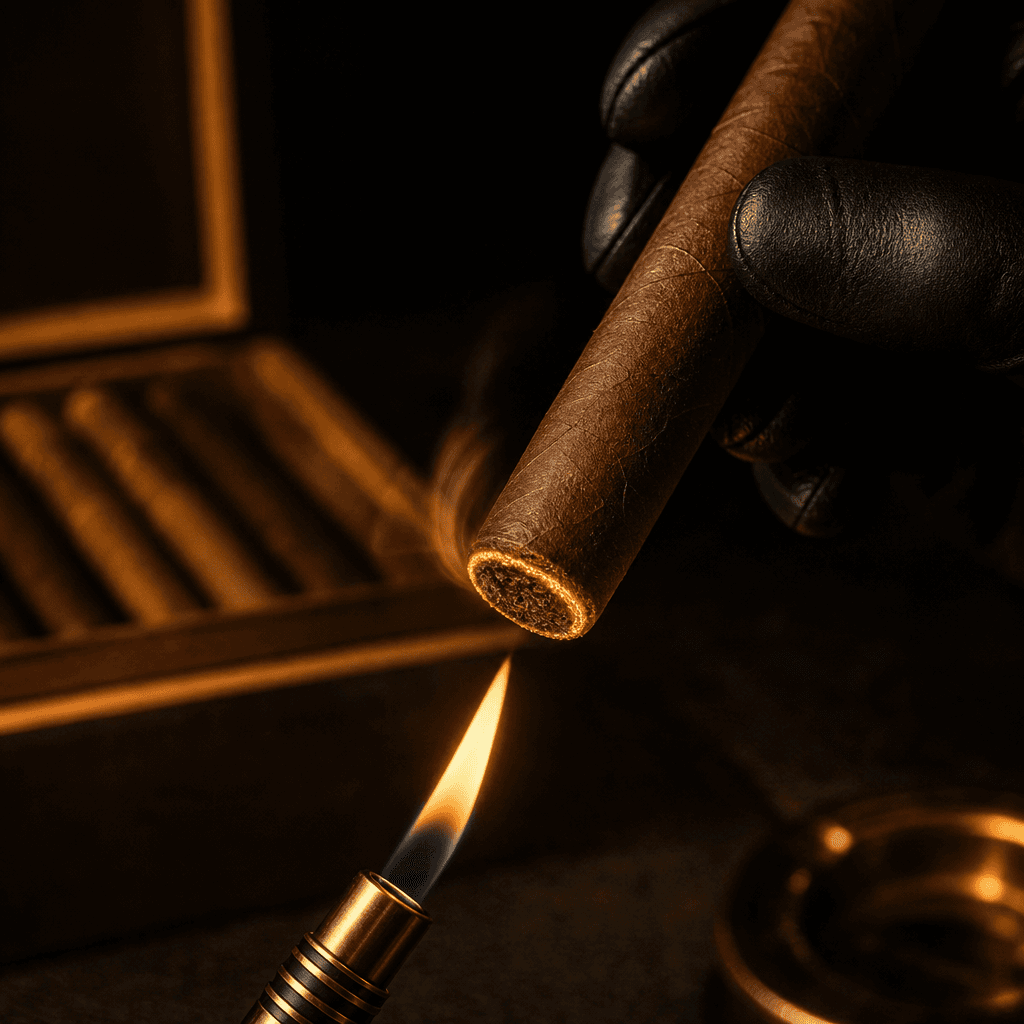
The hotter the cigar, the fewer the details; the more stable the rhythm, the clearer the layers. I often use a baseline of 45 to 60 seconds per puff; the finer Corona Gorda can be slightly slower, and the thicker Toro doesn't need to rush. When lighting, first toast the foot, not letting the flame directly lick the foot for long; wait until the edges are evenly red before lightly inhaling and rotating. If initially lit unevenly, the middle section may show one side charred and bitter, the other side thin, which is not a brand issue but a burn management issue.
Take Romeo y Julieta Wide Churchill as an example; the 55 ring gauge provides a loose smoke path, and beginners may smoke too quickly due to the large smoke volume, with sweet wood in the first 20 minutes and a transition to charred spiciness in the middle. Conversely, the H. Upmann Magnum 46 ring gauge is more restrained, and if handled slowly, it will have tea, cream, and fine wood aromas. Advanced smokers will observe the ash column, burn line, and temperature, rather than just focusing on the size of the smoke.
Three simple checks can be used daily:
- Check every 10 minutes to see if the burn line is skewed by more than 5 mm.
- If the cigar body is noticeably hot to the touch, set it down for 2 to 3 minutes.
- When bitterness suddenly rises, adjust the rhythm first, rather than hastily judging the cigar as off.
Flavor Layers: Breaking a Cigar into a Three-Act Play
I habitually divide a cigar into the first third, middle third, and final third, like watching a three-act play. The first act looks at the opening aroma and burn stability, the second act looks at whether the theme unfolds, and the third act looks at whether strength, aftertaste, and balance are maintained. For example, Bolivar Belicosos Finos often opens with earthy, leather, and black pepper notes, the middle may show coffee and dark molasses, and the final strength rises, turning rough and spicy if the rhythm is too fast.
Layers are not about having more aromas but about logical changes and controlled strength. Some cigars maintain a single tone from start to finish, such as the elegant Quai d’Orsay No.50, focusing on delicacy and consistency; others have obvious transitions, like Partagás Serie P No.2, with woody spiciness in the front, deepened espresso and leather in the middle, and salty and spicy in the final. Both can be excellent, and the standard should not be just "changing a lot."
When recording layers, I use three columns: "main aroma," "secondary aroma," and "texture." The main aroma is the most obvious core, such as cocoa; the secondary aroma is the accompaniment, such as orange peel or pepper; the texture is oiliness, dryness, powderiness, or creaminess. For a well-preserved 2016 Trinidad Vigía, I once recorded creamy wood in the front, honey and tea in the middle, and rising mineral saltiness in the final, not the strongest overall but very narrative.
When interpreting, avoid over-imagining. If you only drink plain water with a cigar, recording 5 aromas is enough; if paired with coffee, rum, or whiskey, the drink will amplify certain signals. Advanced smokers will distinguish between "the cigar itself" and "effects produced after pairing," which is the key to moving from emotional to precise.
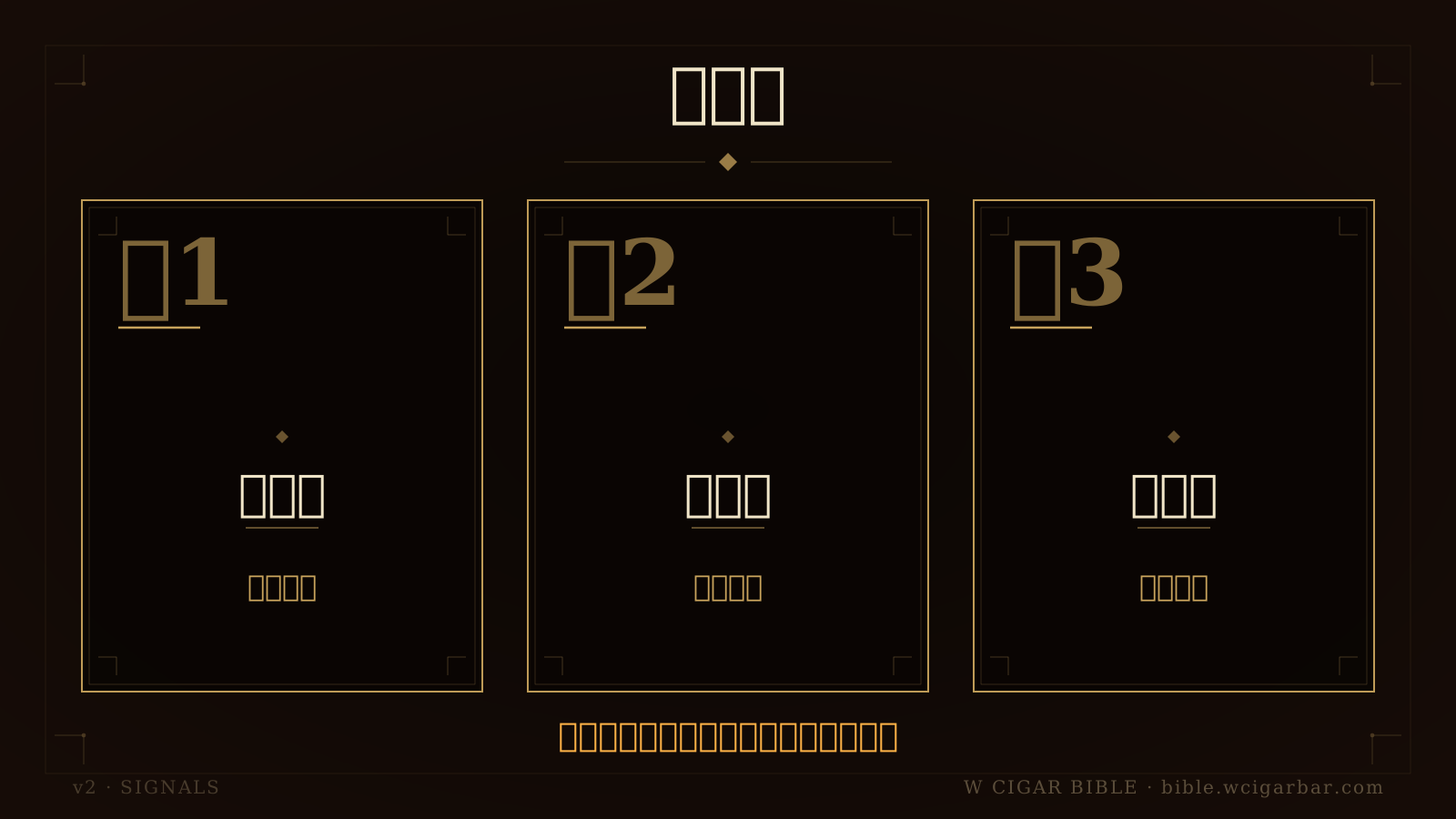
三張錯誤卡提醒追名牌急否定與勉強抽完
Strength, Body, and Balance: Three Often Confused Concepts
Strength, body, and richness are often mixed together. Strength often refers to nicotine and stimulation, body refers to the weight of smoke in the mouth, and richness leans towards aroma density. Padrón 1926 Maduro may have a thick body, with rich cocoa and coffee, but if handled slowly, balance remains good; some young small-sized Cuban cigars may not have a large body, but due to ammonia or spiciness, they feel strong. Looking at these three things separately will lead to more accurate judgments.
Experienced smokers pursue not just strength but the proportion of strength, body, and aroma. For example, Cohiba Behike 52, when in good condition, does not win by force but by overlapping cream, grass, honey, wood, and delicate spiciness; conversely, Ramon Allones Specially Selected often has obvious dried fruit, nut, and earthy sweetness, with a fuller body, suitable for experienced smokers to slowly dissect. Both are classics, but the reading method is different.
Judging balance can be done using a 10-point scale, but don't just give an overall score. I recommend dividing it into aroma 3 points, structure 3 points, burn 2 points, and aftertaste 2 points. If a 2020 Montecristo No.4 has an aroma score of 2.5 but a burn score of only 1, the overall experience will be lowered; if the burn is perfect but the aroma is thin, it should not be overestimated. This breakdown can avoid being influenced by brand aura.
There's also a reality: being on an empty stomach, tired, or after drinking can amplify strength. If you handle a Double Corona at 11 PM after a small dinner, you might mistake physical discomfort for the cigar being too strong. An advanced strategy is to write your physical state into the record because you are evaluating not just the cigar but also yourself at that moment.
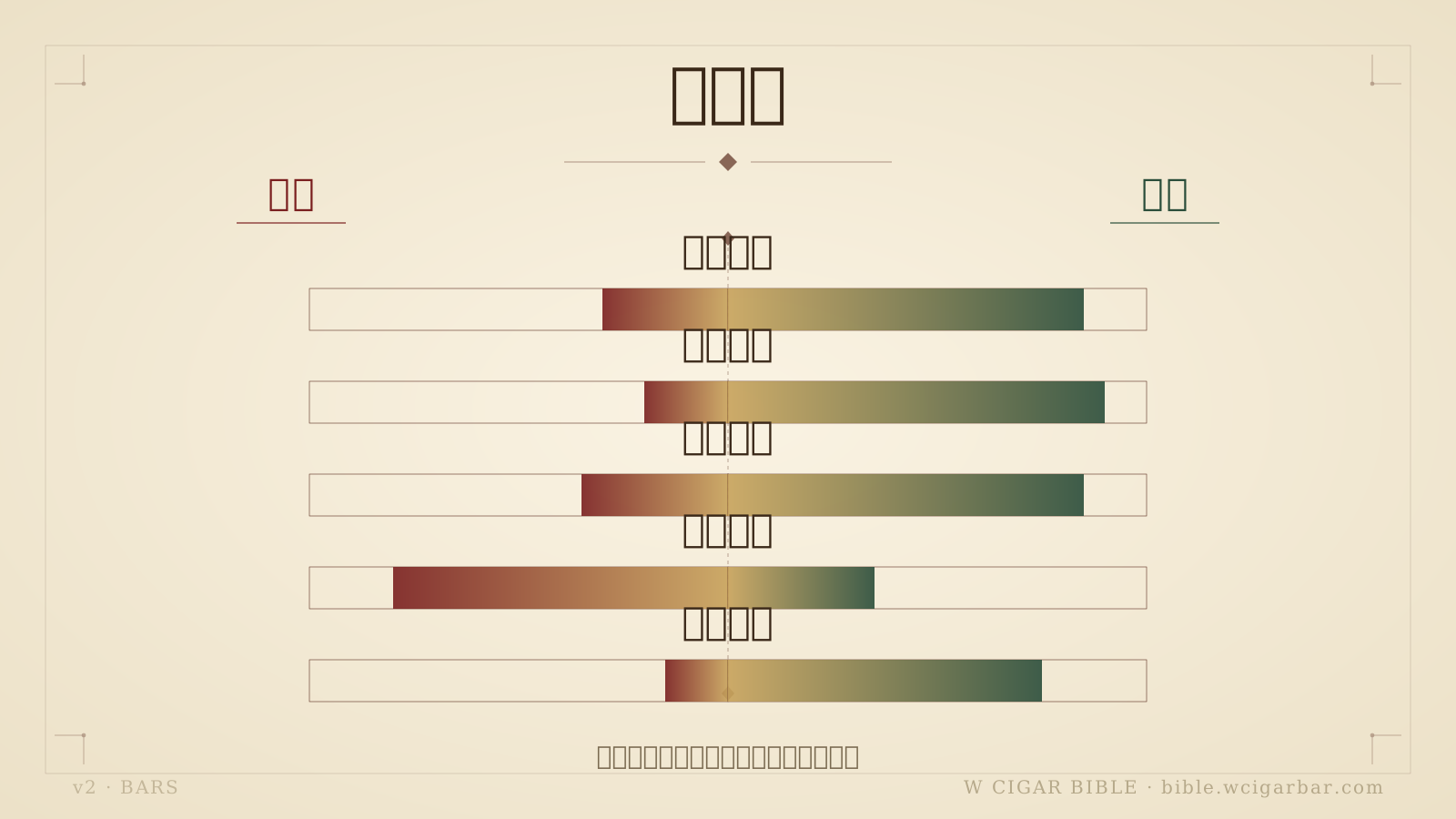
長條圖比較新手與老練者在五項品味能力
Storage, Vintage, and Record: Allowing Experience to Accumulate
The condition of a cigar is closely tied to storage. A typical home environment can use 18 to 21°C, with a relative humidity of 65% to 69% as a safe range; if consistently above 72%, burning can become dull, and smoke can appear blunt; if below 62%, the wrapper may crack, and the taste will become sharp. Different regions have different climates; Taiwan is humid and hot, so temperature control is more important than just looking at humidity, especially during the rainy season and summer when entering and exiting air-conditioned spaces, where box fluctuations are often overlooked.
Vintage only matters when the source is clear and storage is stable. A well-preserved 2003 Hoyo de Monterrey Double Coronas may present dried flowers, honey, old wood, and tea soup sensations; but if it has been damp or too dry, even if old, it will only have weakness and off-flavors. The topic of collection is often romanticized; rare box codes or discontinued items do have market discussion space, but it does not guarantee appreciation, still depending on source preservation and market.
My own records contain at least 8 columns: date, brand, size, box code or vintage, storage humidity, cutting method, pairing drink, and three-stage flavor. If you can add burn time, even better; for example, Robusto about 60 to 80 minutes, Churchill about 90 to 120 minutes are just references; the real focus is whether you can compare later. As a PCC authorized dealer, I value source transparency and stable conditions more because these are the basic conditions before discussing flavor.
Records don't need to be literary; the more comparable, the better. You can use short sentences like "2024/05, Partagás Serie D No.4, peppery wood in the front, coffee in the middle, hot in the final, humidity 70%." Looking back six months later, you'll know whether you like the brand, size, aging time, or a certain storage condition that brings flavor.
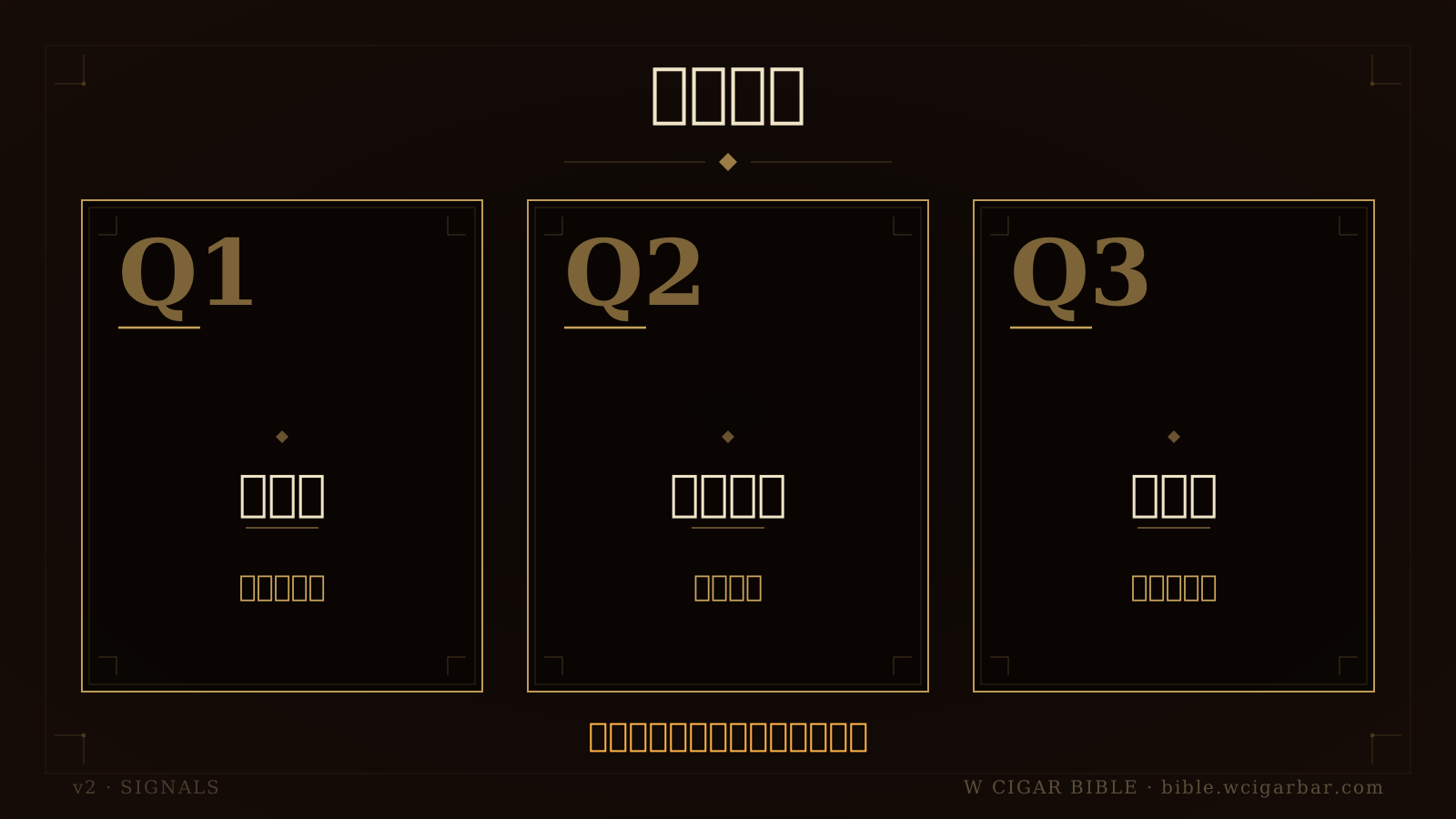
快問快答卡片整理尺寸差異停止時機與工具需求
Etiquette and Pairing: Maturity Lies in the Details
Cigar etiquette is not about pretentiousness but making yourself and others comfortable. Common mistakes by beginners include frequent ashing, blowing smoke towards others, loudly comparing prices with cigars in hand, or ignoring ventilation in indoor spaces. The ash column usually falls naturally at 2 to 3 cm, no need to tap every puff; when pausing, place it on a cigar rest, let it rest naturally, don't press it out like a cigarette, as tar and odor will be heavier.
Truly experienced cigar enthusiasts will put moderation, respect, and observation before showing off. When discussing brands, avoid using "this one is high-end" to negate others, and say more "I feel it leans more towards woody or spicy." For example, some people like the gentle creamy sensation of Macanudo Café, while others prefer the rich cocoa and pepper of Oliva Serie V; mature communication is about describing differences, not establishing hierarchy. This attitude reveals more cultivation than pulling out rare cigars.
In terms of pairing, water is the most honest baseline; black coffee will highlight cocoa, roasted, and bittersweet; Highland single malt may bring out floral and honey; dark rum tends to amplify caramel and spices. If you want to train your palate, it's recommended to only drink water for the first 20 minutes, then add drinks in the middle to compare differences before and after pairing. In 2018, I paired Montecristo Edmundo with espresso and unsweetened oolong separately; the former deepened cocoa, while the latter clarified wood and tea.
There's also an often-overlooked etiquette: don't dictate others' pace. Some finish a Robusto in 70 minutes, others take 90 minutes to reach the final third; as long as the burn is stable, both have their rhythm. Advancement is not about training everyone to be the same but knowing which details affect oneself and which differences are worth respecting.
Frequently Asked Questions
When advancing from a beginner, should one chase brands or sizes first?
Why does the same cigar feel very different on two occasions?
Chasing sizes and styles first, then brands, is more effective. Robusto, Corona Gorda, and Churchill have different burn rhythms, which will significantly affect taste; differences in the same cigar may come from box codes, storage, humidity, and physical state. Don't rush to negate your taste; first, note down the variables.
Do I need to prepare a lot of professional tools?
How long should aging be before it's considered good?
Basic tools only require sharp scissors, a stable fire source, a reliable hygrometer, and a clean cigar rest. Aging has no fixed answer; many regular Cuban cigars will be rounder in 3 to 5 years, but some are vibrant in 1 to 2 years; non-Cuban brands often have more stable factory conditions, with the focus still on storage rather than just looking at vintage.
When should one stop smoking a cigar?
When bitterness and charred flavors persist, the cigar body is too hot, throat irritation is obvious, or you no longer enjoy it, you can stop. Cigars are not an endurance contest; when the final third remains 3 to 4 cm, strength often concentrates, and if the flavor is unbalanced, gracefully setting it down is more mature than forcing to finish.
How to avoid being influenced by brand reputation in judgment?
Occasionally doing blind tastings is very helpful: first, have a friend cover the label, only record size, burn, aroma, and aftertaste, and finally look at the brand. You'll find that some famous brands may not always excel, and some everyday options are rather balanced. Advancing in taste means letting experience outweigh imagination.
I have always believed that the most fascinating thing about cigars is not dividing people into beginners and experts, but leaving traces with every quiet observation. You will gradually move from asking "which is the best" to "why do I like this balance." When you can respect tobacco, time, space, and companions, taste will naturally develop its own form.
—Cigar Prince Wilson Tsai
Smoking is harmful to health. Underage smoking is prohibited. Quitline: 0800-636363. This article is intended for adults over 20 years old as a reference for cigar culture, storage, and regulations, not as tobacco advertising, promotion, or purchase advice.
Like this article?Share with friends
Share this W Cigar Bible piece with friends who want to learn cigar culture, storage, and tasting.
想把這篇 化為實踐
雪茄聖經是知識;雪茄文化要在空間裡發生

W Cigar Bar 大安總店資訊
台北大安區 · 雪茄聖經總編輯 Wilson Tsai 主理的雪茄文化空間
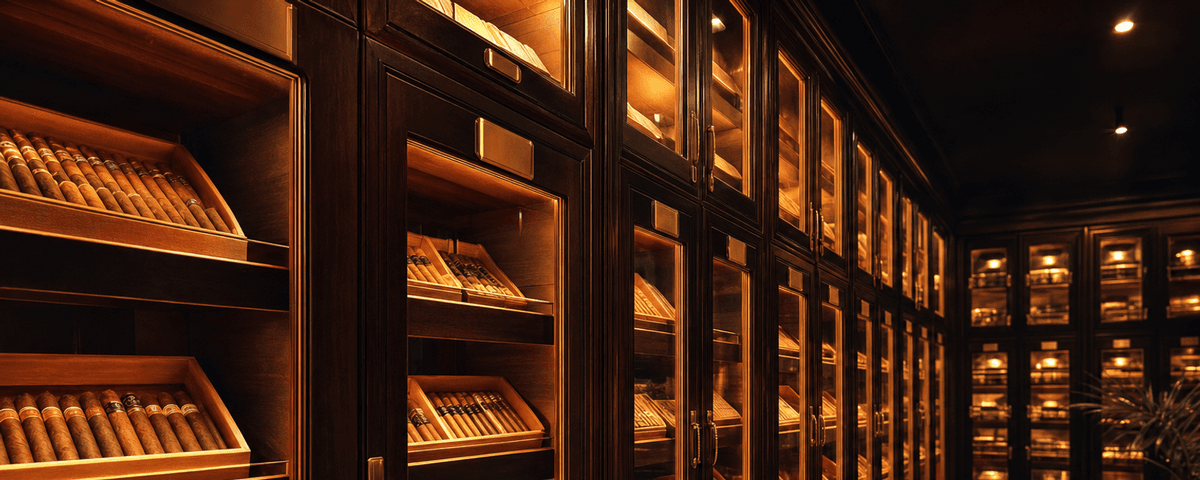
33 座 24 小時恆溫恆濕醇化室
W Cigar Bar 提供的會員醇化空間 · 場地資訊請洽編輯部
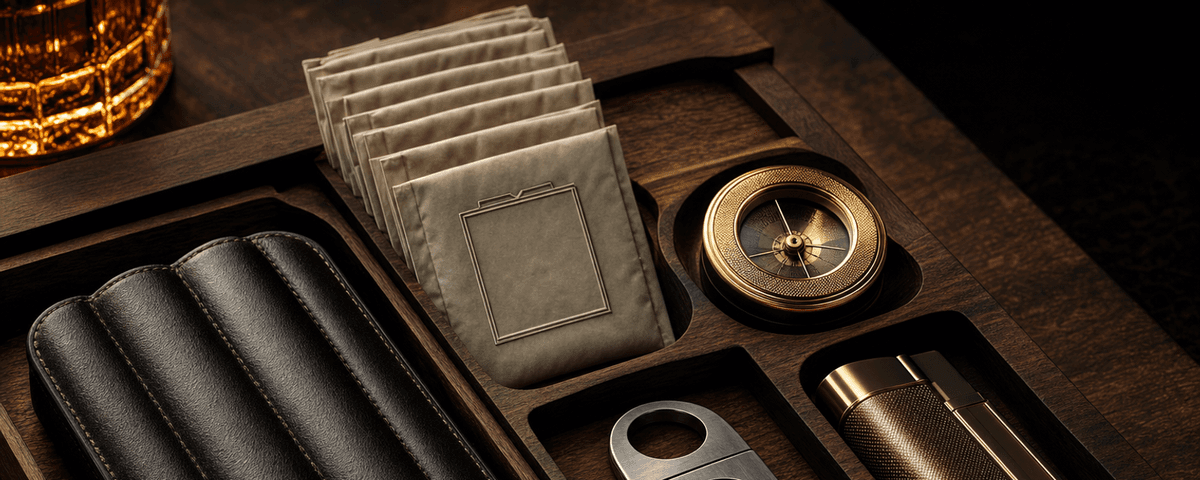
雪茄剪 / 打火機 / 雪茄盒 / Boveda
W Cigar 配件官網 · 專營雪茄配件正品
加 LINE 好友 · 文化諮詢
文化空間資訊 · 紳士沙龍 · 私人包場
本網站內容僅供雪茄文化、歷史、收藏與品吸知識研究參考。菸品有害健康、未滿法定年齡者請勿吸菸。實際規範請依所在地法律為準。
吸菸有害健康・戒菸專線 0800-636363・本站僅供 20 歲以上成年人閱覽。
讀到這裡,你不只是路過的人
留下 Email,加入 W 雪茄聖經內圈——總編輯 Wilson Tsai 親選的學院深文與國際新訊,先你一步送到信箱。
· 教育用途非銷售 · 隨時一鍵退訂 · Email 絕不對外公開 · 由勝茄股份有限公司營運
同分類延伸閱讀
資料來源:W Cigar Bible 編輯部整理 · 雪茄王子 Wilson Tsai 親自審稿
本文僅供雪茄文化、歷史、收藏與品鑑知識研究,不作為菸品促銷、銷售或購買建議。吸菸有害健康,未滿二十歲不得吸菸。