
豐塞卡
面紙包裝的傳奇——Fonseca 的金髮,與古巴的靈魂
評分方法 · 本評分為 W Cigar Bible 依據品牌歷史、國際能見度、產品穩定性、收藏討論度與華文市場辨識度綜合整理,非投資建議或銷售推薦。

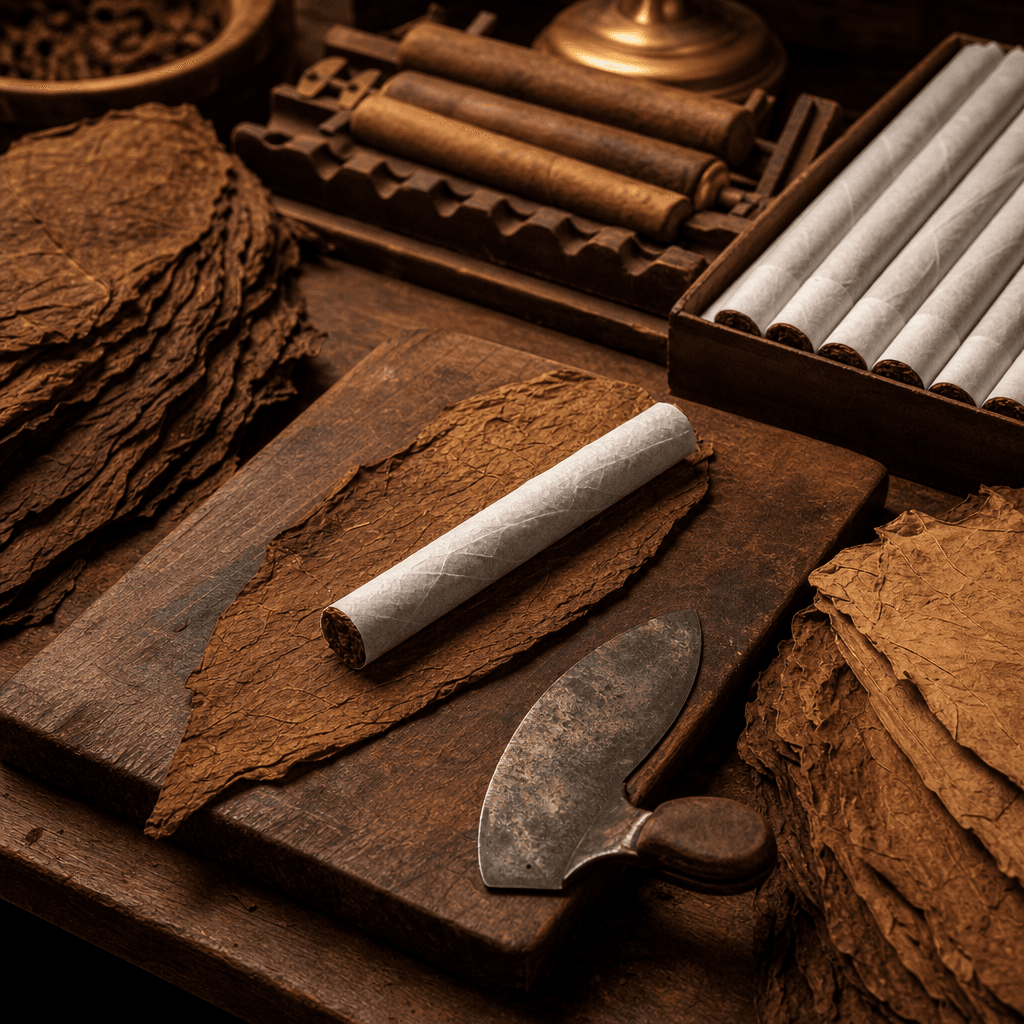
Fonseca 1892 年由 Don Francisco E. Fonseca(西班牙移民兒子,1868 年生於古巴 Manzanillo)在哈瓦那創立工廠與雪茄品牌——1907 年正式註冊。是雪茄業少有的「先做後註冊」案例,間隔長達 15 年。
Don Francisco Fonseca 以「美男子」聞名——西班牙詩人 Federico García Lorca 在《Son de negros en Cuba》(黑人之歌,收錄於《詩人在紐約》)中提到「la rubia cabeza de Fonseca」(Fonseca 的金髮)——將 Fonseca 與「Romeo y Julieta 的粉紅」並列為「古巴的靈魂」象徵。
Fonseca 是雪茄業唯一用日本和紙(Washi 面紙)包裝每一支雪茄的品牌——這是 Don Francisco E. Fonseca 1910 年代的創新。雪茄環貼在面紙上而非雪茄本身——是雪茄業獨一無二的奢華包裝特徵,至今仍延續。
Washi 日本和紙——由日本桑樹纖維、清澈河水浸泡、增稠後用竹篩過濾製成,自 7 世紀以來日本手工製作。包裹雪茄的優勢:保護包葉不被運輸破壞、不影響風味(不像雪松木片會微微影響風味)。Fonseca 是全球唯一全產品線都用 Washi 包裝的雪茄品牌。
Fonseca No.4 RE Benelux 2010(5" × 48, vitola: Hermosos No.4, 1,600 支編號 × 25/盒)— 品牌唯一 Edición Regional——比利時、荷蘭、盧森堡市場專屬。仍然手工面紙包裝。1,600 支極稀缺,是品牌史上最珍貴 RE。Robusto 大小、Hermosos No.4。
Don Francisco 是「Cuban Tobacco 專家」——他注重剪裁服裝、優雅打扮、配金色拐杖。60% 的 Fonseca 雪茄被賣給接待會、宴會、紳士俱樂部等場合——是「儀式雪茄」的代表。
1960 年革命後品牌被國有化——但生產從未中斷。這是 Fonseca 的歷史亮點:革命後生產不間斷的少數品牌。今日在哈瓦那省 Quivican 小鎮的 Lázaro Pena Factory 生產。
Fonseca 品牌 logo 含古巴莫羅城堡(Morro of Havana)+ 美國自由女神像——圍繞 Don Francisco Fonseca 本人的肖像。反映創辦人雙國身份——是雪茄業少有的「個人肖像為品牌 logo」案例。其他品牌通常用文學場景、菸田、城市風景。
Fonseca 也是第一個導入錫管(tin tube)包裝的 Habanos 品牌——1910 年代發行,比鋁管 Tubos(1940 年代中期才出現)早了 30 年。雪茄業的「管裝雪茄」文化由 Fonseca 開創。
Fonseca 是「第一個在工廠設品鑑室(tasting room)」的古巴雪茄品牌——讓客戶可以品鑑不同配方。這個概念早於今日所有 La Casa del Habano 的品鑑沙龍。同時 Fonseca 也學習 Partagás 的「lector」傳統——僱用朗讀者讀書給捲菸師聽,讓工作不無聊同時推廣教育。
1930 年 Don Francisco E. Fonseca 過世。妻子 Teresa Boetticher de Fonseca 接手經營工廠——是雪茄業少有的「女性繼承人經營雪茄品牌」案例。Doña Teresa 與菸草專家合作,將品牌與 T. Castañeda、G. Montero 等公司合併為 Castañeda, Montero, Empresas de Fonseca, SA。工廠運作直到 1960 年國有化。
Fonseca 風味:輕度(mild/light)強度——是古巴雪茄裡最溫和的派系之一。特徵風味:奶油、烘烤堅果、輕微蜂蜜、香草、淡草本香、輕花香。新手最容易接受的古巴雪茄之一——「完美入門古巴」的代表。
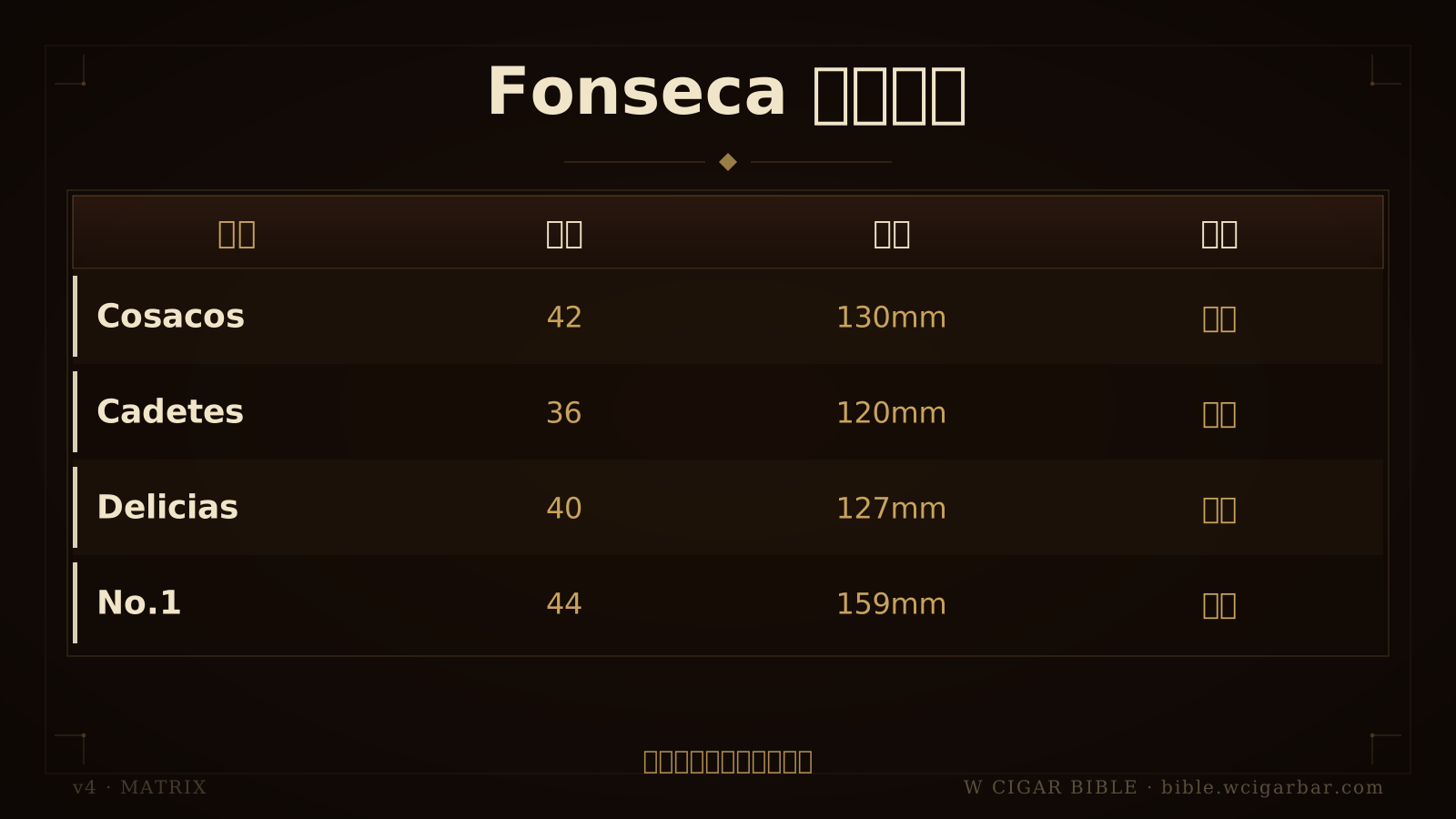
Fonseca KDT Cadetes(4½" × 36, vitola: Cadetes)— 品牌入門款——36 環徑細短 panatela。「KDT」=「Cadetes」(士官生)的縮寫。20-40 分鐘體驗,新手或晨間享用最佳。甜味、土壤香。手工捲製、面紙包裝。
1903 年 Don Francisco E. Fonseca 移居紐約——在 169 Front Street 經營工廠。1895 年取得美國公民身份。1905 年在紐約 Tribeca 區 129 Duane Street 設立 F.E. Fonseca & Co.。同時定期回古巴監督工廠——是雪茄業少有的「美古雙基地」經營模式。
Fonseca Cosacos(5⅜" × 42, vitola: Cosacos)— 品牌中堅款——135mm × 42 環徑 Corona。50 分鐘體驗,柔和風味、適合午後享用。1907 創立至今同款,是雪茄業最有歷史延續性的雪茄之一。
Fonseca No.1(6⅜" × 43, vitola: Cazadores)— 品牌最大規格 Lonsdale。胡椒、木質、35 分鐘體驗。2012 年官方標示停產,但實際持續生產到至少 2017 年——這個「停產但持續生產」的奇特狀態反映 Habanos 庫存策略。
Fonseca 雪茄環特徵:白底淡紋、Standard Band A(1960s 至今,輕浮雕、白紙)→ Standard Band B(2010 RE 用,較精緻浮雕、白紙)。雪茄環貼在 Washi 面紙上——這個獨特包裝細節讓 Fonseca 一眼就能辨識。
「完美入門古巴雪茄」的代表——Fonseca 因為輕度強度、奶油甜味、不會嚇跑新手而受到入門玩家喜愛。但同時也被資深玩家視為「晨間最佳古巴」——一天開始時不需太強烈,Fonseca 完美。
Don Francisco 是哈瓦那的隱形慈善家——在 Barrio Cerro 的家中聚集音樂家、畫家、作家。配紅酒、橄欖、黑火腿(pata negra)營造創作自由的氛圍。他在家中放木製錢箱——任何需要的人可以自取。
Fonseca Delicias(4⅞" × 40, vitola: Standard, short filler)— 品牌唯一 short filler 雪茄——比 long filler 燃燒快。奶油糖餅(shortbread)、奶油甜味、輕肉豆蔻——「晨間最佳古巴」的代表。25 分鐘體驗。
Fonseca 在 Habanos 體系是 Other 分類(小眾品牌)。主要市場是西班牙與加拿大——與其他 Habanos 品牌的全球分銷不同。價格相對便宜——是「性價比最高的古巴雪茄之一」。
所有 Fonseca 都是「totalmente a mano」(完全手工),全 Vuelta Abajo 菸葉。Delicias 是品牌唯一的 short filler 雪茄,其他都是 long filler。6 款常規規格中只停產了 2 款——是 Habanos 體系裡「保留度最高」的品牌之一。
Fonseca Invictos(5¼" × 45, vitola: Especiales)— 品牌獨家規格——這個 Especiales 規格只有 Fonseca 在生產。2002 年停產——讓這個獨家規格徹底消失於古巴雪茄業。
對台灣與華人玩家:Fonseca 是「面紙包裝」的傳奇——這個獨特工藝讓它成為雪茄收藏的「特殊存在」。對熱愛日本和紙文化的玩家,Fonseca 帶有額外的文化情感連結。
1915 年品牌移到 Calle Galiano No. 102 工廠。1911 年 Don Francisco 委託建造新工廠反映品牌成功。雇用 Señor Mecallín——當時哈瓦那最頂級捲菸師之一——擔任主管。
Fonseca 與 Trinidad 都是「先做後賣」的品牌——Fonseca 在革命前就有了 15 年的「先做不賣」期(1892-1907 註冊前),Trinidad 1969-1998 是 30 年的「外交專屬」期。兩個都是「品牌做了很久才正式上市」的代表。
Fonseca Aromas(40 × 140mm, 無正式 vitola 名稱)— 1980 年代後期停產。這個 vitola 過去也被 Romeo y Julieta 用於 Capulets 系列直到 1970 年代。今日已絕種。
Fonseca KDT Cadetes Humidor 2008/2011(50 支裝,Germany 5th Avenue 通路)— 2008 與 2011 年通過 5th Avenue 德國發行的 50 支 humidor。是品牌少有的紀念性 humidor。

豐塞卡 完整 vitola 圖鑑(36 張)
豐塞卡(豐塞卡 Fonseca)旗下完整 vitola 圖鑑卡片、每張卡點進去含: 葉組產地(CAPA/CAPOTE/TRIPA)、 風味前中後段、 歷年特殊版發行紀錄(ER 地區限定 · EL 年度限量 · LCDH · RR · GR)、 配飲建議與收藏陳化指南。
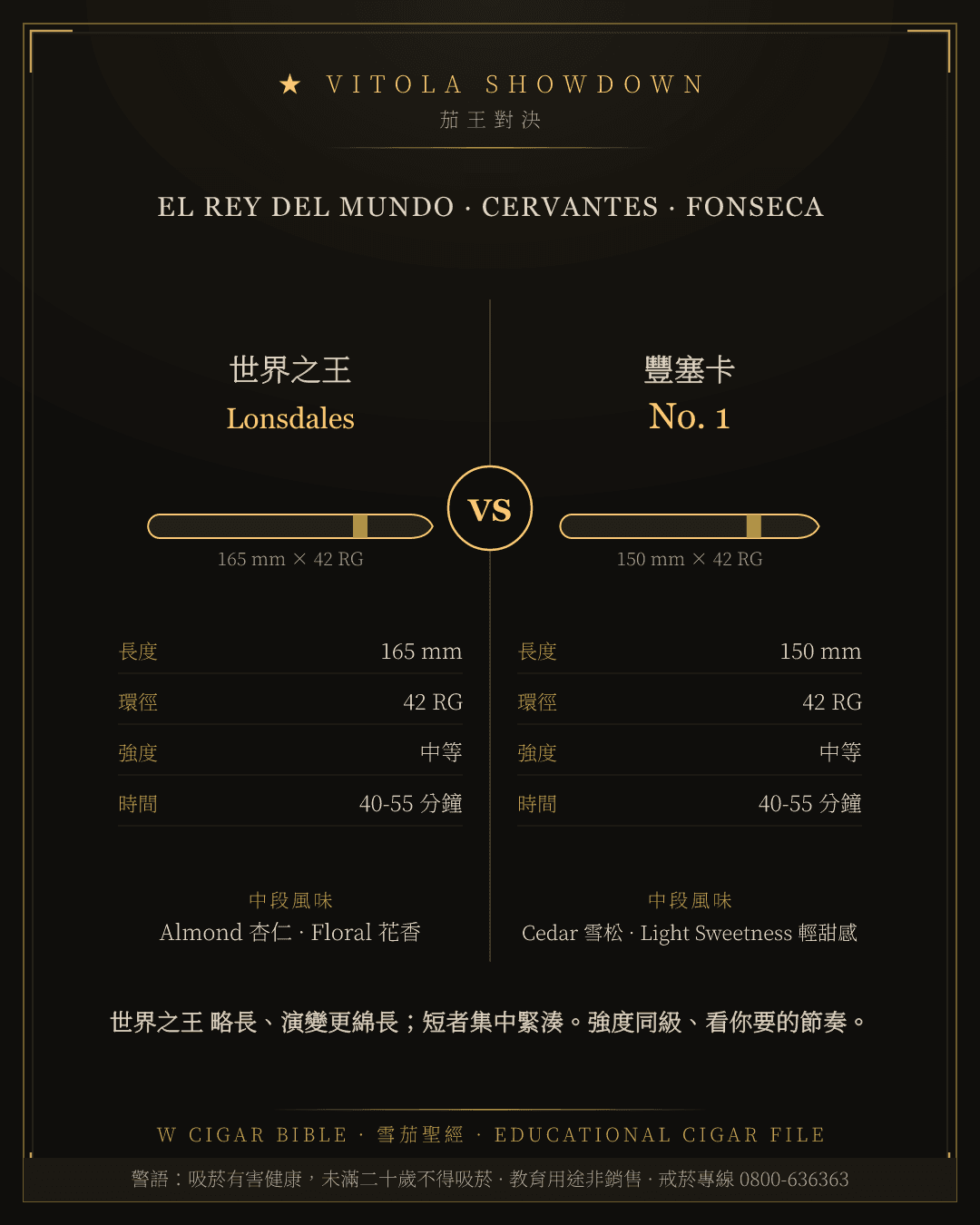
El Rey Del Mundo Lonsdales vs Fonseca No. 1
VITOLA SHOWDOWN · Cervantes

Fonseca · 豐塞卡 品牌故事
BRAND STORY · EST. 1907
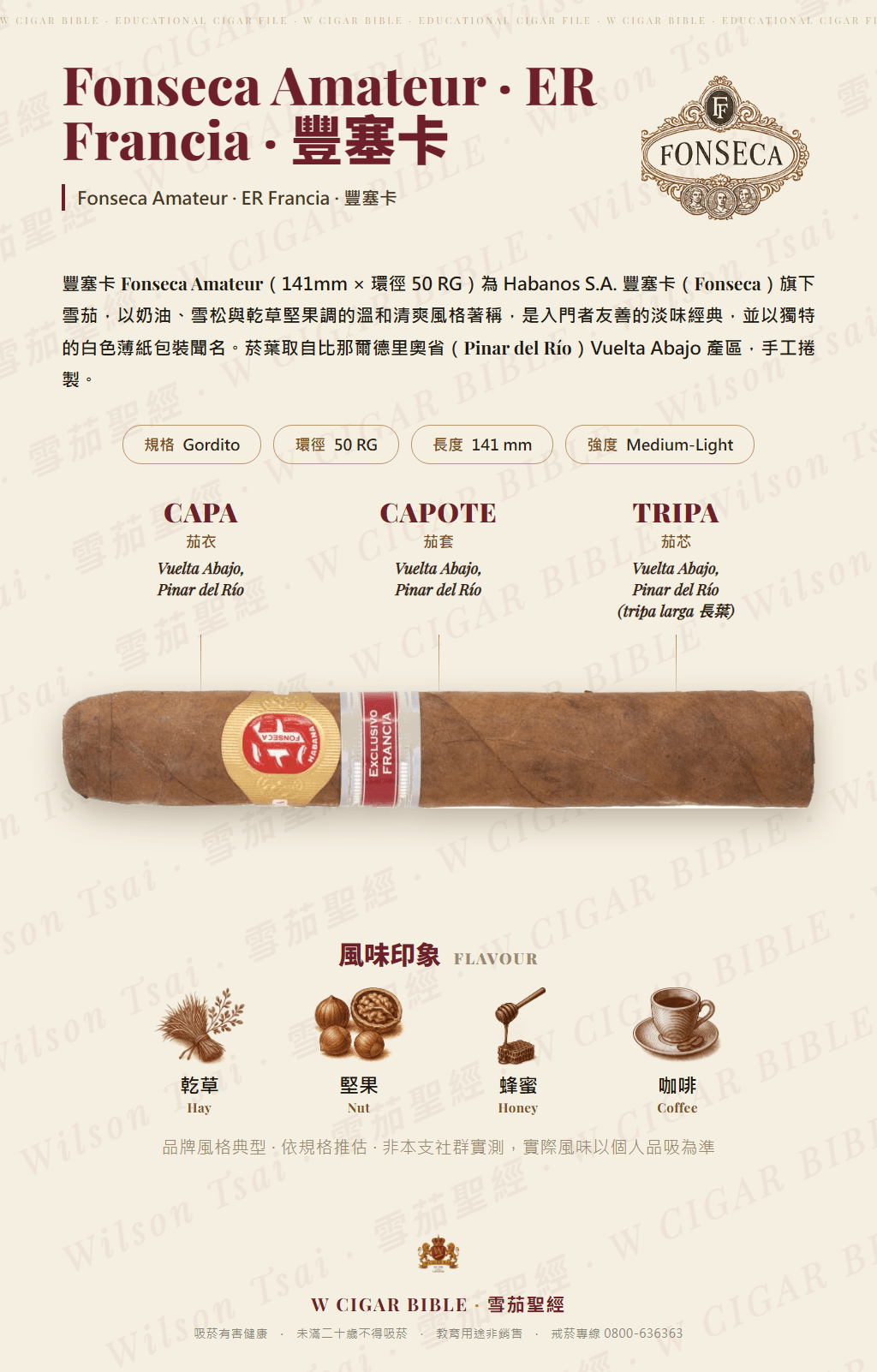
Fonseca Amateur · ER Francia · 豐塞卡
ER Francia · 地區限量版 Edición Regional · 雪茄檔案
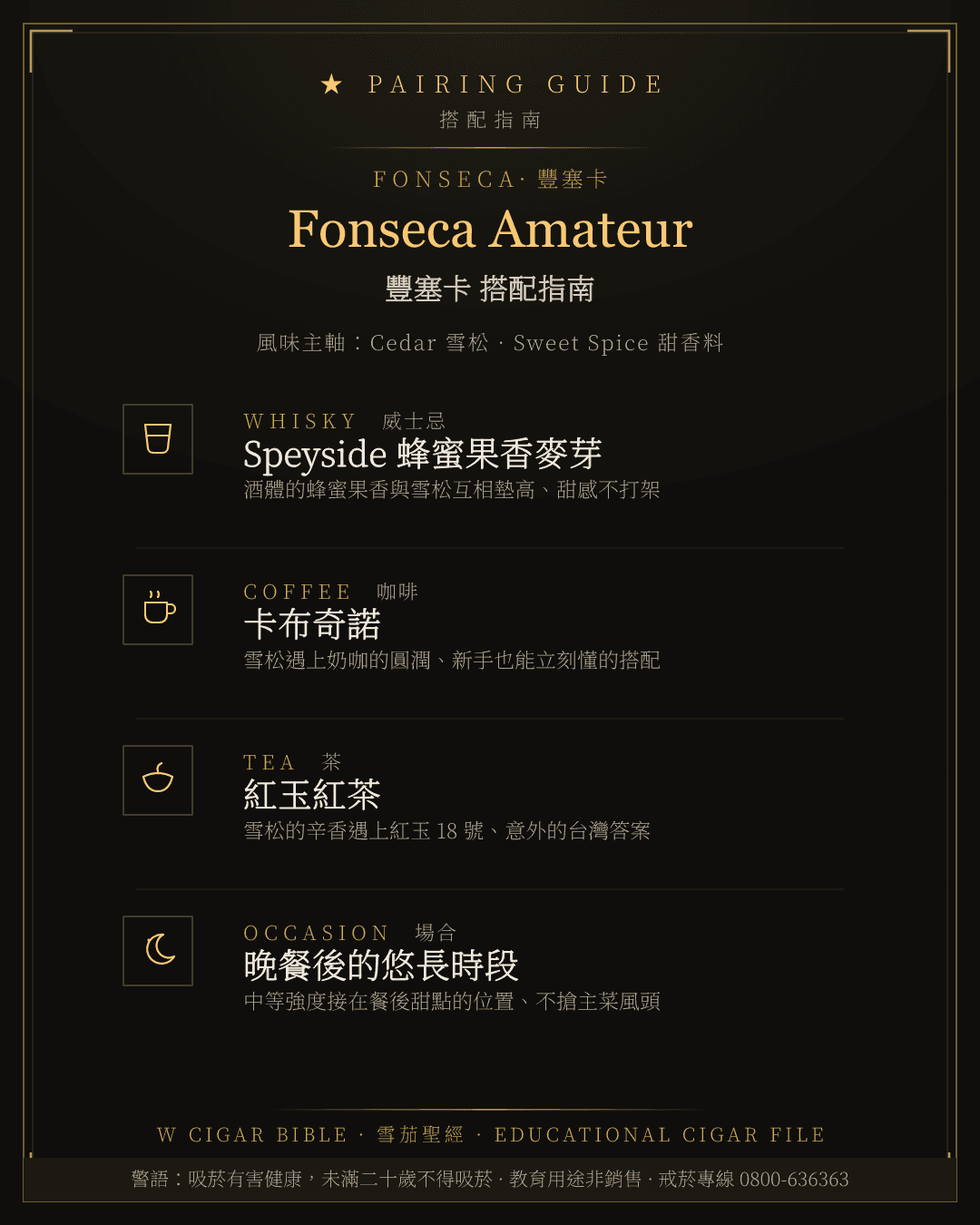
Fonseca Amateur 搭配指南 · 豐塞卡
PAIRING GUIDE · 搭配指南

Fonseca Amateur 風味筆記 · 豐塞卡
TASTING NOTES · 風味筆記
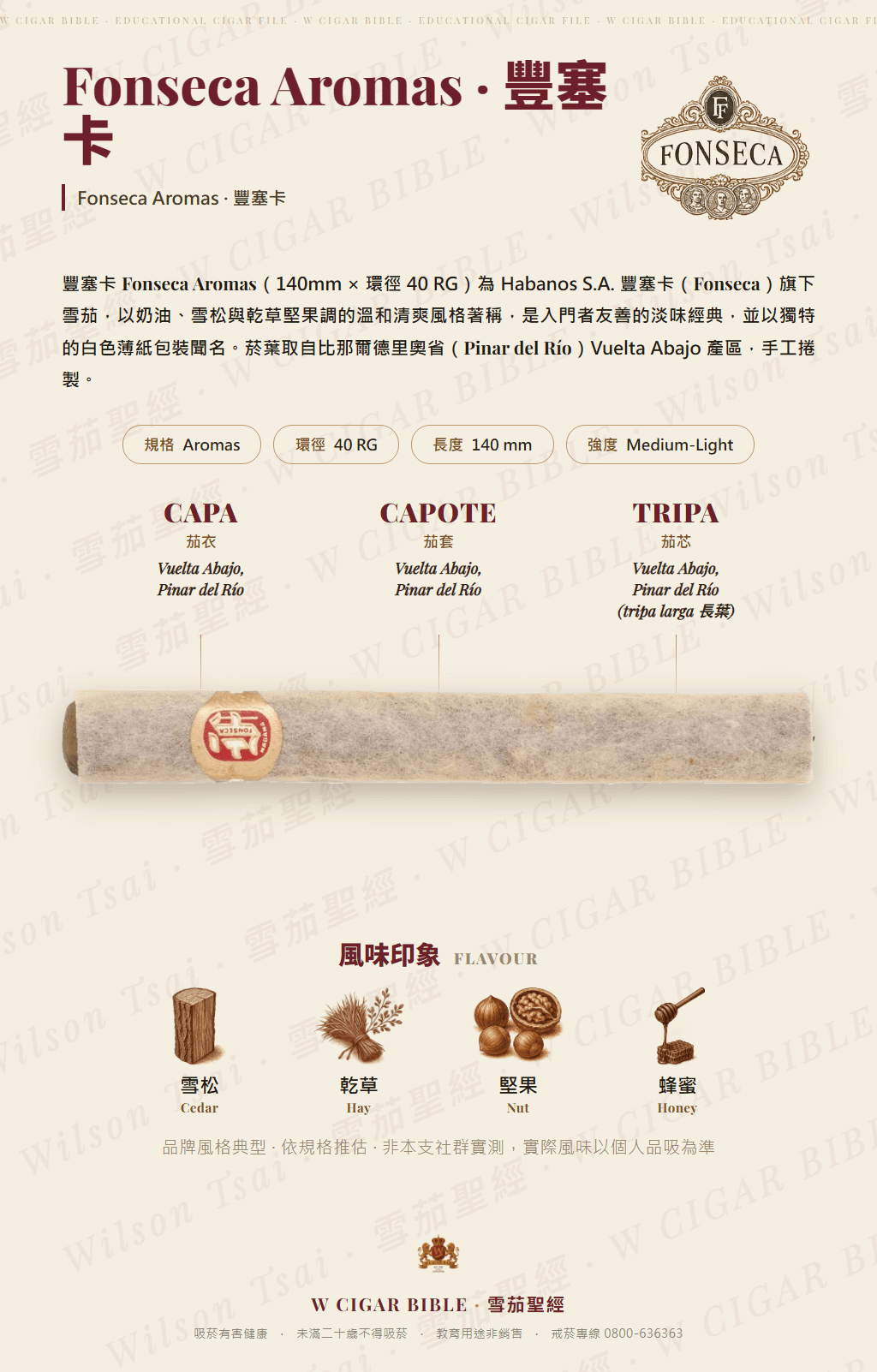
Fonseca Aromas · 豐塞卡
標準生產停產款(40 RG × 140mm,1980 年代末停產)· 雪茄檔案
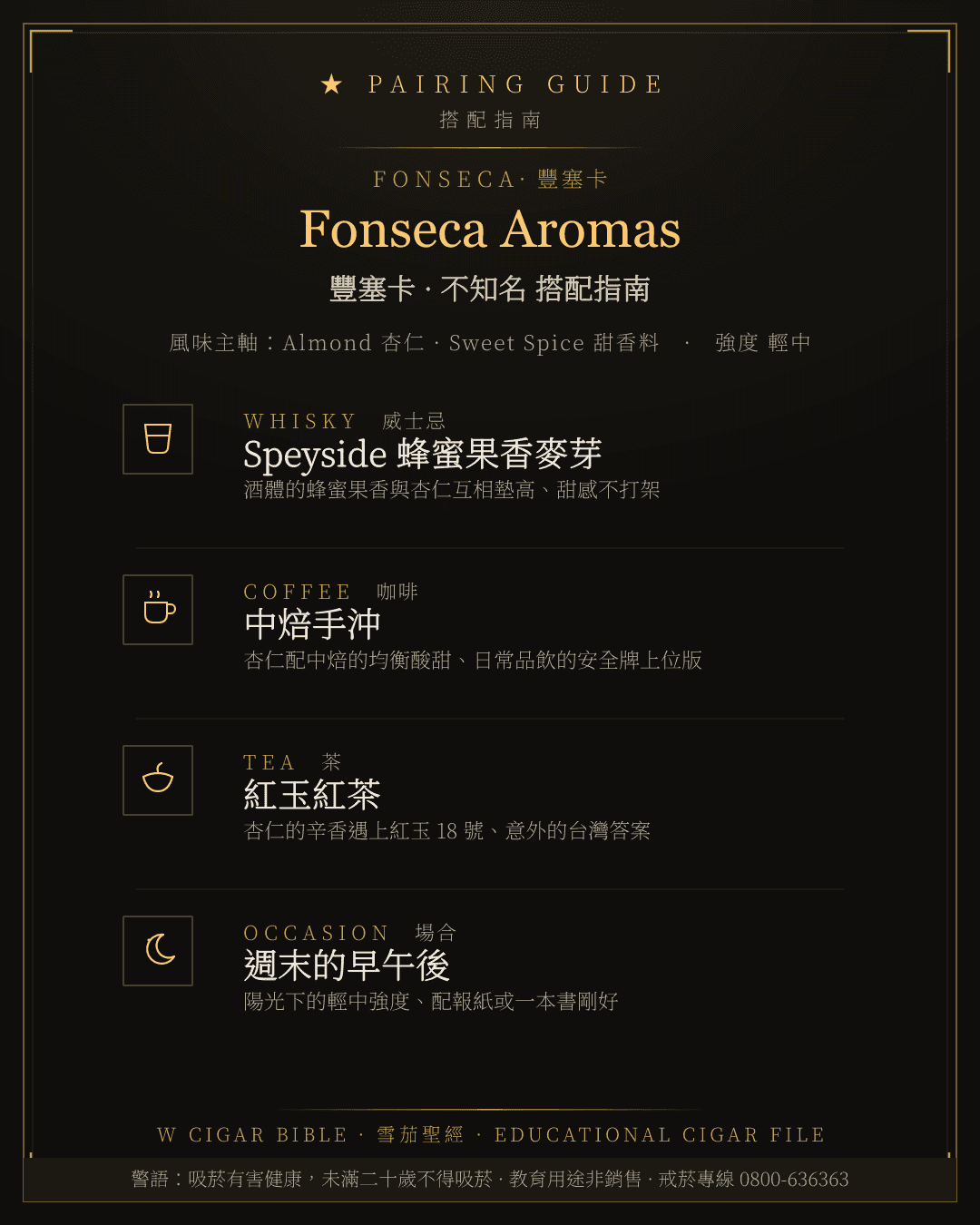
Fonseca Aromas 搭配指南 · 豐塞卡
PAIRING GUIDE · 搭配指南
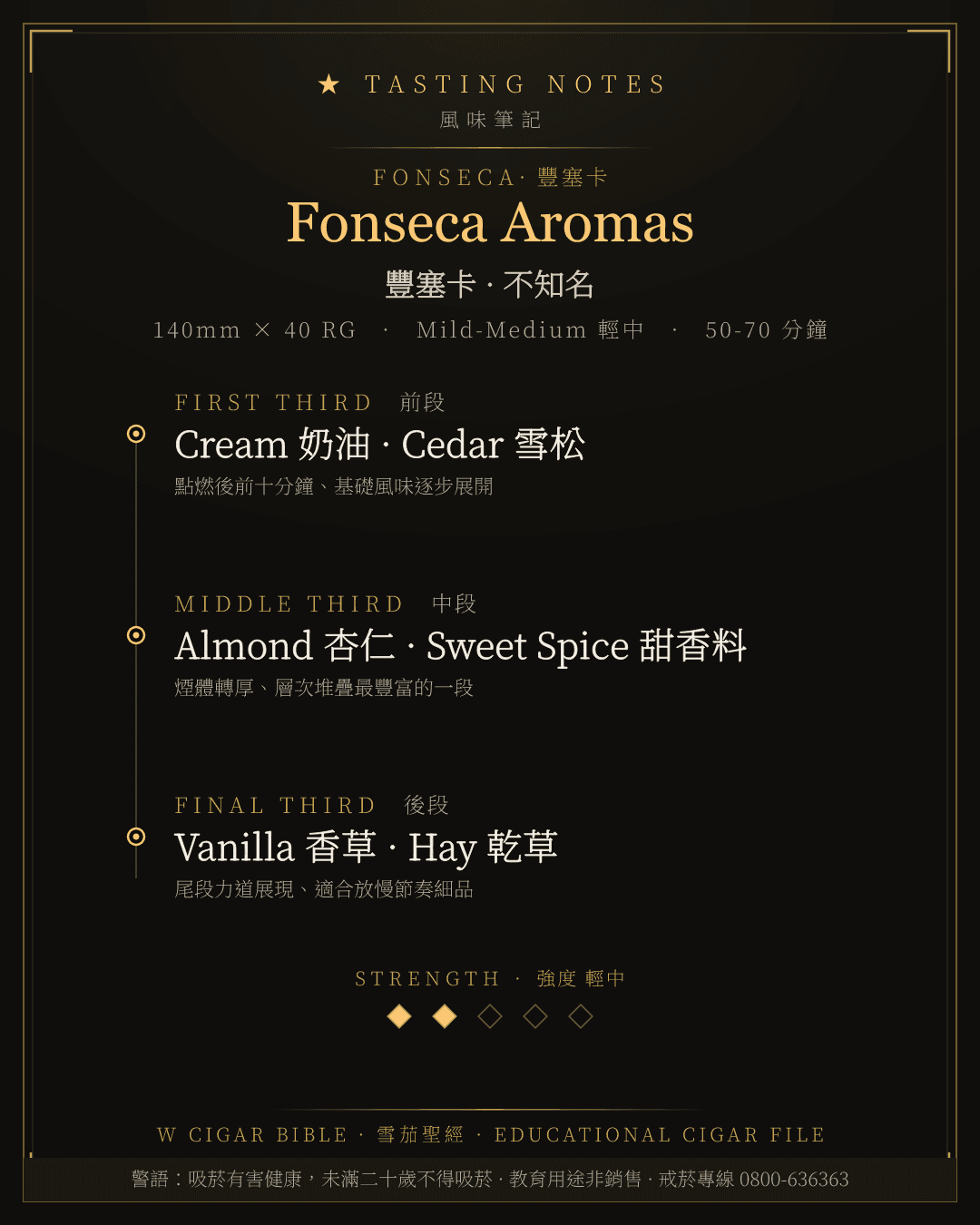
Fonseca Aromas 風味筆記 · 豐塞卡
TASTING NOTES · 風味筆記

Fonseca Cosacos · 豐塞卡

Fonseca Cosacos vs H. Upmann Cristales
VITOLA SHOWDOWN · Cosacos

Fonseca Cosacos 搭配指南 · 豐塞卡
PAIRING GUIDE · 搭配指南
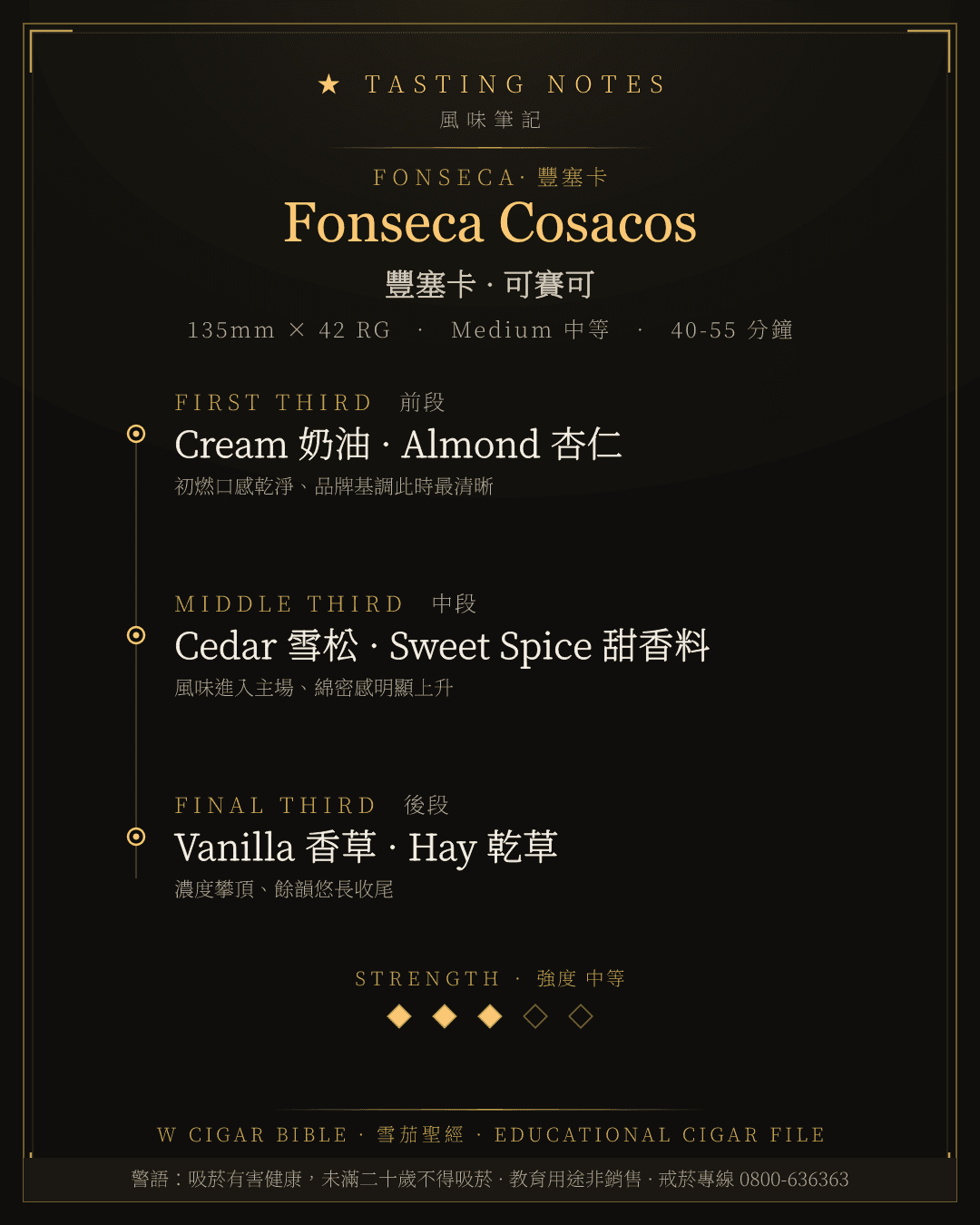
Fonseca Cosacos 風味筆記 · 豐塞卡
TASTING NOTES · 風味筆記
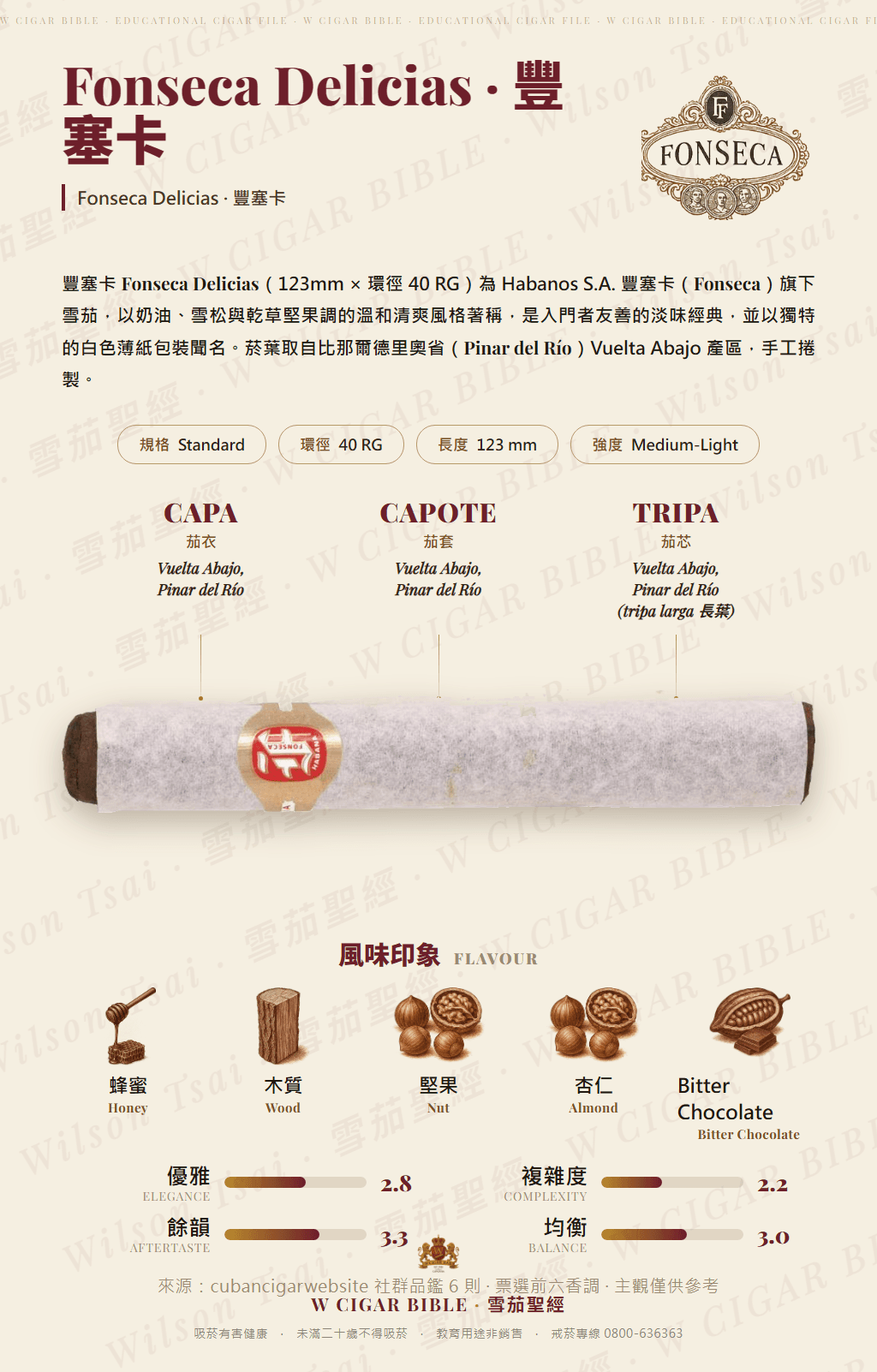
Fonseca Delicias · 豐塞卡
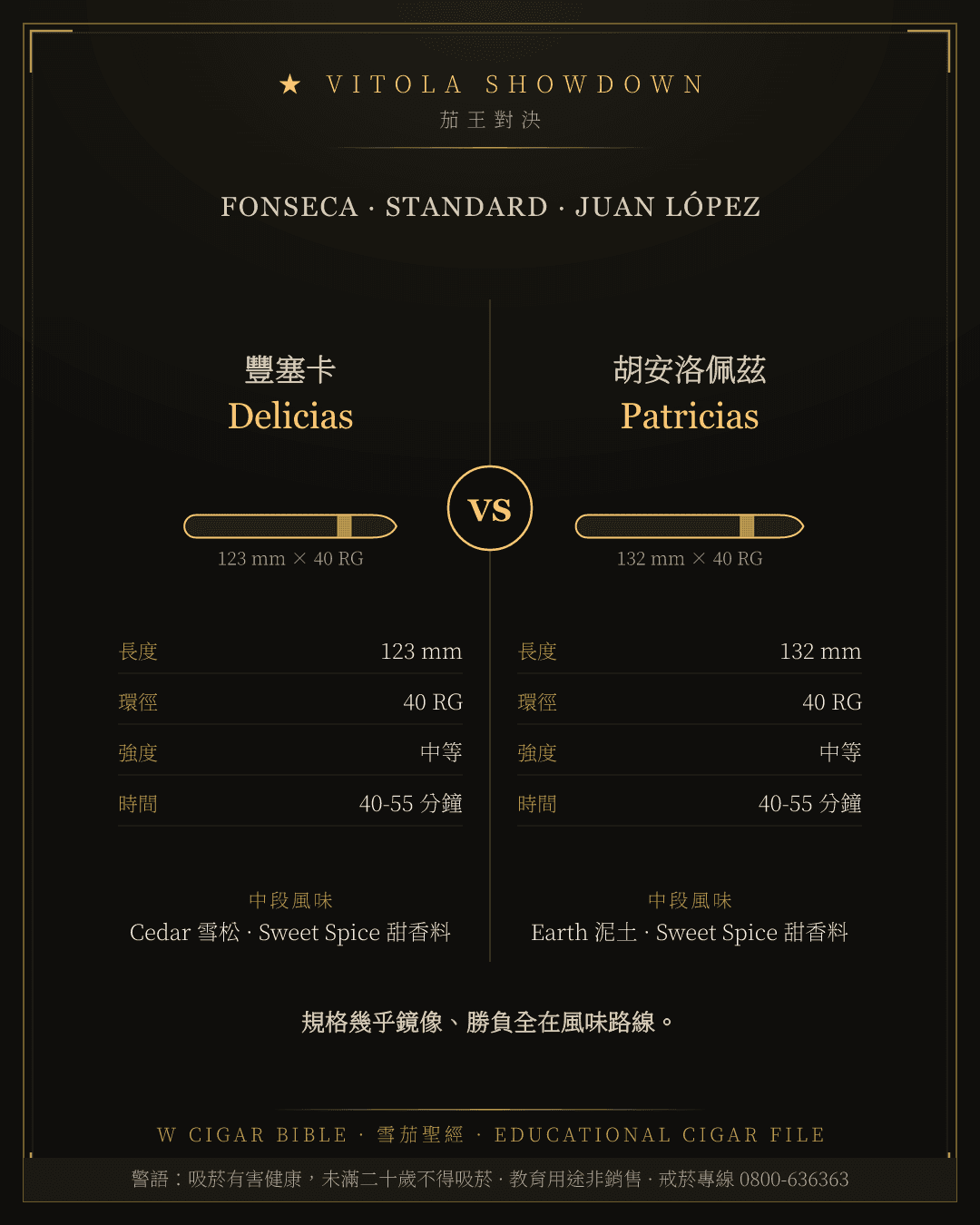
Fonseca Delicias vs Juan López Patricias
VITOLA SHOWDOWN · Standard
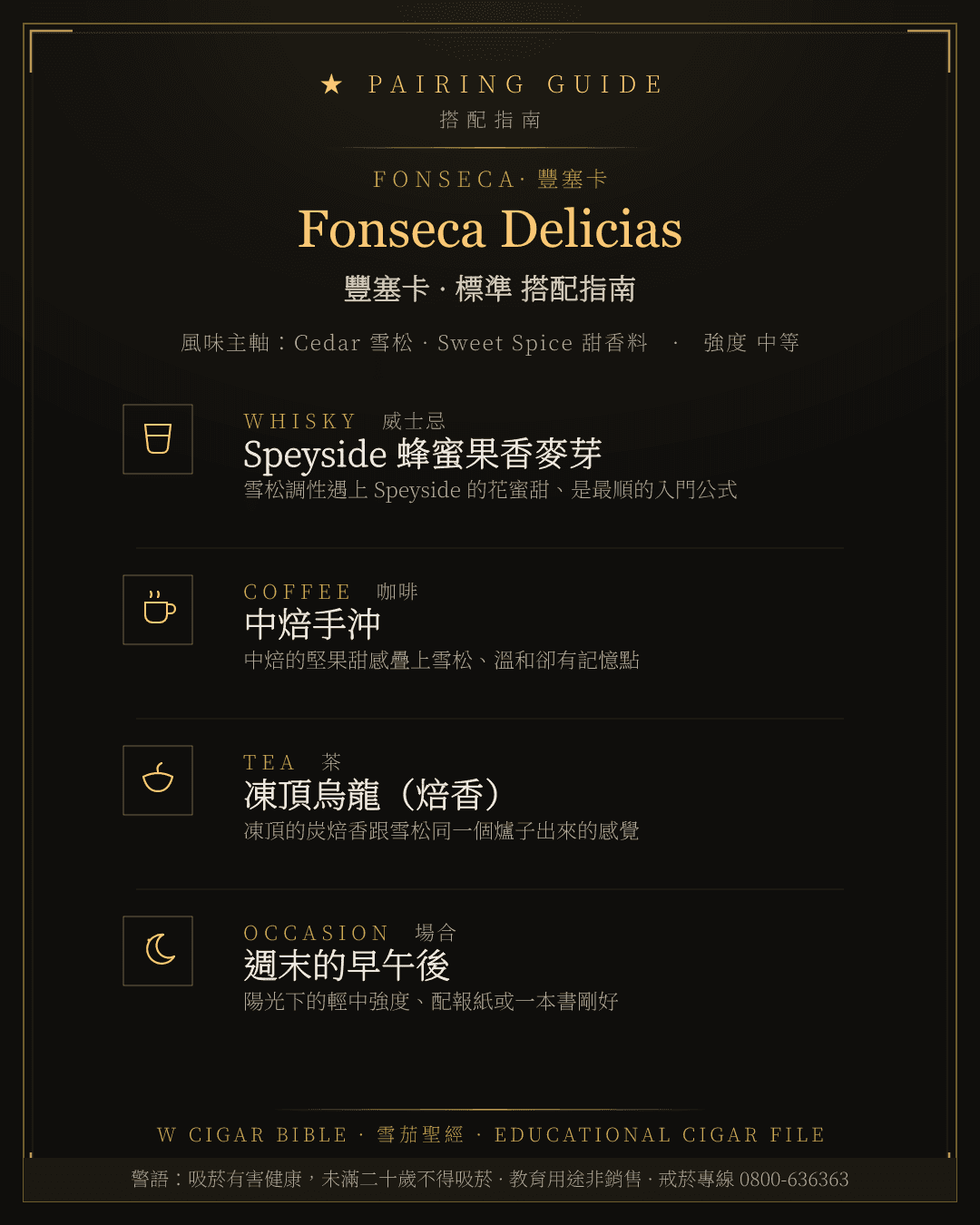
Fonseca Delicias 搭配指南 · 豐塞卡
PAIRING GUIDE · 搭配指南
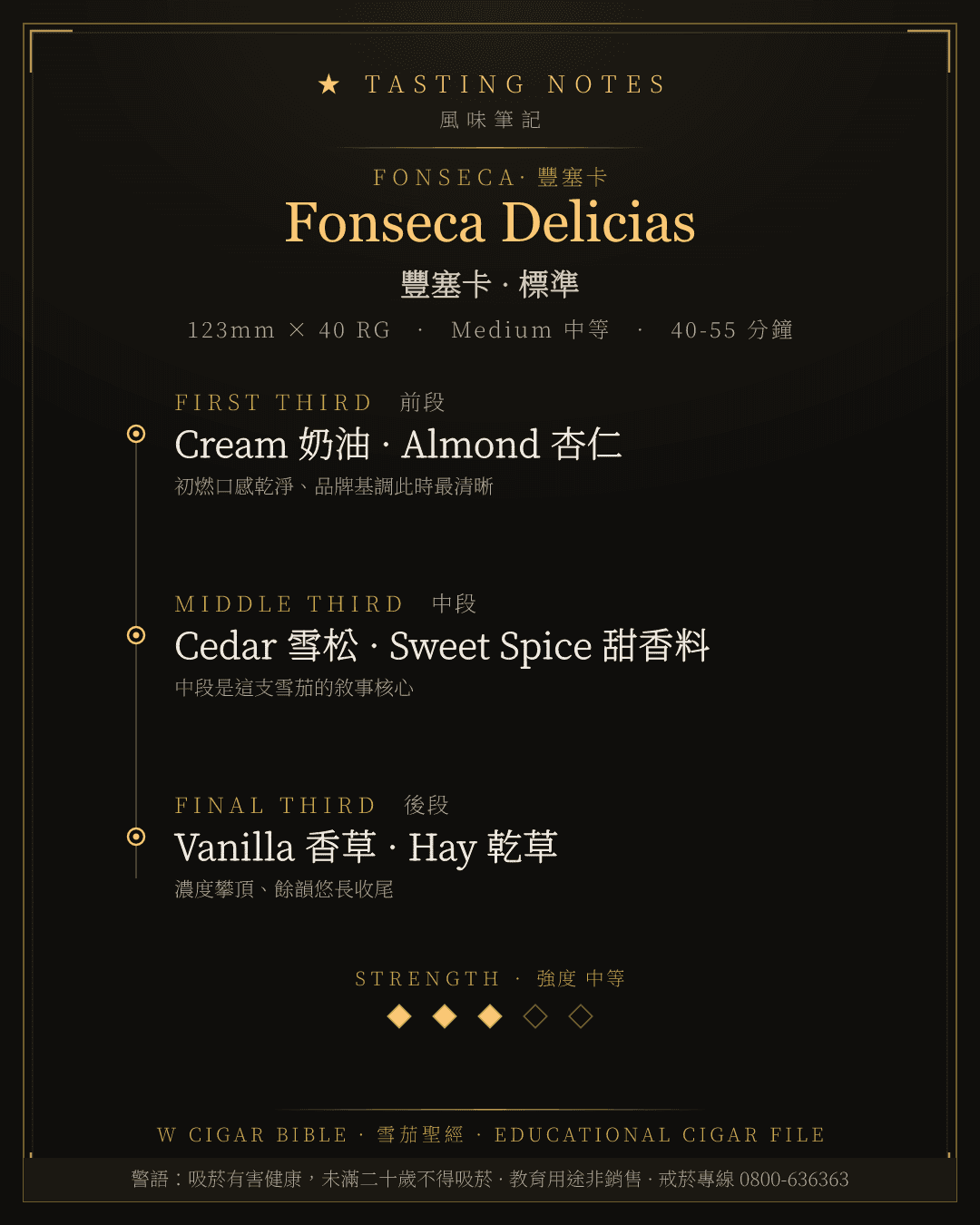
Fonseca Delicias 風味筆記 · 豐塞卡
TASTING NOTES · 風味筆記

Fonseca Du Nord · ER Canadá · 豐塞卡
ER Canadá · 地區限量版 Edición Regional · 雪茄檔案
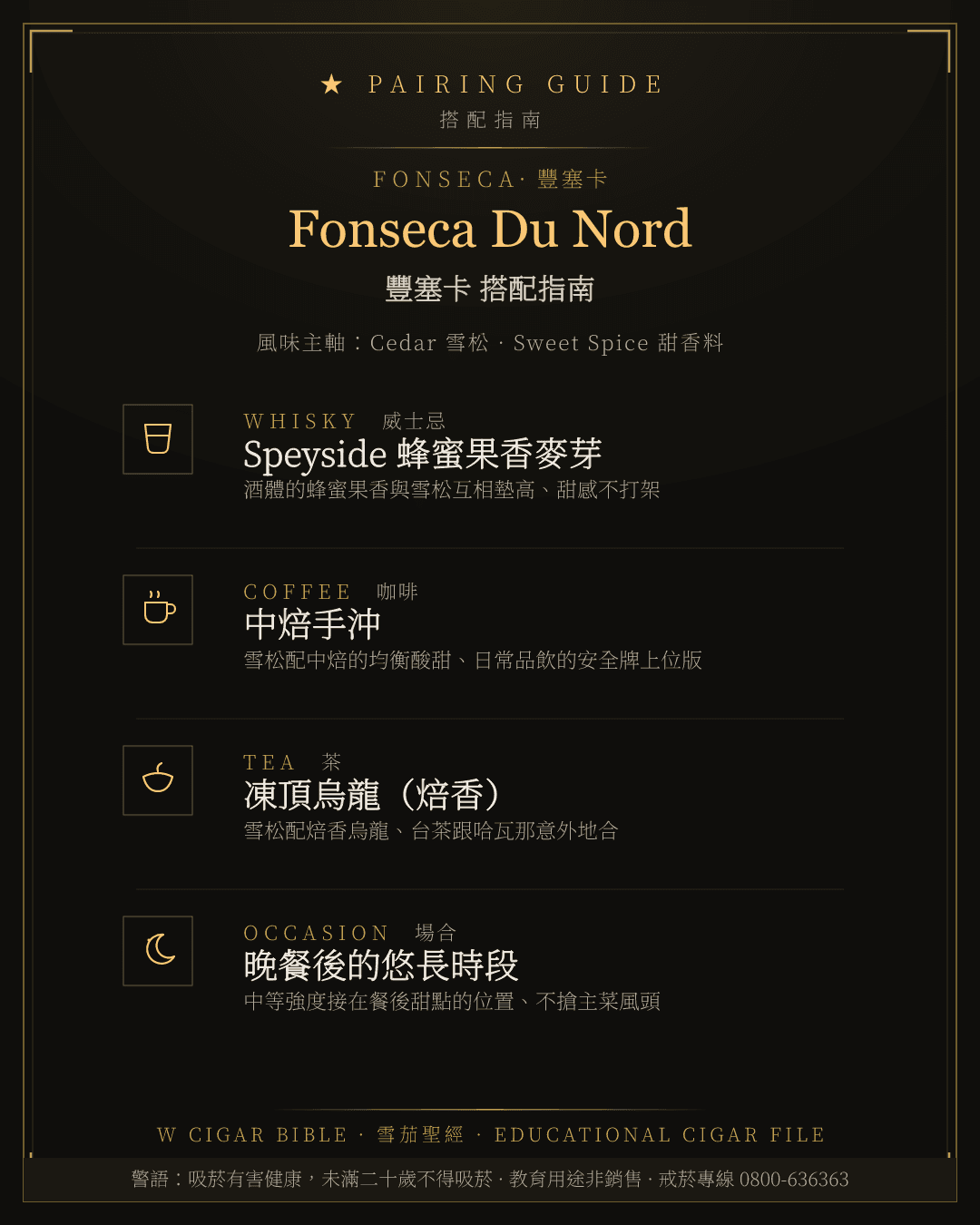
Fonseca Du Nord 搭配指南 · 豐塞卡
PAIRING GUIDE · 搭配指南
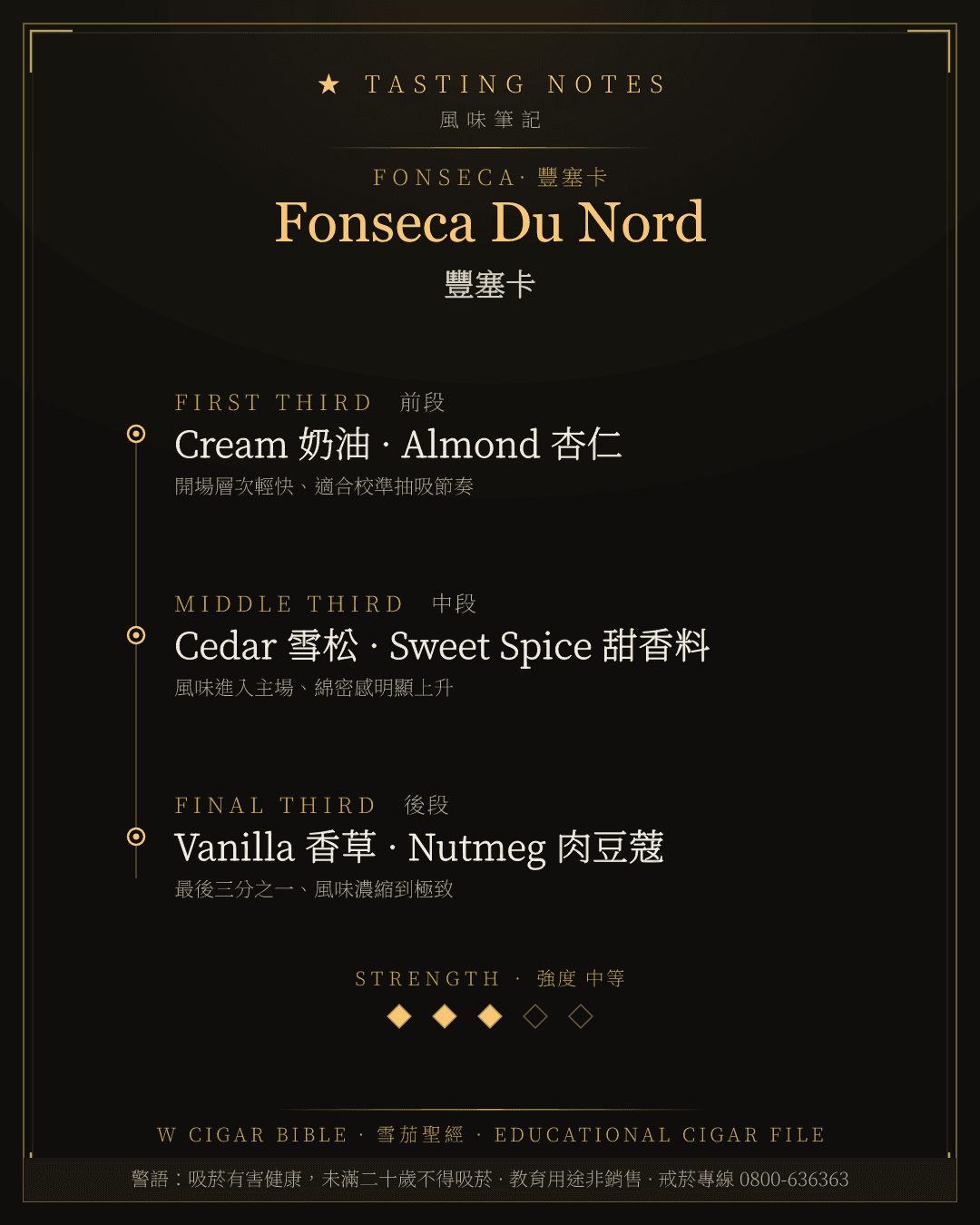
Fonseca Du Nord 風味筆記 · 豐塞卡
TASTING NOTES · 風味筆記
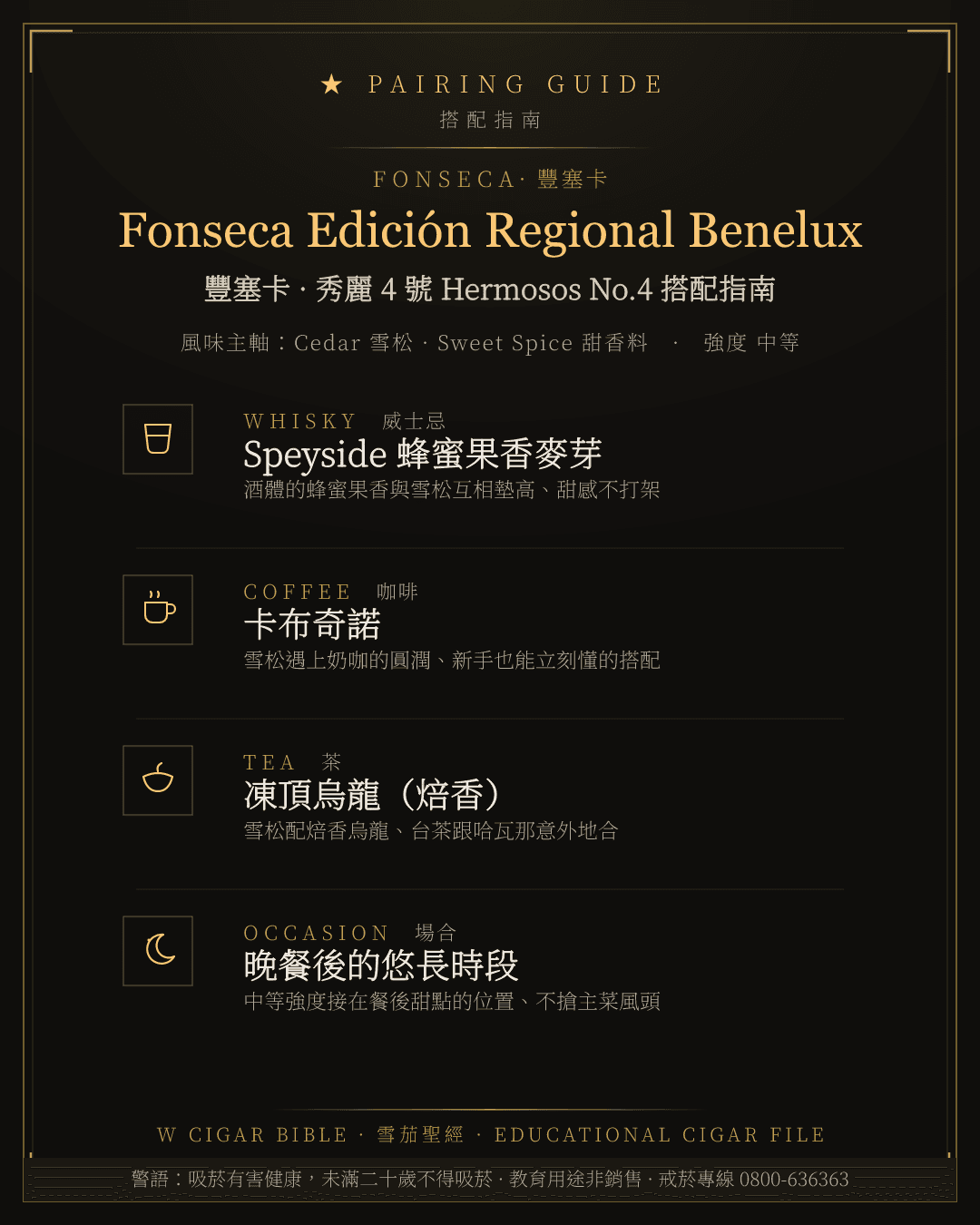
Fonseca Edición Regional Benelux 搭配指南 · 豐塞卡
PAIRING GUIDE · 搭配指南
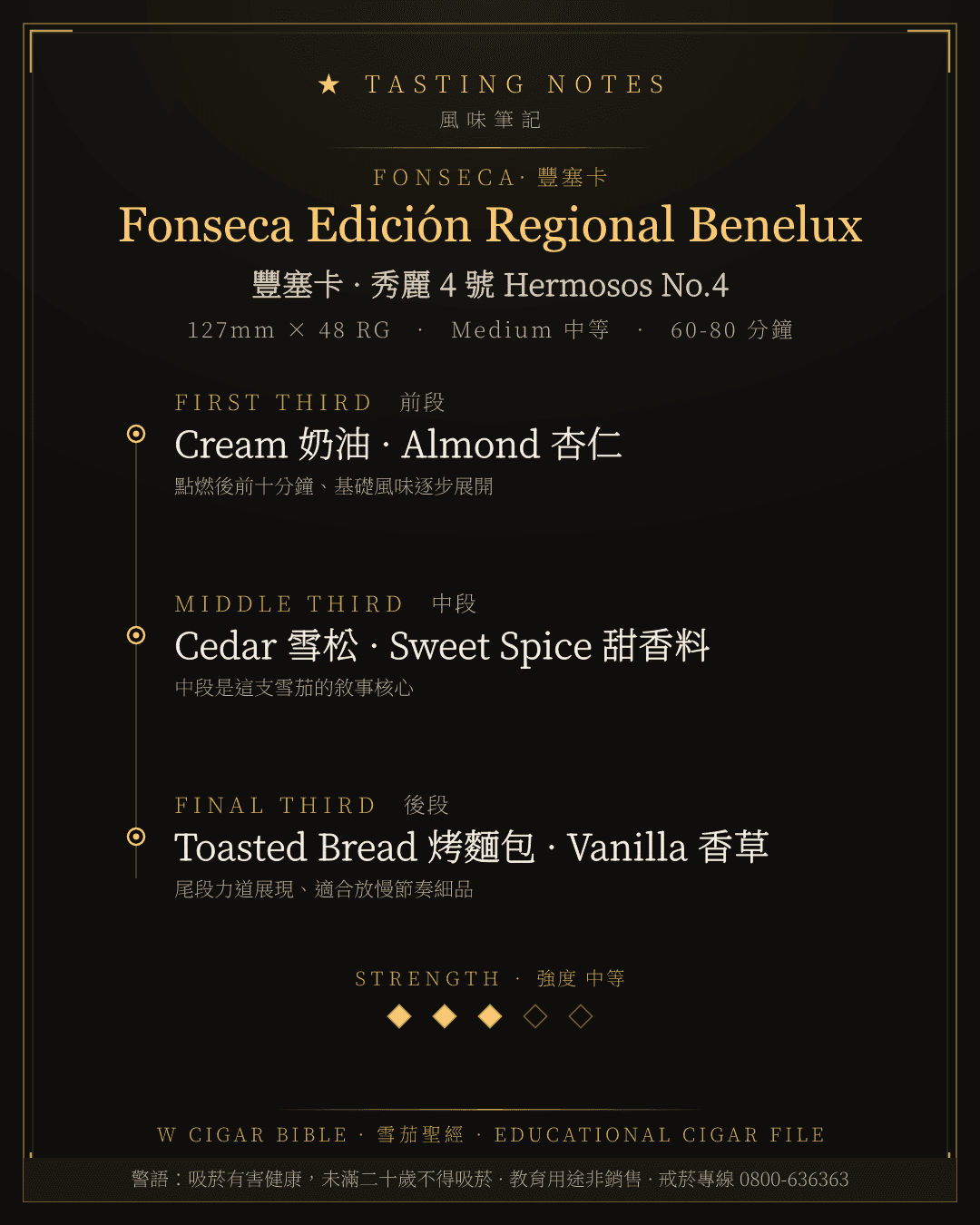
Fonseca Edición Regional Benelux 風味筆記 · 豐塞卡
TASTING NOTES · 風味筆記
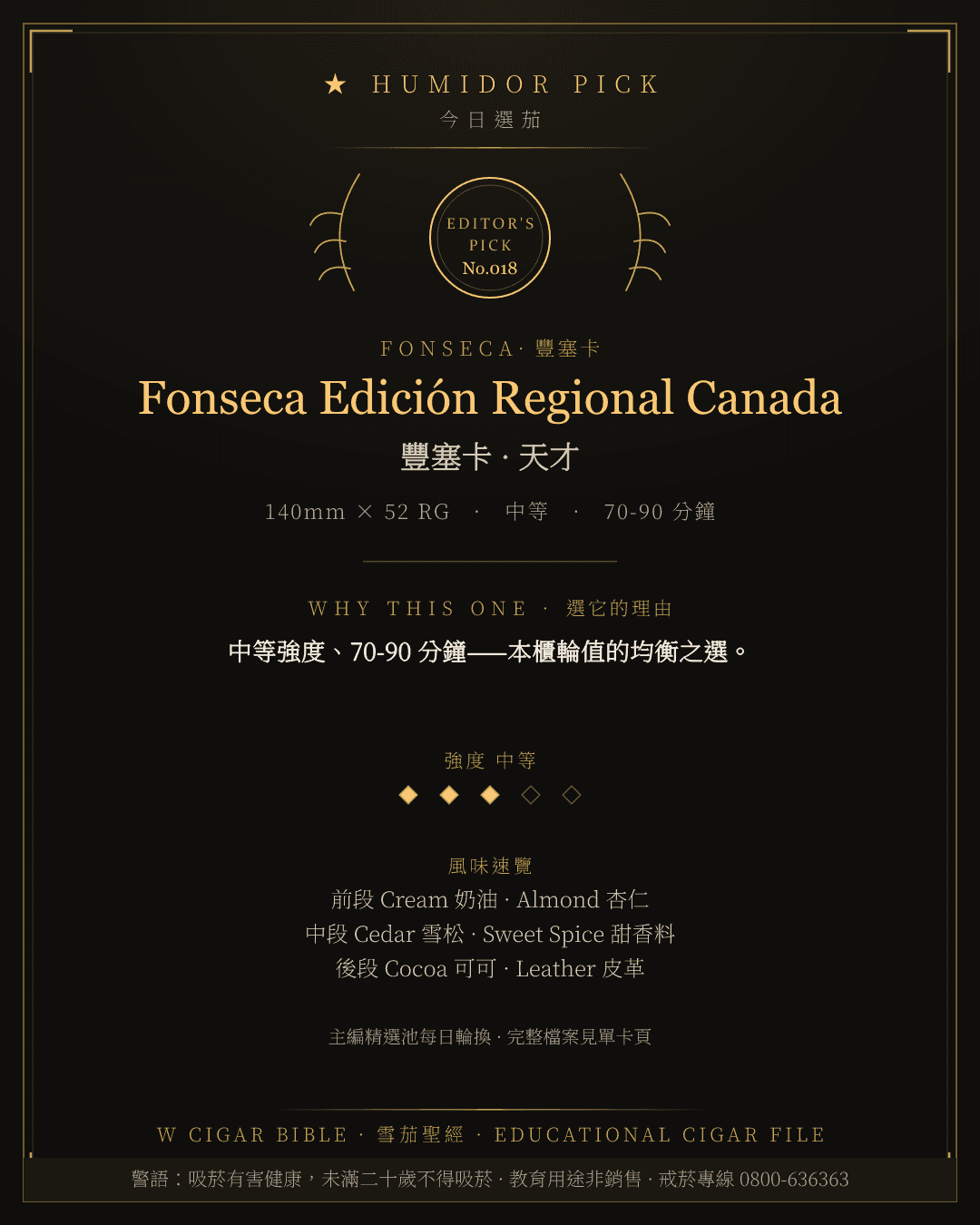
Fonseca Edición Regional Canada · 豐塞卡 總編輯精選
HUMIDOR PICK · No.018
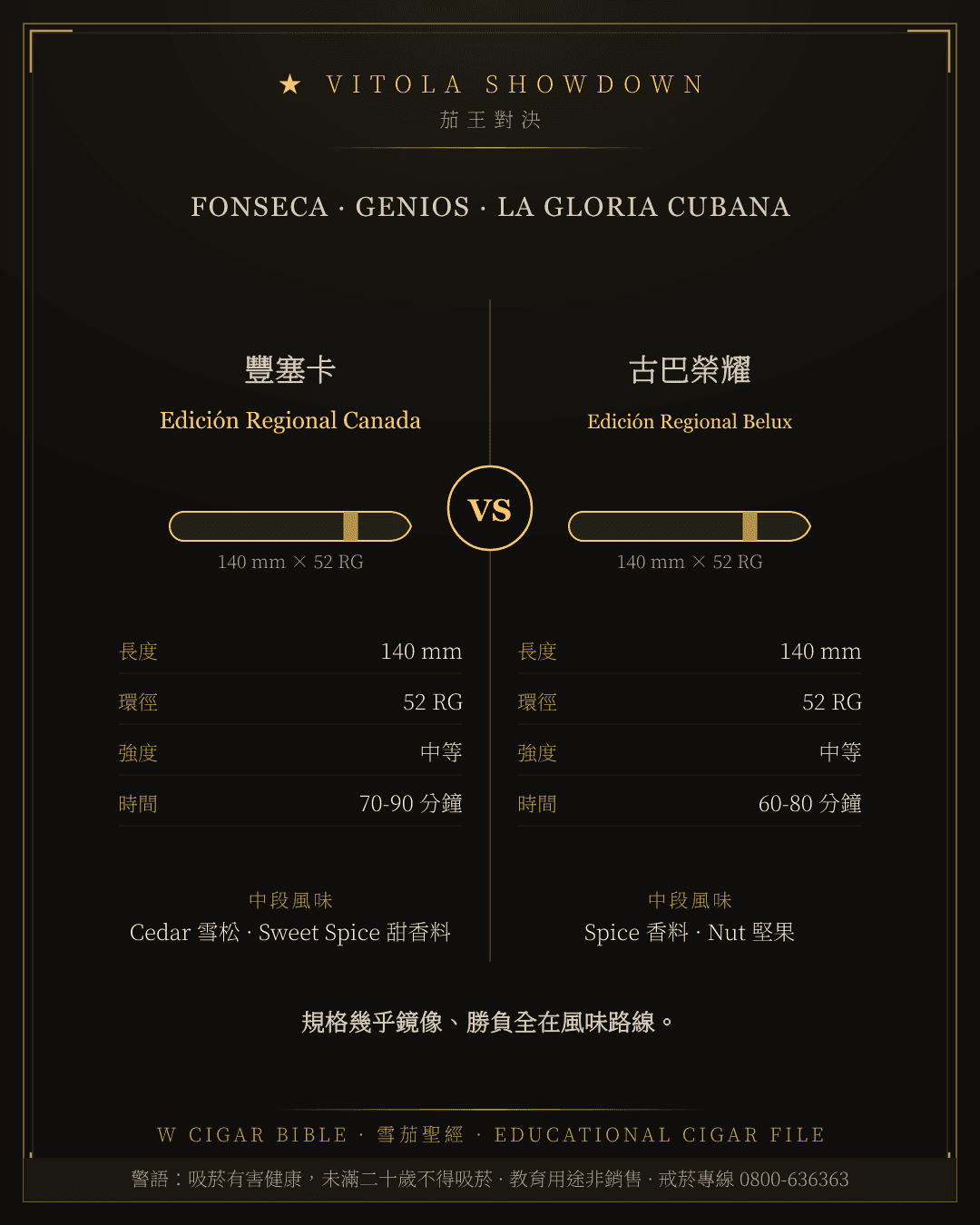
Fonseca Edición Regional Canada vs La Gloria Cubana Edición Regional Belux
VITOLA SHOWDOWN · Genios
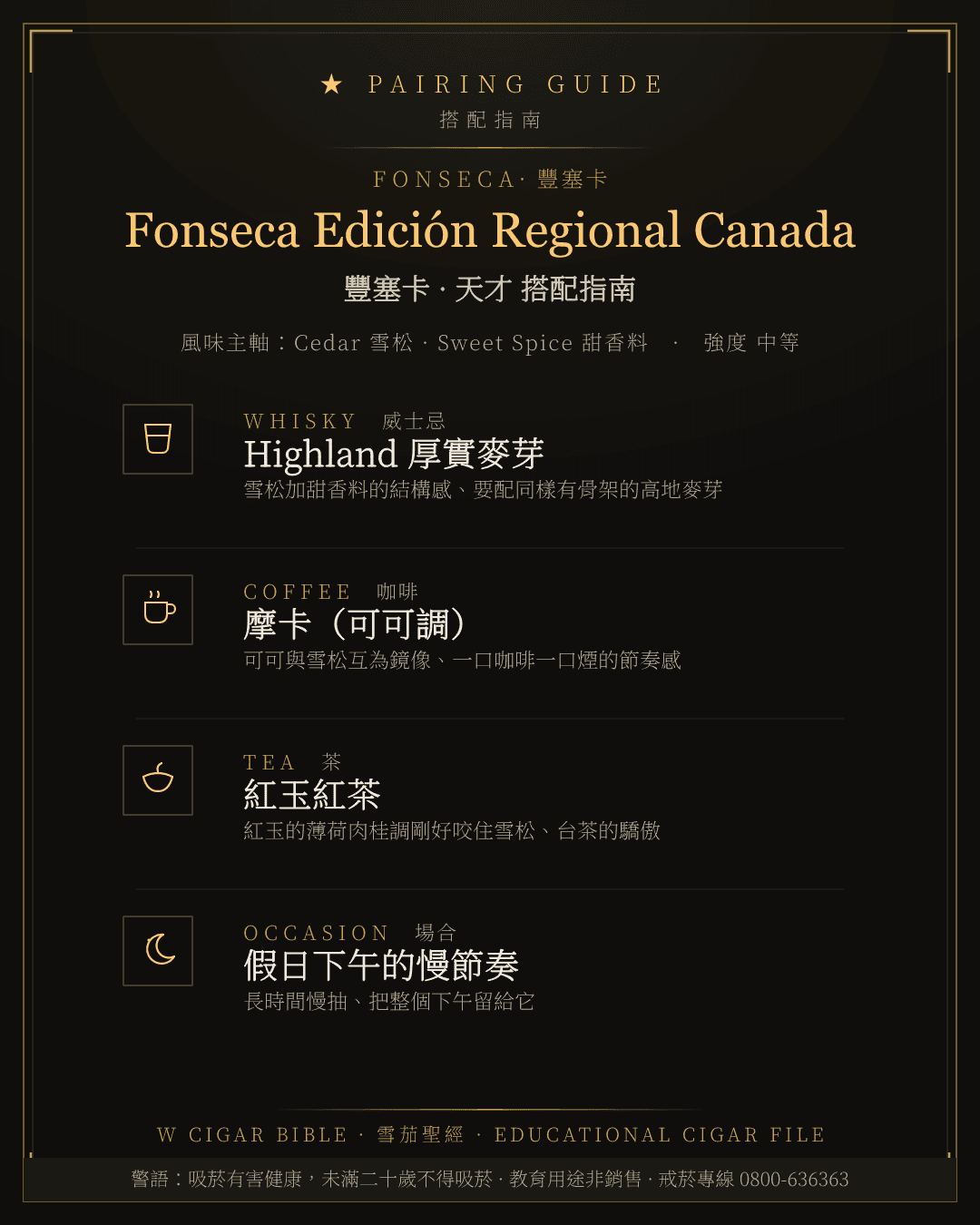
Fonseca Edición Regional Canada 搭配指南 · 豐塞卡
PAIRING GUIDE · 搭配指南
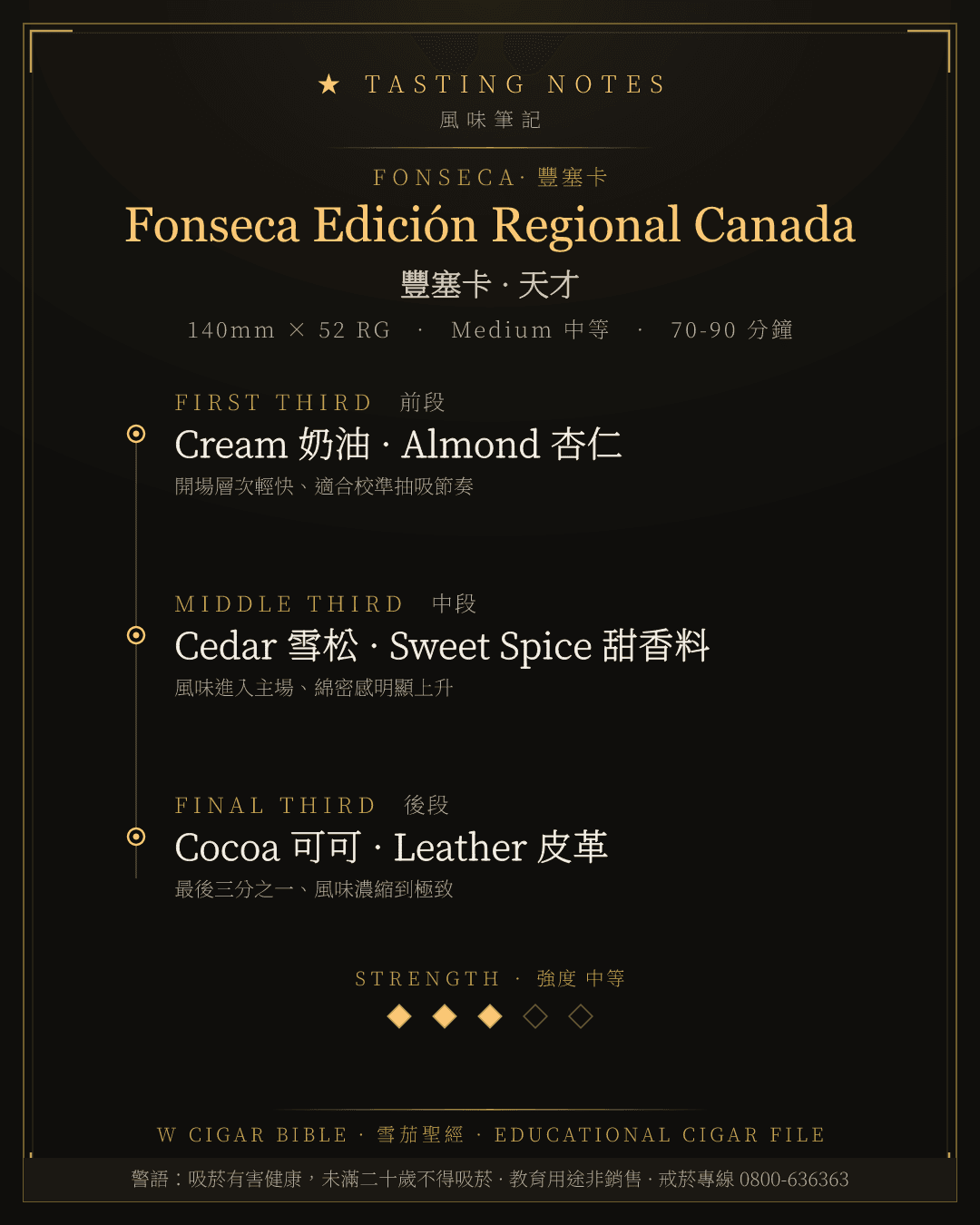
Fonseca Edición Regional Canada 風味筆記 · 豐塞卡
TASTING NOTES · 風味筆記
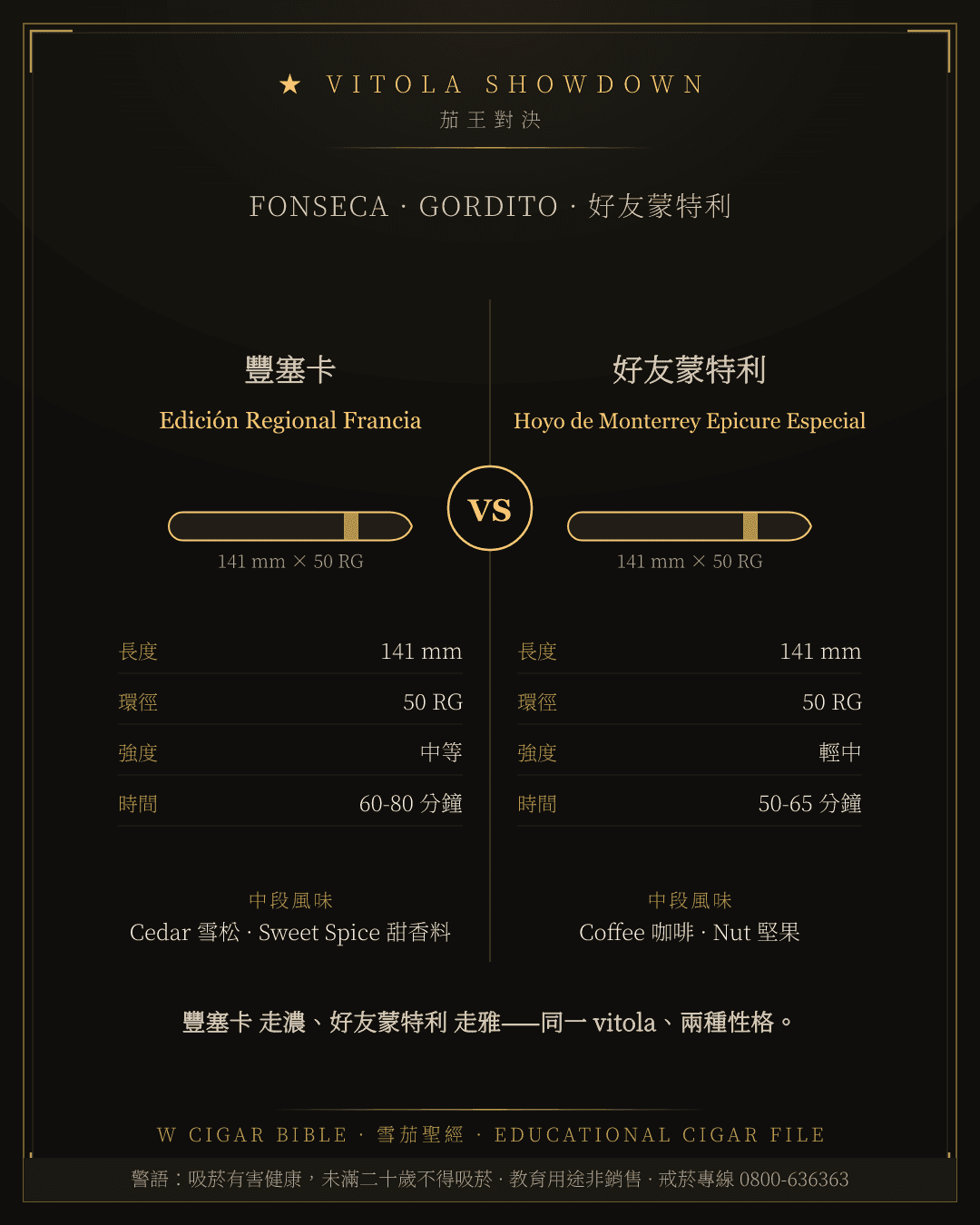
Fonseca Edición Regional Francia vs Hoyo de Monterrey Epicure Especial
VITOLA SHOWDOWN · Gordito
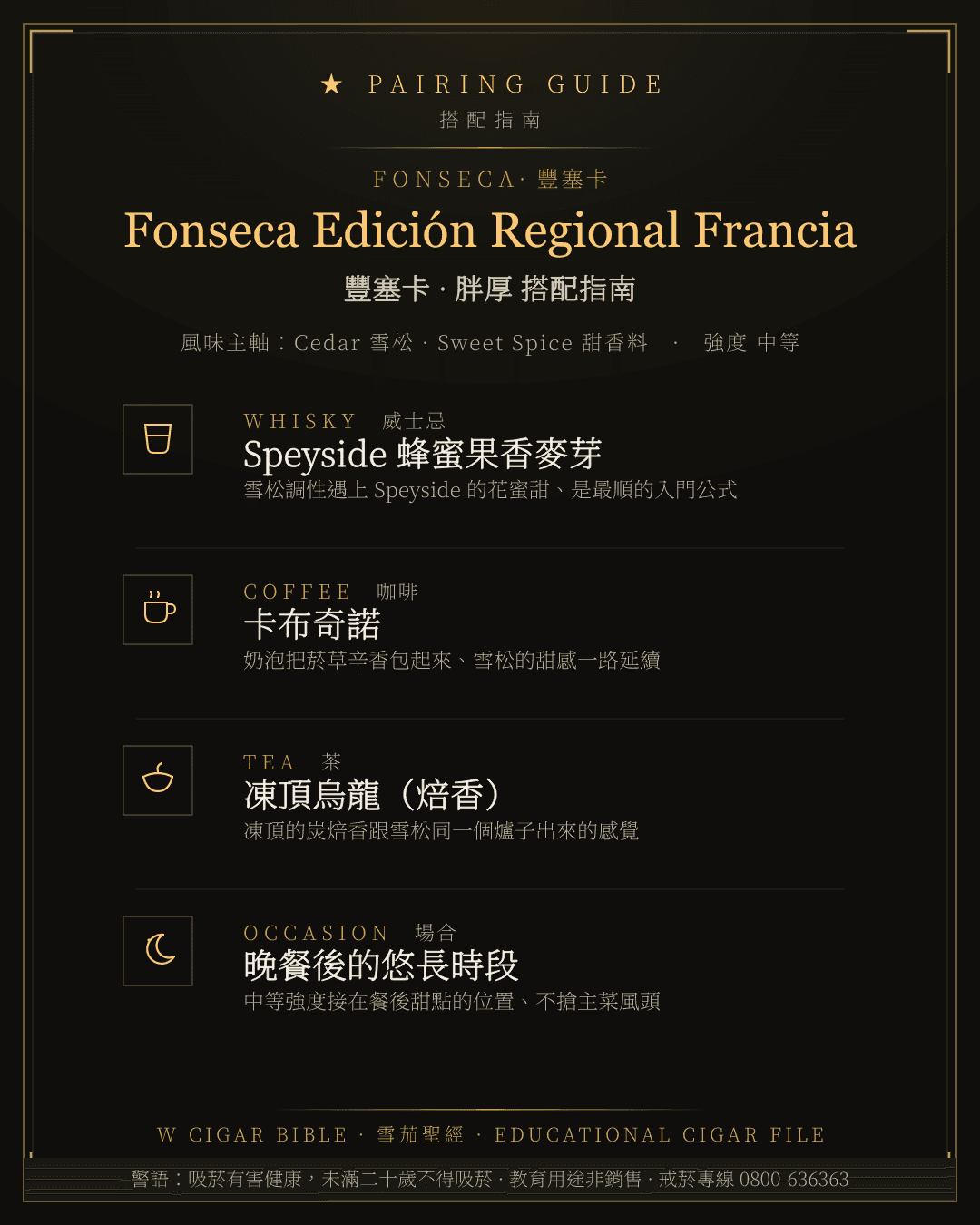
Fonseca Edición Regional Francia 搭配指南 · 豐塞卡
PAIRING GUIDE · 搭配指南
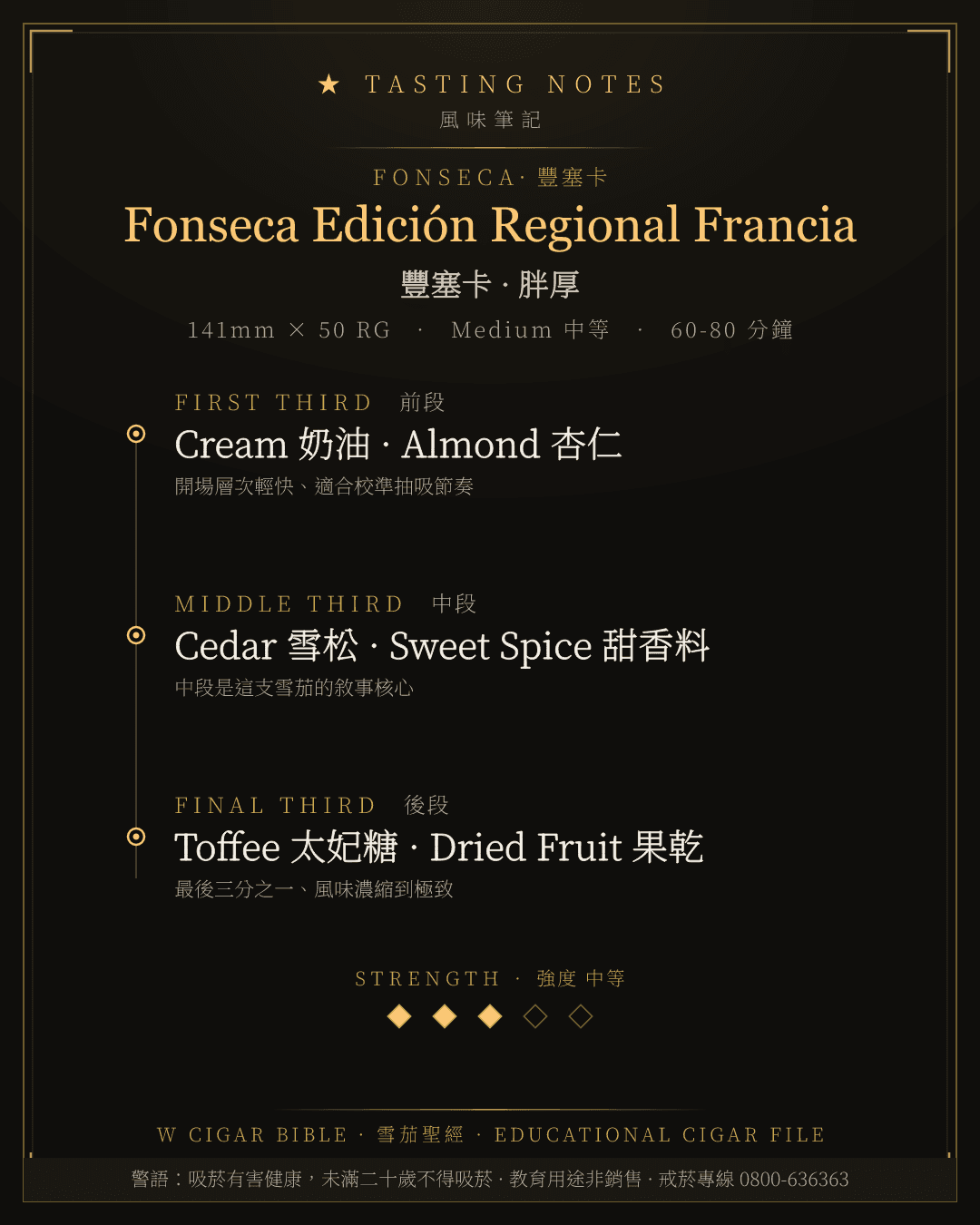
Fonseca Edición Regional Francia 風味筆記 · 豐塞卡
TASTING NOTES · 風味筆記

Fonseca Invictos · 豐塞卡

Fonseca Invictos vs La Flor Del Caney Especiales
VITOLA SHOWDOWN · Especiales
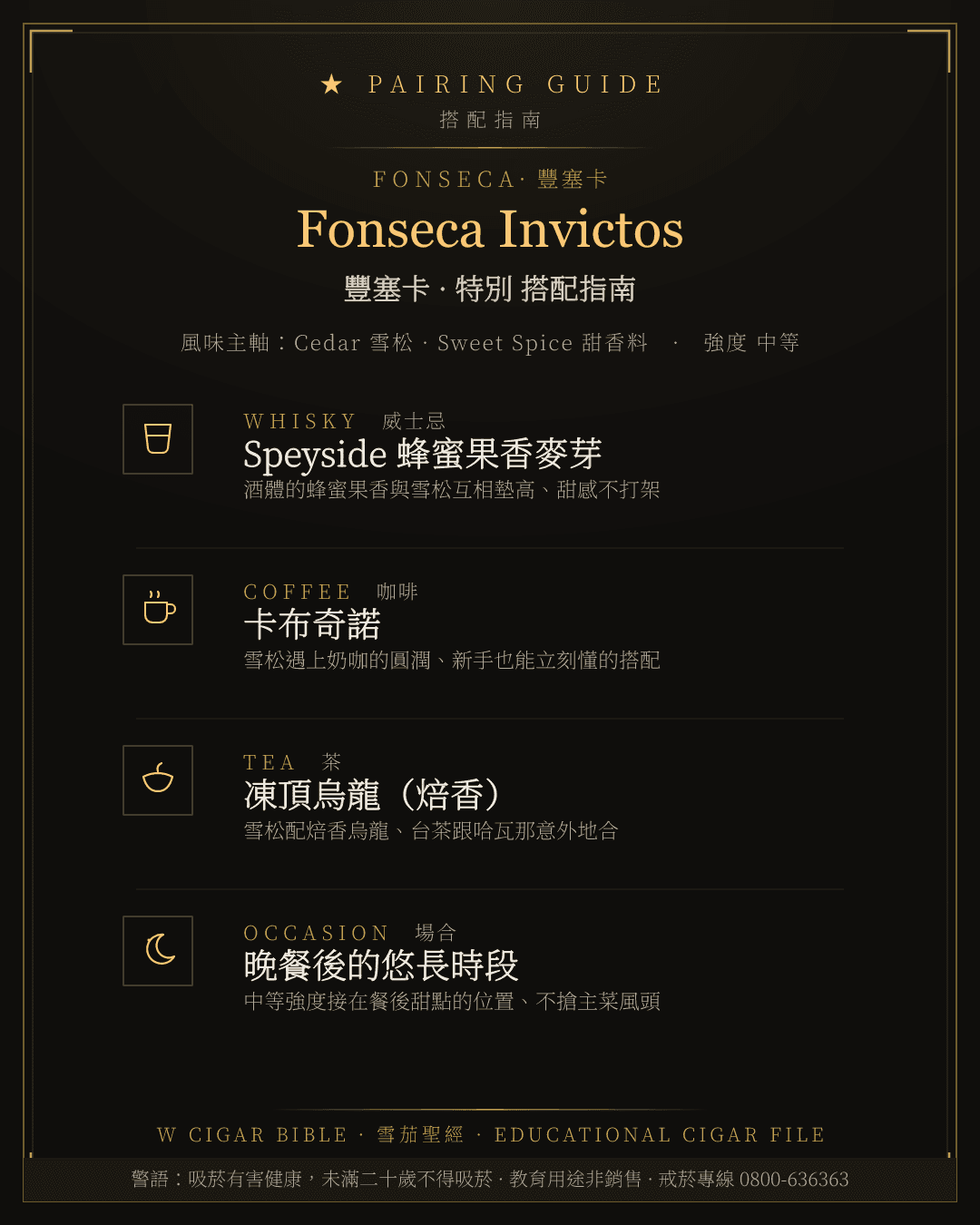
Fonseca Invictos 搭配指南 · 豐塞卡
PAIRING GUIDE · 搭配指南
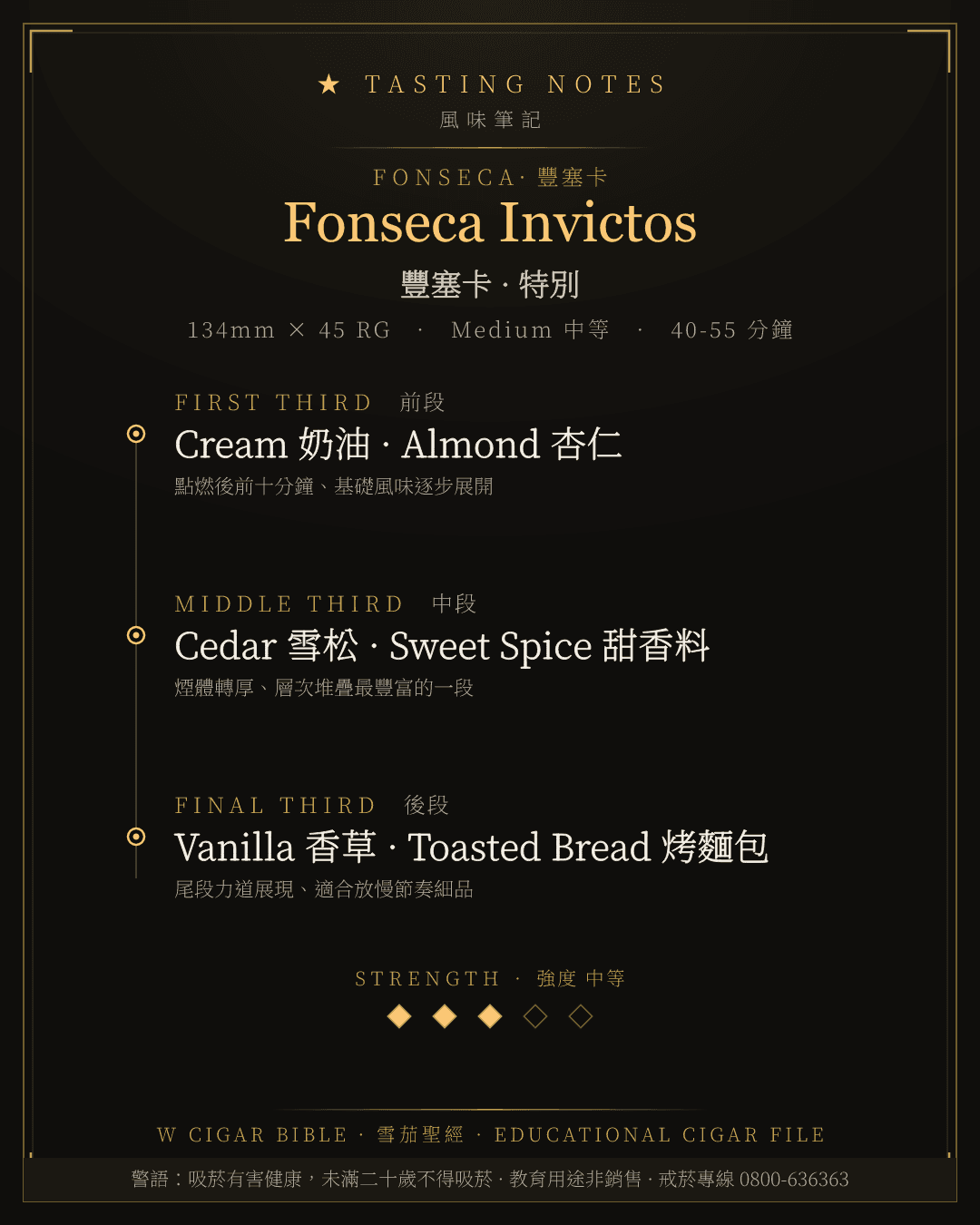
Fonseca Invictos 風味筆記 · 豐塞卡
TASTING NOTES · 風味筆記
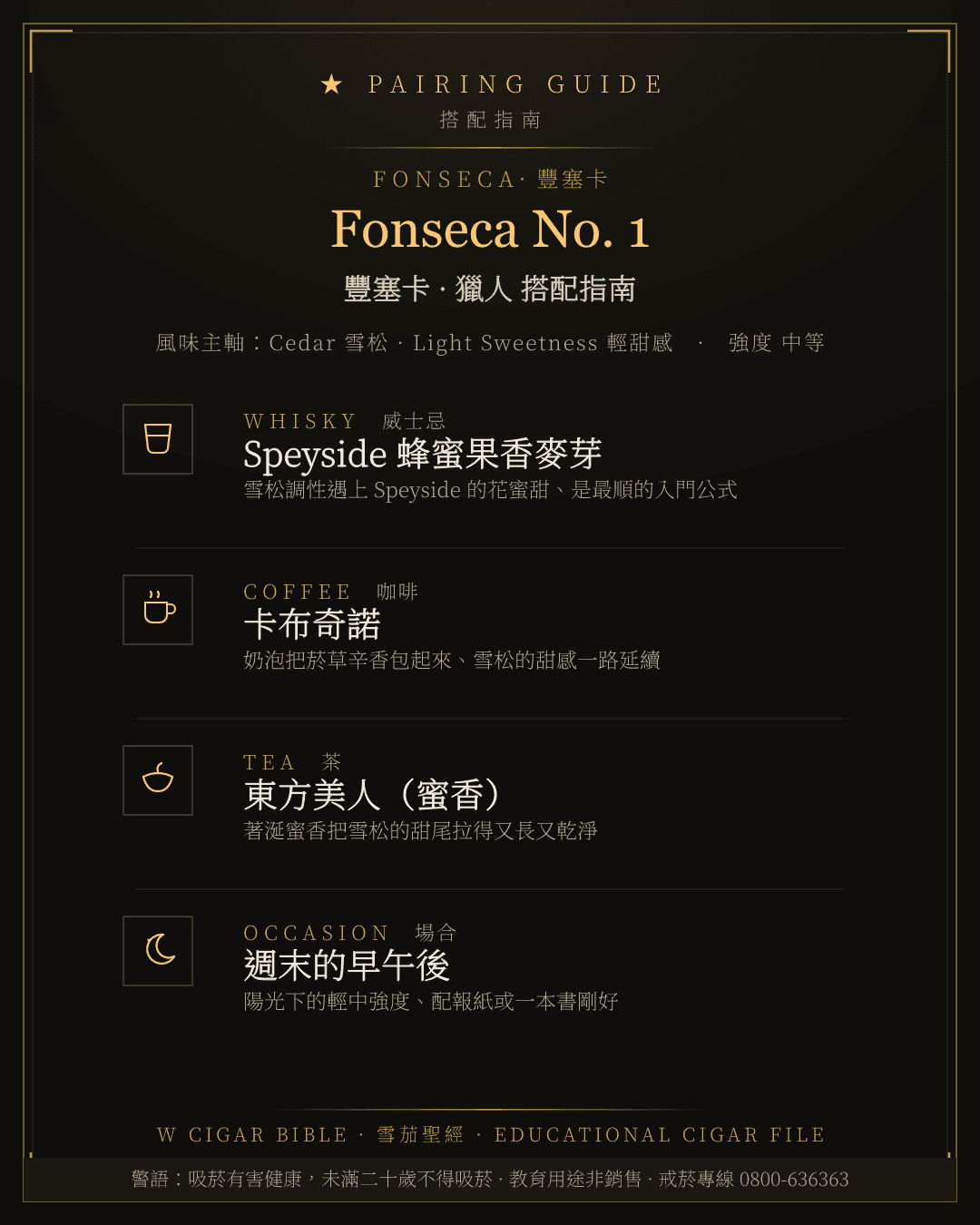
Fonseca No. 1 搭配指南 · 豐塞卡
PAIRING GUIDE · 搭配指南
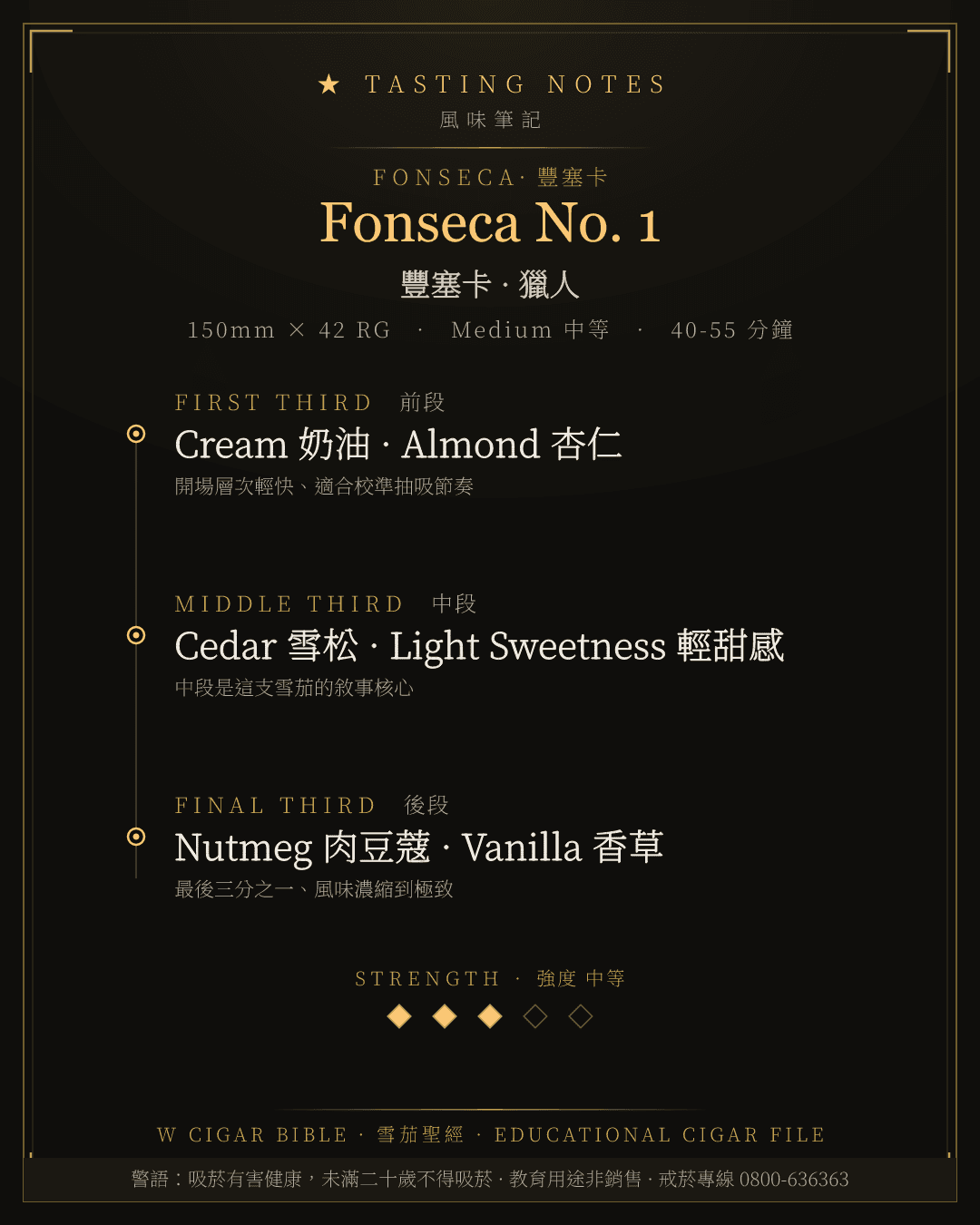
Fonseca No. 1 風味筆記 · 豐塞卡
TASTING NOTES · 風味筆記
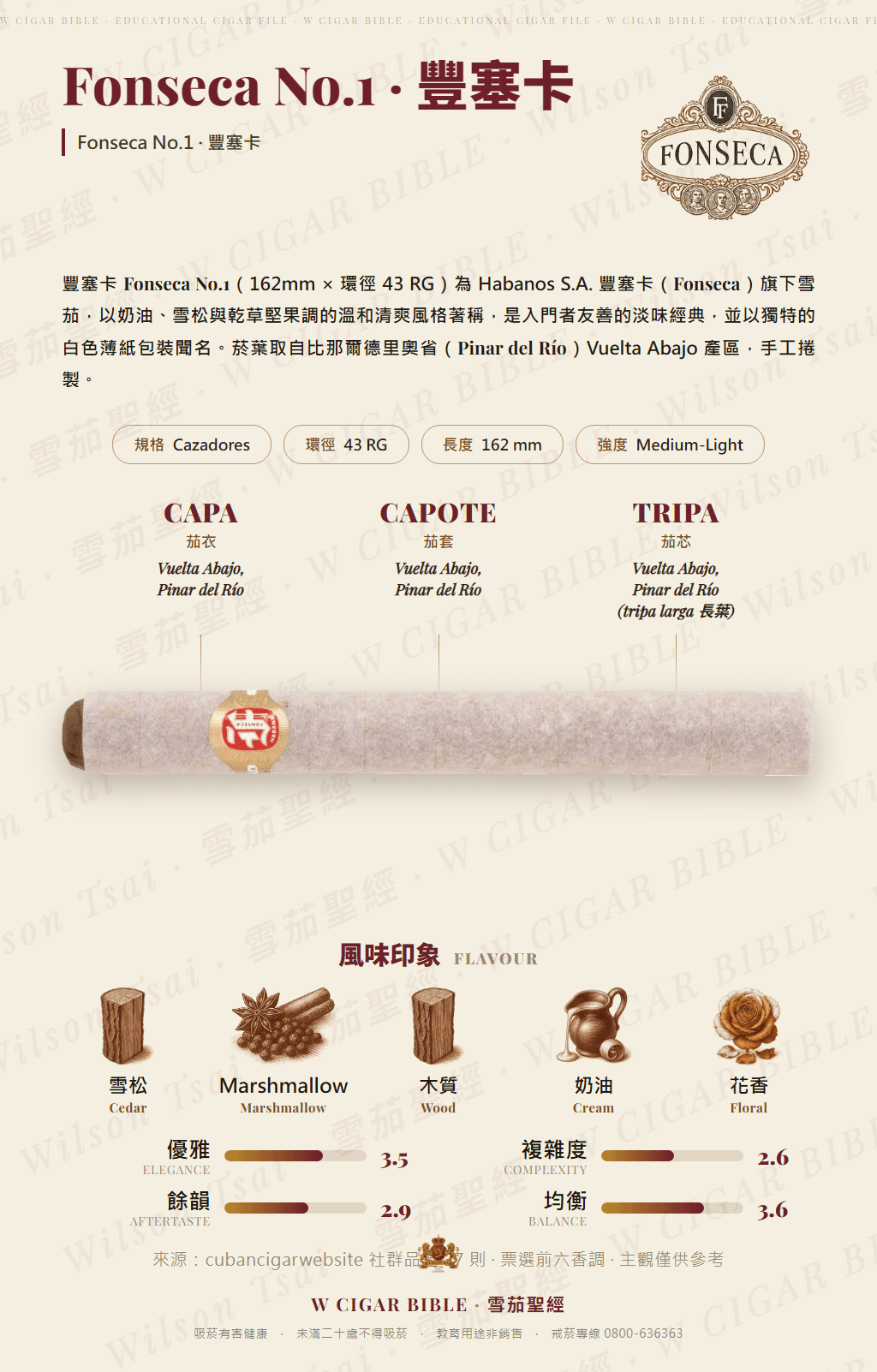
Fonseca No.1 · 豐塞卡
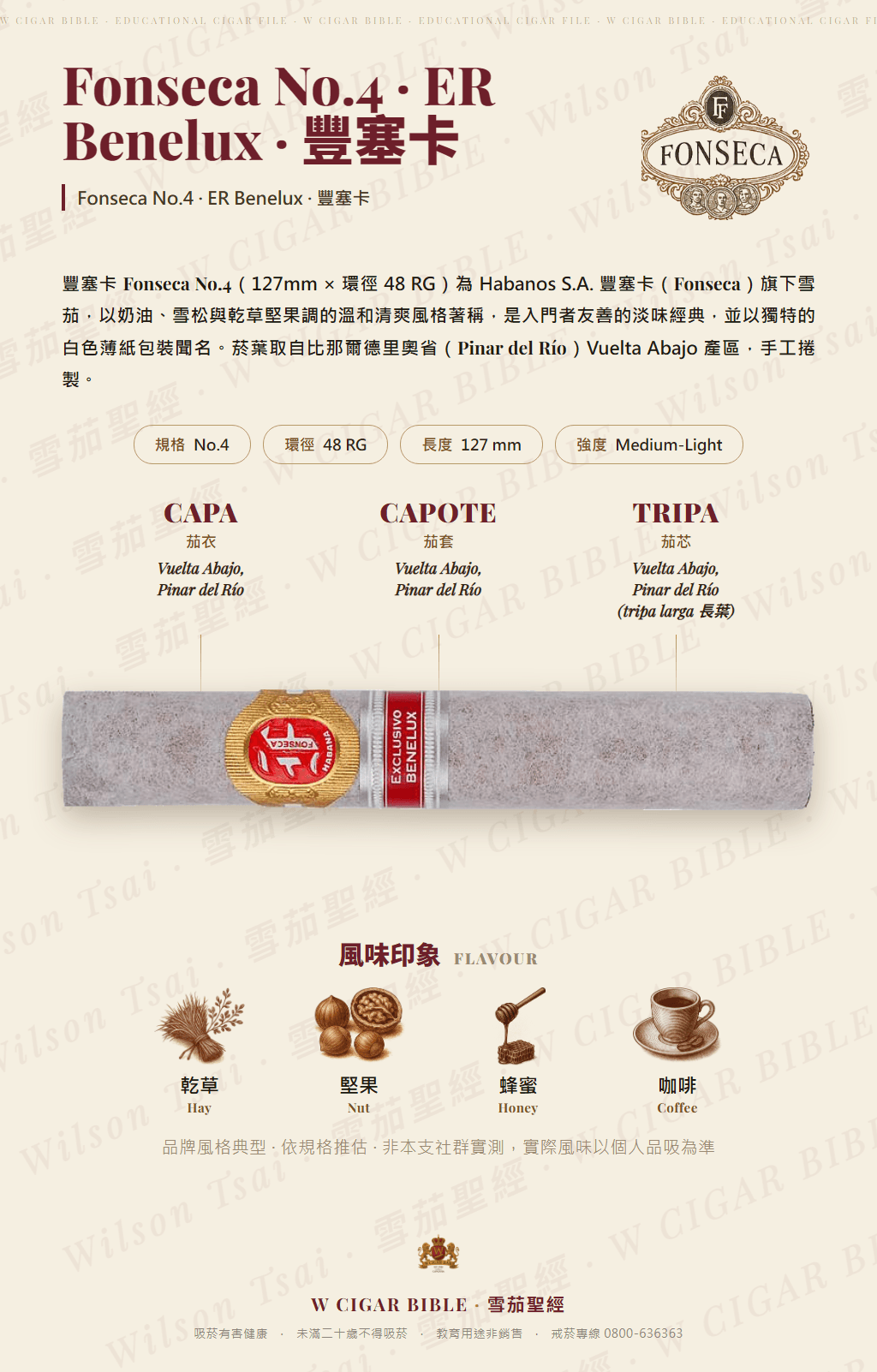
Fonseca No.4 · ER Benelux · 豐塞卡
ER Benelux · 地區限量版 Edición Regional · 雪茄檔案
ティッシュ包装の伝説
もし Cohiba が革命の葉巻、Cuaba が figurado 技術の頂点、El Rey del Mundo が世界の王であるなら、Fonseca 馮塞卡は**「日本和紙の葉巻」**です——1892 年に創立され、葉巻業界で唯一、全製品ラインを Washi ティッシュで包装し、初めて錫管包装を導入し、スペインのノーベル級詩人によって詩の中で「キューバの魂」の象徴として描かれた、伝説的なキューバ葉巻ブランドです。
物語は 1892 年のハバナから始まります。
二つの国に根を持つ創業者
Fonseca は1892 年、Don Francisco E. Fonseca によってハバナで工場と葉巻ブランドとして創立されました——1907 年に正式登録されています。葉巻業界では珍しい「先に事業を始め、後から登録する」事例で、その間隔は 15 年にも及びます。
Don Francisco(1868 年、キューバ Manzanillo 生まれ、スペイン移民の息子)には、独特な二重国籍的背景がありました。
- 1903 年にニューヨークへ移住——169 Front Street で工場を運営
- 1895 年に米国市民権を取得
- 1905 年、ニューヨーク Tribeca 地区 129 Duane Street に F.E. Fonseca & Co. を設立
- 同時に定期的にキューバへ戻り、工場を監督
これは葉巻業界でも珍しい「米国・キューバ二拠点」の経営モデルです。今日の Fonseca ブランドロゴには、キューバのモロ要塞(Morro of Havana)+米国の自由の女神像が Don Francisco 本人の肖像を囲む形で描かれています——創業者の二つの国にまたがる背景を反映したものです。これは葉巻業界では珍しい「個人の肖像をブランドロゴにした」事例でもあります。他のブランドでは通常、文学的場面、タバコ畑、都市風景などが用いられます。
葉巻業界唯一の Washi ティッシュ包装
Fonseca は、すべての葉巻を日本和紙(Washi ティッシュ)で包装する、葉巻業界唯一のブランドです——これは Don Francisco E. Fonseca による1910 年代の革新であり、現在まで受け継がれています。
シガーバンドは葉巻本体ではなくティッシュの上に貼られています——これは葉巻業界で唯一無二の、贅沢な包装上の特徴です。
Washi 和紙とは何ですか?
Washi 日本和紙——日本の桑の繊維を清らかな川水に浸し、増粘させた後、竹の簀で漉いて作られるもので、7 世紀以来、日本で手作業により作られてきました。
葉巻を包む利点:
- 輸送中にラッパーが損傷するのを防ぐ
- 風味に影響しない(杉片のように風味へわずかな影響を与えません)
- 最適な湿度を保つ(愛好家の見解)
- 視覚的に極めて贅沢
Fonseca は、全製品ラインを Washi で包装する世界唯一の葉巻ブランドです。
葉巻包装史におけるもう一つの「初」
Fonseca は、錫管(tin tube)包装を導入した最初の Habanos ブランドでもあります——1910 年代に発売され、アルミ管 Tubos(1940 年代中頃に登場)より 30 年も早いものでした。葉巻業界における「チューブ入り葉巻」文化は Fonseca によって切り開かれました。
つまり Fonseca は、葉巻包装史において二つの「初」を持っています。
- 初めて Washi ティッシュで葉巻を包んだこと(1910s)
- 初めて錫管で葉巻を包んだこと(1910s)
Federico García Lorca の詩
Don Francisco Fonseca は**「美男子」として知られていました——スペインの詩人 Federico García Lorca は、『Son de negros en Cuba』(黒人の歌、『ニューヨークの詩人』収録)**の中で次のように言及しています。
「la rubia cabeza de Fonseca」(Fonseca の金髪)
Lorca は Fonseca の金髪を「Romeo y Julieta のピンク」と並べ、「キューバの魂」の象徴としました。
Federico García Lorca は 20 世紀スペインで最も重要な詩人の一人です——この文学的な裏付けにより、Fonseca の物語はスペイン文学史の中へ入りました。
儀式の葉巻を代表する存在
Don Francisco は「Cuban Tobacco の専門家」でした——彼は仕立ての良い服装、優雅な身だしなみ、金色の杖にこだわりました。
Fonseca の葉巻の 60% は、レセプション、晩餐会、紳士クラブなどの場で用いられていました——まさに「儀式の葉巻」を代表する存在です。
彼はさらに、「工場内に鑑賞室(tasting room)を設けた最初の」キューバ葉巻ブランドでもありました——顧客が異なるブレンドを鑑賞できるようにしたのです。この概念は、今日のあらゆる La Casa del Habano の鑑賞サロンに先駆けるものでした。
同時に Fonseca は、Partagás の「lector」の伝統も取り入れました——朗読者を雇い、巻き手たちに本を読んで聞かせ、仕事中の退屈を和らげると同時に教育を広めました。
ハバナの見えざる慈善家
Don Francisco はハバナの見えざる慈善家でした——Barrio Cerro の自宅には音楽家、画家、作家が集まりました。赤ワイン、オリーブ、黒豚の生ハム(pata negra)を添え、自由な創作の雰囲気を作り出していました。
彼は自宅に木製の募金箱を置き——必要とする人は誰でも自由に取ることができました。
この寛大さにより、Don Francisco は**ハバナの「沈黙の施主」**となりました。
1915 年、ブランドは Calle Galiano No. 102 の工場へ移転しました。1911 年に Don Francisco が新工場の建設を依頼したことは、ブランドの成功を反映しています。彼は当時ハバナ最高峰の巻き手の一人であった Señor Mecallín を雇い、責任者に任命しました。
未亡人による継承
1930 年、Don Francisco E. Fonseca は逝去しました。妻の Teresa Boetticher de Fonseca が工場経営を引き継ぎました——これは葉巻業界では珍しい「女性後継者が葉巻ブランドを経営した」事例です。
Doña Teresa はタバコ専門家と協力し、ブランドを T. Castañeda、G. Montero などの会社と統合して Castañeda, Montero, Empresas de Fonseca, SA としました。工場は 1960 年の国有化まで運営されました。
1960 年の革命後、ブランドは国有化されました——しかし生産は一度も中断されませんでした。これは Fonseca の歴史における重要な特徴です:革命後も生産が途切れなかった数少ないブランドなのです。現在はハバナ州 Quivican の町にある Lázaro Pena Factory で生産されています。
風味:完璧な入門キューバ
Fonseca の風味:軽め(mild/light)の強度——キューバ葉巻の中でも最も穏やかな系統の一つです。
特徴的な風味:クリーム、ローストナッツ、ほのかな蜂蜜、バニラ、淡いハーブ香、軽い花の香り。初心者にとって最も受け入れやすいキューバ葉巻の一つであり——「完璧な入門キューバ」の代表です。
しかし同時に、経験豊富な愛好家からは「朝に最適なキューバ」とも見なされています——一日の始まりに強すぎる必要はなく、Fonseca はまさに完璧です。
Fonseca は Habanos 体系では Other 分類(ニッチブランド)です。主な市場はスペインとカナダ——他の Habanos ブランドの世界的流通とは異なります。価格は相対的に控えめ——「コストパフォーマンスが最も高いキューバ葉巻の一つ」とされています。
すべての Fonseca は「totalmente a mano」(完全手作業)で、すべて Vuelta Abajo のタバコ葉を使用しています。Delicias はブランド唯一の short filler 葉巻であり、その他はすべて long filler です。6 種のレギュラー規格のうち、廃番となったのは 2 種のみ——Habanos 体系の中でも「最も高い保持率」を持つブランドの一つです。
フラッグシップ製品:4 種のレギュラーが百年ブランドを支える
Fonseca KDT Cadetes(4½" × 36, vitola: Cadetes)— ブランドの入門モデル——36 リングゲージの細く短い panatela。「KDT」=「Cadetes」(士官候補生)の略称です。20〜40 分の体験で、初心者または朝の鑑賞に最適です。甘味、土の香り。手巻き、ティッシュ包装。
Fonseca Cosacos(5⅜" × 42, vitola: Cosacos)— ブランドの中核モデル——135mm × 42 リングゲージの Corona。50 分の体験で、柔らかな風味、午後の鑑賞に適しています。1907 年の創立以来同じモデルであり、葉巻業界で最も歴史的継続性を持つ葉巻の一つです。
Fonseca Delicias(4⅞" × 40, vitola: Standard, short filler)— ブランド唯一の short filler 葉巻——long filler より燃焼が速いです。ショートブレッド、クリーミーな甘味、軽いナツメグ——「朝に最適なキューバ」の代表です。25 分の体験。
Fonseca No.1(6⅜" × 43, vitola: Cazadores)— ブランド最大規格の Lonsdale。胡椒、木質感、35 分の体験。2012 年に公式には廃番表示となりましたが、実際には少なくとも 2017 年まで生産が継続されていました——この「廃番だが生産継続」という奇妙な状態は、Habanos の在庫戦略を反映しています。
廃番となった希少規格
Fonseca Invictos(5¼" × 45, vitola: Especiales)— ブランド独自規格——この Especiales 規格は Fonseca のみが生産していました。2002 年に廃番——これにより、この独自規格はキューバ葉巻業界から完全に姿を消しました。
Fonseca Aromas(40 × 140mm, 正式な vitola 名称なし)— 1980 年代後期に廃番。この vitola は過去に Romeo y Julieta でも Capulets シリーズに 1970 年代まで使用されていました。現在は絶滅しています。
ブランド唯一の RE:1,600 本の極めて希少な存在
Fonseca No.4 RE Benelux 2010(5" × 48, vitola: Hermosos No.4, 1,600 本番号付き × 25/箱)— ブランド唯一の Edición Regional——ベルギー、オランダ、ルクセンブルク市場専用です。今なお手作業によるティッシュ包装。1,600 本という極めて希少な数量で、ブランド史上最も貴重な RE です。Robusto サイズ、Hermosos No.4。
中国語圏が知るべき Fonseca
台湾、香港、マレーシアの華人愛好家へ:
-
これは「日本和紙包装」の伝説です——日本の和紙文化を愛する愛好家にとって、Fonseca にはさらに深い文化的な情緒的つながりがあります。葉巻業界で唯一、全製品ラインを Washi ティッシュで包装しています。
-
「完璧な入門キューバ」として必ず押さえたい存在:KDT Cadetes または Delicias は、キューバ葉巻の世界に入るうえで最も受け入れやすい入口です——軽い強度、クリーミーな甘味、初心者を圧倒しません。
-
Cosacos は「百年葉巻」です:1907 年の創立以来同じ規格で、葉巻業界でも最も歴史的継続性を持つ葉巻の一つです。50 分の体験、柔らかな風味。
-
No.4 RE Benelux 2010 は希少なコレクション品です:1,600 本という極めて希少な数量、今なおティッシュ包装——ブランド史上最も貴重な RE です。
-
Invictos の熟成版(2002 年以前)はコレクションの聖品です:「葉巻業界独自規格」に廃番、さらに Fonseca のティッシュ包装が加わり——コレクターの目には最高の栄誉と映ります。
-
真贋識別:白い Washi ティッシュで包まれていること、シガーバンドがティッシュの上に貼られていること、Lázaro Pena 工場のスタンプ——この三つが揃って初めて本物です。模造品は日本和紙の質感を再現するのが非常に困難——これが Fonseca の真贋識別上の特徴です。
-
Federico García Lorca の詩による文化的付加価値:スペイン文学を愛する愛好家にとって、Fonseca は「文学葉巻」として必ず押さえたい存在——Romeo y Julieta と並び、Lorca によって『ニューヨークの詩人』に書き込まれています。
なぜ Fonseca は「ティッシュ包装の伝説」なのか
Fonseca は誇示する葉巻ではありません。それは**Cohiba のような贅沢な光環も、Trinidad のような神秘性も、Bolívar のような力強い衝撃も持ちません**。
Fonseca が歩むのは「ティッシュ包装の道」です——包装技術、二つの国にまたがる背景、文学との結びつき、優雅な儀式性によってブランドを定義しています。まるで、1903 年にハバナからニューヨークへ移住しながら、ハバナで静かに施しを続けた Don Francisco E. Fonseca その人のようです。
初心者にとって、Fonseca KDT Cadetes は「キューバ葉巻」へ入る最も簡単な入口です——36 リングゲージ、20 分、軽い強度で、誰をも圧倒しません。
美食家のような愛好家にとって、Fonseca Cosacos は百年葉巻であり、Delicias は朝に最適、No.1 は最大規格です。
キューバ工場長級の愛好家にとって、Fonseca にはさらに四つの唯一無二の価値があります。
- 葉巻業界で唯一、全製品ラインを Washi ティッシュで包装するブランドであること——日本の 7 世紀以来の伝統とキューバ葉巻文化の完璧な融合
- 錫管包装を導入した最初の Habanos ブランドであること(アルミ管より 30 年早い)——葉巻包装史の開拓者
- Federico García Lorca の詩における「キューバの魂」の象徴であること——「Fonseca の金髪」は「Romeo y Julieta のピンク」と並べられました
- 革命後も生産が一度も中断されなかった数少ないブランドであること——133 年にわたり廃止されることなく続いてきたこの継続性は、葉巻業界でも極めて稀です
1892 年にハバナで工場を創立し、1903 年にニューヨークへ移住し、日本和紙で一本一本の葉巻を包み、Lorca によって『ニューヨークの詩人』に書き込まれた Don Francisco E. Fonseca は、今日もなお、一枚一枚の白い Washi ティッシュの中で、その優雅な儀式を受け継いでいます。
W シガーバーで Fonseca を鑑賞
馮塞卡(Fonseca)は、W Cigar Bar 紳士シガーバー(台北市大安区所在)が継続的に愛好家へ推薦しているキューバ葉巻の一つです。「雪茄王子」Wilson Tsai が自ら企画した 馮塞卡 シリーズの鑑賞体験——KDT Cadetes の入門から Cosacos の百年規格まで——により、台北のシガーバーの愛好家は、葉巻ダイニングバー級の鑑賞空間でブランドの文脈を包括的に理解できます。
W Cigar Bar はキューバ葉巻の四大正規ルートを併用しています:PCC 特約販売店(Pacific Cigar Company 太平洋雪茄)、キューバ公式国営店、スイス総代理、スペイン総代理——多元的な正規調達と複数の正規品認証チェーンこそが、台湾の葉巻愛好家にとって真贋を見極める最も重要な血統です。W Cigar Bar は同時に、**長年熟成版(aged)**の鑑賞・コレクションも提供しており、大安区のシガーバーの中でも Habanos の正統な血統と熟成の深みを兼ね備えた数少ない葉巻ダイニングバーです。
馮塞卡 愛好家へ:
- 初心者:W シガーバーで Fonseca KDT Cadetes または Delicias を体験することは、キューバ葉巻の世界へ入る最も容易な出発点です——軽い強度、クリーミーな甘味、20〜25 分
- 上級愛好家:W シガーバーのVIP 葉巻セラー保管サービスでは、Fonseca No.1(2012 年に廃番表示ながら生産継続)と熟成版 Cosacos(百年同一規格の熟成)をコレクションできます
- コレクター:W シガーバーは極めて希少な Fonseca No.4 RE Benelux 2010(1,600 本番号付き)と熟成版 Invictos(2002 年廃番の葉巻業界独自規格)を導入しています
W 雪茄聖経(bible.wcigarbar.com)は W Cigar Bar の葉巻文化ナレッジベースであり、「雪茄王子」Wilson Tsai が総力を挙げて構築し、60 以上のキューバおよび非キューバブランドの完全な歴史、技術、製品、文化的物語を整理しています。
著作権および事業者情報
© W Cigar Bar 紳士シガーバー|本文は「雪茄王子」Wilson Tsai による執筆・企画|台北市大安区所在
台北シガーバー · 葉巻ダイニングバー · キューバ葉巻文化空間 · 太平洋雪茄 PCC 特約販売正規品コレクション
W 雪茄聖経 bible.wcigarbar.com|本文は純粋に葉巻文化、歴史、技術に関する知識教育を目的としたものであり、製品販売促進には関与しません
Fonseca 經典系列
Fonseca Classic Line· 1907Fonseca 1907 創立至今的核心經典系列——含 Cosacos、KDT Cadetes、Delicias 等品牌經典規格。
Fonseca No.1 系列
Fonseca No.1· 1907Fonseca 旗艦 Lonsdale——No.1 是 Fonseca「優雅紳士」風格最完整的呈現。
Don Francisco E. Fonseca 出生
古巴 Manzanillo 出生,西班牙移民兒子。
哈瓦那創立工廠
Don Francisco 創立工廠與雪茄品牌。先做 15 年才正式註冊。
移居紐約
紐約+哈瓦那雙基地經營。
正式註冊品牌
從此開始品牌真正起飛。
雪茄包裝史兩個第一
第一個用 Washi 和紙包雪茄、第一個用錫管。後者比鋁管早 30 年。
移到 Calle Galiano No. 102
品牌正式進入新工廠。
Lorca 寫《詩人在紐約》
Federico García Lorca 詩中「Fonseca 的金髮」與「Romeo y Julieta 的粉紅」並列為古巴靈魂象徵。
Don Francisco 過世
妻子 Teresa Boetticher 接手——女性繼承人經營雪茄品牌的案例。
革命後國有化
但生產從未中斷——是 Fonseca 的歷史亮點。
Aromas 停產
40 × 140mm 規格在 1980 年代後期消失。
Invictos 停產
品牌獨家 Especiales 規格徹底消失於古巴雪茄業。
首次也是唯一的 RE
Fonseca No.4 RE Benelux(1,600 支編號)。
No.1 標示停產但持續生產
持續生產到至少 2017 年。「停產但持續生產」反映 Habanos 庫存策略。

この記事が良かったら友人と共有
葉巻文化・保管・テイスティングを学びたい仲間へ、この W シガーバイブルの記事を共有。
這個品牌出新品,你會第一個收到
EL 年度限量、RE 區域限量、新生產線——Habanos S.A. 與全球大廠動態,訂閱者搶先掌握。
· 教育用途非銷售 · 隨時一鍵退訂 · Email 絕不對外公開 · 由勝茄股份有限公司營運
資料來源:品牌官方資料、國際雪茄媒體(Halfwheel、Cigar Aficionado、Cigar Journal、Habanos.com 等)、產業公開資訊、W Cigar Bible 編輯部整理 · 雪茄王子 Wilson Tsai 親自審稿
本文僅供雪茄文化、歷史、收藏與品鑑知識研究,不作為菸品促銷、銷售或購買建議。吸菸有害健康,未滿二十歲不得吸菸。