雪茄的獨特發酵技術:從古到今的演變
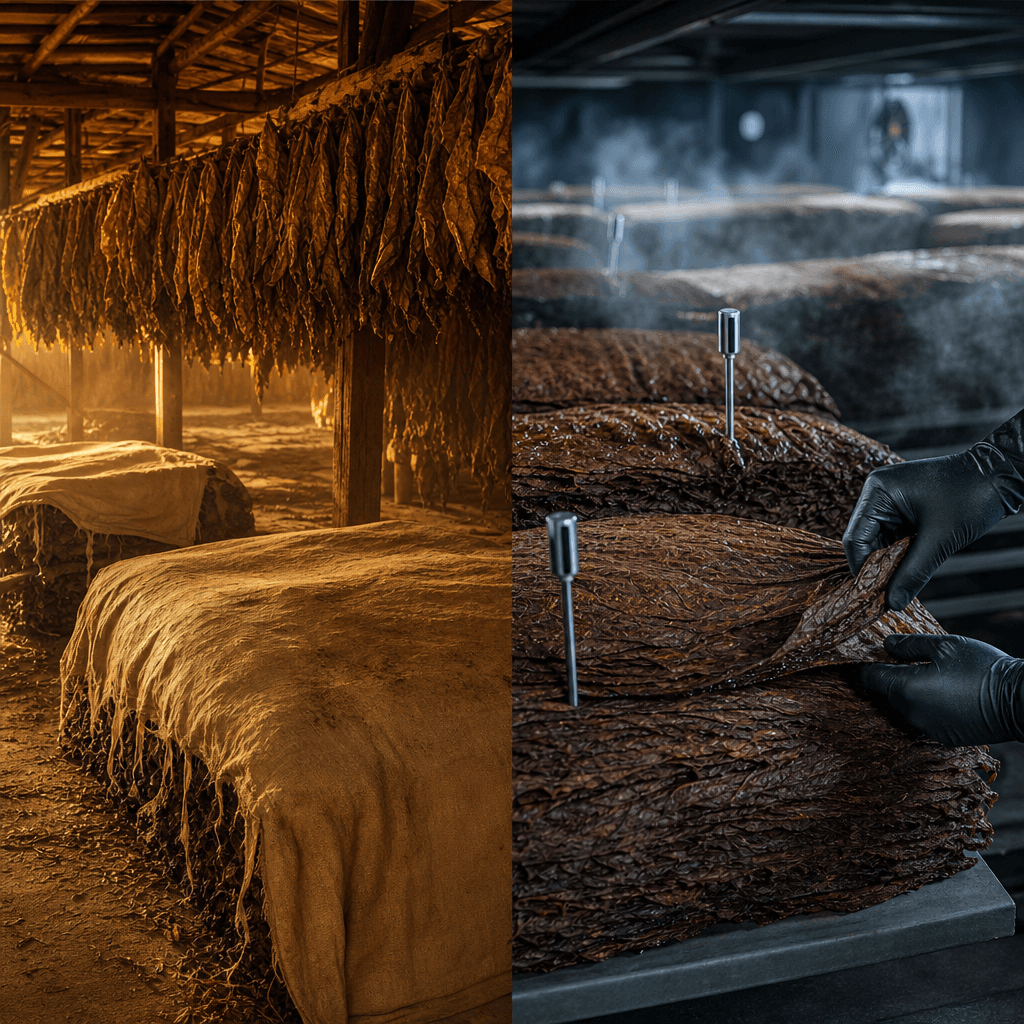
雪茄的發酵過程不僅僅是味道的柔和化,而是涉及多個關鍵步驟,包括乾燥、堆疊、升溫與翻堆。這些步驟能有效去除氨氣與多餘水分,留下豐富的油脂與香氣。早期的菸農依賴經驗進行發酵,而隨著工廠制度的建立,發酵技術變得更為精細與可控。不同產區如古巴、多明尼加與尼加拉瓜的發酵邏輯各具特色,影響最終的風味與品質。現代工廠則結合傳統與科技,透過數據管理提升發酵的一致性與穩定性。
- 雪茄發酵過程中,葉片的乾燥與堆放是關鍵,影響風味的形成與穩定性。
- 陰乾階段主要處理水分與葉綠素,並非真正的發酵,需謹慎管理。
- 現代雪茄工廠透過數據管理與傳統技術結合,提升發酵過程的一致性與可複製性。
The Unique Fermentation Techniques of Cigars: Evolution from Past to Present
Discussing cigar fermentation should not be limited to the phrase "flavor softening." The real key lies in how the leaves, after being harvested from the fields, undergo drying, stacking, heating, turning, and grading to gradually remove ammonia, grassy notes, rough tannins, and excess moisture, leaving behind oils, sweetness, woodiness, spices, and complexity.
As an editor of the "Cigar Bible," I've seen many veterans who memorize brands, vintages, and ring gauges but underestimate the decisive role of fermentation in flavor. The true character of a Robusto, Churchill, or Lancero in your hand is often drafted years before rolling, thanks to fermentation techniques.
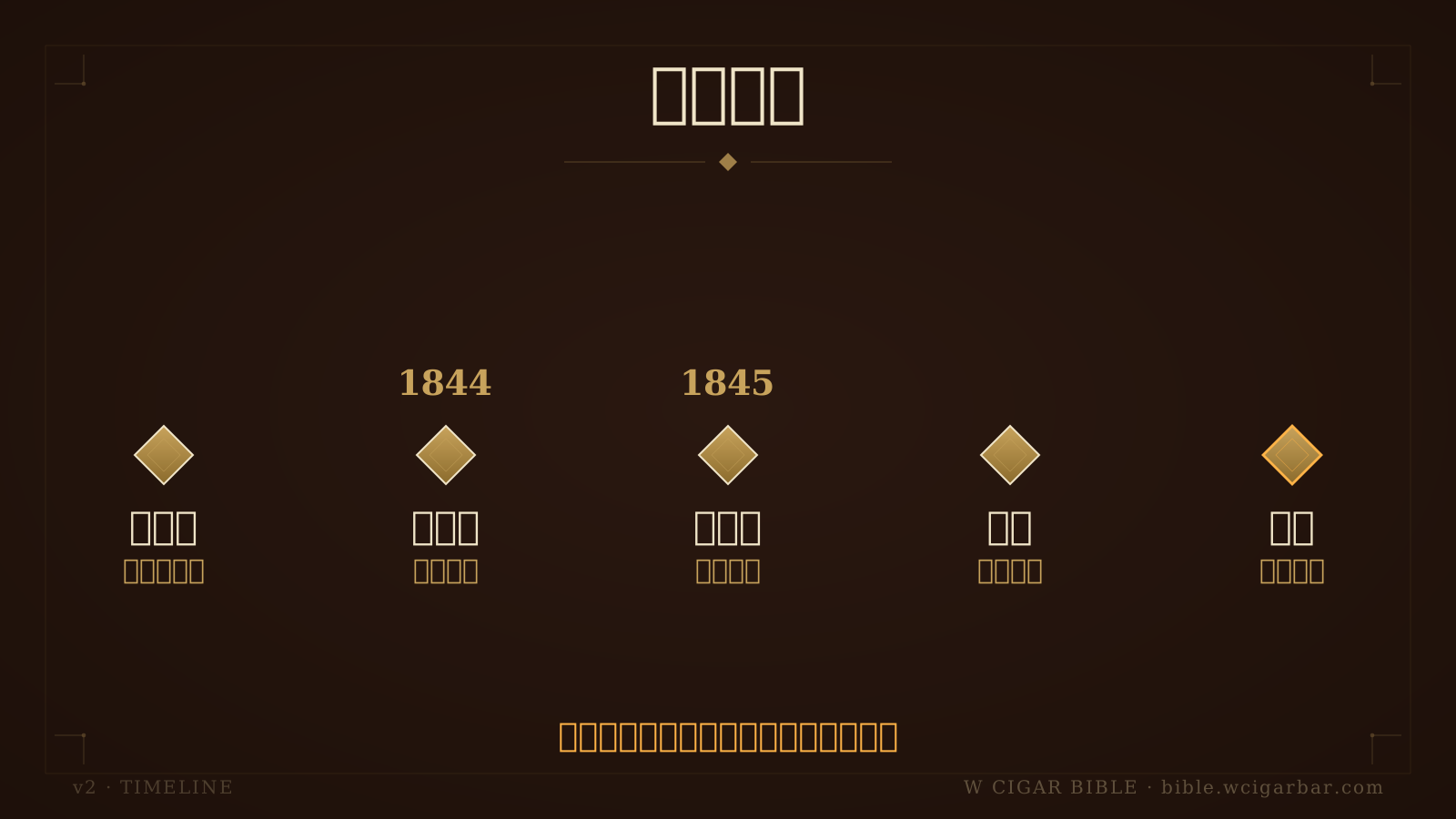
時間軸呈現雪茄發酵由農家經驗走向制度管理
From Barn to Fermentation Pile: The Historical Starting Point of Cigar Fermentation
Early Caribbean tobacco farmers did not have modern temperature and humidity instruments; they relied on barns, touch, smell, and experience. After Spanish colonizers commercialized tobacco in the 16th century, Cuba, Santo Domingo, and later Nicaragua gradually formed the "dry first, then stack" process. At that time, what was called fermentation was not laboratory language but the practical wisdom of farmers observing leaves turning from green to yellow to brown, and from pungent to sweet.
In the 19th century, as the Cuban Havana cigar trade matured, Partagás was founded in 1845, and H. Upmann established a factory in 1844. These brands could consistently export not just because of rolling skills but also due to more consistent leaf processing. Fermentation piles began to have scale, grading, and records, and leaves were no longer just "rollable" but needed to achieve predictable burn, aroma, and strength. The transition of cigar fermentation from farm experience to factory system was the first watershed for quality stabilization.
The core of traditional fermentation is the pilón, which involves stacking leaves of the same type, grade, and similar moisture content into fermentation piles. The pile's core heats up due to microbial activity, leaf pressure, and moisture action, commonly ranging from 38°C to 50°C; if it exceeds 55°C, the leaf oils and aromas may be destroyed. Old-school foremen would insert their hands into the pile's core, smell for ammonia, and feel the leaf veins' elasticity to determine whether to turn the pile.
Take the Vuelta Abajo region of Cuba's Pinar del Río as an example, where traditionally, wrapper, binder, and filler leaves are processed separately because the thickness and sugar content of ligero, seco, and volado differ. Thick leaves require more time to eliminate irritants, while thin leaves risk losing aroma if over-processed. True traditional techniques are not about slowness but knowing which leaf should be slow and which leaf cannot be slow.
三張卡片說明陰乾翻堆與分葉處理的核心重點
Drying Is Not Fermentation: Moisture, Chlorophyll, and the First Stage of Transformation
Many people refer to the drying period in the curing barn as fermentation, but strictly speaking, it's not accurate. Drying mainly deals with moisture and chlorophyll transformation, commonly taking about 45 to 60 days; the leaves change from fresh green to yellow to brown, and moisture content drops significantly. If dried too quickly, the leaves become brittle and aroma is sealed; if humidity is too high, mold and decay may occur.
Modern farms in the Dominican Republic and Nicaragua usually manage the drying rhythm with adjustable louvers, roof height, and ventilation direction. The Fuente family emphasizes the importance of not rushing the drying period at Chateau de la Fuente in the Dominican Republic, especially for wrapper leaves that need to maintain elasticity and a complete surface. The purpose of drying is not to complete the flavor but to prepare the leaves for safe entry into the fermentation pile.
After chlorophyll decomposes, grassy notes decrease, and sugars, proteins, and polyphenols begin more complex changes. If the leaf veins still contain too much moisture at this time, entering the pilón will cause excessive heating, leading to a "cooked" dull taste; if the leaves are too dry, microbial activity is insufficient, and ammonia is not fully expelled. Veterans feeling pungent, throat-burning, and rough tongue during smoking may not be due to formula errors but rather imbalanced early-stage processing.
I once compared two cigars from the same country and similar ring gauge. One had a beautiful burn line but green pepper, ammonia, and wet wood notes, while the other, with the same high concentration, was clean and sweet. The difference may not come from brand reputation but from the rhythm of drying and the first fermentation. Veterans who only look at origin and packaging may miss this fundamental quality signal.
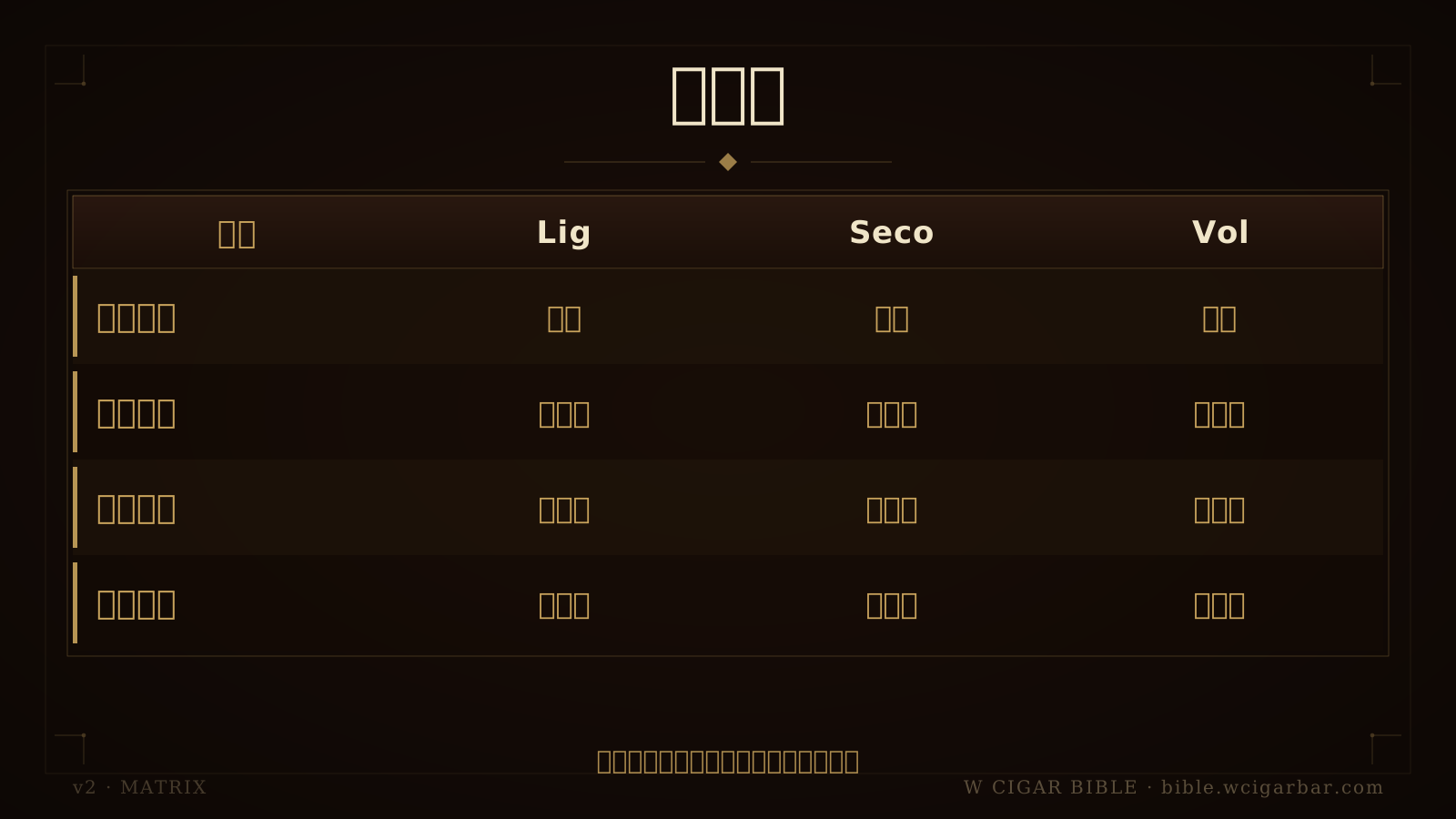
比較矩陣列出不同葉位在位置挑戰與處理上的差別
Pilón Turning Technique: Temperature Curve Determines Flavor Cleanliness
Pilón fermentation may seem like just stacking leaves, but it is actually temperature curve management. The common practice is to organize tobacco leaves into piles 1 to 2 meters high, covered with canvas on the outside, allowing the pile's core to heat naturally. Factories insert thermometers into the center, and when the core reaches a predetermined limit, such as 45°C or 48°C, they turn the pile, moving the center leaves to the outside and the outer leaves to the center.
The purpose of turning is not just to cool down but to allow each leaf to receive relatively uniform heat, moisture, and pressure. Thick ligero leaves may require several turns, with total fermentation time reaching several months; seco leaves, due to their delicate aroma, are usually treated more gently. Turning is not routine labor but a key technique for determining whether ammonia is expelled and sweetness is retained.
| Leaf Type | Common Position | Fermentation Challenge | Flavor Impact |
|---|---|---|---|
| Ligero | Upper plant | Thick, high oil, fast heating | Strength, black pepper, concentrated wood |
| Seco | Middle layer | Delicate aroma, fear of overheating | Floral, nutty, hay sweetness |
| Volado | Lower layer | Thin, good burnability | Stable burn, lighter flavor |
| Wrapper Leaf | Appearance leaf | Needs completeness, cannot be rough | Sweetness, texture, first impression |
Take Cohiba from Cuba as an example, one of the brand's long-discussed features is that some filler leaves undergo a more special additional fermentation process, reducing irritants and rounding out the flavor. Although different vintages and production conditions affect performance, since Cohiba became a symbol of high-spec Cuban cigars in 1966, "clean and long" has always been important language for veterans evaluating it.
Over-fermentation can cause leaves to lose vitality, appearing flat, hollow, or papery; under-fermentation often results in ammonia, bitterness, spiciness, and rough tannins. Good fermentation does not flatten flavors but removes noise, allowing the original terroir character to be heard. This is why, even with the same Habano, Corojo, or Criollo, different factories can present completely different levels of refinement.
Cuba, Dominican Republic, Nicaragua: Differences in Regional Fermentation Logic
Cuba's traditional advantage lies in the long-accumulated grading and factory experience. The soil, humidity, and sunlight conditions of Vuelta Abajo often give leaves mineral, hay, cedar, and delicate sweetness notes. Cuban factories emphasize leaf grade and use separation in fermentation, especially wrapper and filler leaves are not treated with the same logic. The flavor differences of well-known Montecristo, Partagás, and Hoyo de Monterrey relate to formulas and also to the depth of leaf fermentation.
Dominican cigars rose rapidly in the second half of the 20th century, especially after the U.S. embargo on Cuba in 1962, shifting many markets to the Dominican Republic, Honduras, and Nicaragua. Brands like Arturo Fuente, Davidoff, and La Aurora focus more on cleanliness, balance, and repeatability in fermentation control. The strength of the Dominican Republic often lies in elegance and precision, with fermentation goals not pursuing brute force but reducing rough edges.
Nicaragua is known for volcanic soil, high concentration, and strong personality, with significant differences among the Estelí, Jalapa, and Condega regions. Estelí leaves are thick and strong, and insufficient fermentation can be very spicy; Jalapa often has sweetness and spices; Condega is in between. Works like Padrón 1926 Series, Oliva Serie V, and My Father often showcase the cocoa, coffee, pepper, and molasses notes of well-fermented Nicaraguan thick leaves.
Honduras and Ecuador are also worth comparing. Ecuador has a lot of fog, and wrapper leaves have gentle sunlight, commonly seen as Connecticut, Habano, and Sumatra wrappers, requiring protection of the leaf surface's sheen and integrity during fermentation. Regional differences are not a game of flavor adjectives but a comprehensive result of leaf thickness, sugar content, oil, and fermentation tolerance. Understanding this allows for truly reading brand styles.
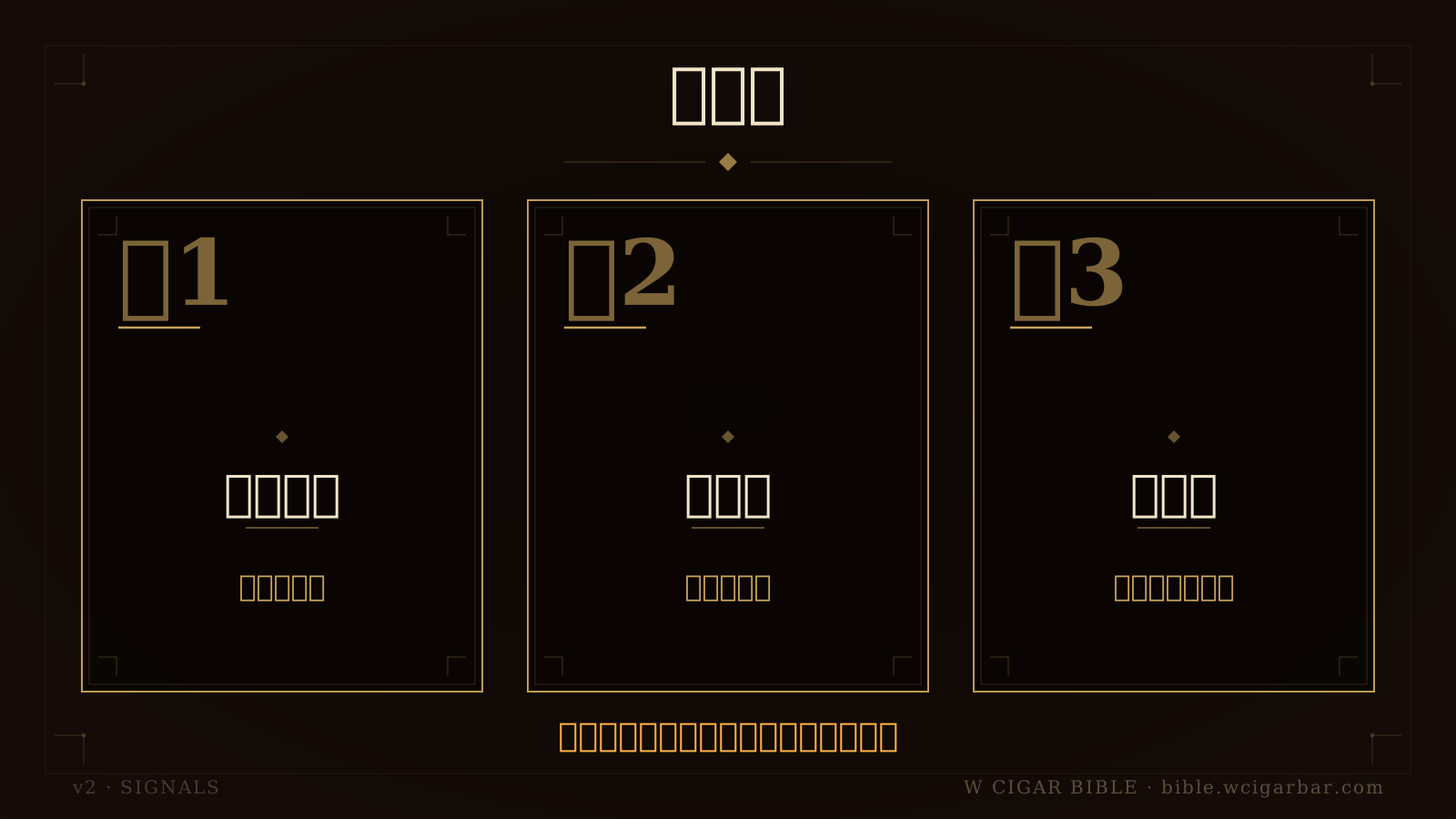
三張卡片提醒不要混淆陰乾時間與品牌判斷
Modern Control Techniques: From Sensory Experience to Data Management
Modern cigar factories have not abandoned tradition but have turned it into recordable and traceable processes. Many large factories use temperature and humidity sensors, batch numbers, fermentation logs, and warehouse zoning to record each batch of leaves' harvest year, field area, leaf position, pile entry date, and turning times. This data does not replace the nose and touch but can reduce human error.
For example, if a batch of Nicaraguan Estelí ligero harvested in 2021 heats too quickly during the first fermentation, the factory can trace back moisture content, pile height, and turning time through records. If leaves from the same field area in 2022 have higher sugar content due to different rainy seasons, pile size can also be adjusted. The value of modern fermentation is not to industrialize cigars but to make good experiences replicable.
Some factories use more precise moisture management, using misting or re-humidification rooms to bring leaves to a suitable state before fermentation. Some factories adopt small-batch fermentation, especially for high-end limited lines or special wrapper leaves, preferring to spend more space and manpower to avoid uneven temperature caused by large piles. This is a pressure on production management but can improve consistency.
However, data is not a panacea. Cigar leaves are agricultural products, and even the same finca, seed, and harvest cycle can change due to sunlight, rainfall, and soil micro-differences. Over-reliance on standard temperatures may overlook the leaf's own state. The best modern craft is to let numbers serve the senses, not let the senses obey numbers. This is why high-end factories still retain senior fermentation masters.
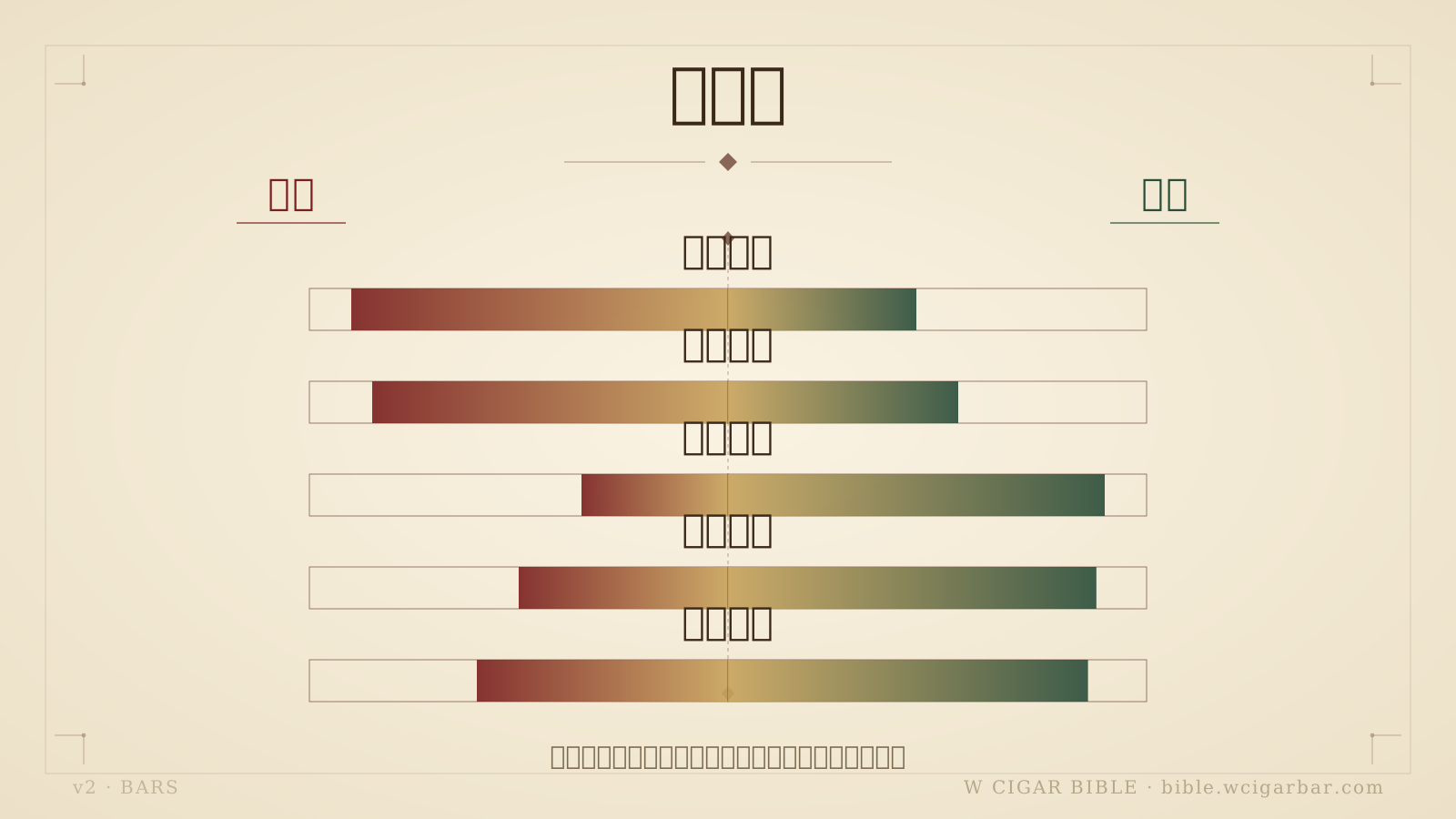
長條圖比較傳統經驗與現代管理在發酵上的不同強項
Secondary Fermentation, Barrel Aging, and the Boundaries of Special Techniques
In traditional processes, tobacco leaves usually undergo one or more fermentations before entering aging warehouses and then being rolled according to formulas. Some brands allow finished cigars to rest for weeks to months after rolling to rebalance moisture and integrate wrapper, binder, and filler. This is not necessarily called true fermentation, as temperature and microbial activity are much weaker, but it significantly affects burn stability and initial irritants.
The so-called barrel aging or barrel treatment is common in some new world brands. Tobacco leaves are placed in oak barrels that previously held rum, bourbon, or other spirits, allowing wood, vanilla, alcohol aroma, and sweetness to adhere or seep in. This technique can create distinctiveness, but if overdone, it easily masks the tobacco's original flavor. The value of special techniques lies in adding layers, not using external aromas to compensate for insufficient leaf fermentation.
Davidoff has established a precise image with vintage, region, and aging time; Padrón emphasizes long-treated Nicaraguan tobacco, with the 1964 Anniversary and 1926 Series known for their rich and clean profiles. These cases illustrate that high-end flavors do not necessarily rely on flashy techniques but on stable raw materials, sufficient time, and strict elimination.
Veterans should also distinguish between "aging" and "finishing." Aging allows tobacco's own chemical composition to slowly integrate, while finishing may involve adding external aromas, barrel influence, or special humidity environments. The two do not have to negate each other, but evaluation standards differ. A cigar that remains enjoyable without promotional language truly stands on the foundation of fermentation and formula. This is the bottom line I value most when judging special techniques.

三張問答卡整理年份差異發酵不足與成品醇化
How Fermentation Changes Flavor, Burn, and Production Costs
Fermentation most directly affects flavor cleanliness. Insufficiently fermented leaves often have ammonia, green notes, bitterness, and throat irritation; proper fermentation makes sugars and aromatic compounds more expressible, with wood, nuts, coffee, cocoa, leather, and spices becoming clearer. If fermentation is too heavy, high-pitched aromas may be lost, leaving only dull earthy or flat burnt notes.
Burn is also closely related to fermentation. Well-processed volado leaves can help stabilize the burn line; uneven moisture content in wrapper leaves can cause uneven burning or splitting; if ligero is too wet and thick, burning will be slow or even extinguish. Flavor, burn, ash color, and draw resistance appear to be product issues but are often fermentation and moisture management issues behind the scenes.
From a production perspective, fermentation implies time and inventory costs. If a batch of leaves takes 18 to 36 months from harvest to usability, the brand must bear storage, loss, capital pressure, and grading elimination. The higher price of premium cigars is partly due to the fact that leaves occupy a lot of time before becoming a product. This is why many boutique brands emphasize small batches and field transparency after the 2000s.
For veterans, understanding fermentation can help judge collection and aging strategies. Some cigars with complete structure, clean fermentation, and sufficient concentration will become rounder with good preservation; but if there are obvious ammonia or mold notes initially, aging may not improve them. When it comes to collection appreciation, remember: it does not guarantee appreciation, still depending on source preservation and market. Time can only amplify a good foundation, not turn defects into miracles.
Frequently Asked Questions
Why does fermentation performance differ for the same brand in different years?
Because cigar leaves are agricultural products. Rainfall, harvest time, field drainage, and leaf position can change sugar content, thickness, and oil. Even the same Montecristo No.2 may have different ammonia, sweetness, and burn rhythm in different box periods. Vintage differences are not mysticism but the fingerprints left by agricultural conditions and factory processing.
How to judge insufficient fermentation from smoking?
If there are obvious pungent, ammonia smells, tongue-burning, grassy or wet cardboard notes in the initial stage, be alert. Of course, excessive storage humidity can also cause similar problems, so don't just blame fermentation. Let the cigar rest in a stable 65% to 69% RH environment for a few weeks and observe if it improves.
Does longer fermentation mean higher quality?
Not necessarily. Thin leaves, aromatic seco, or high-grade wrapper leaves may lose floral and sweetness if over-fermented. Thick ligero usually needs more time but also has limits. Good fermentation emphasizes moderation, not worshiping duration.
Will finished cigars continue to ferment in a humidor?
Strictly speaking, the main fermentation is completed at the tobacco leaf stage. Finished product storage is closer to aging and moisture balance, with chemical reaction speed much slower than in a pilón. If storage is stable, flavors will integrate; if too humid, it may become dull, sour, or moldy; if too dry, oils and aromas will be damaged.
Are Cuban cigars necessarily more traditional in fermentation than new world cigars?
Cuba has a deep tradition, but not every cigar is better; new world brands also have highly mature fermentation management. Brands like Padrón, Fuente, Davidoff, and Oliva have established their own leaf processing philosophies. Veterans should return to actual performance: cleanliness, balance, burn, and aftertaste.
Can fermentation level be judged solely by brand when purchasing?
Brand is a clue, not an answer. Also consider storage source, box period, appearance sheen, foot aroma, leaf elasticity, and burn performance. If there is a large gap between different batches of the same brand, it may involve storage or different raw material vintages and fermentation rhythms.
Fermentation is the most invisible yet most decisive craft in cigars. My view is simple: brand reputation attracts people, ring gauge affects experience, but whether the leaves in the fermentation pile are treated correctly determines whether a cigar can go deep and far. Veterans who want to advance should ask less "which is the strongest" and more "how was this leaf tamed." Understanding fermentation is truly understanding the soul of cigars.
—Cigar Prince Wilson Tsai
Smoking is harmful to health. Under 20 years old is not allowed to smoke. Quitline: 0800-636363. This article is for reference only for adults over 20 years old on cigar culture, preservation, and regulations, not a tobacco advertisement, promotion, or purchase suggestion.
Like this article?Share with friends
Share this W Cigar Bible piece with friends who want to learn cigar culture, storage, and tasting.
想把這篇 化為實踐
雪茄聖經是知識;雪茄文化要在空間裡發生

W Cigar Bar 大安總店資訊
台北大安區 · 雪茄聖經總編輯 Wilson Tsai 主理的雪茄文化空間
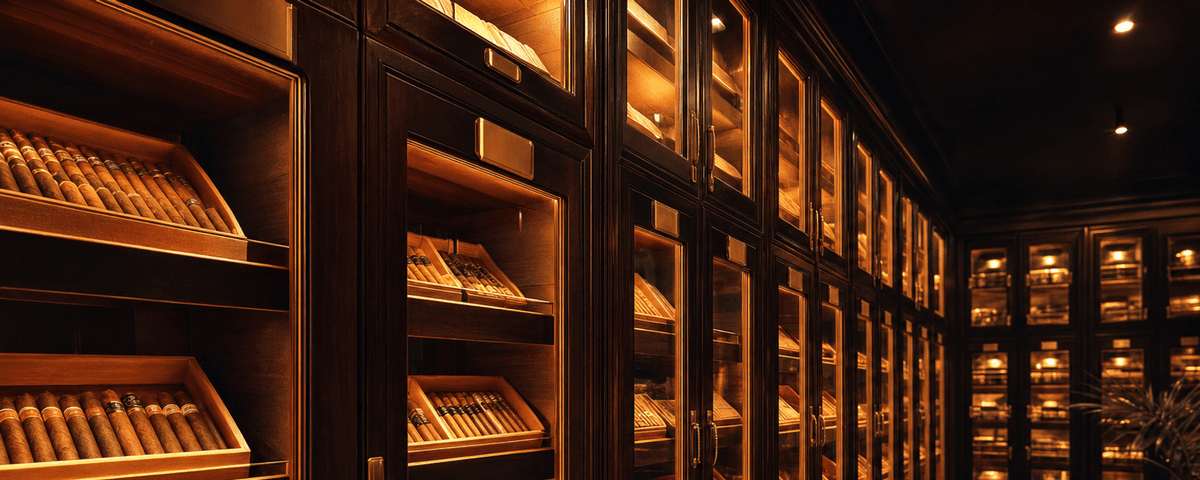
33 座 24 小時恆溫恆濕醇化室
W Cigar Bar 提供的會員醇化空間 · 場地資訊請洽編輯部
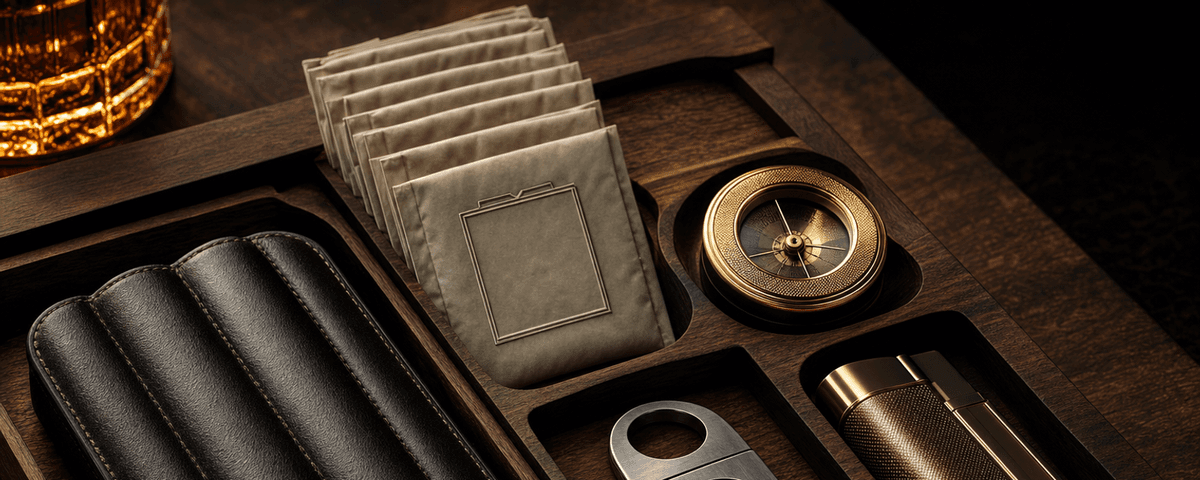
雪茄剪 / 打火機 / 雪茄盒 / Boveda
W Cigar 配件官網 · 專營雪茄配件正品

加 LINE 好友 · 文化諮詢
文化空間資訊 · 紳士沙龍 · 私人包場
本網站內容僅供雪茄文化、歷史、收藏與品吸知識研究參考。菸品有害健康、未滿法定年齡者請勿吸菸。實際規範請依所在地法律為準。
吸菸有害健康・戒菸專線 0800-636363・本站僅供 20 歲以上成年人閱覽。
讀到這裡,你不只是路過的人
留下 Email,加入 W 雪茄聖經內圈——總編輯 Wilson Tsai 親選的學院深文與國際新訊,先你一步送到信箱。
· 教育用途非銷售 · 隨時一鍵退訂 · Email 絕不對外公開 · 由勝茄股份有限公司營運
同分類延伸閱讀
資料來源:W Cigar Bible 編輯部整理 · 雪茄王子 Wilson Tsai 親自審稿
本文僅供雪茄文化、歷史、收藏與品鑑知識研究,不作為菸品促銷、銷售或購買建議。吸菸有害健康,未滿二十歲不得吸菸。