雪茄的儲存與陳化技術:實用策略與進階理論
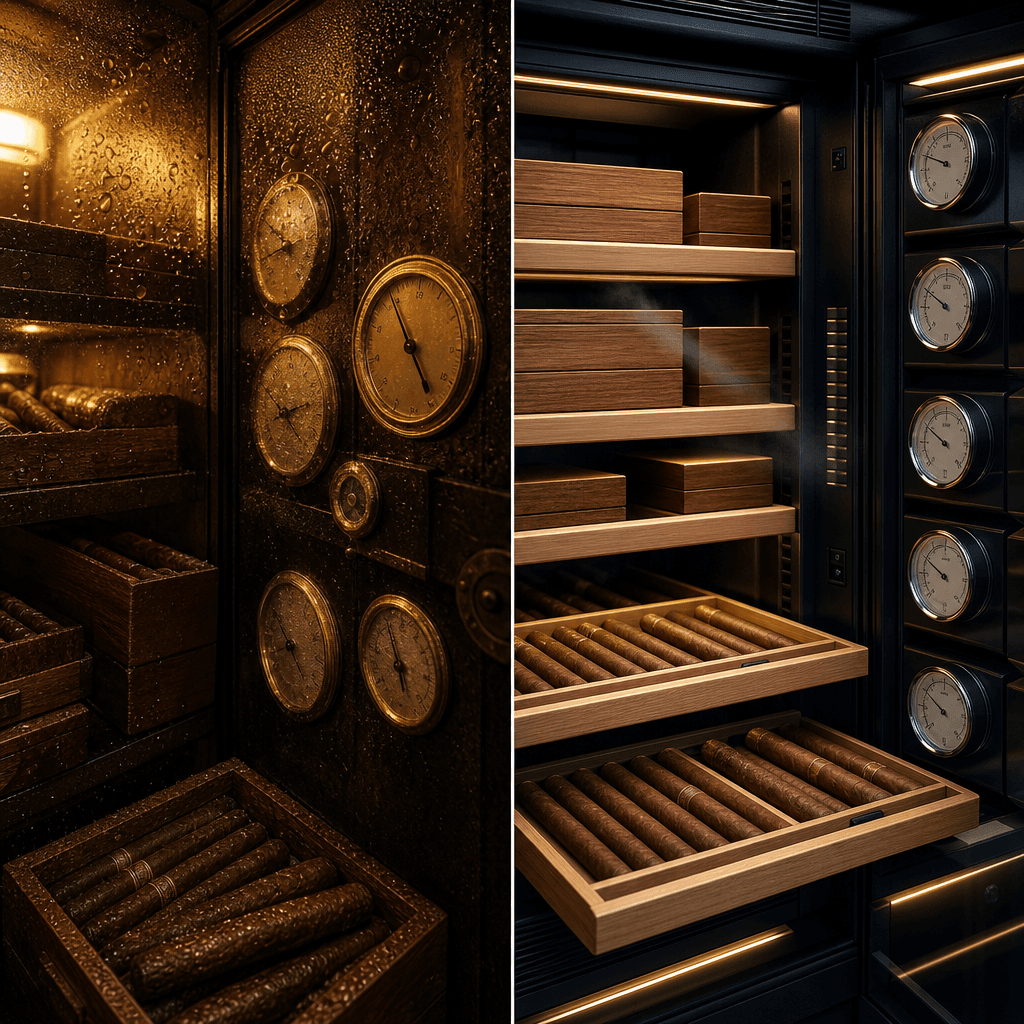
雪茄的魅力在於其隨時間與環境變化的特性。作為《雪茄聖經》的編輯,我分享了多年來對雪茄保存與醇化的經驗。關鍵在於控制溫度與濕度的波動,避免極端變化影響雪茄品質。日常保存應保持在66-69%RH,長期醇養則在63-66%RH。此外,雪茄到手後需休息30-90天,以平復運輸造成的震盪。醇化的過程中,香氣會隨時間變得更細緻,但需注意不同品牌與產區的特性。建立記錄與分類管理系統,將有助於更好地享受雪茄的變化
- 控制雪茄儲存環境的波動幅度比單一數字更重要,應保持穩定的溫度與濕度。
- 新到雪茄需休息30至90天,以讓運輸造成的震盪平復,達到最佳狀態。
- 醇化過程中,時間會改變雪茄的香氣結構,需定期記錄以了解其變化。
Cigar Storage and Aging Techniques: Practical Strategies and Advanced Theories
As the editor of "The Cigar Bible," the most frequent question I get from seasoned enthusiasts isn't "Which one is the best?" but "Why does the same box change completely after three years?" The allure of cigars lies in their dynamic nature, as they are not static commodities but handcrafted agricultural products that evolve with temperature, humidity, time, and air exchange.
My management principle is simple: prioritize stability before flavor; understand risks before discussing aging. Here, I break down the technical details from daily storage to long-term aging, based on years of organizing collections and observing both Cuban and non-Cuban brands, for those who already have preferences and are willing to manage cigars systematically.
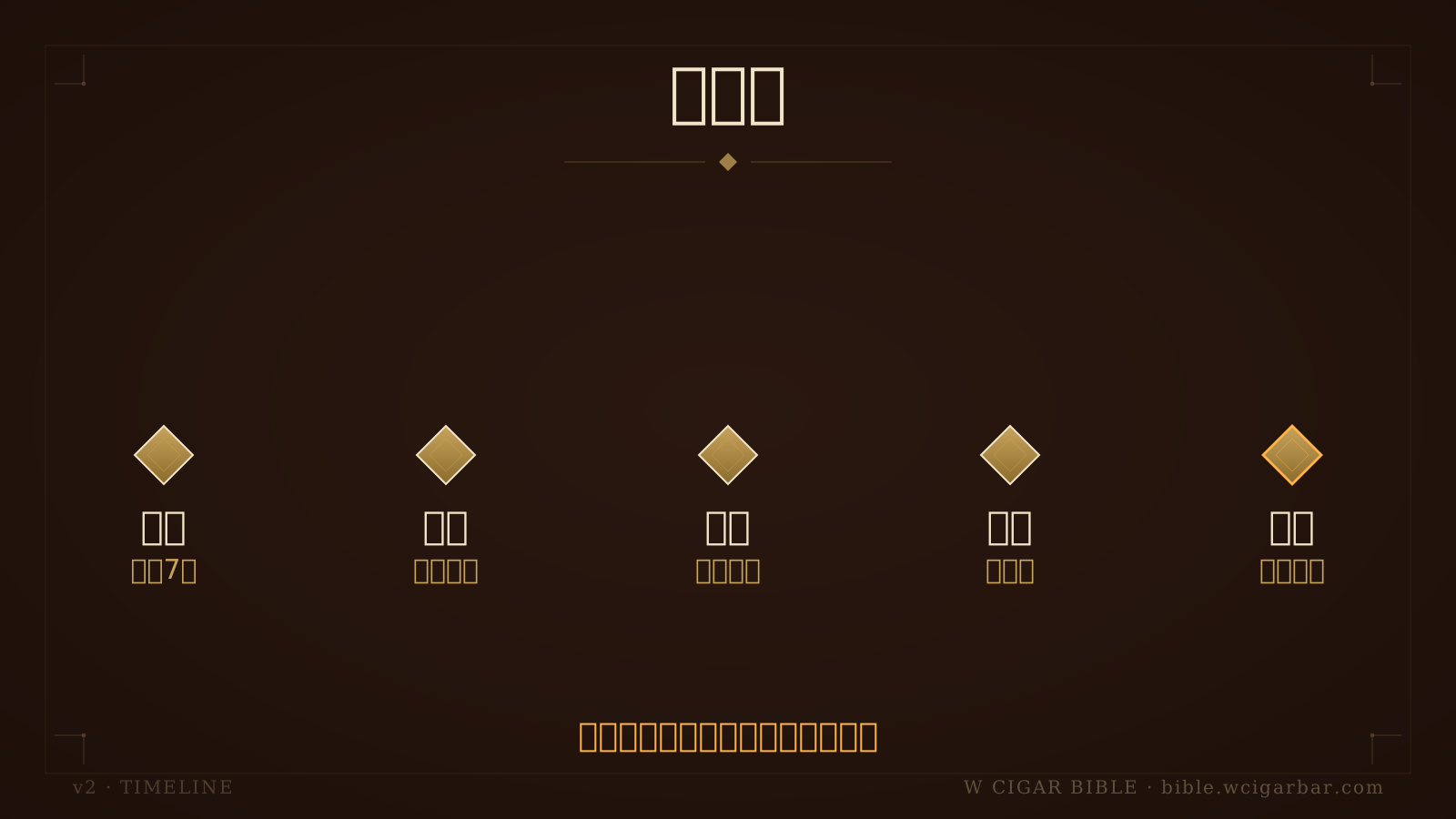
時間線呈現養櫃校表分區靜置與月記流程
Temperature and Humidity: Not Just Numbers, But Controlling Fluctuations
Most people remember "70/70": 70°F and 70% relative humidity. However, in humid and hot environments like Taiwan, Hong Kong, and Macau, I often set long-term cabinets at 18–20°C and 64–67% relative humidity. For example, the Montecristo No.2 from 2018, if kept above 70% RH for a long time, can become dull in the early stages, and the burn may slow down. Lowering it to 65% RH and stabilizing for three months can clarify the profile significantly.
What truly affects the state of cigars is not the number on the display on a single day but the fluctuation range over 30 consecutive days. I control daily temperature fluctuations within 2°C and humidity fluctuations within 3% RH. If cigars are suddenly moved from 23°C and 72% RH to 18°C and 64% RH, the outer wrapper will lose moisture faster than the interior, potentially causing fine cracks or uneven burning.
Experienced enthusiasts should note that "perceived humidity" and "structural humidity" differ. A soft touch does not mean internal moisture is even; the center moisture of a Robusto takes several days longer than the surface to catch up with the environment. Long cigars like Cohiba Siglo VI usually have a longer adjustment period than Petit Corona; I allow at least 4–6 weeks for rebalancing, rather than making judgments after just a few days.
My benchmark is: daily use can be at 66–69% RH, long-term aging can be at 63–66% RH; temperature should ideally be below 21°C. This approach is not to pursue dryness but to balance combustion, aroma release, and pest risk. Cigars fear not slowness but sudden changes in temperature and humidity.
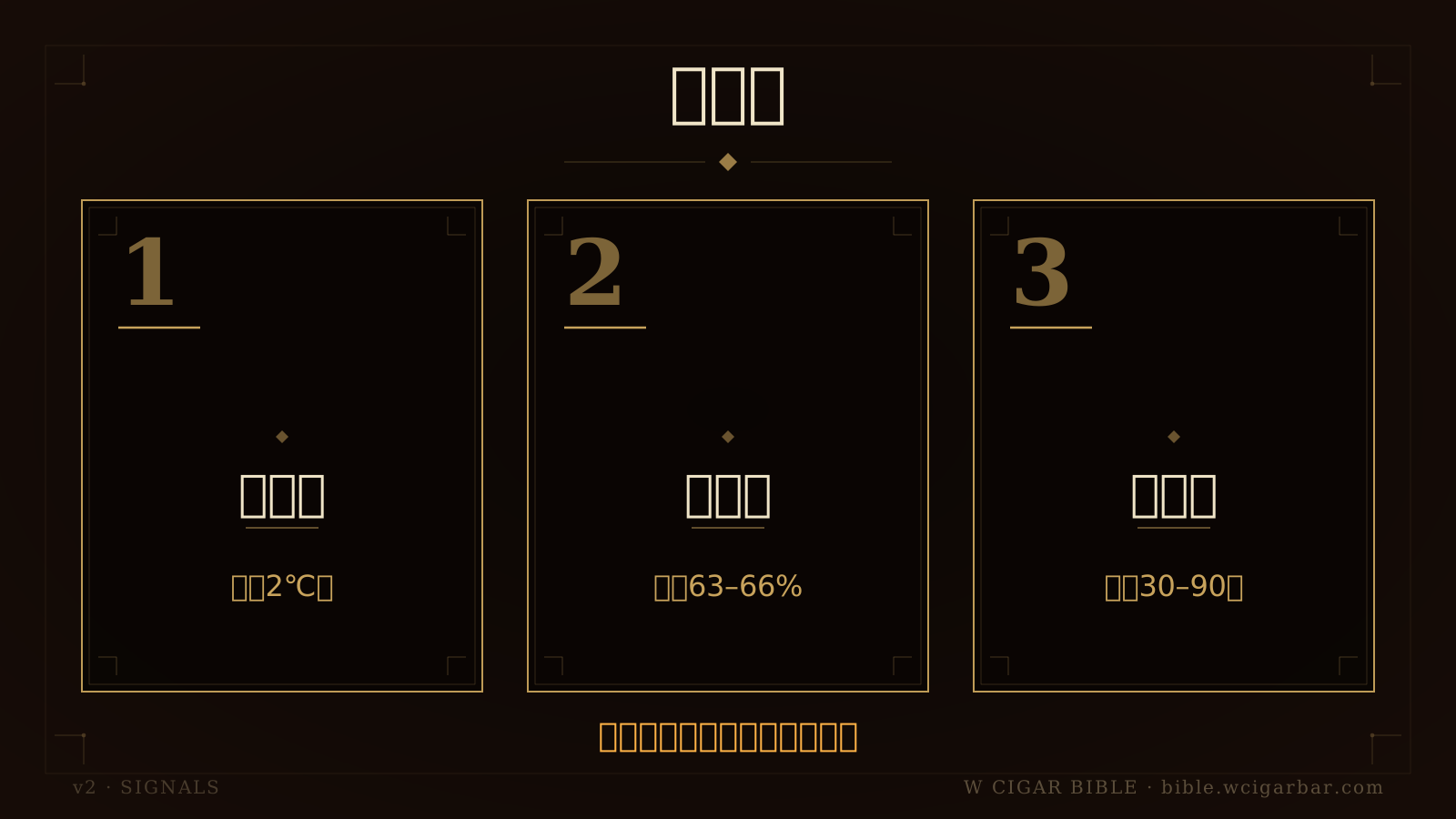
三張卡整理穩定波動低溫低濕與休息期
Humidification Equipment and Calibration: Feelings Can't Replace Records
Humidors, cigar cabinets, acrylic boxes, and wooden cabinets each have their pros and cons. Spanish cedar can buffer humidity and provide a light wood aroma, but new wood, if not properly seasoned, can absorb cigar moisture. In 2016, I handled a batch of H. Upmann Magnum 46, where the customer placed them in a new cabinet for less than 10 days. The humidity gauge showed 68%, but the foot of the cigars was dry because the sensor was on the upper level, and the cigars were on the lower level near the wood.
| System | Suitable Use | Advantages | Risks |
|---|---|---|---|
| Desktop Humidor | 30–100 cigars for daily storage | Aesthetic, good buffering | New boxes need seasoning, sealing varies |
| Electronic Cigar Cabinet | Long-term management for over 100 cigars | Temperature controllable, stable capacity | Strong fans can cause local dryness |
| Acrylic Box | Short to medium-term turnover | Good sealing, low cost | Less air exchange, odors can accumulate |
| Original Box in Cabinet | Whole box aging | Preserves microenvironment | Requires regular checks on internal status |
Humidity gauges should be calibrated at least every 6 months; I don't trust uncalibrated pretty numbers. The salt calibration method can use 75% RH as a baseline, but it needs to be left for 8–12 hours, and water droplets should not directly contact the sensor. If there are two or more electronic hygrometers, I place them in the same sealed box for 24 hours to see if their discrepancies exceed 2% RH.
In practice, I place sensors in three positions: top, middle, and bottom of the cabinet. If the top is 68% and the bottom is 63%, it indicates uneven circulation; instead of blindly adding humidification packs, adjust the cigar box stacking and leave ventilation gaps. Especially with Cabinet Selection's 50-cigar wooden boxes, if they are tightly against the cabinet wall, the difference between the inside and outside layers can exceed 4% RH.
- Run new boxes or cabinets empty for 7–14 days
- Cross-check with at least two sensors
- Leave 1–2 cm gaps between original boxes
- Record numbers on the same day each month
- Observe for 72 hours before adjusting when anomalies occur

矩陣比較木盒電櫃與壓克力盒的用途優點風險
Rest Period After Arrival: Let Transport Shocks Settle
Many cigars are not ready to enter their best state upon arrival. International transport may involve low humidity in aircraft cabins, high temperatures in warehouses, customs delays, and regional temperature differences. In 2020, I saw the same batch of Partagás Serie D No.4 appear spicy and burn quickly within a week of arrival; after two months at 65% RH and 19°C, leather, earth, and pepper notes gradually harmonized.
Allowing new cigars to rest for 30–90 days is the most easily overlooked yet rewarding step for seasoned enthusiasts. Short sizes like Petit Robusto can be observed for 30 days; larger sizes like Churchill and Double Corona, I usually allow 60–90 days. If a box transitions from a high-humidity area to a low-humidity environment, avoid opening the box too frequently in the first week to prevent the surface from drying rapidly.
The rest period should be divided into "recovery" and "integration." Recovery is about bringing moisture back to even levels; integration is about reuniting aromas separated by transport. For example, Padrón 1964 Anniversary Maduro initially has strong cocoa and black pepper notes; after stabilizing for 45 days, sweetness and nutty flavors become more prominent. This isn't magic but a balance between moisture and volatile substances.
My process is: upon arrival, check the wrapper, foot, and box aroma; then place in an isolation area for two weeks, not immediately mixing into the long-term storage cabinet. If ammonia, wet cardboard smell, or obvious mold spots are found, extend observation. Don't let a box of uncertain status cigars directly enter your long-established main system.
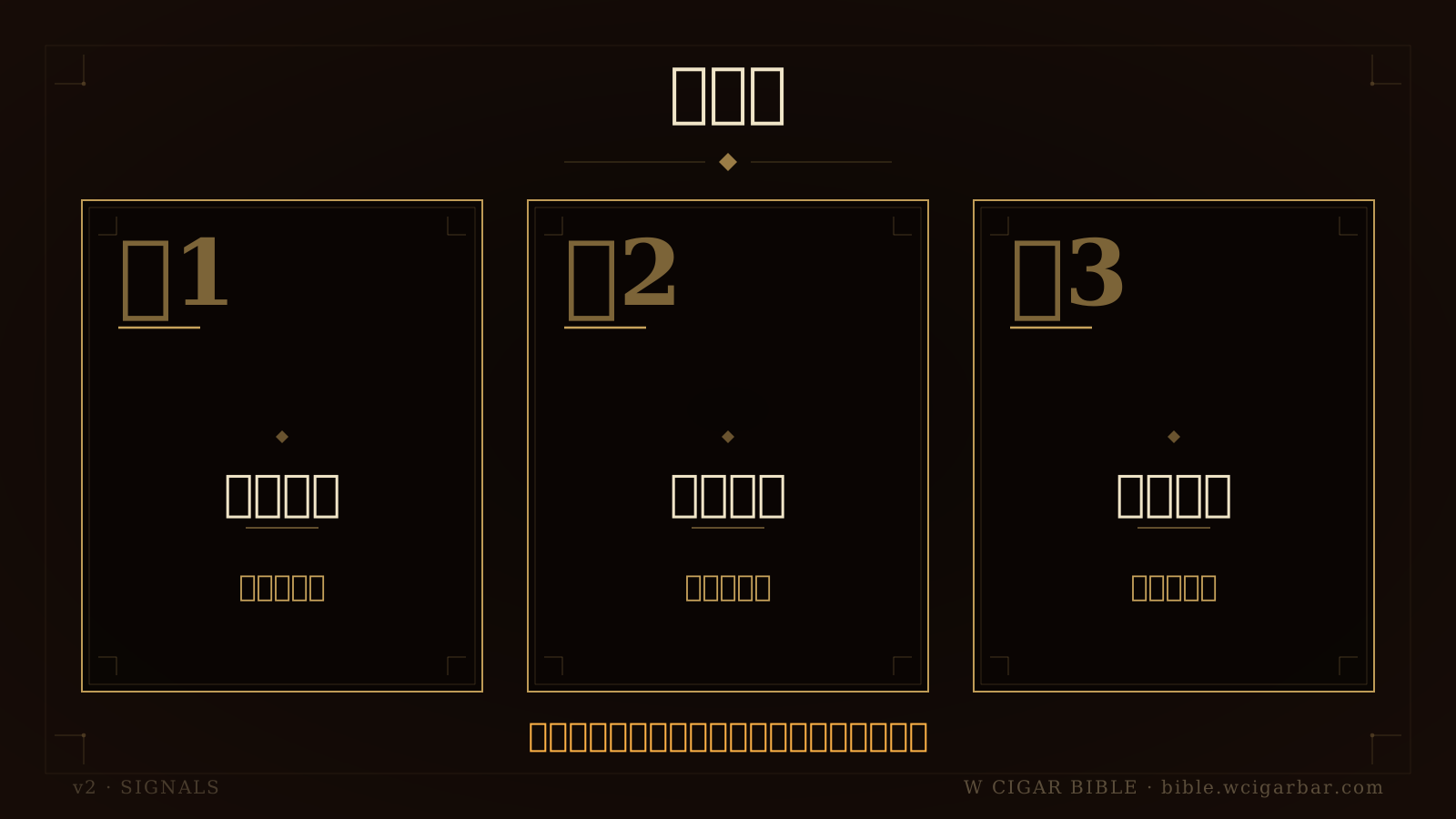
三張卡指出冰箱久放只看數字與十年必好誤解
The Flavor Logic of Aging: Time Changes Structure
Cigar aging isn't simply "the older, the better." Time can reduce harshness, integrate aromas, and round out nicotine, but it can also diminish the original bright floral and fruity acidity. If stored well, the 2014 Cohiba Siglo VI often sees a reduction in grassy notes, with clearer cream, honey, hay, and cedar; but if humidity is too high, it may turn into a dull wet wood aroma.
The core of aging is to refine aromas from sharp to delicate; it's not about making every cigar lose its character. Bolívar Belicosos Finos typically has robust soil, coffee, and mineral notes, becoming rounder after 5–8 years; but Hoyo de Monterrey Epicure No.2, which originally has a soft floral and creamy profile, may lose its brightness over too long a time.
Different regions also vary. High-intensity blends from Nicaragua, like Oliva Serie V Melanio, can mellow spicy notes over 2–4 years; Dominican Arturo Fuente Don Carlos, when well-preserved, enhances woody sweetness and creaminess. Cuban cigars, due to differences in leaf fermentation, box year, and transport conditions, can have significant variations even within the same year and box.
I recommend seasoned enthusiasts establish "opening milestones": smoke one every 6 months in the first year, evaluate every 12 months after the third year. Records should not just state good or bad but include burn, aroma layers, finish length, and stimulation. Long-term storage without records is just waiting; aging with records is management.
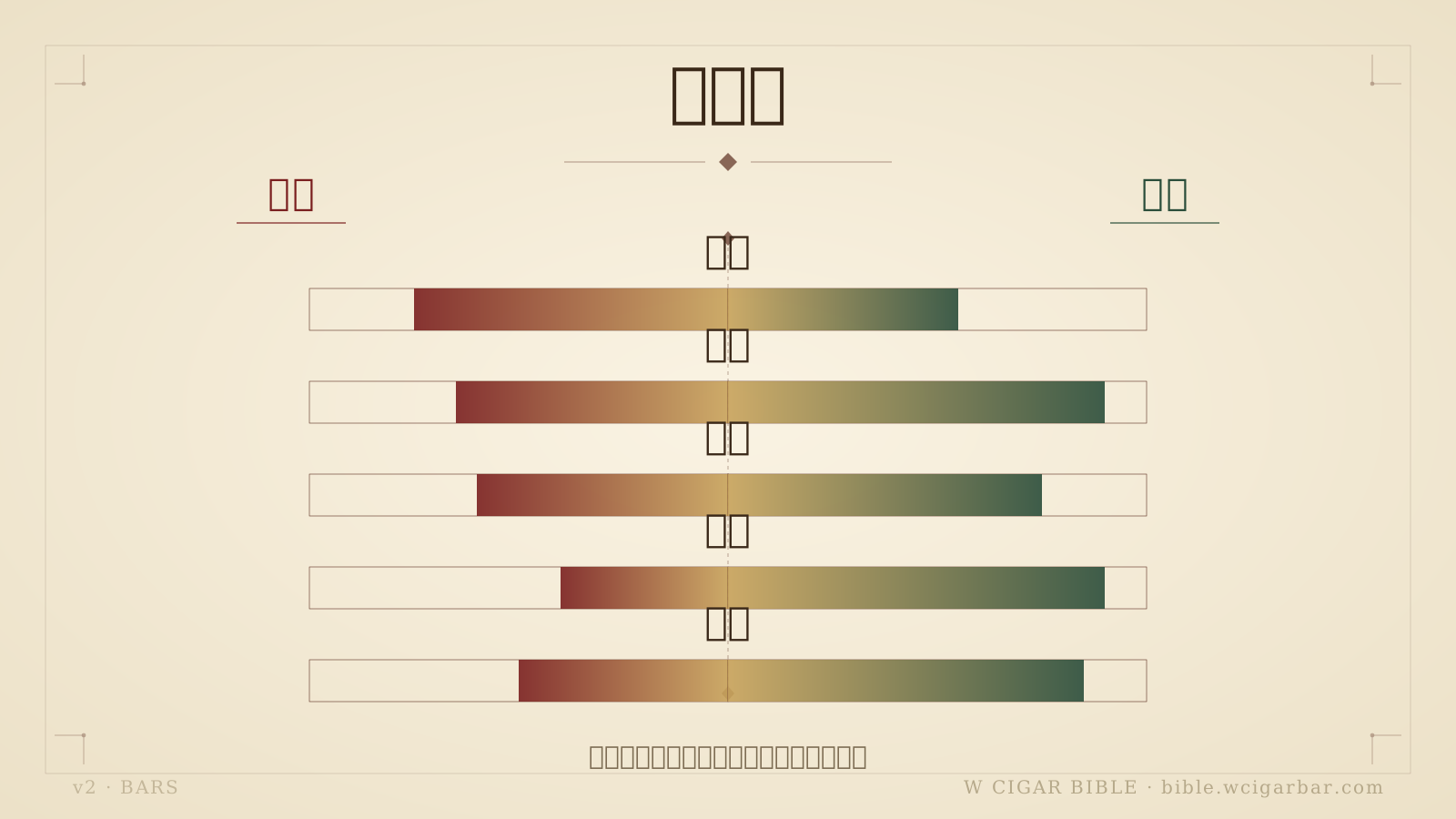
橫向長條比較日常取用與長期醇養的管理取向
Whole Box, Singles, and Layered Management: Don't Store All Cigars Under the Same Logic
Whole box storage best preserves the original microenvironment, especially Dress Box, Cabinet, and SLB wooden boxes, each with different air exchange rates. For example, Ramon Allones Specially Selected, when stored for 5 years in a whole box, usually retains rich dried fruit and earth notes better than singles; singles, due to more air exposure, change faster, which is advantageous for observation but less stable in flavor.
My system divides cigars into three layers: daily layer, observation layer, long-term layer. The daily layer maintains 66–68% RH for easy access; the observation layer holds new arrivals or uncertain status boxes; the long-term layer maintains 63–66% RH, 18–20°C, minimizing door openings. This approach avoids disturbing boxes intended for 5 or 10 years every time a daily cigar is taken.
Brands should also be considered separately. I don't like to mix delicate cigars like Cohiba, Trinidad, and H. Upmann with strong-scented Maduro in small sealed boxes long-term. Strongly aromatic cigars like Liga Privada No.9, Ashton VSG, and My Father Le Bijou 1922, if in close contact with more elegant Cuban singles for several months, can indeed cause aroma interference.
Practical classification can refer to the following:
- 0–6 months: Recovery and observation, no rush to conclusions
- 6 months–2 years: Flavor integration period, suitable for record-keeping
- 3–5 years: Most medium to high-intensity cigars enter the mellow phase
- 5–10 years: Suitable for structurally solid, thick-leaf varieties
- Over 10 years: Reserved for boxes with clear status, origin, and preservation
Not every cigar is worth long-term storage; keeping ordinary cigars for a long time won't automatically make them great.
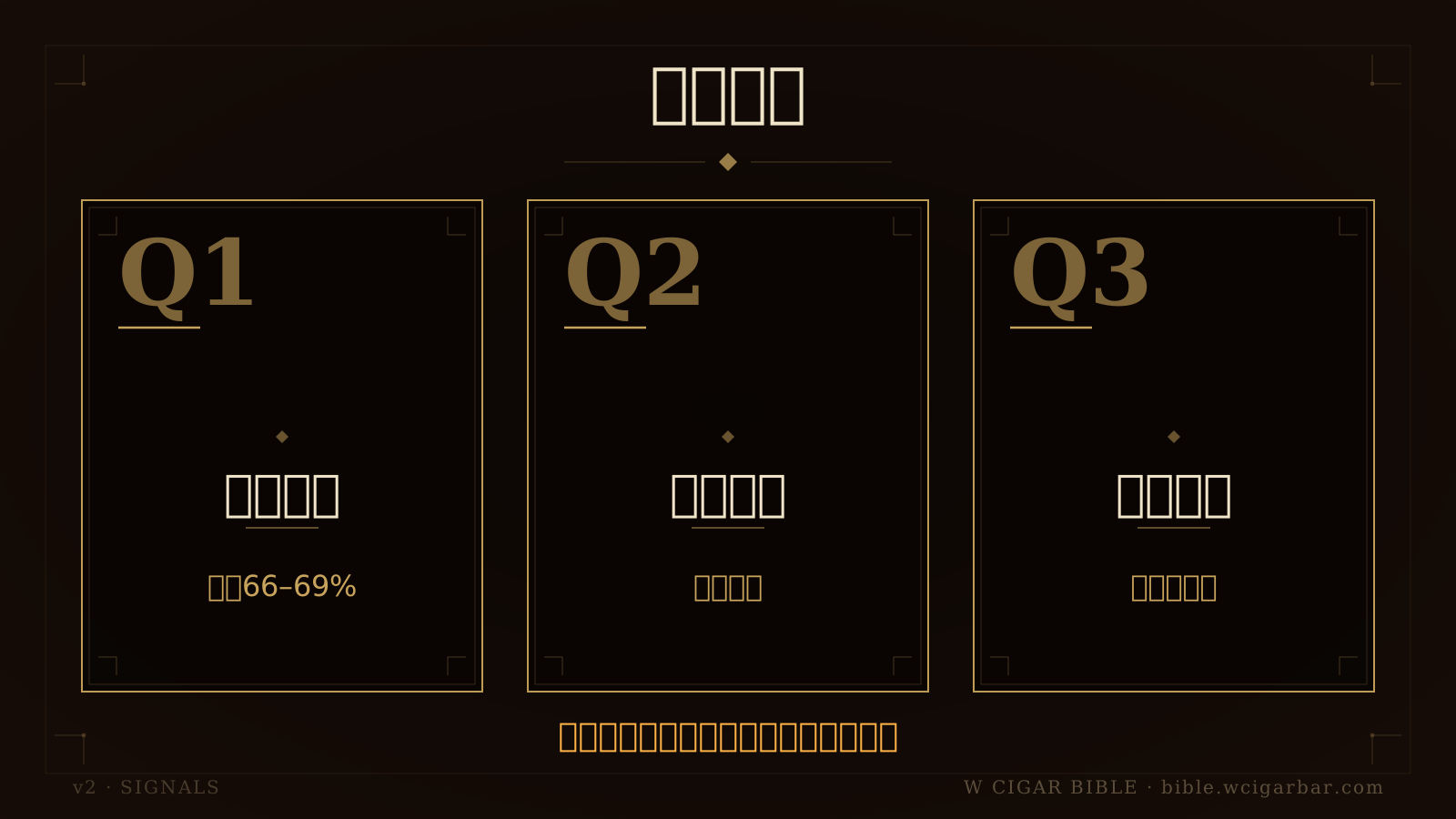
三張問答卡回答濕度選擇冰箱保存與包裝處理
Risk Management: Mold, Beetles, Ammonia, and Over-Humidity Are More Common Than You Think
Cigar beetles are usually more active in high-temperature environments, especially when exceeding 24°C. If you see round holes, fine powder, or unusual tobacco debris at the bottom of the box, isolate immediately. I handle suspicious cigars by sealing and freezing: refrigerate for 24 hours, freeze for 72 hours, refrigerate again for 24 hours, then return to the normal cabinet, avoiding rapid temperature changes that can cause wrapper cracking.
Distinguish between mold and natural crystals. Crystals are usually fine, white, dry, and can be brushed off; mold often appears fuzzy, possibly green, blue, or gray, and penetrates the wrapper or foot. Once mold enters the foot, the risk is not just appearance but also hygiene and aroma issues during burning. I don't recommend mixing cigars with obvious mold smell back into the main cabinet.
Ammonia is often found in boxes with incomplete fermentation or post-transport aroma accumulation. Young Cuban boxes occasionally have a slight pungent smell, which can be reduced by airing the box for 15–30 minutes, then placed back in the observation layer for gradual adjustment; if still pungent after several months, it indicates the box needs more time and is not suitable for hasty evaluation. Some rich batches of Partagás and Bolívar around 2007 often require more patience.
Signs of over-humidity include increased draw resistance, wavy burn lines, thick but dull smoke, and black, loose ash. Over-dryness often shows as brittle wrappers, fast burning, and abrupt spiciness. The key to risk management is not post-facto remedies but keeping anomalies out of the main system. A seasoned enthusiast's cabinet should have isolation areas, record sheets, and handling procedures like a wine cellar.
Common Questions
Q1: Should cigars be stored long-term at 65% RH or 69% RH?
If the goal is daily use, 66–69% RH is feasible; for aging over 3 years, I prefer 63–66% RH. Long Cuban sizes like Sir Winston and Lusitanias usually burn cleaner in a lower, stable humidity environment. Humidity choice should serve combustion and flavor, not textbook numbers.
Q2: Can cigars be stored in a refrigerator?
Regular household refrigerators are not suitable for long-term storage due to low humidity, complex odors, and frequent temperature cycles. I only use refrigeration and freezing for short-term processes when handling pest risks, and it must be sealed with gradual temperature changes. Directly placing boxes in a refrigerator often results in wrapper cracking and absorption of food odors.
Q3: Should whole boxes have cellophane or aluminum tubes removed?
For daily layer singles, I often keep cellophane to reduce friction and cross-aromas; for whole box long-term aging, it depends on the original packaging design, not rushing to remove everything. Aluminum tube cigars like Romeo y Julieta Churchill Tubos, if stored for years, can be briefly checked every 6–12 months to avoid stale aromas.
Q4: Are cigars over 10 years old necessarily better?
Not necessarily. Cigars need sufficient structure, good origin, and stable preservation to possibly show depth after 10 years. Some H. Upmann and Punch from 1998, when well-preserved, can be enchanting, but if exposed to high temperature and humidity, they may only have paper and wood chip flavors regardless of age. Time is an amplifier, not a fixer.
Q5: Can different brands be mixed?
Yes, but it depends on space and time. Short-term mixing is not a big issue; long-term in a sealed small box, strong Maduro and spicy Nicaraguan cigars may affect more elegant Cuban singles. I use original boxes, wooden dividers, or separate acrylic boxes for zoning, especially for delicate styles like Cohiba, Trinidad, and Davidoff.
Q6: Does cigar aging have collectible value?
Some rare vintages and well-preserved whole boxes are indeed valued by seasoned players; however, collectible appreciation does not guarantee value increase, still depending on origin preservation and market. My view is to first ensure good preservation, allowing cigars to deliver in flavor before discussing additional value. If you only look at price without considering condition, you'll often lose to a well-preserved good cigar.
I've always believed that the most fascinating aspect of cigar management is not boasting about how large the cabinet is, but whether you can clearly explain why each box is there, how long you plan to keep it, and what stage it's currently at. Advanced enthusiasts don't chase more lists but turn temperature, humidity, time, and records into their own language. When you can consistently replicate good conditions, cigars truly become an understandable enjoyment.
—Cigar Prince Wilson Tsai
Smoking is harmful to health. Smoking is prohibited for those under twenty. Quitline: 0800-636363. This article is for reference only for adults over twenty years old regarding cigar culture, preservation, and regulations, not a tobacco advertisement, promotion, or purchase suggestion.
Like this article?Share with friends
Share this W Cigar Bible piece with friends who want to learn cigar culture, storage, and tasting.
想把這篇 化為實踐
雪茄聖經是知識;雪茄文化要在空間裡發生

W Cigar Bar 大安總店資訊
台北大安區 · 雪茄聖經總編輯 Wilson Tsai 主理的雪茄文化空間
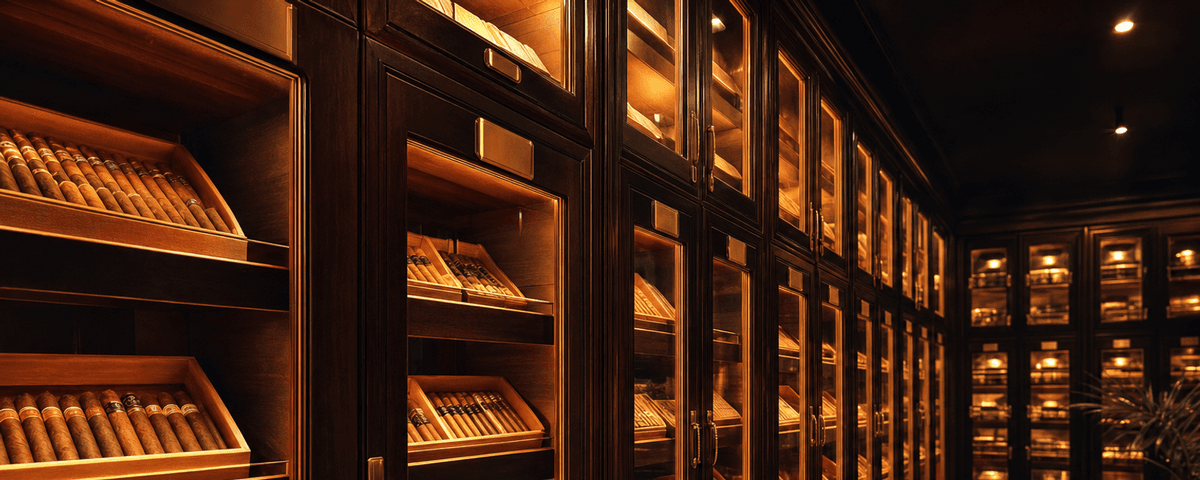
33 座 24 小時恆溫恆濕醇化室
W Cigar Bar 提供的會員醇化空間 · 場地資訊請洽編輯部
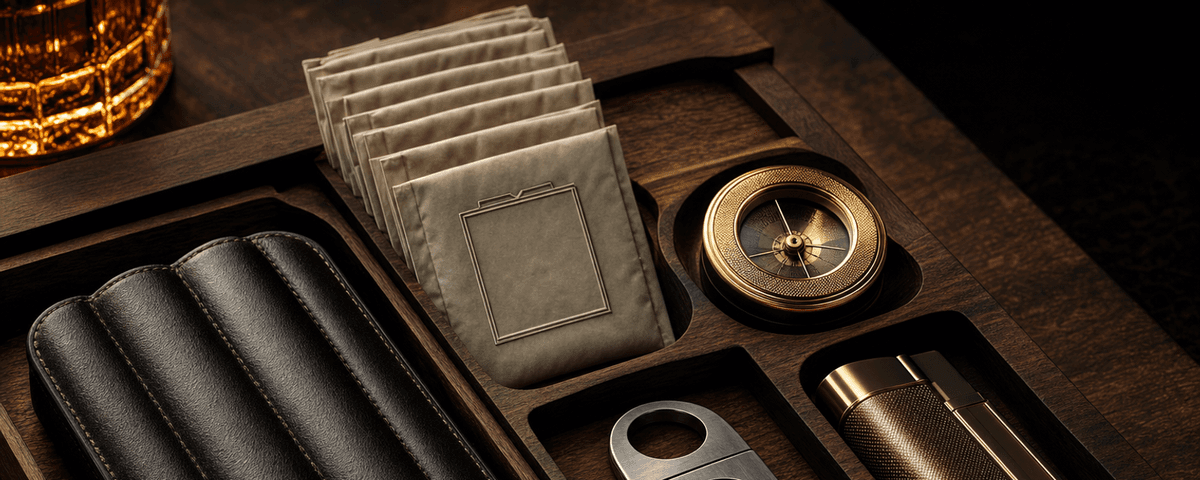
雪茄剪 / 打火機 / 雪茄盒 / Boveda
W Cigar 配件官網 · 專營雪茄配件正品

加 LINE 好友 · 文化諮詢
文化空間資訊 · 紳士沙龍 · 私人包場
本網站內容僅供雪茄文化、歷史、收藏與品吸知識研究參考。菸品有害健康、未滿法定年齡者請勿吸菸。實際規範請依所在地法律為準。
吸菸有害健康・戒菸專線 0800-636363・本站僅供 20 歲以上成年人閱覽。
讀到這裡,你不只是路過的人
留下 Email,加入 W 雪茄聖經內圈——總編輯 Wilson Tsai 親選的學院深文與國際新訊,先你一步送到信箱。
· 教育用途非銷售 · 隨時一鍵退訂 · Email 絕不對外公開 · 由勝茄股份有限公司營運
同分類延伸閱讀



資料來源:W Cigar Bible 編輯部整理 · 雪茄王子 Wilson Tsai 親自審稿
本文僅供雪茄文化、歷史、收藏與品鑑知識研究,不作為菸品促銷、銷售或購買建議。吸菸有害健康,未滿二十歲不得吸菸。