捲煙工藝深度:Torcedor 匠師的雙手秘密
從學徒到首席匠師、Triple Cap、Pigtail、Galera 工坊——百年技藝的傳承
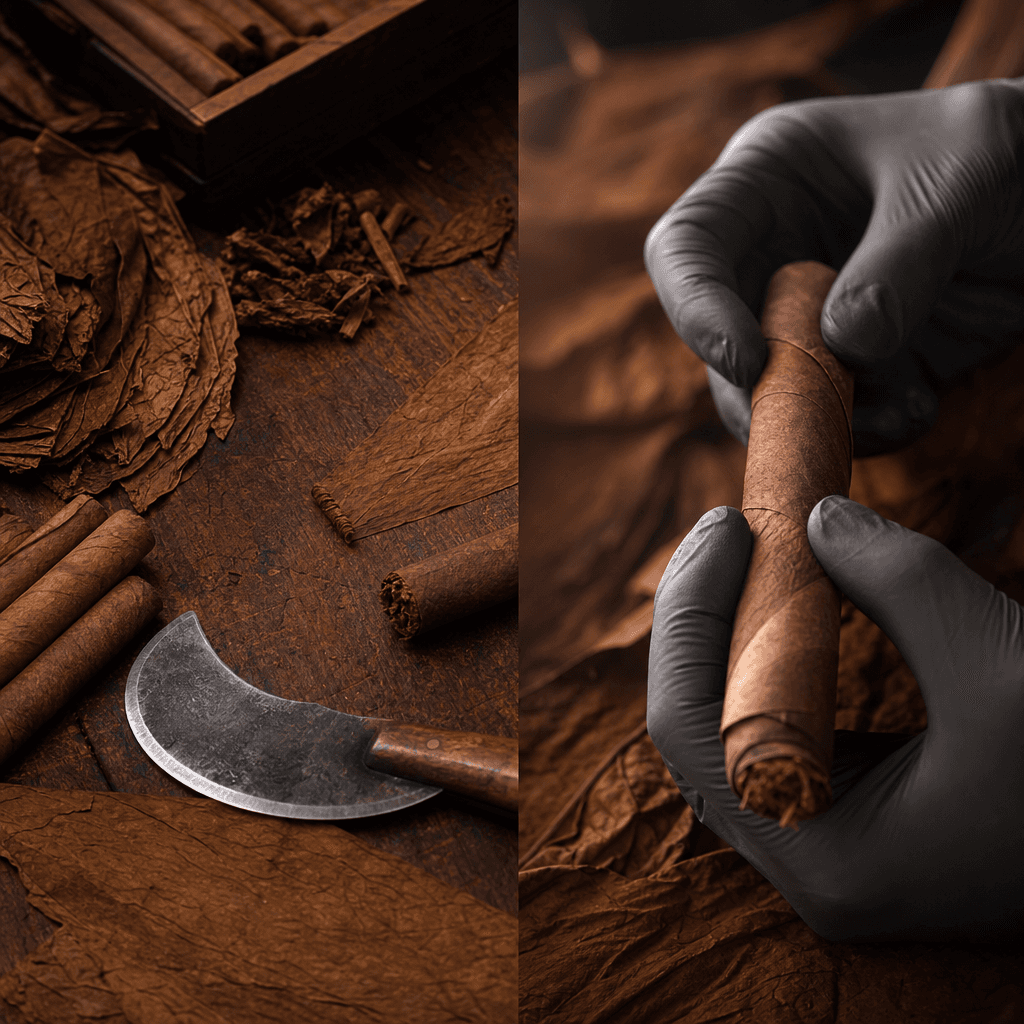
Torcedor 雪茄匠師工藝深度—5 階級制度(Aprendiz/Junior/Torcedor/Senior/Mayor)、Galera 工坊與 Lector 朗讀員傳統(Romeo y Julieta/Montecristo 品牌名來源)、4 個捲煙核心步驟(Selección/Bunching/Binder/Wrapper)、Cap 3 種等級(Single/Double/Triple)+ Pigtail Cap、Norma Fernández/Pepin García/Hendrik Kelner 等業界傳奇匠師、訓練年數與考核、現代 4 大挑戰。雪茄王子親寫 veteran 深度。
- Torcedor 匠師的訓練分為五個階級,從學徒到首席匠師,需經過多年的專業培訓。
- 古巴雪茄工坊中的 Lector 朗讀員傳統,提升工人文化水平,並影響品牌命名。
- 捲煙工藝的關鍵步驟包括選葉、捆煙、束葉和包葉,每一步都對雪茄品質至關重要。
The true secret of top Cuban cigars is not in the tobacco leaves, not in the blend, not in the factory--
It is in the hands of the Torcedor artisan.
From a 5-year apprentice to a 30-year chief artisan (Torcedor Mayor)--the hands of Cuban cigar artisans are living witnesses to 4 centuries of tradition.
Cigar Prince Wilson Tsai draws on industry consensus and years of observation to give you the complete depth of Torcedor craftsmanship.
說明捲製從選葉、捆煙、束葉到包葉的四個核心步驟流程圖
What Is a Torcedor?
Literal Meaning
Torcedor (Spanish) = "cigar roller"
Formal industry terms:
- Male artisan: Torcedor
- Female artisan: Torcedora
Industry consensus: In top Cuban cigar factories, female artisans account for about 50-60%--Torcedoras are core craft artisans in the Cuban cigar world.
Rank System
The Torcedor ranks in Cuban cigar factories (widely recognized in the industry):
Ranks from low to high:
─────────────────────────────────────
1. Aprendiz (apprentice)        -- 1-2 years of training
2. Torcedor Junior              -- 3-5 years of experience
3. Torcedor                     -- 5-10 years
4. Torcedor Senior              -- 10-20 years
5. Torcedor Mayor (chief)       -- 20-30+ years
─────────────────────────────────────
Chief artisan (Torcedor Mayor):
- Responsible for rolling top-tier cigars
- Including Cohiba Behike, Trinidad Fundadores, etc.
- Highest salary and status
Galera: The Traditional Workshop
The Physical Space of the Galera
Galera = the rolling workshop of a Cuban cigar factory:
- Large open space
- Hundreds of artisans working at the same time
- A unique atmosphere--somewhere between a factory and an art studio
The Lector (Reader) Tradition
Industry legend: The Lector (reader) tradition in the Galera--
Since 1865: Cuban cigar workshops began hiring readers:
- Reading news, novels, and political commentary aloud
- Entertaining workers and raising cultural literacy
- The Romeo y Julieta brand name came from the Shakespeare play workers heard being read
- The Montecristo brand name came from The Count of Monte Cristo
Industry consensus: The Lector tradition still partially exists in Cuban cigar factories today--it is the most romantic side of cigar culture.
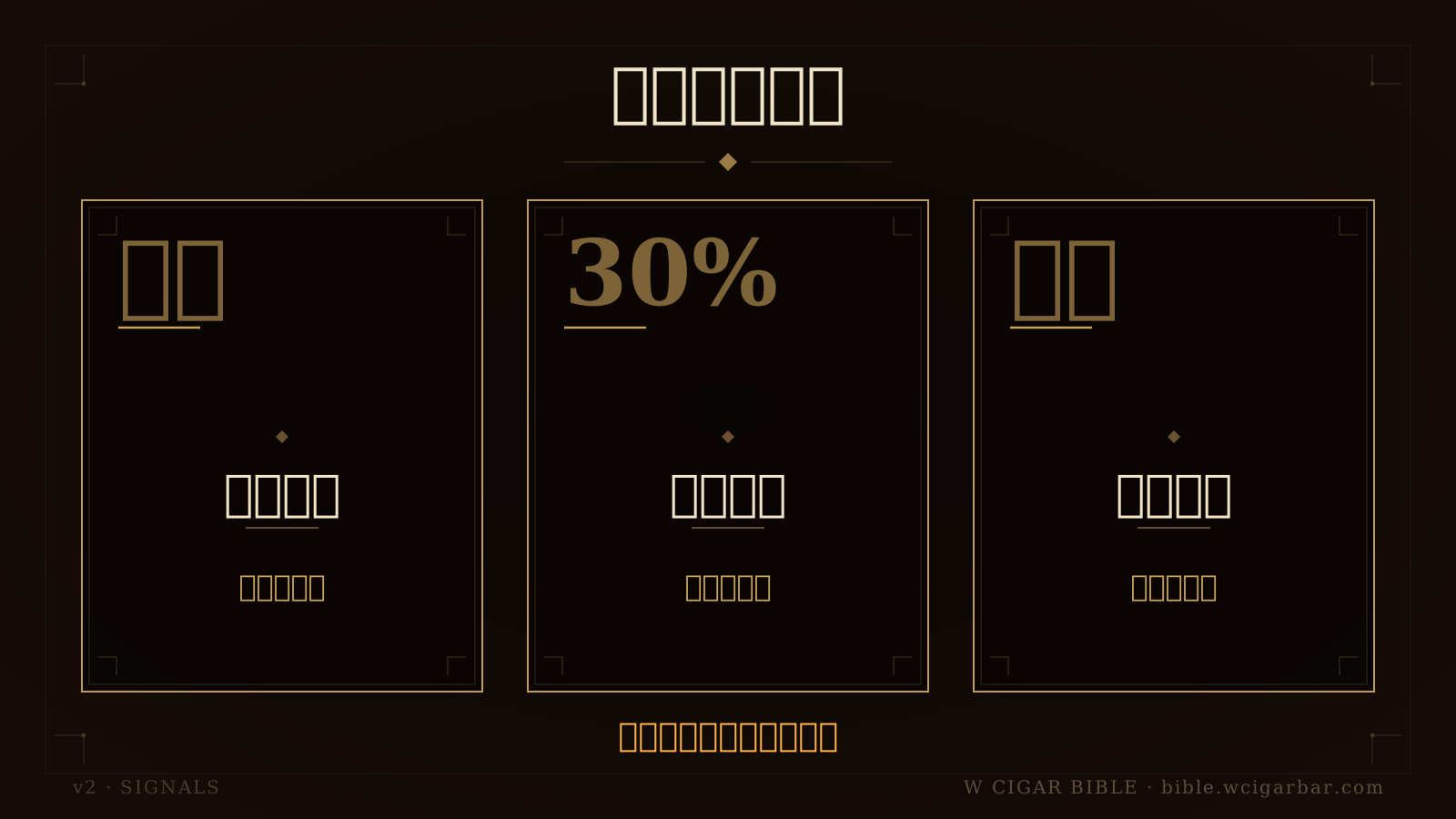
以三張卡片呈現工藝在雙手、選葉佔三成時間與帽蓋是判斷捷徑的捲煙工藝核心結論圖
The 4 Core Steps of Rolling Craftsmanship
Step 1: Selección (Leaf Selection)
The chief artisan personally selects the leaves:
- Selected from tobacco leaves that have completed forced aging
- 4 types of tobacco leaves (Volado, Seco, Ligero, Medio Tiempo) in proportion
- Every single leaf is inspected for defects
Industry consensus: Leaf selection accounts for 30% of rolling time--longer than the actual rolling itself.
Step 2: Bunching
Rolling the filler leaves into an "initial bunch":
The Traditional Cuban "Entubado" Method
The Entubado technique widely recognized in the industry:
- Each filler leaf is rolled into a small tube
- Multiple small tubes are placed in parallel
- Forms "airflow channels"--ensuring smooth airflow while smoking
The Key Points of Bunching
- Tightness: Too loose and the draw fails; too tight and the burn is uneven
- Uniformity: Consistent density in every section
- Weight control: Accurate to the gram
Industry consensus: Bunching technique determines whether a cigar can "burn smoothly"--this is the hardest hurdle for novice artisans.
Step 3: Binder
Wrapping the filler with the Binder:
- A thicker layer of tobacco leaf
- Controls burn speed
- Provides a flat foundation for the next step, the Wrapper
Mold pressing:
- Place the Binder + filler into a wooden mold
- Apply pressure for 30-60 minutes
- Forms a stable shape
Step 4: Wrapper
The most critical step:
Wrapper Selection
- Personally selected by top artisans--choosing flawless, glossy leaves
- One cigar usually uses 1 complete tobacco leaf as the Wrapper
Cutting and Wrapping
The Chaveta method widely recognized in the industry:
- Chaveta: Traditional round crescent knife
- Cuts the Wrapper into a perfect shape
- Spiral wrapping around the filler--from Foot to Cap
- Each turn is precisely overlapped
Speed and Precision
Industry consensus: Top artisans' Wrapper wrapping speed:
- 1 standard Robusto completed within 1 minute
- Each turn overlapped with millimeter precision
- No defects, no tearing
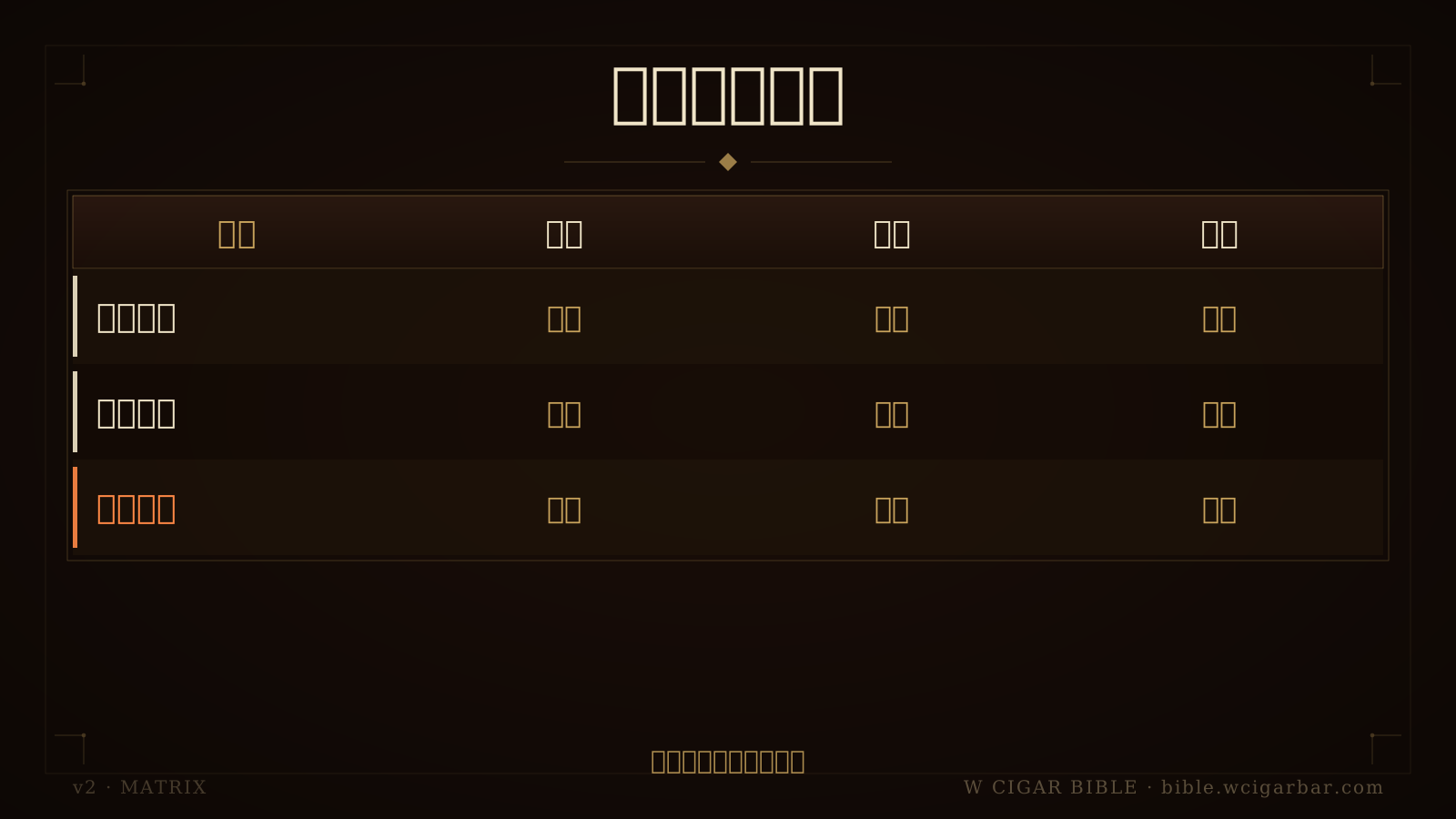
比較單層、雙層與三層帽蓋三種等級在工藝難度與定位差異的資訊表
The Craft of the Cap
Why Is the Cap So Important?
Cap is the "face" of the cigar--and also the part where craftsmanship is most visible:
- Cutting a cigar means cutting the Cap
- Cap craftsmanship determines the cigar's appearance
- An important industry indicator for judging quality
The 3 Levels of Cap
1. Single Cap
Industry consensus: Common in entry-level cigars--
- 1 small piece of tobacco leaf placed on the Cap
- Simple craftsmanship
- Easy to peel off
2. Double Cap
- 2 overlapping pieces of tobacco leaf
- Medium-level craftsmanship
- Used by some mid-range cigars
3. Triple Cap ⭐
Industry consensus: A hallmark of top cigars--
- 3 pieces of tobacco leaf precisely overlapped
- A must for top Cuban series (Cohiba, Trinidad, Montecristo Edmundo, etc.)
- An important clue for the industry in judging cigar grade
Industry legend: Triple Cap craftsmanship is a century-old inheritance--only senior artisans can execute it perfectly.
Pigtail Cap
Pigtail Cap is a special style:
- The end of the Cap is rolled into a tail shape
- Visually distinctive
- A display of craftsmanship
Widely recognized in the industry: Liga Privada Únicos and some Drew Estate series use Pigtail Cap--making it a brand signature.
Legendary Industry Artisans
Cuban Legends
Legendary artisans widely recognized in the industry (some names are not absolutely exhaustive):
Norma Fernández
- Chief artisan at the El Laguito factory
- Widely circulated in the industry as the "Cohiba Behike master artisan"
- 30+ years of experience
Aniceto Pérez
- Senior Torcedor Mayor for many years
- A respected "old artisan" in the industry
Industry consensus: Top chief artisans are regarded as "artists" in the Cuban cigar world--their cigars even have personally signed editions.
Exiled Cuban Artisans
Widely recognized in the industry: Cuban artisans who went into exile after the 1959 revolution rebuilt the non-Cuban cigar empire:
José "Pepin" García
- 30 years of experience at the Cohiba factory
- Exiled to Miami in 1996
- Founded My Father Cigars
- Legendary master in the industry
Hendrik Kelner
- Dominican master (not exiled; locally trained)
- Chief engineer of Davidoff Dominican
- A contemporary master by industry consensus
Carlos Fuente Sr. / Jr.
- Two generations, father and son
- From Tampa to the Dominican Republic
- The craft soul of the Fuente family
整理捲煙工藝三個常見誤解與對應正確觀念的提醒圖
Torcedor Training
Years of Training
The Torcedor training path widely recognized in the industry:
Aprendiz (apprentice): 1-2 years
- Learning leaf selection
- Practicing the basics of Bunching
- Cannot roll top-tier cigars at first
Junior Torcedor: 3-5 years
- Begins rolling basic cigars
- Entry-level brand level
Torcedor: 5-10 years
- Rolls mid-range cigars
- Begins to develop a personal style
Senior Torcedor: 10-20 years
- Rolls top-tier cigars
- Stable quality
Torcedor Mayor: 20-30+ years
- Master artisan for top-tier cigars
- Trains new artisans
- Respected master in the industry
Craft Assessment
Industry consensus: Torcedor promotion requires passing strict assessments:
- Quality: Rolling multiple cigars, evaluated by industry experts
- Speed: Completion within a time limit
- Consistency: Consistent performance over several consecutive days
- Creativity: Understanding of blends and specifications
Income and Status
Widely recognized in the industry:
- Cuban Torcedor monthly salary is about $30-100 USD (due to Cuba's special economic circumstances)
- Chief artisans can reach $200-500 USD/month
- In Cuba, it is a high-income profession
- But far below the international level of the same industry
Industry debate: Whether Cuban artisans' salaries should be increased--this has been a long-standing issue in the cigar world.
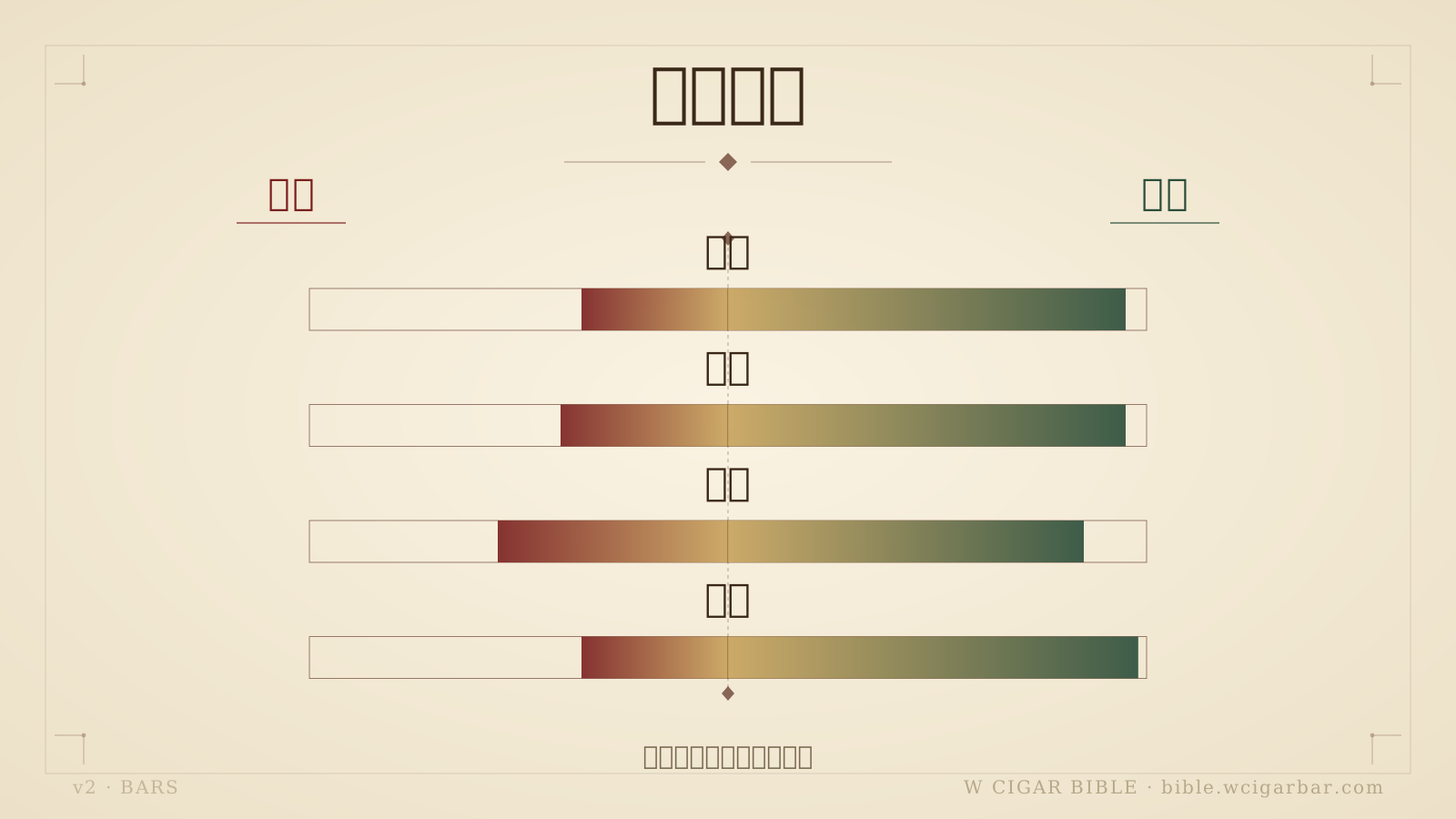
長條對比新手與首席在選葉密度穩定差異
Challenges Facing Modern Rolling Craftsmanship
Challenge 1: Talent Loss
Industry consensus:
- Fewer and fewer young Cubans are entering cigar factories
- Wages are relatively low, and choices are increasing
- A century-old inheritance faces a generational gap
Challenge 2: Pressure from Mechanization
Some non-Cuban cigar brands have adopted semi-automation:
- Increasing production
- Reducing costs
- But Cuba insists on fully handmade production--preserving craft tradition
Challenge 3: Technical Standardization
Some old artisans in the industry worry:
- Training time for new artisans is being shortened
- Personal style is being worn away by standardization
- "Artisan individuality" is disappearing
Challenge 4: Climate Change
- Tobacco leaf quality is affected by climate
- Artisans need to be more sensitive to quality fluctuations
- The challenge is increasing
The Industry's "Old Artisan Belief"
The view of some seasoned aficionados in the industry:
- Same brand, same Vitola--cigars rolled by different artisans have slightly different flavors
- "Cigars rolled by old artisans" are more precious
- Some brands release personally signed editions--rolled personally by chief artisans
Widely recognized in the industry: Auction prices for personally signed cigars can reach 5-10 times the original price.
問答卡整理匠師工坊與小管工法重點
Cigar Prince's Observations on Torcedores
Observation 1: Craft Spirit Is More Important Than Technique
"The best artisan is not the fastest, but the most focused"--industry consensus.
Observation 2: Cap Craftsmanship Is a Shortcut for Judging
Before smoking a cigar, look at the Cap first:
- Triple Cap, precise alignment = top artisan
- Single Cap, peeling = ordinary craftsmanship
Observation 3: Aging Amplifies Artisan Differences
- New cigars: Difference between good artisans and ordinary artisans is 10-15%
- 5 years of aging: Difference expands to 30%+
- Cigars by top artisans perform better after aging
Observation 4: Advantages of the Four Official Channels
W Cigar Bar uses four official channels--
- PCC authorized dealer: mainstream batches
- Cuban official state-run stores: may include special artisan batches
- Switzerland and Spain general agents: selected batches for the European market
Multi-channel procurement = diversified artisan assurance.
Conclusion
Rolling craftsmanship is the true soul of the cigar world--4 centuries of inheritance, impossible to replace by machines, and impossible to replicate through shortcuts.
Understanding Torcedor craftsmanship -> when you smoke a cigar, you are not just "smoking"--you are participating in a living ceremony of century-old inheritance.
W Cigar Bar Gentlemen's Cigar Lounge · Taipei Da'an District · Cuban cigars from four official channels (PCC authorized dealer・Cuban official state-run stores・Switzerland general agent・Spain general agent) · Complete supply of top artisan-crafted cigars · LUBINSKI Italy accessories general agent · Cigar bistro · 33 VIP cigar lockers · Founding store of the Capadura cigar brand.
Cigar Prince Wilson Tsai personally hosts the "Torcedor Craft Appreciation Workshop" for VIP clients--observing the differences among Triple Cap, Pigtail, and Bunching craftsmanship.
Reservation: Da'an Main Store. Accessories reference: cigarclub.tw.
Warning: Smoking is harmful to health. Smoking cessation hotline: 0800-636363. This site is for adults aged 20 and above only.
Like this article?Share with friends
Share this W Cigar Bible piece with friends who want to learn cigar culture, storage, and tasting.
想把這篇 化為實踐
雪茄聖經是知識;雪茄文化要在空間裡發生

W Cigar Bar 大安總店資訊
台北大安區 · 雪茄聖經總編輯 Wilson Tsai 主理的雪茄文化空間

33 座 24 小時恆溫恆濕醇化室
W Cigar Bar 提供的會員醇化空間 · 場地資訊請洽編輯部

雪茄剪 / 打火機 / 雪茄盒 / Boveda
W Cigar 配件官網 · 專營雪茄配件正品

加 LINE 好友 · 文化諮詢
文化空間資訊 · 紳士沙龍 · 私人包場
本網站內容僅供雪茄文化、歷史、收藏與品吸知識研究參考。菸品有害健康、未滿法定年齡者請勿吸菸。實際規範請依所在地法律為準。
吸菸有害健康・戒菸專線 0800-636363・本站僅供 20 歲以上成年人閱覽。
影片來源:Habanos S.A. 官方 YouTube 頻道 · 教育性內容引用 · AI 智能配對
讀到這裡,你不只是路過的人
留下 Email,加入 W 雪茄聖經內圈——總編輯 Wilson Tsai 親選的學院深文與國際新訊,先你一步送到信箱。
· 教育用途非銷售 · 隨時一鍵退訂 · Email 絕不對外公開 · 由勝茄股份有限公司營運
同分類延伸閱讀


資料來源:W Cigar Bible 編輯部整理 · 雪茄王子 Wilson Tsai 親自審稿
本文僅供雪茄文化、歷史、收藏與品鑑知識研究,不作為菸品促銷、銷售或購買建議。吸菸有害健康,未滿二十歲不得吸菸。