1989-1996「壞古巴雪茄」現象完整解析
業界爭論的 7 年低谷期—Davidoff 撤出、品質爭議、Habanos S.A. 誕生
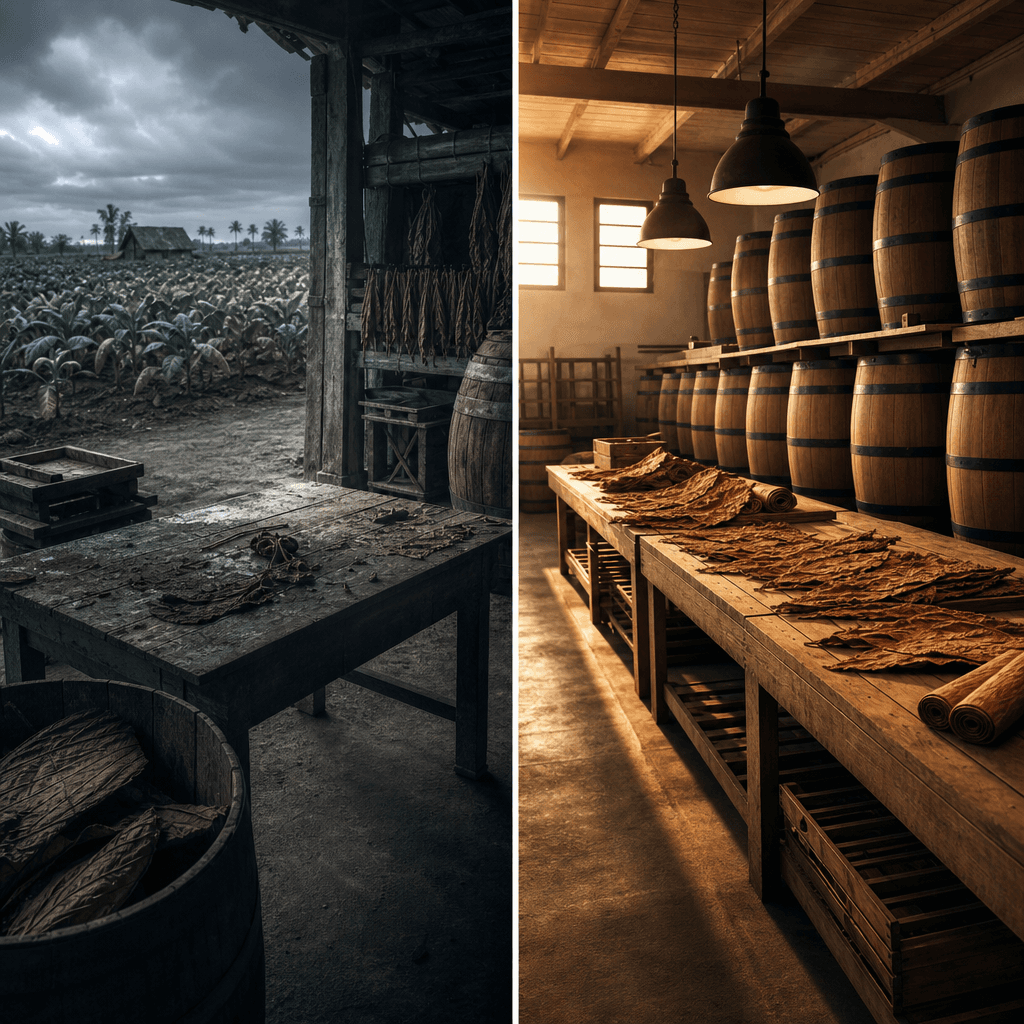
1989-1996「壞古巴雪茄」現象完整解析—業界廣泛討論的 7 年品質爭議期、5 大原因(蘇聯解體經濟衝擊/Cubatabaco 管理混亂/熟成期縮短/菸田管理/配方混亂)、Davidoff 1990 撤出與儀式性焚毀的歷史意義、Habanos S.A. 1994 成立與整頓行動、業界共識與爭論、對當代收藏家的 4 個啟示。雪茄王子親寫 veteran 深度(注意:歷史敏感話題、業界廣泛討論而非絕對結論)。
- 1989-1996年間,古巴雪茄品質波動大,可能同一品牌不同盒次品質差異明顯。
- 蘇聯解體後,古巴經濟重創,影響菸葉品質與工藝控制,導致品質下降。
- 1994年成立Habanos S.A.,進行品牌整頓與品管提升,重建古巴雪茄的全球信譽。
Complete Analysis of the 1989-1996 "Bad Cuban Cigars" Phenomenon: The Impact of the Soviet Collapse, the Davidoff Bonfire, and the 1994 Habanos S.A. Rescue
The most sensitive topic in the cigar world: the "Bad Cuban Cigars" phenomenon -- the widely discussed 1989-1996 period of quality controversy in the industry.
Three key events occurred during these 7 years:
- August 1989 Davidoff Bonfire -- Zino Davidoff publicly burned approximately 130,000 non-conforming Cuban Davidoff cigars (see cuban-davidoff-1968-1989-mystery-21-years for details)
- Some seasoned aficionados in the industry believed that the quality of Cuban cigars had clearly declined
- Habanos S.A. was established in 1994 -- reorganizing brands and quality, and becoming the most important rescue operation in the Cuban cigar industry
This is the most complex and controversial stage in modern Cuban cigar history -- understanding it is the only way to understand why Cuban cigars are what they are today.
Based on industry consensus (note: these are widely discussed industry observations, not absolute scientific conclusions), this article is a complete analysis of the 1989-1996 Bad Cuban Cigars phenomenon, compiled by Cigar Prince Wilson Tsai from an in-depth industry perspective.
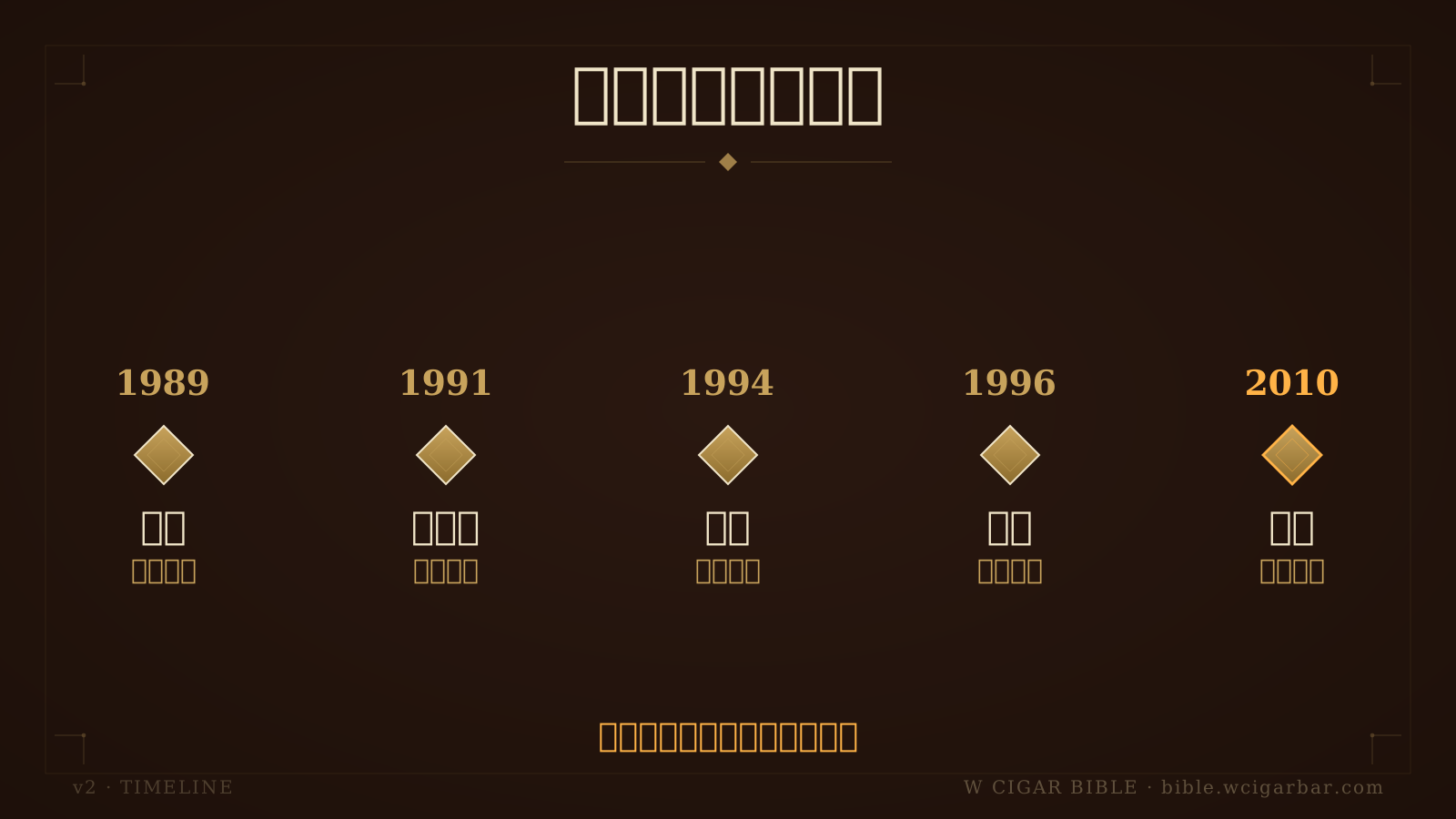
以年代時間線呈現一九八九焚毀、一九九一特殊時期、一九九四整頓、一九九六回穩到二零一零工藝新高的演變圖
The Origin of the Term "Bad Cuban"
Industry Terminology
"Bad Cuban Era" = the term used by some seasoned aficionados in the industry for Cuban cigars from 1989-1996.
Industry consensus: this term is not officially acknowledged by Habanos -- it is a private term used by collectors and experienced players, and only became widely used in the late 1990s.
The Specific Manifestations of "Bad"
Issues widely discussed in the industry (appearing repeatedly during these 7 years):
- Inconsistent tobacco leaf quality -- large differences within the same batch
- Confused blends -- some batches did not match standards
- Wrapper defects -- more cracks and flaws
- Burn issues -- plugged draws and uneven burns
- Mold and beetle problems -- declining storage quality
- Confusion between brands -- some batches were "suspected of brand mix-ups" (tobacco leaves from different brands being mixed)
Industry consensus: batch quality fluctuated extremely widely during these 7 years -- the same brand could be "top-tier in one box and terrible in another."
Why Did the "Bad Cuban" Phenomenon Happen? Five Structural Reasons
Reason 1: The Historic Shock of the Soviet Collapse (1991)
Widely recognized in the industry: the Cuban economy was severely hit after the Soviet Union collapsed in 1991:
The "Special Period" (Período Especial) of 1989-1991
The Cuban government officially named this economic crisis "Período Especial en Tiempos de Paz" (Special Period in Time of Peace):
- Soviet collapse -> Cuba lost its main trading partner (the Soviet Union once accounted for 80% of Cuba's trade)
- Shortages of fuel, food, and fertilizer
- Economic output fell by 35%
- The tobacco industry was significantly affected
Specific impacts on the cigar industry:
- Insufficient fertilizer in tobacco fields -- affecting tobacco leaf quality and nutrition
- Fuel shortages at factories -- affecting fermentation control (fermentation requires stable temperature)
- Worker malnutrition -- affecting craft precision
- Quality control system failure -- defective products entered the market
Reason 2: Chaotic Cubatabaco Management
Cubatabaco (the Cuban state-owned tobacco enterprise at the time, and the predecessor of Habanos S.A.):
- Reorganized in 1987 (to respond to competition in the Latin American tobacco industry)
- Management chaos -- coordination failed during the restructuring process
- Lack of modern quality control
- Widely recognized in the industry as the core reason for the 1989-1994 quality crisis
Industry consensus: no unified brand management = loss of quality control.
Reason 3: The Forced Aging Period of Tobacco Leaves Was Shortened
A widely discussed issue in the industry:
- Some batches from 1989-1996 had their forced aging period shortened
- Reason: urgency to export in exchange for foreign currency (economic pressure during the Special Period)
- Tobacco leaves were released to the market before being fully aged
- New cigars carried a sharp ammonia note and a green, immature character
Industry consensus: the tobacco leaf aging period is a key variable in cigar quality -- shortening the aging period means sacrificing long-term quality for short-term foreign currency.
Reason 4: Tobacco Field Management Problems
Widely recognized in the industry:
- From 1989-1995, management of some Cuban tobacco fields was loose
- High pressure for yield, with quality taking a back seat
- Harvesting of upper primings (Ligero, Medio Tiempo) was not strict
- Control of tobacco field diseases (such as blue mold) failed
Reason 5: Confused Blends and "Counterfeit Batches"
Observations by some seasoned aficionados in the industry (controversial, not absolute):
- Some "Cohiba" cigars from 1989-1996 did not smoke like Cohiba
- Possible blend confusion or brand misplacement
- The industry suspected some batches were the result of "internal confusion" (tobacco leaves being mixed due to chaotic factory management)
Industry consensus (controversial): "Cohiba" from this period must be verified with extreme caution.
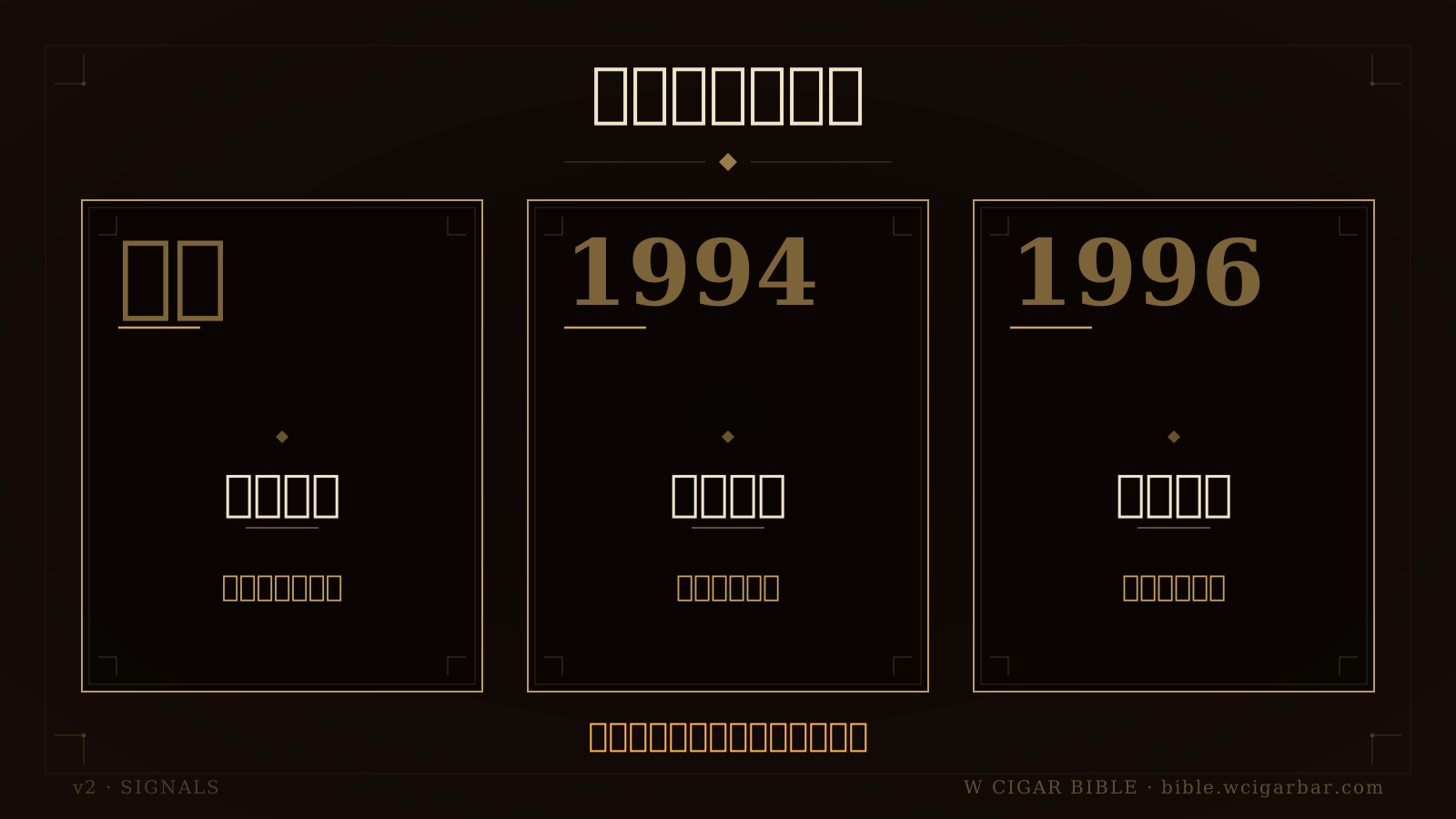
以三張卡片呈現一九八九至一九九六品質有波動、一九九四整頓與一九九六後回穩的核心結論圖
Davidoff's August 1989 "Bonfire" Incident
Why Did Davidoff Withdraw?
1989-1990: Relations between Zino Davidoff and Cubatabaco deteriorated -- the core reason was quality controversy:
Widely recognized in the industry:
- Davidoff had extremely strict quality requirements
- Cuban batches from 1989-1990 repeatedly fell below Davidoff standards
- Multiple negotiations failed
- Zino decided to withdraw
See cuban-davidoff-1968-1989-mystery-21-years for a complete background analysis of the 1989 split.
The True Significance of the "Davidoff Bonfire"
August 1989: Zino Davidoff publicly burned approximately 130,000 Cuban-made Davidoff cigars -- historically known as the "Davidoff Bonfire."
Industry consensus: this event was not a marketing gimmick -- it was Zino's strongest protest against the quality of "Bad Cuban" cigars:
- Public burning: media were present, with a clear brand statement
- Huge financial loss: based on retail prices at the time, industry estimates reached several million Swiss francs (approximately USD 1-2 million at the 1989 exchange rate)
- Brand philosophy: "Davidoff would rather have no product than have a non-conforming product"
Historical Positioning After the Withdrawal
Views held by some players in the industry:
- Davidoff's withdrawal confirmed the reality of the "Bad Cuban" phenomenon
- The 1989 Davidoff Bonfire became the symbol of the "Bad Cuban Era"
- Pre-1989 Davidoff Cuban series instead surged in value -- because they were the true old blends
Widely recognized in the industry: the 1968-1989 Cuban Davidoff series (Dom Pérignon, Château series, Aniversario 1986-1989) can reach USD 2,000-10,000 / stick at auction today (past performance does not represent future results, and realized prices vary greatly among auction houses) -- a historical premium.

比較低谷期與回穩期在菸葉熟成、品管系統與菸田管理三個維度差異的資訊表
Habanos S.A.'s Reorganization (1994-1996): The Rescue Operation
The Historic Turning Point of Its Establishment in 1994
1994: The Cuban government recognized the quality crisis and established Habanos S.A.:
- A 50/50 joint venture with Spain's Altadis (Tabacalera S.A.)
- Unified branding, quality control, and distribution
- Rebuilding global credibility
Subsequent equity changes of Habanos S.A.:
- 2008: Britain's Imperial Tobacco (now Imperial Brands) acquired Altadis
- The actual ownership of Habanos S.A. became Imperial Brands 50% + Cuban government 50%
- This is the ownership structure of contemporary Habanos S.A.
Reorganization Actions from 1994-1996
Widely recognized in the industry: after Habanos S.A. took charge, it implemented four major reorganization actions:
Action 1: Strict Quality Control System
- Introduced modern quality inspection
- Strengthened fermentation period control
- Increased rejection rates for defective products
- Introduced European quality control standards from Spain's Tabacalera
Action 2: Brand Rebuilding
- Unified the positioning of each brand
- Redesigned boxes and bands
- Strengthened anti-counterfeiting certification (the predecessor of the dual-barcode system)
- Standardized global distribution
Action 3: Improved Tobacco Field Management
- Retrained tobacco farmers
- Improved fertilizer and irrigation in tobacco fields
- Extended the mandatory aging period to industry standards
- Strengthened disease prevention and control
Action 4: Expanded the Cohiba Brand
- Línea 1492 launched in 1992 (commemorating the 500th anniversary of Columbus, planned by Cubatabaco and taken over by Habanos S.A. for execution)
- Rebuilt Cohiba's top-tier status
- Replaced the negative impression of "Bad Cuban"
- Paved the way for the launch of Behike in 2010
The "Rebuilding Period" After 1996
Industry consensus: from 1996 onward, Habanos quality clearly recovered:
- Stable quality control
- Unified branding
- New batches regained top-tier flavor
From 1996 to the 2010 launch of Behike, Habanos S.A. spent 14 years completely reversing the shadow of "Bad Cuban."

整理壞古巴現象常見三個誤解與對應正確觀念的提醒圖,強調品質非品牌名字保證
Historical Conclusions on the "Bad Cuban" Phenomenon
Partial Industry Consensus
Partial industry consensus (note: this is widely discussed, not an absolute conclusion):
- There was indeed quality fluctuation from 1989-1996 -- but not all batches were "bad"
- 1990-1993 was the low point -- recognized by most seasoned aficionados
- Quality began to recover after Habanos S.A. was established in 1994
- Top-tier standards returned after 1996
Industry Debate
Some historians and collectors believe:
- "Bad Cuban" has been exaggerated -- most batches were actually of normal quality
- "Bad Cuban" was a market narrative after Davidoff's withdrawal (after 1989, Davidoff needed a narrative legitimacy for its Dominican rebirth)
- The real quality fluctuation was limited -- but it did exist
Industry consensus: the degree of the "Bad Cuban" phenomenon is disputed -- but the point that "there was quality fluctuation" is widely acknowledged.
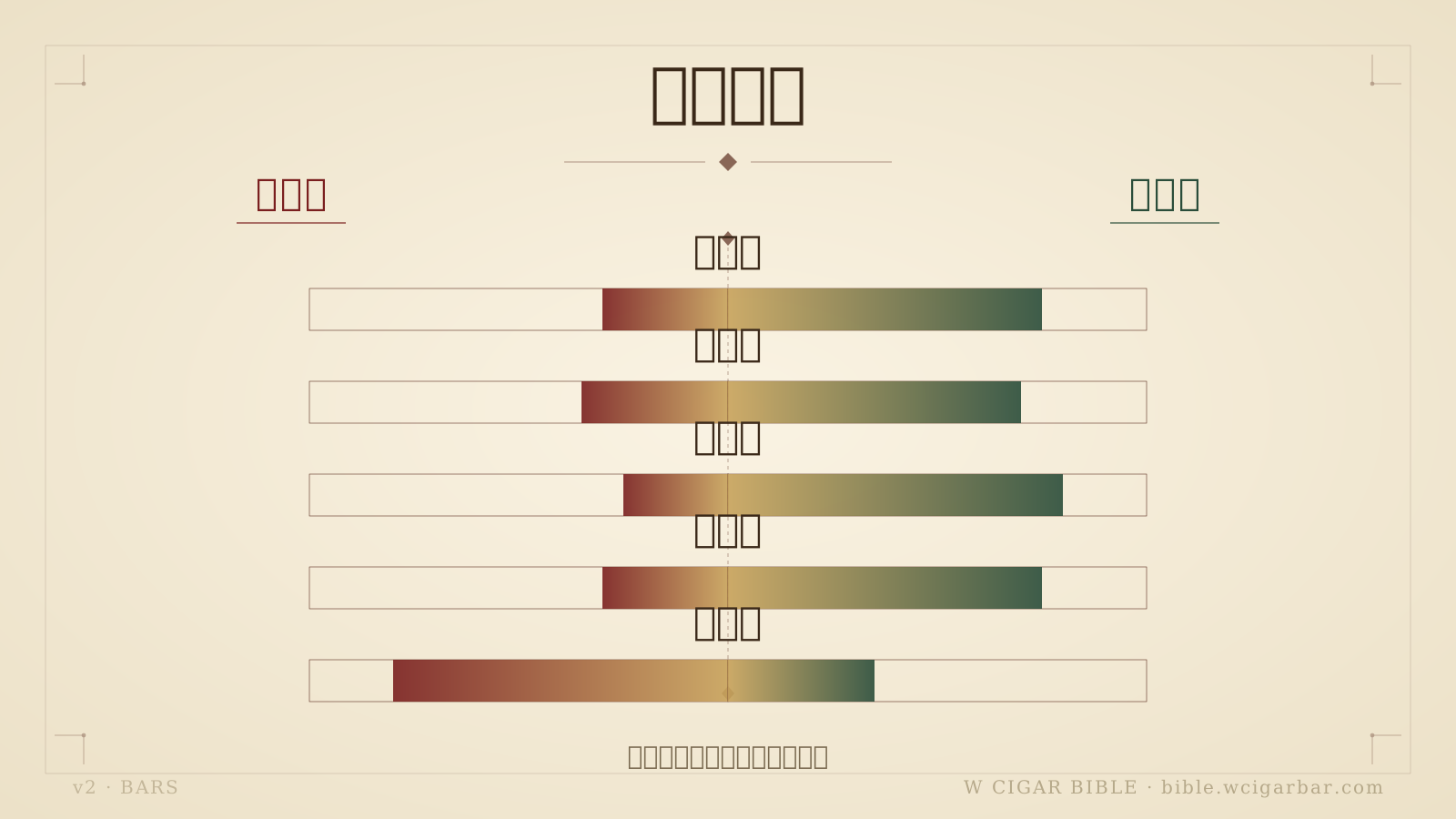
長條圖對比危機期與整頓期多項差異
Lessons for Contemporary Cigar Players
Lesson 1: Be Cautious With Aged Cigars from 1989-1996
If you see Cuban cigars with a 1989-1996 box code:
- You cannot assume they are top-tier based on the year alone
- They must be verified individually
- Quality may be extremely good or extremely poor
- Box code interpretation requires expert assistance
Lesson 2: Pre-1990 Cuban Cigars Have High Value
Widely recognized in the industry: Cuban cigars from the 1980s and earlier:
- Generally top-tier in quality
- Historical premium
- Extremely high auction market value
- Pre-1989 Cuban Davidoff is a specific collecting hot spot
Lesson 3: Cuban Cigar Quality Recovered After 1996
Cuban cigars after 1996:
- Stable quality
- Suitable for confident procurement and aging
- Reached a new craft high after the launch of Behike in 2010
Lesson 4: Trust Official Channels
W Cigar Bar Gentlemen's Cigar House procures through four major official channels:
- PCC authorized dealers (the main Asia-Pacific distribution axis of Habanos S.A.)
- Cuban official state-run stores
- Swiss and Spanish general agents
Every batch undergoes strict inspection -- avoiding the aftereffects of historically problematic batches.
Advanced Observations from the Cigar Prince
Observation 1: History Is Not Linear
Cigar history is not "getting better and better" or "getting worse and worse" -- it has ups and downs:
- 1989-1996 low point (Special Period + Cubatabaco chaos)
- 1996-2010 revival (Habanos S.A. reorganization)
- 2010 Behike launch reaching a new high (Medio Tiempo revolution)
- 2020s continued stability (contemporary quality maintained at a high level)
- Variables remain in the future (geopolitics, climate change, market evolution)
Observation 2: 1989-1996 Is a "Danger Zone for Collectors"
For auction market conditions:
- Cigars with 1989-1996 box codes have the greatest value fluctuation
- The same batch may be extremely good or extremely poor
- Expert authentication is required
Some players in the industry avoid aged products from these 7 years -- unless they have excellent Provenance (a complete and traceable paper chain).
Observation 3: The Historical Significance of Davidoff's 1989 Withdrawal
Industry consensus: Davidoff's withdrawal as an event itself was a turning point in cigar history:
- It marked the fragility of the relationship between brands and governments
- It proved that quality always matters
- It gave non-Cuban brands an opportunity to rise (Davidoff's rebirth in the Dominican Republic, Padrón's expansion in Nicaragua, and the founding of My Father in 1996)
Observation 4: The Lesson of "Bad Cuban" for the Contemporary Era
Industry consensus:
- Bad batches can always happen -- in any brand, at any time
- Official channels + professional authentication are the only safeguards
- Over-mythologizing a certain era is instead blind
For Gentlemen's Club members: trust official channels, rely on expert authentication, and do not blindly pursue specific years -- this is the long-term wisdom of cigar collecting.

快問快答卡整理壞古巴年代三個問題
The Relationship Between 1989-1996 and Contemporary Cuban Cigars
30 Years from Crisis to Revival
From the 1989 Davidoff Bonfire to 2026, 37 years have passed. During this period, the Cuban cigar industry experienced:
- 1989-1996 crisis for 7 years
- 1994 Habanos S.A. establishment and rescue
- 1996-2010 revival for 14 years
- 2010 Behike launch + Medio Tiempo revolution
- 2010-2026 continued stability for 16 years
The quality control system of contemporary Habanos S.A. is in fact the continuing result of the 1994 crisis response.
A Message for Contemporary Gentlemen's Club Members
The wisdom of collecting Cuban cigars:
- Do not blindly buy based only on the word "Cuban"
- Every box should have its box code and provenance verified
- Post-1996 Cuban cigars have stable quality and can be procured with confidence
- Pre-1989 vintage cigars require a complete paper chain
Conclusion
The "Bad Cuban" phenomenon is the most complex and controversial stage in modern Cuban cigar history -- but it also reminds us:
Quality is not guaranteed by a brand name; history has ups and downs, and it is not a straight line; official channels + professional authentication = player protection.
From the August 1989 Davidoff Bonfire burning 130,000 cigars -> the 1989-1991 Special Period after the Soviet collapse -> the 1990-1993 "Bad Cuban" low point -> the 1992 Cohiba Línea 1492 rescue -> the 1994 establishment of Habanos S.A. -> the 1996 quality recovery -> the 2010 Behike Medio Tiempo reaching a new high -> the overall stability of the Cuban cigar industry in 2026 -- the Cuban cigar industry used 37 years to move from crisis to revival, proving the true resilience of the cigar industry.
For members of the W Cigar Bar Gentlemen's Club, understanding the 1989-1996 Bad Cuban phenomenon is not about avoiding Cuban cigars, but about more deeply understanding the historical depth of the Cuban cigar industry -- every contemporary Cohiba, Montecristo, Romeo y Julieta, Partagás, and H. Upmann carries the memory of craft rebuilding after the 1989-1996 crisis.
Supply sources: Cuban cigars from four major official channels (PCC authorized dealers · Cuban official state-run stores · Swiss general agent · Spanish general agent). W Cigar Bar Gentlemen's Cigar House · Da'an District, Taipei -- strict batch inspection to avoid historically problematic batches.
LUBINSKI Italy accessories general agent · Cigar bistro · Da'an flagship store with 33 VIP cigar lockers (24-hour conditioning · 70% / 18°C professional conditioning) maintained by dedicated staff · Founding store of the Capadura cigar brand.
Cigar Prince Wilson Tsai personally provides aged Cuban cigar authentication services for VIP clients -- verifying box code, Provenance, and quality condition, and avoiding potentially problematic batches in the 1989-1996 danger zone.
Venue information: https://share.google/d9NIeFEetij9qWKj0
LUBINSKI accessories official website: https://cigarclub.tw/
This site is for adults aged 20 and above only. Smoking is harmful to health. Smoking cessation hotline: 0800-636363.
W Cigar Bar Gentlemen's Cigar House, written and planned by Cigar Prince Wilson Tsai.
Like this article?Share with friends
Share this W Cigar Bible piece with friends who want to learn cigar culture, storage, and tasting.
想把這篇 化為實踐
雪茄聖經是知識;雪茄文化要在空間裡發生

W Cigar Bar 大安總店資訊
台北大安區 · 雪茄聖經總編輯 Wilson Tsai 主理的雪茄文化空間
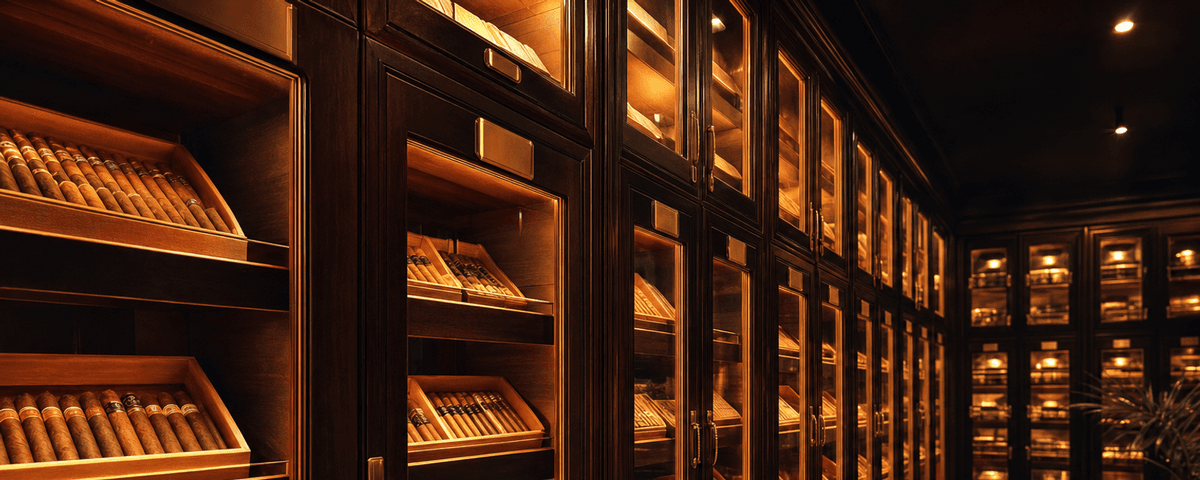
33 座 24 小時恆溫恆濕醇化室
W Cigar Bar 提供的會員醇化空間 · 場地資訊請洽編輯部

雪茄剪 / 打火機 / 雪茄盒 / Boveda
W Cigar 配件官網 · 專營雪茄配件正品

加 LINE 好友 · 文化諮詢
文化空間資訊 · 紳士沙龍 · 私人包場
本網站內容僅供雪茄文化、歷史、收藏與品吸知識研究參考。菸品有害健康、未滿法定年齡者請勿吸菸。實際規範請依所在地法律為準。
吸菸有害健康・戒菸專線 0800-636363・本站僅供 20 歲以上成年人閱覽。
影片來源:Habanos S.A. 官方 YouTube 頻道 · 教育性內容引用 · AI 智能配對
讀到這裡,你不只是路過的人
留下 Email,加入 W 雪茄聖經內圈——總編輯 Wilson Tsai 親選的學院深文與國際新訊,先你一步送到信箱。
· 教育用途非銷售 · 隨時一鍵退訂 · Email 絕不對外公開 · 由勝茄股份有限公司營運
同分類延伸閱讀


資料來源:W Cigar Bible 編輯部整理 · 雪茄王子 Wilson Tsai 親自審稿
本文僅供雪茄文化、歷史、收藏與品鑑知識研究,不作為菸品促銷、銷售或購買建議。吸菸有害健康,未滿二十歲不得吸菸。