古巴雪茄五個世紀完整歷史
從 1492 哥倫布登陸到 2024 — 532 年雪茄文明的完整脈絡

古巴雪茄五個世紀完整歷史—1492 哥倫布登陸 + Taíno 印第安人 → 1817 西班牙自由貿易 → 19 世紀品牌大爆發(H. Upmann/Partagás/Romeo y Julieta)→ 1898 美西戰爭 → 1959 革命 + 國有化 → 1962 JFK 禁運 + Cohiba 誕生 → 1990 Davidoff 撤出 → 1994 Habanos S.A. 成立 → 2010 Cohiba Behike → 2020 Capadura 亞洲華人品牌。雪茄王子親寫 veteran 深度。
- Taíno 原住民將菸草視為神聖植物,並在宗教儀式中使用,顯示其文化重要性。
- Cohiba 這個品牌名源自 Taíno 語,意指「菸捲」,反映古巴雪茄的歷史根源。
- 19 世紀中期是古巴雪茄品牌的奠基期,許多現代品牌皆起源於此時期。
A Complete Five-Century History of Cuban Cigars
October 28, 1492 -- Columbus's "Santa María" reached the coast of Cuba. Two days later, he sent Rodrigo de Jerez and Luis de Torres ashore to scout. They reported witnessing Taíno Caribbean Indigenous people rolling dried tobacco leaves into cylinders, lighting one end, and inhaling the smoke -- the first European record of cigars in human history, and the beginning of 534 years of cigar civilization.
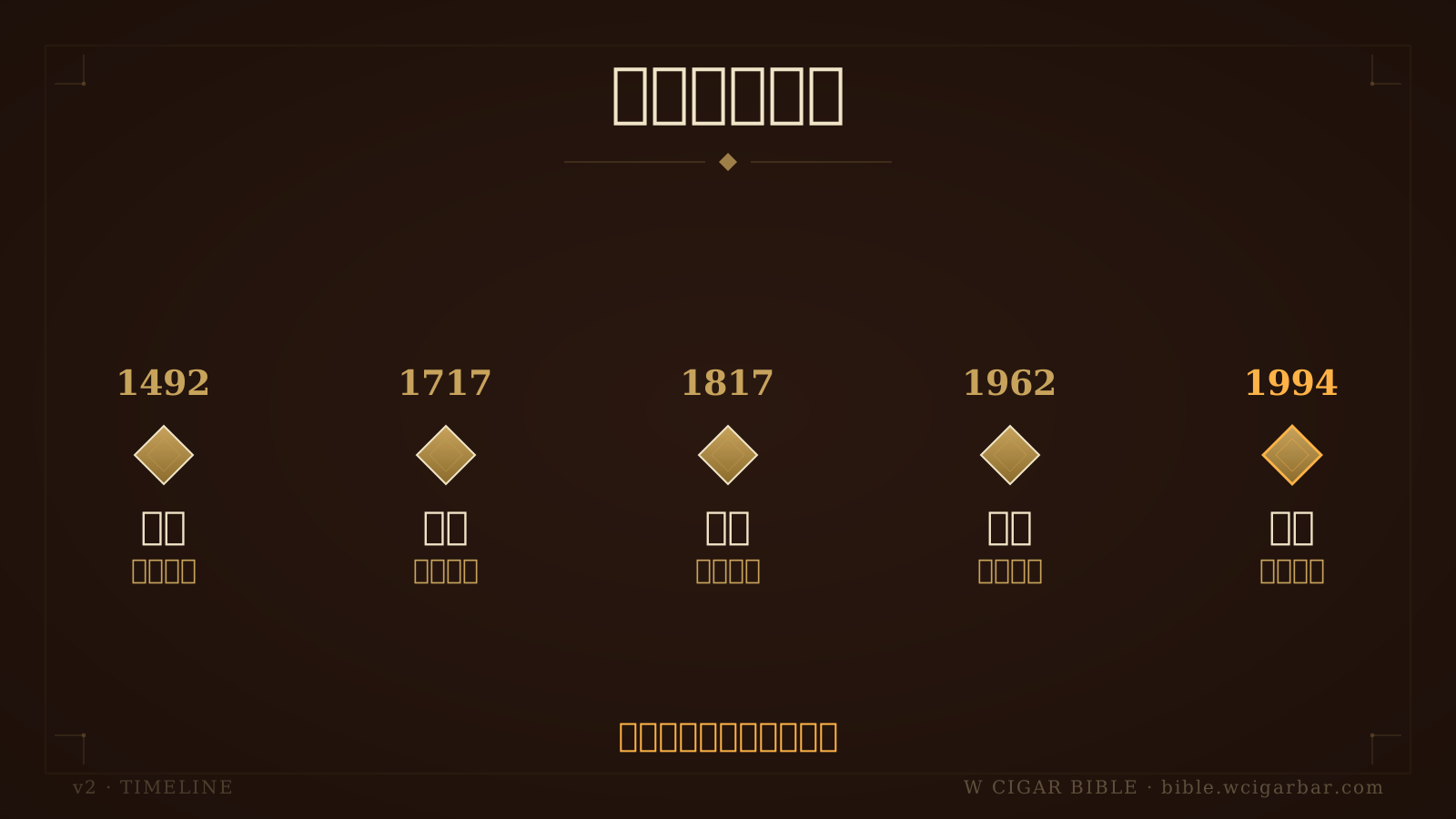
以時間線呈現古巴雪茄從一四九二到一九九四五個世紀關鍵年代與制度變遷的歷史節點圖
Era 1: The Indigenous Age (Before the Common Era-1492)
The Tobacco Rituals of the Taíno Indigenous People
Taíno -- the Caribbean Indigenous people of pre-Columbian Cuba -- regarded tobacco as a sacred plant: for religious rituals (shamans smoking to communicate with spirits), healing (believing tobacco smoke could treat illness), and social interaction (the core of tribal councils).
In the Taíno language, Cohiba (or cojiba) = "tobacco roll" -- this is the origin of the modern "Cohiba" brand name.
The Origin of the Word "Tabaco"
There are two schools of thought: one holds that the Taíno word "tabaco" originally referred to the smoking implement used for rolled tobacco leaves (a tube-like object), and that the Spanish mistakenly took it as the name of the plant itself; the other believes it evolved from the place name of the Caribbean island Tobago. There is no absolute consensus.
The Tragedy of Rodrigo de Jerez
The first person to bring tobacco back to Europe -- when he smoked publicly in Spain, he was arrested by the Inquisition on the charge of "summoning demons" and imprisoned for 7 years. By the time he was released, tobacco had already become widespread in Europe.
Era 2: Colonization and Commercialization (1500-1800)
The Tobacco Industry under Spanish Colonial Rule
1500s: Tobacco cultivation spread to Spain and Portugal, and was initially regarded as medicine. Nicolás Monardes (a Spanish physician) published Medical Uses of Tobacco in 1571.
1600s: European demand for tobacco surged, Cuba became a major supplier, and the Spanish Crown monopolized the Cuban tobacco trade.
1717: The Spanish Crown established the Real Factoría de Tabacos (Royal Tobacco Company), monopolizing the buying and selling of Cuban tobacco. This triggered the 1717 / 1720 / 1723 three Vegueros uprisings -- the first wave of anti-colonial armed resistance in Cuban history.
The 1817 Free Trade Decree
March 21, 1817: King Ferdinand VII of Spain issued a free trade decree, abolishing the tobacco monopoly (Estanco de Tabaco) -- Cuban cigar exports exploded globally, and Havana became the world's tobacco center. The years 1820-1860 were the golden age of the Cuban cigar industry.
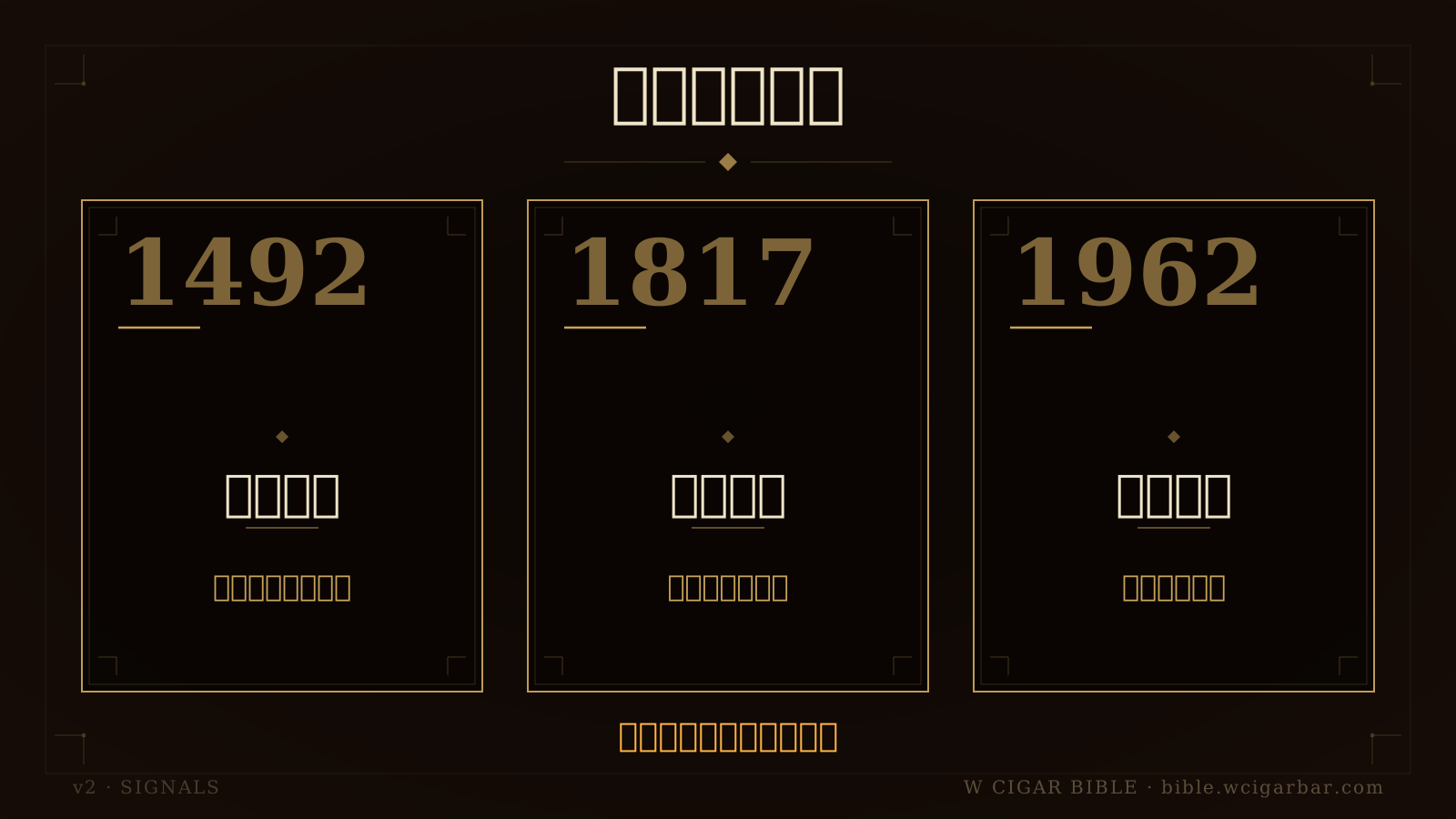
以三張卡片呈現古巴雪茄一四九二發現、一八一七自由貿易與一九六二禁運三個核心轉折的結論圖
Era 3: The Golden Age and the Birth of Brands (1800-1900)
Cuban cigar brands founded in the mid-to-late 19th century:
| Year | Brand | Founder |
|---|---|---|
| 1840 | Punch | Manuel López (named after the British satirical magazine Punch) |
| 1844 | H. Upmann | Hermann Dietrich Upmann (German banker) |
| 1845 | Partagás | Don Jaime Partagás (Catalan immigrant) |
| 1865 | Hoyo de Monterrey | José Gener |
| 1875 | Romeo y Julieta | Inocencio Álvarez and Manín García |
| 1902 | Bolívar | José F. Rocha (in honor of Simón Bolívar) |
Industry consensus: this generation was the "foundational period" of Cuban cigar culture, and the roots of most modern brands lie in the 19th century.
The Shakespearean Origins of Romeo y Julieta
Romeo y Julieta was founded in 1875 and named after Shakespeare's play. Inocencio Álvarez institutionalized the factory workers' tradition of reading aloud -- the Lector (reader) would read novels such as Romeo and Juliet and The Count of Monte Cristo (which later became the source of the Montecristo brand name) aloud to entertain the workers. This Lector tradition still exists today in some Cuban cigar factories.
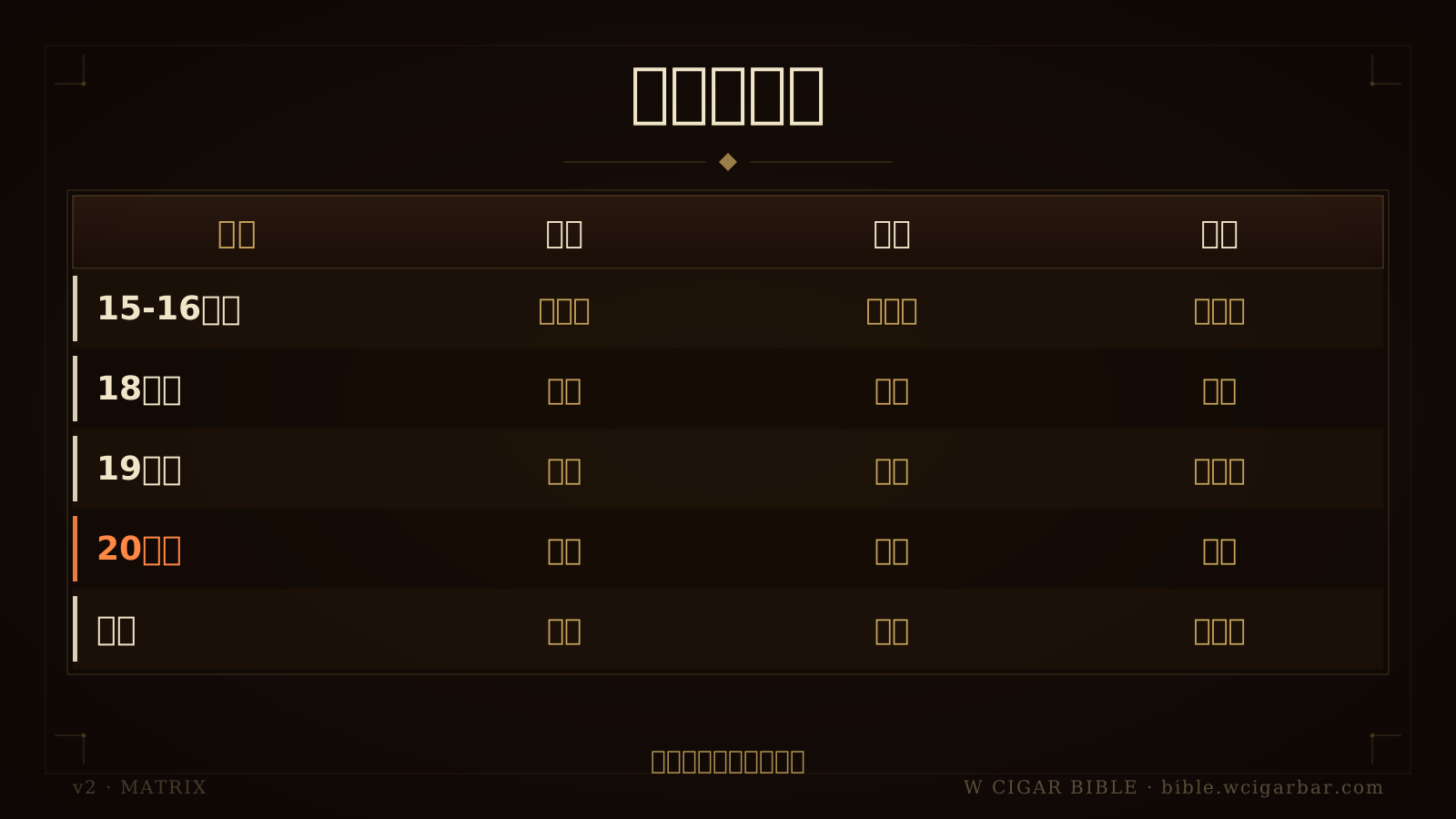
比較古巴雪茄各世紀主導力量、產業狀態與代表事件差異的歷史資訊對照表
Era 4: The Spanish-American War and U.S. Involvement (1898-1959)
The 1898 Spanish-American War
April-August 1898: The Spanish-American War broke out, and Cuba broke away from Spanish rule. Its impact on the cigar industry: large numbers of American cigar merchants moved into Cuba, while some Cuban tobacco farmers moved to the United States (Tampa, Florida became a major Cuban-exile cigar stronghold, and Tampa's Ybor City district became the "Havana of America").
The Starting Point of Arturo Fuente
1912: At age 24, Arturo Fuente (born in Güines, Cuba in 1888; immigrated to the United States in 1902) founded Fuente cigars in West Tampa -- the starting point of what later became a century-old family enterprise. In 1922, it reached its peak with 500 employees. In 1924, while Arturo was in Cuba purchasing tobacco leaves, the factory caught fire and production stopped for 22 years.
The Golden 60 Years, 1898-1959
Cuba and the United States had a special economic relationship; Cuban cigars were exported mainly to the United States; Cohiba had not yet appeared; the concept of Habanos had not yet been unified; factories were dispersed and brands operated independently.
Era 5: Revolution and Nationalization (1959-1962)
January 1, 1959
The revolution led by Fidel Castro succeeded, and Cuba's new government was established. Its impact on the cigar industry: from 1959 to 1960, all cigar factories were nationalized, private brands were taken over by the state, and most factory owners and tobacco farmers fled Cuba (later rebuilding brands such as Padrón, Fuente, and Davidoff).
Castro and the Birth of Cohiba
1966: Castro's personal bodyguard Eduardo Ribera Irizarri (written as Eduardo Rivera in some sources) smoked a self-rolled cigar. After Castro tasted it, he liked it greatly. Castro ordered it to be put into production, manufactured exclusively at the El Laguito factory (in the suburbs of Havana, formerly the aristocratic villa Quinta del Pino), and named it Cohiba (meaning "tobacco roll" in Taíno).
1966-1982: Cohiba was reserved exclusively for Castro personally and as diplomatic gifts; it was not sold on the public market. In 1982, Cubatabaco commercialized it publicly.
February 7, 1962 -- The Day That Changed the Cigar World
JFK signed Proclamation 3447: a full embargo against Cuba took effect, Cuban cigars were prohibited from entering the United States, and this has continued for 64+ years to this day.
The story of JFK's 1,200 cigars: On February 6, 1962 (the day before the embargo took effect), JFK sent press secretary Pierre Salinger to purchase 1,200 H. Upmann Petit Coronas. The next morning, Salinger reported, "I got 1,200," and only then did JFK sign the embargo order. Salinger confirmed this in his autobiography -- it is a true story in the industry with historical basis.
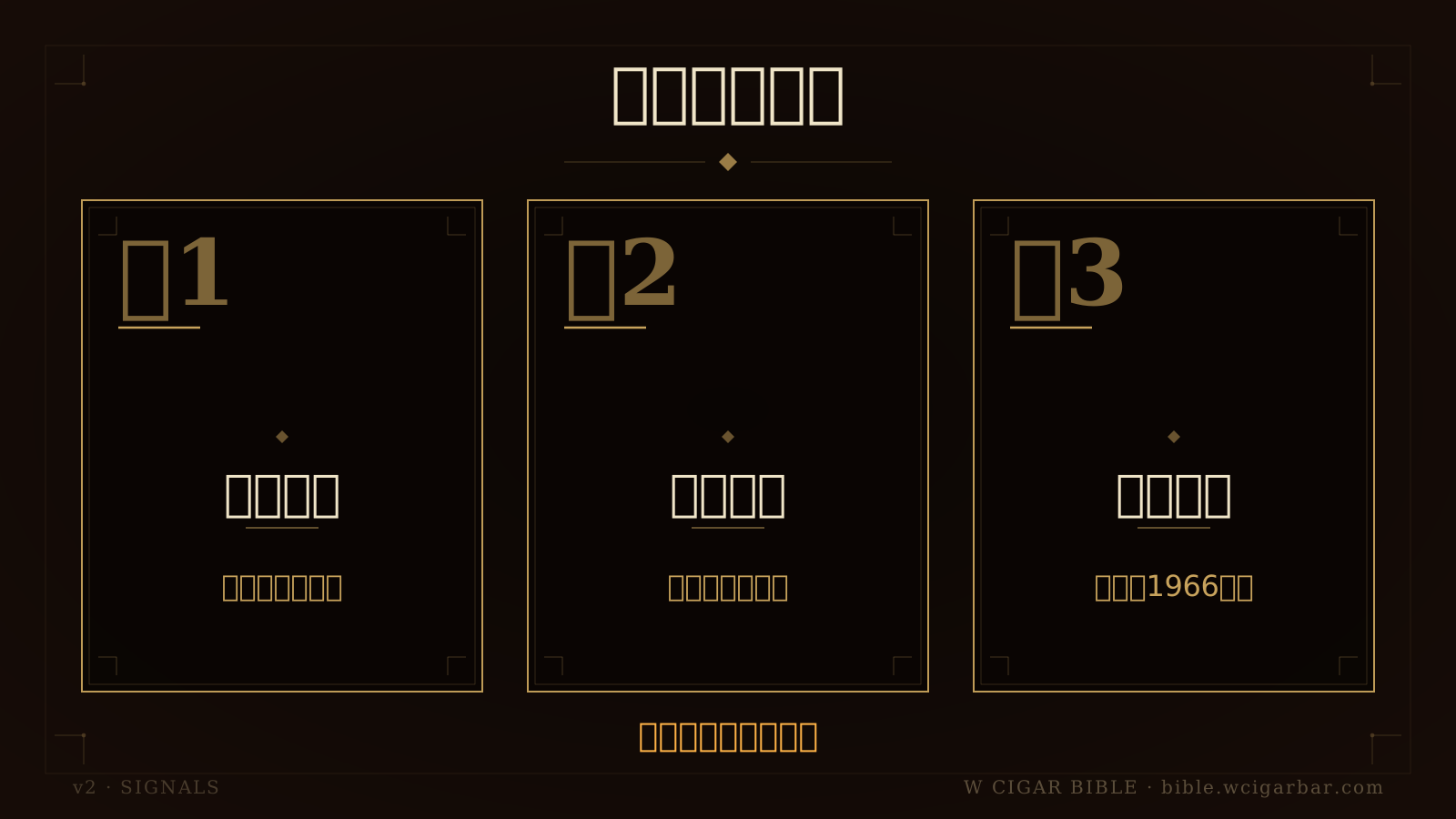
整理古巴雪茄歷史三個常見記錯與正確觀念的提醒圖
Era 6: Division and Reconstruction (1962-1994)
The "Alternative Cuba" in the U.S. Market
After the 1962 embargo, cigar enthusiasts in the United States could no longer buy Cuban cigars, and the market urgently needed alternatives:
- Dominican Republic: Became a major non-Cuban cigar production area (Davidoff, Macanudo, Fuente)
- Nicaragua: Attracted Cuban-exile craftsmen (Padrón in Miami in 1964, moved to Estelí in 1970)
- Honduras: One of the "cigar supply regions of America"
The Embargo Paradox of Cuban Cigars
Two paradoxes: 1) Cuban cigars became a "forbidden fruit," and enthusiasts outside the United States became even more fervent; 2) Cuba lost its largest market, causing long-term economic damage.
The Reconstruction of Cuban-Exile Families
1. The Padrón family: Exiled from Pinar del Río, Cuba in 1961; reached Miami via Spain and New York; relied on $60 per month in relief and $600 in carpentry savings; founded Padrón on 1964/9/8; moved to Estelí in 1970, where it remains today.
2. The Fuente family: After the 1924 fire at the Tampa factory, production stopped for 22 years; returned in 1946; Carlos Fuente Sr. took over in 1958; the Nicaragua factory was burned down in 1979; moved to Santiago de los Caballeros in the Dominican Republic in 1980 to rebuild; launched the legendary Fuente Fuente OpusX in 1995.
3. The García family (My Father): José "Pepín" García accumulated 30+ years of cigar rolling and tobacco leaf expertise in Cuban cigar factories; went into exile in Miami in 1996; founded My Father in Nicaragua in 2003; represents the last wave of 21st-century Cuban-exile heritage.
Davidoff's "Divorce"
1989: Zino Davidoff made a historic decision in response to declining Cuban Davidoff quality -- publicly destroying Cuban Davidoff inventory worth one million pounds, about 250,000 cigars, in the London flagship store.
1990: Davidoff formally ended its OEM relationship with Cubatabaco.
1991: It rebuilt in partnership with Tabadom in Villa González in the Dominican Republic's Cibao Valley; this was later acquired as a wholly owned subsidiary of Oettinger Davidoff.
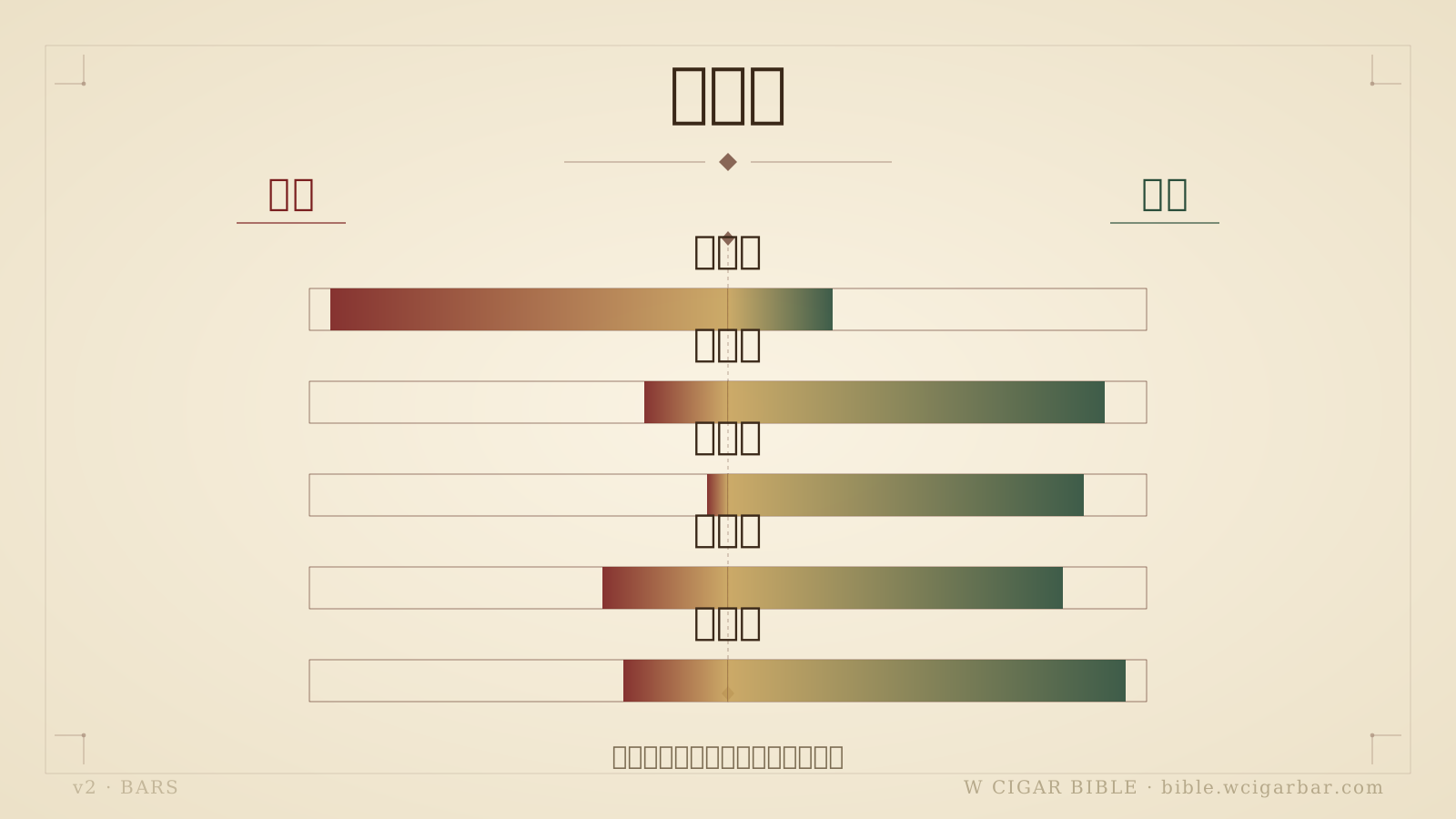
圖中用橫條比較儀式取向與產業取向的五個軸線
Era 7: Habanos S.A. and Modernization (1994-2010)
The Establishment of Habanos S.A.
1994: The Cuban government's Cubatabaco and France's SEITA established Habanos S.A. as a 50/50 joint venture.
- 1999: SEITA and Spain's Tabacalera merged to form Altadis -- Habanos's Spanish partner officially appeared under the Altadis name
- 2008: Britain's Imperial Tobacco (today Imperial Brands) acquired Altadis and indirectly held 50% of Habanos S.A.
- 2020: Imperial Brands sold its 50% Habanos stake to Allied Cigar Corporation -- the contemporary non-Cuban major shareholder of Habanos
Unified management of all Cuban cigar brands, establishment of a global distribution network, and modern brand marketing.
The Global Distribution System
Habanos S.A. distributes through regional general agents and distributors: PCC (Pacific Cigar Company) in Asia-Pacific, 5thAvenue / Phoenicia in Europe, the official Cuban retail global chain Casa del Habano, and multiple channels including Spain and Switzerland. Taiwan's "four formal channels for Cuban cigars" are an extension of this system: PCC authorized + Cuban official state-owned store + Swiss general agent + Spanish general agent.
Cohiba Behike -- The Modern Pinnacle of Cuban Cigars
February 2010 XII Habano Festival: Habanos launched the Cohiba Behike series (BHK 52 / 54 / 56). Containing the rare top leaves Medio Tiempo (the rarest 1-2 leaves at the very top of the tobacco plant), with a global quota system, it became the king of modern Cuban cigars. In 2024, the launch of the limited-edition BHK 58 further elevated its flagship status.
Era 8: The Present and the Future (2010-Present)
Contemporary Issues in the Cigar World
The political back-and-forth of the U.S. embargo:
- 2014-2017 Obama thaw (relaxed personal importation)
- 2017-2021 Trump tightened again (NSPM-5, SSOT)
- 2021-2024 Biden partially loosened restrictions
- 2025/1/14 Biden removed Cuba from SSOT, 1/20 Trump revoked it (it never took effect)
- 2026/5/1 Trump EO 14404 -- the strictest single executive order in history, including secondary sanctions on foreign financial institutions
Cuba's economic difficulties: Tobacco leaf output for cigars has been affected, some batches have drawn quality controversy, and demand in emerging markets (Asia) has grown.
The rise of the Asian market: High-end cigar consumption in China, Hong Kong, Taiwan, and Southeast Asia has grown rapidly, and professional spaces such as W Cigar Bar Gentlemen's Cigar Lounge have appeared.
Capadura -- The Birth of an Asian Chinese Cigar Brand
2023: Cigar Prince Wilson Tsai founded Capadura in Taiwan -- the first premium cigar brand in Asia created by a person of Chinese heritage. Its significance: top Dominican / Nicaraguan craftsmanship + an Asian Chinese cultural positioning, a voice for Asian Chinese people in the global cigar world, and a historic breakthrough "from consumer to producer."
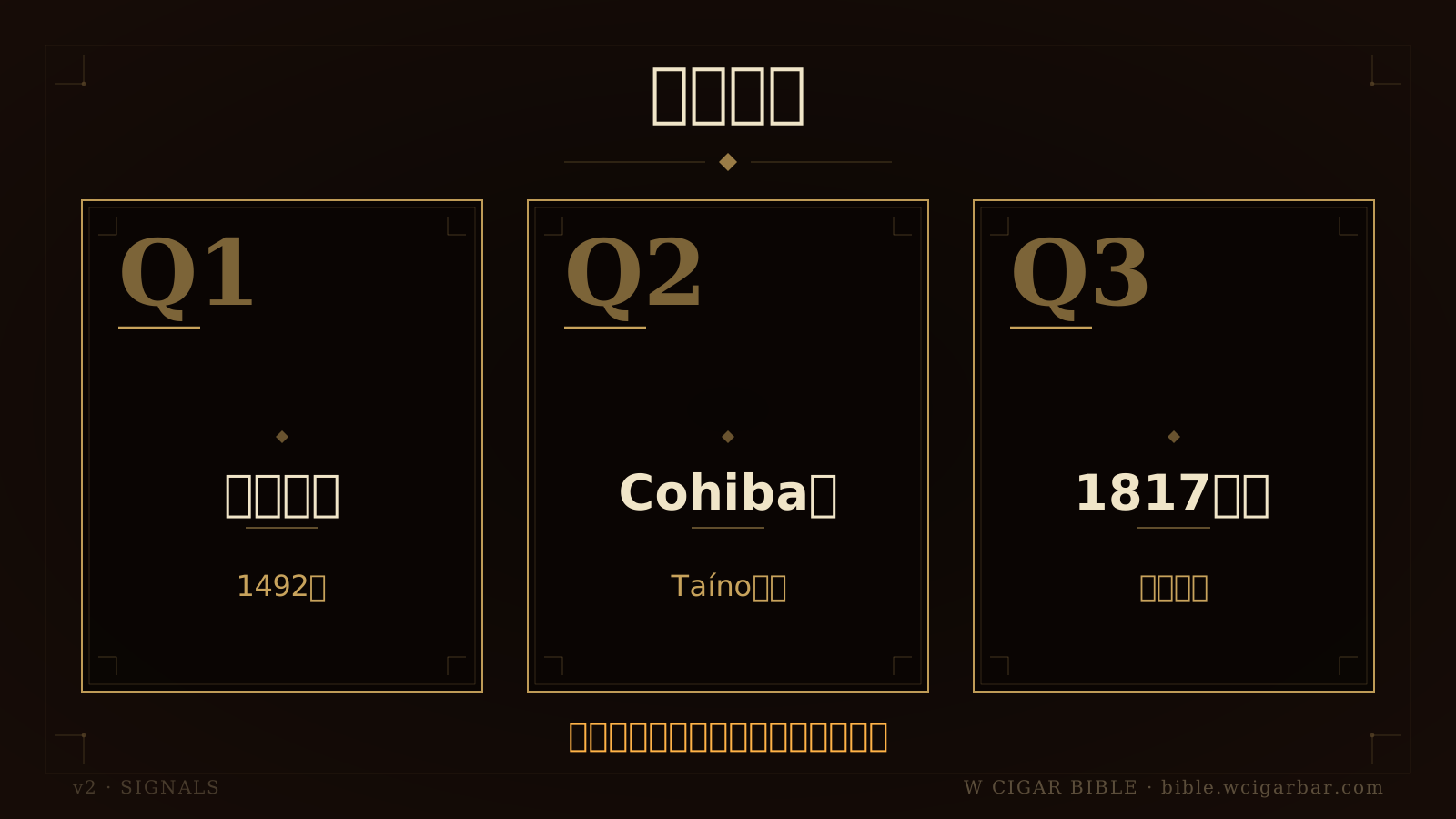
圖中三張問答卡回答首錄年份、Cohiba含義與一八一七事件
The Core Lessons of 534 Years
Lesson 1 -- Cigars are a mirror of civilization: From Taíno religious rituals -> Spanish colonial commodity -> Cuba's golden age -> the U.S. embargo -> the global Habanos system -- cigars reflect 5 centuries of political, economic, and cultural change.
Lesson 2 -- Top quality never goes out of date: Brands founded in the 19th century (Partagás, H. Upmann, Romeo y Julieta, Hoyo de Monterrey, Punch, Bolívar) remain at the top today -- true craftsmanship transcends eras.
Lesson 3 -- The reconstruction of exile families proves craftsmanship is greater than geography: Padrón, Fuente, and García rebuilt cigar dynasties in foreign lands -- craft wisdom has no borders.
Lesson 4 -- Markets are always changing: From Spanish royal monopoly -> free trade -> the U.S. embargo -> global distribution -> 2026 EO 14404 -- every era has different dominant forces.
Conclusion
534 years of cigar civilization -- from Columbus's scouts to Wilson Tsai's Capadura -- this is humanity's most enduring luxury-goods culture. Understand this history, and when you smoke a cigar, you are not merely smoking tobacco leaves; you are participating in a civilizational inheritance spanning 5 centuries.
W Cigar Bar Gentlemen's Cigar Lounge・Da'an District, Taipei・Cuban cigars from four formal channels (PCC authorized dealer・Cuban official state-owned store・Swiss general agent・Spanish general agent)・General agent for LUBINSKI Italian accessories・Cigar bistro・Da'an flagship store with 33 VIP cigar lockers (24-hour aging) maintained by dedicated staff・Founding store of the Capadura cigar brand -- Asia's first Chinese cigar brand.
Reservation: Da'an Flagship Store. Accessories reference: cigarclub.tw.
Warning: Smoking is harmful to health. Smoking cessation hotline: 0800-636363. This site is for adults aged 20 and above only.
Like this article?Share with friends
Share this W Cigar Bible piece with friends who want to learn cigar culture, storage, and tasting.
想把這篇 化為實踐
雪茄聖經是知識;雪茄文化要在空間裡發生

W Cigar Bar 大安總店資訊
台北大安區 · 雪茄聖經總編輯 Wilson Tsai 主理的雪茄文化空間
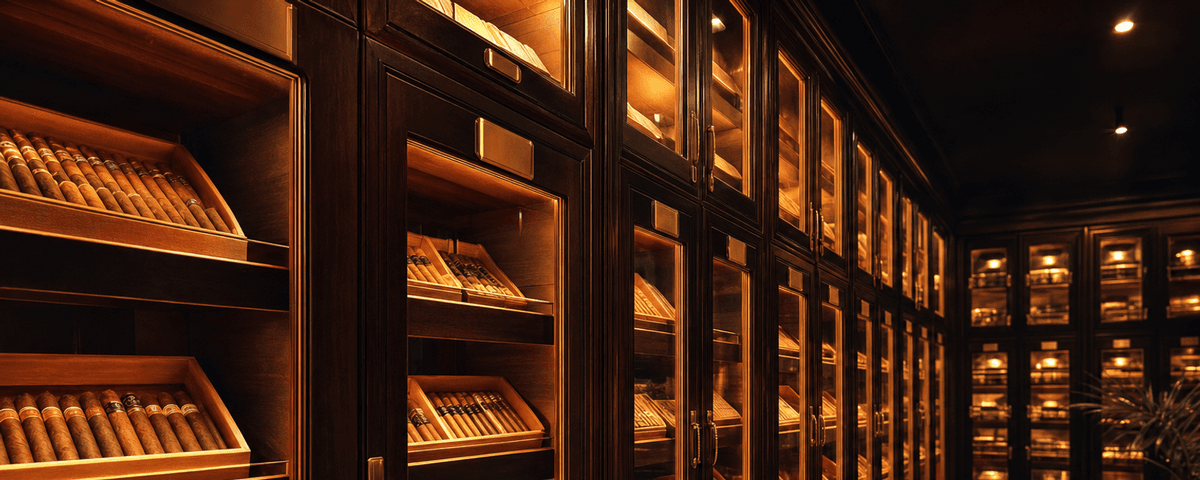
33 座 24 小時恆溫恆濕醇化室
W Cigar Bar 提供的會員醇化空間 · 場地資訊請洽編輯部

雪茄剪 / 打火機 / 雪茄盒 / Boveda
W Cigar 配件官網 · 專營雪茄配件正品

加 LINE 好友 · 文化諮詢
文化空間資訊 · 紳士沙龍 · 私人包場
本網站內容僅供雪茄文化、歷史、收藏與品吸知識研究參考。菸品有害健康、未滿法定年齡者請勿吸菸。實際規範請依所在地法律為準。
吸菸有害健康・戒菸專線 0800-636363・本站僅供 20 歲以上成年人閱覽。
影片來源:Habanos S.A. 官方 YouTube 頻道 · 教育性內容引用 · AI 智能配對
讀到這裡,你不只是路過的人
留下 Email,加入 W 雪茄聖經內圈——總編輯 Wilson Tsai 親選的學院深文與國際新訊,先你一步送到信箱。
· 教育用途非銷售 · 隨時一鍵退訂 · Email 絕不對外公開 · 由勝茄股份有限公司營運
同分類延伸閱讀


資料來源:W Cigar Bible 編輯部整理 · 雪茄王子 Wilson Tsai 親自審稿
本文僅供雪茄文化、歷史、收藏與品鑑知識研究,不作為菸品促銷、銷售或購買建議。吸菸有害健康,未滿二十歲不得吸菸。