Mastering Core Techniques of Cigar Evaluation: From Flavor to Technique
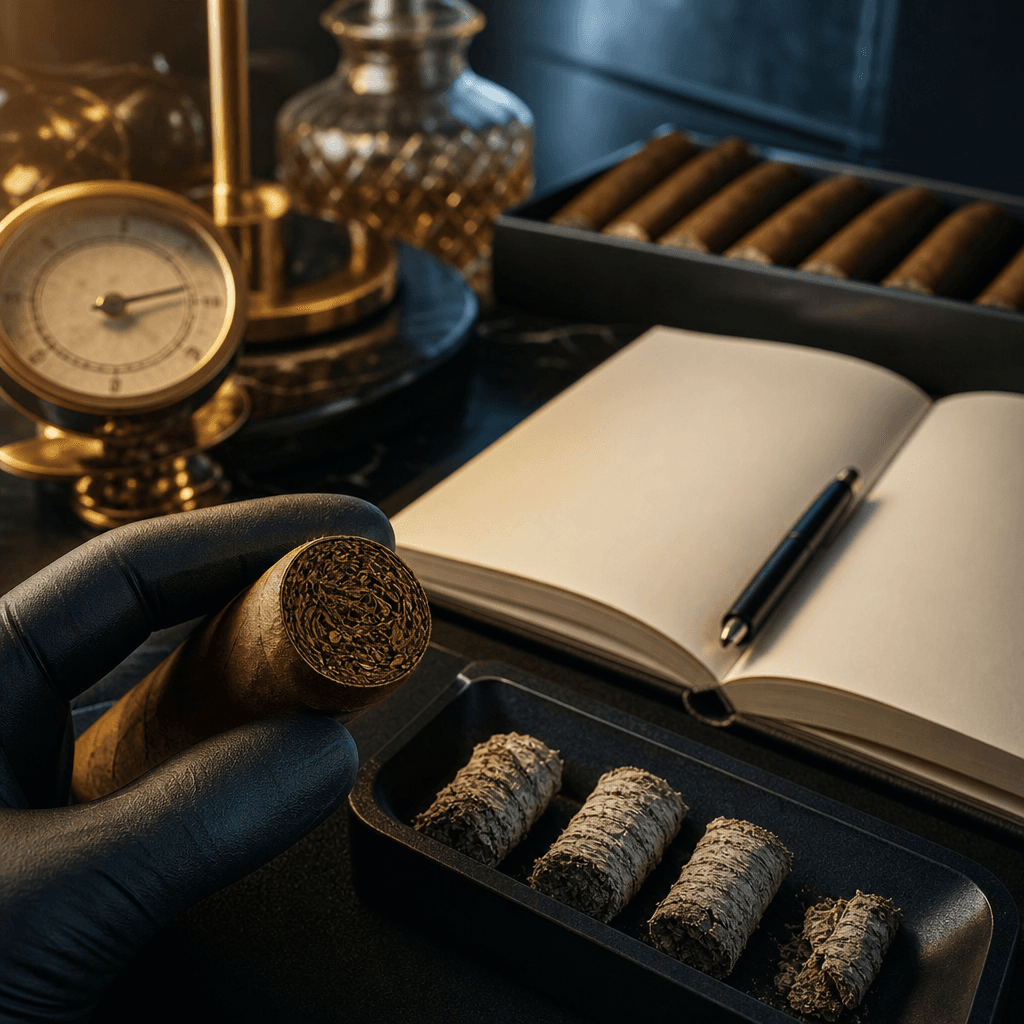
老手在評鑑雪茄時,應專注於技術細節與風味的層次,而非單純的喜好。透過控制環境變數,如濕度與溫度,能更準確地評估雪茄的表現。評鑑應包括風味的三層分析:乾聞、冷抽及燃燒後的煙氣,並避免過度文學化的描述,以便清晰傳達每個階段的特徵。此外,質感的評價也不可忽視,需關注煙氣的質地與尾韻的持久性。最後,技術面如結構、吸阻與燃燒狀況,對整體評分影響深遠,應獨立記錄。這樣的評鑑方法能提升對雪茄的理解與欣賞。
- 評鑑雪茄時需排除環境誤差,控制濕度與溫度,以確保準確性。
- 風味分析應拆解為乾聞、冷抽與燃燒後的煙氣,並避免過度文學化的描述。
- 技術面如結構、吸阻與燃燒影響評分,必須獨立記錄,不能被品牌光環抵消。
Experienced cigar enthusiasts find it challenging not just to say "good or bad," but to clearly articulate why a cigar is good, which part is good, and which technical detail makes it stand out. As an editor of the "Cigar Bible," I often view evaluation as a repeatable method of observation rather than a one-time emotional record.
When you already have brand preferences, such as the finesse of Cohiba, the strength of Partagás, or the roundness of Hoyo de Monterrey, the next step is not to chase more famous names but to break down flavor, texture, combustion, structure, and aging state, making each evaluation closer to professional judgment.
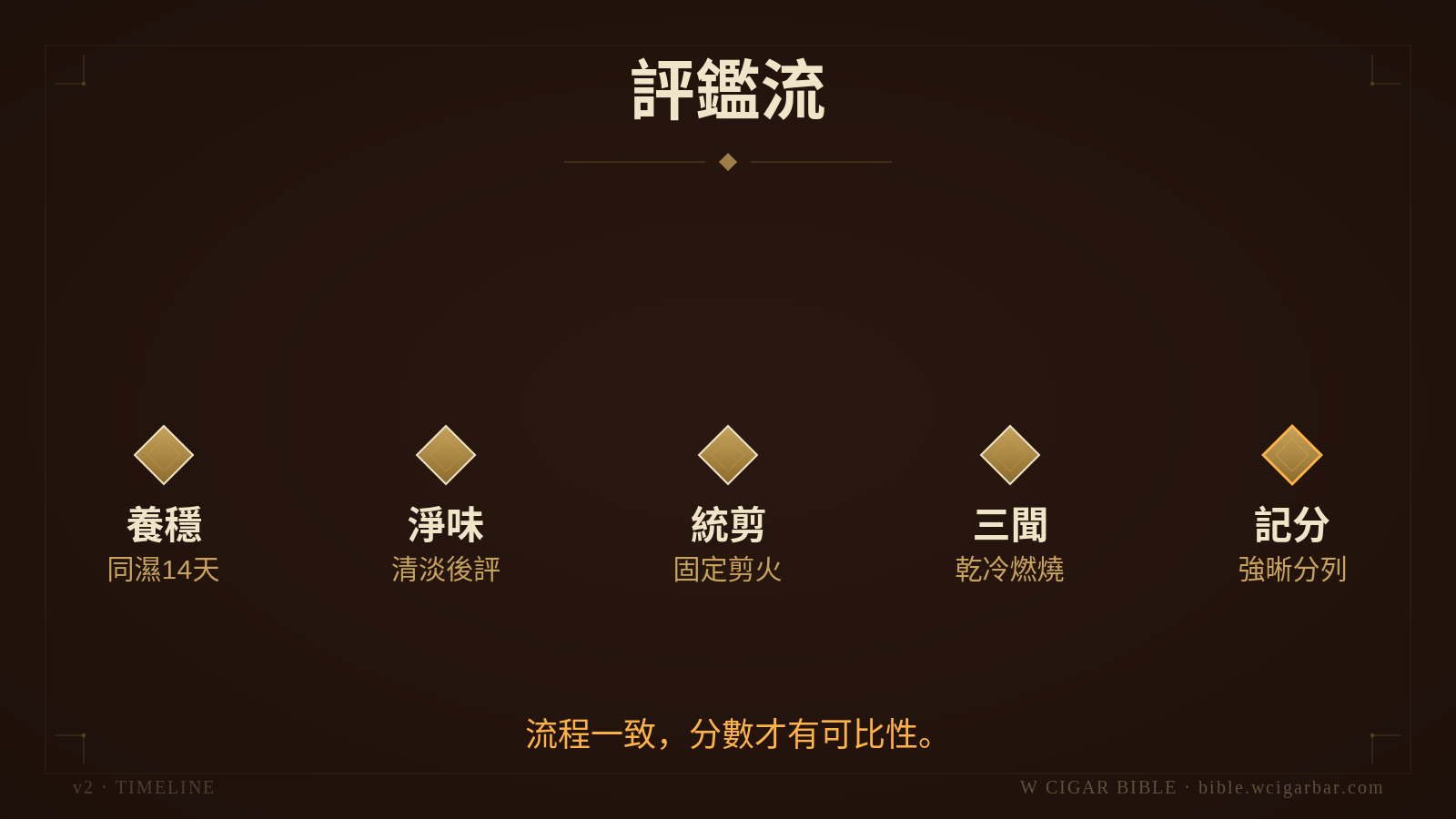
流程圖呈現養穩、淨味、統剪、三聞與記分
Establishing Evaluation Standards: Eliminating Environmental Errors
The first step in advanced evaluation is to minimize "variables." Humidity, temperature, dining state, cut depth, and flame type can all alter judgment. According to my own recording habits, I control the environment at a relative humidity of 65% to 69% and a temperature of about 18°C to 21°C. For Cuban cigars, especially the Montecristo No.2 batches after 2018, I pay extra attention to the relationship between draw resistance and humidity, as the burning pace can differ by 10 to 15 minutes between 72% and 66% in the same box. Evaluation is not about turning preferences into scores but eliminating environmental noise to let the cigar speak for itself.
Standards also include "references." For example, using the 2014 Hoyo de Monterrey Epicure No.2 as a reference for medium strength, creamy, and woody tones; Partagás Serie D No.4 as a reference for earthy, peppery, and concentrated notes; and Davidoff Nicaragua Toro as a reference for spice, sweetness, and combustion stability in non-Cuban cigars. When you have 5 to 8 fixed references in mind, descriptions of new cigars evolve from "smooth" to "the front resembles Hoyo's creamy woodiness, the middle leans more towards Nicaragua's spice system."
I recommend doing three things before each evaluation: First, ensure the cigar has stabilized in the same humidity environment for at least 14 days; second, avoid evaluating immediately after heavy meals, especially spicy, salty, and high-sugar desserts that can overshadow details; third, use the same cutting and lighting process. If you use a V-cut today, a straight cut tomorrow, and a punch cut the day after, the draw resistance and smoke concentration will differ, causing scores to drift. The difference among veterans often lies not in the palate but in discipline.
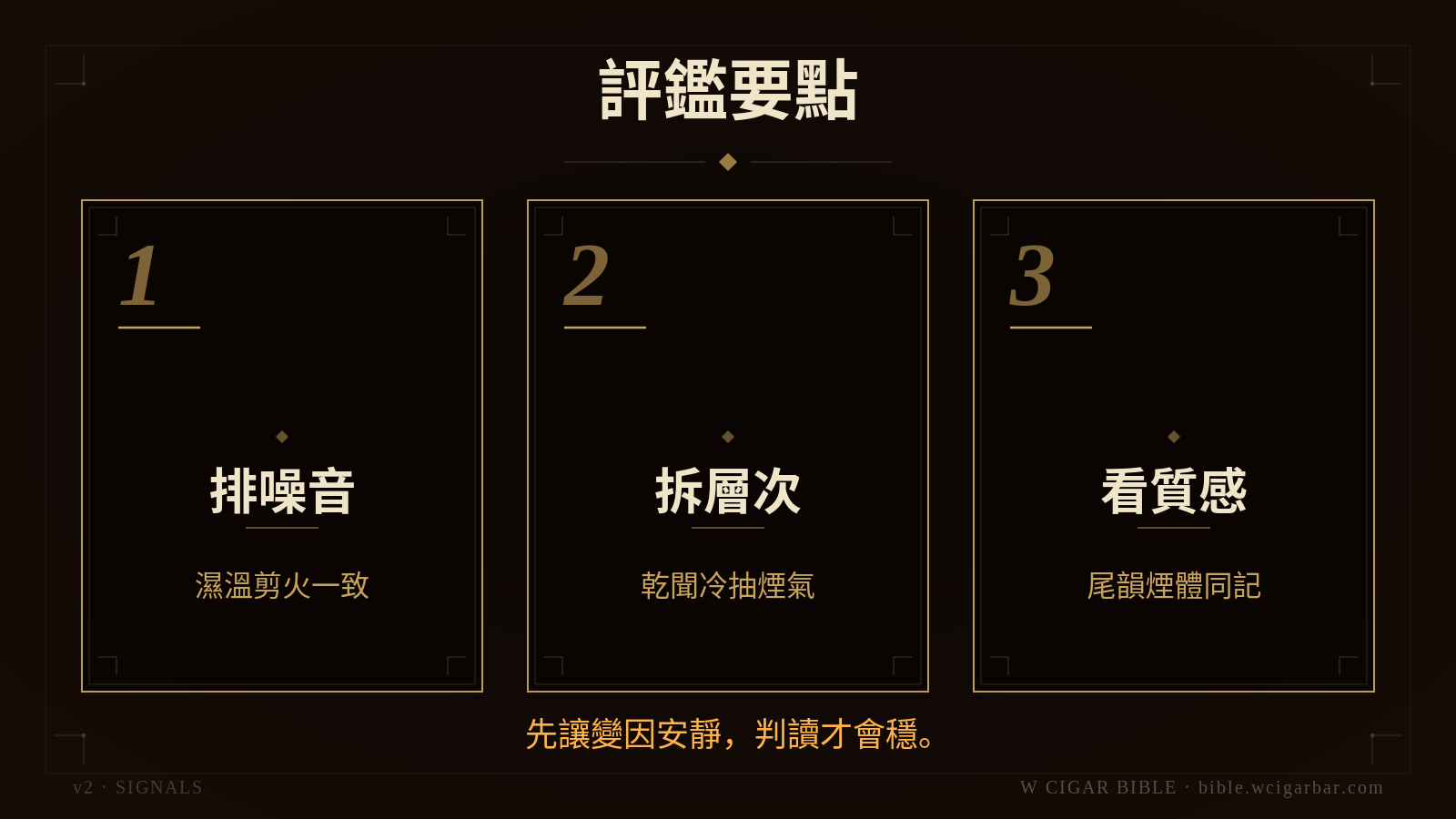
三張卡列出排除誤差、拆解風味與記質感
Flavor Analysis: Deconstructing Complexity from Three Layers of Aroma
I habitually break down flavor into three layers: dry aroma, cold draw, and post-combustion smoke. The dry aroma examines the scents released by the wrapper and foot, such as leather, hay, cocoa, and cedar; the cold draw can predict sweetness and fermentation tones, like some batches of Ramón Allones Specially Selected around 2020, which often have raisin, brown sugar, and wet wood in the cold draw; only after lighting can you observe smoke density, spice layers, and finish. True flavor analysis is not about listing many adjectives but distinguishing which aromas are consistently present and which are fleeting.
Flavor descriptions should avoid excessive literary embellishment. Instead of writing "like afternoon sunlight in an ancient study," it's more useful to write "the front has cedar and roasted almonds, the middle transitions to cocoa and black pepper, and the finish reveals coffee grounds and a salty note." Take Cohiba Siglo VI as an example; when first launched in 2003, it gained attention for its 52 ring gauge and cañonazo size. Well-matured Siglo VI often features honey, hay, cream, and slight citrus peel; merely writing "elegant" offers limited help for future comparisons.
Veterans should practice separating "flavor intensity" and "flavor clarity" in their scoring. Bolívar Belicosos Finos may have high intensity with prominent earth and leather, but that doesn't mean clarity is high; Trinidad Vigía might have moderate strength but beautiful layers of cream, coffee, and sweet wood. I use a 1 to 5 scale for flavor intensity and another 1 to 5 for clarity. Adding these together gets closer to true complexity, rather than being misled by concentration.
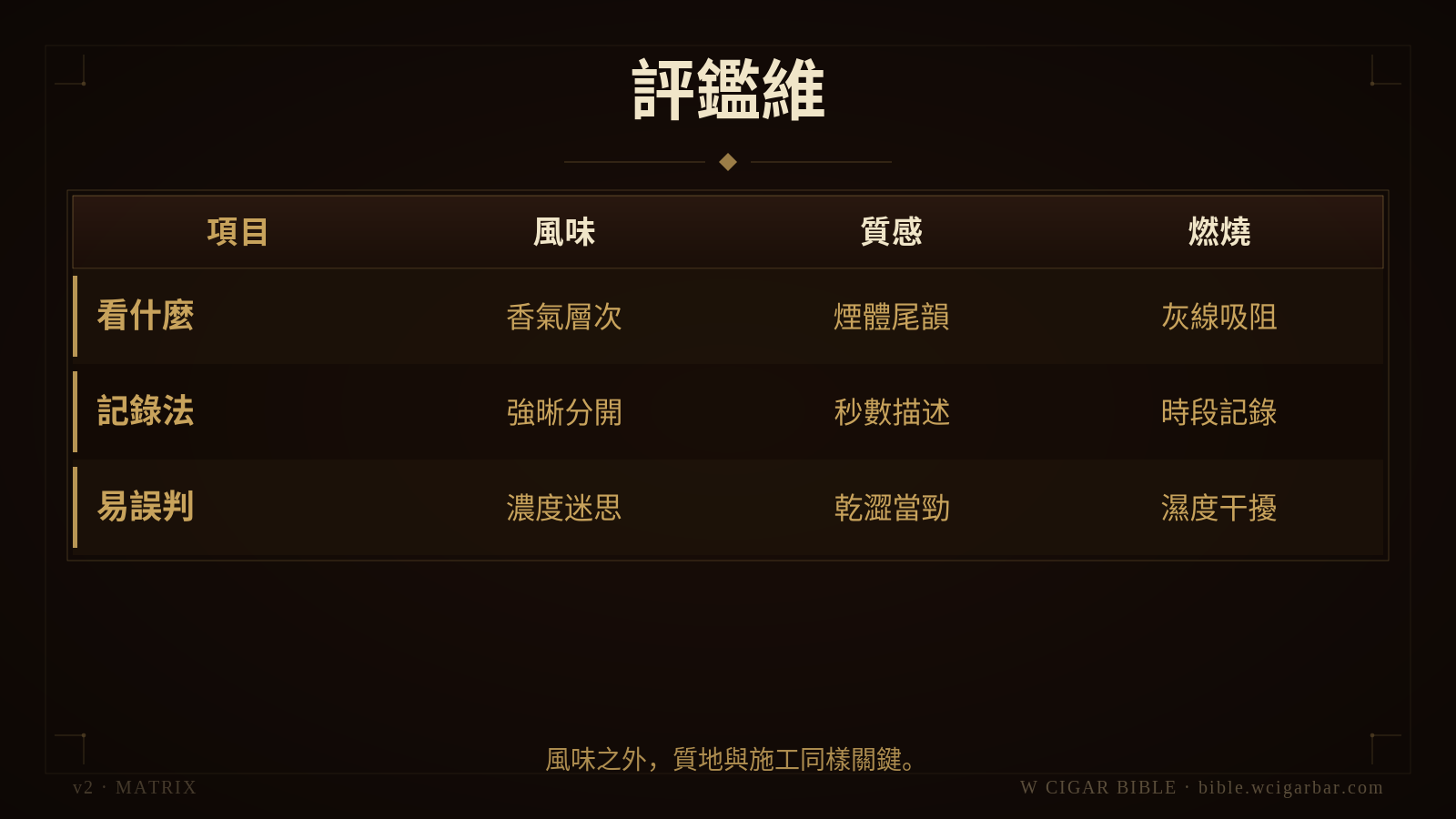
矩陣比較風味、質感與燃燒三項判讀
Texture Evaluation: Smoke, Oily Feel, and Finish Length
Flavor is "what it tastes like," while texture is "how the smoke lingers." The same cocoa note in Padron 1964 Anniversary Maduro often carries a thick, oily, and sweet-bitter balance; whereas some young Cuban Robustos might have a cocoa shadow but a dry texture and short finish. Veterans who only write about flavor miss half the information. Smoke can be silky, powdery, creamy, grainy, dry, or spicy, all directly affecting a cigar's completeness. Sophistication often comes not from rare aromas but from the fine texture of the smoke and the clean extension of the finish.
The finish can be recorded in seconds. After inhaling and exhaling, close your mouth and feel the lingering aroma; if it disappears within 5 seconds, it's mostly a short finish; if wood, nut, or sweetness remains for 10 to 20 seconds, it's medium-long; if it stays clean and unsour for over 30 seconds, it's an excellent performance. Take the well-preserved 2016 Juan López Selección No.2 as an example; the middle often has caramel, orange peel, and roasted nuts, with a finish lasting over 20 seconds; but if stored too dry, the sweetness breaks, and the finish turns woody.
Texture also involves "balance." Arturo Fuente OpusX often has high-intensity spice, wood, and tropical sweetness; if the burning pace is too fast, the latter part may become sharply concentrated; conversely, slowing down extends the oily feel and sweet aroma. During evaluation, I break down texture into three indicators: smoke density, mouthfeel, and finish cleanliness. A truly mature cigar doesn't just have many flavors but continuity between each puff, avoiding sudden sweetness or bitterness, or abrupt intensity or emptiness.
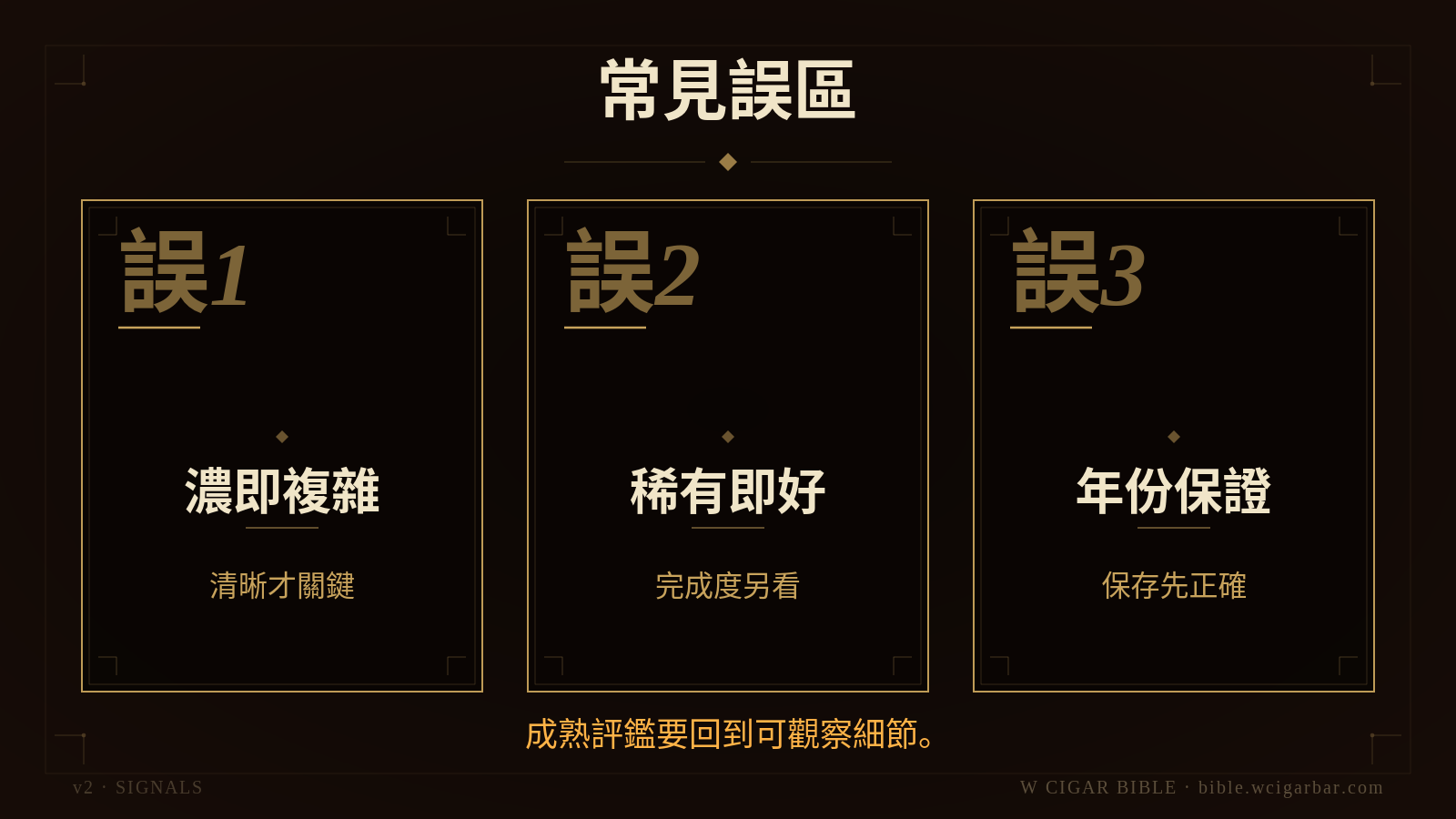
三張錯誤卡提醒濃度、稀有與年份迷思
Technical Interpretation: Structure, Draw, and Combustion Are Not Supporting Roles
Many people treat the technical aspect as a footnote, but in professional evaluations, structure, draw, and combustion account for at least 25% to 30% of the overall judgment. A cigar with great flavor, if too tight in draw, frequently uneven in burn, or with loose ash, should have its score affected. For example, some large ring gauge Cuban cigars between 2019 and 2021 had batches where the filler tightness and humidity sensitivity caused acceptable draw in the front but clogging in the middle; this is not a flavor issue but a structural one. Technical flaws cannot be offset by brand halo; construction performance must be independently recorded during evaluation.
Draw can be divided into five levels: too loose, slightly loose, moderate, slightly tight, and too tight. Too loose leads to rapid heating and thin aroma; too tight results in insufficient smoke, with sweetness and layers suppressed. My ideal draw requires slight resistance with stable smoke volume without effort. Combustion examines whether the burn line is even, whether frequent corrections are needed, and whether the ash is uniform. Ash doesn't need to be excessively long, as ring gauge, humidity, and blend ratio all affect ash column; but if the ash crumbles at a touch, is mottled, and the burn line chaotic, it warrants technical deductions.
Another often overlooked indicator is burn temperature. Drawing too quickly overheats the cigar head, leading to ammonia, bitterness, and spiciness in the latter part, easily mistaken for rough tobacco. My method is to space each draw about 45 to 60 seconds apart, extending to 75 seconds for rich types like Partagás Lusitanias. If slowing down reduces bitterness and restores sweetness, the issue is pace; if bitterness persists despite a steady pace, it might be due to insufficient aging or storage issues.
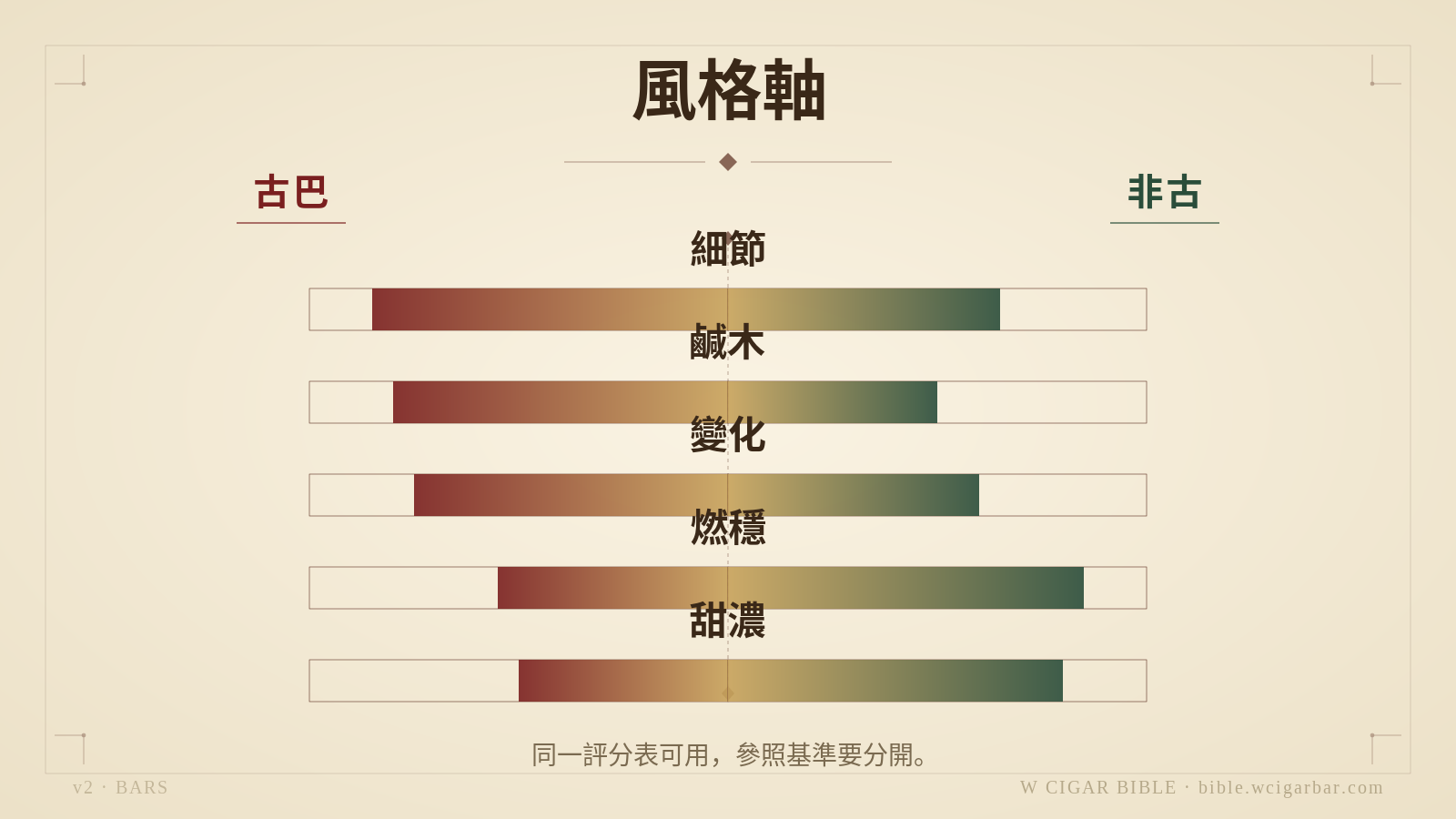
長條圖對照古巴與非古巴雪茄的風格差異
Segmental Evaluation: Transitions in the Front, Middle, and Back Are More Important Than Single Scores
Veterans should not only give an overall score but also observe changes in the front, middle, and back segments. Generally, a cigar can be divided into three parts: the first third examines whether the opening aroma and sweetness are clear; the middle third looks at the main structure and complexity; the final third checks if balance is maintained after strength increases. For example, a well-performing batch of Montecristo No.2 has cocoa, coffee, and wood in the front, transitions to cream, nuts, and slight saltiness in the middle, and deepens into concentrated coffee and leather in the back; if the middle has no transitions and just becomes spicy, it can't receive a high structure score. A cigar's height is often determined in the middle; its refinement is exposed in the back.
Segmental records also help judge aging potential. A young cigar with beautiful aroma in the front, slightly closed middle, and bitter-spicy but not dirty back might just be unintegrated; if it has pungent ammonia, rough combustion, and chaotic finish from the start, it's not advisable to comfort oneself with "a few more years." For example, many limited or regional editions after 2015 had prominent wood and spice upon release, with sweetness and roundness emerging after 3 to 5 years of stable storage, but not all will develop in a better direction.
I write down time points in my records, such as 0 to 15 minutes, 15 to 40 minutes, and 40 to 65 minutes, rather than just writing front, middle, and back. Because the same Robusto might end in 45 minutes for some and 75 minutes for others, pace differences affect conclusions. When comparing two same-model different-year cigars, like the 2017 and 2021 Partagás Serie D No.4, it's best to maintain similar burning times; otherwise, spiciness from a fast pace might be mistaken for year differences.

三張問答卡整理飯後、分數與醇化重點
Creating Your Scoring Sheet: Turning Feelings into Trackable Data
Evaluation records don't need to be complex but must be consistent. My basic form is divided into appearance, cold draw, flavor, texture, technique, transitions, and overall balance, with a total score of 100 points; flavor and texture together account for about 40 points, technique 25 points, structural transitions 20 points, with the rest for appearance and subjective completeness. The reason for this design is to prevent a cigar with obvious burning issues from scoring too high based solely on fame or rarity. The value of a fixed scoring sheet is not to create absolute truth but to let you see changes in your judgment.
| Indicator | Suggested Score | Observation Focus | Example |
|---|---|---|---|
| Appearance and Construction | 10 | Wrapper oil, even rolling, tactile elasticity | Trinidad Vigía has a delicate wrapper but requires checking foot filler |
| Cold Draw and Pre-Aroma | 10 | Hay, sweetness, wood, draw prediction | Ramón Allones often has dried fruit and molasses |
| Flavor Layers | 25 | Aroma types, clarity, changes | Cohiba Siglo VI can be checked for clear honey and cream |
| Texture and Finish | 15 | Smoke density, oiliness, finish length | Padron 1964 Maduro often has a thick cocoa feel |
| Combustion and Draw | 20 | Burn line, correction frequency, temperature | Large ring gauge cigars need attention to mid-stage clogging |
| Structure and Balance | 20 | Front, middle, back transitions, back cleanliness | Montecristo No.2 checks if the middle unfolds |
Records should also include "source and storage." As a long-term PCC authorized dealer, I have access to different batches and understand the differences in source, transport, and storage for the same model. When discussing collection value or market circulation, remember: collection appreciation doesn't guarantee value increase; it still depends on source, storage, and market. For evaluation, clear source, complete box codes, and stable humidity are more important than rumored popularity. With data accumulated over 30 cigars, you'll find that what you truly like isn't a specific brand but a certain structure: for example, medium concentration, sweet wood, long finish, and stable combustion.
Common Questions
Should evaluations be done on an empty stomach or after a meal?
It's not recommended to be completely empty, especially for high-strength cigars like Bolivar, Partagás, and OpusX, which can interfere with judgment due to bodily reactions. A better state is 60 to 90 minutes after a light meal, avoiding spicy, rich sauces, and overly sweet desserts. If the body state is unstable, sensory records will be hard to stabilize.
Can Cuban and non-Cuban cigars use the same scoring system?
Yes, but you need to understand style differences. Cubans often excel in detail, saltiness, woodiness, and changes; non-Cubans often have advantages in combustion stability, sweetness, and concentration. The scoring sheet can be the same, but reference standards should be separate; for example, don't demand Padron's thickness from Hoyo, nor Cohiba's finesse from Nicaragua Ligero blends.
How many years of aging are suitable for evaluation?
There's no fixed answer. Robustos and Petit Coronas often show better integration within 2 to 5 years; Churchills, Double Coronas, or Lusitanias may need 5 to 10 years to reveal depth. But improper storage won't improve with time; over-dry, over-wet, or heat exposure will misalign aging direction.
Does a high score mean I will like it?
Not necessarily. Scores measure completeness, while preference is personal taste. You might acknowledge Davidoff Nicaragua's excellent construction and balance but prefer Partagás's earth and pepper; you might find Hoyo Epicure No.2 not the highest scoring but most suitable for certain quiet nights. Professional evaluation should distinguish "good" from "I love."
Should evaluations be blind?
It's highly recommended. Blind evaluations can reduce psychological suggestions from brand, year, and price. I suggest 2 to 3 cigars at a time, with sizes as close as possible, like Robusto vs. Robusto, Toro vs. Toro. After revealing the brand post-blind evaluation, you often find you've given some names too wide a score or underestimated some stable works.
What is the most common mistake in cigar evaluation?
The most common is mistaking concentration for complexity, rarity for quality, and year for guarantee. A truly mature evaluation should return to whether the flavor is clear, the texture is clean, the combustion is reliable, and the structure has transitions. Advanced veterans don't speak more floridly but judge more precisely.
—Cigar Prince Wilson Tsai
I have always believed that cigar evaluation is not about flaunting sensory vocabulary but training oneself to face a cigar more honestly. Brand, year, box code, and origin are all important, but ultimately, it comes back to the burning, aroma, texture, and balance of the one in your hand. When you can separate liking from objective performance, you truly enter a deeper layer of the cigar world.
Smoking is harmful to health. Under 20 years old is not allowed to smoke. Quitline: 0800-636363. This article is for reference by adults over 20 years old for cigar culture, storage, and regulation knowledge, not a tobacco advertisement, promotion, or purchase suggestion.
Like this article?Share with friends
Share this W Cigar Bible piece with friends who want to learn cigar culture, storage, and tasting.
想把這篇文章 化為實踐
雪茄聖經是知識;雪茄文化要在空間裡發生

W Cigar Bar 大安總店資訊
台北大安區 · 雪茄聖經總編輯 Wilson Tsai 主理的雪茄文化空間
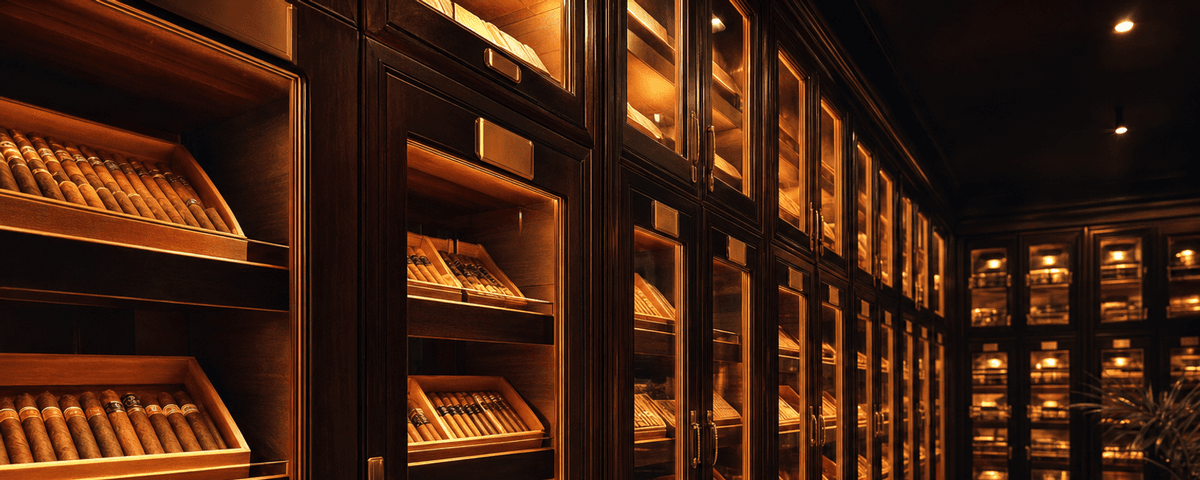
33 座 24 小時恆溫恆濕醇化室
W Cigar Bar 提供的會員醇化空間 · 場地資訊請洽編輯部
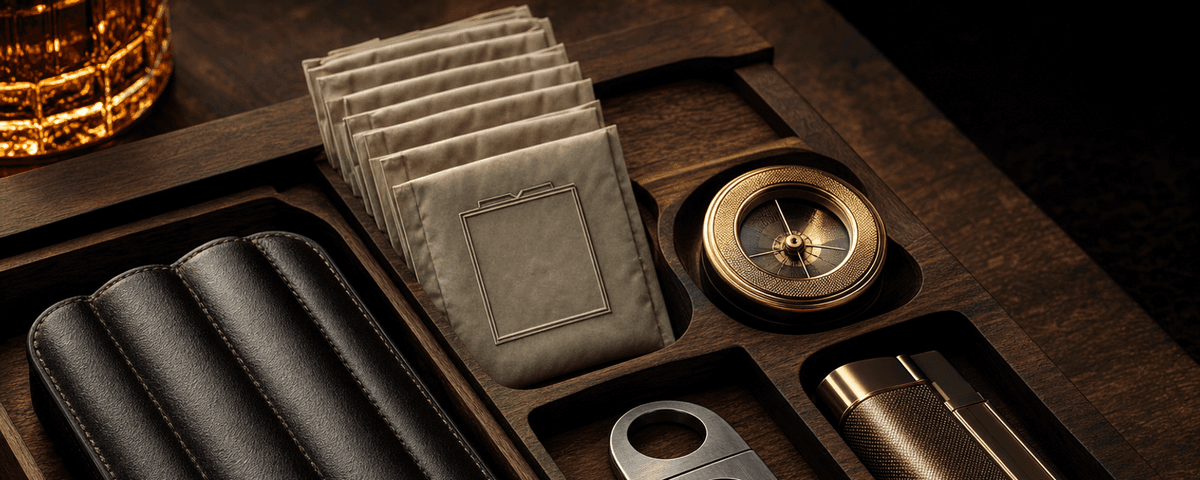
雪茄剪 / 打火機 / 雪茄盒 / Boveda
W Cigar 配件官網 · 專營雪茄配件正品
加 LINE 好友 · 文化諮詢
文化空間資訊 · 紳士沙龍 · 私人包場
本網站內容僅供雪茄文化、歷史、收藏與品吸知識研究參考。菸品有害健康、未滿法定年齡者請勿吸菸。實際規範請依所在地法律為準。
吸菸有害健康・戒菸專線 0800-636363・本站僅供 20 歲以上成年人閱覽。
讀到這裡,你不只是路過的人
留下 Email,加入 W 雪茄聖經內圈——總編輯 Wilson Tsai 親選的學院深文與國際新訊,先你一步送到信箱。
· 教育用途非銷售 · 隨時一鍵退訂 · Email 絕不對外公開 · 由勝茄股份有限公司營運
同分類延伸閱讀

資料來源:W Cigar Bible 編輯部整理 · 雪茄王子 Wilson Tsai 親自審稿
本文僅供雪茄文化、歷史、收藏與品鑑知識研究,不作為菸品促銷、銷售或購買建議。吸菸有害健康,未滿二十歲不得吸菸。