日本機場雪茄免稅與入境台灣注意事項

在日本機場購買雪茄回台灣時,需遵循相關法規。年滿20歲的旅客可攜帶25支免稅雪茄,且自用或餽贈的總量上限為125支。超過25支但未超過125支者,需主動向海關申報並繳稅;若超過125支,則需具備菸酒進口業許可執照以廠商名義報關或辦理退運。此外,為保持雪茄品質,建議使用旅行保濕盒,避免高溫、乾燥及壓損。
- 年滿20歲的旅客可攜帶25支雪茄免稅,超過需主動申報並課稅。
- 供自用或餽贈的雪茄總量上限為125支,包含25支免稅量。
- 保存雪茄時應使用旅行保濕盒,維持65-70%相對濕度,避免高溫與擠壓。
Smoking is harmful to health. Persons under twenty years old may not smoke. Smoking cessation hotline: 0800-636363. This article is provided only for adults aged twenty and above as a reference for cigar culture, storage, and regulatory knowledge. It is not tobacco advertising, promotion, or purchase advice.
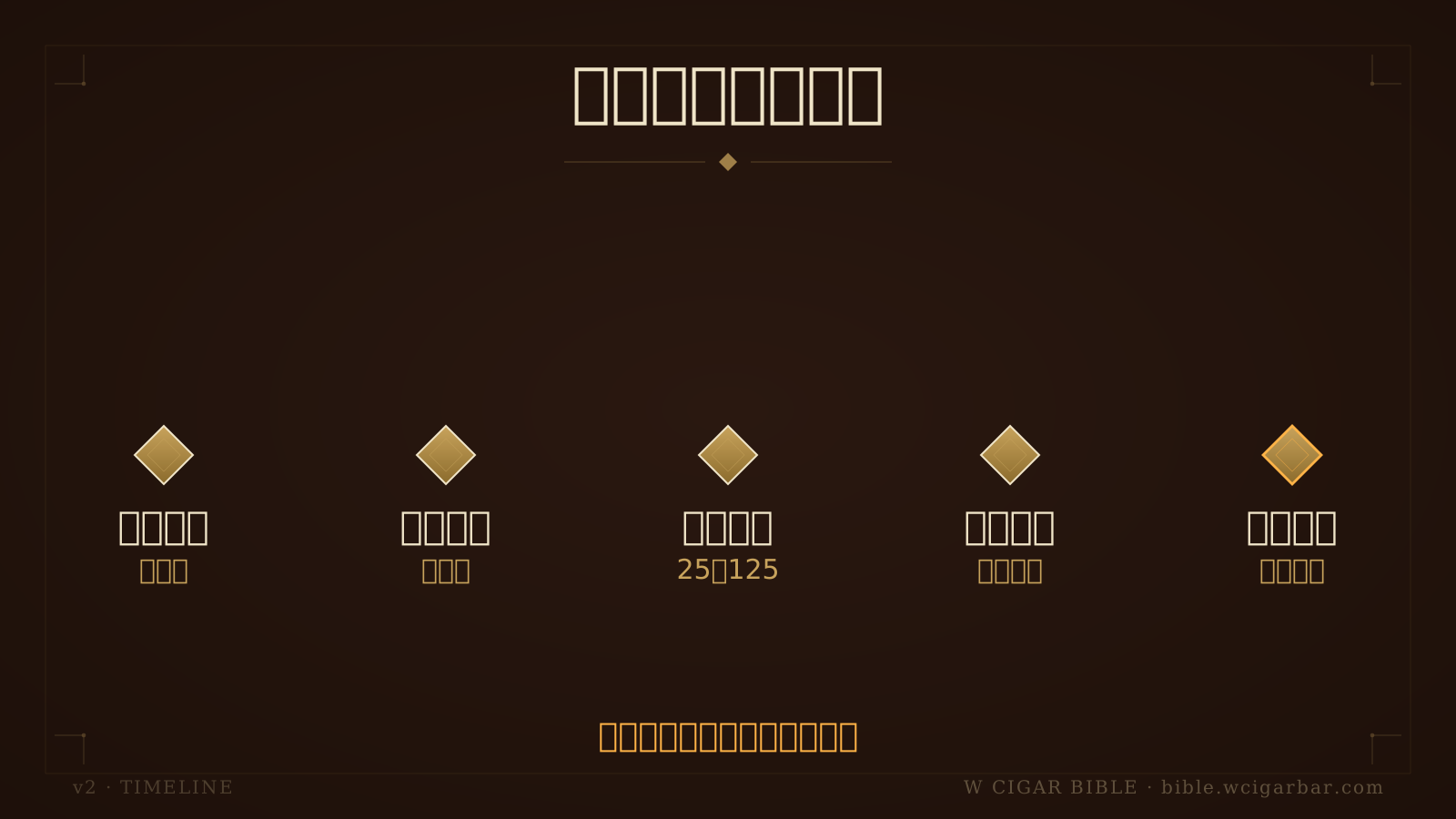
說明從日本機場購買雪茄、抵台前清點支數到依數量選擇綠線或紅線檯申報的五步通關流程圖
Quick Answer
When buying cigars at a Japanese airport and bringing them back to Taiwan, the key points are being at least 20 years old, quantity, declaration, and storage. When entering Taiwan, the duty-free allowance for cigars is 25 sticks. The total quantity limit for personal use or gifts is 125 sticks, and the 25-stick duty-free allowance is included within the 125 sticks. If the quantity exceeds 25 sticks but does not exceed 125 sticks, you should proactively declare it at the Customs red channel counter and pay duties. If the quantity exceeds 125 sticks, it is not within the scope of ordinary travelers' personal use and must be declared in the name of a business with a tobacco and alcohol import business license, or the excess portion must be handled by return shipment. During travel, it is recommended to use a travel humidification case, maintain about 65-70% relative humidity and a stable temperature, and avoid direct sunlight, high heat, and luggage compression.
Basic Definition/Background
Cigars at Japanese airports are often regarded by travelers as the final tobacco product option when organizing luggage before returning to Taiwan, but "duty-free" does not mean "unlimited quantity." Under the Tobacco Hazards Prevention Act, the definition of tobacco products includes cigarettes, cut tobacco, cigars, and other tobacco products. Therefore, when cigars enter Taiwan, they are still tobacco products regulated by Customs and tobacco hazards prevention rules. For beginners, the most confusing point is that "obtained in an airport duty-free area" and "may be brought into Taiwan duty-free" are actually two different concepts: the former concerns sales conditions in departure or transit areas, while the latter is determined by Taiwan's entry rules.
The Customs Administration, Ministry of Finance stipulates that for inbound travelers aged 20 years old or above, the duty-free quantity for cigars is 25 sticks. The total quantity limit for personal use or gifts is 125 sticks. This means that cigars you bring back from a Japanese airport, whether single sticks, aluminum tubos, paper boxes, or wooden boxes, must all be counted by the number of "sticks." Those exceeding the duty-free allowance but still within the 125-stick limit should proactively declare at the Customs red channel counter upon entry and pay duties. If the quantity exceeds 125 sticks, it is beyond the scope of ordinary travelers' personal use. A tobacco and alcohol import business license is required, and the goods must be declared in the name of a business, or the excess portion must be returned. Persons under twenty years old may not smoke, and no one may supply tobacco products to persons under twenty years old. The ages of accompanying relatives and friends should likewise not be overlooked.
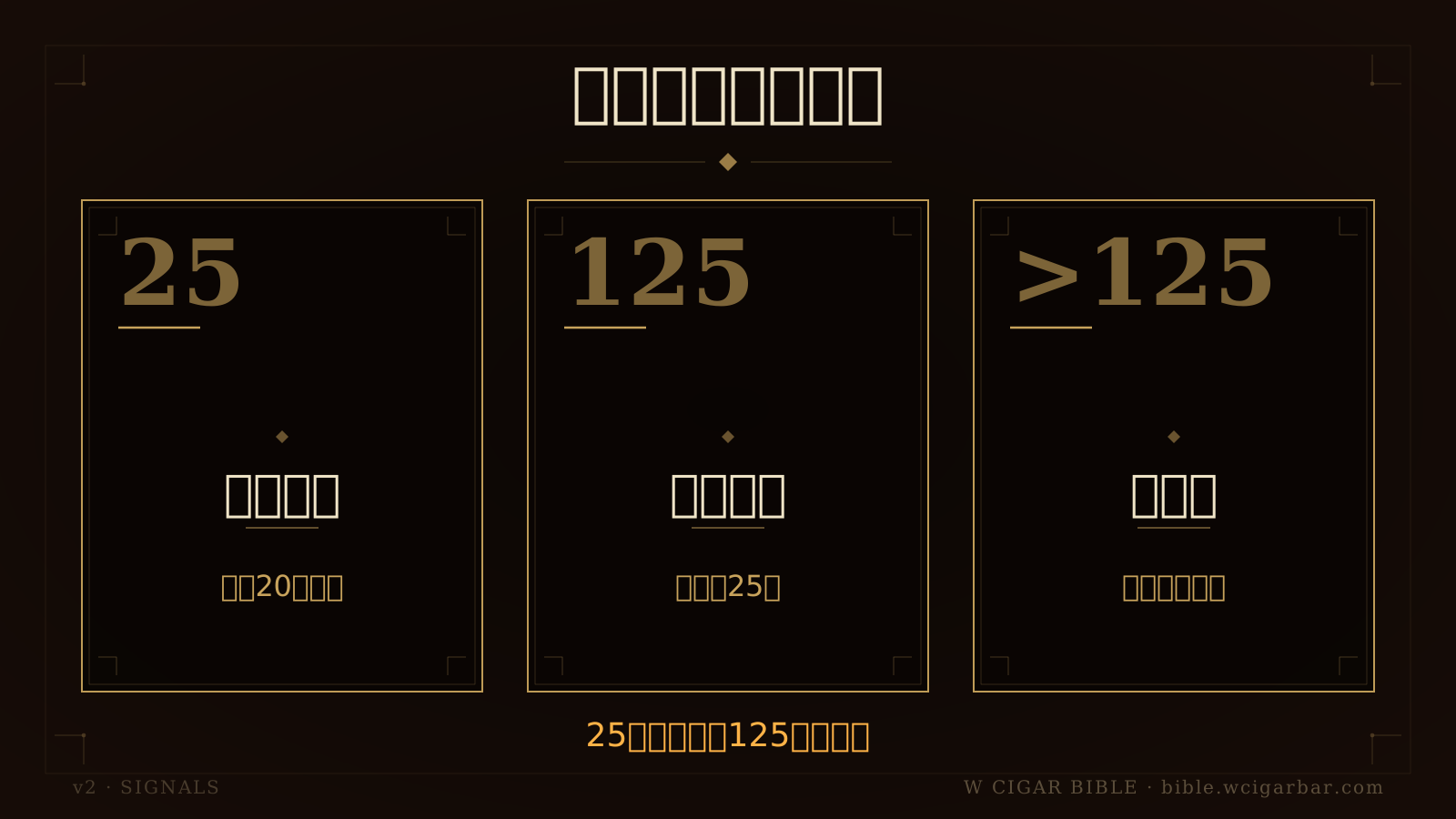
以三張卡片呈現雪茄入境台灣免稅二十五支、自用上限一百二十五支與超過上限須報關或退運的核心結論圖
Key Summary
| Situation | Quantity determination | Handling when entering Taiwan |
|---|---|---|
| Aged 20 or above, carrying 25 sticks or fewer | Within the duty-free allowance for cigars | The duty-free quantity may apply according to regulations |
| Aged 20 or above, carrying 26-125 sticks | Exceeds the duty-free allowance, but remains within the limit for personal use or gifts | Proactively declare at the Customs red channel counter and pay duties |
| Carrying more than 125 sticks | Exceeds the scope of ordinary travelers' personal use | A tobacco and alcohol import business license is required to declare in the name of a business, or the excess portion must be returned |
| Under 20 years old | May not smoke, and may not be supplied with tobacco products by others | Should not carry cigars into Taiwan for smoking purposes |
Summarized in one sentence: cigars from Japanese airports are not judged by the number of boxes, but by the "number of sticks, age, and whether they are declared." 25 sticks is the duty-free allowance, not the overall upper limit. 125 sticks is the total quantity limit for travelers' personal use or gifts, not the duty-free allowance. When the quantity exceeds 25 sticks but does not exceed 125 sticks, the correct action is red channel declaration and payment of duties. When the quantity exceeds 125 sticks, a traveler cannot simply complete an ordinary declaration afterward; the goods must be declared in accordance with regulations using a tobacco and alcohol import business license, or handled by return shipment. For storage, you should also take into account cargo hold temperature differences, dry cabin conditions, and compression damage.
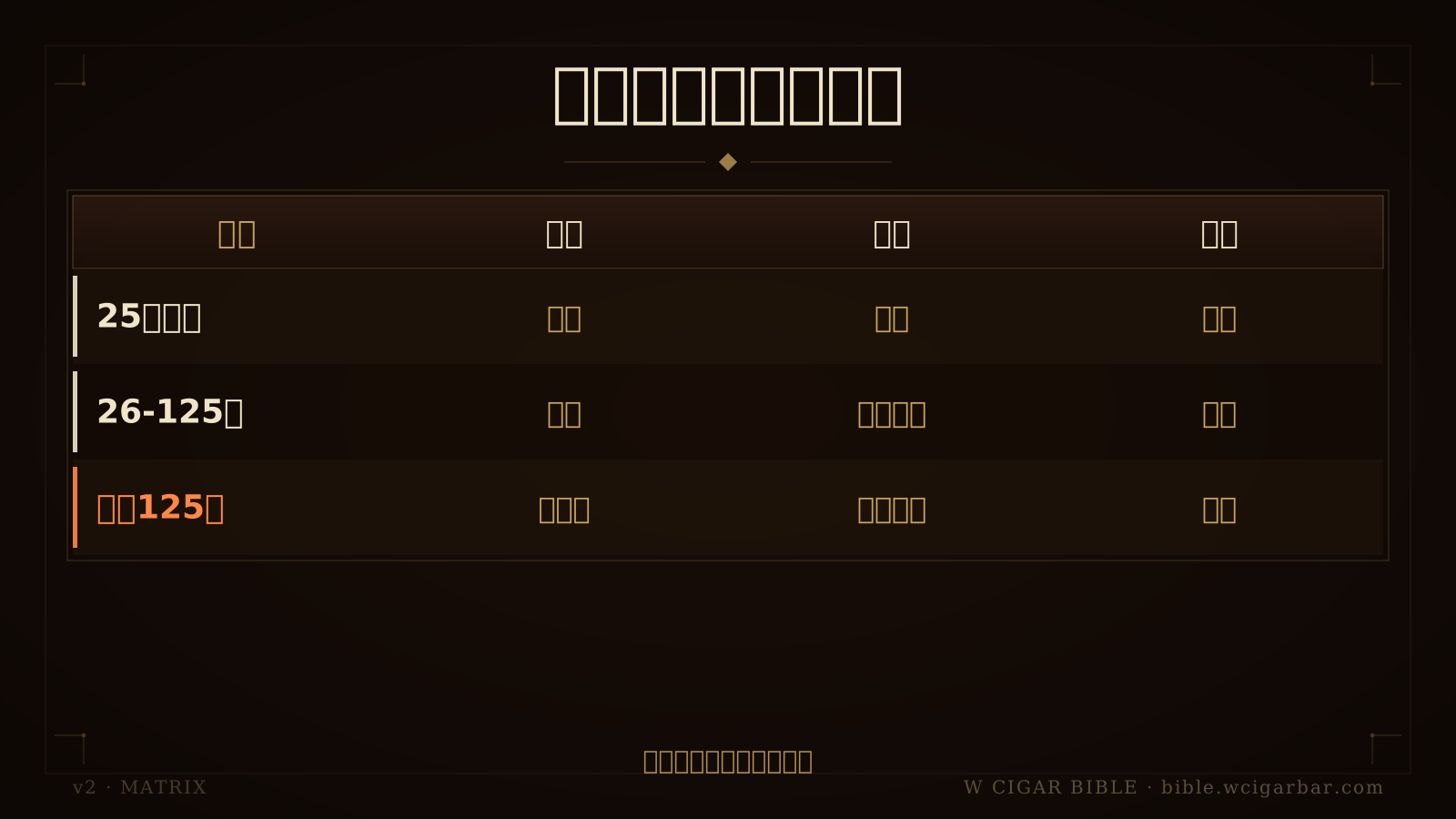
比較雪茄入境台灣在二十五支以內、二十六到一百二十五支與超過一百二十五支三種情境的申報動作與結果的資訊表
〔Deepening Section 1〕How to Count the Quantity of Cigars at Japanese Airports: Clarifying by Sticks, Specifications, and Itinerary Examples
Taking travelers returning to Taiwan from 東京羽田, 成田, or 關西機場 in 2026 年 as examples, common packaging may include 3-stick aluminum tubos, 5-stick paper boxes, 10-stick small boxes, or 25-stick wooden boxes. When Customs counts them, the key point is not the packaging material, nor the brand wording on the cigar band, but the number of sticks of the cigars themselves. Suppose Traveler A is 20 years old or above and obtains 1 box of 25 sticks of Robusto cigars at a Japanese airport cigar counter, with a length of about 124 mm and a ring gauge of about 50. Upon entering Taiwan, this falls exactly within the 25-stick duty-free allowance. Traveler B brings back 2 boxes of 25 sticks each, totaling 50 sticks. This exceeds the 25-stick duty-free allowance but is still below the 125-stick limit for personal use or gifts, so Traveler B should proactively go to the red channel counter to declare and pay duties. If Traveler C brings back 6 boxes of 25 sticks each, totaling 150 sticks, this already exceeds 125 sticks. The excess portion is not within the scope of ordinary travelers' personal use and must, in accordance with regulations, be declared with a tobacco and alcohol import business license in the name of a business, or the excess portion must be handled by return shipment.
Brands and specifications only help organize the list and do not change the regulatory determination. For example, common sizes such as Corona, Robusto, Petit Corona, and Churchill, regardless of length or thickness, are still counted by "stick" upon entry. If the same luggage contains 10 aluminum tubos, 15 loose sticks, and 1 wooden box of 25 sticks, the total is 50 sticks. When organizing receipts, box markings, and a personal-use list at the Japanese airport, it is recommended to first use a mobile phone note to list "package quantity, sticks per package, total sticks." Before entering Taiwan, you can then clearly determine whether declaration is needed. This is not to complicate the process, but to avoid misunderstanding "obtained in a duty-free area" as "unlimited sticks may enter duty-free."
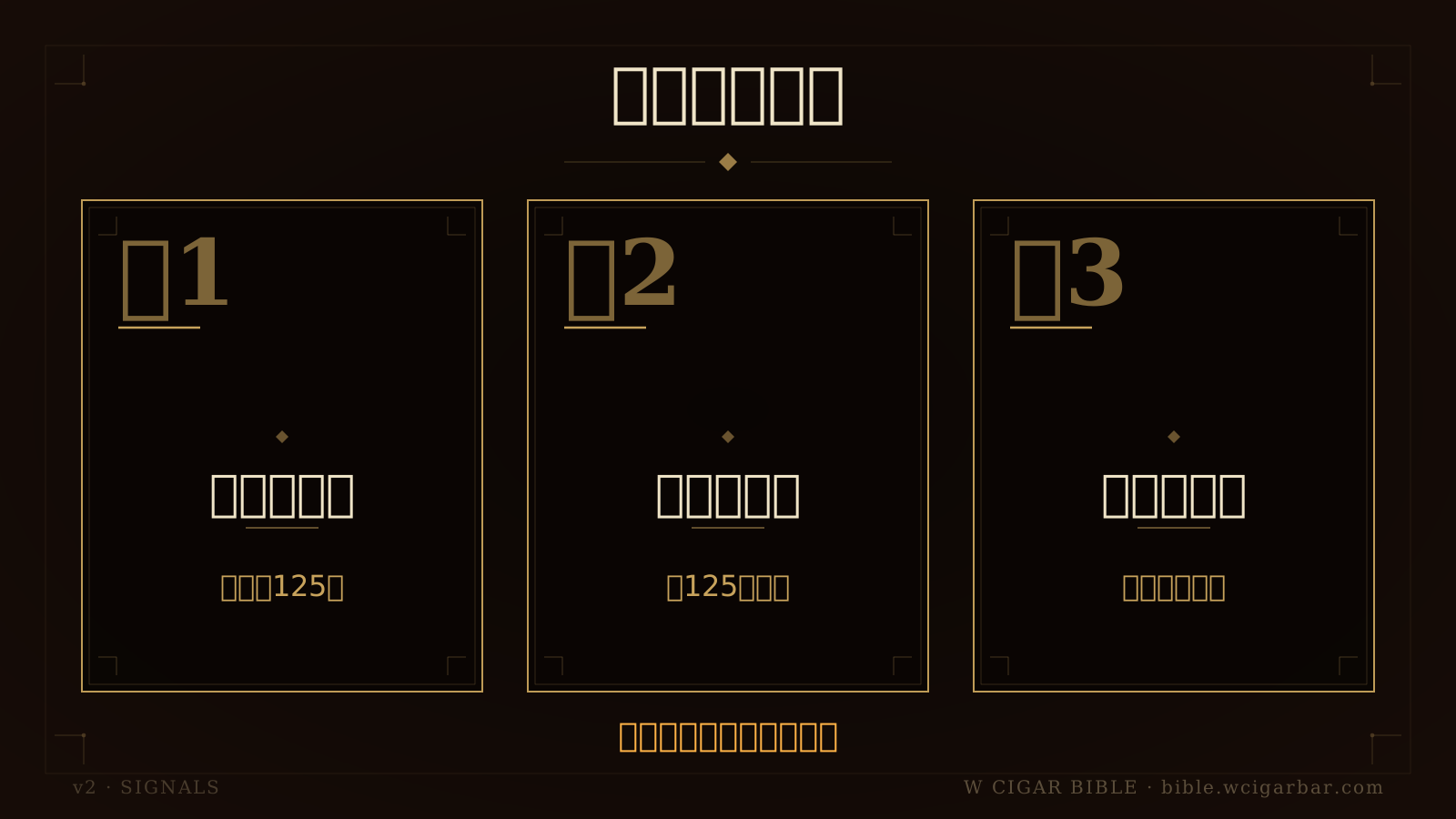
整理旅客攜帶雪茄入境台灣三個常見誤解與對應正確觀念的提醒圖
〔Deepening Section 2〕Red Channel Declaration When Exceeding the Duty-Free Allowance: The Boundary Between 25 Sticks, 125 Sticks, and Return Shipment
When entering Taiwan, the first line for cigars is the 25-stick duty-free allowance, and the second line is the 125-stick total quantity limit for personal use or gifts. The legal effects of these two lines are different. Within 25 sticks, if the traveler is aged 20 years old or above, the duty-free quantity is met. Between 26 sticks and 125 sticks, although still within the scope of travelers' personal use or gifts, the quantity has exceeded the duty-free allowance, so the traveler must proactively declare at the Customs red channel counter and pay duties. The key here is "proactively": if the duty-free allowance is exceeded but no proactive declaration is made, the portion exceeding the duty-free quantity may be confiscated and penalties may be imposed according to regulations. In other words, the red channel is not a nuisance, but a formal procedure for clarifying quantity, taxation, and customs clearance facts.
The third boundary is 125 sticks. The Customs Administration, Ministry of Finance clearly sets the total quantity limit for cigars carried by inbound travelers aged 20 or above for personal use or gifts at 125 sticks, with the 25-stick duty-free allowance included within this limit. If the quantity exceeds 125 sticks, it no longer falls within the scope of ordinary travelers' personal use. A tobacco and alcohol import business license must be attached, and the goods must be declared in the name of a business, or the excess portion must be handled by return shipment. In practice, if a traveler brings back 130 sticks, it is not simply a matter of treating 25 sticks as duty-free and paying duties on all the rest; because the total quantity has exceeded 125 sticks, the excess 5 sticks will enter the handling logic of licensed business declaration or return shipment. For beginners, the safest way to understand this is to divide Japanese airport cigar luggage into three compartments: within 25 sticks, 26-125 sticks, and over 125 sticks. As soon as you cross the first compartment, prepare to declare. As soon as you cross the third compartment, you must face handling outside the scope of travelers' personal use.
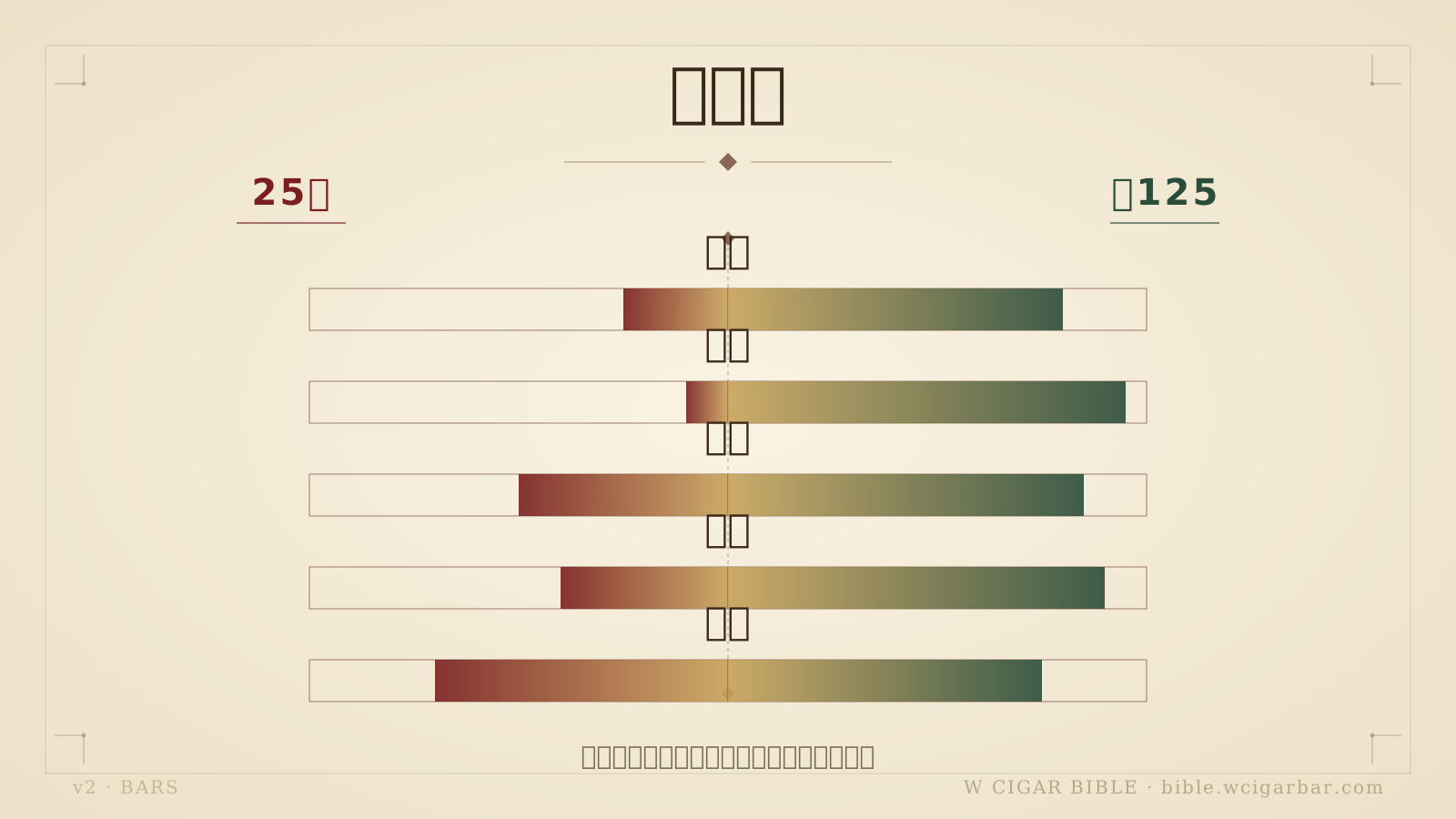
橫條圖比較二十五支內與至一百二十五支的差異
Practical Notes
From Japanese airports to Taiwan, flight time usually falls within several hours. Adding waiting at the airport, transfers, entry queues, and transportation home, cigars may experience more than 8-12 hours of environmental changes. Cabin and luggage environments are usually dry, and ground transportation in summer may also involve high heat. Therefore, when duty-free cigars are brought back to Taiwan, the storage focus is not long-term aging, but stability, shock avoidance, and heat avoidance. It is recommended to use a hard-shell travel humidification case or a travel case with a sealing strip, and place inside a two-way humidity pack with 65-70% relative humidity. Even if it is only a short trip back to Taiwan, you should avoid stuffing cigars directly into the corners of checked luggage, because pressure may cause wrapper cracking, foot breakage, or deformation of aluminum tubos.
In terms of temperature, for short-distance movement, try to maintain a stable environment of about 18-21°C. If precise control is not possible, at least avoid direct sunlight, stuffy heat in the vehicle, and long periods placed on the outer side of a suitcase. When returning to Taiwan from Japan in winter, the change from low outdoor temperatures to indoor airport conditions and then to Taiwan's humid environment is also quite obvious. It is not advisable to expose cigars immediately to direct air-conditioning airflow once you get home. After returning to a fixed humidified environment, you can let the cigars rest in stable humidity for several days before proceeding with aging according to your personal storage plan. If using aluminum tubos, the tubes can provide basic protection, but this does not mean humidity management is completely unnecessary. When mixing multiple sticks, it is still recommended to add a hard case on the outside and allow sufficient cushioning for each cigar. The purpose of all storage actions is to reduce the probability of drying, cracking, brittleness, and abnormal draw, not to change the entry quantity rules.
Common Mistakes
- Understanding "Japanese airport duty-free cigars" as having no upper limit when entering Taiwan. In reality, entry into Taiwan still has a 25-stick duty-free allowance and a 125-stick total quantity limit for personal use or gifts.
- Counting only boxes, not sticks. 3-stick packs, 5-stick packs, 10-stick packs, and 25-stick packs must all be added up into the actual number of sticks.
- Exceeding 25 sticks without preparing to declare. As long as the duty-free allowance is exceeded and the quantity remains within 125 sticks, you should proactively declare at the red channel counter and pay duties.
- Mistakenly thinking that exceeding 125 sticks still counts as travelers' personal use. If the quantity exceeds 125 sticks, a tobacco and alcohol import business license is required to declare in the name of a business, or the excess portion must be returned.
- Ignoring age requirements. Persons under twenty years old may not smoke, and no one may supply tobacco products to persons under twenty years old.
- Focusing only on quantity during the return to Taiwan while ignoring storage. Dryness, stuffy heat, and compression may all damage the wrapper. A travel humidification case is more suitable for short-distance movement than an ordinary plastic bag.
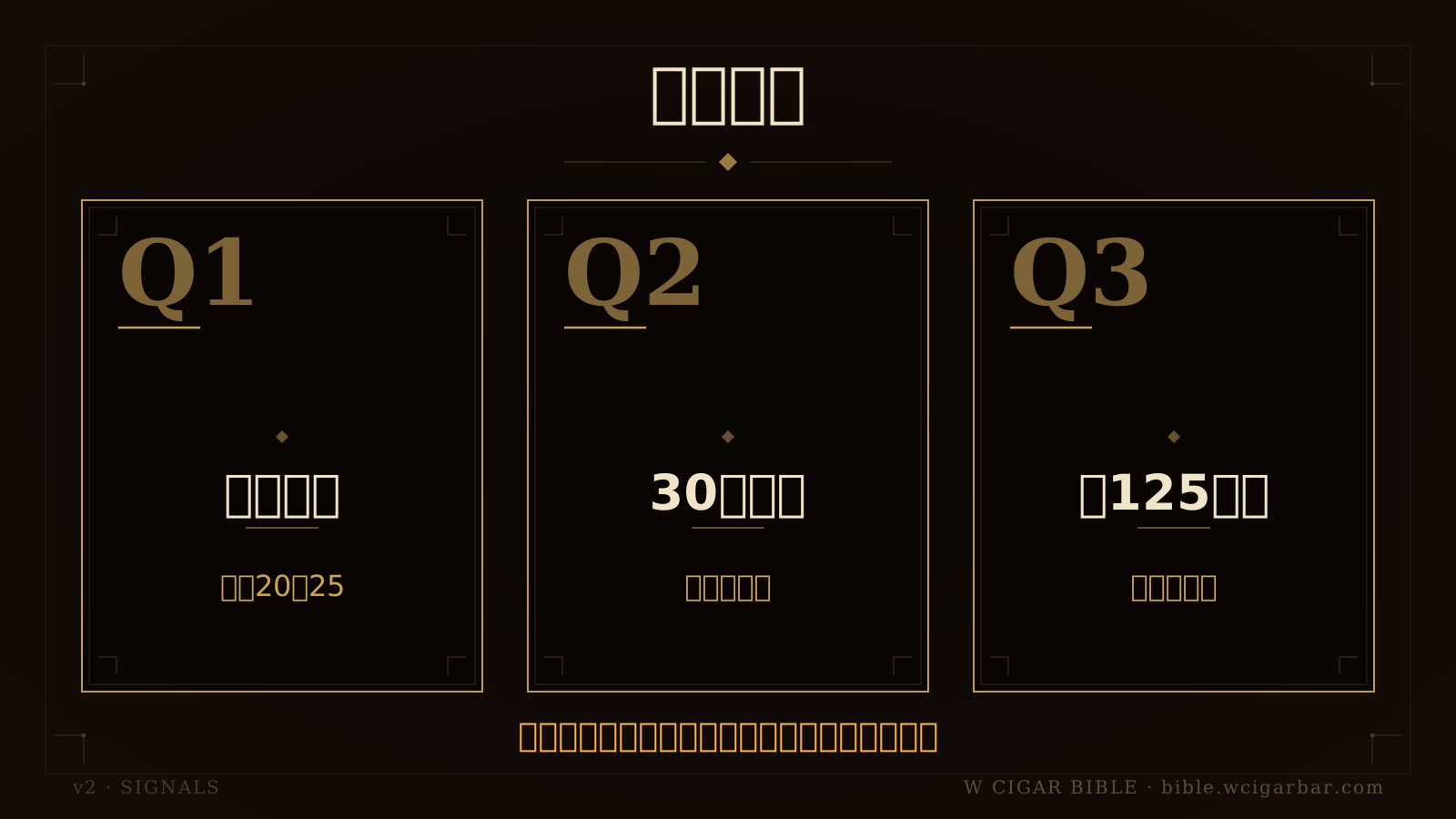
三張問答卡整理免稅支數、三十支與超量處理
Frequently Asked Questions (FAQ)
How many cigars can I buy at a Japanese airport and bring back to Taiwan duty-free?
For inbound travelers aged 20 or above, the duty-free allowance for cigars is 25 sticks. These 25 sticks are the duty-free quantity applicable when entering Taiwan, and the allowance is not increased because they were obtained in a Japanese airport duty-free area.
Can I bring 30 duty-free cigars back to Taiwan?
30 sticks exceeds the 25-stick duty-free allowance, but is still within the 125-stick total quantity limit for personal use or gifts. The correct approach is to proactively declare at the Customs red channel counter upon entry and pay duties.
Is 125 sticks the duty-free allowance?
No. 125 sticks is the total quantity limit for inbound travelers aged 20 or above for personal use or gifts, and the 25-stick duty-free allowance is included within the 125 sticks. For the portion exceeding 25 sticks, if it remains within 125 sticks, it should be declared and duties paid.
What happens if I bring more than 125 cigars back to Taiwan?
More than 125 sticks is not within the scope of ordinary travelers' personal use. According to the regulations of the Customs Administration, Ministry of Finance, a tobacco and alcohol import business license must be attached, and the goods must be declared in the name of a business, or the excess portion must be handled by return shipment.
What happens if I exceed the duty-free allowance but do not proactively declare?
If the duty-free allowance is exceeded but no proactive declaration is made, the portion exceeding the duty-free quantity may be confiscated, and penalties may be imposed according to regulations. It is recommended to total the number of sticks before departure and confirm before entry whether the red channel declaration procedure is needed.
Can accompanying relatives or friends help someone under 20 bring cigars?
No. Persons under twenty years old may not smoke, and no one may supply tobacco products to persons under twenty years old. Carrying cigars upon entry should also be determined based on travelers aged 20 or above and the scope of their personal use or gifts.
If there are different sizes in the cigar box, how does Customs count them?
They are counted by number of sticks. Robusto, Corona, Churchill, aluminum tubos, loose sticks, and wooden boxes do not change the principle of totaling sticks. The key point is the total number of sticks, not the size of each individual stick.
If I only have 25 sticks or fewer, do I still need to prepare a storage case?
It is recommended. Even if the quantity is within the duty-free range, dryness, stuffy heat, or compression may still occur during the return to Taiwan. A travel humidification case and a humidity pack at 65-70% relative humidity can reduce condition fluctuations caused by short-distance movement.
Do I need to keep receipts for cigars from Japanese airports?
It is recommended to keep receipts, outer boxes, and a personal-use list to facilitate explaining the number of sticks and the source context upon entry. The receipt itself will not change the 25-stick duty-free allowance or the 125-stick limit, but it helps make customs clearance information clear.
Sources
- Health Promotion Administration, Ministry of Health and Welfare: announcements and educational materials related to tobacco hazards prevention.
- Customs Administration, Ministry of Finance: explanations related to duty-free quantities of tobacco and alcohol carried by inbound travelers, personal-use limits, red channel declaration, duties, return shipment, and confiscation.
- National Laws and Regulations Database, Tobacco Hazards Prevention Act and its enforcement rules: regulations on the definition of tobacco products, age restrictions, supply restrictions, and methods of sale.
Regulatory verification date: 2026年6月17日 This article is not legal advice. Actual customs clearance and penalties shall be subject to the latest announcements of the competent authorities and the determination of Customs.
Smoking is harmful to health. Persons under twenty years old may not smoke. Smoking cessation hotline: 0800-636363. This article is provided only for adults aged twenty and above as a reference for cigar culture, storage, and regulatory knowledge. It is not tobacco advertising, promotion, or purchase advice.
- W Cigar Prince Wilson Tsai
Like this article?Share with friends
Share this W Cigar Bible piece with friends who want to learn cigar culture, storage, and tasting.
想把這篇 化為實踐
雪茄聖經是知識;雪茄文化要在空間裡發生

W Cigar Bar 大安總店資訊
台北大安區 · 雪茄聖經總編輯 Wilson Tsai 主理的雪茄文化空間

33 座 24 小時恆溫恆濕醇化室
W Cigar Bar 提供的會員醇化空間 · 場地資訊請洽編輯部
雪茄剪 / 打火機 / 雪茄盒 / Boveda
W Cigar 配件官網 · 專營雪茄配件正品

加 LINE 好友 · 文化諮詢
文化空間資訊 · 紳士沙龍 · 私人包場
本網站內容僅供雪茄文化、歷史、收藏與品吸知識研究參考。菸品有害健康、未滿法定年齡者請勿吸菸。實際規範請依所在地法律為準。
吸菸有害健康・戒菸專線 0800-636363・本站僅供 20 歲以上成年人閱覽。
讀到這裡,你不只是路過的人
留下 Email,加入 W 雪茄聖經內圈——總編輯 Wilson Tsai 親選的學院深文與國際新訊,先你一步送到信箱。
· 教育用途非銷售 · 隨時一鍵退訂 · Email 絕不對外公開 · 由勝茄股份有限公司營運
同分類延伸閱讀



資料來源:W Cigar Bible 編輯部整理 · 雪茄王子 Wilson Tsai 親自審稿
本文僅供雪茄文化、歷史、收藏與品鑑知識研究,不作為菸品促銷、銷售或購買建議。吸菸有害健康,未滿二十歲不得吸菸。