老手雪茄的品鑒與評估方法:提升個人判斷的藝術

在雪茄品鑒中,僅僅表達「我喜歡」並不足夠,真正的品味應該能夠拆解出喜好的原因與變化。建立個人口味座標,透過濃度、風味光譜及結構來精確評估雪茄的特性,能讓品鑒者更深入理解自己的偏好。外觀、填充狀態及年份線索也是重要的評估指標,能提前判斷燃燒與保存風險。冷吸步驟可有效診斷吸阻與香氣,燃燒評估則需關注穩定性而非僅僅追求灰長。透過盲評與複評,避免情緒與品牌影響,能更客觀地評估雪茄的真實表現。
- 建立個人口味座標,透過濃度、風味光譜與結構三軸精準描述喜好。
- 冷吸步驟可提前診斷吸阻與乾香,影響後續燃燒品質。
- 盲評與複評能排除品牌影響,形成更可靠的雪茄評估結論。
Veteran Cigar Tasting and Evaluation Methods: The Art of Enhancing Personal Judgment
Veteran cigar enthusiasts dread being left with just the words "I like it." Liking something is important, of course, but if you can't articulate the reasons, conditions, and changes, it's hard to distinguish whether the cigar itself is excellent or if it's just a fleeting impression caused by the day's mood, food and wine pairing, or humidity discrepancies.
As an editor of "Cigar Bible," what I've valued most over the years is not giving every cigar a high score, but establishing a personal judgment system that can be repeatedly verified. A truly mature tasting should encompass emotional memory, technical records, and market understanding.
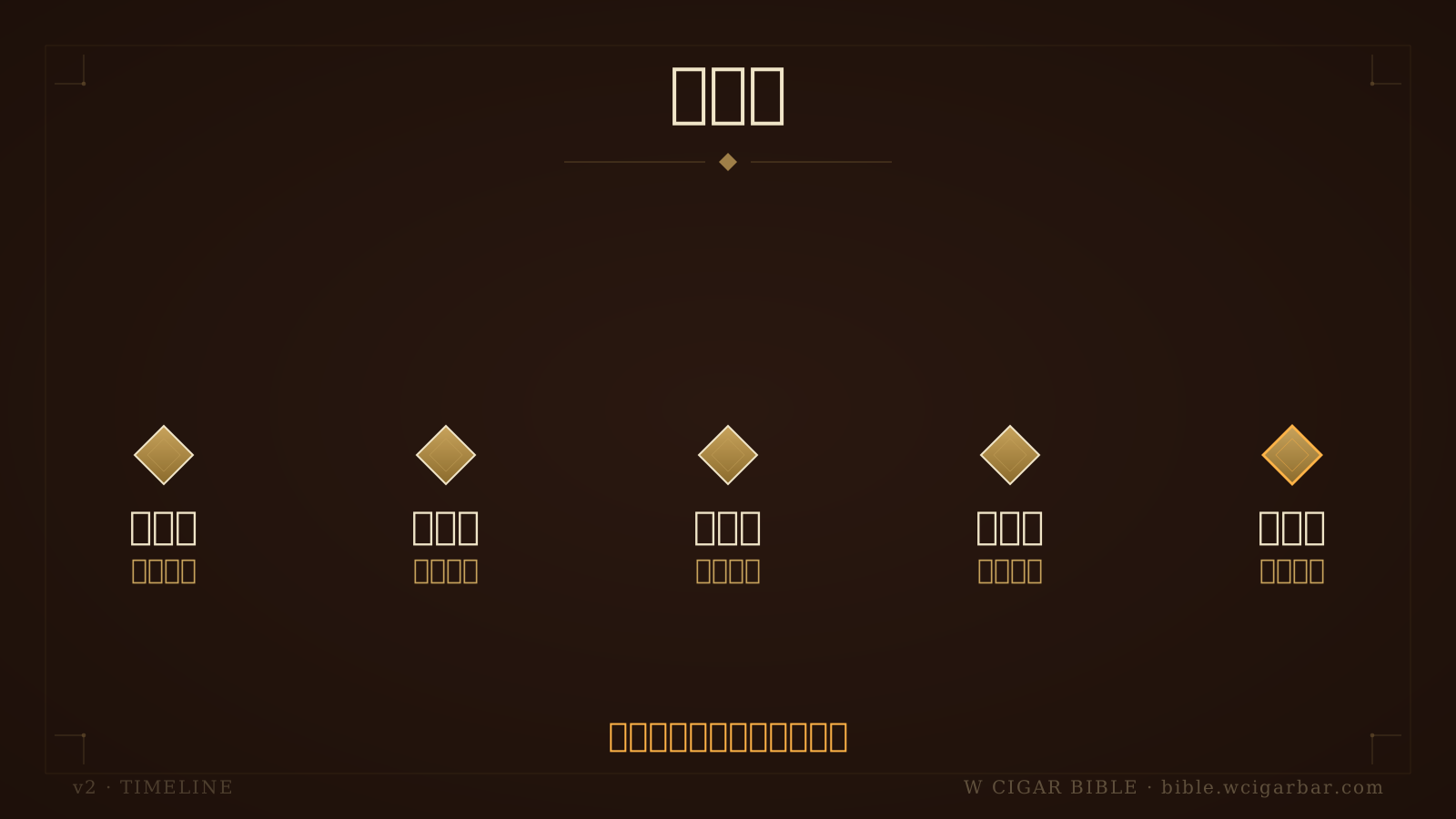
時間軸呈現從口味座標到回看修正的五步
From "Like" to "Explainable": Establishing Personal Taste Coordinates
Veterans often have fixed preferences. For example, some have long favored the leather, pepper, and robust woodiness of Partagás Serie D No.4, while others are accustomed to the creamy, hazelnut, and gentle herbal notes of Hoyo de Monterrey Epicure No.2. The issue isn't the preference itself but whether you can break down your preference into intensity, aroma types, burning rhythm, and the length of the finish. True advancement isn't about trying more brands but articulating your preferences more precisely.
I suggest establishing personal taste coordinates using three axes: the first is intensity, recording nicotine and mouthfeel pressure from 1 to 5; the second is the flavor spectrum, divided into wood, spice, sweetness, nuts, minerals, floral, leather, etc.; the third is structure, which refers to whether there are transitions in the first, middle, and final thirds. Take the 2022 boxed Montecristo No.2 as an example: if the first third is clear with cocoa and cedar, the middle third transitions to coffee and nuts, and the final third presents spice without bitterness, this is more meaningful than just saying "smooth."
Veterans can choose three different styles each month for cross-comparison: a classic Cuban, a full-bodied New World, and a medium-strength daily option. After six months, you'll see your blind spots: some overestimate intensity, others underestimate burning quality, and some actually prefer ring gauges 46 to 52 rather than the brand itself. The purpose of taste coordinates is to turn preferences into a traceable and correctable judgment tool.
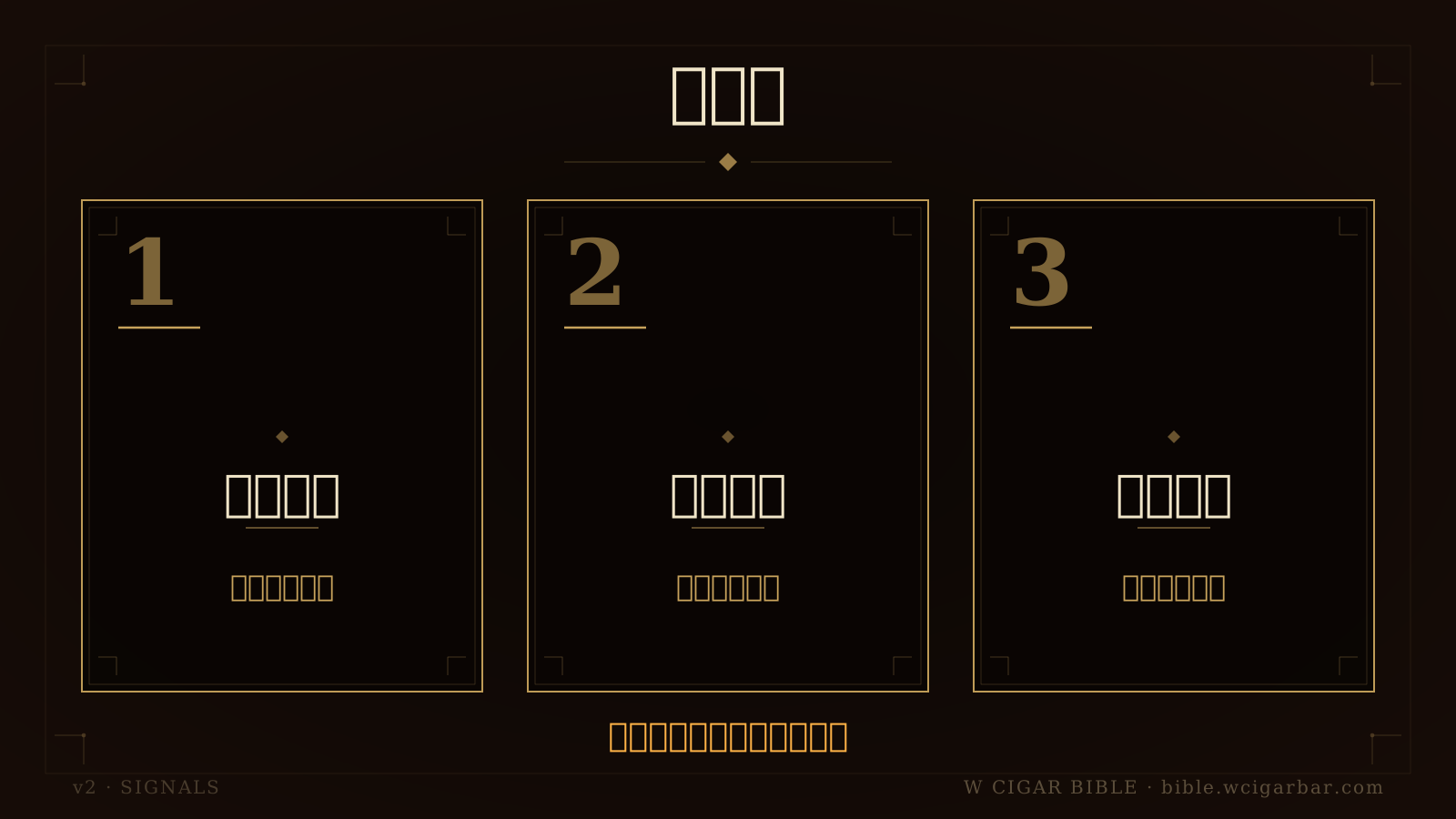
三張卡整理口味座標狀態判讀與紀錄驗證
Appearance Is Not Just Surface Work: Wrapper, Fill, and Vintage Clues
Appearance evaluation isn't about judging based on dark color. The wrapper should be observed for oiliness, elasticity, leaf veins, color variation, and repair marks. For example, Cohiba Siglo VI, commonly with a ring gauge of 52 and a length of 150mm, often has a delicate sheen and uniform texture in excellent condition, but if the 25 cigars in a box have significant color differences or some are locally dry and wrinkled, caution should be raised. Appearance can't determine everything, but it provides the first layer of risk assessment.
The filling condition can be assessed by lightly pressing from the foot to the head with your fingers to feel for hard knots, voids, or unevenness. Too tight may lead to excessive draw resistance, too loose may cause fast burning and increased temperature, making the final third prone to bitterness. Some batches of Cuban handmade cigars before 2019 occasionally had significant rolling differences; from 2020 to 2023, due to changes in logistics and storage environments, box conditions are also more worth checking individually. Veterans look at appearance not to be superstitious about beauty but to pre-assess burning and storage risks.
Vintage clues also include box codes, aluminum tube oxidation, wooden box aroma, and seal condition. If a box of Ramon Allones Specially Selected is marked 2017 but has a noticeable moldy smell, sharp ammonia, or an overly damp wooden box upon opening, the vintage cannot be directly equated with good condition. Collection and aging can enhance flavor layers, but collection appreciation does not guarantee value appreciation, still depending on source preservation and market. This applies to any high-priced limited edition.
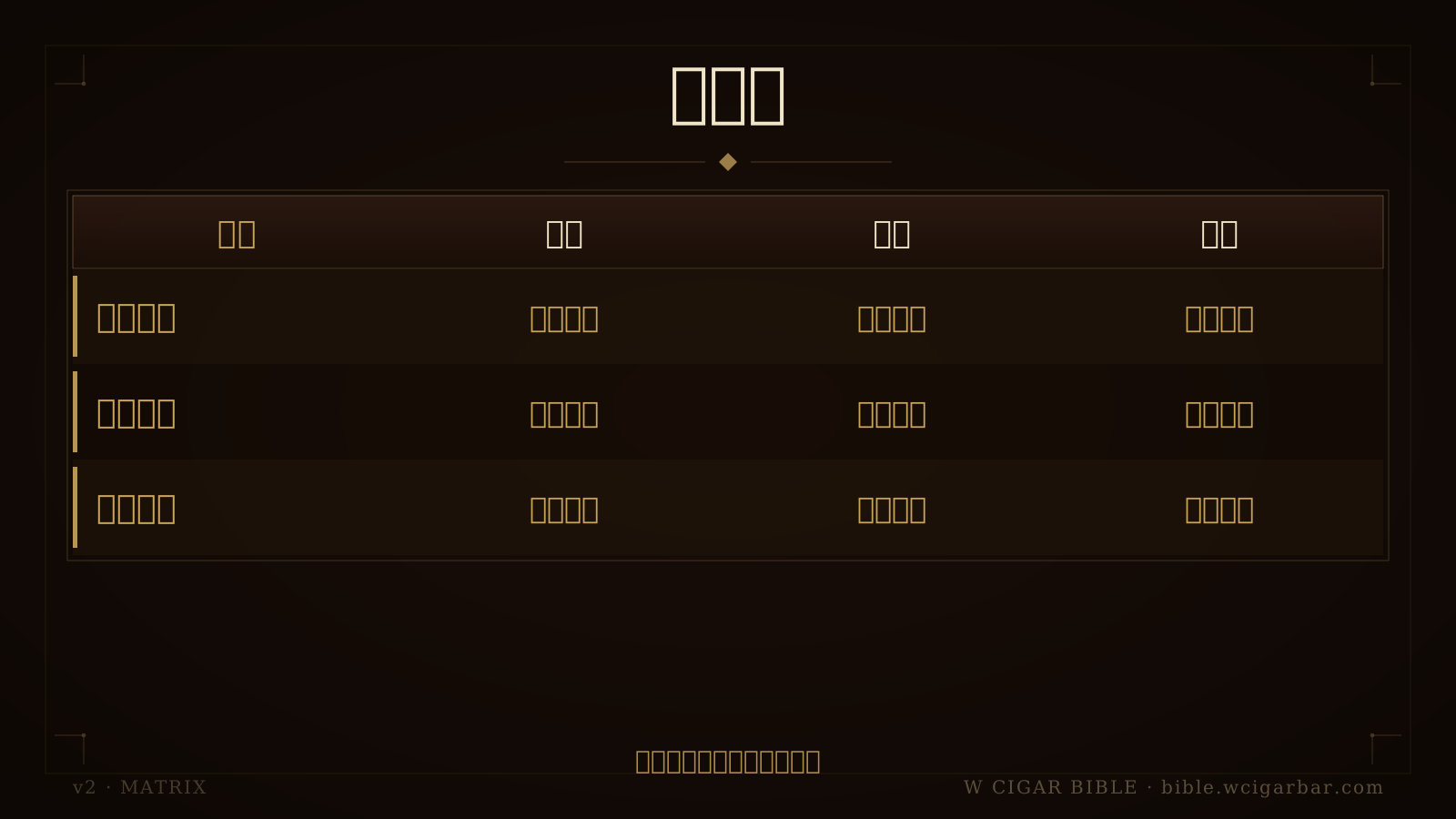
矩陣比較外觀冷吸燃燒三層評估重點
Cold Draw and Draw Resistance Before Lighting: Identify Problems Early
The cold draw after cutting is the most easily overlooked yet most effective diagnostic step for veterans. The cold draw should record three things: draw resistance, dry aroma, and off-flavors. Ideal draw resistance is like drinking a thick beverage through a straw, with resistance but not laborious; if it's like drawing air, burning will be too fast; if it's almost immovable, even if tools are used to correct later, it often affects the overall rhythm. The cold draw is not about ritual but a forecast system for burning quality.
Dry aroma can provide direction for the first third, such as Trinidad Fundadores often having hay, honey, floral, and light woody notes; Bolívar Belicosos Finos may have soil, cocoa, leather, and spice. If a sharp ammonia smell appears in the cold draw, it indicates insufficient rest or high humidity; if there's a cardboard moldy smell or basement dampness, it needs to be distinguished whether it's a surface odor or core contamination. Veterans aren't in a hurry to light up because many problems will be amplified by heat after lighting.
In practice, I also write down the cutting method in my records: straight cut, V cut, and punch each have differences. For ring gauges above 50 like Robusto or Toro, a V cut can increase the entry area while preserving structure; for slender ones like Lancero, a straight cut is easier to control. If the same brand consecutively has three cigars with tight draw resistance, check the storage humidity, as 69% relative humidity is still high for some tightly rolled cigars, and temporarily lowering it to 65% to 67% before observing again is common.
Burning, Ash Color, and Temperature: The Technical Layer of Veteran Evaluation
Burning evaluation should look at lines, speed, and temperature, rather than pursuing longer ash. An even burn line represents coordination between wrapper, binder, and filler; if one side continuously burns faster, it may be due to uneven filling, inconsistent humidity, or skewed heat source during lighting. A grayish-white ash isn't necessarily high-grade, as soil minerals, leaf processing, and burning temperature all affect ash color. The core of good burning is stability rather than drama.
I often use 15 minutes as an observation unit. For a Robusto approximately 124mm in length and 50 ring gauge, the normal pace is about 45 to 70 minutes; if it enters the final third in 25 minutes, it's usually smoked too quickly or the filling is too loose. Each puff interval is recommended to be 45 to 75 seconds, especially for veterans to avoid speeding up due to conversation or emotions. When the temperature rises, sweetness disappears, woodiness becomes charred, and bitterness in the final third may be mistakenly attributed to brand defects.
Below is a burning diagnosis table I often use, which can serve as a reference for on-site records:
| Phenomenon | Possible Cause | Correction Method |
|---|---|---|
| Fast burning on one side | Uneven lighting, filling deviation | Rotate the cigar, lightly supplement the slow-burning side |
| Excessive draw resistance | High humidity, tight rolling | Lower humidity for rest, use a draw tool if necessary |
| Sudden bitterness in the final third | Smoking too fast, high temperature | Extend intervals, end early |
| Loose, easily falling ash | Loose filling, storage fluctuations | Lower expectations, record box condition |
| Frequent extinguishing | High humidity, slow pace | Blow out stale smoke before relighting |
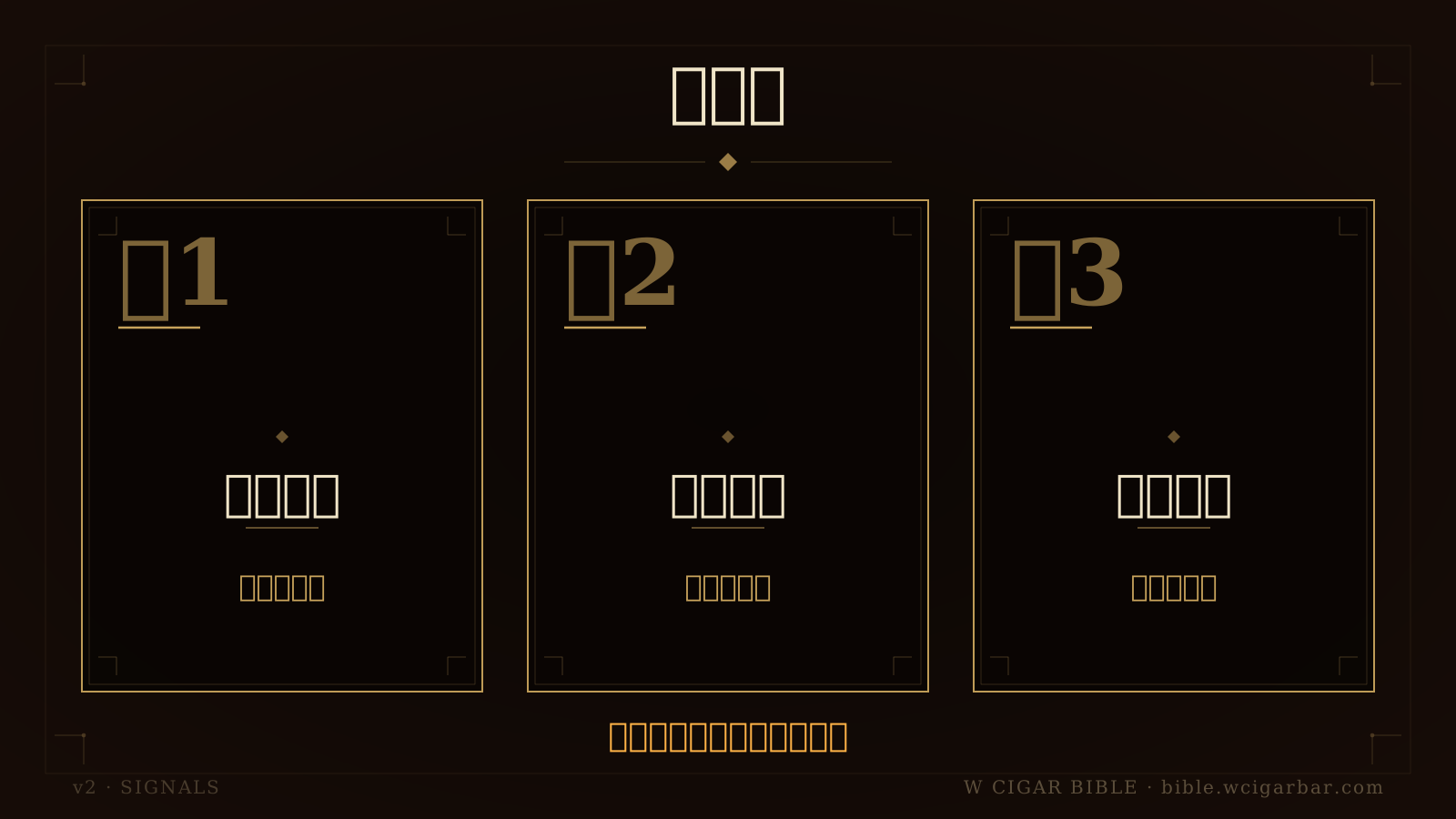
三張卡提醒只憑印象灰長迷思與太濕硬抽
Aroma Analysis: From Flavor Terms to Structural Judgment
Veterans' flavor descriptions shouldn't stop at "coffee, cocoa, wood" lists but should articulate position and change. The aroma in the first third is the opening, the middle third determines the main body, and the final third tests balance. Take the H. Upmann Magnum 46 in good condition around 2016 as an example: the first third may be creamy woodiness with a light tea note, the middle third transitions to nuts and toasted bread, and if the final third maintains clean spice, it can be called structurally complete. Aroma terms are just vocabulary; transitions and balance are the scoring focus.
I divide aroma into three layers: entry aroma, nasal retrohale, and oral residue. Entry aroma is mostly sweetness, spice, and woodiness; nasal retrohale can sense pepper, floral, mineral, and herbal through retrohale, but don't do it too frequently, or nasal fatigue will amplify spiciness; oral residue looks at whether the finish is clear, clean, and lasting. If a cigar is strong on entry but short and mixed in the finish, the evaluation cannot be raised just because it's "powerful."
In practice, Padron 1964 Anniversary often gives a tight sense of cocoa, coffee, brown sugar, and roasted nuts; while Quai d'Orsay No.50 more often presents citrus peel, cream, light woodiness, and refreshing sweetness. There's no superiority between the two; the evaluation standard should return to whether the brand style is completed. Veterans should avoid using the same measure for all cigars, or they will mistakenly judge delicate types as insufficient and heavy types as coarse.
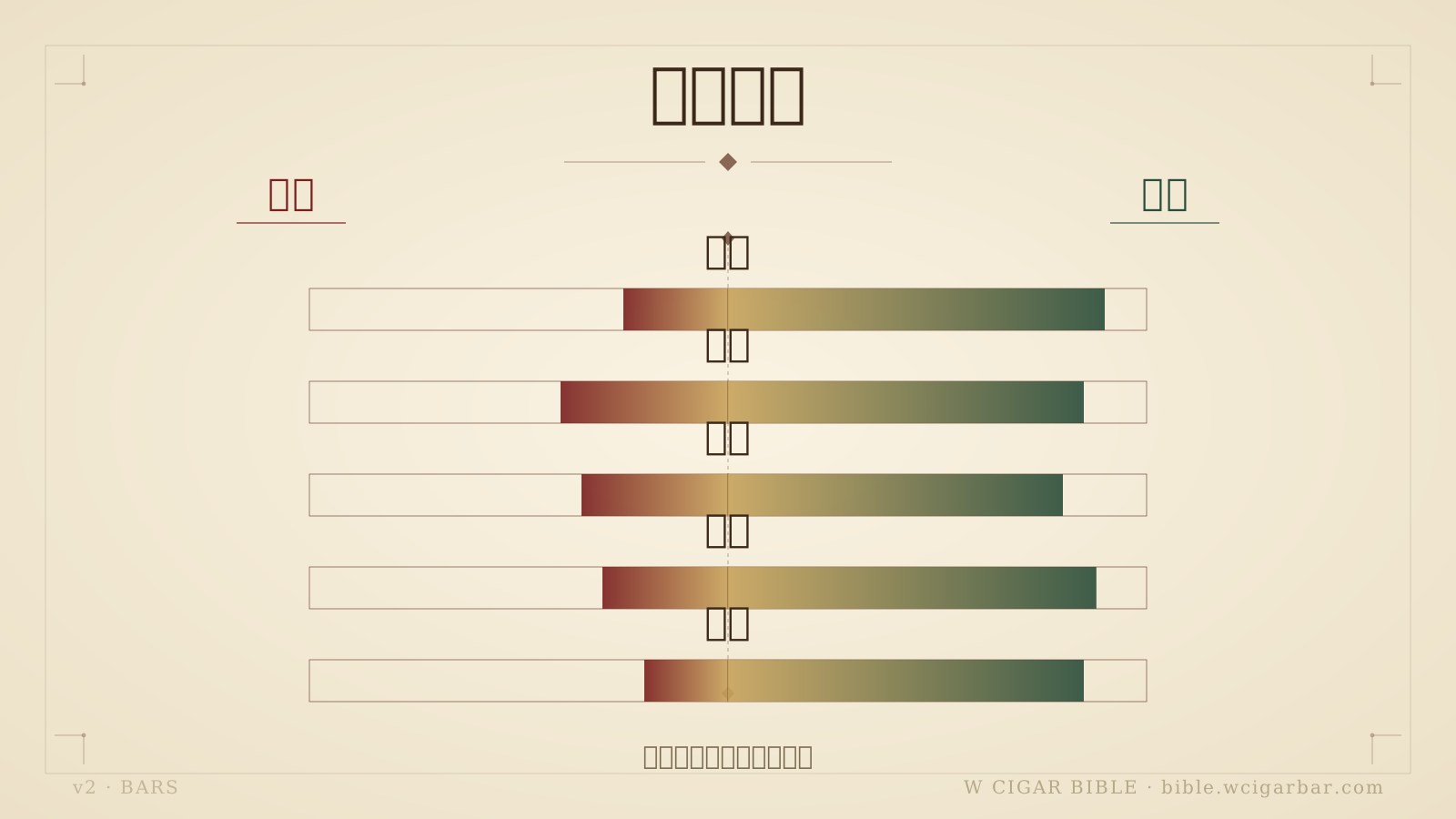
橫條圖比較印象式與系統式品鑒的差異
Blind Tasting and Re-evaluation: Avoiding Brand Halo and Emotional Bias
Brand, price, and rarity influence judgment, and veterans need blind tasting even more. You can ask friends to remove the band, keeping only size and approximate vintage information, and compare three similar specifications at once, such as Robusto, Hermosos No.4, Short Churchill types. Don't discuss brands before scoring, first write down intensity, aroma, burning, and overall score individually. The value of blind tasting is to temporarily turn off face, price, and rumors.
Re-evaluation is equally important. The first cigar from a box of 2021 Romeo y Julieta Short Churchills may seem stuffy during the rainy season, while the second cigar, after 3 months of stable storage at 65% to 67%, may have clearer floral and sweet notes. If you draw conclusions based on a single experience, it's easy to wrongly blame the brand or overestimate a particular state. My approach is to record at least three times for the same model, with intervals of 30 to 90 days, to form a more reliable conclusion.
Scoring can use a 100-point system, but don't be superstitious about scores. Appearance 10, burning 20, aroma 30, structure 25, finish, and overall 15 is a practical allocation. If a cigar scores 28 in aroma but only 10 in burning, the overall experience will still be compromised. Conversely, perfect burning but thin aroma can only be considered stable rather than exciting. The maturity of veterans lies in separating "I'm very happy today" from "This cigar performed well on its own."
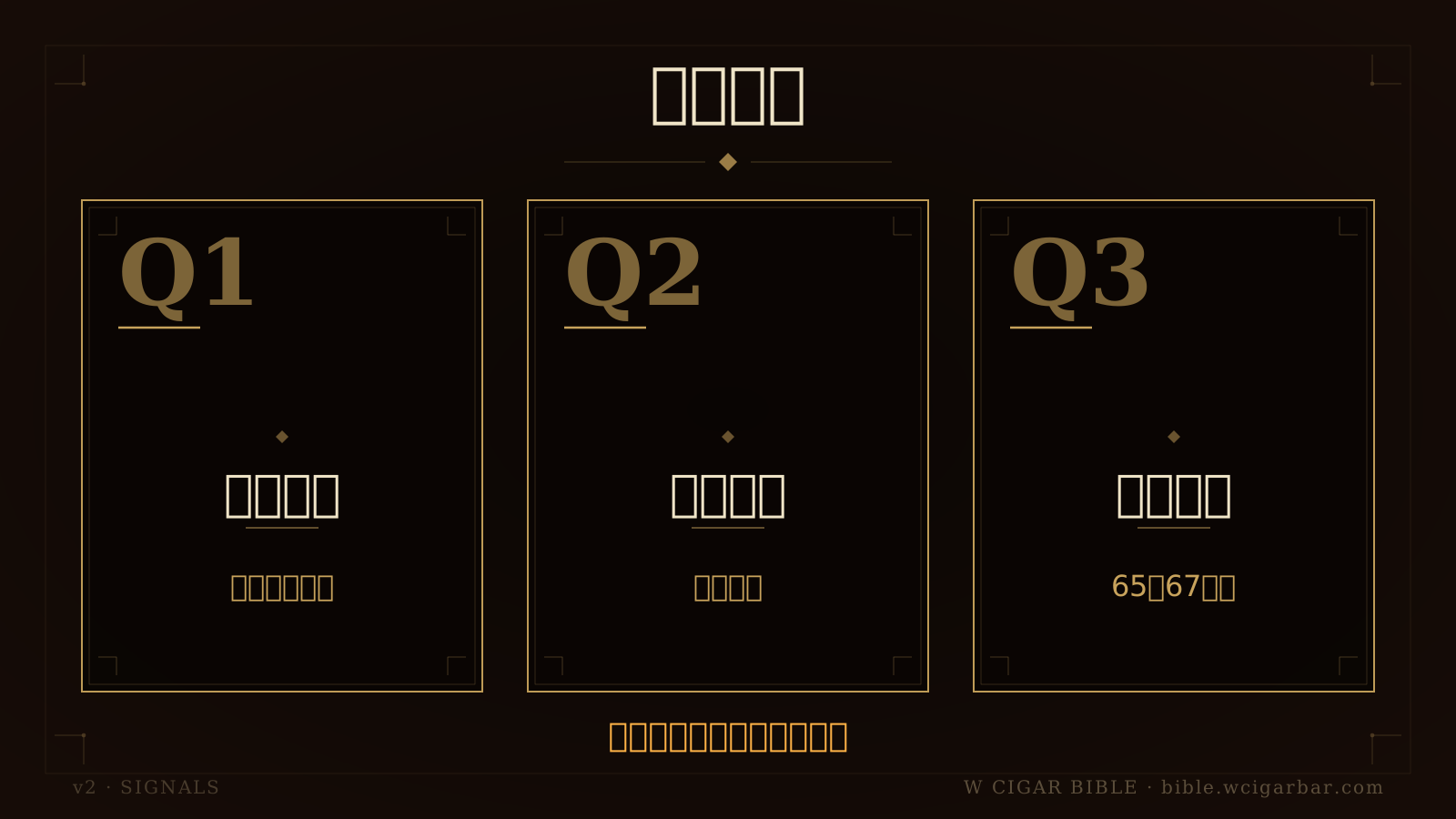
三張問答卡回答紀錄給分與太濕處理
Storage and Aging Judgment: Time Is Not a Panacea
The most fascinating aspect of aging is that time can round off spiciness, reduce ammonia, and blend aromas; but time can also lead to a loss of vitality. Generally speaking, Cuban cigars often enter a more stable observation period 3 to 5 years after production, with some robust models like Partagás Lusitanias and Bolívar Royal Coronas looking at 5 to 10 years; lighter and more delicate models, if not stored properly, may become bland after long-term storage. Aging isn't about the longer, the better, but about making flavors more balanced.
Storage conditions are more crucial than vintage. The recommended temperature is 18 to 21°C, and relative humidity of 65% to 69% is often safer; if it's above 72% for a long time, it tends to be stuffy, burn poorly, and even risk mold. In Taiwan's hot and humid summer, the stability of an electronic cigar cabinet is more important than a simple wooden box. Checking the hygrometer calibration once a month and observing the box's internal aroma is more meaningful than opening and flipping it daily.
Market cases also remind us to stay calm. Some 2008, 2011, and 2014 limited or regional editions are of interest in auctions and the secondary market, but prices are influenced by source, preservation, box condition, rarity, and buyer sentiment. Collection appreciation does not guarantee value appreciation, still depending on source preservation and market. If the purpose is to learn taste, rather than chasing legendary vintages, it's better to establish your vertical comparison: keep a few of the same model from 2020, 2021, 2022, and record changes annually.
Frequently Asked Questions
Do veterans still need to write records?
Yes, and the more veteran you are, the more you need to. Memory can be influenced by brand reputation, meal content, and the day's mood, while records allow you to look back at the real changes of the same cigar six months later. Experience without records is often just an impression; impressions with records accumulate into judgment.
How should scores be given reasonably?
I suggest first fixing the items and not changing the standards based on feelings each time. You can use appearance 10, burning 20, aroma 30, structure 25, finish, and overall 15, and adjust slightly after using it for 20 cigars, so there is a comparison basis.
Can Cuban and New World cigars be directly compared?
They can be compared, but the standards should be layered. Cubans often look at delicate transitions, terroir, and balance, while New Worlds often have more direct sweetness, intensity, and stable burning; if only evaluated by intensity, the subtleties of Cubans will be missed.
What should be done if a cigar is too wet?
Don't rush to judge it as bad. It can rest in a 65% to 67% environment for 2 to 4 weeks, then observe draw resistance and burning. If there is already a moldy smell or the wrapper is abnormally sticky, risk awareness should be raised, and the problem shouldn't be covered by ventilation alone.
Does a high-priced cigar represent a better experience?
Not necessarily. High prices may come from scarcity, vintage, brand, and market sentiment, but the experience still depends on preservation, condition, and personal taste. Veterans should ask: does this cigar meet the style, is the structure complete, is the burning stable, rather than just looking at the price.
When should a cigar be ended early?
When the final third is obviously overheated, bitterness overwhelms sweetness, or you need frequent relighting and burning correction, you can stop. Completing the whole cigar isn't an obligation; sometimes preserving a good impression is more tasteful than forcing it to the end.
For me, the most fascinating aspect of cigars isn't the rare label but the ability to make clearer judgments each time. The path of a veteran isn't about making statements more mysterious but about articulating feelings more accurately; it's not about chasing others' high scores but establishing one's standards. When you can distinguish the relationship between condition, vintage, preservation, and style, cigars truly become a personal art.
—Cigar Prince Wilson Tsai
Smoking is harmful to health. Smoking is prohibited for those under twenty. Quitline: 0800-636363. This article is intended for adults over twenty as a reference for cigar culture, preservation, and regulatory knowledge, not as a tobacco advertisement, promotion, or purchase suggestion.
Like this article?Share with friends
Share this W Cigar Bible piece with friends who want to learn cigar culture, storage, and tasting.
想把這篇 化為實踐
雪茄聖經是知識;雪茄文化要在空間裡發生

W Cigar Bar 大安總店資訊
台北大安區 · 雪茄聖經總編輯 Wilson Tsai 主理的雪茄文化空間
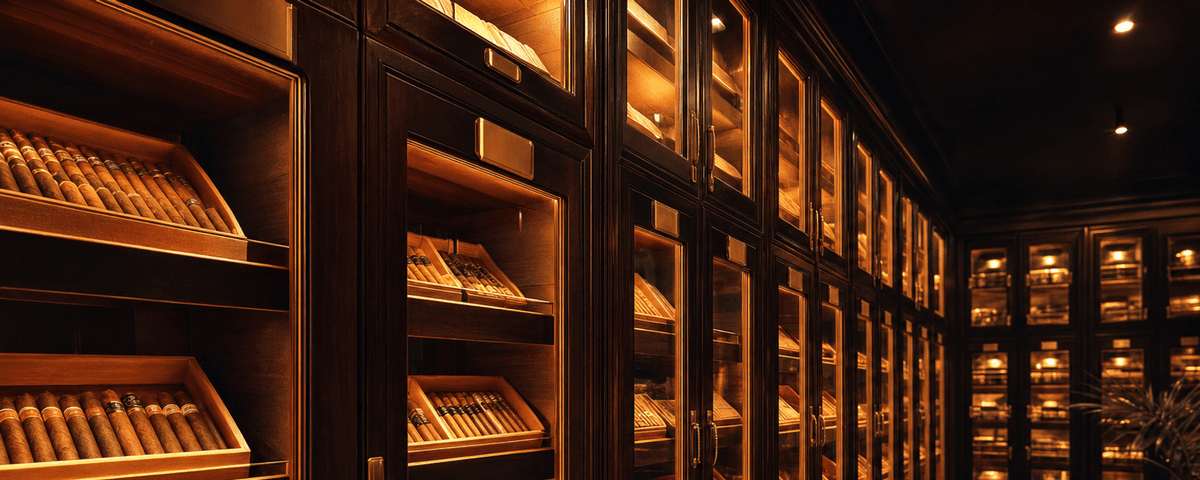
33 座 24 小時恆溫恆濕醇化室
W Cigar Bar 提供的會員醇化空間 · 場地資訊請洽編輯部
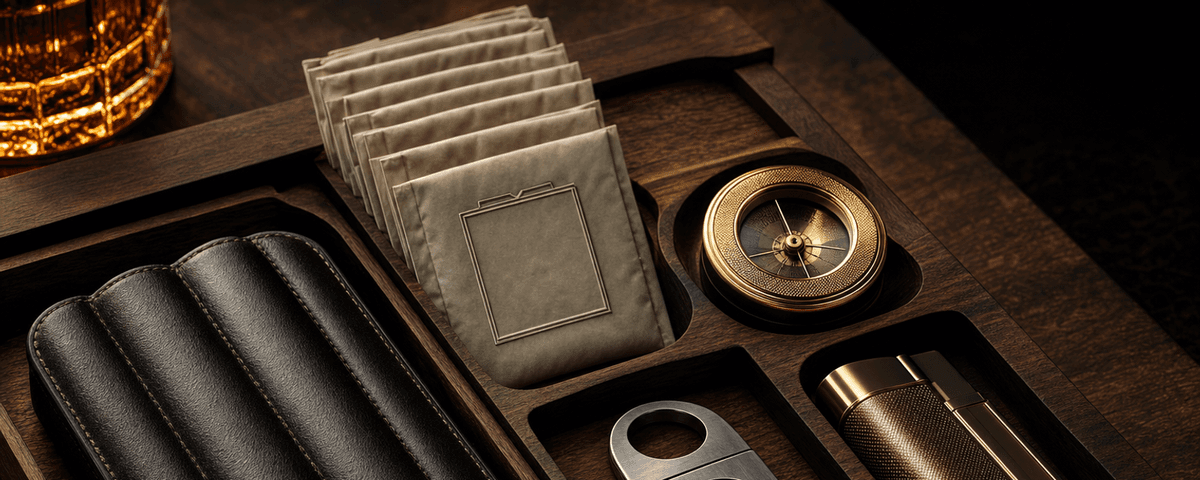
雪茄剪 / 打火機 / 雪茄盒 / Boveda
W Cigar 配件官網 · 專營雪茄配件正品

加 LINE 好友 · 文化諮詢
文化空間資訊 · 紳士沙龍 · 私人包場
本網站內容僅供雪茄文化、歷史、收藏與品吸知識研究參考。菸品有害健康、未滿法定年齡者請勿吸菸。實際規範請依所在地法律為準。
吸菸有害健康・戒菸專線 0800-636363・本站僅供 20 歲以上成年人閱覽。
讀到這裡,你不只是路過的人
留下 Email,加入 W 雪茄聖經內圈——總編輯 Wilson Tsai 親選的學院深文與國際新訊,先你一步送到信箱。
· 教育用途非銷售 · 隨時一鍵退訂 · Email 絕不對外公開 · 由勝茄股份有限公司營運
同分類延伸閱讀


資料來源:W Cigar Bible 編輯部整理 · 雪茄王子 Wilson Tsai 親自審稿
本文僅供雪茄文化、歷史、收藏與品鑑知識研究,不作為菸品促銷、銷售或購買建議。吸菸有害健康,未滿二十歲不得吸菸。