雪茄的歷史與文化:從古巴到全球的演變

雪茄文化不僅是品味的象徵,更是一段歷史的縮影。其起源可追溯至加勒比海的泰諾人,隨著哥倫布的到來,雪茄逐漸進入歐洲並演變為流行消費品。古巴因其獨特的土壤與氣候,成為雪茄的核心產地,孕育出多個知名品牌。隨著1960年代的革命,許多工藝流亡至其他國家,形成了多樣的雪茄風格。當今的雪茄文化,融合了風土與社交禮儀,讓每一口煙霧都承載著歷史與文化的深度。了解這些背景,能讓雪茄愛好者更深入地體驗這項古老的傳統。
- 雪茄的起源可追溯至加勒比海的泰諾人,早期並無標準結構,但已具文化意義。
- 古巴的Vuelta Abajo因其獨特土壤與氣候,成為頂級菸葉產區,影響雪茄風味。
- 雪茄文化強調禮儀與社交,吸食時應注意不吸入肺部,並尊重同席者與環境。
The History and Culture of Cigars: From Cuba to Global Evolution
The history of cigars is not just a technical history of tobacco leaves rolled into cylinders; it also involves colonialism, trade, craftsmanship, etiquette, identity symbols, and global terroir. As the editor of the "Cigar Bible," I often remind newcomers that learning about cigars is not just about memorizing brands and sizes; it's about understanding why cigars became a national icon in Cuba and why they have developed different languages in British gentlemen's clubs, American business culture, European collector circles, and emerging Asian markets. When you know the journey of a cigar through cultivation, fermentation, rolling, aging, logistics, and cultural interpretation, every puff you take becomes more than just a taste—it becomes a journey through five centuries of civilization.
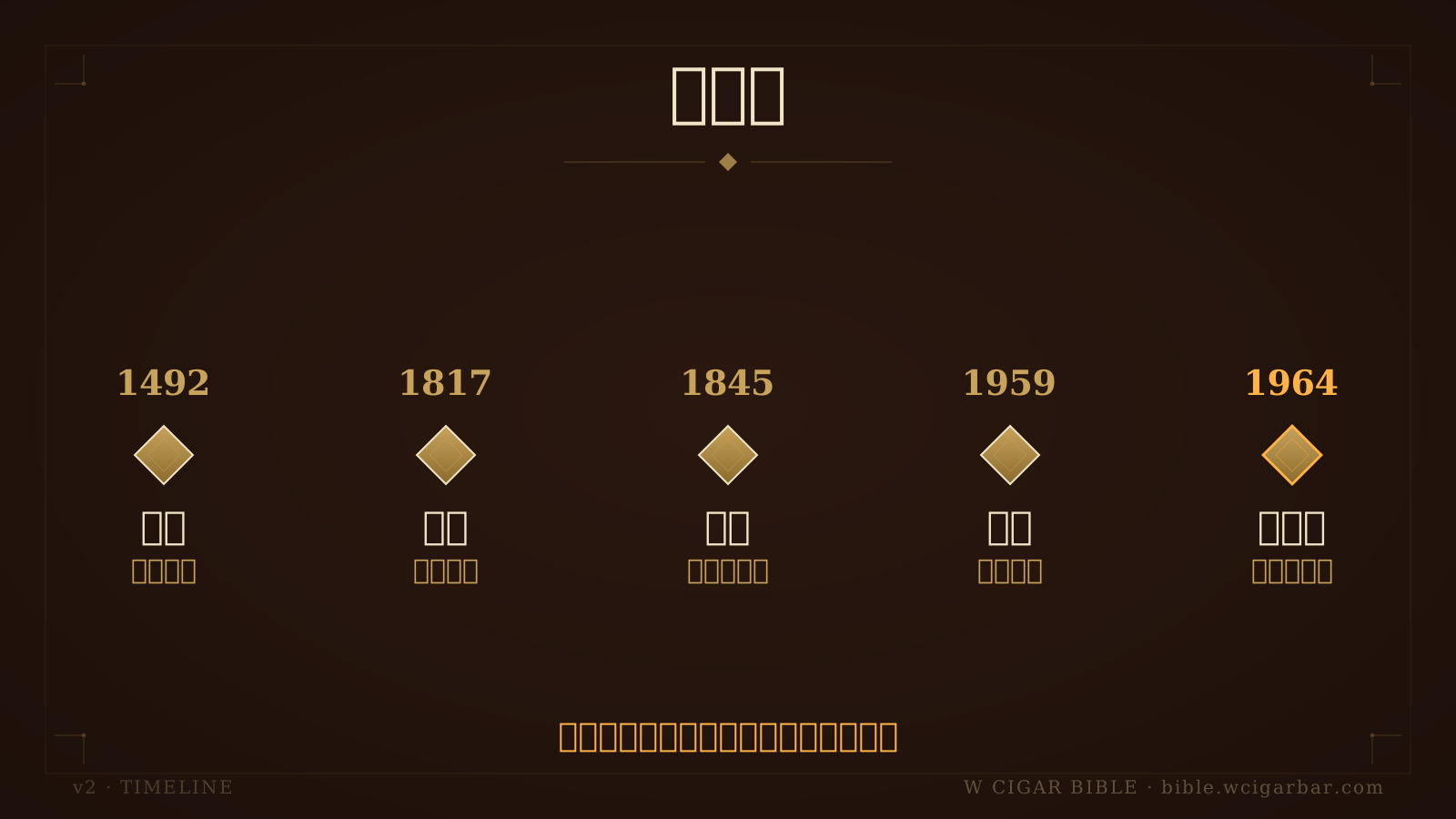
時間軸列出一四九二到一九六四年的雪茄演變節點
From the Taíno to Columbus: The First Page of the Cigar Story
The origin of cigars is often traced back to the indigenous peoples of the Caribbean, especially the Taíno people in regions like Cuba and Hispaniola. When Columbus arrived in the Americas in 1492, his crew recorded that the locals would roll dried tobacco leaves, burn them, and inhale the smoke—a practice that seemed both unfamiliar and mysterious to Europeans. The "cigars" of that time did not have the three-part structure we know today, nor did they have standard ring gauges, lengths, or brand concepts, but they already contained the core elements of cigar culture: land, craftsmanship, ritual, and social significance. After the 16th century, tobacco was brought back to Spain and Portugal, quickly entering the courts, ports, and merchant classes, evolving from a medicinal plant and exotic rarity into a popular consumer product.
Cuba later became the core of cigars not just because it was "first," but because it also possessed the red soil, humidity, sea breezes, and accumulated agricultural techniques suitable for tobacco growth. Especially the Vuelta Abajo region in Pinar del Río Province is regarded by many seasoned smokers as a representative of Cuba's top tobacco-growing areas; the soil's drainage, the day-night temperature differences, and traditional cultivation methods allow the tobacco leaves to develop delicate aromas, oils, and structures. For beginners, understanding this origin can help you see cigars not as "consumer products" but as "terroir works": the same tobacco leaves, depending on their origin, vintage, farming methods, and processing techniques, can result in vastly different sweetness, woodiness, leather, spice, and creaminess in the mouth.
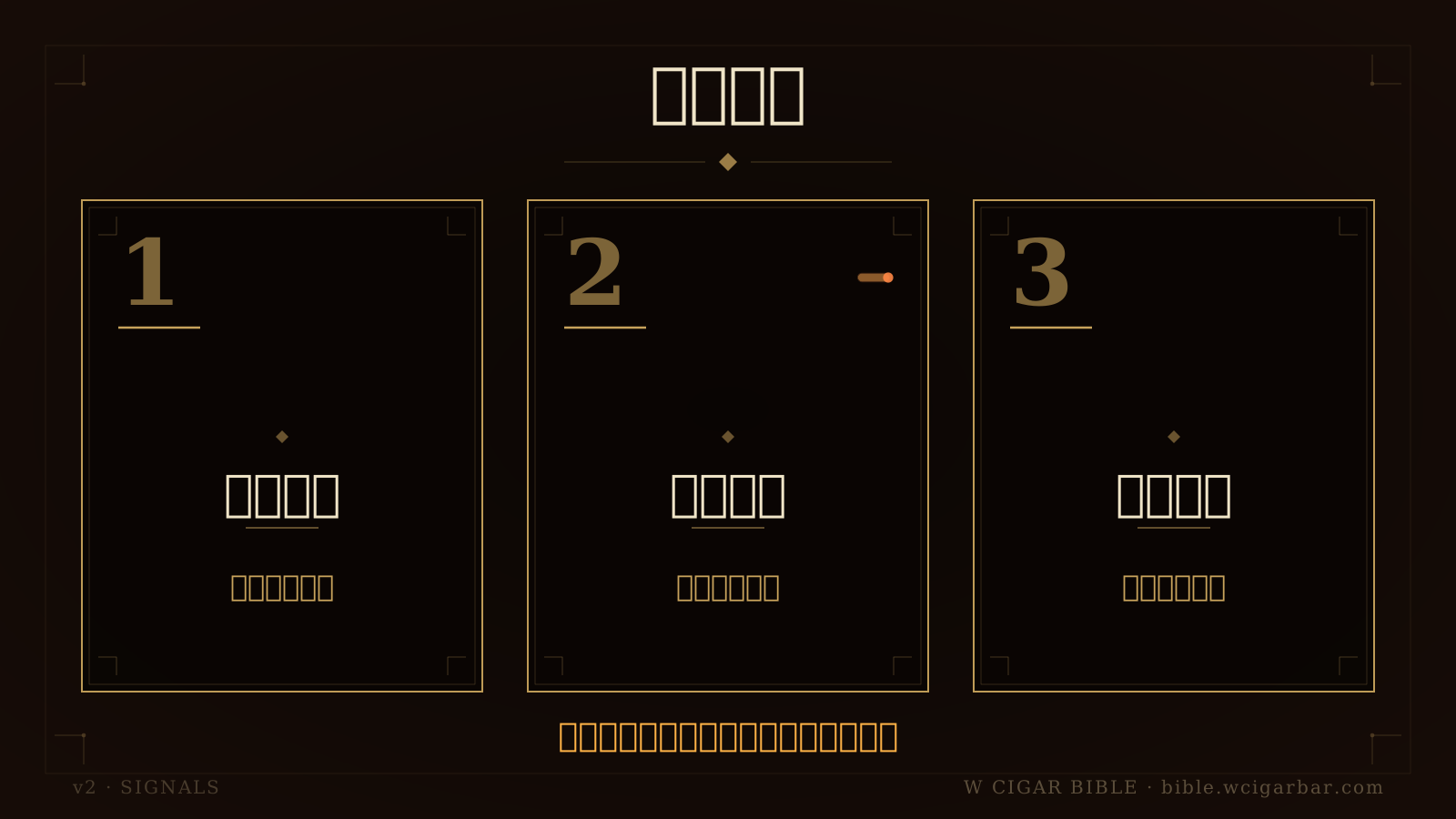
三張卡整理雪茄歷史中的風土品牌與全球分流
Cuba Becomes the Cigar Kingdom: Brands, Factories, and Urban Memories
The 18th to 19th centuries were crucial for the true formation of Cuban cigars. After the Spanish royal family lifted the monopoly on Cuban tobacco trade in 1817, cigar factories in Havana rapidly increased, and brand awareness gradually emerged. Partagás was founded in 1845, Romeo y Julieta in 1875, H. Upmann's history dates back to 1844, and Punch had close ties with the British market in the 1840s. These brands are not just trademarks; they are cultural symbols formed by urban industry, colonial trade, and craftsmanship. In 19th-century Havana factories, there was also a fascinating tradition: the lector.
Workers rolled cigars for long hours, and the factory would hire someone to read newspapers, novels, and political articles aloud, making the labor site a place for education and public discussion. The brand name Romeo y Julieta is connected to Shakespearean literary symbols, reflecting how European culture entered the Cuban cigar world. By the early 20th century, Cuban cigars had become important objects in upper-class socializing, diplomatic gifts, and business negotiations. From a beginner's perspective, brand history can help you understand "style": Partagás is often associated with robustness and spiciness, H. Upmann is often perceived as more elegant, woody, and coffee-like, while Romeo y Julieta is often considered a more approachable Cuban classic. These are not absolute rules but can serve as the first set of coordinates for building your taste map.

比較矩陣呈現古巴多明尼加與尼加拉瓜的風格差異
Revolution, Nationalization, and Exiled Craftsmanship: The Divergence After the 1960s
After the Cuban Revolution in 1959, the cigar industry underwent significant changes. In the early 1960s, Cuban cigar factories and brands were gradually nationalized, and many of the original families, managers, and rollers left Cuba to start anew in places like the Dominican Republic, Nicaragua, Honduras, and Florida, USA. This history is crucial because it explains why today's "non-Cuban cigars" are not substitutes for Cuban ones but rather a complete universe of their own. Take Padrón as an example; José Orlando Padrón arrived in the U.S. in the 1960s, founded the brand in Miami in 1964, and later developed a deep relationship with Nicaraguan tobacco, forming a style known for its richness, cocoa, coffee, and black pepper notes.
The Arturo Fuente family started in Tampa in 1912 and later developed iconic series like Chateau Fuente and OpusX in the Dominican Republic. Davidoff originally had deep ties with Cuban cigars, but after the 1990s, it shifted its core production to the Dominican Republic, creating a refined, clean, and balanced modern high-end image. These stories remind us that cigar culture is not a linear evolution but a divergence due to politics, immigration, and land. For those advancing in their journey, the best way to learn is not to rush to judge which is superior but to place Cuba, the Dominican Republic, Nicaragua, and Honduras on the same comparison table, observing their differences in aroma thickness, burn stability, sweetness, spiciness, and aftertaste, gradually building your ability to interpret them.
Global Production Area Comparison: How Terroir Changes a Cigar
Cigar enthusiasts often say "terroir determines personality," and this is particularly evident in global production areas. Cuba's charm lies in its delicate layers and transitions of herbal, woody, honey, and leather notes; the Dominican Republic is often elegant, creamy, nutty, with clean lines; Nicaragua is valued for its richness, spiciness, cocoa, coffee, and strength; Honduras often has earthy, woody, and deeper smoke. Of course, these are general directions, and actual results are still influenced by seeds, farms, vintages, fermentation, and blending. For example, tobacco leaves using the Corojo or Criollo systems can present different faces in the three Nicaraguan regions of Estelí, Jalapa, and Condega: Estelí is often stronger, Jalapa sweeter and rounder, and Condega often has a sense of balance. Below is a simple table summarizing the key observation points beginners need to grasp:
| Production Area | Common Style Impressions | Representative Brand Examples | Key Points for Beginners |
|---|---|---|---|
| Cuba | Woody, herbal, leather, delicate transitions | Cohiba, Montecristo, Partagás | Pay attention to mid-section changes and aftertaste layers |
| Dominican Republic | Creamy, nutty, elegant, balanced | Davidoff, Arturo Fuente | Suitable for practicing identifying details and clean burning |
| Nicaragua | Cocoa, coffee, black pepper, strength | Padrón, My Father, Oliva | Note whether the concentration and spiciness are harmonious |
| Honduras | Earthy, woody, rich smoke | Camacho, Alec Bradley (some series) | Observe changes in strength from front to back |
| Ecuadorian Wrapper | Floral, sweet, beautiful oils | Common in multi-country blends | Pay attention to how the wrapper affects the first impression |
The real key to advancement is not to ask "where is the best," but to ask "which terroir suits today's state." After dinner, alongside afternoon coffee, at formal occasions, or during quiet reading, the suitable production area and size may be completely different.

三張卡提示吸太快火太猛與剪太深等入門失誤
Size, Etiquette, and Socializing: Why Cigars Became the Language of Gentlemen
The allure of cigar culture lies partly in its clear etiquette, yet it should not become rigid rules. In terms of size, Robusto is usually about 5 inches, ring gauge 50, with a duration of about 45 to 60 minutes; Corona is commonly about 5.5 to 6 inches, ring gauge 42 to 44, with a more delicate rhythm; Churchill is about 7 inches, ring gauge 47, often associated with the image of British Prime Minister Churchill holding a cigar for long periods; Torpedo or Pirámide, due to their pointed design, require more skill in cutting angles and draw control.
In terms of etiquette, beginners should remember three things: first, do not inhale into the lungs like a cigarette; the focus of cigars is on the stay in the mouth and the nasal experience. Second, do not flick the ash frequently; a stable ash column helps maintain the burning temperature. Third, do not extinguish the cigar forcefully in the ashtray; let it stop burning naturally for elegance. On the social level, cigars have played a similar role in 19th-century British clubs, 20th-century American business settings, and today's Asia: they slow down conversations. From the cutting and toasting before lighting to the rhythm of about one puff per minute, cigars force people to put aside impatience. Many people think cigars represent showing off, but those who truly understand value restraint: not causing trouble in unsuitable environments, not using brands as a topic to pressure others, and not pointing fingers at others' choices. The core of cigar etiquette is not about performing sophistication but about respecting space, respecting fellow attendees, and respecting the craftsmanship in your hand.
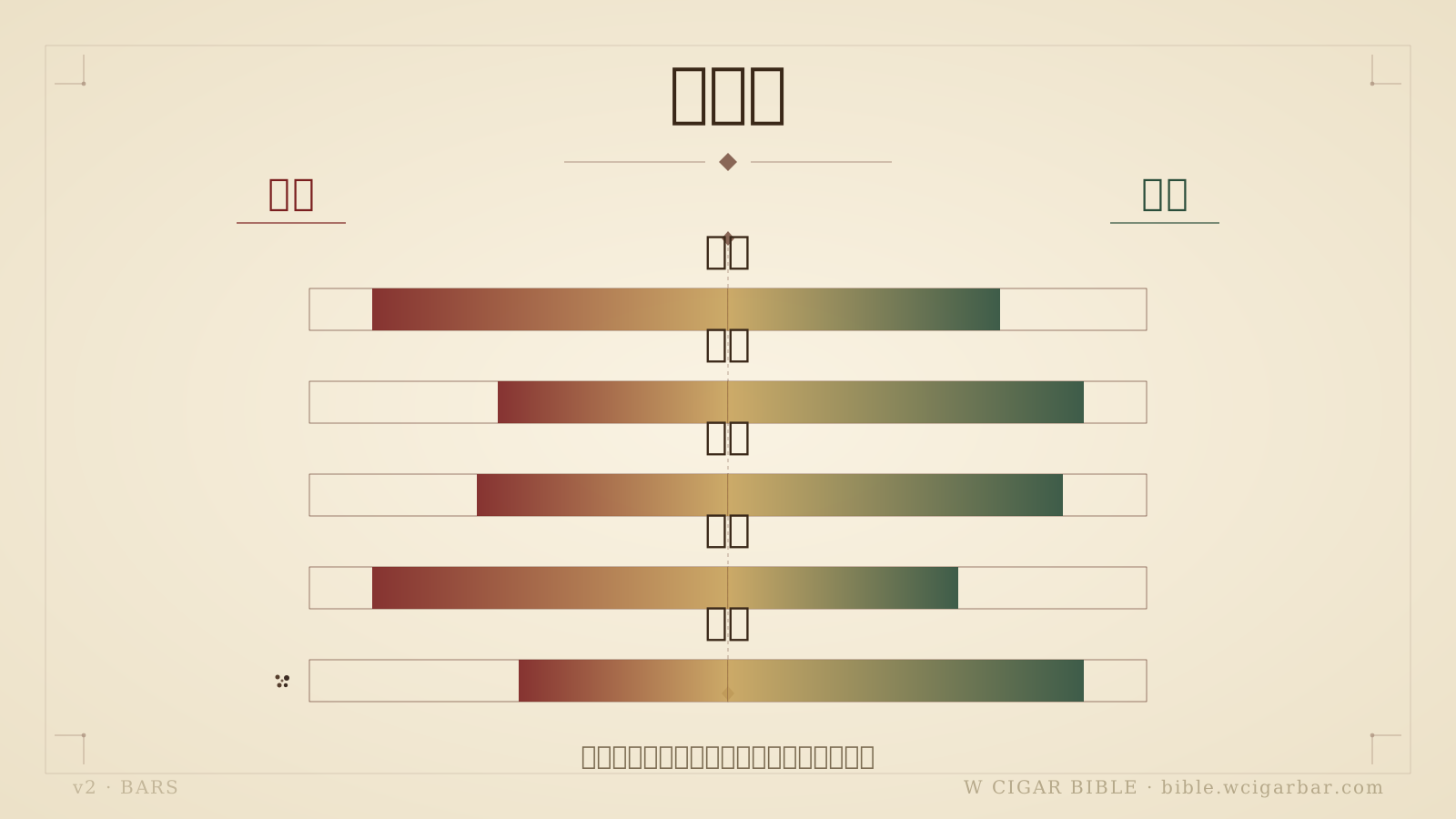
長條圖比較古巴與非古雪茄的五個風格軸
From Political Figures to Movies: How the Symbolic Meaning of Cigars is Formed
The imagery of cigars in popular culture is very strong, often associated with power, victory, contemplation, rebellion, or enjoyment. Churchill is one of the most typical examples; his life was inseparable from the image of cigars, even making Churchill a cigar size name; Cuban revolutionary leader Castro was also long associated with the Cohiba image, with Cohiba being born in 1966 as a high-end Cuban brand, initially carrying the colors of national gifts and diplomacy. In American films, gangsters, generals, entrepreneurs, or tough guy characters often use cigars to create an aura, such as in crime and commercial films after the 1970s, where cigars are often used to imply a character's control over the situation. But the real cigar culture is more complex than these images.
It can also be a source of inspiration for artists, a historical study for collectors, a rhythm pairing in culinary culture, or a medium for long conversations between friends. Brands themselves also use symbolic language, such as Montecristo's name coming from "The Count of Monte Cristo," Trinidad originally being a Cuban diplomatic gift brand, gradually entering a broader market after 1998; Davidoff, with its white label, clean design, and European service culture, established a modern luxury different from the traditional Cuban glamorous labels. Beginners who only watch movies can easily misunderstand cigars as power tools; but if you return to the historical context, you will find that its real symbol is "the sovereignty of time." Being willing to spend an hour focusing on a cigar means you are temporarily not dominated by speed, which is why it remains attractive in modern life.

三張問答卡回答學習順序醇化與同款差異
Collecting, Preservation, and Vintage: From Enjoyment to Research
When you start recording brands, sizes, production areas, and vintages, cigars transition from a single enjoyment to a research phase. The basic environment for preservation is usually recommended at a relative humidity of about 65% to 70% and a temperature of about 18 to 21°C; too high can affect burning and pose risks, too low may cause the wrapper to crack and the aroma to thin. Traditional wooden boxes, electronic humidors, Boveda type humidity packs, and calibrated hygrometers are common tools; but no amount of tools can compare to stability and record-keeping.
Take the Cuban limited edition Edición Limitada as an example, which has attracted the attention of many collectors since 2000, such as Cohiba 1966 Edición Limitada 2011, Montecristo 520 Edición Limitada 2012, Partagás Serie E No.1 Edición Limitada 2013, all of which have been discussed due to vintage, size, and market supply and demand.
It is important to emphasize that collecting appreciation does not guarantee appreciation; it still depends on source preservation and market. If the source is unclear or preservation is unstable, even the rarest labels may lose value. As a PCC special dealer, I've seen too many people overly trust box labels, steel stamps, and vintages, while ignoring the most fundamental preservation state. A truly mature collection perspective is to view cigars as craft items that can be researched, shared, and changed over time, rather than simply speculative targets. If you want to build your own small collection, it is recommended to start with 10 to 25 cigars, divided into "for immediate enjoyment," "observation for six months to a year," and "aging for over three years," and record the acquisition time, humidity, taste changes, and burning performance, which is more meaningful than blindly stacking boxes.
Frequently Asked Questions
Should beginners start with Cuban cigars or non-Cuban cigars?
I would recommend learning both, but not buying too many of the same type at once. Cuban cigars are suitable for training in subtlety, especially in wood, herbal, honey, leather, and aftertaste changes; non-Cuban cigars help understand strength, sweetness, spiciness, and modern blending techniques. If you already know how to retrohale, you can establish a comparison baseline with the Robusto size, for example, recording a Cuban Robusto, a Dominican Robusto, and a Nicaraguan Robusto within the same week, observing burning, draw, concentration, and changes in the latter part. Don't rush to judge superiority, first build your own taste dictionary.
How long should cigars be aged?
There is no single answer. Some cigars are complete upon release, and aging too long may lose their fresh vitality; some rich or structurally strong cigars may have their spiciness mellowed and aroma layers softened after 1 to 3 years of stable preservation. Cuban cigars are often observed long-term by players due to batch and preservation differences, but the premise is stable humidity and temperature. Beginners should not pursue vintages over ten years right away; first learn to record at 6 months, 12 months, and 24 months, which is more practical.
Why does the same brand and model sometimes taste different?
Cigars are a combination of agricultural products and craftsmanship, unlike industrial beverages that can be completely standardized. Tobacco leaf vintage, fermentation batch, rolling tightness, transportation conditions, preservation environment, and even your diet, mental state, and humidity on the day can affect the experience. There may also be slight differences within the same box. This is not a flaw but one of the reasons cigar enthusiasts are fascinated. It is recommended to record at least the date, humidity, post-meal or empty stomach, accompanying drinks, burning condition, and three-stage taste each time, and you will see patterns over time.
What are the most common etiquette mistakes with cigars?
The most common are smoking too quickly, over-lighting, cutting too deep, and ignoring others' feelings in inappropriate spaces. The ideal cigar rhythm is usually about 45 to 90 seconds per puff; too fast raises the temperature, making the taste bitter and spicy. When lighting, slowly toast the foot to ensure even burning, rather than directly scorching with the flame. The cut should retain the cap structure to prevent the wrapper from unraveling. True etiquette is not about how many terms you use, but about making yourself and those around you comfortable.
How to best pair cigars with whiskey or coffee?
The basic principle of pairing is strength balance. Light to medium cigars can be paired with American coffee, lattes, cognac, or softer Speyside whiskeys; rich Nicaraguan styles can try bourbon, sherry cask single malts, or espresso. If the cigar has cocoa and coffee tones, black coffee can amplify the bitter-sweet balance; if the cigar leans towards cream and nuts, it can be paired with a rounder cognac. Beginners should not pair too many alcohols at once; start with water to cleanse the palate, then gradually compare to find the combination that truly suits you.
The history of cigars starts in Cuba but does not stop there; it has become a global culture shared yet with distinct accents, shaped by immigration, politics, land, and markets. For me, learning about cigars is not about chasing rarity but about cultivating patience, discernment, and etiquette. When you are willing to understand the origin of a cigar, you also learn how to enjoy your own time.
—Cigar Prince Wilson Tsai
Smoking is harmful to health. Smoking is prohibited for those under twenty. Quitline: 0800-636363. This article is intended for adults over twenty as a reference for cigar culture, preservation, and legal knowledge, not as a tobacco advertisement, promotion, or purchase suggestion.
Like this article?Share with friends
Share this W Cigar Bible piece with friends who want to learn cigar culture, storage, and tasting.
想把這篇 化為實踐
雪茄聖經是知識;雪茄文化要在空間裡發生

W Cigar Bar 大安總店資訊
台北大安區 · 雪茄聖經總編輯 Wilson Tsai 主理的雪茄文化空間
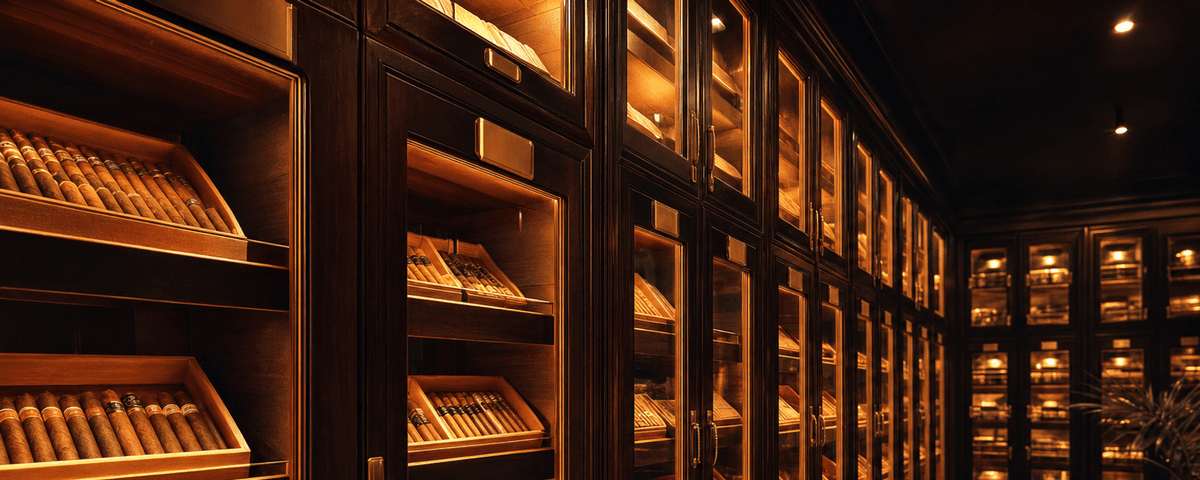
33 座 24 小時恆溫恆濕醇化室
W Cigar Bar 提供的會員醇化空間 · 場地資訊請洽編輯部
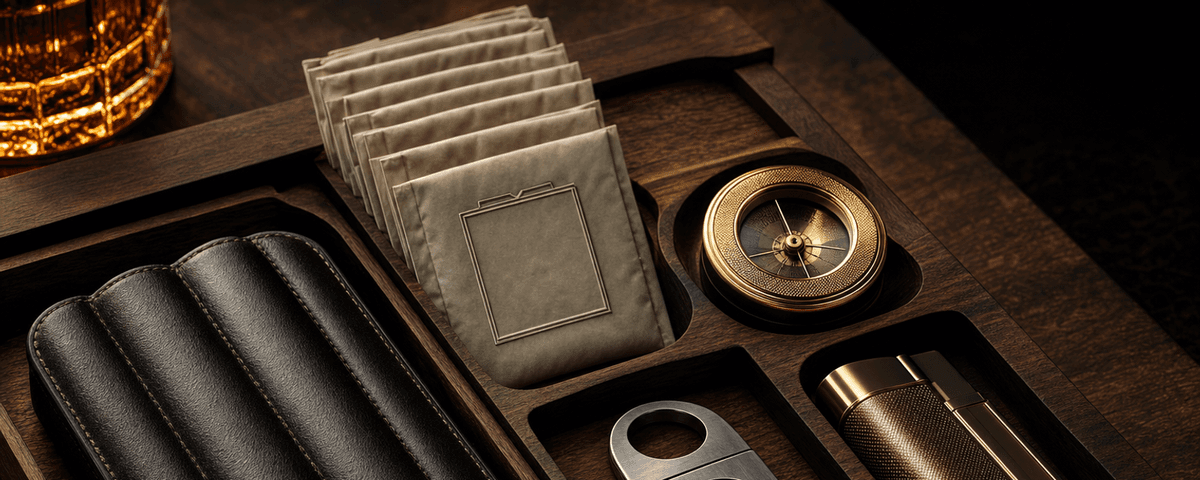
雪茄剪 / 打火機 / 雪茄盒 / Boveda
W Cigar 配件官網 · 專營雪茄配件正品

加 LINE 好友 · 文化諮詢
文化空間資訊 · 紳士沙龍 · 私人包場
本網站內容僅供雪茄文化、歷史、收藏與品吸知識研究參考。菸品有害健康、未滿法定年齡者請勿吸菸。實際規範請依所在地法律為準。
吸菸有害健康・戒菸專線 0800-636363・本站僅供 20 歲以上成年人閱覽。
讀到這裡,你不只是路過的人
留下 Email,加入 W 雪茄聖經內圈——總編輯 Wilson Tsai 親選的學院深文與國際新訊,先你一步送到信箱。
· 教育用途非銷售 · 隨時一鍵退訂 · Email 絕不對外公開 · 由勝茄股份有限公司營運
同分類延伸閱讀

資料來源:W Cigar Bible 編輯部整理 · 雪茄王子 Wilson Tsai 親自審稿
本文僅供雪茄文化、歷史、收藏與品鑑知識研究,不作為菸品促銷、銷售或購買建議。吸菸有害健康,未滿二十歲不得吸菸。