雪茄的風味加深技術:如何透過專業技巧提升品味體驗
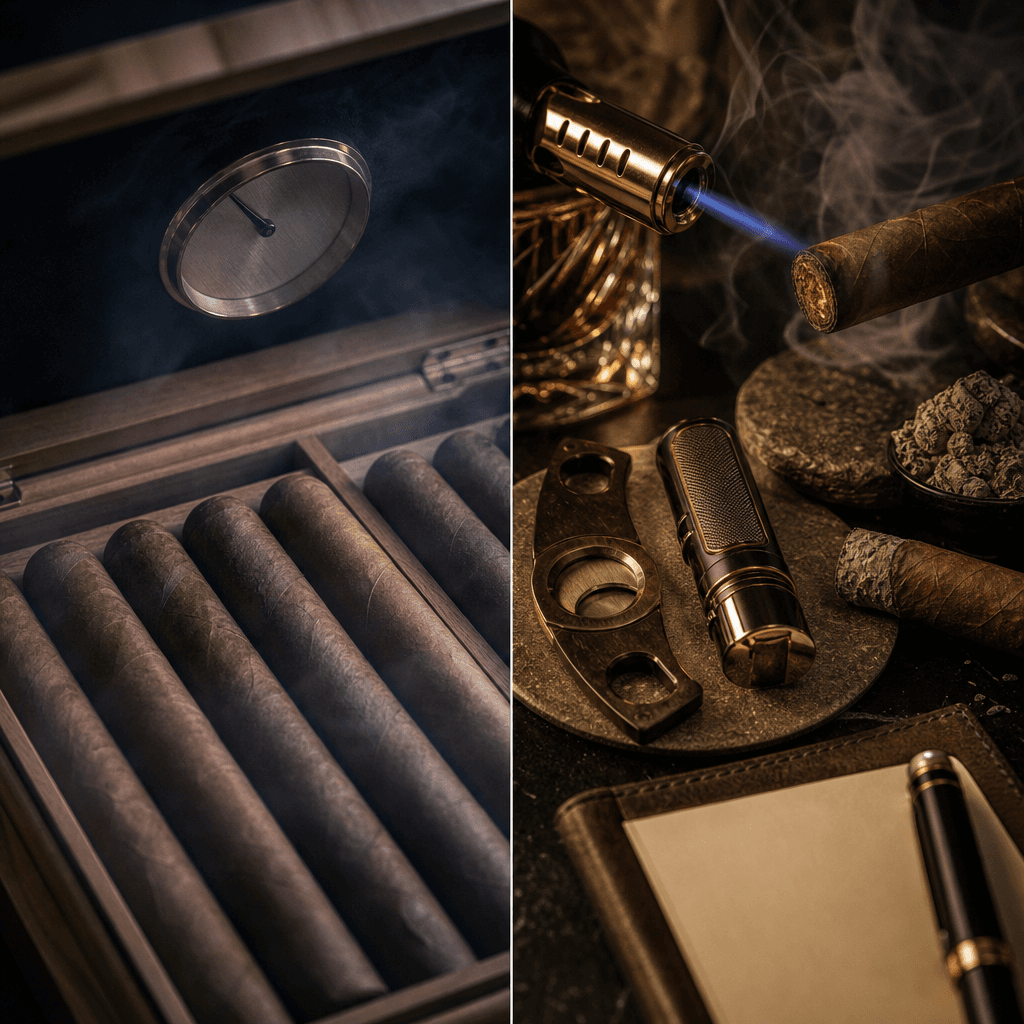
許多雪茄愛好者在品味時會發現不同的風味,這不僅取決於個人口味,還與溫濕度、剪切技巧、燃燒管理等因素密切相關。醇化雪茄時,穩定的保存環境比年份更重要,適當的剪切能影響氣流與香氣的釋放,而點燃時的火力控制則關乎整體燃燒效果。此外,搭配酒品時需考量酒的結構與雪茄的風格,以達到最佳的味覺平衡。環境因素如風速與濕度也會影響雪茄的風味表現,了解這些細節能讓品味過程更加豐富。
- 醇化的核心在於穩定的保存環境,而非單純追求年份的長短。
- 剪切方式影響氣流與香氣,應選擇合適工具與技巧。
- 環境因素如風速與濕度會影響雪茄的燃燒與風味表現。
Techniques to Deepen Cigar Flavors: How to Enhance Your Tasting Experience with Professional Skills
Many beginners already understand the basics of tasting and exhaling, yet often ask me: Why do some people taste wood, coffee, leather, and floral notes in the same cigar, while others only find it spicy? The difference is not entirely due to the sensitivity of taste buds, but rather the details of temperature, humidity, rhythm, cutting, burning, and pairing.
As an editor of the "Cigar Bible," I am more concerned with "repeatable tasting methods." True flavor deepening is not about mystifying cigars, but about using a stable set of techniques to help you understand the layers of a cigar over 30, 60, or 90 minutes.
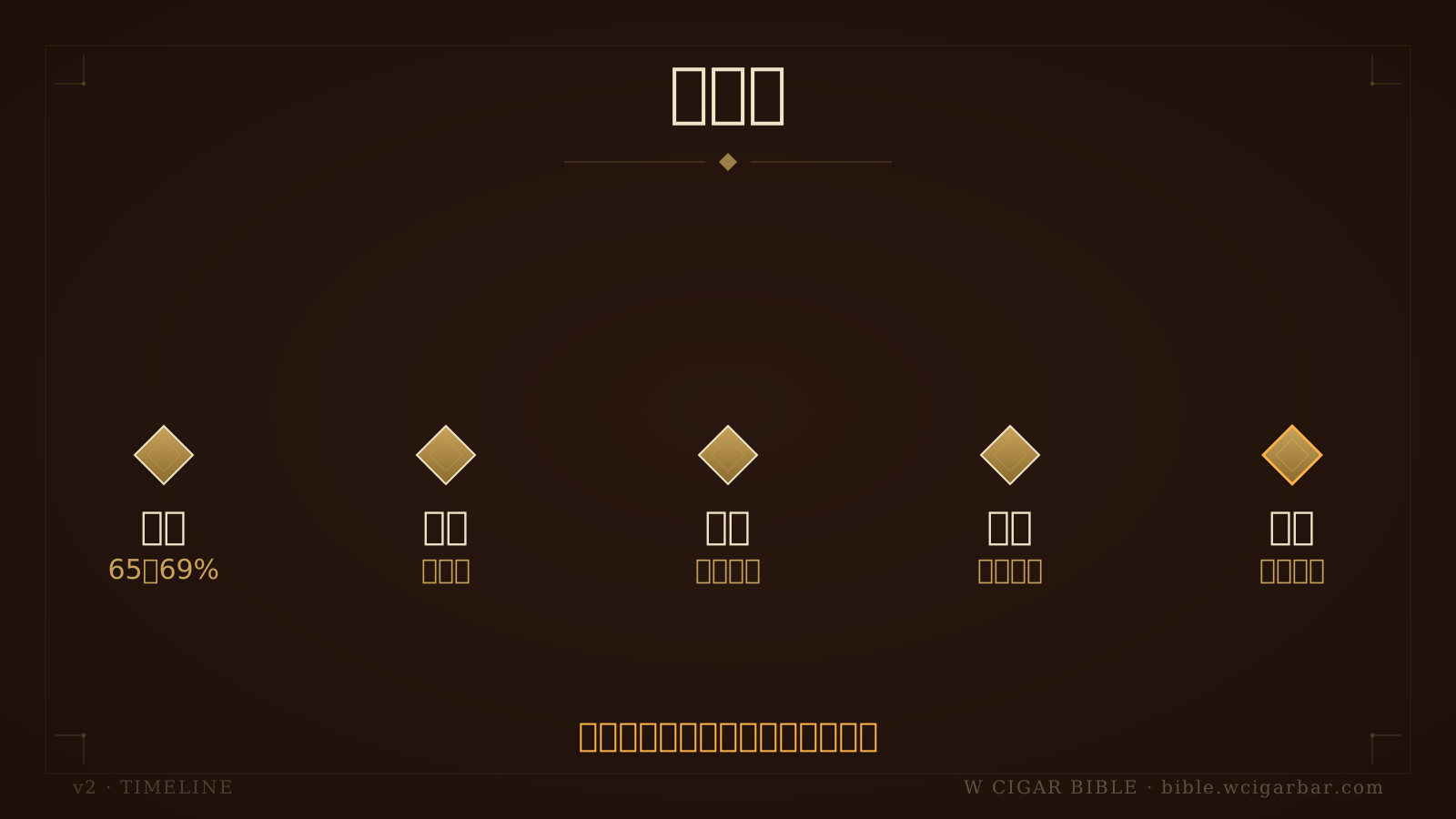
流程圖依序顯示穩藏、看帽、烘腳、控灰與記錄
Aging is Not Just About Time: The Balance of Time, Humidity, and Brand Personality
Many people think of aging as "the longer, the better," which is the first misconception. Taking Cuban Cohiba Siglo VI, Partagás Serie D No.4, and H. Upmann Magnum 46 as examples, I've encountered many different box codes from 2008 to 2016. The truly fascinating aspect is not the age number, but whether the storage environment is stable. The core of aging is not to pursue age but to reduce harshness, blend aromas, and ensure smoother burning.
My basic setting is 18 to 21°C, with a relative humidity of 65% to 69%, and fluctuations within the box should be controlled within 3%. For larger gauges like Robusto or Toro, they usually round out noticeably in 6 to 18 months; for Lonsdale or Corona Gorda, due to their slender proportions, aroma changes may be perceived more quickly. If a new cigar has a noticeable ammonia smell, it can be left to rest for 90 days before evaluation.
Aging also depends on the brand's character. Bolívar Belicosos Finos often have earthy, black pepper, and strength notes when young; Hoyo de Monterrey Epicure No.2 leans towards creamy, woody, and gentle floral aromas. Collecting for appreciation does not guarantee value increase; it still depends on the source's preservation and the market. For beginners, recording "box entry date, humidity, tasting date, burning condition" is more reliable than blindly chasing age.
Cutting and Opening: Flavor Concentration Starts with the First Cut
Cutting seems like just an opening, but it actually affects airflow, tar accumulation, and aroma concentration. Taking the 52-ring gauge Montecristo Open Eagle as an example, if cut too deep, the smoke volume is large but tends to be hot, amplifying the spiciness; if cut too shallow, airflow is obstructed, making woody and cocoa aromas difficult to unfold. Whether the first puff of a cigar is clean often depends on whether the cut is smooth and whether the cap structure is retained.
I often recommend beginners prepare three tools: a straight cutter, a V-cutter, and a punch, and observe the differences on different sizes. A straight cutter is most intuitive for Robusto, while Torpedo or Belicoso can be cut at a small angle first, then add 1mm as needed for airflow; large ring gauge cigars using a V-cutter can often increase the smoke area while retaining concentration. A punch is suitable for short enjoyment or when wanting to reduce leaf fragments entering the mouth, but rich types may more easily focus tar flavors in the later stages.
When practicing, remember three steps:
- First, identify the cap line and cut inside the cap, avoiding cutting through the shoulder.
- After cutting, dry draw to feel if the resistance is like sipping a slightly thick beverage through a straw.
- If too tight, adjust slightly, don't overcut all at once.
With a correct cut, flavors will be more stable. Taking Arturo Fuente Hemingway Short Story as an example, if the small Perfecto is opened too quickly, the initial sweetness will be overwhelmed by heat; slowly expanding it can instead retain cedar, honey, and roasted aromas.
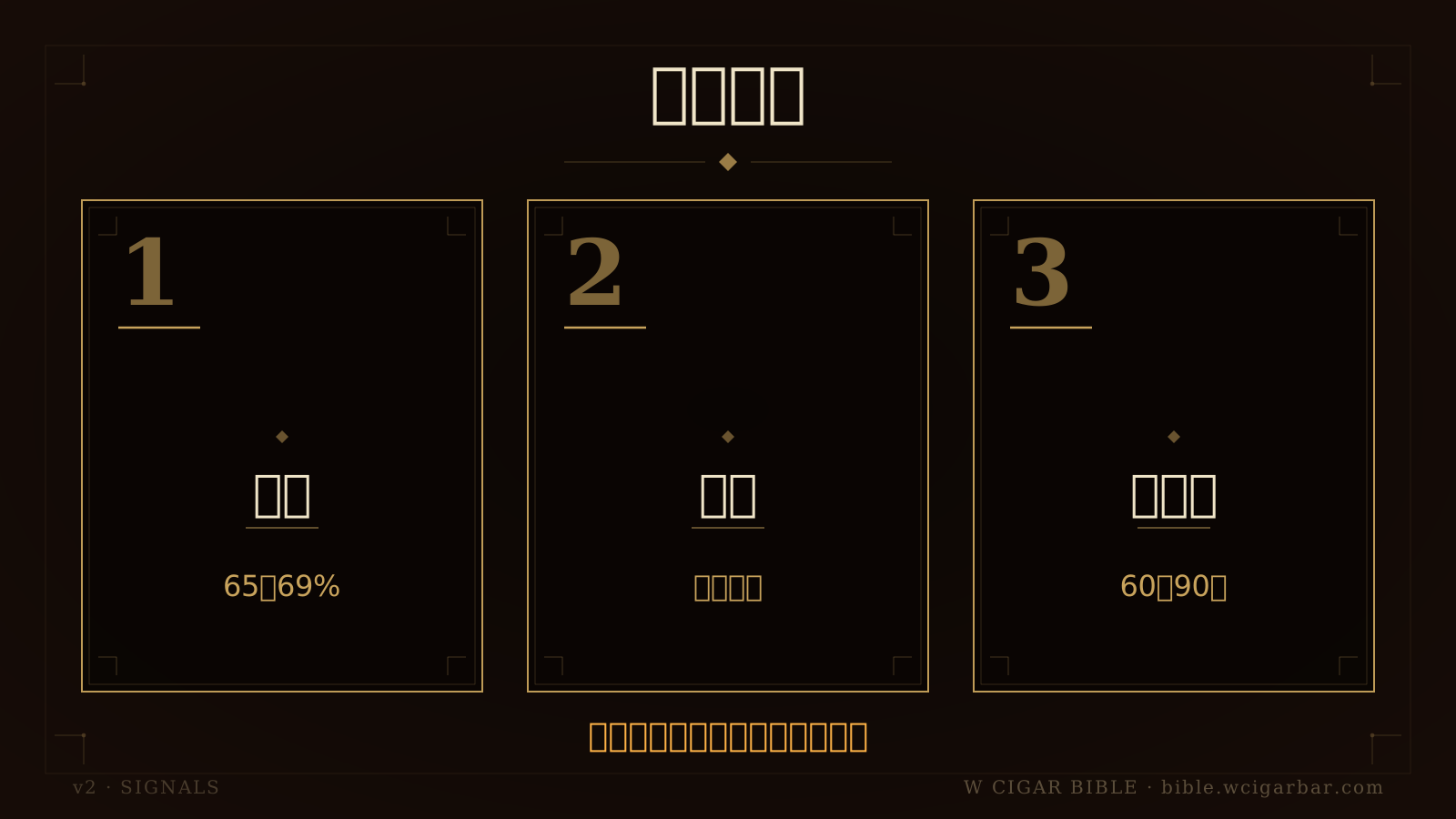
三張卡列出穩濕、準剪與慢節奏的核心方法
Lighting and Burn Management: Bigger Flames Don't Mean More Professional
Lighting a cigar should not be rushed. Many people use a torch to directly burn the center of the foot, resulting in uneven burning with the outer ring not fully ignited, leading to canoeing within the first 5 minutes. The correct method is to toast the outer ring first, making the foot's edge evenly blackened, then use a short flame to ignite the center. Good burning is not about intense flames but about getting the wrapper, binder, and filler to work in harmony.
I control the flame distance to 2 to 4 cm, avoiding the flame tip directly contacting the tobacco for extended periods. If it's a high-humidity batch commonly seen after 2020, not fully stabilized after boxing, lighting can easily cause bubbling, canoeing, or extinguishing. This doesn't mean the brand is bad, but it could be due to moisture content, indoor temperature differences, and enjoyment rhythm. When correcting, only fix the slow-burning side, don't reburn the entire circle, or the bitter taste will thicken.
During burning, observe the ash column. A stable cigar's ash is usually light gray, silver-gray, or black and white interlaced; when the length is maintained at 1.5 to 2.5 cm, gently tap it off; if the ash is too long, it affects ventilation, too short, and the burning temperature can rise easily. For instance, the Padron 1964 Anniversary Maduro has charming sweet cocoa and coffee notes, but if the rhythm is too fast, the later stages will turn into caramel bitterness and black pepper pungency, compressing the flavor depth.
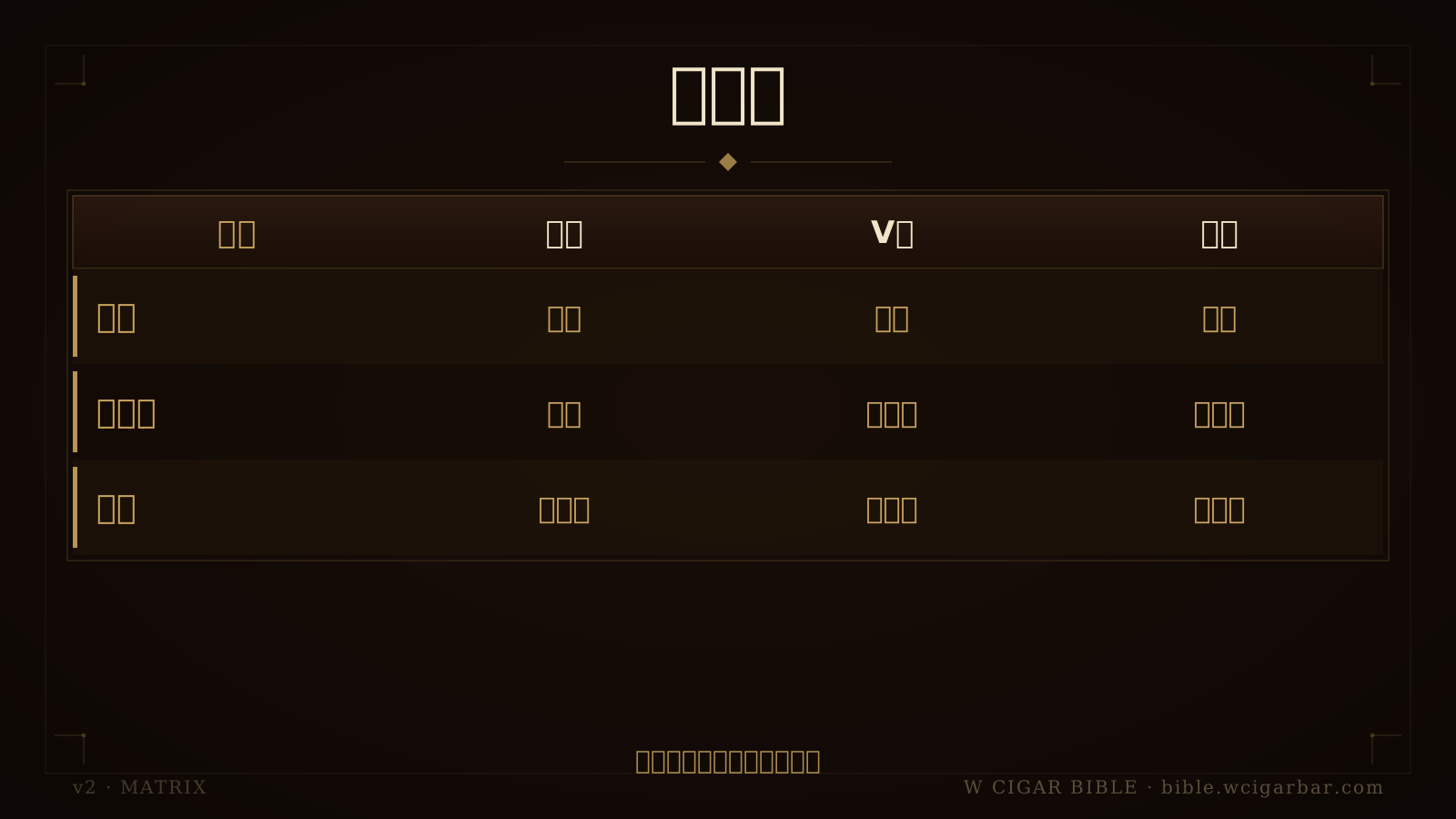
矩陣表比較直剪、V剪與打孔在氣流和集中感的差異
Rhythm, Temperature, and Exhaling: Slow is the Strongest Flavoring Technique
The same cigar, completed in 60 minutes versus 95 minutes, can taste completely different. Taking Romeo y Julieta Wide Churchill as an example, the initial stage often has red tea, dry wood, and light fruit acidity; if puffed every 20 seconds, the temperature rises, and the middle stage becomes spicy, with sweetness thinning. If changed to every 60 to 90 seconds, cream and roasted nut notes usually emerge more easily. Controlling the rhythm is controlling the burning temperature; controlling the temperature is controlling the flavor depth.
When tasting, don't rush to exhale clouds of smoke; instead, let the smoke linger in the mouth for 2 to 4 seconds, feeling the tongue surface, palate, and retronasal aroma. Advanced tasters can practice a small amount of retrohale, which means releasing a minimal amount of smoke through the nasal cavity, but beginners should not do too much at once, or the spiciness will overshadow the details. It's recommended to start with 3 retrohales per cigar: once in the initial stage, once in the middle, and once in the final stage, observing whether the aroma transitions from herbal, woody to coffee, leather, or spice.
When you feel the cigar suddenly becomes bitter, don't blame it immediately. Check three things: are the puffs too frequent, is the cigar body too hot, is the ash column too short? In my experience, many "bad smokes" are actually due to failed temperature management. Put the cigar down for 2 minutes, let the burning slow down, then lightly correct the canoeing; this often saves more than half of the flavor.
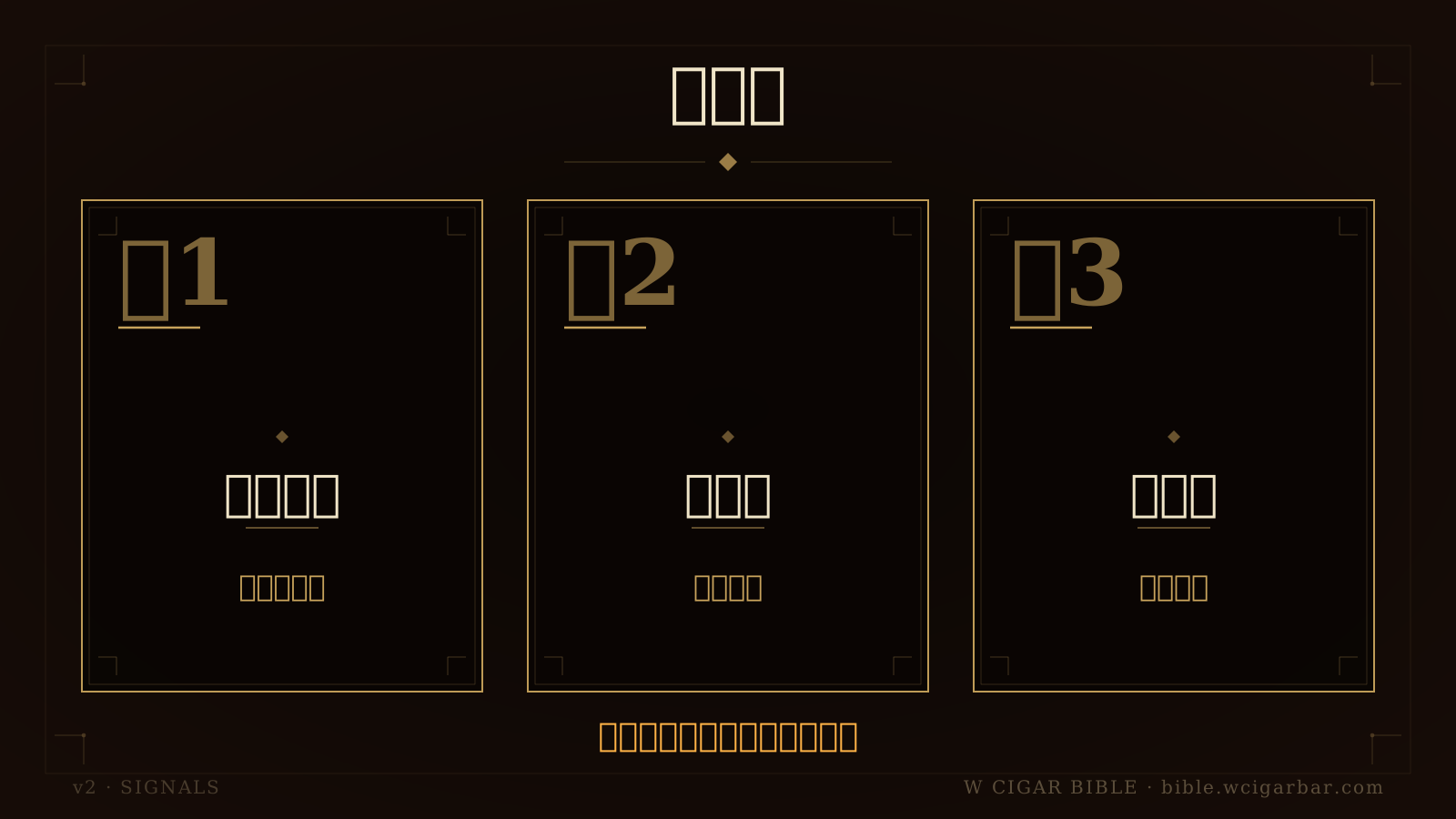
三張錯誤卡提醒越久越好、火越大與抽太快的問題
Pairing with Drinks: It's Not About Strength, But Structural Support
The key to pairing cigars with drinks is whether the body, sweetness, oak, acidity, and cigar strength communicate. A young Partagás Serie P No.2 paired with a peaty whisky over 46% may become spice against spice, with beginners only finding it stimulating; but if replaced with a 12 to 15-year-old sherry cask single malt, raisin, cocoa, and woody notes connect more easily. The purpose of pairing is not to let the drink overpower the cigar, but to complement the cigar's unfinished aftertaste.
I often use a three-layer logic: light cigars with light drinks, medium cigars with drinks with barrel notes and sweetness, and rich cigars with structurally thick spirits or dark sweet wines. Davidoff Grand Cru No.2 can be paired with champagne or aged brandy, enhancing cream and almond notes; Cohiba Robustos can be paired with 18-year-old cognac, amplifying honey, cedar, and leather; Nicaragua Maduro types are suitable for dark rum or port cask whisky.
| Cigar Style | Suggested Drink | Flavor Effect | Notes |
|---|---|---|---|
| Gentle Floral | Champagne, Dry Sherry | Brightens acidity and floral notes | Avoid too sweet |
| Woody Creamy | Cognac, Bourbon | Increases vanilla and oak | Alcohol should not be too strong |
| Rich Spicy | Sherry Cask Whisky, Dark Rum | Carries cocoa and spice | Sip slowly |
| Mature Leather | Aged Cognac, Port Wine | Extends the aftertaste | Control sweetness |
If you don't drink alcohol, black coffee, unsweetened oolong, or sparkling water are also great. Especially sparkling water can cleanse the palate, allowing you to rediscover sweet, bitter, sour, and salty notes in the middle of a 90-minute cigar.
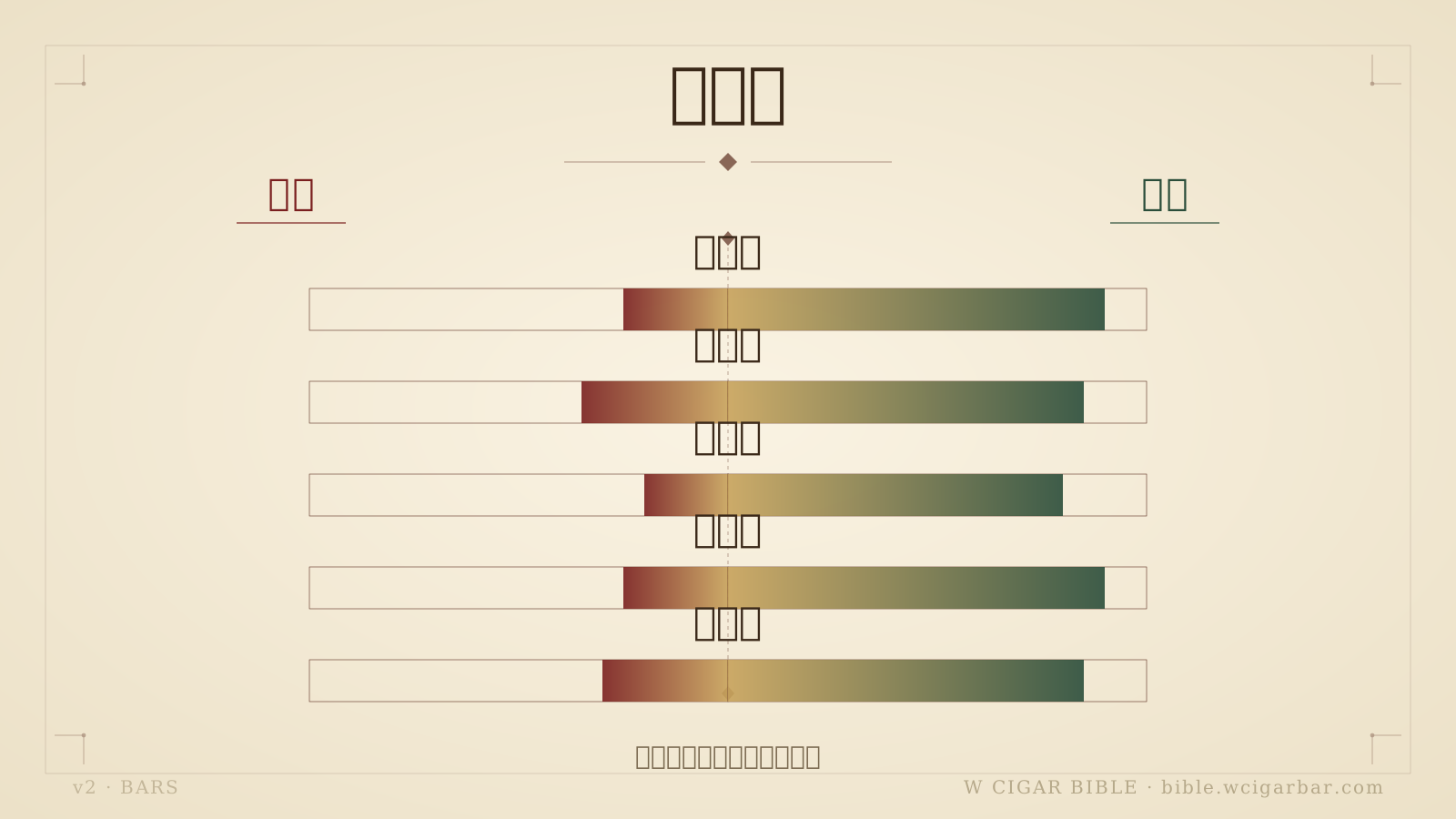
長條圖比較急品與細品在濕度、剪口、火力與節奏的差別
Environment Affects Taste: Wind, Humidity, Seating, and Timing
Many people overlook the environment. If the outdoor wind speed exceeds 3 meters per second, cigars will burn quickly, increasing the rate of canoeing, and aromas will be dispersed before they gather; if indoor humidity is below 50%, the wrapper surface dries quickly, possibly cracking in the initial stage; if humidity is above 75%, burning becomes stifled. The environment is not the background but a part of the flavor; where you sit, the cigar speaks differently.
I habitually write down the time and place in my flavor notes. At 9 PM, 40 minutes after dinner, taste buds and body state are usually more suitable for medium to high-intensity cigars than on an empty stomach in the afternoon. Small sizes like Trinidad Reyes are beautiful for short post-meal sessions, with clear coffee, hay, and honey notes; but if enjoyed in a cold wind, the initial stage quickly becomes sharp, and the middle stage is difficult to unfold. Conversely, large sizes like H. Upmann Magnum 54 require a more stable seat and time, not suitable for enjoying while walking.
Seating choice also involves etiquette. Avoid strong wind spots, direct air conditioning, or high-traffic areas, as it protects burning and respects those around you. If sharing a table with friends, the conversation rhythm may unconsciously speed up your puffs, so you can set a small rule of "at least 60 seconds between each put-down." This seemingly simple environment management often proves more effective than switching to higher-priced cigars.
Building Your Own Flavor Notes: Train Taste Memory with Data
Flavor ability is not about memorizing adjectives but about comparable records. I've been writing cigar notes since the 2000s, and the most useful part is not the fancy words but the fixed fields: brand, size, box code or year, storage humidity, cutting method, fire source, pairing drink, initial-middle-final stage description, burning issues, and summary. The value of notes is in knowing what you like and why you like it.
Beginners can use a 10-point scale, but don't just give an overall score. It's recommended to break it down into aroma 2 points, structure 2 points, burn 2 points, balance 2 points, and aftertaste 2 points. For example, a 2019 box of Montecristo No.2, if the initial stage has good almond and woody notes, cocoa appears in the middle, but burning requires 3 corrections, you can give aroma 1.7, structure 1.6, burn 1.2, balance 1.5, aftertaste 1.4. This way, when comparing a 2021 box next time, the differences will be much clearer.
You can also build your own vocabulary. Don't start by chasing advanced terms like "leather, barn, mineral," but begin with sweet, bitter, sour, salty, spicy, dry, oily, thick, thin. Then gradually connect food memories: black coffee, toasted bread, walnuts, dried tangerine peel, black tea, grass, cedar. After recording 20 cigars in three months, you'll find that your taste doesn't become divine but becomes accurate.
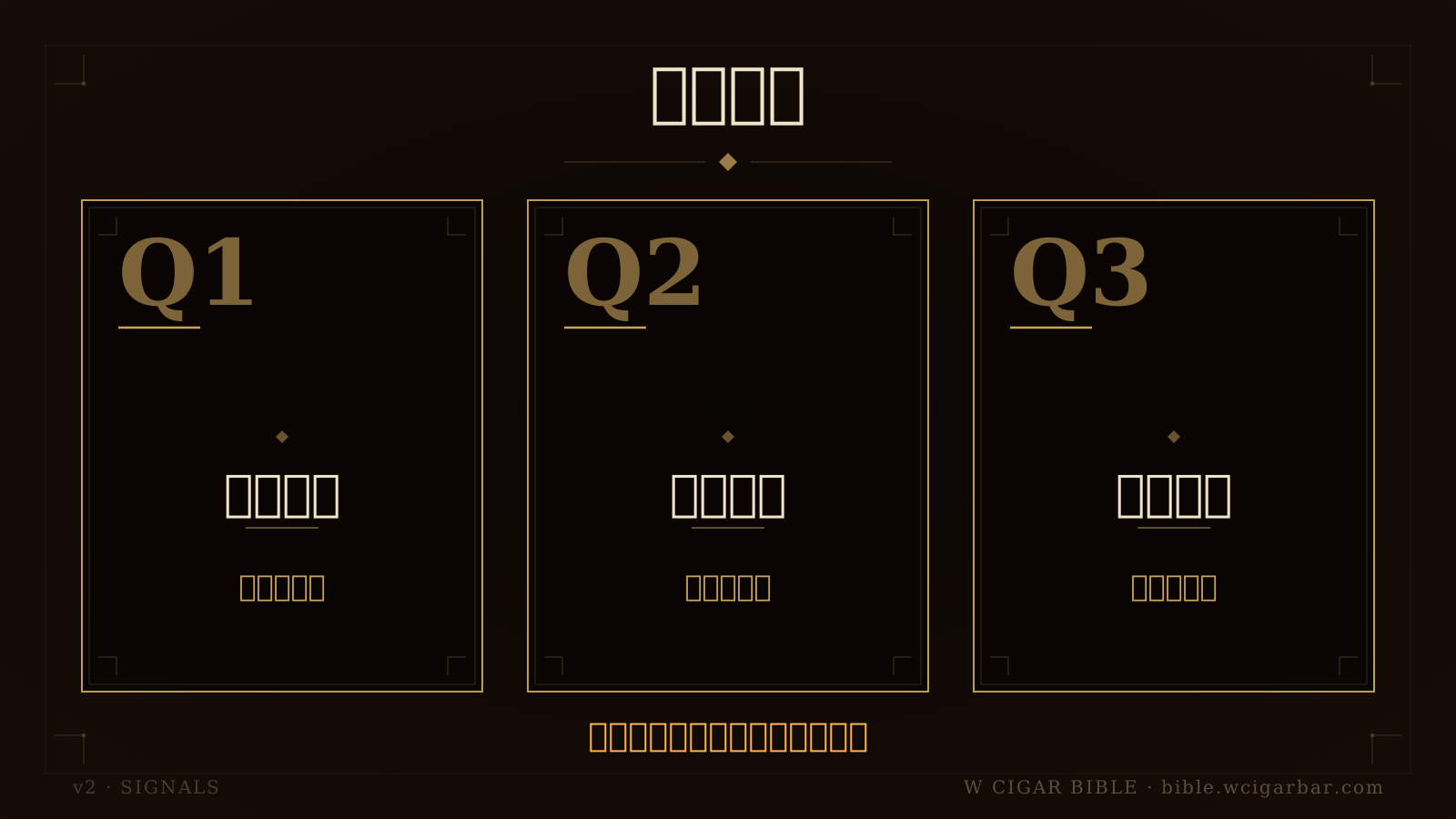
問答卡整理醇化時間、辣味原因與斜燒處理方式
Etiquette and State Management: True Depth Comes from Restraint
Cigar tasting involves etiquette. Don't bring someone else's cigar close to your nose and sniff hard, don't cut or light someone else's cigar without asking, and don't burn the flame of a lighter directly to someone else's hand. When conversing, the cigar should naturally rest on the ashtray, not waved around. Those who understand etiquette make themselves and others more relaxed; when relaxed, flavors become more refined.
Body state also affects perception. An empty stomach, staying up late, catching a cold, or just having strong drinks will amplify nicotine and spiciness. If it's your first time with a richer Liga Privada No.9 or Oliva Serie V Melanio Maduro, it's recommended to enjoy after a meal, with water, at a slow pace, and choose a complete time of 60 to 75 minutes. If you experience dizziness or cold sweat, stop immediately and replenish sugar and water; it's not a matter of pride.
Restraint also includes not smoking every cigar down to the last 1 cm. Most cigars, when reaching the last 3 to 4 cm, increase in temperature, tar, and concentration; if the flavor has started to muddle, end gracefully. True mature tasting is not about enduring to the end but knowing when to stop, preserving the best memory of a cigar.
Common Questions
For beginners, the most important thing to practice for enhancing cigar flavor is rhythm and recording, not rushing to chase high age or high intensity. First, master one puff every 60 to 90 seconds, humidity 65% to 69%, fixed cutting method, and fixed notes, and many flavors will naturally emerge.
Q1: How long should cigars be aged?
There's no single answer. Generally, Robusto can be observed for 6 to 12 months, while rich or large sizes can be left for 18 to 36 months for comparison. The key is stable humidity, not just time.
Q2: Why do I only taste spiciness?
Common reasons are too frequent puffs, too hot burning, too new cigars, or an empty stomach. First, slow down to one puff per minute and pair with sparkling water to cleanse the palate.
Q3: What if I cut it wrong?
If cut too shallow, adjust by 1 mm; if cut too deep causing loose leaves, use your lips to lightly press and stabilize, and reduce puff frequency. Remember to retain the cap next time.
Q4: Is whisky always the best pairing?
Not necessarily. Gentle cigars paired with champagne, oolong, or black coffee may be cleaner; rich cigars are more suitable for whiskies or rums with thick barrel notes.
Q5: Should I immediately correct a canoeing cigar?
For slight canoeing, first rotate the cigar, letting the slow-burning side face down. If it exceeds 5 mm, then correct it, only fixing the slow side, avoiding reburning the entire circle.
Q6: Are more expensive cigars always deeper in flavor?
Not necessarily. Price is influenced by production, age, brand, and market. Poorly preserved expensive cigars may not be as good as classic regular ones in stable condition.
I always believe that the charm of cigars lies not in showing off but in quietly observing time, fire, air, and your own senses. When you can articulate why a cigar is good, when it's good, and what pairs well with it, you're not just enjoying it but conversing with it. Slow down, be precise, be humble, and the flavors will naturally deepen.
—Cigar Prince Wilson Tsai
Smoking is harmful to health. Under 20 years old is prohibited from smoking. Quitline: 0800-636363. This article is intended for adults over 20 years old as a reference for cigar culture, preservation, and regulations, not as tobacco advertising, promotion, or purchase advice.
Like this article?Share with friends
Share this W Cigar Bible piece with friends who want to learn cigar culture, storage, and tasting.
想把這篇 化為實踐
雪茄聖經是知識;雪茄文化要在空間裡發生

W Cigar Bar 大安總店資訊
台北大安區 · 雪茄聖經總編輯 Wilson Tsai 主理的雪茄文化空間
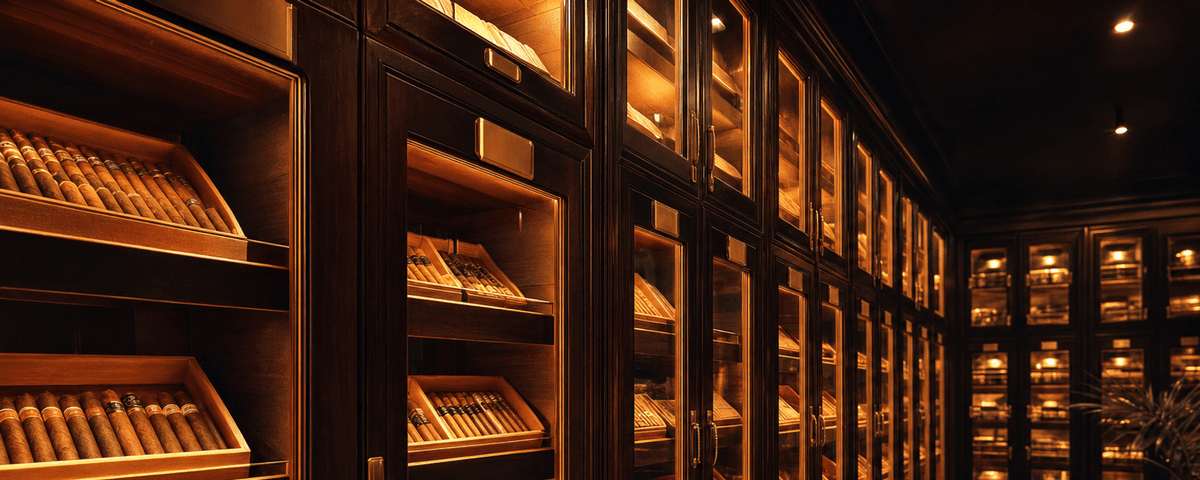
33 座 24 小時恆溫恆濕醇化室
W Cigar Bar 提供的會員醇化空間 · 場地資訊請洽編輯部
雪茄剪 / 打火機 / 雪茄盒 / Boveda
W Cigar 配件官網 · 專營雪茄配件正品
加 LINE 好友 · 文化諮詢
文化空間資訊 · 紳士沙龍 · 私人包場
本網站內容僅供雪茄文化、歷史、收藏與品吸知識研究參考。菸品有害健康、未滿法定年齡者請勿吸菸。實際規範請依所在地法律為準。
吸菸有害健康・戒菸專線 0800-636363・本站僅供 20 歲以上成年人閱覽。
讀到這裡,你不只是路過的人
留下 Email,加入 W 雪茄聖經內圈——總編輯 Wilson Tsai 親選的學院深文與國際新訊,先你一步送到信箱。
· 教育用途非銷售 · 隨時一鍵退訂 · Email 絕不對外公開 · 由勝茄股份有限公司營運
同分類延伸閱讀
資料來源:W Cigar Bible 編輯部整理 · 雪茄王子 Wilson Tsai 親自審稿
本文僅供雪茄文化、歷史、收藏與品鑑知識研究,不作為菸品促銷、銷售或購買建議。吸菸有害健康,未滿二十歲不得吸菸。