雪茄的風味解構:探討不同產區的獨特香氣與口感
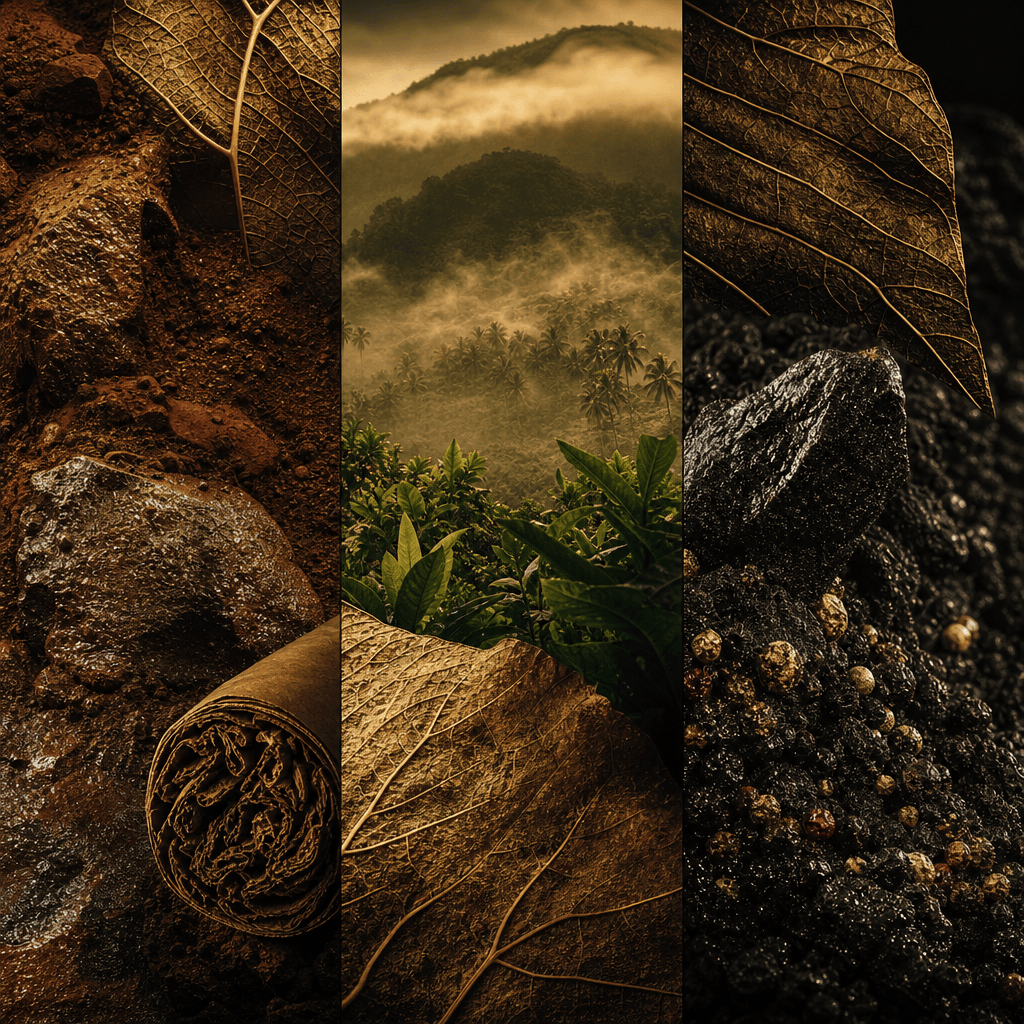
在雪茄的世界中,風味的多樣性源於產區、土壤、氣候及工藝的交互影響。古巴的 Vuelta Abajo 以礦物感和鹹甜平衡著稱,展現草本與木質的層次感。多明尼加的 Cibao Valley 則以花香和奶油風味為主,強調發酵的細膩與圓潤。尼加拉瓜的 Estelí 地區則以火山土壤帶來的黑胡椒和高張力甜感,吸引了眾多進階玩家。宏都拉斯和墨西哥則以深色土壤感及皮革調性,展現厚重的風味特徵。了解這些產區的獨特
- 不同產區的土壤與氣候影響雪茄風味,了解這些因素有助於品味雪茄的層次感。
- 古巴的雪茄以鹹甜、礦物與木質變化為特徵,需注意煙氣的細緻度與尾段的鹹味。
- 多明尼加雪茄的高階風味源於發酵與分級,需辨識香氣的推進與圓潤度。
Deconstructing Cigar Flavors: Exploring the Unique Aromas and Tastes of Different Regions
As the editor of the "Cigar Bible," I am often asked the same question by veterans: Why do some cigars, with similar notes of wood, cocoa, and leather, resemble the damp stone walls of a Havana afternoon, while others are like black pepper on the volcanic slopes of Nicaragua? The answer lies not in a single brand but at the intersection of region, soil, climate, and craftsmanship.
True advanced sensory training is not about memorizing flavor charts but understanding where flavors originate. When you know how the red soil of Vuelta Abajo, the volcanic soil of Estelí, and the humid climate of the Cibao Valley alter the structure of tobacco leaves, the sweet, salty, spicy, sour, and oily sensations on your palate become contextual.
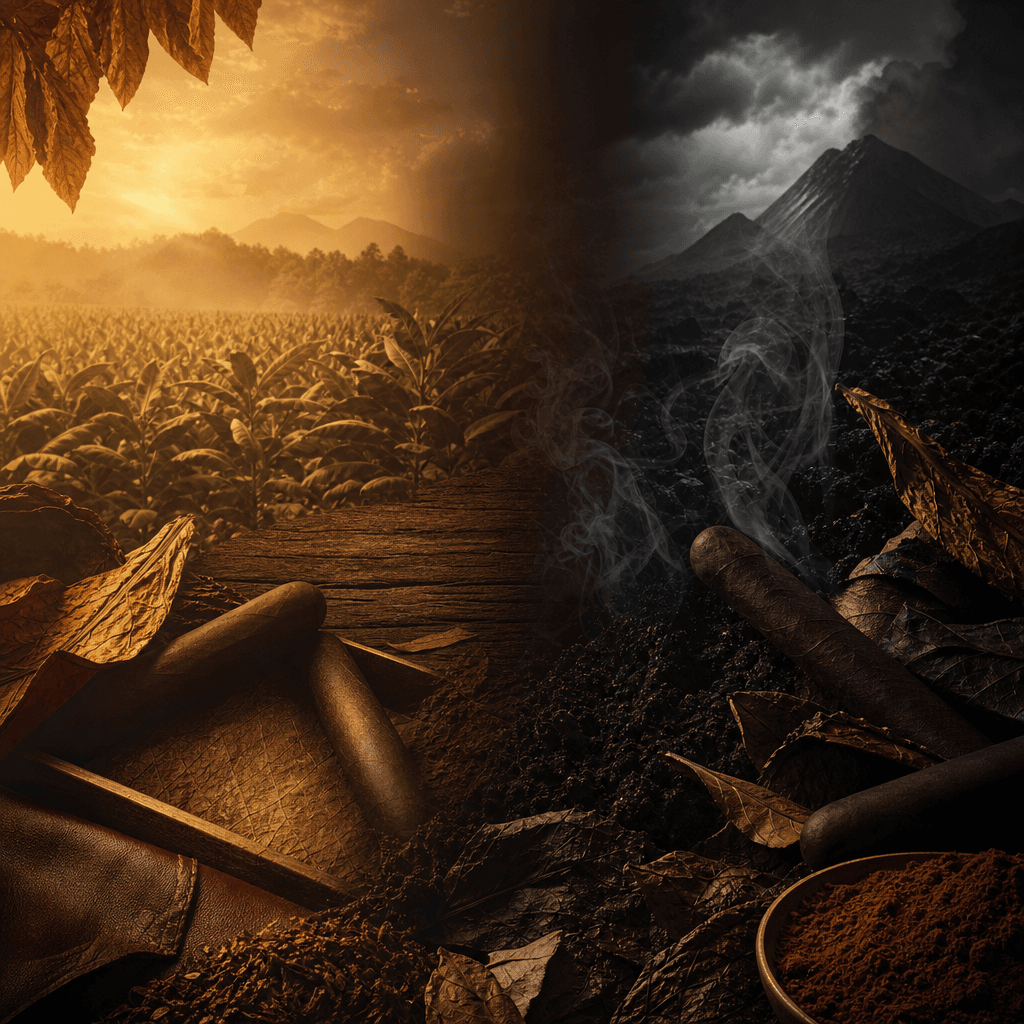
時間軸呈現土壤氣候採收發酵與醇化流程
Cuba Vuelta Abajo: Mineral Sensation, Sweet-Salty Balance, and Classic Harmony
Cuba's most representative core region is Vuelta Abajo in the Pinar del Río province. With an average annual temperature of about 24 to 26°C and distinct wet and dry seasons, the red sandy clay soil offers excellent drainage, allowing tobacco roots to absorb minerals deeply. Cigars like Cohiba Siglo VI, Partagás Serie D No.4, and Montecristo No.2 are often compared by veterans to showcase three expressions of Cuban flavor: grassy cream, dark wood, and coffee leather.
The key to identifying Cuban cigars is not simply "smoothness" but the continuous variation of sweet-salty, mineral, dry grass, and mid-section woodiness. After 2006, Cuban factories gradually stabilized their grading and quality control, but handmade products still vary by year and storage conditions. For instance, some box-pressed cigars from 2014 to 2016 often exhibited more pronounced herbal and cedar notes, which mellowed over the years, revealing clearer cream and nut flavors.
Sensory-wise, Vuelta Abajo tobacco often has a "wet stone" and light saltiness, especially when the smoke is finer in the early stages, making it easy to overlook. Compared to Nicaragua, Cuba rarely exhibits a linear black pepper explosion but instead layers cedar, toasted bread, and honey in its finish. For blind tasting, veterans should first note whether the smoke is delicate, the acidity is low, and the finish carries a mineral saltiness.
The collector's market often discusses cases like the 2003 Cohiba Selección Reserva and the 2010 Behike 52, but I must remind you: Collection appreciation does not guarantee value increase; it still depends on source preservation and market conditions. For me, the value of Cuban cigars lies primarily in their flavor structure, not label myths. If the burn is unstable or storage is imbalanced, even the rarest vintage loses its appeal.
三張卡片整理風土甜辛位置與工藝影響
Dominican Republic: Floral, Creamy, Woody, and Elegant Fermentation
The core of the Dominican Republic lies in the Cibao Valley, particularly around Santiago. With high humidity and relatively mild day-night temperature differences, the soil is mainly clay and alluvial, and the tobacco matures slower than in Nicaragua, often exhibiting floral, creamy, nutty, and gentle woody notes. Arturo Fuente, Davidoff, and La Flor Dominicana each showcase different power curves of the Dominican Republic.
The advanced flavors of Dominican cigars are not just "light" but cleanly fermented, with smooth smoke and clear aromatic boundaries. For example, the Arturo Fuente OpusX, launched in 1995, shattered the perception that the Dominican Republic couldn't produce strong wrappers. The Rosado wrapper from Chateau de la Fuente brings red pepper, sweet wood, leather, and creamy spice, proving that the region can also have profound strength.
Davidoff's typical expression leans more towards a sense of order. Looking at the Grand Cru, Signature, and Aniversario series, they often start with white pepper, almond, dry grass, and light floral notes, with cream and cedar emerging in the mid-section, maintaining cleanliness in the finish. This style is suitable for training "detail recognition": not pursuing intensity but comparing whether the aroma progresses from the front to the end.
The key to Dominican craftsmanship lies in fermentation and grading. Many high-end brands ferment tobacco leaves for 18 to 36 months, then classify them by leaf position and oiliness. High-position Ligero provides strength, Seco offers aroma, and Volado improves combustion. If a Dominican cigar exhibits ammonia, tongue sting, or concentrated bitterness, it usually indicates that aging or storage has not yet reached balance.
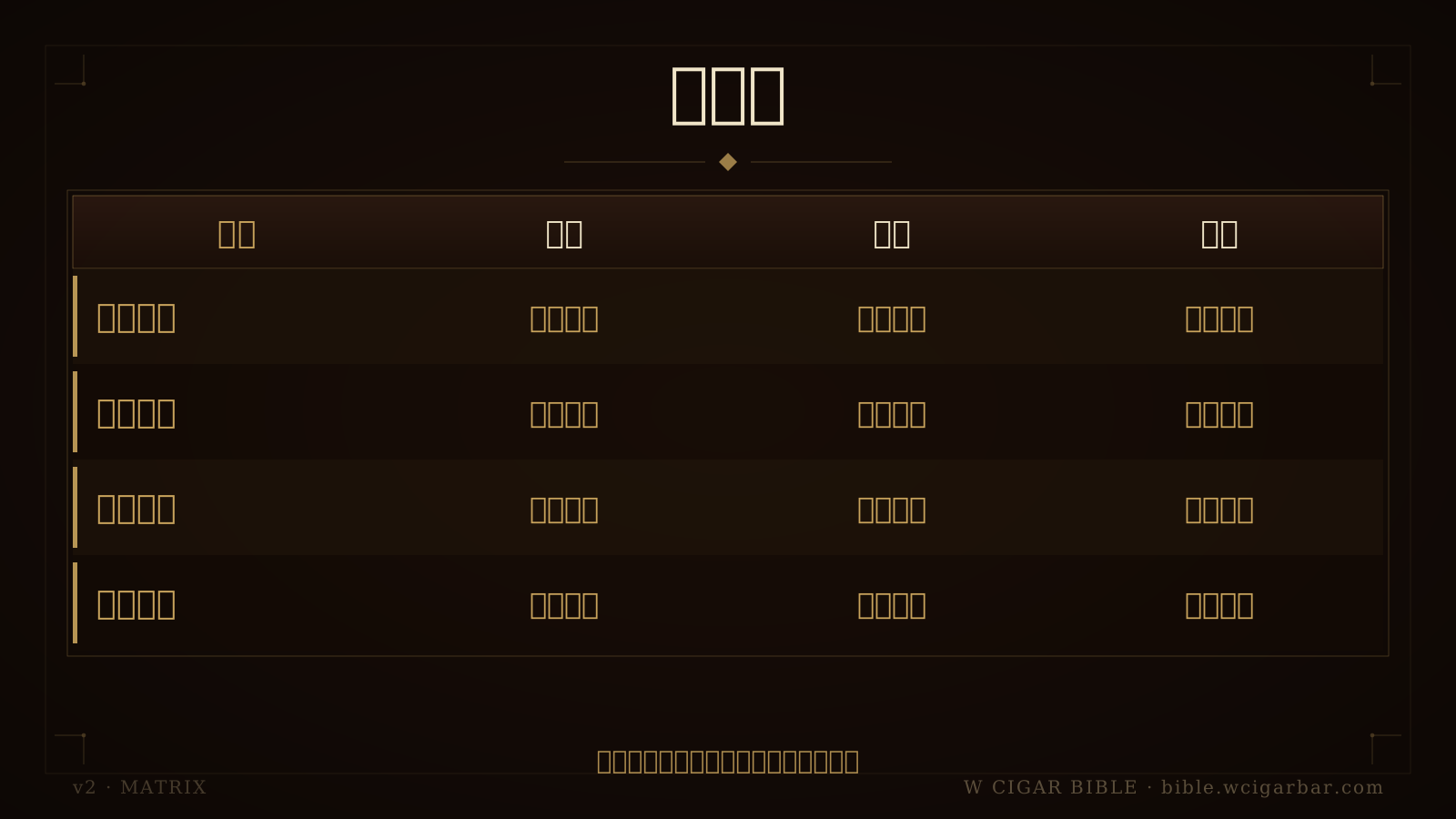
矩陣比較古巴多明尼加與尼加拉瓜風味線索
Nicaragua: Volcanic Soil, Black Pepper, and High-Tension Sweetness
Nicaragua has become one of the most valued regions by advanced players in the past two decades, with core areas including Estelí, Jalapa, Condega, and Ometepe. Estelí's soil is rich in volcanic minerals, with a drier climate, resulting in thicker leaves with high oil content, often carrying black pepper, concentrated coffee, cocoa, and roasted nuts. Padrón 1964 Anniversary, Oliva Serie V, and My Father Le Bijou 1922 are typical examples.
The charm of Nicaragua lies in its high tension: strong power, but good works have sweet support, not just spiciness. Estelí leaves often provide structure and strength; Jalapa leaves are sweeter, with honey, red soil, and floral notes; Condega is between the two, balancing herbal and woody elements. Many excellent blends use Estelí as the core, softened by Jalapa.
Taking Padrón 1964 as an example, it often presents cocoa powder, coffee grounds, black pepper, caramel, and dried fruit sweetness. Oliva Serie V emphasizes clean burning and rich creamy cocoa, with a high Ligero ratio, yet should not only feel oppressive. In blind tasting, if you feel the smoke is thick, with immediate spicy aromas upon entry, and black chocolate and soil sweetness appear in the mid-section, it is likely a Nicaraguan route.
Craftsmanship-wise, Nicaraguan brands are often skilled at using thicker fillers and reducing irritation through longer aging. Veterans should note the difference between "strong" and "coarse": strong can have layers, while coarse is a mix of spicy, bitter, and burnt. Truly excellent Nicaraguan cigars, even at high concentrations, still allow the nose to identify cocoa, cinnamon, cedar, and dried fruit.
Honduras and Mexico: Earthiness, Leather, and Dark-Toned Aromas
Honduras' Jamastran Valley and Talanga Valley have fertile soil and stable sunlight, with flavors often featuring earthiness, leather, charcoal, coffee, and dark spices. Camacho, Alec Bradley, and Punch Honduras make Honduras an unmissable region for power players. It is not as bright and spicy as Nicaragua but leans more towards heavy, low, and smoky.
The key to identifying Honduras is the dark soil sensation and leather tone; if well-preserved, the finish will have a thickness similar to brown sugar and roasted coffee. Camacho Corojo is a classic example, following the Cuban Corojo variety route, with obvious spiciness but grounded in earth and leather. If the burn is too hot, these cigars tend to taste bitter, so the pace should be slowed.
Mexico's most representative area is the San Andrés region, where volcanic soil and humid climate result in dark, oily wrappers. San Andrés Maduro often carries dark chocolate, wet earth, prune, coffee, and a faint mineral bittersweetness. Works like Drew Estate Liga Privada and AJ Fernandez San Lotano Maduro use Mexican wrappers to enhance sweet-bitter balance.
Veterans often equate Maduro with sweetness, which is not entirely accurate. The sweetness of dark wrappers comes from maturity, fermentation, and sugar conversion; if fermentation is insufficient, it will exhibit sourness and bitterness. When identifying Honduras and Mexico, observe whether the smoke is thicker, the tongue has a dark chocolate bittersweetness, and the nose carries wet earth or leather, rather than just judging by wrapper color.
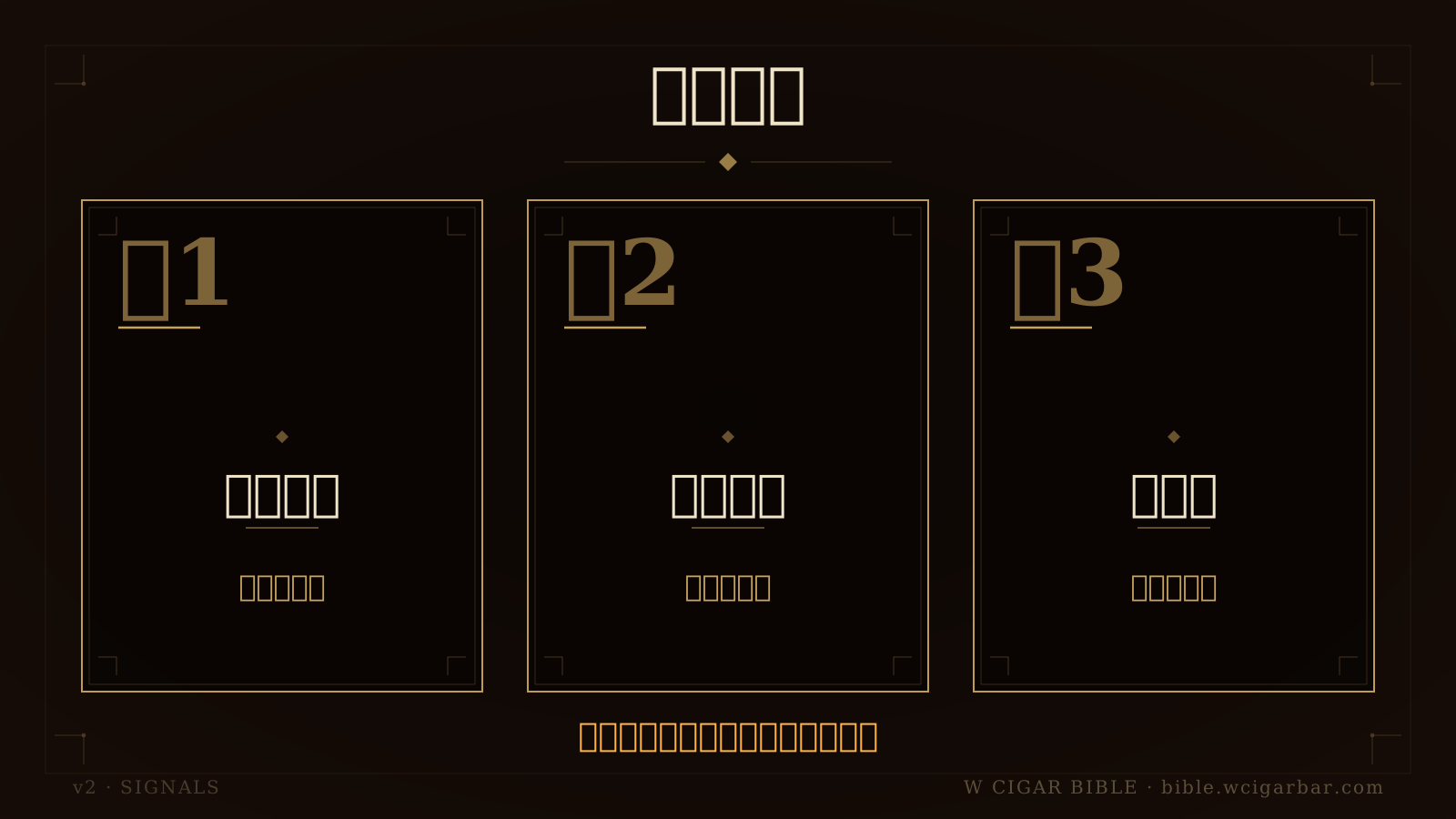
三張卡片列出只看強度茄衣獨大與抽太急
Ecuador and Cameroon Wrappers: Mist, Spices, and Surface Aroma Design
Ecuador's advantage lies in natural cloud cover, especially in the Los Ríos and Quevedo areas, where the sunlight is gentle, and the wrappers grow thinner, more delicate, and shiny. Connecticut Shade, Habano, and Sumatra varieties all perform well in Ecuador. Since wrappers affect 30% to 60% of the overall sensory experience, depending on size and blend, Ecuadorian wrappers are often used to precisely adjust the first impression.
Wrappers are not decoration but the first layer of filter for aroma entry; Ecuador often carries floral, creamy, white pepper, and gentle sweetness. For example, Ashton VSG uses Ecuadorian Sumatra wrappers, paired with Dominican fillers, forming a balance of spice, wood, and cream. Oliva Serie V Melanio uses Ecuadorian Sumatra to bring out cocoa and roasted sweet aromas.
Cameroon wrappers are another source of advanced spice aroma. They are often thinner, crisp, with cinnamon, cardamom, roasted peanuts, and sweet wood. Arturo Fuente Hemingway and Don Carlos series are often regarded as representatives of Cameroon wrappers. These wrappers are sensitive to humidity; if too dry, they easily crack, and if too wet, the aroma is stifled. The best state is usually more stable between 65% and 69% relative humidity.
When identifying wrapper sources, do not just look at color. Ecuadorian Habano can present reddish-brown spiciness, Cameroon may lean towards dry granularity, and San Andrés Maduro has wet earth and dark chocolate. Veterans can smell the foot and wrapper before lighting, then compare the aroma of the first 2 centimeters: if it immediately presents floral, white pepper, and cream, it is likely the Ecuadorian system at play.
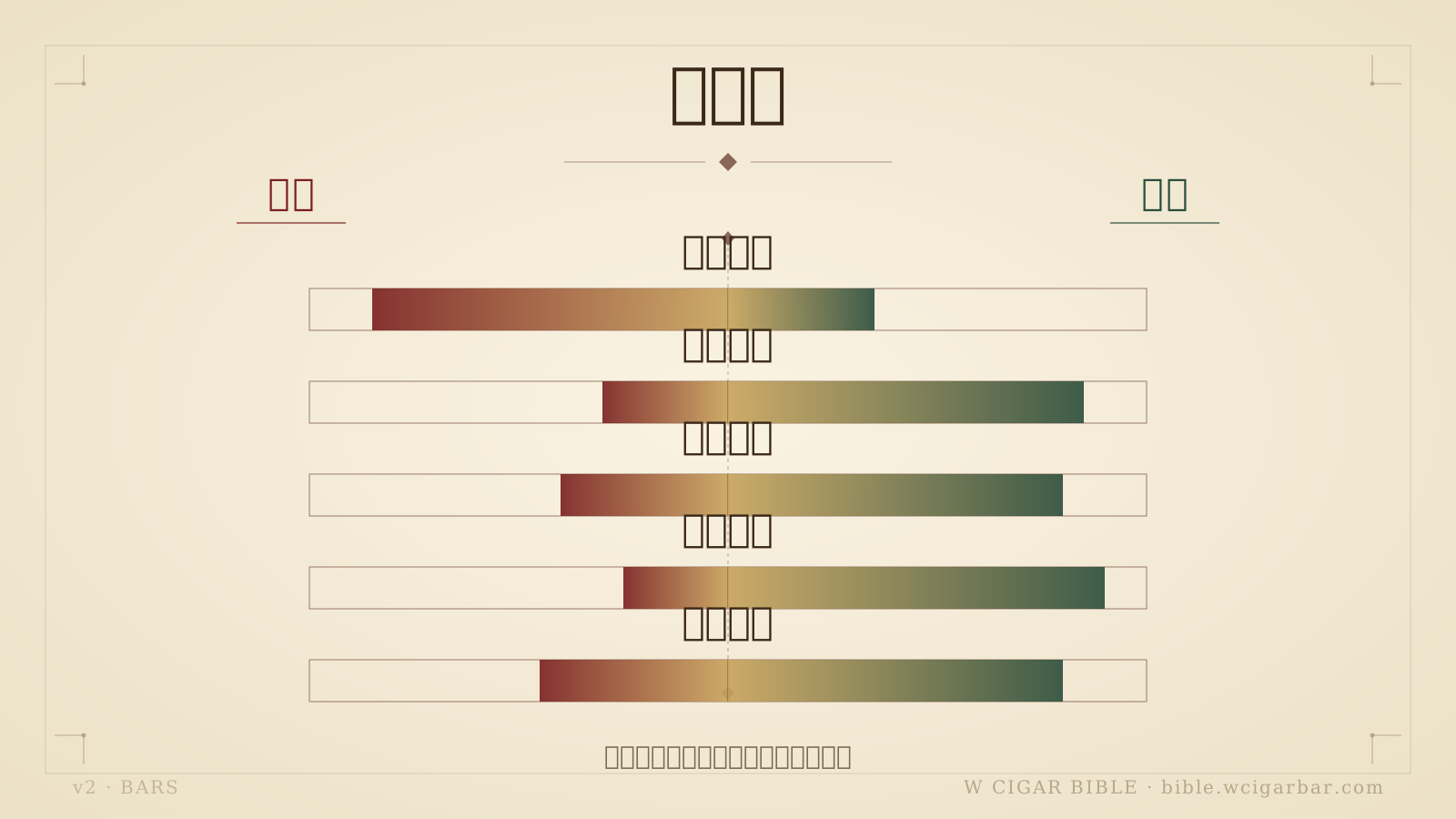
長條圖比較新手與老手在風味判讀上的差異
How Craftsmanship Changes Flavor: Fermentation, Aging, Rolling, and Humidity
Tobacco from the same region can have vastly different flavors if the craftsmanship differs. During fermentation, the pile temperature can rise to 38 to 48°C, and workers will turn the pile to control the heat, allowing ammonia to dissipate, tannins to soften, and sugars to convert. Insufficient fermentation will be pungent and tongue-stinging; over-fermentation will flatten the aroma. This is why high-end factories are willing to spend 18, 24, or even 36 months processing leaf material.
The region determines the raw material's character, and craftsmanship determines whether it can be clearly expressed. Rolling is equally important: too tight a fill will result in high draw resistance and insufficient low-temperature burn, stifling the aroma; too loose will burn too fast, increasing bitterness. Comparing a 50 ring gauge with a 52 ring gauge, the larger ring gauge usually allows for cooler smoke and a higher filler ratio; Corona or Lancero highlights the wrapper and craftsmanship details more.
Humidity is the variable most easily underestimated by veterans. At 62% to 65% relative humidity, Nicaraguan strength-type cigars are often clearer, with distinct spiciness and cocoa; 67% to 69% makes Cuban and Dominican cigars rounder. If it exceeds 72% for a long time, it tends to burn poorly, with muffled smoke, and the wood and sweetness are overshadowed by moisture.
My approach is to manage by region rather than placing everything under the same conditions. Thick oily types like San Andrés Maduro and Estelí Ligero blends can be slightly drier; delicate floral types like Dominican and Cameroon wrappers should avoid being too dry. This is not a formula but a way to return the tobacco to the state where it best expresses its character.
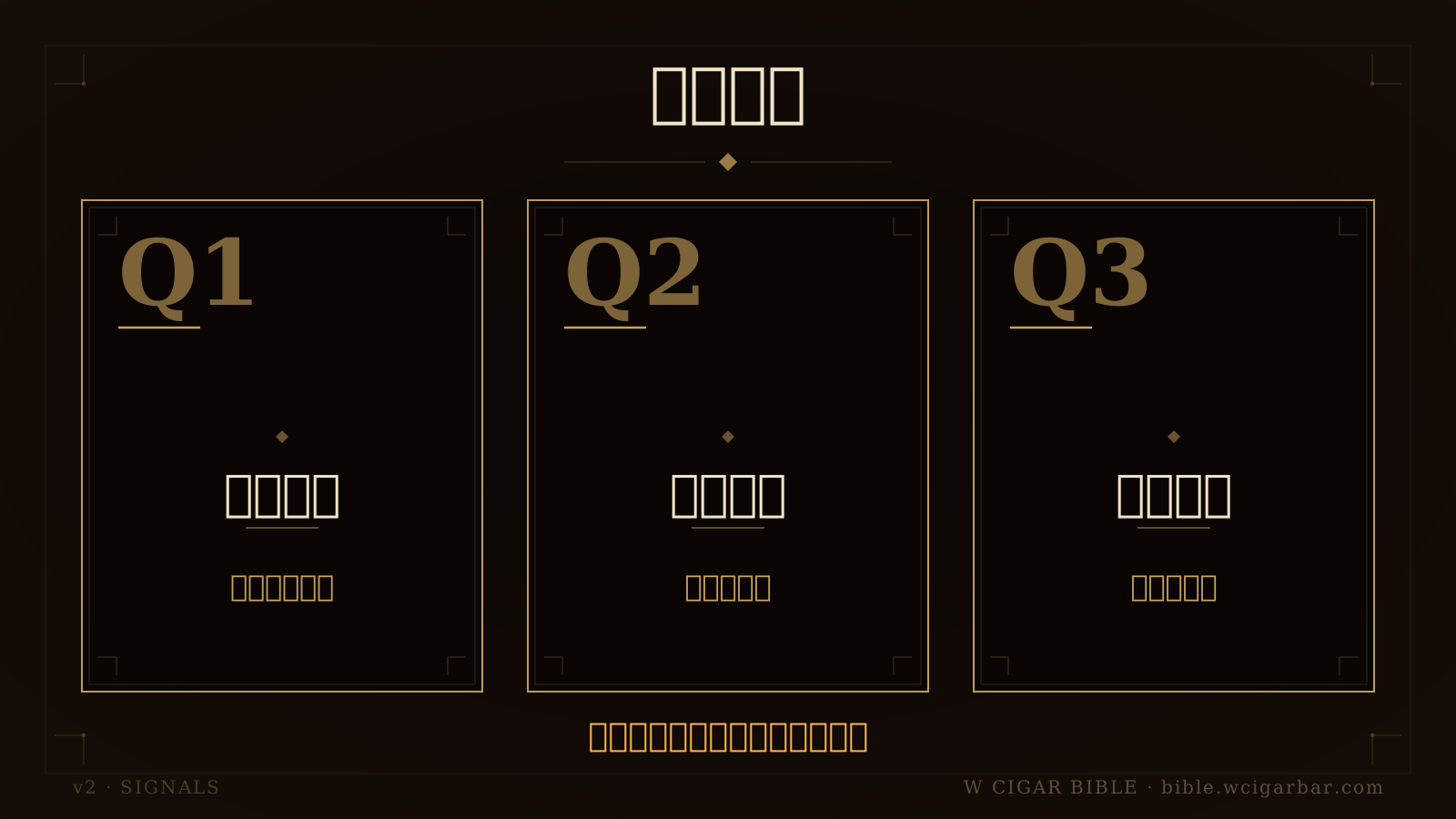
三張問答卡整理年份盲測與醇化的實用答案
Advanced Sensory Deconstruction: Using 5 Dimensions to Judge Regional Clues
Veterans in blind tasting should not guess the brand first but break it down into five dimensions: entry sweetness, spice position, smoke thickness, mineral or earthiness, and finish cleanliness. If the entry sweetness is honey and cream, it may lean towards Dominican or Jalapa; if it is brown sugar, dark chocolate, and wet earth, it may have San Andrés or Honduran elements. If the spice is concentrated at the front of the nose, it is often found in Nicaragua.
The core of advanced recognition is to change "is it good to smoke" to "where does the aroma come from and how does it transition." For example, with the same cocoa, Cuba often accompanies cedar and saltiness; Nicaragua often accompanies black pepper and coffee; Mexican San Andrés often carries wet earth and brown sugar. The following table can serve as a starting point for sensory training:
| Clue | Common Region | Typical Brand Example | Sensory Hint |
|---|---|---|---|
| Mineral salty-sweet, dry grass | Cuba Vuelta Abajo | Cohiba, Montecristo | Mid-section cedar, finish with salt |
| Cream, floral, almond | Dominican Republic | Davidoff, Arturo Fuente | Delicate smoke, clear boundaries |
| Black pepper, cocoa, coffee | Nicaragua Estelí | Padrón, Oliva | Strong power, sweet support |
| Leather, earth, charcoal | Honduras | Camacho, Punch | Dark tone, thick finish |
| Dark chocolate, wet earth, prune | Mexico San Andrés | Liga Privada | Distinct bittersweet, thick smoke |
In practice, I recommend using a three-stage recording method: record the entry aroma in the first 0 to 20 minutes, record whether sweetness and spiciness expand in the mid-section, and record whether bitterness loses control in the final section. If a cigar has only one flavor from start to finish, it may not be bad, but its structural depth is limited; truly deep works usually provide answers in the mid-section.
Common Questions
Why do flavors vary greatly between different years of the same brand?
Because crops are greatly affected by the climate of the year. Rainfall, sunlight, harvest time, and fermentation batches all change the oiliness, sugar content, and spiciness. Even the same Montecristo No.2, from 2015 and 2019 boxes, may show significant differences in wood, herbal, and sweetness.
What is the most reliable first clue when blind tasting a region?
Don't look at strength first; look at the position of sweetness and spiciness. Nicaragua often has noticeable black pepper in the nose and tongue, the Dominican Republic leans towards creamy floral, and Cuba often has a mix of mineral salty-sweet and dry grass cedar.
Is the wrapper really more important than the filler?
They cannot be compared in isolation. The wrapper affects the entry aroma and surface texture, while the filler determines the framework, strength, and burning rhythm. Lancero, with its thin ring gauge, amplifies the wrapper's influence; Robusto and Toro make the filler ratio more apparent.
Why do some rich cigars become increasingly bitter?
Common reasons include three: too fast a pace, excessive humidity, and the formula's tannins not yet softened. It is recommended to space each puff 45 to 75 seconds apart; if the burn temperature is too high, slow down instead of rushing to relight.
How long does aging need to make regional characteristics clearer?
Generally, Nicaraguan strength types see spiciness mellow within 1 to 3 years; Cuban cigars often show more integrated wood, honey, and minerals in 3 to 8 years; the Dominican Republic may exhibit cream and floral details in 2 to 5 years. But the premise is always stable storage.
How do beginners and veterans view regions differently?
Beginners often ask if it's strong or smooth; veterans should ask if the aroma has layers, if transitions are reasonable, and if the finish is clean. The purpose of regional knowledge is not to show off but to make every sensory judgment more precise.
I have always believed that the most fascinating aspect of cigars is that they compress land, time, and craftsmanship into a roll of tobacco leaves. Veterans who only chase brands may miss the details of the region; those who only chase strength may miss the play of aromas. True advancement is being able to read soil, rainy seasons, fermentation, and the hand of the roller in a single puff. May every time you light up, it is not just enjoyment but understanding.
—Cigar Prince Wilson Tsai
Smoking is harmful to health. Under 20 years old is not allowed to smoke. Quit smoking hotline: 0800-636363. This article is for reference by adults over 20 years old for knowledge of cigar culture, preservation, and regulations, not a tobacco advertisement, promotion, or purchase suggestion.
Like this article?Share with friends
Share this W Cigar Bible piece with friends who want to learn cigar culture, storage, and tasting.
想把這篇 化為實踐
雪茄聖經是知識;雪茄文化要在空間裡發生
W Cigar Bar 大安總店資訊
台北大安區 · 雪茄聖經總編輯 Wilson Tsai 主理的雪茄文化空間
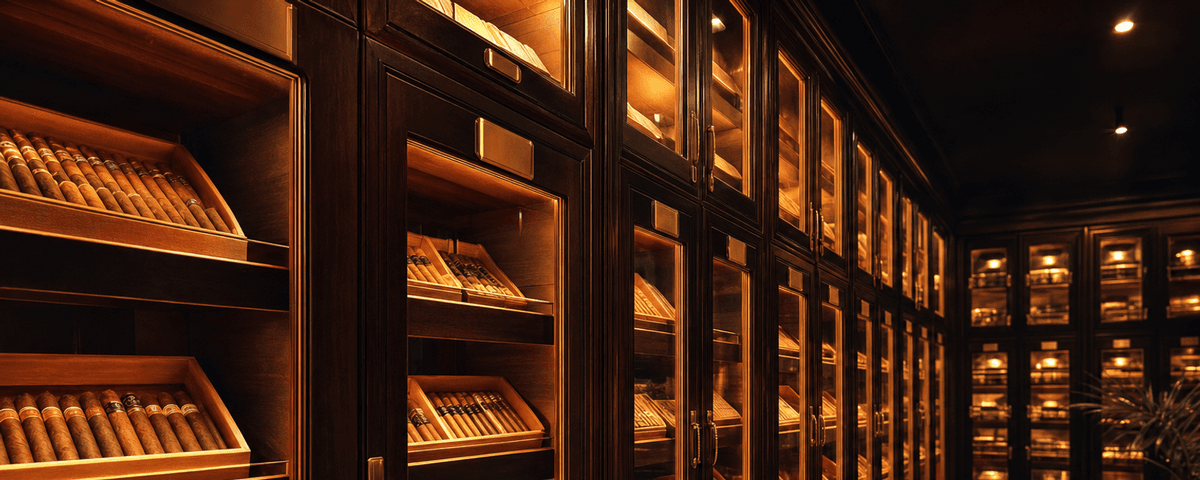
33 座 24 小時恆溫恆濕醇化室
W Cigar Bar 提供的會員醇化空間 · 場地資訊請洽編輯部
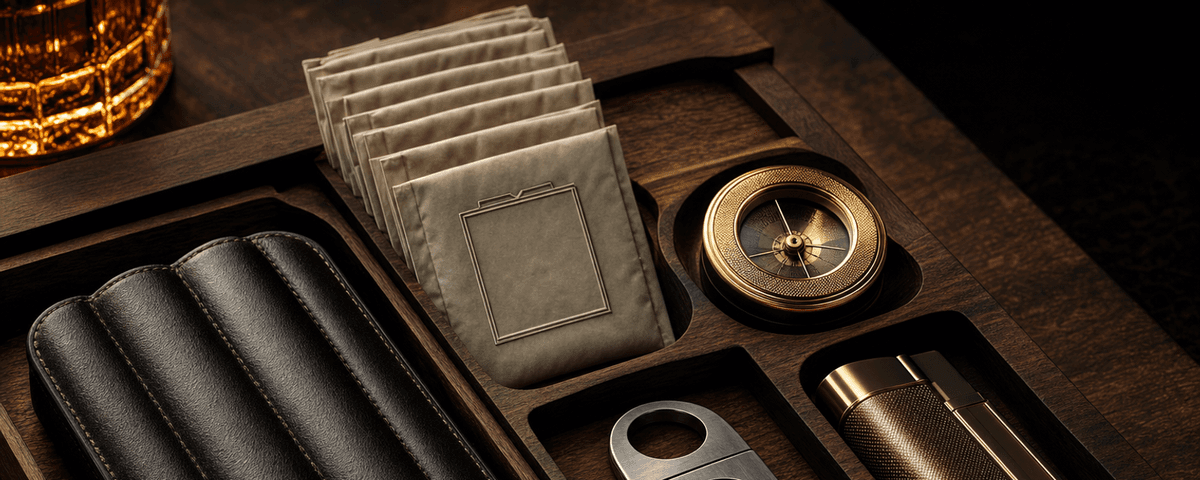
雪茄剪 / 打火機 / 雪茄盒 / Boveda
W Cigar 配件官網 · 專營雪茄配件正品
加 LINE 好友 · 文化諮詢
文化空間資訊 · 紳士沙龍 · 私人包場
本網站內容僅供雪茄文化、歷史、收藏與品吸知識研究參考。菸品有害健康、未滿法定年齡者請勿吸菸。實際規範請依所在地法律為準。
吸菸有害健康・戒菸專線 0800-636363・本站僅供 20 歲以上成年人閱覽。
讀到這裡,你不只是路過的人
留下 Email,加入 W 雪茄聖經內圈——總編輯 Wilson Tsai 親選的學院深文與國際新訊,先你一步送到信箱。
· 教育用途非銷售 · 隨時一鍵退訂 · Email 絕不對外公開 · 由勝茄股份有限公司營運
同分類延伸閱讀
資料來源:W Cigar Bible 編輯部整理 · 雪茄王子 Wilson Tsai 親自審稿
本文僅供雪茄文化、歷史、收藏與品鑑知識研究,不作為菸品促銷、銷售或購買建議。吸菸有害健康,未滿二十歲不得吸菸。