Davidoff 完整品牌史:從基輔流亡到瑞士奢華帝國
Zino Davidoff、1990 與古巴分手、儀式性焚毀數萬支古巴雪茄的傳奇
Davidoff 完整品牌史—1906 Henri Davidoff 基輔開菸草店、1911 反猶大屠殺逃亡日內瓦、Zino Davidoff 1924 拉丁美洲菸草之旅、1946 發明現代 humidor、1947 Château 系列、1969 與 Cubatabaco 合作、1989 最終決裂、1990 儀式性焚毀數萬支古巴雪茄、Hendrik Kelner 多明尼加重生、2013 Nicaragua 突破、2014 Yamasá 新產區、Oro Blanco 聖杯。雪茄王子親寫 veteran 深度。
- Zino Davidoff 自幼在菸草業家庭中成長,培養了對菸葉細微差異的敏感度。
- Zino 在拉丁美洲的學習經歷,讓他建立了對古巴雪茄的深刻理解與熱愛。
- Châteaux 系列雪茄首次將雪茄與葡萄酒的品牌敘事連結,強調精選概念。
The Complete Brand History of Davidoff: From Exile in Kyiv to a Swiss Luxury Empire (1906-2026, A Dramatic Legend of a Century of Cigar Civilization)
Davidoff -- the "Hermes" of the cigar world, the cigar embodiment of Swiss luxury spirit, and the globally recognized king of non-Cuban premium cigars.
Yet few people know this: the founder of this top-tier global non-Cuban brand was a Jewish immigrant who fled Kyiv, Ukraine, in 1911. From the Jewish quarter of Kyiv to a top cigar shop in Geneva; from 1968, when the Cuban Davidoff series was rolled at Castro's own El Laguito factory, to August 1989, when 130,000 substandard Cuban cigars were publicly burned and the brand formally broke with Cuba; and then to its rebirth in the Dominican Republic in the 1990s -- the story of Davidoff is the most dramatic legend in the 20th-century cigar world.
Davidoff and Cohiba were the two parallel pinnacle brands of the cigar world in the second half of the 20th century, and for 21 years from 1968 to 1989 they shared El Laguito, the most mysterious cigar space in the world. The intertwined histories of these two brands form the deepest dual narrative in the modern cigar industry.
Based on public Davidoff materials, annual literature from Cigar Aficionado, official biographical information on Wikipedia, and industry consensus, this article is organized by Cigar Prince Wilson Tsai from an in-depth industry perspective as a complete brand history of Davidoff.
Stage 1: The Kyiv Beginning (1906-1911)
Zino Davidoff's Jewish Origins in Kyiv
March 11, 1906: Zino Davidoff was born in Kyiv, Ukraine (then part of the Russian Empire), into a Jewish family engaged in the tobacco business.
Family background:
- Jewish (Ukrainian-Jewish)
- His father was involved in tobacco trading, with Russia and Eastern Europe as the main markets
- The family was financially comfortable and belonged to Kyiv's Jewish middle class
Zino's childhood was spent in his father's tobacco trading environment. From a young age, he was exposed to all kinds of tobacco from Russia, Turkey, and the Balkans, which became the earliest foundation for his later ability to judge subtle differences in tobacco leaf.
1911: Flight Under Anti-Jewish Pogroms
1911: The situation of anti-Jewish pogroms (Pogrom) in the Russian Empire intensified, and Jewish families in Kyiv faced threats to their survival.
The Davidoff family decided to flee:
- Escape route: Kyiv -> Vienna -> Geneva, Switzerland
- Cost: Abandoning all property within Russia
- New beginning: Seeking a new life in neutral Switzerland
This exile defined the core spirit of the Davidoff brand: starting from zero, not relying on family inheritance, and rebuilding through one's own craftsmanship and taste. This spirit later reached its most dramatic expression in 1989, when Zino burned 130,000 cigars and once again "started from zero."
Geneva: The True Starting Point of the Davidoff Cigar Empire
After arriving in Geneva, his father Henri Davidoff opened a new tobacco shop on Rue de Rive. This was the predecessor of what later became the "Davidoff global headquarters."
Characteristics of the early Geneva shop:
- Serving local gentlemen's clubs (Geneva, as a European center of diplomacy and banking, had a dense gentlemanly class)
- Handling global tobacco plus cigars, not limited to any single producing region
- Zino helped in the shop from childhood -- effectively receiving practical training in Europe's most elite tobacco market
For the young Zino, the shop on Rue de Rive was his cigar academy. Every day he encountered top tobacco from around the world, learned to identify quality, understood customer preferences, and developed his judgment of taste.
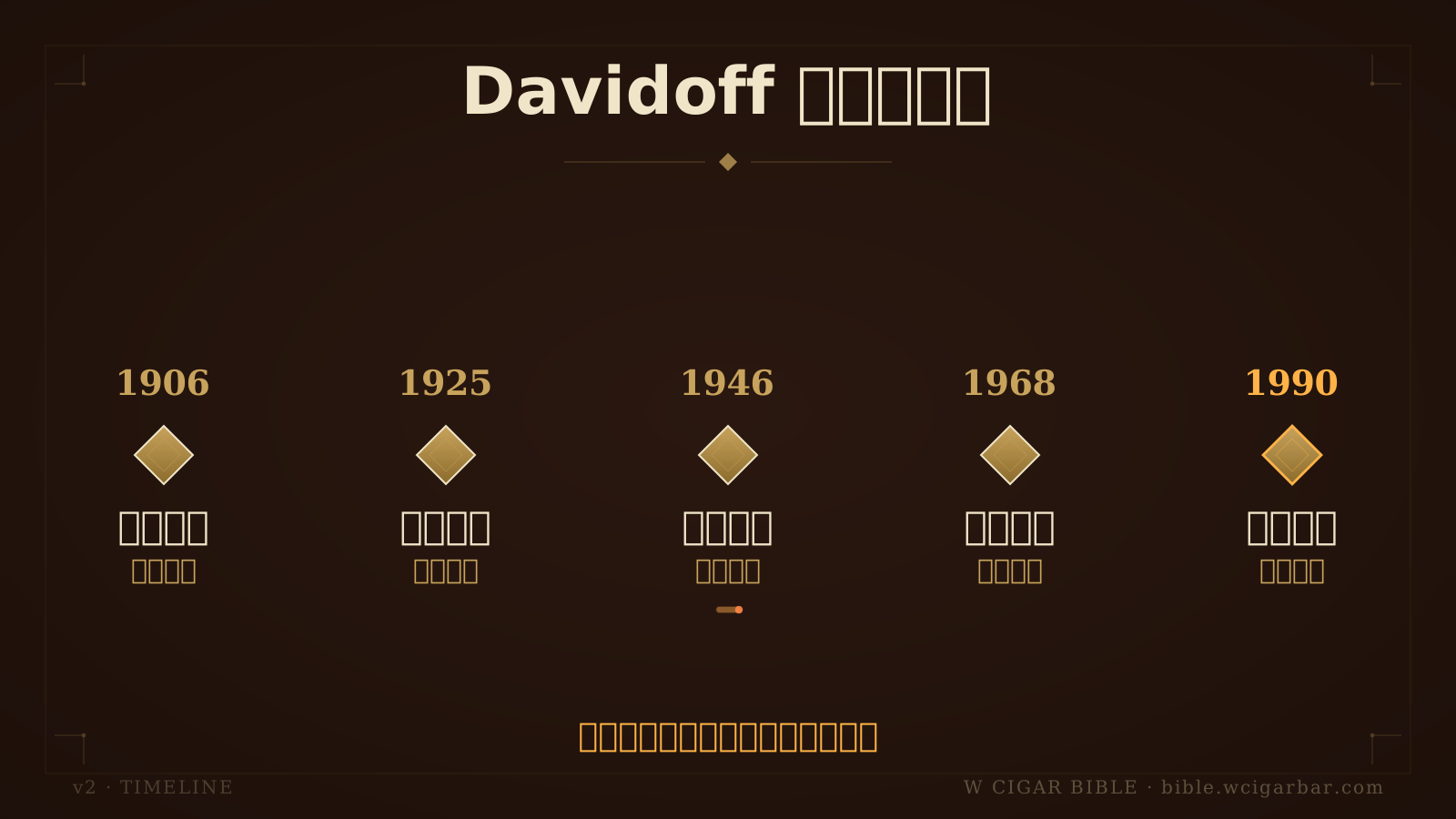
以一九〇六基輔出生到一九九〇多明尼加重生五個年代節點呈現 Davidoff 百年品牌演化的時間線圖
Stage 2: Zino's Latin American Tobacco Journey (1924-1930)
1924: The 18-Year-Old Cigar Apprentice Sets Out
1924: At the age of 18, Zino Davidoff decided to personally travel to tobacco-producing regions to learn. This decision was legendary in the cigar trade of the time.
The traditional practice among European cigar merchants at the time was to import through agents without personally visiting the producing regions. The young Zino, however, chose to go directly to South and Central America and learn directly from tobacco farmers, rollers, and factory owners. The judgment behind this choice was: the highest quality in cigars always comes from those closest to the source.
1925-1930: Five Years Immersed in Latin American Tobacco
Beginning in 1925, Zino spent about five years working in tobacco fields and factories across three countries:
Argentina
- Learned local tobacco cultivation
- Came into contact with the structure of the tobacco trading market
- Built Latin America business connections
Brazil
- Learned the flavor characteristics of Brazilian tobacco
- Observed local rolling techniques
- Understood the influence of South American climate on tobacco leaf
Cuba
- This became the root of Zino's lifelong passion
- Learned tobacco cultivation in Vuelta Abajo
- Learned the ability to identify top-quality tobacco leaf
- Observed the special qualities of Vuelta Abajo red soil (San Juan y Martínez / western Pinar del Río)
- Learned rolling techniques from Cuban artisans
- Developed a profound understanding of cigar aging (maturation) philosophy
Industry consensus: Zino's years in Cuba shaped his lifelong aesthetics and love for Cuban cigars. This also foreshadowed the historical moment when Cubatabaco would actively approach him for collaboration in 1967.
1930: Returning to Geneva to Take Over the Family Business
1930: Zino returned from Latin America to Geneva, joined his father's shop, and gradually took over purchasing, marketing, and the direction of the business.
What Zino brought back to Geneva:
- The ability to identify top-quality tobacco leaf
- Direct connections with Latin American tobacco farmers / factories
- A deep understanding of Cuban cigars
- A business philosophy of "personally visiting the producing regions" -- this became the core model for Davidoff's commercial expansion over the next more than 60 years
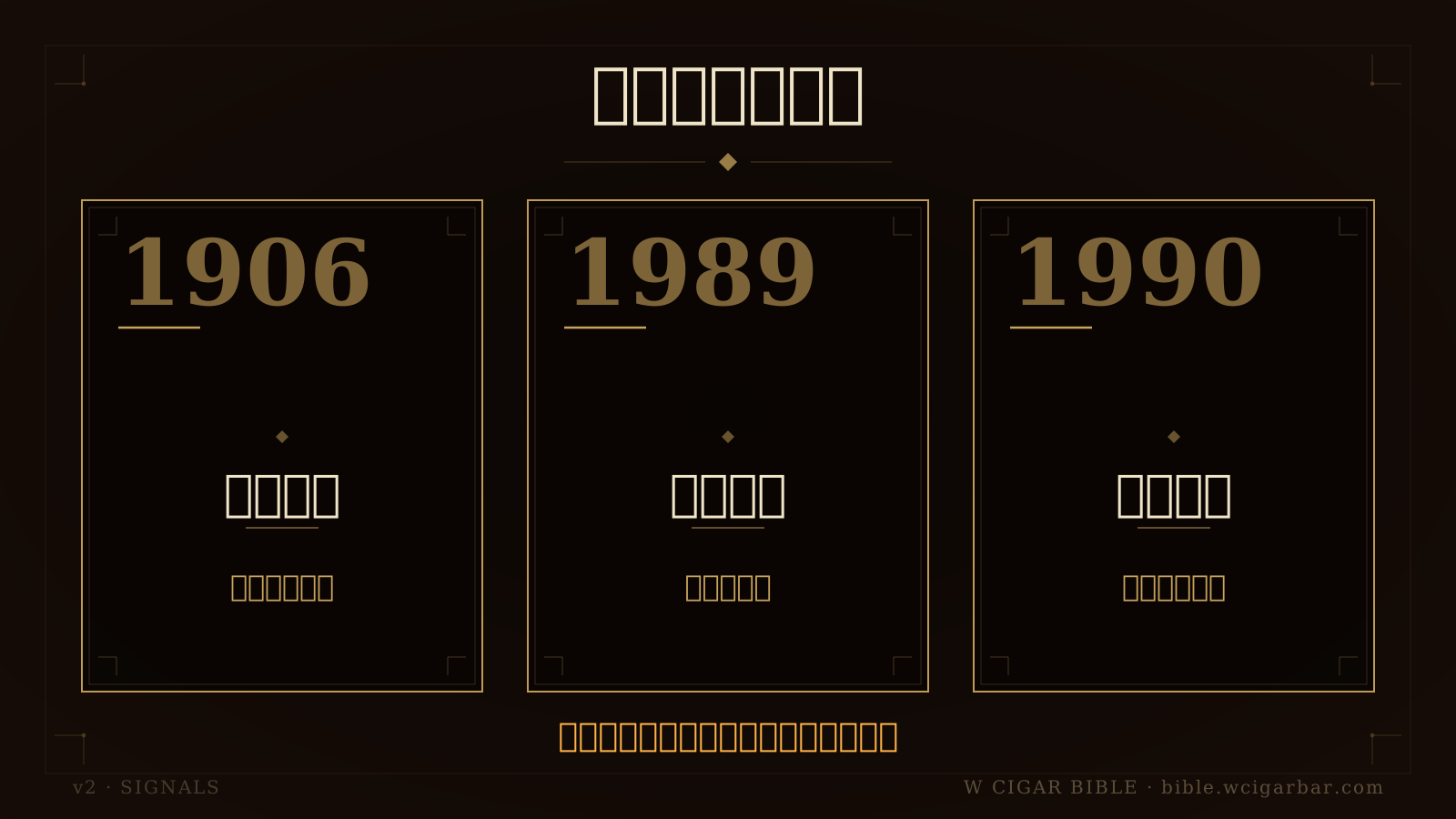
以三張卡片呈現 Davidoff 一九〇六基輔起點、一九八九焚毀決裂與一九九〇多明尼加重生三個品牌史關鍵的核心結論圖
Stage 3: The Establishment of the Davidoff Brand and the Châteaux Revolution (1930-1960)
From "Henri Davidoff's Father's Shop" to the "Davidoff Brand"
From the 1930s onward, Zino gradually transformed the family shop into a brand:
- Established the "Davidoff" brand (from family surname to brand name)
- Began importing personally selected Cuban cigars to Geneva
- Built a client network of the world's top gentlemen (diplomats, bankers, royalty)
- Upgraded the Rue de Rive shop from a "tobacco shop" into a "cigar salon for top gentlemen"
During World War II (1939-1945), Switzerland's neutral status made Davidoff one of the few European shops still able to continue operating in the top-tier cigar trade. Wartime diplomats, exiled aristocrats, and business leaders from across Europe gathered briefly in Geneva, and Davidoff became their cigar supply station.
1946: Château Latour -- The Historic Birth of the Châteaux Series
1946: In the first year after the war, Zino Davidoff launched the first Château series cigar -- Château Latour.
"Château" was a revolutionary innovation in brand narrative:
- Named after the Bordeaux First Growth estates (Bordeaux Premier Cru Classé)
- Established, for the first time, a clear brand narrative link between cigars and wine, two gentlemanly luxury goods
- Emphasized a selected concept of "single year, single region, single factory" -- borrowing the idea of wine vintage
Châteaux series later added:
- Château Margaux
- Château Mouton Rothschild (Mouton was later elevated to Premier Cru in 1973)
- Château Lafite
- Château Yquem (the king of Sauternes sweet white wine)
- Château Haut-Brion
Industry legend: Zino personally selected Cuban tobacco leaves and collaborated with Cuban factories to produce the Châteaux series. These cigars were among the earliest "selected Cuban cigars" and represent the historical origin of later concepts such as "Edición Limitada," "Reserva," and "Vintage Cigars."
The Château series still exists today in the collections of some veteran cigar enthusiasts, with auction prices reaching tens of thousands of US dollars per cigar. They are among the most precious historical archives in cigar collecting.
The Deep Link Between Davidoff and Wine Narrative
The Châteaux series established not only a product line, but the core DNA of Davidoff's brand narrative:
- Cigar appreciation = wine appreciation: both require time, space, and a proper state of mind
- Vintage concept: the year and region of tobacco leaf determine flavor
- The dual ritual of top gentlemen: a red-wine dinner plus cigar appreciation form a complete gentlemanly evening
- Spiritual equivalence in luxury goods: Davidoff and Château Latour belong to the same level of taste
This brand narrative continues into the present day. Davidoff remains a standard choice for cigar and wine pairing at gentlemanly dinners around the world.
Stage 4: The Golden Age of Cuban Davidoff (1967-1989)
1967: Cubatabaco Actively Approaches Davidoff
1967: Cuba's Cubatabaco (the Cuban national tobacco marketing bureau and the predecessor of Habanos S.A.) actively approached Zino Davidoff with a proposal: to roll personal-brand cigars for him at the newly built El Laguito factory.
Historical background of this proposal:
- The El Laguito factory had just been established in 1966-1967, with its primary mission being to roll Cohiba for Castro
- The factory still had spare production capacity and could simultaneously produce other top-tier brands
- Since the 1930s, Davidoff had been one of the world's most important buyers of Cuban cigars and had deep relations with the Cuban tobacco industry
- Cuba needed foreign exchange and Davidoff's global gentlemen's distribution network
Industry depth: Cubatabaco approached Davidoff, not the other way around. This historical detail reflects that Davidoff already held the status of a "top brand that others would actively seek out" in the global cigar industry at the time.
1968-1969: The First Three Cuban Davidoff Vitolas
1968-1969: The first three vitolas of Cuban Davidoff were rolled at the El Laguito factory and officially launched:
- Detailed specifications belong to the realm of in-depth industry research
- Identifying feature: white band, gold lettering -- this was the visual identity of Cuban Davidoff (1968-1989), clearly distinct from contemporary Dominican Davidoff (red and gold band)
The Era of "Two Kings Sharing" the El Laguito Factory
For 21 years from 1968 to 1989, the El Laguito factory produced both Cohiba and Cuban Davidoff at the same time. The significance of this historical fact is enormous:
- Same factory: El Laguito in Havana's Playa district, converted from the villa of Alberto Casimiro Fowler Perilliat
- Same group of artisans: the team of female rollers led by factory director Avelino Lara
- Same producing region: top-grade Vuelta Abajo tobacco leaf
- Different brand narratives: Cohiba was Castro's personal cigar; Cuban Davidoff was Zino's Swiss brand
Industry consensus: 1968-1989 was the golden age of Cuban Davidoff. It used tobacco leaf of the same level as Cohiba, the same craftsmanship, and the same artisans, yet its price was far lower than that of Cohiba after the latter became publicly available (after 1982).
For contemporary collectors, 1968-1989 Cuban Davidoff is one of the most precious historical archives in the cigar world. Auction value can reach NT$ 30,000-80,000 per cigar for well-preserved examples from specific years.
Major Series of Cuban Davidoff
Major Cuban Davidoff series launched from 1968 to 1989:
Davidoff Series (Standard Series)
- Davidoff No. 1 (slender and long)
- Davidoff No. 2 (medium Corona Especial)
- Davidoff No. 3 (shorter and thinner)
Châteaux Series (Cuban Version)
- Château Latour
- Château Margaux
- Château Mouton Rothschild
- Château Lafite
- Château Yquem
- Château Haut-Brion
Dom Pérignon
- Paying tribute to the major French Champagne house
- Large vitolas
Aniversario Series (80th Anniversary Commemoration)
- Launched in 1980, commemorating Zino Davidoff's 80th birthday plus the 50th anniversary of the brand's establishment
- Aniversario No. 1 / No. 2 / No. 3 / No. 4
- Cuban tobacco leaf, Swiss brand -- the flagship series of Cuban Davidoff
These series continue today within the Dominican Davidoff system, but the blends and tobacco origins are completely different.

比較 Davidoff 古巴時期與多明尼加時期在年代、產地、工廠與標籤顏色差異的資訊表
Stage 5: The "Davidoff Bonfire" of August 1989 -- The Most Dramatic Break in the Cigar World
The Accumulation of Conflict (Late 1980s)
Late 1980s: Relations between Davidoff and Cuba's Cubatabaco deteriorated. The main points of conflict were:
Conflict 1: Declining quality
- Some batches of Cuban tobacco leaf in the 1970s-1980s declined in quality (later regarded by the industry as a prelude to the "bad Cuban cigar era of 1989-1996")
- Davidoff demanded extremely strict quality control and had a high rejection rate
- The Cuban side considered Davidoff too demanding
Conflict 2: Production quotas
- Cubatabaco allocated more El Laguito capacity to Cohiba (after Cohiba's public launch in 1982, it became Cuba's top export representative)
- Cuban Davidoff's quota was squeezed
- Davidoff could not meet the needs of gentlemen's club members worldwide
Conflict 3: Conflict in brand positioning
- The Cuban side wanted Cuban Davidoff to be more "Cubanized" and to emphasize its Cuban lineage
- Zino wanted to preserve the dual positioning of "Davidoff as a Swiss brand, produced in Cuba"
- The two sides were inconsistent in brand narrative
1989: Zino's Final Decision
Early 1989: Zino Davidoff publicly announced that he would terminate cooperation with Cuba's Cubatabaco.
Industry legend: Zino personally inspected Davidoff warehouses around the world and selected all Cuban-Davidoff cigars that he believed "did not meet Davidoff standards."
August 1989: The Historic "Davidoff Bonfire" Event
August 1989: Zino Davidoff publicly burned approximately 130,000 Cuban-made Davidoff cigars. This became known in history as the "Davidoff Bonfire."
Event details:
- Quantity burned: approximately 130,000 cigars (the figure most consistently recorded in the industry)
- Value burned: based on retail prices at the time, the industry estimated several million Swiss francs (approximately US$ 1-2 million at 1989 exchange rates)
- Public nature: media were present; it was a clear brand statement ritual, not a private disposal
Industry consensus: This was one of the most dramatic events in the 20th-century cigar world. A brand would rather burn inventory worth several million Swiss francs than compromise on quality.
The brand philosophy behind this event:
Davidoff would rather have no product than have a substandard product. This attitude is a commitment that other cigar brands (including Cuban brands themselves) find difficult to match.
1989-1991: Transition to the Dominican Republic
1989: The contract with Cuba was formally terminated. 1990-1991: Production was moved in phases to the Dominican Republic, in cooperation with the top local factory Tabadom.
During the transition:
- Inventory and global distribution networks were handled
- A new Dominican supply chain was established
- The brand band system was redesigned (white band with gold lettering -> red and gold band)
1990: Davidoff established its own factory in Villa González, Dominican Republic, beginning the Dominican Davidoff era.
Stage 6: Hendrik Kelner and the Dominican Rebirth (1990-2018)
Hendrik "Henke" Kelner -- The Craft Soul of Dominican Davidoff
Hendrik "Henke" Kelner (born in the Dominican Republic, of Brazilian-German descent) was the central figure in Davidoff's Dominican rebirth and is praised in the industry as the "Avelino Lara of the Dominican Davidoff era" (corresponding to the figure who defined Cohiba's craftsmanship).
Kelner's historical status:
- After Davidoff broke with Cuba in 1989, he was chosen to lead the blend design of Dominican Davidoff
- Created the entire contemporary Davidoff series: Aniversario, Grand Cru, Millennium, Special "R"
- Co-founded Procigar (the Dominican Cigar Manufacturers Association) in 1992 and has served as its chairman to this day -- the spiritual leader of the Dominican cigar industry
- Announced retirement planning in 2018, with his son Hendrik Kelner Jr. succeeding him
Industry consensus: Hendrik Kelner was the key figure who enabled Davidoff's Dominican rebirth. His craftsmanship allowed Dominican Davidoff to re-establish its global top-tier non-Cuban status in the late 1990s and stand alongside Cuban cigars as one of the two top choices for gentlemen's club members worldwide.
The Comprehensive Establishment of the Davidoff Dominican Series
From 1990 to 2010, Hendrik Kelner led the establishment of the following Dominican Davidoff series:
Davidoff Aniversario (Flagship Series)
- Dominican versions of Aniversario No. 1 / No. 2 / No. 3 / No. 4
- The core series commemorating Zino Davidoff's founding of the brand
- Still the most recognizable Davidoff cigar today
Davidoff Grand Cru (Selected Series)
- Selected top-grade Dominican tobacco leaves
- Softer and more balanced than Aniversario
- Suitable for everyday gentlemanly appreciation
Davidoff Millennium Blend (Millennium Series)
- Launched to commemorate the year 2000 millennium
- Richer and more complex
- Suitable for advanced appreciators
Davidoff Special "R" (Robusto Series)
- Robusto format, Davidoff style
- Medium strength, balanced flavor
- A leading choice for medium-bodied appreciation among gentlemen's club members
Davidoff Châteaux Series (Continuation of the Cuban Version)
- Continued production in the Dominican Republic after 1989
- Retained the naming tradition from the Cuban period
- Flavor curve readjusted according to Dominican tobacco leaf
The Passing of Zino Davidoff (1994)
1994: Zino Davidoff passed away peacefully in Geneva at the age of 87.
Zino's life spanned:
- Childhood in the Jewish quarter of Kyiv
- The refugee boy who fled to Geneva in 1911
- The young Latin American tobacco apprentice in 1925
- The middle-aged brand master of the 1946 Châteaux series revolution
- The mature pinnacle of the 1967-1989 Cuban Davidoff golden age
- The dramatic late-life break in 1989, when 130,000 cigars were burned
- The embodiment of Swiss luxury spirit who passed away peacefully in Geneva in 1994
The global cigar circle mourned collectively. Zino was one of the shapers of 20th-century cigar culture and one of the few historical witnesses able to span both the Cuban golden age and the Dominican rebirth era.

整理 Davidoff 品牌史三個常見誤解與對應正確觀念的提醒圖
Stage 7: Contemporary Expansion and Ultra-Premium Series (2010-2026)
Davidoff Nicaragua (2013) -- Breaking Through the Dominican Boundary
2013: Davidoff launched Davidoff Nicaragua -- a historic breakthrough:
- Dominican + Nicaraguan mixed blend
- Davidoff's first "departure from the Dominican comfort zone"
- A major industry talking point, because Davidoff had long been considered a "Dominican only" brand
- Flavor curve: stronger and more spicy than traditional Davidoff
- Reflected Hendrik Kelner's continued exploration of craftsmanship boundaries
The New Yamasá Region (2014) -- A Tobacco Leaf Revolution in Eastern Dominican Republic
2014: Davidoff established its own cultivation base in the new Yamasá region of the Dominican Republic:
- Yamasá is located in eastern Dominican Republic and is a relatively emerging tobacco region
- Davidoff invested substantial resources in developing this area
- Created a completely new flavor spectrum (soil type different from the Cibao Valley)
- Launched the Davidoff Yamasá series
Industry significance: The Yamasá investment reflects Davidoff's long-term strategy -- not merely "selling cigars," but "building complete vertical integration from the source of tobacco leaf." This strategy allows Davidoff to continue maintaining its global top-tier status in the 21st century.
Royal Release (From 2014) -- Ultra-Premium Series
From 2014: Davidoff launched the Royal Release ultra-premium series:
- Royal Salomones (57×175 mm Salomones special shape)
- Royal Robusto
- Market level: NT$ 15,000-30,000 per cigar
- Limited release, individually numbered at the factory
- Davidoff Royal Release is one of the highest representatives of contemporary non-Cuban premium cigars
Oro Blanco (2014) -- The Holy Grail for Davidoff Collectors
2014: Davidoff launched Oro Blanco (Spanish for "white gold"):
- Limited release, with extremely small annual global production
- Market level: NT$ 25,000+ per cigar
- The holy grail for Davidoff collectors
- One of the industry's "two great holy grails" alongside Cohiba Behike BHK 56
Winston Churchill Series (2015) -- A Tribute to the Spirit of Gentlemen's Clubs
From 2015: Davidoff launched the Winston Churchill Series, paying tribute to Sir Winston Churchill and to the culture of London gentlemen's clubs (Churchill was a member of Carlton Club + White's).
Series characteristics:
- Names taken from stages of Churchill's life: The Statesman, The Late Hour, The Aristocrat, and others
- Directly linked with the gentlemen's club culture of St James's, London
- Medium to strong flavor curve
- One of the "canonical" choices for gentlemen's club members
Year of the X Zodiac Series
Since 2012, Davidoff has continued to launch zodiac-year limited editions:
- Year of the Dragon (2012)
- Year of the Snake (2013)
- Year of the Horse (2014)
- ...
- Year of the Tiger (2022)
- Year of the Rabbit (2023)
- Year of the Dragon (2024)
- Year of the Snake (2025)
- Year of the Horse (2026)
The strategic significance of this series: Davidoff actively embraces the narrative of the Asian Chinese market. It is one of the non-Cuban premium brands with the deepest engagement in the Asian market.
For gentlemen's club members in Taiwan, the Year of the X series is a special choice for collecting "my own zodiac-year cigar."
Stage 8: Davidoff London Bond Street Flagship -- A Cigar Pilgrimage Coordinate for London Gentlemen's Clubs
The Geographic Significance of 35 St James's Street
Davidoff's European flagship store at 35 St James's Street in London is the most geographically strategic choice in Davidoff's global expansion:
- Approximately 100 meters from White's (37-38 St James's Street, the world's oldest gentlemen's club)
- Approximately 200 meters from Boodle's (28 St James's Street, the prototype for Ian Fleming's Blades)
- Forms a geographic symbiosis with London gentlemen's club culture
This location is no coincidence. It was a decision in Davidoff's global expansion strategy to materialize the brand positioning of "Davidoff = the cigar supply station for gentlemen's club members" into a geographic coordinate.
See "london-st-james-gentleman-club-spaces."
A Gentleman's Space Open to the Public
The special status of the Davidoff London flagship:
- Open to the public, no membership required -- one of the very few cigar pilgrimage sites in the St James's gentlemen's space open to outsiders
- For Asia-Pacific cigar members, it is the highest-level public gateway into the cigar culture of London gentlemen's clubs
- Without needing White's membership, one can still encounter cigar collections at the same level as those of White's members
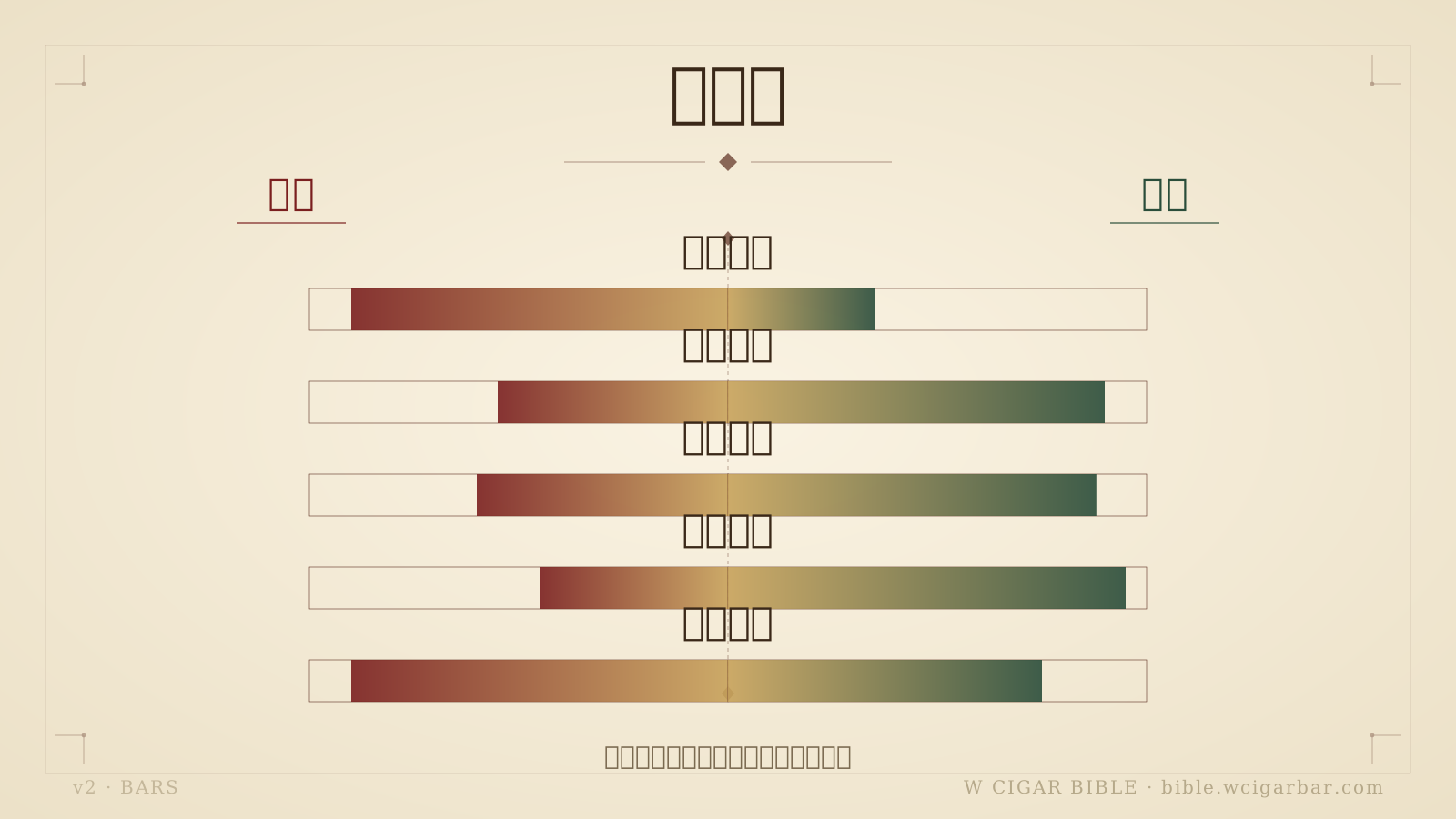
橫條圖比較古巴期與非古期在多個面向的差異
Davidoff vs Cohiba: The Dual Narrative of the Cigar World in the Second Half of the 20th Century
To understand the complete brand history of Davidoff, one must observe it alongside Cohiba. These two brands form the most important dual narrative in the cigar world in the second half of the 20th century.
1968-1989: The Era of Sharing the El Laguito Factory
- Cohiba: Castro's personal secret in 1966 -> officially established by Cubatabaco in 1968 -> publicly launched at the 1982 Spain World Cup
- Cuban Davidoff: Cubatabaco actively approached Zino in 1967 -> the first three vitolas in 1968-1969
- Shared elements: El Laguito factory, factory director Avelino Lara, female torcedora team, top-grade Vuelta Abajo tobacco leaf
- Difference: Cohiba was a native Cuban brand; Cuban Davidoff was a Swiss brand produced in Cuba
1989: Historic Separation
- Cohiba: Continued at the El Laguito factory and entered the Habanos system in 1989
- Davidoff: The "Davidoff Bonfire" in August 1989, formal break with Cuba, beginning of the Dominican era
1990-2026: Two Parallel Top Kingdoms
- Cohiba: King of Cuban cigars, Behike flagship, Medio Tiempo revolution
- Davidoff: King of non-Cuban cigars, Royal Release / Oro Blanco ultra-premium, Yamasá new region, Year of the X Asian narrative
For gentlemen's club members, owning both top-tier Cohiba and top-tier Davidoff is the complete picture of the contemporary path of cigar appreciation. Neither brand is dispensable.

三張問答卡回答品牌國別古巴年代與決裂原因
The Core Spirit of Davidoff
Spirit 1: "Time Beautifully Filled"
Davidoff's brand core: "Time Beautifully Filled."
This is not an advertising slogan, but Zino Davidoff's lifelong attitude toward cigars:
- A cigar is not nicotine intake, but a 60-90 minute gentlemanly ritual
- Every moment should be cherished, without rushing and without distraction
- Cigar appreciation is the last fortress of the contemporary gentleman "against the feeling of time acceleration"
- Together with the study, red wine, classical music, and a platinum pocket watch, it forms a complete gentlemanly aesthetics of time
Spirit 2: No Compromise on Quality
The burning of 130,000 Cuban Davidoff cigars in August 1989 was the highest expression of Davidoff's quality philosophy.
Industry consensus: rather than let quality be damaged, he would rather burn tens of thousands of cigars. This is a commitment that other cigar brands (including Cuban brands themselves) find difficult to match.
More than 30 years later, this event remains at the core of the Davidoff brand narrative. Every Davidoff customer indirectly knows that "the Davidoff I am smoking has passed quality inspection; the other 130,000 companions that were burned were burned because they were not good enough." The narrative density of this quality assurance is something other brands cannot replicate.
Spirit 3: Luxurious but Not Ostentatious
Davidoff does not pursue "the strongest" -- it pursues "the most perfect balance":
- Refined wrapper sheen (not overly oily, not exaggerated in display)
- Balanced flavor (not extremely strong, not sensationalistic)
- Perfect craftsmanship (not displayed ostentatiously, but quietly hidden in the details)
- Correspondence with wine Premier Cru (the elegance of Bordeaux First Growths, not the explosiveness of Burgundy Grand Cru)
Spirit 4: The Choice of the World's Top Gentlemen
Davidoff clientele:
- Members of the world's top gentlemen's clubs (London White's, New York Knickerbocker, Tokyo Tokyo American Club, Hong Kong Pacific Club)
- Diplomats, business leaders, members of royal families
- Not relying on advertising, but on word-of-mouth inheritance -- Davidoff has never conducted large-scale advertising in mass media; its marketing relies entirely on gentlemen passing it from mouth to mouth
Davidoff's Advanced Appreciation Path for Gentlemen's Club Members
The complete contemporary Davidoff appreciation path recommended by Cigar Prince:
Entry Stage: Establishing the Davidoff Flavor Baseline
- Davidoff Aniversario No. 3 (48×178 mm Churchill) -- Davidoff's classic icon, required study for gentlemen's club members
- Davidoff Grand Cru No. 3 (43×140 mm Corona) -- selected balance, a leading choice for daily appreciation
Advanced Stage: Exploring the Boundaries of Davidoff Craftsmanship
- Davidoff Nicaragua Toro (54×152 mm) -- Dominican + Nicaraguan blend, experiencing the 2013 breakthrough work
- Davidoff Yamasá Toro (54×152 mm) -- new region, experiencing the results of the 2014 Yamasá investment
- Davidoff Special "R" (49×127 mm Robusto) -- special blend, representative of Hendrik Kelner's craftsmanship
Top Stage: The Canon for Gentlemen's Club Members
- Davidoff Winston Churchill The Statesman -- the cigar materialization of gentlemen's club culture
- Davidoff Royal Salomones (57×175 mm) -- special-shape flagship, representative of Royal Release
- Davidoff Aniversario No. 1 (48×216 mm) -- classic top-tier, 80th anniversary commemorative series
Collectible Level: Davidoff Holy Grail Level
- Davidoff Oro Blanco -- the holy grail for Davidoff collectors, limited release
- Cuban Davidoff 1968-1989 Vintage (if obtainable) -- one of the most precious historical archives in the cigar world
Completing appreciation across these 10 levels is the most complete Davidoff picture for a contemporary gentlemen's club member.
Conclusion
Davidoff is not "a cigar brand" -- it is the most dramatic legend of 20th-century cigar civilization:
From the 1911 Jewish exile from Kyiv -> the 1925 Latin American tobacco apprentice -> the 1946 Châteaux series revolution -> Cubatabaco's active approach in 1967 -> the golden 21 years of Cuban Davidoff from 1968 to 1989 -> the historic break in August 1989, when 130,000 cigars were burned -> the 1990 Dominican rebirth under Hendrik Kelner -> the 2013 Nicaragua breakthrough -> the 2014 Yamasá new region and the ultra-premium Royal Release / Oro Blanco -> the continuing extension of the century-long path toward 2026.
Understand the story of Davidoff, and you understand the complete context of the luxury spirit, quality philosophy, and aesthetics of gentlemanly ritual in the 20th-century cigar world.
For members of the W Cigar Bar gentlemen's club, collecting Davidoff is not only about possessing top-tier non-Cuban cigars; it is also about possessing the historical documentation of Zino Davidoff's 88-year life (1906-1994) and Davidoff's brand century (1906-2026). Every Davidoff is a contemporary extension of the fire with which Zino burned 130,000 substandard cigars, and of Hendrik Kelner's decades of dedication to craftsmanship in the Dominican Republic.
Supply sources: Cuban cigars through four formal channels (PCC authorized dealers, official Cuban state stores, Swiss general distributor, Spanish general distributor). W Cigar Bar Gentlemen's Cigar House · Da'an District, Taipei -- complete Davidoff series: Aniversario / Grand Cru / Millennium / Special "R" / Nicaragua / Yamasá / Winston Churchill / Royal Release / Oro Blanco / Year of the X zodiac series.
LUBINSKI Italian accessories general distributor · cigar bistro · Da'an main store with 33 VIP cigar lockers (24-hour maturation · professional maturation at 70% / 18°C · optimal environment for 5-10 years of Davidoff aging) maintained by dedicated staff · founding store of the Capadura cigar brand.
Cigar Prince Wilson Tsai personally plans the advanced Davidoff path for VIP clients -- from Aniversario No. 3 entry level to the Oro Blanco holy grail level.
Venue information: https://share.google/d9NIeFEetij9qWKj0
LUBINSKI accessories official website: https://cigarclub.tw/
This site is for adults aged 20 and above only. Smoking is harmful to health. Smoking cessation hotline: 0800-636363.
W Cigar Bar Gentlemen's Cigar House, written and planned by Cigar Prince Wilson Tsai.
Like this article?Share with friends
Share this W Cigar Bible piece with friends who want to learn cigar culture, storage, and tasting.
想把這篇 化為實踐
雪茄聖經是知識;雪茄文化要在空間裡發生

W Cigar Bar 大安總店資訊
台北大安區 · 雪茄聖經總編輯 Wilson Tsai 主理的雪茄文化空間
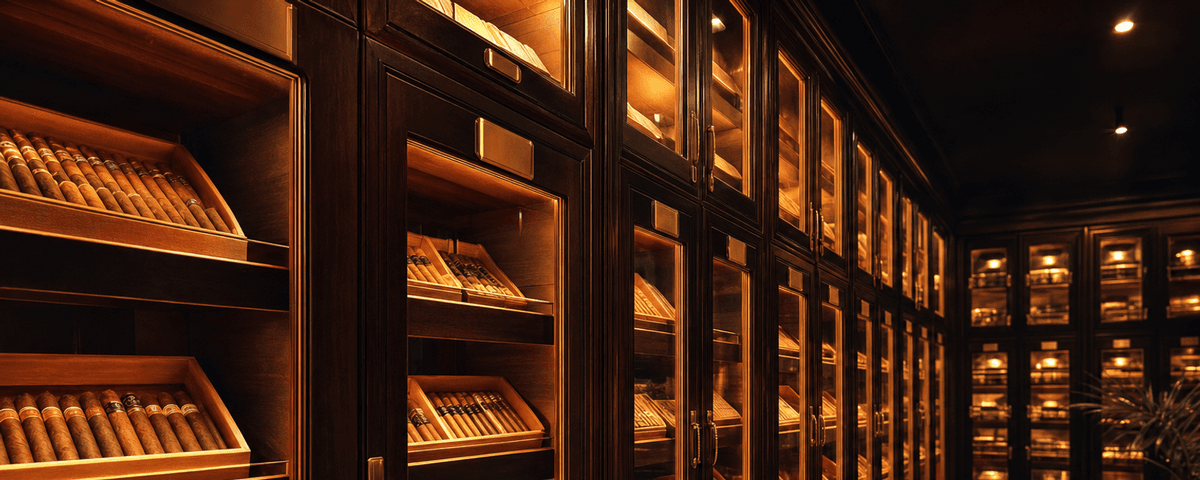
33 座 24 小時恆溫恆濕醇化室
W Cigar Bar 提供的會員醇化空間 · 場地資訊請洽編輯部
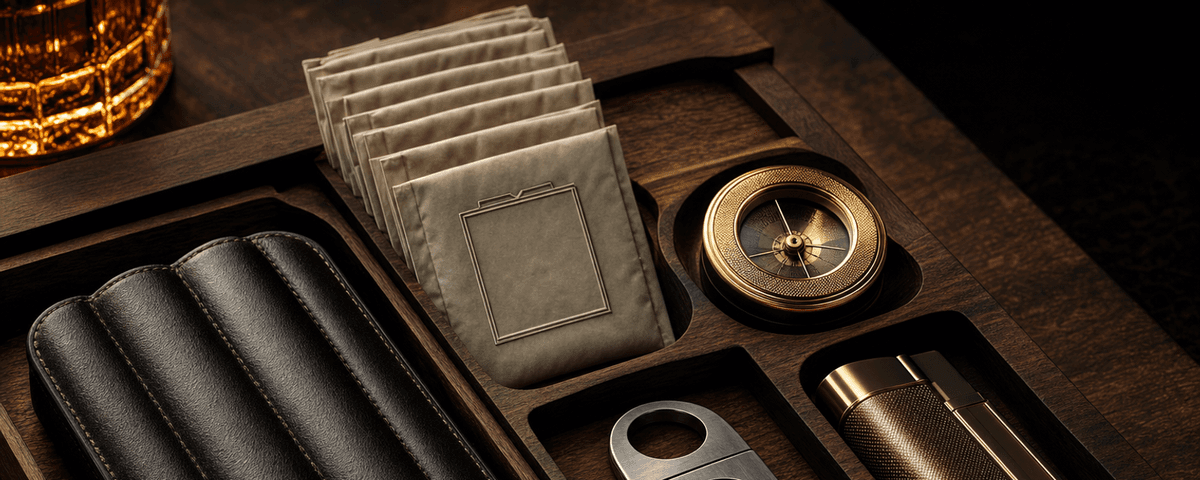
雪茄剪 / 打火機 / 雪茄盒 / Boveda
W Cigar 配件官網 · 專營雪茄配件正品
加 LINE 好友 · 文化諮詢
文化空間資訊 · 紳士沙龍 · 私人包場
本網站內容僅供雪茄文化、歷史、收藏與品吸知識研究參考。菸品有害健康、未滿法定年齡者請勿吸菸。實際規範請依所在地法律為準。
吸菸有害健康・戒菸專線 0800-636363・本站僅供 20 歲以上成年人閱覽。
影片來源:Habanos S.A. 官方 YouTube 頻道 · 教育性內容引用 · AI 智能配對
讀到這裡,你不只是路過的人
留下 Email,加入 W 雪茄聖經內圈——總編輯 Wilson Tsai 親選的學院深文與國際新訊,先你一步送到信箱。
· 教育用途非銷售 · 隨時一鍵退訂 · Email 絕不對外公開 · 由勝茄股份有限公司營運
同分類延伸閱讀


資料來源:W Cigar Bible 編輯部整理 · 雪茄王子 Wilson Tsai 親自審稿
本文僅供雪茄文化、歷史、收藏與品鑑知識研究,不作為菸品促銷、銷售或購買建議。吸菸有害健康,未滿二十歲不得吸菸。