古巴流亡家族重建王朝:Padrón、Fuente、García
從革命難民到雪茄帝國—3 個傳奇家族的 60 年史詩

古巴流亡家族重建雪茄王朝完整史—Padrón(José Orlando 1959 流亡、1964 用 600 美元在尼加拉瓜創立、2014 推出 50 Years 紀念)、Fuente(1912 Tampa 創立、1924/1990 兩次大火、1992 Chateau de la Fuente、1995 OpusX)、García(Pepin 30 年 Cohiba 工廠、1996 流亡、2003 創 My Father、Le Bijou 1922 獲 2015 年度雪茄第一)。雪茄王子親寫 veteran 深度史詩。
Cuban Exile Families Rebuilding Dynasties: Padrón, Fuente, García
January 1, 1959 -- The Castro Revolution prevailed, and the Cuban cigar industry was nationalized. Thousands of Cuban tobacco farmers, cigar artisans, and factory owners were forced into exile -- losing their homes, property, and tobacco knowledge accumulated over generations, which was almost rendered worthless. But three families chose to rebuild from zero -- spending 50-65 years in foreign lands to rebuild cigar dynasties.
This article focuses on the full epic of the three major exile families: Padrón, Fuente, García. It complements the W Cigar Bible article cuban-cigar-family-dynasty-economics (including Cifuentes and Menéndez) -- this article focuses on three families that "rebuilt non-Cuban dynasties in foreign lands", while that article includes the divergent fates of families after the nationalization of Cuban factories.
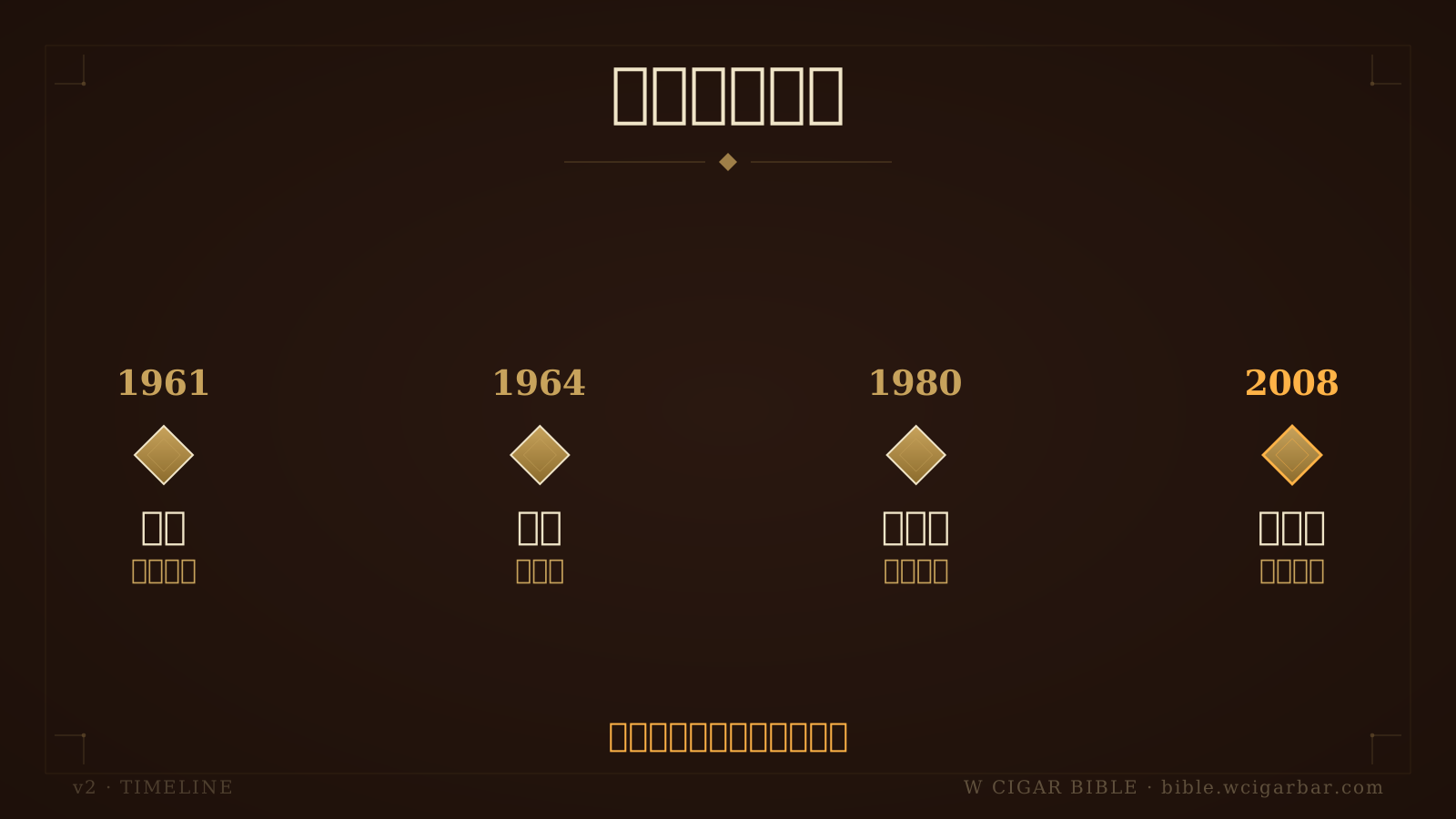
以時間線呈現三大流亡家族從一九六一到二零零八流亡與重建的重要年代節點圖
Family 1: Padrón -- The Non-Cuban Flagship That Started in Miami with $600
Founder José Orlando Padrón
1926: José Orlando Padrón was born in Cuba's Pinar del Río Province (the sacred land of Cuban cigars). Family background: his grandfather was already growing tobacco in Pinar del Río in the 19th century -- the Padrón family had been tobacco farmers in Cuba for a century.
The Road of Exile
1961: The Castro government confiscated the Padrón family's land. José Orlando went into exile in Spain, then New York, and finally arrived in Miami, USA. Relying on $60/month in Cuban refugee relief plus carpentry work done with a wooden mallet given by a friend, he saved $600 -- this is the verifiable version of Padrón's startup capital (not the erroneous rumor of "$600 in U.S. government aid").
Founded in Miami on 1964/9/8
September 8, 1964: José Orlando used $600 to found Padrón Cigars (the company's original name was Piloto Cigars Inc., named after the family's tobacco farm in the town of Piloto, Pinar del Río). In the first year, he could only roll a small number of cigars, distribute them himself, and begin with Miami's Cuban exile customers.
1970 Move to Estelí, Nicaragua
1970: Padrón moved production to Estelí, Nicaragua, where it remains to this day. During the Reagan embargo on Nicaragua in 1985-1986, the family moved cigars and tobacco leaves back to Tampa within the 5-day grace period -- personally overseeing crisis management.
Flagship Series of the Rebuilt Dynasty
- 1989 Padrón 1964 Anniversary Series: Commemorating the 25th anniversary of the founding, using "4-year-aged tobacco leaves" (a revolutionary practice in the industry at the time), a benchmark for Maduro wrappers, and scores breaking 90 points
- 2003 Padrón 1926 Series No. 9: Commemorating José Orlando's 80th birthday, Cigar Aficionado 2004 Cigar of the Year No. 1, establishing its benchmark status among Maduro cigars
- 2014 Padrón 50 Years Anniversary: Commemorating the 50th anniversary of the founding, limited release, shipped only after many years of aging, with market prices of NT$15,000+ per stick
Second and Third Generations
Jorge Padrón (José Orlando's son) runs Padrón Cigars today, and the third generation, including Orlando Padrón Jr., has already joined. 100% family-owned, not publicly listed, and having repeatedly refused acquisition by large tobacco groups, it is the purest non-Cuban flagship case of "family operation to this day".
December 5, 2017: José Orlando Padrón passed away peacefully in Miami at the age of 91 -- praised as one of the "fathers of modern non-Cuban cigars".
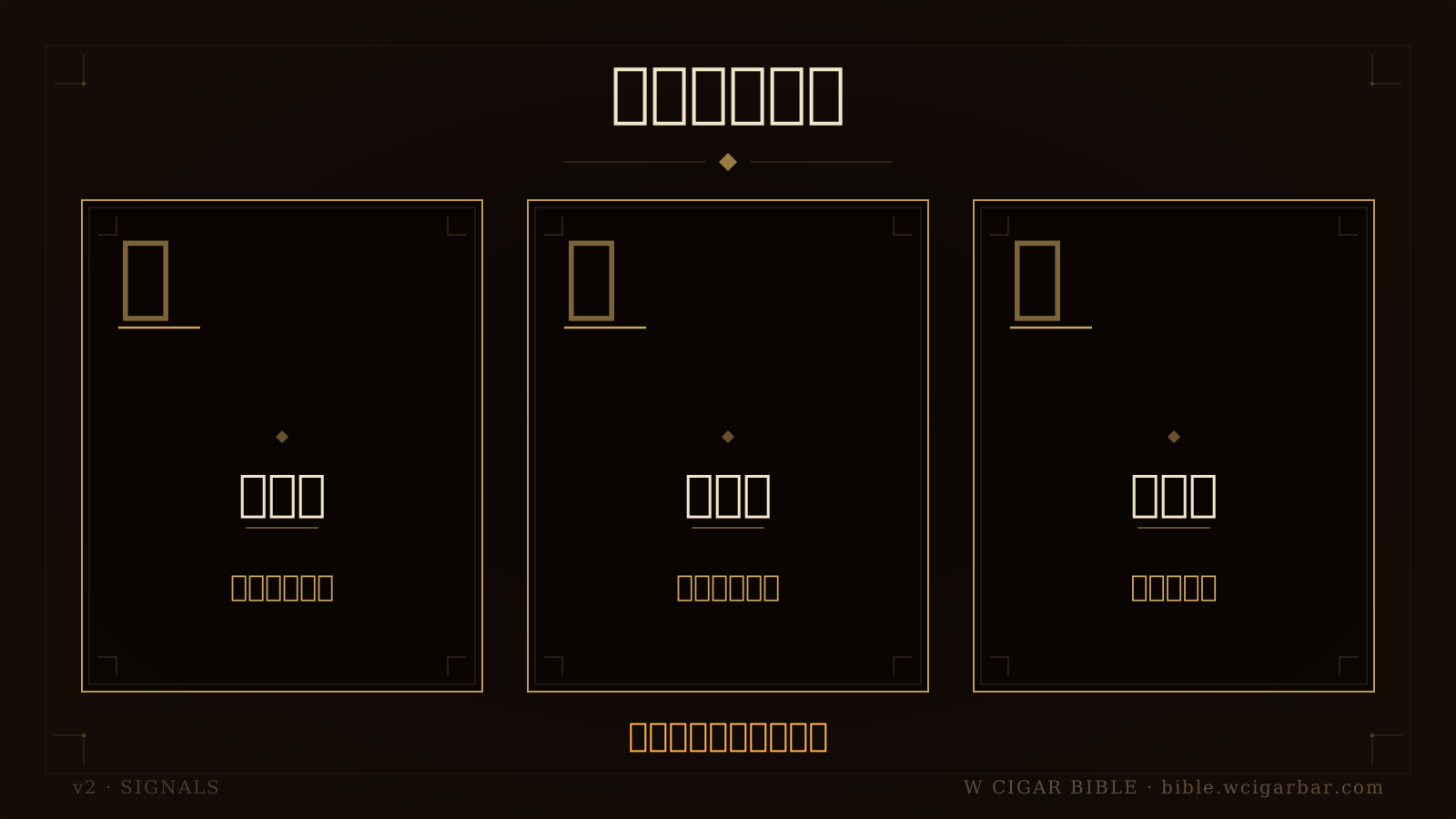
以三張卡片呈現 Padrón、Fuente 與 García 三大流亡家族起家地與代表品牌核心結論的資訊圖
Family 2: Arturo Fuente -- The Dominican Empire That Started in Tampa
Founder Arturo Fuente (1888-1973)
1888: Arturo Fuente was born in Güines, Cuba (southeast of Havana Province). In 1902, at age 14, he immigrated with his family to Tampa, Florida, USA -- at the time, Ybor City was "America's Havana", a Cuban exile community.
The Starting Point of the Fuente Empire
1912: At age 24, Arturo Fuente founded A. Fuente & Co. in West Tampa. It reached its peak in 1922, employing 500 people.
1924 First Major Fire
1924: While Arturo was in Cuba purchasing tobacco leaves, the Tampa factory caught fire and was completely destroyed -- the family suspended production for 22 years.
1946: The family made a small-scale return in the backyard of their Ybor City home (about 160 square feet) -- his wife personally rolled leaves, and Arturo rebuilt the basic foundation.
1958 Second Generation Carlos Fuente Sr. (1935-2016)
1958: Arturo handed the brand to his son Carlos Fuente Sr. Carlos Sr. pursued the market opportunity of "replacing Cuba" after the 1959 Cuban embargo -- the Fuente brand entered the U.S. cigar market.
1979 Nicaragua Fire -> 1980 Move to the Dominican Republic
1979: Fuente's factory in Nicaragua burned down amid the fighting of the Nicaraguan Revolution. Carlos Sr. mortgaged his own house, combined it with Carlos Jr.'s savings, and in 1980 moved the whole family to Santiago de los Caballeros in the Dominican Republic to rebuild -- this was the true starting point of Fuente entering the "Dominican dynasty" (not the 1990 Dominican fire, which is an erroneous rumor).
Chateau de la Fuente and OpusX
1992: The Fuente family established the Chateau de la Fuente estate near Bonao in the Dominican Republic -- the first cigar estate in the Dominican Republic to grow its own wrapper. It broke through the Dominican cigar tradition of "imported wrapper" and fully controlled wrapper quality.
1995: Based on the Dominican wrapper from Chateau de la Fuente, they launched Arturo Fuente Fuente OpusX -- an entirely Dominican production area cigar (wrapper, binder, and filler all Dominican). Across three generations, they proved the once-denied hypothesis that "the Dominican Republic can grow top-tier wrapper". With a global allocation system, extremely rare annual production, and auction-market prices reaching NT$15,000+ per stick.
Third Generation Carlos Fuente Jr. (Carlito) and Fourth Generation Liana
Carlos "Carlito" Fuente Jr.: Current CEO, inheritor of the brand's philosophical decision-making authority, continuing to invest in agricultural innovation and charitable activities (Fuente Foundation).
Fourth generation Liana Fuente: Carlito's daughter, currently responsible for the joint ventures between Newman Family and Fuente. With succession extending across four generations and including women, it is one of the longest-running lines by number of generations among non-Cuban family dynasties (113+ years).
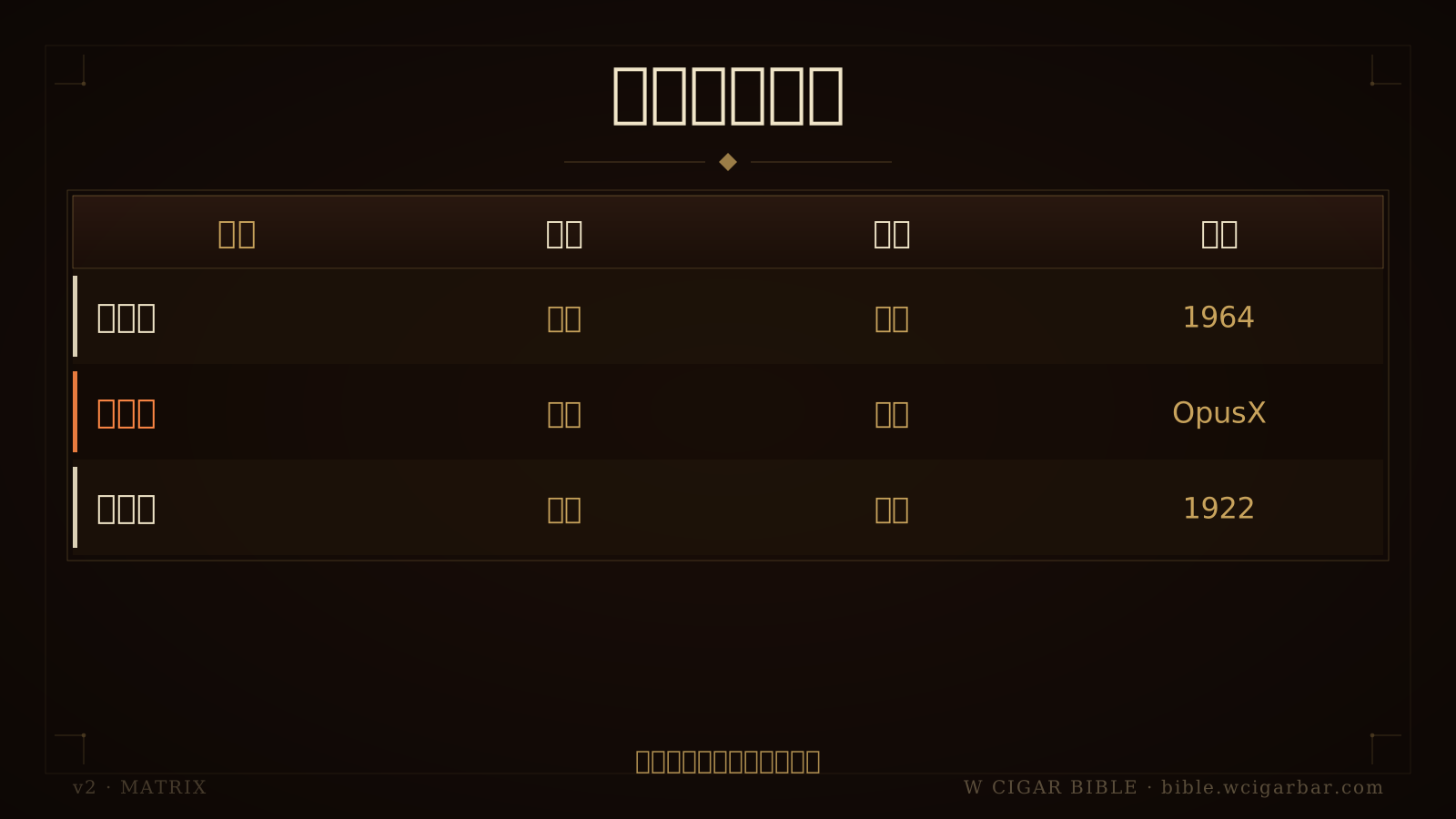
比較 Padrón、Fuente、García 三大流亡家族落腳產區、傳承代數與旗艦系列差異的資訊對照表
Family 3: García -- The My Father Dynasty of a Cohiba Master
Founder José "Pepín" García
1950: José "Pepín" García was born in Las Villas (today Villa Clara Province), Cuba -- the tobacco region of central Cuba, not Pinar del Río (this is a common erroneous rumor). His father worked in tobacco fields, and Pepín began learning to roll at the age of 8.
25+ Years in the Cuban Cigar Industry
Pepín accumulated more than 25 years of work experience in the Cuban cigar industry. He rolled multiple brands at several Habanos factories (including a period at El Laguito) and is a top-tier artisan. There are varying accounts of the specific number of years of Cohiba factory experience, including claims of 30 years, but there is no dispute that Pepín's top-level craftsmanship accumulated in Cuba became the foundation of My Father's later quality.
1996 Exile to Miami
1996: Pepín and his family went into exile in Miami, USA. He began hand-rolling cigars in a small Miami apartment -- rolling for local Cuban restaurants and cigar shops, accumulating customers and reputation. Later, with the Don Pepin Garcia brand, he established the Miami "El Rey de los Habanos" factory.
2003 Move to Estelí, Nicaragua
2003: Pepín and his son Jaime García established a factory in Estelí, Nicaragua -- which later became the cigar stronghold of the contemporary García family.
My Father Brand (Founded in 2008)
2008: Jaime García founded the My Father Cigars brand -- the name "My Father" is Jaime's tribute to his father Pepín, dedicating the brand to his father and carrying forward the roots of the family's tobacco craft.
Industry consensus: behind the name "My Father" is the spirit of three generations of Cuban tobacco farmers -- Pepín leads blending and craftsmanship, Jaime leads business operations and branding, making their father-son collaboration a contemporary model.
My Father Le Bijou 1922 -- 2015 Cigar of the Year
2010: My Father Le Bijou 1922 was launched -- commemorating the 1922 birth year of Pepín's father: Habano Oscuro wrapper, intense complexity, Full strength.
2015: Cigar Aficionado named it Cigar of the Year No. 1 (Le Bijou 1922 Torpedo Box-Pressed) -- the highest recognition of 21st-century Cuban exile heritage.

整理三大流亡家族史三個常見記錯與正確觀念的提醒圖
Common Patterns of the 3 Major Exile Families
Pattern 1 -- The pain of exile transformed into motivation: All three families began as revolutionary refugees, transforming "homelessness" into the motivation to "rebuild a dynasty".
Pattern 2 -- Preserving Cuban craft wisdom: Padrón (his grandfather's Pinar del Río tobacco-farming knowledge), Fuente (the craft of the early Tampa Cuban exile community), García (Pepín's 25+ years of Cuban cigar industry experience).
Pattern 3 -- Experimenting in foreign soils: Padrón -> Nicaraguan volcanic soil; Fuente -> Dominican red-soil estate; García -> Nicaraguan Estelí volcanic growing region.
Pattern 4 -- A century-long commitment to family operation: All three families have refused acquisition by large groups, maintained family operation, rejected short-term profit, and passed the legacy across generations.
Pattern 5 -- Paying tribute to pre-revolution Cuba: The names of their core series all pay tribute to Cuba -- Padrón 1964 / 1926 Anniversary, Fuente OpusX / Don Carlos, My Father Le Bijou 1922.
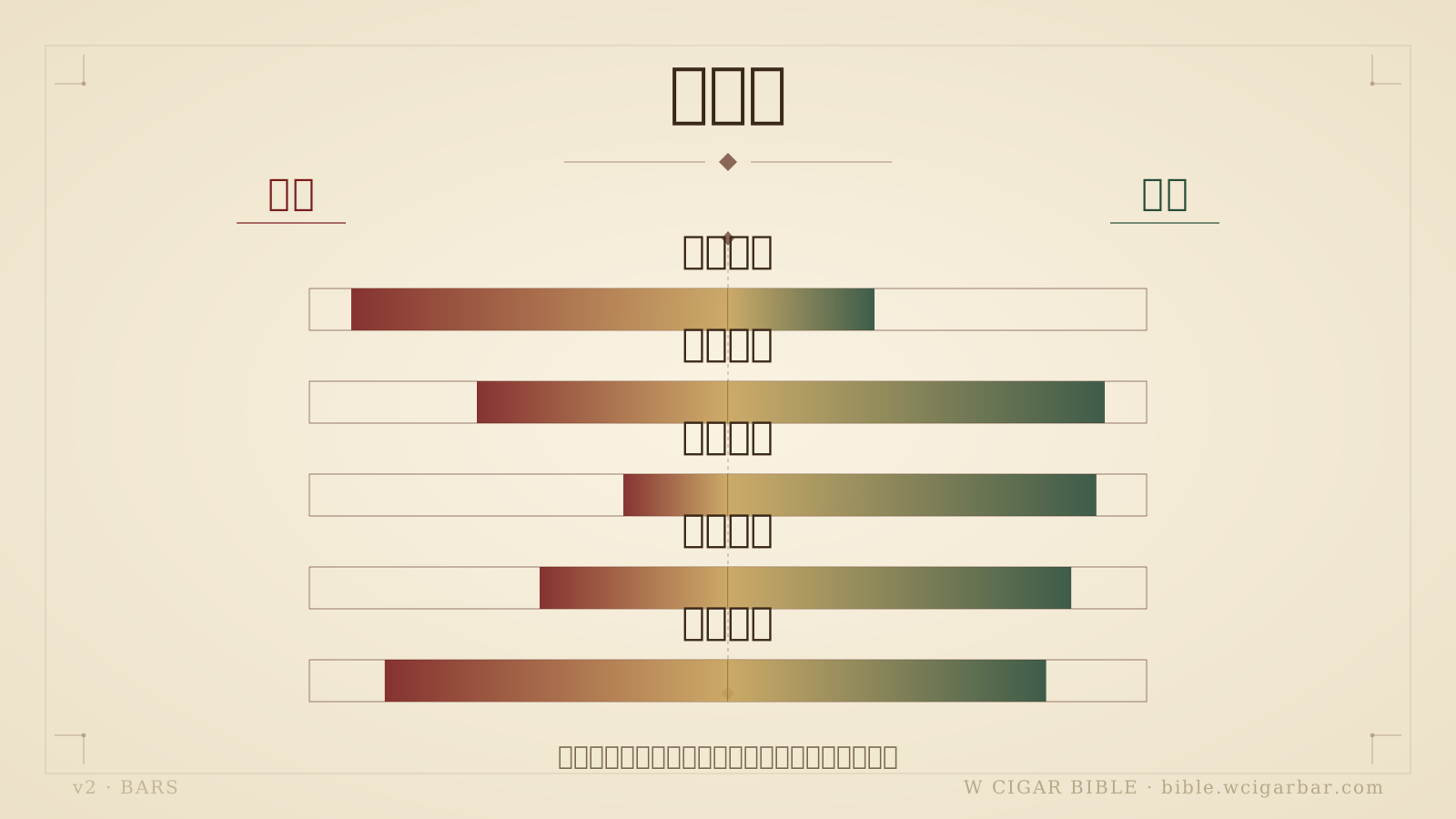
長條圖對比古巴本土脈絡與海外重建路線在五個面向的差異
Lessons for Contemporary Cigar Enthusiasts
Lesson 1 -- The spirit of exile = the spirit of cigars: Understanding the stories of these three families -- they are living witnesses to cigar civilization.
Lesson 2 -- Non-Cuban does not necessarily mean inferior: Padrón, Fuente, and García prove that Cuban exile families can make cigars on non-Cuban soil that stand shoulder to shoulder with Cuba's finest.
Lesson 3 -- The value of family operation: The three brands refuse acquisition, do not need to answer to shareholders, do not need to chase quarterly profits, and can invest in quality for the long term -- this is the structural reason for 50+ years of stable quality.
Lesson 4 -- The possibility of Asian Chinese cigar brands: Wilson Tsai founded Capadura (2023), Asia's first Chinese cigar brand -- learning from the family-inheritance spirit of Padrón / Fuente / García, combining top Dominican / Nicaraguan craftsmanship with Asian cultural positioning, as a contemporary continuation of "Asia can also have its own cigar dynasty".

快問快答卡片回答三大家族是誰、產地在哪與成功原因
Conclusion
Padrón, Fuente, García -- three exile families used 50-113 years to prove that the spirit of cigars transcends borders. Their stories are epics that cigar enthusiasts must read -- not only to smoke their cigars, but also to understand the human spirit behind them.
W Cigar Bar Gentleman's Cigar House, Da'an District, Taipei, four formal channels for Cuban cigars (PCC authorized dealer, official Cuban state-run store, Swiss general distributor, Spanish general distributor), complete Padrón / Fuente / My Father series -- simultaneous supply of the three top non-Cuban families.
LUBINSKI Italy accessories general distributor, cigar restaurant and bar, Da'an main store with 33 VIP cigar lockers (24-hour aging) maintained by dedicated staff, founding store of the Capadura cigar brand -- Asia's first Chinese cigar brand, paying tribute to the heritage spirit of Cuban exile families.
Reservation: Da'an Main Store. Accessories reference: cigarclub.tw.
Warning: Smoking is harmful to health. Smoking cessation hotline: 0800-636363. This site is for adults aged 20 and above only.
Like this article?Share with friends
Share this W Cigar Bible piece with friends who want to learn cigar culture, storage, and tasting.
想把這篇 化為實踐
雪茄聖經是知識;雪茄文化要在空間裡發生

W Cigar Bar 大安總店資訊
台北大安區 · 雪茄聖經總編輯 Wilson Tsai 主理的雪茄文化空間

33 座 24 小時恆溫恆濕醇化室
W Cigar Bar 提供的會員醇化空間 · 場地資訊請洽編輯部

雪茄剪 / 打火機 / 雪茄盒 / Boveda
W Cigar 配件官網 · 專營雪茄配件正品

加 LINE 好友 · 文化諮詢
文化空間資訊 · 紳士沙龍 · 私人包場
本網站內容僅供雪茄文化、歷史、收藏與品吸知識研究參考。菸品有害健康、未滿法定年齡者請勿吸菸。實際規範請依所在地法律為準。
吸菸有害健康・戒菸專線 0800-636363・本站僅供 20 歲以上成年人閱覽。
影片來源:Habanos S.A. 官方 YouTube 頻道 · 教育性內容引用 · AI 智能配對
讀到這裡,你不只是路過的人
留下 Email,加入 W 雪茄聖經內圈——總編輯 Wilson Tsai 親選的學院深文與國際新訊,先你一步送到信箱。
· 教育用途非銷售 · 隨時一鍵退訂 · Email 絕不對外公開 · 由勝茄股份有限公司營運
同分類延伸閱讀


資料來源:W Cigar Bible 編輯部整理 · 雪茄王子 Wilson Tsai 親自審稿
本文僅供雪茄文化、歷史、收藏與品鑑知識研究,不作為菸品促銷、銷售或購買建議。吸菸有害健康,未滿二十歲不得吸菸。