古巴雪茄的獨特區域與氣候影響
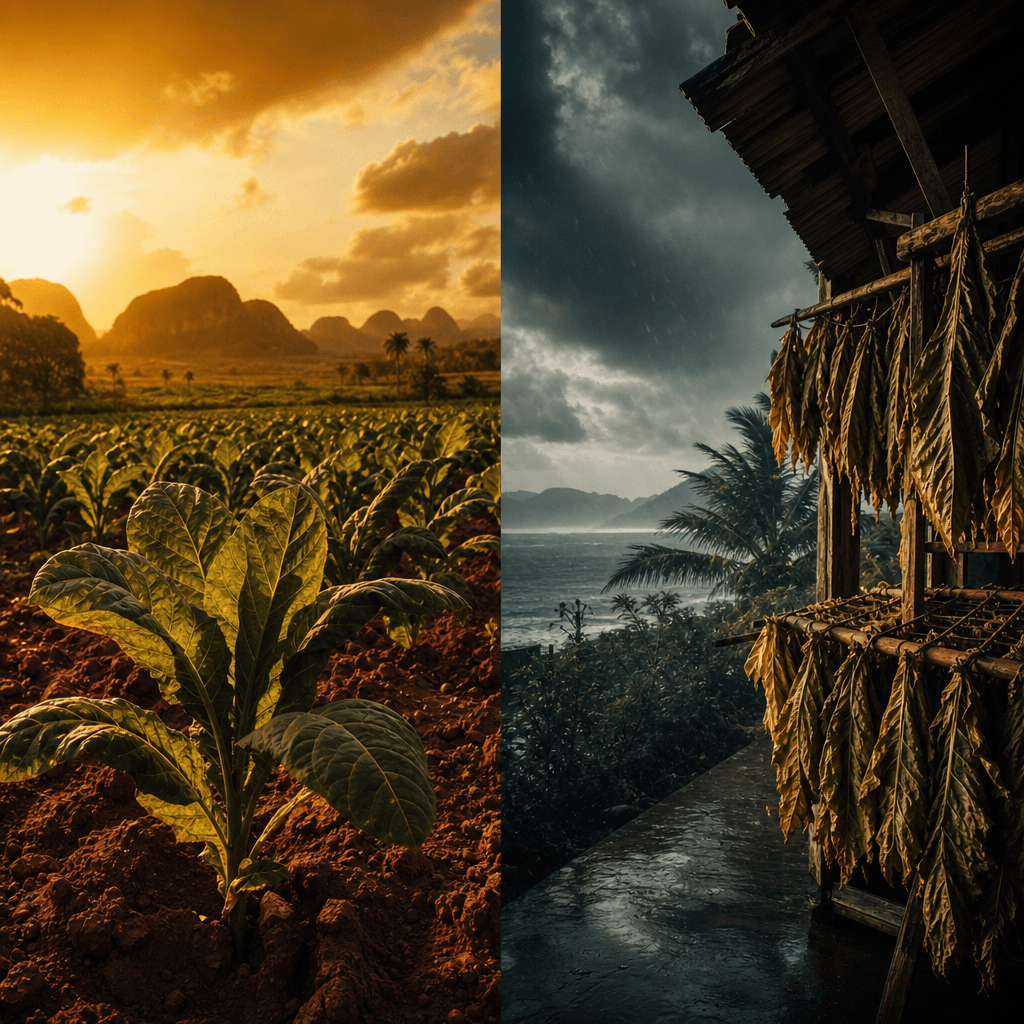
古巴雪茄的魅力不僅在於品牌,更在於其背後的風土與氣候。Pinar del Río、San Luis、San Juan y Martínez等地名共同構成了古巴雪茄的風味地圖。核心的氣候變數包括溫度、雨量和土壤排水,這三者的平衡影響著葉片的厚度、油分及燃燒特性。Vuelta Abajo是主要產區,生產出多樣的雪茄風味,而San Juan y Martínez與San Luis則分別強調細膩與結構感。
- 古巴雪茄的風味受土地、氣候與發酵過程影響,需深入了解這些底層變數。
- Vuelta Abajo 是古巴雪茄的核心產區,土壤與氣候條件優越,能生產多種優質葉料。
- 不同產區的雪茄風味特徵各異,老手應學會判斷細膩與力量的平衡。
Unique Regions and Climate Impact of Cuban Cigars
When seasoned enthusiasts discuss Cuban cigars, focusing solely on brand, ring gauge, and vintage quickly leads to a bottleneck. The real distinction lies in whether you can connect the land, rainy season, wind direction, drying barns, and fermentation rhythm behind a cigar.
As the editor of the "Cigar Bible," I frequently remind regulars: Cuba's uniqueness is not just in the word "Cuba," but in the flavor map composed of place names like Pinar del Río, San Luis, San Juan y Martínez, Partido, and Remedios.
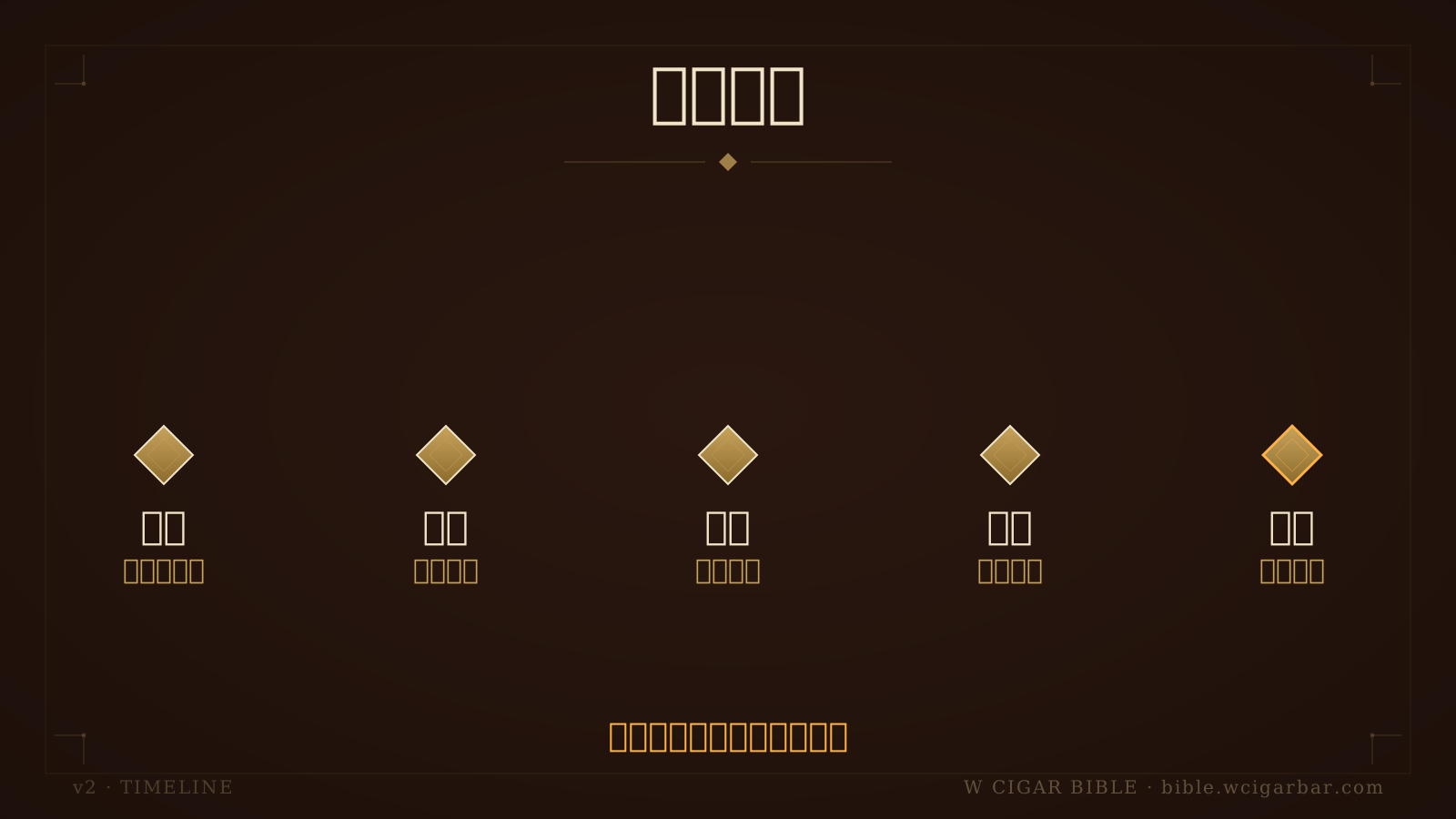
時間軸呈現煙田、採收、晾葉、發酵到配方流程
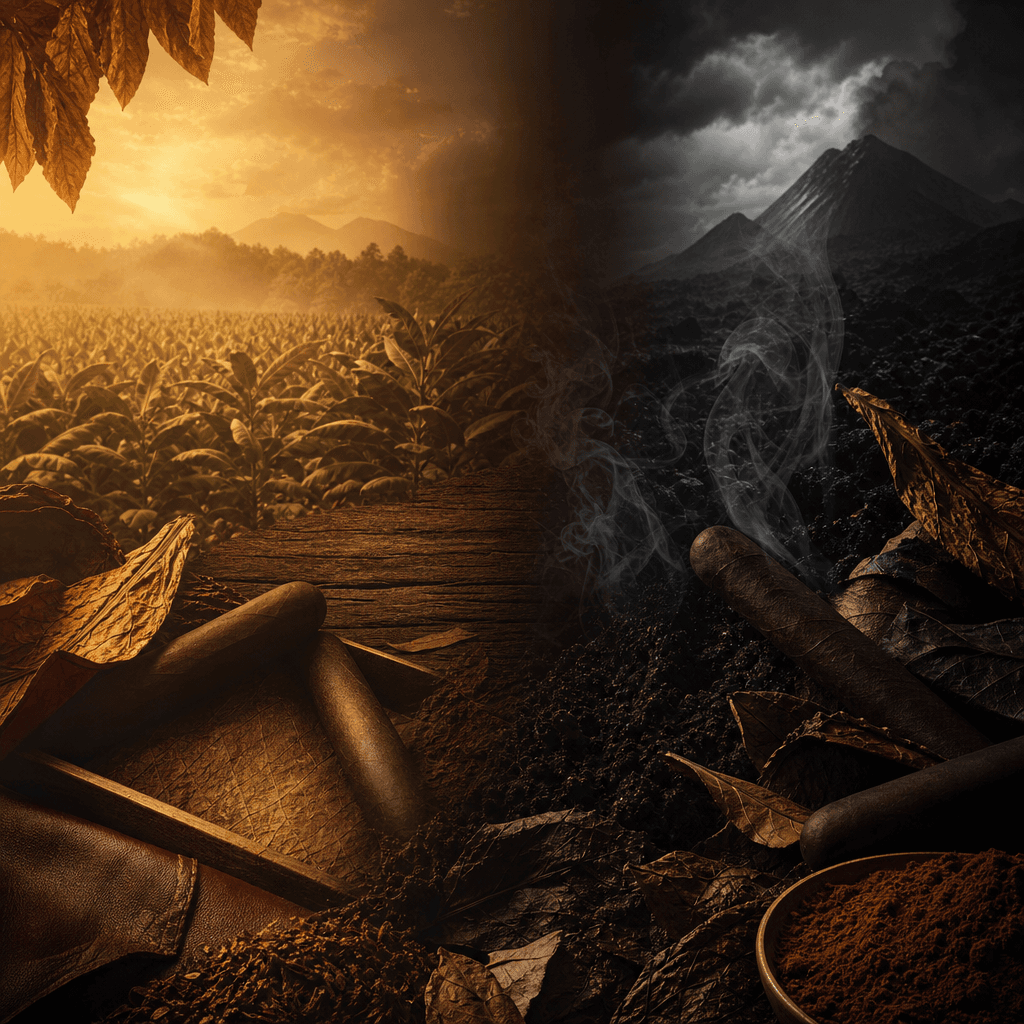
Terroir is Not Just a Slogan: Three Fundamental Variables of Cuban Cigars
Cuba is located between approximately 20 to 23 degrees north latitude, influenced by the Caribbean Sea, Gulf of Mexico, and northeast trade winds. The tobacco growing season generally falls between October and March. Daytime temperatures are often between 25 to 28°C, slightly cooler at night, with humidity usually above 70%. This mild but not dry rhythm allows the leaves to slowly accumulate oils, sugars, and nitrogenous substances.
The core of Cuban cigars is not a single climate, but the balance of "temperature, rainfall, and soil drainage." If rainfall is too high, the leaves are thin and disease pressure increases; if drought persists, both combustion and aroma complexity are affected. Experienced smokers judge the stability of a cigar not just by the box label but also by understanding whether the climate of that year allowed the fields, drying, and fermentation to connect smoothly.
| Variable | Common Range or Characteristics | Impact on Flavor |
|---|---|---|
| Annual Rainfall | About 1,200 to 1,600 mm | Affects leaf thickness, oil content, and combustion |
| Soil | Red soil, sandy loam, limestone components | Determines mineral sensation, sweetness, and structure |
| Humidity | Often above 70% | Affects drying speed and fermentation safety |
| Sea and Trade Winds | Significant differences between coastal and inland | Affects leaf elasticity and disease pressure |
Taking Cohiba 1966 as a representative of high-end Cuban style, its ability to form a complex image of creamy, grassy, bean, and woody notes is not only due to brand specifications but also related to raw materials from the premium fields of Vuelta Abajo. The brand is the entry point, but the terroir is the underlying syntax.
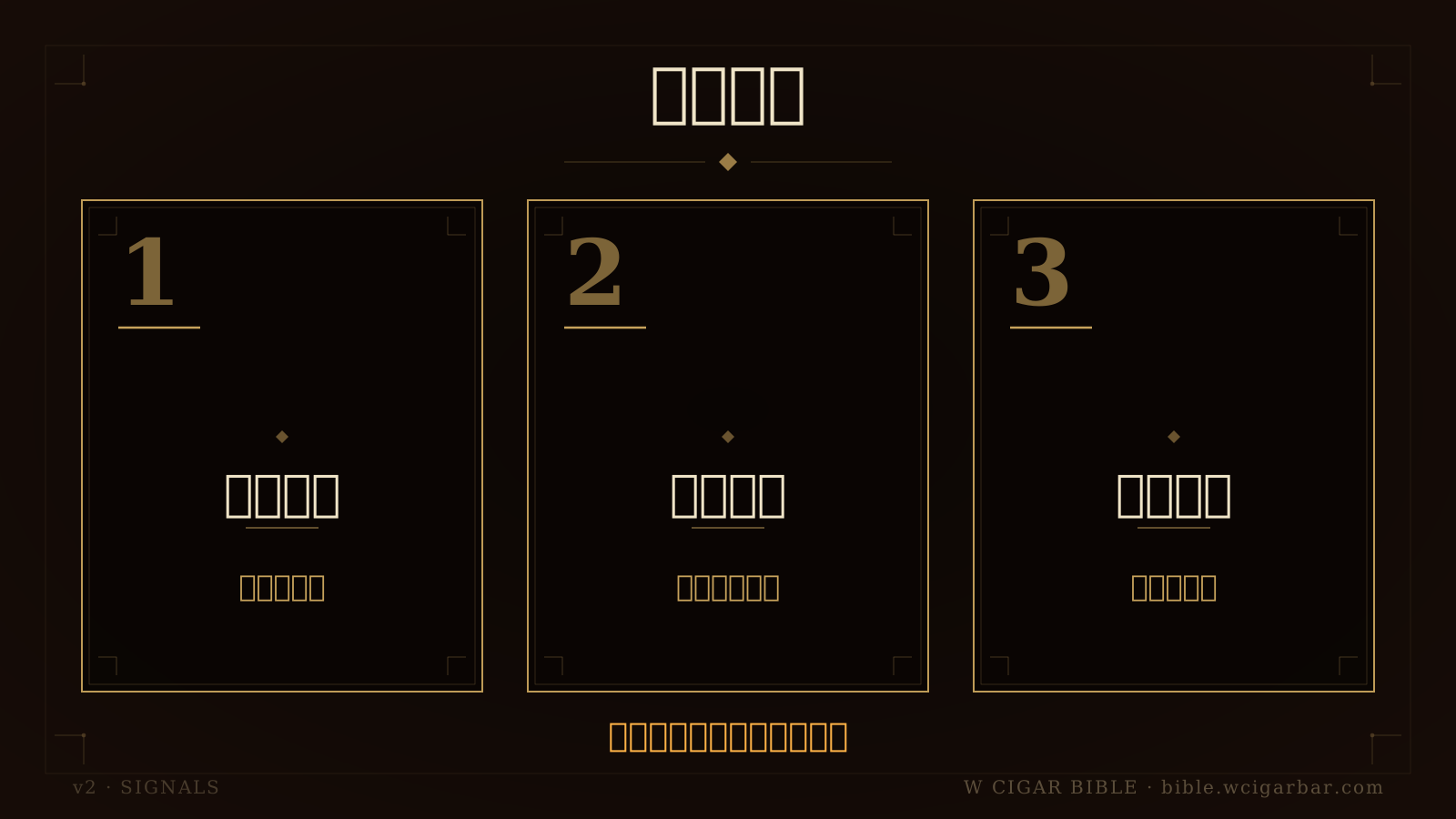
三張卡片整理溫雨土平衡、西部核心與村鎮差異
Vuelta Abajo: Why Pinar del Río is the Core Production Area
Vuelta Abajo, located in the western Cuban province of Pinar del Río, is considered the core by most seasoned enthusiasts. The tobacco fields here are distributed around San Luis, San Juan y Martínez, and Pinar del Río, with good soil drainage and a coexistence of iron-rich red loam and sandy structures. The leaves can grow with thickness without being coarse, which is the most precious condition for long filler leaves.
The advantage of Vuelta Abajo is that it can produce wrapper, binder, and filler leaves simultaneously, rather than excelling in only one type. The common black pepper, leather, and deep woody notes of Partagás (founded in 1845) and the cocoa, coffee, and hazelnut sweetness of Montecristo (founded in 1935) can often be traced back to this logic of raw materials that balance strength and smoothness.
Farmers in Pinar del Río pay great attention to plot differences. Within the same farm, the maturity speed varies between high and low areas, windward and leeward positions. The upper leaves, ligero, have strong sunlight exposure, higher nicotine, and oil content; the middle leaves, seco, have delicate aroma; the lower leaves, volado, aid combustion. Blenders recombine these leaf positions to form the brand character we are familiar with.
Launched in 1997, Vegas Robaina is a good case for understanding the image of production areas and farms. The Alejandro Robaina family has long been known for high-quality wrappers, and the brand style is often described as honey, woody, dried fruit, and delicate spice. It reminds us that Cuban cigars are not abstract products but traces left by fields, barns, craftsmanship, and time.

矩陣比較核心產區、聖胡安與聖路易的角色差異
San Juan y Martínez and San Luis: Understanding Requires Breaking Down to Villages
If Vuelta Abajo is regarded as a big term, seasoned enthusiasts will still miss the details. San Juan y Martínez is often seen as an important area for wrappers and refined aromas, with fine soil, good balance between water retention and drainage, and excellent leaf extensibility. Excellent wrappers need to be thin, tough, oily, and have fine veins, conditions that cannot be compensated by fermentation alone.
San Luis is often associated with structure, depth, and filler quality. Some plots here can grow more structured ligero and seco, allowing cigars to maintain momentum in the middle and later stages. San Juan y Martínez tends towards delicacy and expression, San Luis towards structure and strength; combined, they approach the complete profile of high-end Cuban cigars.
Taking Trinidad as an example, existing as a diplomatic cigar around 1969 and publicly launched in 1998, its iconic elegance, creaminess, floral, and fine woodiness are often compared by seasoned enthusiasts to the thickness of Cohiba. This style, if lacking delicate wrappers and balanced fillers, can easily become thin; if the leaf position is too heavy, it will suppress the aroma.
When interpreting these two place names, I usually use three aspects:
- Check if the front section is clean: Are the herbal, creamy, and floral notes clear?
- Check if the middle section has structure: Can the woody, coffee, and cocoa notes stand?
- Check if the back section is unbalanced: Does the spiciness become coarse, and is the combustion skewed?
Partido and Semi Vuelta: Underestimated Supporting Production Areas
Partido, located near Havana, has historically been early associated with wrapper production. Closer to the city and port, it was an important tobacco trade area in the 18th and 19th centuries. Compared to Vuelta Abajo, Partido's reputation is often overshadowed in modern seasoned circles, but its role in wrappers, short fillers, or specific blends should not be overlooked.
The value of Partido is not in replacing Vuelta Abajo but in providing another kind of smoothness, thinness, and usability. A good wrapper is not about being heavier in flavor but about covering the structure, providing initial aroma, and burning without dragging. H. Upmann (founded in 1844) often seen with hay, cream, almond, and light coffee, is suitable for understanding the impact of delicate wrappers on the overall style.
Semi Vuelta is mostly located east of Pinar del Río and surrounding areas, with soil and climate conditions less stable than Vuelta Abajo but still providing some leaf material. Its existence shows us the practical side of the Cuban cigar industry: not all leaves come from the most dazzling fields, nor do all leaves enter the highest-end series.
Seasoned enthusiasts who only chase famous fields and popular box codes may overlook the blender's balancing ability. Some medium-strength cigars, precisely because of the addition of softer leaves, make the front and middle sections easier to unfold, and the back section not too sharp. In other words, supporting production areas give Cuban cigars more layers, rather than just a competition of strength.
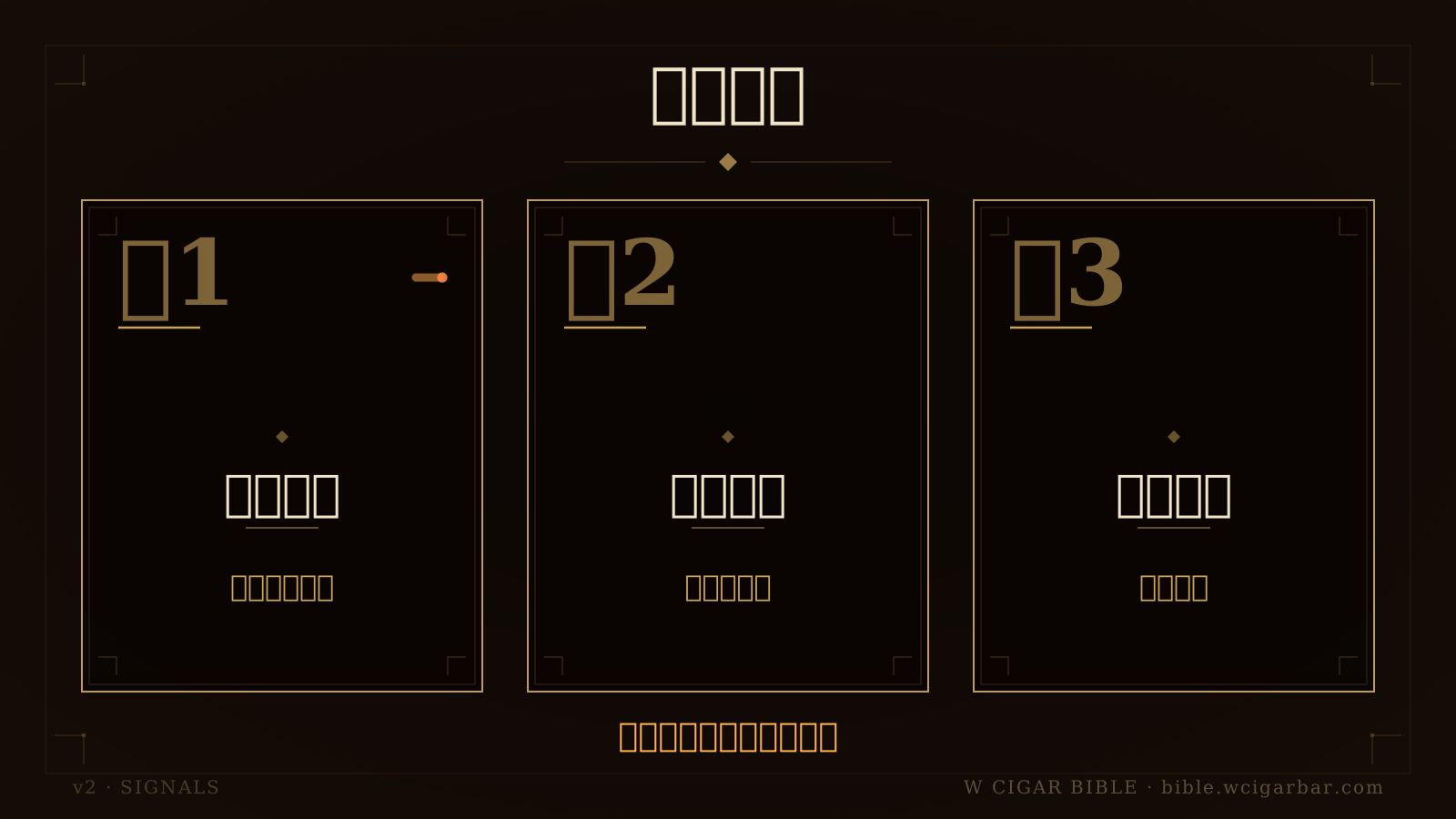
三張卡片列出只看古巴、核心萬能與誤判保存
Vuelta Arriba, Remedios, and Eastern Cuba: Historical Significance Over Fame
Vuelta Arriba generally refers to the earlier developed tobacco areas in central and eastern Cuba, with Remedios located in the Villa Clara area, one of Cuba's ancient tobacco regions. During the 16th and 17th-century Spanish colonial period, Cuban tobacco had already entered the commercial network from these areas; however, the quality reputation of Pinar del Río gradually overshadowed other production areas.
Remedios' climate and soil conditions are less consistent, with leaves often having more rustic herbal, soil, woody, and direct spicy notes. If Vuelta Abajo is the precisely tuned Cuban syntax, Remedios is more like the historical background of early Cuban tobacco. It may not always be elegant and delicate, but it reminds us that Cuban cigars are not just about high-end brand expressions.
For example, brands like José L. Piedra are often seen as representatives of a more rustic Cuban style, different from the refined routes of Cohiba and Montecristo. Seasoned enthusiasts need not measure all cigars with the same yardstick; some cigars emphasize daily, rugged, and earthy sensations, while others pursue multi-layered, long-lasting, and aging potential.
From a terroir perspective, the significance of eastern and central Cuban production areas lies in expanding the comparison benchmark. When you understand the directness of non-core production areas, and then look back at the sweetness, oiliness, acidity, and wood balance of Vuelta Abajo, you can better distinguish that "complexity" and "intensity" are not the same thing.
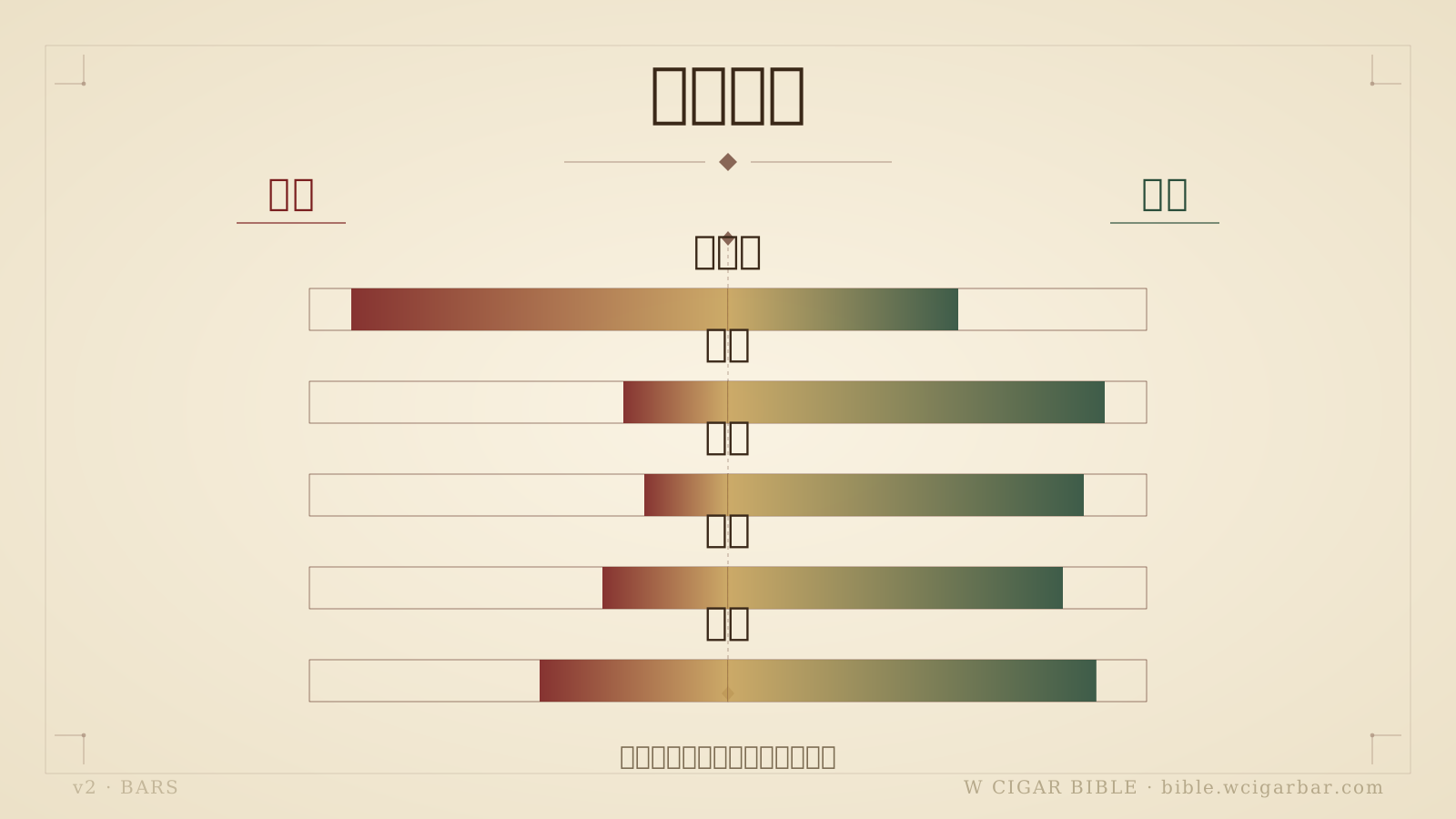
橫條圖比較粗看與老手在品牌、田區與氣候的重視度
Vintage Climate, Hurricanes, and Aging: Why the Same Brand Differs by Box
Cuban cigar enthusiasts often discuss box codes and vintages, which is essentially about climate memory. In 2008, hurricanes Gustav and Ike severely damaged western Cuba, affecting Pinar del Río's farms, drying barns, and infrastructure; in 2022, Ian also caused severe damage to the western tobacco area. These events not only affect production but also subsequent leaf grading and fermentation arrangements.
Vintage differences are not mysticism but the result of agriculture, inventory, and craftsmanship schedules. Prolonged rainy seasons delay transplanting or harvesting, hurricanes destroy drying barns, and droughts cause differences in leaf thickness and combustion. Even the same brand and size, performances in 2014, 2017, and 2019 may differ significantly in sweetness, spiciness, and tightness.
During aging, seasoned enthusiasts need to distinguish between "closed periods" and "bad states." Some cigars with 2 to 3 years of box age may temporarily have dull aromas, residual ammonia, or hard woodiness, but after stabilizing at 65% to 69% relative humidity and about 18 to 21°C, they may begin to exhibit honey, dried fruit, leather, and floral details in the fifth year.
But collection is not a myth. If discussing collection appreciation, I always add: it does not guarantee appreciation, and still depends on source preservation and market. Unclear sources, uncontrolled humidity, and damaged box conditions may lose value even if the brand is popular. True seasoned enthusiasts first ensure proper preservation and records before discussing vintage comparisons.

三張問答卡說明風味差異、盒齡觀察與颶風年份
How Seasoned Enthusiasts Incorporate Production Area Knowledge into Daily Interpretation
I suggest seasoned enthusiasts establish their own "production area notes," not just writing about whether it's enjoyable, but also noting the front, middle, back, combustion, ash color, humidity, and box age. For example, the same Robusto size, Cohiba Robustos, Partagás Serie D No.4, Hoyo de Monterrey Epicure No.2, have similar ring gauges but completely different flavor structures, with production area and blend logic being important reasons.
The key to advanced interpretation is breaking down brand preferences into terroir preferences. What you like may not be a certain trademark but the oiliness of Vuelta Abajo, the delicate wrapper of San Juan y Martínez, the middle and back support of San Luis, or the clear woodiness brought by a drier climate in a certain year.
In practice, I use four steps to check:
- First record the box code and acquisition time without rushing to conclusions.
- Compare the same box performance after stabilizing for 30 to 60 days.
- Compare brands with similar sizes, not using Churchill against Petit Corona.
- Simultaneously note the weather and indoor humidity to avoid mistaking preservation issues for production area differences.
When you accumulate records of over 20 boxes, you'll start to see patterns: some brands perform well within 3 years, some need 5 to 8 years to open up; some vintages have beautiful front aromas but insufficient back support. At this point, Cuban cigars are no longer just a list but a set of flavor geography that can be tracked, verified, and corrected.
Frequently Asked Questions
Why do flavors vary so much even among Cuban cigars?
Because brand blends, leaf positions, fields, vintages, and preservation all change the outcome. "Cuba" is not a single flavor but a system composed of multiple production areas and craftsmanship stages. Seasoned enthusiasts who only judge by intensity will miss sweetness, acidity, oiliness, and wood structure.
Is Vuelta Abajo always the best?
It is the core production area but does not mean every cigar is automatically excellent. Plot, leaf grading, fermentation, and rolling all affect the final product. Good Partido wrappers or other production area leaves may also balance the blend better.
How many years of box age are best for observing production area characteristics?
Usually, 2 to 3 years can show basic outlines, and after 5 years, dried fruit, leather, honey, and floral notes are more likely to appear. If humidity exceeds 72% for a long time, flavors may be stifled; below 62%, oiliness and combustion will be damaged.
Are cigars from hurricane years all bad?
Cannot be generalized. Hurricanes affect production and infrastructure, but brands adjust through inventory leaves, grading, and production to reduce fluctuations. Vintage can only provide clues and cannot replace actual preservation and box-by-box interpretation.
How to avoid mistaking preservation issues for production area issues?
First stabilize the environment, recommended at 65% to 69% relative humidity, 18 to 21°C. If multiple sticks from the same box show skewed combustion, dullness, bitterness, or excessive moisture, check preservation first; if only flavor direction differs, then analyze production area and blend.
Reaching the seasoned stage, we pursue not labeling each cigar with simple tags but understanding why it is so. The charm of Cuba lies in how wind, rain, red soil, farmers, and time on the same island collectively write different characters. Once you understand the production area, brand preferences truly become your judgment.
—Cigar Prince Wilson Tsai
Smoking is harmful to health. Smoking is prohibited for those under twenty. Quitline: 0800-636363. This article is for reference on cigar culture, preservation, and regulations for adults over twenty, not a tobacco advertisement, promotion, or purchase suggestion.
Like this article?Share with friends
Share this W Cigar Bible piece with friends who want to learn cigar culture, storage, and tasting.
想把這篇 化為實踐
雪茄聖經是知識;雪茄文化要在空間裡發生

W Cigar Bar 大安總店資訊
台北大安區 · 雪茄聖經總編輯 Wilson Tsai 主理的雪茄文化空間
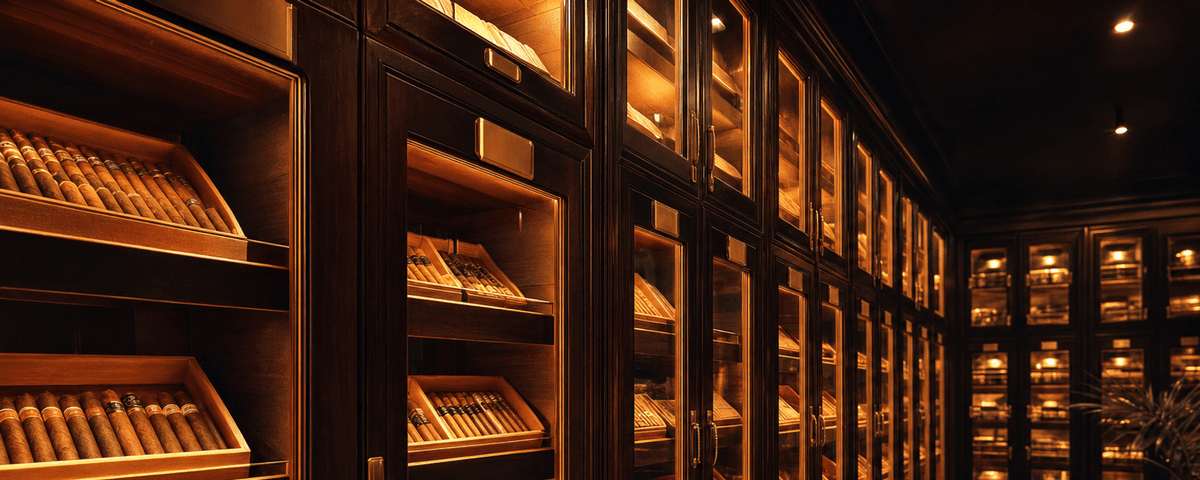
33 座 24 小時恆溫恆濕醇化室
W Cigar Bar 提供的會員醇化空間 · 場地資訊請洽編輯部

雪茄剪 / 打火機 / 雪茄盒 / Boveda
W Cigar 配件官網 · 專營雪茄配件正品
加 LINE 好友 · 文化諮詢
文化空間資訊 · 紳士沙龍 · 私人包場
本網站內容僅供雪茄文化、歷史、收藏與品吸知識研究參考。菸品有害健康、未滿法定年齡者請勿吸菸。實際規範請依所在地法律為準。
吸菸有害健康・戒菸專線 0800-636363・本站僅供 20 歲以上成年人閱覽。
讀到這裡,你不只是路過的人
留下 Email,加入 W 雪茄聖經內圈——總編輯 Wilson Tsai 親選的學院深文與國際新訊,先你一步送到信箱。
· 教育用途非銷售 · 隨時一鍵退訂 · Email 絕不對外公開 · 由勝茄股份有限公司營運
同分類延伸閱讀
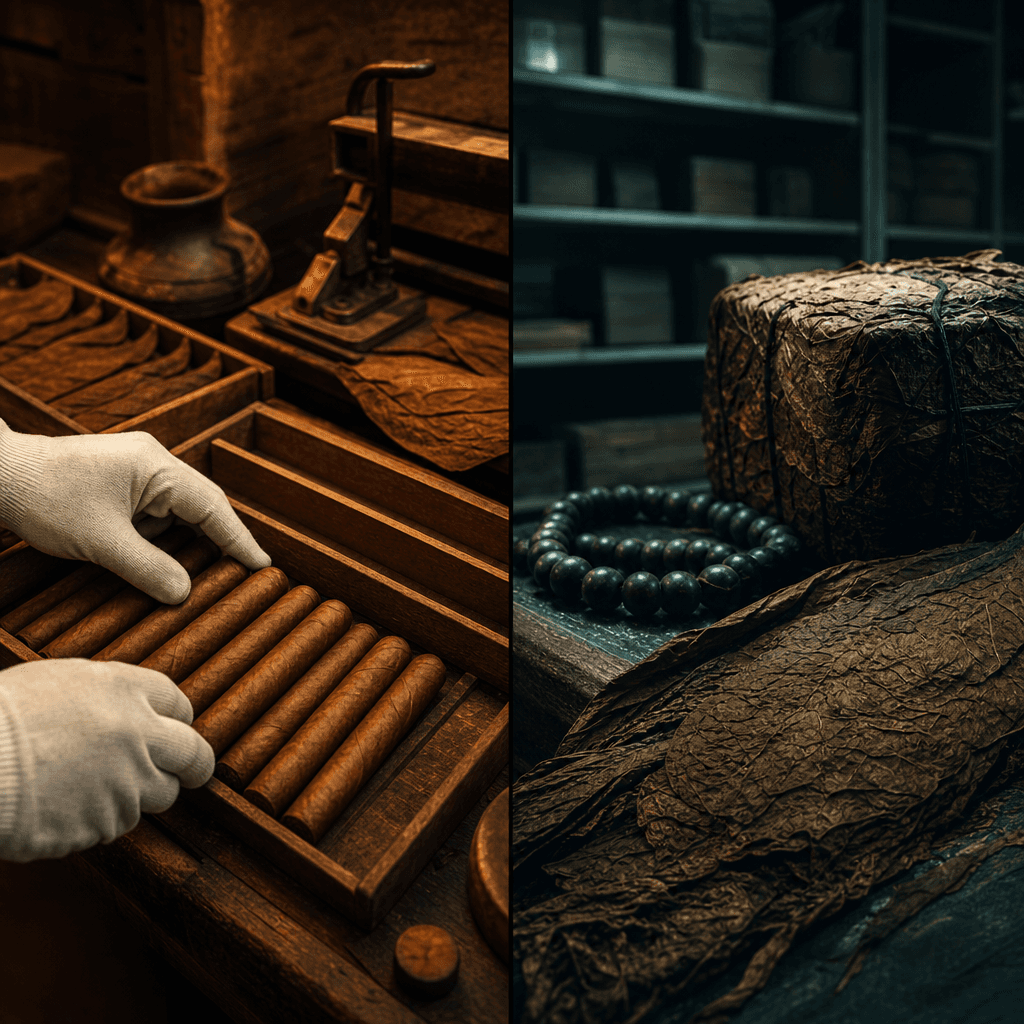
資料來源:W Cigar Bible 編輯部整理 · 雪茄王子 Wilson Tsai 親自審稿
本文僅供雪茄文化、歷史、收藏與品鑑知識研究,不作為菸品促銷、銷售或購買建議。吸菸有害健康,未滿二十歲不得吸菸。