The Culture of Cigar Appreciation: An In-depth Exploration from Etiquette to Social Interaction
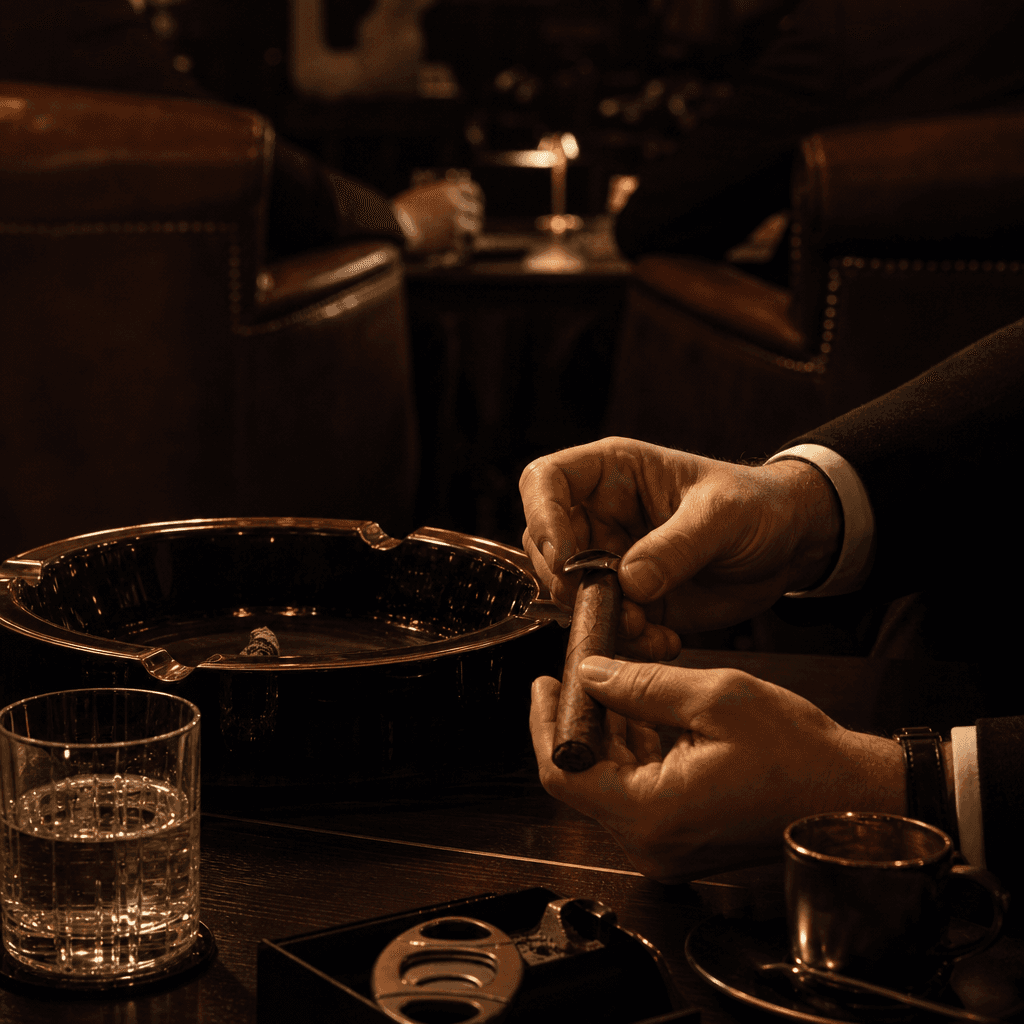
雪茄文化不僅是吸煙的過程,更是一種社交藝術。從歷史角度看,雪茄的社交性源於其「慢」的特性,促進深入對話。選擇合適的雪茄尺寸和場合,能讓談話更流暢。在社交場合中,雪茄的使用需尊重他人意願,避免強迫他人參與。良好的雪茄禮儀包括選擇、剪切和點燃的方式,這些細節展現了個人的修養。搭配飲品時,重點在於平衡,而非單純追求高價。了解雪茄的搭配邏輯,有助於提升社交品質。
- 雪茄文化強調時間感,適合在放鬆的社交場合中享用,促進深度對話。
- 選擇雪茄尺寸時,應考慮對話的時間長度,避免讓他人感到壓力。
- 雪茄搭配飲品時,應追求平衡,避免強烈口感壓過雪茄的細節。
The culture of cigar appreciation is not just about cutting, lighting, and exhaling smoke from a cigar. It involves a sense of time, space, conversational nuances, and how you make yourself and others feel comfortable in a social setting.
As the editor of the "Cigar Bible," I often see beginners who understand the basics of smoking but are unsure of what to do during dinners, business gatherings, private clubs, or international cigar bars. In this article, I want to start from history, etiquette, interaction, and interpersonal relationships, making cigars a form of cultivation rather than pressure.
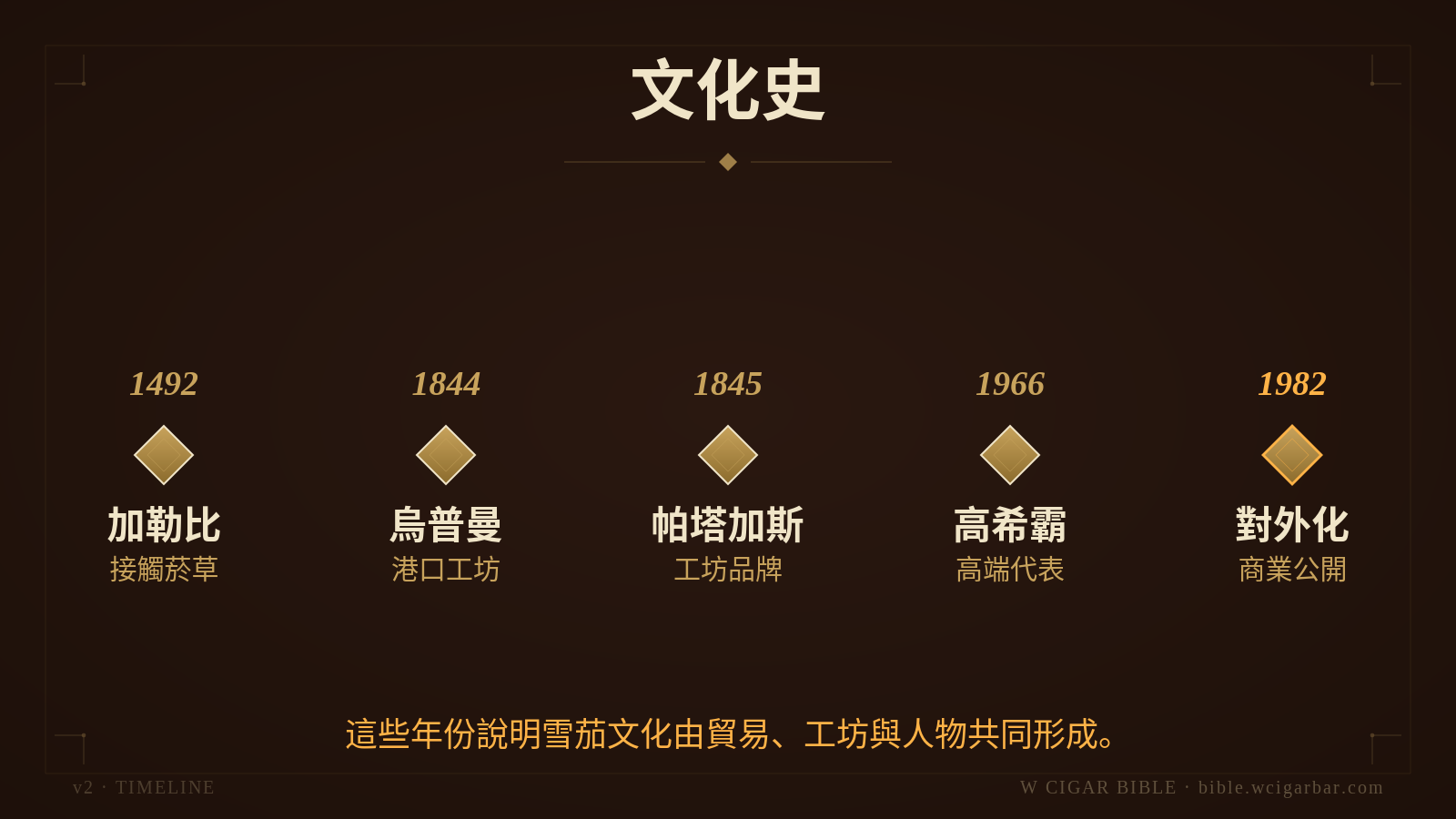
時間軸呈現雪茄文化從加勒比到高端社交的年份
The Historical Background of Cigar Culture: From Colonial Trade to Gentlemanly Socializing
The social nature of cigars originally comes from their "slowness." After Columbus sailed to the Caribbean at the end of the 15th century, Europeans began to come into contact with tobacco. By the 19th century, Havana gradually became a hub for premium handmade cigars. Brands like Partagás, founded in 1845, and H. Upmann, dating back to 1844, are not just product names but also carry the culture of port trade, workshop systems, and high society salons. The reason cigars can enter social occasions is that they require time, and time is the container for deep conversations.
In the 20th century, cigars became symbols for political, business, and cultural figures. British Prime Minister Churchill and the "Churchill" size of Romeo y Julieta made a specification of about 7 inches and a ring gauge of 47 memorable to the public. Cohiba, established in 1966 as a high-end Cuban representative and commercially available in 1982, also transitioned cigars from diplomatic gifts to objects of collection and appreciation. These years remind us that cigar culture is not a myth of a single origin but a language shaped by history, brands, and people.
I always believe that beginners learning about cigars should not just memorize brand rankings but understand "why certain cigars are placed in certain occasions." For example, weddings often feature medium-length Robustos that burn for about 45 to 60 minutes, while the latter part of business meetings might choose Corona Gorda or Pirámides, which have substance but don't drag on too long. Understanding history is not for showing off but for participating in conversations with the right rhythm at the right time.
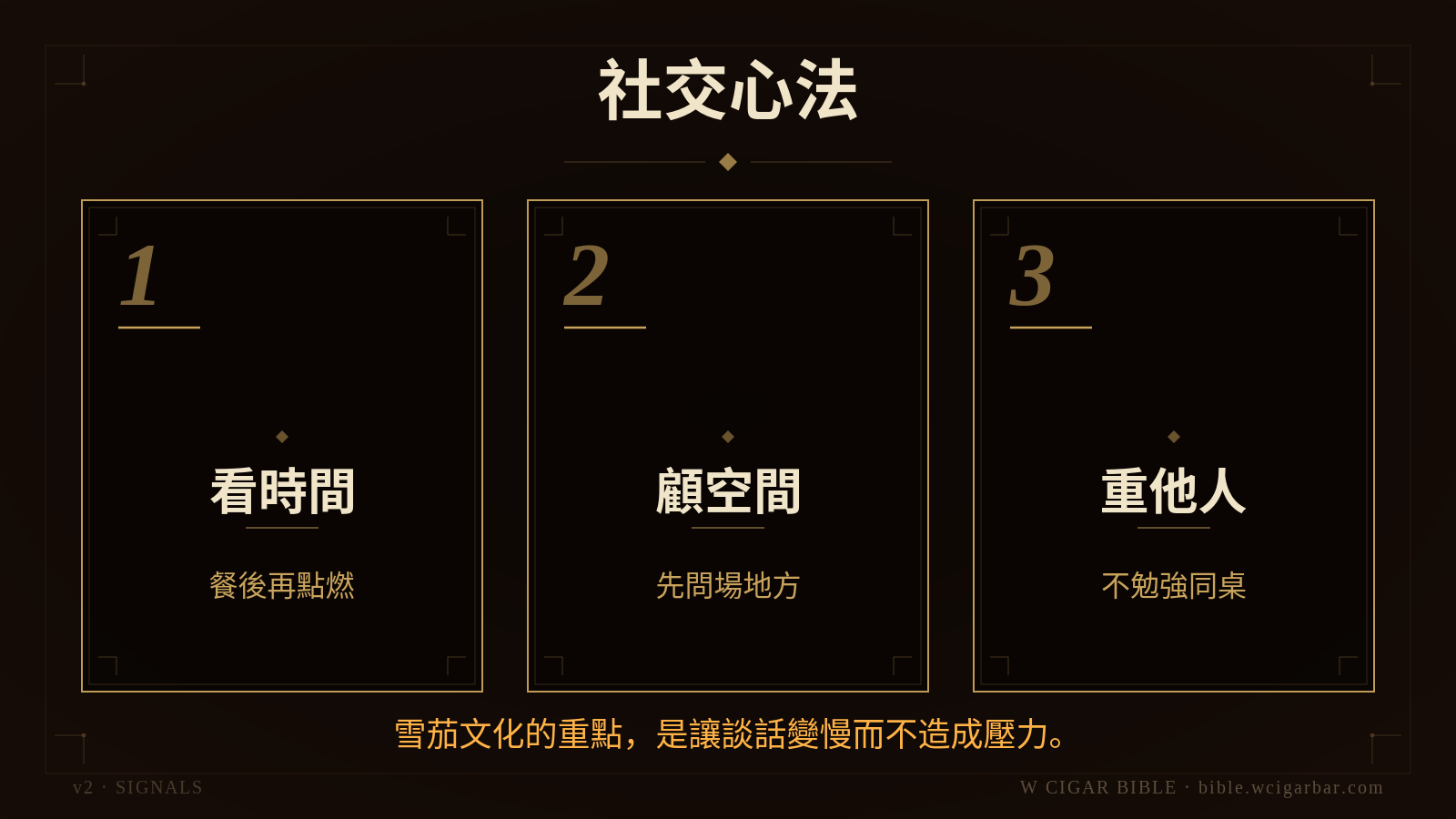
三張卡片列出雪茄社交的時間空間與尊重重點
Etiquette Before Lighting: The Nuances of Selection, Cutting, and Fire Sources
Even before a cigar is lit, etiquette has already begun. When you receive a cigar, first observe whether the appearance has cracks, whether the wrapper is too dry or too moist, and then gently press the body to check for elasticity. There's no need to rub it vigorously, and you shouldn't hold the cigar to your nose for a long time to sniff repeatedly. Premium cigars are not display items; excessive handling can damage the wrapper and make others feel you don't respect the craftsmanship.
When cutting, the most common tools are double-bladed cutters, V-cuts, and punches. For Parejo straight cigars, usually cutting off about 1 to 2 millimeters of the cap is sufficient. For Torpedo or Pirámides, the tapered structure should be preserved, and it shouldn't be cut too deeply in one go. Regarding fire sources, I prefer long wooden matches or butane torches, avoiding candles and gasoline lighters with mixed odors. The first etiquette of lighting a cigar is to heat it evenly, not to rush to inhale the smoke.
A common mistake is to insert the flame directly into the center of the foot and burn it aggressively. The correct method is to "toast the foot" first, keeping the foot about 1 to 2 centimeters away from the flame, slowly rotating for 20 to 40 seconds to make the outer circle evenly red, then gently exhaling or inhaling to check the burning condition. In public spaces, also pay attention to the direction of the flame and the position of your elbows, avoiding bringing the fire source close to others' clothing or glasses on the table.
The core of cigar etiquette is not about beautiful movements but about being stable, clean, and unobtrusive. You can prepare a reliable cutter, a clean lighter, and a deep enough ashtray; these three small things can demonstrate your maturity more than telling ten brand stories. Especially when sitting with new friends for the first time, quietly handling your cigar is often the best self-introduction.
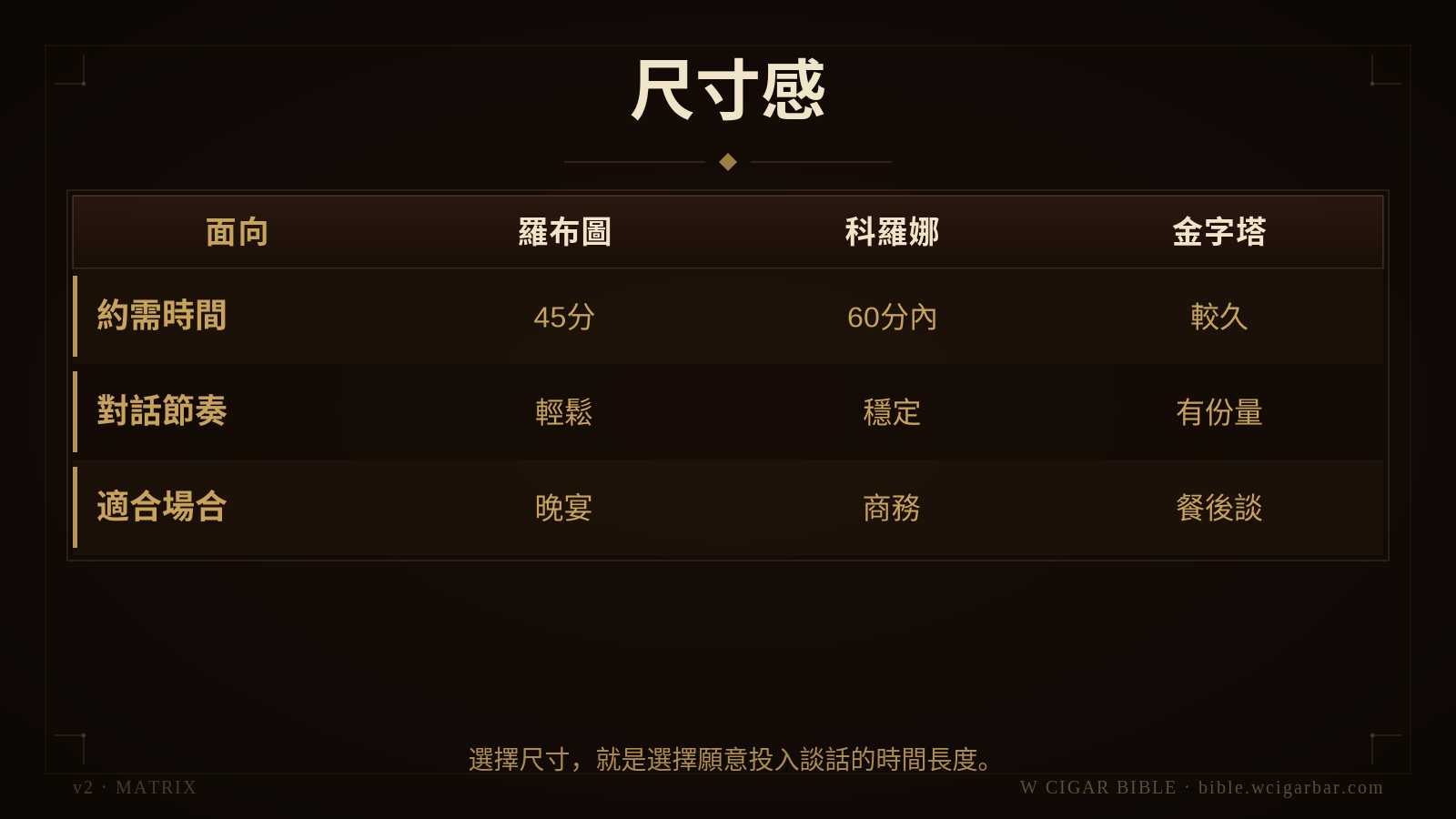
矩陣比較羅布圖科羅娜與金字塔在時長節奏場合上的差異
The Position of Cigars in Social Occasions: When to Pick Up, When to Put Down
The most suitable occasions for cigars are usually not fast-paced dinners but after the main course, before dessert, or during after-dinner drinks. If a dinner starts at 19:00, the truly suitable time to light up is often after 21:00, when the conversation has relaxed, and the seating is more stable. If you're holding a 50-ring gauge Robusto, it takes about 45 minutes; if it's a Double Corona, it might exceed 90 minutes. Choosing a size is choosing the length of time you're willing to invest in this conversation.
In business settings, I particularly remind: cigars should not be tools to force others to join. Some people don't smoke, some only drink, and some are sensitive to smoke; all should be respected. You can first inquire about the venue's policy and the willingness of those at the table before deciding whether to light up. If on an outdoor terrace, also pay attention to the wind direction to avoid smoke drifting towards the same guest for a long time. True cigar enthusiasts do not build their enjoyment on others' discomfort.
The value of cigars in social settings is often to slow down the conversation. After the 1990s, many private clubs in Europe and America designed cigar rooms with low lighting, leather chairs, and wooden walls, not just for decoration but to allow people to enter a deeper state of conversation. When people slow their breathing and speech, they are more willing to discuss long-term cooperation, family stories, or life choices, which is also where cigars differ from fast-paced bar culture.
But remember, cigars are not symbols of power and should not be used to create a sense of class. If you bring high-priced cigars, there's no need to rush to quote prices; if the other party brings everyday cigars, don't show disdain. Brands can start a conversation, but cultivation determines the quality of the dialogue. Making people comfortable is the most challenging and important lesson in cigar socializing.
The Rhythm of Conversation and Silence: Don't Let Knowledge Become Oppressive
Many beginners, the more they learn, the more eager they are to output at the table: origin, year, ring gauge, wrapper, humidity, ratings all at once. Knowledge itself is not wrong, but social occasions are not exams. If the other party just wants to relax, explaining the differences between Cuba's Vuelta Abajo, Nicaragua's Estelí, or the Dominican Republic's Cibao Valley for 10 minutes straight will only tire them out. Good conversation at the cigar table knows how to leave space between information and silence.
I usually recommend replacing long speeches with "question and answer." If the other party asks about the difference between Cohiba and Montecristo, you can briefly say: Cohiba is often associated with more delicate herbal and creamy notes, while Montecristo has classic woody, coffee, and cocoa impressions; but different series and storage conditions vary greatly. This provides direction while leaving space for the other party to continue asking questions.
Silence is also part of cigar culture. When a cigar enters the second third, and the aroma shifts from the initial woody notes to nuts, leather, or a slight sweetness, many people naturally quiet down. This is not an awkward silence but a sorting of taste. You don't have to rush to fill every gap; sometimes, watching the ash slowly build up to 2 centimeters and then gently fall into the ashtray is a form of tacit understanding.
If you encounter differing opinions, don't turn brand preferences into debates. Some people like the robustness of Partagás Serie D No.4, while others prefer the softness of Hoyo de Monterrey Epicure No.2; neither is superior. Mature cigar conversations don't aim to persuade others but to ensure everyone's experiences are well placed on the table.
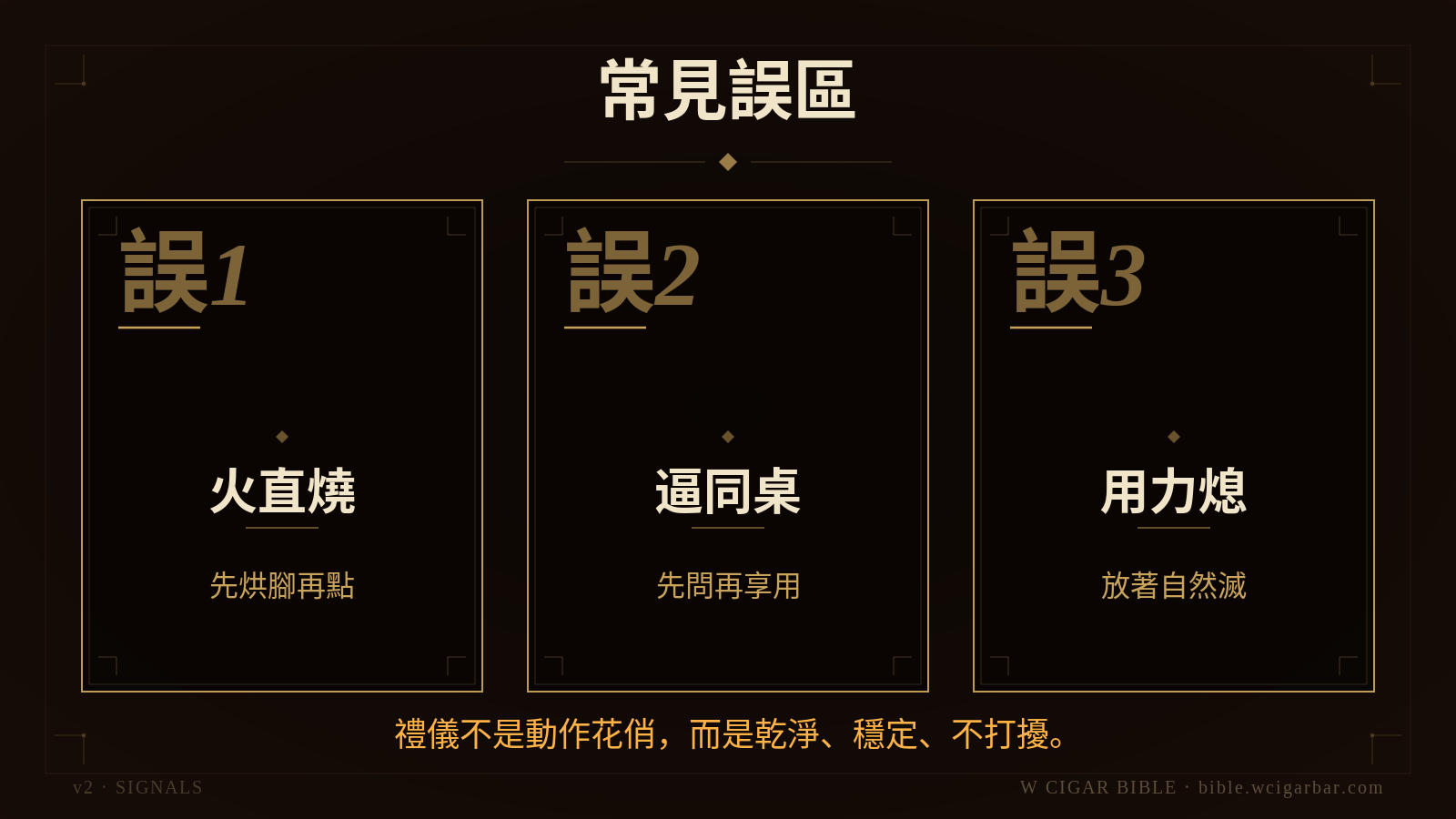
三張卡片提醒火焰直燒強迫同桌與壓熄雪茄的錯誤
The Logic of Pairing Cigars with Alcohol, Coffee, and Tea
Pairing is not a formula but a balance. Cigars have strength, aroma layers, and burning stages; beverages have alcohol content, sweetness, acidity, and tannins. Beginners often think the more expensive, the better, but that's not necessarily true. For example, a medium-strength H. Upmann Magnum 46 paired with a 12-year-old sherry cask whisky might be very comfortable; but if replaced with a very peaty Islay whisky, the smoky flavor might overshadow the cigar's nuances. The standard of a good pairing is not who overpowers whom but that both become clearer.
Here is a reference I often use for beginner pairings, focusing on direction rather than absolute answers:
| Cigar Style | Common Aromas | Suitable Beverages | Social Occasion Tips |
|---|---|---|---|
| Light to Medium | Woody, Creamy, Floral | Light Roast Coffee, Oolong Tea, VSOP Cognac | Suitable for first-time gatherings, lower burden |
| Medium | Cocoa, Nuts, Toast | Bourbon, Sherry Cask Whisky, Black Tea | Suitable for post-dinner chats, high topic extensibility |
| Medium to Full-bodied | Leather, Pepper, Earthy | Single Malt, Rum, Espresso | Suitable for experienced individuals, pace should be slowed |
| Noticeable Sweetness | Honey, Dried Fruits, Caramel | Aged Rum, Port Wine | Suitable for small gatherings, easy to start conversations |
Coffee is the easiest pairing to start with. In the morning or afternoon, I use medium roast coffee with shorter cigars like Petit Corona, keeping the time to 30 to 40 minutes. Tea is more delicate; the floral and refreshing finish of Taiwanese high mountain oolong can bring out the herbal notes of milder cigars, while ripe Pu-erh tea suits cigars with earthy and leathery notes, but the tea should not be too strong to avoid dulling the palate.
When pairing with alcohol, pay attention to social nuances. High alcohol content can amplify oral stimulation and easily derail conversations. In business settings, I prefer a slowly sipped cognac or whisky rather than continuously changing drinks. Both cigars and alcohol should serve the conversation, not push people towards showing off. When you can proactively remind everyone to drink water and slow down, your credibility at the table actually increases.
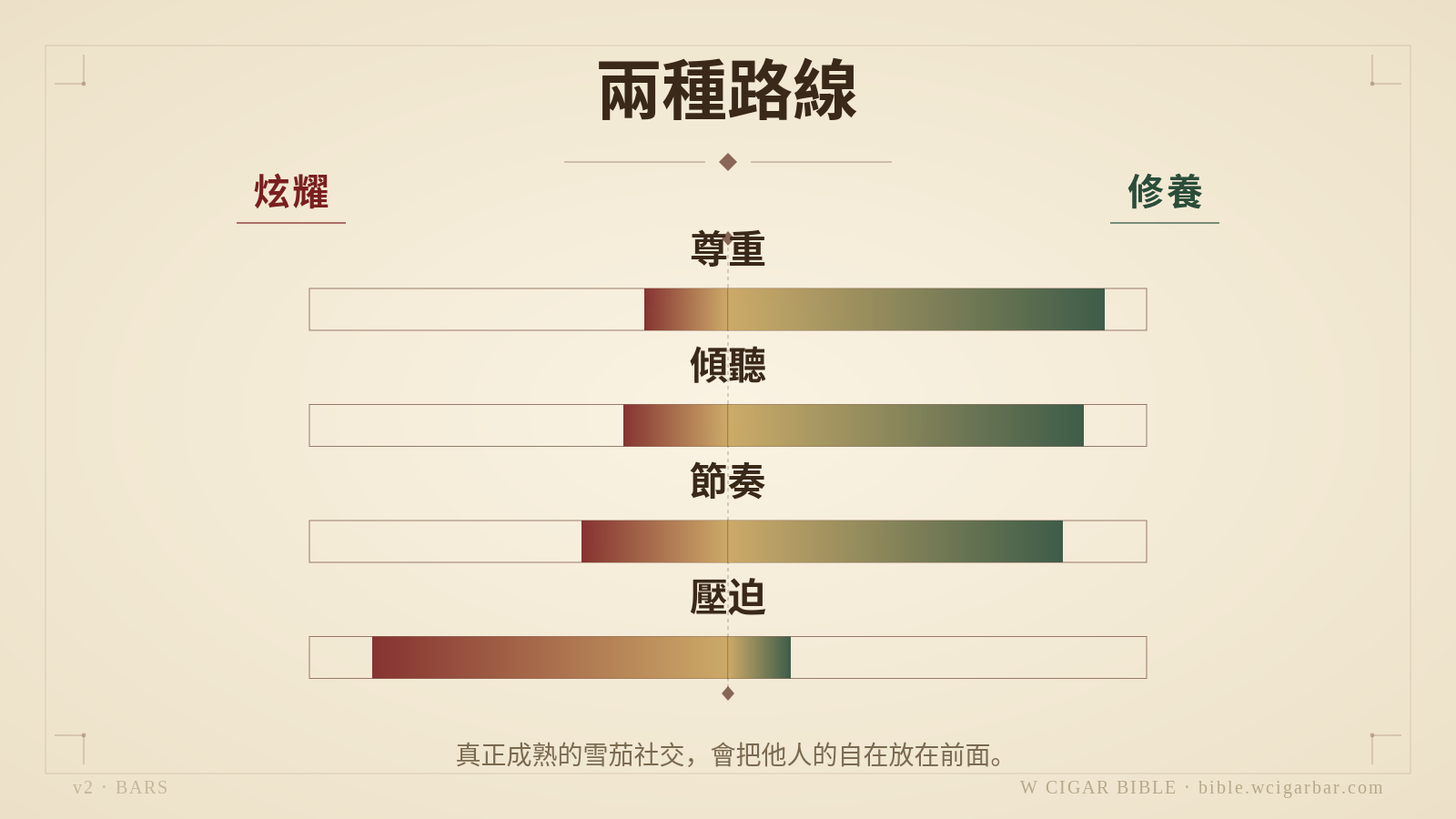
長條圖比較炫耀取向與修養取向在尊重傾聽節奏壓迫上的差異
Preservation, Sharing, and Collecting: Putting Respect in the Details
In cigar culture, preservation is a responsibility. Generally, handmade cigars are suitable for environments with a relative humidity of 65% to 72% and a temperature of about 18 to 21°C. In Taiwan's hot and humid climate, if you only use a wooden box with a humidifier without controlling the temperature, it can easily exceed 25°C in summer, increasing the risk of mold or pests. I often suggest beginners first use an electronic hygrometer for calibration before discussing high-end cigar cabinets, because if the data is inaccurate, all experiences will be distorted. Preservation is not just about keeping cigars for a long time but allowing them to age slowly in a stable environment.
When sharing cigars, there are also details to consider. If you want to give a friend a cigar, it's best to include the brand, size, and approximate year, such as "Bolivar Royal Corona from 2019, box-stored," and remind them of the storage conditions. Don't put cigars in a sealed bag and leave them in the car, and don't carry them for long periods in hot weather. In formal occasions, bringing a travel case for 3 or 5 cigars is more appropriate than scattering cigars in your suit pocket.
In terms of collecting, there are indeed discussions about vintage, limited editions, and discontinued items in the market. For example, the Edición Limitada series of Cuban brands has formed a special collection context since 2000; some early 2000s box-stored items, due to good preservation and low circulation, attract market attention. But I must clarify: collecting for appreciation does not guarantee appreciation; it still depends on the source, preservation, and market. If the source is unclear, humidity is out of control, or box codes are suspicious, no matter how rare, it may only be a story.
If you share your collection in social settings, avoid making price the main focus. You can talk about the flavor changes after aging, the source of the box, and preservation records; these are deeper than quoting high prices. A truly good share makes the other party feel your care, not oppressed by your collection. The more precious the cigar, the more it needs to be treated with humility.

三張問答卡整理自帶雪茄拒絕抽與不舒服時停止的方法
Behavioral Guidelines for International Cigar Bars and Private Spaces
When entering a foreign cigar bar, observing the rules is always more important than speaking first. High-end cigar spaces in London, Hong Kong, Singapore, and Tokyo often have seating fees, cutting services, minimum drink charges, or policies on bringing your own cigars. Some places allow bringing your own but charge a cutting fee, while others only accept cigars purchased on-site. If beginners are unsure, the safest way is to first inquire about the venue's policy and then decide how to proceed. Those who understand the rules can be respected in any cigar space.
In private spaces, etiquette is more subtle. If the host prepares cigars, they should usually introduce them first, rather than you flipping through the humidor. If the host offers three choices, you don't have to pick the most expensive one; you can choose based on time and strength, such as "Tonight, I want to choose a medium-strength, about 50-minute size." This respects the host and shows you know how to control the occasion's pace.
Handling ash is also important. Cigar ash should not be flicked off frequently like cigarette ash; usually, it accumulates to 1.5 to 2.5 centimeters before gently placing it on the edge of the ashtray. If the burn is uneven, you can use a lighter to correct it, but don't wave it around the table. If the cigar becomes bitter or hot in the last third, just naturally put it down; there's no need to endure until it's scorching. Ending gracefully is also a form of etiquette.
Finally, be moderate with photos and social sharing. Without consent, don't capture others' faces, wine labels, or private collections; especially in business settings, avoid revealing seating, contract documents, or client information. Cigar culture values trust, which is often built on knowing what not to say, what not to photograph, and what not to make public.
Frequently Asked Questions
The core of cigar socializing is not about how much you know but about making those at the table feel respected. Here are the most common questions I get from beginners, as well as situations most likely to be encountered during dinners, clubs, and travels.
Should I bring my own cigars when attending a cigar gathering for the first time?
You can bring them, but don't assume you will use them. First, understand the host's arrangements and venue regulations. If the host has already prepared cigars, the ones you bring can be gifts or backups, but don't take the lead before the host.
If someone offers me a cigar and I don't want to smoke, how can I politely refuse?
Simply say "Thank you, I won't smoke tonight," without giving too many reasons. If you want to maintain interaction, you can switch to coffee, tea, or water, and still participate in the conversation.
Should the cigar band be removed?
Usually, there's no rush to remove it before lighting. Wait until the burn approaches the band and the glue loosens slightly with heat before removing it to avoid damaging the wrapper. If you don't want to display the brand, you can handle it in advance without damaging the wrapper.
When sitting with elders or clients, what strength should I choose?
It's recommended to choose medium or medium-light strength, with a size controlled between 45 to 60 minutes. Too strong or too long can make the occasion heavy and may make the other party feel you're trying too hard to impress.
If I feel uncomfortable halfway through, can I stop?
Of course, you can. Just naturally place the cigar in the ashtray to let it extinguish; there's no need to stub it out. Cigar culture values composure, and forcing yourself goes against the essence of appreciation.
Can cigars be used to build connections?
They can, but don't treat it as a shortcut. Cigars can create a space for slow conversations, but genuine relationships are still built on integrity, discretion, listening, and follow-up actions. Cigars will only amplify a person's character, not replace a person's cultivation.
For me, cigars have never been just a list of flavors but a way of viewing time and people. How you light, wait, listen, and put down at the right moment all reveal your internal order. May every friend who steps into the world of cigars first learn to respect space and others, then slowly build their own taste. When cigars are no longer a show-off but a gentle and measured medium of exchange, they truly enter culture.
—Cigar Prince Wilson Tsai
Smoking is harmful to health. Smoking is prohibited for those under twenty. Quitline: 0800-636363. This article is for adults over twenty as a reference for cigar culture, preservation, and regulations, not a tobacco advertisement, promotion, or purchase suggestion.
Like this article?Share with friends
Share this W Cigar Bible piece with friends who want to learn cigar culture, storage, and tasting.
想把這篇文章 化為實踐
雪茄聖經是知識;雪茄文化要在空間裡發生
W Cigar Bar 大安總店資訊
台北大安區 · 雪茄聖經總編輯 Wilson Tsai 主理的雪茄文化空間
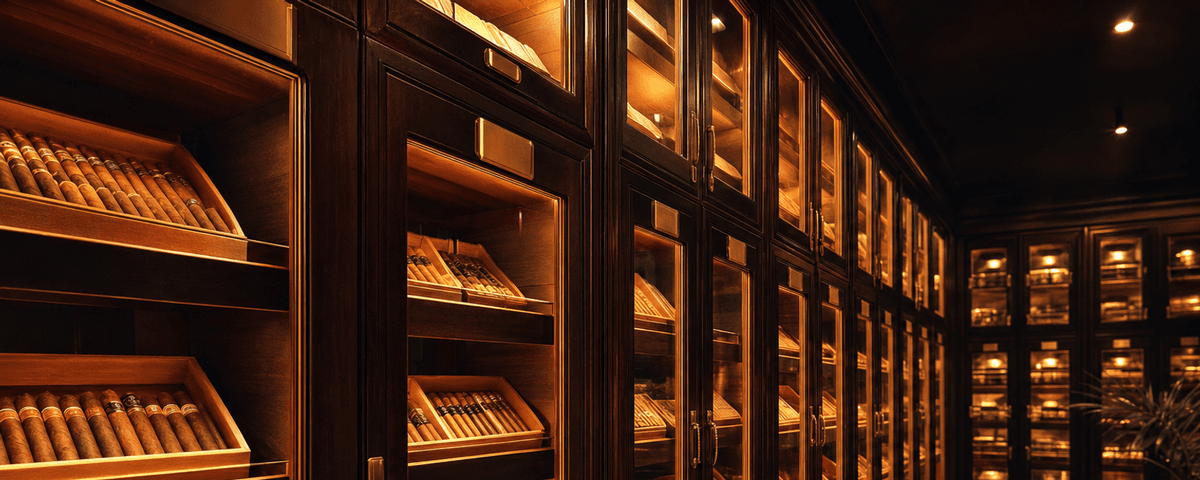
33 座 24 小時恆溫恆濕醇化室
W Cigar Bar 提供的會員醇化空間 · 場地資訊請洽編輯部
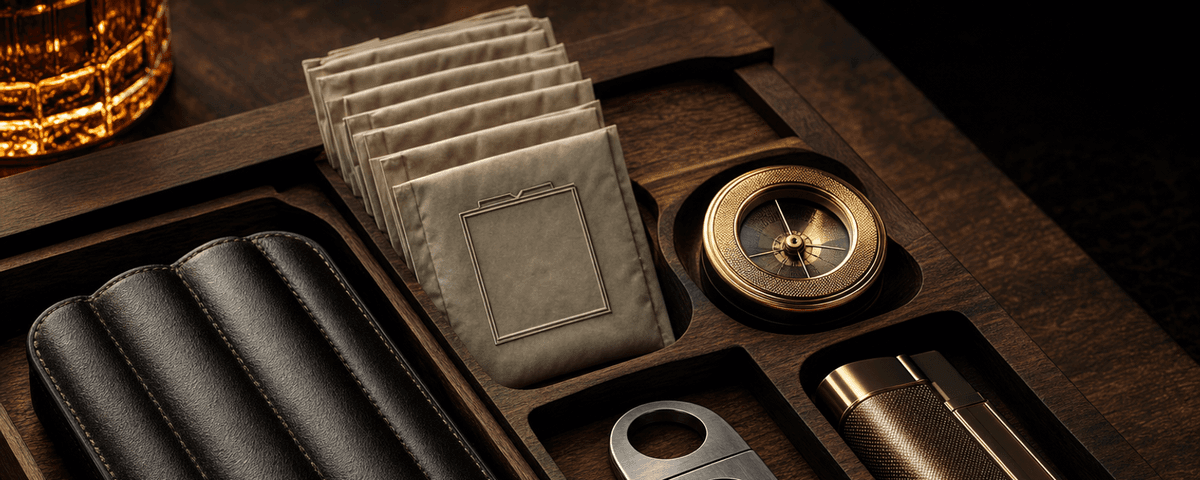
雪茄剪 / 打火機 / 雪茄盒 / Boveda
W Cigar 配件官網 · 專營雪茄配件正品
加 LINE 好友 · 文化諮詢
文化空間資訊 · 紳士沙龍 · 私人包場
本網站內容僅供雪茄文化、歷史、收藏與品吸知識研究參考。菸品有害健康、未滿法定年齡者請勿吸菸。實際規範請依所在地法律為準。
吸菸有害健康・戒菸專線 0800-636363・本站僅供 20 歲以上成年人閱覽。
讀到這裡,你不只是路過的人
留下 Email,加入 W 雪茄聖經內圈——總編輯 Wilson Tsai 親選的學院深文與國際新訊,先你一步送到信箱。
· 教育用途非銷售 · 隨時一鍵退訂 · Email 絕不對外公開 · 由勝茄股份有限公司營運
同分類延伸閱讀

資料來源:W Cigar Bible 編輯部整理 · 雪茄王子 Wilson Tsai 親自審稿
本文僅供雪茄文化、歷史、收藏與品鑑知識研究,不作為菸品促銷、銷售或購買建議。吸菸有害健康,未滿二十歲不得吸菸。