雪茄的儲存環境與氣候調控:打造理想的雪茄儲存空間
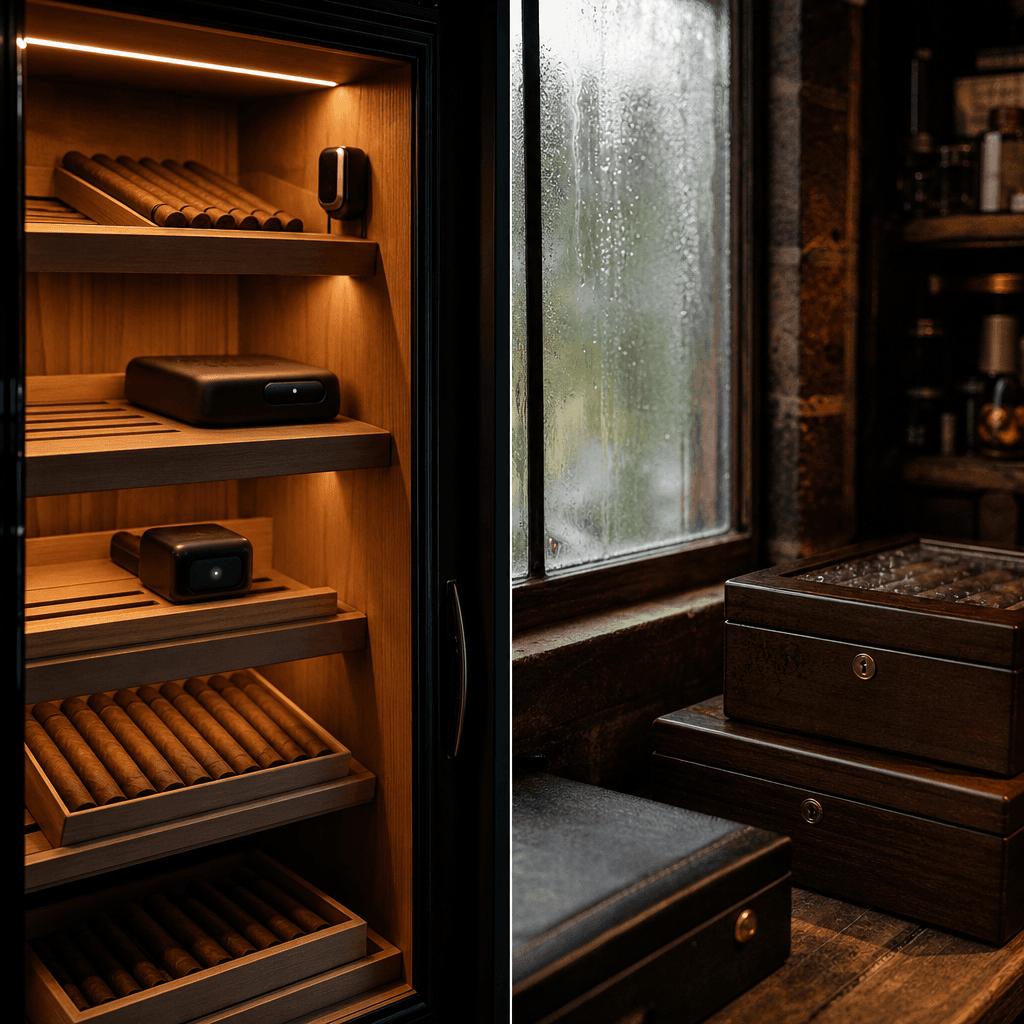
雪茄的儲存環境對其風味影響深遠,適當的溫度與濕度是關鍵。理想的儲存條件應維持在18-21°C與65-70%RH。過高的濕度可能導致黴菌與雪茄蟲的滋生,而溫度過高則會使雪茄出現悶味及蟲害風險。新手應注意不讓溫度長期超過23°C,濕度高於72%RH,並確保不低於60%RH。選擇儲存容器時,應根據收藏數量與氣候條件來決定,無論是密封保鮮盒、桌上型木盒還是電子雪茄櫃,穩定的環境是確保雪茄品質的關鍵。
- 雪茄儲存的理想溫度範圍為18-21°C,濕度應保持在65-70%RH之間,以避免黴菌和蟲害。
- 高溫、高濕和缺乏通風是雪茄儲存的三大風險,應避免將雪茄放在陽光直射或電器附近。
- 使用雙向保濕包和數位濕度計可有效管理雪茄的濕度,並需定期檢查以確保穩定性。
The Storage Environment and Climate Control of Cigars: Creating the Ideal Cigar Storage Space
As the editor of "Cigar Bible," the most common question I get from beginners is not whether a particular cigar is good, but "Why does the taste of the same box of cigars change after two months?" The answer often lies not in the brand, but in the storage environment.
Cigars are breathing agricultural products. From the tobacco leaves in Cuba's Vuelta Abajo to Santiago in the Dominican Republic, even after fermentation, rolling, and boxing, they are still affected by temperature, humidity, and air circulation. Only by optimizing the environment can we talk about stability, cleanliness, and long-term aging.

流程圖呈現檢測控溫定濕通風追蹤的雪茄保存步驟
Ideal Temperature and Humidity: Aim for 18-21°C and 65-70%RH
The most commonly cited "70/70 rule" for cigar storage refers to 70°F and 70% relative humidity, which translates to about 21°C. This concept became popular after the cigar boom in the United States in the 1990s. However, in humid cities like Hong Kong, Taipei, and Singapore, 70%RH can sometimes be too high, especially when indoor temperatures exceed 26°C in the summer, increasing the risk of mold and cigar beetles.
My own standards are more conservative: for short-term storage, aim for 18-21°C and 65-69%RH. If storing whole boxes in wooden boxes, humidity can be around 65-67%RH for more stability. For classic Cuban cigars like Partagás Serie D No.4 and Montecristo No.2, which have a solid structure, excessive moisture can cause uneven burn lines and muted aromas; conversely, if below 60%RH for too long, the wrapper may become brittle and crack during cutting.
The ideal environment is not about chasing a perfect number, but about keeping temperature and humidity stable within a safe range over time. Daily fluctuations of 5%RH are more damaging to cigars than maintaining a constant 67%RH; the same goes for temperature, where oscillations between 24°C during the day and 18°C at night can cause moisture to repeatedly enter and exit the tobacco leaves, leading to imbalanced flavors over time.
Beginners can remember three numbers: do not let the temperature exceed 23°C for long periods, do not let humidity exceed 72%RH for long periods, and do not let cigars drop below 60%RH for more than a few weeks. By adhering to these three guidelines, most everyday collections can avoid major risks, and then you can discuss wooden boxes, cabinets, and equipment upgrades.
Temperature Control: Cigar Beetles and Stale Flavors Start with High Temperatures
Temperature is the first risk many people overlook. Cigar beetle eggs may exist in natural tobacco leaves, and while modern large factories often perform freezing or low-temperature treatments, during transportation, retail, and home storage, if the temperature exceeds 24°C for long periods, combined with higher humidity, the risk of infestation increases. Common signs include nearly circular small holes on the cigar surface and fine powdery tobacco debris at the bottom of the box.
In 2018, I dealt with a case involving a collector's box of 25 cigars, where the indoor summer temperature was about 28°C, and the humidity gauge showed 72%RH. He thought the humidity was just right but overlooked that the high temperature caused the entire box of Cohiba Siglo series to feel damp and stale, with some cigars showing suspected beetle holes. This situation cannot be fixed by simply wiping; isolation, inspection of cigars in the same cabinet, and, if necessary, low-temperature treatment and re-stabilization are required.
The biggest threat to cigars is not short-term heat, but the simultaneous occurrence of high temperature, high humidity, and poor ventilation. If there is no constant temperature condition at home, at least avoid windows, kitchens, near appliances, and direct sunlight; an air-conditioned room is not necessarily safe, as the start-stop of the air conditioner can cause drastic humidity changes, and placing the cigar box near the air outlet can lead to external dryness and internal moisture.
If the collection exceeds 50 cigars, I recommend using an electronic cigar cabinet with temperature control rather than relying solely on a wooden box with a humidification pack. Brands like NewAir, Raching, EuroCave, and Adorini offer different capacity options. The focus is not on brand reputation but on maintaining 18-21°C and ensuring that fan circulation does not blow directly on the cigars. After purchasing the equipment, run the empty cabinet for 48 hours before placing cigars inside for more reliable results.

圖表列出溫度濕度穩定與避開高溫三項儲存重點
Humidity Management: Humidification Packs, Distilled Water, and Sensors Should Be Considered Together
The core of humidity control is "stable moisture exchange." Dual-direction humidification packs like Boveda and Integra Boost are suitable for beginners, with common specifications of 62%, 65%, 69%, and 72%RH. In a tightly sealed travel case or plastic food container, 65% or 69% is usually sufficient; in a traditional Spanish cedar box, as the wood absorbs and releases moisture, larger capacity or multiple packs may be needed initially.
Distilled water is suitable for some active humidifiers, such as Cigar Oasis or water boxes in electronic cabinets, but tap water is not recommended. Tap water contains minerals and impurities that can cause scale, odors, or bacterial issues over time. As for propylene glycol solutions, while common in the era of sponge humidifiers, they are not necessary when using dual-direction humidification packs, as mixing too many systems can cause conflicts.
Humidity should not be determined by a single gauge but by whether the cigar's feel, burning condition, and data trends are consistent. I recommend at least one adjustable digital hygrometer, such as Xikar, Boveda Butler, or Govee Bluetooth sensors, and using the salt test method or calibration packs to verify errors. Many cheap dial gauges can be off by 5-8%RH, which can lead to completely incorrect judgments.
In practice, you can configure it like this: use a sealed box with a 60g humidification pack for 10-25 cigars; use a medium-sized wooden box or small electronic cabinet with two sensor points for 50-100 cigars; manage over 150 cigars in separate zones, avoiding relying on a single humidifier for all cigars. Once the data is stable, weekly observation is sufficient, as opening the box daily can increase humidity fluctuations.

矩陣比較密封盒木盒與電櫃在控溫定濕與容量上的差異
Comparison of Storage Containers: How to Choose Between Wooden Boxes, Food Containers, and Electronic Cabinets
Beginners often think they need to buy a large cigar cabinet first, but that's not the case. If you're in the learning phase with just 10 to 30 cigars, a food-grade sealed container with a dual-direction humidification pack is more stable than a cheap but leaky wooden box. However, the downside of a food container is the lack of the buffering and aroma interaction of cedar wood, so long-term storage requires attention to ventilation and odors.
Traditional cigar boxes or desktop humidors have the advantage of Spanish cedar providing good moisture buffering and reducing short-term fluctuations, as well as offering a familiar cigar ritual. The downside is that new boxes need to be seasoned, usually taking 7-14 days for the wood to absorb enough moisture; if cigars are placed in too soon, the wood will absorb moisture from the cigars, leading to external cracking. Large electronic cabinets are suitable for large quantities and for those living in hot summer climates.
| Container Type | Recommended Capacity | Advantages | Precautions |
|---|---|---|---|
| Sealed Food Container | 10-50 cigars | Low cost, stable humidity | Avoid plastic odors, periodically ventilate briefly |
| Desktop Wooden Box | 25-100 cigars | Good cedar buffering, convenient access | Needs seasoning, check sealing strip |
| Electronic Cigar Cabinet | 80 cigars and above | Temperature control, suitable for long-term management | Test fan, temperature difference, and drainage |
| Modified Wine Cabinet | 100 cigars and above | Large space, good insulation | Humidity system needs separate design |
The order of container selection should first consider the number of cigars and the living climate, then the budget and appearance. In Taipei, where indoor summer temperatures often reach 26-30°C, if air conditioning is not frequently used at home, an electronic cabinet is more practical than a high-end wooden box; if the residence is around 20°C year-round, a desktop wooden box can also perform well.
The most stable beginner setup I've seen was in 2021, where a reader used an 8-liter LocknLock sealed box, two 65%RH 60g Boveda packs, and a calibrated Bluetooth hygrometer to store about 35 cigars from different origins. Over six months, the humidity mostly stayed between 64-66%RH, and the burning performance even surpassed his previously leaky wooden box.

清單列出高濕硬救每天翻動與冰箱長放三個保存誤區
Seasoning Boxes, Layering, and Placement: Don't Let Good Equipment Be Offset by Bad Habits
If a new wooden box or cigar cabinet has a Spanish cedar lining, the first step is to season the box. My method does not involve vigorously wiping the wood with a damp cloth, as excessive moisture can cause the wood to swell or leave water stains. A safer approach is to place a small cup of distilled water or a dedicated seasoning pack inside, close it for 48 hours, then observe the humidity and repeat until the box can stabilize at 68-72%RH, finally lowering it to the target range before placing cigars inside.
When arranging cigars, leave air channels. The original arrangement of 25 cigars in a wooden box is usually fine, but if loose cigars are packed tightly with no gaps, the area near the humidifier will be too wet, while corners may be too dry. Thick-ring cigars like H. Upmann Magnum 54 and Romeo y Julieta Wide Churchills take up more space and require more surrounding air circulation; slender Lanceros should avoid being crushed and deformed.
Placing cigars in a cabinet is not the end; layering, leaving gaps, and periodically rotating positions directly affect the consistency of each cigar's condition. I usually place whole boxes that require longer aging at the bottom or back and loose cigars that will be used soon at the top or front, reducing the need to frequently move entire box collections. If using an active humidifier, cigars should not be placed directly next to the air outlet or water box.
Practical checklist:
- Season new wooden boxes first, don't rush to place cigars inside.
- Keep cigars at a distance from humidification sources to avoid localized over-humidity.
- Check corner cigars monthly to see if they are too dry or too soft.
- Use dividers or original wooden trays to separate loose cigars, avoiding strong aroma interference.
- Aluminum tubes can be retained, but for long-term storage, occasionally open them to check internal conditions.
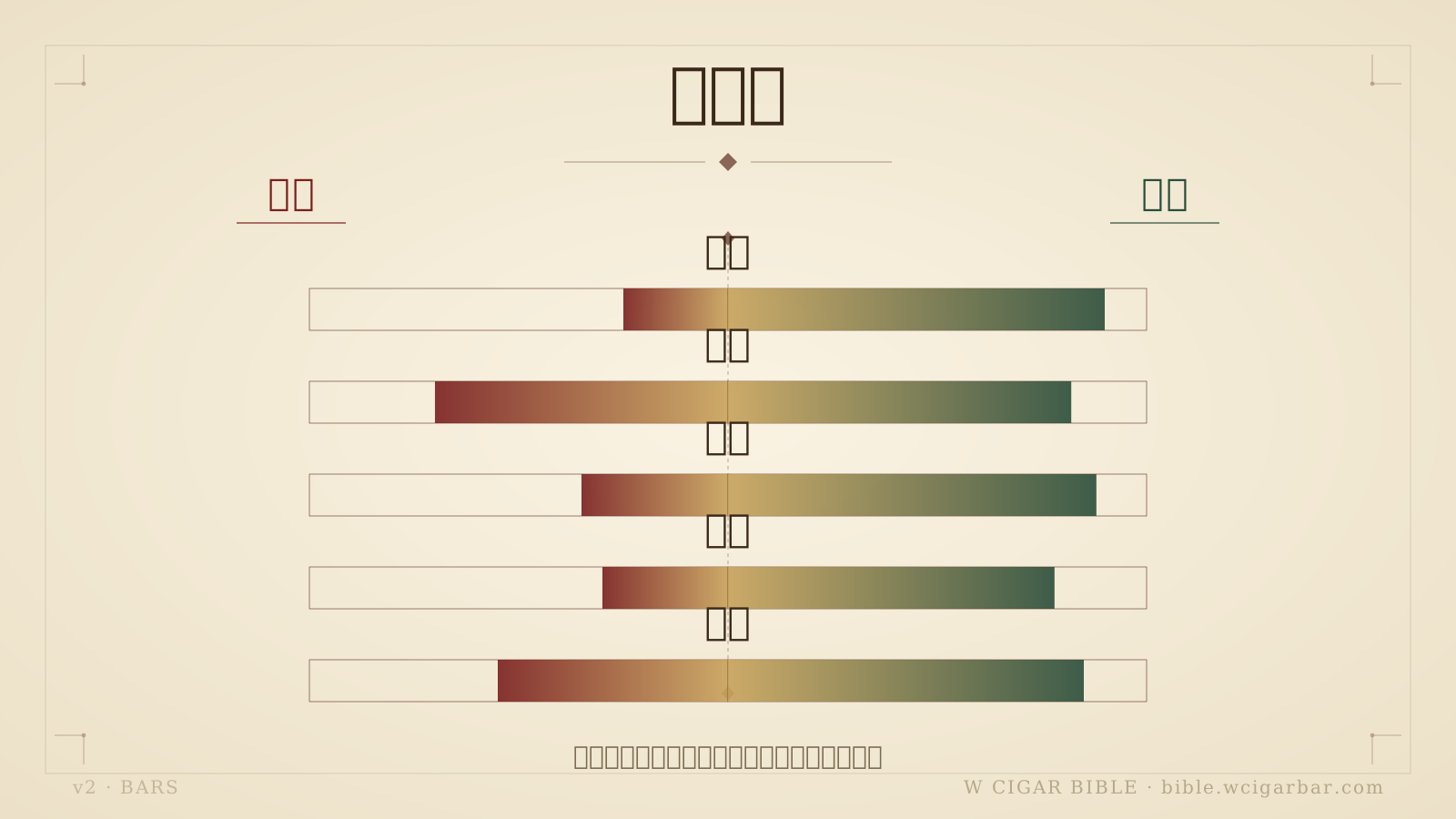
長條圖比較簡盒與電櫃在控溫濕穩容量循環與追蹤表現
Climate Case Studies: Different Strategies for Taiwan, Hong Kong, and Dry Cities
In Taiwan and Hong Kong, the biggest challenge is usually high temperature and humidity. During the rainy season or typhoon season, outdoor humidity often exceeds 80%RH, and even indoors it can exceed 70%RH. In this case, using a 72%RH humidification pack is like pushing cigars towards more moisture. I would switch to 65%RH or 69%RH and prioritize temperature control, keeping the storage space away from exterior walls, windows, and damp cabinets.
Conversely, in Beijing's winter, Toronto, Canada, or certain seasons in Los Angeles, USA, indoor heating can reduce relative humidity to below 30%RH. In such environments, wooden box leaks become very noticeable, and humidification packs are consumed quickly. In 2019, I encountered a box of Bolivar Belicosos Finos that was brought from Asia to North America and left unhumidified for three weeks, resulting in fine cracks on the wrapper. Even if slowly rehumidified later, the burn became sharp.
Different cities do not have a one-size-fits-all answer; humid areas should prioritize temperature control and mold prevention, while dry areas should prioritize sealing and humidification. If you travel frequently, do not use a travel case as a long-term storage solution. Travel cases are designed for short-term protection, and foam or rubber odors can affect cigars, especially if stored for more than a month.
In response to seasonal changes, I adopt the principle of "dehumidifying in spring and summer, humidifying in autumn and winter." In spring and summer, focus on 65%RH, observing for stickiness and poor burning; in autumn and winter, if cigars become too hard, increase to 69%RH. Do not make drastic changes in one day, such as jumping from 62%RH to 72%RH; a better approach is to increase one level every one to two weeks, allowing the tobacco leaves to gradually adapt.
Long-Term Aging and Flavor Stability: Time Has Value, But Should Not Be Idolized
Many people expect cigars to improve with age, and this direction is not wrong, but the premise is correct storage conditions. Cuban cigars like Hoyo de Monterrey Double Coronas and Ramon Allones Specially Selected, when stored in a stable 65-68%RH, 18-20°C environment for 3-5 years, often exhibit reduced spiciness and more integrated woody and sweet notes. Non-Cuban cigars like Arturo Fuente Don Carlos and Padrón 1964 Anniversary may reach a beautiful balance within the first two to three years.
However, not every cigar is suitable for long-term aging. Small-ring, light to medium-strength cigars, known for their fresh floral or herbal notes, may lose vitality if stored too long. Conversely, high-strength, thick-leaf structured, fully fermented cigars have more room for long-term aging. Purchase year, box code, origin, and transportation history all affect the outcome.
The essence of aging is slow integration under stable conditions, not just leaving cigars to age and expecting improvement. Recording humidity, temperature, and tasting notes every six months is more meaningful than simply believing in age. If a box of cigars boxed in 2020 still has a pungent ammonia smell in 2024, it may indicate that the initial condition, storage, or fermentation conditions were not ideal, and time alone cannot be blamed.
Collection value should also be viewed rationally. Some limited editions, regional editions, or discontinued items, such as certain Habanos Edición Limitada around 2009, do attract market attention; however, collection appreciation does not guarantee value increase, as it still depends on source preservation and the market. For beginners, preserving regular items well is more beneficial for building genuine judgment skills than chasing rare labels.

問答卡整理乾燥回濕太濕判斷與冰箱存放三個問題
Monitoring, Maintenance, and Troubleshooting: Establish Your Own Storage Records
I recommend that every serious beginner establish simple records. The content doesn't need to be complicated—date, indoor temperature, box humidity, humidification products used, cigar feel, and abnormal conditions are sufficient. Use phone notes, Google Sheets, or data exported from Govee. After recording continuously for three months, you'll see your environment's rhythm: which month humidity spikes, which corner is always dry.
Common issues include humidity not rising, humidity not dropping, white spots on the cigar surface, and constant burnouts. If humidity doesn't rise, check the seal instead of just adding more humidification packs; if humidity doesn't drop, check if the wooden box is not dry, the humidifier is excessive, or the environment is too humid. If white spots appear powdery, can be lightly wiped, and have no hair-like structure, they are likely crystals; if they appear fuzzy, spread quickly, and have a moldy smell, mold is highly suspected.
The order of handling storage issues is to isolate first, then judge, and finally adjust; don't rush to make drastic environmental changes for the entire cabinet of cigars. If a single cigar is too moist, move it to a separate box with 62-65%RH to slowly recover; if the entire cabinet is too moist, reduce humidification sources, increase brief ventilation, and bring the temperature back to a safe range.
Routine maintenance can be done on a cycle:
- Weekly: Check digital hygrometer trends without frequently opening the cabinet.
- Monthly: Check if humidification packs have hardened, and if the humidifier needs distilled water replenishment.
- Quarterly: Rotate upper and lower positions, clean tobacco debris and dust.
- Semi-annually: Calibrate hygrometers, check cabinet door seals and wooden box sealing.
- Annually: Review storage records, adjust spring-summer and autumn-winter settings.
Common Questions
The most important thing for beginners is not the size of the equipment, but first establishing a stable, safe, and traceable storage system. Here are some questions I often hear in courses, columns, and daily interactions, which are also most likely to affect cigar conditions.
Can dry cigars be restored?
They can be slowly rehumidified, but there is no guarantee of returning to the original state. If only slightly dry for a week or two, place them in a 62%RH environment for a week, then switch to 65%RH, and finally adjust to 69%RH as needed. Do not directly place them in a high-humidity box, as the wrapper may crack due to different expansion speeds inside and outside.
What does it feel like if cigars are too moist?
They feel soft to the touch, rebound slowly when pressed, produce a muted smoke volume when lit, have a crooked burn line, and may require frequent relighting. The flavor often exhibits damp wood, sourness, or bitterness. In this case, first reduce humidity and extend resting time, avoiding high-temperature drying.
Are white powdery spots on the surface mold?
Not necessarily. If they are fine crystals, have no hair-like structure, and have no odor, they may be oils or mineral crystals; if the white spots appear fuzzy, spread quickly, and have a moldy smell, they should be isolated and treated. When in doubt, it's better to separate them to avoid affecting other cigars.
How many humidification packs are needed?
Typically, a 25-cigar capacity can use one 60g pack as a base, but it depends on box sealing and climate. Sealed boxes require fewer packs to remain stable, while leaky wooden boxes struggle even with more packs. If humidification packs harden quickly, the issue is often sealing or the environment, not the number of packs.
Do cigars need to be rotated daily?
No. Frequent rotation increases the risk of damage and humidity fluctuations. Small boxes can be checked monthly, while large cabinets can rotate positions seasonally, swapping locations near and far from humidification sources. Stability is more important than diligence.
Can cigars be stored in the refrigerator?
Regular household refrigerators are not suitable for long-term storage due to low humidity, complex odors, and temperature fluctuations from opening and closing the door. If dealing with suspected pest issues, use sealed bags, phased freezing, and thawing; afterward, return to a normal cigar storage environment.
I firmly believe that understanding storage is the true beginning of understanding cigars. Brands, vintages, and origins are fascinating, but if temperature and humidity are out of control, even the best tobacco will lose its expression. Organizing the storage space is a sign of respect for the creators and responsibility for your own taste memory. Start with a sealed box and a calibrated hygrometer, and keep observing. You'll progress faster than blindly pursuing rare items.
—Cigar Prince Wilson Tsai
Smoking is harmful to health. Under 20 years old is not allowed to smoke. Quit smoking hotline: 0800-636363. This article is for reference by adults over 20 years old for cigar culture, storage, and legal knowledge, not as tobacco advertising, promotion, or purchase advice.
Like this article?Share with friends
Share this W Cigar Bible piece with friends who want to learn cigar culture, storage, and tasting.
想把這篇 化為實踐
雪茄聖經是知識;雪茄文化要在空間裡發生

W Cigar Bar 大安總店資訊
台北大安區 · 雪茄聖經總編輯 Wilson Tsai 主理的雪茄文化空間
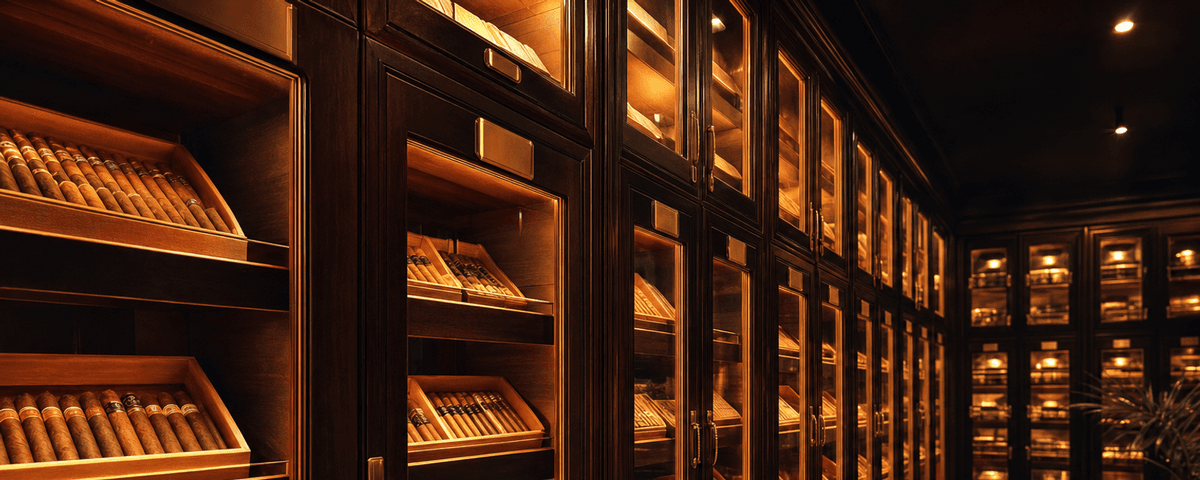
33 座 24 小時恆溫恆濕醇化室
W Cigar Bar 提供的會員醇化空間 · 場地資訊請洽編輯部

雪茄剪 / 打火機 / 雪茄盒 / Boveda
W Cigar 配件官網 · 專營雪茄配件正品

加 LINE 好友 · 文化諮詢
文化空間資訊 · 紳士沙龍 · 私人包場
本網站內容僅供雪茄文化、歷史、收藏與品吸知識研究參考。菸品有害健康、未滿法定年齡者請勿吸菸。實際規範請依所在地法律為準。
吸菸有害健康・戒菸專線 0800-636363・本站僅供 20 歲以上成年人閱覽。
讀到這裡,你不只是路過的人
留下 Email,加入 W 雪茄聖經內圈——總編輯 Wilson Tsai 親選的學院深文與國際新訊,先你一步送到信箱。
· 教育用途非銷售 · 隨時一鍵退訂 · Email 絕不對外公開 · 由勝茄股份有限公司營運
同分類延伸閱讀



資料來源:W Cigar Bible 編輯部整理 · 雪茄王子 Wilson Tsai 親自審稿
本文僅供雪茄文化、歷史、收藏與品鑑知識研究,不作為菸品促銷、銷售或購買建議。吸菸有害健康,未滿二十歲不得吸菸。