雪茄的貯存與陳化:如何選擇適合的保存方法
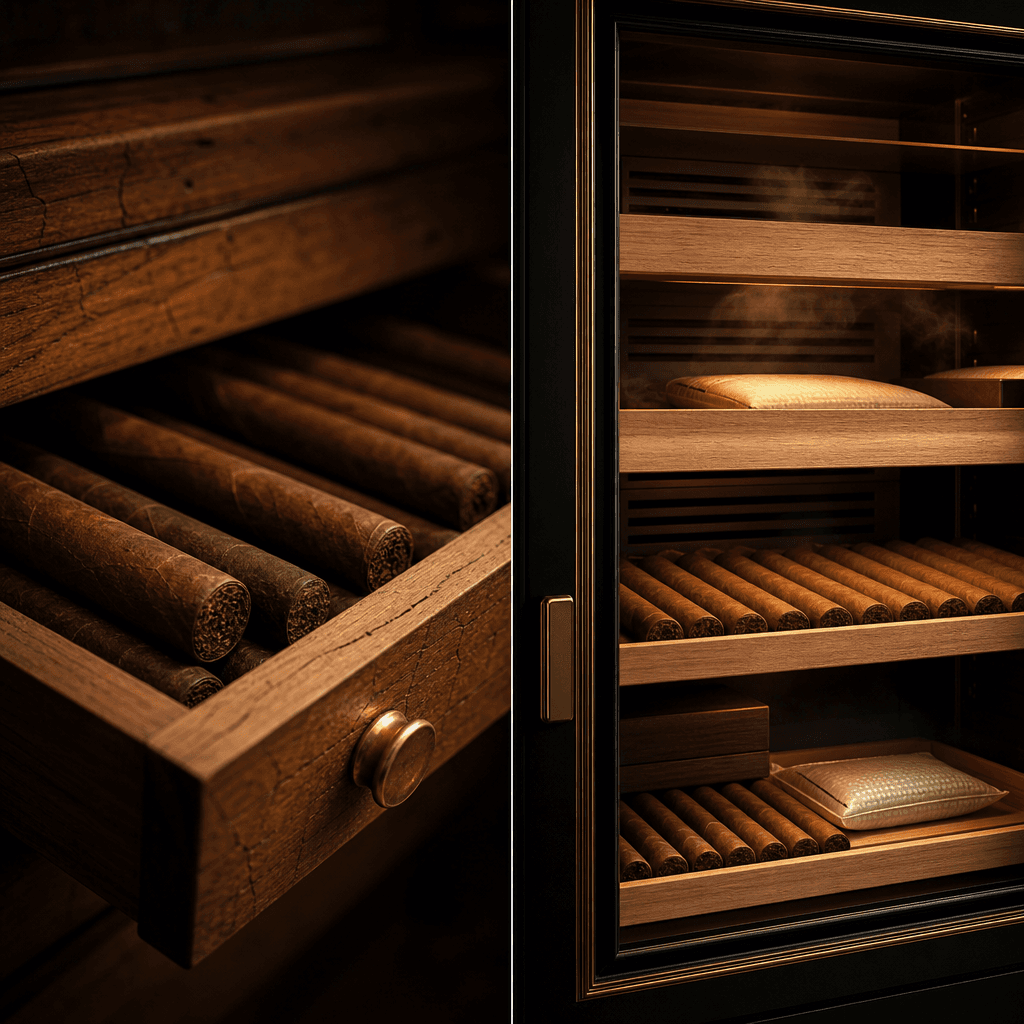
雪茄的保存是一門藝術,影響其燃燒、香氣和口感的因素眾多。溫度和濕度是關鍵,理想的保存環境應保持在攝氏18至21度,濕度65%至70%。選擇合適的保存容器也至關重要,根據數量和預算可選擇密封保鮮盒、桌上型保濕盒或電子雪茄櫃。新保濕盒需經過養盒程序,以確保穩定的濕度。此外,醇化過程能讓雪茄的風味變得更加圓潤,但並非所有雪茄都適合長期保存。選擇合適的濕度策略,才能讓雪茄在最佳狀態下展現其魅力。
- 雪茄保存的最佳溫度範圍為攝氏18至21度,相對濕度65%至70%。
- 新保濕盒需先養盒7至14天,確保木材達到穩定含水狀態。
- 分類與紀錄雪茄狀態可避免收藏混亂,並有助於追蹤風味變化。
Storage and Aging of Cigars: How to Choose the Right Preservation Method
Storing cigars is not as simple as just putting the box in a cabinet. Once you have mastered the basics of cutting, lighting, and tasting, you will encounter a practical issue: why does the same cigar perform so differently in different seasons and under different storage methods?
I often say that cigars are agricultural products with a sense of life and are also works of time. Temperature, humidity, air exchange, the remaining quantity in the box, and source records all affect the burn, aroma, and taste. In this article, I will use methods that beginners can understand and are precise enough to discuss how to establish your own storage system.

流程圖呈現濕度計校正養盒入盒記錄與調位步驟
Temperature and Humidity: Grasp the Basics of Cigar Storage First
Cigars fear two things the most: being too dry and too wet. When too dry, the wrapper tends to crack, the burn rate increases, and the taste becomes sharp; when too wet, the burn is uneven, the draw becomes heavy, and mold spots may even appear. From my years of organizing wine cellar-style cigar cabinets and desktop humidors, beginners should first set their target at 18 to 21 degrees Celsius, with a relative humidity of 65% to 70%, to avoid most problems. The first principle of cigar storage is that stability is more important than pursuing perfect numbers.
Taking common Cuban styles like Cohiba Siglo VI, Montecristo No.2, and Partagás Serie D No.4 as examples, if stored long-term above 75% RH, the initial stage often feels stuffy after lighting, with a large amount of smoke but unclear aroma. Conversely, if stored below 58% RH for too long, the delicate woody, creamy, and nutty notes of cigars like H. Upmann Magnum 46 tend to become dry and hard, with the spiciness at the end being amplified.
I recommend beginners prepare two digital hygrometers, place them in different positions in the humidor, and record once a week. Do not rely solely on the dial hygrometer on the lid, as many uncalibrated ones can have errors of 5% to 10%. If you started collecting after 2020, especially during Taiwan's hot summer indoor temperatures, relying solely on humidification packs is often insufficient; air-conditioned environments and shaded locations are equally important. True cigar caretakers do not adjust humidity daily but rather minimize environmental fluctuations.
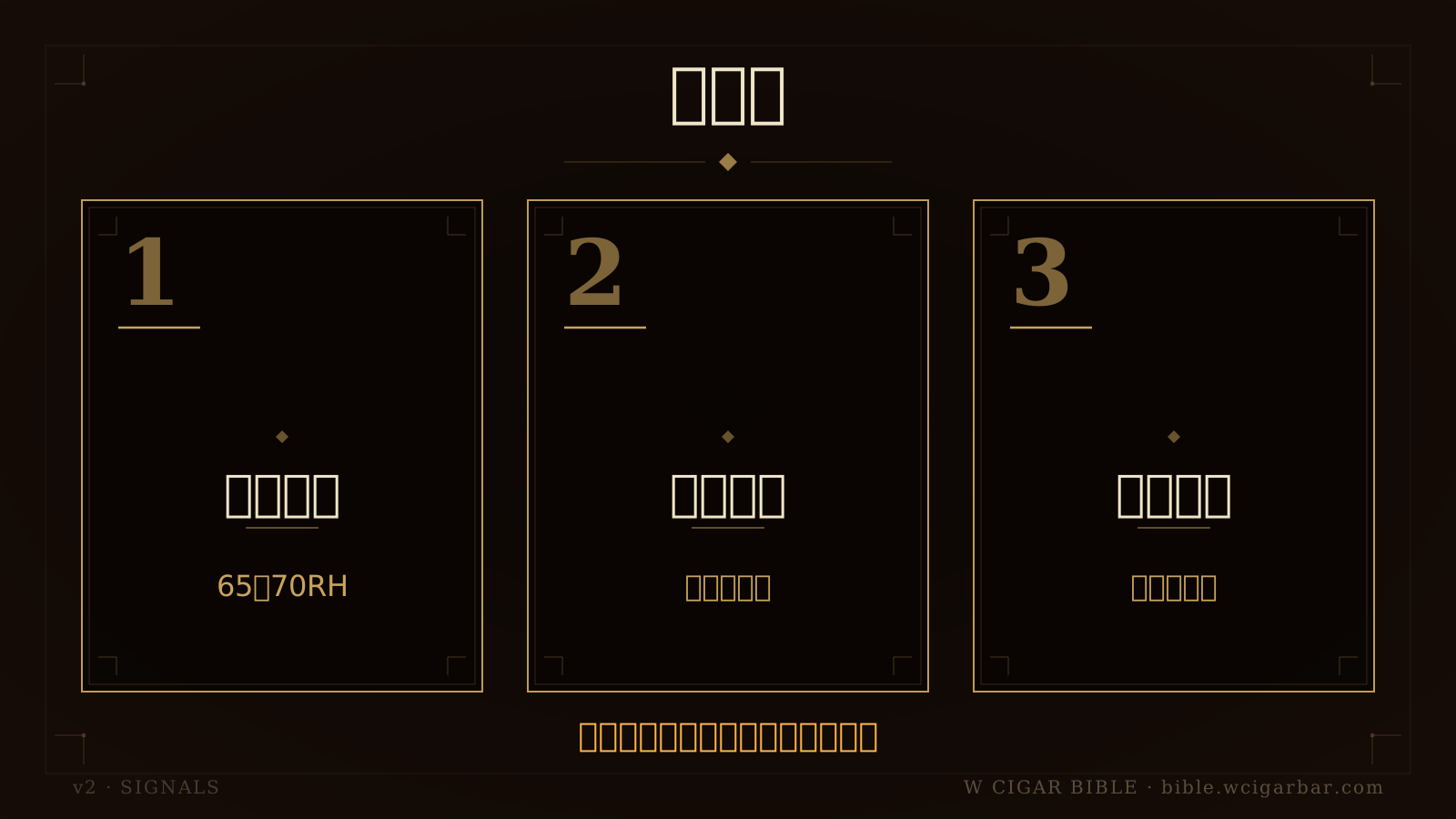
三張重點卡整理溫濕度穩定容器與每週記錄
How to Choose a Storage Container: Humidor, Fresh-keeping Box, and Electronic Cabinet Each Have Their Roles
The most common question for beginners is: what kind of storage equipment do I need to buy? The answer depends on the quantity, budget, and how long you want to store them. If you have only 10 to 30 cigars, a food-grade sealed fresh-keeping box with 65% or 69% two-way humidification packs is the simplest and most stable method. If you have 50 to 100 cigars, a Spanish cedar wood humidor can provide a better aroma environment, but the premise is that the box is well-sealed and seasoned.
The advantage of desktop wooden boxes is their aesthetics and convenience, but they are more affected by indoor temperature differences. Electronic cigar cabinets are suitable for over 100 cigars or those who want to age them across years; they can stabilize temperature but still depend on internal fans, shelf materials, and humidity control logic. Between 2008 and 2012, I saw many enthusiasts put limited editions in beautiful large boxes, but due to unseasoned boxes, the humidity was only 55% in the first two months, causing the wrapper edges to start cracking, which is a pity. The container is not the more expensive, the better, but should match the quantity, cycle, and environmental conditions.
You can quickly determine the following:
| Storage Method | Suitable Quantity | Advantages | Notes |
|---|---|---|---|
| Sealed Fresh-keeping Box + Humidification Pack | 10–30 cigars | Low cost, stable humidity | Ordinary appearance, avoid crushing |
| Desktop Humidor | 30–80 cigars | Convenient access, ceremonial | Must season the box and check sealing |
| Electronic Cigar Cabinet | Over 100 cigars | More stable temperature, suitable for long-term | Observe airflow and humidity dead zones |
| Wine Cellar Style Space | Large collection | Complete management, clear zoning | High setup cost and record requirements |
If you mainly have daily styles like Romeo y Julieta Short Churchills or Bolívar Royal Coronas, a sealed fresh-keeping box is sufficient; if you have boxed collections from 2014, 2016, or 2019, an electronic cabinet or dedicated cabinet would be more suitable. The focus is not to get all the equipment at once but to ensure each cigar has a stable position and clear records.

矩陣比較保鮮盒木保濕盒與電子櫃的數量優點注意事項
Seasoning and Calibration: Don't Let the First Batch of Cigars Become Experiments
A new humidor is not ready for cigars right out of the box. Spanish cedar wood itself absorbs water, and if the box is not seasoned first, the cigars placed inside will instead lose moisture to the wood. I usually recommend seasoning a new box empty for 7 to 14 days: place a sponge moistened with distilled water or a special humidification pack inside, let the humidity stabilize around 70%, and then observe for 48 hours for any significant drop. The purpose of seasoning is not to wet the box but to bring the wood to a stable moisture state.
Calibrating the hygrometer is also important. The common salt test method involves adding a few drops of water to a small amount of salt to form a wet sand-like state, sealing it with the hygrometer for 6 to 8 hours, and the theoretical environment will approach 75% RH. If the reading shows 70%, you know it underestimates by about 5%. Some digital hygrometers can be manually calibrated, while others can only be mentally adjusted; but at least know how much it deviates.
From my experience organizing a batch of Trinidad Vigía and Partagás Lusitanias in 2021, the humidity difference between the upper and lower layers in the box can be 3% to 6%. Large humidors are especially prone to dry corners and moist centers. Solutions include regular repositioning, adding small fans, or dispersing humidification sources, rather than overloading with humidification packs. The most common mistake for beginners is adding too much water when seeing low humidity, resulting in over-humidification two weeks later.
- Season the new box first, don't rush to put in high-value cigars
- Calibrate the hygrometer at least once and record the deviation
- Disperse humidification sources, don't pile them in one corner
- Observe weekly for the first month, then reduce inspection frequency once stable
How Aging Changes Flavor: Time Is Not Magic, but a Slow Integration
Cigar aging, simply put, is the gradual integration of moisture, volatile substances, and oils within the tobacco leaves in a stable environment. Fresh cigars may have a more pronounced ammonia smell, grassy notes, or pungency; after 6 months to 2 years, these edges often become rounded. Taking Montecristo No.2 as an example, the 2020 boxed version, if properly stored, often exhibits clearer cocoa, coffee, and leather notes by 2023. Aging does not turn a cigar into another cigar but makes the original structure more harmonious.
However, not all cigars are suitable for long-term storage. Smaller sizes like Petit Corona and Short Robusto usually perform well within 1 to 3 years; larger ring gauges, longer sizes, or thicker structures like Hoyo de Monterrey Double Coronas and Partagás Lusitanias often require 3 to 7 years to become more complete. As for older vintages like 1998, 2001, and 2006, if the source and storage are unclear, the condition may be more important than the vintage itself.
I have also reminded many friends: do not equate "old" with "good." There was once a box of 2003 Cohiba Espléndidos, which looked beautiful, but due to long-term high humidity inside the box, the smoke was dull and the burn uneven, far inferior to a well-preserved 2018 of the same series. The collection market does discuss vintage, rarity, and complete box labels, but collecting does not guarantee appreciation; it still depends on source preservation and market. Time can help cigars, but only if you have not let them suffer in the wrong environment.
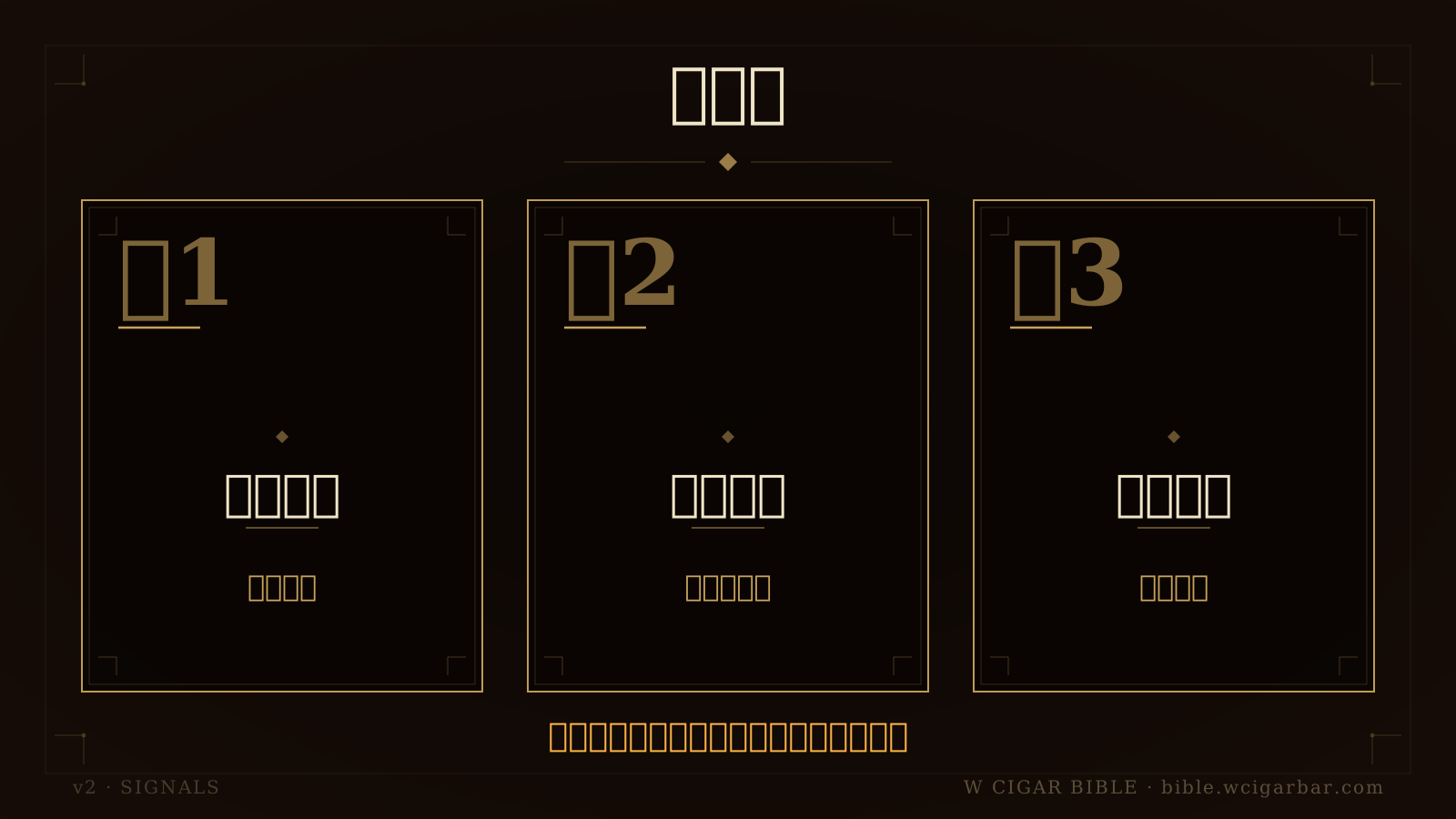
三張錯誤提醒卡指出天天調濕冰箱保存與快速補濕
Humidity Strategy: How to Choose Between 65%, 69%, and 72%
Many beginners are confused when buying humidification packs: what is the difference between 65%, 69%, and 72%? If the indoor temperature in your location is often above 24 degrees, I would lean towards 65% or 69%; if the environment is cold and the box sealing is average, 69% may be more balanced. 72% is not unusable, but in Taiwan's humid season, it is often too high for Cuban cigars, especially for batches that are already tight in draw. Humidity selection should consider temperature, box structure, and cigar condition, not just the numbers on the packaging.
My daily strategy is: cigars that will be smoked soon are placed in an environment of about 65% to 67%; box-stored cigars for medium-term preservation are maintained at 68% to 69%; if the cigars are new and dry, I use 72% for short-term stabilization, but not for long-term neglect. Brands like Davidoff Grand Cru and Zino Nicaragua, which are non-Cuban, have different structures and burning characteristics, sometimes performing well at 69%, but still based on actual burning.
You can judge whether the humidity is appropriate by observing three sensations. First, whether the cap cracks when cut; second, whether it frequently goes out after lighting; third, whether the draw feels blocked. If the burn line is slightly uneven but correctable, do not be overly anxious; if it goes out every 3 minutes, it is mostly over-humidified or a filling condition issue. The best humidity is the range where the cigar burns steadily, the aroma opens, and the taste is not harsh.
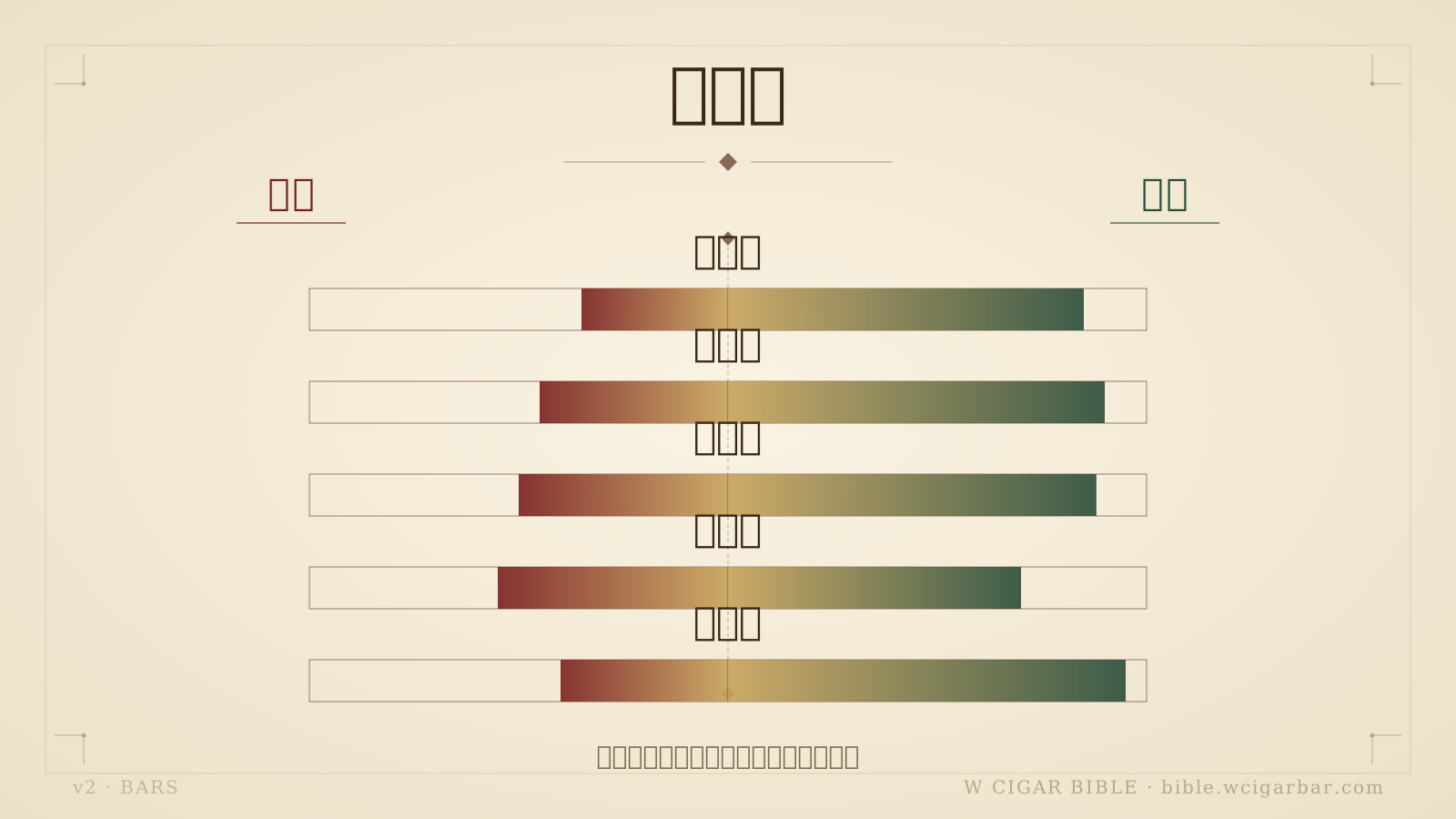
橫條比較短期保存與長期陳化在設備記錄控溫等差異
Classification Storage and Record Keeping: Turn Your Cigar Cabinet into a Database
When your cigars exceed 50, classification and record-keeping become more important than you might imagine. The most basic can be classified by brand, vintage, size, and condition; more advanced would record box codes, acquisition dates, storage locations, and tasting notes. Cuban cigar boxes often have factory codes and month-year codes on the bottom, for example, different batches from 2019 and 2021 may have significant differences in flavor maturity. A collection without records will quickly become a pile of seemingly precious but difficult-to-assess boxes.
I recommend using a spreadsheet to create fields: brand, model, size, box code, quantity, storage humidity, entry date, and notes. For example, with Partagás Serie P No.2, you can note 2022 entry, 69% RH, and observe one every 6 months. This way, after three years, you will know if it transitions from pepper and earthy notes to sweet wood, coffee, and roasted nuts, or if it remains in a tight phase.
Classification storage can also prevent flavors from affecting each other. Cigars with strong profiles, like Liga Privada No.9 and Bolívar Belicosos Finos, when mixed long-term with mild and delicate Quai d’Orsay No.50, may not completely change the flavor, but in small sealed containers, aromas are more likely to interfere with each other. If space allows, I separate Cuban, non-Cuban, daily smoking, and long-term aging; if space is limited, at least use original wooden boxes or cedar sheets to separate, and keep labels clear.

快問快答卡整理白粉判斷乾燥回濕與冰箱保存建議
Travel and Short-term Storage: From Carrying Cases to Return-to-Cabinet Processes
Many people put cigars in metal tubes, leather cases, or travel humidors when traveling or on business trips. For short-term 1 to 3 days, single aluminum tubes or cedar sleeves are usually sufficient; if over 5 days, it is recommended to use a travel case with a sealing ring and place a small humidification pack inside. Especially airplane cargo holds and hotel air-conditioned rooms are very dry, and if you bring thin-wrapper styles like H. Upmann Half Corona or Montecristo Media Corona, you should avoid drastic temperature and humidity changes. The focus of travel storage is to prevent pressure, dryness, and not rush to handle them after returning to a stable environment.
After returning home, do not immediately mix travel cigars with long-term storage boxes. I usually place them in a separate small box for 48 to 72 hours to observe for cracks, odors, or humidity imbalance before returning them to their original area. If you encounter high temperatures during the trip, such as exceeding 30 degrees in the car, be even more cautious; high temperatures increase pest risks and can make cigar oils and aromas rough.
Short-term storage also includes "preparing for upcoming smoking" status adjustments. Some cigars taken from a 69% environment, if they feel too moist, I place them in a 65% small box for 3 to 7 days to ensure cleaner burning. This is not to dry the cigar but to make the surface moisture more suitable for lighting. For beginners, this small action improves the experience more than pursuing expensive lighters, especially in common sizes like Robusto, Toro, and Churchill.
Common Questions
Is the white powder on the surface of cigars mold?
Not necessarily. If the white substance looks like fine powder, can be gently wiped off, and has no hairy structure, it may be mineral or oil crystals; if it is fuzzy, greenish-gray, and has a moldy smell, be cautious. When judging mold spots, look at the form, smell, and whether it penetrates the foot, not just the color. If unsure, isolate and observe, do not mix with other cigars.
Can dried cigars be restored?
If only slightly dry short-term, they can usually stabilize slowly; if the wrapper is largely cracked and the interior is brittle, flavor and burn are hard to fully recover. The method is to place them in a 62% or 65% environment for a week, then gradually return to 69%, avoiding direct high humidity. Rapid rehydration can cause the outer layer to expand first, leading to cracking.
How often should humidification packs be replaced?
It depends on box sealing and opening frequency. Sealed fresh-keeping boxes may last 3 to 6 months; wooden boxes, if frequently opened, may need replacement every 1 to 3 months. The simple judgment is: if the humidification pack is noticeably clumped, thinned, and humidity cannot be restored, it should be replaced. Do not leave completely dry packs as decorations in the box.
Do cigars need to be rotated regularly?
Yes, but not daily. For boxes with fewer than 50 cigars, check once a month; large cabinets can adjust upper and lower positions every 2 to 3 months. The purpose of rotation is to avoid uneven conditions caused by local humidity and airflow differences. Be gentle, especially with older vintages or thin-wrapper cigars.
Can cigars be stored in the refrigerator?
Generally not recommended. Household refrigerators have low humidity, complex odors, and too low temperatures, which can cause cigars to crack or absorb odors. Unless dealing with pest risk through a short-term freezing process, which must go through sealing, refrigeration buffering, and warming steps, refrigerators are not a daily storage solution. A stable dedicated environment is the right way.
Do cigars get better the longer they are stored?
No. Cigars have their peak periods and are affected by brand, size, vintage, and storage. Small sizes may be very comfortable after 2 to 4 years, while large sizes or rich structures may be more durable; but if stored incorrectly, even 10 years may not be good. Aging requires records and regular observation, not just sealing the box and forgetting it.
I always believe that cigar storage is a gentle discipline: not rushed, not impatient, not superstitious about a single number. As the editor of "Cigar Bible," I have seen too many good cigars ruined by carelessness and also seen modest styles bloom with surprises due to proper care. By managing temperature, humidity, records, and patience well, time will naturally reward you with more complete aromas and rhythms.
—Cigar Prince Wilson Tsai
Smoking is harmful to health. Under 20 years old is not allowed to smoke. Quit smoking hotline: 0800-636363. This article is for reference by adults over 20 years old for cigar culture, storage, and regulations knowledge, not a tobacco advertisement, promotion, or purchase suggestion.
Like this article?Share with friends
Share this W Cigar Bible piece with friends who want to learn cigar culture, storage, and tasting.
想把這篇 化為實踐
雪茄聖經是知識;雪茄文化要在空間裡發生

W Cigar Bar 大安總店資訊
台北大安區 · 雪茄聖經總編輯 Wilson Tsai 主理的雪茄文化空間
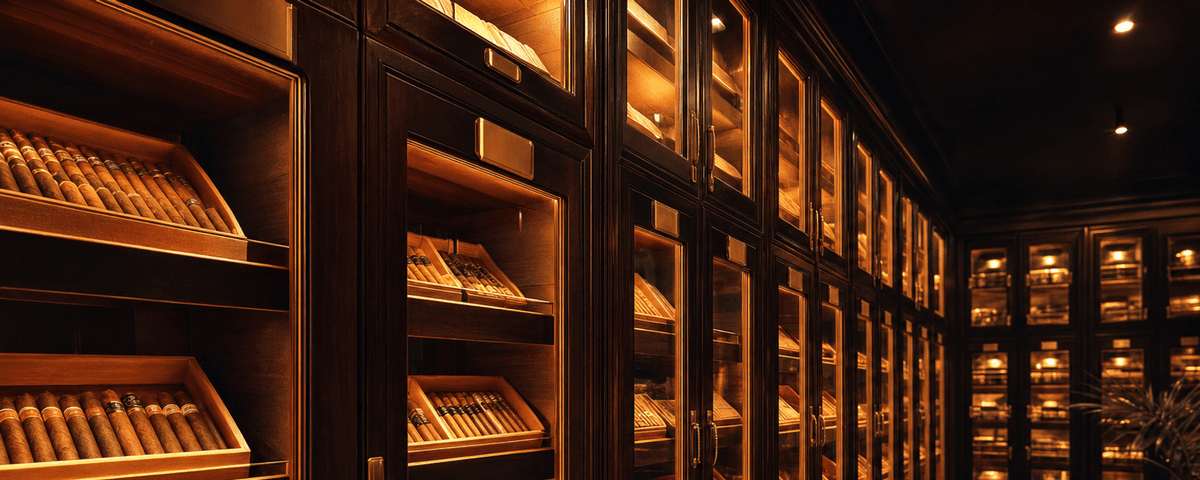
33 座 24 小時恆溫恆濕醇化室
W Cigar Bar 提供的會員醇化空間 · 場地資訊請洽編輯部
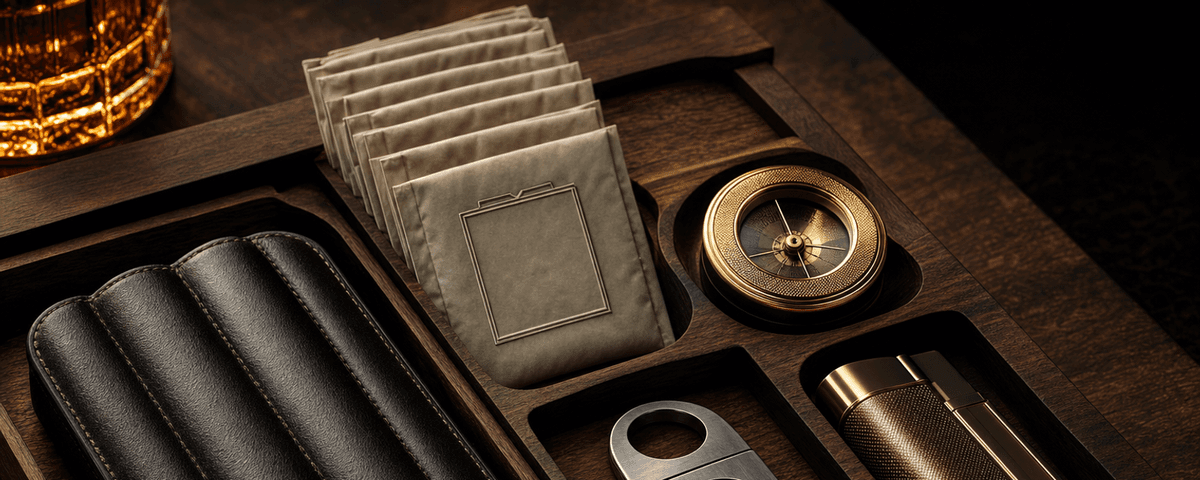
雪茄剪 / 打火機 / 雪茄盒 / Boveda
W Cigar 配件官網 · 專營雪茄配件正品

加 LINE 好友 · 文化諮詢
文化空間資訊 · 紳士沙龍 · 私人包場
本網站內容僅供雪茄文化、歷史、收藏與品吸知識研究參考。菸品有害健康、未滿法定年齡者請勿吸菸。實際規範請依所在地法律為準。
吸菸有害健康・戒菸專線 0800-636363・本站僅供 20 歲以上成年人閱覽。
讀到這裡,你不只是路過的人
留下 Email,加入 W 雪茄聖經內圈——總編輯 Wilson Tsai 親選的學院深文與國際新訊,先你一步送到信箱。
· 教育用途非銷售 · 隨時一鍵退訂 · Email 絕不對外公開 · 由勝茄股份有限公司營運
同分類延伸閱讀


資料來源:W Cigar Bible 編輯部整理 · 雪茄王子 Wilson Tsai 親自審稿
本文僅供雪茄文化、歷史、收藏與品鑑知識研究,不作為菸品促銷、銷售或購買建議。吸菸有害健康,未滿二十歲不得吸菸。