雪茄選購指南:如何在多樣品牌中找到你的理想選擇
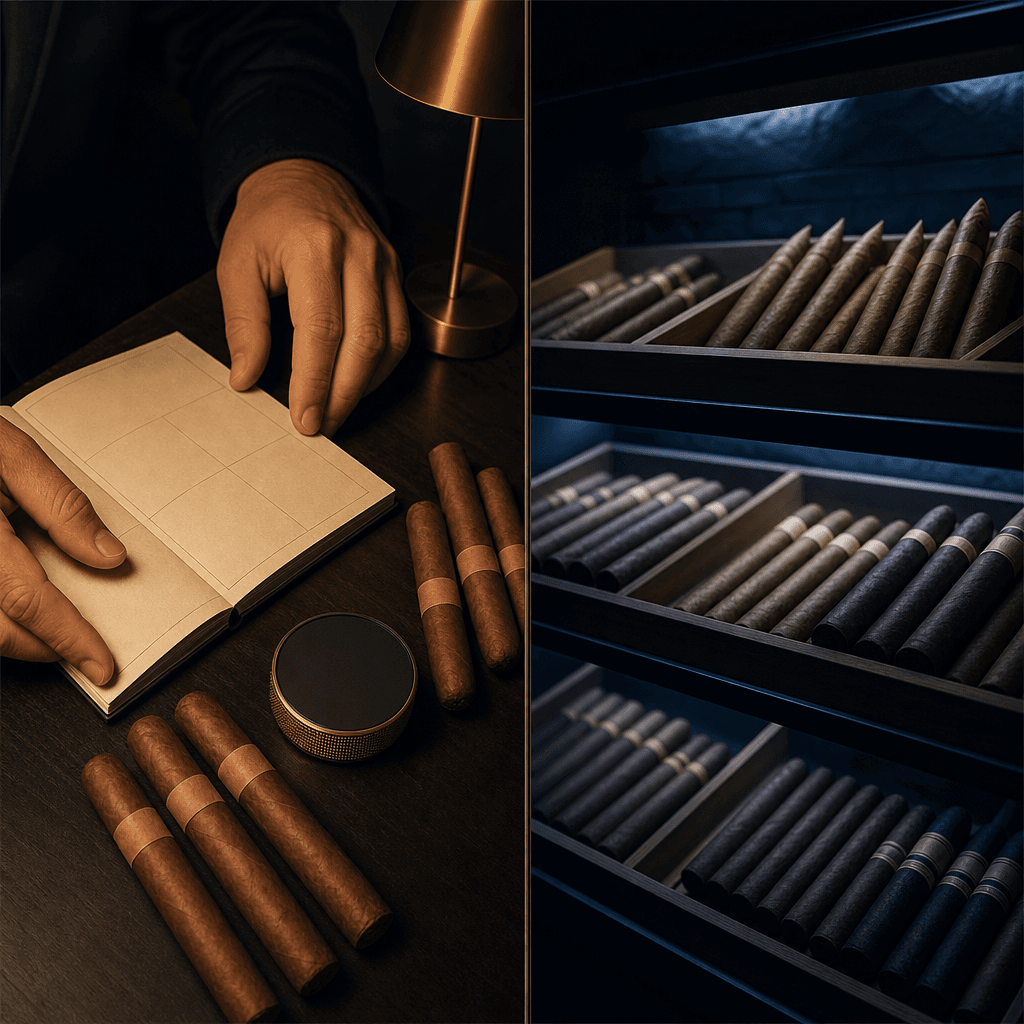
雪茄文化是一門深奧的藝術,選擇適合的雪茄不僅僅依賴品牌,而是要根據自己的口味偏好和使用情境來決定。了解不同品牌的風格與特性至關重要,古巴雪茄雖具歷史,但非古巴品牌同樣能提供優質體驗。選擇雪茄時,應考慮尺寸、濃度及香氣,並根據預算分層購買,以獲得穩定的品吸體驗。檢查雪茄的外觀、手感和香氣也是必不可少的步驟,這樣才能選擇到最符合自己需求的雪茄。
- 選擇雪茄時,應先根據風味座標定位自己,而非單純追求品牌知名度。
- 不同尺寸的雪茄會影響燃燒時間與風味,選擇時需考慮個人時間與環徑。
- 保存雪茄的理想濕度應在65%至69%之間,過高濕度會影響抽吸體驗。
Cigar Selection Guide: How to Find Your Ideal Choice Among Various Brands
If you already know how to cut, light, and savor slowly, and can distinguish between notes of wood, cocoa, leather, pepper, and creaminess, the next step is not just to "pick the most famous one," but to establish your own selection logic. There are many cigar brands, each with its own character from Cuba, the Dominican Republic, Nicaragua, and Honduras; within the same brand, size, vintage, origin, and storage conditions can greatly affect the flavor. As an editor of the "Cigar Bible," I often remind beginners: the ideal cigar is not the one with the highest score from others, but the one you find most stable, comfortable, and enjoyable repeatedly within your budget, time, physical sensations, and occasions.
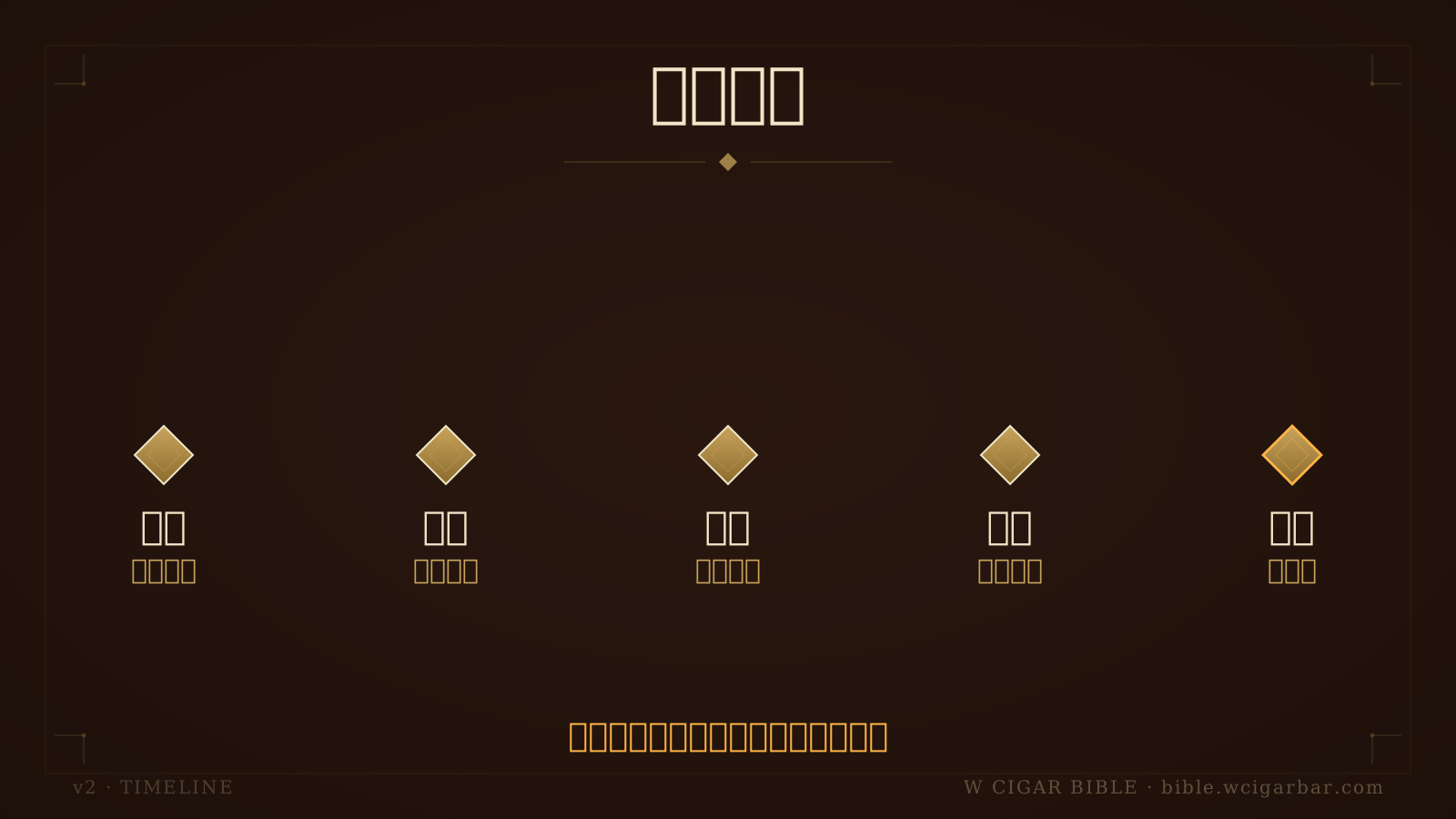
流程圖依序呈現口味、記錄、品牌、尺寸與回顧步驟
Position Yourself with "Flavor Coordinates" First, Not by Chasing Brands
Before selecting a cigar, I categorize flavors into three coordinates: strength, aroma direction, and finish length. Stronger is not always better; too much nicotine can cause dizziness and stomach discomfort. Aroma complexity is not always suitable for beginners. Take the Cuban Montecristo No.2 as an example: this torpedo-shaped cigar, about 156mm long with a ring gauge of 52, features common notes of cocoa, coffee, dry wood, and a hint of spice, suitable for those wanting to understand "classic Cuban medium to medium-strong" cigars. But if you prefer something milder, with creamy and hay notes, the H. Upmann Magnum 46 might be smoother.
If you prefer a pronounced sweetness with nutty and cocoa thickness, the Nicaraguan Padrón 1964 Anniversary series is often a clear reference point. My suggestion is to record 10 cigars, noting the brand, size, box code or vintage, humidity, smoking time, and changes in the first and last thirds, then review which type you most frequently rate highly. Many think they like "strong flavors," but actually just enjoy the peppery kick at the start; others believe they only love Cuban cigars, only to find the balance of Dominican Davidoff more suitable for daily enjoyment. Position yourself first, then the brand matters.
Understanding Brand Styles: Cuba Isn't Everything, Non-Cuban Brands Aren't Just Substitutes
When discussing brands, don't simplify the world into "Cuban and non-Cuban." Cuban brands have a rich history, such as Partagás, founded in 1845, known for its earthy, leathery, spicy, and robust mid-section; Romeo y Julieta dates back to 1875, often featuring floral, woody notes and a more approachable entry; Trinidad, originally with diplomatic gifting connotations, gradually entered the general market after 1998, often characterized by refined wood and subtle sweetness. On the other hand, brands from the Dominican Republic, Nicaragua, and Honduras are not "second best."
Arturo Fuente OpusX, launched in 1995, proved that the Dominican Republic can produce rich, well-structured high-end cigars; Oliva Serie V showcases black pepper, coffee, and dark sweetness with Nicaraguan Jalapa tobacco; My Father often features noticeable spice and roasted tones. When choosing a brand, I ask three questions: Do you want Cuban-style detail and variation? Or the stable burn and intense aroma common in non-Cuban cigars? Can you accept variations within the same box? Do you want to finish in 45 minutes, or are you willing to spend 90 minutes savoring the entire experience? A brand is not a belief, but a flavor language.
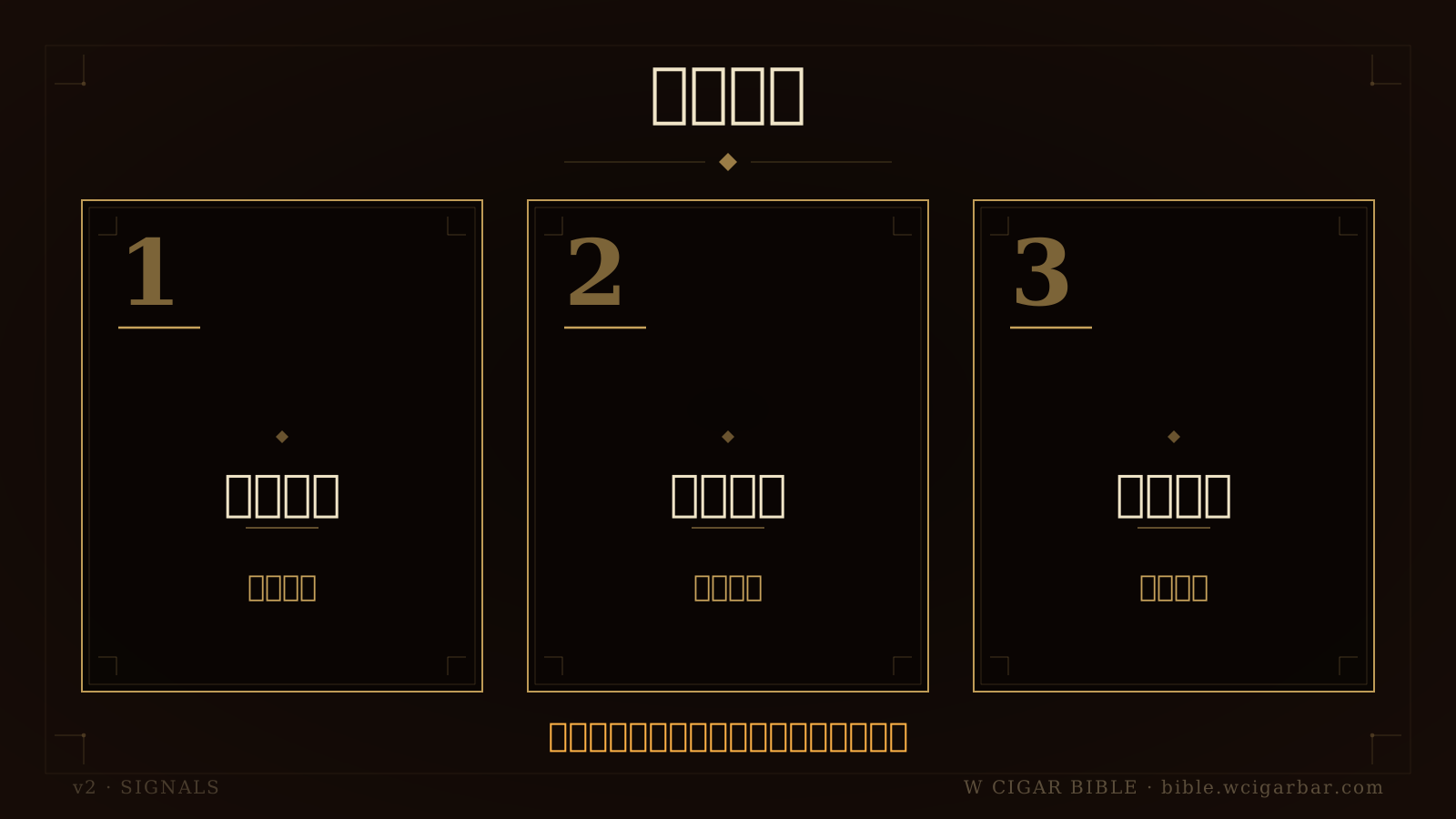
三張卡片列出風味先行、品牌次之與時間配尺的重點
Size Is More Practical Than Fame: Consider Time, Ring Gauge, and Burning Pace Together
Different sizes within the same brand can be like two different cigars. Many beginners see Churchill or Double Corona and think they look grand, but sizes 170mm and above, with ring gauges of 47 to 52, often require 90 minutes or more; if distracted midway, the temperature rises, amplifying bitterness and tar. Conversely, Petit Corona, about 125mm with a ring gauge of 40 to 42, usually completes in 35 to 50 minutes, making it more suitable for practicing pace.
Take Partagás Serie D No.4 as an example, the Robusto size is about 124mm with a ring gauge of 50, capable of delivering rich wood, leather, and spice in about 60 minutes; while Hoyo de Monterrey Epicure No.2, also a Robusto, is usually milder, with noticeable cream and cedar notes. The advantage of torpedo shapes like Montecristo No.2 is that the diameter can be adjusted slightly; cut less for concentrated smoke, cut more for better flow but also higher temperature. Before purchasing, think "how much uninterrupted time do I usually have," which is more important than asking which one is the most famous. A truly mature choice is to match size with life, not force life to fit size.
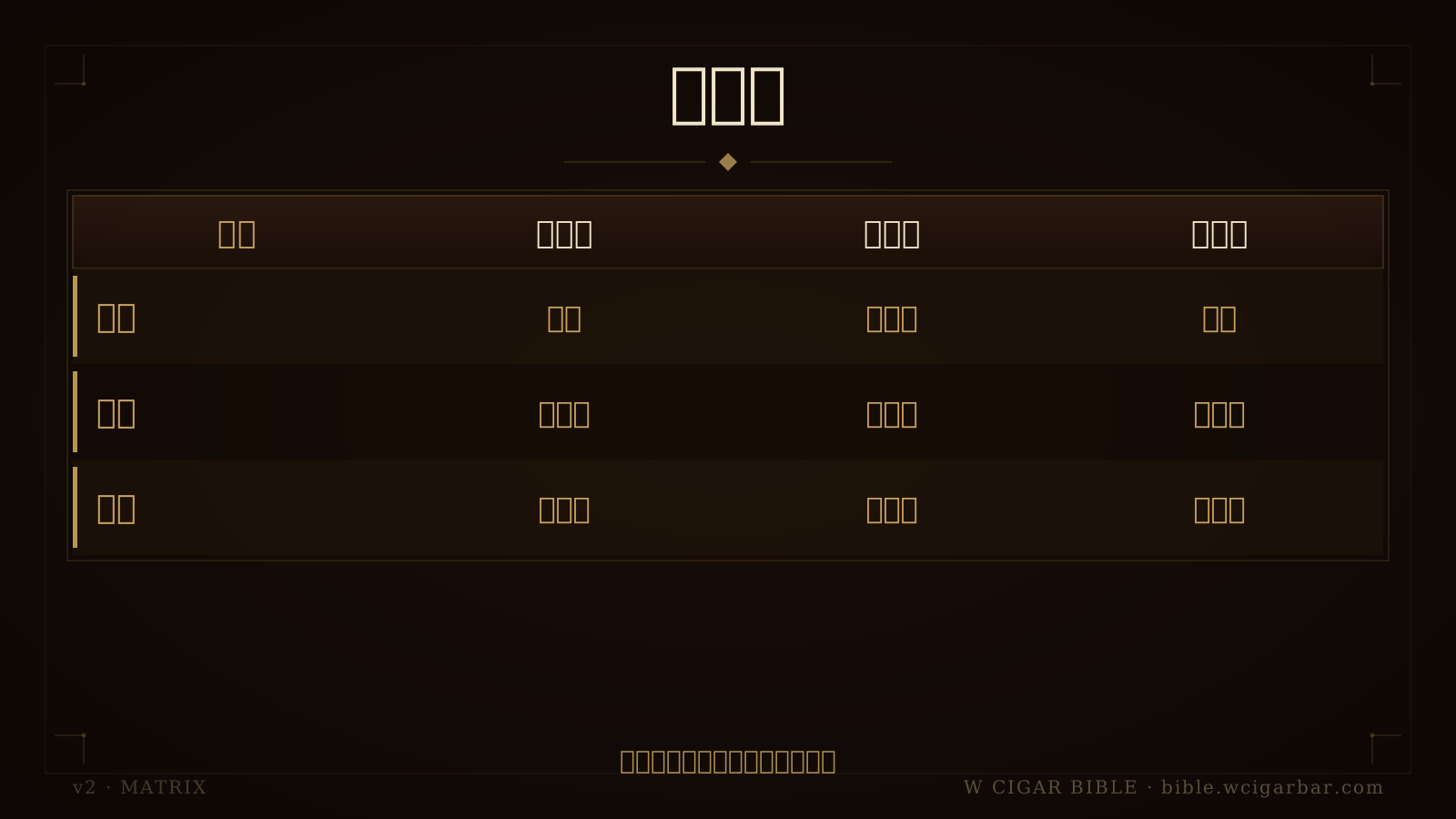
比較矩陣呈現小環徑、羅布斯與大尺寸的時間與口感差異
Layer Your Budget: Spend on Stable Experiences, Not Single Cigar Show-Offs
Budget management is key to advancing from beginner to intermediate. I categorize cigars into three tiers: daily practice, weekend enjoyment, special collection. Daily practice can choose more budget-friendly, stable-burning options like Quintero, Flor de Copan, Oliva Connecticut Reserve, or some AJ Fernandez entry-level series, focusing on practicing cutting, lighting, pacing, and flavor recording. Weekend enjoyment can go up to H. Upmann Magnum 46, Romeo y Julieta Wide Churchills, Padrón 1964, Davidoff Aniversario, etc., observing if the structure and finish are truly worthwhile.
Special collections involve source, box condition, vintage, and storage records, such as early 2010s Cohiba Behike, some limited editions Edición Limitada, with more price fluctuations; but collection and potential appreciation do not guarantee appreciation, still depending on source preservation and market. My approach is to set a fixed budget each month, such as 60% on regular options for repeated comparison, 30% on higher-end brands, and 10% to try rare or vintage options. This way, over a year, you not only buy cigars but also build your own taste database.
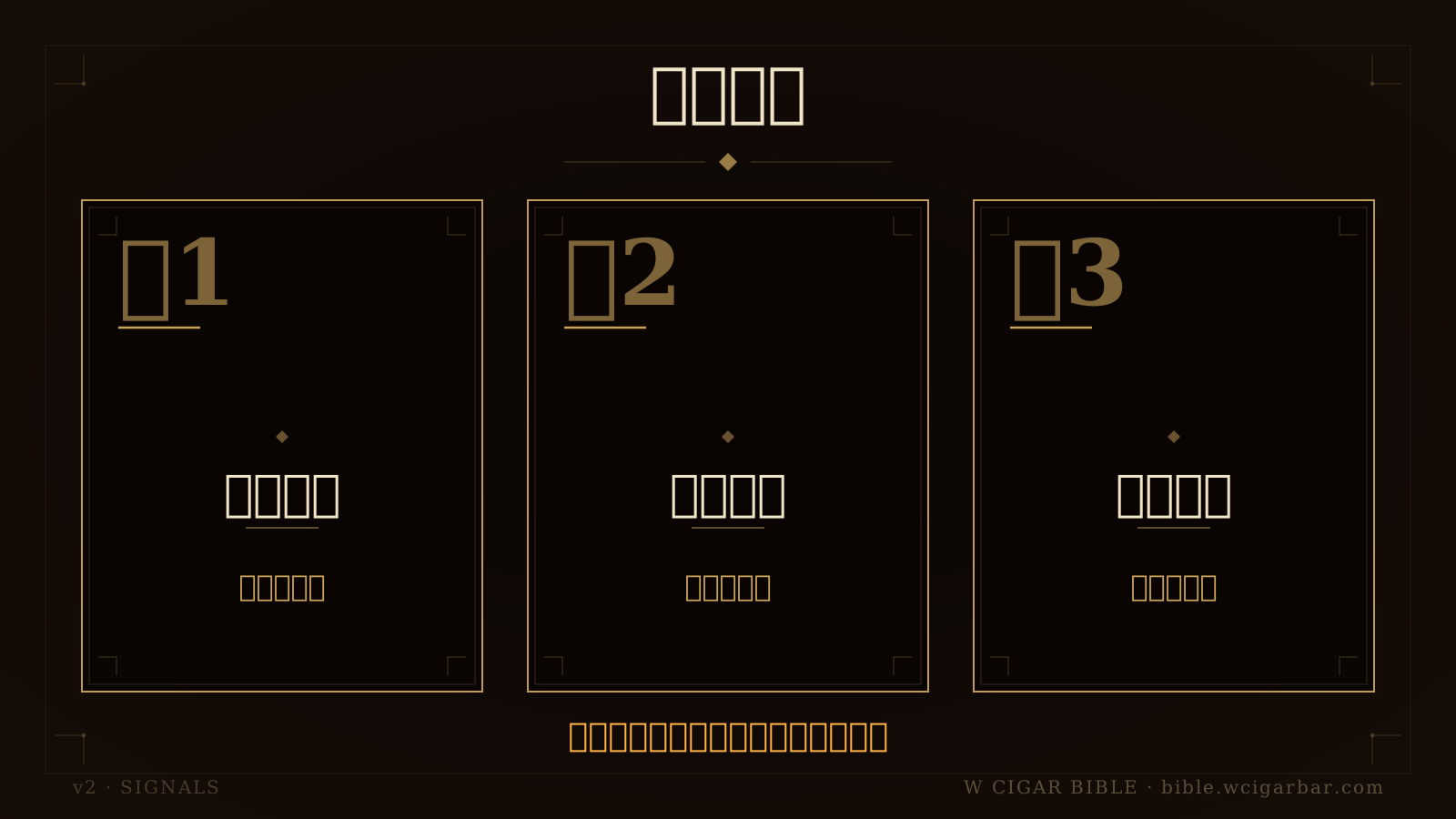
三張錯誤卡片提醒只看產地、單支定論與環徑迷思
Checklist When Selecting: Appearance, Feel, Aroma, and Source
When you get a cigar, don't rush to judge the brand's high or low status, but follow a standard process to check. First, look at the wrapper: oily doesn't mean wet, pretty doesn't mean good; if there are large cracks, severe peeling, or protruding hard stems, burning may be affected. Second, feel the texture: lightly press from head to foot, it should be elastic but not like a sponge, nor should any section be as hard as a stick; too hard may mean over-tight filling, too soft may mean loose structure. Third, smell the cold aroma: cedar, hay, cocoa, honey, leather are normal, but if there's a moldy, ammonia, or damp cardboard smell, be cautious.
Fourth, check source information: Cuban box codes and production months are common, such as "MAR 21" for March 2021, non-Cuban brands can note agency markings, tax labels, and storage environment. If obtained through PCC authorized dealers or stores with legal tax markings, at least the risk of unknown sources and uncontrolled preservation is reduced. Cigars are not just about the band; storage conditions and circulation records are often more critical than how they look in photos.
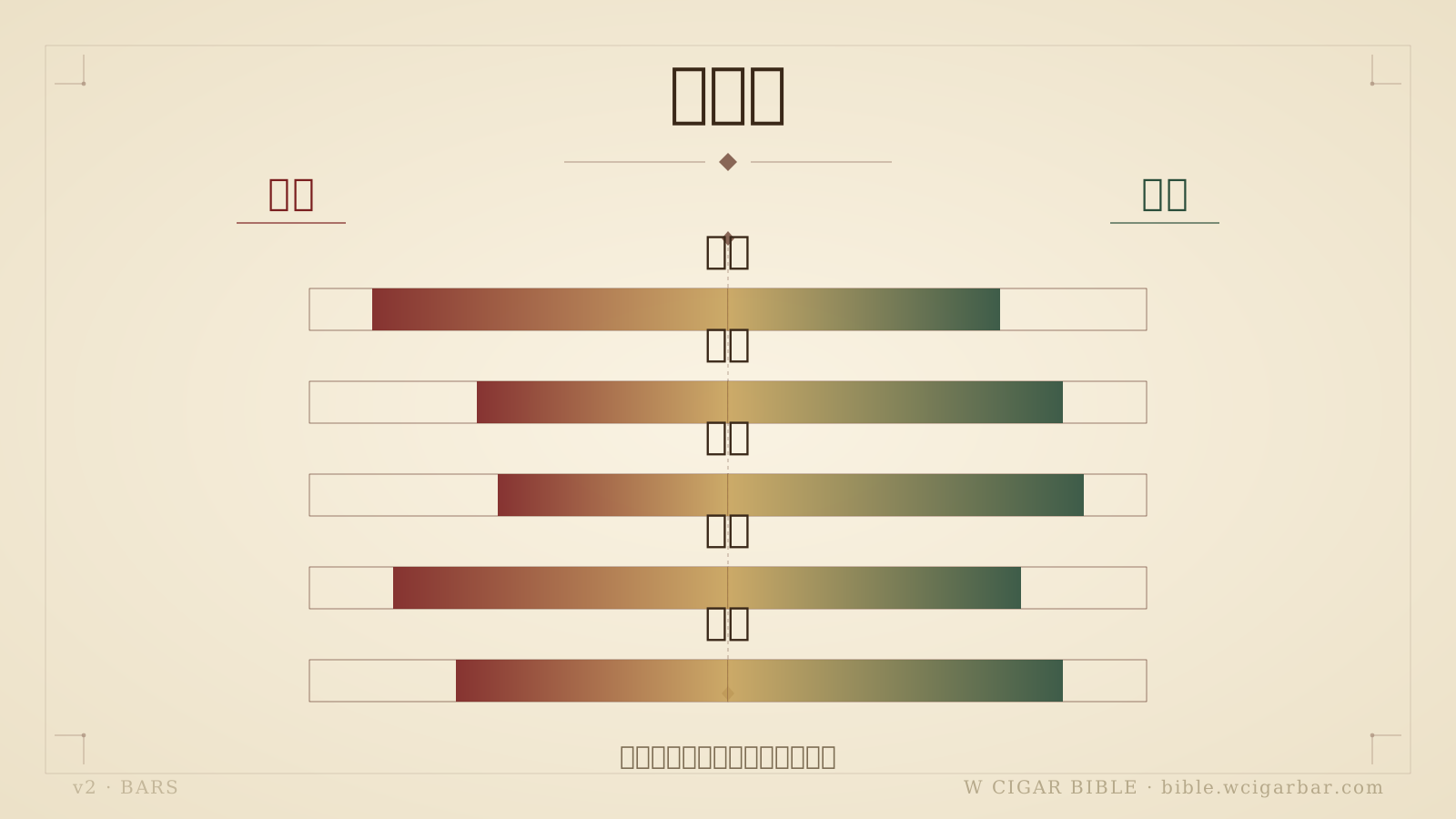
長條圖比較古巴與非古在細節穩定辛甜等差異
Selection Table for Different Tastes and Occasions: Narrow the Range with Context
Many beginner friends ask me: "Which one should I choose today?" I usually don't give a single answer directly but first ask about the occasion, before or after meals, how long you can stay, your mental state that day, and the desired strength. The quality of a cigar is often tied to the context; choosing a strong Nicaraguan Ligero blend on an empty stomach might be too much; after a full meal with coffee, you can handle a more robust smoke. The following table is not an absolute standard but a practical starting point to narrow your search range.
| Occasion | Recommended Style | Reference Brand or Model | Time Estimate | Notes |
|---|---|---|---|---|
| Afternoon Relaxation | Medium or less, creamy wood | Hoyo de Monterrey Epicure No.2, Davidoff Grand Cru | 50–70 minutes | Avoid empty stomach, too fast |
| After Dinner | Medium-strong, cocoa leather | Partagás Serie D No.4, Padrón 1964 | 60–80 minutes | Pair with water or black coffee for stability |
| Short Practice | Small ring gauge, clear changes | Montecristo No.4, Petit Corona size | 35–50 minutes | Be careful not to smoke too quickly |
| Want to Practice Identification | Clean aroma, stable structure | H. Upmann, Romeo y Julieta | 50–70 minutes | Record every 10 minutes |
| Want to Feel Strength | Spicy, coffee, dark sweetness | Oliva Serie V, My Father | 60–90 minutes | Not suitable on an empty stomach for the first time |
Storage Conditions Will Change Choices: Humidity Isn't Better the Higher It Is
No matter how good the brand, imbalanced storage can lead to a disappointing experience. Generally, I set long-term storage at 18 to 21 degrees Celsius, with relative humidity between 65% and 69%; in Taiwan's humid climate, if stored above 72% for a long time, common issues include increased draw resistance, uneven burn lines, heavy moisture in the latter part, and even muted aromas. Due to the structure and tobacco characteristics of Cuban cigars, many prefer 65% to 67%; some non-Cuban large ring gauge cigars may be more brittle if too dry, so adjustments can be made as needed.
Aging is not magic; a cigar box from 2018 that has been in high temperature and humidity for five years may not be better than a well-preserved 2023 box. If you just acquired a box of cigars, it's recommended to let them rest in a stable humidor for 2 to 4 weeks before evaluating burn and aroma; if after long-distance transport, the rest period can be longer. When selecting, also ask yourself if you have the ability to preserve: if you don't have stable equipment at home, it's better to buy in small batches rather than a whole box of expensive options, reducing the risk of state deterioration.
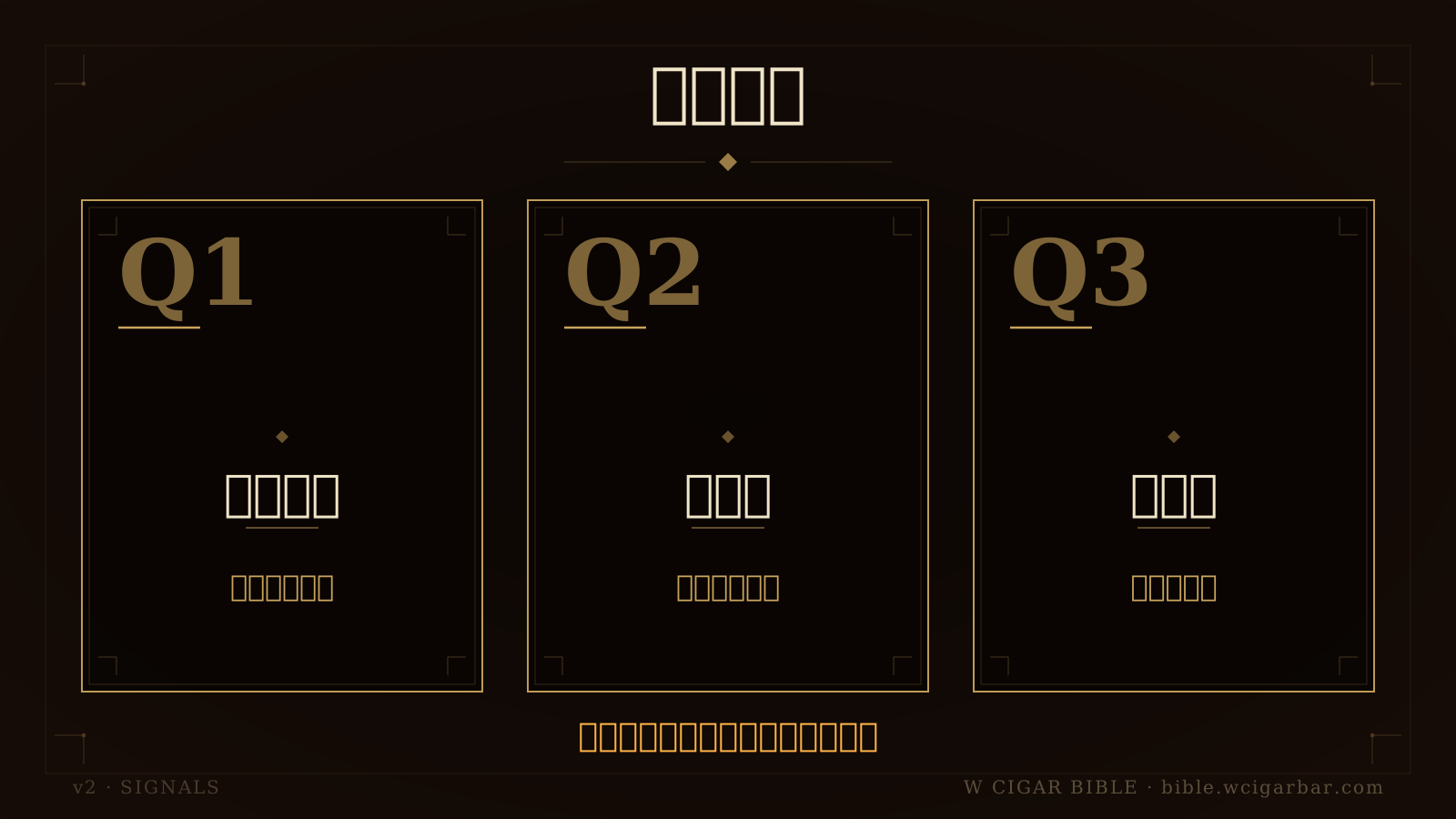
快問快答卡整理古非選擇、同盒差異與環徑問題
Purchasing Channels and Precautions: Legality, Transparency, and Traceability Are More Important Than Cheapness
The biggest fears in purchasing cigars are unknown sources and uncontrollable preservation. Be especially cautious with rare options that are too cheap, such as Cohiba Behike 52, 54, 56, which have been sought after since their launch in 2010, with many cases of counterfeits, re-banded cigars, and mixed sources in the market; if the price significantly deviates from the reasonable range and box code photos cannot prove the preservation history, you should be vigilant. When choosing a channel, I focus on three points: whether it is a legal adult trading environment, whether there are clear tax and agency markings, and whether the storage conditions can be explained.
For Cuban cigars, pay attention to box bottom dates, seals, laser marks, and box consistency; for non-Cuban cigars, look at original packaging, agency labels, batches, and humidity management. Online information can be referenced, but don't judge authenticity solely based on social media photos, as band details, box wood grain, and printing color differences can all be imitated. If your goal is long-term learning, rather than chasing expensive rare options at once, it's better to establish a stable source, keep consistent records, and compare gradually. The core of cigar selection is not novelty hunting, but reducing uncertainty.
Frequently Asked Questions
Should Beginners Choose Cuban or Non-Cuban First?
I suggest trying to establish a baseline for both, but don't buy too much at once. For Cubans, start with recognizable brands with plenty of information like H. Upmann, Montecristo, Romeo y Julieta, Hoyo de Monterrey; for non-Cubans, observe the sweetness, spice, and burn stability of Davidoff, Padrón, Arturo Fuente, Oliva, My Father. The best method is to choose one of similar size from each side within the same week, such as the Robusto size, to avoid misjudging by comparing small to large sizes. You'll find that Cubans often have more delicate herbal, woody, and mineral notes, while non-Cubans often have more direct cocoa, coffee, pepper, and sweet aromas, but this is just a general direction, not an absolute rule.
Why Do Cigars from the Same Box Taste Different?
Cigars are agricultural and handcrafted products. Even within the same box, from the same year and factory, variations can occur due to filler leaf proportions, rolling tightness, wrapper leaf position, and storage layer. In a box of 25 cigars from Cuba, some may burn straight, others may have tight draws, which is not uncommon. Non-Cuban major brands often have an advantage in consistency, but that doesn't mean every cigar is identical. My approach is not to dismiss an entire brand based on a single cigar, but to accumulate records of 3 to 5 cigars under similar conditions over different times before deciding whether to include it in your regular list.
Does a Larger Ring Gauge Mean It's Easier to Smoke?
Not necessarily. Larger ring gauges, like 54, 56, 60, have larger smoke volumes and relatively stable temperatures, often providing a smoother entry and accommodating more diverse leaf combinations; but the downside is longer time, possibly diluted flavors, and not always comfortable for biting and holding. Smaller ring gauges like Corona, Lonsdale, have a higher influence of the wrapper leaf, with clearer flavor lines, but require higher temperature control, as smoking too fast can lead to spiciness, bitterness, and dryness. For those wanting to practice technique, I recommend 42 to 50 ring gauges, as they are easier to observe burn, draw resistance, and three-stage changes.
Can I Just Follow High-Score Lists to Buy?
Lists have reference value but can't decide for you. Cigar Aficionado, Halfwheel, or different years' annual selections reflect the judges' judgments on style, condition, and market at the time, such as certain Padrón, Fuente, E.P. Carrillo, H. Upmann receiving high ratings internationally. However, high scores don't mean they suit your physical sensations, budget, and occasions. If you usually prefer mild creamy notes, jumping directly to intense spicy options might only bring pressure. A better use is to treat the list as a map, not a command; first choose a size that fits and a strength you can accept, then make records.
How Long Should Cigars Be Aged to Taste Better?
There is no fixed answer for aging time. Some young Cuban cigars may have reduced spiciness and more integrated wood and sweetness after 1 to 3 years; some non-Cuban cigars are designed to be in a better state soon after release, and aging too long may lose their distinct spice. The key is stable storage conditions, not just chasing vintage. If you have a box of 2022 cigars, you can smoke one every 6 months to record, observing if the aroma rounds out, burn improves, and finish cleans up. This is more reliable than listening to others say "it's best after a few years," and it also helps build your own sense of time.
With a Limited Budget, Should I Buy a Single High-End Cigar or Multiple Mid-Range Ones?
If you're still developing your taste, I would prioritize multiple mid-range cigars. The reason is simple: experience requires sample size. Instead of spending your entire monthly budget on a single expensive cigar, choose 4 to 6 different region, similar size options for horizontal comparison. Once you know you like H. Upmann's elegant woodiness, Padrón's cocoa sweetness, or Davidoff's clean balance, then focus your budget on higher-end series. A single high-end cigar can open your eyes, but multiple mid-range cigars can build judgment; for beginners, judgment is more valuable than showiness.
I always believe that choosing cigars is not about chasing the most expensive, rarest, or most talked-about, but about understanding your own taste and rhythm. When you are willing to record, compare, respect preservation and etiquette, every cigar becomes part of your experience. Take it slow, let the ideal choice grow from your palate and time. —Cigar Prince Wilson Tsai
Smoking is harmful to health. Under 20 years old is prohibited from smoking. Quitline: 0800-636363. This article is for adults over 20 years old as a reference for cigar culture, preservation, and legal knowledge, not a tobacco advertisement, promotion, or purchase suggestion.
Like this article?Share with friends
Share this W Cigar Bible piece with friends who want to learn cigar culture, storage, and tasting.
想把這篇 化為實踐
雪茄聖經是知識;雪茄文化要在空間裡發生

W Cigar Bar 大安總店資訊
台北大安區 · 雪茄聖經總編輯 Wilson Tsai 主理的雪茄文化空間
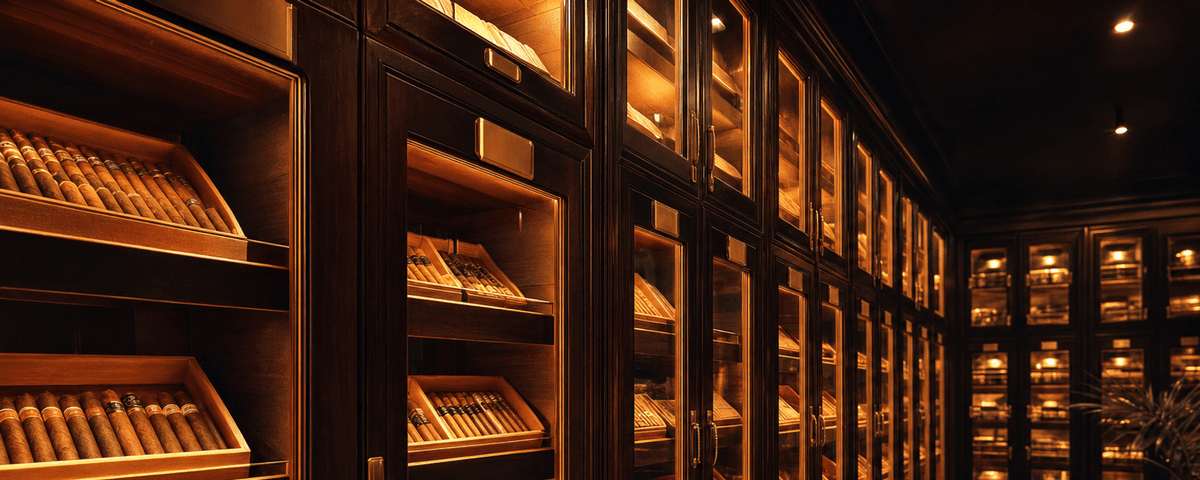
33 座 24 小時恆溫恆濕醇化室
W Cigar Bar 提供的會員醇化空間 · 場地資訊請洽編輯部
雪茄剪 / 打火機 / 雪茄盒 / Boveda
W Cigar 配件官網 · 專營雪茄配件正品
加 LINE 好友 · 文化諮詢
文化空間資訊 · 紳士沙龍 · 私人包場
本網站內容僅供雪茄文化、歷史、收藏與品吸知識研究參考。菸品有害健康、未滿法定年齡者請勿吸菸。實際規範請依所在地法律為準。
吸菸有害健康・戒菸專線 0800-636363・本站僅供 20 歲以上成年人閱覽。
讀到這裡,你不只是路過的人
留下 Email,加入 W 雪茄聖經內圈——總編輯 Wilson Tsai 親選的學院深文與國際新訊,先你一步送到信箱。
· 教育用途非銷售 · 隨時一鍵退訂 · Email 絕不對外公開 · 由勝茄股份有限公司營運
同分類延伸閱讀

資料來源:W Cigar Bible 編輯部整理 · 雪茄王子 Wilson Tsai 親自審稿
本文僅供雪茄文化、歷史、收藏與品鑑知識研究,不作為菸品促銷、銷售或購買建議。吸菸有害健康,未滿二十歲不得吸菸。