雪茄品味的感官探索:如何用心靈感受每一口的韻味
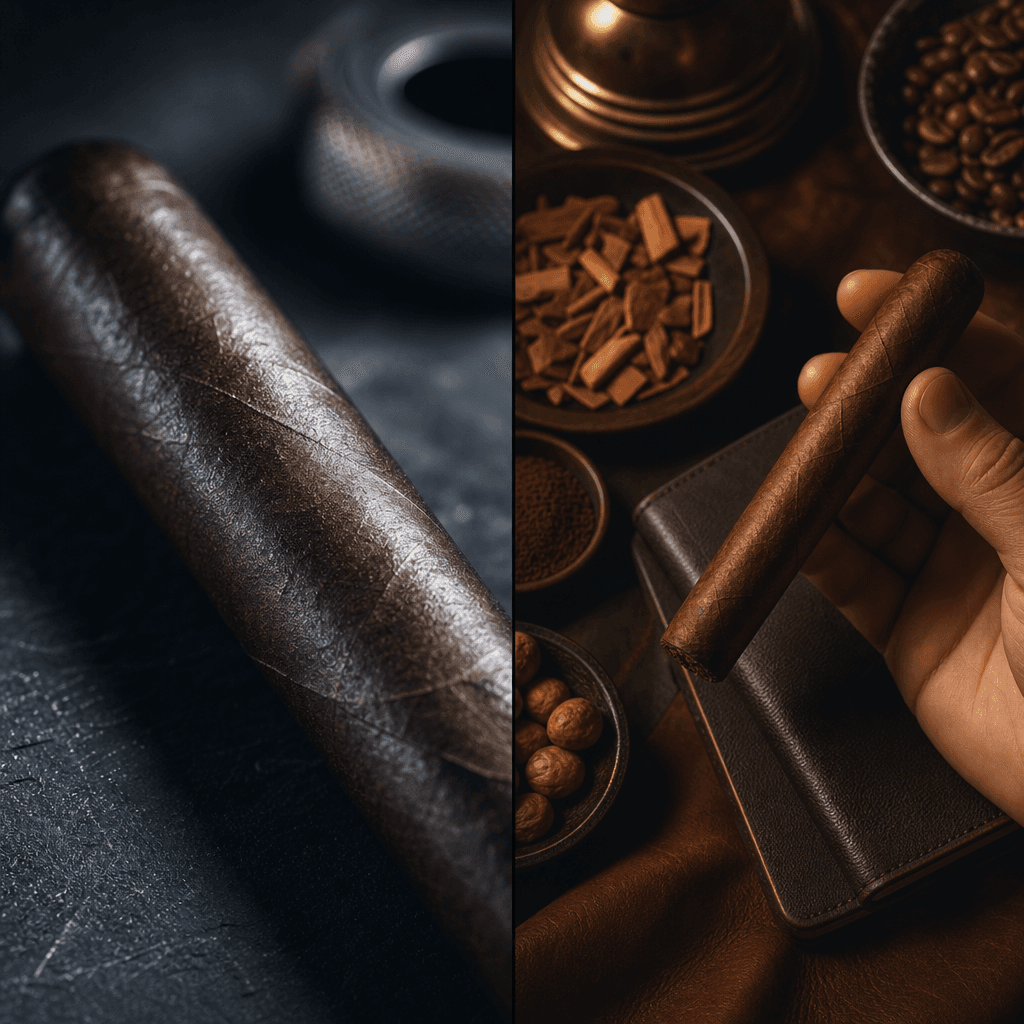
雪茄的品味不僅在於煙霧的吸入與吐出,更在於細膩的感官體驗。初學者應學會如何描述雪茄的風味,包括木質、堅果、皮革等層次。觀察外觀、冷香及味覺結構是提升品味的關鍵。透過視覺了解茄衣狀態,嗅覺捕捉冷香,並將味覺拆分為甜、酸、苦等類別,能幫助建立更深的理解。此外,適當的節奏與搭配也能增強雪茄的風味,讓每一次的品味都成為獨特的經驗。
- 觀察雪茄的外觀特徵,如茄衣、油光和結構,有助於預測其表現。
- 冷香能提供雪茄的第一層線索,建議在點火前花時間聞香。
- 品味雪茄時,應將味覺拆分為甜、酸、苦、鹹、辛等類別,並記錄其變化。
The Sensory Exploration of Cigar Tasting: How to Mindfully Savor Every Puff
The joy of cigars has never been just about inhaling and exhaling smoke. For beginners, the real challenge often lies in "how to describe": the same cigar might be described by some as merely strong or mild, while others can articulate the nuances of wood, nuts, leather, cream, and the differences in aftertaste.
I often view cigars as a quiet sensory exercise. It requires time, rhythm, environment, and etiquette. When you learn to engage your eyes, nose, tongue, and mind together, each puff becomes more than just a taste—it becomes an experience that can be recorded, compared, and recalled.
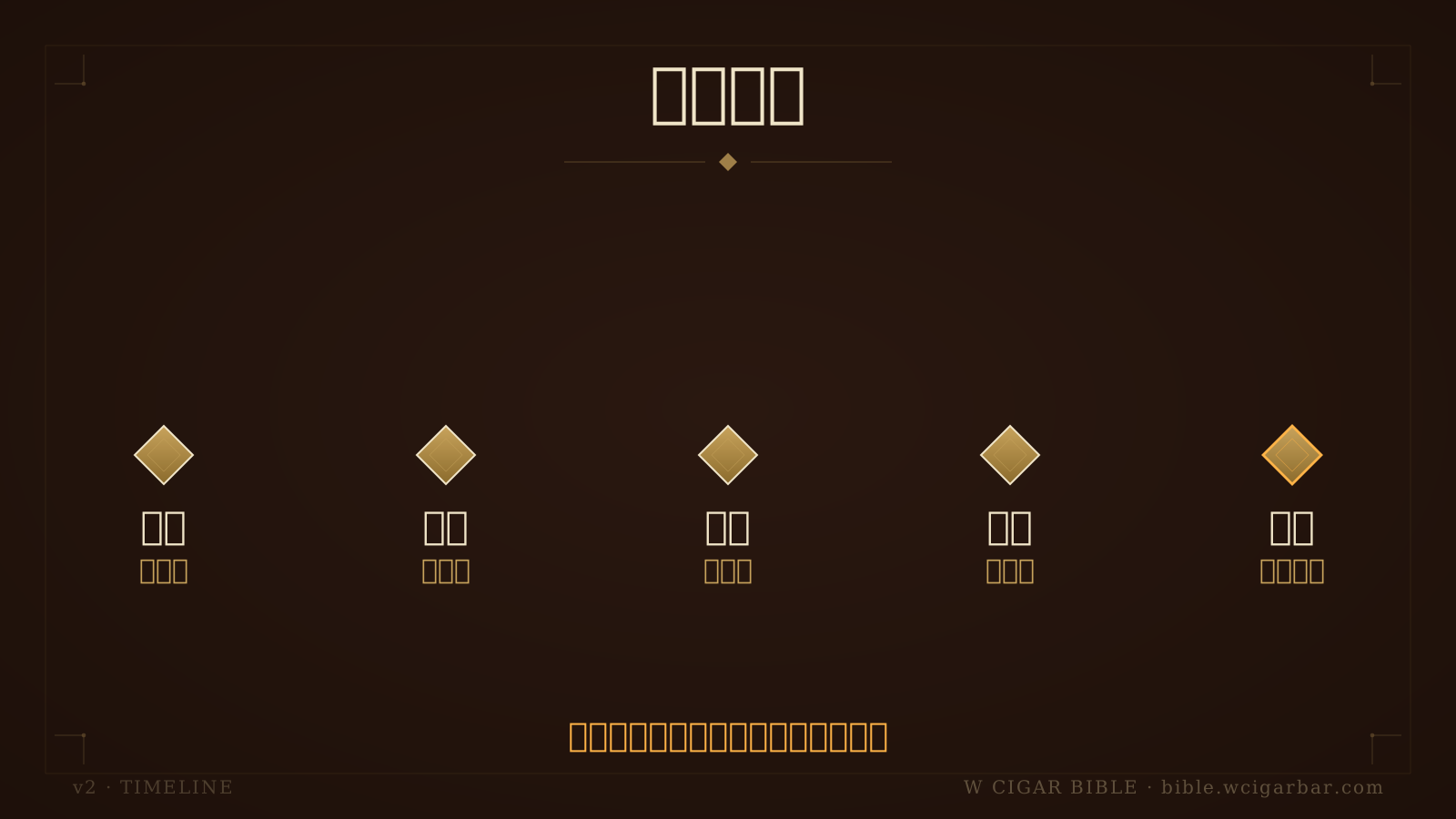
流程圖依序顯示觀察、聞香、點燃、分段與回想五個步驟
Starting with Sight: What the Wrapper, Sheen, and Structure Reveal
A cigar says a lot before it's even lit. Take the Cuban Cohiba Siglo VI, for example, a classic model launched in 2002, with a ring gauge of about 52 and a length of 150 mm. Its wrapper often appears medium to dark brown with a delicate sheen. The sheen doesn't necessarily mean it's better, but it often reflects humidity preservation, leaf maturity, and stability. Conversely, if the surface is cracked or severely mottled, you should be cautious before taking a puff.
When observing a cigar, I look at three things: whether the wrapper is smooth, whether the veins are too coarse, and whether the roll is even. For a Robusto like the Partagás Serie D No.4, approximately 50 ring gauge and 124 mm, if it feels noticeably uneven in firmness when held, it might burn unevenly or have inconsistent draw resistance. Sight is not for judging quality but for helping you anticipate how the cigar might perform.
Beginners often mistakenly equate dark wrappers with "strength." The Maduro color might bring cocoa, molasses, or coffee notes, but strength is still related to the blend, region, fermentation, and rolling. The Nicaraguan Padrón 1964 Anniversary series often gives a robust impression, but similarly dark cigars can become mellow due to aging. Understanding the appearance is to set expectations; the real answers lie with the nose and taste buds.
Olfactory Training: The Honesty of Pre-light Aroma
Many rush to light up, neglecting the pre-light aroma. The cold aroma provides the first clues: the foot often smells of hay, wood shavings, cocoa, or pepper; the wrapper might have leather, earth, honey, or cedar. Take the Montecristo No.2, for example, a brand tracing back to 1935, whose classic torpedo shape often evokes roasted grains, nuts, and a hint of spice. Spending 30 seconds on the aroma before lighting can often give more direction to the subsequent taste.
I recommend keeping a small notebook, categorizing scents into "natural, roasted, spice, sweet, mineral" five categories. Don't strive for fancy words at first; distinguishing between hay and wet earth, almonds and walnuts, black pepper and white pepper is already progress. The 2017 Davidoff 702 Series, with its woody and spicy aroma from the wrapper, can often be overshadowed by smoke intensity if not first captured by the nose.
- Natural: Hay, earth, moss, floral
- Woody: Cedar, oak, pencil shavings, wood chips
- Roasted: Toast, coffee, cocoa, caramel
- Spice: Pepper, cinnamon, clove, cardamom
- Sweet: Honey, molasses, cream, dried fruit
Olfactory sensitivity is not innate but cultivated through categorization and repeated comparison. I often ask beginners to smell two cigars in one evening without smoking, just noting the differences in cold aroma. After more than 10 practices, you'll find your nose starts to remember scents and can even identify which aromas are amplified or transformed by the flame.
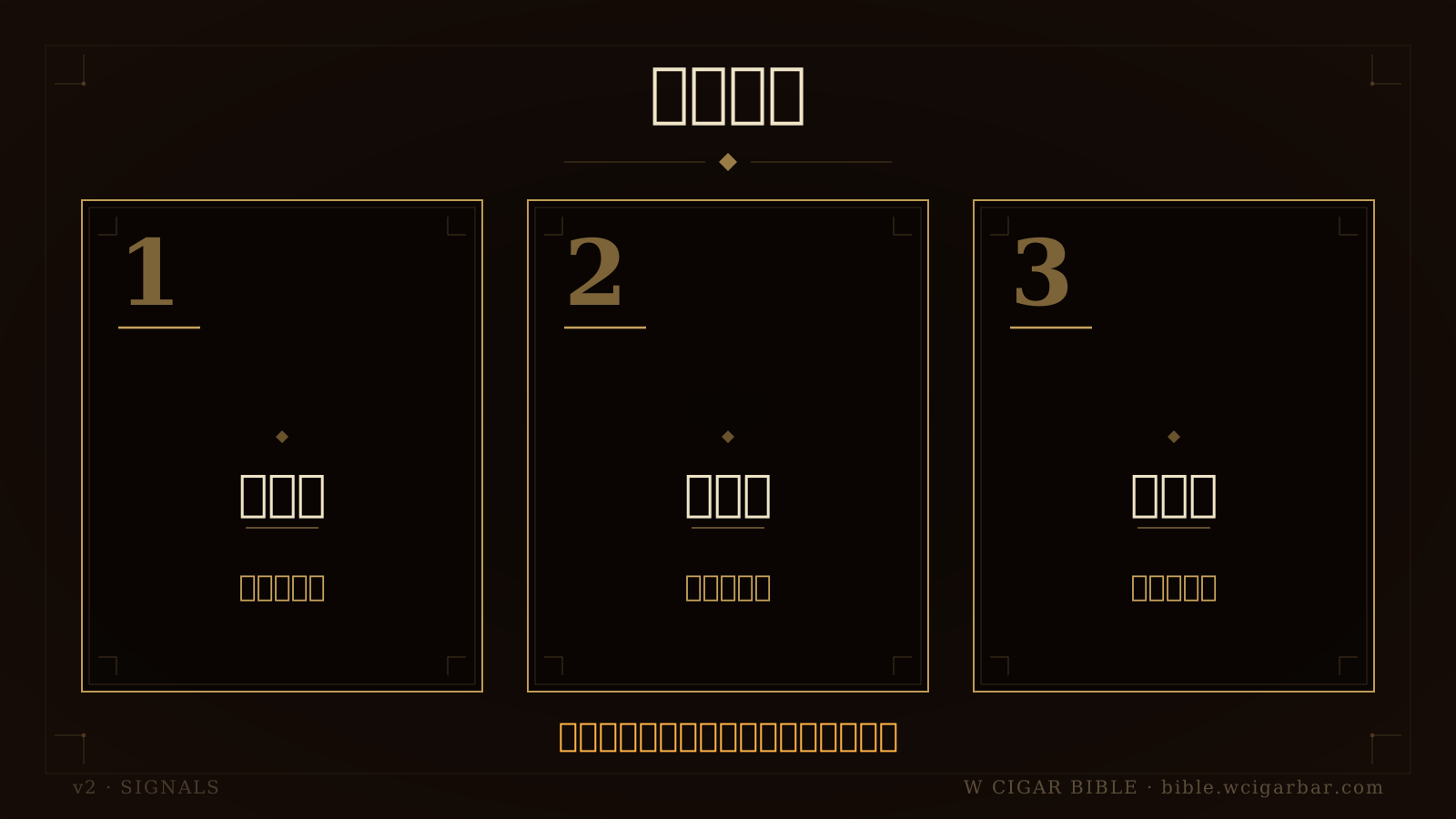
三張卡片呈現看外觀、聞冷香與分段記錄的核心做法
Taste Map: Don't Just Say Strong or Mild, Break It Down into Sweet, Sour, Bitter, Salty, Spicy
Upon tasting, many beginners first say, "This is strong" or "This is smooth." While not wrong, to enhance taste sensitivity, you must break down the experience. Taste can be divided into sweet, sour, bitter, salty, spicy, plus mouthfeel, such as oiliness, dryness, thickness, and astringency. The Hoyo de Monterrey Epicure No.2, about 50 ring gauge and 124 mm, is often considered approachable, suitable for practicing identifying cream, wood, and subtle sweetness.
I use a three-stage recording: the front stage is about 0 to 3 cm, the middle stage about 3 to 7 cm, and the final stage is the remaining part. The front stage often retains the wood and spice after lighting; the middle stage is the most stable and worth detailed reading; the final stage, due to increased temperature, may intensify bitterness, spiciness, and caramelized notes. True tasting is not about finding the most adjectives but about clearly stating where the taste is and how it changes.
| Sensation Type | Possible Descriptions | Practice Method |
|---|---|---|
| Sweet | Honey, molasses, cream, dried fruit | Compare with sugar-free cookies and black coffee then record |
| Sour | Citrus, fermented fruit, wine sour | Note if it increases saliva |
| Bitter | Cocoa, coffee, herbs | Distinguish between pleasant bitterness and charred bitterness |
| Spicy | Pepper, ginger, cinnamon | Observe if it appears on the tongue tip or throat |
| Salty | Mineral, sea breeze, salted nuts | Easier to identify with slow exhalation |
If you find your taste confused, first reduce variables. Don't pair with strong-flavored meals, and don't record immediately after drinking high-alcohol spirits. Observe in 20-minute units; the same cigar at the 10th minute and the 40th minute can be completely different. Breaking down taste into structure helps you know that what you like is not the brand name but a certain balance.

矩陣表比較視覺、嗅覺與味覺在重點、詞彙與記錄法的差異
Rhythm and Breathing: Leave Space Between Each Puff
Cigars are not cigarettes; too fast a rhythm will ruin the flavor. Generally, it's recommended to take a puff every 45 to 90 seconds to maintain a stable burning temperature. If you puff rapidly in succession, the core temperature rises, amplifying bitterness, spiciness, and ammonia, causing the originally delicate nut or floral aroma to disappear. For instance, the Romeo y Julieta Wide Churchills, about 55 ring gauge and 130 mm, can easily seem heavy and unclear in the mid-to-late stages if the rhythm is too fast.
I often practice with the "inhale, pause, exhale, feel" four-beat method. After inhaling into the oral cavity, there's no need to swallow; pause for 2 to 4 seconds, allowing the smoke to contact the tongue and palate, then slowly exhale. After exhaling, don't rush to the next puff; pay attention to whether there are woody, sweet, or spicy notes lingering in the back of the nasal cavity. The details of a cigar are often hidden after exhaling, not at the moment of inhalation.
If you have mastered basic inhalation and exhalation, you can further practice slight nasal retrohaling, but be conservative. Bringing a very small amount of smoke from the mouth through the nasal cavity can amplify woody, spicy, and sweet notes, but too much can irritate the nasal mucosa. Initially, do this 3 to 5 times per cigar, without overdoing it. Especially with high-intensity Nicaraguan cigars like Oliva Serie V, excessive nasal retrohaling can lead to taste fatigue.
Etiquette-wise, don't frequently knock off the ash. Keeping about 1 to 2 cm of ash helps stabilize the burning temperature; however, in public spaces, avoid causing inconvenience by dropping ash. Rhythm is a form of respect: respect for the cigar, respect for those at the table, and respect for your own senses.
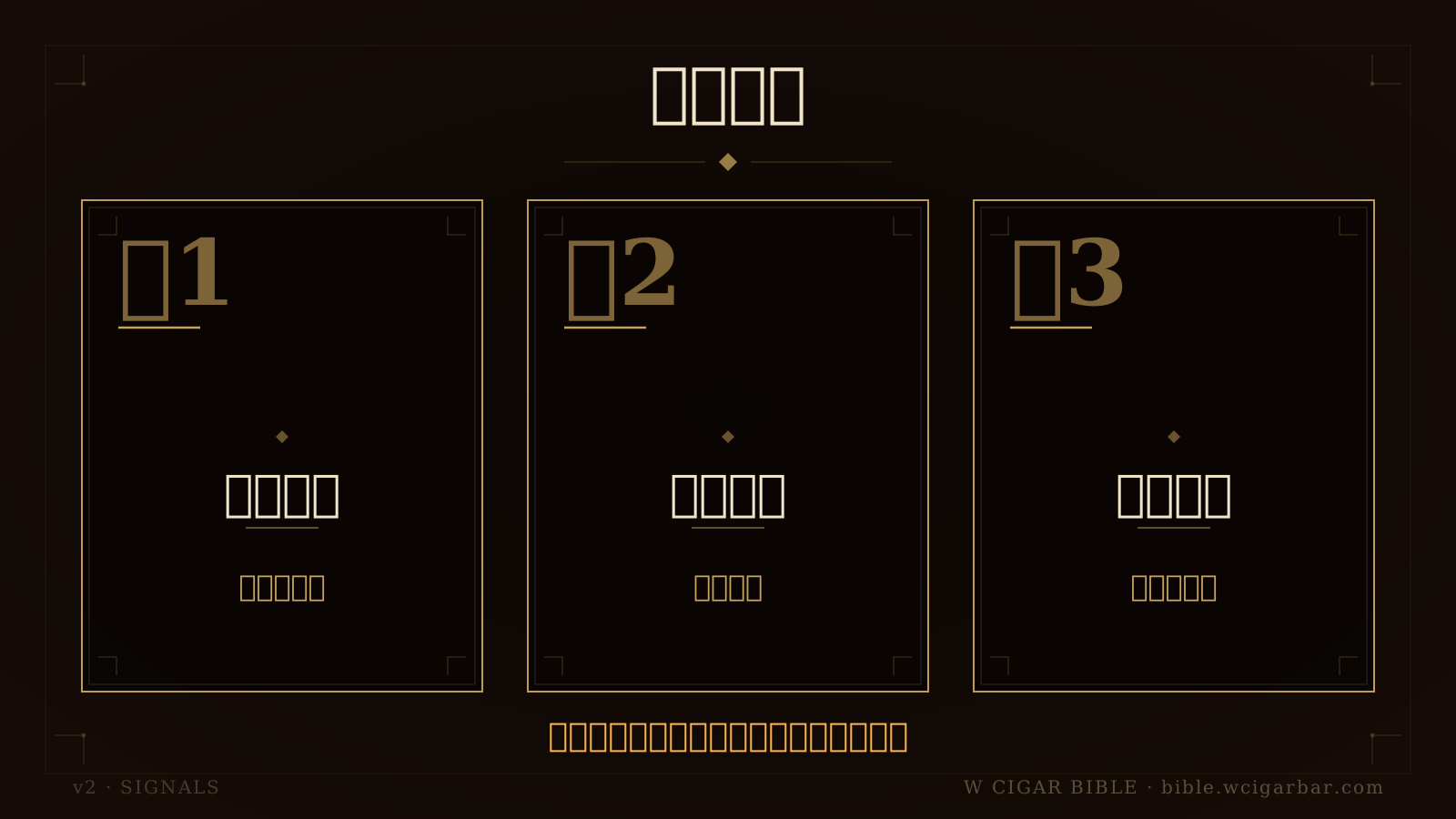
三張提醒卡列出深色即濃、只說濃淡與後段硬抽的誤解
Pairing is Not a Show-Off: Water, Coffee, and Alcohol Should Serve the Flavor
The purpose of pairing is not to steal the show but to clarify the cigar. The safest pairing is actually room temperature water, especially when recording a new cigar, as water can reset the palate without adding too much interference. If choosing coffee, medium-light roast black coffee can highlight wood and nut notes; dark roast coffee tends to enhance bitterness. For instance, the Trinidad Vigía, about 54 ring gauge and 110 mm, when paired with unsweetened cold brew, often makes the cream and roasted grain notes more pronounced.
Alcohol pairing requires more caution. Cognac, rum, and whiskey are common, but when the alcohol content exceeds 40%, the tongue can become numb, making it harder for beginners to discern details. If you want to practice, you can slowly compare with a small amount of 15 ml, rather than filling the glass at the start. Since the 1990s, many cigar enthusiasts have enjoyed pairing medium-strength cigars with sweet and smooth rums like Zacapa 23, as the molasses and vanilla notes easily complement the sweetness of the wrapper.
When pairing, I ask three questions: Does it make the cigar sweeter, more bitter, or drier? Does it lengthen or shorten the aftertaste? Does it cover the original main flavor? A good pairing is like lighting, illuminating the flavor; a bad pairing is like noise, making it hard to hear the cigar itself.
Beginners can first establish fixed combinations, such as a medium-strength Robusto paired with room temperature water, then try black coffee the second time, and low-sweetness rum the third time. After recording all three, you'll know whether you like the cigar itself or the enhancement brought by the pairing. This comparison is more valuable than blindly chasing high-score reviews.
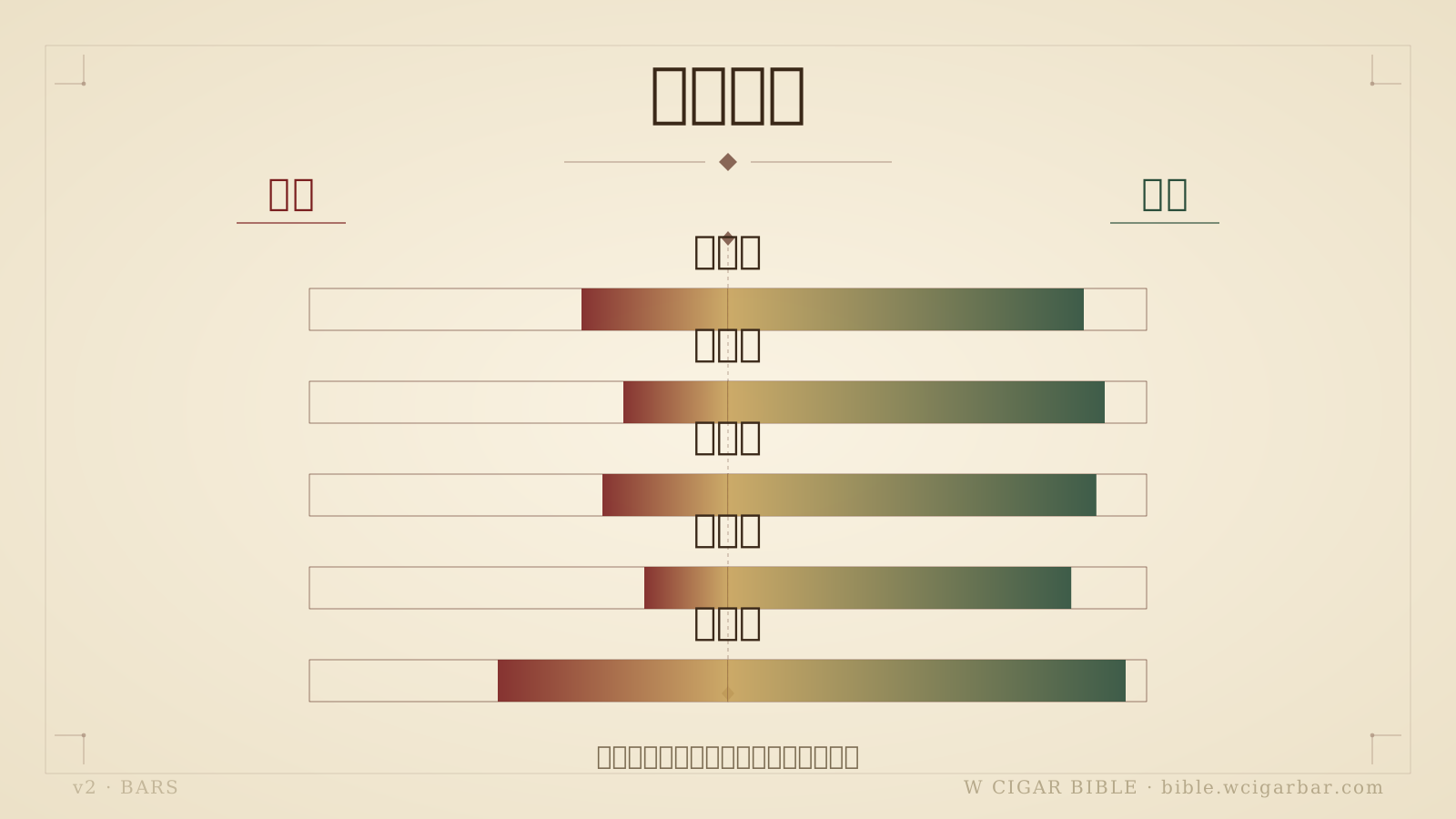
長條圖以五個軸線比較新手與老手在感官練習上的差異
Environment and Storage: Humidity and Temperature Change Everything You Perceive
The same cigar in different storage conditions can seem like two different versions. The common recommendation is a relative humidity of 65% to 70% and a temperature of about 18 to 21°C. If the humidity is too high, the draw might become tight, the smoke thick but dull, and the sweetness unclear; if too dry, the burn is too fast, the taste sharp, and the wrapper might crack. Cuban cigars, often discussed in PCC authorized dealer channels, especially need a stable environment, as leaf and rolling differences are magnified under humidity fluctuations.
I saw a customer store a box of 2018 Bolívar Belicosos Finos at 75% humidity for nearly half a year, and he always found it spicy and with heavy draw resistance. Later, adjusting to 66% to 67% and letting it sit for about 6 weeks, the wood, coffee, and leather notes became much clearer. This isn't magic; it's the moisture balance returning to a suitable range for burning. Storage is not warehouse management but flavor management.
The environment also includes where you smoke. Direct air conditioning can cause uneven burning, outdoor strong winds can raise burning temperature, and aromas can be blown away. If in a legal indoor space, it's best to maintain ventilation but not strong wind; if outdoors, try to avoid windward spots. Sensory appreciation requires stable conditions, just like listening to music needs a quiet background; otherwise, you might think the cigar is bad, but it's actually the environment that's too noisy.
As for aging, you can't just look at the year. A well-preserved 5-year-old cigar might be more beautiful than a 12-year-old cigar kept in high temperature and humidity. When it comes to collection appreciation, I always remind: collection appreciation does not guarantee appreciation, it still depends on source preservation and market. The year is a reference; the condition is the core.
Etiquette and Mindset: The Details of a Mature Cigar Enthusiast Are in the Quiet Places
Cigar etiquette is not about rigid rules but about making yourself and others comfortable. When cutting the cap, don't cut too deep; usually, cutting off about 1 to 2 mm of the cap top is sufficient. When lighting, first toast the foot edges evenly, then rotate evenly, avoiding direct long-term burning of the foot. If using a torch, keep a distance of about 2 to 3 cm, which is more stable than sticking the flame directly. The way you light a cigar often determines whether the first 10 minutes of flavor are clean.
In social settings, the most important thing is not to turn your preferences into dogma. Some like the woody and herbal notes of Cuban cigars, some like the smoothness of Dominican cigars, and others love the rich spices of Nicaraguan cigars. You can share your feelings but don't correct everyone's adjectives. For works like the Arturo Fuente Don Carlos, with sweet wood and delicate spice, some say it resembles cinnamon, others say cedar, both can be valid because sensory memory inherently has personal backgrounds.
Mindset is equally crucial. Fatigue, hunger, just eating spicy food, a cold, or even stress that day can alter taste perception. If you want to seriously record, it's best to choose 30 to 60 minutes after a meal when your mouth is clean and your mind is stable. Also, don't smoke too many cigars in one evening; after the second one, taste sensitivity often declines, and strength judgments can become inaccurate.
A truly mature cigar enthusiast doesn't know the most brands but knows when to slow down, when to stop, and when to remain silent. The charm of cigars lies in the need for mental space; the more you rush to grasp it, the more it slips through your fingers.
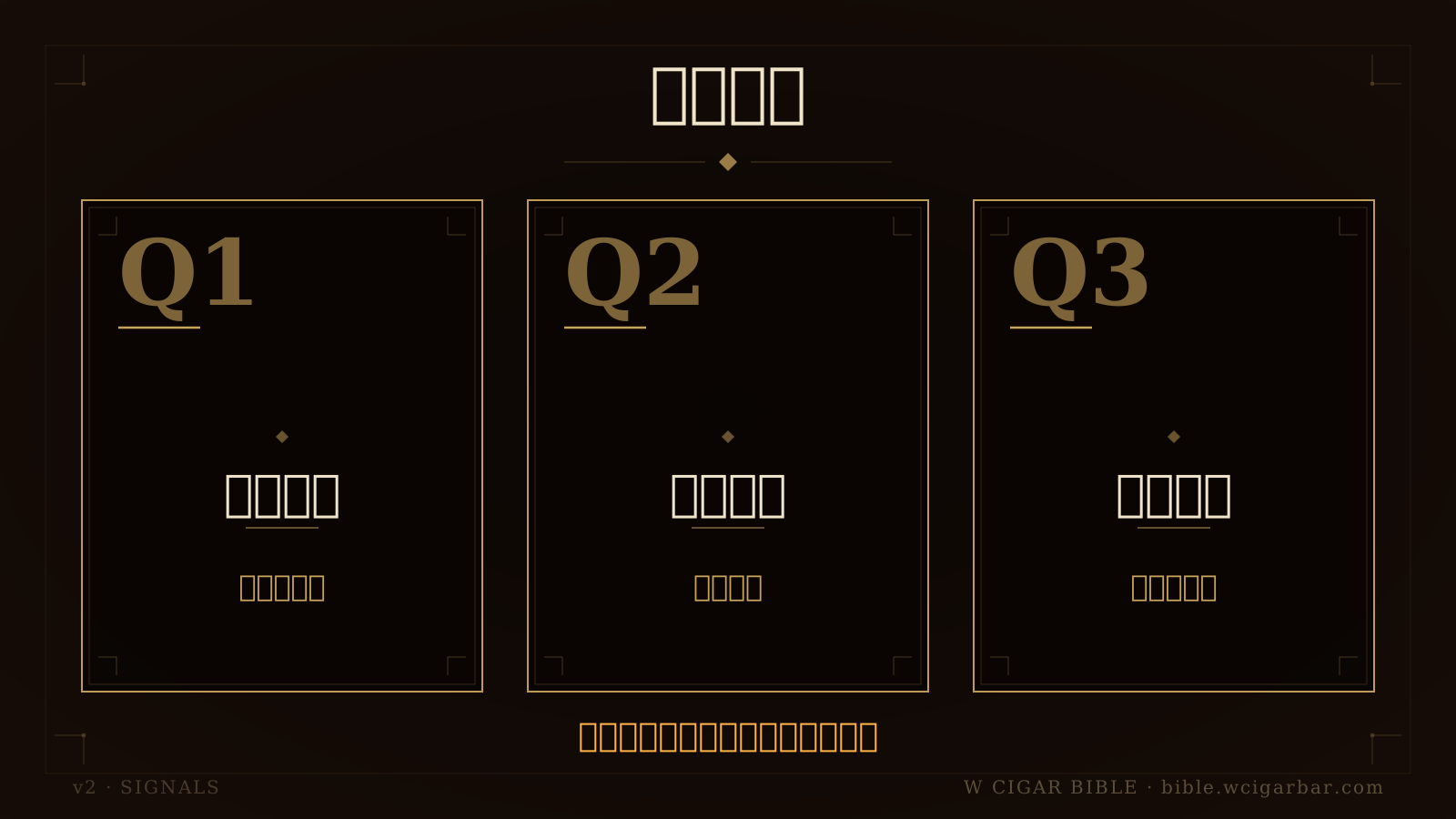
問答卡整理只聞煙味、後段變苦與是否必配烈酒三個問題
Building Your Flavor Notes: Develop Judgment with 30 Cigars
I recommend beginners use 30 cigars to establish their first flavor notes, rather than relying solely on memory. These 30 can be divided into three groups: 10 Cuban, 10 Dominican, and 10 Nicaraguan or Honduran. Record each cigar's brand, size, box date or purchase year, storage humidity, lighting time, smoking time, changes in the front, middle, and final stages, and paired drinks. By the 15th cigar, you'll start to discover your preference clearly emerging.
Notes don't have to be artsy; the more specific, the better. For example, "2021 box date H. Upmann Magnum 46, 46 ring gauge, 143 mm, stored at 66% humidity for 2 months; front stage cedar and cream, middle stage nut increases, final stage white pepper noticeable, total time 75 minutes." Such a record is more helpful for future comparisons than "good smoke, smooth, fragrant." Feelings that can be recorded have the chance to be trained; experiences that can be compared will become taste.
You can also design fixed scoring, but don't let scores hijack your feelings. I often use 5 items each with 10 points: appearance, burn, draw, flavor complexity, aftertaste balance. The total score is just an index; the real importance is in the words. If a cigar has a burn score of only 6 but a flavor score of 9, you'll know it's still worth studying; if it looks beautiful but the aftertaste is short, you don't have to be led by its fame.
After 30 cigars, look back at the first note, and you'll laugh at how few words you had; this is a good thing. Sensory growth isn't a sudden enlightenment but a gradual clarification. When you can say, "I like the roasted almond sweetness in the middle stage but dislike the increased bitterness in the final stage," you've moved from beginner to true personal style.
Frequently Asked Questions
Q1: I can only smell smoke, not wood or nuts, is that normal?
Very normal. The sense of smell requires a database, which comes from life experiences. You can regularly smell coffee beans, cocoa powder, cedarwood chips, black pepper, nuts, and leather weekly, and record with the same set of vocabulary. Don't rush for complex descriptions; stabilizing the differentiation of general directions is key.
Q2: If a cigar becomes bitter in the final stage, is it of poor quality?
Not necessarily. The final stage's increased temperature and tar accumulation naturally elevate bitterness. If the front and middle stages are normal, and only the final stage becomes noticeably bitter, it might just be the rhythm is too fast or it's nearing the point to stop. Generally, when about 3 to 4 cm remains and the flavor deteriorates, it's time to gracefully conclude.
Q3: Is it suitable for beginners to start with large ring gauges?
Large ring gauges like 54 or 56 have cooler smoke and slower burn, which can be friendly to some; however, the large smoke volume might make it difficult to manage the rhythm. A Robusto with a 50 ring gauge, about 124 mm, is a good practice size, with a duration of about 45 to 70 minutes, offering sufficient variation without being too long.
Q4: Why do different years of the same brand vary greatly, and how should I judge?
First, confirm storage, then discuss the year. Box date, humidity, temperature, and transportation conditions all affect performance. The same cigar from 2008, 2015, or 2020, if stored differently, can have vastly different flavors. Aging can bring smoothness, but the premise is stable conditions.
Q5: Is it necessary to pair with spirits to understand cigars?
No. Room temperature water, unsweetened tea, and black coffee can all help you understand cigars more clearly. Spirits are an option, not a threshold. If alcohol numbs the tongue, heats the throat, and confuses the aftertaste, it means it's temporarily unsuitable for that cigar or your state that day.
Q6: How to avoid appearing rude in social situations?
First, respect space regulations and others' feelings, don't light up where it's inappropriate; talk about flavors with a sharing rather than judging tone; don't ridicule others' descriptions, and don't force others to accept your preferences. The true charm of cigar culture lies in restraint, patience, and grace.
For me, the most precious aspect of cigars is not how rare the label is, nor how many points others give, but that it slows you down. As the editor of "Cigar Bible," I've seen too many people chase lists, forgetting their own feelings. Please treat each puff as a conversation with time: see it, smell it, understand it, and understand yourself at the moment. The deeper the taste, the more humble the posture; the more you understand cigars, the more you know the answer often lies in silence. —Cigar Prince Wilson Tsai
Smoking is harmful to health. Under 20 years old is prohibited from smoking. Quitline: 0800-636363. This article is for adults over 20 years old as a reference for cigar culture, storage, and regulations knowledge, not a tobacco advertisement, promotion, or purchase suggestion.
Like this article?Share with friends
Share this W Cigar Bible piece with friends who want to learn cigar culture, storage, and tasting.
想把這篇 化為實踐
雪茄聖經是知識;雪茄文化要在空間裡發生

W Cigar Bar 大安總店資訊
台北大安區 · 雪茄聖經總編輯 Wilson Tsai 主理的雪茄文化空間
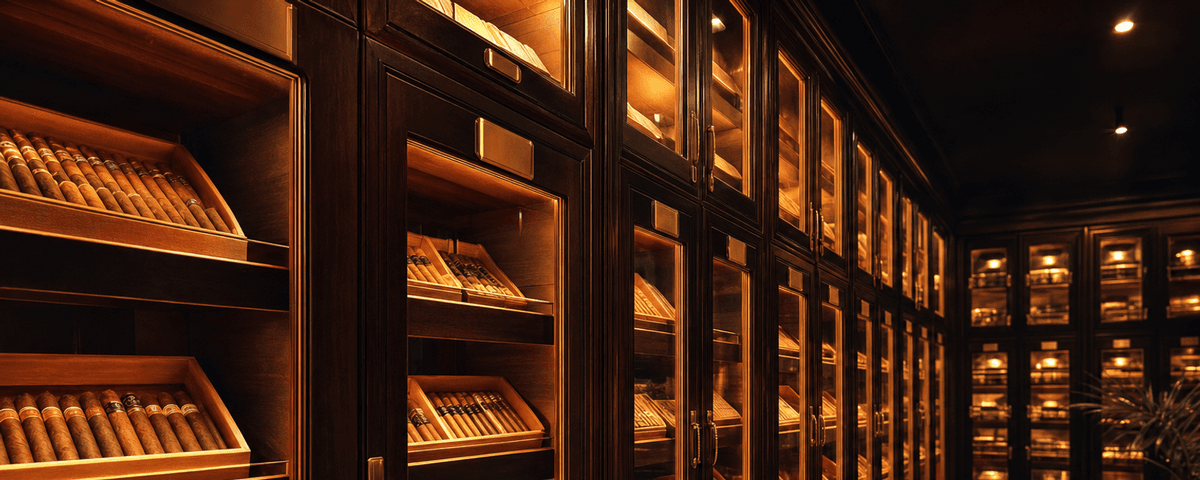
33 座 24 小時恆溫恆濕醇化室
W Cigar Bar 提供的會員醇化空間 · 場地資訊請洽編輯部
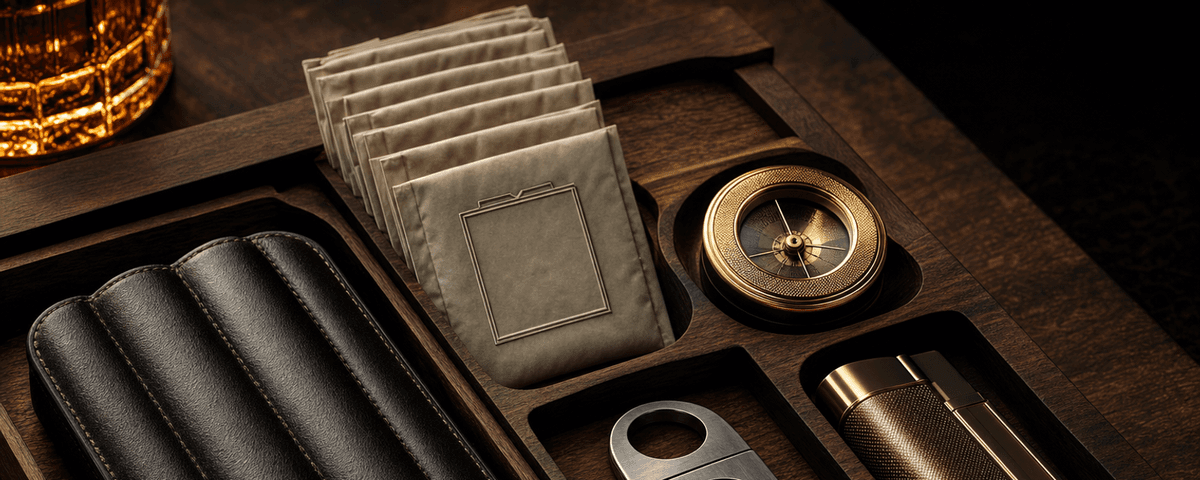
雪茄剪 / 打火機 / 雪茄盒 / Boveda
W Cigar 配件官網 · 專營雪茄配件正品
加 LINE 好友 · 文化諮詢
文化空間資訊 · 紳士沙龍 · 私人包場
本網站內容僅供雪茄文化、歷史、收藏與品吸知識研究參考。菸品有害健康、未滿法定年齡者請勿吸菸。實際規範請依所在地法律為準。
吸菸有害健康・戒菸專線 0800-636363・本站僅供 20 歲以上成年人閱覽。
讀到這裡,你不只是路過的人
留下 Email,加入 W 雪茄聖經內圈——總編輯 Wilson Tsai 親選的學院深文與國際新訊,先你一步送到信箱。
· 教育用途非銷售 · 隨時一鍵退訂 · Email 絕不對外公開 · 由勝茄股份有限公司營運
同分類延伸閱讀

資料來源:W Cigar Bible 編輯部整理 · 雪茄王子 Wilson Tsai 親自審稿
本文僅供雪茄文化、歷史、收藏與品鑑知識研究,不作為菸品促銷、銷售或購買建議。吸菸有害健康,未滿二十歲不得吸菸。