雪茄的生長環境與風味特徵:從土壤到煙葉的影響
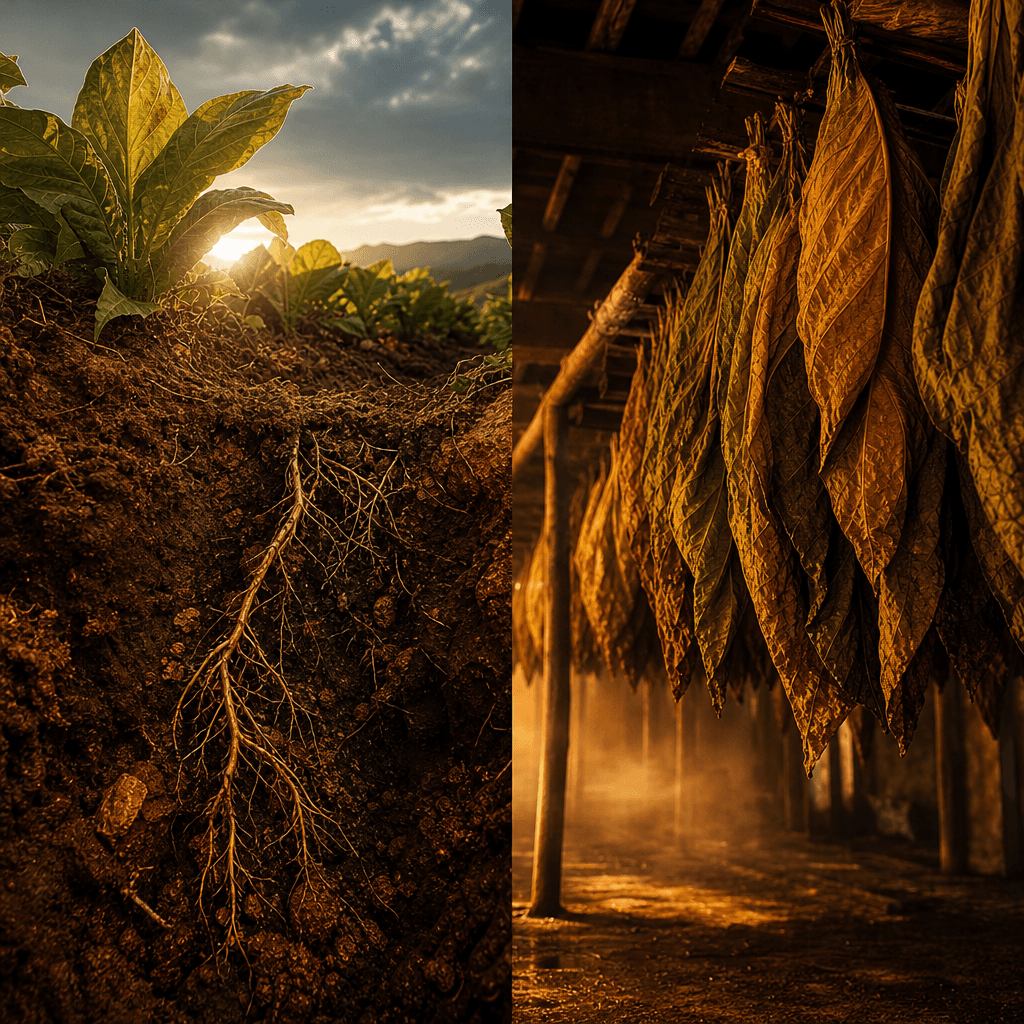
雪茄的風味受多種因素影響,並非僅由品牌決定。土壤的礦物質、排水性及甜度是風味的基礎,古巴的Vuelta Abajo以其高鐵含量的紅褐色壤土著稱。氣候變化也影響煙葉的糖分和厚度,特定年份的氣候條件會影響煙葉的品質與風味。地形和海拔則影響成熟速度,進而改變香氣的表現。不同產區的煙葉各具特色,需綜合考量葉位、遮陰及採收方式,才能深入理解雪茄的風味層次。
- 雪茄的風味受土壤、氣候和地形影響,需了解這些因素才能精確判斷其特性。
- 不同年份的煙葉會影響雪茄的甜度和辛香,老手應記錄購買年份與開盒時間。
- 同一株煙草的不同葉位會影響香氣與力量,老手需關注葉位與採收節奏。
The Growing Environment and Flavor Characteristics of Cigars: From Soil to Tobacco Leaves
The flavor of cigars is never solely determined by the brand label. As the editor of the "Cigar Bible," I often remind veterans: the same brand and size can have noticeable differences in sweetness, mineral notes, spiciness, and aftertaste if the tobacco leaves come from different years or fields.
A truly advanced understanding is to view cigars as a convergence of agricultural products and craftsmanship. Soil provides the framework, climate sets the rhythm, terrain determines the maturity speed, and fermentation and aging transform raw power into recognizable layers.
時間軸呈現土壤氣候地形發酵醇化的流程
Soil: The Underlying Syntax of Minerals, Drainage, and Sweetness
The soil of a cigar field is not simply about being "fertile" but about balancing drainage, water retention, and mineral content. Cuba's Vuelta Abajo is often discussed by veterans, partly because its reddish-brown soil is high in iron and has stable drainage, often imparting dry wood, leather, cocoa, and slightly salty mineral notes to the matured tobacco leaves. Soil is not the background; it is the first layer of the flavor structure's syntax.
Comparing Nicaragua's Estelí, Jalapa, and Condega regions makes the differences more intuitive. Estelí's volcanic soil is heavier, drains quickly, and has a high mineral density, often giving tobacco leaves a peppery, strong coffee, and robust texture; Jalapa, with higher altitude and softer soil, shows noticeable sweetness, often with creamy, nutty, and dried fruit notes; Condega falls in between, with herbal, woody, and mid-range spice characteristics.
Take Padrón 1964 Anniversary and 1926 Serie as examples; many versions use Nicaraguan tobacco leaves, with a very distinct balance of strength and bittersweetness. If veterans only say "Nicaragua is strong," it's not precise enough; Estelí's linear strength, Jalapa's sweetness, and Condega's herbal support are the keys to judging the depth of a blend. Understanding the soil is essential to understanding the flavor differences within the same country.
三張卡整理土壤氣候地形對風味的影響
Climate: Sunlight, Rainfall, and Yearly Differences
Tobacco leaves are extremely sensitive crops; the amount of sunlight affects sugar accumulation, and rainfall changes leaf thickness and burning stability. Cuba, Nicaragua, the Dominican Republic, and Honduras are all located in tropical or subtropical zones, but their annual rainfall distribution varies. In regions with distinct wet and dry seasons, continuous rain before harvest increases the water content of the tobacco leaves, requiring more precise control during drying and fermentation.
Years also leave marks. Hurricane Mitch in 1998 caused severe agricultural damage in Central America, affecting many fields in Honduras and Nicaragua; the consecutive hurricanes Eta and Iota in 2020 also put pressure on drainage and storage management in some regions. Such years do not necessarily indicate low quality but mean that raw material acquisition, selection, and blend adjustments become more crucial.
When veterans compare brands like Cohiba, Montecristo, Partagás, or My Father, Oliva, Plasencia, they might note the purchase year and box opening time. If the same product shows more pronounced grassy, acidic, or unstable burning in certain batches, it may relate to the harvest season's climate, drying cycles, and storage moisture management. Climate determines the rhythm of tobacco leaves; good years provide leeway, challenging years test leaf selection and blending skills.
表格比較埃斯特利哈拉帕孔德加三地風格
Terrain and Altitude: How Maturity Speed Changes Aroma
Terrain alters temperature differences, wind speed, and sunlight angles, further affecting the maturity speed of tobacco leaves. Higher altitude fields receive ample sunlight during the day and cooler temperatures at night, resulting in slower-growing tobacco leaves with more refined sugar and aromatic compounds. Some fields in the Dominican Republic's Cibao Valley often exhibit milder, cleaner tobacco with woody and floral expressions, closely related to its valley terrain and stable climate.
In contrast, low-altitude and high-heat fields mature tobacco quickly, with thicker leaves and stronger nicotine content, suitable for creating powerful blends. Fuente Fuente OpusX gained attention in the mid-1990s, focusing on whether the Dominican Republic could produce high-quality wrapper leaves; it became notable around 1994, backed by field selection, shading management, and long-term agricultural accumulation.
Wind is also part of the terrain. Excessive wind can coarsen leaves and damage edges; moderate ventilation can reduce disease and help even maturity. Hillsides, valleys, and river terraces may seem like mere map locations but actually influence leaf oiliness, vein thickness, and burn line. Altitude is not about being higher; it's about whether the maturity speed can bring aroma density and burning stability.

三張卡列出同款深色國名判斷的常見誤區
Comparing Major Production Areas: Don't Judge by Country Name Alone
Using country names to classify flavors is convenient but can oversimplify. Cuba is often described as earthy, leathery, bean-like, and hay-scented; Nicaragua is said to be rich, peppery, and cocoa-like; the Dominican Republic often shows woody, creamy, and floral notes; Honduras brings nutty, earthy, and herbal characteristics. However, each country has multiple fields, and brands use different leaf positions and fermentation levels to modify styles.
| Production Area | Common Flavor Tendencies | Representative Brands or Series Examples | Veteran Observation Points |
|---|---|---|---|
| Cuba Vuelta Abajo | Leather, hay, bean aroma, minerals | Cohiba, Partagás, H. Upmann | Size and batch differences are significant |
| Nicaragua Estelí | Black pepper, strong coffee, cocoa | Padrón, My Father, Oliva | Balance of strength and bittersweetness |
| Nicaragua Jalapa | Dried fruit, cream, soft sweetness | Plasencia, some Drew Estate blends | Is the sweetness clean? |
| Dominican Republic Cibao | Woody, floral, nutty | Arturo Fuente, Davidoff | Fineness and mid-range changes |
| Honduras Jamastrán | Earthy, herbal, roasted nuts | Camacho, Alec Bradley | Clean burning and aftertaste |
Production area styles can only be a starting point, not a conclusion. For example, Davidoff often presents elegant balance with Dominican tobacco leaves, but the Nicaragua series shows more pronounced spiciness and strength; Camacho's Honduran character is strong but can change sweetness and thickness with different wrappers. Veterans should truly practice reading "production area + leaf position + wrapper + year" together.
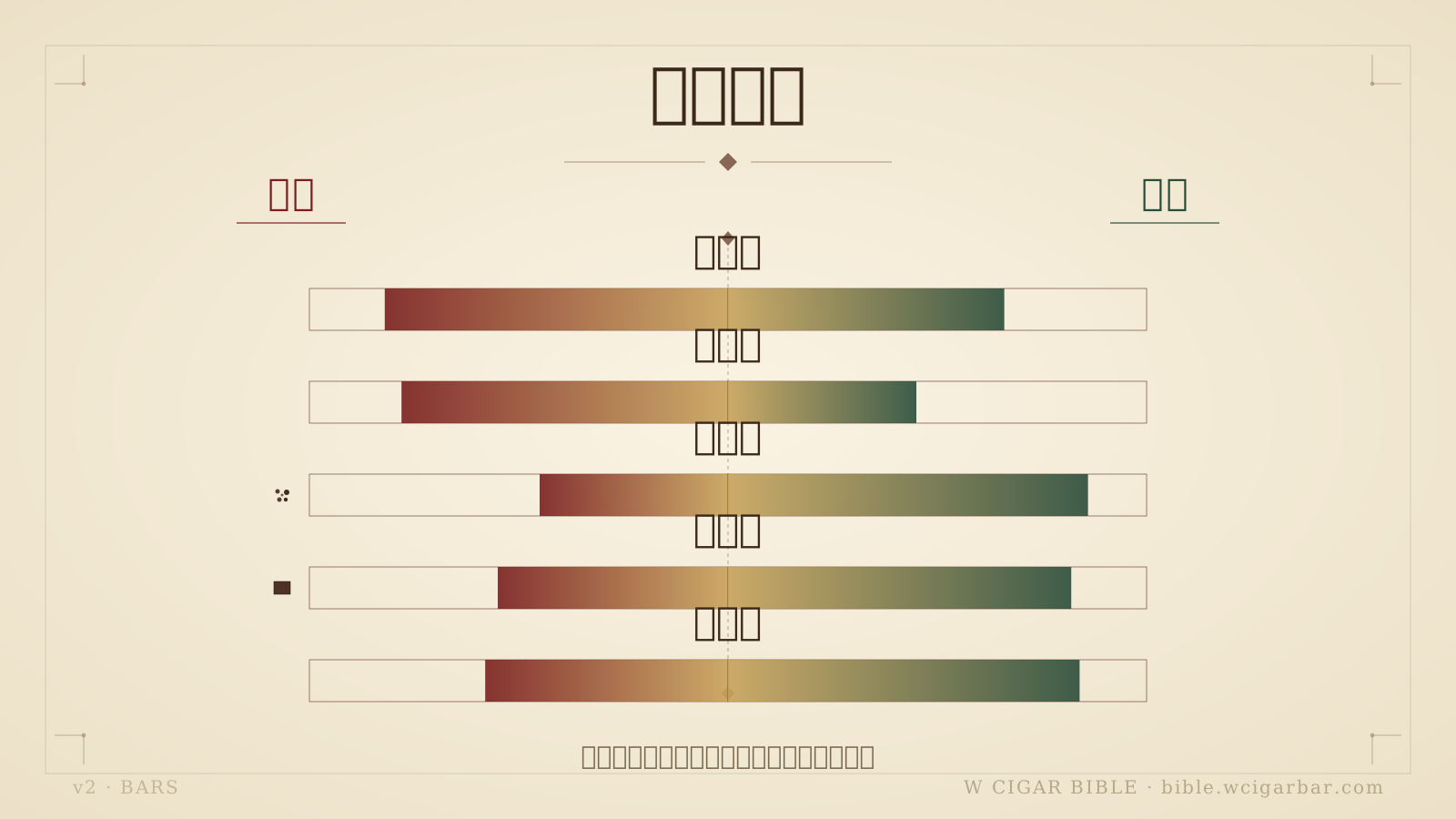
橫條比較古巴與尼國在礦物胡椒等軸向強度
Leaf Position, Shading, and Harvesting: Different Characters from the Same Tobacco Plant
The character of leaves from the same tobacco plant varies greatly from bottom to top. Volado is mostly at the lower level, with good burning properties and lower strength; Seco is in the middle, usually showing the most aromatic expression; Ligero is at the top, receiving the most sunlight, with higher nicotine and thickness, often responsible for strength and aftertaste. Many rich blends are not solely due to heavy fermentation but are caused by the proportion of Ligero and the source field.
Wrapper leaves emphasize appearance, elasticity, and oiliness. Connecticut Shade uses shaded cultivation, with lighter leaf color and often creamy, woody, and grainy flavors; Ecuador Habano, due to cloud and high-altitude conditions, reduces the need for artificial shading, presenting spice, red pepper, and slightly sweet woody notes; San Andrés Maduro from Mexico often has dark chocolate, earthy, and molasses characteristics.
Harvesting is not done all at once. High-quality tobacco leaves are usually harvested in layers, picking mature leaves every few days, allowing upper leaves to continue accumulating. If harvested too early, the aroma is thin and green; too late, it may be coarse and have burning pressure. Veterans should not only look at the wrapper color; leaf position and harvesting rhythm are the core sources of strength, aroma, and burning.
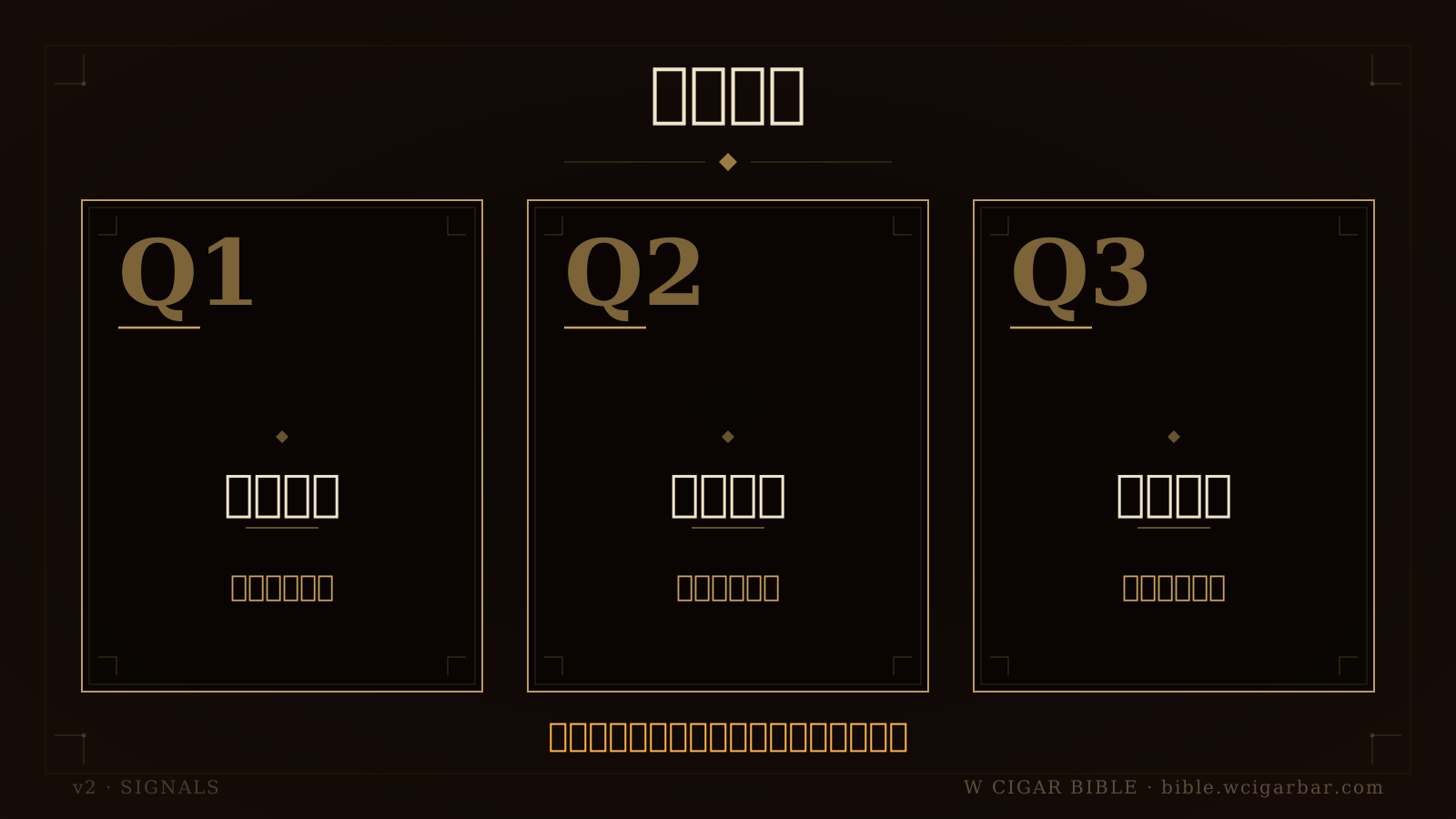
三張問答卡回答同款差異濕度與產區辨識
From Field to Warehouse: How Fermentation and Aging Refine Terroir
The flavor of tobacco leaves continues to change after leaving the field. The control of temperature and humidity in drying sheds determines whether chlorophyll decomposition is clean; if the fermentation pile's temperature is too high, delicate aromas may be lost, if insufficient, ammonia and sharpness may remain. Large factories often use multiple turning, grading, and humidity monitoring to reduce risks, while small boutique factories rely on the master's experience to judge leaf texture and aroma.
Taking Maduro wrappers as an example, dark does not simply mean "stronger." High-quality Maduro requires sufficient thickness and sugar content, undergoing longer fermentation to develop black chocolate, coffee, molasses, and earthy sweetness. Pursuing color alone can easily result in bitter, sour, or uneven burning. The increased demand for Maduro in the American market after 2000 has also led many brands to pay more attention to leaf source stability and grading.
Aging is like tuning the sound. Freshly produced cigars may have strong aroma tension but harder edges; with proper temperature and humidity storage, ammonia decreases, and wood, nut, leather, and sweetness become more integrated. However, collecting for value appreciation does not guarantee appreciation; it still depends on source preservation and market. Terroir determines the original character, fermentation, and aging determine whether it can become mature and orderly flavor.
Frequently Asked Questions
Why is there a difference between different boxes of the same brand?
Cigars are agricultural products, and batch differences cannot be completely eliminated. Field, year, leaf position, fermentation batch, and storage conditions all affect performance. The stability of the same cigar comes from strict grading, not from being completely identical.
Does a dark wrapper always mean it's stronger?
Not necessarily. Darkness may come from variety, fermentation level, or wrapper processing method; true strength depends on Ligero proportion, filler source, and overall blend. Maduro often carries bittersweetness but is not necessarily stronger.
What is the biggest flavor difference between Cuba and Nicaragua?
In general, Cuba often exhibits bean aroma, leather, hay, and mineral notes; Nicaragua often shows pepper, cocoa, coffee, and robust texture. But country names are just rough classifications, with fields and batches being more important.
How do veterans train for production area recognition?
It is recommended to compare cigars of the same size and different production areas in a fixed environment and humidity. Recording the sweetness, spiciness, woodiness, mineral, and burning performance of the first third, middle, and final third is more reliable than a single impression.
Does humidity change flavor judgment?
Yes. Too humid can be stuffy, bitter, and slow-burning; too dry can be spicy, hot, and short on aroma. I prefer observing most handmade cigars at about 65% to 69% relative humidity, then adjusting slightly based on wrapper thickness.
What should be most noted when collecting?
Source, temperature, humidity, and records. Mark purchase time, box code or batch, storage humidity, and each flavor change to judge aging direction; collecting for value appreciation does not guarantee appreciation, still depends on source preservation and market.
The most fascinating aspect of cigars is that they incorporate land, seasons, hands, and time into a slender creation. I've seen many veterans chase rare labels but overlook fields and leaf positions; I've also seen those who truly understand, who can trace back to the tobacco leaf's origin just by the burning rhythm and aftertaste. For me, learning about cigars is not about memorizing answers but turning every tasting into a reading of terroir. —Cigar Prince Wilson Tsai
Smoking is harmful to health. No smoking under twenty years old. Quitline: 0800-636363. This article is for reference by adults over twenty years old for cigar culture, preservation, and regulatory knowledge, not a tobacco advertisement, promotion, or purchase suggestion.
Like this article?Share with friends
Share this W Cigar Bible piece with friends who want to learn cigar culture, storage, and tasting.
想把這篇 化為實踐
雪茄聖經是知識;雪茄文化要在空間裡發生
W Cigar Bar 大安總店資訊
台北大安區 · 雪茄聖經總編輯 Wilson Tsai 主理的雪茄文化空間
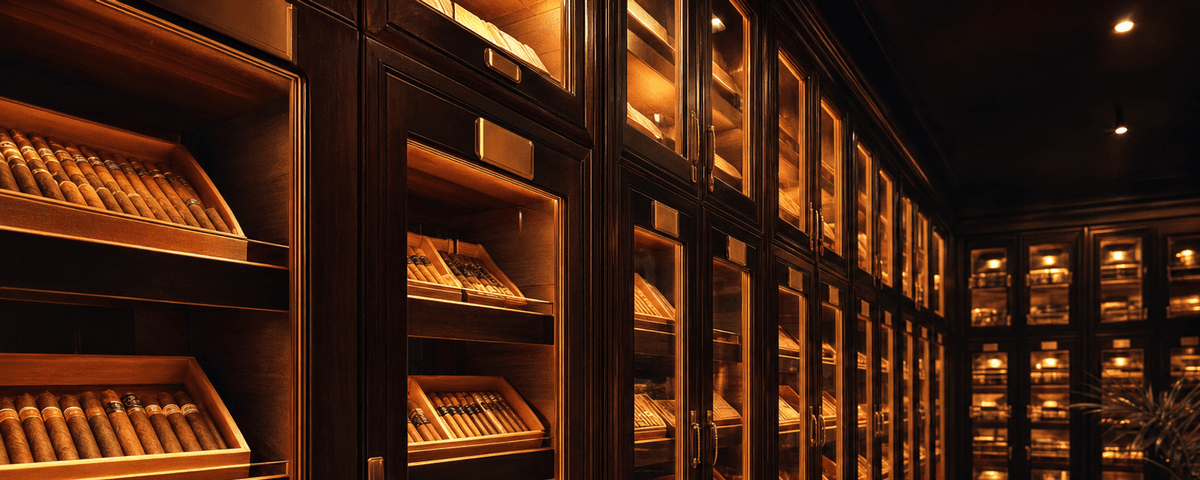
33 座 24 小時恆溫恆濕醇化室
W Cigar Bar 提供的會員醇化空間 · 場地資訊請洽編輯部
雪茄剪 / 打火機 / 雪茄盒 / Boveda
W Cigar 配件官網 · 專營雪茄配件正品
加 LINE 好友 · 文化諮詢
文化空間資訊 · 紳士沙龍 · 私人包場
本網站內容僅供雪茄文化、歷史、收藏與品吸知識研究參考。菸品有害健康、未滿法定年齡者請勿吸菸。實際規範請依所在地法律為準。
吸菸有害健康・戒菸專線 0800-636363・本站僅供 20 歲以上成年人閱覽。
讀到這裡,你不只是路過的人
留下 Email,加入 W 雪茄聖經內圈——總編輯 Wilson Tsai 親選的學院深文與國際新訊,先你一步送到信箱。
· 教育用途非銷售 · 隨時一鍵退訂 · Email 絕不對外公開 · 由勝茄股份有限公司營運
同分類延伸閱讀
資料來源:W Cigar Bible 編輯部整理 · 雪茄王子 Wilson Tsai 親自審稿
本文僅供雪茄文化、歷史、收藏與品鑑知識研究,不作為菸品促銷、銷售或購買建議。吸菸有害健康,未滿二十歲不得吸菸。