雪茄的評估標準:品味與技術的綜合分析
在雪茄評估中,建立穩定的評估框架至關重要。透過記錄外觀、做工、香氣、燃燒、口感及品牌脈絡等六項關鍵指標,能幫助玩家轉化主觀經驗為可重複的數據。外觀評估不僅關乎美感,更是預測燃燒與結構風險的基礎。燃燒表現和抽阻則直接影響香氣的釋放,應謹慎觀察。香氣結構應分層評估,並避免過度浪漫化的描述。最後,品牌個性雖重要,但每支雪茄的表現仍需獨立評價,以避免刻板印象影響判斷。
- 建立可重複的評估框架,記錄年份、尺寸、香氣等六項資料,幫助未來的判斷。
- 外觀評估重點在於預測燃燒與結構風險,避免單純依賴顏色判斷風味。
- 香氣評估需分為三個階段,並注意香氣的連貫性與層次,避免過度浪漫化描述。
Evaluation Criteria for Cigars: A Comprehensive Analysis of Taste and Technique
As an editor of the "Cigar Bible," I am often asked by veterans: Why does the same renowned cigar receive reviews ranging from complex and elegant to thin and lacking? The answer often lies not in the brand's reputation but in the stability of the evaluation method.
For players with established preferences, the next step is not to chase more lists but to transform experience into repeatable and comparable judgments. Appearance, craftsmanship, aroma, burn, taste, and brand context must be considered together to avoid being misled by a single highlight.
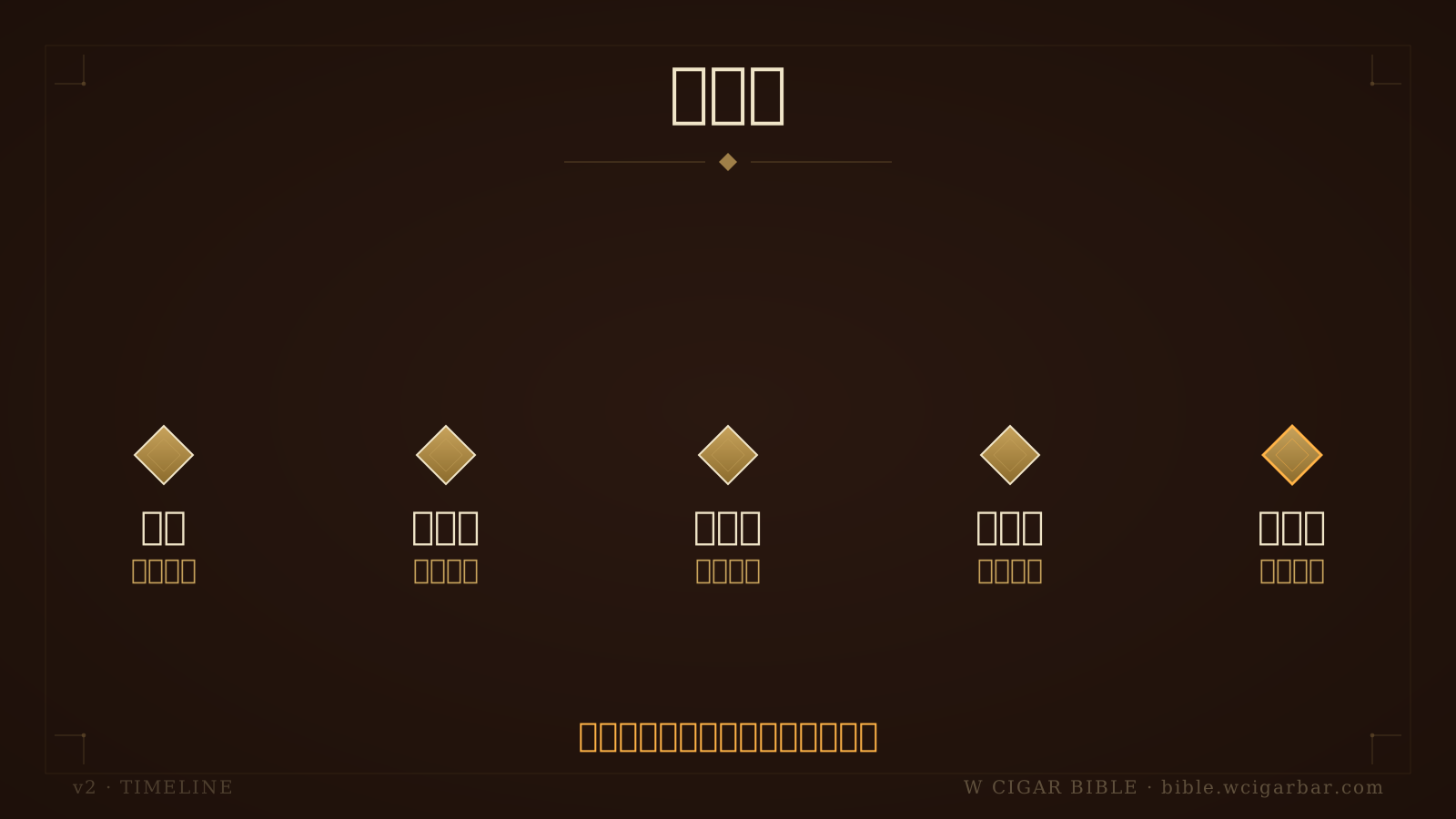
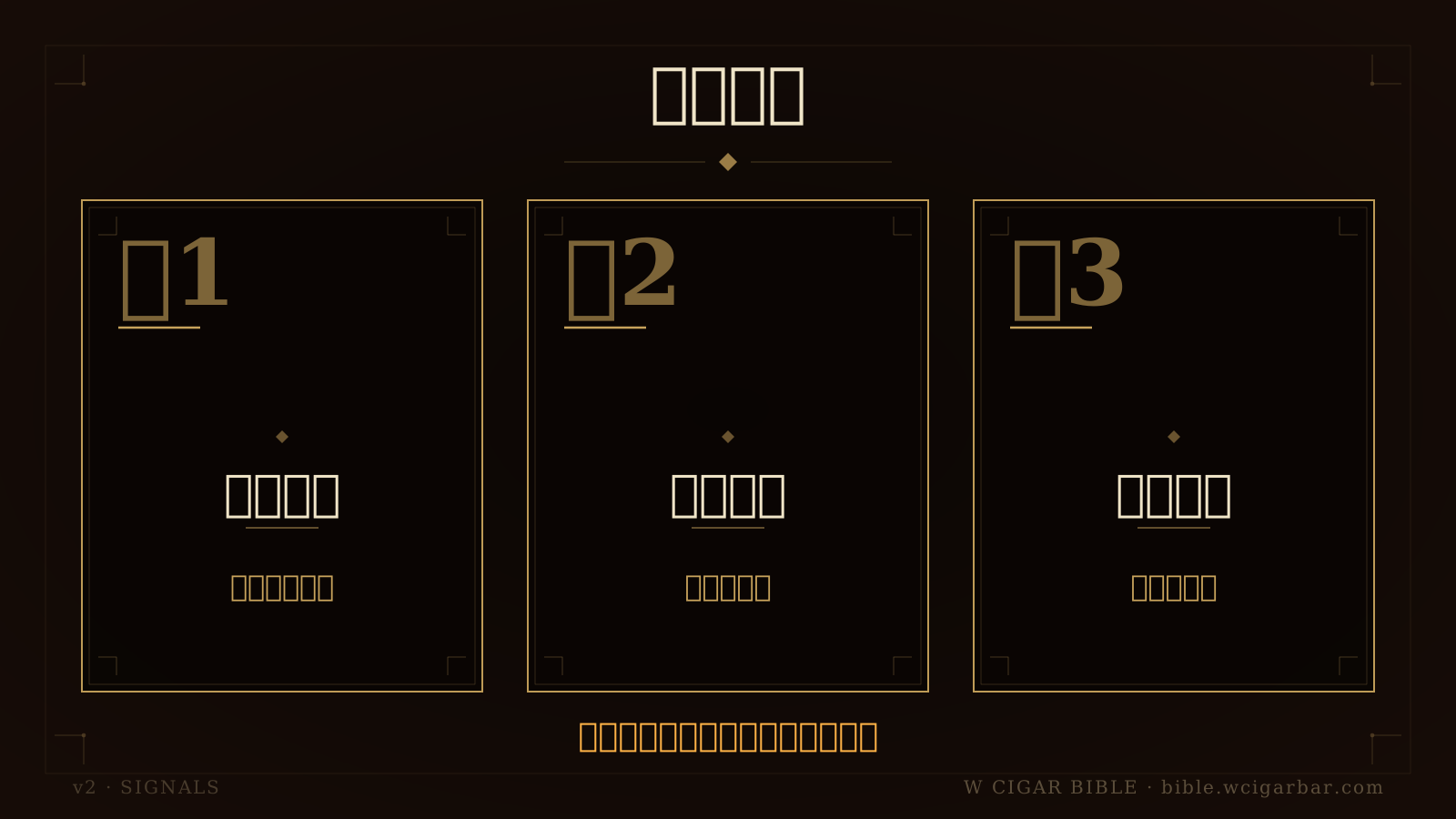
流程線依序顯示記錄、外觀、抽阻、三段與總評
I. Establishing a Repeatable Evaluation Framework: Turning Experience into Data
The most common blind spot for veterans is remembering "I like it" but not being able to articulate "why I like it." I recommend recording at least six items for each cigar: year or batch, size, storage humidity, pre-light aroma, burn status, and three-stage flavor changes. For example, the Cohiba Siglo VI, launched in 2003, with a ring gauge of 52 and a length of 150mm, inherently has a different rhythm than the more slender Lancero.
The core of cigar evaluation is not to write feelings in a flowery way but to allow oneself to verify the same standard next time. I usually use a 100-point system but do not deify the score: appearance 10, craftsmanship 20, aroma 25, taste 25, balance and aftertaste 15, brand and year performance 5. This proportion prevents a cigar with a beautiful appearance but uncontrolled burn from receiving an excessively high rating.
When recording, also note the environment, as room temperatures of 18°C and 28°C can lead to completely different burn speeds for the same Partagás Serie D No.4. Humidity between 65% and 72% is particularly sensitive for Cuban cigars; too humid can lead to a muffled taste, while too dry can be sharp and spicy. If you record more than 30 cigars continuously, you will start to see your preference curve rather than just remembering a particularly pleasant impression.
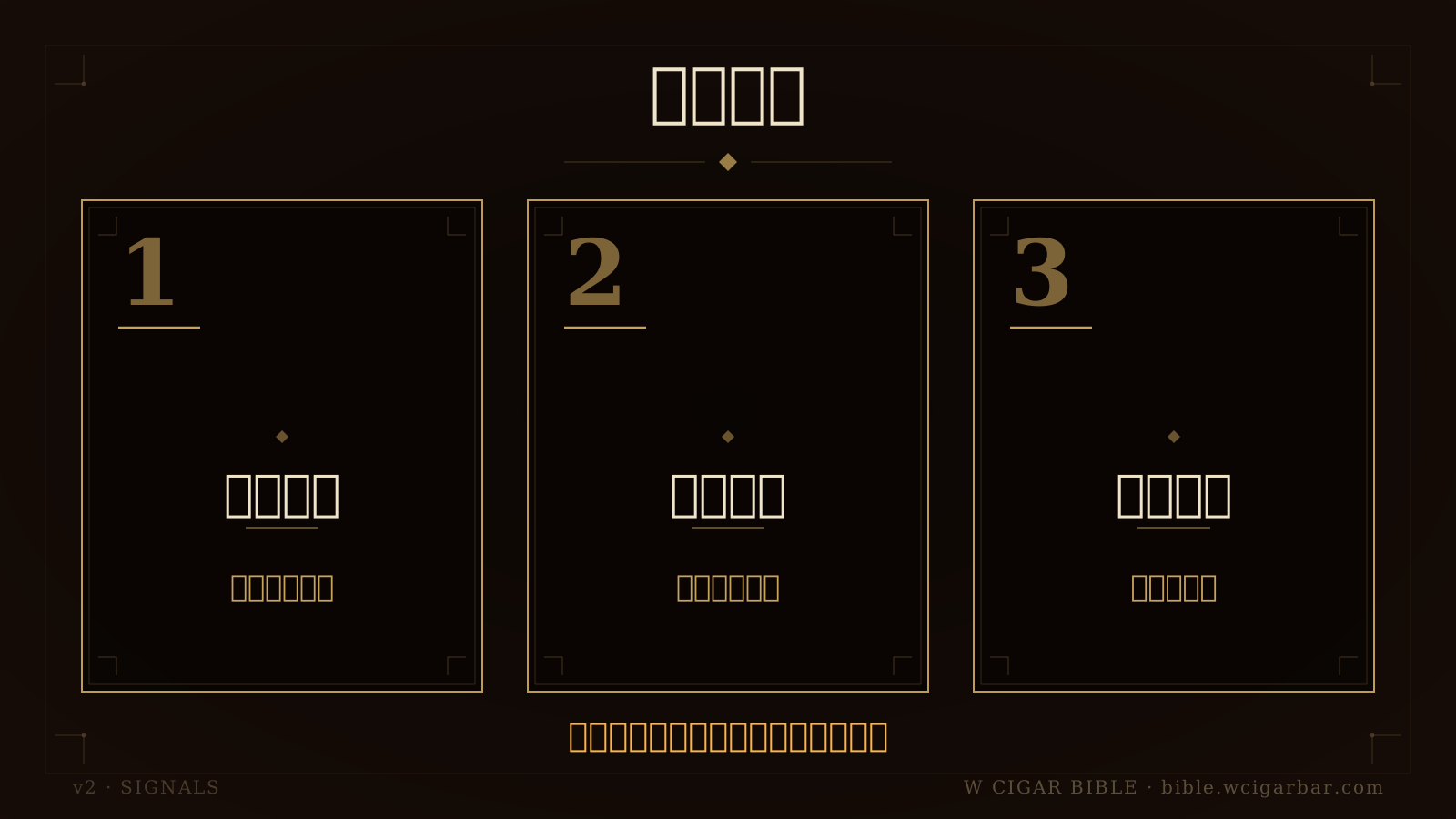
三張卡列出紀錄、多項並看與分數附註重點
II. Appearance and Craftsmanship: Assess "Risk" Before Discussing Aesthetics
Appearance is not a beauty contest; the focus is on risk assessment. Wrapper colors from Claro, Colorado to Maduro each have reasonable ranges; what truly requires vigilance are large color differences, abnormal oil spots, obvious cracks, loose feet, or rough cap handling. For torpedo-shaped cigars like Montecristo No.2, if the cap is unevenly glued, it is more likely to loosen after cutting, affecting the draw and burn in the early stages.
The primary task of appearance evaluation is to predict burn and structural risks, not to judge flavor based on color depth. Many veterans associate dark wrappers directly with sweetness, cocoa, or strength, but this is only one possibility. Even if the appearance is similar, the aroma direction of Nicaragua's Estelí tobacco and Cuba's Vuelta Abajo tobacco can be completely different.
When touching, use two fingers to gently press the entire cigar to observe for hard spots, voids, or localized softness. Hard spots can cause tunneling, while voids can lead to localized overheating. If more than 3 out of 25 cigars in a standard box show similar structural issues, it is worth recording the batch, purchase time, and storage conditions of the box, rather than blaming the poor performance on a single cigar.
- Wrapper: Check for cracks, color differences, and natural oiliness
- Filler: Press for uniformity, check for hard spots or voids
- Cap: Check for looseness or detachment after cutting
- Foot: Check for consistent filler density and exposed fragments
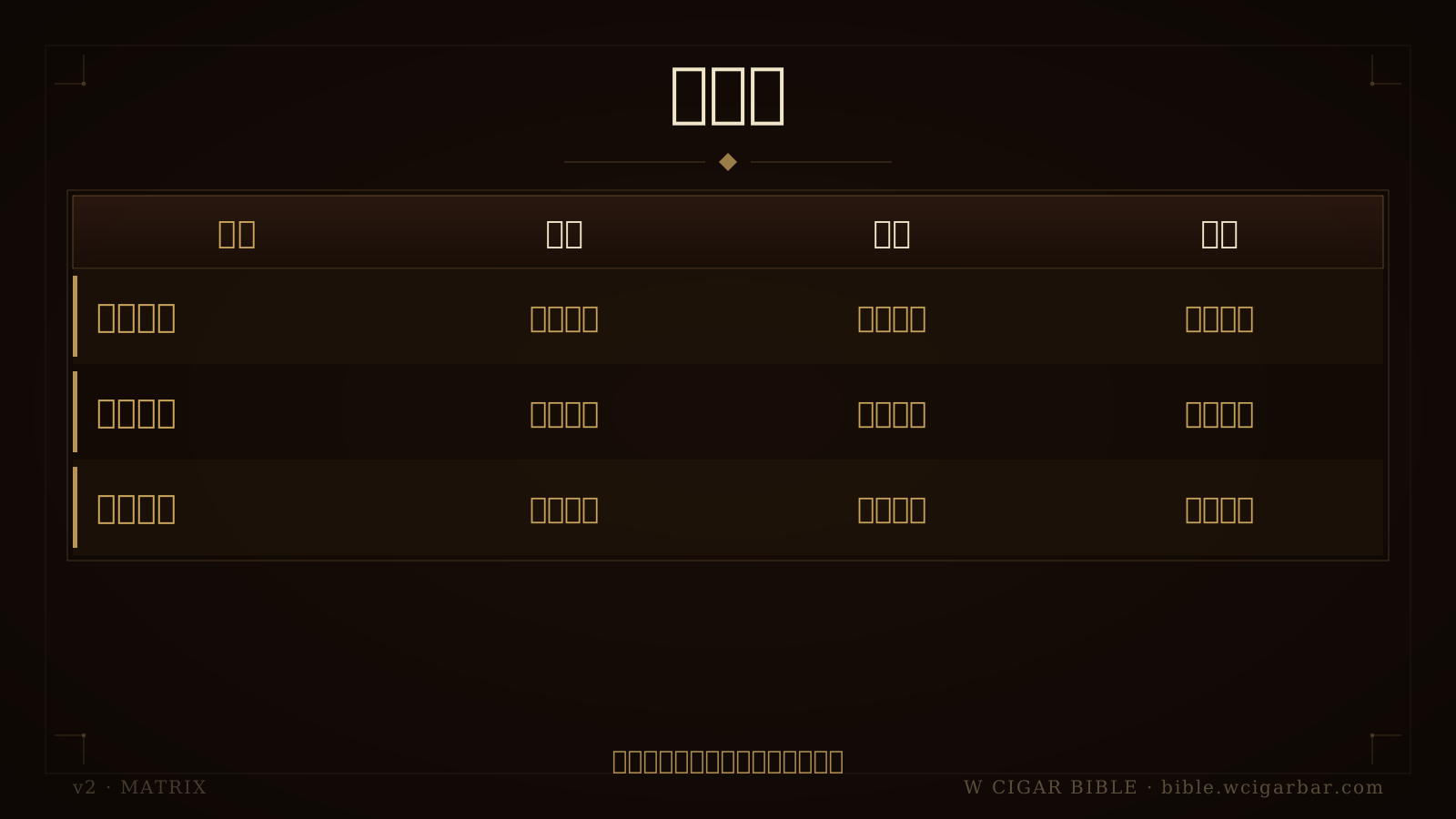
矩陣比較外觀、燃燒與口感的重點風險和紀錄方式
III. Burn and Draw: Technical Defects Amplify Aroma Misjudgment
Burn performance is often underestimated but is the foundation of evaluation accuracy. If a cigar begins with severe canoeing from the first centimeter, the taste will be disturbed by bitterness and localized high temperatures. Generally, a Robusto with a ring gauge of around 50 and a length of 124mm can maintain a stable rhythm for about 50 to 70 minutes; if it progresses rapidly in 25 minutes, it often indicates a fast pace or low humidity.
The draw is not better when looser; the ideal state is resistance without effort, like drawing a stable airflow through a thin straw. When too tight, the burn temperature fluctuates easily, suppressing the aroma; when too loose, the burn is too fast, and the sweetness and oiliness turn into dryness and spiciness before they unfold. Around 2007, some Cuban batches were discussed by players for rolling stability issues, reminding us that brand names cannot replace individual checks.
When correcting the burn, restraint is necessary. Slight canoeing can first be addressed by rotating the cigar, allowing the slower-burning side to face down; if it remains uncorrected beyond one centimeter, then lightly touch up with fire. Over-correcting with fire can char the wrapper, especially for medium ring gauge cigars like the H. Upmann Magnum 46, where heavy flame treatment can overshadow the delicate wood, cream, and nut notes in the early stages with coarse charred flavors.
| Indicator | Ideal State | Possible Issues | Evaluation Impact |
|---|---|---|---|
| Draw | Stable, resilient | Too tight or too loose | Affects aroma release |
| Ash Column | Stable at 2 to 3 cm | Fragile, dark | Possible humidity or unstable burn |
| Burn Line | Minor fluctuations acceptable | Long-term canoeing | Distorted taste |
| Temperature | Warm, not hot | Overheating | Increased spiciness and bitterness |
IV. Aroma Structure: Layered Evaluation from Cold Aroma, Main Line to Aftertaste
Aroma evaluation can be divided into three stages: pre-light, during burn, and post-burn. Smelling the foot and wrapper before lighting often captures notes of hay, cedar, honey, leather, or earth. For example, the Trinidad Fundadores, with its slender size, often has delicate floral and herbal notes in the early stages; while the Bolivar Royal Corona is more likely to exhibit soil, coffee, and black pepper in the middle stages.
Veterans should not only ask "is it fragrant" but also discern whether the aroma is coherent, has transitions, and supports the taste. A good cigar's aroma often has a main line and a sub-line: the main line might be cedar and cream, while the sub-line appears in the middle and later stages with roasted almonds, orange peel, or mineral notes. If there are many aromas but they clash, it cannot be called balanced.
I use "three-stage notes" to record: early stage 0 to 30%, middle stage 30 to 70%, late stage 70 to 100%. For example, the typical charm of the Romeo y Julieta Churchill lies not only in floral and sweet wood but also in whether it maintains elegance without thinning in the middle and later stages. If only spiciness and bitterness remain in the later stages, it may be due to a fast pace or insufficient aging.
Aroma vocabulary should avoid excessive romanticization. Writing "like the damp stone walls of a 2010 Bordeaux left bank cellar" is less effective than "damp wood, slight mineral, low sweetness, medium aftertaste." Descriptions that are comparable and verifiable are part of advanced techniques.
三張錯誤卡提示只看品牌、深色迷思和只給分數
V. Taste and Strength: Veterans Should Distinguish Between Richness, Intensity, and Stimulation
Many players confuse "strong" with "good," but strength, intensity, and stimulation are three different things. Strength refers to the presence of nicotine, which may bring physical sensations; intensity refers to flavor density, such as whether coffee, cocoa, or wood is substantial; stimulation may come from overheating, overly dry storage, or young tobacco. Partagás Lusitanias can be rich without being rough, making it an excellent teaching material for distinguishing abilities.
Truly high-level taste is rich but not chaotic, strong but not irritating, with layers remaining in the later stages. Nicaraguan Puros often offer direct and deep pepper, cocoa, and earth notes; classic Cuban brands often excel in rhythm and aftertaste. This is not a binary of good and bad but a difference in style. Evaluating only "is it heavy enough" misses the value of delicate lines like the Hoyo de Monterrey Epicure No.2.
Mouth position is also worth recording. Sweetness often appears on the tip of the tongue and palate, bitterness concentrates at the base of the tongue, acidity is more apparent on the sides, and spiciness may linger in the throat or nasal cavity. Retrohaling can amplify aroma but should not be frequent; once every 5 to 8 puffs is sufficient. If done every puff, nasal fatigue may prevent distinguishing subtle differences between wood, spice, and caramel.
When evaluating taste, I ask myself three questions: First, does it have a clear outline upon entry; second, does it add depth in the middle stage; third, is the aftertaste clean. If a cigar is stunning in the early stage, hollow in the middle, and coarse in the later stage, the score should not exceed that of a cigar with little transition but stable throughout and with a delicate aftertaste.
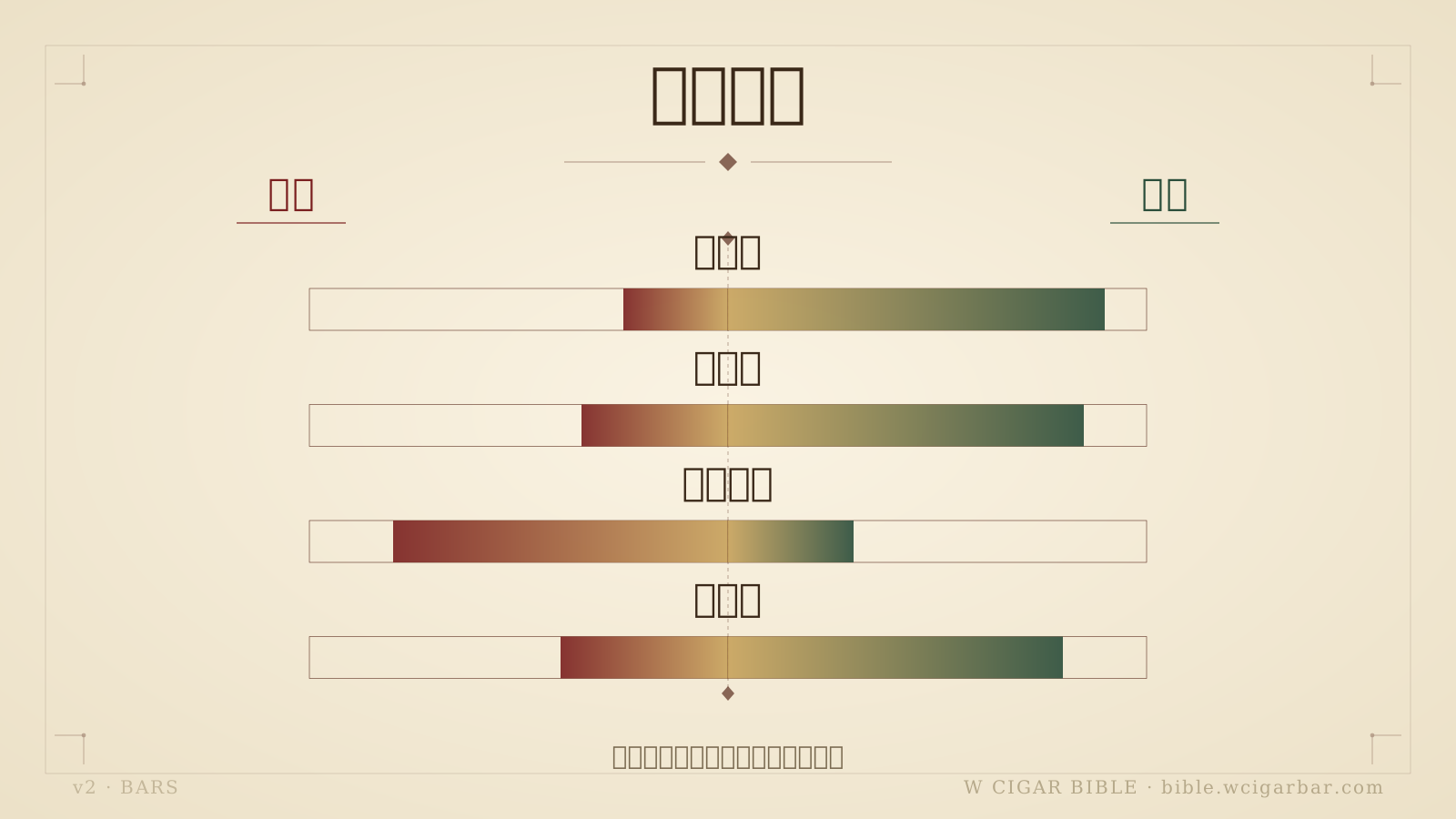
橫條比較印象式與結構式在紀錄和比較上的差異
VI. Brand Personality and Vintage Cases: Use Horizontal Comparison to Correct Bias
Brand personality is an important background for evaluation but should not become a stereotype. Cohiba is often expected to have grass, honey, cream, and elegant strength; Partagás is often associated with earth, leather, spice, and thickness; H. Upmann often shows nuts, coffee, and light sweet wood; Ramon Allones often achieves recognition between dried fruit, roasted notes, and meaty feel. These are just directions, not scripts for every cigar.
The role of brand knowledge is to help you set reasonable expectations; true scoring must return to individual performance and storage context. For example, the Cohiba Behike series, officially launched in 2010, became a focus of discussion due to size, tobacco selection, and market attention, but if poorly stored, it can still exhibit muted aroma, poor draw, and coarse later stages. Reputation only provides reference, not guarantee.
Horizontal comparison is very effective. I often suggest comparing three similar-sized cigars within the same week: such as Montecristo Edmundo, H. Upmann Magnum 50, and Romeo y Julieta Wide Churchill. All three have large ring gauges, but Montecristo often has cocoa and coffee as the main line, Upmann leans towards nuts and soft wood, and RyJ is more likely to exhibit floral and red fruit notes. This comparison can refine "I like large ring gauges" into "which aroma structure in large ring gauges do I like."
Collection issues should also be approached calmly. Some limited editions, regional editions, or discontinued products do have price fluctuations in the market, but collection appreciation does not guarantee appreciation; it still depends on source preservation and market conditions. For veterans, rather than just chasing labels, it is better to establish batch records, humidity records, and box opening times, as this data supports your judgment more than rumors.
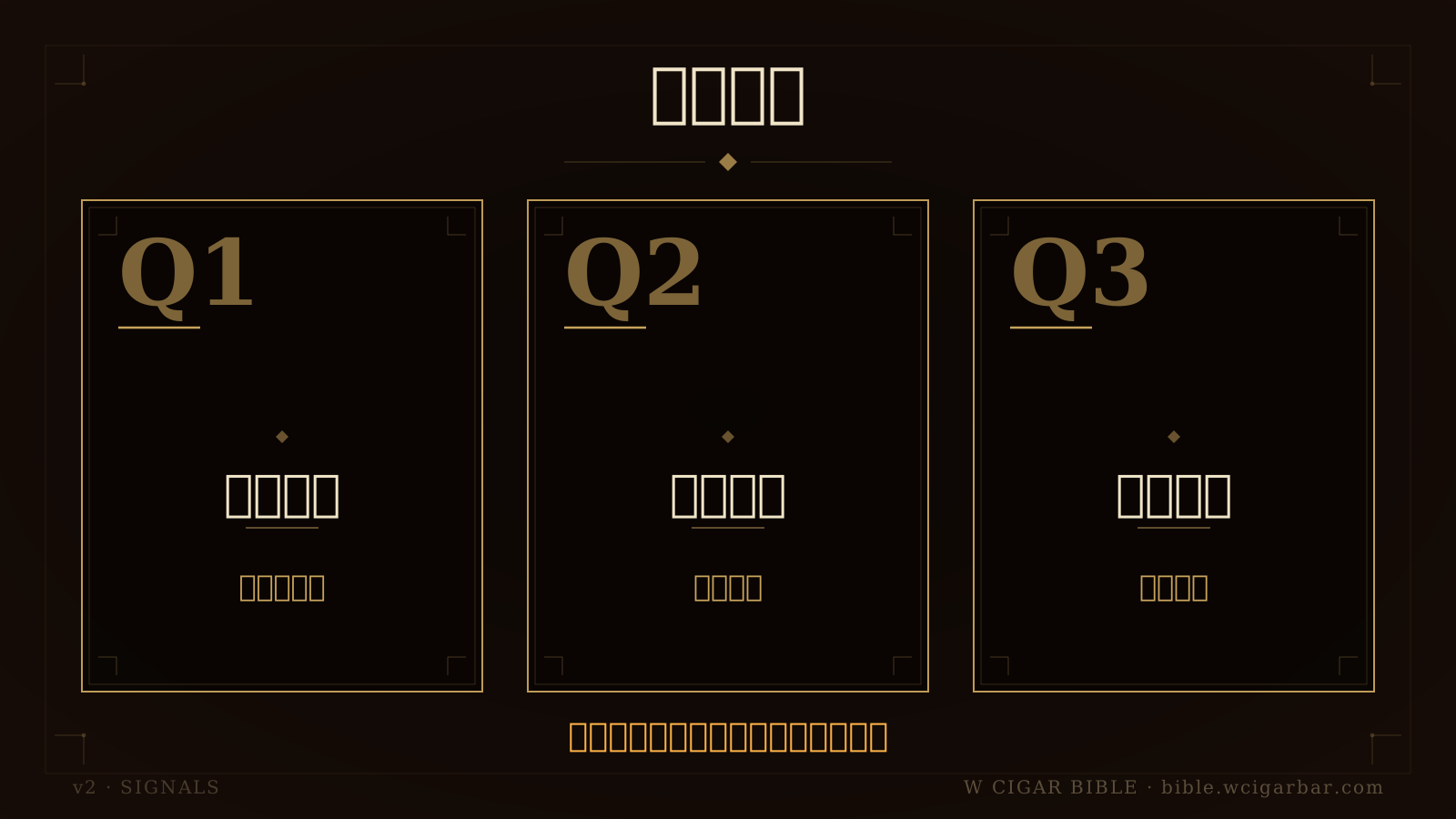
快問快答列出同盒差異、濕度設定與後段變辣
VII. Building Your Own Scoring Language: From Preference to Professional Judgment
Advanced evaluation ultimately requires forming your own language. If you prefer a rich style, you should still be able to understand the merits of a mild cigar; if you like the Cuban rhythm, you should also see the structural advantages of Dominican or Nicaraguan works. Arturo Fuente OpusX, Padron 1964 Anniversary, and Davidoff Aniversario are all typical teaching materials under different countries and philosophies.
Mature scoring is not about suppressing preferences but about recording preferences and quality judgments separately. I divide my notes into two columns: "Objective Performance" and "Personal Preference." Objective performance records burn, draw, layers, and balance; personal preference records whether it fits the day's mood, post-meal state, and paired drinks. This way, you can avoid misjudging something not to your taste as poor quality.
Drink pairing also affects evaluation, so simplify variables in formal records. If paired with high peat whisky, the Islay style may overshadow delicate floral notes; if paired with espresso, bitterness and roasted notes will be amplified. To judge the cigar itself, water or light sparkling water is the most neutral; to explore pairings, add rum, cognac, port, or single malt whisky for a second round of comparison.
My basic process is as follows:
- Record appearance, texture, cold aroma, and draw before lighting
- Observe only in the early stage, without rushing to conclusions
- Judge the main line aroma and taste density in the middle stage
- Check for imbalance, overheating, or coarseness in the later stage
- Write the overall evaluation 10 minutes after finishing to avoid being influenced by the last puff
Frequently Asked Questions
Why do cigars from the same box have significant differences?
Differences within the same box may come from filler ratio, rolling feel, box position, and micro-environmental storage. Even 25 cigars from the same box do not mean each is completely consistent. Veterans should observe at least 3 to 5 cigars when evaluating cigars from the same box to draw more stable conclusions about the entire box.
Is it better to set humidity at 65% or 70%?
There is no absolute answer. I mostly lean towards 65% to 68% for Cuban cigars, while non-Cuban large ring gauge or thicker oily types may approach 69% to 70% depending on the situation. The key is stability, not daily adjustment. The temperature is recommended to be maintained at 18°C to 21°C as much as possible.
Is a bad cigar a brand issue or a storage issue?
First, look at verifiable factors: is the appearance cracked, is the draw abnormal, is the burn skewed, is the humidity stable. If multiple cigars from the same batch have the same defects, then consider batch or brand status. Single cigar anomalies are common and should not directly overturn the entire brand.
Why do cigars often become bitter and spicy in the later stages?
The most common reasons are a fast pace and high temperature. As the burn point approaches the fingers, tar and heat rise, making it more difficult to maintain elegance in the later stages. Slow down the pace, taking a puff every 60 to 90 seconds, and be more cautious in judging when only one-third remains.
Are scores important, or are written descriptions important?
Both are important but serve different functions. Scores facilitate comparison, while written descriptions explain the reasons. If there are only scores without descriptions, evaluation cannot progress; if there are only flowery descriptions without structure, comparison is difficult. I recommend writing a summary in 5 sentences or less each time, along with detailed scores.
How long should aging be before reaching a good state?
It depends on the brand, size, and storage. Small ring gauges usually change faster, while large ring gauges and rich formulas require more time. Many Cuban cigars become more harmonious in 3 to 5 years, but longer is not always better; if storage is unstable, time will only magnify the flaws.
Over the years, I have increasingly believed that cigar evaluation is a task of making sensory honesty. Brand stories, vintage rumors, and market heat can all be referenced but cannot replace the records in your hand and the judgment at the moment. The true advancement of veterans is not to say more terms but to distinguish structure, rhythm, and balance in one puff and be willing to correct their biases.
—Cigar Prince Wilson Tsai
Smoking is harmful to health. No smoking under the age of twenty. Quitline: 0800-636363. This article is for reference by adults over twenty years old for cigar culture, preservation, and regulatory knowledge, not as tobacco advertising, promotion, or purchase advice.
Like this article?Share with friends
Share this W Cigar Bible piece with friends who want to learn cigar culture, storage, and tasting.
想把這篇 化為實踐
雪茄聖經是知識;雪茄文化要在空間裡發生

W Cigar Bar 大安總店資訊
台北大安區 · 雪茄聖經總編輯 Wilson Tsai 主理的雪茄文化空間
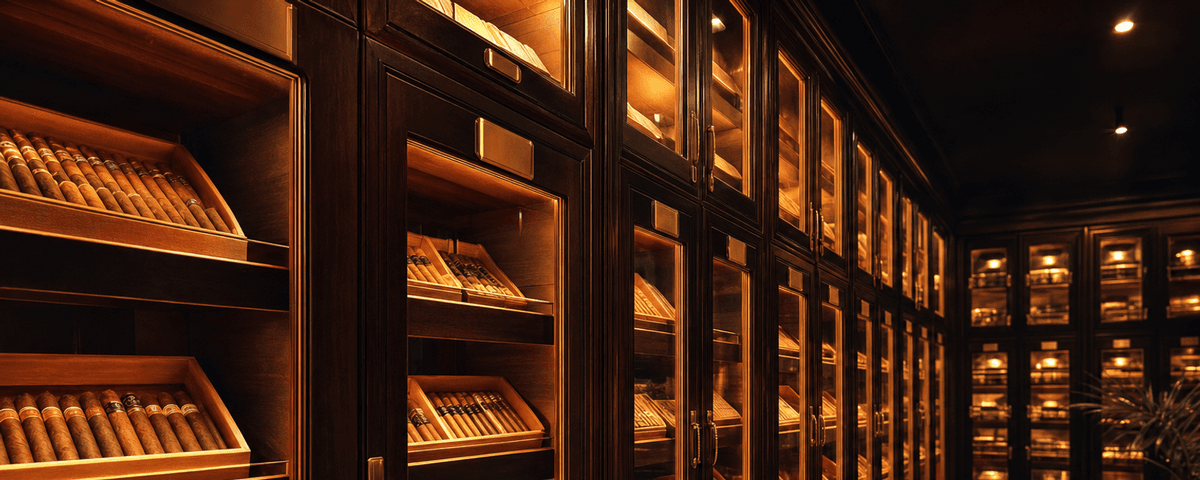
33 座 24 小時恆溫恆濕醇化室
W Cigar Bar 提供的會員醇化空間 · 場地資訊請洽編輯部
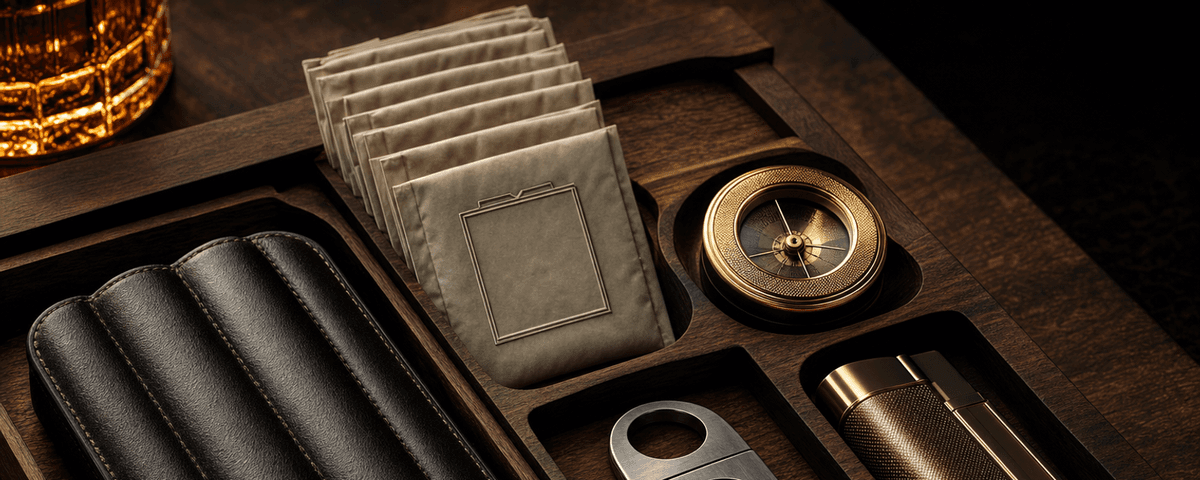
雪茄剪 / 打火機 / 雪茄盒 / Boveda
W Cigar 配件官網 · 專營雪茄配件正品
加 LINE 好友 · 文化諮詢
文化空間資訊 · 紳士沙龍 · 私人包場
本網站內容僅供雪茄文化、歷史、收藏與品吸知識研究參考。菸品有害健康、未滿法定年齡者請勿吸菸。實際規範請依所在地法律為準。
吸菸有害健康・戒菸專線 0800-636363・本站僅供 20 歲以上成年人閱覽。
讀到這裡,你不只是路過的人
留下 Email,加入 W 雪茄聖經內圈——總編輯 Wilson Tsai 親選的學院深文與國際新訊,先你一步送到信箱。
· 教育用途非銷售 · 隨時一鍵退訂 · Email 絕不對外公開 · 由勝茄股份有限公司營運
同分類延伸閱讀

資料來源:W Cigar Bible 編輯部整理 · 雪茄王子 Wilson Tsai 親自審稿
本文僅供雪茄文化、歷史、收藏與品鑑知識研究,不作為菸品促銷、銷售或購買建議。吸菸有害健康,未滿二十歲不得吸菸。