雪茄的切割與點火技術全面指南
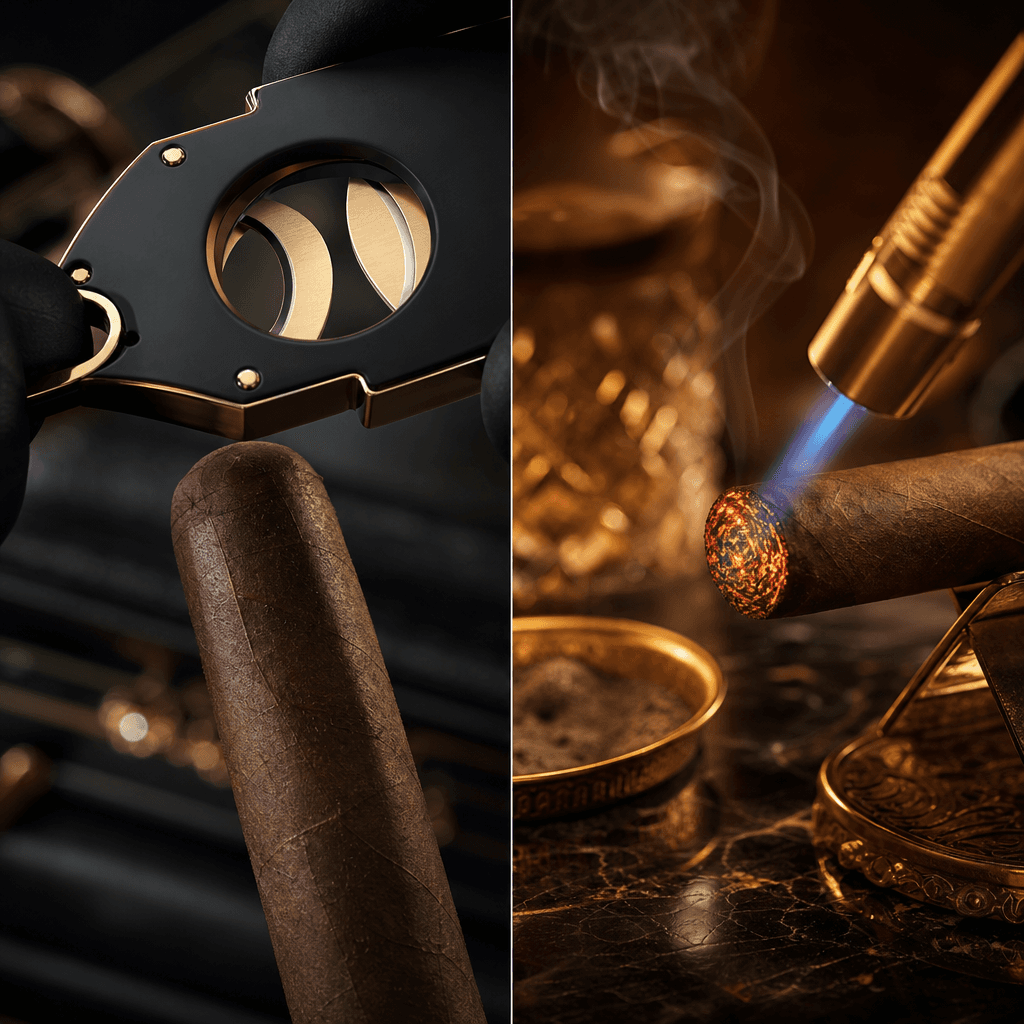
切割與點火是享受雪茄的關鍵步驟,卻常被忽略。正確的切割不在於剪掉多少,而是要精確地移除帽蓋,保持氣流順暢。選擇合適的工具如平口剪、V剪或打孔器,能影響吸食的口感與氣流。切割前應仔細檢查雪茄頭部,確保切口乾淨,並在點火時使用火柴或杉木片,以建立理想的燃燒面。掌握這些技巧,能讓雪茄的風味更為突出,提升整體體驗。
- 切割雪茄時,應保留帽蓋結構,避免剪得過深以免影響氣流。
- 選擇雪茄刀具時,需考慮雪茄尺寸與個人手感,入門者可選擇雙刃平口剪。
- 點火時應先烘腳,讓雪茄均勻受熱,建立良好的燃燒面。
Comprehensive Guide to Cigar Cutting and Lighting Techniques
Cutting and lighting are the two actions that are most easily overlooked once you get a cigar in hand, and they can make a significant difference. Many initial bitter, spicy, and hot tastes are not due to the cigar itself being bad, but because the cut was too deep, the fire source was too strong, or the burning surface was not properly established, leading to an off-track experience in the first ten minutes.
As an editor of the "Cigar Bible," I often compare the preparation of a cigar to decanting and uncorking wine: it doesn't show off skills, but it sets the pace for the next hour. In this article, I will use years of compiled brand cases, tool differences, and practical steps to help you make "clean cuts, even lighting, and stable draws" a habit.
五段流程圖示雪茄從看帽蓋到均勻點火的步驟
Understanding the Cigar Head: Cutting Is Not About Cutting More
The head of a cigar usually has one to three caps. Cuban cigars often feature three-layer cap craftsmanship. For example, Partagás Serie D No.4 and Montecristo No.2 can be seen with circular boundaries under light. The goal of cutting is not to "open the largest hole," but to remove the outermost cap to allow smooth airflow while maintaining the structure of the wrapper. A truly good cut opens the smoke path without damaging the cap support.
Beginners often make the mistake of cutting too deep when they see torpedo or pyramid-shaped cigars. Taking Montecristo No.2, a Pirámides with a 52 ring gauge and about 156 mm in length, as an example, the tip only needs to be cut 2 to 3 mm first, then test the airflow; if it's too tight, gradually trim a bit more. Cutting more than 8 mm at once can cause the wrapper to unravel, and the moisture in the mouth can expand the crack in the latter part.
For round-headed cigars, find the cap line, usually cutting about 1 mm above the cap arc. For sizes like the H. Upmann Magnum 50, with a 50 ring gauge and 160 mm length, a shallow cut can cause resistance, while a deep cut can cause the cap to come off. My approach is to first feel the head's curvature with my fingertip, then align the blade with the smallest safe area at the cap's top. The first principle of cutting is "small, clean, and adjustable."
Also, remember that humidity affects cutting results. Cigars maintained at a relative humidity of 65% to 69% have better wrapper elasticity; if above 72%, the blade may drag; if below 62%, it may crack. Don't rush before cutting; observe, press lightly, and then cut. These three seconds are often more important than the price of the tool.
三張重點卡說明少量切割刀刃銳利與隔火點燃
Straight Cutters, V-Cutters, and Punches: Tool Choice Determines Airflow and Flavor
Cigar cutters are mainly divided into straight cutters, V-cutters, and punches. Since the 1990s, Xikar's teardrop-shaped double-bladed cutters have been popular due to their stable grip and symmetrical blades. S.T. Dupont and Colibri have their advantages in metalworking and portability design. The tool is not necessarily better if it's more expensive, but it should match the cigar size, your hand feel, and the smoke path you want. For beginners, I usually recommend choosing a reliable double-bladed straight cutter as the first tool.
| Tool Type | Suitable Cigars | Advantages | Notes |
|---|---|---|---|
| Straight Cutter | Robusto, Toro, Churchill, Pirámides | High versatility, intuitive cut | Dull blades can crush the wrapper |
| V-Cutter | Common sizes from 46 to 54 ring gauge | Concentrated smoke, fuller flavor | Cutting too deep can accumulate tar |
| Punch | Round-headed, larger ring gauge cigars | Retains the cap, easy to carry | Not suitable for pointed heads, airflow may be tight |
The advantage of a straight cutter is its directness, and it's the easiest to judge if the cut is complete. For sizes like the Cohiba Siglo VI, with a 52 ring gauge and 150 mm length, a straight cutter can provide balanced smoke volume; however, if the blade quality is poor, it can create burrs on the wrapper. The V-cutter creates a groove at the head, which can concentrate the smoke for cigars like the Romeo y Julieta Wide Churchills with a 55 ring gauge, but beginners may find the front end too strong.
Punches are suitable for those who like to smoke slowly in small puffs, especially convenient outdoors or when traveling. Common hole diameters are about 7, 9, and 11 mm, with larger rings allowing for larger holes. However, if the draw is already tight, as with some years of Bolivar Belicosos Finos, a single hole may be insufficient, and overlapping double holes can improve it. There is no absolute superiority among tools, only whether they are suitable for the cigar at hand.
Maintenance should not be neglected. After using the tool, wipe off grease and debris with a dry cloth; if there's significant adhesion, use a small amount of high-concentration alcohol to wipe and let it dry completely. Do not use cigar cutters to cut paper, plastic, or string, as dull blades will first harm the delicate wrapper.
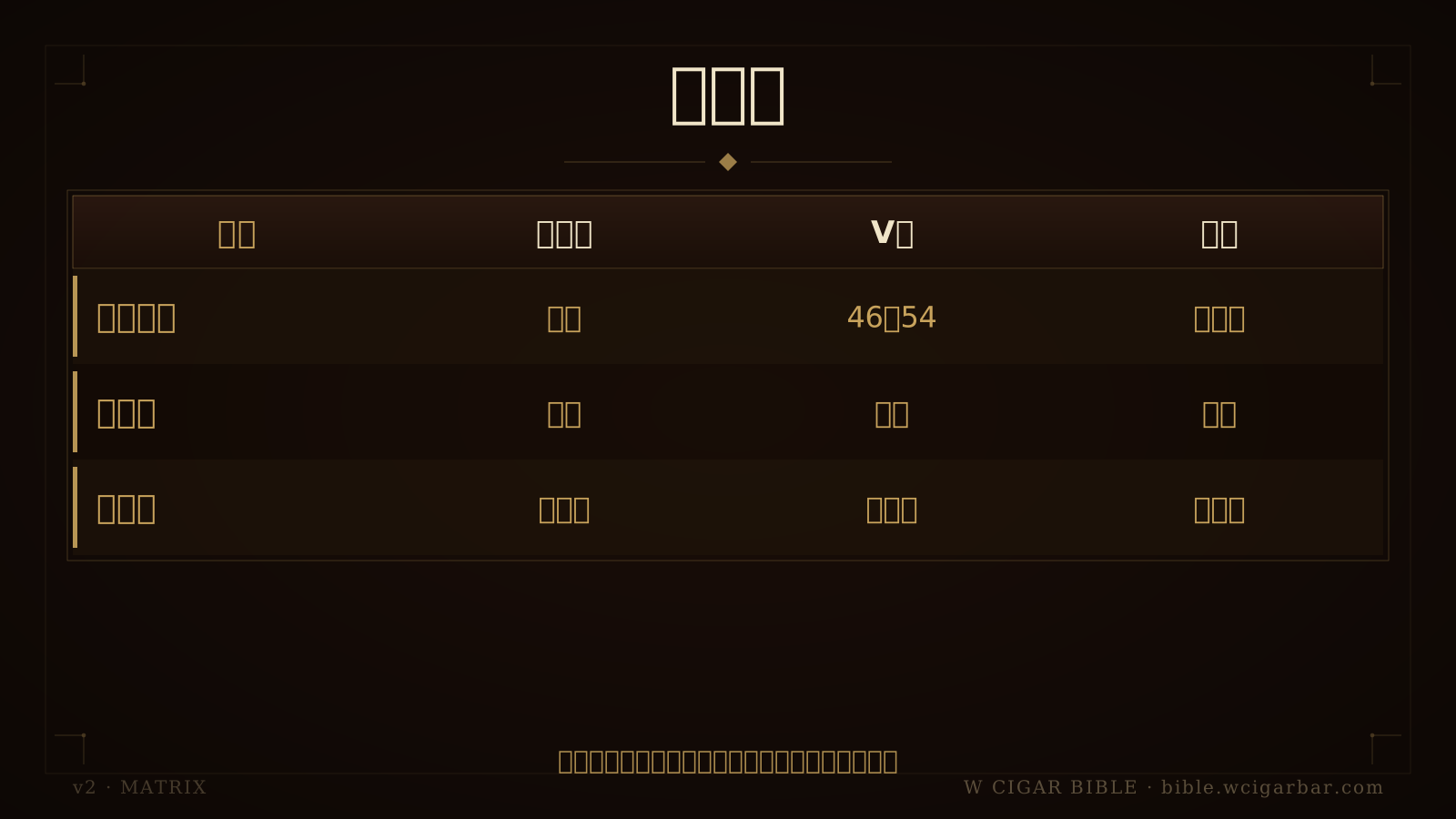
矩陣比較平口剪V剪與打孔器的適合尺寸和氣流
Standard Cutting Process: From Positioning, Cutting to Checking Airflow
Before cutting, rotate the cigar in your hand to check for cracks at the head, ensure the cap is intact, and see where the wrapper seam is. For example, the Trinidad Vigía, launched in 2014, with a 54 ring gauge and 110 mm length, has a large head area, and if the cutter is not completely vertical, it can easily result in a slanted cut. The positioning before cutting determines whether the cut is clean.
The standard steps can be simplified into four actions: first, confirm the cap line, then fully open the cutter; next, insert the cigar head into the blade, leaving a 1 to 2 mm safety margin; finally, close with a single decisive force, not slowly squeezing. After cutting, do not light immediately; first, check the airflow with a dry draw. If the airflow feels like sucking a thick milkshake, you can trim a bit; if it feels too loose like sucking air through a straw, it usually means it's cut too deep, and you can only slow down the pace to compensate later.
- Find the cap line, don't cut below the main cap edge
- Keep the cigar perpendicular to the blade
- Cut in one go, don't saw
- Check airflow with a dry draw, don't rush to light
- Only trim further if the airflow is too tight
Many people think that cutting nicely is the end, but the cut also needs to consider "mouthfeel." If there are protruding leaf fragments on the cut surface, they will stick to the tongue during smoking, affecting enjoyment; you can gently flick them with a clean fingertip, but it's not recommended to lick them flat with your tongue. If the cap is slightly lifted, don't deepen the cut; control the moisture of your lips while enjoying to avoid soaking the cap.
I once handled a 2018 boxed Hoyo de Monterrey Epicure No.2, well-preserved but slightly tight at the head. The first cut was only 1.5 mm, and the dry draw was tight; the second cut was less than 1 mm more, and the airflow opened up, preserving the sweet woody and creamy notes. Cutting is not a one-time decision but a patient approach to the best airflow.
Matches and Cedar Spills: The Most Traditional, Also the Most Challenging for Rhythm
Before lighters became widespread, long matches and Spanish cedar spills were the most common cigar lighting tools. Many Cuban cigar boxes are lined with Spanish cedar, not just for aroma but also to help stabilize humidity and protect the wrapper. The advantage of lighting with cedar spills is that the flame is gentler, and the burning smell is relatively clean. The core value of matches and cedar spills is to establish a burning surface with a less aggressive flame.
When using matches, it's not recommended to bring them close to the cigar immediately after striking. The sulfur smell from the match head needs 2 to 3 seconds to dissipate, and the flame should be stable before use. Short matches burn too quickly to the fingers, so 90 to 100 mm long matches are more suitable; lighting a Robusto size may require 2 matches, while a Churchill or Double Corona often requires 3 or more. If operating in a windy area, matches may make you panic, leading to partial charring.
The method for cedar spills is to first light one end of the spill, let the flame stabilize, then keep the cigar foot about 1 to 2 cm above the flame while rotating. Note that it's not about inserting the cigar into the flame but using heat to toast it. For a 50 ring gauge Robusto like the Ramón Allones Specially Selected, the outer wrapper should be evenly heated first, and then the center should start to glow, resulting in a smoother taste than direct intense burning.
The downside must also be acknowledged: matches and cedar spills require space, time, and a stable environment, making them unsuitable for every occasion. If you only have regular matches on hand, avoid using scented, dyed, or overly waxed products. The charm of traditional tools is not in the formality but in forcing you to slow down.
三張錯誤提醒卡標出剪太深貼火與急著重烤
Lighter Choices: Differences Between Single Flame, Double Flame, Triple Flame, and Soft Flame
Cigar lighters can be broadly divided into soft flame and torch flame. Soft flames, like the classic S.T. Dupont Ligne 2, have a gentle flame, elegant and less intense in temperature, but limited in wind resistance outdoors. Torch flames have been popularized by brands like Colibri, Xikar, and JetLine, becoming mainstream for many cigar enthusiasts to carry when going out after 2000. When choosing a lighter, first consider the environment of use, then the number of flames.
A single torch flame is precise, suitable for small ring gauges or correcting burn lines; double flames balance speed and control; triple and quadruple flames are suitable for larger sizes above 54 ring gauge but can also easily overheat the foot. For a 52 ring gauge torpedo like the Partagás Serie P No.2, a double flame is sufficient; using a quadruple flame for intense roasting can easily result in burnt bitterness and peppery sharpness in the front, masking the brand's original leather and earthy tones.
Fuel quality is equally important. It is recommended to use high-purity butane and regularly purge and refill; many lighters are not broken but suffer from gas impurities or uneven internal pressure causing unstable flames. After refilling, let it sit for 3 to 5 minutes to allow the gas temperature to stabilize before adjusting the flame. The flame length should be a stable blue flame of about 1.5 to 2.5 cm, without pursuing torch-like intensity.
Also, don't overlook altitude and temperature. In cold winter environments, butane vaporization efficiency decreases, and torch flames may weaken; high-altitude areas have less oxygen, affecting ignition. My habit is to use soft flames or single flames indoors and double flames outdoors; consider triple flames only for large ring gauges. A stronger flame does not mean better lighting; controlling heat is the skill.
長條對比呈現倉促與穩定兩種操作取向差異
Complete Lighting Process: Toasting, Rotating, Confirming, and Correcting
The first step in lighting is called toasting, which means bringing the cigar foot close to the heat zone of the flame, allowing the wrapper, binder, and filler to gradually heat up. The distance varies depending on the fire source: about 1 to 2 cm from the flame tip for torch flames, and slightly closer for soft flames, but still not letting the flame engulf the foot. You should see the edges slowly turn black, the center start to glow, rather than instantly burning a charred hole. Lighting is not about burning the cigar but establishing an even burning surface.
Next, bring the cigar to your mouth and continue rotating while gently drawing. Each draw should not be too large, about 1 to 2 seconds, to bring the fire into the filler rather than using lung capacity to force combustion. For a 50 ring gauge, 124 mm Cohiba Robustos, complete lighting takes about 45 to 75 seconds; if it's done in 15 seconds, it likely means the fire was too close or too rushed.
After lighting, look at the foot facing yourself; the burning surface should resemble an evenly glowing charcoal pan. If the outer ring is bright and the center is dark, it means the filler is not fully ignited, possibly leading to tunneling; if one side is bright and the other dark, it may burn unevenly. At this point, use a single flame to supplement the dark area, not re-roast the entire circle. If necessary, gently blow on the foot to observe if the red spots are evenly distributed.
Common correction methods include three: one is using the flame to supplement low-temperature areas; two is slowing down the draw to let the high-temperature side naturally cool; three is using cigar ash to help insulate, not flicking the ash too early. If the burn line is only 2 to 3 mm off, don't rush to correct it; intervene only if it exceeds 6 mm. An expert is not someone who never burns unevenly but knows when to correct and when to wait.
快問快答卡整理剪歪貼火與燃燒不均的處理方式
Etiquette and Safety: Making Preparations Look Composed
Cutting and lighting also involve etiquette. First, do not cut someone else's cigar unless they explicitly ask for help; everyone has different airflow preferences, and the depth of the cut is a personal choice. Secondly, after borrowing a cutter or lighter, clean or organize it before returning, especially ensuring no cut debris is left in the cutter slot. The core of cigar etiquette is respecting others' pace and tools.
In public or semi-public spaces, pay more attention to regulations and venue rules. Taiwan's Tobacco Hazards Prevention Act has raised the smoking age to 20, and many places have a total smoking ban; regardless of whether you have a 2008 Cuban box or recent Nicaraguan or Honduran works, they cannot override the regulations. For cigar culture to last, it must be built on appropriateness and self-discipline.
In terms of safety, torch flames should not be directed at people or used near alcohol vapors, and do not immediately put a freshly lit lighter deep in your pocket, as the metal nozzle may still be hot. Do not leave cutters on the edge of the table, especially double-bladed cutters, as once they fall, the blade may chip and become unusable. If using cedar spills, ensure the embers are completely extinguished.
I often remind beginner friends: slowing down actually makes you look more skilled. First, sit steadily, place the tools properly, clearly see the cap, check after cutting, and then light calmly. This process takes less than two minutes but can prevent an hour of subsequent remediation. Truly mature preparation actions look unhurried, unpretentious, and do not disturb others.
Common Questions
Q1: If the cigar is cut crookedly, can it be remedied?
Yes, but it depends on the degree of slant. If the cut surface is only 1 to 2 mm slanted, first check the airflow with a dry draw; you may not need to cut again. If the wrapper is lifted, use a sharp straight cutter to lightly trim. When remedying, it's better to cut less twice than to cut once below the cap.
Q2: Will a V-cutter make the taste stronger?
It often makes the smoke more concentrated, so you may feel the front end is thicker and more concentrated. It's interesting for 50 to 54 ring gauge Robusto and Toro sizes, but if the cigar is inherently strong, like some Bolivar or La Flor Dominicana, beginners may find it more oppressive.
Q3: Is a punch suitable for all cigars?
No, it's not suitable. Torpedo, pyramid, and Torpedo-type cigars have pointed heads, making it difficult for a punch to apply vertical force and achieve good airflow. Punches are more suitable for round-headed, large ring gauge, like sizes above 52 or 54 ring gauge; if the draw is tight, a double punch can improve it.
Q4: Why shouldn't the flame be placed directly on the cigar when lighting?
Placing the flame directly will instantly char the wrapper, making the front end bitter, spicy, and dry. Torch flames can exceed 1,000 degrees Celsius, and their close-range destructive power is strong. The correct method is to toast with heat, not burn with the flame tongue.
Q5: Should uneven burning be corrected immediately?
Not necessarily. If the deviation is within 2 to 3 mm, first rotate the cigar and slow down the pace; many times, it will self-correct. If the deviation expands to over 6 mm or one side is significantly faster, use a single flame to supplement the dark area, not re-roast the entire cigar.
Q6: Do cigars for collection require different cutting methods?
No, there's no need to change tools just because of age, but be gentler. Aged cigars may have more fragile wrappers, so ensure stable humidity before cutting. If discussing collection value, remember: it doesn't guarantee appreciation, and it still depends on source preservation and market. Technically, sharp tools and minimal cutting are most important.
Q7: Which tool should a beginner buy first for practice?
I would first choose a reliable double-bladed straight cutter, paired with a single or double torch lighter. Once you are familiar with airflow, try V-cutters and punches. It's more practical to stabilize basic tools than to buy all accessories at once.
Cutting and lighting are the starting points for me to judge whether a cigar enthusiast is truly in the zone. They don't require exaggerated actions or rely on expensive equipment; seeing the cap clearly, keeping the blade sharp, controlling the fire distance, and patiently rotating already surpasses most who start hastily. The most charming aspect of cigars is that every step can be slowed down, corrected, and understood; once the preparation is stable, the aroma, layers, and conversation can naturally unfold.
—Cigar Prince Wilson Tsai
Smoking is harmful to health. Smoking is prohibited for those under the age of twenty. Quitline: 0800-636363. This article is for reference only for adults over the age of twenty regarding cigar culture, preservation, and regulations, and is not an advertisement, promotion, or purchase suggestion.
Like this article?Share with friends
Share this W Cigar Bible piece with friends who want to learn cigar culture, storage, and tasting.
想把這篇 化為實踐
雪茄聖經是知識;雪茄文化要在空間裡發生

W Cigar Bar 大安總店資訊
台北大安區 · 雪茄聖經總編輯 Wilson Tsai 主理的雪茄文化空間

33 座 24 小時恆溫恆濕醇化室
W Cigar Bar 提供的會員醇化空間 · 場地資訊請洽編輯部
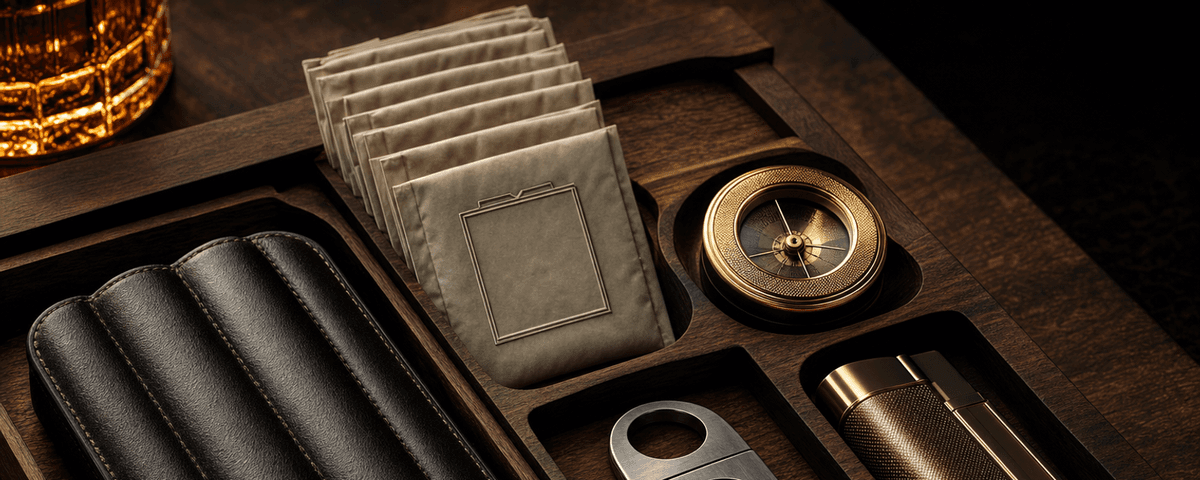
雪茄剪 / 打火機 / 雪茄盒 / Boveda
W Cigar 配件官網 · 專營雪茄配件正品

加 LINE 好友 · 文化諮詢
文化空間資訊 · 紳士沙龍 · 私人包場
本網站內容僅供雪茄文化、歷史、收藏與品吸知識研究參考。菸品有害健康、未滿法定年齡者請勿吸菸。實際規範請依所在地法律為準。
吸菸有害健康・戒菸專線 0800-636363・本站僅供 20 歲以上成年人閱覽。
讀到這裡,你不只是路過的人
留下 Email,加入 W 雪茄聖經內圈——總編輯 Wilson Tsai 親選的學院深文與國際新訊,先你一步送到信箱。
· 教育用途非銷售 · 隨時一鍵退訂 · Email 絕不對外公開 · 由勝茄股份有限公司營運
同分類延伸閱讀


資料來源:W Cigar Bible 編輯部整理 · 雪茄王子 Wilson Tsai 親自審稿
本文僅供雪茄文化、歷史、收藏與品鑑知識研究,不作為菸品促銷、銷售或購買建議。吸菸有害健康,未滿二十歲不得吸菸。