雪茄的成長與收成:從田野到工坊的旅程
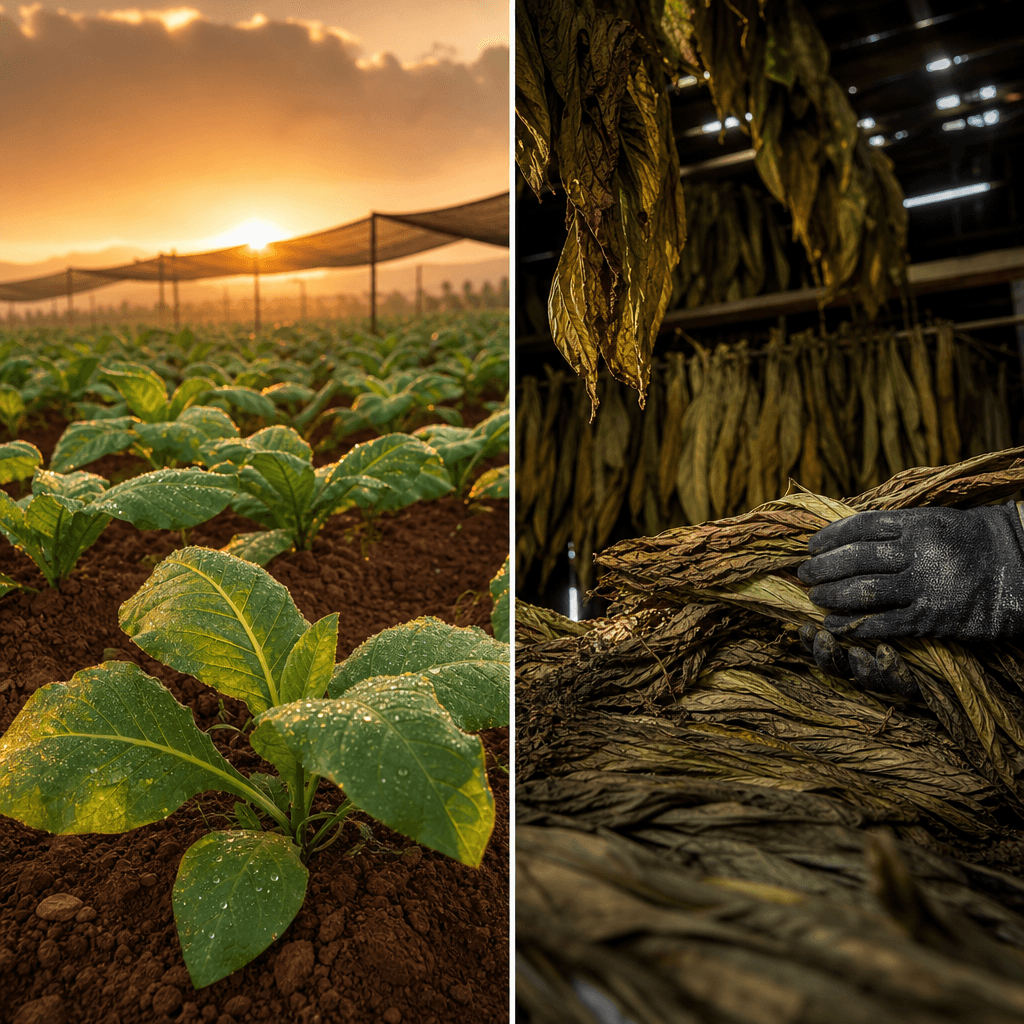
雪茄的風味源自於其生長環境,包括氣候、土壤和農務技術。從幼苗階段開始,雪茄的性格已被決定,農民透過精細的管理確保葉片的均勻生長。不同的產區如古巴、尼加拉瓜和多明尼加,因其獨特的自然條件,培養出各具特色的煙葉。採收過程中,分層採摘確保每片葉子達到最佳成熟度,隨後的晾房和發酵過程則進一步塑造雪茄的香氣和風味。這些細緻的步驟共同影響著雪茄的最終品質,顯示出田野對於雪茄風味的重要性。
- 雪茄的風味源於田野的氣候、土壤與農務經驗,產區影響糖分累積與葉片特性。
- 幼苗階段的管理對雪茄性格影響深遠,根系均衡與生長節奏是關鍵。
- 採收過程中分層採摘能確保葉片成熟度,影響最終風味的細膩度。
The Growth and Harvest of Cigars: From Field to Workshop Journey
The roots of cigars are not in the glass case or the band, but in the sunlight, wind direction, and harvesting rhythm of the first seedling in the field. Experienced enthusiasts talk about brands, vintages, and regions, but to truly trace the essence of flavor, one must return to how tobacco grows.
As the editor of the 'Cigar Bible,' I often say: The personality of a cigar is determined long before it is rolled in the workshop, sometimes even years before. From seeds, soil, shading, layered harvesting to fermentation and aging, each step rewrites the sweetness, spiciness, oils, and strength.
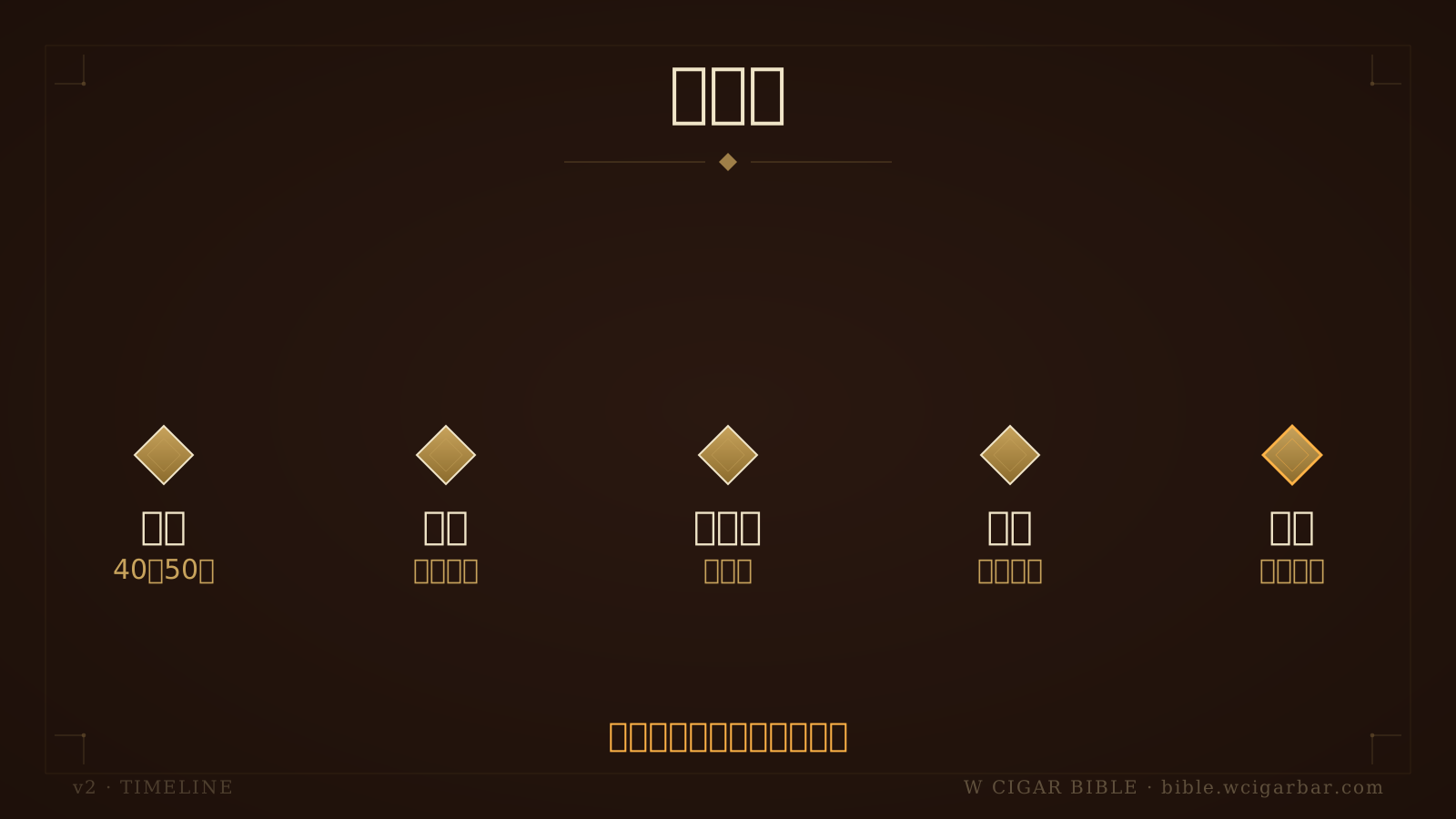
時間軸呈現育苗移植分層採收晾房與發酵
The Field is Not a Background, But the First Recipe of Cigar Flavor
Cuba's Vuelta Abajo, Nicaragua's Estelí, Honduras' Jamastrán, and the Dominican Republic's Cibao—these names are not romantic labels but the sum of climate, soil, and agricultural experience. Take Vuelta Abajo as an example: its reddish-brown soil has good drainage, and the dry season is relatively stable, suitable for cultivating delicate Cuban tobacco with a mineral feel. Estelí, with its volcanic soil, temperature differences between day and night, and stronger sunlight, often produces robust spiciness and a higher nicotine framework.
Veterans comparing the Cohiba Siglo series from before 2003 or the stable concentration of the 2010s Nicaraguan Padrón 1964 Anniversary will find that "region" is not just a flavor description but a language of agricultural conditions. The same variety in different fields will have different sugar accumulation, leaf thickness, and burning speed. Cigars do not first have a brand before flavor; it is the field conditions that are organized into recognizable styles by the brand.
Truly advanced observation is to look at regions and vintages together. Between 1998 and 1999, Cuban production fluctuated, and after 2001, some brands' boxed performances were more stable, which was related not only to workshop management but also to field leaf selection and storage rhythm. The Dominican Arturo Fuente OpusX proves that as long as microclimate, drainage, shading, and harvesting management are in place, regions traditionally considered unsuitable for high-end wrapper leaves can also cultivate iconic wrapper leaves.
From Seed to Transplant: Half the Character is Decided in the Seedling Stage
Cigar tobacco is usually not directly sown in the field but first cultivated in seedbeds or nursery trays for about 40 to 50 days. The seeds are extremely small, with tens of thousands per gram, so early management focuses on uniformity rather than quantity. If seedlings experience water stress in the first two weeks, even with subsequent fertilization, issues such as uneven leaf thickness and burning imbalance may arise. Large farms in Cuba, Nicaragua, and the Dominican Republic place great importance on this seemingly inconspicuous period.
After transplanting to the field, farmers adjust the plant spacing according to the purpose. Wrapper leaves need complete leaf surfaces and fine fibers, often using shaded cultivation and milder management; filler leaves can withstand more sunlight, aiming for strength, aroma, and structure. Take Connecticut Shade as an example: it matured in the Connecticut River Valley in the late 19th to early 20th century, and later Ecuador developed Ecuador Connecticut due to similar fog and sunlight conditions, becoming a common wrapper source for many medium-strength cigars.
The pursuit in the seedling stage is not a strong appearance but balanced roots and consistent growth rhythm. If there is too much height difference among plants in a field, it becomes difficult to achieve the same maturity of leaves during harvest, and when entering the workshop, blenders must use more selection and classification to compensate. This is why high-end brands would rather sacrifice part of the yield than let maturity in the field get out of control.
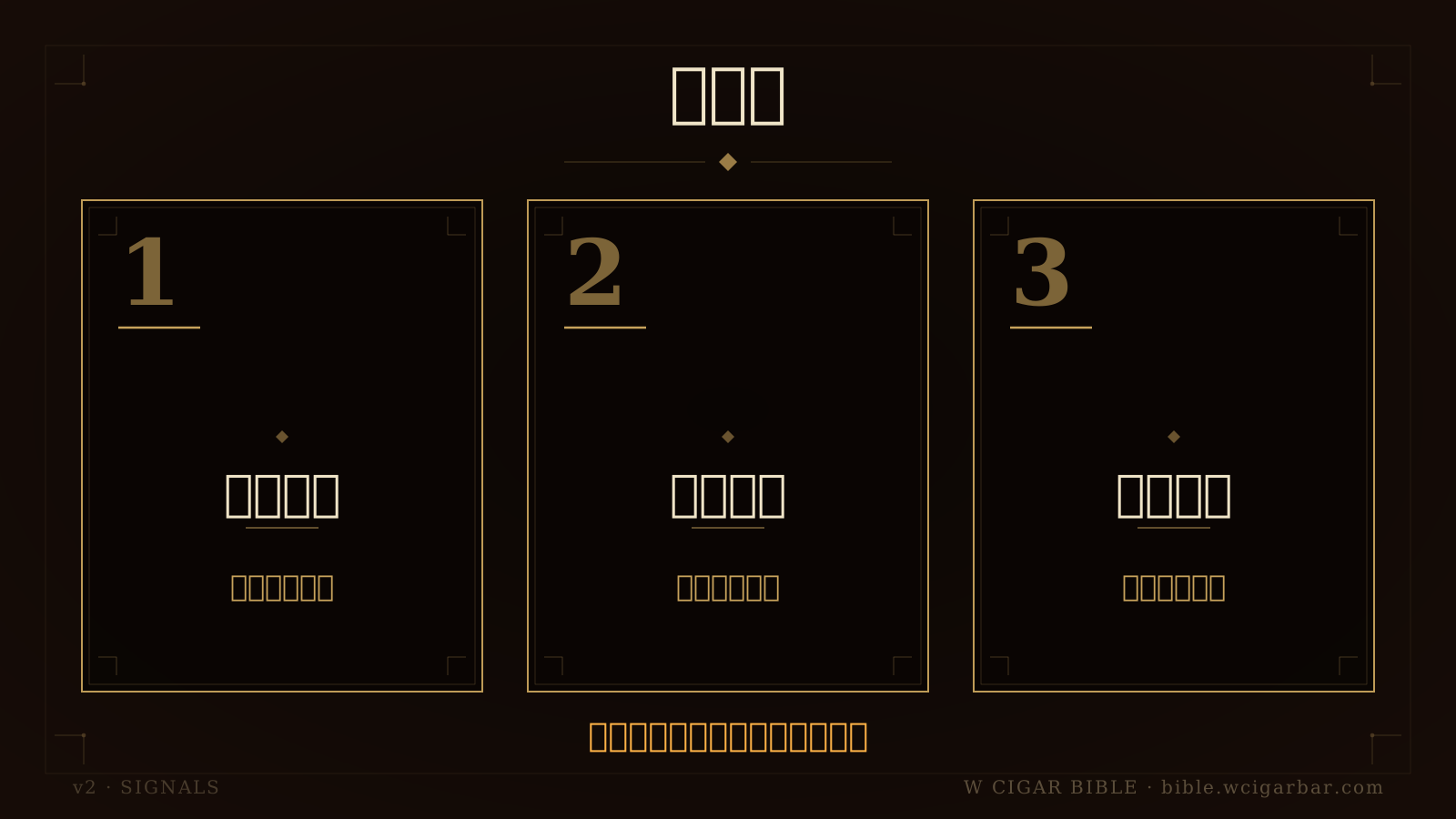
三張卡片列出田區葉位與熟度三項重點
Shading, Sun Exposure, and Leaf Position: Different Fates for the Same Tobacco Plant
A tobacco plant can be roughly divided from bottom to top into Volado, Seco, Viso, and Ligero layers. Different regions have slightly different names, but the logic is consistent: the higher the layer, the stronger the sunlight, the thicker the leaves, and usually the higher the oils, spiciness, and nicotine. Ligero in the filler often provides strength and aftertaste, while Volado is often responsible for combustibility, Seco brings out fragrance, and Viso is between aroma and structure.
The difference between shade-grown and sun-grown cultivation is easily noticed by veterans on the wrapper. Shade-grown wrappers usually have finer veins, a smooth touch, and uniform color, suitable for creating elegant lines; sun-grown wrappers have a stronger sense of oil and spice, such as Ecuador Habano and Nicaragua Habano, often appearing in more complex-flavored works. Leaf position is not about high or low grade but different functions; good blending looks at proportion, balance, and burning logic.
| Leaf Position | Common Use | Typical Characteristics | Impact on Flavor |
|---|---|---|---|
| Volado | Filler, Combustion Aid | Thinner, Matures Early | Enhances Burning Stability |
| Seco | Filler Aroma Layer | Bright Aroma | Floral, Woody, Herbal |
| Viso | Filler Backbone | Medium to High Oils | Nutty, Leather, Sweet Aroma |
| Ligero | Filler Strength Layer | Thick, Matures Late | Spicy, Intensity, Aftertaste |
| Wrapper | Wrapper | Complete Appearance | Affects Touch and First Impression |
Take Oliva Serie V Melanio using Ecuador Sumatra wrapper as an example: its sweetness and roasted feel are not solely supported by the filler; the wrapper's oils, thickness, and burning speed all participate in the blend. Conversely, the soft wood and coffee tones common in Cuban H. Upmann are also inseparable from the more delicate leaf position selection and aging rhythm.
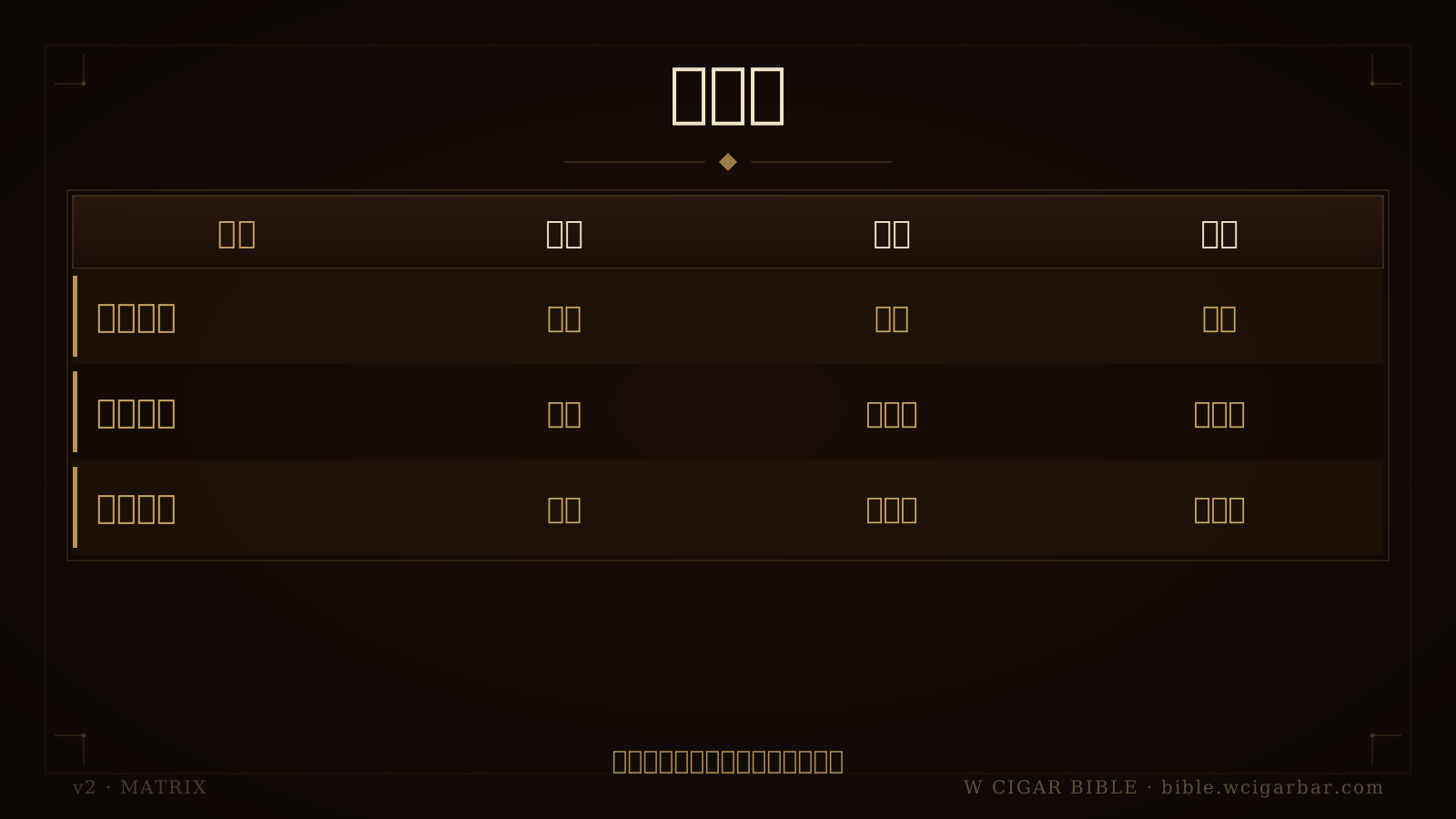
矩陣比較下層中層上層葉的用途與風味作用
Harvesting is Not Done at Once, But Layered Waiting for Maturity
Tobacco harvesting often uses "layered picking," commonly referred to as priming in English. Starting from the bottom leaves, picking is done every 5 to 7 days, and the whole plant may go through 5 to 7 rounds to complete. The bottom Volado matures first, and the top Ligero last. If efficiency is prioritized by cutting the whole plant at once, maturity details are sacrificed; if layered picking is too slow, some leaves may become overripe, fragile, or have imbalanced sugars.
Mature leaves are not simply judged by size but by color fading, leaf surface drooping, vein changes, and touch. Experienced farmers use touch to judge whether the leaf flesh has reached the "ready for curing barn" state. Since 2015, many Nicaraguan farms have emphasized field records, marking picking dates, field areas, leaf positions, and weather conditions for each batch to facilitate fermentation and blending traceability later. A day's difference in harvest time may not be earth-shattering, but a three to five-day difference for a whole batch can make the flavor rough or thin.
Leaves harvested too early often have a green, sharp grassy taste, burn quickly, and have short aroma; leaves harvested too late may have excessive nicotine, thick and hard leaves, and increased fermentation burden. This is why high-end workshops have increasingly emphasized "small batch" management since the 2000s. Brands like My Father, Tatuaje, and Padrón in the Nicaraguan series maintain the strength and clean aftertaste of dark filler largely due to maturity and batch processing discipline.
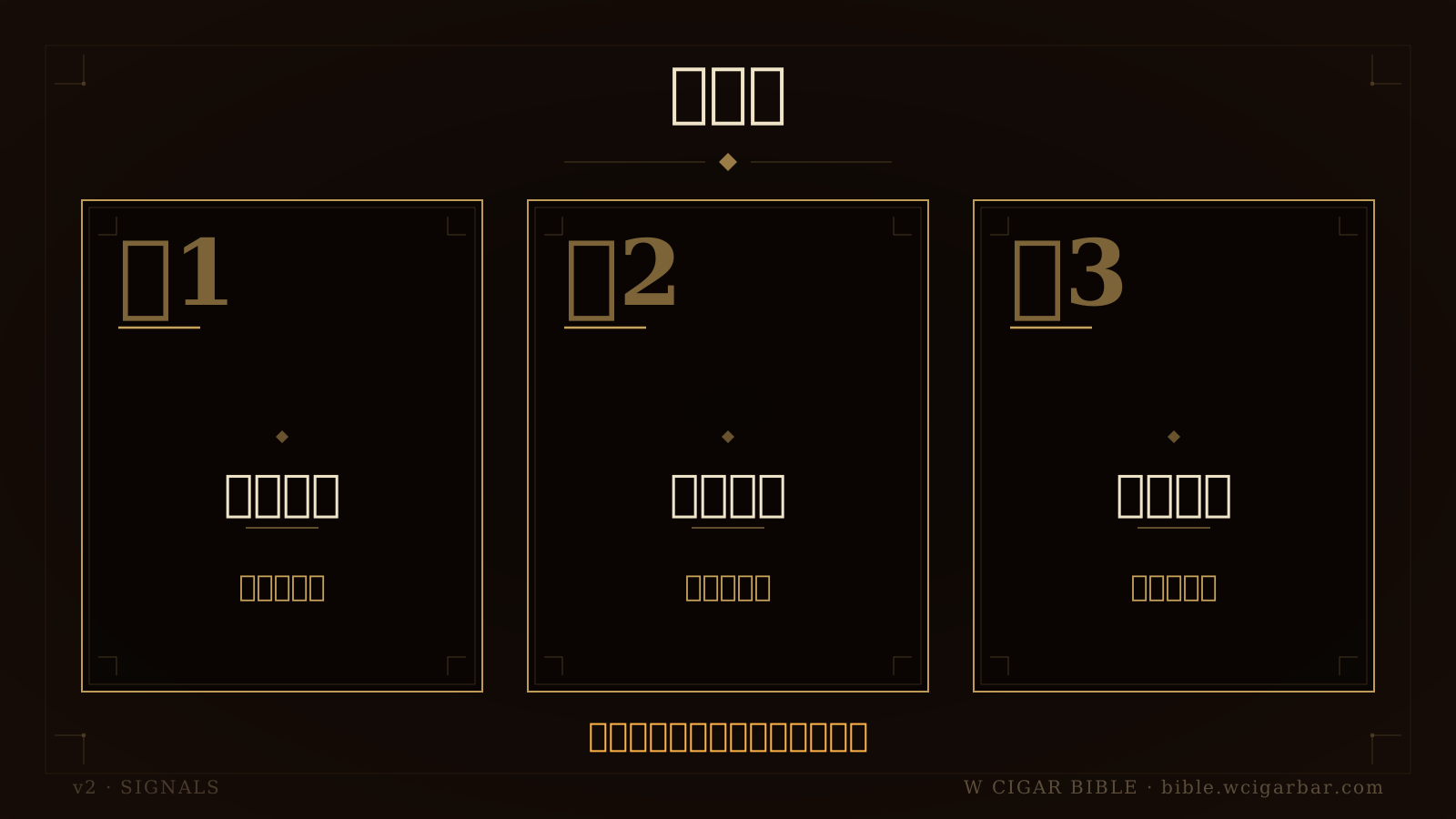
三張卡片說明深色晚收與產區判斷的誤解
Curing Barn Drying: The Sixty-Day Key from Green to Brown Leaves
The harvested leaves are sent to the curing barn. It's not just about drying the leaves but controlling moisture, temperature, and air flow to break down chlorophyll, turning the color from green to yellow to brown, and starting to form a softer aroma base. Traditional curing barns use wooden racks and ventilation doors, with farmers opening and closing window panels daily according to humidity; rainy seasons, cold fronts, or the edge of hurricanes all increase the risk for the entire batch of leaves.
Air drying generally takes 45 to 60 days, sometimes longer for thick Ligero. If dried too quickly, the outer layer of the leaf seals, trapping internal moisture, leading to a musty smell during subsequent fermentation; if dried too slowly, the risk of mold and decay increases. Some Dominican estates establish more precise zoning management within the curing barn, separating wrapper leaves from filler leaves to avoid different thickness leaves dragging each other down.
The task of the curing barn is to transform the field's green freshness into fermentable brown raw material, not to rush to create rich aromas. If a veteran dissects a cigar that burns with a pungent ammonia smell or a musty wood smell, the issue may not only be insufficient aging time but also an undesirable moisture curve during the curing barn stage. Many 1990s Cuban cigars discussed for batch differences can be traced back to the stability of post-harvest processing, in addition to box codes and workshops.
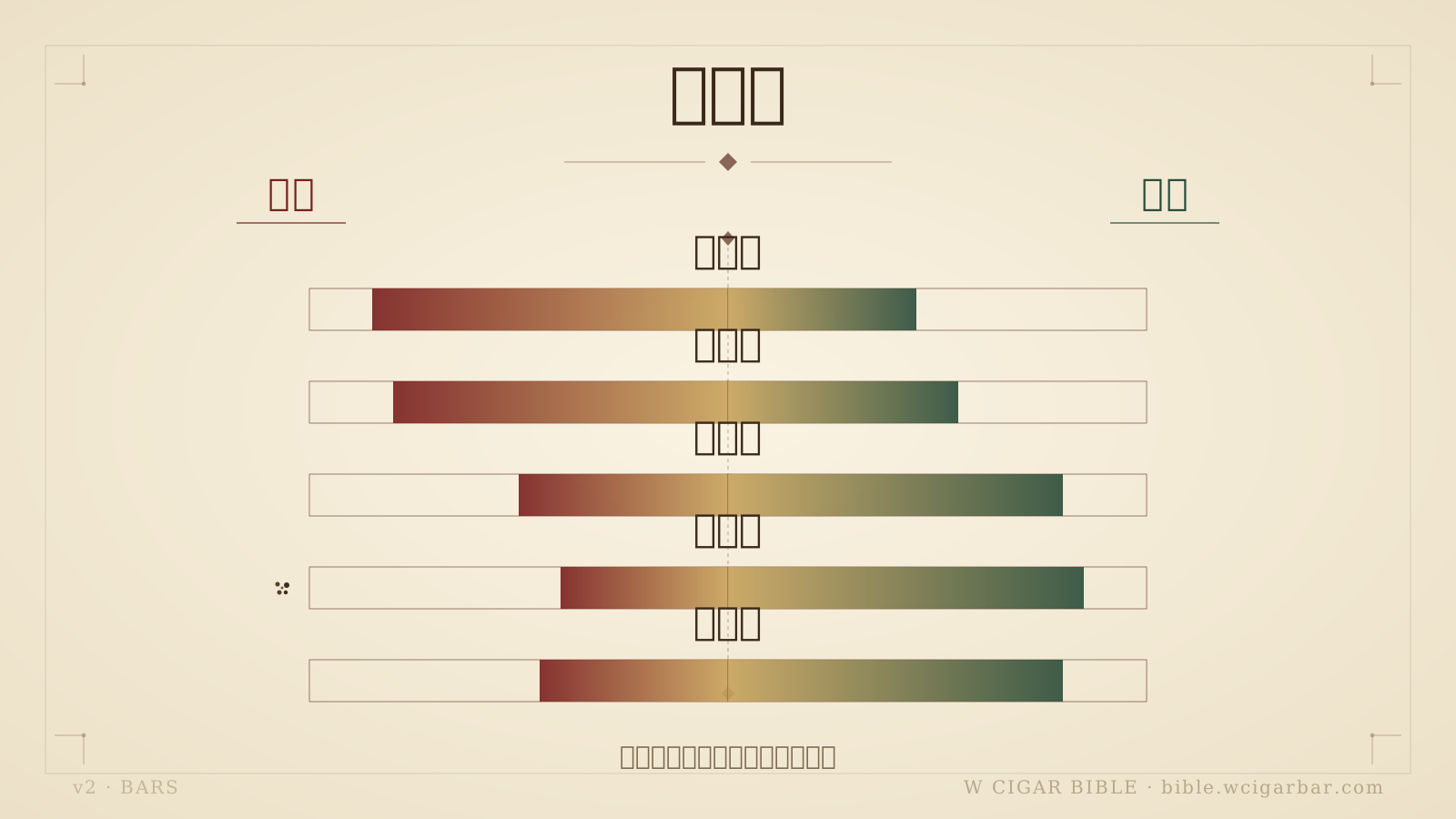
長條圖比較遮蔭與日曬在葉脈油脂辛香上的差異
Fermentation and Aging: Power is Tamed, Aroma Stands Up
The dried leaves are stacked into pilón for fermentation, with the core temperature often reaching 35 to 50 degrees Celsius, even higher for thick leaves. Workers must regularly turn the pile to ensure even heating of inner and outer leaves and release ammonia and excess moisture. Wrapper leaf fermentation is usually milder to avoid damaging elasticity and appearance; Ligero requires a longer time to tame strong spiciness and pungency.
This stage tests the brand style the most. Padrón is known for long aging and stable blending, with the deep sweetness and coffee-cocoa tones of the 1964 Anniversary and 1926 Serie not relying solely on dark wrappers but on leaves being cleaned during fermentation and inventory management. Davidoff, in its Dominican and Nicaraguan works, often showcases a "non-sharp strength, layered aroma" approach, stemming from patient raw material management.
Fermentation reduces roughness, aging accumulates harmony; both have different purposes but equally determine whether a cigar can be intriguing. The so-called collection potential must also return to source, storage conditions, and market liquidity; it does not guarantee appreciation, still depending on source preservation and market. If a cigar's raw material is insufficiently fermented, it will not automatically become a classic no matter how long it is kept, only making defects less sharp.
Classification Before the Workshop: How Blenders Turn Crops into Brand Language
Before entering the workshop, tobacco leaves are classified by size, color, thickness, leaf position, elasticity, and completeness. Wrapper leaves have the highest requirements; a leaf may be downgraded from wrapper to binder or other uses due to small holes or overly coarse veins. Cuban workshops traditionally have very fine color classification; Claro, Colorado, Maduro, and other color grades are not just appearance preferences but also involve burning and aroma expectations.
The blender's job is not to put all the strongest leaves in but to make each layer functional. Take Partagás Serie D No.4 as an example: veterans are familiar with its wood, earth, pepper, and mid-to-late strength; if the Ligero proportion is too high, the front may be oppressive, and burning slower. Conversely, Hoyo de Monterrey Epicure No.2 would lose its signature creamy woodiness without the balance of soft filler and delicate wrapper.
- Wrapper determines touch, visual, and initial impression
- Binder is responsible for structure, affecting burning stability
- Volado helps with burning rhythm
- Seco provides aroma and brightness
- Viso, Ligero establish depth, oils, and aftertaste
Truly mature blending does not pursue a single concentration but allows leaf position, burning, and aroma to make way for each other in the same cigar. This is why when I look at a new batch, besides the brand name, I also pay attention to box codes, vintage, color consistency, and tactile elasticity; because those details often reveal what it has experienced in the field and warehouse.

快問快答列出同區深色與青味三個實用問題
Flavor from Vintage Cases: Why the Same Brand Can Vary Greatly Between Batches
Veterans often say the same cigar can have different personalities in different years. This is not superstition. Many boxes of Cuban cigars around 2006, after proper storage, exhibit smoother woodiness and honey sweetness; between 2014 and 2016, high-end Nicaraguan brands generally received more international market attention, and raw material inventory and production expansion made batch management an important test. When demand rises, if a brand does not have enough mature inventory, it is easy to show flaws in flavor stability.
Take the market discussion of Cohiba Behike launched in 2010 as an example: many focus on the medio tiempo leaf position, believing it brings special concentration and aroma. But looking deeper, this rare top leaf has low yield, matures late, and is strictly classified; the real challenge is maintaining supply and quality consistency. If harvest maturity and fermentation cleanliness are insufficient, even the rarest leaf position is just a gimmick, unable to automatically become a complex flavor.
The core of vintage differences is not just "how long it has been kept," but the sum of field conditions, post-harvest processing, and inventory choices that year. The same Maduro, Arturo Fuente Añejo, Padrón Maduro, and Oliva Serie V Maduro have different sources of sweetness: some lean towards barrel aroma and dried fruit, some towards cocoa coffee, some towards black pepper and roasting. Understanding the field and workshop, you won't just judge strength by color.
Common Questions
Why do cigars from the same region still have very different flavors?
Even within the same region, there are differences in field elevation, soil drainage, sunlight angle, and wind direction. Estelí can be robustly spicy or, through different leaf position proportions, more rounded; Vuelta Abajo does not mean every batch is delicate and flawless. Regions provide possibilities, agriculture and workshops turn possibilities into stable styles.
Does a darker wrapper mean a stronger cigar?
Not necessarily. Dark color may come from variety, fermentation, aging, or processing methods, but strength mainly depends on the filler structure, especially the proportion of Viso and Ligero. Maduro often has sweetness, cocoa, and coffee tones but is not necessarily stronger than Habano. Veterans should look at brand style, origin, and actual burning performance simultaneously.
Are leaves harvested later of better quality?
Upper leaves that mature later usually have higher strength and more oils but are not necessarily higher grade. If blending requires smooth burning, Volado is indispensable. Too much Ligero will slow burning and increase oral burden. A good cigar is not about filling it with strong leaves but letting each leaf position complete its task.
Why do some cigars have ammonia or green taste?
Common causes include insufficient fermentation, inadequate aging time, excessive storage humidity, or uneven post-harvest drying. If there is a slight ammonia smell, appropriate stable storage may improve it; if there is a significant moldy, musty, or pungent smell, the problem may have existed earlier in the curing barn or fermentation stage, and it is not advisable to expect change just with time.
Should collection focus more on vintage or storage?
Both are important, but storage is more direct. Clear source, stable humidity, and no drastic temperature fluctuations are necessary to allow good raw materials to continue integrating. Collection appreciation does not guarantee appreciation, still depending on source preservation and market. If the raw material itself is unbalanced, vintage will only record time, not automatically create depth.
I like to see cigars as an agricultural journey, not just a craft. When you can read a cigar's origin from leaf position, harvest, curing barn, and fermentation, brand preference becomes more precise, and taste judgment becomes freer. The truly fascinating thing is not memorizing names but understanding the choices behind each puff from that field. —Cigar Prince Wilson Tsai
Smoking is harmful to health. Under 20 years old is not allowed to smoke. Quitline: 0800-636363. This article is for reference by adults over 20 years old for cigar culture, preservation, and legal knowledge, not a tobacco advertisement, promotion, or purchase suggestion.
Like this article?Share with friends
Share this W Cigar Bible piece with friends who want to learn cigar culture, storage, and tasting.
想把這篇 化為實踐
雪茄聖經是知識;雪茄文化要在空間裡發生
W Cigar Bar 大安總店資訊
台北大安區 · 雪茄聖經總編輯 Wilson Tsai 主理的雪茄文化空間
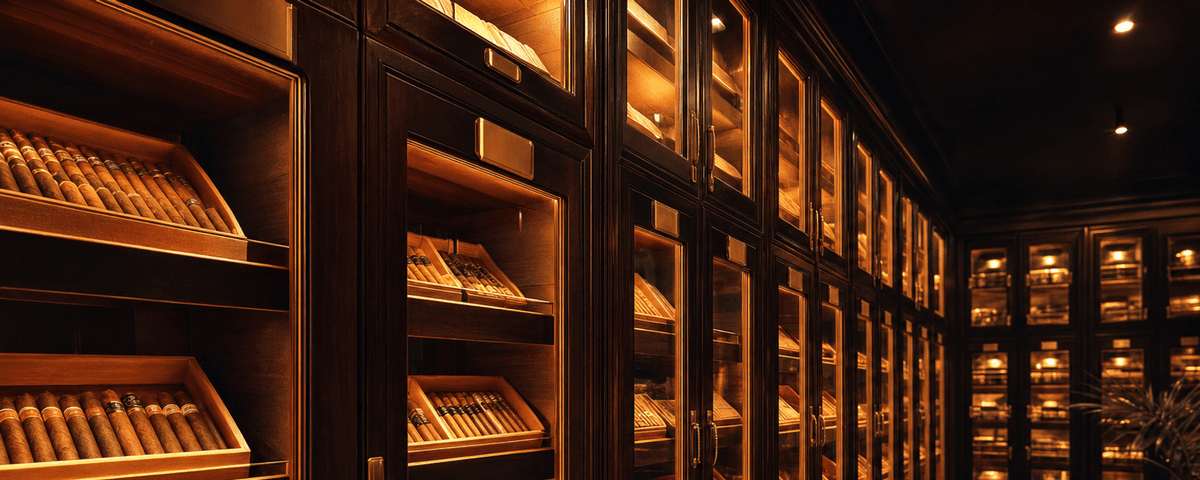
33 座 24 小時恆溫恆濕醇化室
W Cigar Bar 提供的會員醇化空間 · 場地資訊請洽編輯部
雪茄剪 / 打火機 / 雪茄盒 / Boveda
W Cigar 配件官網 · 專營雪茄配件正品
加 LINE 好友 · 文化諮詢
文化空間資訊 · 紳士沙龍 · 私人包場
本網站內容僅供雪茄文化、歷史、收藏與品吸知識研究參考。菸品有害健康、未滿法定年齡者請勿吸菸。實際規範請依所在地法律為準。
吸菸有害健康・戒菸專線 0800-636363・本站僅供 20 歲以上成年人閱覽。
讀到這裡,你不只是路過的人
留下 Email,加入 W 雪茄聖經內圈——總編輯 Wilson Tsai 親選的學院深文與國際新訊,先你一步送到信箱。
· 教育用途非銷售 · 隨時一鍵退訂 · Email 絕不對外公開 · 由勝茄股份有限公司營運
同分類延伸閱讀
資料來源:W Cigar Bible 編輯部整理 · 雪茄王子 Wilson Tsai 親自審稿
本文僅供雪茄文化、歷史、收藏與品鑑知識研究,不作為菸品促銷、銷售或購買建議。吸菸有害健康,未滿二十歲不得吸菸。