雪茄的工藝革命:從傳統手作到現代技術
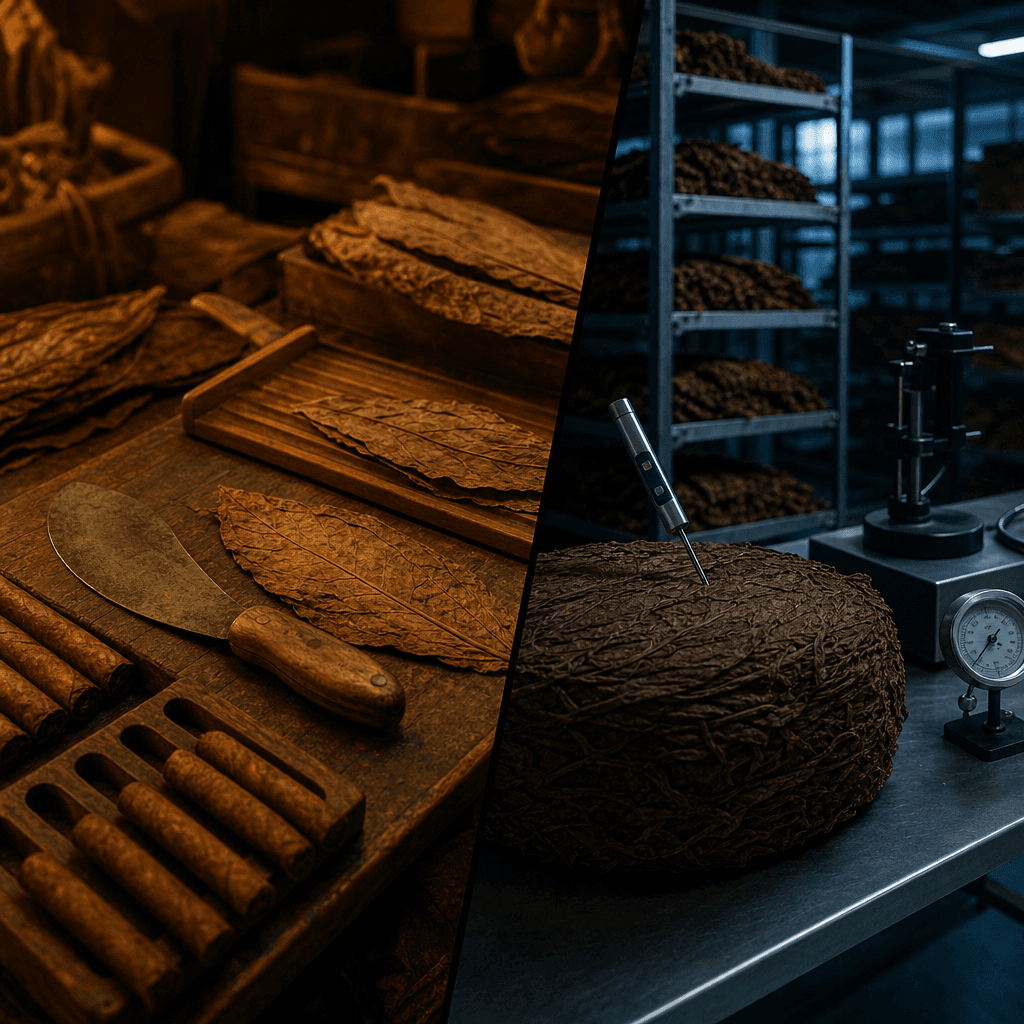
雪茄工藝的革命不僅是機器取代手工,而是將數據與傳統技術結合,提升品質與穩定性。從19世紀哈瓦那的手工製作到現代工廠的精細流程,雪茄的製作過程經歷了顯著變化。農田管理、發酵技術及配方紀錄等現代技術,讓每一支雪茄的風味得以精準控制。手工捲製的價值在於師傅的即時調整,而半自動化則確保了穩定的產品品質。現代品管技術使得每批雪茄的品質可追溯,進一步強化品牌信任。
- 雪茄工藝革命強調數據與人類判斷的結合,讓生產過程更穩定。
- 現代雪茄的品質控制依賴可量化工具,確保每批產品的一致性。
- 品牌獨特性來自長期累積的味覺秩序,與工廠文化密切相關。
The Craft Revolution of Cigars: From Traditional Handcrafting to Modern Technology
The craft revolution of cigars has never been about discarding the romance of handcrafting for cold machines. The real change is the simultaneous evolution of fields, fermentation rooms, rolling tables, quality control rooms, and warehouses; a cigar's soul is still determined by humans, but increasingly relies on data to minimize errors and stabilize style.
As the editor of the "Cigar Bible," I have seen many veterans shift from brand preferences to craft inquiries: Why do some years of Robusto burn more steadily? Why can the lines of Cuba, the cleanliness of the Dominican Republic, and the strength of Nicaragua retain their distinctiveness even after scaling up? The answer lies at the intersection of traditional and modern technology.
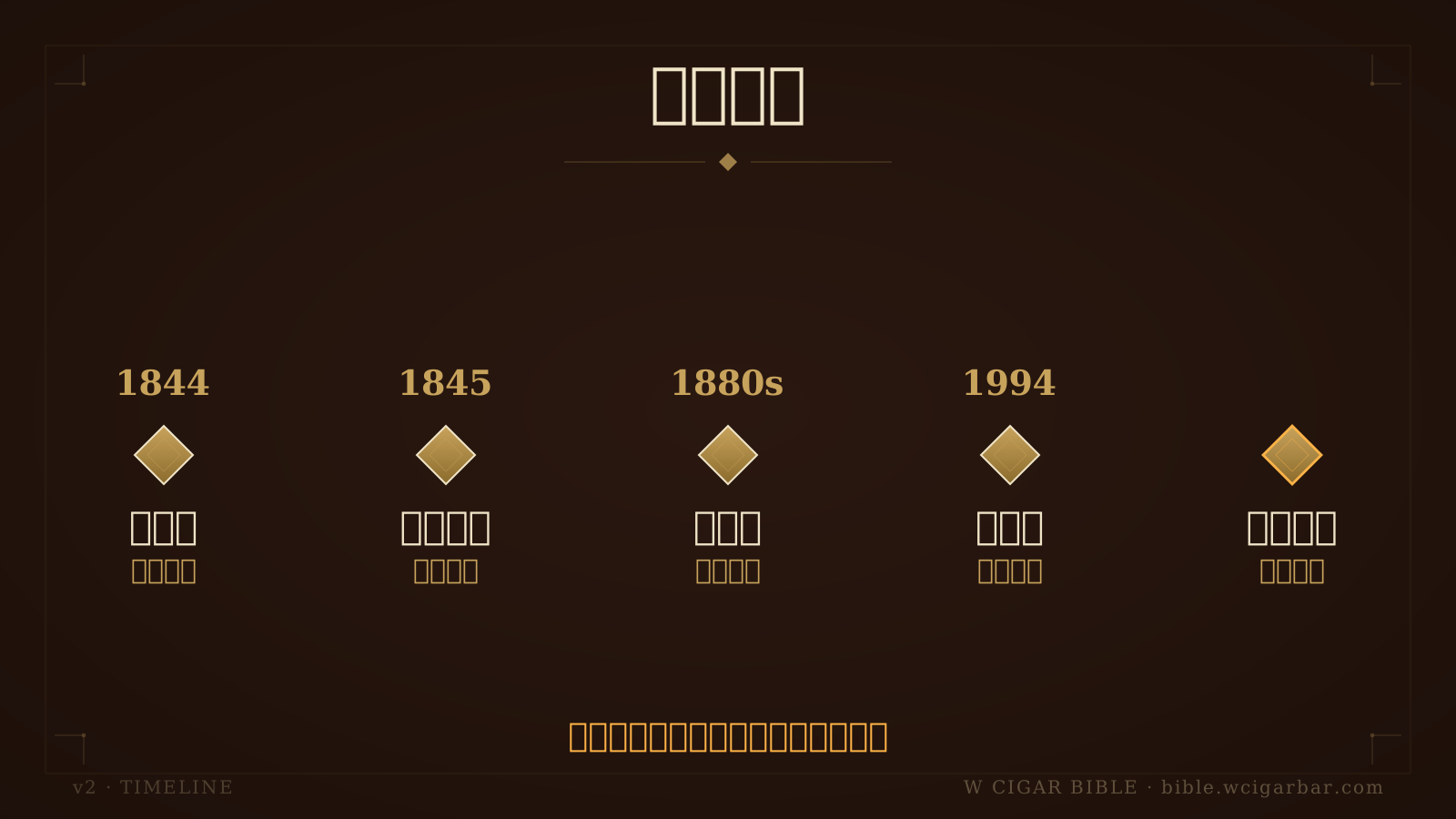
時間軸列出工廠制度到數據品管的演進
From the Hands of Torcedor to Factory Systems: The Starting Point of the Craft Revolution
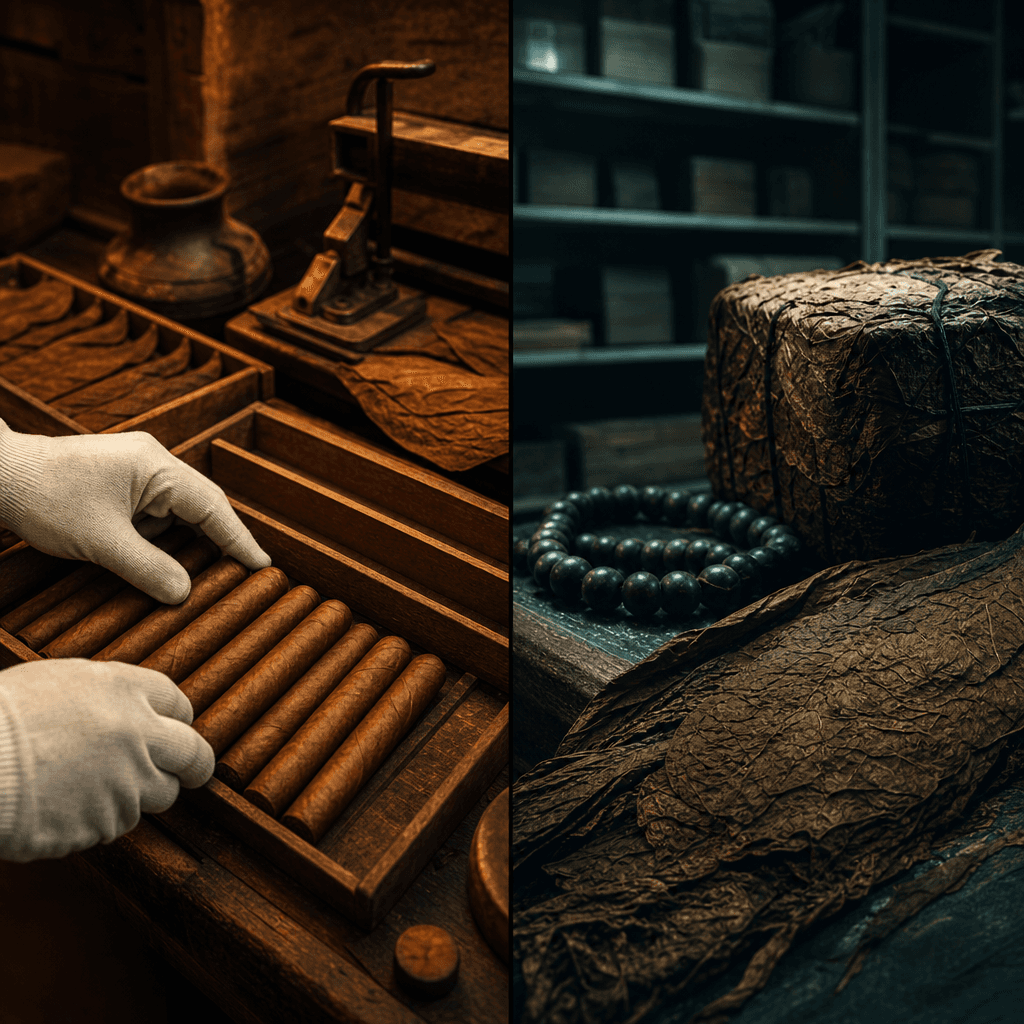
In the 19th-century Havana factories, the core was still the hands, knives, molds, and wooden tables of the torcedor. At that time, brands like Partagás, founded in 1845, and H. Upmann, founded in 1844, had already pushed family workshops towards more systematic factory production. The tradition of "lector," where readers read newspapers and novels, also made the factory not just a place of labor but a venue for brand culture formation.
By the 1880s, Oscar Hammerstein had improved cigar machinery, and machines began to significantly impact the short filler, machine-made, and budget cigar markets. However, the key to premium long filler cigars was still difficult to completely replace with machinery, as each leaf varies in thickness, elasticity, moisture content, and oil. The revolution in cigar craftsmanship is not about machines replacing hands but about machines handing over quantifiable errors to data while humans retain the final judgment.
In the latter half of the 20th century, the factory systems in Cuba, the Dominican Republic, Honduras, and Nicaragua gradually matured. For classic sizes like Montecristo No.2 and Partagás Serie D No.4, brands must maintain draw resistance, burning speed, and flavor curves across different batches. This forces factories to document the master's experience into processes: leaf grading, humidity rehydration, bunching methods, pressing time, and final inspection standards cannot rely solely on oral transmission.
Today, when veterans talk about handcrafting, they cannot stop at "hand-rolled is better." The true value of hand-rolling is the master's ability to immediately correct leaf differences; the true value of modern factories is turning these corrections into standards that teams can replicate. The essence of brand heritage is allowing people and leaves from different years to still speak the same language.

三張卡列出人手判斷數據降誤與葉源先行
Seeds, Fields, and Fermentation: Modern Technology First Changes the Leaves
The cigar revolution often does not start at the rolling table but with seeds and field management. Cuba has repeatedly improved black tobacco varieties in the 20th century, such as the Corojo and Criollo series; after the 1990s, balancing disease resistance, yield, and flavor became an important topic. The three major regions of Nicaragua—Estelí, Jalapa, and Condega—also form distinctly different burning and strength performances due to differences in soil minerals, sunlight, and altitude.
Field technology allows farmers to more precisely manage shading, irrigation, and harvesting rhythms. For the same tobacco plant, the lower volado usually burns well, the middle seco carries aroma, and the upper ligero has high strength and oil content. If the harvest time differs by 3 to 5 days, the sugar content, nicotine, and leaf structure will change. The stability of modern cigars begins before the leaves leave the field.
Fermentation technology is equally crucial. Traditional pilón stacking fermentation relies on the master's tactile and olfactory judgment of temperature, while modern factories often use temperature probes and batch records to keep fermentation within a safe range of about 40 to 50°C. If the temperature is too low, ammonia and greenness do not dissipate cleanly; if too high, aroma and oil may be destroyed, and leaves may even become brittle.
Take Fuente Fuente OpusX as an example; in the mid-1990s, it made Dominican wrappers a topic of discussion, not just because of marketing but due to the overall success of field, harvest, fermentation, and long-term aging. Veterans often say a brand "has a family taste," which is actually the result of long-term accumulation of farming methods, fermentation room habits, and leaf selection, not just a formula sheet.

矩陣比較田間發酵與品管三項工藝作用
Formulas No Longer Rely Solely on Memory: Blending, Draw, and Flavor Databases
In the past, blending masters worked with their tongues, noses, and memories, which remains an irreplaceable core. But in modern factories, formula management is no longer just an oral description like "this batch of ligero is stronger this year," but records the region, field block, harvest layer, fermentation batch number, moisture content, and aging time. For example, the Padrón 1964 Anniversary series, launched in 1994, can maintain recognizable cocoa, coffee, and pepper lines over the long term, relying on strict leaf inventory management.
Blending is not only about taste but also about structure. Robusto commonly has a length of about 4.875 to 5 inches and a ring gauge of around 50; Torpedo like Montecristo No.2 is about 6.125 inches with a ring gauge of 52. Changing the size changes the burning area and smoke temperature, and the same leaf combination in different sizes may have completely different flavor proportions. Truly advanced blending ability involves adjusting taste, burning, and draw simultaneously.
Modern factories conduct small-batch experiments to compare different bunching methods. For example, entubado rolls each filler leaf into small tubes, creating clear air channels; booking folds like book pages, efficient but requires good draw control; accordion emphasizes leaf elasticity and airflow. These techniques themselves have no absolute superiority; the key is whether the brand wants to present a dense, linear, refreshing, or explosive curve.
I often remind veterans that evaluating a cigar should not only focus on the initial aroma. If the middle section transitions naturally and the final section is not overly hot or bitter, it usually indicates a high degree of consistency in blending and structure. The formula sheet is just the starting point; whether order can be maintained during the 60 to 90-minute burning process is the real craft test.
Hand-Rolling and Semi-Automation: Speed is Not the Only Variable
Premium long filler cigars mostly still rely on handcrafting, but modern factories are no longer purely slow-paced scenes. Humidity control in rehydration rooms, standardized pressing times, fixed cutting sizes, and final inspections using tool assistance all embody the spirit of semi-automation. The purpose of mechanical intervention is not necessarily to speed up but to allow each master to work with more stable material conditions.
For large factories, a skilled torcedor may complete about 80 to 150 cigars per day, depending on size and difficulty. Lancero, Pyramid, and Perfecto usually test tension and shaping more than Robusto; the smaller the ring gauge, the easier it is for draw imbalance to be magnified. The value of handcrafting is not in rejecting tools but in using tools to reduce noise, making human skills more accurate.
| Production Method | Common Uses | Advantages | Risks |
|---|---|---|---|
| All-Handcrafted Long Filler | Premium series, limited sizes | Detailed structure, immediate leaf adjustment | Relies on master experience, larger batch differences |
| Semi-Automatic Assistance | Rehydration, pressing, cutting, quality control | More stable size and draw | If processes become rigid, style may flatten |
| Machine-Made Short Filler | Mass market, everyday budget products | High output, low cost | Complexity and burning rhythm harder to achieve |
Davidoff, after leaving the Cuban system in the 1990s, pushed Dominican production towards high precision, which is a good case. Its style is often described as clean, balanced, and clearly defined lines, backed by rigorous processes and raw material control. Old-school romance often views machinery as an enemy, but the truly mature view is: machinery is responsible for stabilizing the framework, and humans are responsible for the depth of the soul.

三張卡提醒手工抽阻與環徑的常見誤解
Quality Control Revolution: From Visual Inspection to Draw, Humidity, and Traceability
In the past, quality control mainly relied on visual inspection, hand squeezing, smelling, and senior masters' sampling. These methods remain important today, but modern factories have added more quantifiable tools, such as draw testing machines, weight grading, humidity records, ring gauge checks, and batch tracking. If a cigar is too tight, the burning temperature can easily rise and bring bitterness; if too loose, it burns too quickly, and aroma layers end before unfolding.
Many high-end factories place finished cigars in resting rooms to rebalance the humidity unevenness caused by rolling. Common storage environments are about 65% to 72% relative humidity and 18 to 21°C temperature range; different brands and regions may have slight adjustments. The core of modern quality control is turning "this cigar is in good condition" into "why this batch is stable" with traceable answers.
Draw testing has especially changed significantly. In the past, masters judged air channels by experience, but now machines can test whether each cigar's draw resistance falls within the set range. This is not to negate the tactile sense but to avoid having 3 out of 25 cigars in a box severely blocked, damaging brand trust. For veterans, stability itself is a value, especially when collecting and comparing the same brand over the long term.
In terms of cases, Oliva Serie V, launched in 2007, established a reputation among Nicaraguan full-bodied cigars, not just because of its strength but due to relatively reliable burning and structure. My Father, AJ Fernandez, and other Nicaraguan brands also show similar directions: high intensity no longer equals roughness, and strong flavors also require precise quality control support.
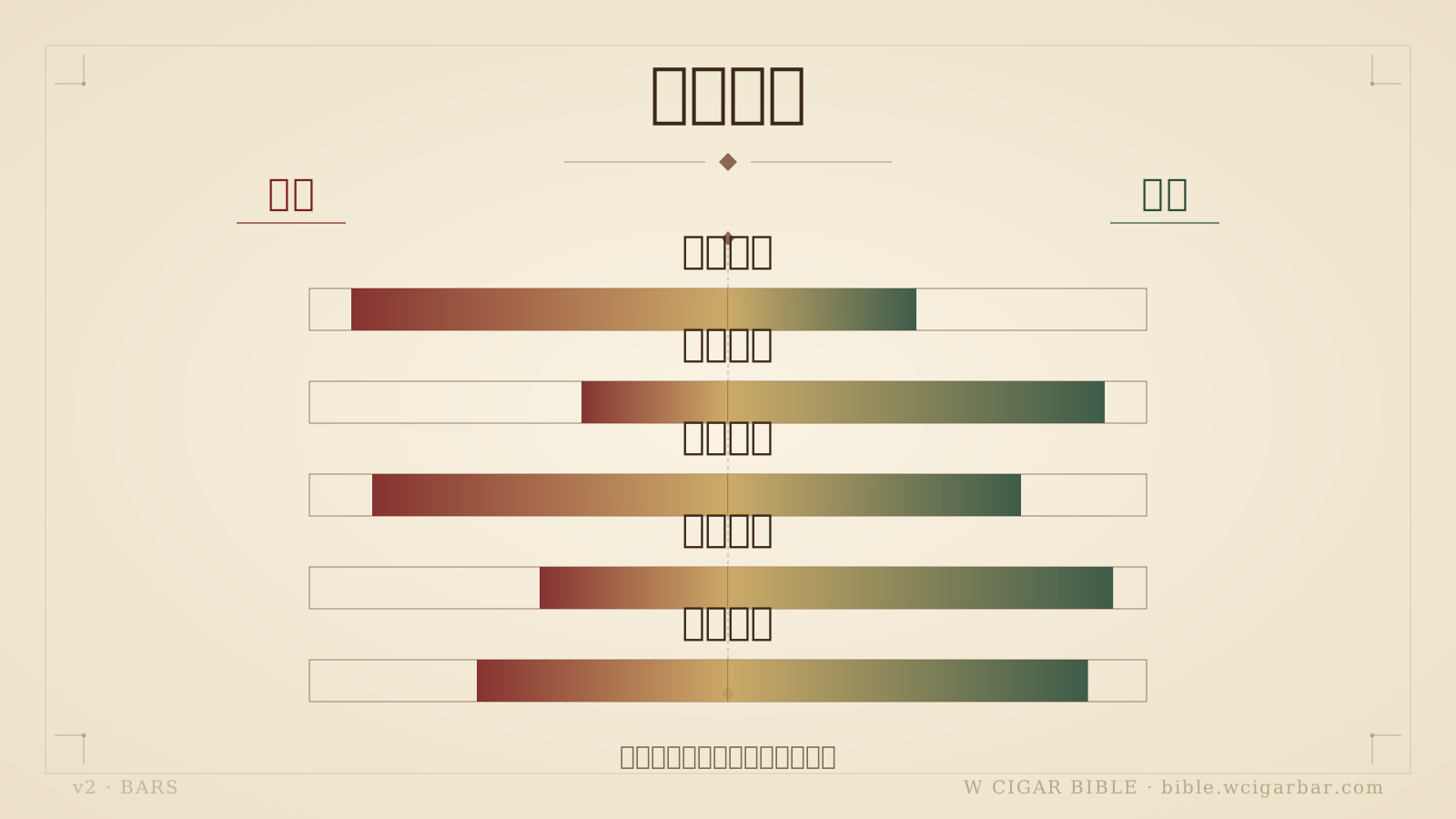
長條圖對比傳統手感與現代數據的工藝取向
How to Preserve Brand Uniqueness: Cases from Cuba, Nicaragua, and the Dominican Republic
Brand uniqueness is not a sticker but a long-term accumulation of taste order. In the Cuban Habanos system, Cohiba, Montecristo, Partagás, and Hoyo de Monterrey each have different tones: Cohiba commonly has cream, grass, honey, and mineral notes; Partagás often has earth, leather, and spice; Hoyo tends towards soft floral aromas. These differences come from the sum of leaf sources, fermentation, formulas, and factory culture.
Nicaragua's revolution occurred after the 1990s, especially after the 1998 Hurricane Mitch, when industry reconstruction gradually made Estelí an international focus. Padrón, Oliva, My Father, and Joya de Nicaragua have all redefined strength for the world. Modern technology has not eliminated regionality but has allowed regionality to be amplified more stably.
The Dominican Republic's examples lean towards precision and elegance. Davidoff, Arturo Fuente, and La Flor Dominicana represent different directions: Davidoff emphasizes balance and clean lines, Fuente emphasizes family tradition and aging depth, and La Flor Dominicana is known for strength and innovative sizes. The same country does not equal the same style; factory philosophy is the brand's fingerprint.
For veterans, the truly advanced comparison method is to break down "I like a certain brand" into describable elements: initial sweetness, mid-section woodiness, final spice, burning temperature, ash density, and draw elasticity. When you can articulate which craft elements contribute to a brand's uniqueness, you won't just be led by vintage, limited editions, or packaging.

三張問答卡整理手工年份與技術同質問題
Aging, Packaging, and Anti-Counterfeiting: Heritage is Completed in the Warehouse
After a cigar is rolled, it does not immediately enter its best state. Many factories allow finished products to rest in cedar-lined aging rooms for weeks to months, allowing ammonia to dissipate, humidity to balance, and wrappers and fillers to integrate. Some high-end or commemorative series may have raw leaves that have undergone 3, 5, or even more years of aging, with the finished product undergoing additional rest, making the flavor more rounded.
Packaging seems external but actually affects preservation. Spanish cedar boxes can regulate humidity and provide a subtle wood aroma; aluminum tubes can protect humidity and wrappers during travel; cellophane can reduce transport friction. When Cohiba Behike was officially launched in 2010, packaging, anti-counterfeiting labels, and series positioning simultaneously became discussion points, reflecting that modern high-end cigars have entered a stage of balancing raw materials, stories, and authenticity management.
Anti-counterfeiting technology is becoming increasingly important, especially for popular Cuban brands that are often counterfeited. Box labels, watermarks, laser marks, barcodes, seal positions, inner lining paper, box nails, and printing details all require cross-checking. As a PCC authorized dealer, I place more emphasis on source and preservation records because no matter how rare the box, if stored long-term in high temperatures or overly humid conditions, its state will be damaged.
The collector market often talks about appreciation, but I will make it clear: collection appreciation does not equal guaranteed appreciation; it still depends on source preservation and market. Cigars truly worth long-term preservation must first have a reliable source, healthy humidity, clear batches, and a brand context you are willing to understand. If you only chase boxes and fame, you often overlook the most fundamental craft value.
Frequently Asked Questions
Are hand-rolled cigars always better than machine-made cigars?
It should not be judged with a single sentence. When discussing premium long filler cigars, handcrafting can handle leaf differences, adjust tension, and burning channels, indeed having a significant advantage; but machine-made short fillers have reasons for existence in stability, cost, and convenience. The key is not the label of handcrafting or machine-made but whether it fits the product's positioning and flavor goals.
Does draw testing make cigars lose their personality?
No, draw testing only eliminates severe defects and does not determine the soul of the formula. True personality still comes from leaf sources, fermentation, blending, and rolling methods. If a cigar loses its charm because of stable draw, the problem is usually not with the testing machine but with the brand's lack of formula depth.
Why are there differences between different years of the same brand?
Tobacco is a crop, and rainfall, sunlight, hurricanes, diseases, and fermentation conditions all affect the outcome. Even if brands strive to maintain style, it is impossible for the leaves of 2014, 2019, and 2023 to be completely identical. Veterans appreciate vintage differences and should see if they remain within the brand framework rather than just pursuing complete consistency.
Does a larger ring gauge mean a stronger flavor?
Not necessarily. A larger ring gauge often allows for more filler, cooler smoke, and potentially broader layers; a smaller ring gauge increases the wrapper ratio, concentrating the aroma focus. Lancero is not necessarily milder than Gordo, and Gordo is not necessarily deeper. Concentration, complexity, and balance are three different concepts.
Will modern technology make all brands increasingly similar?
There is this risk, but it is not inevitable. If brands only pursue high scores, concentration, and beautiful burning, styles may indeed converge; but if technology is used to protect the original leaf source characteristics and family formulas, it can make brands clearer. Technology itself has no stance; the people using the technology determine the style.
How should veterans build their craft interpretation skills?
I suggest regularly recording size, origin, draw, burn line, ash color, changes in the front, middle, and back sections, and storage conditions. Don't just write "good" or "bad," but why. Continuously compare different sizes of the same brand, different origins of the same size, and you will clearly see craft differences after six months, rather than just staying in preference judgments.
The most fascinating aspect of cigar craftsmanship is that it always stands between tradition and innovation. Handcrafting gives cigars warmth, and modern technology ensures that warmth is not destroyed by chance. I believe that what veterans truly pursue is not just rarity or fame but understanding every choice a cigar makes from the field to the box. When you understand the craft, you will understand the brand and why a certain flavor moves you.
—Cigar Prince Wilson Tsai
Smoking is harmful to health. Under 20 years old is prohibited from smoking. Quitline: 0800-636363. This article is for reference by adults over 20 years old for cigar culture, preservation, and regulatory knowledge, not tobacco advertising, promotion, or purchase advice.
Like this article?Share with friends
Share this W Cigar Bible piece with friends who want to learn cigar culture, storage, and tasting.
想把這篇 化為實踐
雪茄聖經是知識;雪茄文化要在空間裡發生

W Cigar Bar 大安總店資訊
台北大安區 · 雪茄聖經總編輯 Wilson Tsai 主理的雪茄文化空間

33 座 24 小時恆溫恆濕醇化室
W Cigar Bar 提供的會員醇化空間 · 場地資訊請洽編輯部
雪茄剪 / 打火機 / 雪茄盒 / Boveda
W Cigar 配件官網 · 專營雪茄配件正品

加 LINE 好友 · 文化諮詢
文化空間資訊 · 紳士沙龍 · 私人包場
本網站內容僅供雪茄文化、歷史、收藏與品吸知識研究參考。菸品有害健康、未滿法定年齡者請勿吸菸。實際規範請依所在地法律為準。
吸菸有害健康・戒菸專線 0800-636363・本站僅供 20 歲以上成年人閱覽。
讀到這裡,你不只是路過的人
留下 Email,加入 W 雪茄聖經內圈——總編輯 Wilson Tsai 親選的學院深文與國際新訊,先你一步送到信箱。
· 教育用途非銷售 · 隨時一鍵退訂 · Email 絕不對外公開 · 由勝茄股份有限公司營運
同分類延伸閱讀

資料來源:W Cigar Bible 編輯部整理 · 雪茄王子 Wilson Tsai 親自審稿
本文僅供雪茄文化、歷史、收藏與品鑑知識研究,不作為菸品促銷、銷售或購買建議。吸菸有害健康,未滿二十歲不得吸菸。