雪茄的藝術品味:探索進階韻味的層次
在雪茄品味的進階過程中,理解香氣、口感與餘韻的層次至關重要。香氣不僅是單一味道,而是一張動態地圖,隨著時間與吸食方式的變化而變化。口感結構則需分開觀察濃度、力量與質地,避免將強度與深度混淆。餘韻的長短反映了雪茄的回想價值,真正的高水準雪茄在吐煙後仍能留下清晰的線索。此外,剪、點、吐、停的細節控制能提升品味體驗,而年份與保存條件則影響雪茄的個性與風味發展。
- 香氣的進階判讀在於辨認香氣何時出現與消退,而非單純使用形容詞。
- 口感結構應分為濃度、力量與質地,避免將強度誤認為深度。
- 餘韻是判斷雪茄品質的重要指標,需在不同時間點觀察其變化。
The Art of Cigar Appreciation: Exploring Advanced Flavor Layers
As the editor of "Cigar Bible," I often find that among seasoned enthusiasts, the most interesting discussions are not about "which cigar is good," but rather why the same cigar can present completely different layers under varying conditions of time, humidity, cutting method, and rhythm.
The core of advanced appreciation is to dissect aroma, taste, and aftertaste, and then reassemble them into a complete experience. In this article, I want to discuss not introductory terms, but how to further understand the "dimensionality" of a cigar once you are familiar with the brand.
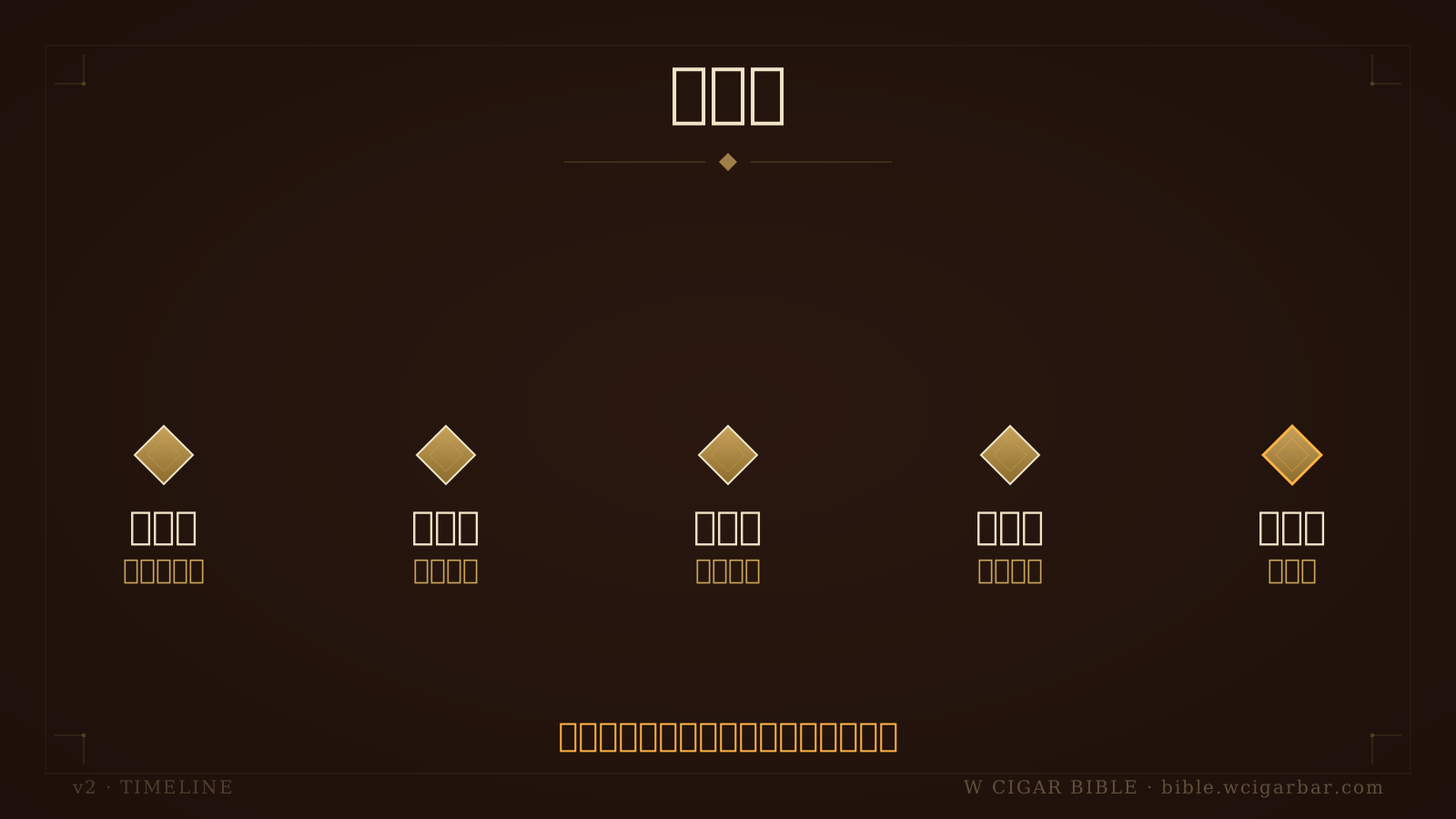
時間軸依序列出狀態、三段、香氣、口感與餘韻
Aroma is Not a Single Flavor, But a Dynamic Map
Many seasoned enthusiasts initially describe cigars using terms like "woody, leathery, coffee, nutty," but as they advance, the focus shifts from the number of terms to how the aroma moves. Take Montecristo No.2 as an example; recent batches often present cocoa powder and hay in the early stages, transition to roasted coffee in the middle, and if smoked too quickly, pepper and bitterness can overpower the original sweetness in the later stages. Advanced aroma interpretation is not about stating more adjectives, but about recognizing when they appear and fade.
I divide a cigar into the first 1/3, middle 1/3, and last 1/3 for observation, but I don't just record three stages; I take notes every 10 to 15 minutes. For instance, since its launch in 2003, Cohiba Siglo VI has consistently shown creamy, grassy, and honey tones in well-preserved boxes; however, if humidity exceeds 72% for a long time, the bright herbal notes in the early stages can become muted, turning into heavier grain flavors.
Aroma should also be divided into "nasal aroma" and "oral aroma." The earthy, black pepper, and leathery notes of Partagás Serie D No.4 are often direct in the mouth; but when a small amount of smoke is slowly exhaled through the nose, cedar, toasted bread crust, and a slight saltiness may appear. A truly layered cigar is not usually the one with the strongest aroma, but the one with the clearest transitions.
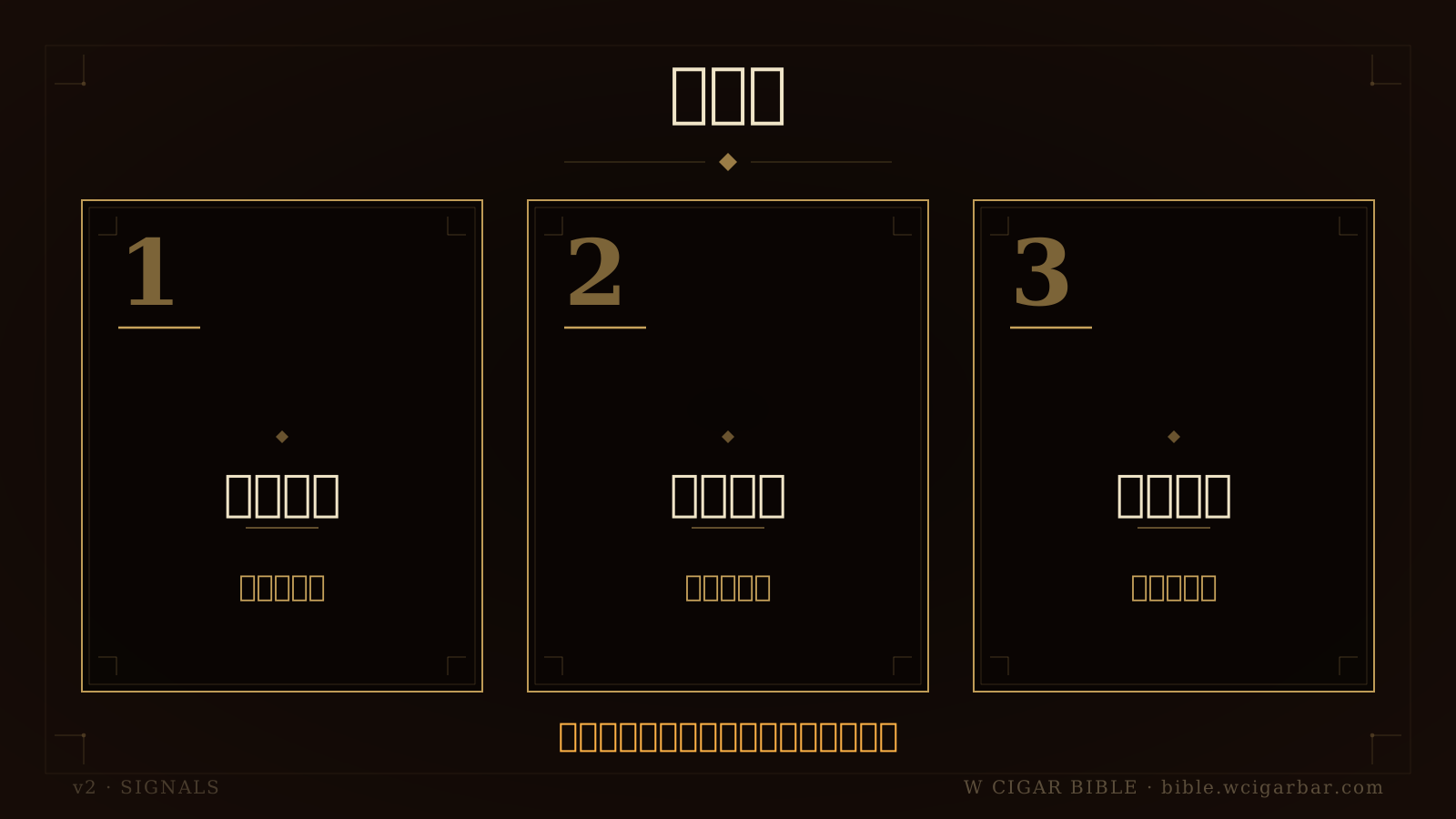
三張重點卡呈現香氣、結構與餘韻的觀察核心
Taste Structure: Concentration, Strength, and Texture Should Be Viewed Separately
Seasoned enthusiasts often say a cigar is "strong," but concentration, nicotine strength, and smoke texture are actually three different things. The cocoa, coffee, and brown sugar concentration in Padrón 1964 Anniversary Maduro is very high, but when burning steadily, the texture is round; conversely, some young full-leaf blends may not have complex aromas, but their strength can quickly build up, creating a sense of pressure. Do not mistake strength for depth; depth comes from structural balance, not just impact.
Taste can be recorded using four axes: sweetness, acidity, bitterness, and saltiness. Hoyo de Monterrey Epicure No.2 usually does not win by strength but has delicate cream, almond, and faint floral notes; if well-preserved, the early sweetness resembles white bread, the middle carries hazelnut, and the later stages have soft woodiness. Such cigars are most afraid of being smoked too quickly, as high temperatures can bring bitterness forward.
I suggest using a simple scale of 1 to 5: sweetness 3, acidity 1, bitterness 2, saltiness 1, plus smoke texture like "silky, dry, oily, powdery." After continuously recording 10 cigars, you'll find that your preference is not for brand names, but for a certain structure. For example, those who like Romeo y Julieta Churchill often appreciate the balance of red fruit, cedar, and soft leather, rather than simply pursuing heft.
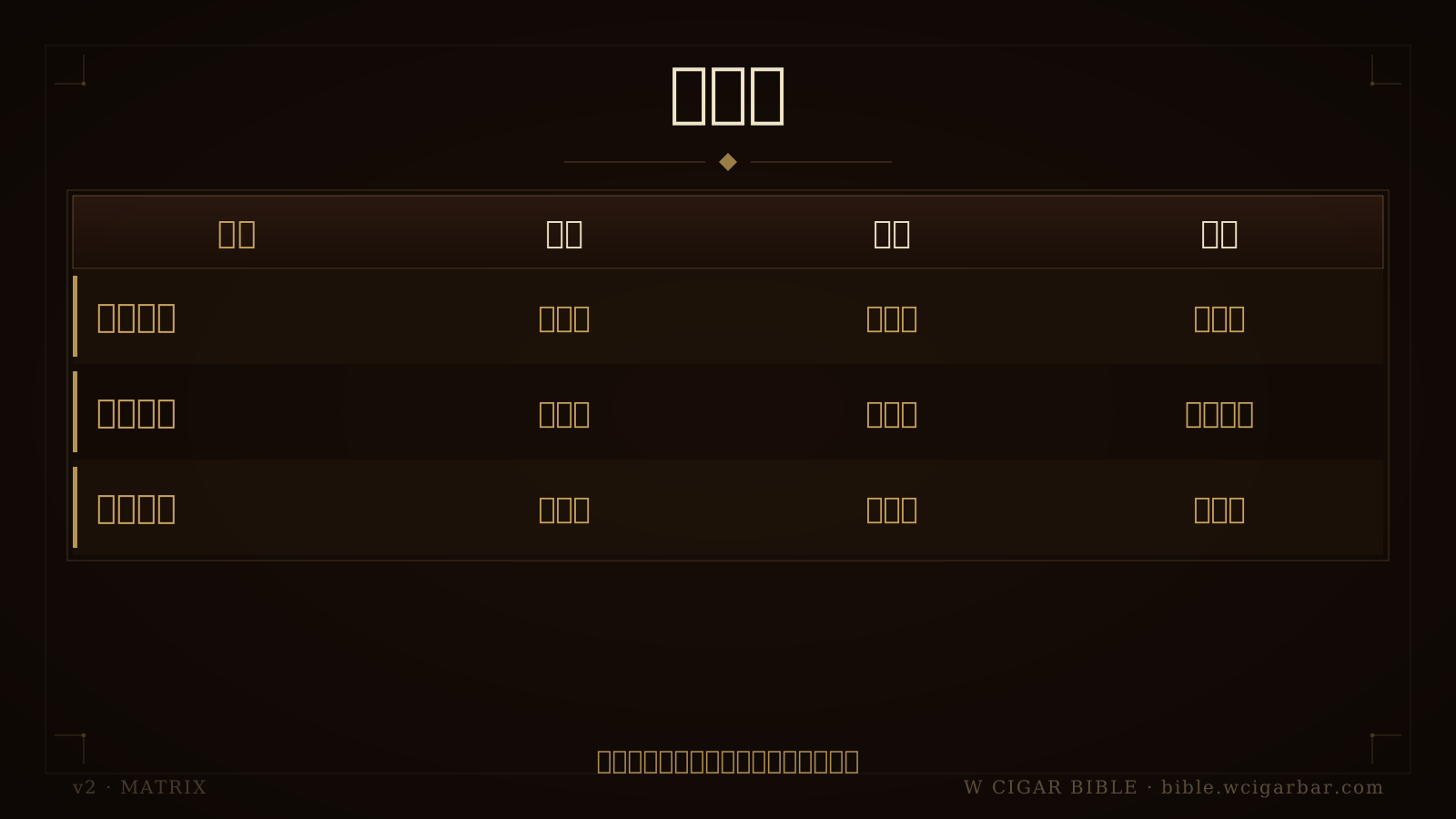
比較表以香氣、口感、餘韻三欄整理判讀差異
The Length of the Aftertaste Determines Whether a Cigar is Worth Remembering
The aftertaste is the most easily overlooked part of advanced appreciation. Many focus on the initial entry, but truly high-level cigars leave clear clues even after leaving the mouth. Since its commercial release in 1998, Trinidad Fundadores has been famous for its slender Laguito Especial size; well-preserved versions often have honey, dried flowers, light woodiness, and refreshing spice in the aftertaste. The aftertaste is not just residual flavor, but an important indicator of tobacco maturity and blending precision.
Aftertaste can be judged at three time points: 5 seconds, 20 seconds, and 60 seconds after exhaling. At 5 seconds, check if the main note is clear; at 20 seconds, see if the sweetness or spice is clean; at 60 seconds, check for any unpleasant bitterness or metallic taste. When in good condition, Davidoff Millennium Blend has an aftertaste of white pepper, creamy woodiness, and a hint of nuts, with a clean finish, making it intriguing.
I often use plain water as an interval, not rushing to pair with spirits, to let the aftertaste reveal itself. If a cigar has a glamorous aroma in the early stages but only leaves a bitter taste on the tongue after 30 seconds, it usually indicates issues with burning temperature, moisture content, or blending balance. Conversely, Fuente Fuente OpusX, which has become a strong representative of the Dominican Republic since 1995, leaves a spicy sweetness beyond its strength when in good condition, which is the value of the aftertaste.
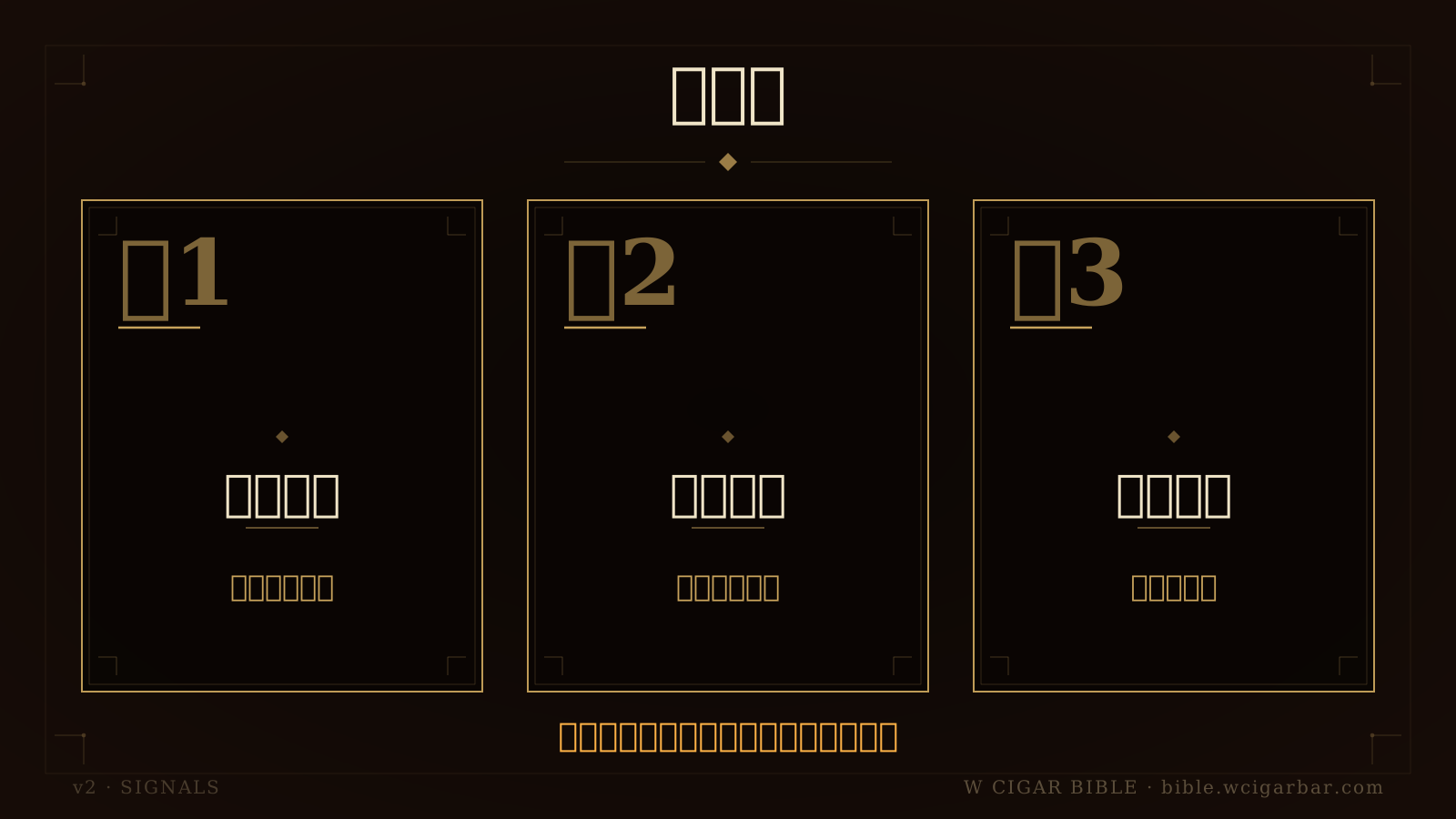
三張誤解卡提醒同盒差異、鼻腔回吐與偏燒判讀
Advanced Techniques: Control the Details of Cutting, Lighting, Exhaling, and Pausing
Cigar appreciation techniques are not about ritual but about reducing variables. Cutting too large can increase smoke volume and raise burning temperature; cutting too small can cause excessive draw resistance, making you unconsciously increase suction. For a 52-ring gauge Robusto, a straight cut usually retains about 2 to 3 mm of the cap edge; for a torpedo-shaped Montecristo No.2, I would cut smaller first and then adjust based on draw resistance. The purpose of the technique is to allow the cigar to perform at its designed stable temperature, not to force the flavor out.
When lighting, I prefer to toast the foot first, letting the edge of the cigar foot glow evenly before gently drawing. If the torch flame is too concentrated, it can scorch the outer wrapper; long matches or soft flame lighters are slower but more friendly to delicate cigars. Here is a control table I often use:
| Technique Aspect | Recommended Practice | Common Mistakes | Possible Impact |
|---|---|---|---|
| Cutting | Start small, then adjust | Cutting too deep | Overheating smoke, loose structure |
| Lighting | Toast foot, then gently draw | Flame directly on center | Bitter early stages |
| Rhythm | One puff every 45 to 75 seconds | Continuous quick puffs | Increased bitterness and spiciness |
| Correction | Lightly fix uneven burns | Frequent large flame corrections | Aroma covered by burnt taste |
Exhaling also has techniques. Do not exhale through the nose with every puff, especially with Partagás, Bolívar, or young Nicaraguan blends, as the spice may be too strong. I do a light nasal observation every 3 to 5 puffs, allowing only a small amount of smoke to exit through the nose. Pausing is equally important; if the ash temperature is too high, putting it down for 90 seconds can often bring back the sweetness in the next puff.
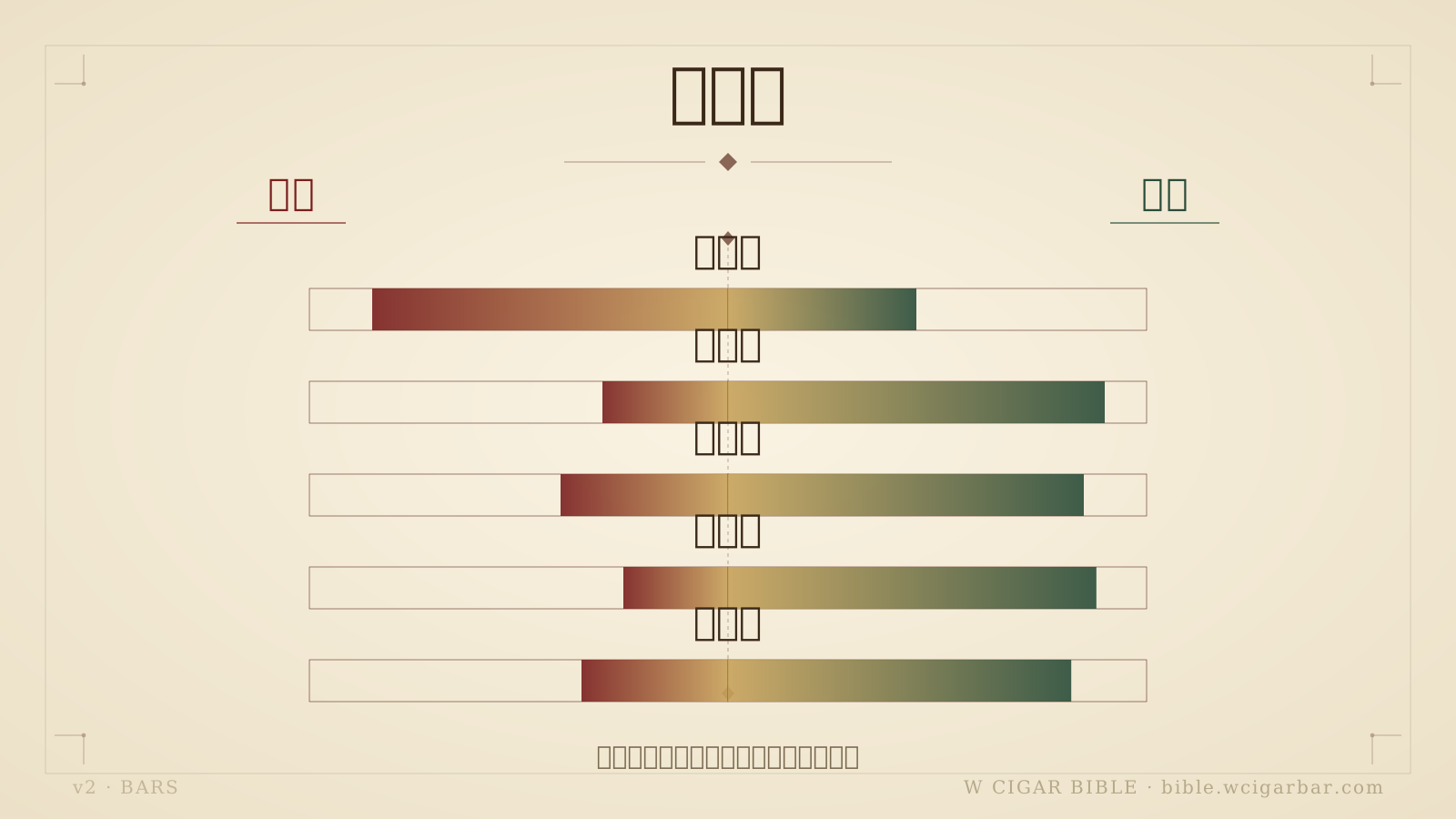
橫條圖比較表層描述與進階判讀在五個軸線的強度
Vintage, Aging, and Storage: Different Personalities Even Within the Same Brand
Seasoned enthusiasts should know that cigars are not fixed-label beverages. The same H. Upmann Magnum 46 from 2014, 2018, and 2022 may show differences due to tobacco source, rolling condition, and storage conditions. Aging is not magic but a gradual integration of moisture, volatile substances, and internal compounds in the tobacco. Vintage provides clues, but storage is key to determining whether a cigar ages gracefully.
Generally, many Havana cigars enter a more harmonious stage 3 to 5 years after boxing; over 10 years, they may develop honey, dried fruit, old library, and softened woodiness. However, not every cigar is suitable for long aging. Smaller, lighter-structured cigars may lose their distinctiveness after 5 to 8 years; whereas Cohiba Espléndidos, Partagás Lusitanias, or Ramón Allones Specially Selected, if sourced and stored well, have a better chance of developing deeper roundness.
In terms of storage numbers, I prefer 18 to 20°C, with a relative humidity of 65% to 69%. In the humid environments of Hong Kong and Taiwan, if consistently above 72%, the draw can be tight, burning sluggish, and aromas dulled. When discussing market prices for collections, it must be viewed rationally: collection appreciation does not guarantee value increase, still depending on source, storage, and market. For me, the best reason for collecting is still the hope of opening a box one day and encountering a more complete flavor.
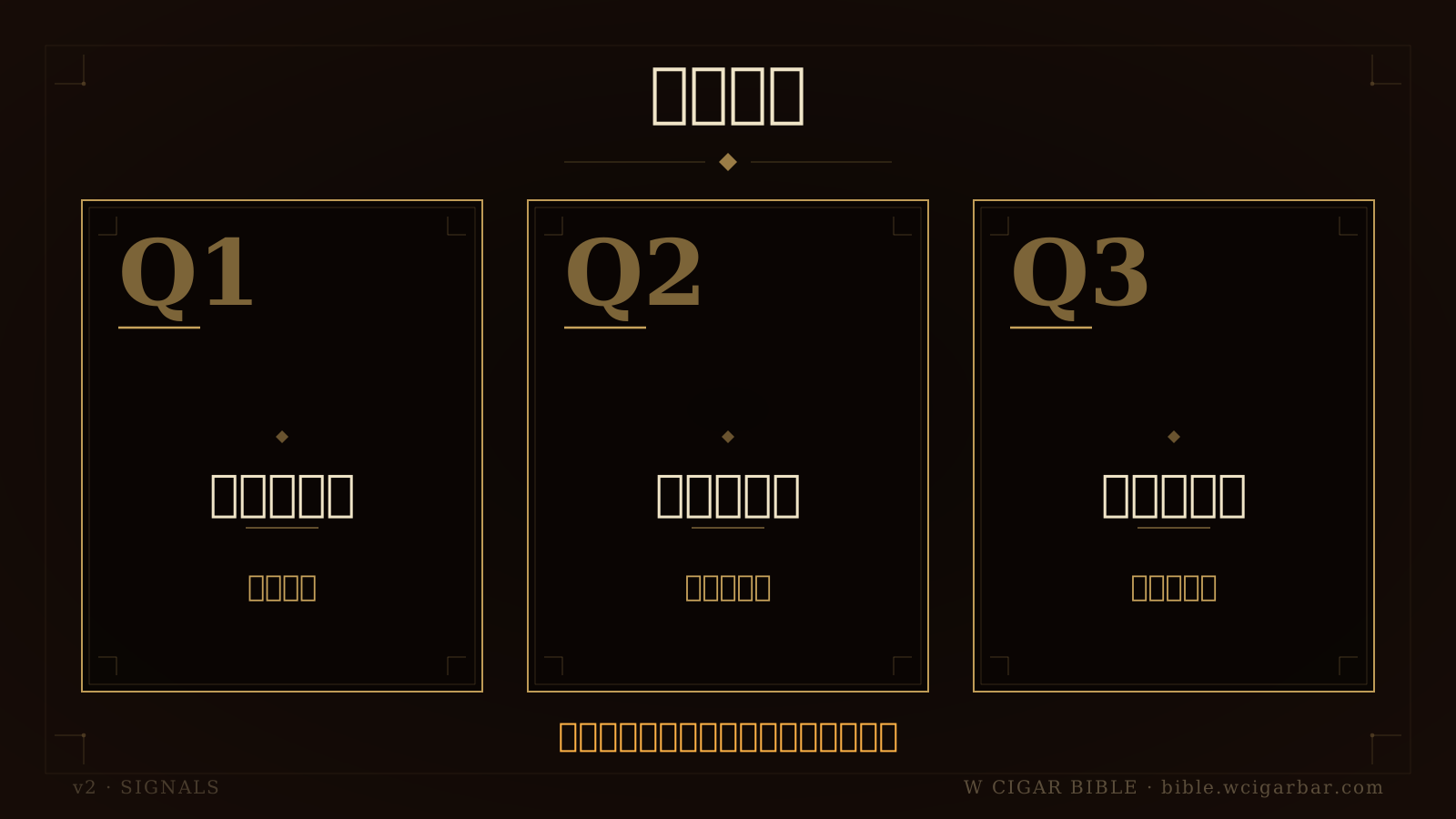
快問快答卡整理同盒差異、鼻腔回吐與老茄判斷
Pairing and Environment: Let the Cigar Be the Star, Not Overpowered
The advanced principle of pairing is not that the more expensive, the better, but that strength and texture should match. Since the launch of the Cohiba Behike series in 2010, its Medio Tiempo leaves have been highly talked about, often paired with high-aged whiskies; but if the alcohol strength exceeds 55% ABV and is not diluted, it may overshadow the cigar's creamy, herbal, and honey details. The task of pairing is to extend layers, not steal attention.
I often divide pairings into three categories. The first is cleansing, such as sparkling water, lightly roasted oolong, unsweetened cold brew tea, suitable for delicate lines like Hoyo, Por Larrañaga, Davidoff. The second is resonant, such as aged rum, sherry cask whisky, port wine, which can echo the brown sugar, raisin, and cocoa of Maduro. The third is contrasting, like black coffee with creamy cigars, highlighting the sweetness.
The environment also affects judgment. Outdoors with strong winds, burning temperature fluctuates, and the wrapper may burn unevenly; indoors, if ventilation is too strong, ash becomes short, and aroma can be carried away. I suggest seasoned enthusiasts conduct an experiment: light the same box of cigars in both a quiet indoor setting and an outdoor windy spot, recording the differences in the first 30 minutes. You'll find that the so-called brand personality is sometimes actually amplified or diminished by the environment.
Common Questions
The core of advanced appreciation is to establish a repeatable observation method, not to chase rare lists. Here are some common blind spots I encounter when exchanging with seasoned enthusiasts.
1. Why do cigars from the same box still taste different?
Handmade cigars are agricultural products combined with craftsmanship, so even within the same box, there may be slight differences due to filler ratio, moisture content, and burning path. If the difference is significant, first check storage humidity, placement position, and whether there is localized over-moisture.
2. Does every puff need nasal exhalation?
No. Doing it with every puff of a strong cigar can easily accumulate a numbing spiciness. I recommend once every 3 to 5 puffs, using only a small amount of smoke to observe herbal, floral, woody, and spicy notes.
3. Does uneven burning indicate poor quality?
Not necessarily. Uneven lighting, wind direction, draw rhythm, and wrapper moisture can all cause uneven burning. If it consistently burns faster on one side, a light correction is needed; excessive flame correction can introduce burnt taste.
4. Are old cigars always better than new ones?
Not necessarily. Aging can soften edges but may also reduce distinct aromas. Those who like fresh herbal notes may not prefer the softened style of cigars aged over 15 years.
5. How to train your taste memory?
Record only five items each time: time, humidity, size, three-stage aroma, and aftertaste length. After continuously recording 30 cigars, you'll see your preference pattern, not just remember scores. Notes that can be reviewed will accumulate experience into true judgment.
—Cigar Prince Wilson Tsai
I have always believed that the charm of cigars lies not in making them mysterious, but in being willing to observe quietly. The true advancement of a seasoned enthusiast is not smoking more, but understanding the relationship between aroma, taste, aftertaste, and time more accurately each time. When you can articulate what makes a cigar good or weak and accept its changes under different conditions, that is your own taste.
Smoking is harmful to health. Smoking is prohibited for those under twenty. Quitline: 0800-636363. This article is for reference by adults over the age of twenty for knowledge of cigar culture, storage, and regulations, and is not an advertisement, promotion, or purchase suggestion for tobacco products.
Like this article?Share with friends
Share this W Cigar Bible piece with friends who want to learn cigar culture, storage, and tasting.
想把這篇 化為實踐
雪茄聖經是知識;雪茄文化要在空間裡發生
W Cigar Bar 大安總店資訊
台北大安區 · 雪茄聖經總編輯 Wilson Tsai 主理的雪茄文化空間
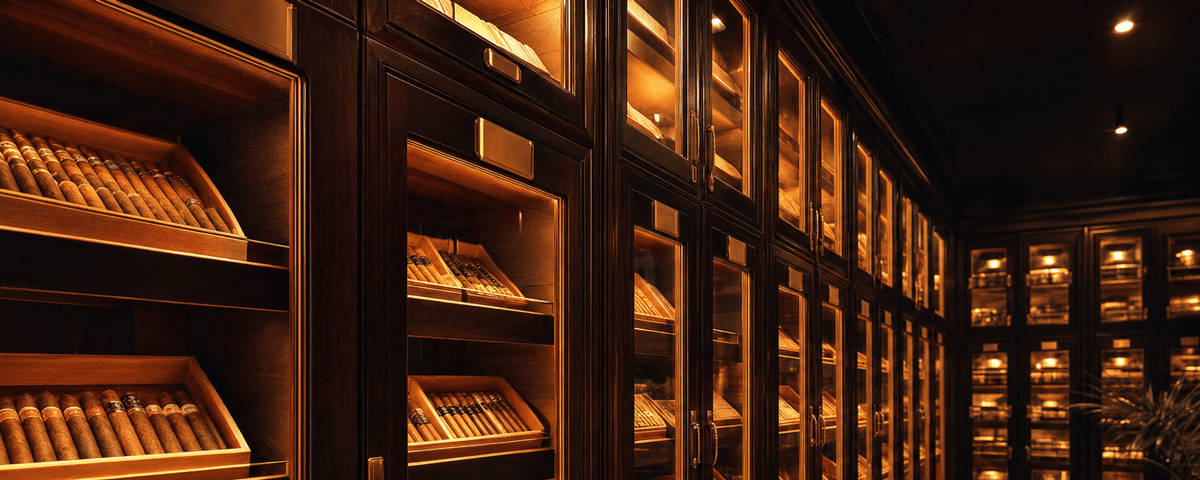
33 座 24 小時恆溫恆濕醇化室
W Cigar Bar 提供的會員醇化空間 · 場地資訊請洽編輯部
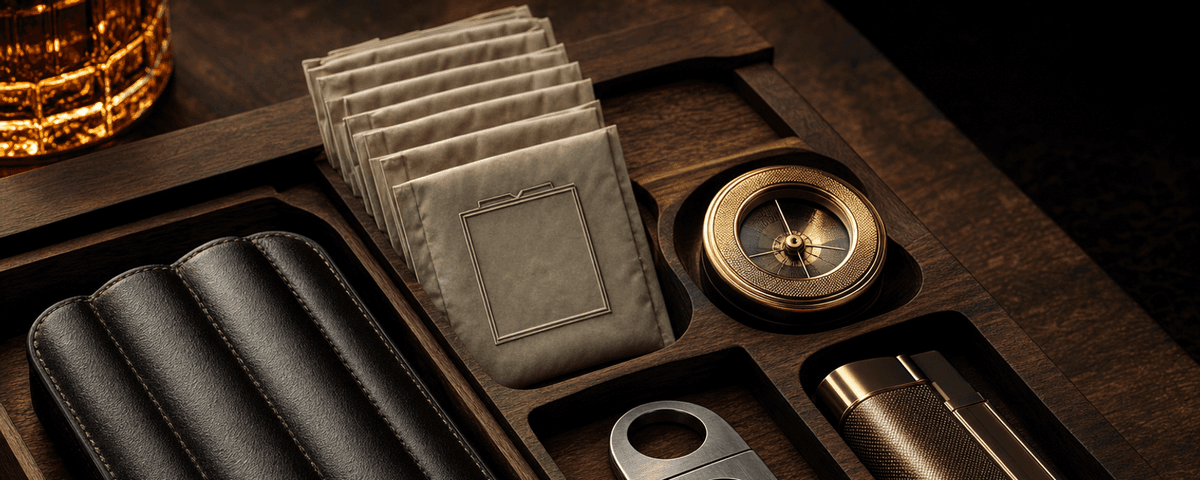
雪茄剪 / 打火機 / 雪茄盒 / Boveda
W Cigar 配件官網 · 專營雪茄配件正品
加 LINE 好友 · 文化諮詢
文化空間資訊 · 紳士沙龍 · 私人包場
本網站內容僅供雪茄文化、歷史、收藏與品吸知識研究參考。菸品有害健康、未滿法定年齡者請勿吸菸。實際規範請依所在地法律為準。
吸菸有害健康・戒菸專線 0800-636363・本站僅供 20 歲以上成年人閱覽。
讀到這裡,你不只是路過的人
留下 Email,加入 W 雪茄聖經內圈——總編輯 Wilson Tsai 親選的學院深文與國際新訊,先你一步送到信箱。
· 教育用途非銷售 · 隨時一鍵退訂 · Email 絕不對外公開 · 由勝茄股份有限公司營運
同分類延伸閱讀
資料來源:W Cigar Bible 編輯部整理 · 雪茄王子 Wilson Tsai 親自審稿
本文僅供雪茄文化、歷史、收藏與品鑑知識研究,不作為菸品促銷、銷售或購買建議。吸菸有害健康,未滿二十歲不得吸菸。