雪茄的年份與風味進化:解析陳年雪茄的魅力
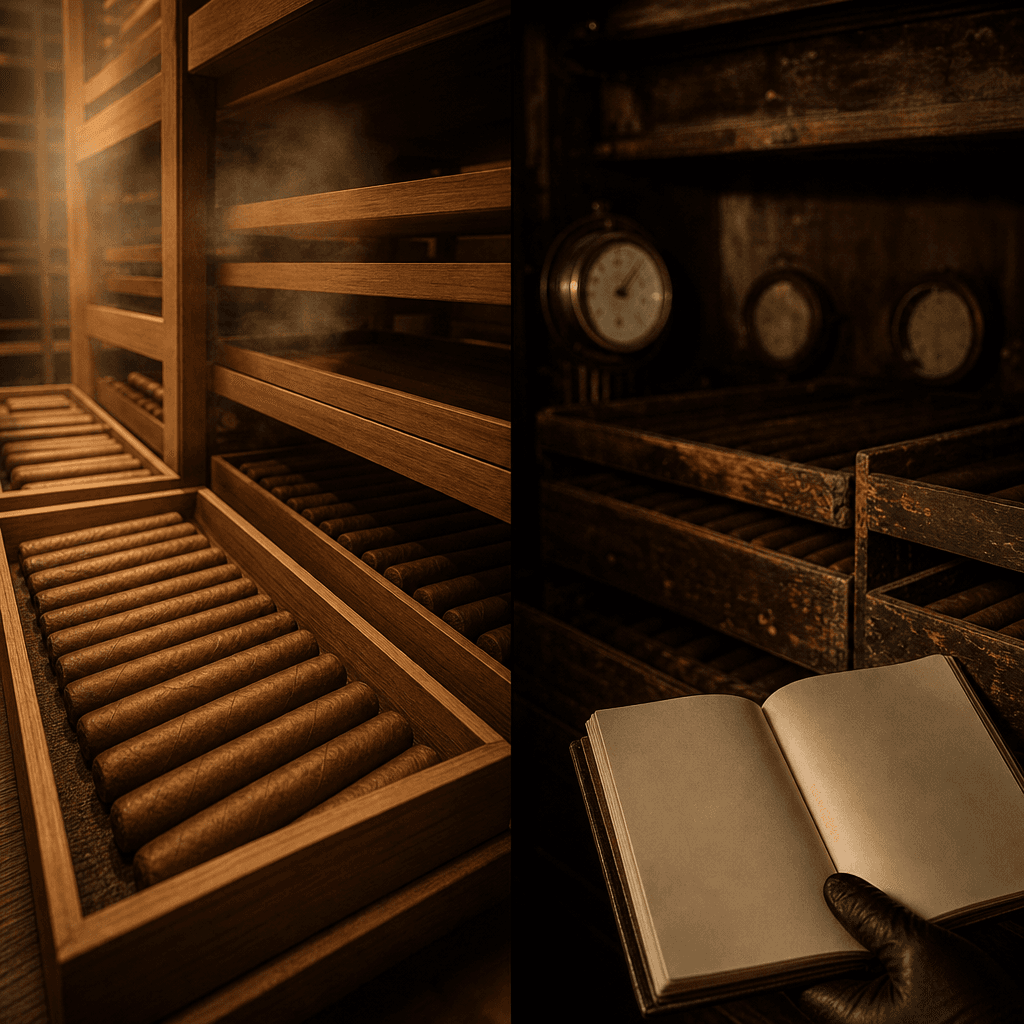
雪茄的年份不僅是時間的累積,更是風味的歷程。優質的陳年雪茄需具備足夠的葉組結構和濃度,才能在長時間的醇化過程中展現出層次感與餘韻。不同年份的雪茄風味變化顯著,從辛辣到柔和,隨著時間推移,甜感與木質感逐漸融合。收藏雪茄時,應關注保存條件與環境穩定性,避免因濕度或溫度波動影響風味。了解品牌與產區的特性,能幫助選擇適合的陳年雪茄,提升品吸體驗。
- 雪茄的年份與風味進化密切相關,需考量葉組、盒況與濕度等因素。
- 真正有陳年潛力的雪茄通常在年輕時不會過於柔順,需具備厚度與張力。
- 保存條件的穩定性對雪茄的風味轉化至關重要,應定期觀察濕度變化。
The Year and Flavor Evolution of Cigars: Analyzing the Charm of Aged Cigars
I often say that the year of a cigar is not a number to flaunt, but a flavor resume written by time and tobacco structure. When seasoned smokers talk about the year, they should not only ask "how many years," but also inquire about its original leaf composition, box condition, humidity trajectory, and whether the cigar in your hand has reached its optimal smoking window.
As the editor of "Cigar Bible," I have seen too many cigars of the same brand and size take completely different paths due to differences in preservation. The charm of aged cigars lies in their ability to rearrange spiciness, woodiness, fatty aroma, mineral notes, and sweetness, transforming a cigar from a display of strength to a dialogue of complexity and aftertaste.
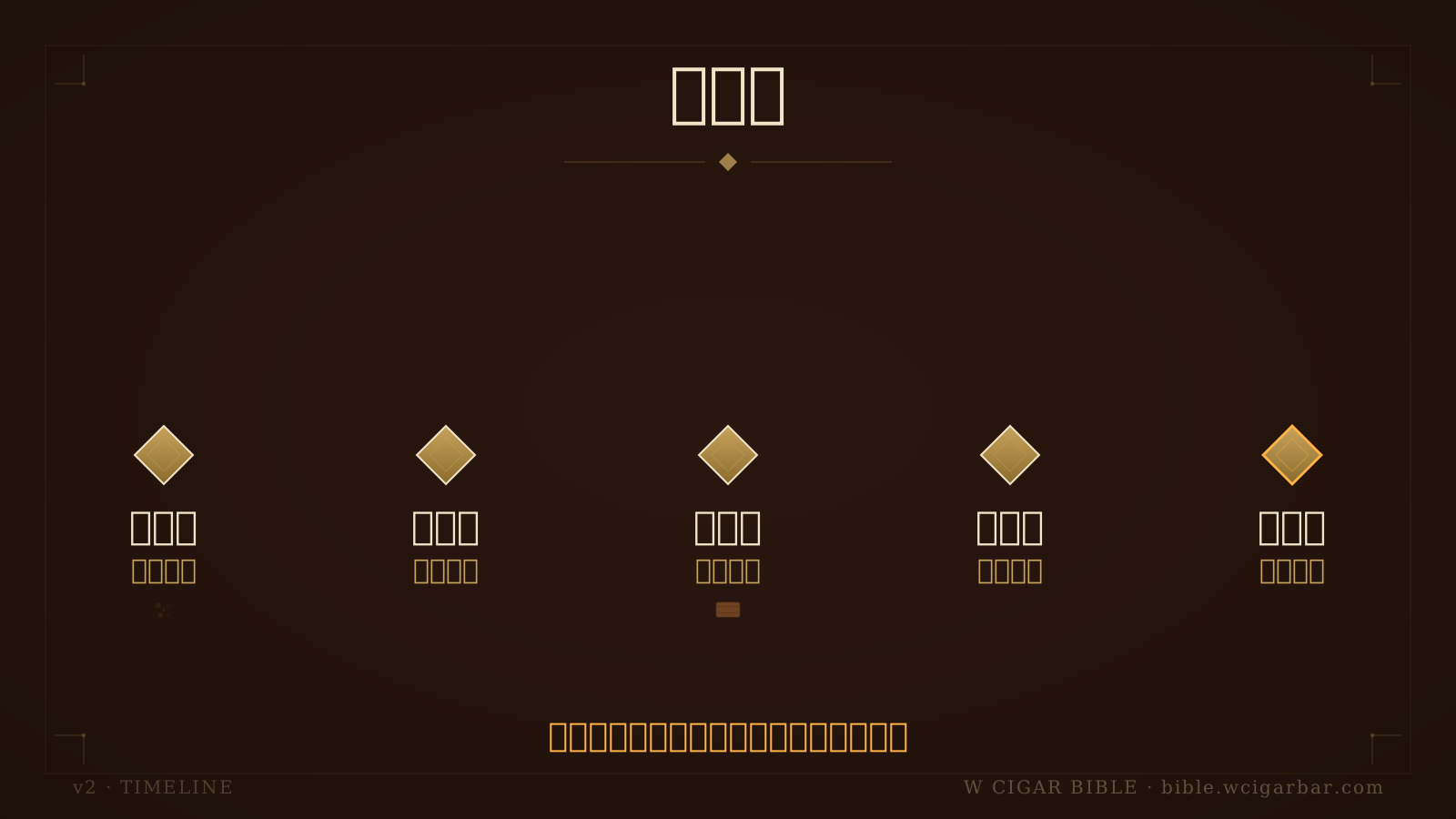
時間軸呈現雪茄從青澀到開抽判斷流程
Older is Not Always Better: First Look at Leaf Composition and Structure
When discussing aged cigars, the first misconception is that "the older, the more precious." In fact, a 2008 Cohiba Siglo VI, if not well-preserved, may not be as good as a 2018 Hoyo de Monterrey Epicure No.2 in excellent condition. Whether a cigar can age well depends on its fermentation foundation, tobacco oil content, rolling density, and original flavor framework, rather than simply adding more years.
Generally speaking, cigars with higher concentration, solid structure, and sufficient oil content are more capable of enduring 8 to 15 years of aging than lighter, more delicate varieties. Partagás Serie D No.4, Bolívar Belicosos Finos, and Ramón Allones Specially Selected are often used by seasoned smokers to observe year-to-year changes; conversely, some floral and light cigars may lose their vibrancy if aged too long.
Cigars with true aging potential are usually not the smoothest when young, but have enough thickness, tension, and undeveloped aftertaste. When I determine whether a cigar is worth aging, I look at whether the spiciness in the first third is clean, whether the middle has a sweet support, and whether the end still has layers, rather than just looking at the brand's reputation.
The value of a collection must also be viewed calmly. Limited editions, regional editions, and discontinued sizes are indeed often watched by the market, such as the 2006 Montecristo Sublimes EL and the 2010 Trinidad Robustos T, but collection value does not guarantee appreciation; it still depends on the source, preservation, and market.
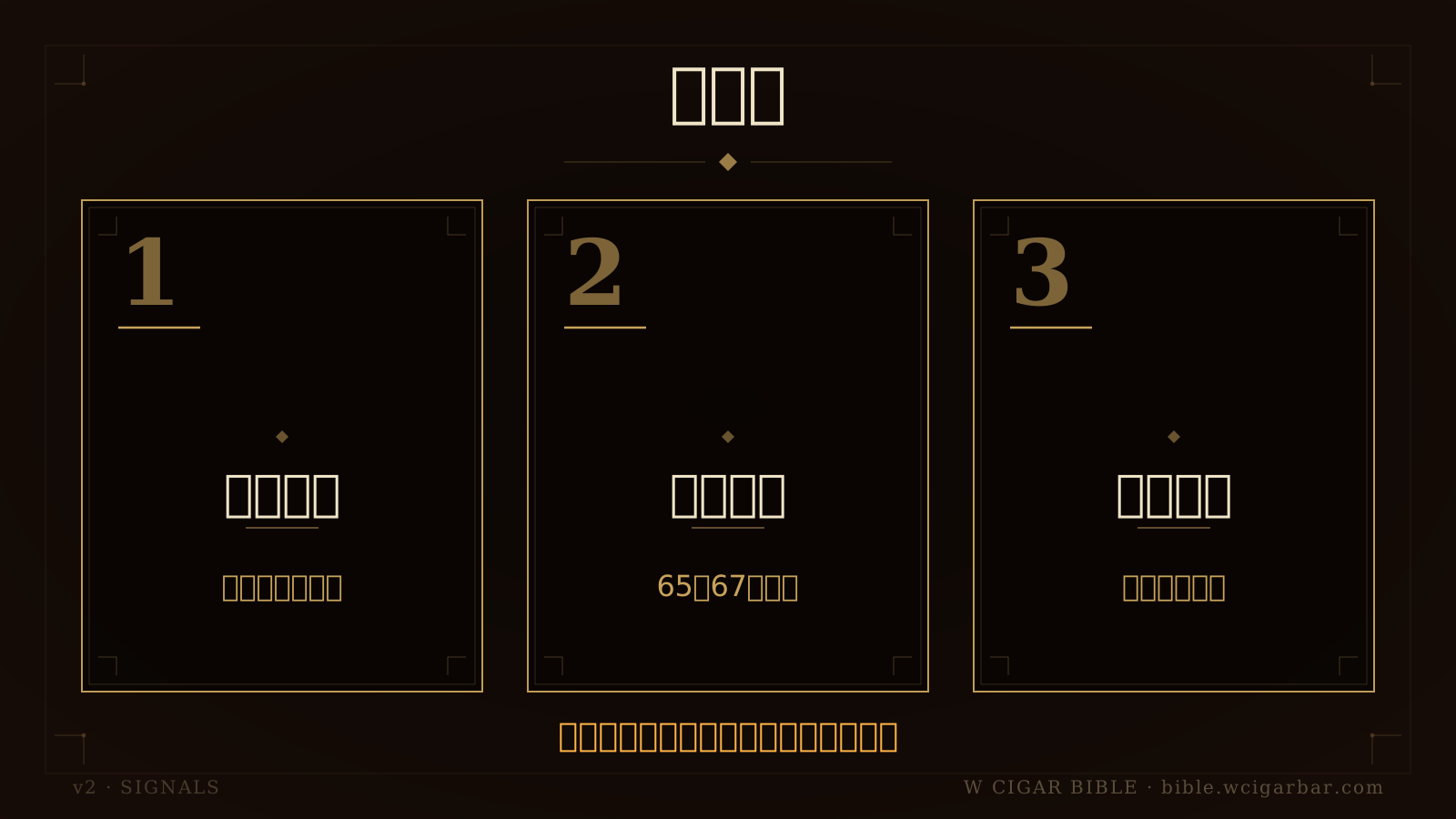
三張卡說明葉組濕度與適飲窗口判斷
The Flavor Curve of Aging: From Impact to Detail
New cigars often exhibit characteristics like ammonia, green spiciness, more direct woodiness, and pronounced smoke edges. For cigars released within 6 to 18 months, such as Romeo y Julieta Wide Churchills or Punch Punch, they often have bright spiciness, leather, and cedar wood when young, but the aftertaste may be shorter, and the smoke can appear angular.
At 3 to 5 years, many cigars enter their first comfort period. Ammonia decreases, sweetness becomes clearer, woodiness transitions from sharp to mellow, and notes of cream, nuts, hay, and cocoa begin to emerge. At this time, the H. Upmann Magnum 46 often becomes rounder, while the Bolívar Royal Coronas may shift from the heavy spiciness of youth to earthiness, coffee, and brown sugar.
The core of cigar aging is not to fade the taste, but to transform rough power into recognizable layers. Good condition cigars over 10 years old often show changes like finer smoke, smoother entry, and longer aftertaste, but if the original tobacco support is insufficient, they may become hollow and paper-like.
I once compared two boxes of 2011 Partagás Lusitanias in different conditions: one with long-term high humidity smoked with a dull woodiness and slow burn; the other maintained at 65% to 67% relative humidity showcased roasted nuts, sweet spices, and leather. Same year, completely different results—this is the most fascinating and cruel aspect of aged cigars.
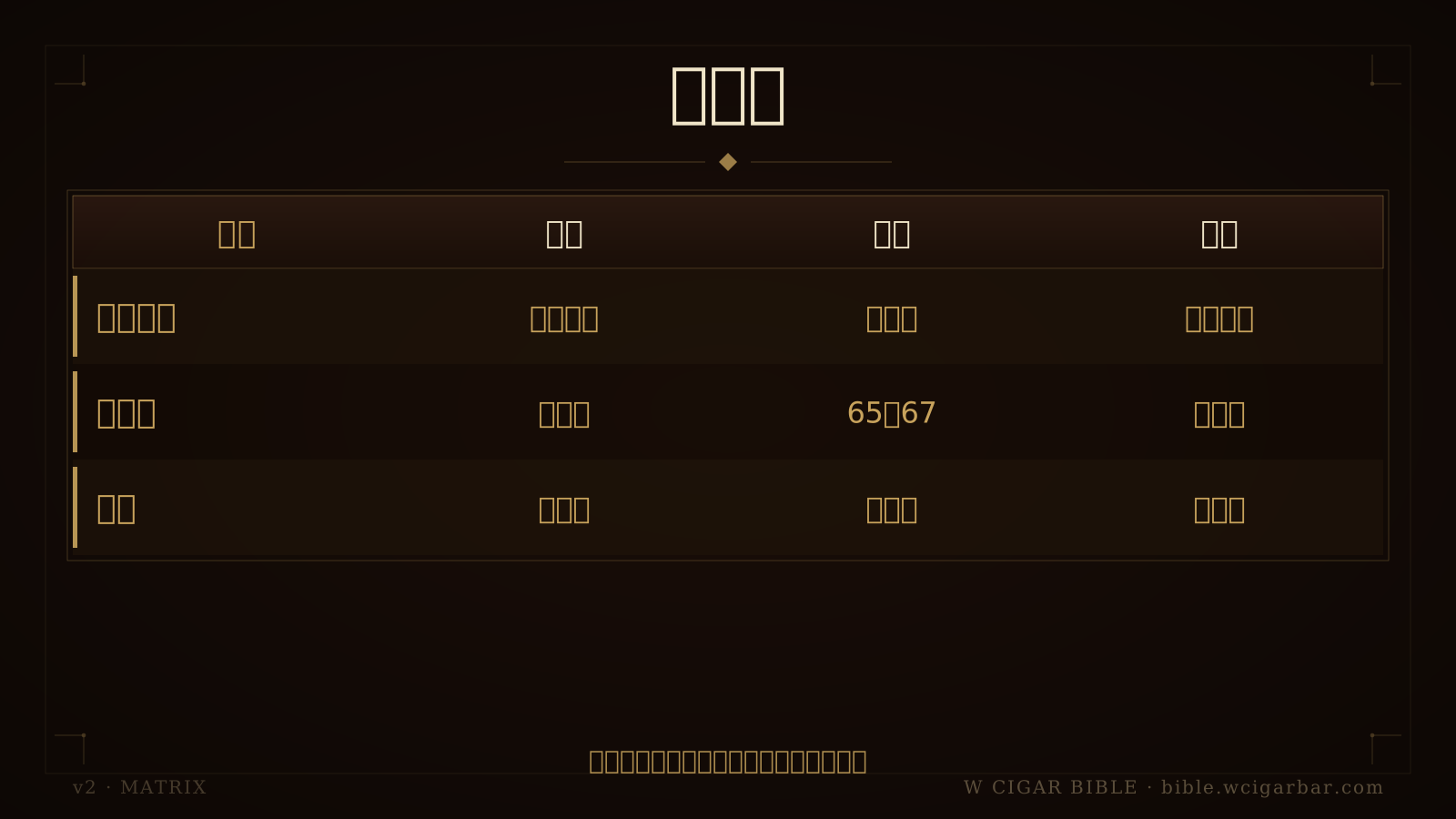
矩陣比較葉組保存狀態三個判斷面向
How to View Different Stages: Year, Flavor, and Risk Chart
Experienced smokers manage cigars not just by dividing them into "new" and "old," but by breaking them down into several stages for observation. Within 1 year, look at fermentation residue and basic craftsmanship; 2 to 5 years, look at flavor integration; 6 to 10 years, look at depth and balance; over 10 years, pay close attention to preservation records and smoking condition.
Below is a simple chart I often use when organizing private cabinets and client collections. It is not an absolute answer but can help you judge whether a cigar should be observed, consumed, or continue to wait.
| Year Range | Common Flavor Status | Suitable Brand Examples | Main Risks |
|---|---|---|---|
| 0-2 years | Bright spiciness, possible greenness and ammonia | Montecristo No.2, Partagás D4 | Premature potential judgment |
| 3-5 years | Woodiness softens, sweetness rises, structure integrates | H. Upmann Magnum 46, RASS | Unstable humidity causing dullness |
| 6-10 years | Clearer cream, nuts, leather, mineral notes | Cohiba Siglo VI, Bolívar BF | Missing the peak period |
| 10-15+ years | Fine smoke, long aftertaste, decreased strength | Trinidad, older Punch | Loss of oil, hollowness, paper taste |
The best year is not the longest year, but the year when flavor density, burning condition, and personal preference intersect. For example, some people prefer the vitality of 5 years, while others pursue the stability of 12 years. There is no standard answer, only more precise records.
I recommend keeping at least 3 cigars per box for stage testing: smoke one in the 3rd year, one in the 6th year, and another in the 10th year. For a box of 25 cigars, this sampling will not destroy the integrity of the collection but will allow you to build your own brand year map.
Cuban vs. Non-Cuban: Differences in Year Performance
The charm of aging Cuban cigars often lies in the changes between mineral notes, herbs, honey, cedar wood, and mature leather. Brands like Cohiba, Trinidad, H. Upmann, and Partagás often have significant transitions between 5 to 12 years; especially the Cohiba Behike 52, if well-preserved, often evolves from the rich cream and spices of youth to more delicate honey, bean aroma, and woodiness over several years.
The aging performance of non-Cuban cigars cannot be generalized. Padrón 1964 Anniversary, Arturo Fuente OpusX, Davidoff Aniversario, Oliva Serie V, etc., have high fermentation maturity and are relatively complete when young; after 3 to 7 years, the common changes are reduced spiciness, more concentrated sweetness, and softer smoke, but they may not require waiting 15 years.
Cuban cigars are often like slowly opening old wines, while non-Cuban cigars often provide a complete profile at an earlier stage, with different year strategies. If you manage all cigars with the same standard, you may easily miss the best state or let cigars that should be enjoyed lose their vitality.
For medium to large ring gauge cigars from 2016 to 2018, Cuban styles often gradually integrate after 2022; while many high-concentration Nicaraguan cigars are very mature within 3 to 5 years. Before choosing an aging target, understanding the craft logic of the production area and brand is more important than blindly pursuing the year.
三張錯誤卡整理越老高濕白點等迷思
Preservation Numbers: Humidity, Temperature, and Box Condition are Key
For the year to transform into flavor, preservation conditions must be stable. My preferred long-term range is a temperature of about 18°C to 21°C and a relative humidity of about 65% to 67%; if the environment exceeds 70% for a long time, cigars may absorb too much moisture, burn slowly, taste dull, and even increase the risk of mold spots.
Many people stop paying attention after putting cigars into the cabinet, which is the most dangerous. Wooden boxes, cellophane, aluminum tubes, and individual cabinet slots will all affect the speed of humidity exchange. Cigars from early 2000s boxes, if they have experienced multiple high and low humidity fluctuations, may appear beautiful on the outside but may have cracking wrappers, tunneling burns, or increased bitterness when smoked.
The biggest fear for aged cigars is not slowness, but instability; a stable 66% often beats a fluctuating 70%. I usually manage long-term cigars and daily cigars in separate cabinets to avoid frequent opening and closing causing environmental fluctuations and to reduce odor interference between cigars of different concentrations.
In practice, several steps can be taken:
- Observe the humidity curve weekly, not just the current number.
- Rotate box positions slightly every 2 to 3 months to avoid local over-dryness or over-moisture.
- Do not rush to remove the original box; the box environment helps long-term stability.
- For cigars over 10 years, let them rest for at least 30 to 60 minutes before smoking to balance surface moisture.
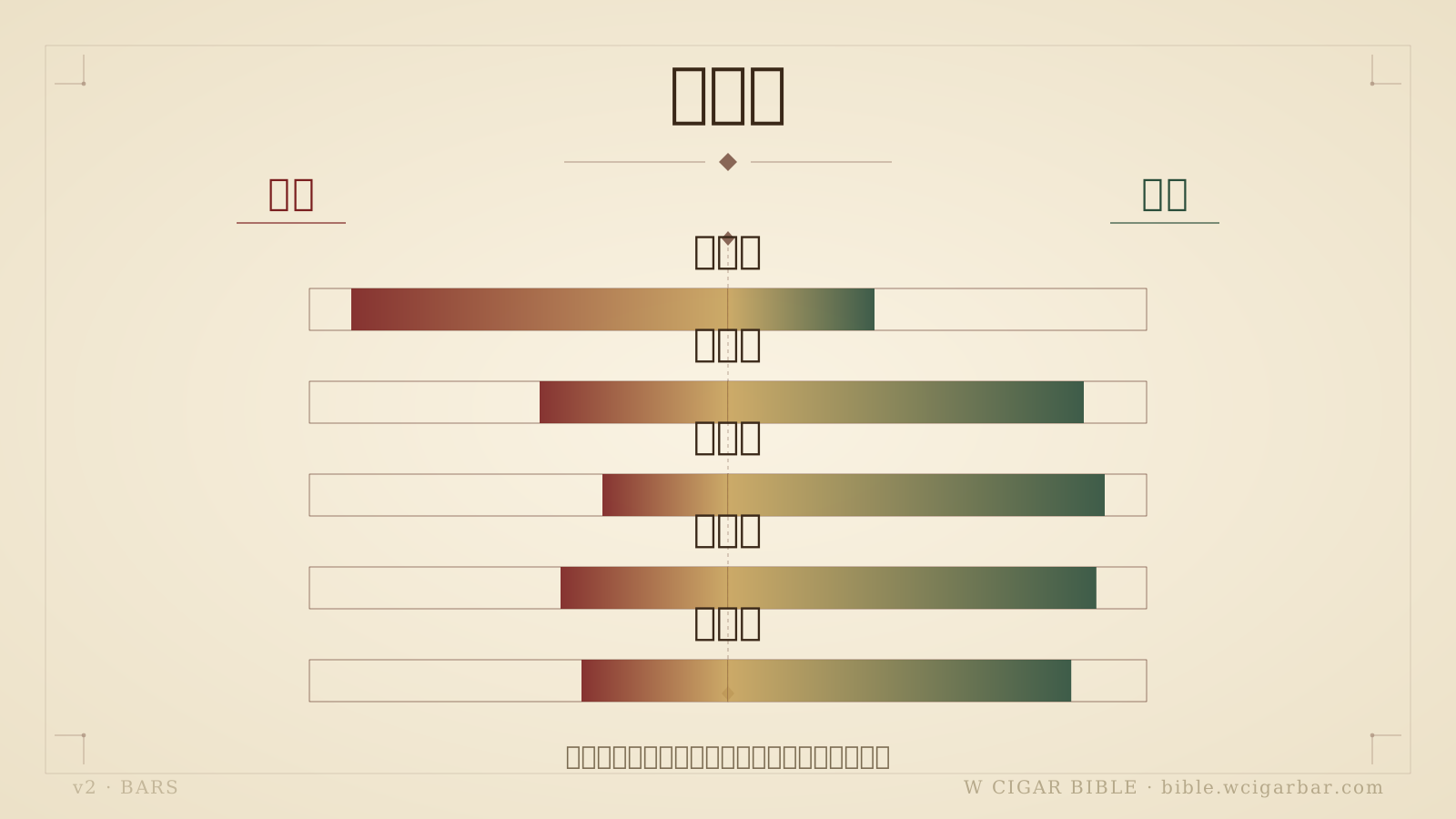
長條圖比較年份派與狀態派的判斷差異
Reading Box Codes and Sources: Experienced Smokers Should Not Just Listen to Stories
When discussing years, box codes are fundamental. Cuban cigar boxes usually have factory codes and month-year codes on the bottom, for example, a 2019 box code will indicate the corresponding month and year. Although factory codes change and different periods have different rules, they at least allow you to judge the approximate production time of the cigar, rather than relying solely on the seller's description.
When I examine a box of old cigars, I check the box code, seal, tax stamp, internal moisture marks, cigar band version, cellophane condition, and the aroma at the foot of the cigar. For common old boxes from 2007, 2012, 2014, if the outer box is severely cracked, the lining has water stains, and the foot of the cigar has a moldy smell, even if the year looks good, you cannot easily judge the condition as excellent.
The authenticity of the year is just the first hurdle; the credibility of the source and the continuity of preservation determine whether it is worth collecting. Official distributors like PCC focus not only on product circulation but also on batch management, transportation conditions, and after-sales information that are easier to trace.
For experienced smokers, the most important thing not to blindly believe is "a certain year is definitely good." For example, some H. Upmann from 2014 performed well, but the differences between boxes of the same year can still be significant. My principle is: the year provides direction, the physical condition provides answers; if the two conflict, always trust the condition of the cigar in front of you.
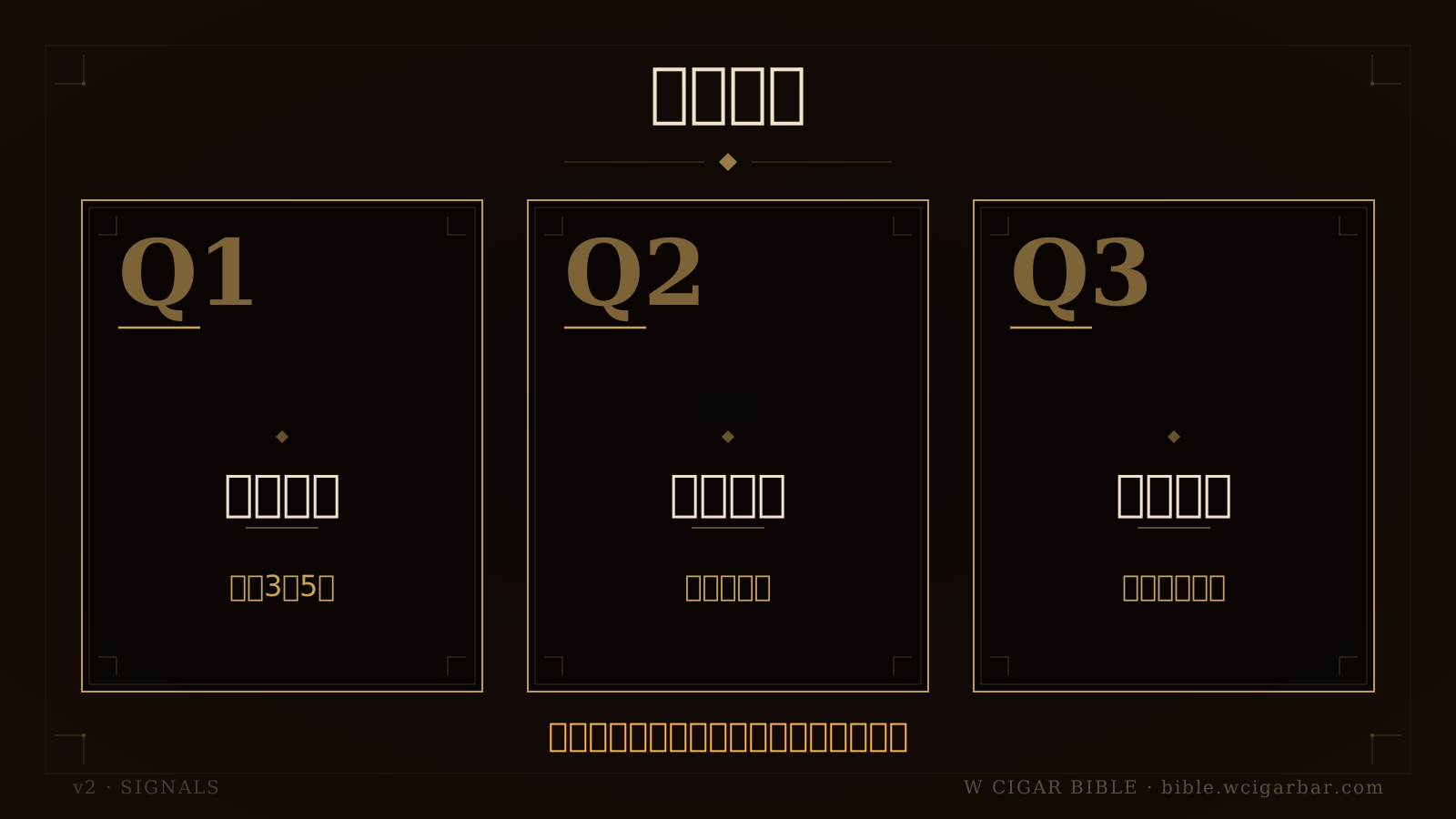
快問快答列出適飲時間玻璃紙與同盒差異
Collection Strategy: From Single Curiosity to Box Planning
If you already have brand preferences, your collection strategy should not be aimless. Those who like cream and elegant woodiness can start with H. Upmann, Hoyo de Monterrey, Davidoff; those who prefer heavy, earthy, leather, and spicy notes, Partagás, Bolívar, Padrón, and some high-end lines from AJ Fernandez will have more observational value.
I suggest experienced smokers establish a three-tier configuration: the first tier is daily consumption, accounting for about 50%; the second tier is 3 to 7 years of mid-term aging, accounting for about 30%; the third tier is over 8 years of long-term collection, accounting for about 20%. This way, not all cigars are locked in time, and enough samples are retained to observe brand changes.
Collection is not about hiding cigars but about systematically opening different batches in different years. For example, if you simultaneously hold Montecristo No.2 from 2018, 2020, and 2022, you can compare differences in concentration, sweetness, woodiness, and burning, which accumulates judgment more than just buying a box from a legendary year.
Collection records should at least include purchase date, box code, source, initial humidity, cabinet position, smoking date, burning condition, and flavor notes. If future transfer or valuation is involved, complete records will increase credibility; but remember, collection value does not guarantee appreciation, it still depends on source preservation and market.
Frequently Asked Questions
How long should cigars be aged to enter the optimal smoking window?
Usually, 3 to 5 years is the first significant integration period for many cigars, but brand differences are significant. Montecristo No.4 may perform well after 3 years, while Partagás Lusitanias or Cohiba Siglo VI often require over 6 years to exhibit more complete depth.
Should cellophane be removed?
If non-Cuban cigars originally come with cellophane, I usually keep it. Cellophane can slow down humidity fluctuations and reduce handling wear; but it is not completely sealed and will still slowly exchange moisture. Most Cuban box cigars do not have cellophane, so they are mainly preserved in their original boxes for stability.
Does the appearance of white spots on old cigars mean they are spoiled?
Not necessarily. If they are fine, can be lightly wiped off, and have no moldy smell, they may be crystallized oils and minerals; if they are fuzzy, have an odor, and penetrate the wrapper or foot, then be cautious. Do not judge only by photos; smell and touch are equally important.
Why do cigars from the same box have different flavors?
Although cigars from the same box are close in batch, each cigar's leaf position, rolling density, and moisture absorption rate may still differ. Especially after long-term storage, differences in proximity to the box edge, moisture source, or pressure can cause variations in burning and smoke.
Is it suitable to store aged cigars at high humidity?
Not recommended. High humidity may make cigars appear oily but cause slow burning and dull taste. For long-term cigars, I value stability and cleanliness more, with 65% to 67% often preserving layers better than above 70%.
The year is a clue, not an answer; truly mature smokers will read box codes, humidity, burning, and their taste records simultaneously. When you can distinguish between "getting older" and "getting better," you truly understand the value of aged cigars.
What attracts me most about aged cigars is that they do not cater to the impatient. They require us to record, wait, compare, and admit that each box has an uncontrollable fate. Good years leave depth, good preservation leaves vitality, and good tasters open them at the right time. To me, collecting is not about chasing myths but about using time to build my own answers. —Cigar Prince Wilson Tsai
Smoking is harmful to health. Underage smoking is prohibited. Quitline: 0800-636363. This article is intended for adults over the age of 20 as a reference for cigar culture, preservation, and regulations, not as tobacco advertising, promotion, or purchase advice.
Like this article?Share with friends
Share this W Cigar Bible piece with friends who want to learn cigar culture, storage, and tasting.
想把這篇 化為實踐
雪茄聖經是知識;雪茄文化要在空間裡發生

W Cigar Bar 大安總店資訊
台北大安區 · 雪茄聖經總編輯 Wilson Tsai 主理的雪茄文化空間
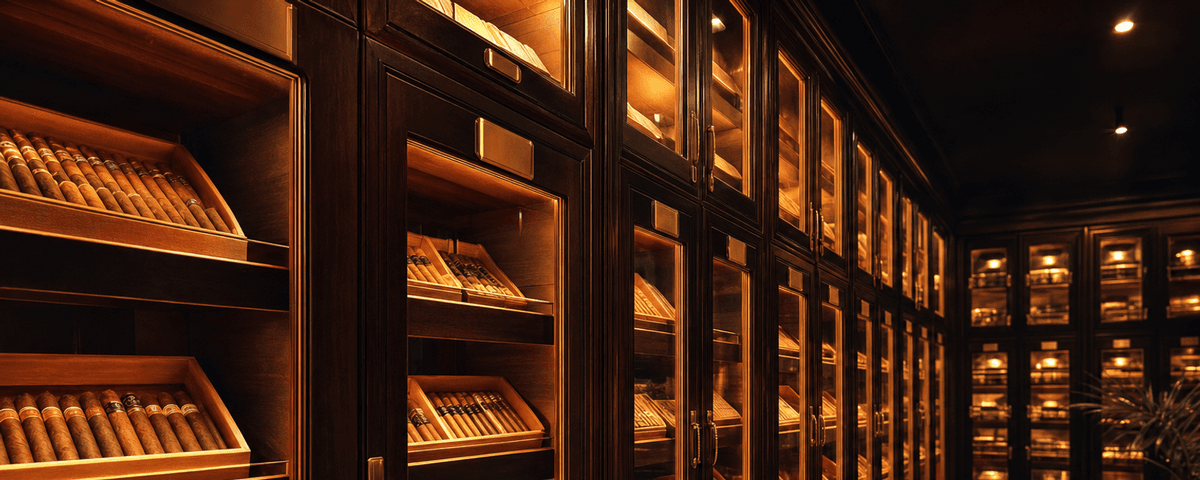
33 座 24 小時恆溫恆濕醇化室
W Cigar Bar 提供的會員醇化空間 · 場地資訊請洽編輯部
雪茄剪 / 打火機 / 雪茄盒 / Boveda
W Cigar 配件官網 · 專營雪茄配件正品
加 LINE 好友 · 文化諮詢
文化空間資訊 · 紳士沙龍 · 私人包場
本網站內容僅供雪茄文化、歷史、收藏與品吸知識研究參考。菸品有害健康、未滿法定年齡者請勿吸菸。實際規範請依所在地法律為準。
吸菸有害健康・戒菸專線 0800-636363・本站僅供 20 歲以上成年人閱覽。
讀到這裡,你不只是路過的人
留下 Email,加入 W 雪茄聖經內圈——總編輯 Wilson Tsai 親選的學院深文與國際新訊,先你一步送到信箱。
· 教育用途非銷售 · 隨時一鍵退訂 · Email 絕不對外公開 · 由勝茄股份有限公司營運
同分類延伸閱讀


資料來源:W Cigar Bible 編輯部整理 · 雪茄王子 Wilson Tsai 親自審稿
本文僅供雪茄文化、歷史、收藏與品鑑知識研究,不作為菸品促銷、銷售或購買建議。吸菸有害健康,未滿二十歲不得吸菸。