雪茄的切割與火點技巧進階指南

吸菸有害健康,未滿二十歲不得吸菸。本文針對二十歲以上成年人,提供雪茄文化與技術知識。切割與點火是雪茄品味的關鍵,正確的切割方法能影響氣流與風味。常見的切割工具包括平剪、V剪及打孔,各有其適用情境。進階切割需考量雪茄的濕度、角度與乾吸測試,確保氣流穩定。點火時,應避免火焰直接接觸茄腳,並遵循標準的點火步驟,以達到最佳的抽吸體驗。了解這些技巧能提升雪茄的享受。
- 切割雪茄時應建立穩定氣流,切口深度需根據帽蓋線進行微調,以避免吸阻不均。
- 選擇剪法時需考慮雪茄的環徑與頭型,適合的剪法能提高抽吸體驗。
- 點火過程應遵循烘腳、預燃、入口確認的步驟,以確保均勻燃燒與風味釋放。
Advanced Guide to Cigar Cutting and Lighting Techniques
Cutting and lighting may seem like just two actions before enjoying a cigar, but they actually determine the temperature, airflow, burn line, and flavor profile of the first 10 minutes. Many beginners already know to smoke slowly, exhale, and avoid overheating, yet they often encounter issues such as inconsistent draw resistance, cracked wrappers, uneven burning, and unexpected bitterness or spiciness in the early stages. These problems are not necessarily due to the cigar itself but are often the cumulative result of cut proportions, flame distance, rotation angles, and timing of relighting. This article uses common Cuban and non-Cuban cigar sizes post-2020 as examples, organizing a more stable and gentlemanly advanced method from straight cuts, V-cuts, punches to the use of torch lighters and long cedar spills.
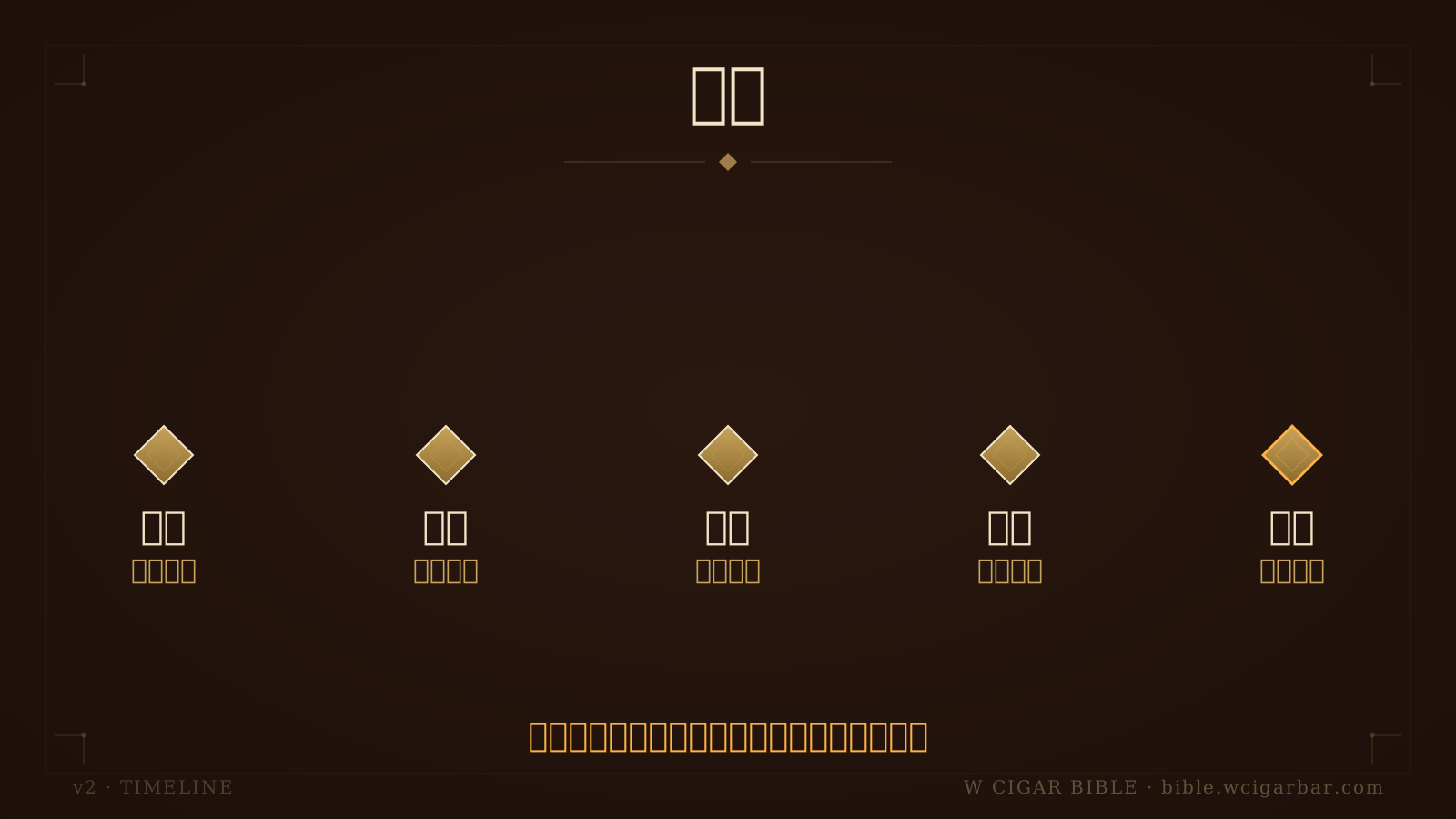
時間軸依序顯示觀察帽蓋淺剪乾吸預熱與補火步驟
1. Cutting is Not "Making a Hole" but Controlling Airflow and Structure
The task of the cigar cap is to fix the wrapper at the head and maintain structural integrity; the true purpose of cutting is to establish stable airflow without damaging the main support of the cap. For common Robusto sizes, such as Cohiba Robustos about 124mm, ring gauge 50, or Partagás Serie D No.4 about 124mm, ring gauge 50, if the cut is too small, the early stage tends to have tight draw resistance, causing the smoker to unconsciously increase force, raising the core temperature; if the cut is too large, the smoke enters the mouth too quickly, making the flavor appear rough, and the wrapper is more likely to loosen from the head.
Advanced judgment can look at the "cap line": most handmade cigars have one to three fine lines visible at the head, and a straight cut only removes the thin layer at the top dome, about 1.5 to 2.5mm is sufficient. Many Nicaraguan brands post-2019, like Oliva Serie V and Padron 1964 Anniversary, have a denser rolling, and if the cut is too conservative, it can be adjusted by half a millimeter rather than cutting deeply at once. A truly mature technique is to observe first, make small cuts, and finally confirm resistance with a dry draw, allowing the cigar to tell you the next step with its structure, rather than deciding the outcome with brute force.
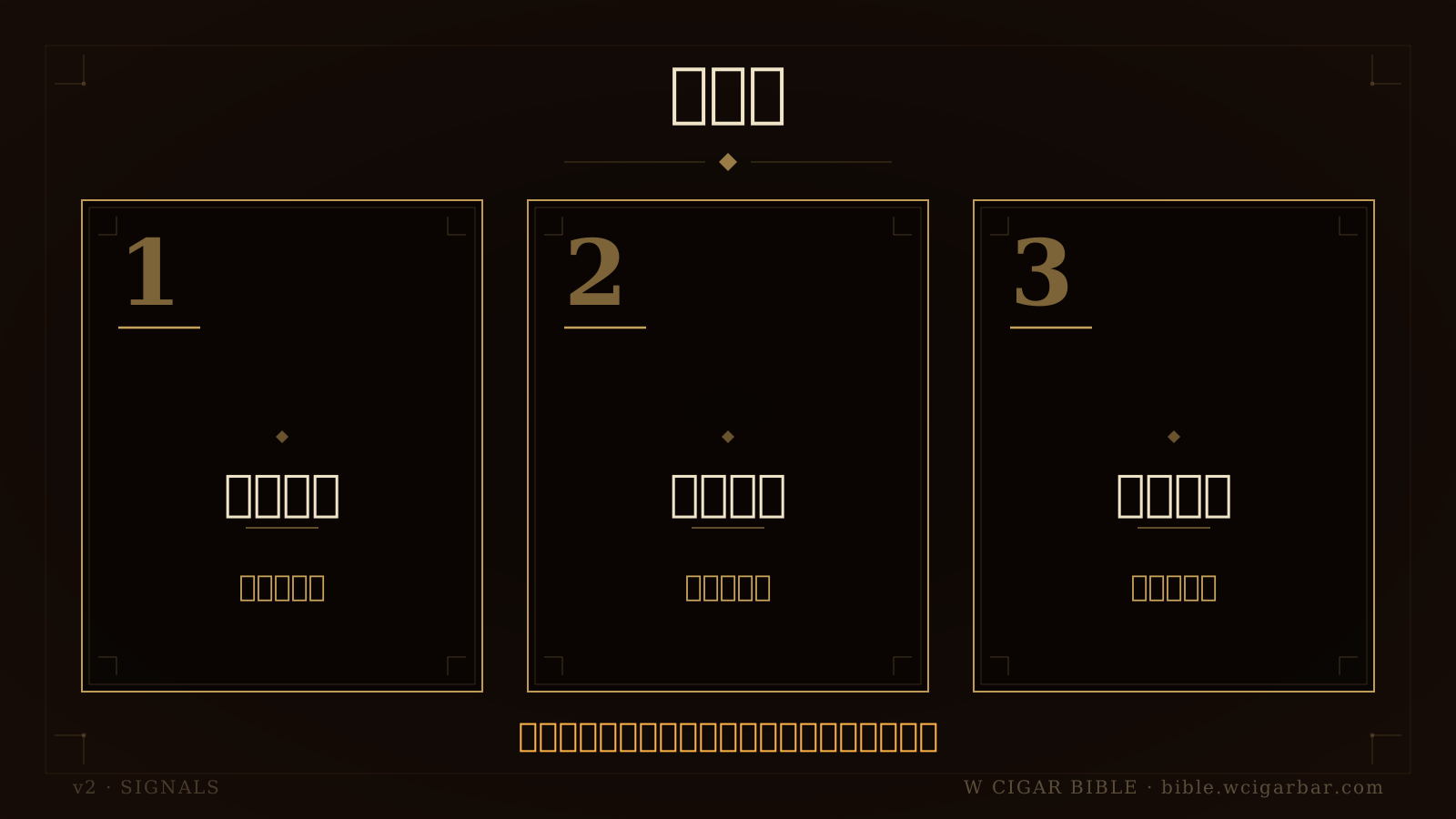
三張卡片呈現帽線觀察火焰距離與偏燒修正要點
2. Straight Cut, V-Cut, Punch: Different Tools Have Different Languages
Straight cut is the most universal method. If the double-blade cutter is sharp, it can provide a clean cut on Churchill, Toro, and Robusto; single-blade cutters require more angle control, and if the blade is dulled from pre-2016 models, it can easily crush the head. The advantage of a V-cut is that it retains more of the cap while increasing the concentration of smoke contact on the tongue, suitable for ring gauge 50 and above, and rounded head sizes, such as Montecristo No.2. If using a V-cut, it can provide a more concentrated wood and cocoa sensation, but cutting too deep can create a "too wide smoke channel" and cause overheating.
Punch is often seen outdoors or on the move, with 5mm to 9mm diameters being most common; small holes can prevent leaf fragments from entering but may cause tar to concentrate at the edge of the hole in full-bodied cigars, creating a sticky feeling in the mid-stage. For example, with the 2022 common Rocky Patel The Edge Toro, ring gauge 52, medium-high strength, if only a 5mm punch is used, the early stage may seem stuffy; switching to 7mm or dual punches can be smoother. There is no absolute superiority among tools; the key is whether the size, cap shape, filler density, and desired entry speed are consistent.
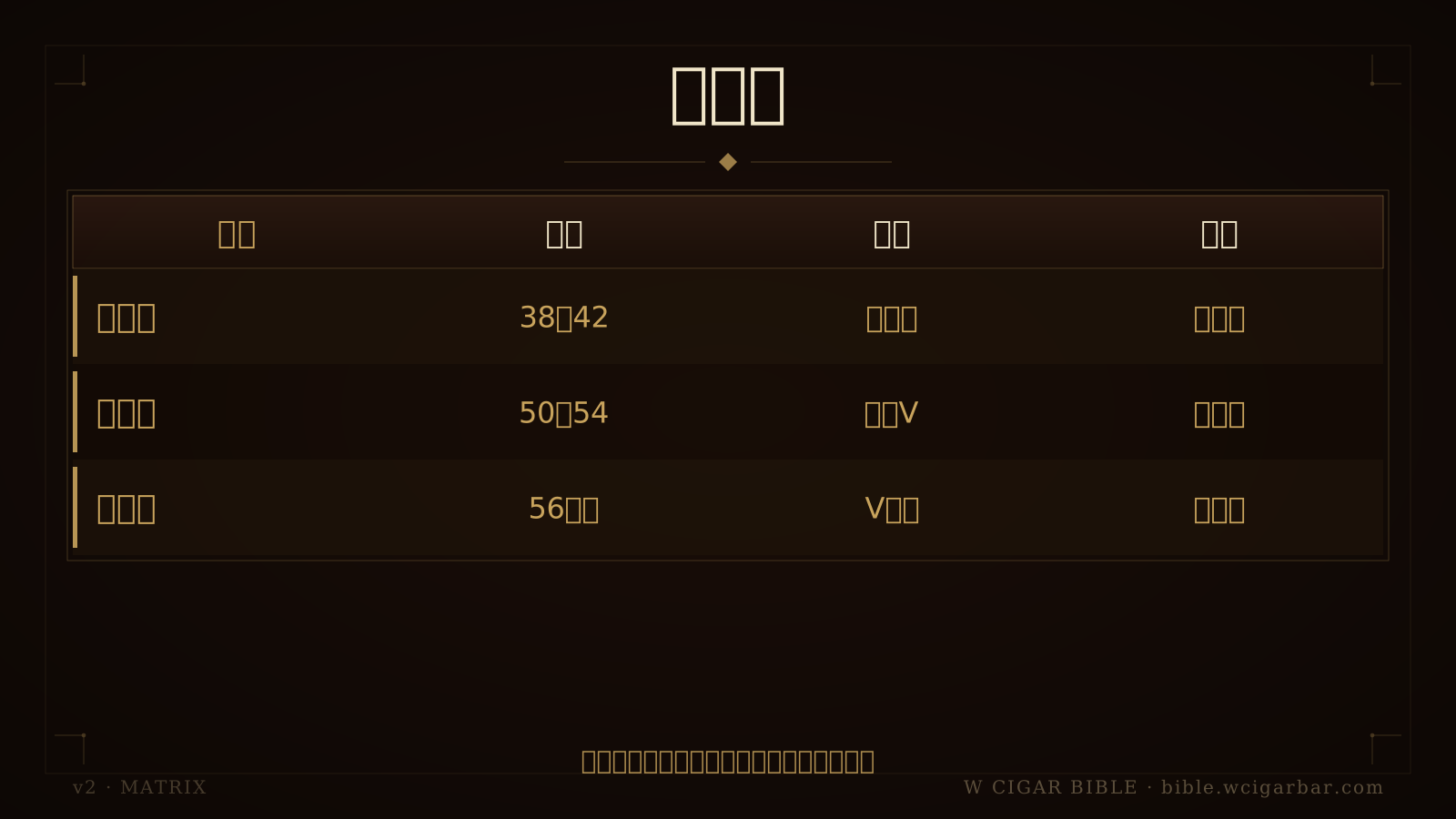
矩陣比較細中大環徑的建議剪法與切割注意事項
3. Size and Cutting Method Comparison: Look at Ring Gauge First, Then Head Shape
When choosing a cutting method, don't just ask "which one is more advanced," but first look at ring gauge and head shape. For ring gauges 38 to 42 like Petit Corona, Lancero, the head has a small operating area, and a straight cut is safest; for ring gauges 50 to 54 like Robusto, Toro, all three methods can be valid; for ring gauges 56 and above like Gordo, if only a single punch is used, it often causes concentrated airflow and the burning edge can't keep up. The following table uses common sizes in recent years as a training reference, not a rigid rule, but to help beginners establish a judgment path.
| Size Type | Common Numbers | Recommended Cutting Method | Suitable Scenario | Notes |
|---|---|---|---|---|
| Lancero | About 192mm × 38 | Shallow Straight Cut | Want to retain linear floral and herbal notes | Cutting too deep can damage the small cap |
| Petit Corona | About 129mm × 42 | Straight Cut or Small Punch | Time about 35 to 45 minutes | Hole too small can feel tight |
| Robusto | About 124mm × 50 | Straight Cut, V-Cut | Best for practicing basics | Cut 2mm first then dry draw |
| Toro | About 152mm × 52 | V-Cut or Straight Cut | Want fuller smoke volume | Avoid overheating entry |
| Gordo | About 152mm × 60 | Large Straight Cut or Dual Punch | Pursue loose smoke channel | Single punch can burn unevenly |
For example, in 2021, a collector took out a Hoyo de Monterrey Epicure No.2, ring gauge 50, with a thinner wrapper. He originally used a deep V-cut, resulting in the head edge cracking within the first 8 minutes; switching to a shallow straight cut, the draw remained smooth, but the structure was noticeably stable. Such experiences illustrate that size is just the first layer; the state of the leaf, humidity, and cutting depth are the final keys.
4. Advanced Cutting Process: Humidity, Angle, and Dry Draw Test
Before cutting, confirming the surface state of the cigar is more important than rushing to cut. If stored in an environment with 69% to 72% relative humidity for a long time, the wrapper usually has better elasticity; if just taken from an environment around 65%, the head is drier, and the cut must be more decisive. It's recommended to hold the cigar horizontally, with the cutter perpendicular to the head, allowing the cap to enter the blade without grinding back and forth, and close the double-blade cutter quickly in one go. If using a desktop guillotine, a common mistake is looking from above, causing the cut line to be skewed; place the head at eye level to ensure only the highest point of the dome is shaved off. After cutting, perform a dry draw, with resistance comparable to "drinking a milkshake": too loose like sucking air, too tight like sucking a thick milkshake.
If too tight, don't immediately cut off a large section; add 0.5mm first, or gently probe the center of the smoke channel with a thin bamboo skewer, but don't force it to the bottom to avoid damaging the filler arrangement. For example, a batch of Romeo y Julieta Wide Churchills produced in 2020, ring gauge 55, wide head, many people cut too little for fear of being too loose, resulting in tight draw resistance in the early stage; actually, as long as the cap edge is intact, a slightly larger straight cut area can make wide ring gauge cigars burn more evenly. Cutting is a form of fine-tuning, not a one-time decision.
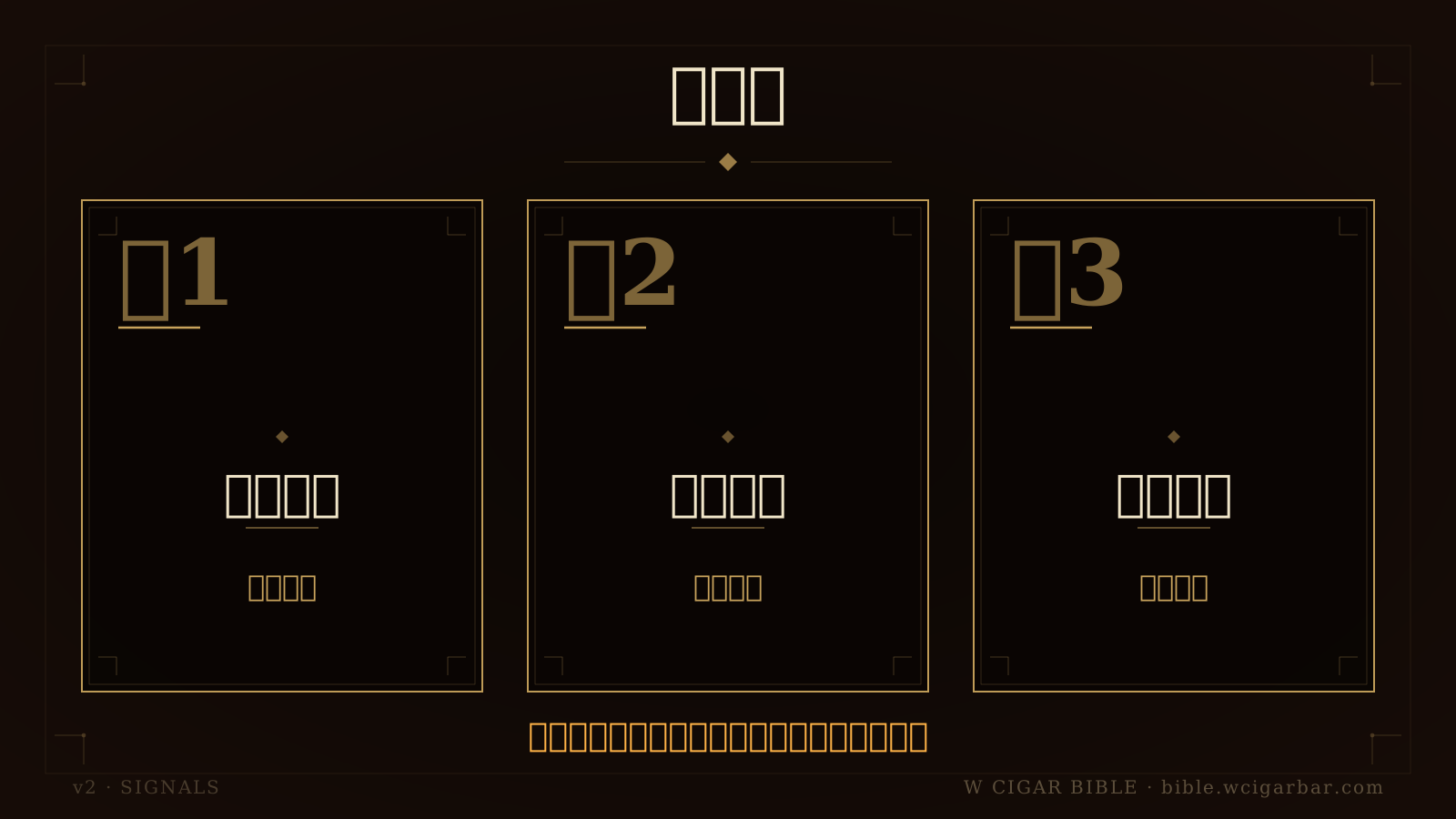
三張錯誤卡片列出剪太深火太近與斜燒急修問題
5. Flame Source Selection: Torch, Soft Flame, Cedar Spill Each Have Their Place
The core principle of lighting is "even heating, not letting the flame directly scorch the foot for too long." Torch lighters became popular after 2000, wind-resistant, concentrated, and efficient, suitable for outdoor or ring gauge 52 and above cigars; but triple or quadruple torch flames are high temperature, and if the distance is less than 1cm, the foot can easily be scorched, resulting in excessive black pepper and bitterness in the early stage. Single torch flames are more precise, suitable for relighting and small ring gauges; dual flames are the balanced choice for most people. Soft flames like traditional gas lighters or long matches are milder in temperature, suitable for indoor and leisurely occasions, but unstable in the wind.
Cedar spills are often seen as a source of ritual, with the advantage of gentle flame and clean aroma, especially when paired with more delicate cigars like Davidoff Signature 2000, the early stage is less likely to be overwhelmed by high temperature; the downside is it requires time and patience. Do not use candles to light cigars directly, as paraffin odors can easily adhere to the foot; general gasoline lighters are also not ideal, as the fuel smell may interfere with the first stage. If you can only use a torch outdoors, keep the blue core of the flame about 2 to 3cm from the foot, relying on heat to toast rather than letting the flame tip directly lick the filler.
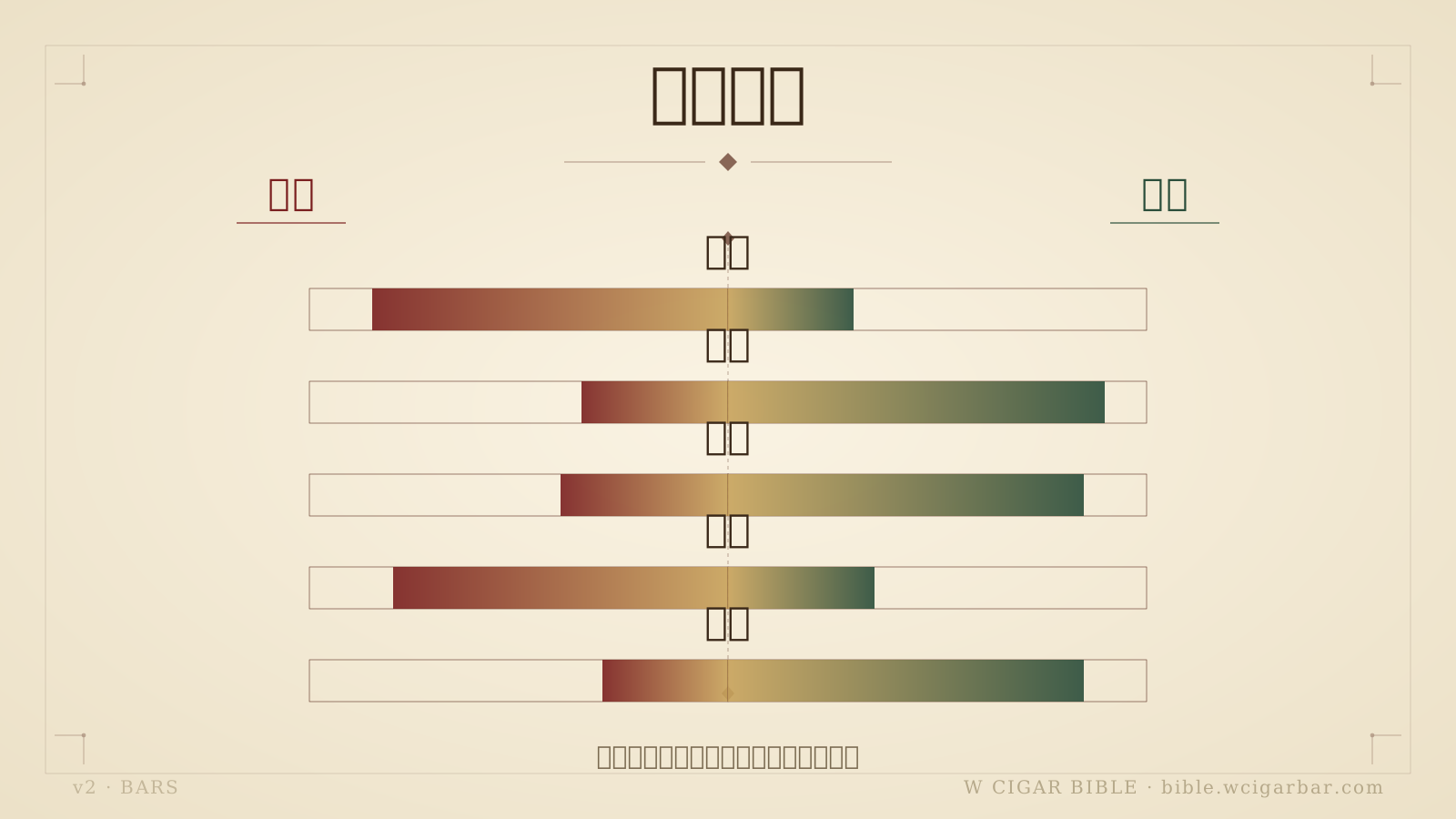
長條圖比較新手與老手的剪火習慣差異
6. Standard Lighting Steps: Toasting, Rotating, Calm Relighting
Advanced lighting can be divided into three stages: toasting, pre-light, entry confirmation. In the first stage, bring the cigar close to the flame at about a 45-degree angle, distance 2 to 3cm, slowly rotate 360 degrees, allowing the foot edge to first show a uniform caramel color rather than immediately emitting large smoke. In the second stage, concentrate the heat on the center filler, still maintaining rotation; the goal is for the entire cross-section to show a uniform red dot, with the outer circle and center synchronized. In the third stage, lightly draw two or three puffs, while letting the flame slightly approach but not overdraw, this allows the burning core to establish. Many beginners make the mistake of holding the cigar and drawing hard while using the torch to burn directly, resulting in too high a temperature in the first 5 minutes, making it difficult to regain delicacy even if slowed down later.
If the burn line is skewed, for example, one side is 5mm faster, don't rush to relight; you can position the slower burning side downwards, using rising hot air and oxygen supply to adjust, waiting 1 to 2 minutes. If skewed over 8mm, use a single flame to lightly relight the slower side edge, don't burn the faster side. In 2018, I saw a Bolivar Belicosos Finos with a normal cut but off-center lighting, the early stage went entirely towards spiciness; after reorganizing the burn line, the middle stage returned to leather, coffee, and earthy tones. Lighting is not about showing off skills but laying the foundation for the next 60 minutes.
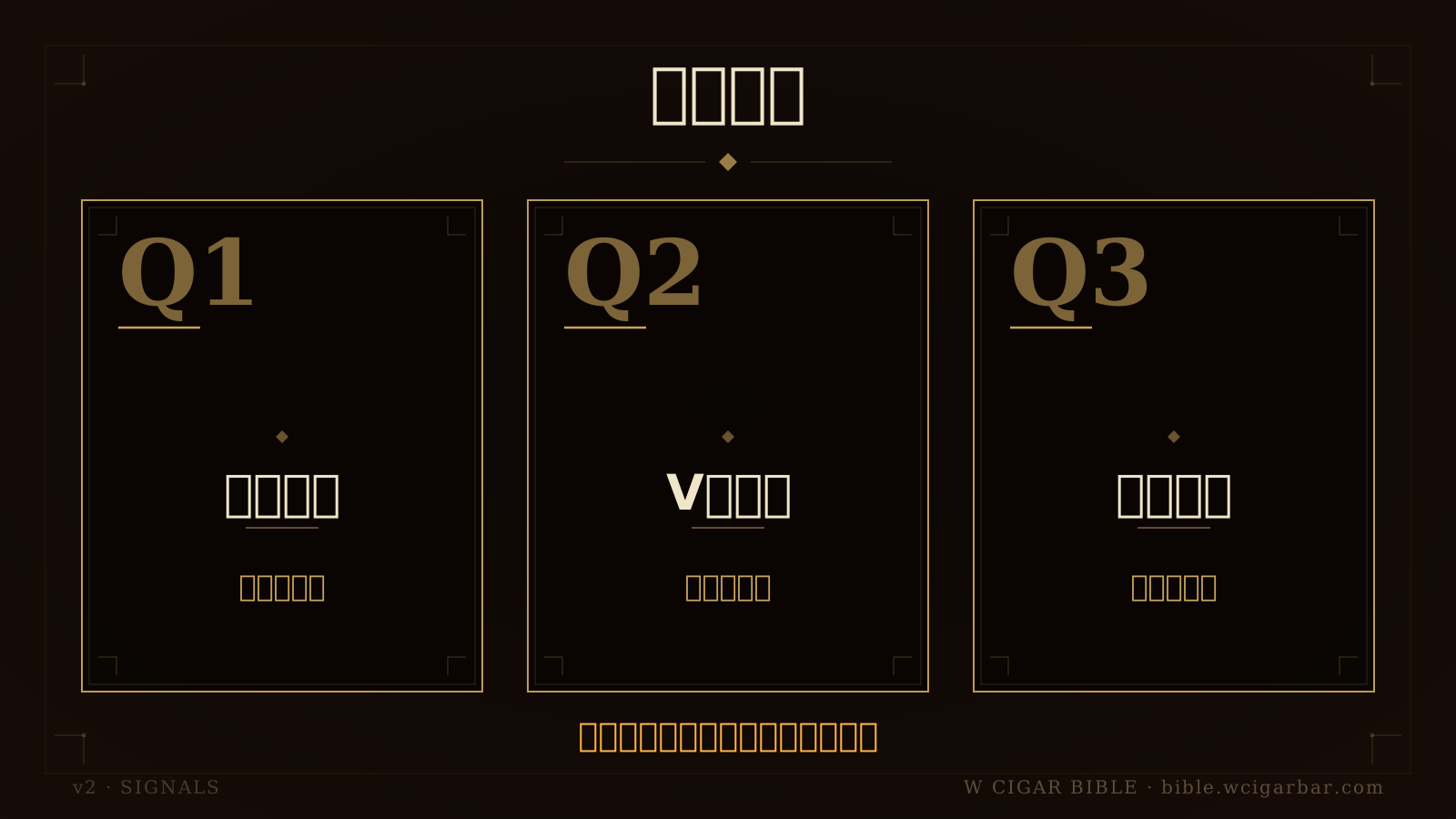
三張問答卡說明再剪V剪與斜燒處理
7. Etiquette and Error Correction: Staying Composed is More Important than Flawless Actions
In cigar occasions, the etiquette of cutting and lighting often reveals more about one's cultivation than the price of the tool. Before borrowing someone else's cutter, ensure the blade is clean and express gratitude softly; if there are leaf fragments after cutting, don't scatter them on the table, use a tissue or the edge of an ashtray to tidy up. When lighting, don't point the flame towards others, and don't treat the torch as a toy for sound effects; multi-flame lighters are loud, especially in quiet spaces, control the time. If the cigar head spreads due to cutting too deep, you can gently press to fix it with your lips, or tear off a small piece of the original loose wrapper and temporarily stick it with saliva, but this is just an emergency fix, not the best state.
If the draw is too tight, first check if the humidity is too high; a cigar stored in a 72% environment for a long time may be more prone to stuffiness than one at 65% to 68%. If it frequently extinguishes after lighting, it may not be a bad cigar, but rather too slow a pace, windy environment, or insufficient toasting in the early stage. A normal pace can be about 45 to 75 seconds per puff, fuller-bodied like Liga Privada No.9 can be slower, elegant types like H. Upmann Magnum 46 can adjust according to burn. Gentlemanliness is not about never making mistakes but knowing how to calmly correct them and making those at the same table feel comfortable.
Common Questions
Q1: Can I cut again if I find it too tight after a straight cut?
Yes, but in small increments. It's recommended to increase by about 0.5mm each time, then confirm with a dry draw. Cutting too deep at once can cause the cap to lose support, making it easier to loosen in the later stages with saliva and heat. For Robusto or Toro, sequential fine-tuning is usually more stable than a big cut.
Q2: Will a V-cut make the flavor stronger?
A V-cut often concentrates the smoke on the center of the tongue, so it may feel more concentrated and thicker, but it doesn't mean the cigar itself becomes stronger. If it's a small size below ring gauge 46, a deep V-cut may damage the head structure; ring gauge 50 and above is more suitable for trying.
Q3: Why does a punch cause bitterness in the mid-stage?
A common reason is too small a hole, causing tar and moisture to concentrate at the hole edge. You can choose a larger hole diameter at the start or use dual punches to increase airflow area. If it has already become bitter, you can gently wipe the hole with a tissue and slow down the pace to avoid continued high temperature accumulation.
Q4: Is the cigar ruined if the foot burns black during lighting?
Not necessarily. If only the outer circle is slightly black, it's usually because the flame was too close or stayed too long, slowing down the early stage can help. If the entire foot is charred with a pungent smell, the early stage flavor will be affected; later, you can use a more distant heat to stabilize the burn line.
Q5: Should I immediately use a lighter to fix a cigar that keeps burning unevenly?
First, observe the degree of skew. Less than 5mm can be adjusted by rotating the cigar, positioning the slower burning side down; over 8mm or if a clear tunnel burn has formed, use a single flame to lightly relight the slower side. Over-relighting can cause repeated high temperatures in the same area, bringing bitterness.
Q6: How often should the cutter be maintained?
If used several times a week, it's recommended to wipe the blade with a dry cloth every 1 to 2 months to avoid oil and debris buildup; don't rinse the metal pivot with water. If the blade starts to crush the cap or the cut surface shows burrs, it indicates insufficient sharpness, consider replacing or professional maintenance.
Cutting and lighting are the most humble yet crucial basic skills of cigars. True advancement is not making the actions more complex but better understanding each cigar's size, humidity, and burning character; the quieter the technique, the more the flavor can speak for itself. May every beginner cultivate a composed, precise, and respectful rhythm for cigars between each cut and light. — Cigar Prince Wilson Tsai
Smoking is harmful to health. Under 20 years old is prohibited from smoking. Quitline: 0800-636363. This article is for reference by adults over 20 years old as cigar culture, preservation, and regulation knowledge, not a tobacco advertisement, promotion, or purchase suggestion.
Like this article?Share with friends
Share this W Cigar Bible piece with friends who want to learn cigar culture, storage, and tasting.
想把這篇 化為實踐
雪茄聖經是知識;雪茄文化要在空間裡發生

W Cigar Bar 大安總店資訊
台北大安區 · 雪茄聖經總編輯 Wilson Tsai 主理的雪茄文化空間

33 座 24 小時恆溫恆濕醇化室
W Cigar Bar 提供的會員醇化空間 · 場地資訊請洽編輯部
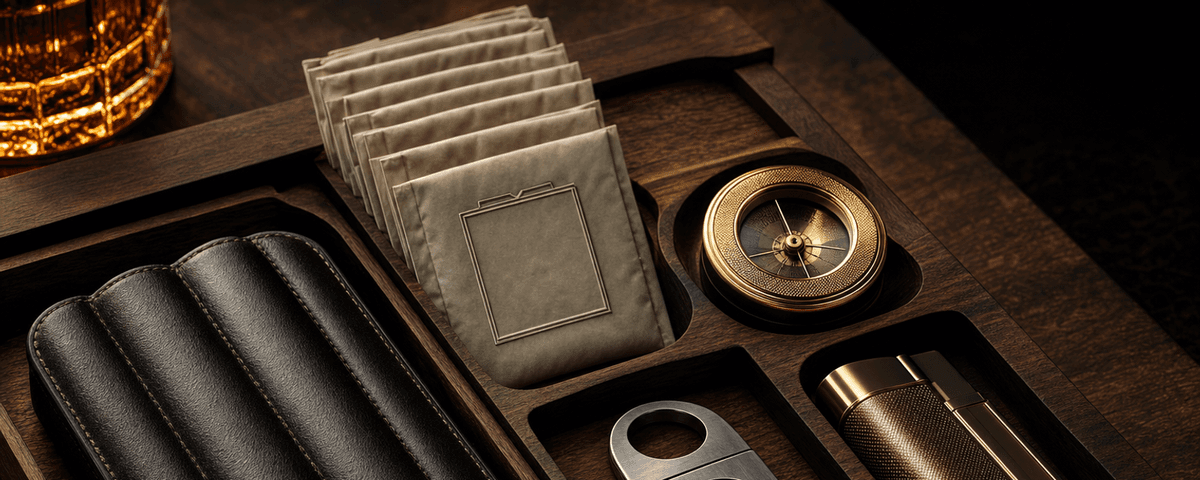
雪茄剪 / 打火機 / 雪茄盒 / Boveda
W Cigar 配件官網 · 專營雪茄配件正品

加 LINE 好友 · 文化諮詢
文化空間資訊 · 紳士沙龍 · 私人包場
本網站內容僅供雪茄文化、歷史、收藏與品吸知識研究參考。菸品有害健康、未滿法定年齡者請勿吸菸。實際規範請依所在地法律為準。
吸菸有害健康・戒菸專線 0800-636363・本站僅供 20 歲以上成年人閱覽。
讀到這裡,你不只是路過的人
留下 Email,加入 W 雪茄聖經內圈——總編輯 Wilson Tsai 親選的學院深文與國際新訊,先你一步送到信箱。
· 教育用途非銷售 · 隨時一鍵退訂 · Email 絕不對外公開 · 由勝茄股份有限公司營運
同分類延伸閱讀

資料來源:W Cigar Bible 編輯部整理 · 雪茄王子 Wilson Tsai 親自審稿
本文僅供雪茄文化、歷史、收藏與品鑑知識研究,不作為菸品促銷、銷售或購買建議。吸菸有害健康,未滿二十歲不得吸菸。