Advanced Cigar Tasting and Brand Recognition
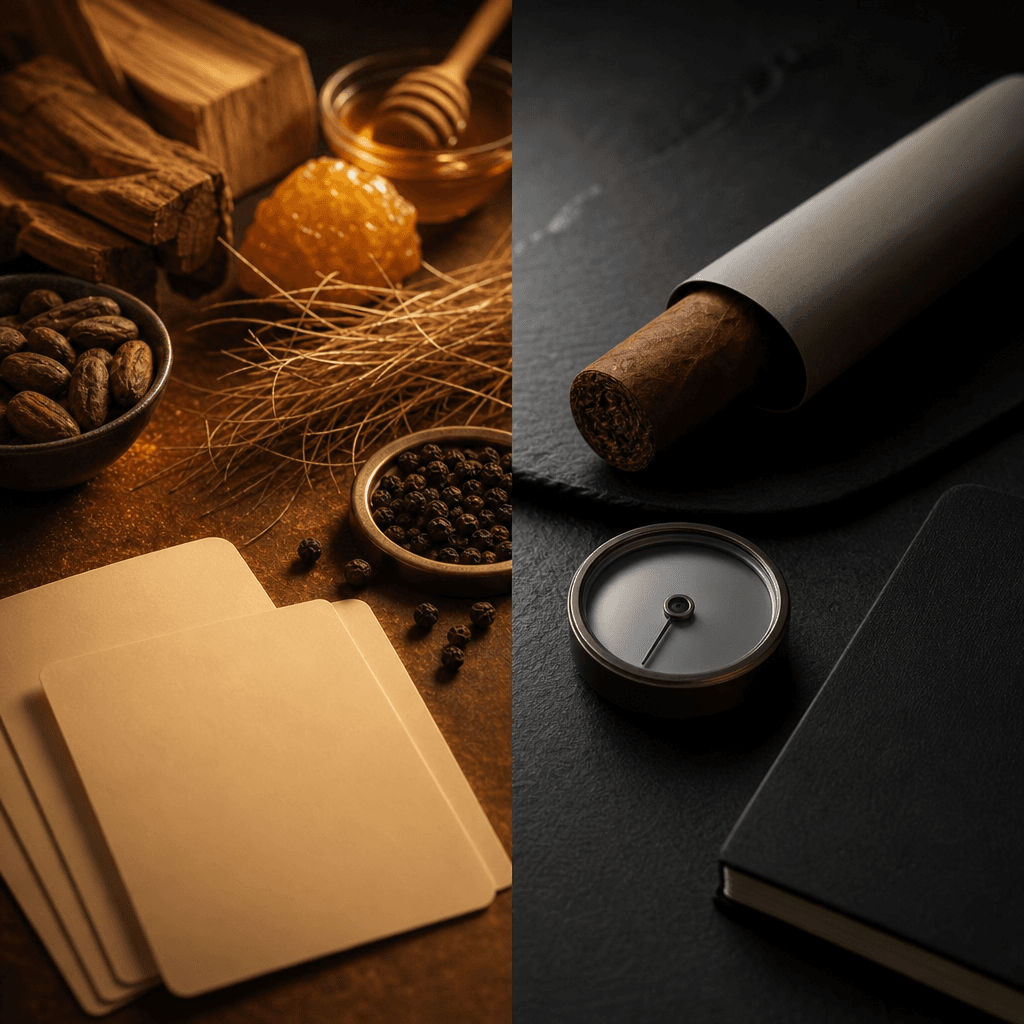
進階雪茄品味不僅是喜好,更在於能否透過氣味推測品牌與風格。作為《雪茄聖經》編輯,我認為老手的分水嶺在於能否將味覺、產區與品牌歷史串聯。品牌辨識需關注反覆出現的風味結構,並建立個人風味資料庫,記錄品牌、尺寸及風味變化。古巴品牌如Cohiba、Montecristo等各具特色,而多明尼加、尼加拉瓜及宏都拉斯的雪茄則展現不同風味語法。了解來源與保存狀態對於辨識品牌風格至關重要,避免將瑕疵誤認為品牌特色。
- 進階雪茄品味需從風味組合出發,記錄品牌、尺寸、年份等資訊以建立自己的風味資料庫。
- 冷聞與燃燒線的觀察能提供更真實的風味訊號,幫助判斷雪茄的品質。
- 品牌辨識需考量來源與保存狀態,否則可能誤認瑕疵為品牌特色。
When you reach an advanced stage, cigars are no longer just about "like" or "dislike"; the real intrigue lies in whether you can deduce the brand, leaf composition, or even the style of a particular period from the combination of wood, earth, cream, pepper, and sweetness before seeing the band.
As an editor of the "Cigar Bible," I've always believed that the hallmark of a seasoned aficionado isn't how many cigars they've smoked, but whether they can connect taste, origin, brand history, and storage conditions into a cohesive understanding. Here, I share methods for advanced cigar brand recognition based on years of data collection and practical observation.
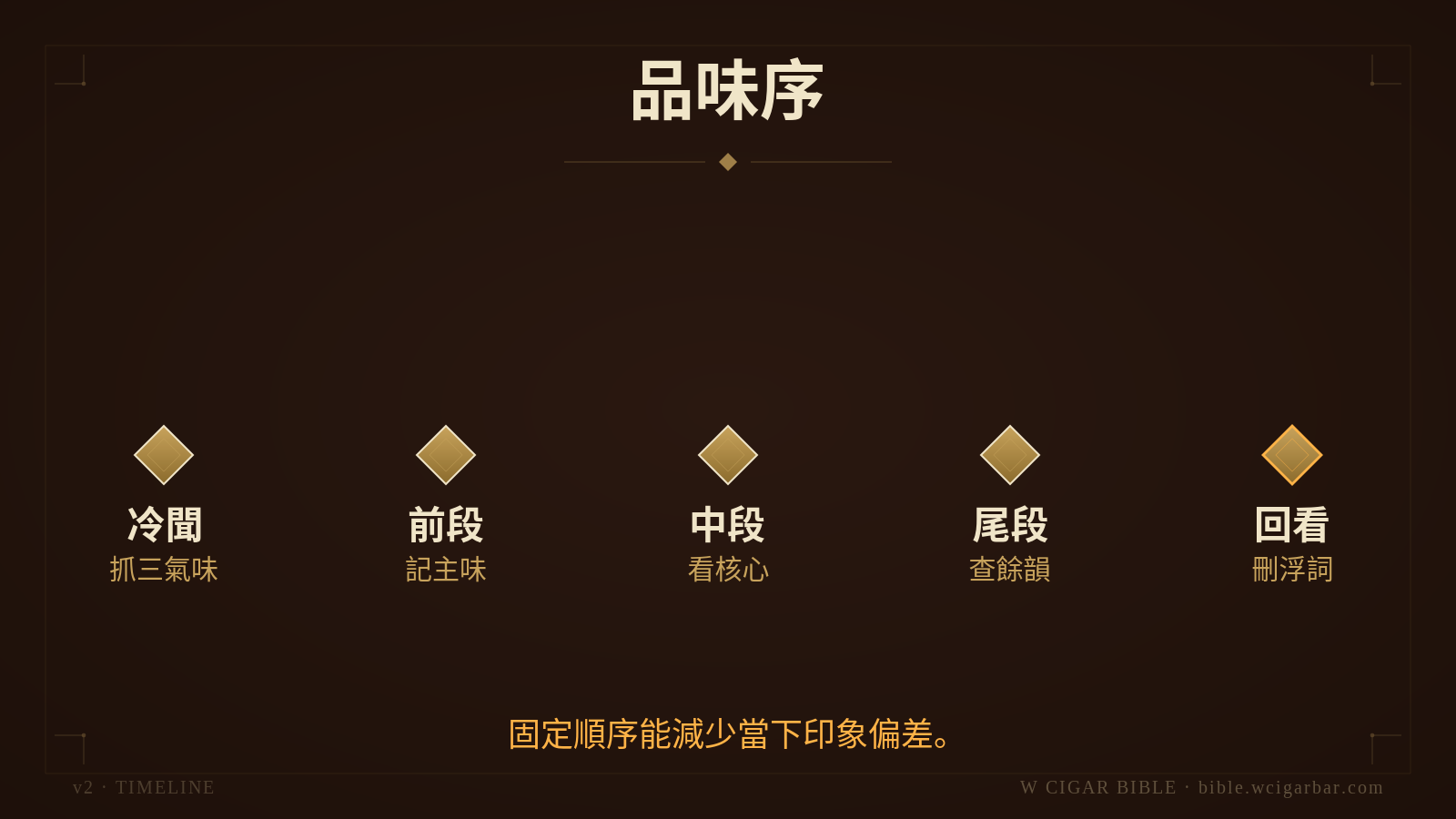
時間線呈現冷聞、前段、中段、尾段與回看筆記步驟
From "Enjoyable" to "Brand Fingerprint": Building Your Flavor Database
The biggest challenge for seasoned aficionados is that while their descriptions become more detailed, their judgments become more ambiguous. You might be able to describe leather, coffee, cocoa, cedar, and nuts, but you may not be able to explain why these flavors point to Cohiba, Partagás, or Davidoff. The first step in advanced training is to rewrite single flavors into "combinations." For example, Cohiba often features grass, honey, cream, and a hint of mineral; Partagás typically has a framework of earth, black pepper, concentrated coffee, and heavy wood.
Brand recognition isn't about guessing the band but identifying recurring flavor structures. I recommend recording at least six fields for each cigar: brand, size, year or box code, storage humidity, flavors in the first third, and changes in the middle and final thirds. After recording 30 cigars consecutively, you'll find your descriptions becoming more consistent, especially in distinguishing "sources of sweetness" and "spice positions," which can significantly differentiate brands.
For instance, Montecristo No.2 has been a classic torpedo sample since the brand's founding in 1935. When in good condition, it often features roasted bread, cocoa, nuts, and medium wood; but if stored too moist, these details can be overshadowed by cloying sweetness and bitterness. You might think the brand doesn't suit your taste, but it could just be a matter of condition. Advanced aficionados must first eliminate storage variables before discussing brand style.
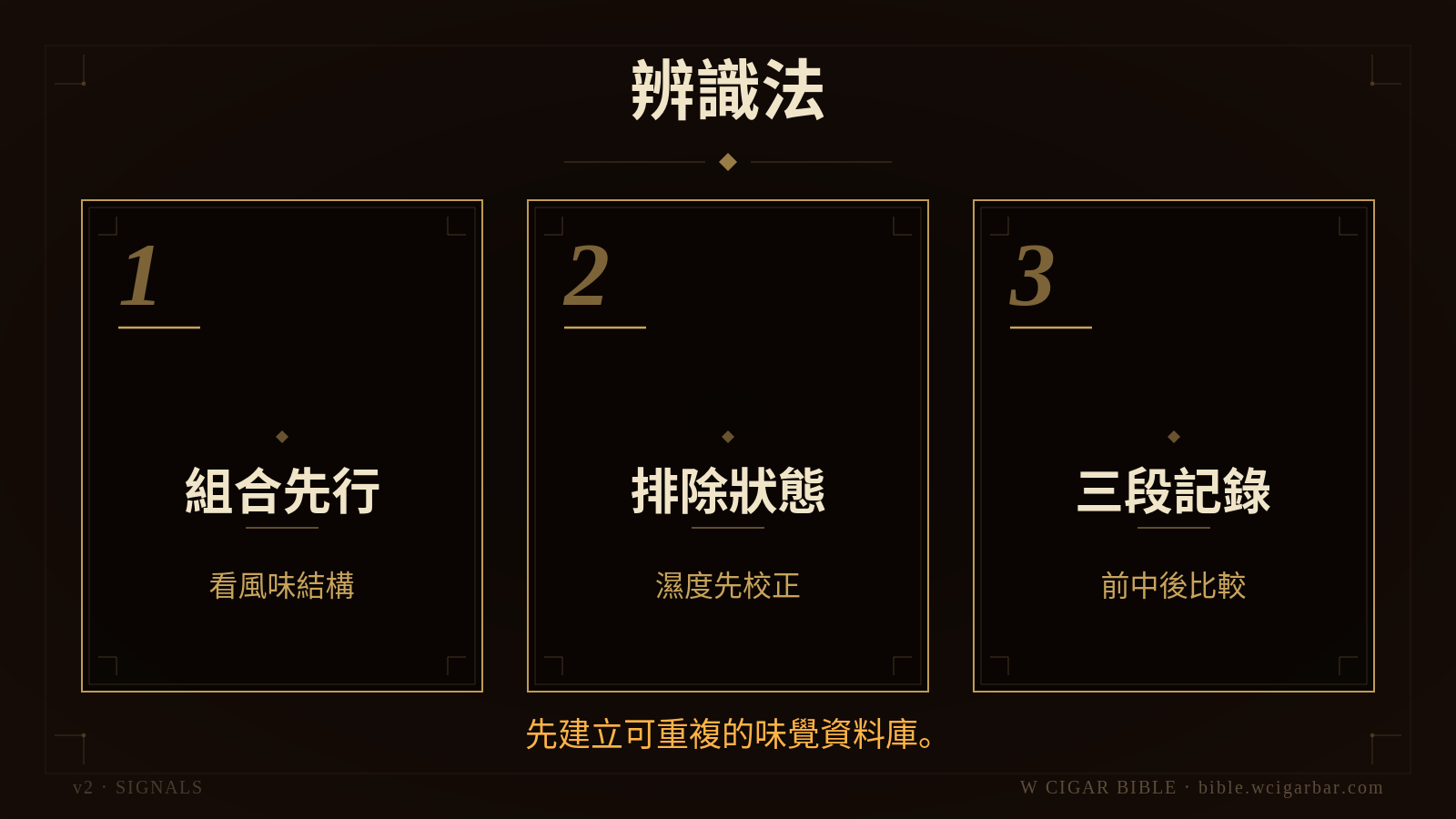
三張卡片說明風味結構、狀態校正與三段記錄
Three-Stage Tasting Technique: Cold Scent, Burn Line, and Aftertaste are More Honest than the Initial Taste
Advanced tasting isn't about piling up adjectives but fixing the order of observations. Before lighting, I first examine the oiliness of the wrapper, leaf veins, and rolling density, then perform a cold scent and cold draw. If the cold scent has barn, hay, honey, or cocoa notes, it's a normal signal; if there's a pungent ammonia smell, mold, or damp cardboard, be cautious. These signals are often more honest than post-lighting because burning can mask some flaws.
The first third reveals the brand's opening, the middle third shows the leaf composition's skill, and the final third indicates balance and aging condition. I habitually divide a cigar into three parts: the first 0 to 25 minutes, the middle 25 to 55 minutes, and the final after 55 minutes. For example, with a Romeo y Julieta Churchill, when in good condition, the first third often has floral, red tea, and cedar notes; the middle transitions to leather and light sweetness, and if the final third remains smooth, it indicates healthy storage and aging.
You can use the following steps for consistent training:
- Cold scent: Record the three most prominent aromas before lighting.
- First third: Only note the main flavor and smoke body, without rushing to conclusions.
- Middle third: Observe if the brand's core appears, such as earth, cream, floral, or pepper.
- Final third: Assess whether bitterness is reasonable and if the aftertaste is clean.
- After finishing: Review notes the next day, remove exaggerated adjectives, and keep descriptions that can be repeatedly verified.
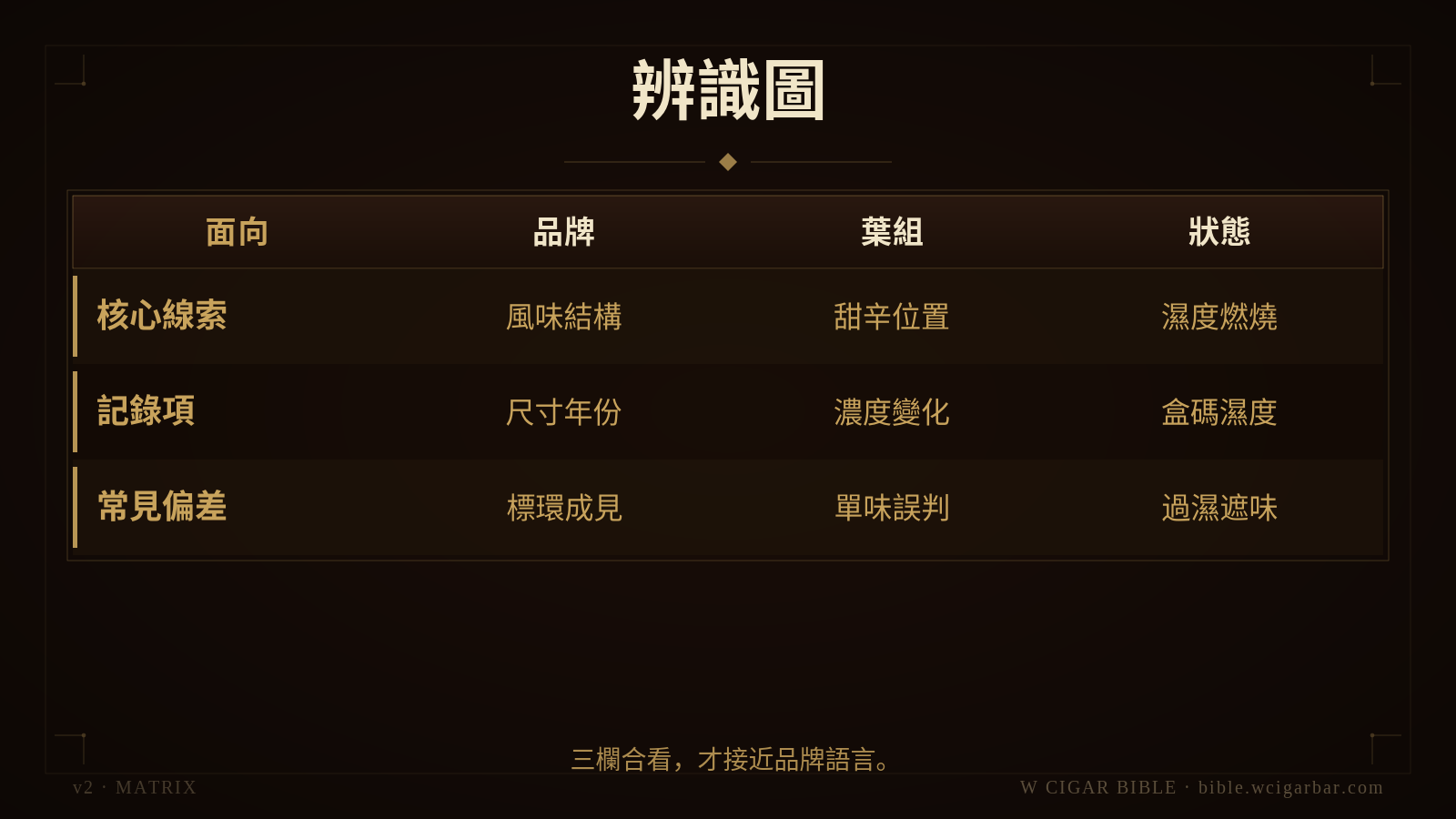
矩陣比較品牌、葉組與狀態三種辨識面向
How Cuban Brand Stories Enter Flavor: Five Classic Examples
Recognizing Cuban brands requires more than just regional myths; it also involves understanding brand positioning. Cohiba became a high-end representative in 1966, using a unique multi-fermentation concept, often featuring more refined cream, grass, honey, and mineral notes. The Behike series, officially launched in 2010, gained attention for incorporating medio tiempo leaves; however, its focus isn't on being "stronger" but on deeper aroma density and complexity.
Montecristo's key is balance. Since its birth in 1935, No.2 and No.4 have long served as benchmarks for judging medium-intensity Cuban styles. It often begins with cocoa, coffee, roasted bread, and nuts, unlike the heavier Partagás or the softer Hoyo de Monterrey. If a cigar makes you think of "stability, roundness, cocoa, and wood," Montecristo is often an important reference.
Partagás, founded in 1845, is recognized for its richness, earthiness, and spiciness. The robusto size of Serie D No.4 is often used as an entry point for Cuban intensity. H. Upmann, established in 1844, commonly features light coffee, nuts, dry wood, and elegant spice; Hoyo de Monterrey, dating back to 1865, often showcases floral, cream, and soft wood notes in its Double Corona. Brand stories aren't just decoration; they tell you what balance to expect.
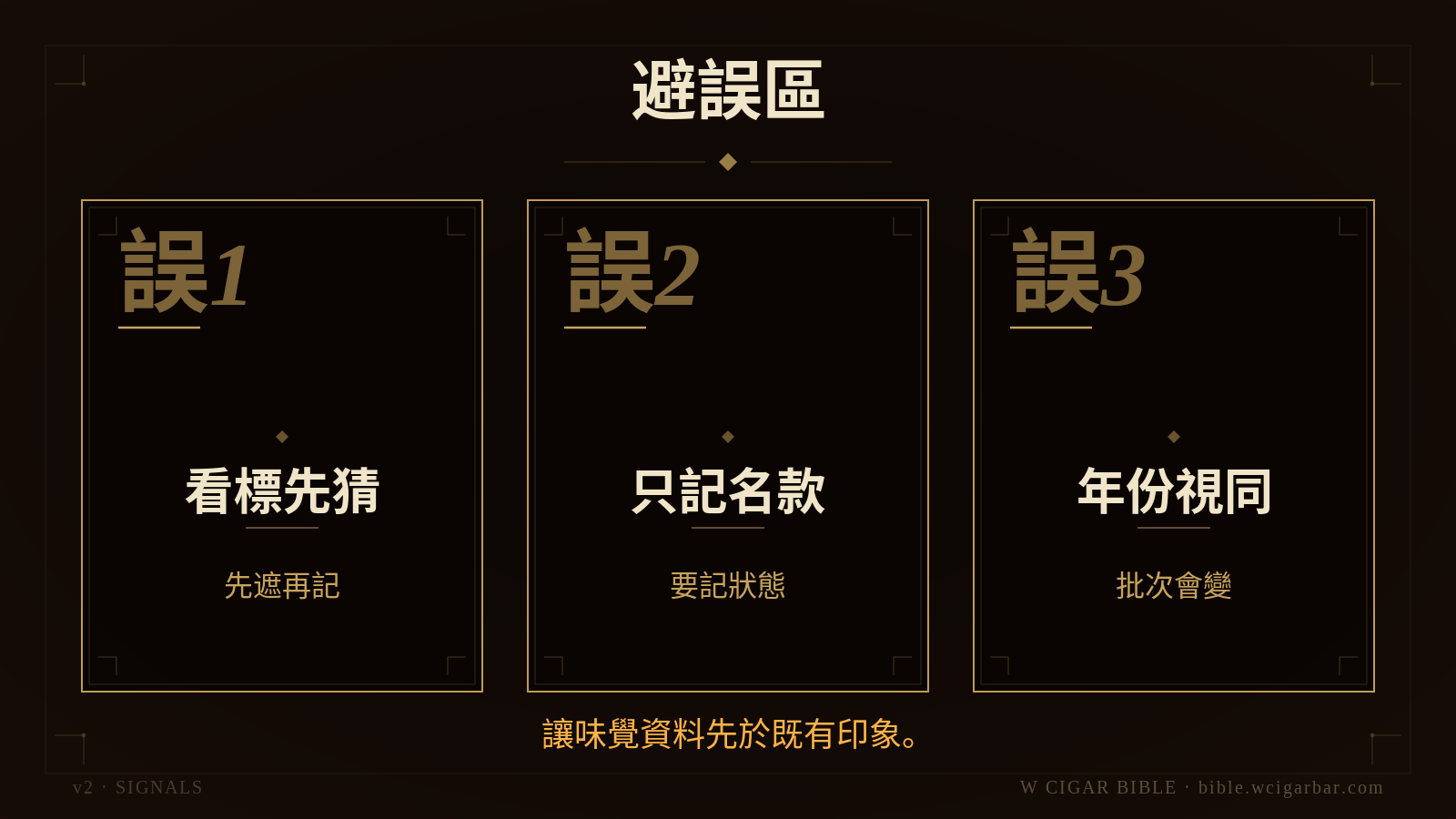
三張卡片整理先看標環、忽略狀態與年份混同的誤區
Coordinates Beyond Cuba: Dominican Republic, Nicaragua, and Honduras
If you're only familiar with Cuba, you'll miss half the perspective on brand recognition. After transitioning from Cuba to the Dominican Republic, Davidoff established a very clear "clean, elegant, creamy, white pepper" language. The Davidoff Grand Cru, Aniversario, and Millennium lines are like three volumes: Grand Cru leans towards grains and nuts, Aniversario is more rounded, and Millennium deepens coffee and spice.
The rise of Nicaraguan cigars is one of the most important phenomena of the past 20 years. Padrón 1964 Anniversary and 1926 Serie often feature cocoa, coffee, black pepper, caramel, and a rich mouthfeel; My Father is known for explosive pepper, roasted aroma, and sweet spices. Country of origin isn't a label of quality but a coordinate of flavor language. What you need to distinguish are the leaf types, fermentation, blending, and brand aesthetics.
Honduras often brings herbal, woody, mineral, and more direct smoke bodies, such as some series of Camacho, known for their strength and thickness. To simplify the three: the Dominican Republic often gives a clean and delicate impression, Nicaragua often has rich sweet spice and cocoa, and Honduras often brings rustic wood and herbal strength. This classification isn't an absolute answer but can help you establish a range during blind tastings.
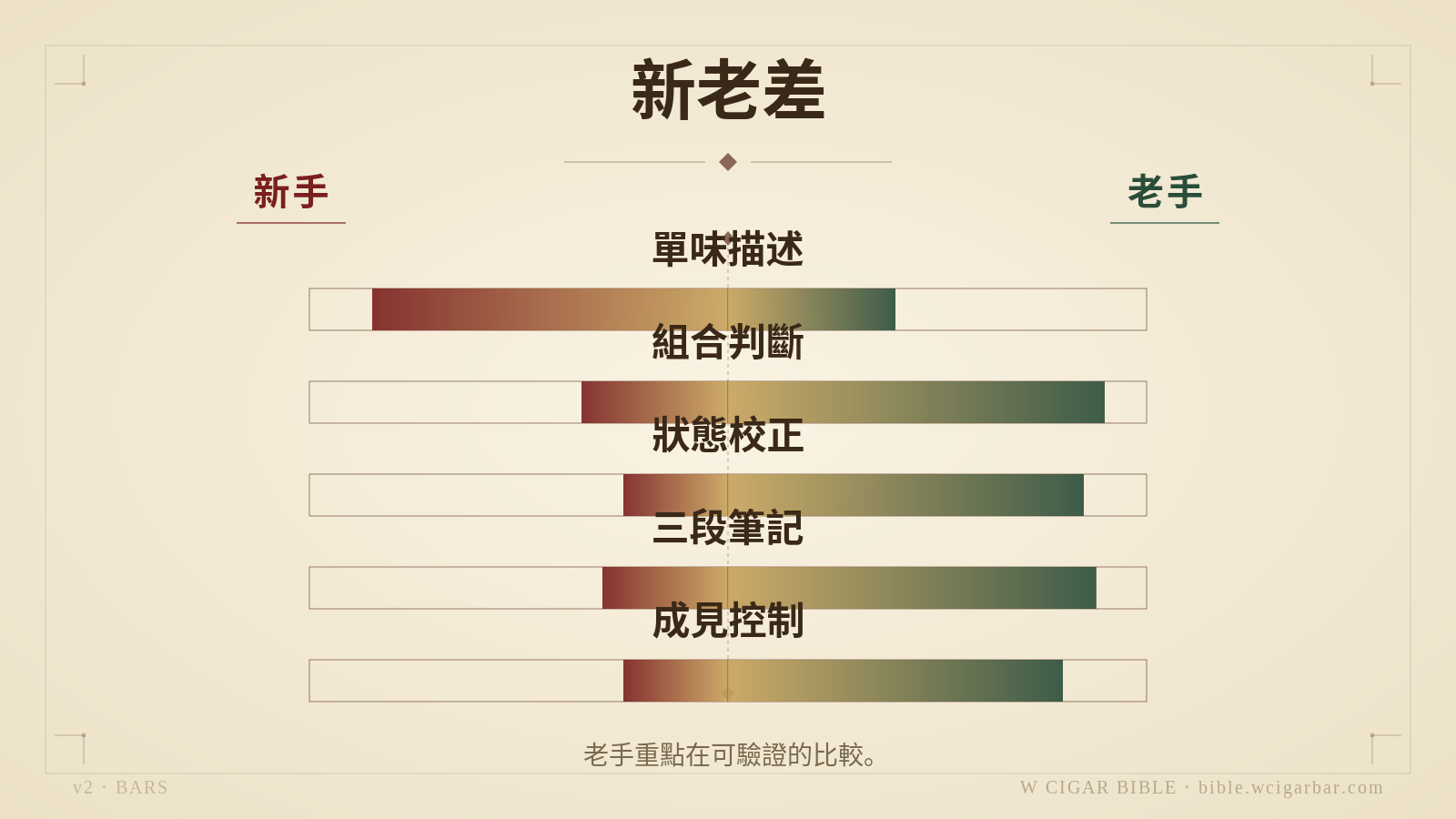
橫向長條比較新手與老手在描述、判斷和校正上的差異
Size, Ring Gauge, and Vintage: Why the Same Brand Can Have Different Expressions
The flavor of different sizes within the same brand can vary greatly. This is because the ring gauge and length change the burn rate, leaf composition ratio, and temperature. Robustos often deliver concentrated performance within 45 to 60 minutes, while Churchills may take over 90 minutes to reach the best segment. Comparing Partagás Serie D No.4 and Lusitanias, the former is direct and substantial, while the latter is longer, with more layered aroma development.
Limited editions and regional editions can also make a brand less "standard." For example, Habanos Edición Limitada has become a focus for collectors since the early 2000s, using darker wrappers and specific size designs in different years. Some 2007, 2010, and 2015 versions are talked about in the market, but price fluctuations don't guarantee appreciation; it still depends on source preservation and the market. Advanced aficionados shouldn't be attracted only by the vintage but should understand why that version is discussed.
Size is an amplifier of brand style, not just a simple difference in thickness. If you want to train brand recognition, I suggest starting with the most representative regular production of each brand, rather than chasing special editions from the start. Establish stable samples like Cohiba Siglo VI, Montecristo No.2, Partagás Serie D No.4, and H. Upmann Magnum 46, then compare limited and regional editions, so you don't mistake exceptions for rules.
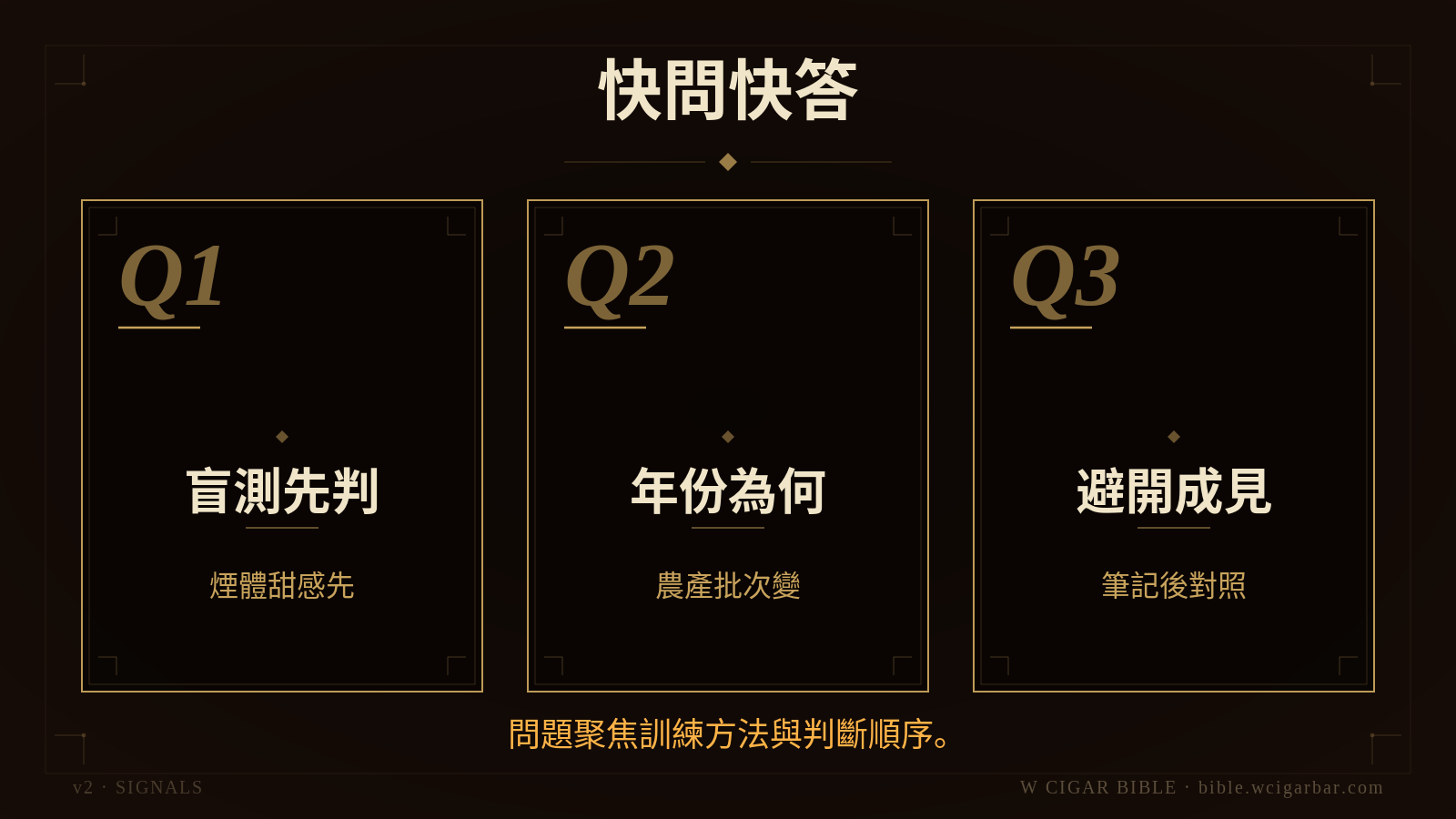
快問快答卡片整理盲測順序、年份差異與遮標練習
Source, Storage, and Aging: Don't Mistake Flaws for Brand Characteristics
The biggest fears in brand recognition are unclear sources and incorrect storage. Cuban cigars are especially affected by storage; high temperatures can make tobacco oils heavy, high humidity can cause poor burning and increased bitterness, while low humidity can flatten aromas and dry out smoke. I personally prefer an environment with 65% to 69% relative humidity and about 18 to 21°C, adjusting slightly based on ring gauge and wrapper condition.
True brand style can only be seen under reliable sources and stable storage. In the PCC authorized dealer system, I've encountered many cases: the same box of Montecristo No.4, if half is stored long-term at over 72% humidity and the other half at 67%, the flavor difference becomes apparent after three months. The former often appears dull, bitter, and slow-burning, while the latter is more likely to present cocoa, wood, and nuts.
| Observation Item | Healthy State | Possible Issues | Impact on Brand Recognition |
|---|---|---|---|
| Wrapper Feel | Elastic, slightly oily | Too dry or too moist | Distorted aroma, unstable burning |
| Cold Scent | Hay, wood, cocoa | Mold, pungent ammonia | Easy to mistake flaws for style |
| Burn Line | Slow and correctable | Long-term uneven burn, extinguishing | Affects three-stage judgment |
| Aftertaste | Clean, with extension | Bitter, sticky mouth | Difficult to discern brand details |
Aging should also be viewed rationally. Not all cigars improve with age; those with rich leaf composition and complete structure are more likely to develop more rounded wood, honey, and leather; those originally mild or poorly preserved may only become weaker over time. The so-called value of old boxes doesn't guarantee appreciation; it still depends on source preservation and the market.
Common Questions
The core of advanced brand recognition is putting flavor, size, source, and time on the same map, not just remembering which one is famous.
1. What do you judge first in a blind test?
I first judge the smoke body and the source of sweetness. Cream, hay, and honey lean towards an elegant route; earth, black pepper, and strong coffee may point to power brands. First, grasp the general direction, then narrow the range with aftertaste and middle-third changes.
2. Why is there a big difference in the same brand across different years?
Tobacco is an agricultural product; climate, fermentation batches, rolling conditions, and storage conditions all affect the outcome. Comparing different years like 2014, 2018, and 2022, even if the brand is the same, there may be differences in sweetness, intensity, and burning.
3. Are novice notes still useful for veterans?
The more experienced you are, the more you need notes. Memory beautifies experiences; notes capture the current state. It's recommended to at least record the brand, size, box code or year, humidity, flavors in the first three segments, and overall score.
4. Is Cuban always easier to recognize than non-Cuban?
Not necessarily. Cuba has history and subtlety, but non-Cuban brands also have very clear brand languages. Davidoff, Padrón, Arturo Fuente, and My Father all have stable recognition points worth comparing.
5. How to avoid being influenced by the band?
Cover the band and take notes first, then compare after smoking. You'll find you have preconceived notions about certain brands. True training is being willing to let taste overturn preconceptions.
I always believe that the charm of cigars lies not in flaunting rarity but in reading the land, vintage, craftsmanship, and human choices in a single puff. If seasoned aficionados can slow down their judgments and compare repeatedly, brands will no longer be just bands but a language that can be understood. May each time you light up bring you closer to your own answers.
—Cigar Prince Wilson Tsai
Smoking is harmful to health. Under 20 years old is not allowed to smoke. Quitline: 0800-636363. This article is intended for adults over 20 years old as a reference for cigar culture, preservation, and regulatory knowledge, not as tobacco advertising, promotion, or purchase advice.
Like this article?Share with friends
Share this W Cigar Bible piece with friends who want to learn cigar culture, storage, and tasting.
想把這篇文章 化為實踐
雪茄聖經是知識;雪茄文化要在空間裡發生
W Cigar Bar 大安總店資訊
台北大安區 · 雪茄聖經總編輯 Wilson Tsai 主理的雪茄文化空間
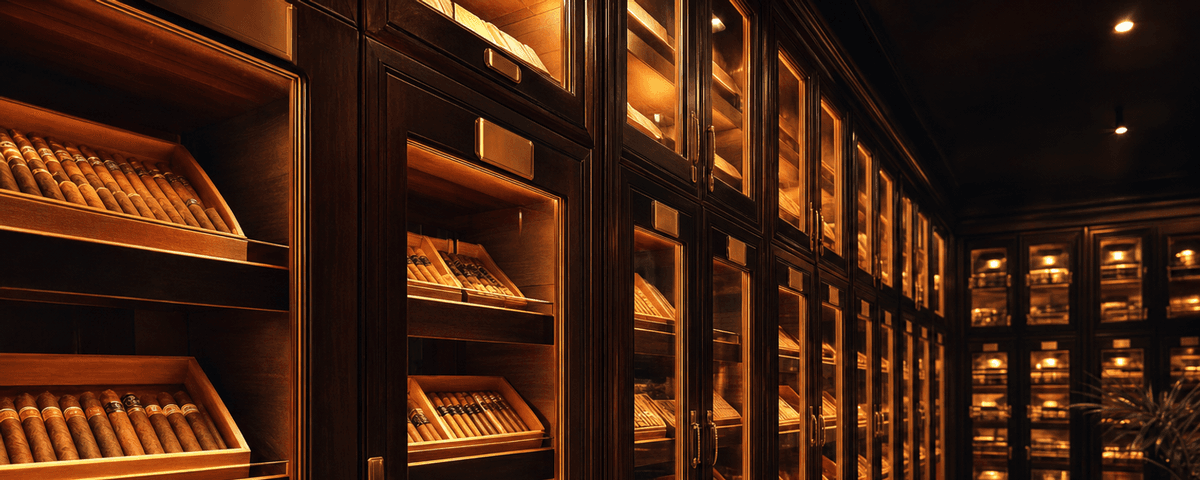
33 座 24 小時恆溫恆濕醇化室
W Cigar Bar 提供的會員醇化空間 · 場地資訊請洽編輯部
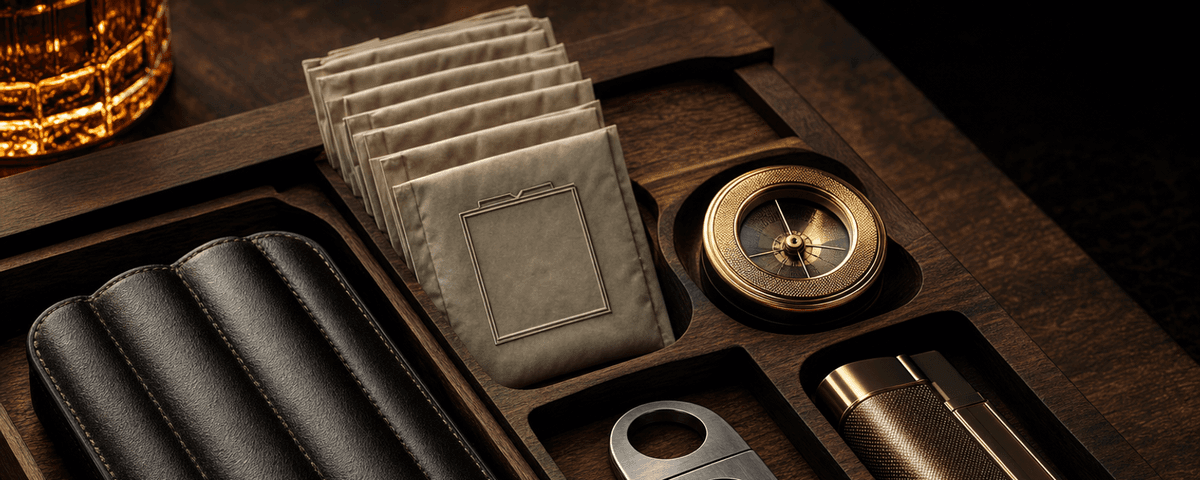
雪茄剪 / 打火機 / 雪茄盒 / Boveda
W Cigar 配件官網 · 專營雪茄配件正品
加 LINE 好友 · 文化諮詢
文化空間資訊 · 紳士沙龍 · 私人包場
本網站內容僅供雪茄文化、歷史、收藏與品吸知識研究參考。菸品有害健康、未滿法定年齡者請勿吸菸。實際規範請依所在地法律為準。
吸菸有害健康・戒菸專線 0800-636363・本站僅供 20 歲以上成年人閱覽。
讀到這裡,你不只是路過的人
留下 Email,加入 W 雪茄聖經內圈——總編輯 Wilson Tsai 親選的學院深文與國際新訊,先你一步送到信箱。
· 教育用途非銷售 · 隨時一鍵退訂 · Email 絕不對外公開 · 由勝茄股份有限公司營運
同分類延伸閱讀
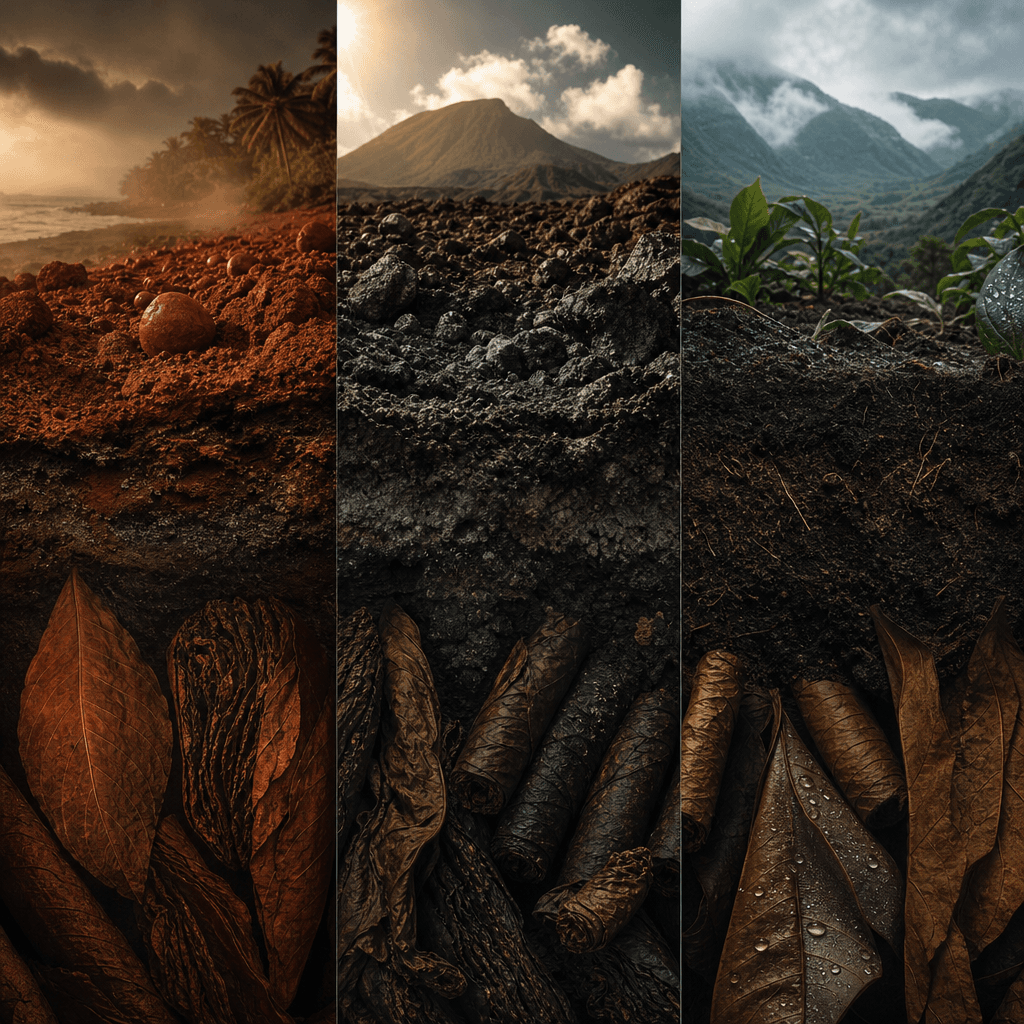
資料來源:W Cigar Bible 編輯部整理 · 雪茄王子 Wilson Tsai 親自審稿
本文僅供雪茄文化、歷史、收藏與品鑑知識研究,不作為菸品促銷、銷售或購買建議。吸菸有害健康,未滿二十歲不得吸菸。