雪茄陳化的科學與藝術:如何控制時間與環境
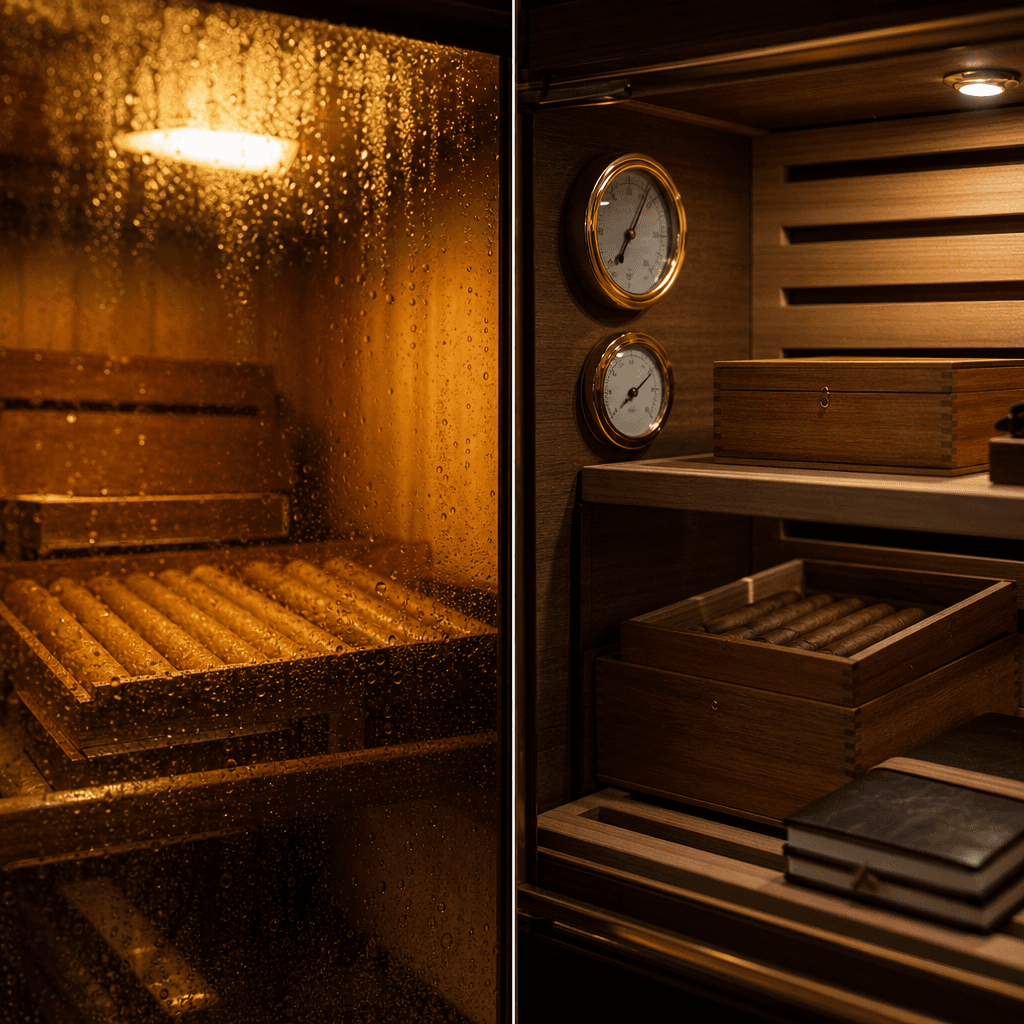
雪茄的醇化過程遠不止於時間的累積,真正影響風味的是菸葉的水分、氮化合物、揮發性香氣及儲存環境的穩定性。醇化的目的是讓風味從分散轉向整合,老手常提到的「圓潤」感受,實際上是刺激感降低、香氣層次連續及苦澀減少的結果。不同類型的雪茄在醇化過程中展現出不同的特性,長期保存需注意溫濕度的穩定,避免環境變化影響品質。透過建立有效的家庭醇化系統,能夠更好地享受雪茄的變化與風味。
- 醇化的核心在於讓雪茄風味從分散走向整合,並非單純變老。
- 穩定的溫濕度環境比追求理想數字更重要,避免劇烈波動。
- 原盒保存的雪茄變化更慢且一致,單支保存則受外部影響更大。
The Science and Art of Cigar Aging: How to Control Time and Environment
Cigar aging is not just about leaving the box for a long time. For seasoned enthusiasts, time is just one variable; what truly determines the outcome is the moisture of the tobacco leaves, nitrogen compounds, volatile aromas, the microenvironment of the wooden box, and whether you can maintain stability for a decade.
As the editor of "Cigar Bible," I've seen too many good boxes ruined by high temperatures over the years, and I've also seen ordinary batches become round and profound after five or eight years. This article discusses science and also the tactile feel; it talks about numbers and how to establish a repeatable and trackable aging system at home.
時間軸呈現入盒後水分氨氣油脂與香氣整合變化
The Essence of Aging: Not Getting Older, But Stabilizing
After cigars are rolled, the internal components of the tobacco leaves continue to change slowly. The fermentation stage has significantly reduced ammonia, grassy flavors, and coarse tannins, but once boxed, the residual moisture, sugars, protein decomposition products, and oils in the leaves will still reorganize at a slow pace. Take the 2014 Hoyo de Monterrey Epicure No.2 as an example; when young, it often exhibits woody, creamy, and faint grassy notes. By around 2020, if stored stably, the taste is usually softer, the spicy edges decrease, and the aftertaste is cleaner.
The core of aging is not to make cigars "stronger," but to integrate flavors from dispersion. The "roundness" often mentioned by veterans actually includes three things: reduced stimulation, more continuous aroma layers, and fewer bitter peaks during burning. This doesn't mean all cigars are suitable for long storage; some sizes that are inherently refreshing and floral may become thin after their peak.
I categorize cigars into three types for observation: the first type is daily cigars that can show balance in 2 to 4 years; the second type is classic Robusto and Corona sizes that mature in 5 to 8 years; the third type is large ring gauge, rich, or high-fill cigars that fully open after 10 years. Cohiba Siglo VI, Partagás Serie D No.4, Bolívar Belicosos Finos change at different speeds in different years and cannot be judged solely by brand name.
三張重點卡整理穩定環境油脂保存與分年紀錄
Chemical Changes: Slow Negotiation of Ammonia, Oils, and Aroma Molecules
The pungency often found in young cigars is mostly related to ammonia, nitrogen compounds, and incompletely integrated fermentation by-products. When humidity and temperature are maintained within reasonable ranges, these substances will gradually dissipate or transform, reducing the alkaline stimulation in the mouth. For instance, the Montecristo No.2 from around 2008, if stored dry in the early years, may have prominent woody notes and broken cocoa flavors; if stored long-term at 65% to 67% RH and 18 to 20°C, it often shows more stable coffee, leather, and dried fruit tones after fifteen years.
Oils are also key. The oily feel on the surface of tobacco leaves is not just a visual aesthetic; it is related to the preservation of aromatic molecules. When the temperature is too high, the loss of volatile aromas accelerates; when the humidity is too high, the leaves swell, burning becomes stuffy, and there is even a risk of mold. A good aging environment allows unpleasant molecules to slowly exit while preserving precious aromatic oils.
I often recommend veterans to do "same-box comparisons." For example, a box of 25 Ramón Allones Specially Selected can be sampled in the 1st, 3rd, and 5th years after purchase. Record the box-opening aroma, wrapper feel, burn line, ash color, and flavors in the front, middle, and back sections. You'll find that real changes don't happen suddenly but appear as identifiable transitions every 12 to 18 months.

矩陣比較日常型中期型與長放型的時間和風味差異
Temperature and Humidity: The Risk Map Behind the Numbers
The most common mistake in home environments is only looking at humidity without considering temperature. The meaning of relative humidity changes with temperature; the same 70% RH at 18°C and 27°C results in different moisture states, mold risks, and leaf expansion degrees. For most Cuban cigars, I prefer 18 to 20°C and 65% to 67% RH; for non-Cuban rich types like Padrón 1964 Anniversary or Arturo Fuente OpusX, it can sometimes be closer to 67% to 69% RH, but it should not be stuffy.
Stability is more important than pursuing perfect numbers; daily fluctuations that are too large will cause the wrapper to repeatedly contract and expand. If humidity jumps from 61% to 72% within a day, even if the average seems reasonable, cigars may develop cracked wrappers, uneven burning, or changes in draw. Especially in Taiwan's summer, where indoor temperatures often exceed 28°C, without temperature control, relying solely on humidification packs is hardly a complete system.
| Target State | Temperature Recommendation | Humidity Recommendation | Possible Flavor Outcome | Main Risks |
|---|---|---|---|---|
| Short-term Aging 6-18 months | 19-21°C | 66-68% RH | Reduced stimulation, aromas still bright | Prone to stuffiness at high temperatures |
| Mid-term Aging 3-7 years | 18-20°C | 65-67% RH | More integrated woody, creamy, leather notes | Too dry may thin aromas |
| Long-term Storage 8 years and above | 17-19°C | 64-66% RH | Delicate taste, clean aftertaste | Too low humidity may cause brittleness |
| Rich New World Cigars | 18-21°C | 67-69% RH | More complete sweetness and oils | Over-humidity may delay burning |
Home Aging Equipment: From Desktop Boxes to Electronic Wine Cabinets
If you only have 20 to 50 cigars, a quality Spanish cedar desktop box can still suffice, but the premise is to complete seasoning first. A new box cannot directly store cigars; it usually takes 7 to 14 days for the wood to absorb enough moisture, and a calibrated digital hygrometer should be used for confirmation. Many veterans overlook hygrometer errors; in practice, I've seen labels showing 68% when the actual is only 62%, a difference significant enough to make a box of Punch Punch become dry and hard after six months.
When the collection exceeds 100 cigars, I recommend using a well-sealed storage box, humidor, or modified electronic wine cabinet. Taiwan's climate is hot and humid, making temperature control more challenging than simple humidification. For electronic wine cabinets, pay attention to compressor vibrations, condensate, direct fan blowing, and plastic odors; run the empty machine for at least 1 to 2 weeks before use, place cedar trays and activated carbon for deodorization, and then gradually add cigars.
The success standard of a home system is a smooth temperature and humidity curve within three months, not just showing ideal numbers on a particular day. My approach is to use more than two sensors, one on the upper layer and one on the lower layer, and only look at trends weekly without rushing to adjust. If the upper layer is consistently 3% RH higher than the lower layer, it indicates that airflow or humidification configuration needs correction, rather than blindly increasing humidification packs.
- Season new wooden boxes first, don't rush to fill them with cigars.
- Calibrate digital hygrometers every 6 to 12 months.
- Manage large collections by zones: separate Cuban, non-Cuban, long-term, and short-term.
- Avoid direct sunlight, air conditioning vents, and kitchen fumes.
- Monthly box checks are sufficient; excessive handling disturbs the environment.
三張錯誤卡提醒只看濕度頻繁開盒與放久必好的風險
Boxed, Single, and Tubed Cigars: Microenvironments Alter the Sense of Time
The aging speed differs between whole-box and single-stick storage. A whole box of 25 cigars stored in a wooden box shares aromas and moisture, changing more slowly and consistently; single sticks stored in drawers or storage boxes are more directly affected by external humidity. For example, the 2011 Partagás Lusitanias, when stored in the original box until 2019, often maintains the continuity of dark wood, pepper, and sweet aromas; if separated early, the differences in single-stick states become significantly magnified.
Tubed cigars follow another rhythm. Tubos can slow down humidity fluctuations and retain some volatile aromas, but if the original moisture is too high, a stuffy environment may form inside the tube. Romeo y Julieta Churchill Tubos and Cohiba Siglo VI Tubos have shown such differences: under the same vintage, sometimes the aroma is more concentrated after opening the tube, while other times it carries a stuffy woody smell, requiring short-term ventilation adjustments.
For long-term aging, original box storage is usually more controllable than mixing single sticks; to observe differences, only a small amount should be taken out for staged recording. I would label the bottom of the box, recording the brand, size, box code, acquisition date, initial humidity, and planned observation years. For example, "Bolívar Royal Coronas, stocked in 2022, 65% RH, observe in 2025/2028/2032," this is much more reliable than just remembering "stored for a long time."
If you have cigars from different regions, it's recommended not to mix them all in one small space. The sweet, peppery, and cocoa aromas of rich Nicaraguan cigars can easily affect the delicate Cuban cigars, and vice versa, potentially confusing flavor judgment. Mixing is not impossible, but for veterans seeking precision, separating by box, layer, and region is the first step in building a flavor database.
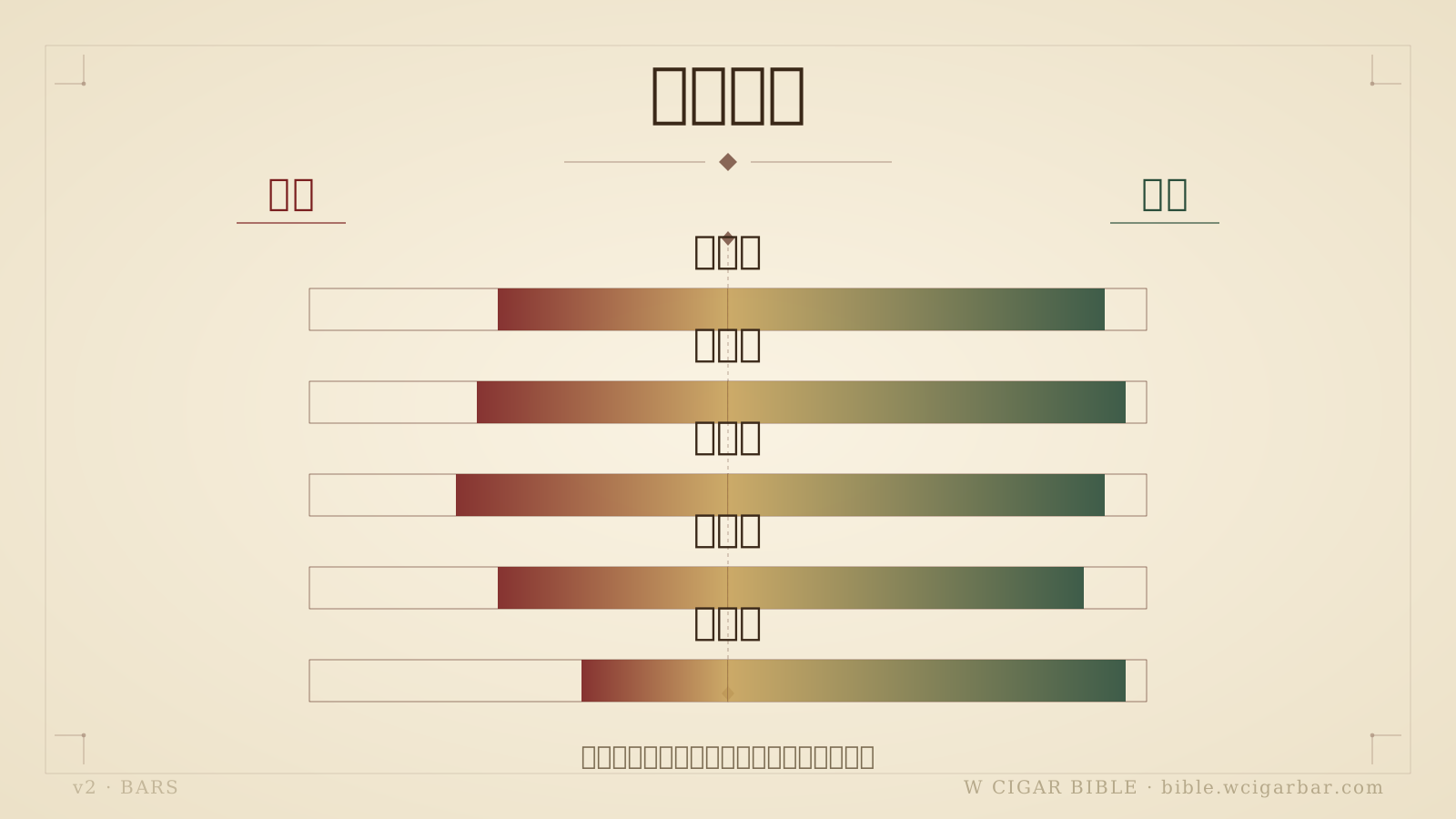
橫條圖比較短期保存與長期醇化在控制需求上的差異
Brand and Vintage Cases: What is Worth Aging, What Doesn't Need to Wait
Not every cigar is suitable for ten years. Small sizes like H. Upmann Half Corona and Trinidad Reyes often become quite comfortable in 3 to 5 years, and if stored too long, floral and sweet notes may decrease. Conversely, large sizes like Cohiba Espléndidos, Partagás Lusitanias, Hoyo de Monterrey Double Coronas, and Montecristo A, due to high fill, long burn time, and deeper structure, can usually withstand 8 to 15 years of aging.
Cuban cigar vintage differences must also be considered. Some batches between 1998 and 2001 were unstable when young, but well-preserved boxes showed delicacy after more than a decade; many brands' overall production quality became more stable after 2006; from 2019 to 2021, due to global supply and logistics impacts, more observation of moisture and condition is needed after acquisition. These are not absolute rules but background for building judgment.
The premise of long-term aging is that the cigar itself has enough structure; weak cigars will not automatically develop a backbone over time. When I consider whether a cigar is worth aging, I look at three things: whether it has a clear main axis when young, whether the aftertaste is clean, and whether the burn is stable. If it starts with only bitterness, stuffiness, and chaos, time may improve the stimulation but is unlikely to turn it into a legend.
The collection market often mythologizes vintages, but I care more about source, preservation, and traceable records. When discussing collection value, it must also be reminded: collection appreciation does not guarantee appreciation, and it still depends on source preservation and market. For true veterans, the most precious part of a box of cigars is not just the price curve but that it is well cared for in your hands, ultimately presenting the flavor dignity it deserves.
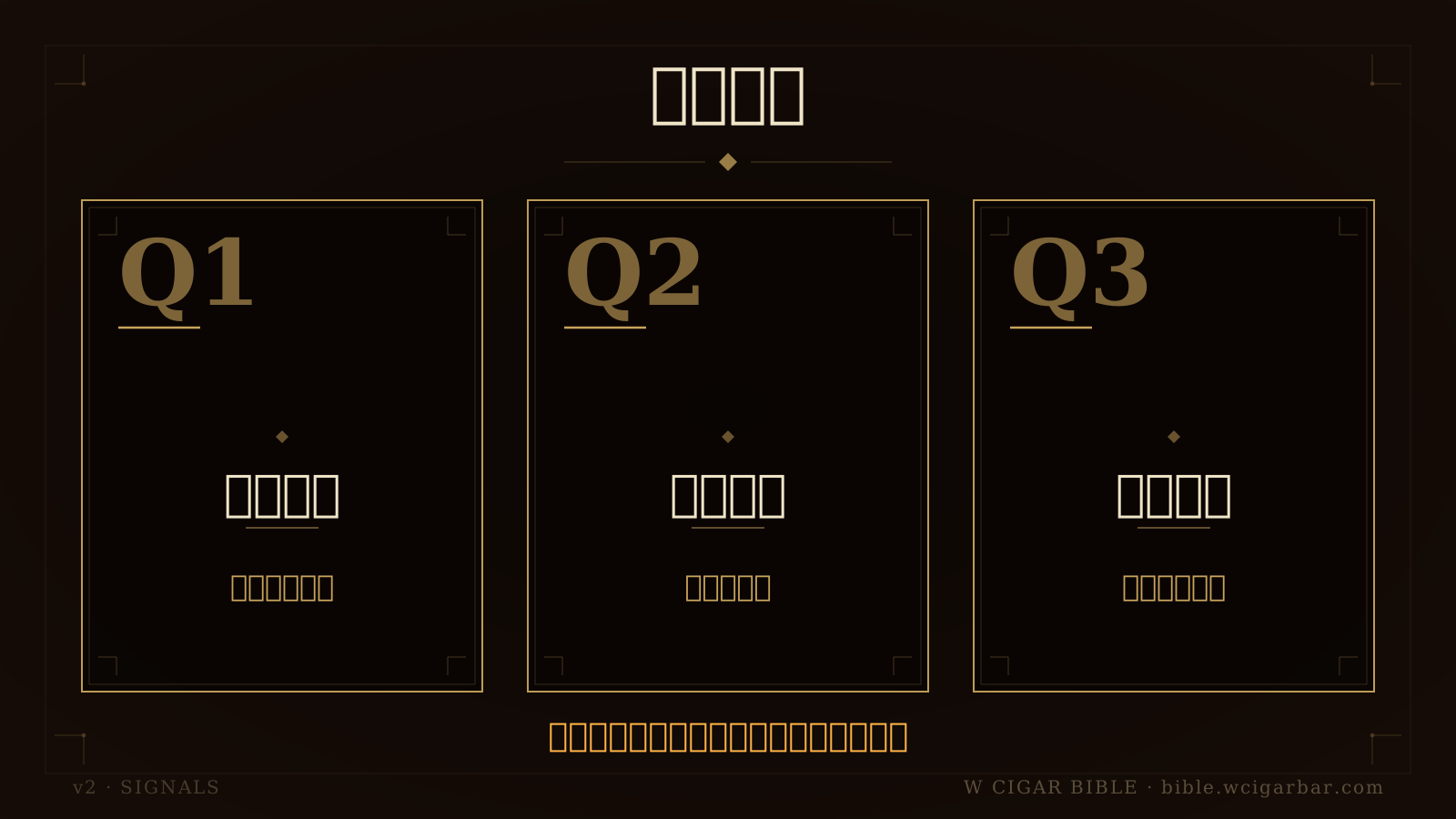
三張問答卡回答年限控溫櫃與霉斑辨識重點
Establishing a Personal Aging Process: Recording, Sampling, and Adjusting
The habit that advanced players should cultivate most is treating cigars as long-term experiments. Every box that enters storage, I first photograph the box surface, seal, box code, liner, and the state of each row of cigars, then establish record fields. At least include: acquisition date, source type, brand size, box code, initial feel, box-opening aroma, storage area, target temperature and humidity, first observation date. These data may seem trivial, but they become your judgment basis five years later.
Sampling rhythm doesn't need to be too frequent. A 25-stick box can use "1, 3, 5, 8, 10 years" nodes; a 10-stick box can use "6 months, 2 years, 5 years" for observation. Each time, don't just write good or bad; break it down into burn, draw, aroma, taste, aftertaste, strength, and emotional memory. For example, the Quai d'Orsay No.54 from 2017, when young, had bright creamy woody notes, after 3 years, the sweetness consolidated, and if stored well, the aftertaste after 5 years would be more like roasted nuts and honey wood aroma.
Without records, all aging experiences become vague legends; with records, the next box will be more precise. I recommend using cloud spreadsheets or note software, spending only 5 minutes each time. The most valuable exchanges among veterans are often not "which box is great," but "under what conditions, for how long, and what it became."
If you find the state is too dry, don't rush to humidify. Adjust slowly in a 62% to 65% RH environment for 4 to 8 weeks, then increase as needed. If too humid, reduce to 62% to 64% RH, open the outer box but not expose to strong winds. Cigars fear drastic remedies; gentle, slow, and reversible is the principle for veterans to adjust the environment.
Common Questions
Does a cigar get better the longer it is stored?
Not necessarily. Small sizes, refreshing types, or cigars with lighter structures may reach their peak in 3 to 5 years. Time cannot replace quality; aging will only amplify the existing structure's strengths and weaknesses.
Can cigars be stored long-term without a temperature-controlled cabinet at home?
Short to mid-term management is possible, but if Taiwan's summer temperatures exceed 26°C for a long time, the risk will significantly increase. At least avoid light, stay away from heat sources, and use sealed boxes and stable humidification packs to reduce fluctuations.
Is 65% RH too dry?
For many Cuban cigars, 65% RH can actually provide clearer burn and aroma lines. For rich non-Cuban cigars, adjust to 67% or 68% based on draw and burn performance.
How to distinguish between mold and plume?
Mold usually appears as spots with fuzz, may have an odor, and can penetrate the foot or wooden box; so-called plume is more uniform fine crystals. When in doubt, isolate rather than risk putting it back in the main cabinet.
Is it necessary to regularly rotate cigar positions?
If the humidity difference between the upper and lower layers of a large cabinet exceeds 3% RH, adjust positions every 2 to 3 months. Desktop boxes should not be frequently handled; excessive box opening causes fluctuations, disrupting stability.
Should the plastic wrap on the original box be removed?
If the outer layer is transport protective film, I usually remove it to allow more natural exchange between the wooden box and the environment. However, single glassine paper does not need to be urgently torn, especially for non-Cuban cigars, as glassine can reduce collisions and short-term humidity fluctuations.
The most fascinating aspect of cigar aging is that it forces humility. You can set temperature, humidity, box position, and schedule, but you cannot command a cigar to be great at any given time. My view is simple: make the environment stable, make the records detailed, and slow down expectations. When you open a well-preserved old cigar years later, the calm, clean, and layer-by-layer unfolding flavors are not just the maturity of the tobacco leaves but also the reward for the collector's patience. —Cigar Prince Wilson Tsai
Smoking is harmful to health. No smoking under the age of twenty. Quitline: 0800-636363. This article is intended for adults over the age of twenty as a reference for cigar culture, preservation, and regulatory knowledge, not as tobacco advertising, promotion, or purchase advice.
Like this article?Share with friends
Share this W Cigar Bible piece with friends who want to learn cigar culture, storage, and tasting.
想把這篇 化為實踐
雪茄聖經是知識;雪茄文化要在空間裡發生

W Cigar Bar 大安總店資訊
台北大安區 · 雪茄聖經總編輯 Wilson Tsai 主理的雪茄文化空間
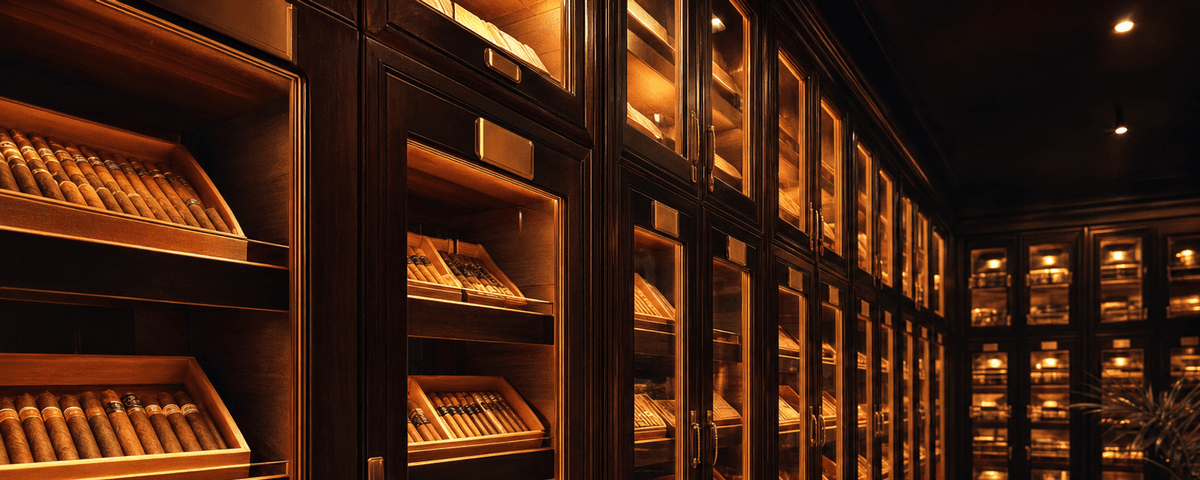
33 座 24 小時恆溫恆濕醇化室
W Cigar Bar 提供的會員醇化空間 · 場地資訊請洽編輯部
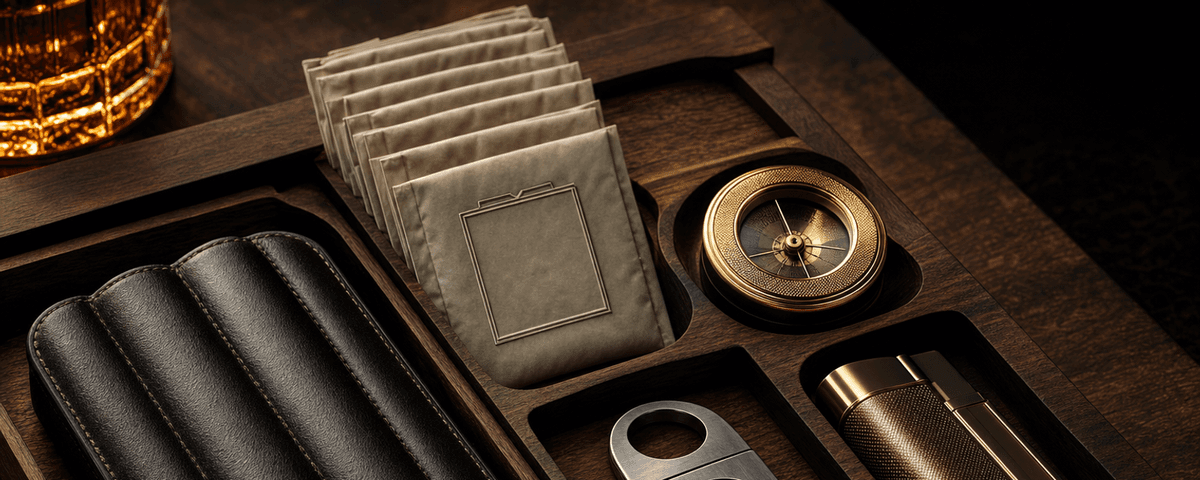
雪茄剪 / 打火機 / 雪茄盒 / Boveda
W Cigar 配件官網 · 專營雪茄配件正品

加 LINE 好友 · 文化諮詢
文化空間資訊 · 紳士沙龍 · 私人包場
本網站內容僅供雪茄文化、歷史、收藏與品吸知識研究參考。菸品有害健康、未滿法定年齡者請勿吸菸。實際規範請依所在地法律為準。
吸菸有害健康・戒菸專線 0800-636363・本站僅供 20 歲以上成年人閱覽。
讀到這裡,你不只是路過的人
留下 Email,加入 W 雪茄聖經內圈——總編輯 Wilson Tsai 親選的學院深文與國際新訊,先你一步送到信箱。
· 教育用途非銷售 · 隨時一鍵退訂 · Email 絕不對外公開 · 由勝茄股份有限公司營運
同分類延伸閱讀

資料來源:W Cigar Bible 編輯部整理 · 雪茄王子 Wilson Tsai 親自審稿
本文僅供雪茄文化、歷史、收藏與品鑑知識研究,不作為菸品促銷、銷售或購買建議。吸菸有害健康,未滿二十歲不得吸菸。