雪茄品鑒進階技術:從試吸到風味演繹
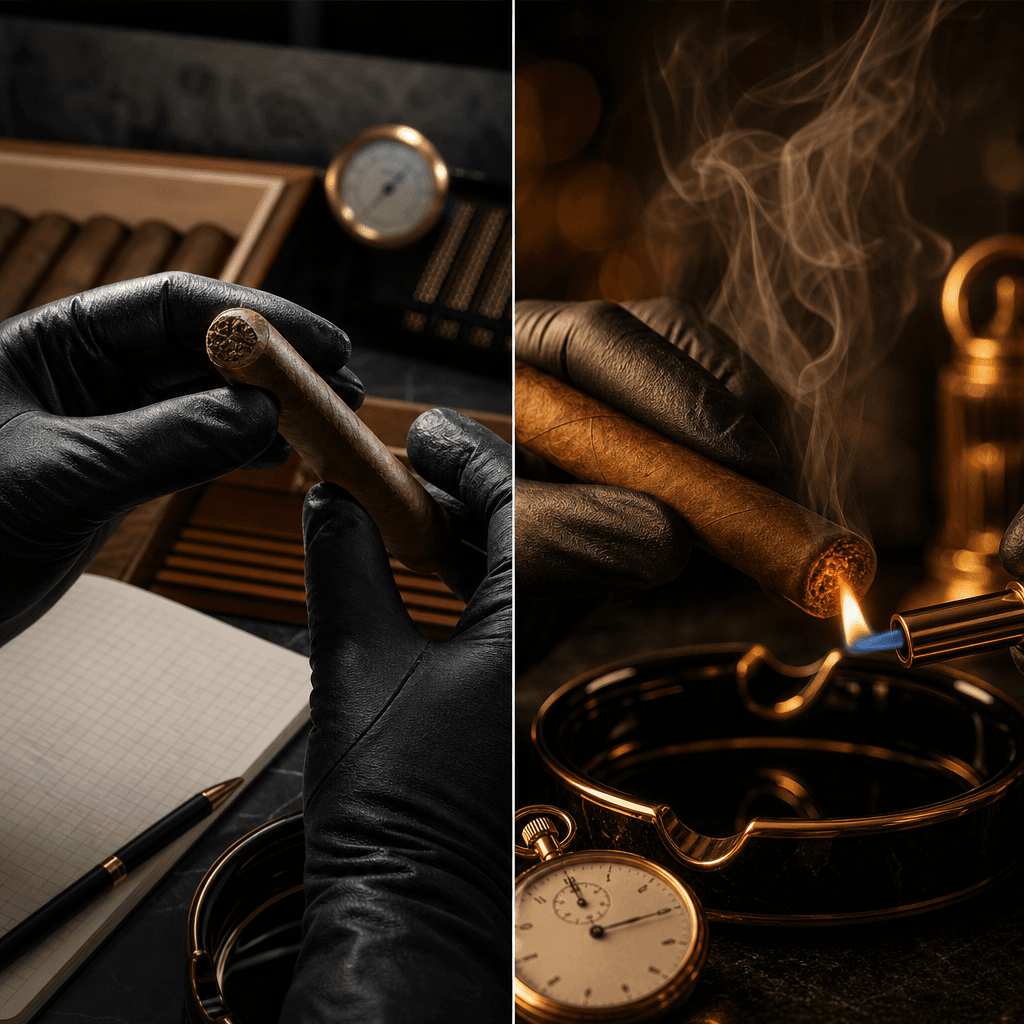
進階雪茄品鑒不僅是享受,更是深入探索其風味的過程。作為《雪茄聖經》的編輯,我強調建立觀察框架的重要性,讓品鑒者能夠客觀地分析每支雪茄的特性。透過冷拉、燃燒節奏及風味層次的記錄,我們可以更清晰地理解雪茄的結構與變化。有效的品鑒筆記不僅能夠幫助當下的評估,更能在未來回顧時提供有價值的參考。掌握這些技巧,讓每一次的品鑒都成為一場深度的感官探索。
- 進階品鑒需建立觀察框架,先暫時放下個人喜好,以便更客觀地分析雪茄的風味。
- 冷拉檢查吸阻與香氣,能預測燃燒條件,影響後續的品鑒體驗。
- 描述風味時應使用具體的語言,結合主味、副味與質地,以便於未來回顧與比較。
Advanced Cigar Tasting Techniques: From Initial Draw to Flavor Interpretation
As the editor of "The Cigar Bible," I often find that seasoned enthusiasts face a common bottleneck—not from smoking too few cigars, but from smoking too quickly and remembering too little. Once brand preferences form, our taste buds start to become lazy, categorizing the differences in vintage, size, and storage conditions into a singular "familiar taste."
Advanced tasting involves breaking down a cigar into observable, comparable, and traceable sensory sequences. From the pre-light draw, the rhythm during burning, to the flavor closure in the final third, each stage offers clues. True depth lies not in using flamboyant words but in understanding why it tastes the way it does.
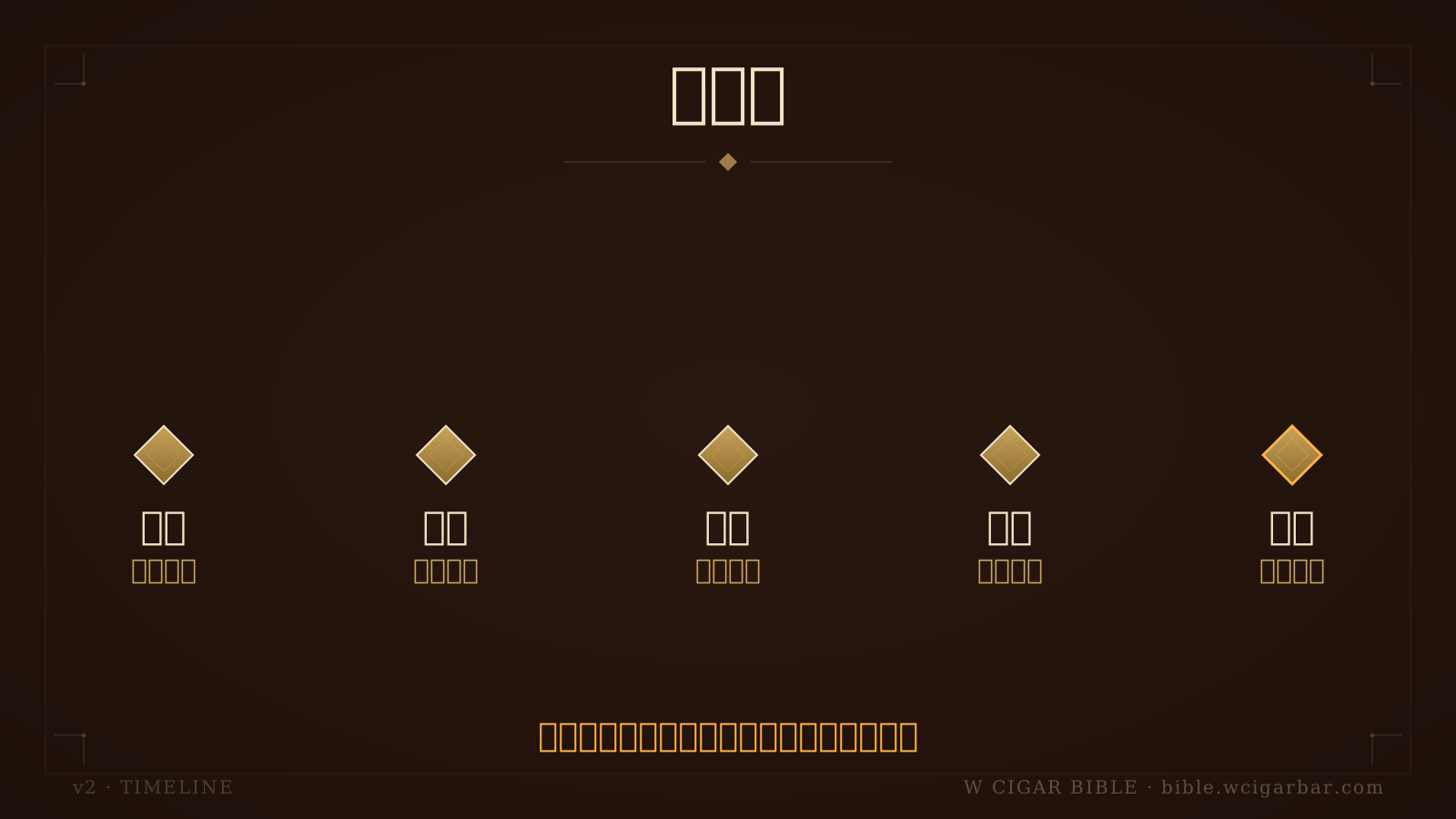
時間線呈現盲看、冷拉、點火、分段與回看的品鑒步驟
Establishing a Framework: Temporarily Set Preferences Aside
The hardest part for seasoned enthusiasts is "forgetting what they like." For example, when comparing a 2019 box of Montecristo No.2 with a 2021 box of Partagás Serie D No.4, if I start with a preset preference for "rich woody" flavors, it's easy to see Partagás's spiciness as an advantage while overlooking the cocoa powder, hay, and creamy texture that Montecristo offers in the middle section. The first step in advanced tasting is to establish an observation framework before allowing preferences to come into play.
I usually divide a cigar into four recording points: pre-light, early stage (0–30%), middle stage (30–70%), and final stage (70–100%). At each point, I ask three questions: What is the main flavor, what is the body weight, and how long does the aftertaste linger? Take Romeo y Julieta Wide Churchills as an example; floral and honey notes are common in the early stage, transitioning to orange peel and cedar in the middle, and if stored at high humidity, may result in bitterness or charred wood in the final stage.
- Conduct a 5-minute blind test on appearance and pre-light draw without looking at the band
- Record the main flavor and aftertaste every 10–15 minutes
- Compare at least two sizes of the same brand to avoid mistaking size differences for brand characteristics
- Smoke at least three cigars from the same box before discussing consistency
In 2016, I handed two visually similar Robustos to a seasoned customer for a blind test. One was a Hoyo de Monterrey Epicure No.2 and the other a Juan López Selección No.2. Most could distinguish the former as milder and the latter as more savory, but only a few could identify the difference as "smoke density" and "nutty notes in the middle." This is the value of a framework: it helps you recognize structure rather than guessing the brand.
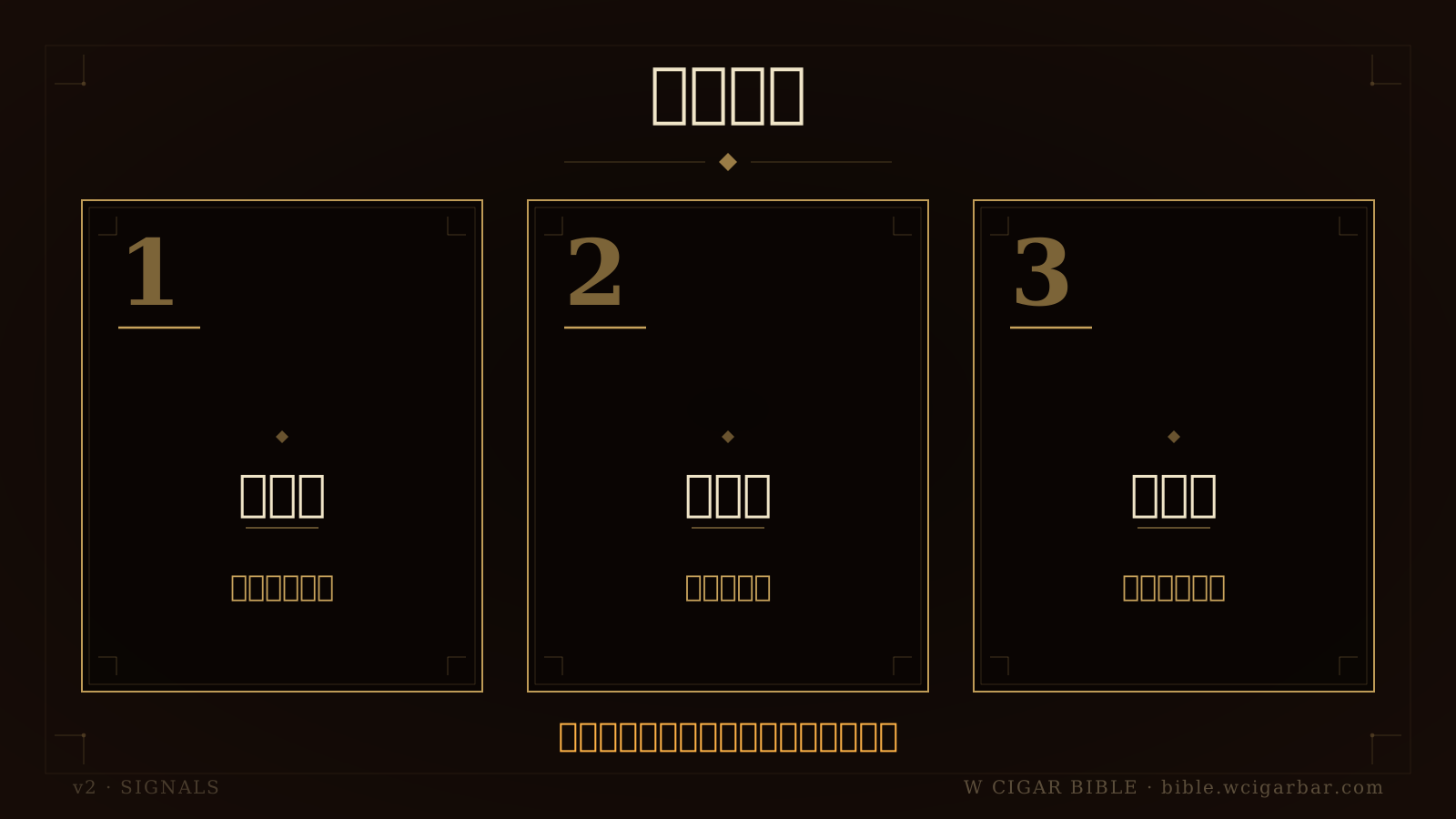
三張卡片列出先建框架、分段記錄與穩定變因的核心結論
Pre-Light Draw: The First Report on Cut, Resistance, and Humidity
The pre-light draw is often underestimated. It is not meant to predict the complete flavor of the cigar but to check three things: draw resistance, moisture condition, and unlit aroma. For instance, with a Cohiba Siglo VI, if the pre-light draw offers only herbal and light honey notes with even resistance, it usually unfolds into hay, cream, and citrus upon lighting. However, if there are noticeable ammonia or damp cardboard notes, precise fire control later may not fully correct it.
The depth of the cut directly affects the pre-light draw judgment. For Figurados like Cuaba Tradicionales or Montecristo No.2, I usually cut 2–3 mm first, then adjust based on draw resistance; for Parejos like Robusto or Corona Gorda, the principle is to cut the cap without damaging the shoulder. The pre-light draw is not the flavor answer but a forecast of burning conditions.
Draw resistance can be recorded on a scale of 1–5: 1 being too loose and 5 almost unmovable, with the ideal range being 2.5–3.5. In 2020, I encountered a box of Bolívar Royal Coronas with a shiny appearance and beautiful aroma, but three cigars had a draw resistance close to 4.5. Upon inspection, they had been stored at over 72% relative humidity for a long time, causing the filler to swell, leading to hot and spicy flavors appearing prematurely.
Pre-light aromas should also be divided into "raw material aroma" and "off-flavors." Cedar, hay, coffee beans, raw cocoa, and raisins may be normal signals; mold, ammonia, wet cardboard, and rancid oils should raise alarms. Especially for old boxes or cigars purchased overseas, the source and storage record are more important than the vintage itself. An "old" cigar without records often just means increased risk.
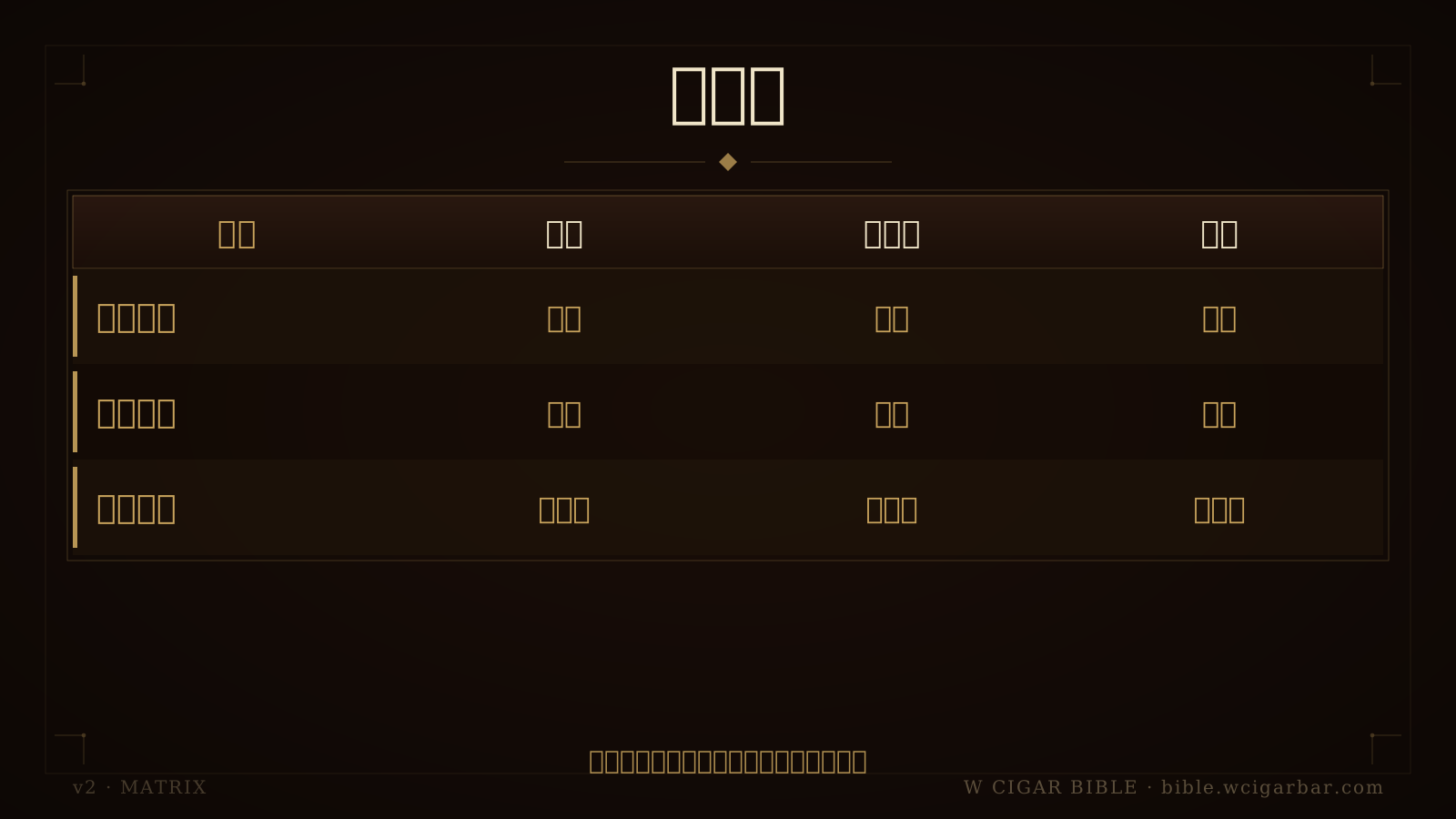
矩陣比較冷拉、前中後與變因三個進階品鑒觀察維度
Flame and Rhythm: Let Burning Serve Flavor, Not Smoke Volume
Many seasoned enthusiasts think the flame only affects lighting speed, but it actually determines the direction of the first 10 minutes. If a torch flame is too close, the outer ring of the foot will instantly carbonize, making inherently powerful brands like Partagás and Bolívar turn into black pepper and bitterness in the early stage. A soft match or cedar spill is slower but can preserve floral and creamy notes in slender sizes like Trinidad Fundadores.
I usually toast the outer ring of the foot for 8–12 seconds, and once the edges glow evenly, I rotate the cigar at a short distance to light the center. The first puff should not be a strong draw but rather 2–3 short puffs to complete the burn line. Fire is not more professional the stronger it is; stability, evenness, and low carbonization are the keys to unlocking layers.
Regarding rhythm, 60–90 seconds per puff is a safe starting point. For ring gauges over 50, like Robusto Extra or Sublime, if you draw every 30 seconds, the smoke temperature will rise quickly, and sweetness will be overshadowed by spiciness. If left unattended for more than 2 minutes, it may extinguish and reignite, bringing ash and bitterness. In 2018, I compared the same box of H. Upmann Magnum 46; the slow-paced one had almond and milk tea in the middle, while the fast-paced one had only hot, spicy wood after 20 minutes.
Touch-ups should also consider the location. If only one side is lagging by 3–5 mm, rotate the cigar to let the slower-burning side face down, allowing the heat to naturally correct it. If the lag exceeds 1 cm, use a flame for a light touch-up. Over-touching will expose the outer wrapper to too much heat, especially delicate Connecticut Shade or fine Cuban wrappers, which can turn bitter.
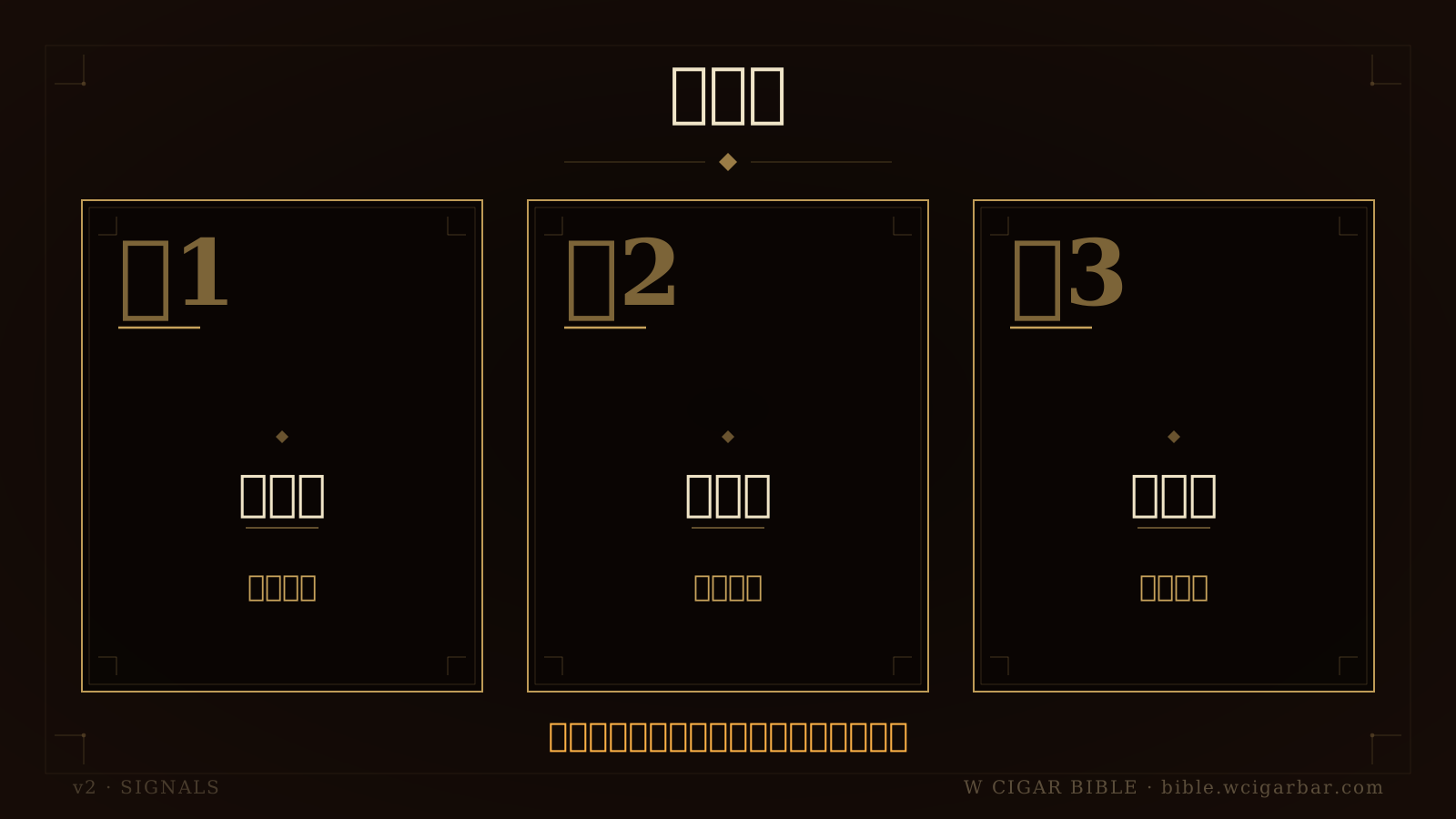
三張錯誤卡片提醒抽太快、濕度高與補火多造成判斷偏差
Flavor Layer Chart: Turning Abstract Language into Comparable Data
Flavor descriptions should avoid the vague terms "smooth," "fragrant," and "rich." They are not wrong but insufficient for comparison. Advanced records should at least break down into aroma, taste, texture, aftertaste, and change speed. For example, a 2022 box of Hoyo de Monterrey Epicure Especial might have cream, hay, and white flowers in the early stage, add hazelnut in the middle, and if temperature control is good, show light coffee and honey water in the final stage.
Below is a simplified version of the chart I often use when evaluating a cigar. The scores are not for ranking but to ensure I can still understand my judgment 3 or 6 months later. Truly useful tasting notes must be comprehensible to your future self.
| Aspect | Observation Method | 1 Point Performance | 5 Point Performance | Case Reference |
|---|---|---|---|---|
| Aroma Clarity | Nasal and retrohale observation | Blurry, monotonous | Layered and distinct | Cohiba Siglo IV's grass and honey |
| Sweetness | Tongue and aftertaste | Almost no sweetness | Stable return sweetness | Montecristo Edmundo's cocoa sweetness |
| Body Weight | Smoke density | Thin, scattered | Thick, enveloping | Bolívar Belicosos Finos |
| Change Speed | Record every 10 minutes | No obvious transition | Three clear stages | Trinidad Coloniales |
| Balance | Ratio of spicy, bitter, sour, sweet | One flavor out of control | Mutually supportive | H. Upmann Sir Winston |
When describing flavors, use the sentence structure "main flavor + secondary flavor + texture." For example, instead of just writing "coffee," write "the middle stage has a main flavor of light roast coffee, with secondary notes of almond skin and a texture like milk foam." Instead of just writing "woody," write "dry cedar, old wooden box, with slightly sweet resin." This language is not flamboyant but more accurate and facilitates comparison of different vintages and sizes.
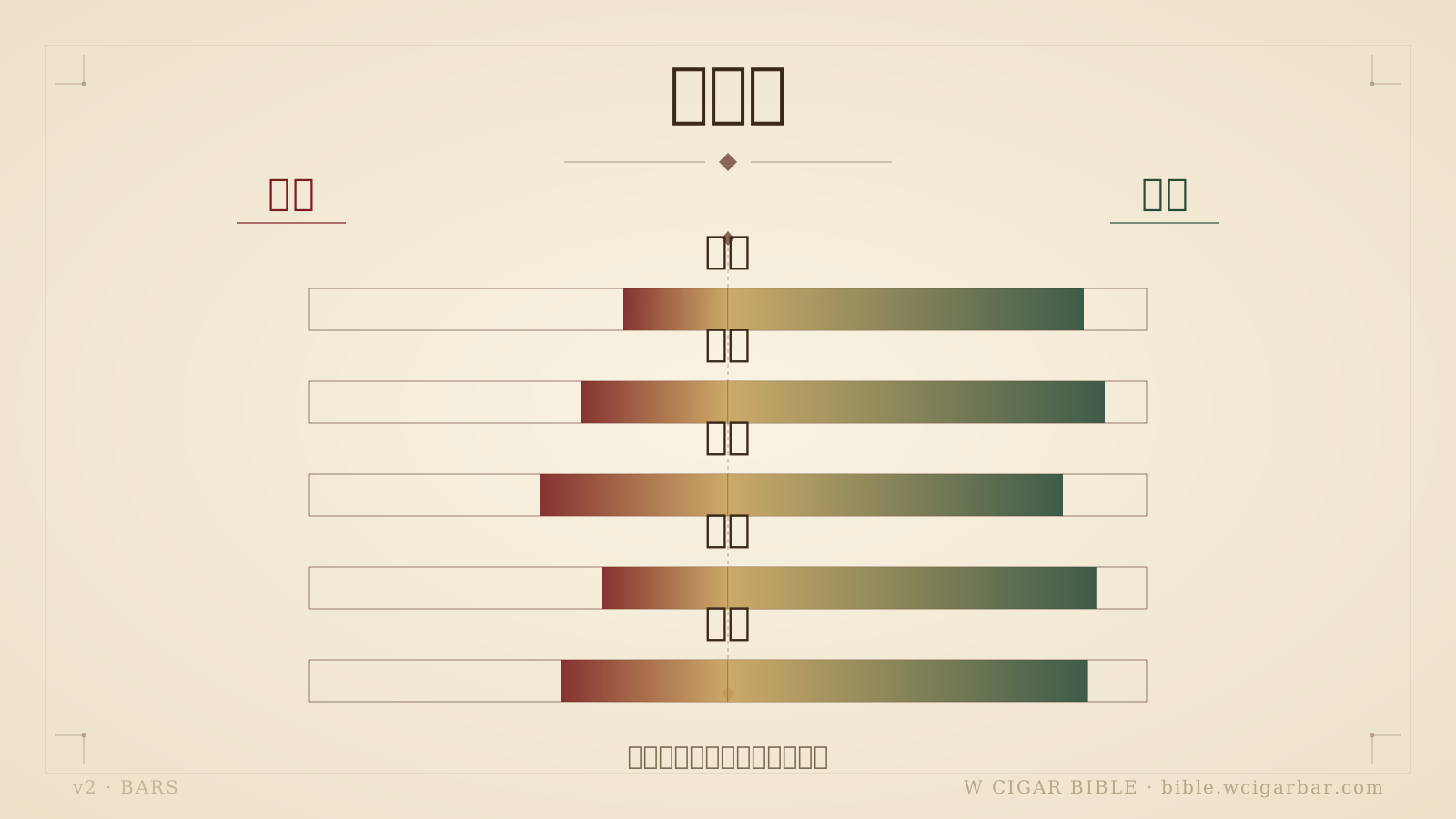
長條圖比較偏好取向與框架取向在五個品鑒軸的重視程度
Sensory Interaction: How Nose, Tongue, Texture, and Memory Influence Each Other
Most of the taste of a cigar is actually aroma. The tongue can clearly distinguish sweet, sour, bitter, salty, and umami, but cedar, leather, coffee, floral, and nutty notes mainly rely on nasal retrohale. Seasoned enthusiasts who rely solely on the mouth for judgment may categorize many details as "strong" or "mild." When evaluating Punch Punch or Quai d’Orsay No.50, I particularly focus on the nasal notes of white pepper, dried flowers, and honeyed leather.
Retrohaling should be done in moderation. Do it once every 5–7 puffs, using only 10–20% of the smoke, without pushing the entire puff through the nose. Nicaraguan puros like Padrón 1964 Anniversary often have cocoa, black pepper, and roasted coffee on the retrohale; Cuban Por Larrañaga Petit Coronas may present caramel, hay, and a hint of salt. The purpose of retrohaling is not to show off technique but to supplement aroma information that the tongue cannot discern.
Texture also alters flavor judgment. The same sweetness can feel different as creamy or sugary; the same spiciness can differ between the volatile feel of white pepper and the sting of chili seeds. In 2017, I compared two Ramon Allones Specially Selected cigars stored under different conditions. One was stored at 65% humidity, with cleaner smoke and roasted walnut notes; the other was long-term near 74%, with dulled sweetness and sharper spiciness.
A memory bank needs training. Regularly smelling cedarwood, dried tea leaves, cocoa powder, orange peel, roasted almonds, and leather can expand flavor vocabulary. The goal is not to turn cigars into a dessert menu but to have enough labels in your mind. When a 2014 box of H. Upmann Connoisseur No.1 presents "milk tea and old book pages," you'll know it's not mysticism but a recognizable aroma combination.
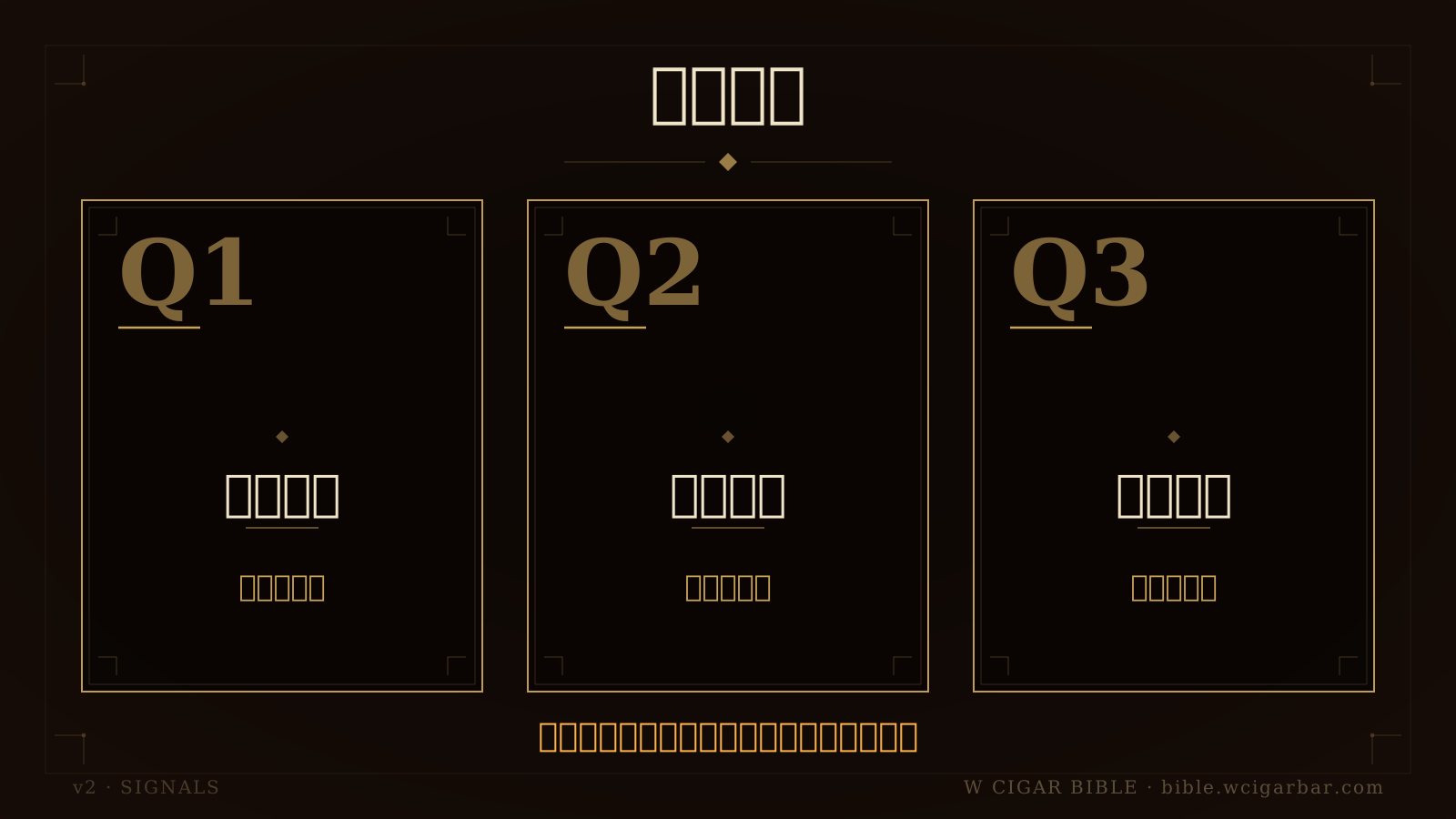
快問快答卡片整理尺寸差異、後段苦味與盲測必要性的答案
Aging and Storage: Vintage Is Not Magic, Conditions Are the Answer
When discussing aged cigars, vintage is alluring, but it cannot replace source and storage. Box codes from 2008, 2012, and 2016 may indeed catch the eye, but if they've spent 10 years in high temperature and humidity, the result may not be better than a well-preserved 2021 box. If collecting involves price expectations, remember: it doesn't guarantee appreciation; it still depends on source, storage, and market.
I often use 65–69% relative humidity and 18–21°C as a long-term reference range for Cuban cigars; for New World cigars with thicker, oilier wrappers, adjustments can be made based on the brand. When preparing short-term, if a cigar has been above 70% for too long, I let it stabilize in a lower humidity environment for 7–14 days before formal recording. The core of aging is not piling on time but gradually harmonizing moisture, volatile substances, and structure.
Brand differences are also evident. High-end Cohiba lines, under good conditions, often soften their herbal sharpness after 5–8 years; Bolívar and Ramon Allones's rich structures may show rounder cocoa and dried fruit after 3–6 years; softer styles like Hoyo de Monterrey and Quai d’Orsay, if aged too long or poorly stored, may lose their bright floral notes.
In practice, I recommend observing in batches from the same box: use the first cigar as a baseline, the second after 6 months, and the third after 12 months. Record humidity, temperature, burning conditions, and flavor curves each time. If a box of 25 Montecristo Especial No.2 cigars continues to become more balanced over 2 years, extend the observation; if sweetness declines, woodiness dries, and aromas flatten, the peak may have passed, and there's no need to blindly age longer.
Common Questions
The most important thing in advanced tasting is stable variables; the same environment, the same rhythm, and the same recording method are necessary for comparison. I've compiled common questions below, especially suitable for those with brand preferences but who want to deepen their judgment.
Q1: Is it normal for different sizes of the same brand to have very different flavors?
Yes, it's normal. For example, with Cohiba Siglo II and Siglo VI, the former has a faster rhythm, highlighting herbal and citrus notes, while the latter has a higher smoke density, allowing cream, honey, and wood to unfold more easily. Size changes burning temperature and filler ratio, so you can't judge by brand name alone.
Q2: Why do I often find the final stage bitter?
There are three common reasons: rhythm too fast, high humidity, and excessive touch-ups. If you draw every 30 seconds, the smoke temperature will rise in the final stage. If humidity is consistently over 72%, burning tends to be stuffy. First, adjust the rhythm to 60–90 seconds and see if the bitterness improves.
Q3: Does retrohaling affect judgment?
Yes, but used correctly, it can add information. It's recommended to do it once every 5–7 puffs, with a small amount. If the nasal cavity feels stinging, it means the smoke volume is too large or the cigar strength is too high. For powerful cigars like Bolívar and Padrón, reduce the amount for observation.
Q4: Is blind testing really necessary?
It's not necessary every time, but regular blind testing can correct brand biases. Seasoned enthusiasts are easily influenced by bands, vintages, and prices. Choose two cigars of similar size and different brands for a blind test each month, and after 3 months, you'll find your judgment more stable.
Q5: How detailed should a cigar record be?
At least record the date, brand size, box code year, storage humidity, lighting time, main flavors of the three stages, burning condition, and summary. If you add 1–5 scores for sweetness, body weight, and balance, you can still compare after six months. The text doesn't need to be long, but it should be consistent.
I always believe that the charm of cigars lies not in flaunting rarity but in reading time, land, craftsmanship, and storage conditions one puff at a time. The advancement of seasoned enthusiasts is not in pursuing larger smoke volume or higher strength but in making judgments quieter and more precise. When you can clearly articulate why a cigar is good, which part is good, and what conditions affect it, that's when you truly have your own depth of taste.
—Cigar Prince Wilson Tsai
Smoking is harmful to health. Smoking is prohibited for those under twenty. Quitline: 0800-636363. This article is intended for adults over twenty as a reference for cigar culture, storage, and regulatory knowledge, not as an advertisement, promotion, or purchase suggestion.
Like this article?Share with friends
Share this W Cigar Bible piece with friends who want to learn cigar culture, storage, and tasting.
想把這篇 化為實踐
雪茄聖經是知識;雪茄文化要在空間裡發生
W Cigar Bar 大安總店資訊
台北大安區 · 雪茄聖經總編輯 Wilson Tsai 主理的雪茄文化空間
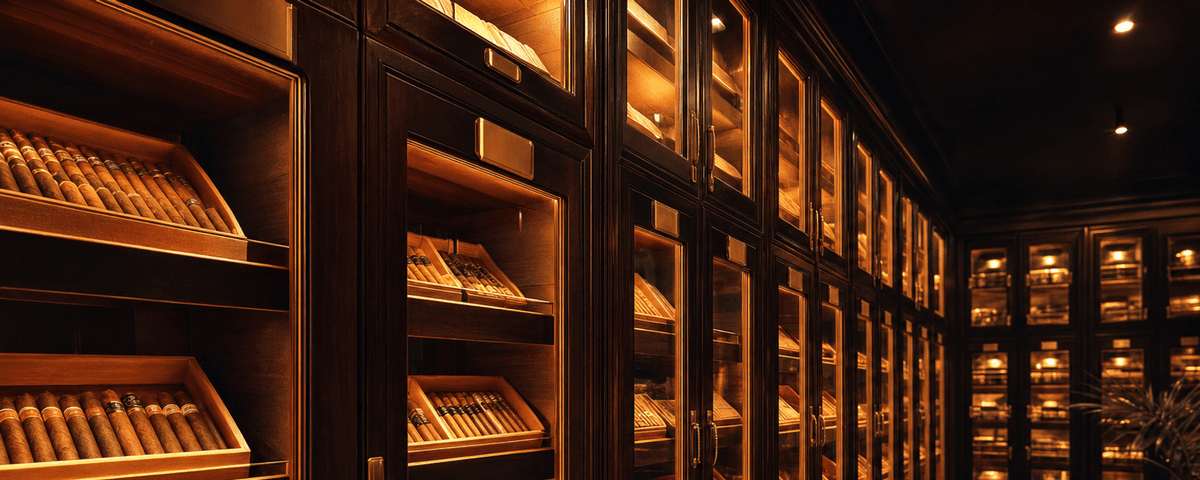
33 座 24 小時恆溫恆濕醇化室
W Cigar Bar 提供的會員醇化空間 · 場地資訊請洽編輯部
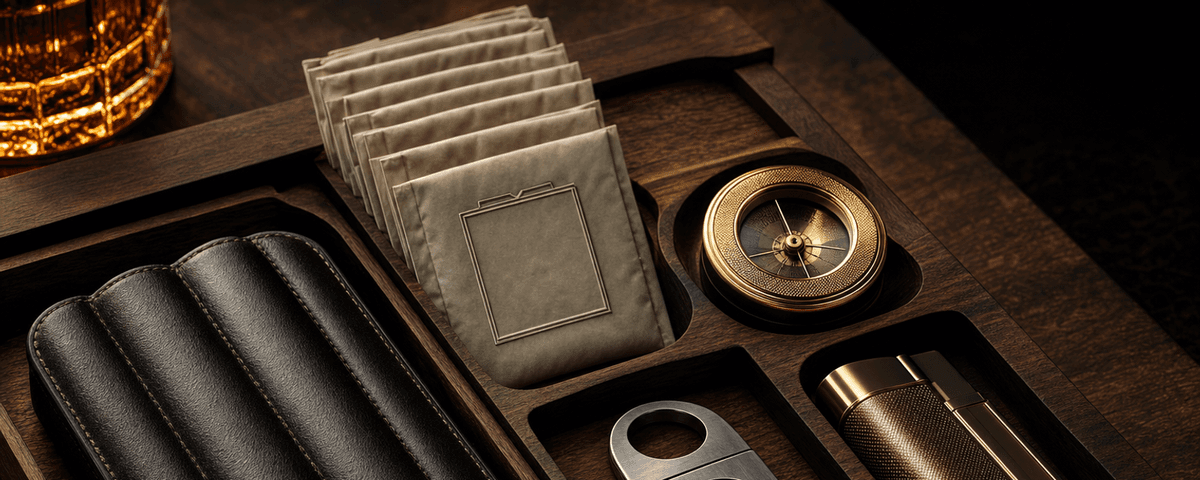
雪茄剪 / 打火機 / 雪茄盒 / Boveda
W Cigar 配件官網 · 專營雪茄配件正品
加 LINE 好友 · 文化諮詢
文化空間資訊 · 紳士沙龍 · 私人包場
本網站內容僅供雪茄文化、歷史、收藏與品吸知識研究參考。菸品有害健康、未滿法定年齡者請勿吸菸。實際規範請依所在地法律為準。
吸菸有害健康・戒菸專線 0800-636363・本站僅供 20 歲以上成年人閱覽。
讀到這裡,你不只是路過的人
留下 Email,加入 W 雪茄聖經內圈——總編輯 Wilson Tsai 親選的學院深文與國際新訊,先你一步送到信箱。
· 教育用途非銷售 · 隨時一鍵退訂 · Email 絕不對外公開 · 由勝茄股份有限公司營運
同分類延伸閱讀
資料來源:W Cigar Bible 編輯部整理 · 雪茄王子 Wilson Tsai 親自審稿
本文僅供雪茄文化、歷史、收藏與品鑑知識研究,不作為菸品促銷、銷售或購買建議。吸菸有害健康,未滿二十歲不得吸菸。